Retro Television Review: Miami Vice 3.16 “Theresa”


Welcome to Retro Television Reviews, a feature where we review some of our favorite and least favorite shows of the past!  On Mondays, I will be reviewing Miami Vice, which ran on NBC from 1984 to 1989.  The entire show can be purchased on Prime!

This week, a guest star breaks Sonny’s heart.

Episode 3.16 “Theresa”

(Dir by Virgil W. Vogel, originally aired on February 13th, 1987)

Sonny is planning on asking his girlfriend, Dr. Theresa Lyons (Helena Bonham-Carter), to marry him.  What Sonny doesn’t know is that Theresa is a junkie.  Back surgery caused her to develop a dependence on painkillers and, after she got in trouble for writing her own prescriptions, Theresa started dealing with drug dealers.  Theresa’s addiction has left her vulnerable to a long-haired drug lord named Wyatt (Brad Dourif).  Sonny recently arrested Wyatt but Wyatt has one of his dealers tell Theresa that he’ll only give her a fix if she steals the four evidence tapes from Sonny’s houseboat.  Theresa steals one tape.  The other tapes are destroyed when Wyatt bombs a police evidence warehouse!  Seriously, Wyatt doesn’t mess around and, when that warehouse goes up in flames, we’re reminded that Miami is not a place for the weak.  The police are in a war and they have no possible path to victory.  The bad guys are always willing to do what the police can not.

Most of this episode centers around Theresa and Sonny attempting to deal with her addiction and Sonny coming to realize that Theresa will have to return to the UK if she’s ever going to recover.  Even after Sonny gets suspended from the force while Internal Affairs investigates the theft of the tape, Theresa remains Sonny’s main concern.  It was actually kind of nice to see Sonny caring about someone again.  Don Johnson has been a bit inconsistent this season.  (There are several episodes were its obvious he was getting a bit bored with the part.)  But he does a good job in this episode.

As for the guest stars, Brad Dourif is charismatically evil as the smug and New Age-y Wyatt.  Helena Bonham Cater was only 20 when she appeared in this episode and she looked even younger.  That doesn’t exactly make her the most believable trauma doctor in the world.  Because of her youth, she’s miscast and there are a few times when she looks more like Crockett’s daughter than his girlfriend.  That said, Bonham Carter really sells the scene where she reveals her addiction to Crockett and she definitely captures the desperation of someone in need of another fix.

“Life’s not easy when you’re a lover,” Tubbs says at one point, “….or a primary investigator.”  With Sonny sidelined with his suspension and his personal drama, Tubbs got to play the role of concerned best friend and it’s one that Philip Michael Thomas always played well on the show.  If nothing else, you believe that Tubbs would take a bullet for his partner.  The show may end with Theresa returning to the UK and Sonny sadly looking down at the engagement ring that he’ll never give her but, fortunately, he’ll always have Tubbs.

Retro Television Review: Miami Vice 3.15 “Duty and Honor”


Welcome to Retro Television Reviews, a feature where we review some of our favorite and least favorite shows of the past!  On Mondays, I will be reviewing Miami Vice, which ran on NBC from 1984 to 1989.  The entire show can be purchased on Prime!

This week, another figure from Castillo’s past comes to Miami.

Episode 3.15 “Duty And Honor”

(Dir by John Nicollela, originally aired on February 6th, 1987)

There is apparently some controversy over what this episode should be called.  When it originally aired in 1987, it was called The Savage, after the serial killer who is pursued by Castillo.  When the episode later turned up in syndication, the title was changed to Duty and Honor, a reflection of the fact that the episode links back to Castillo’s (and, to a lesser extent, Crockett’s) service in Vietnam.  Since the imdb has chosen to go with Duty and Honor, I’ve decided to do the same.

The episode opens in Saigon, in the early 70s.  A clean-shaved Castillo (with a pony tail!) investigates the ritualistic murder of a prostitute.  It’s one of several murders that have occurred over the past few days, with all of the victims being sex workers.  Jump forward to Miami in the 80s and prostitutes are now once again being murdered.  Castillo recognizes the M.O. and soon, Crockett and Tubbs are investigating the local VA.  The doctor (Gary Basaraba) refuses to compromise the confidentiality of what his patients have told him but he does allow Crockett and Tubbs to speak to some of them.  One of the patients talks about a mysterious man who was known as The Savage, who was used as an assassin by the CIA.  The Savage was obsessed with killing and hated women because one violent encounter led to him getting castrated.

Tranh (Haing S. Ngor), who investigated the Saigon murders with Castillo, comes to Miami and shows Castillo that, whenever an enemy or critic of the United States has been assassinated overseas, it’s always coincided with a serial killer targeting prostitutes.  Tranh believes The Savage has come to Miami to assassinate a South American activist who is in town to give a speech.  Tranh and Castillo’s investigation leads them to the Savage’s CIA handler, Jack Colman (Brad Sullivan).  Colman makes clear that he really doesn’t care what The Savage does on his own time.

And yes, The Savage (played by Michael Wright), is indeed in Miami and he is killing prostitutes.  As played by Wright, The Savage is one of the most frightening villains to show up on Miami Vice.  He’s a relentless and sadistic killer who has no control over his impulses.  The CIA turned him into a weapon of war and now that the war is over, he no longer has a place in the real world.  Instead, he’s a nightmare creature who exists to execute anyone who Colman considers to be a threat.

(Around the same time this episode aired, Michael Wright also played the high school gang lord in The Principal.)

Up until the final twist, this episode is Miami Vice at its best — dark, moody, thought-provoking, and morally ambiguous.  After spending most of the season staring at the floor, Edward James Olmos finally gets to be the center of the action.  Unfortunately, the film ends with Tranh revealing that he was actually a spy for North Vietnam and that he’s now a colonel in the Vietnamese army.  He leaves Castillo a note, saying that he hopes they can still be friends and promote the type of peaceful world where nations will not create men like The Savage.  And while I agree that the CIA should not be breeding assassins, I still have to say, what’s up with all the pro-commie crap this season, Miami Vice?

Anyway, other than that, this was a good episode.  I should mention that Helena Bonham Carter briefly appears as Sonny’s new girlfriend.  Apparently, she’ll be the center of next week’s episode.

2022 In Review: Lisa Marie’s Top 30 Films of 2022


Without further ado, here are my top 30 films of 2022!

(Why 30?  Because Lisa doesn’t do odd numbers!  Also, be sure to check out my picks for 2010201120122013201420152016201720182019, 2020, and 2021!  Wow, I’ve been doing this for a while!)

30. Marcel The Shell With Shoes On (dir by Dean Fleischer Camp)

An animated film with heart, Marcel The Shell With Shoes On would probably be ranked higher if Marcel’s favorite news show had been something other than 60 Minutes.  Still, questionable viewing habits aside, Marcel and Nana Connie and all the other shells were amazing characters and the end of the movie brought tears to my mismatched eyes.  With this film and I Want You Back, Jenny Slate had quite a year.

29. Ted K (dir by Tony Stone)

Released in February of this year, this film about Ted Kaczyski and his descent into madness was unfairly overlooked. Sharlto Copley was perfectly cast as Ted K.  This is a film that probably won’t make Ted’s supporters happy but, at the same time, it also avoids painting him as just being a straight-out madman.  It’s refusal to simplify makes the film far more than just another true crime biopic.

28. Dashcam (dir by Rob Savage)

Starring Annie Hardy as herself, this low-budget horror film is a scathing satire of life during the age of COVID and performative “wokeness.”  After the past few years, there’s something rather cathartic about Hardy’s refusal to obey.

27. The Batman (dir by Matt Reeves)

At this point, I’m fairly cynical about comic book movies in general and Batman films in specific.  I mean, how many Batmen have we had over the past ten years?  (Actually, I think only four but it feels like a lot more!)  That said, I enjoyed The Batman, for both its noirish atmosphere and it’s willingness to embrace the melodrama.  You have to love the fact that the villain was basically a nerdy podcaster.

26. Operation Mincemeat (dir by John Madden)

Based on a true story, this film was a throwback to the earnest World War II films of the past.  Colin Firth, Kelly MacDonald, Matthew McFayden, and Johnny Flynn were all well-cast and did their part to bring this moment of WWII history to life.
25. Father Stu (dir by Rosalind Ross)

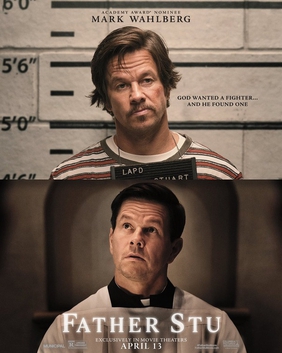
You don’t have to be from a Catholic background to appreciate Father Stu but it probably helps.  This was one of those roles that only Mark Wahlberg could have pulled off.

24. See How They Run (dir by Tom George)

This stylized murder mystery was terrifically entertaining and witty.  Sam Rockwell and Saoirse Ronan are both treasures.

23. I Want You Back (dir by Jason Orley)

Two friends conspire to win back their respective romantic partners and end up falling in love with each other instead.  This was an enjoyable comedy, one that was blessed with an outstanding cast that included Jenny Slate, Charlie Day, Scott Eastwood, and Gina Rodriguez.  The scene in which Jenny Slate sings Suddenly Seymour is a classic.

22. Ambulance (dir by Michael Bay)

This was the film that Michael Bay was born to direct.  For once, Bay’s hyperkinetic style was perfectly matched by the story being told.  It also helped that the ambulance was a real ambulance and not a robot pretending to be an ambulance.

21.Send Me (dir by Nick Palmisciano)

This is a heart-breaking documentary about the efforts of 12 veterans to evacuate as many allies as they could during the disastrous withdraw from Afghanistan.  This film deserved more attention than it got.

20. The Bombardment (dir by Ole Bornedal)

Based on a true story, this Danish film deals with the accidental bombing of a school during World War II.  It’s been overshadowed a bit by All Quiet On The Western Front but, in its quieter way, The Bombardment is also a strong look at the horrors of war.

19. Goodnight Oppy (dir by Ryan White)

This is a poignant documentary about Opportunity, the NASA exploration rover that spent 15 years exploring Mars.  This movie proves that a robot can make you cry.
18. Dark Glasses (dir by Dario Argento)

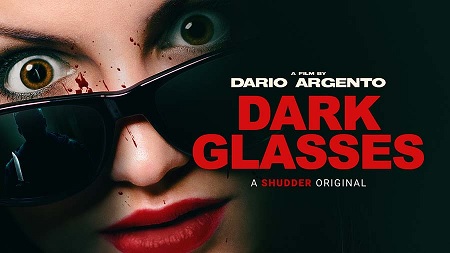
Don’t listen to the critics.  This enjoyably over-the-top giallo was an entertaining return-to-form for Dario Argento.

17. Wildcat (dir by Melissa Lesh and Trevor Fost)

This poignant documentary follows a depressed veteran as he finds purpose helping to raise a baby ocelot in Peru.  Be prepared to cry.

16. Apollo 10 1/2 (dir by Richard Linklater)

Richard Linklater’s animated film was well-received by critics but it’s still hard not to feel that it’s been a bit overlooked.  Narrated by Jack Black, the film details the 1969 moon landing from the perspective of a child with a very active imagination.  Nostalgic, sweet-natured, and ultimately rather moving, Apollo 10 1/2 is a film that celebrates life.

15. Three Minutes: A Lengthening (dir by Bianca Stigner)

This haunting and moving documentary, which is narrated by Helena Bonham Cater, examines a three-minute snippet of 16mm film that was shot in a Jewish town in Poland in 1938, shortly before the Nazis invaded.  By examining every aspect of those three minutes, this documentary becomes both a memorial for the inhabitants of that town and a much-needed reminder of the horrors and reality of the Holocaust.  With anti-Semitism and Holocaust denial on the rise, this is an important documentary.

14. The Northman (dir by Robert Eggers)

The Northman is occasionally thrilling and occasionally ludicrous but it’s always watchable.  Robert Eggers finds moments of humor and odd beauty in this Viking epic.  Nicole Kidman embraces the melodrama and goes all out.  I just hope Valhalla was actually worth all the trouble.

13. Puss In Boots: The Last Wish (dir by Joel Crawford)

Yeah, you knew this film was going to show up on my list.  To be honest, the film could have been about just about anything.  I’d watch Puss In Boots read the phone book as long as Antonio Banderas returned to do his voice.  The fact that the film itself was cute and even touching was an added bonus.

12. Guillermo del Toro’s Pinocchio (dir by Guillermo del Toro and Mark Gustafson)

Yes, a puppet can make you cry.

11. Babylon (dir by Damien Chazelle)

Was it flawed?  You bet.  Did it run a little bit too long?  Yes, it did.  Could I have done without the scene with the elephant?  You better believe it.  That said, this film was so gloriously excessive and over-the-top that it was easy for me to forgive its flaws.  The critics may not have liked it but Babylon is a film that will be rediscovered.

10. The Fabelmans (dir by Steven Spielberg)

I went back and forth over whether to put The Fabelmans or Babylon in the number ten spot.  In a way, they’re kind of similar in that they have their flaws but they’re both saved by their director’s obvious love of cinema.  In the end, David Lynch’s role as John Ford moved The Fabelmans into the 10th spot.

9. Everything Everywhere All At Once (dir by the Daniels)

To be honest, I think some people are going a little bit overboard in their praise for this film.  Yes, it’s one of the year’s best but 2022 wasn’t that strong of a year and Everything is one of those probable Best Picture winners that, like Nomadland and CODA, will probably not be quite as celebrated after it actually wins.  That said, Michelle Yeoh and especially Ke Huy Quan deserve all the praise that they’ve received and I appreciated that the film featured the destruction of an IRS office.  It’s not as perfect as some say but, due largely to the cast, it still deserves to be in my top ten.

8. Nitram (dir by Justin Kurzel)

This is another unfairly overlooked film, this time from Australia.  Caleb Landry Jones gives a powerful and disturbing performance as a troubled young man named Nitram who commits an act of shocking violence.  Anthony LaPaglia and Judy Davis play Nitram’s parents, who are both troubled in their own individual ways.  Essie Davis plays the older woman who falls in love with Nitram, despite the fact that Nitram is incapable of loving anyone.

7. Emily the Criminal (dir by John Patton Ford)

Aubrey Plaza plays Emily, who discovers that not only does crime pay but, in the gig economy, it’s one of those few ways to get ahead.  Part thriller and part satire, Emily the Criminal reminds us that Plaza is one of the most interesting actresses working today.

6. All Quiet On The Western Front (dir by Edward Berger)

This German anti-war epic stays true to the themes of its source material while updating the plot for the modern era.  The contrast between the generals and the diplomats planning battles and the soldiers dying in them is a powerful one.

5. Elvis (dir by Baz Luhrmann)

This wonderfully excessive biopic features good music, a great performance from Austin Butler, and a wonderfully eccentric one from Tom Hanks.  Luhrmann is hardly a subtle director but Butler’s performance keeps the film from spiraling out of control.

4. Vengeance (dir by B.J. Novak)

This whip-smart satire of both true crime podcasts and the red state/blue state divide deserved far more attention than it received.  Ashton Kutcher has actually become a surprisingly dependable character actor.  Director and screenwriter Novak tells the story with sensitivity and a sharp eye for the absurd.
3. The Banshees of Inisherin (dir by Martin McDonagh)

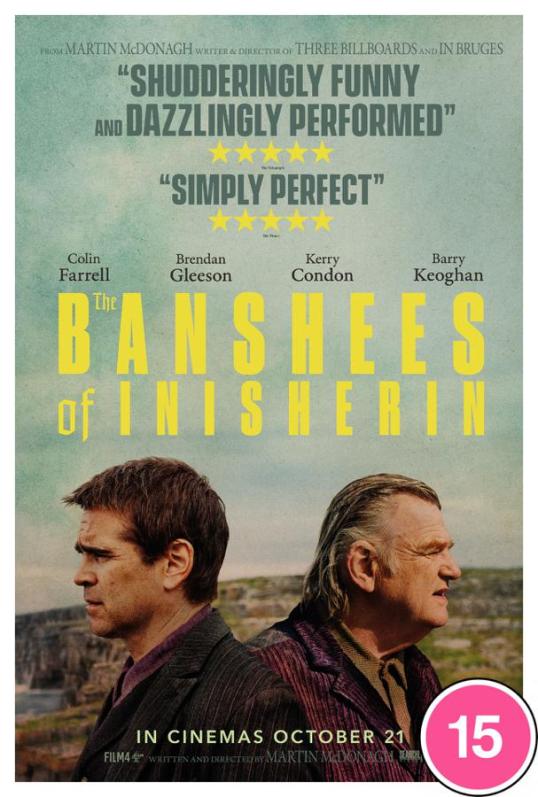
In his best film yet, Martin McDonagh examines friendship, art, violence, and anger in Ireland.  Brendan Gleeson no longer wants to be Colin Farrell’s friend.  Farrell’s attempts to discover why leads to all sorts of surprising and macabre developments.  Gleeson and Farrell have never been better.  Kerry Condon and Barry Keoghan offer up poignant support.

2. Tar (dir by Todd Field)

Lydia Tar is a brilliant artist.  Does it matter that she also might be a terrible human being?  Todd Field’s return to filmmaking meditates on the meaning of art, morality, and the consequences of hubris.  Cate Blanchett is perfectly cast.  The scene where Tar talks to a student who objects to playing music by a white male is a real litmus test.  Do you think Tar is a bully or do you think the student is being too sensitive?  For all the talk about how Lydia dismisses the student’s claims, many also fail to note that the student is the one who calls her a “bitch” and runs out of the room.  Much as in Field’s previous film, no one is as perfect or as justified or as blameless as they may believe.

And, finally, my top film of 2022 is….

  1. Top Gun: Maverick (dir by Joseph Kosinski)

After 2 years of lockdowns and pessimism, Top Gun: Maverick was finally released and it reminded audiences of what they loved about movies in the first place.  Top Gun: Maverick was the movie that we needed in 2022.

Well, that concludes my late look back at 2022!  Now, let’s focus on 2023!

Lisa Marie’s 2022 In Review:

  1. 16 Worst Movies
  2. 10 Favorite Songs
  3. 10 Top Non-Fiction Books
  4. Lisa Marie’s Favorite Novels
  5. The Best of Lifetime
  6. 10 Good Things I Saw On Television

Here Are The 78th Annual Golden Globe Nominations!


I’m totally turned off by the self-importance of the Golden Globes and I resent every time that I have to write about them.

That said, despite the fact that no one is quite sure who actually votes for the damn things and stories of corruption in the Hollywood Foreign Press Association have been rampant for years, the Golden Globes have still emerged as one of the main Oscar precursors.  So, you kind of have to pay attention to them.  Bleh.

There really aren’t any huge shocks in the list of nominees below, with the exception of maybe Jared Leto for Best Supporting Actor and James Corden’s Prom nomination.  I mean, if you’re that determined to nominate someone for The Prom, why would you go for James Corden as opposed to Meryl Streep?  That’s just odd.

Anyway, here are the nominations:

Best Motion Picture, Drama
“The Father”
“Mank”
“Nomadland”
“Promising Young Woman”
“The Trial of the Chicago 7”

Best Motion Picture, Musical or Comedy
“Borat Subsequent Moviefilm”
“Hamilton”
“Music”
“Palm Springs”
“The Prom”

Best Director, Motion Picture
Emerald Fennell, “Promising Young Woman”
David Fincher, “Mank”
Regina King, “One Night In Miami”
Aaron Sorkin, “The Trial of the Chicago 7”
Chloé Zhao, “Nomadland”

Best Performance by an Actress in a Motion Picture, Drama
Viola Davis, “Ma Rainey’s Black Bottom”
Andra Day, “The United States vs. Billie Holiday”
Vanessa Kirby, “Pieces of a Woman”
Frances McDormand, “Nomadland”
Carey Mulligan, “Promising Young Woman”

Best Performance by an Actress in a Motion Picture, Musical or Comedy
Maria Bakalova, “Borat Subsequent Moviefilm”
Kate Hudson, “Music”
Michelle Pfeiffer, “French Exit”
Rosamund Pike, “I Care a Lot”
Anya Taylor-Joy, “Emma”

Best Performance by an Actress in a Supporting Role in any Motion Picture
Glenn Close, “Hillbilly Elegy”
Olivia Colman, “The Father”
Jodie Foster, “The Mauritanian”
Amanda Seyfried, “Mank”
Helena Zengel, “News of the World”

Best Performance by an Actor in a Motion Picture, Drama
Riz Ahmed, “Sound of Metal”
Chadwick Boseman, “Ma Rainey’s Black Bottom”
Anthony Hopkins, “The Father”
Gary Oldman, “Mank”
Tahar Rahim, “The Mauritanian”

Best Performance by an Actor in a Motion Picture, Musical or Comedy
Sacha Baron Cohen, “Borat Subsequent Moviefilm”
James Corden, “The Prom”
Lin-Manuel Miranda, “Hamilton”
Dev Patel, “The Personal History of David Copperfield”
Andy Samberg, “Palm Springs”

Best Performance by an Actor in a Supporting Role in any Motion Picture
Sacha Baron Cohen, “The Trial of the Chicago 7”
Daniel Kaluuya, “Judas and the Black Messiah”
Jared Leto, “The Little Things”
Billy Murray, “On the Rocks”
Leslie Odom Jr., “One Night In Miami”

Best Screenplay, Motion Picture
Emerald Fennell, “Promising Young Woman”
Jack Fincher, “Mank”
Aaron Sorkin, “The Trial of the Chicago 7”
Florian Zeller and Christopher Hampton, “The Father”
Chloé Zhao, “Nomadland”

Best Original Score, Motion Picture
Alexandre Desplat, “The Midnight Sky”
Ludwig Göransson, “Tenet”
James Newton Howard, “News of the World”
Trent Reznor and Atticus Ross, “Mank”
Trent Reznor, Atticus Ross and Jon Batiste, “Soul”

Best Original Song, Motion Picture
“Fight For You,” Judas and the Black Messiah”
“Hear My Voice,” The Trial of the Chicago 7”
“Io Sì (Seen),” The Life Ahead”
“Speak Now,” One Night In Miami”
“Tigress & Tweed,” The United States Vs. Billie Holiday”

Best Motion Picture, Animated
“The Croods: A New Age”
“Onward”
“Over the Moon”
“Soul”
“Wolfwalkers”

Best Motion Picture, Foreign Language
“Another Round”
“La Llorona”
“The Life Ahead”
“Minari”
“Two Of Us”

Best Television Series, Drama
“The Crown”
“Lovecraft Country”
“The Mandalorian”
“Ozark”
“Ratched”

Best Television Series, Musical or Comedy
“Emily in Paris”
“The Flight Attendant”
“The Great”
“Schitt’s Creek”
“Ted Lasso”

Best Limited Series, Anthology Series or a Motion Picture made for Television
“Normal People”
“The Queen’s Gambit”
“Small Axe”
“The Undoing”
“Unorthodox”

Best Performance by an Actress in a Television Series, Drama
Olivia Colman, “The Crown”
Jodie Comer, “Killing Eve”
Emma Corrin, “The Crown”
Laura Linney, “Ozark”
Sarah Paulson, “Ratched”

Best Performance by an Actress in a Television Series, Musical or Comedy
Lily Collins, “Emily In Paris”
Kaley Cuoco, “The Flight Attendant”
Elle Fanning, “The Great”
Jane Levy, “Zoey’s Extraordinary Playlist”
Catherine O’Hara, “Schitt’s Creek”

Best Performance by an Actress in a Limited Series, Anthology Series or a Motion Picture Made for Television
Cate Blanchett, “Mrs. America”
Daisy Edgar Jones, “Normal People”
Shira Haas, “Unorthodox”
Nicole Kidman, “The Undoing”
Anya Taylor-Joy, “The Queen’s Gambit”

Best Performance by an Actress in a Television Supporting Role
Gillian Anderson, “The Crown”
Helena Bonham Carter, “The Crown”
Julia Garner, “Ozark”
Annie Murphy, “Schitt’s Creek”
Cynthia Nixon, “Ratched”

Best Performance by an Actor in a Television Series, Drama
Jason Bateman, “Ozark”
Josh O’Connor, “The Crown”
Bob Odenkirk, “Better Call Saul”
Al Pacino, “Hunters”
Matthew Rhys, “Perry Mason”

Best Performance by an Actor in a Television Series, Musical or Comedy
Don Cheadle, “Black Monday”
Nicholas Hoult, “The Great”
Eugene Levy, “Schitt’s Creek”
Jason Sudeikis, “Ted Lasso”
Ramy Youssef, “Ramy”

Best Performance by an Actor in a Limited Series or a Motion Picture Made for Television
Bryan Cranston, “Your Honor”
Jeff Daniels, “The Comey Rule”
Hugh Grant, “The Undoing”
Ethan Hawke, “The Good Lord Bird”
Mark Ruffalo, “I Know This Much is True”

Best Performance by an Actor in a Television Supporting Role
John Boyega, “Small Axe”
Brendan Gleeson, “The Comey Rule”
Daniel Levy, “Schitt’s Creek”
Jim Parsons, “Hollywood”
Donald Sutherland, “The Undoing”

The Films of 2020: Dragonheart: Vengeance (dir by Ivan Silvestrini)


https://www.youtube.com/watch?v=UEPm5NFb50E

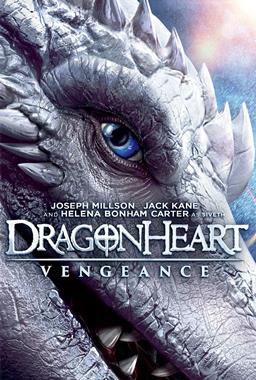
Dragonheart: Vengeance is the fifth Dragonheart film.  I should admit that, as far as I can remember, I’ve only seen one other Dragonheart film (the third one) and I did spend a good deal of Dragonheart: Vengeance trying to figure out just what the Hell was exactly going on.  But, ultimately, it didn’t matter that I sometimes had a hard time following the film’s plot.  To be honest, the only thing that mattered was that Dragonheart: Vengeance not only had a dragon but it was also a dragon that spoke in the voice of Helena Bonham Carter.

Let’s just start with the obvious.  Dragons are cool.  Yes, I know that they’re big and they breathe fire and sometimes they burn down cities and trample countries and they’re kind of protective of their gold and all that.  Plus, there’s always the chance that they don’t actually exist.  But no one can deny that dragons just have a certain style to them that makes them the most intriguing of all the possibly imaginary creatures out there.  Surely I’m not the only one who would not have been terribly upset if Smaug had eaten Bilbo during the second Hobbit film.  Add to that, dragons can fly and they can destroy all of your enemies and they’re kind of a cute, too.  They’re like cats, just with more fire-breathing abilities.

The same can be said of Helena Bonham Carter.  She’s just cool, no matter what she does or says.  Any film is automatically going to be improved by the participation of Helena Bonham Carter.  In this film, Bonham Carter delivers the dragon’s lines with just the right amount of posh sarcasm.  It’s not so much that she doesn’t like humans as much as it’s a case of her being smart enough to know that humans will inevitably disappoint her.

The dragon is named a Siveth.  During the Arthurian age, Siveth resides in the kingdom of Wallachia.  (That’s modern day Romania, which is also where Dragonheart: Vengeance was filmed.)  When Siveth first showed up, she was treated as a hero but, when she refused to follow the orders of shady King Razvan (Arturo Muselli), she was exiled out of the land.

Now, 30 years later, Lukas (Jack Kane) is a young farmer whose entire family has been killed by random raiders.  Seeking revenge, Lukas first asks Razvan for help and, when the king turns out to be useless, he then seeks out Siveth.  Following Lukas is Darius (Joseph Millson), a mercenary who has his own past with Siveth.

When Lukas does eventually discover Siveth, he also discovers that Siveth is actually a peace-loving dragon who refuses to help anyone who is only interested in vengeance.  However, through a chain of events that I didn’t quite follow, Siveth does eventually end up working with Lukas and Darius to not only defeat the raiders but to also reveal the identity of the powerful figure who is actually behind all the mayhem.

Dragonheart: Vengeance is likable movie.  It’s a little bit goofy at times but it still has a definite charm to it.  Yes, the plot isn’t always easy to follow, especially if you haven’t seen the other Dragonheart movies.  But you really don’t watch a movie like this for the plot.  You watch it for the dragon and Helena Bonham Carter makes Siveth into a pretty cool dragon.  Jack Kane and Joseph Millson both give likable performances as Lukas and Darius and the film has a nice message about embracing peace and distrusting anyone in authority.  That’s a message we can all get behind, especially when it’s delivered by a dragon!

Here Are The 2018 Women Film Critics Circle Nominations!


BEST MOVIE ABOUT WOMEN
Mary Shelley
Roma
The Favourite
Widows

BEST MOVIE BY A WOMAN
Can You Ever Forgive Me?
Leave No Trace
The Kindergarten Teacher
You Were Never Really Here

BEST WOMAN STORYTELLER [Screenwriting Award]

Sara Colangelo: The Kindergarten Teacher
Debra Granik: Leave No Trace
Tamara Jenkins: Private Life
Audrey Wells: The Hate U Give

BEST ACTRESS
Toni Collette, Hereditary
Olivia Colman, The Favourite
Viola Davis, Widows
Maggie Gyllenhaal, The Kindergarten Teacher

BEST ACTOR
Ben Foster, Leave No Trace
Ethan Hawke, First Reformed
Viggo Mortensen, Green Book
Hugo Weaving, Black 47

BEST COMEDIC ACTRESS
Helena Bonham Carter, 55 Steps
Olivia Colman, The Favourite
Kathryn Hahn, Private Life
Melissa McCarthy, Can You Ever Forgive Me?

BEST YOUNG ACTRESS
Elle Fanning, Mary Shelley
Elsie Fisher, Eighth Grade
Thomasin McKenzie, Leave No Trace
Amandla Stenberg, The Hate U Give

BEST FOREIGN FILM BY OR ABOUT WOMEN
Capernaum
Happy As Lazzaro
Roma
Zama

BEST DOCUMENTARY BY OR ABOUT WOMEN
RBG
Say Her Name: The Life And Death Of Sandra Bland
Seeing Allred
Shirkers

WOMEN’S WORK/BEST ENSEMBLE
55 Steps
Ocean’s Eight
The Favourite
Widows

SPECIAL MENTION AWARDS

COURAGE IN FILMMAKING
Haifaa Al-Mansour, Mary Shelley
Sara Colangelo, The Kindergarten Teacher
Sandra Luckow, That Way Madness Lies
Jennifer Fox, The Tale

COURAGE IN ACTING [Taking on unconventional roles that radically redefine the images of women on screen]Helena Bonham Carter: 55 Steps
Viola Davis: Widows
Nicole Kidman: Destroyer
Melissa McCarthy: Can You Ever Forgive Me?

ADRIENNE SHELLY AWARD: For a film that most passionately opposes violence against women
Call Her Ganda
I Am Not A Witch
On Her Shoulders
Say Her Name: The Life And Death Of Sandra Bland

JOSEPHINE BAKER AWARD: For best expressing the woman of color experience in America
If Beale Street Could Talk
Life And Nothing More
The Hate U Give
Widows

KAREN MORLEY AWARD: For best exemplifying a woman’s place in history or society, and a courageous search for identity
93 Queen
On The Basis Of Sex
Roma
Woman Walks Ahead

THE INVISIBLE WOMAN AWARD: [Performance by a woman whose exceptional impact on the film dramatically, socially or historically, has been ignored]

Yalitza Aparicio, Roma
Glenn Close, The Wife
Andrea Riseborough, Nancy
The Women Of Widows

BEST SCREEN COUPLE
A Star Is Born
Crazy Rich Asians
Disobedience
If Beale Street Could Talk

BEST FEMALE ACTION HEROES
Adrift
55 Steps
Black Panther
RBG

MOMMIE DEAREST WORST SCREEN MOM OF THE YEAR AWARD
Krista Allen, Party Mom
Toni Collette, Hereditary
Nicole Kidman, Destroyer
Jacki Weaver, Widows

BEST EQUALITY OF THE SEXES
Black Panther
Like Me
On The Basis Of Sex
Widows

BEST ANIMATED FEMALES
Incredibles 2
Liyana
Mary And The Witch’s Flower
Mirai No Mirai

BEST FAMILY FILM
Eighth Grade
Incredibles 2
Science Fair
The Hate U Give

WFCC HALL OF SHAME
Bryan Singer

Horror Film Review: Mary Shelley’s Frankenstein (dir by Kenneth Branagh)


http://www.youtube.com/watch?v=GFaY7r73BIs

Oh my God, this is an exhausting movie.

Directed by and starring Kenneth Branagh, the 1994 film Mary Shelley’s Frankenstein sticks pretty closely to the plot (if not the tone) of Mary Shelley’s original novel.  What that means is that this movie includes a lot of the good stuff that often seems to get left out of other Frankenstein adaptations.  For instance, we learn more about the life of Victor Frankenstein (Kenneth Branagh) before he created his monster.  We find out about his family and his troubled romance with Elizabeth (Helena Bonham-Carter).  Victor’s good friend Henry Clerval (Tom Hulce) is included and so is Professor Waldman (John Cleese) and Captain Robert Walton (Aidan Quinn).

It also means that we get to watch as the Monster (Robert De Niro) flees into the wilderness and later befriends a kindly blind man (Richard Briers).  The Monster, as always, is happy until mankind interferes and treats him unfairly.  The Monster learns to speak and, after it learns to read, it discovers who created it and it sets out for revenge.  We watch as everyone that Victor Frankenstein cares about dies, all as a result of his desire to play God.

And yet, while you have to respect the fact that Branagh tried to stay (more or less) true to the plot of the original novel, Mary Shelley’s Frankenstein is a bit of a chore to sit through.  A huge part of the problem is that Kenneth Branagh cast himself to play Victor Frankenstein.  In the book, Victor is a rather sickly character and his desire to create life is probably as much inspired by his own poor health and the death of the people close to him.  In the film, Branagh plays Victor as being almost a Byronic figure, with the camera emphasizing his flowing hair and his muscular physique.  Even when Victor does push himself to the point of death in his research, you never really believe it because Branagh the director isn’t willing to let Branagh the actor look weak or malnourished.  However, turning Victor into an alpha male also turns him into a jerk.  Unlike say Colin Clive or Peter Cushing in The Curse of Dracula, you never find yourself sympathizing with Kenneth Branagh’s Victor.

And then you have Robert De Niro as the Monster.  Now, really, I imagine that — in 1994 — the idea of De Niro playing the Monster seemed like an obvious one.  I mean, the Monster is a great role and De Niro’s one of the greatest actors who ever lived so if anyone could find a new and interesting way to play Frankenstein’s Creation, it would have to be De Niro, right?

But no.  First off, De Niro may be a great actor but it’s hard to accept the idea that a monster created in Germany would speak with a New York accent.  Even under tons of makeup, De Niro does an okay job of projecting the Monster’s rage but, unlike Karloff or Christopher Lee, De Niro never seems to really connect with the character.  You never forget that you’re watching a heavily made-up Robert De Niro.  De Niro often seems to be rather detached from what’s happening on screen.

Branagh’s directs in a manner that can only be called operatic, which turns out to be a mistake.  The story is already dramatic enough without Branagh spinning the camera around every few moments.  There’s not a subtle moment to be found in the film but unfortunately, Frankenstein is a story that needs just a little bit of subtlety.  It all gets to be a bit overwhelming and, by the time the Monster is literally ripping a heart out of a body, you’re just like, “Enough already!”

It’s just a really tiring movie.

Playing Catch-Up With The Films of 2016: Alice Through The Looking Glass, Gods of Egypt, The Huntsman: Winter’s War, Me Before You, Mother’s Day, Risen


Here are six mini-reviews of six films that I saw in 2016!

Alice Through The Looking Glass (dir by James Bobin)

In a word — BORING!

Personally, I’ve always thought that, as a work of literature, Through The Looking Glass is actually superior to Alice’s Adventures in Wonderland.  That’s largely because Through The Looking Glass is a lot darker than Wonderland and the satire is a lot more fierce.  You wouldn’t know that from watching the latest film adaptation, though.  Alice Through The Looking Glass doesn’t really seem to care much about the source material.  Instead, it’s all about making money and if that means ignoring everything that made the story a classic and instead turning it into a rip-off of every other recent blockbuster, so be it.  At times, I wondered if I was watching a film based on Lewis Carroll or a film based on Suicide Squad.  Well, regardless, the whole enterprise is way too cynical to really enjoy.

(On the plus side, the CGI is fairly well-done.  If you listen, you’ll hear the voice of Alan Rickman.)

Gods of Egypt (dir by Alex Proyas)

I don’t even know where to begin when it comes to describing the plot of Gods of Egypt.  This was one of the most confusing films that I’ve ever seen but then again, I’m also not exactly an expert when it comes to Egyptian mythology.  As far as I could tell, it was about Egyptian Gods fighting some sort of war with each other but I was never quite sure who was who or why they were fighting or anything else.  My ADHD went crazy while I was watching Gods of Egypt.  There were so much plot and so many superfluous distractions that I couldn’t really concentrate on what the Hell was actually going on.

But you know what?  With all that in mind, Gods of Egypt is still not as bad as you’ve heard.  It’s a big and ludicrous film but ultimately, it’s so big and so ludicrous that it becomes oddly charming.  Director Alex Proyas had a definite vision in mind when he made this film and that alone makes Gods of Egypt better than some of the other films that I’m reviewing in this post.

Is Gods of Egypt so bad that its good?  I wouldn’t necessarily say that.  Instead, I would say that it’s so ludicrous that it’s unexpectedly watchable.

The Huntsman: Winter’s War (dir by Cedric Nicolas-Troyan)

Bleh.  Who cares?  I mean, I hate to put it like that but The Huntsman: Winter’s War felt pretty much like every other wannabe blockbuster that was released in April of last year.  Big battles, big cast, big visuals, big production but the movie itself was way too predictable to be interesting.

Did we really need a follow-up to Snow White and The Huntsman?  Judging by this film, we did not.

Me Before You (dir by Thea Sharrock)

Me Before You was assisted suicide propaganda, disguised as a Nicolas Sparks-style love story.  Emilia Clarke is hired to serve as a caregiver to a paralyzed and bitter former banker played by Sam Claflin.  At first they hate each other but then they love each other but it may be too late because Claflin is determined to end his life in Switzerland.  Trying to change his mind, Clarke tries to prove to him that it’s a big beautiful world out there.  Claflin appreciates the effort but it turns out that he really, really wants to die.  It helps, of course, that Switzerland is a really beautiful and romantic country.  I mean, if you’re going to end your life, Switzerland is the place to do it.  Take that, Sea of Trees.

Anyway, Me Before You makes its points with all the subtlety and nuance of a sledge-hammer that’s been borrowed from the Final Exit Network.  It doesn’t help that Clarke and Claflin have next to no chemistry.  Even without all the propaganda, Me Before You would have been forgettable.  The propaganda just pushes the movie over the line that separates mediocre from terrible.

Mother’s Day (dir by Garry Marshall)

Y’know, the only reason that I’ve put off writing about how much I hated this film is because Garry Marshall died shortly after it was released and I read so many tweets and interviews from people talking about what a nice and sincere guy he was that I actually started to feel guilty for hating his final movie.

But seriously, Mother’s Day was really bad.  This was the third of Marshall’s holiday films.  All three of them were ensemble pieces that ascribed a ludicrous amount of importance to one particular holiday.  None of them were any good, largely because they all felt like cynical cash-ins.  If you didn’t see Valentine’s Day, you hated love.  If you didn’t see New Year’s Eve, you didn’t care about the future of the world.  And if you didn’t see Mother’s Day … well, let’s just not go there, okay?

Mother’s Day takes place in Atlanta and it deals with a group of people who are all either mothers or dealing with a mother.  The ensemble is made up of familiar faces — Jennifer Aniston, Julia Roberts, Kate Hudson, and others! — but nobody really seems to be making much of an effort to act.  Instead, they simple show up, recite a few lines in whatever their trademark style may be, and then cash their paycheck.  The whole thing feels so incredibly manipulative and shallow and fake that it leaves you wondering if maybe all future holidays should be canceled.

I know Garry Marshall was a great guy but seriously, Mother’s Day is just the worst.

(For a far better movie about Mother’s Day, check out the 2010 film starring Rebecca De Mornay.)

Risen (dir by Kevin Reynolds)

As far as recent Biblical films go, Risen is not that bad.  It takes place shortly after the Crucifixion and stars Joseph Fiennes as a Roman centurion who is assigned to discover why the body of Jesus has disappeared from its tomb.  You can probably guess what happens next.  The film may be a little bit heavy-handed but the Roman Empire is convincingly recreated, Joseph Fiennes gives a pretty good performance, and Kevin Reynolds keeps the action moving quickly.  As a faith-based film that never becomes preachy, Risen is far superior to something like God’s Not Dead 2.


Cleaning Out The DVR #37: A Room With A View (dir by James Ivory)


(For those following at home, Lisa is attempting to clean out her DVR by watching and reviewing 38 films by the end of today!!!!!  Will she make it?  Keep following the site to find out!)

Room_with_a_View

Poor Cecil Vyse.

The 1986 film A Room With A View is a love story.  It’s about a young woman who meets a young man in Florence, Italy and then, upon returning to England, she discovers that the same young man and his father are now her neighbors.  From the minutes they meet, it’s obvious that the young man and the young woman are destined to be together.  The only thing that’s standing in their way is the strict culture of conformity of Edwardian England.  That and the fact that the young woman is engaged to Cecil Vyse.

Cecil represents the establishment.  He comes from a good family.  He’s well-educated.  He talks about the right subjects.  He holds all the right opinions.  He’s not an exciting man but he’s a good man who is destined to have successful but not very interesting life.  From the minute that we meet him, we know that our heroine is not meant to stay with Cecil.

And it’s heart-breaking because the film goes out of its way to show that Cecil is not a bad person.  In his own befuddled way, he’s one of the most likable people in the entire film.  He may not have an interesting mind but he does have a good heart.  When the moment comes that Cecil’s heart is broken, the film treats him with respect.

Of course, it helps that Cecil was played, in one of his first roles, by Daniel Day-Lewis.  Day-Lewis plays the role with a quiet dignity.  Instead of just turning Cecil into a mere nuisance that has to be pushed out of the way in the name of love, Day-Lewis emphasizes Cecil’s humanity.  There’s a quiet scene where the recently heart-broken Cecil ties his shoes that is an example of truly great acting.

As for the two young lovers, Lucy Honeychurch is played by Helena Bonham Carter while George Emerson is played by Julian Sands.  Both of them are achingly beautiful and, even more importantly, they both look as if they belong in Edward England and with each other.  Still, seeing this film today, it takes a little while to adjust to seeing both Bonham Carter and Sands playing such … normal characters.  We’re so used to seeing Helena killing people in Tim Burton movies that it’s nice to see her getting to rather sweetly fall in love for once.

The entire film is full of great British actors, all at their best.  Denholm Elliott plays George’s father and gets to deliver a rousing defense of both true love and free thought.  Maggie Smith plays Lucy’s overprotective aunt while Rosemary Leach is Lucy’s supportive mother.  And then you’ve got Simon Callow as an eccentric vicar.  (Because every British film needs an eccentric vicar.)  Lucy’s younger brother is played by an actor named Rupert Graves and he’s so adorable that I kind of found myself wishing that he could have had a spin-off movie of his own.

A Room With A View is a wonderfully romantic film, one that I could easily see myself spending days just watching over and over again.  A Room With A View was nominated for best picture but it lost to the far less romantic Platoon.

(For those following at home, I now have one more review to go to reach my goal of reviewing 38 films in 10 days!)

Film Review: Suffragette (dir by Sarah Gavron)


Suffragette_poster

It’s funny (or perhaps not) when you think about it.  I’ve always taken my right to vote (and, in theory at least, have some say over how I’m governed) for granted.  Even before I turned 18 and officially registered, I never had any doubt that, some day, I would be able to vote for President and every other elected office.  (And, even before that, I voted in student council and mock presidential elections.)  Voting is something that I so take for granted that, even when I cast my first official vote in the 2004 Presidential election, it didn’t really mean much to me.  Given the choice between Bush and Kerry, I wrote in the name of Charles Jay, the candidate of the Personal Choice Party.  I knew nothing about Mr. Jay but I had come across his name online and I liked the idea of personal choice and I thought it would make for a funny story to tell all of my friends who were actually taking the election seriously.  (Even back then, I enjoyed annoying people who actually cared.)  Essentially, I threw my vote away and I did it without a second thought.

Of course, what I didn’t understand at that time was that the right to vote was something that many brave women had fought for, gone to prison for, and even died for.  If I had lived before 1920, I would not have had the right to vote and I certainly would not have had the opportunity to so casually toss my vote away.  Women in the U.S. did not win the right to vote until 1920.  But before everyone starts in with the usual “America is so backwards!” crap, consider this.  In Britain, women did not win the right to vote until 1928.  Women could not vote in France until 1944 and Switzerland waited until 1984!  Last year, women in Saudi Arabia voted for the first time.

The struggle of British women to gain equal rights under the law is the subject of the film Suffragette.  Maud Watts (played by Carey Mulligan, my generation’s Audrey Hepburn) is a laundress living in London in 1912.  She spends her day working for little money and for a male boss who, for years, has sexually harassed and abused the women working under him.  Unlike a lot of the women who work at the laundry, Maud has a stable home life.  She is a devoted mother and her husband, Sonny (Ben Whishaw), is supportive.

Or, at least, he seems to be at first.  Things chance once Maud gets involved in the suffragette movement.  It’s not just that her lecherous boss laughs at her for wanting to be treated equally,  That, we expect.  No, what is truly infuriating is to watch how quickly Sonny goes from being a loving husband to a monster, the type who forbids Maud from seeing her own son and then callously puts the boy up for adoption.  Confronted by his wife’s demand to be treated as his equal, Sonny reveals himself to be no better than the casual misogynists that Maud must deal with, on a daily basis, at work.  Raised on a diet of films where men come to their senses and justice (and love) somehow prevails, I kept expecting Sonny to see the error of his ways or for Maud to at least be reunited with her son.  Needless to say, none of that happened.  This is a film that never lets us forget the sacrifice involved in fighting for equal rights.

Instead, having lost everything that previously defined her life, Maud throws herself into the battle for women’s rights.  And, as Suffragette makes clear, that meant a lot more than just winning the right to vote.

It’s an inspiring story and both Carey Mulligan and Helena Bonham-Carter (who plays another suffragette) give powerful performances.  At the same time — and this is something that many critics need to understand and acknowledge — you can love a film for what it has to say while, at the same time, acknowledging that it doesn’t totally work as a piece of cinema.  Suffragette is not a perfect film and reviewing it, I found myself torn between praising the film’s message and criticizing director Sarah Gavron’s frequently uninspired cinematic technique.  (From a strictly cinematic point of view, Suffragette will play better on television than on a big movie screen.)

Perhaps for me, the film’s great weakness was casting Meryl Streep in the role of real-life activist Emmeline Pankhurst.  Ms. Pankhurst was the leader of the Suffragette movement and is an inspiring historical figure.  Unfortunately, as soon as Meryl shows up for her four-minute cameo, it becomes impossible to see her as being anyone other than Meryl Streep, a wealthy white woman who — unlike the real-life Ms. Pankhurst — will never be sent to prison for demanding the right to vote.  When Meryl shows up as Ms. Pankhurst, it takes the viewer out of the historical reality of the film.  You’re no longer watching a group of brave women risking their lives and demanding to be treated equally under the law.  Instead, you’re just watching a Meryl Streep cameo.

Throughout the film, Maud stays in a succession of safe houses and decrepit offices.  She always has a picture of Ms. Pankhurst near her and occasionally, she looks to it for strength and guidance.  However, since the picture of Ms. Pankhurst is really just a picture of Meryl Streep, it again serves to take the viewer out of the film.  Perhaps if Meryl Streep had more screen time, she would be able to get us to think of her as being Ms. Pankhurst but since she’s only onscreen for four minutes, she instead just serves to distract from the film’s message.

(Personally, I would have cast either Emma Thompson and Kristin Scott Thomas in the role of Ms. Pankhurst, two great actresses who would could have portrayed her charisma without being quite as distracting as Meryl Streep.)

As I said earlier, Suffragette is not a perfect film but it does teach an important lesson that needs to be learned, especially by those of us who occasionally take our rights for granted.  It’s a film that reminds us that years ago, brave women fought for everything that we have now and it’s a film that encourages us to keep fighting.  It’s not a perfect film but it’s a film that deserves to be seen.