Retro Television Review is where we analyze the shows from ago. NGL, I’m a fan of House. I know it seems like just yesterday that we were all watching House live or with our Tivos. Ah, the memories were like strawberry wine and Vicodin!
Hooray, this is the last episode directed by Bryan Singer. He was just awful at directing House episodes and by multiple accounts- he, he himself, was terrible. Multiple people have come forward about his lateness, unprofessional behavior, and causing me to go bald at 24. Why, Bryan?! Why?! I wondered why this episode was dragging and generally kind of boring. House was slower and morose – Bryan’s fault. The clinic B story didn’t move the plot along; they were just there to bore me – and me alone – Bryan’s fault. The deepest cut of all – I went bald- Thanks, Bryan!
Occam’s Razor features two college co-eds getting down and I mean knocking boots for way too long! This is supposed to be a teaser Bryan, not your chance to see a shirtless 20 year old… oh right! It really was all there waiting for us to recognize. Post-coital, the college kid gets really sick as in … a heart attack? I can’t really tell because it was directed so very badly! Thanks, Bryan!
Everyone accuses the boy of drug use, but he’s basically clean. Guess what, his symptoms don’t match drug use. What do they match? Gout medication poisoning, but everyone is convinced that House is wrong. Why exactly? Why does everyone assume that he’ll be wrong? I mean, he’s batting 1000 so far. The kid’s immune system shuts down and he has to get naked to go into a clean room. He got way too naked if you ask me- thanks, Bryan. Bryan, you really make it easy to put the pieces together.
The team checks the pharmacy where the college kid got cough medicine, but the pills seem to be just cough meds. I gotta say, So what? The symptoms match up and yes House is acting off today, but that’s because Bryan Singer is just really bad at directing television. Come on guys, give House a chance … and some Vicodin!
Eventually, they agree to treat for the gout medication poisoning and everything is fine, but then we have to sit through another 8 minutes of House obsessing over the meds to prove that he was right. If you want to do that Bryan, do it before the kid is well. Ugh Bryan, just go away.
Gotta say, not a big fan of this episode, but Bryan takes a backseat role in the show from here on out. Good riddance!
NGL, I’m a fan of this show. I’m hoping that this retro television review of House MD gets legs and people enjoy my reviews. I’m going to start with Friday posts and if people enjoy them, I will post twice a week.
The pilot episode accomplishes every requirement that a pilot needs to achieve: it introduces the characters, teases conflict, has a story for the episode, and got a pickup for a full season. However, not all directors are gifted at television directing and this was evident with Bryan Singer’s direction. The pilot was slow like everyone had Dramamine and turkey with gravy sandwich slow. Hugh Laurie’s delivery was slow and melancholy as was everyone else’s delivery. I just kept telling myself: Bryan only directs this episode, Bryan only directs this episode, and I should add extra hot honey to my anchovy pizza.
We see House popping pills (slowly), Forman’s edginess, Chase’s privilege and insecurity, Allison’s neediness, Wilson’s co-dependency, and Cuddy’s authority mixed with sexiness. What we don’t get is: House’s quick-witted arrogance and total political incorrectness and the inter-character dramatic tension.
The pilot patient is a 1st grade teacher who collapses and. Wilson claims the patient is his cousin to get House to take her case, House and the team do the differential logic problem several times and make MANY wrong diagnoses. Cuddy interferes and then caves, but holds firm on House doing his clinic hours, which provide a many season comic relief. The story formula is clear, but the delivery was so slow and all the shots were in sepia tone; so, I wanted to exile Bryan Singer to X-Men and get him away from my show! House determines that she has a tape worm and saves her. YAY!
I hope this encourages everyone to watch the show again and if anyone would like to review it as well, it would be a lot of fun. You can watch the show almost anywhere.
After Nightcrawler (Alan Cumming) causes a national security crisis by teleporting into the White House, Colonel William Stryker (Brian Cox) is given the authority to invade Professor Xavier’s School and investigate its connection to the mutants. Stryker, who not only wants to investigate the mutants but also destroy them by manipulating the same technology that Xavier uses to find them, just happens to be an old enemy of Logan’s (Hugh Jackman). In fact, Stryker is responsible for Logan fusing the adamantium to his bones. That’s a hell of a coincidence.
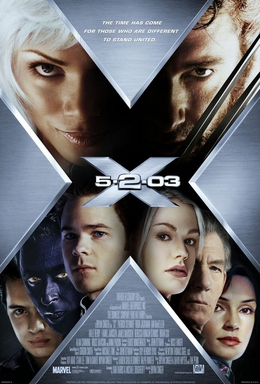
A sequel to X-Men, X2 tells a bigger and more complex story than the first film. Professor Xavier’s students are spread out by the chaos. Rogue (Anna Paquin) sees prejudice firsthand when Bobby Drake (Shawn Ashmore) is betrayed by his own family. Pyro (Aaron Stanford) is tempted to reject the X-Men’s philosophy of coexistence. After being underused in the first film, both Scott (James Marsden) and Jean Grey (Famke Janssen) are key players here. Magneto (Ian McKellen) and Mystique (Rebecca Romijn-Stamos) return, this time temporarily allying with Professor X (Patrick Stewart) to stop Stryker. Logan has his own reasons to go after Stryker. Surprisingly, X2 is not only bigger than the first film but it’s also better. The actors are more convincing in their roles, the action is more exciting, and director Bryan Singer capably juggles all of the different parts without losing the plot. He even manages to ably set up the Dark Phoenix Saga. In the first film, the X-Men had it almost too easy when it came to battling opponents like Toad and Sabretooth. This film has not only Brian Cox’s William Stryker but also Kelly Hu’s Deathstrike.
Those of us who were shocked when X-Men turned out to be good were even more shocked when X2 turned out to be even better. For a little while, it seemed like there would never be a bad X-Men movie! Later, that’s the way a lot of us would also feel about the Marvel movies. Those were good days.
I saw X-Men on the first day that it opened in theaters. Actually, I saw it twice.
The first time I saw it was by myself. I had been planning on waiting to see it in the evening with my friends Johnny and Kyleigh, but I actually found myself with a few hours to spare, so I decided to go ahead and see it. I watched it in the later afternoon and, after that showing got out, I met up with Johnny and Kyleigh outside the theater and went straight back in.
It’s hard to describe what a big deal the X-Men movie was in 2000. This was before there was a new Marvel movie or show every three months. It was also at a time when comic book movies, following the failure of Batman and Robin, were no longer considered to be a sure thing. Johnny and I were lifelong Marvel fans and, having survived the trauma of The Phantom Menace, were very much looking forward to the X-Men movie. We knew that both Patrick Stewart and Ian McKellen were the perfect choices for Professor X and Magneto. Anna Paquin seemed like a good choice for Rogue. But would Hugh Jackman, an actor neither of us had heard of before, be able to bring Wolverine to life?
Even though we both rolled our eyes when we heard that Rogue’s name was apparently Marie, Johnny and I were shocked at how good X-Men was. Today, we take it for granted that comic books can be turned into movies, but in 2000, X-Men took us by surprise by being well-acted, well-directed, and surprisingly entertaining. Kyleigh was not a fan of comic books in general and she liked the movie considerably less than we did. (“Dr. Wheelchair” was her name for Charles Xavier.) But for Marvel fans, X-Men was the anti-Phantom Menace.
Looking back, the plot felt like it could have been lifted from the pages of the comic book. Sen. Robert Kelly (Bruce Davison) is leading a national political movement against the mutants. Magneto has created a machine that will induce mutations in human beings. (The movie opens with a flashback that establishes Magneto as a survivor of the Holocaust. Today, everyone knows his backstory, but in 2000, people were stunned that a comic book movie could also deal with reality.) Magneto and Professor X both try to recruit Rogue to their side, and Wolverine, as Rogue’s protector, reveals his claws and reluctantly becomes a member of the X-Men.
When X-Men was first released, Hugh Jackman was the big question mark, but he turned out to be the perfect choice for Wolverine, even if he did seem to be too tall for the role. Jackman was tough and surly and somehow, he looked credible with claws. He was everything that fans like me wanted out of Wolverine and, once he showed up, I knew it was going to be a good movie. Not surprisingly, Patrick Stewart and Ian McKellen were perfect for Xavier and Magneto, as was Anna Paquin as Rogue. Though they’re overshadowed by Stewart, McKellen, Jackman, and Paquin, the other members of the X-Men are played by James Marsden (Scott), Famke Janssen (Jean Grey), and Halle Berry (Storm). Ray Park plays Toad, Tyler Mane plays Sabretooth, and Rebecca Romijn-Stamos excited male viewers everywhere by playing the naked and blue Mystique.
A lot of time has passed since 2000. An entire Marvel Cinematic Universe was created that did not initially include the X-Men, though that has since changed. Bryan Singer is no longer on the A-list. But I still always look fondly on the day that I watched X-Men twice.
“All these traditions, jack-o’-lanterns, putting on costumes, handing out treats, they were started to protect us, but nowadays… no one really cares.” — Principal Steven Wilkins
What better and more fun way is there to celebrate the full month of scares and horror that October has become than with Michael Dougherty’s 2007 film Trick ’r Treat? It is the kind of Halloween movie that feels less like it was merely set on the holiday and more like it was built out of everything people love about it. Trick ’r Treat has jack-o’-lanterns glowing on porches, costumes ranging from charming to grotesque, chilly nighttime streets, old local legends, candy bowls, haunted-school-bus stories, werewolves, serial killers, and that ever-present feeling that something is watching from behind a tree. It is funny, nasty, creepy, and strangely cozy at the same time. More than almost any modern horror film, it understands Halloween as a whole atmosphere rather than a collection of familiar props.
At first glance, the movie looks like an anthology film. It is divided into several distinct stories with their own central characters, premises, and horror styles. One segment involves a principal with a murderous secret, another follows a group of kids investigating a grim local legend, another centers on young women looking for dates at a costume party, and another focuses on a bitter old man dealing with a small but persistent visitor. Each story could almost function as its own short horror movie. Dougherty clearly enjoys shifting tones, moving from slasher material to ghost-story melancholy, then into monster-movie lunacy and dark comedy. But the key difference is that Trick ’r Treat is not simply an anthology stitched together by a host or a framing device. Every story told in the film ties into an overarching story unfolding across one night of Halloween.
That structure is one of the movie’s smartest features. Characters drift in and out of one another’s narratives, sometimes briefly and sometimes in ways that completely change the audience’s understanding of what they have already seen. A person who seems like a background extra in one sequence becomes the focus of another. A strange sound, a distant scream, a passing school bus, or a visual detail in one story can gain much more meaning when it reappears elsewhere. The movie plays with chronology too, allowing events to overlap and occasionally revealing that scenes which seemed straightforward were occurring at a different point in the night than viewers assumed. It rewards attention without becoming confusing for the sake of being clever.
Dougherty handles those connections smoothly because the film never stops feeling like one continuous Halloween night. The transitions are playful rather than showy. The camera may follow a character down a street, past a decorated yard, into another group’s story, and suddenly the audience has entered a different kind of nightmare. That makes the town itself feel like a character. It is not a generic horror-movie setting where bad things happen because the script requires them to. It feels like a community with traditions, buried crimes, local myths, annual rituals, and plenty of people who are either hiding something or about to discover something unpleasant.
The town’s Halloween obsession is also what gives the film its personality. Trick ’r Treat treats Halloween rules almost like ancient laws: wear a costume, hand out candy, never blow out a jack-o’-lantern before midnight, and always respect the dead. Breaking those rules does not guarantee immediate punishment in a simple moralistic way, but it certainly puts people at risk. The film’s central icon, Sam, embodies that idea. Wearing orange pajamas, a burlap sack mask, and carrying a lollipop that can become a weapon, Sam is one of the great modern horror mascots because he is both adorable and deeply unsettling. He is not presented as a typical slasher villain with a detailed backstory or a conventional motivation. He feels more like the living spirit of Halloween itself: mischievous, ceremonial, cruel when necessary, and completely devoted to the holiday’s traditions.
Sam’s presence gives the movie a connective thread beyond plot mechanics. He appears in the background, watches over events, and eventually takes center stage in a way that is both amusing and genuinely tense. There is something almost storybook-like about him. He resembles a child going door to door for candy, but his behavior suggests an old supernatural force enforcing rules everyone else has forgotten. The movie wisely never overexplains him. Horror icons often become less interesting once every mystery is reduced to lore, family trees, and exposition. Sam works because Dougherty lets him remain partly unknowable.
The cast is another reason the film holds together so well. Dylan Baker is excellent as Steven Wilkins, the seemingly mild suburban principal whose cheerful politeness becomes much more disturbing once the movie reveals what he is doing after dark. Baker has a talent for making every smile look just slightly too controlled. His storyline is especially effective because it mixes grotesque humor with an unsettling domestic quality. He is not stalking victims through a foggy forest or living in an abandoned asylum. He is cleaning up a mess in his backyard while trying to maintain a normal family routine. That contrast makes his scenes nastier and funnier.
Brian Cox brings real weight to Mr. Kreeg, the grumpy old man at the center of the film’s most memorable Sam-focused material. Cox could have played him as a broad caricature, but he gives the character enough fear, frustration, and hidden sadness to make the confrontation feel more substantial than a simple old-man-versus-monster sequence. The movie’s final act uses his house almost like a haunted maze, with the warm, cluttered interior gradually becoming a battlefield. The tone remains playful, yet there is a real sense of danger whenever Sam drops the cute disguise and shows what he can do.
Anna Paquin also stands out in the segment involving Laurie and her friends. At first, it seems like the film is setting up a familiar vulnerability narrative: young women in costumes, a dark forest, strange men, and the possibility of a predatory attacker. Then Trick ’r Treat gleefully twists expectations. The reveal is not subtle, but it is staged with enough energy and confidence that it lands as a crowd-pleasing monster-movie moment. Dougherty knows that horror does not always need to be grim to be effective. Sometimes the best reaction is an audience laughing in surprise right before a scene turns bloodier than expected.
The school-bus story is probably the film’s creepiest material. The idea of children killed by adults and returning as drowned, decayed figures could have been handled in a cheap or overly cruel way, but the movie gives it a sad, mythic edge. The ghosts are frightening, but the story is also about guilt, buried history, and a town that has allowed its ugliest secret to become a campfire legend. The children may be supernatural monsters by the time they reappear, but the adults who wronged them are even more horrifying. That is a recurring theme throughout Trick ’r Treat: Halloween monsters are dangerous, but human selfishness, cowardice, and cruelty tend to create the worst consequences.
Visually, the film has aged remarkably well because it does not chase a slick, overly polished look. It has a rich autumnal color palette full of oranges, blacks, deep reds, and warm porch-light yellows. The night scenes are dark enough to feel threatening but clear enough that viewers can appreciate the costumes, decorations, and production design. Every street seems covered in leaves, every house has candles or carved pumpkins, and every shadow seems capable of hiding a creature. It feels like a heightened version of childhood Halloween memories, except those memories have been invaded by murderers, werewolves, demons, and ghosts.
The practical effects and creature work add a lot to that charm. The movie uses CGI when needed, but it does not depend on weightless digital spectacle. Sam’s physicality, the werewolf transformations, the decayed school-bus children, and the various masks and props all have a tactile quality. They look like things that belong in a haunted attraction, a particularly elaborate costume shop, or an old EC Comics-style horror story. That handmade texture fits the film perfectly. Trick ’r Treat is polished, but it never feels sterile.
What makes the movie so rewatchable is how comfortably it moves between tones. It can be goofy without becoming stupid, gruesome without becoming exhausting, and sentimental about Halloween without turning saccharine. It embraces the holiday’s childish excitement while acknowledging the darker folklore underneath it. There is candy, costumes, and neighborhood fun, but there are also old grudges, punished sinners, restless dead, and things that hunt after midnight. Dougherty understands that those two sides belong together. Halloween is fun partly because it lets people play with fear in a safe, communal way, and Trick ’r Treat captures that balance better than most horror movies.
The film’s anthology-like design gives it variety, while its overlapping characters, recurring events, and shared setting make it feel like one cohesive story rather than a disconnected collection of shorts. Its lasting popularity has also made the lack of a sequel feel increasingly strange. Fans have been clamoring for another trip through Sam’s Halloween night for years, and Dougherty has repeatedly hinted that he has ideas for where a follow-up could go. He has discussed multiple script drafts, storyboards, concept art, and the possibility of giving Sam a new adversary, but the project still has not received an official greenlight.
That uncertainty is frustrating, especially because Trick ’r Treat feels like a world with plenty more stories left to tell. At the same time, it is probably better that Dougherty has not rushed out a sequel just to cash in on the film’s cult status. The original works because it feels carefully constructed, visually specific, and completely committed to its Halloween setting; any follow-up would need to preserve that same mix of horror, comedy, folklore, and interconnected storytelling. For now, Trick ’r Treat remains an annual October rewatch because it honors Halloween’s old traditions while creating its own: a funny, spooky, blood-soaked celebration of costumes, candy, campfire legends, and the things that come out once the porch lights go dark.
Can a film be a box office hit and win the most Oscars of the year while also ending the career of the man who was credited as directing it?
If it’s Bohemian Rhapsody, it can.
The story is well-known but it is worth repeating. From the moment that the film went into production in 2017 until it was finally released in November of 2018, the buzz was that Bohemian Rhapsody was going to be a disaster. Despite the fact that he sometimes claimed that directing a biopic about Queen lead singer Freddy Mercury was a bit of a passion project for him, reports from the set indicated that director Bryan Singer was behaving just a little bit erratically. He argued with lead actor Rami Malek. He frequently disappeared from the set. Shooting was delayed for days because no one knew where Singer was. At the same time, with the #MeToo movement at the height of its cultural power, Singer was being accused of being one of Hollywood’s worst abusers. Eventually, 20th Century Fox suspended the production, fired Bryan Singer, and brought in Dexter Fletcher to finish shooting the film. By most accounts, Fletcher did a professional and exemplary job of getting the production back on track but, due to the DGA bylaws, he wasn’t credited with directing the film. Instead, he had to settle for an executive producer credit and the opportunity to direct the Elton John biopic, Rocketman.
As such, no one was expecting much from Bohemian Rhapsody. There were, of course, reports that Rami Malek did an unusually good job as Freddy Mercury. If somehow the film could be saved in editing, Malek might even pick up an Oscar nomination. But everyone knew that Bohemian Rhapsody was going to have to overcome a lot to be a successful film. While everyone appreciated that Dexter Fletcher had finished the film after Singer flaked out, there was a lot of doubt as to whether or not Fletcher’s work would mesh with Singer’s vision.
And indeed, the initial reviews were not positive. Malek was praised by most (but certainly not all) critics but the film itself was described as being disjointed and full of clichés. The film’s historical accuracy was criticized, as was its reticence in seriously exploring Mercury’s sexuality. Bohemian Rhapsody‘s editing was also heavily criticized, with the film’s sloppiness felt to be a result of the editor trying to put a coherent story together out of scenes that were filmed by two very different directors.
Here’s the thing, though.
The critics may have dismissed the film but what about the audiences? What about the people who pay money to see a film in a theater on the weekend that it comes out? What about the people who are motivated not by the opinions of film critics but instead by the recommendations of their friends and family? Those people, they didn’t care. They flocked to see Bohemian Rhapsody and, judging by the film’s box office, quite a few people saw it more than once. After all the drama and bad publicity, Bohemian Rhapsody became a huge hit.
It also became an Oscar contender. The film received five Oscar nominations, including for Best Picture of the Year. (Among the films that were not nominated for Best Picture were Eighth Grade, First Reformed, First Man, The Ballad of Buster Scruggs, and If Beale Street Could Talk.) Though the award for Best Picture went to Green Book (another film that was more popular with audiences than with critics), Bohemian Rhapsody won the other four awards for which it was nominated. In fact, Bohemian Rhapsody won the most Oscars that year. It won more Oscars than BlackKklansman, Black Panther, A Star is Born, The Favourite, and Roma. Bohemian Rhapsody even won the Oscar for Best Editing.
Even at the time that Bohemian Rhapsody was winning all of those Oscars, people seemed to be rather embarrassed by the film’s success. (Not one winner mentioned Bryan Singer in their speech, though most did take the time to thank Dexter Fletcher.) In the years since, Bohemian Rhapsody has developed a reputation for being one of the worst films to ever be nominated for Best Picture.
So, when I rewatched the film on Hulu, the main question on my mind was, “Is Bohemian Rhapsody as bad as everyone remembers?”
Well …. it’s not great. At the same time, it’s not terrible. It’s one of those films that’s very much in the middle. All those complaints about Bohemian Rhapsody being disjointed were and are valid. The script indulges in just about every rock star biopic cliché and the other members of Queen are portrayed as being ciphers. Perhaps most surprisingly, Rami Malek’s acclaimed, Oscar-winning performance doesn’t hold up particularly well. Malek has the charisma necessary to be a believable rock star but his performance is all on the surface and you never really get any ideas as to what exactly was going on inside of Mercury’s head. This is a biopic that doesn’t seem to be sure what it wants to say about its main subject, other than “Thanks for the music.” And really, there’s nothing wrong with saying “Thanks for the music.” But that could have just as easily been said by re-releasing a Queen concert film. That said, the story moves quickly, the 70s and 80s fashion is enjoyably over the top, and the concert scenes are nicely put together. I’m not really a Queen fan but I know that I’m in the minority and there’s enough Queen music in the film to keep the majority happy. The film, after all, was made for the fans.
So, I guess my opinion is that Bohemian Rhapsody isn’t good enough to justify all of those Oscars but it’s not quite bad enough to justify all of the hate either. The film would probably have a better reputation if it hadn’t won all those Oscars. Without all of those Oscars, it would be remembered as an uneven biopic with some good musical scenes and a lot of enjoyably tacky fashion choices. Instead, it’s destined to forever be remembered as the film that won Best Editing over The Favourite. Sometimes, it’s better to not be nominated.
It will also be remembered as the film that, along with a series of serious sexual misconduct allegations, ended Bryan Singer’s career as a major filmmaker. Singer was briefly attached to direct a new version of Red Sonja but, after the resulting outcry, that project was canceled. As far as I know, he hasn’t been attached to any major films since then. With the X-Men now a part of the MCU, it’s doubtful he’ll be invited to have anything else to do with that franchise. Much as happened with Sam Peckinpah and Convoy, Bohemian Rhapsody was a box office success that made its credited director a pariah in the industry. Dexter Fletcher, meanwhile, was acclaimed for his work as director of Rocketman and he recently directed two of the better episodes of The Offer.
BEST MOVIE ABOUT WOMEN Mary Shelley
Roma
The Favourite
Widows
BEST MOVIE BY A WOMAN Can You Ever Forgive Me?
Leave No Trace
The Kindergarten Teacher
You Were Never Really Here
BEST WOMAN STORYTELLER [Screenwriting Award]
Sara Colangelo: The Kindergarten Teacher
Debra Granik: Leave No Trace
Tamara Jenkins: Private Life
Audrey Wells: The Hate U Give
BEST ACTRESS Toni Collette, Hereditary
Olivia Colman, The Favourite
Viola Davis, Widows
Maggie Gyllenhaal, The Kindergarten Teacher
BEST ACTOR Ben Foster, Leave No Trace
Ethan Hawke, First Reformed
Viggo Mortensen, Green Book
Hugo Weaving, Black 47
BEST COMEDIC ACTRESS Helena Bonham Carter, 55 Steps
Olivia Colman, The Favourite
Kathryn Hahn, Private Life
Melissa McCarthy, Can You Ever Forgive Me?
BEST YOUNG ACTRESS Elle Fanning, Mary Shelley
Elsie Fisher, Eighth Grade
Thomasin McKenzie, Leave No Trace
Amandla Stenberg, The Hate U Give
BEST FOREIGN FILM BY OR ABOUT WOMEN Capernaum
Happy As Lazzaro
Roma
Zama
BEST DOCUMENTARY BY OR ABOUT WOMEN RBG
Say Her Name: The Life And Death Of Sandra Bland
Seeing Allred
Shirkers
WOMEN’S WORK/BEST ENSEMBLE 55 Steps
Ocean’s Eight
The Favourite
Widows
SPECIAL MENTION AWARDS
COURAGE IN FILMMAKING Haifaa Al-Mansour, Mary Shelley
Sara Colangelo, The Kindergarten Teacher
Sandra Luckow, That Way Madness Lies
Jennifer Fox, The Tale
COURAGE IN ACTING [Taking on unconventional roles that radically redefine the images of women on screen]Helena Bonham Carter: 55 Steps
Viola Davis: Widows
Nicole Kidman: Destroyer
Melissa McCarthy: Can You Ever Forgive Me?
ADRIENNE SHELLY AWARD: For a film that most passionately opposes violence against women
Call Her Ganda
I Am Not A Witch
On Her Shoulders
Say Her Name: The Life And Death Of Sandra Bland
JOSEPHINE BAKER AWARD: For best expressing the woman of color experience in America
If Beale Street Could Talk
Life And Nothing More
The Hate U Give
Widows
KAREN MORLEY AWARD: For best exemplifying a woman’s place in history or society, and a courageous search for identity
93 Queen
On The Basis Of Sex
Roma
Woman Walks Ahead
THE INVISIBLE WOMAN AWARD: [Performance by a woman whose exceptional impact on the film dramatically, socially or historically, has been ignored]
Yalitza Aparicio, Roma
Glenn Close, The Wife
Andrea Riseborough, Nancy
The Women Of Widows
BEST SCREEN COUPLE
A Star Is Born
Crazy Rich Asians
Disobedience
If Beale Street Could Talk
BEST FEMALE ACTION HEROES Adrift
55 Steps Black Panther
RBG
MOMMIE DEAREST WORST SCREEN MOM OF THE YEAR AWARD Krista Allen, Party Mom
Toni Collette, Hereditary
Nicole Kidman, Destroyer
Jacki Weaver, Widows
BEST EQUALITY OF THE SEXES Black Panther
Like Me
On The Basis Of Sex
Widows
BEST ANIMATED FEMALES Incredibles 2
Liyana
Mary And The Witch’s Flower
Mirai No Mirai
BEST FAMILY FILM Eighth Grade
Incredibles 2
Science Fair
The Hate U Give
It is easy to forget what a big deal the first X-Men movie was in 2000. At a time when Joel Schumacher was still the industry’s go-to director for super hero films, X-Men announced that films based on comic books did not have to be campy, silly, stupid, or feature Alicia Silverstone. When X-Men was first released, critics and audiences were surprised to see a comic book film that was intelligent, well-acted, and actually about something.
The only people who were not shocked were those of us who grew up reading the X-Men books. We already knew that the X-Men was about more than just heroes with super powers and flashy costumes. We knew that the battles within the pages of the X-books were always meant to serve as a metaphor for racism and real-world prejudice and, since many of us felt like outcasts and mutants ourselves, we related to the characters. We already knew that Magneto was often a sympathetic villain while Prof. X was not always a likable hero. We knew that almost every battle that the X-Men fought came down to the question of whether or not different types of people could peacefully co-exist. Unlike the critics, we were not shocked by X-Men‘s subtext. Instead, we were just happy that Bryan Singer did not fuck things up.
All of the comic books films that have followed have owed a debt to critical and commercial success the first X-Men movie. Without that success, there would probably have never been a Dark Knight trilogy or even an MCU.
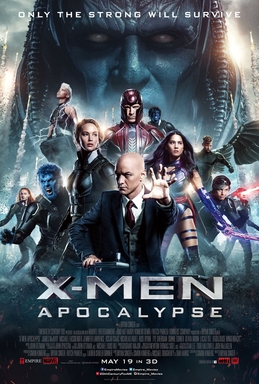
The success of X-Men has also led to a 16 year-old franchise of movies about mutants and their struggle to live in a world that fears them. X-Men: Apocalypse is the 9th installment in that franchise and it is based on the Fall of the Mutants storyline, which ran through several Marvel comics in 1988.
Continuing the pattern set by X-Men: First Class and X-Men: Days of Future Past, Apocalypse takes place in the past, back when Charles Xavier was still James McAvoy and Magneto was still Michael Fassbender. (Unlike Days of Future Past, neither Patrick Strewart nor Ian McKellan makes an appearance.) The year is 1983. Ronald Reagan is President. The Cold War still rages. The music is better than it is today. Xavier is running his school for gifted mutants youngsters. Magneto is living, under an assumed name, in Poland. Magneto is married and has a young daughter and as soon as I saw them, I knew they were going to die. Magneto’s family never survives.
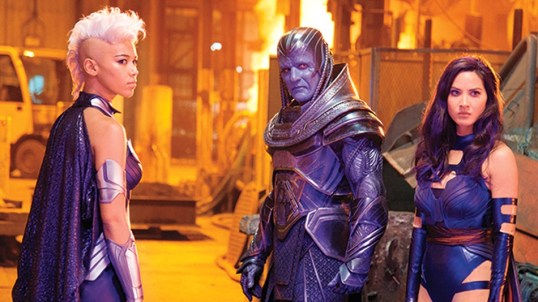
In Egypt, an ancient and powerful mutant named En Sabah Nur (Oscar Isaac) is awakened after being entombed for centuries. Readers of the comic books will immediately recognize En Sabah Nur as Apocalypse. Planning to destroy the world so that he can rebuild it in his own image, Apocalypse recruits his four horseman — Storm (Alexandra Shipp), Angel (Ben Hardy), Psylocke (Olivia Munn), and Magneto. Apocalypse also wants to recruit Xavier to his side but Prof. X still believes that humans and mutants must learn to co-exist.
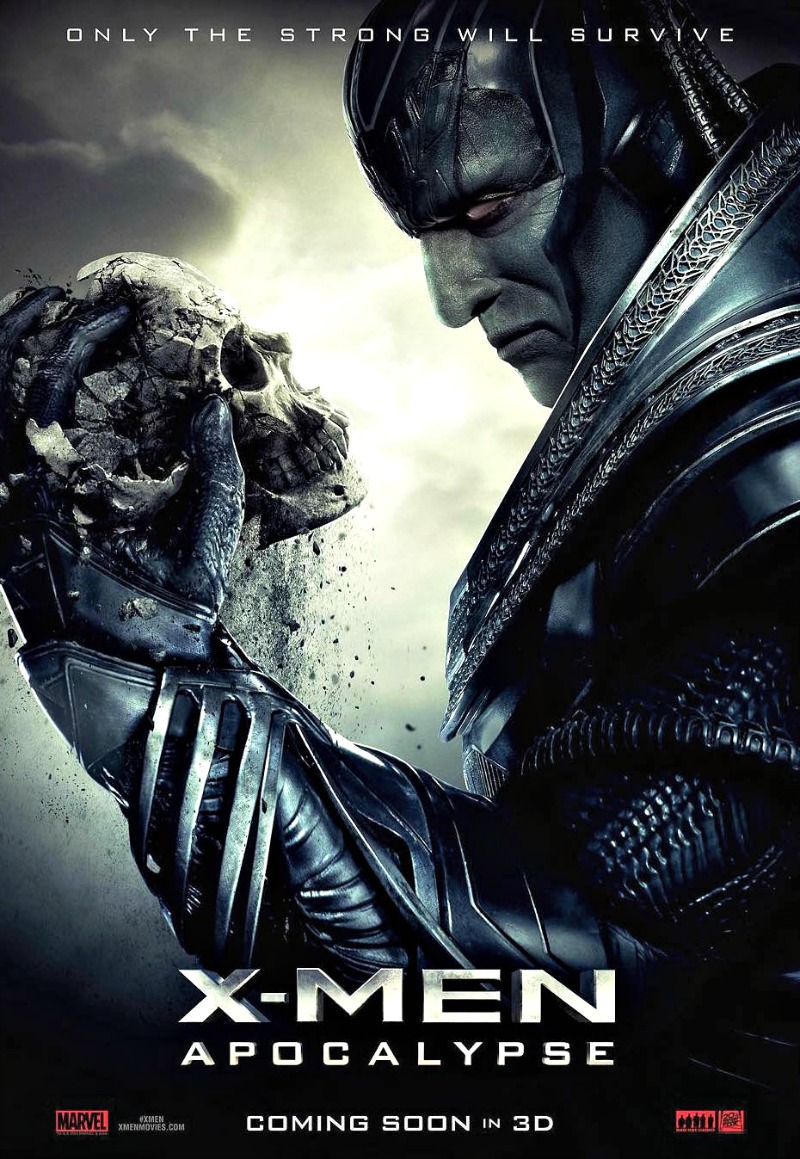
What’s interesting is that, even though Fassbender and McAvoy share a few scenes, this is the first X-Men film to not feature any sort of debate between Xavier and Magneto. Magneto, one of the greatest comic book villains of all time, is actually a little boring here and, without those debates, Apocalypse lacks the subtext that distinguished the best of the previous X-Men films. The emphasis is less on what it means to be an outsider and more on defeating Apocalypse. Unfortunately, Apocalypse is a great character in the comic books but he does not translate well into film. Unlike Magneto, who has several good and justifiable reasons for not trusting humanity, the film version of Apocalypse is portrayed as being pure evil and little else. His plan to destroy the world never makes much sense and he is almost as bland as Dr. Doom in the latest Fantastic Four reboot. Apocalypse could be any villain from any comic book movie that has been released over the past 16 years. He could just as easily be the Living Eraser.
Apocalypse is also an origin story, showing how the modern incarnation of the X-Men first came to be. We meet young versions of Scott Summers, Jean Grey, and Nightcrawler (played by Tye Sheridan, Sophie Turner, and Kodi Smit-McPhee) and Wolverine (Hugh Jackman) makes a brief appearance that feels like it was mostly included to set up the character’s third stand-alone film. Jennifer Lawrence, Nicholas Hoult, and Evan Peters also return in the roles of Mystique, the Beast, and Quicksilver. Peters is featured in the movie’s coolest scene, though that scene is basically just a redo of Days of Future Past‘s coolest scene.
(There’s also a blink-or-you’ll-miss-it cameo from Dazzler, which I guess means that Marvel’s disco queen will eventually be appearing on movie screens.)
X-Men: Apocalypse is not as good as either First Class or Days of Future Past but it’s still better than The Last Stand. (Since Apocalypse takes place in 1983, Scott and Jean go to see Return of the Jedi and talk about how the third film of any franchise always sucks.) It’s entertaining but, without an interesting villain or any sort of examination of what it really means to be an outcast, Apocalypse is also forgettable in a way that X2 and Days of Future Past never were. As a lifelong fan of the X-Men, I could not help but be disappointed.
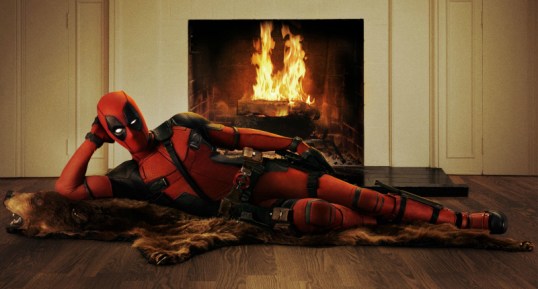
Plus, this movie needed more Deadpool! (Note: Deadpool is not in X-Men: Apocalypse.)
One thing that especially bothered me is that Days of Future Past ended with Xavier promising to explain to Wolverine why he, Scott, and Jean were all still alive despite having been killed in The Last Stand. If you were hoping Apocalypse would clear that up, don’t hold your breath. I guess that question will remain unanswered until the 10th film.
Speaking of which, First Class was set in the 1960s and Days of Future Past largely took place in the 70s. Apocalypse is an 80s movie so the next installment should be set in the early 90s. Will Scott be listening to Nirvana or will he be playing air guitar to November Rain? I guess we’ll have to wait to find out!
20th Century Fox have to be feeling quite giddy and confident with their slate of blockbusters this summer. Deadpool slayed everyone that went up against it during it’s February release and has climbed the box-office charts to the levels I think even Fox executives couldn’t imagine.
Now comes it’s main comic book film property returning this summer with it’s biggest story, yet. X-Men: Apocalypse has been a storyline fans of the Marvel Mutants (not part of the MCU) have been clamoring for ever since the first X-Men film surprised everyone all the way back in 2000.
Bryan Singer returns for his 4th go-round with these new band of Merry Mutants (Hugh Jackman as Wolverine the only holdover from his original cast) with the immortal and first mutant En Sabah Nur aka Apocalypse up to no good. We get a bit more of the plot in this final trailer and even more city-wide destruction (I’ll give it a pass considering it’s being committed by someone called Apocalypse and not Superman).
X-Men: Apocalypse will bring the war on May 27, 2016
The X-Men film franchise helped usher in the this golden age of comic book films. Looking back at those early films makes for a love them or hate them reaction. The first two helped establish the beloved characters onto the bigscreen while successive sequels and spinoffs did much to try and tear down the goodwill created by the former.
Matthew Vaughn helped in the franchise course correction with the surprisingly good X-Men: First Class. Bryan Singer’s return with that film’s follow-up with X-Men: Days of Future Past was another step in the right direction. It even marked the beginning of Fox’s attempt to replicate Marvel Studios’ cinematic universe building.
X-Men: Apocalypse is suppose to help build on the foundation laid down by the last film. It also looks to be a sort of reboot of the core characters to their much younger versions. The doomsday vibe of the film really comes off well in the trailer and it shows enough action to excite fans.
Then they show a great looking Psylocke using her psy-blade in a way it was never meant to be as. Just embrace books Fox. Just embrace it instead of mucking it up.
X-Men: Apocalypse will bring the war on May 27, 2016


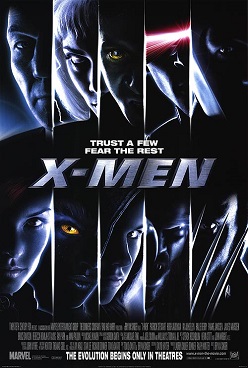

 It is easy to forget what a big deal the first X-Men movie was in 2000. At a time when Joel Schumacher was still the industry’s go-to director for super hero films, X-Men announced that films based on comic books did not have to be campy, silly, stupid, or feature Alicia Silverstone. When X-Men was first released, critics and audiences were surprised to see a comic book film that was intelligent, well-acted, and actually about something.
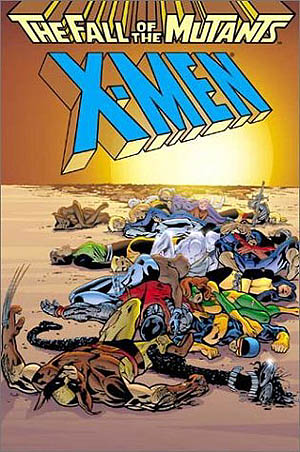 The success of X-Men has also led to a 16 year-old franchise of movies about mutants and their struggle to live in a world that fears them. X-Men: Apocalypse is the 9th installment in that franchise and it is based on the Fall of the Mutants storyline, which ran through several Marvel comics in 1988.
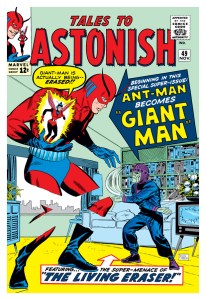 What’s interesting is that, even though Fassbender and McAvoy share a few scenes, this is the first X-Men film to not feature any sort of debate between Xavier and Magneto. Magneto, one of the greatest comic book villains of all time, is actually a little boring here and, without those debates, Apocalypse lacks the subtext that distinguished the best of the previous X-Men films. The emphasis is less on what it means to be an outsider and more on defeating Apocalypse. Unfortunately, Apocalypse is a great character in the comic books but he does not translate well into film. Unlike Magneto, who has several good and justifiable reasons for not trusting humanity, the film version of Apocalypse is portrayed as being pure evil and little else. His plan to destroy the world never makes much sense and he is almost as bland as Dr. Doom in the latest Fantastic Four reboot. Apocalypse could be any villain from any comic book movie that has been released over the past 16 years. He could just as easily be the Living Eraser.