Horror Film Review: Other Mommy (dir. Rob Savage)


“Sometimes I think about when you and I were one person, and it makes me so happy, I cry. Do you remember that?” — Other Mommy

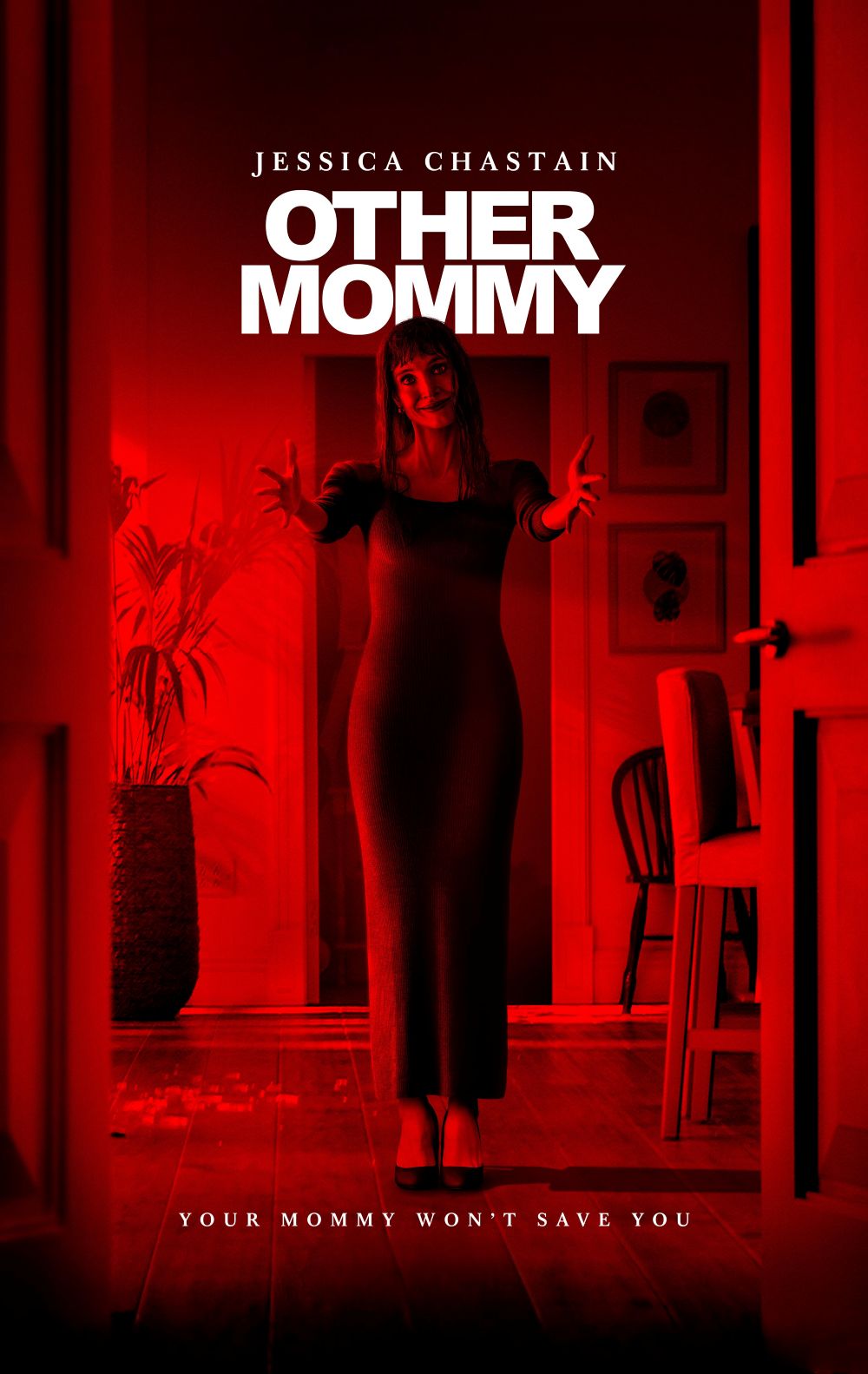
Jessica Chastain is the only reason Other Mommy works at all, and even she cannot quite save a horror movie that turns a genuinely strong premise into something silly through its own adaptation. Rob Savage’s 2026 film is based on Josh Malerman’s novel Incidents Around the House, and the source material’s central idea—a young girl discovers that the entity haunting her house looks exactly like her mother—is legitimately creepy and emotionally rich. The novel understands that a child’s fear of losing her mother, and a mother’s fear of being replaced, can carry an entire horror story. The movie takes that same foundation and rushes through it, leans into chaotic scares, and never finds a consistent tone, until the premise starts to feel ridiculous rather than frightening. What keeps it from being a total loss is Chastain’s double performance as both the struggling mother Ursula and the grotesque creature impersonating her. Without her, this would be an easy movie to forget. With her, it becomes a frustrating watch—good enough to keep you interested, bad enough to make you wish it had been better.

The story follows Bela, an eight-year-old girl played by Arabella Olivia Clark, who lives with her parents Ursula and Russ, played by Chastain and Jay Duplass. Their home is already unstable. The marriage is strained, the parents are distracted, and Bela is left to make sense of it all on her own. Into that environment comes Other Mommy, an entity that emerges from the closet wearing Ursula’s face. She does not simply attack Bela. Instead, she asks to be let into her heart, promising love and closeness while making it clear that refusal will have consequences. In Malerman’s novel, that setup works because the book takes its time exploring the psychological weight of it: a child caught between a mother who cannot fully show up for her and a monster who will happily pretend to. The film has the same ingredients but treats them more like a starting point for increasingly ridiculous scares than something it actually wants to sit with, and that is where the adaptation starts to lose the plot.

Chastain is the reason any of it works at all. Playing Ursula and Other Mommy gives her a chance to show two very different sides of the same face, and she makes the contrast convincing. As Ursula, she is tired, brittle, and emotionally unavailable in a way that feels believable even when the plot around her falls apart. She loves her daughter, but she is too overwhelmed and angry to show it consistently, and Chastain plays that failure without turning Ursula into a villain. As Other Mommy, she gets to go full nightmare fuel. The creature performs motherhood like someone who has studied it from the outside, smiling too widely, speaking in a warm but slightly off register, and moving with an unnatural confidence that makes every interaction feel wrong. Chastain understands that the scariest version of the monster is not the one that growls or lunges, but the one that almost gets the role right. She knows the words. She does not understand the feeling behind them.

That performance is what gives the film its few genuinely effective moments. When Other Mommy pleads with Bela to accept her, the scene works because the creature is both terrifying and pitiful. She wants to be loved, believed, and chosen, and she cannot comprehend why Bela would resist. There is something sad about that, and Chastain finds it without softening the character’s menace. She makes the entity feel like a desperate, needy thing wearing a mother’s face, and that is a much more interesting horror idea than the movie’s actual plot delivery system. If the film had leaned harder into that emotional contradiction and given it room to breathe, it might have come closer to capturing what makes the novel’s premise so effective. Instead, it keeps rushing past the interesting parts to get to the next loud, chaotic set piece.

That pacing is one of the movie’s biggest problems. At 93 minutes, Other Mommy moves fast, and not in a good way. It introduces the family’s problems, brings in the monster, and starts escalating the scares before the audience has had much time to connect with anyone. We understand that Ursula and Russ are unhappy, but we do not feel the specific weight of that unhappiness. We know Bela is lonely, but the film does not give her enough quiet moments to show what that loneliness looks like day to day. The result is a movie full of confrontations with the entity but very little emotional buildup between them. The family feels more like pieces in a horror machine than people whose survival actually matters, and that makes it hard to care when things go wrong. The novel earns its scares by making you care about the people first; the film skips that step and wonders why the scares do not hit as hard.

Savage’s direction does not help. He clearly likes big visual ideas, sudden movements, and scares that come out of nowhere, but the execution often feels more frantic than frightening. The creature design has some inventive moments—Other Mommy can stretch, contort, and squeeze herself into spaces no human body should fit—but the film rarely trusts quiet dread. It piles on noise, fast editing, and chaotic CGI effects until the tension flattens out. A scare that might have landed with a little patience becomes one more startle in a long line of startles. When the entity lingers at the edge of the frame, half-seen through a doorway or reflected somewhere she should not be, the movie creates real unease. Those moments are too rare. Most of the time, the film would rather show you everything immediately and hope volume substitutes for atmosphere, which is exactly the kind of choice that turns a creepy premise into a silly one.

The tonal swings make things worse. Other Mommy wants to be sad, scary, funny, and ridiculous all at once, and it does not know when to switch gears. There are sequences where the creature’s behavior becomes so exaggerated that it tips into camp, including a ball-pit scene that pushes the film into full-on absurdity. That campiness might work in a movie that fully embraces it, but this one keeps trying to have it both ways. It wants you to laugh at the monster’s physical comedy one minute and feel genuine dread the next, and the shifts are jarring rather than effective. The result is a film that never settles into a consistent identity. It is too silly to be truly scary and too serious to be fun camp, and that in-between space is where it lost me—and where it drifts furthest from the novel’s more controlled, unsettling tone.

The supporting cast does not do much to help. Duplass gives Russ a believable sense of helplessness, but the character is thinly written and mostly reactive. Karen Allen, Arian Moayed, and Dichen Lachman show up in roles that serve the plot rather than add dimension. Clark is better than the material deserves, bringing a real vulnerability to Bela that makes her more than just a screaming kid. She holds her own opposite Chastain, which is no small feat given how much the older actress is doing in every scene. But even a good child performance cannot fix a screenplay that does not know what it wants to say about the family at the center of the story.

In the end, Other Mommy is a movie with one great performance and an adaptation that takes a strong, genuinely unsettling premise and makes it feel silly through rushed pacing, chaotic direction, and tonal confusion. The idea of a mother-shaped entity trying to replace a child’s real mother is not the problem—Malerman’s novel proves it can be genuinely frightening. The problem is that Savage’s film does not know how to translate that idea to the screen without turning it into a series of loud, inconsistent set pieces. Chastain plays both sides of the dynamic with total commitment, and she is the only reason the movie stays watchable. It is not the worst horror movie of the year, but it is a disappointing one, because you can see the better version of this story trying to get out. If you watch it, watch it for her. Just do not expect the movie around her to hold up the way the book’s premise deserves.
2022 In Review: Lisa Marie’s Top 30 Films of 2022


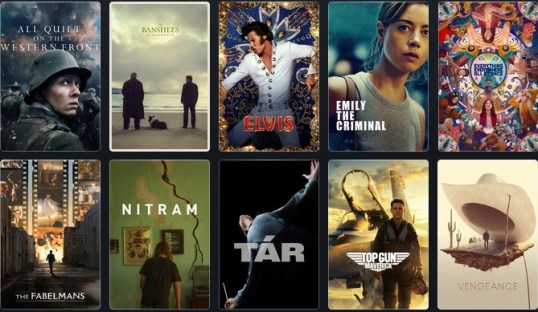
Without further ado, here are my top 30 films of 2022!

(Why 30?  Because Lisa doesn’t do odd numbers!  Also, be sure to check out my picks for 2010, 2011, 2012, 2013, 2014, 2015, 2016, 2017, 2018, 2019, 2020, and 2021!  Wow, I’ve been doing this for a while!)

30. Marcel The Shell With Shoes On (dir by Dean Fleischer Camp)

An animated film with heart, Marcel The Shell With Shoes On would probably be ranked higher if Marcel’s favorite news show had been something other than 60 Minutes.  Still, questionable viewing habits aside, Marcel and Nana Connie and all the other shells were amazing characters and the end of the movie brought tears to my mismatched eyes.  With this film and I Want You Back, Jenny Slate had quite a year.

29. Ted K (dir by Tony Stone)

Released in February of this year, this film about Ted Kaczyski and his descent into madness was unfairly overlooked. Sharlto Copley was perfectly cast as Ted K.  This is a film that probably won’t make Ted’s supporters happy but, at the same time, it also avoids painting him as just being a straight-out madman.  It’s refusal to simplify makes the film far more than just another true crime biopic.

28. Dashcam (dir by Rob Savage)

Starring Annie Hardy as herself, this low-budget horror film is a scathing satire of life during the age of COVID and performative “wokeness.”  After the past few years, there’s something rather cathartic about Hardy’s refusal to obey.

27. The Batman (dir by Matt Reeves)

At this point, I’m fairly cynical about comic book movies in general and Batman films in specific.  I mean, how many Batmen have we had over the past ten years?  (Actually, I think only four but it feels like a lot more!)  That said, I enjoyed The Batman, for both its noirish atmosphere and it’s willingness to embrace the melodrama.  You have to love the fact that the villain was basically a nerdy podcaster.

26. Operation Mincemeat (dir by John Madden)

Based on a true story, this film was a throwback to the earnest World War II films of the past.  Colin Firth, Kelly MacDonald, Matthew McFayden, and Johnny Flynn were all well-cast and did their part to bring this moment of WWII history to life.

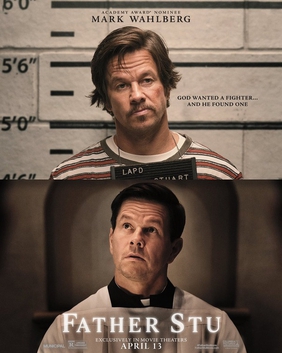
25. Father Stu (dir by Rosalind Ross)

You don’t have to be from a Catholic background to appreciate Father Stu but it probably helps.  This was one of those roles that only Mark Wahlberg could have pulled off.

24. See How They Run (dir by Tom George)

This stylized murder mystery was terrifically entertaining and witty.  Sam Rockwell and Saoirse Ronan are both treasures.

23. I Want You Back (dir by Jason Orley)

Two friends conspire to win back their respective romantic partners and end up falling in love with each other instead.  This was an enjoyable comedy, one that was blessed with an outstanding cast that included Jenny Slate, Charlie Day, Scott Eastwood, and Gina Rodriguez.  The scene in which Jenny Slate sings Suddenly Seymour is a classic.

22. Ambulance (dir by Michael Bay)

This was the film that Michael Bay was born to direct.  For once, Bay’s hyperkinetic style was perfectly matched by the story being told.  It also helped that the ambulance was a real ambulance and not a robot pretending to be an ambulance.

21.Send Me (dir by Nick Palmisciano)

This is a heart-breaking documentary about the efforts of 12 veterans to evacuate as many allies as they could during the disastrous withdraw from Afghanistan.  This film deserved more attention than it got.

20. The Bombardment (dir by Ole Bornedal)

Based on a true story, this Danish film deals with the accidental bombing of a school during World War II.  It’s been overshadowed a bit by All Quiet On The Western Front but, in its quieter way, The Bombardment is also a strong look at the horrors of war.

19. Goodnight Oppy (dir by Ryan White)

This is a poignant documentary about Opportunity, the NASA exploration rover that spent 15 years exploring Mars.  This movie proves that a robot can make you cry.

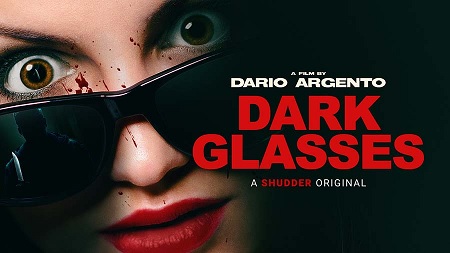
18. Dark Glasses (dir by Dario Argento)

Don’t listen to the critics.  This enjoyably over-the-top giallo was an entertaining return-to-form for Dario Argento.

17. Wildcat (dir by Melissa Lesh and Trevor Fost)

This poignant documentary follows a depressed veteran as he finds purpose helping to raise a baby ocelot in Peru.  Be prepared to cry.

16. Apollo 10 1/2 (dir by Richard Linklater)

Richard Linklater’s animated film was well-received by critics but it’s still hard not to feel that it’s been a bit overlooked.  Narrated by Jack Black, the film details the 1969 moon landing from the perspective of a child with a very active imagination.  Nostalgic, sweet-natured, and ultimately rather moving, Apollo 10 1/2 is a film that celebrates life.

15. Three Minutes: A Lengthening (dir by Bianca Stigner)

This haunting and moving documentary, which is narrated by Helena Bonham Cater, examines a three-minute snippet of 16mm film that was shot in a Jewish town in Poland in 1938, shortly before the Nazis invaded.  By examining every aspect of those three minutes, this documentary becomes both a memorial for the inhabitants of that town and a much-needed reminder of the horrors and reality of the Holocaust.  With anti-Semitism and Holocaust denial on the rise, this is an important documentary.

14. The Northman (dir by Robert Eggers)

The Northman is occasionally thrilling and occasionally ludicrous but it’s always watchable.  Robert Eggers finds moments of humor and odd beauty in this Viking epic.  Nicole Kidman embraces the melodrama and goes all out.  I just hope Valhalla was actually worth all the trouble.

13. Puss In Boots: The Last Wish (dir by Joel Crawford)

Yeah, you knew this film was going to show up on my list.  To be honest, the film could have been about just about anything.  I’d watch Puss In Boots read the phone book as long as Antonio Banderas returned to do his voice.  The fact that the film itself was cute and even touching was an added bonus.

12. Guillermo del Toro’s Pinocchio (dir by Guillermo del Toro and Mark Gustafson)

Yes, a puppet can make you cry.

11. Babylon (dir by Damien Chazelle)

Was it flawed?  You bet.  Did it run a little bit too long?  Yes, it did.  Could I have done without the scene with the elephant?  You better believe it.  That said, this film was so gloriously excessive and over-the-top that it was easy for me to forgive its flaws.  The critics may not have liked it but Babylon is a film that will be rediscovered.

10. The Fabelmans (dir by Steven Spielberg)

I went back and forth over whether to put The Fabelmans or Babylon in the number ten spot.  In a way, they’re kind of similar in that they have their flaws but they’re both saved by their director’s obvious love of cinema.  In the end, David Lynch’s role as John Ford moved The Fabelmans into the 10th spot.

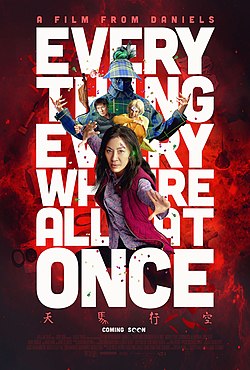
9. Everything Everywhere All At Once (dir by the Daniels)

To be honest, I think some people are going a little bit overboard in their praise for this film.  Yes, it’s one of the year’s best but 2022 wasn’t that strong of a year and Everything is one of those probable Best Picture winners that, like Nomadland and CODA, will probably not be quite as celebrated after it actually wins.  That said, Michelle Yeoh and especially Ke Huy Quan deserve all the praise that they’ve received and I appreciated that the film featured the destruction of an IRS office.  It’s not as perfect as some say but, due largely to the cast, it still deserves to be in my top ten.

8. Nitram (dir by Justin Kurzel)

This is another unfairly overlooked film, this time from Australia.  Caleb Landry Jones gives a powerful and disturbing performance as a troubled young man named Nitram who commits an act of shocking violence.  Anthony LaPaglia and Judy Davis play Nitram’s parents, who are both troubled in their own individual ways.  Essie Davis plays the older woman who falls in love with Nitram, despite the fact that Nitram is incapable of loving anyone.

7. Emily the Criminal (dir by John Patton Ford)

Aubrey Plaza plays Emily, who discovers that not only does crime pay but, in the gig economy, it’s one of those few ways to get ahead.  Part thriller and part satire, Emily the Criminal reminds us that Plaza is one of the most interesting actresses working today.

6. All Quiet On The Western Front (dir by Edward Berger)

This German anti-war epic stays true to the themes of its source material while updating the plot for the modern era.  The contrast between the generals and the diplomats planning battles and the soldiers dying in them is a powerful one.

5. Elvis (dir by Baz Luhrmann)

This wonderfully excessive biopic features good music, a great performance from Austin Butler, and a wonderfully eccentric one from Tom Hanks.  Luhrmann is hardly a subtle director but Butler’s performance keeps the film from spiraling out of control.

4. Vengeance (dir by B.J. Novak)

This whip-smart satire of both true crime podcasts and the red state/blue state divide deserved far more attention than it received.  Ashton Kutcher has actually become a surprisingly dependable character actor.  Director and screenwriter Novak tells the story with sensitivity and a sharp eye for the absurd.

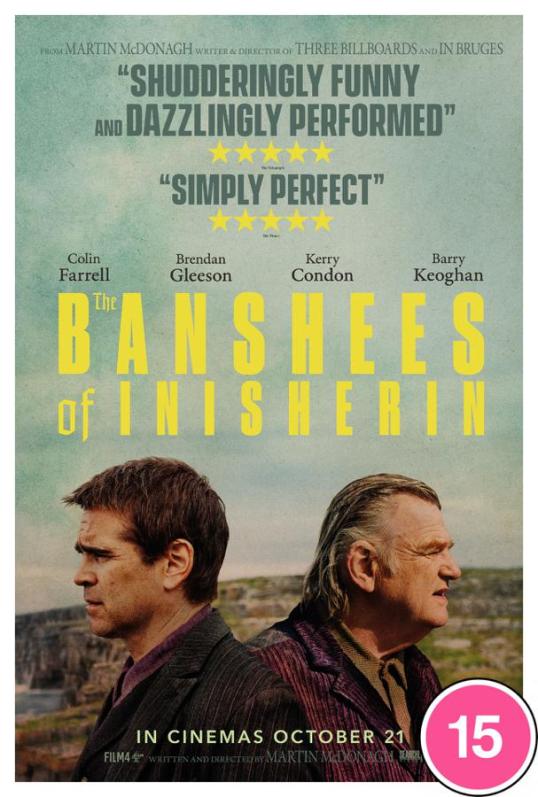
3. The Banshees of Inisherin (dir by Martin McDonagh)

In his best film yet, Martin McDonagh examines friendship, art, violence, and anger in Ireland.  Brendan Gleeson no longer wants to be Colin Farrell’s friend.  Farrell’s attempts to discover why leads to all sorts of surprising and macabre developments.  Gleeson and Farrell have never been better.  Kerry Condon and Barry Keoghan offer up poignant support.

2. Tar (dir by Todd Field)

Lydia Tar is a brilliant artist.  Does it matter that she also might be a terrible human being?  Todd Field’s return to filmmaking meditates on the meaning of art, morality, and the consequences of hubris.  Cate Blanchett is perfectly cast.  The scene where Tar talks to a student who objects to playing music by a white male is a real litmus test.  Do you think Tar is a bully or do you think the student is being too sensitive?  For all the talk about how Lydia dismisses the student’s claims, many also fail to note that the student is the one who calls her a “bitch” and runs out of the room.  Much as in Field’s previous film, no one is as perfect or as justified or as blameless as they may believe.

And, finally, my top film of 2022 is….

  1. Top Gun: Maverick (dir by Joseph Kosinski)

After 2 years of lockdowns and pessimism, Top Gun: Maverick was finally released and it reminded audiences of what they loved about movies in the first place.  Top Gun: Maverick was the movie that we needed in 2022.

Well, that concludes my late look back at 2022!  Now, let’s focus on 2023!

Lisa Marie’s 2022 In Review:

  1. 16 Worst Movies
  2. 10 Favorite Songs
  3. 10 Top Non-Fiction Books
  4. Lisa Marie’s Favorite Novels
  5. The Best of Lifetime
  6. 10 Good Things I Saw On Television

Horror Film Review: Dashcam (dir by Rob Savage)


Calm down, people.

Seriously, the amount of online hate that I’ve seen directed at the found footage horror film, Dashcam, is not only insanely over the top but it also proves (as if there was any proof necessary) that there are a lot of people out there who are incapable of understanding social satire.

Annie Hardy stars as Annie Hardy, a musician who hosts Band Car, the internet’s #1 Live Improvised Music Show Broadcast From A Moving Vehicle.  Yes, Annie Hardy is playing a fictionalized version of herself, which is something that many of this film’s critics don’t seem to understand.  (Or, more likely, they do understand that but they’re pretending to be obtuse for the clicks.)  In the film, which was shot at the height of COVID lockdowns, Annie grows tired of Los Angeles and hops a plane for London.  In London, she reunites with her former bandmate, Stretch (Amer Chadha-Patel) and proceeds to clash with just everyone that she meets.

The film’s version of Annie is outspoken about her politics, which is one reason why so many critics have gone after this film.  Annie is anti-lockdown.  She’s anti-government.  She has little use for virtue signaling activists.  She spends a lot of time going out of her way to annoy people who wear masks.  These are all things most of today’s movie heroes are not allowed to do but Annie’s attitude is, for better or worse, a fair reflection of how a lot of people were feeling at the height of the COVID era.  Despite what was often presented in the movies and on television, most people were not lighting their Fauci prayer candles and dutifully waiting for word from the CDC.  Most people were not the girl from that Walgreen’s commercial, smiling behind their mask as they rode their kick scooter to the neighborhood market so that they could pick up the latest organic fruit.  Most people were frustrated and pissed off and sick of having to pretend otherwise.

Annie’s trip to the UK is predictably a disaster and, because she live streams the entire experience, Stetch’s always-masked wife discovers just how much she and Annie disagree on politics.  This leads to a physical confrontation which leads to Annie stealing Stretch’s car.  You do have to feel a little bit bad for Stretch at this point.  Stretch works as a food delivery driver so, as annoying as Stetch can be, he does kind of need his car.  Annie decides to take on one of his deliveries herself, just to discover that the owner of a restaurant wants Annie to drive a sick and incontinent old woman named Angela to another location.  Despite her initial misgivings, Annie agrees.  Because Annie has been live streaming the entire time, Stretch is able to track them down.

Of course, it turns out that Angela is not quite what she seems and soon, Annie and Stretch find themselves having to deal with cults, demons, and a lot other things.  Quite a few people die along the way.  Except for a few times when the signal is lost, the entire event is live streamed and the film is worth watching twice just so you can read all of the comments from the people watching Annie and Stretch try to survive a night.  They provide a commentary not only on what’s happening to Annie and Stretch but also on the horror genre in general and the whole found footage idea in specific.  At the same time that I was getting annoyed with Stretch for being whiny, so were Annie’s fans.  While Annie and Stretch were running from Angela, a fight was breaking out in the comments over Annie’s politics.  A few people were concerned that Annie was going to get killed.  A few were claiming that it was all fake.  The majority were eager to see more blood.  Quite a few complained that any moment that Annie spent hiding from Angela was “BORING.”  One thing they all had in common was a need to try to turn everything that they were watching into either a commentary on politics or an ironic joke.  It was a perfect portrayal of online culture.

Both Annie and Angela are forces of chaos in Dashcam, perfect representations of how many people were feeling at the height of the COVID era.  (Angela wears a mask throughout the film.  At one point, the mask fills up with blood, which is perhaps as powerful a symbol of COVID horror as I’ve seen thus far.)  Annie’s a survivor because she refuses to rationalize everything that’s happening around her.  She embraces her anger and her annoyance with the world.  As a result, Dashcam is not just an effective found footage horror film.  It’s also a document of how many people viewed the world in 2021.  With so many now trying to rewrite the history of what actually happened during the COVID era, it’s important to have a film, like Dashcam, that reveals just how angry and paranoid people really were.  In its way, Dashcam is a valuable time capsule.

Annie Hardy is currently taking a lot of online abuse from trolls who can’t tell the difference between the film’s Annie Hardy and the real-life Annie Hardy.  That’s a shame because Annie Hardy is a natural when she’s onscreen and she gives a good performance.  Dashcam is currently on Hulu and it’s tempting to compare this film sharp combination of horror and commentary to the rather bland and painfully inoffensive Hellraiser reboot.  Hellraiser could have used Annie Hardy.

Horror Film Review: Host (dir by Rob Savage)


Host tells the story of the Zoom meeting from Hell.

Actually, that description is a case of me being a bit too glib.  Though this hour-long film, which can currently be viewed on Shudder, has received a lot of attention for its Zoom call format, there’s a good deal more going on in Host.  It’s the first film of the COVID-19 era and, when this era finally ends, it’s a film that will remind viewers of what it was like to be locked down and afraid that, even behind closed door and with a mask ready to go, there was truly no escape from the virus.

Host is a British film about six friends, one psychic medium, and one very destructive spirit.  Locked down due to COVID, the friends have weekly Zoom meetings.  Some of them drink wine during the meetings.  One of them smokes a good deal of weed.  The important thing that they’re staying in contact and not allowing the separation to drive them apart.  As so many others have done over the course of 2020, they’ve tried to find some sort of normalcy in a situation that is anything but.  Even though the viewer only spends an hour with these characters, it’s impossible not to relate to what they’re going through.

For this week’s meeting, a medium named Seylan (Seylan Baxter) had been hired to lead the friends in an online séance.  Everyone has a different reaction to Seylan, which I liked.  Jemma (Jemma Moore) seems to be struggling not to laugh as Seylan tells everyone to light their candles.  (I related to Jemma, as I probably would have had the same reaction.)  Emma (Emma Louise Webb) and Caroline (Caroline Ward) are both obviously taking the séance a bit more seriously and are concerned about what will happen when they contact the other side.  Haley (Haley Bishop) tries to keep the group focused while Radina (Radina Drandova) and Teddy (Edward Linard) deal with interruptions from their significant others.

Well, needless to say, the séance doesn’t exactly lead to the best of results.  That doesn’t count as a spoiler because first off, this film is on Shudder and secondly, since when has it ever been a good idea to try to contact the dead?  If there’s anything that I’ve learned from the movies, it’s that the dead are extremely touchy and prone to violence.

Host makes great use of its format.  Every time someone drops out of the meeting, we’re left to wonder if they’ve just temporarily lost their connection or if they’ve been attacked by something from beyond.  When we watch the interaction between the six friends — who feel like a group of real friends, though I don’t know how well everyone knew each other before production began — we find ourselves constantly looking over everyone’s shoulder, searching for any sign of an unexpected presence.  Sometimes, we think we see something just to then discover that it was just our overactive imagination.  Sometimes, we think we something and …. well, we actually do.

Host works because it’s a horror film to which everyone can relate.  It gets to a truth that gets beyond the usual horror movie mechanics.  There’s an interesting scene where one of the zoom participants is forced to flee from her flat.  Even with an evil presence chasing her, she still makes sure to mask up before leaving.  If it’s not the demons waiting to get you while you’re in quarantine, it’s the COVID waiting to get you as soon as you exit.  The greatest fear that many people have had over the past few months is that, even if you isolate and wear your mask and stay inside, the disease is still going to somehow get you.  Much like a demon from the other side, the coronavirus can’t be seen but it could be anywhere.  The evil spirit in Host is not named COVID but it might as well be.