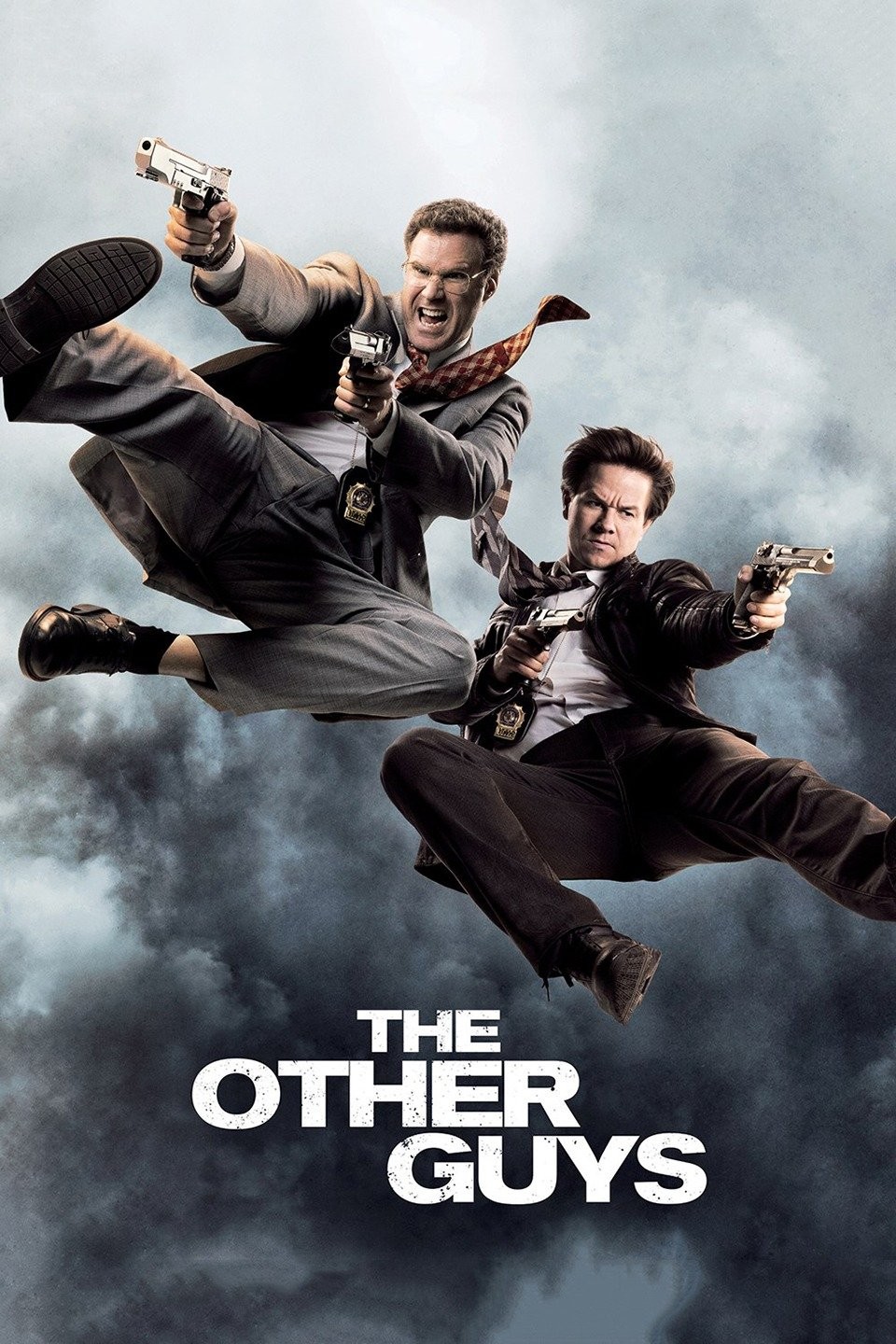
Review: The Other Guys (dir. by Adam McKay)


“We are gonna have sex in your car. It will happen again!” — Dirty Mike

Adam McKay’s The Other Guys feels like the moment a class clown who is secretly a genius finally snaps and decides to teach the entire school a lesson while making them laugh so hard they forget they’re being educated. Released in 2010, the film lands right in that sweet spot of McKay’s career where he was pivoting away from the pure, unhinged mania of Anchorman and Step Brothers and starting to smuggle razor-sharp satire into the multiplex under a mountain of stupidity. It is, without a doubt, one of the funniest movies of its decade, but calling it just a comedy feels like a disservice. It’s a buddy cop movie that hates the irresponsibility of buddy cop movies, a financial crisis explainer disguised as a screamo TLC tribute, and a showcase for two lead performances that should have spawned at least three sequels. If you’ve somehow managed to sleep on this one, it’s time to fix that.

The opening sequence is a masterclass in bait-and-switch. We are introduced to Danson and Highsmith, the city’s top cops, played with magnificent, self-serious swagger by Dwayne Johnson and Samuel L. Jackson. They’re chasing down a minor misdemeanor in a way that destroys half of downtown Manhattan, culminating in them heroically jumping off a twenty-story building to land safely in some bushes. Except they don’t. They splatter. It’s a shocking, hilarious, and instantly iconic death scene that serves as McKay’s thesis statement: the action movie logic you’ve been fed for decades is a lethal fantasy. With the heroes dead, the spotlight shifts painfully to the guys who have to do the paperwork on their mangled corpses, forensic accountant Allen Gamble and hot-headed loose cannon Terry Hoitz. These two are, emphatically, the other guys, and when circumstances force them onto a case involving corporate financial fraud, they stumble their way toward something resembling heroism, occasionally despite themselves.

What separates The Other Guys from the pile of mediocre comedy-action hybrids that came before and after it is the chemistry between Ferrell and Wahlberg, which is genuinely one of the more unexpected comedic pairings of that era. Ferrell plays Gamble as a deeply strange man who has weaponized milquetoast passivity into a superpower. His complete, serene contentment with a life of spreadsheets, Grand Theft Auto grand larceny sprees where he obeys all traffic laws, and a suspiciously beautiful wife played by Eva Mendes is a hypnotic thing to watch. Ferrell dials down the bombast and delivers something wonderfully weird and controlled, a man who is simultaneously a complete dork and, as we later discover, a shockingly capable pimp named Gator. Wahlberg, meanwhile, is doing something genuinely interesting here. Terry Hoitz is a walking wound, a great cop reduced to a desk jockey and public mockery for the unforgivable sin of accidentally shooting Derek Jeter during the World Series. He’s angry, humorless, and convinced of his own greatness despite ample evidence to the contrary. Wahlberg plays him completely straight, which is the exact right call, because his deadpan bewilderment at Ferrell’s behavior, the way his voice cracks with desperate, shrill anger when trying to explain a normal scenario, ends up being funnier than almost anything else in the film. Their chemistry is a perfect storm of a guy who wants to live inside a peaceful spreadsheet and a guy who wants to set that spreadsheet on fire while learning to dance the sardine.

This is the kind of comedy where the supporting cast keeps piling on gloriously unhinged performances, which makes Ray Stevenson’s work as the heavy all the more valuable. As Roger Wesley, the corporate enforcer who does the violent bidding of Steve Coogan’s billionaire fraudster, Stevenson operates in a completely different register from everyone else. While Ferrell is weaponizing passive-aggressive politeness, Wahlberg is screaming about peacocks, and Michael Keaton is unconsciously quoting Waterfalls while running a police precinct, Stevenson remains a granite slab of menace. He doesn’t crack jokes, he doesn’t do double-takes, and he certainly doesn’t care about the absurdity swirling around him. There’s something almost old-fashioned about his screen presence here, a grim, heavy-lidded seriousness that makes him feel like he wandered in from a real crime thriller and simply refused to leave. It’s the kind of straight-man performance that doesn’t just anchor the chaos; it makes the chaos funnier by contrast. When he’s methodically hunting down loose ends while Ferrell and Wahlberg are bickering about whether a lion could beat a tuna in open ocean, the collision of tones is pure McKay alchemy.

The plot, such as it is, involves the duo stumbling onto a massive white-collar crime conspiracy led by a billionaire played with smarmy, cowardly glee by Steve Coogan. It’s here that McKay’s deeper ambitions start to peek through the absurdity. While Terry is desperate for a classic action-movie shootout and car chase, the investigation leads them to the Lendl Global offices, where the real villainy isn’t drug lords or terrorists but leveraged buyouts and pension fund looting. There’s a perfect running gag where they keep trying to get into the action, preparing for a massive gunfight against a team of mercenaries, only to find that the corrupt corporate security detail is made up of ex-cops just looking to quietly retire with their benefits. It is the funniest anti-climax, a deliberate denial of violence that reinforces the film’s core idea that the most dangerous criminals wear suits, not ski masks. The financial villain is a thinly veiled stand-in for the kind of Wall Street grift that was very much in the cultural conversation in 2010, just a couple of years after the financial crisis. McKay would later go much deeper on that territory with The Big Short, but the seeds of that interest are planted all over this film.

The comedy in The Other Guys operates on two distinct but equally brilliant levels. There is the surface-level absurdity, the kind that produces quotes like “I’m a peacock, you gotta let me fly!” and the quiet, steady domination of Gamble’s totemic Prius, which somehow survives a fireball helicopter crash without a scratch. The “aim for the bushes” jump, the lion versus tuna debate that Hoitz treats with theological gravity, and the wooden gun gifted to Gamble are all top-tier ridiculousness. Then there is the deeper, more surreal well of humor that feels distinctly McKay. The entire subplot of Gamble’s past as a college pimp named Gator is a work of deranged genius, a slow-motion, honey-dripped flashback that reveals a world of casual, elegant pimping that Ferrell plays with a straight face so absolute it circles back around to being terrifyingly cool. The relentless jokes about Gamble unknowingly marrying way out of his league, his genuine confusion over why people think Eva Mendes is attractive, is a running gag that beautifully plays on Ferrell’s ability to be completely oblivious to the reality surrounding him. Eva Mendes is admittedly underused, though the film at least has fun with the joke by leaning into Wahlberg’s incredulous reaction every time she appears, which never gets old.

Visually, the film has a blandly competent sheen that actually works in its favor. Unlike the frattish haze of Anchorman, here McKay is directing a movie that looks like a real cop film, which makes the eruptions of insanity even more jarring. The action sequences are staged with real competence. The car chases aren’t played as joke sequences; they’re genuinely well-staged, particularly the Prius chase midway through where Gamble’s calm, methodical driving commentary clashes with a panicking Hoitz. It’s legitimately exciting before it goes completely off the rails in the best way. McKay never lets the plot drag even when the jokes need room to breathe. By this point in his career he’d clearly figured out the right pace for this kind of thing, and it shows. The movie moves. The film also showcases Michael Keaton in a delightful supporting role as Captain Gene Mauch, a cop who unconsciously works a second job at Bed Bath & Beyond while peppering his police work with retail slogans. Keaton’s deadpan delivery of lines about TLC references and towel specials, only to shout the chorus of Waterfalls at a moment of high tension, is a thing of beauty. Every single one of his scenes is a gift. It’s a running joke that never explains itself, and it’s all the better for it.

Then there is the ending. For a film that spends nearly two hours being aggressively stupid-smart, the final moments make a radical pivot. As the bad guy is caught, the movie doesn’t just roll credits. It stops dead and turns into a miniature economics lecture. With animated infographics and hard statistics, McKay lays out exactly how Ponzi schemes, bailouts, and income inequality have shattered the American middle class, all while the Rage Against the Machine cover of Maggie’s Farm thrashes on the soundtrack. It’s a jarring, preachy, and completely unexpected move. On first viewing, it feels like the director violently smashing the emergency brake on the comedy train. But in hindsight, it’s the only honest way this movie could end. McKay isn’t just telling us that bank robbers are less dangerous than bankers; he’s stopping us from leaving the theater without understanding the scale of the theft. It doesn’t undermine the fun at all. If anything it adds a layer of purpose that makes the whole thing feel a little more substantial than your average cop spoof. It’s the moment the class clown pulls out a graph showing your student debt will cripple you for life, and somehow, it works because he’s been earning your trust with jokes for the previous hour and a half.

There’s something almost nostalgic about watching a comedy this confident in its own weirdness. The Other Guys arrived at an interesting moment for this kind of movie, when the mid-budget, R-rated studio comedy was still a viable commercial proposition. It made decent money even if it wasn’t a runaway smash, but more importantly, it trusts that you’re going to be on board for a scene where Ferrell and Wahlberg argue about whether they’d rather be a lion or a tuna, and it’s right to trust that. The criticisms are relatively minor. The movie is maybe fifteen minutes too long, and a subplot involving Wahlberg’s ballet background gets introduced and then somewhat dropped. The villain’s scheme, by design, isn’t particularly cinematic, and the film occasionally strains to make the stakes feel real. But these are the kinds of complaints you make about a movie you liked, not a movie you didn’t, and none of them meaningfully dent the overall experience.

More than a decade later, The Other Guys has aged into something of a classic, a revered staple of late-night cable and quotable group chats. It sits at a fascinating crossroads, holding onto the absurdist, quote-heavy DNA of McKay’s earlier work while laying the formal and thematic groundwork for what he would do next with The Big Short and Vice. It proves that the jump from Ron Burgundy to a film about the 2008 housing crisis wasn’t actually that far at all. He just needed Wahlberg to yell a little bit, Ferrell to explain why a lion would still beat a tuna, even in open ocean, and Stevenson to stand in the middle of it all looking like he genuinely wants to murder everyone in the room. Whether you come for the laughs, the surprisingly competent action, or Michael Keaton mumbling TLC lyrics under his breath, you’re going to find something to love. Absolutely worth your time.
Scenes that I love: The Boogie Nights Recording Session (Happy Birthday, John C. Reilly)


Today is John C. Reilly’s 61st birthday.  This provides me with a great reason to share a scene that I love from 1997’s Boogie Nights.  After falling out with his director, 70s porn star Dirk Diggler (Mark Wahlberg) attempts to reinvent himself as a rock star.  Providing support, both emotionally and musically, is his best friend and frequent co-star, Reed Rothchild (John C. Reilly).

Now, obviously, Wahlberg’s brilliantly tuneless singing usually gets the most attention here but there’s something really touching about Reed’s loyalty in these scenes.  It may just be because of the cocaine but you can tell that Reed is perhaps even more convinced of Dirk’s talent than Dirk is.

Enjoy and remember …. YOU GOT THE POWER!

Scenes I Love: Mark Wahlberg performs The Touch In Boogie Nights


He was born ready!

Since I already shared the full version for today song of the day, it only seems right to share the classic scene from 1997’s Boogie Nights, featuring Mark Wahlberg performing The Touch.


Song of the Day: The Touch by Mark Wahlberg


Happy birthday, Mark Wahlberg!

You got the touch
You got the power

After all is said and done
You’ve never walked, you’ve never run
You’re a winner

You got the moves, you know the streets
Break the rules, take the heat
You’re nobody’s fool

You’re at your best when when the going gets rough
You’ve been put to the test, but it’s never enough

You got the touch
You got the power

When all hell’s breaking loose
You’ll be riding the eye of the storm

You got the heart
You got the motion

You know that when things get too tough
You got the touch

You never bend, you never break
You seem to know just what it takes
You’re a fighter

It’s in the blood, it’s in the will
It’s in the mighty hands of steel
When you’re standing your ground

And you never get hit when your back’s to the wall
Going to fight to the end and you’re taking it all

You got the touch
You got the power

When all hell’s breaking loose
You’ll be riding the eye of the storm

You got the heart
You got the motion

You know that when things get too tough
You got the touch

You’re fighting fire with fire
You know you got the touch

You’re at your best when when the road gets rough
You’ve been put to the test, but it’s never enough

You got the touch
You got the power

You got the touch
You got the power

Lyrics: Stan Bush

Music Video of the Day: Good Vibrations by Marky Mark and the Funky Bunch (1991, directed by Scott Kalvert)


Mark Wahlberg, the man once known as Marky Mark, is 54 years old today.  That’s the type of news that really makes you realize how quickly time passes.

Good Vibrations was Mark “Marky Mark” Wahlberg’s first MTV-promoted music video.  The woman in the video is model Traci Bingham, who later went on to appear on Baywatch.  Boxer Mickey Ward was brought in to show the 18 year-old Marky Mark how to convincingly throw a punch in the ring.  Years later, Wahlberg would play Mickey Ward in The Fighter.

I would love to be able to go back to 1991 and tell everyone that Marky Mark was destined to be an Oscar nominee.  They would be so shocked that they probably wouldn’t even flinch when I told them that, when Marky Mark turned 54, Donald Trump was serving his second nonconsecutive term as President.

Enjoy!

Film Review: Patriots Day (dir by Peter Berg)


On April 15th, 2013, a terrible crime was committed.

Two brothers, Tamerlan and Dzokhar Tsarnaev, bombed the Boston Marathon.  I can remember the exact moment when I looked up at the television and I saw the footage of the bomb going off as a group of runners ran across the finish line.  Instinctively, I found myself hoping that the explosion looked worse than it actually was and that no one had been seriously injured.  However, I was then flooded with images of people running in fear while other lay injured and bleeding on the ground.  A photograph of  man who had lost his both his legs was seared into my mind, the nightmarish image of those exposed and shattered bones coming to represent the pure evil that was unleashed on that day.

At first, there was a lot of speculation about who was responsible for the bombing.  Despite the fact that it had all the earmarks of an al-Qaeda operation, many people on the news insisted that the bomb had been set by their favorite boogeymen, the right-wing militias.  (The initial theory was that it was a tax day protest, which is one of the dumbest things I’ve ever heard.)  Three days after the bombing, the first photographs of the Tsarnaev Brothers were released.  Looking at the security footage of Tamerlan placing a bomb on the ground right next to a child who was subsequently killed in the blast, I started to rethink my opposition to the death penalty.

Boston was shut down until the Tsarnaev brothers were tracked down and, along with hating the Tsarnaevs, I found myself fearing that the search for them would normalize the idea of suspending civil liberties.  Tamerlan was gunned down in a fight with police and hopefully, he felt each bullet.  Dzokhar was captured after he attempted to hide in a homeowner’s boat while whining like a little bitch.  Dzokhar is one of three people on the Federal Death Row.  He also has a truly creepy fan club online, though they haven’t been as active as they were in the past.

2016’s Patriots Day is about that tragic day and the subsequent manhunt for the Tsarnaev brothers.  This is another one of Peter Berg’s films about professional, no-nonsense men who have a job to do and who do it well.  Mark Wahlberg plays a cop.  Kevin Bacon plays the FBI agent who heads up the investigation.  John Goodman plays the Boston police commission while Michael Beach makes an appearance as Deval Patrick, the then-governor of Massachusetts who ran a bizarrely overlooked presidential campaign in 2020.  Just as he did with Deepwater Horizon, Berg emphasizes the human cost of the tragedy along with the official efforts to track down the men responsible.  The ensemble comes together impressively, recreating those scary few days and also paying tribute to a city that refused to allow itself to be defeated.  Patriots Day follows the common, blue collar citizens of Boston as they deal with a horrific act of evil.  Even though we all know how the story turned out, the film manages to create a decent amount of suspense as the authorities search for the Tsarnaevs.  As for the brothers themselves, the film portrays them as being initially cocky and eventually pathetic.  To the film’s credit, it doesn’t ask us to consider things from the point of view of the terrorists.  There’s no moral relativism here.  The film knows who deserves to be heard.

Patriots Day is a tribute to the first responders and the citizens of Boston who refused to allow the Tsarnaevs to win.  With so many people now making excuses for terrorism, Patriots Day is a powerful reminder of the human cost of such actions.  The Tsarnaevs through they were striking a blow for their ideology.  Instead, they just reminded us how strong people can be.


The Films of 2025: Flight Risk (dir by Mel Gibson)


Flight Risk, Mel Gibson’s first directorial effort since the Oscar-nominated Hacksaw Ridge, opens with Winston (Topher Grace) being arrested by Madolyn (Michelle Dockery), a U.S. Marshal.

Winston is an accountant, one who moved around a lot of money for the Mafia and who arranged for a lot of bribes to high-ranked officials.  That said, Winston is not a particularly dangerous or even cunning fugitive.  If anything, he’s extremely neurotic.  He worries about the safety of his mother.  He tells Madolyn (and the audience) way more than anyone could possibly need to know about his bathroom habits.  He’s on the run because the government wants him to testify against his former employers.  Winston is far more frightened of the Mafia than he is of the government and with good reason.  The Mafia wants him dead.  The government still needs him alive.

After Winston is arrested in Alaska, Madolyn arranges for them to be flown to Anchorage by a Texas-born bush pilot named Darryl Booth.  When a man claiming to be Darryl (Mark Walhberg) shows up, Madolyn and Winston promptly get on the plane.  From the minute Wahlberg started speaking, I was rolling my eyes.  Wahlberg’s Texas accent was perhaps the worst that I’ve ever heard in a modern movie and that’s saying something.  Fortunately, it turned out that Wahlberg’s accent was deliberately bad.  The man calling himself Darryl Booth is not actually Darryl Booth.  He’s not from Texas.  He’s not a professional pilot.  Instead, he’s a hitman who has been sent to kill both Winton and Madolyn.  Unfortunately, Madolyn and Winston don’t realize that until the plane has already taken off.

Flight Risk starts out as an enjoyably silly movie but it’s ultimately done in by the limitations of its plot.  Nearly the entire film takes place in that cramped and nondescript airplane and neither Madolyn nor Darryl are really compelling enough to hold onto your interest over the entire course of the film’s 90 minute running time.  Winston, on the other hand, is actually a compelling character and Topher Grace shows, once again, that he deserves a bigger film career than the one he has.  Unfortunately, Winston spends the majority of the film incapacitated.  He’s either in handcuffs and stuck in the back of the plane or he’s sitting up front and freaking out but he never gets to do as much as one might wish.  Instead, the entire film comes down to Darryl taunting his targets and Madolyn struggling to figure out how to fly the plane.  To be honest, the film actually makes flying look pretty easy.  I mean, Madolyn has no experience as a pilot and she somehow still manages not to crash.  How difficult could it be?

Of the three main actors, Topher Grace gives the best performance, managing to give a fully-rounded performance even when Winston is incapable of moving.  For the first thirty minutes or so of the film, Mark Wahlberg is enjoyably over-the-top but then his character just becomes a standard talkative villain.  Michelle Dockery is stuck playing a boring character and she never brings much life to her flat dialogue.  If anything, she’s outacted by an unseen Leah Remini, who provides the voice of Madolyn’s partner and proves that she can still curse like a champ.

Flight Risk continues the pattern of scripts that rank high on Hollywood’s “black list,” (that is, the annual list of the most popular unproduced scripts in Hollywood), being turned it into disappointing films.  At least it’s slightly more fun than Cedar Rapids.

Film Review: Deepwater Horizon (dir by Peter Berg)


2016’s Deepwater Horizon tells the story of the 2010 explosion that led to the biggest oil spill in American history.

Owned by British Petroleum, the Deepwater Horizon was an oil rig sitting off the coast of Louisiana and Texas.  A series of explosions, which were found to be the result cost-cutting and negligence on the part of BP, killed eleven men, injured countless others, and led to an 87-day oil spill that leaked 210 million gallons of oil into the Gulf of America (or the Gulf of Mexico, as it was known back then.  I know, it can be heard to keep track).  I can still remember when the disaster happened.  It was seen as an early test of the “government-can-fix-anything” philosophy of the Obama era and it pretty much proved the opposite.  Private citizens (including Kevin Costner) offered to help and were rebuffed.  The governor of Louisiana was criticized for ordering the construction of barrier islands, even though they were more effective than was that the federal government was offering up.  The CEO of British Petroleum issued a self-pitying apology.  For a generation coming of political age in 2010, witnessing the government’s ineffective attempts to deal with the oil spill was as radicalizing a moment as the COVID lunacy would be for people coming of age in 2020.

In all the chaos surrounding the oil spill, it was often overlooked that 11 people died in the initial explosion.  In all the rightful criticism that was directed towards British Petroleum, the heroic efforts of the workers on the Deepwater Horizon, all of whom risked their lives to try to prevent the disaster from getting worse, were also often overlooked.  To an extent, Deepwater Horizon corrects that oversight, paying tribute to the men on that rig while also portraying the extent of the environmental disaster caused by BP’s negligence.

The film centers of Jimmy Harrell (Kurt Russell) and Mike Williams (Mark Wahlberg), two engineers who attempt to warn BP execs like Donald Virdrine (John Malkovich) that cutting costs on safety will inevitably lead to disaster.  Russell, Wahlberg, and Malkovich are all ideally cast, with Russell and Wahlberg capturing the spirit of men who try to do their job well and who live their life by the philosophy of not leaving anyone behind.  Malkovich is playing a corporate stooge, the man who many people blamed for the disaster.  But, to his credit, Malkovich is able to turn Virdrine into a complex character.  Virdrine makes terrible mistakes but he never becomes one-dimensional corporate villain.  Though Deepwater Horizon is dominated by its special effects and the explosion is an undeniably intense scene, the film doesn’t forget about the human cost of the disaster.  Russell, Wahlberg, and Malkovich are supported by good performances from Ethan Suplee, Gina Rodriguez, and Kate Hudson.  (Hudson, in particular, deserves a lot of credit for making her thinly-written role into something compelling.)  Kurt Russell does such a good job of capturing Jimmy’s quiet confidence and his expertise that, the minute he’s injured by the explosion, the audience knows that Deepwater Horizon is doomed.  If even Kurt Russell can’t save the day, what hope is there?

Director Peter Berg specialized in films about ordinary people who found themselves caught up in extraordinary situations.  His well-made and earnest films — like Lone Survivor, Patriots Day, and this one — were rarely acclaimed by critics, many of whom seemed to take personal offense at Berg’s unapologetically patriotic and individualistic vision.  Personally, I appreciate Berg’s pro-American aesthetic.  At a time when we were being told that individuals didn’t matter and that everyone should be content with merely being a cog in a bigger machine, Berg’s films came along to say, “This is what team work actually means.”  It’s been five years since Berg’s last film.  Hopefully, we will get a new one soon.


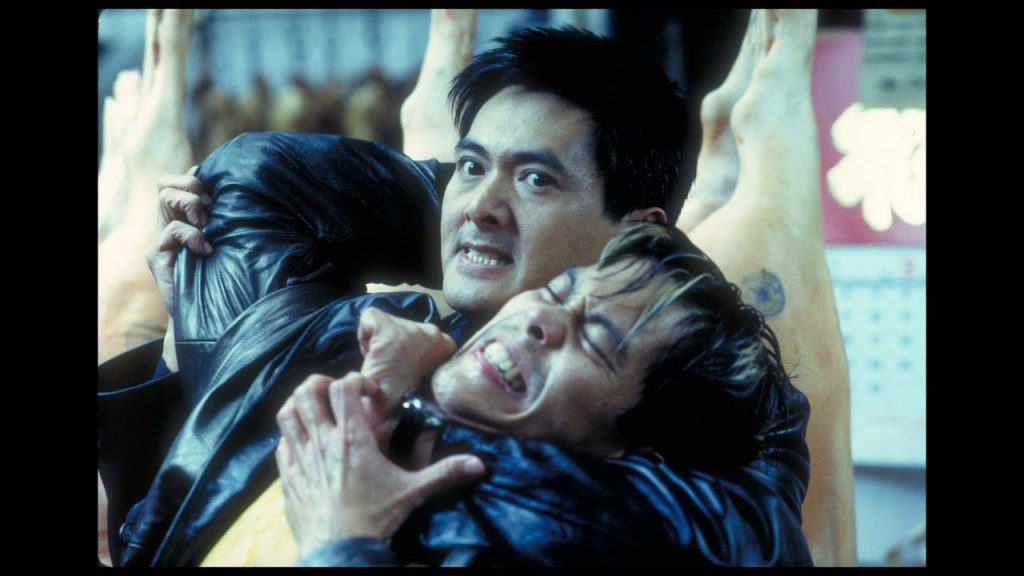
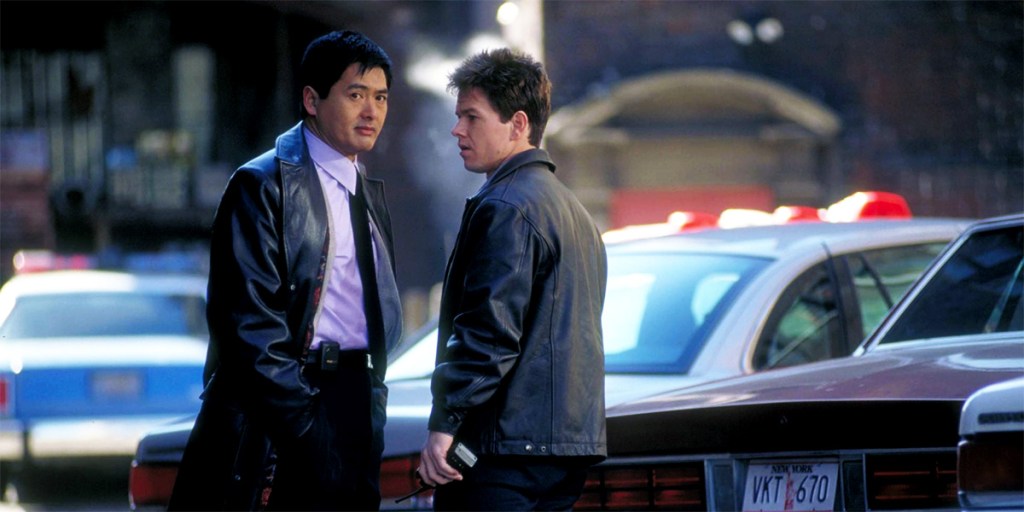
THE CORRUPTOR (1999) – Chow Yun-Fat and Mark Wahlberg fight corruption in Chinatown!


In the late 90’s, I was all in on actor Chow Yun-Fat. Having only discovered his excellent Hong Kong film work a couple of years earlier, I was so excited to see what kind of splash he would make in American films. I loved his first American film THE REPLACEMENT KILLERS (1998), but I will admit it was an exercise in style over substance, and it really didn’t show off his acting abilities. Chow was working hard to improve his English language skills during this time, but that limited his performance the first time around. As I settled into my seat on the film’s opening weekend at the box office in March of 1999, I was hoping to see the Chow Yun-Fat I loved from his Hong Kong movies. But more on that later…

THE CORRUPTOR opens with a bomb going off in Chinatown, followed by a sidewalk assassination in broad daylight. It seems there’s a turf war being fought between a street gang called the Fukienese Dragons, led by Bobby Vu (Byron Mann), and a Chinese criminal organization called the Tung Fung Benevolence Association, led by Uncle Benny Wong (Kim Chan) and Henry Lee (Ric Young). We then meet Nicholas Chen (Chow Yun-Fat), a heroic, highly decorated NYPD cop who runs the Asian Gang Unit. His unit is tasked with trying to keep the peace in Chinatown, but with all the recent violence, they’re clearly failing. Knowing he needs more help, Chen requests additional manpower and gets the young and eager Danny Wallace (Mark Wahlberg). The two men don’t hit it off immediately as Chen had wanted a more experienced, Asian cop. Over time, however, Chen begins to trust Wallace and begins to let him into the inner workings of the unit. 

We soon find out that things are much more complicated in Chinatown police work than they might have appeared at first. Chen is not quite as heroic as initially presented. He’s a morally conflicted man who wants to do good work for the people of Chinatown, but in the process, he’s compromised himself by taking sides and forming a delicate alliance with Uncle Benny and Henry Lee. And Danny isn’t quite the young, green cop he was presented as either. In fact, he’s been secretly tasked by Internal Affairs to monitor Chen and his unit. As Wallace sees what’s really going on in Chinatown, and after Chen saves his ass on multiple occasions, it becomes harder and harder for him to do his job and build a case against Chen. As the film reaches its conclusion in this world of grey, we will see if Chen and Wallace can work together and take down Henry Lee and Bobby Vu, who have formed an alliance to take over Chinatown’s criminal activities. And we will find out what Wallace will do with the information he has on Chen.

I’m a big fan of THE CORRUPTOR, and the primary reason is the excellent performance of Chow Yun-Fat. No other American made action film showed off the extraordinary charisma that made him a superstar in Asia in the 1980’s. In this film, Chow is able to play both sides of the law and still remain incredibly likable. He pulls this balancing act off in a way that appears effortless, and yet there are very few actors in the world who are capable of doing it. Mark Wahlberg had emerged as a major film star a couple of years earlier with the runaway success of BOOGIE NIGHTS (1997). I think he’s very good in this film as well, as his character must reconcile his ideals against the reality of fighting crime in such a dangerous environment. There’s a scene near the end where Chen has been informed that Wallace is internal affairs and confronts him about it. Wahlberg is incredible in the scene, setting the stage for the exciting resolution of the film.

THE CORRUPTOR has several excellent action set-pieces, beginning with a shootout at a lamp shop. This is when I knew this movie was going to present the Chow Yun-Fat I know and love. His personality is displayed in the scene, along with his two guns blazing in slow motion. There’s also an intense car chase through crowded streets and a final showdown on a cargo ship that really stood out to me. Director James Foley was probably hired based on his prior work that showed an ability to deal with moral ambiguity in films like AT CLOSE RANGE (1986) and GLENGARRY GLEN ROSS (1992). While he wouldn’t be my first directorial choice for an action film, he does a fine job in my opinion. 

Overall, I recommend THE CORRUPTOR to any person who likes Chow Yun-Fat, Mark Wahlberg, or an entertaining action film. It’s not in the league of Chow’s best Hong Kong films, but it is his best American action film, because it actually gives him a strong character to play. That went a long way with me. 

I’ve included the trailer for the film below:

Scenes that I love: Angels Live In My Town From Boogie Nights (Happy Birthday, John C. Reilly)


Today is John C. Reilly’s 59th birthday.  This provides me with a great reason to share a scene that I love from 1997’s Boogie Nights.  In this scene, John C. Reilly and Mark Wahlberg star in one of the best films never actually made, Angels Live In My Town.

Brock Landers and Chest Rockwell were quite a team.