Horror Film Review: Invasion of the Body Snatchers (dir. by Philip Kaufman)


“I keep seeing these people, all recognizing each other.” — Elizabeth Driscoll

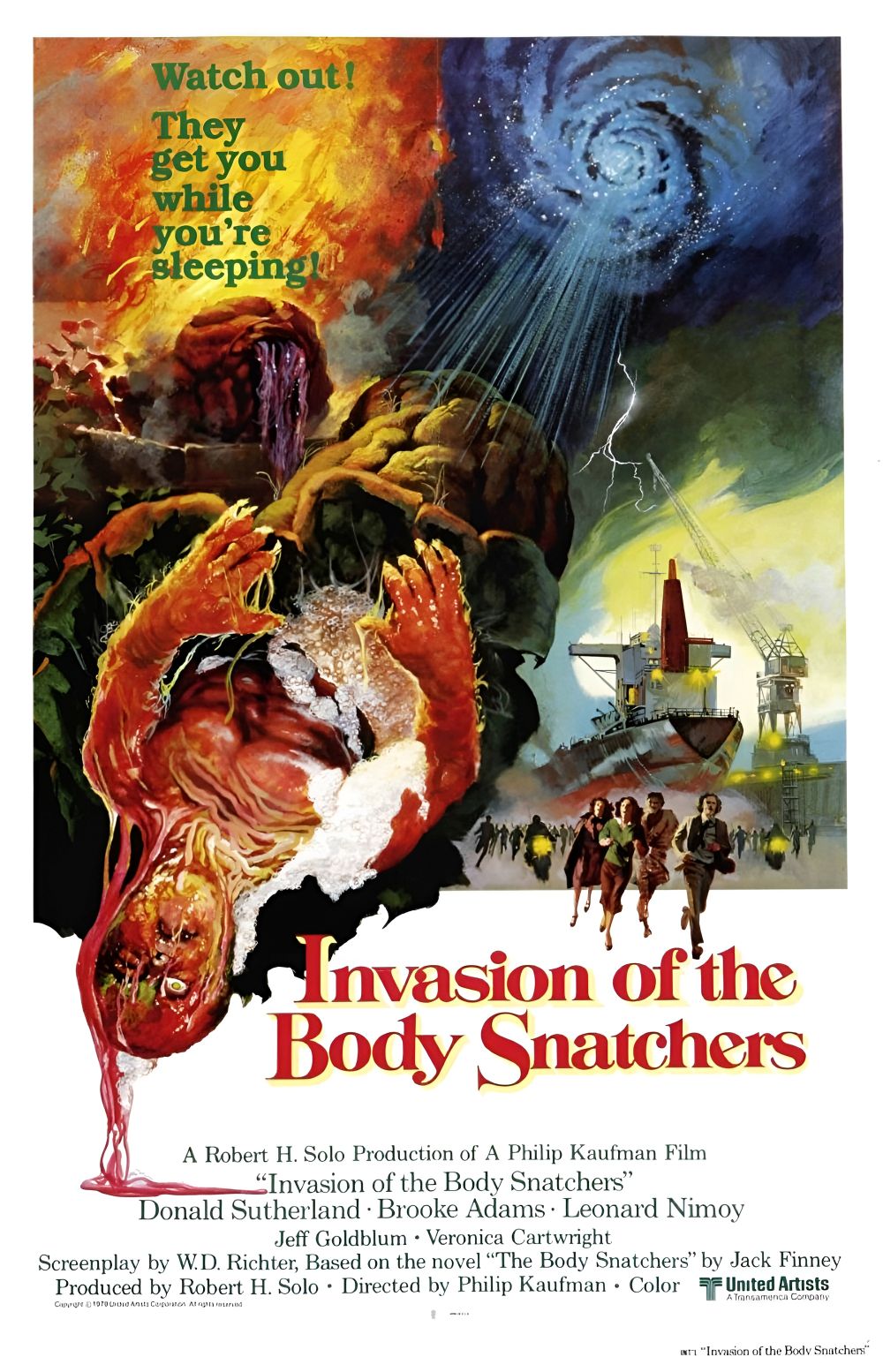
Most alien-invasion movies give you something obvious to fear: a flying saucer, a ruined skyline, a creature that clearly doesn’t belong here. Philip Kaufman’s Invasion of the Body Snatchers goes after something more uncomfortable. What happens when the person beside you looks perfectly normal, but you can’t shake the feeling that they’re gone? Released in 1978, this remake of Don Siegel’s 1956 film of the same name turns that question into a funny, disgusting, and increasingly desperate nightmare. Its greatest weapon isn’t an alien organism. It’s the possibility that being human is something you can lose while the rest of the world carries on as if nothing has happened.

That fear takes hold through Elizabeth Driscoll, played by Brooke Adams, who notices an unsettling change in her boyfriend. Nothing about his appearance explains it; he simply no longer seems like himself. Her colleague Matthew Bennell, a San Francisco health inspector played by Donald Sutherland, listens sympathetically but initially searches for a reasonable explanation. Unfortunately, reason has some catching up to do. Alien life forms are duplicating people while they sleep, leaving behind replacements who possess familiar faces but none of the emotional attachments. Adapted, like the original, from Jack Finney’s The Body Snatchers, the story turns an outrageous premise into a horribly intimate problem.

What’s especially effective is that Elizabeth’s concern resembles something people might ordinarily dismiss. Relationships change. Partners become distant. A person who once seemed attentive can suddenly appear distracted or cold. How do you explain that someone isn’t themselves when you have no physical evidence and can’t point to a single decisive incident? Adams makes that uncertainty convincing. Elizabeth isn’t immediately trying to prove an alien invasion; she’s trying to get someone to understand an experience she can barely describe. The science-fiction concept works because the emotional situation already makes sense. Before the movie asks us to believe in replacement bodies, it asks us to recognize the discomfort of feeling shut out by someone familiar.

Kaufman gets plenty of mileage out of the gap between noticing a problem and understanding it. Early scenes contain little disturbances that don’t immediately announce themselves as clues. Background figures behave strangely, conversations feel slightly off, and people seem to be moving according to instructions the main characters haven’t received. You begin watching the edges of the image, wondering who belongs there and who has already changed. That’s where the film’s paranoia takes root. Rather than simply telling us that Matthew and Elizabeth are frightened, Kaufman encourages us to adopt their increasingly suspicious way of looking at everyone. Watching becomes a form of anxious detective work.

The nice thing about this approach is that the film doesn’t need every suspicious detail to become a dramatic revelation. Sometimes a strange person is simply strange, and sometimes an awkward interaction remains unexplained. That uncertainty makes the environment feel less predictable than a straightforward series of planted clues would. We’re never comfortably ahead of the characters, checking off signs of an invasion we already understand. Instead, we share their problem of deciding what matters. Once the possibility of replacement enters the picture, practically any behavior can look incriminating. Someone is too calm, too hurried, too distracted, or too interested in what you’re doing. There’s no useful baseline anymore.

San Francisco is essential to that effect. A crowded city should offer anonymity and plenty of places to disappear, but here it gradually becomes a network of observers. Restaurants, offices, streets, and public facilities stop feeling neutral. Even asking for help becomes risky when there’s no reliable way to know who is answering. The shift from the earlier film’s small California community gives the remake a different kind of claustrophobia. There’s more room to run, yet fewer reasons to believe running will help. Kaufman makes a recognizable city feel like a trap without needing to empty its streets. The ordinary activity is what makes it oppressive: everybody seems to have somewhere to go, and you’re increasingly certain you don’t want to follow them.

That change also helps distinguish the remake’s concerns from those of the 1956 original. Siegel’s film sits within the Cold War and Red Scare atmosphere, its replacement story lending itself to fears of Communist infiltration as well as the pressures of McCarthyist conformity. Kaufman’s version leans more heavily into the conspiracy-minded mood of the 1970s. Suspicion reaches beyond dangerous outsiders to institutions, professional authority, and the mechanisms of everyday life. The frightening question isn’t just whether someone has infiltrated society. It’s whether society is already organized around keeping you confused. Discovering the truth doesn’t restore control; it reveals how little control the characters have.

The setting adds another bitter layer: this is San Francisco after the idealism of the 1960s counterculture has started wearing thin. A city associated with freedom, experimentation, and communal possibility becomes the backdrop for the destruction of individuality. The film catches something unsettling in the distance between the promise of personal liberation and the emotional isolation that can follow it. People have ways to discuss feelings, relationships, and self-improvement, but that vocabulary doesn’t necessarily help them connect. The invasion feels less like a complete break with their world than a horrible extension of tendencies already taking shape within it. The old dream of everyone coming together returns in a form nobody should want.

That doesn’t mean the movie is simply sneering at countercultural ideals or suggesting that conformity is inevitable. Its sympathies remain with affection, eccentricity, and the difficult business of caring about other people. What it distrusts is the substitution of smooth language for genuine feeling. There’s a difference between understanding someone and talking them out of their own experience, and the film keeps poking at that distinction. The invaders offer an existence without emotional conflict, but removing pain also means removing the attachments that make pain possible. It’s an awful bargain disguised as a sensible solution. From that angle, the invasion is selling a particularly extreme version of peace of mind.

Leonard Nimoy makes that idea especially sharp as psychiatrist and self-help celebrity David Kibner. He speaks with the confidence of someone accustomed to explaining other people to themselves, and his calm manner initially seems comforting. Before long, though, that reassurance starts to feel oppressive. When someone insists that your terror is merely a misunderstanding, how do you tell compassion from dismissal? Nimoy keeps that question alive without overplaying it. His composure becomes a source of tension precisely because it’s so controlled. In a movie full of people struggling to articulate their distress, he always seems to have an answer ready. Eventually, that feels less like wisdom than a reason to worry.

Against that polished certainty, Sutherland’s rumpled warmth is a major asset. Matthew seems intelligent and attentive rather than exceptionally brave, which makes his growing desperation convincing. He’s willing to listen, but he also needs time to abandon the explanations that usually make his world manageable. Sutherland lets him be funny and slightly awkward without turning him into a lovable collection of quirks. You believe he has a life outside the plot. That matters because the movie isn’t simply threatening his physical survival. It’s dismantling the ordinary habits, professional confidence, and personal connections that allow him to function.

His relationship with Elizabeth gives that dismantling an emotional center. Adams and Sutherland build their closeness through looks, conversations, and small gestures rather than big romantic speeches. There’s warmth between them, but also hesitation, as though they’re still working out what they’re allowed to acknowledge. The restraint makes the relationship feel vulnerable even before the invasion closes in. In a story about bodies surviving while personalities disappear, their chemistry provides something the special effects can’t: a sense of what replacement would erase. A duplicate could repeat the right words, but the movie has already shown us how much communication happens in the spaces around them.

Jeff Goldblum and Veronica Cartwright bring welcome friction as Jack and Nancy Bellicec. Goldblum’s nervous, argumentative manner keeps Jack from becoming a generic supporting character, while Cartwright makes Nancy’s alarm feel immediate and physically exhausting. Together, the central group is messy in recognizably human ways. They interrupt, disagree, misjudge situations, and occasionally get on each other’s nerves. Their humor isn’t a distraction from the horror; it establishes the untidy individuality the invaders would eliminate. The prospect of a world without conflict might sound attractive in theory, but spending time with these people makes its emotional cost clear. An easier existence would also be a much emptier one.

When the physical horror arrives, it gives that emptiness a nasty material form. Developing duplicates look wet, unfinished, and unpleasantly organic, turning an abstract fear of lost identity into something you can practically smell. There’s something especially upsetting about seeing a recognizable human shape emerge without the person who should belong to it. Kaufman knows when to stop suggesting and show us the evidence, and those moments hit harder because the surrounding suspense has been so controlled. The effects aren’t merely punctuation between chase scenes. They make replacement feel like a biological process that has no interest in whether its victims understand or consent.

Sleep is an equally effective threat because there’s no sustainable way to avoid it. A locked door might keep someone outside, but it can’t keep you awake forever. As exhaustion takes over, the characters’ bodies become unreliable allies, and the movie’s rhythm grows more desperate. Brief moments of rest carry their own suspense because relief and surrender begin to resemble each other. That’s one of the film’s cruelest moves: something comforting and necessary becomes the condition that makes you vulnerable. Survival requires constant vigilance, while ordinary human limits guarantee that vigilance will eventually fail.

The film’s relentless pressure can make its later passages feel deliberately exhausting. Once the invasion becomes undeniable, there’s less room for the social comedy and ambiguity that make the opening so engaging. But that narrowing feels purposeful rather than merely repetitive. The characters lose options, and the movie loses breathing room with them. Places that once seemed distinct start to feel like extensions of the same hostile environment. By then, the question isn’t whether they can explain what’s happening. It’s whether knowing makes any practical difference at all.

By the time Invasion of the Body Snatchers reaches its brutal conclusion, its opening uneasiness has become a way of life. Every familiar face demands scrutiny, and every moment of relief feels borrowed. The famous ending brings that uncertainty to a devastating point without needing to explain away its power. What stays with me, though, is how much warmth the film puts at risk before it gets there. Kaufman makes humanity look awkward, argumentative, affectionate, and vulnerable—hardly an efficient arrangement, but one worth defending. The replacements can reproduce a face and move through the routines of a life. The horror is everything they leave out.
Scene That I Love: Garrison Meets X in JFK


Today is Oliver Stone’s birthday so, for all conspiracy-loving readers, here is a key scene from Stone’s 1991 film, JFK!  In this scene, Kevin Costner’s Jim Garrison meets the mysterious man known as X (played by the much-missed Donald Sutherland).  X explains the conspiracy to Garrison.

This scene certainly convinced a lot of people.  Personally, I think Oswald acted alone but one cannot deny Stone’s talent as a filmmaker.

Scene That I Love: Donald Sutherland Discusses John Milton in National Lampoon’s Animal House


Tomorrow would have been Donald Sutherland’s birthday.  Today’s scene that I love comes from one of my favorite Sutherland performances, as the professor who dislikes John Milton in Animal House.

“This is my job!”

Film Review: The Eagle Has Landed (dir by John Sturges)


The 1976 film, The Eagle Has Landed, takes place during World War II.

The year is 1943 and, with the war turning against Germany, Heinrich Himmler (Donald Pleasence, in a chilling turn) orders Colonel Max Radl (Robert Duvall) to come up with a plan to kidnap Winston Churchill.  When Radl learns that Churchill is scheduled to visit a small, coastal British village, he recruits a cynical member of the IRA, Liam Devlin (Donald Sutherland), to travel to the village and make contact with a Nazi sleeper agent, Joanna Grey (Jean Marsh).  While Devlin sets up the operation in Britain and falls in love with Molly Prior (Jenny Agutter), Radl recruits disillusioned Colonel Kurt Steiner (Michael Caine) to lead the mission to kidnap Churchill.

At first the village is welcoming to Steiner and his men, who are disguised as being Polish paratroopers.  However, it doesn’t take long for the plan to fall apart.  Soon, Steiner and his men are holding the villagers hostage in a church while battling a group of American soldiers led by the incompetent Colonel Clarence Pitts (Larry Hagman) and Captain Harry Clark (Treat Williams).  Meanwhile, in Germany, Radl learns that Hitler did not actually authorize the mission to kidnap Churchill and that he has been set up as the scapegoat in case the mission fails.

The Eagle Has Landed can seem like a bit of an odd film.  For a film that was released in the same year as Network, All The President’s Men, and Taxi Driver, The Eagle Has Landed feels rather old-fashioned and almost quaint in its storytelling.  This was the final film to be directed by John Sturges, a director who started his career in the 1940s and whose best-known films included The Magnificent Seven and The Great Escape.  Sturges’s direction is efficient but not at all flashy.  (It’s a film that feel like its very much a product of the mid-60s as opposed to the mid-70s.)  The story plays out at a deliberate pace, one that leaves no doubt that the film was based on a novel.  In fact, it sometimes feels as if the film itself should have chapter headings.  The film holds your interest but it’s hard not to feel that a film that should have been an epic action film has instead been turned into something far less ambitious.

Sturges works with an ensemble cast, with no one member of the cast really dominating over the other.  (I guess if the film has a main character, it would be Donald Sutherland’s Liam Devlin but, for all the time that’s devoted to him, he actually doesn’t do that much once the action starts.)  The cast is full of good actors, though a few of them are miscast.  Neither Michael Caine nor Robert Duvall make much of attempt to sound German.  As a member of the IRA, Donald Sutherland sounds as Canadian as ever.  Fortunately, Caine, Duvall, and Sutherland are all strong-enough actors that they can make an impression even with somewhat distracting accents.  Treat Williams is a bit bland as the heroic American but Larry Hagman generates a few chuckles as Williams’s amazingly dumb commanding officer.  The important thing is that ensemble is strong enough to hold the viewer’s attention.

The Eagle Has Landed is an old-fashioned but still entertaining film.  The actors are fun to watch, the action scenes are fairly exciting, and it ends with a clever twist, one that was apparently historically accurate.  It’s a well-done historical melodrama, even if it’s never quite as epic as it aspires to be.

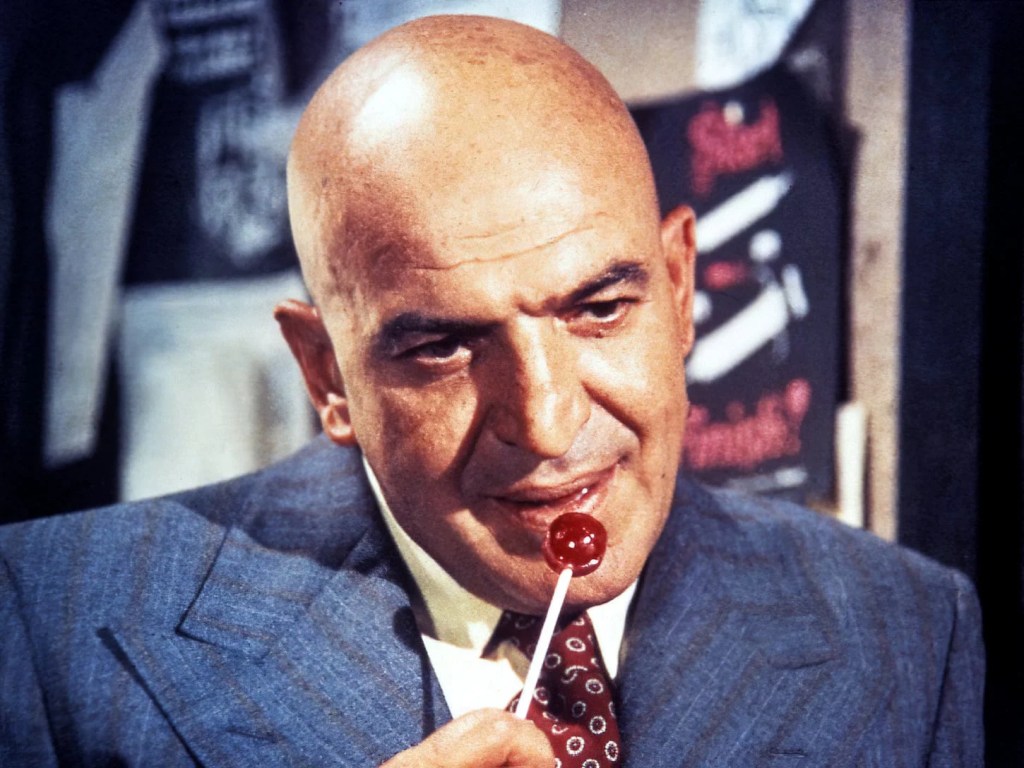
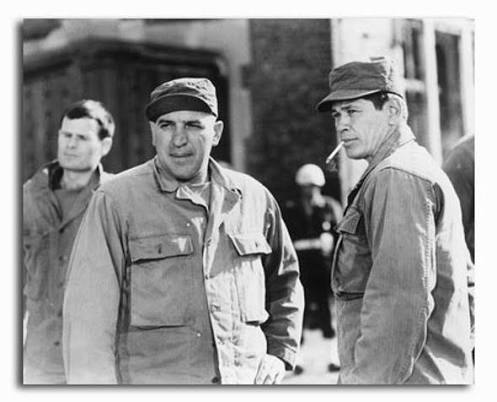
4 Shots From 4 Films: The Telly Savalas Edition! Happy Birthday, Telly!!


Telly Savalas would have been 104 years old today. He’s been in many of my favorite movies so I’m glad to celebrate him today with 4 Shots from 4 of my favorites!

Who loves ya, baby? (Telly Savalas as Kojak!)
With Charles Bronson in THE DIRTY DOZEN!
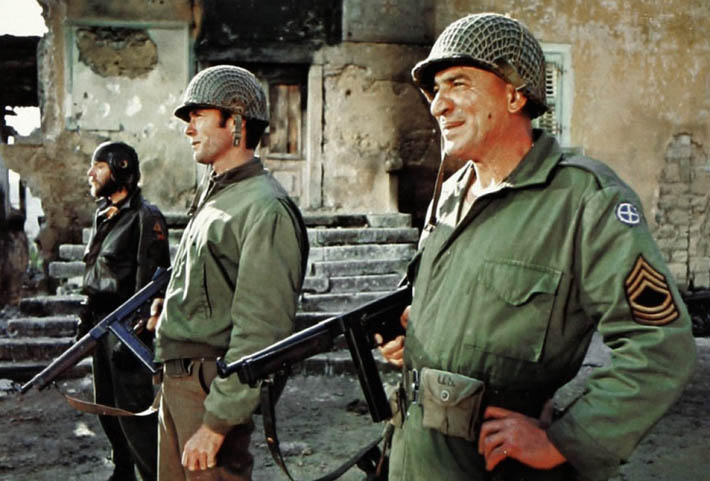
With Clint Eastwood & Donald Sutherland in KELLY’S HEROES!
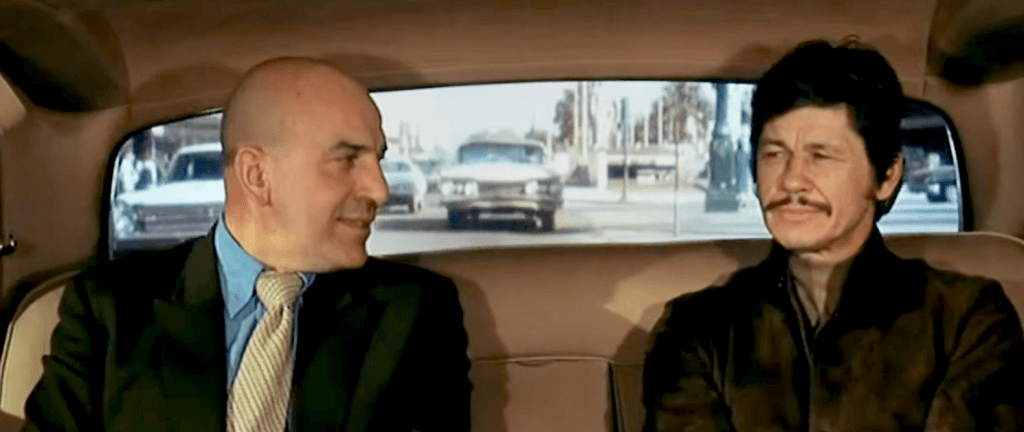
With Charles Bronson in VIOLENT CITY!

Scene That I Love: Garrison Meets X in JFK


Today is Oliver Stone’s birthday so, for all conspiracy-loving readers, here is a key scene from Stone’s 1991 film, JFK!  In this scene, Kevin Costner’s Jim Garrison meets the mysterious man known as X (played by the much-missed Donald Sutherland).  X explains the conspiracy to Garrison.

This scene certainly convinced a lot of people.  Personally, I think Oswald acted alone but one cannot deny Stone’s talent as a filmmaker.

Scene That I Love: Donald Sutherland Discusses John Milton in National Lampoon’s Animal House


Today would have been Donald Sutherland’s birthday.  Today’s scene that I love comes from one of my favorite Sutherland performances, as the professor who dislikes John Milton in Animal House.

“This is my job!”

Film Review: Kelly’s Heroes (dir by Brian G. Hutton)


1970’s Kelly’s Heroes takes place in France during the Second World War.  The American army is moving through the country, liberating it town-by-town.  Private Kelly (Clint Eastwood) is a former lieutenant who was busted down in rank after leading a disastrous raid on the wrong hill.  (It was the fault of the generals but Lt. Kelly was set up as a scapegoat.)  When Kelly learns that the Germans are hiding a huge amount of gold in an occupied town, he gathers together a team of weary soldiers, misfits all, and plans to go AWOL to steal the gold for themselves.

Kelly’s Heroes was one of the big budget studio films that Eastwood made after finding stardom in Europe with Sergio Leone’s Spaghetti westerns.  This is very much an ensemble film, in the vein of The Dirty Dozen.  Indeed, Eastwood’s co-star, Telly Savalas, was in The Dirty Dozen.  Here, Savalas plays Big Joe, the sergeant who isn’t sure that he wants to put his men in danger for gold that may or may not exist.  Don Rickles plays Crapshoot who is …. well, imagine Don Rickles in the middle of World War II and you have a pretty good idea of who Crapshoot is.  Stuart Margolin, Harry Dean Stanton, Perry Lopez, Gavin MacLeod shows up as soldiers.  Carroll O’Connor plays the bombastic general who mistakes Kelly’s attempts to go AWOL for a brilliant tactical maneuver,  Like all of the senior officers in this film, O’Connor’s general is a buffoon.  Kelly’s Heroes was made during the Vietnam War and, much like Patton (released the same year), it attempts to appeal to both the establishment and the counterculture by making the heroes soldiers but their bosses jerks.

And that brings us to Donald Sutherland, who plays a tank commander named Oddball.  You may not have know this but apparently, there were hippies in the 40s!  Actually, I don’t think that’s true but there’s really no other way to describe Oddball than as a Hollywood hippie.  He’s a blissed-out, spacey guy who thinks nothing of accidnetally driving his tank through a building.  The films ask us to believe that the long-haired and bearded Oddball is a World War II tank commander and Sutherland is such a likable presence that it’s temping to just go with it.  Oddball was obviously included to bring in “the kids” but he does generate some needed laughs.  This is a very long movie and the comedic moments are appreciated.

Kelly’s Heroes is two-and-a-half hours long and it definitely could have been shorter.  Director Brian Hutton allows some scenes to drag on for a bit too long and he sometimes struggles to balance the moments of comedy with the moments of violent drama (quite a few character dies) but he does get good performances from his ensemble.  Eastwood’s taciturn acting style is nicely matched with Savalas’s more expressive style and it’s hard not smile at Don Rickles, insulting everyone as if they were guests at Joe Gallo’s birthday party.  The film, at times, doesn’t seem to know if it wants to be a satire or a straight heist film but the cast keep things watchable.  Eastwood even gets to show a few hints of the dry sense of humor that always hid behind the perpetually bad mood that often seemed to hang over him in his early films.  Whatever flaws the film may have, it was a box office success.  One year after this release of Kelly’s Heroes, Eastwood would make history as Dirty Harry.

Brad’s “Scene of the Day” – Jay Leno interviews the SPACE COWBOYS!


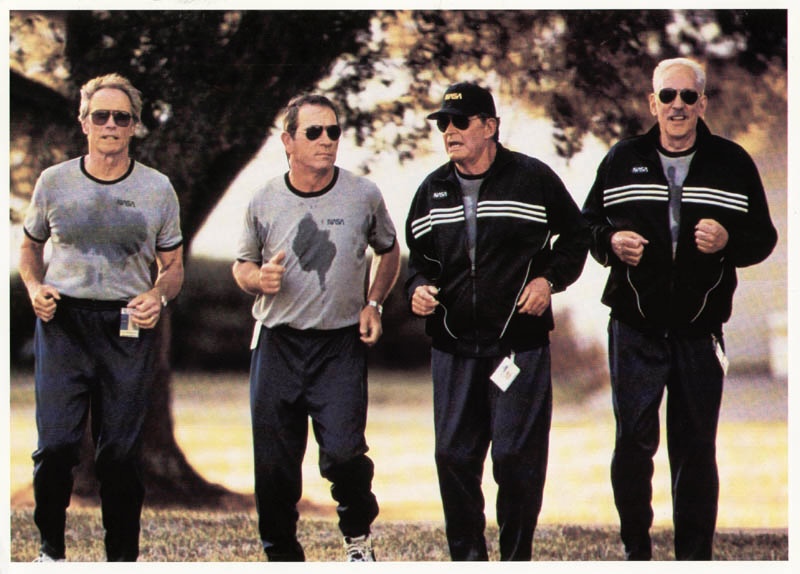
One of the funniest scenes in SPACE COWBOYS (2000) takes place when Jay Leno interviews the characters of Frank Corvin (Clint Eastwood), Hawk Hawkins (Tommy Lee Jones), Jerry O’Neill (Donald Sutherland) and Tank Sullivan (James Garner). The scene I’m referring to involves a question asked of “babe magnet” Jerry O’Neill. Only a few moments of Jay Leno’s material made it into the completed film, but the interview was filmed in front of a real Tonight Show audience. Leno made monologue jokes about Viagra, Matlock (1986), and prostate problems. Leno ad-libbed with the actors like he would in a real interview. I’ve included the additional scenes here!

I review SPACE COWBOYS (2000) – starring Clint Eastwood, Tommy Lee Jones, Donald Sutherland and James Garner!


Here at The Shattered Lens, we’re definitely celebrating Clint Eastwood’s May 31st birthday. As part of that celebration, I decided to revisit his 2000 film, SPACE COWBOYS. 

SPACE COWBOYS opens in 1958 on the day that Air Force Test Pilot Frank Corvin (Clint Eastwood) and his team of Hawk Hawkins (Tommy Lee Jones), Jerry O’Neill (Donald Sutherland), and Tank Sullivan (James Garner) find out that their test program is being shutdown due to the formation of NASA. Their dreams of someday making it to space are crushed, and to make it worse, they were stabbed in the back by their leader Bob Gerson (James Cromwell) and not invited to be part of NASA’s new testing program. Fast forward to the present time, where a Soviet communications satellite seems to be unresponsive and NASA is working with Russian General Vostov (Rade Serbedzija) to figure out how to keep it from crashing back to Earth. The satellite is a relic of the Cold War that somehow ended up with a guidance system on board that’s so old that it was designed by Frank, and the young folks don’t know how to work with it. And to complicate things even further, the guidance system can only be fixed on site, which means in space. So it seems that NASA finally needs Frank after all this time, and he’ll only agree to help if he’s able to bring his old team on board. Their old nemesis Bob, the project’s manager at NASA, reluctantly agrees. We see that he’s still the same bastard he’s always been as he and General Vostov are holding back critical information about the cargo of the satellite. So let the training and preparation for the mission begin! 

The premise of SPACE COWBOYS may not be very realistic, but I think it’s one hell of a fun movie, especially during its first half. I really enjoy watching this amazing cast of veteran actors do their thing. Of course they get the cool walk into NASA headquarters wearing sunglasses and leather jackets, while N’ Sync’s “Space Cowboy” plays over the soundtrack. Clint Eastwood plays the character he has perfected over his career, that of the tough, grizzled leader with a dry sense of humor. Tommy Lee Jones is the fearless hotshot who has never been good at following orders, but has the kind of talent that everyone wishes they had. Jones is actually by far the youngest of the primary cast, a full 16 years younger than Eastwood. Donald Sutherland gets some of the best laughs as the ladies man of the team. The scene where he answers Jay Leno’s question about his reputation as a lothario made me laugh out loud! James Garner’s character became a Baptist minister after his days with the Air Force and prays often for the group. He’s good here, but his character is the least memorable. With their mission labeled “The Ripe Stuff” by the media, watching these great older actors go through their training, and deal with their much younger counterparts and the NASA brass, is a joy. I also want to shout out William Devane as the NASA flight director for the mission. He has a couple of really strong scenes. 

The legendary cast of this film can’t help but give a seasoned moviegoer like me a warm sense of nostalgia based on their amazing body of work. I remember introducing KELLY’S HEROES to my son when he was a boy. He watched my DVD over and over again. Seeing Eastwood and Sutherland together here brought those memories back. One of my very favorite revenge films is ROLLING THUNDER with William Devane and Tommy Lee Jones. Seeing them together here helps me remember just how great they are in that badass classic. Heck, Garner’s character name of “Tank” Sullivan takes me back to one of the very first movies our family rented when we got our VCR in the mid-80’s! Do y’all remember Garner’s film TANK from 1984? I certainly do! 

I will admit that once the crew takes off and begins the actual mission, which comprises about the last 45 minutes of the film, the entertainment level goes down a couple of notches for me. The technical aspects of completing the mission are not as interesting to me as the character interplay in the earlier portions of the film. With that said, there are still some exciting moments to be had, including the nailbiter of a landing at the end. 

I enjoyed revisiting SPACE COWBOYS after quite a few years. This movie is ultimately a crowd pleaser, and for me, it does its job well. Enjoy the trailer below: