Late Night Retro Television Review: CHiPs 6.11 “Day of the Robot”


Welcome to Late Night Retro Television Reviews, a feature where we review some of our favorite and least favorite shows of the past!  On Mondays, I will be reviewing CHiPs, which ran on NBC from 1977 to 1983.  The entire show is currently streaming on Prime!
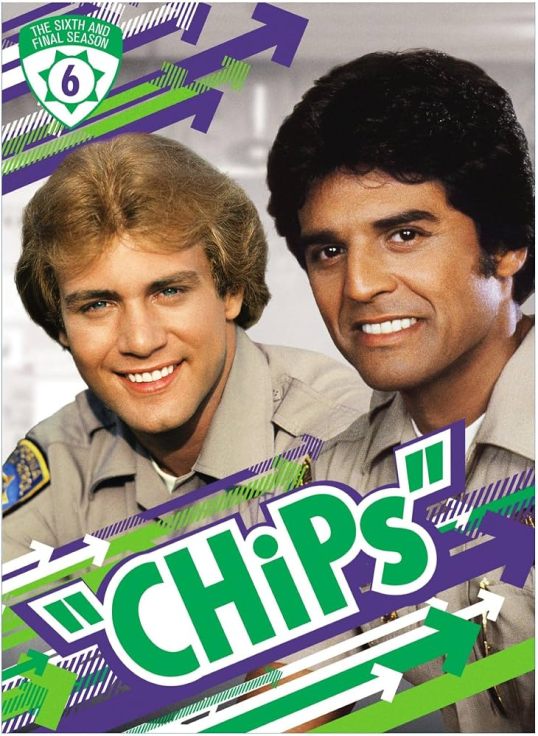
This week, Ponch is busy.  The rest of the Highway Patrol is impressed.

Episode 6.11 “Day of the Robot”

(Dir by Phil Bondelli, originally aired on January 2nd, 1983)

Years ago, Emily’s younger brother was killed by a reckless driver.  Now, Emily (Melody Anderson) is the leader of a group of young women who drive their motorcycles up and down the highway and keep an eye out for people who run stop signs and make unsafe lane changes.  They issue their own tickets.  They attempt to make citizen’s arrests.  They always call the Highway Patrol before going off in pursuit but Ponch, Getraer, and even Bobby still think that they’re putting their own lives at danger.  When two stereo thieves decide to get revenge on Emily for a ticket, can Ponch save the day?

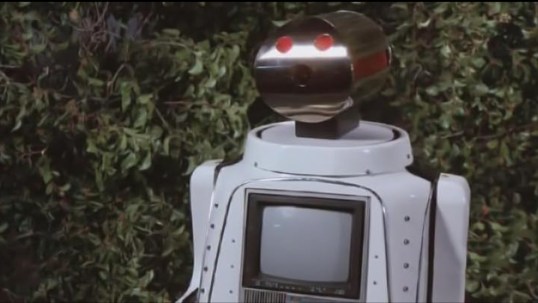
Meanwhile, a robot named MERV has been loaned to the Highway Patrol to help with filing and other tasks.  When it turns out that MERV has a short in its system that’s turned it into a “ticking time bomb,” can Ponch figure out how shut it down so it can be repaired before it accidentally blows up the children’s wing of the hospital?

Of course, he can.  Ponch can do anything!
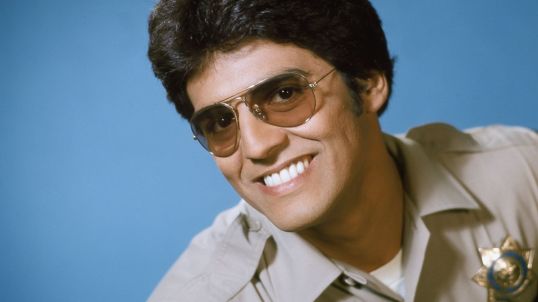
This episode was a good example of how, during the show’s final season, everyone at the Highway Patrol was pretty much useless except for Ponch.  Ponch is the one who knows exactly what to say to Emily.  Ponch is the one who saves a bunch of sick kids from a potentially explosive situation.  Ponch is practically the only member of the Highway Patrol who couldn’t easily be replaced by a robot.

One gets the feeling that the show’s producers were getting a little desperate during season 6.  Not only have we had a UFO and a tragic death but this season has also given us a robot.  Remember how the early seasons mostly just tried to be a realistic portrait of the day-to-day activities of the Highway Patrol?

Those days are over.  The episode reminds us that CHiPs is now….

On the plus side, at least the robot was cute.
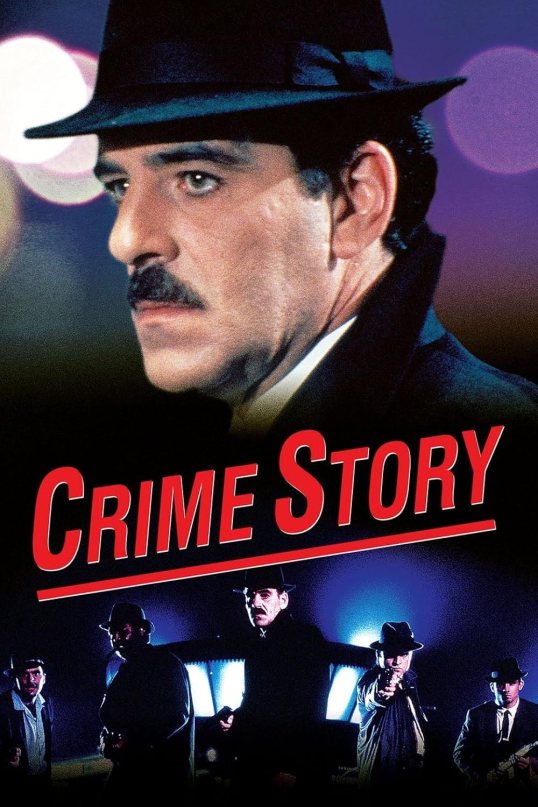
Retro Television Review: Crime Story 2.1 “The Senator, The Movie Star, and the Mob”


Welcome to Retro Television Reviews, a feature where we review some of our favorite and least favorite shows of the past!  On Mondays, I will be reviewing Crime Story, which ran on NBC from 1986 to 1988.  The entire show can be found on Tubi!

Today, we start the second season of Crime Story!

Episode 2.1 “The Senator, The Movie Star, and the Mob”

(Dir by John Nicolella, originally aired on September 22nd, 1987)

The second season of Crime Story opens with Torello, Abrams, and the Task Force still in Las Vegas. With Luca and Pauli apparently dead as a result of that nuclear blast at the end of the first season, various gangsters are trying to position themselves as Manny Weisbord’s new man in Vegas. Carlo Mastrangelo (Stephen McHattie) is the latest contender.

(And yet, it’s hard not to notice that, during the opening credits, both Tony Denison and John Santucci are listed. Neither appears in this episode other than in the pictures displayed at their funeral. But the credits don’t seem quite convinced that Luca and Pauli are dead.)

Crusading Senator Rourke (Kevin Spacey, in his first major television role) comes to Vegas. Rourke—the son of a former bootlegger and a presidential contender who speaks with a slightly abrasive Boston accent—is holding hearings on the Mob. Also arriving in Vegas is Pamela Palmer (Jenny Wright), a platinum-blonde movie star known for her glamorous sex appeal but who spends almost the entire episode hiding a black eye behind her sunglasses. As Torello discovers, Pamela is Mastrangelo’s occasional girlfriend, but she’s also having an affair with Senator Rourke.

Anyone who has studied history or who has an interest in conspiracy theories will be able to see the obvious real-world parallels. Rourke, with his bootlegger father and his less-than-ideal private life, is an obvious stand-in for both John and Robert F. Kennedy. (Of course, when seen today, the casting of Kevin Spacey in the role brings a whole other dimension to it. Now we instinctively distrust Rourke as soon as we see him, despite the fact that the show portrays him as sincere in his crusade against the Mob.) Pamela is Marilyn Monroe. Mastrangelo and his second-in-command Bobby Meeker (Michael Wincott) bring to mind Sam Giancana and Johnny Roselli, two of the mobsters whose names regularly turn up in JFK assassination lore.

In real life, a heartbroken Marilyn Monroe overdosed and both Kennedy brothers were assassinated. On Crime Story, Torello is able to prevent Mastrangelo from assassinating Rourke, and an emotionally strengthened Pamela is able to leave Las Vegas for what will hopefully be a brighter future than the one that awaited Marilyn. This episode feels like a work of alternative history, one in which the Kennedys lived up to their promise and one determined man like Mike Torello could prevent a nation from being traumatized.

For a history nerd like me, this episode was enjoyable. It held my interest. I liked seeing how the show reimagined history. At the same time, Luca and Pauli were definitely missed. A format in which Torello deals with a villain-a-week doesn’t carry the same emotional punch as watching Torello obsess, episode after episode, on just one particularly nasty villain. Because Luca and Torello were opposite sides of the same driven coin, not having Luca around makes it feel as if Torello is incomplete as well.

That said, this episode ended with a shot of a bandaged man sitting on a beach in Mexico. Could that man be Luca? Hopefully, we’ll find out soon!

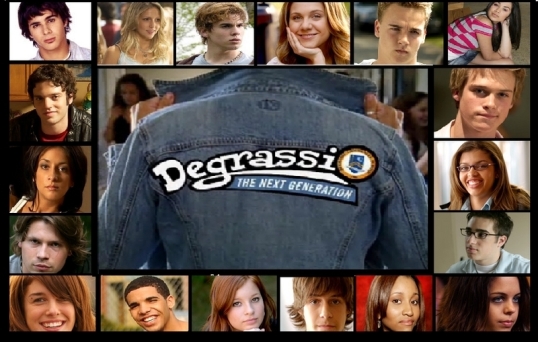
Late Night Retro Television Review: Degrassi: The Next Generation 3.13 “This Charming Man”


Welcome to Late Night Retro Television Reviews, a feature where we review some of our favorite and least favorite shows of the past!  On Sunday, I will be reviewing the Canadian series, Degrassi: The Next Generation, which aired from 2001 to 2015!  The series can be streamed on YouTube and Tubi.

If you’re a fan of the Emma Nelson death stare, this episode is for you.  Emma spends the entire episode giving Sean the death stare.

Episode 3.13 “This Charming Man”

(Dir by Stefan Scaini, originally aired on December 10th, 2003)

Emma says she’s ready to move on from Sean, and for her, that means dating Chris (Daniel Keith Morrison). Chris is happy to finally be with Emma, but it soon becomes obvious that she’s not done being obsessed with Sean. Convinced that Sean and Jay are responsible for stealing both Snake’s laptop and the school’s DVD player, Emma tells Mr. Raditch that she and Chris saw Sean and Jay putting the DVD player into Jay’s car. When Sean learns he’s been fingered by an anonymous tipster, he figures out it was Emma. “You know I’m on probation!” he shouts at her. Raditch tells Sean to calm down. Sean tells Raditch to go to hell. Sean gets two months of morning detention, while Emma smiles.

This is a good example of how Emma is never really held responsible for any of her actions. The truth of the matter is that Jay and Sean are the ones stealing stuff from the school. However, Emma still lied about seeing Jay and Sean with the DVD player. Chris calls Emma out for lying and breaks up with her. After Emma apologizes to him (but not to Jay, Sean, or Mr. Raditch), Chris takes her back. Chris doesn’t seem too worried that Emma literally tried to send her last boyfriend to jail.

From the start of this season to her final appearance on the show, the perpetually self-righteous Emma really did become insufferable. Fortunately, this episode has an amusing B-plot in which Spinner, Paige, Hazel, and Jimmy all take driver’s education together. The problem is that their instructor, Mr. Falcone (Jim Thorburn), is a total hunk, and Paige gets so distracted by his presence in the car that she runs over several orange cones. Spinner, meanwhile, gets so jealous that when it’s his turn to drive, he runs over a cardboard cutout of a family trying to cross the road.

“Really, Spin!?” Paige says from the back seat. “A family!?”

Spinner then accidentally crashes into a parked car. No license for him!

Oh, this plot made me smile. I had such a hard time with driver’s ed, and it was mostly because the instructor wouldn’t stop talking. “Both hands on the steering wheel.” “Watch the road.” “You’re on the wrong side of the street.” “YIELD!” Bleh!

I actually came home from driving school in tears once. My mom immediately went down to the school and yelled at the instructor. Then the owner of the school rode with me to see if I was really as bad a driver as the instructor claimed. Her verdict was that I had a lazy eye, which I definitely don’t. Anyway, the important thing was that I eventually got my license and now I speed everywhere.

Where was I? Oh yeah, Degrassi. Emma’s the worst, but at least this episode featured some quality time with Paige and Spinner.

Retro Television Review: Homicide: Life On The Street 6.6 “Birthday”


Welcome to Retro Television Reviews, a feature where we review some of our favorite and least favorite shows of the past!  On Sundays, I will be reviewing Homicide: Life On The Street, which aired from 1993 to 1999, on NBC!  It  can be viewed on Peacock.

This week, it’s yet another Falsone episode.

Episode 6.6 “Birthday”

(Dir by Alison MacLean, originally aired on November 7th, 1997)

This episode is an example of the good, the bad, and the ugly.

The good part of the episode is that Mary Pembleton finally goes into labor and gives birth to a son.  Andre Braugher was so intense on this show that it was always nice to see an episode where Frank could just be happy.

The bad is that Georgia Rae Mahoney has surveillance camera footage of Kellerman killing Luther Mahoney.  The Mahoney stuff is just getting dragged out.  As Luther Mahoney, Erik Todd Dellums was a magnificent villain.  Hazelle Goodman is considerably less compelling as Georgia Rae but, then again, the writers aren’t doing her any favor by having Georgia Rae always talk like a comic book villain.

The ugly is that the main storyline is yet another Falsone story.  This time, Falsone, Lewis, and Stivers investigate the rape and violent assault of a woman named Grace Riviera (Allison Folland).  As you might expect, Falsone takes the case — wait for it — PERSONALLY!  When one suspect doesn’t give Falsone the answers that he wants in the box, Falsone beats him up.  He guarantees Giardello that he will close the case.  Giardello responds that he likes Falsone.  Well, good for Giardello, I guess.

As I’ve said before, there’s several problems with Falsone’s character.  The biggest one is that Falsone doesn’t really have much depth, especially when compared to characters like Pemblton, Bayliss, or even Lewis.  He’s a collection of cop show cliches.  He’s the epitome of everything that Homicide was supposed to be against.  Jon Seda’s one-note performance is jarring when compared to the rest of the cast.  Callie Thorne’s Laura Ballard may not be a particularly interesting addition to the ensemble but at least Thorne can show a hint of emotion.

The biggest problem with Falsone is the way that this season keeps trying to force him on the viewer.  If a viewer wants to watch Pembelton, Bayliss, Munch, or any of other other detective solve a murder, they’re out of luck.  It’s the Falsone show!

This episode ends with Falsone going to the hospital to tell Grace that he’s arrested the man who attacked her, just to discover that Grace died.  It’s not the shocking moment that the show meant it to be.  And emotionally, it falls flat because it’s a Falsone moment.

Homicide is the series that I want to review.  I have no interest in The Falsone Show.

Late Night Retro Television Review: Saved By The Bell 3.8 “Fake IDs”


Welcome to Late Night Retro Television Reviews, a feature where we review some of our favorite and least favorite shows of the past!  On Saturdays, I will be reviewing Saved By The Bell, which ran on NBC from 1989 to 1993.  The entire show is currently streaming on Tubi!

This week, someone gets caught cheating!

Episode 3.8 “Fake IDs”

(Dir by Don Barnhart, originally aired on October 19th, 1991)

Having finally reached the point where he’s ready to move on from Kelly, Zack Morris resorts to lying to get a new girlfriend. He tells USC freshman Danielle (Julie St. Claire) that he’s a fellow Trojan. He claims to be a photojournalism major who spends all of his time in his darkroom. That’s why she never sees him on campus. Wink wink.

When Danielle invites him to the Attic, an 18-and-up club, Zack instructs Screech to use the skills he’s learned in photography class to make fake IDs. Zack, Slater, and Screech sneak out of Zack’s house and hit the Attic. Screech gets chased by an older woman named Reggie. Slater spends the whole night talking about how much he misses Jessie. Zack dances with Danielle. It’s a great night until they spot Kelly’s new boyfriend, Jeff, dancing with a girl who isn’t Kelly.

“Whoa!” Zack, Slater, and Screech all say at the same time.

When Jessie and Lisa hear that the guys went to an over-18 club, they decide they want fake IDs as well. Meanwhile, when Zack tells Kelly about seeing Jeff, Kelly accuses Zack of being jealous. But when Jeff gives a half-hearted excuse for why he can’t go out with her that night, Kelly asks Screech to make her a fake ID as well.

The next night, Zack’s parents are at a Peter, Paul and Mary concert. Zack goes to the Attic with Slater, Screech, Lisa, and Jessie and is shocked when he can’t find Danielle. What Zack doesn’t know is that Danielle called the house to tell him she would be arriving late, and the phone was answered by Mrs. Morris (Melody Rogers). Mrs. Morris stops singing “Puff the Magic Dragon” just long enough to ask, “What’s the Attic?”

At the Attic, Kelly arrives just in time to spot Jeff dancing with his other girlfriend. She yells, “I broke up with a great guy for you!” “It’s not like we’re going steady,” Jeff replies. “We’re through!” Kelly says, and I can only assume that Kelly is also going to quit the job she so desperately needed just a few episodes ago.

Kelly, Jessie, and Lisa go off together so that Kelly can spend a few minutes “yelling in the ladies’ room.” Danielle and Mrs. Morris show up at the same time. Zack introduces his mom as his “young-looking older sister.” Mrs. Morris orders Zack, Slater, and Screech out to the car. They leave, and we’re left to wonder how Kelly, Jessie, and Lisa are going to get home.

To be honest, I kind of hate this episode. Jeff cheating on Kelly comes out of nowhere, and it’s totally against everything we’ve already learned about the character. Previously, the whole point of Jeff’s character was that he was a nice guy who didn’t intentionally set out to break up Zack and Kelly. In this episode, he’s suddenly a jerk.

That said, there are actually a few funny moments to be found, like Lisa trying to shove Zack away while he’s looking for Danielle. Slater’s loyalty to Jessie was actually pretty sweet, and even Screech was a bit less annoying than usual. It’s a well-done episode, even if it only exists to reset the Kelly/Zack relationship.

I just hope Kelly, Jessie, and Lisa were able to find a way home.

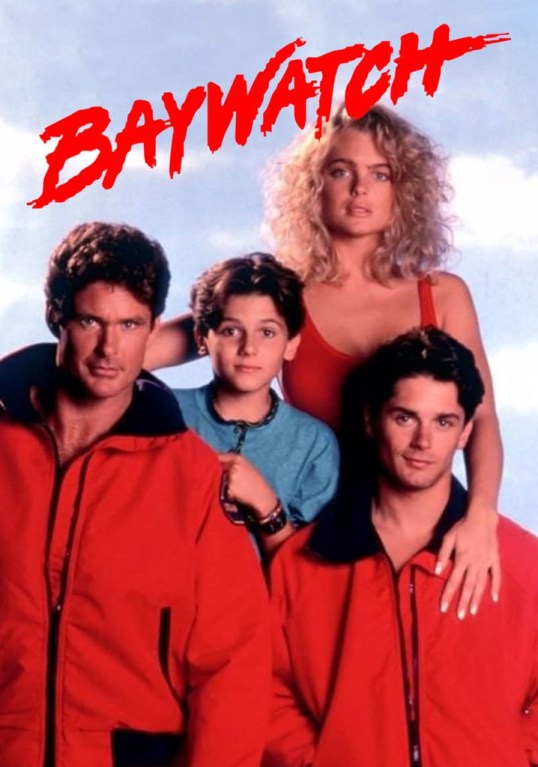
Retro Television Review: Baywatch 2.22 “Summer of ’85”


Welcome to Retro Television Reviews, a feature where we review some of our favorite and least favorite shows of the past!  On Saturdays, I will be reviewing Baywatch, which ran on NBC and then in syndication from 1989 to 2001.  The entire show can be viewed on Tubi.

This week, season 2 comes to an end!

Episode 2.22 “Summer of ’85”

(Dir by Michael Berk, originally aired on May 18th, 1992)

This was the second-season finale, and it is an odd note to end on. David Hasselhoff is billed and never appears. Baywatch without Mitch is already a strange choice for a season finale; making the hour an Eddie-and-Shauni murder-mystery-slash-old-flame reunion makes it stranger. Tom McTigue’s Harvey has a prominent role in this episode but Hasselhoff, the show’s center of gravity is missing, and you feel it.

As for the plot: frustrated by life on a cramped boat and partly at Harvey’s urging, Shauni drags Eddie to a psychic named Rosalind (the one and only Toni Basil!). Eddie is a skeptic. When Rosalind tells him he will soon meet his first true love, Eddie says that Shauni already is. Rosalind disagrees.

Soon afterward, Eddie spots a woman sketching on a sailboat who looks painfully familiar. He is sure she is Lorna Cosgrove (Michelle Rogers). Eddie was fifteen when he first met her while vacationing at a friend’s place on Nantucket. Lorna asked if she could paint him. He agreed. Eventually he lost his virginity to her but, later that night, he saw an older man at her door, got jealous and never spoke to her again.

When Eddie approaches the woman, she denies being Lorna and calls herself Caitlin. The next day, she pays a boy to deliver a copy of the painting to Eddie’s tower. That not only proves she is Lorna; it also proves she was a terrible painter. I have seen motel art more impressive than her portrait of Eddie fishing.

Shauni is suspicious, and with good reason. There is a warrant for Lorna’s arrest. The same night Eddie slept with her, her husband was shot, and Lorna was the prime suspect. Can Eddie prove she is innocent?

That continuity, for those who care about that sort of thing, in this episode is a mess. In “Point of Attack,” Eddie claimed he did not even see the ocean until he was nineteen.  The first season established that he was Philadelphia street kid who grew up in the foster system.  And yet, in this episode, here he is at fifteen, on Nantucket, fishing, posing, and losing his virginity in a beach house. As well, this episode plants Shauni and Eddie on a houseboat, with Shauni announcing that they have to get an apartment. The previous episode, “Game of Chance,” had just moved her onto that boat after a fight with her father. Earlier in the season, though, the show had already treated them as live-in partners, sometimes in an apartment. Continuity be damned, I guess.  It’s almost as if the show’s writers just didn’t care.

In the end, Baywatch without Hasselhoff is pointless. That said, Toni Basil is amusing as Rosalind.  This is definitely a case of a performer giving a better performance than the material deserved.

That closes the first syndicated season of Baywatch, and the second season of the series overall. For the most part, season 2 was dumb and fun. The best episodes used Hasselhoff’s innate earnestness. The worst got too cutesy, especially “Now Sit Right Back and You’ll Hear a Tale,” the one where Eddie dreams he is on Gilligan’s Island. Billy Warlock and Erika Eleniak were both adequate as Eddie and Shauni, but neither was happy with the show’s turn once it entered syndication, and that unhappiness often showed.

Next week, we start season 3!

Late Night Retro Television Review: Sledge Hammer 1.8 “Over My Dead Bodyguard”


Welcome to Late Night Retro Television Reviews, a feature where we review some of our favorite and least favorite shows of the past! On Fridays, I will be reviewing SLEDGE HAMMER!, a cop comedy which ran on ABC from 1986 to 1988. The entire series can be found on Prime!

This week, Captain Trunk’s life is in Sledge Hammer’s hands!

Episode 1.8 “Over My Dead Bodyguard”

(Dir by Charles S. Dubin, originally aired on November 14th, 1986)

Captain Trunk is scheduled to testify against a racketeer, and as a result the mob is determined to stop him. The police commissioner orders Sledge Hammer to serve as Trunk’s bodyguard. Trunk isn’t happy to hear that. He’s trying to get back together with his ex-wife (Tracy Reed). The last thing he needs or wants is Hammer around.

Hammer, however, takes his job seriously. When Trunk and his ex have dinner, Sledge is there to keep an eye on him and beat up an assassin. When it becomes obvious that Trunk is not safe at his own home, Hammer takes him to his apartment. When an assassin still manages to shoot Trunk, Hammer tells the world that Trunk is dead.

Doreau is shocked to see that Hammer doesn’t seem that upset over Trunk’s death. She asks him if he has any emotions. Hammer replies that he has a full range of emotions: “Anger, rage, hate. Hate.”

Hammer also explains that Trunk isn’t really dead. He’s at the hospital, preparing for surgery. Hammer takes Doreau to the hospital to see their captain. Outside the hospital room, the guard looks at Hammer and asks, “Why did the chicken cross the road?” “To avoid the death penalty,” Hammer says. He looks over at Doreau. “Guess who came up with that password?”

An assassin (Robert O’Reilly) has disguised himself as an anesthesiologist. The assassin even manages to drug Hammer. Fortunately, a half-drugged and stumbling Hammer still knows how to throw a punch. He knocks out the assassin and then announces that, because the hospital has been compromised, he’s going to have to remove the bullet himself. “Don’t worry. I’ve practiced on myself.”

Trunk somehow survives being protected by Hammer and gives his testimony. The commissioner congratulates Trunk and then assigns Hammer to continue guarding him for at least a month.

This episode felt a bit off. There were a few funny lines and some good physical humor (especially when Doreau was helping the drugged Hammer to his feet), but otherwise it lacked the fast-paced, anything-for-a-joke feel of some of the previous episodes. In fact, it felt almost like a regular cop show. The only surprising thing is that it’s an assassin who shoots Trunk and not Sledge Hammer himself.

As I said, this episode did make me laugh. David Rasche, Anne-Marie Martin, and Harrison Page are quite a comedic team. It just didn’t leave as lasting an impression as some of the other episodes I’ve watched.

Retro Television Review: St. Elsewhere 4.13 “To Tell The Truth”


Welcome to Retro Television Reviews, a feature where we review some of our favorite and least favorite shows of the past! On Fridays, I will be reviewing St. Elsewhere, a medical show which ran on NBC from 1982 to 1988.  The show can be found on Daily Motion.

Has John Doe finally discovered his real identity?

Episode 4.13 “To Tell The Truth”

(Dir by Mark Tinker, originally aired on January 15th, 1986)

Last week’s episode ended with an abortion protester hiding a bomb in a custodial cart. The majority of this episode features various characters pushing that cart around the hospital, leaving us to wonder if and when the bomb is going to go off. At one point, even Dr. Craig gives the cart a frustrated shove. When the bomb finally does go off, it’s sitting outside the hospital gift shop. The hospital survives. An orderly is seriously injured. And Morrison gets to yell at the bomber (Rob Garrison).

Fiscus isn’t in the hospital when the bomb goes off. Instead, he’s out doing his Westphall-mandated community service. Fiscus is sent out on house calls, visiting elderly patients in their homes and doing follow-up exams. Fiscus hates it, and it’s easy to see why. For the most part, the old people are stereotypes. This episode is a rare case of St. Elsewhere trying too hard to be sentimental.

(And yes, when Fiscus complains, you can be sure that Westphall is ready with a long monologue about the time he spent in Ethiopia.)

The Valeres (George DelHoyo and Deborah May) are both getting frustrated with their inability to conceive. With Dr. Turner currently visiting her hometown in Mississippi, Ehrlich and Chandler have taken over the case. Ehrlich recommends that the Valeres consider adoption. Chandler, however, tells them that they should continue with IVF.

After a long day in court, Lucy slaps Helen, declares them to be even, and then drops her lawsuit.

Finally, Ramsey Headley (Ellis Rabb) and Lucinda Ferrare-Headley (Carrie Nye) show up at the hospital and claim that John Doe No. 6 is their long-lost brother and the heir to their family’s fortune. John Doe No. 6, who had been experimenting with being Shakespeare, says that he knows them and that he now realizes that he is Thomas Headley of New Orleans. Auschlander is happy that John has found his identity, but he’s still sad to see him go. (Auschlander does not seem to notice that the Headleys all speak like characters in a bad Tennessee Williams play.) After John leaves, the hospital gets a call from a “New Orleans sanitarium,” informing them that two of their patients have escaped and are heading to Boston. Yikes! If John returns next week, this will be a funny little incident. If he doesn’t, I’m never going to forgive Auschlander for letting him leave with two obvious charlatans.

This week’s episode was .… well, it was okay. It had its good moments, like the suspense with the custodial cart and the John Doe storyline. But it also got a bit too sentimental with the old people, and I’m at the point where I’m going to scream if I have to listen to another Westphall lecture about life in Ethiopia.

Let’s just be happy that the show didn’t kill Santa Claus again.

Late Night Retro Television Review: Hunter 2.4 “Rich Girl”


Welcome to Late Night Retro Television Reviews, a feature where we review some of our favorite and least favorite shows of the past!  On Thursdays, I will be reviewing Hunter, which aired on NBC from 1984 to 1991.  The entire show is currently streaming on Tubi and several other services!

This week, Hunter and McCall investigate a rich girl for murder.

Episode 2.4 “Rich Girl”

(Dir by James Whitmore, Jr., originally aired on October 19th, 1985)

When an elderly millionaire named Ralph Flagg (Robert Rockwell) is shot and nearly killed, his much younger wife, Ginger (Lois Hamilton), is arrested for the crime. Even though she’s acquitted, McCall and Hunter continue to believe Ginger tried to kill her husband for his money. When Ginger plunges off a balcony, they start to have their doubts. What if the mastermind behind the violence is actually Ralph’s daughter, Cynthia (Dorian Lopinto)? Hunter goes undercover as a former basketball player turned golf hustler and gets close to both Cynthia and her loutish boyfriend, Bradley (John Calvin).

The plot doesn’t provide as many twists as one might hope. From the start, it’s made clear that Cynthia and Bradley are the murderers. Bradley may be the more openly evil of the two, but Cynthia is definitely the mastermind. When it starts to seem as if Bradley is going to turn on her, Cynthia shoots him and then claims it was self-defense. When it appears that Cynthia is going to get away with that murder as well, Hunter and McCall convince Ralph to change his will so Cynthia must confess to her crimes if she wants to inherit his fortune. Cynthia responds by going home, grinding a couple of pills into her ice cream, and then apparently committing suicide while a tear rolls down her cheek.

Agck!

That ending really took me by surprise. Cynthia went from being the episode’s villain to an almost tragic figure. That said, I’m not really a fan of Hunter and McCall hounding people into suicide. I would much rather they just make good arrests, but that’s not their style.

At least this episode didn’t end with Hunter saying, “Works for me.”

Retro Television Review: Blood Ties (dir by Jim McBride)


Welcome to Retro Television Reviews, a feature where we review some of our favorite and least favorite shows of the past!  This Thursday, I will be reviewing Blood Ties, which aired its only episode on Fox in 1991.  The pilot film can be found on Tubi!


Episode 1.1 “Blood Ties”

(Directed by Jim McBride, originally aired on May 27th, 1991)

In Long Beach, California, there is a thriving community of Carpathians. Eli Chelarin (Patrick Bauchau) is the patriarch, a businessman who builds skyscrapers, makes deals, and flies into a rage whenever he learns of anti-Carpathian prejudice. Harry Martin (Harley Venton), born Harlevon Martinescu, is the reform-minded journalist who thinks it is time for the Carpathian community to start mingling with the rest of America. Celia (Michelle Johnson) is Eli’s sultry sister. While Eli is making big business deals and Harry is preaching coexistence, Celia and the younger generation are having a good time.

And then there is Cody Puckett (Jason London), who grew up in small-town Texas and was barely even aware of his Carpathian heritage. That all changed when a group of Carpathian hunters (led by Bo Hopkins) killed Cody’s parents and burned down his house. Cody flees Texas and ends up in California, where he hooks up with his distant relatives.

Harry reveals to Cody that the Carpathians are actually vampires, but that does not mean what Cody initially assumes. Yes, the Carpathians are directly descended from Lilith, and yes, they do have a taste for blood. However, they are not immortal (though they do tend to live to be at least 120). They can go out in the sunlight. They cannot turn into bats. They cannot be stopped by a cross. A wooden stake only kills them because it would kill anyone. The Carpathians are stronger than the average human, but they are not super-strong. (Cody nods and then asks if Carpathians are better at sex than average humans.) In short, the Carpathians are vampires who do not actually get to do any of the fun vampire things. To me, that defeats the whole purpose of being a vampire. Harry and his relatives spend so much time scoffing at misconceptions about vampires that they seem to miss the point: vampires are only interesting as long as they are doing vampire stuff. Vampires that turn into bats will always be more entertaining than vampires who just happen to live a long time.

Blood Ties was a made-for-TV movie that also served as a pilot for a potential series. It is easy to see the direction the series would have taken. Blood Ties mixes 90210-style teenage antics with older adults debating the best way to protect their community. Eventually the Carpathian hunters show up in Los Angeles, and the vampires make quick work of them. Presumably Bo Hopkins would not have been a series regular. Jim McBride’s direction is stylish, and the pilot is well acted, especially by Michelle Johnson. That said, it is hard not to feel that the pilot sabotaged itself by focusing on how the Carpathians were different from traditional vampires. The film rather cavalierly dismisses a lot of things that most horror fans love about vampires. Making the characters vampires who are not really vampires just feels kind of pointless.

Perhaps fortunately, Blood Ties did not become a regular series. If nothing else, that left Jason London available for Dazed and Confused. It is a fair trade.