Welcome to Late Night Retro Television Reviews, a feature where we review some of our favorite and least favorite shows of the past! On Thursdays, I will be reviewing Hunter, which aired on NBC from 1984 to 1991. The entire show is currently streaming on Tubi and several other services!
This week, Hunter and McCall are in South America.
Episode 2.7 “Rape and Revenge: Part Two”
(Dir by Richard A. Colla and Gary Winter, originally aired on November 9th, 1985)
Picking up where last week’s episode ended, Hunter, with the help of an orphaned street urchin named Iggy (Dan Ponce), has managed to track down where Raoul Mariano lives in Curaguay. He’s also learned that the country is controlled by the brutal secret police and that Mariano is the son of a feared general (Michael Ansara). Hunter has also arranged for a burned-out American named Jimmy Crackin (Larry Hankin) to fly him over the border to the safety of Bolivia. Of course, Hunter won’t be leaving until after he’s killed Mariano….
What Hunter did not count on was McCall suddenly showing up and asking him not to assassinate Mariano on her behalf. Even after Hunter points out that Mariano is going to get away with all of his crimes otherwise, McCall argues that Hunter should not put his life in danger to kill him.
Hunter disagrees. However, he doesn’t assassinate Mariano. Instead, when he confronts Mariano, Hunter gives Mariano a gun to keep things fair. When Mariano opens fire, Hunter shoots back in self-defense and kills him. Essentially, this was all so Hunter could avoid being portrayed as a cold-blooded killer. If this episode were made today, Hunter would have no hesitation about shooting Mariano, whether he had a gun or not.
Mariano is killed early on in the episode. The rest of the running time is taken up with Hunter, McCall, and Iggy trying to get to the helicopter in time to make their escape. Fortunately, it turns out that the Curaguayan army is no match for a determined Los Angeles homicide detective in a big car. The episode ends with the helicopter flying towards Bolivia, taking Hunter, McCall, and even little Iggy to freedom.
(To be honest, it still seems like this would all lead to an international incident of some sort but whatever.)
Compared to Part One, the second part of “Rape and Revenge” is pretty much just a straight-out action story. It was satisfying to watch Mariano meet his fate. That said, I could have done without Iggy the talkative urchin. I think he was mostly included to soften the fact that this episode was basically about Hunter trying to murder someone.
Next week, Hunter and McCall will be back in Los Angeles!
Welcome to Late Night Retro Television Reviews, a feature where we review some of our favorite and least favorite shows of the past! On Thursdays, I will be reviewing Hunter, which aired on NBC from 1984 to 1991. The entire show is currently streaming on Tubi and several other services!
This week’s episode is a difficult one.
Episode 2.6 “Rape and Revenge: Part 1”
(Dir by Gary Winter, originally aired on November 2nd, 1985)
I nearly didn’t watch this episode.
When I saw the title of this episode and then read the plot description on the IMDb, my first instinct was to try to find an excuse to get out of having to watch and review it. The plot description read: McCall is raped by a visiting diplomat and her colleague’s hands are tied when he claims diplomatic immunity. Nearly every episode of Hunter so far has featured McCall getting into some sort of trouble. She’s been kidnapped countless times. She’s been shot at least three times. She’s been in more than a few fights. In the past, that didn’t bother me because no one is going to mistake Hunter for a realistic show. But when I read what was going to happen to her in this week’s episode, I immediately imagined that the show would handle it in the worst and most insensitive way possible.
Still, I watched the episode because I’m a completist. And you know what? I was wrong.
This episode opens with Hunter and McCall investigating the discovery of a dead woman at the Curaguayan Consulate in Los Angeles. (Curaguaya is a fictional country in South America.) One of the consuls, Raoul Marino (Richard Yniguez), immediately starts hitting on McCall, despite the fact that she’s conducting a police investigation. Later, Raoul sends three different flower deliveries to McCall’s house. When Raoul then shows up at McCall’s house, she tells him to leave. He rapes her and then flees. McCall calls Hunter, who rushes over to her house and then takes her to the hospital.
Because he has diplomatic immunity, Raoul thinks that he can get away with rape. He also thinks that he can get away with shooting Hunter in the shoulder when the latter confronts him. And it turns out that Raoul is correct. With both McCall and Hunter temporarily out of action, he boards a plane to Curaguaya and returns home.
To the show’s credit, it handles McCall’s rape sensitively. Stepfanie Kramer gives a strong performance as McCall. The scenes at the hospital, where the still bruised McCall is examined by doctors and investigators, capture the fact that the trauma of being raped doesn’t just end with the act. My fear was that this episode would have McCall magically recover at the end of the hour. It didn’t. Instead, we watch as McCall goes through therapy and as she slowly reaches the point where she feels that she can return to work. But even when she does return, the pain and the trauma are still there. This episode doesn’t simplify rape or use it as just another melodramatic plot twist. For that, it deserves a lot of credit.
(My only real issue that, during a recovery montage, the scenes of McCall in therapy are mixed with scenes of Hunter recovering from being shot in the shoulder. I feel like McCall deserved to have that montage to herself.)
This is a two-part episode. The first hour ended with McCall realizing that Hunter had traveled down to San Pablo, Curaguay to get revenge on Raoul. (Hunter previously told McCall that he was taking a few days off to go fishing.) McCall then made a reservation on the next flight to San Pablo. The story concludes next week!
Welcome to Late Night Retro Television Reviews, a feature where we review some of our favorite and least favorite shows of the past! On Thursdays, I will be reviewing Hunter, which aired on NBC from 1984 to 1991. The entire show is currently streaming on Tubi and several other services!
This week, the first season of Hunter comes to a close.
Episode 1.19 “Sniper”
(Dir by James Whitmore, Jr., originally aired on May 18th, 1985)
Someone is using a sniper rifle to target blonde women who visit a national park. Hunter suspects that the sniper might have Army training, and he focuses his investigation on a nearby military base. Hunter’s instincts are correct. Early on, we’re shown that the sniper is Sgt. Dennis Balzer (Jack Starrett, the actor/director who also played the abusive cop who fell out of the helicopter in First Blood). Years ago, Balzer’s heart was broken by a blonde woman, and now he’s seeking revenge by killing every blonde he sees. It’s always odd to me how Hunter, a show about a detective, never seemed to try to generate any suspense as to who was going to turn out to be guilty. Instead, we usually learn the killer’s identity before Hunter does.
Meanwhile, Hunter also has to deal with something even scarier than a sniper: he’s being audited by the IRS. James Cromwell appears as the IRS agent, who eventually ends up auditing the entire department.
Since its very first episode, Hunter has been a violent show. Both Hunter and McCall have been portrayed as shoot-first, ask-questions-later types of cops, though Hunter does seem to be a much better shot than McCall. This episode was even more violent than usual, and the mix of innocent people getting shot in the head with comedic scenes about tax evasion sometimes felt a bit awkward. That said, who doesn’t hate the IRS? (Anyone who enjoys paying taxes is a commie sap.) I was glad to see that Hunter had the same attitude.
This episode brings the first season of Hunter to a close. Looking over the first season, it can be argued that more than a few of the episodes featured stories that felt a bit generic. The idea of Hunter being the son of a mobster was abandoned early on. And while the violence was undoubtedly part of the show’s appeal, it still feels strange that Hunter can kill so many people every week without getting into any trouble over it. What made this season work was the chemistry between Fred Dryer and Stepfanie Kramer. Fred Dryer may not have been the greatest actor in the world, but he had an engaging smile, he could deliver a one-liner, and the showrunners obviously understood that the sight of the very tall Dryer crammed into a broken-down car would more than make up for what he may have lacked in range. As for Stepfanie Kramer, the first season showed that she could hold her own in the action scenes, and her banter with Dryer was usually the highlight of each episode. That was certainly the case here.
4 Shots From 4 Films is just what it says it is, 4 shots from 4 of our favorite films. As opposed to the reviews and recaps that we usually post, 4 Shots From 4 Films is all about letting the visuals do the talking.
Today is the first day of summer so these 4 shots all celebrate films about summer vacation!
4 Shots From 4 Summer Films
Race With The Devil (1975, dir by Jack Starrett)
Hitch-Hike (1977, dir by Pasquale Festa Campanile)
“In the field we had a code of honor: you watch my back, I watch yours. Back here there’s nothing!” — John Rambo
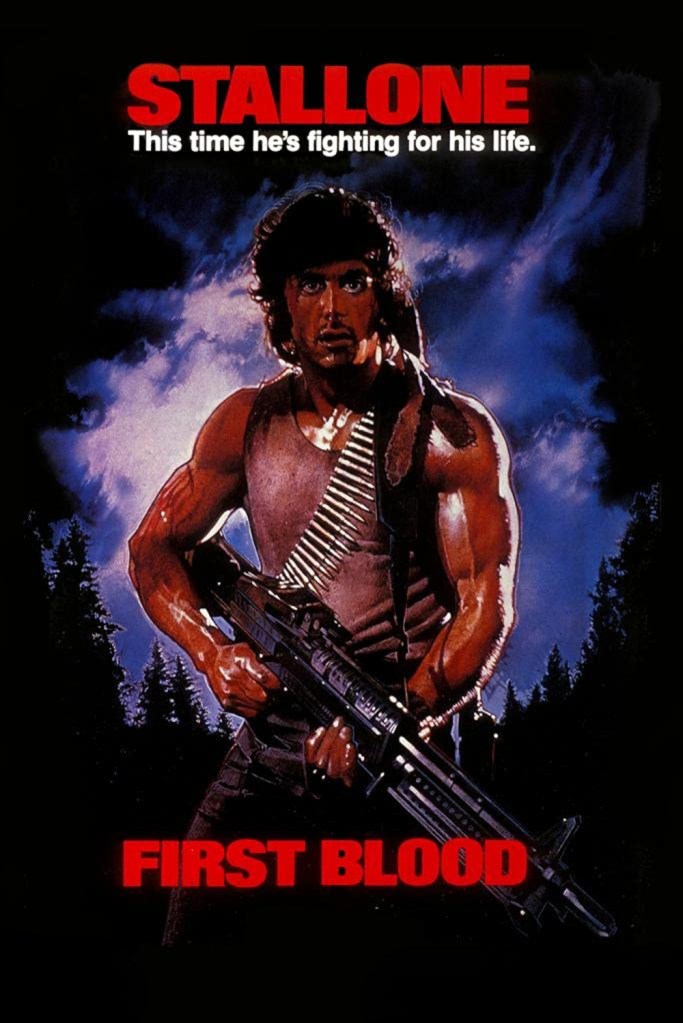
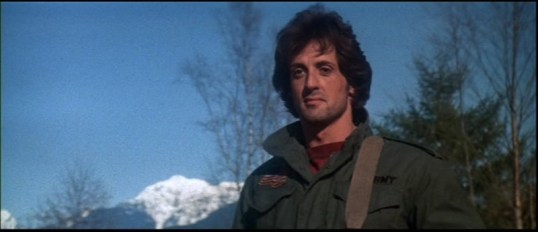
You sit down expecting a brainless 80s action flick, and instead you get a meditation on trauma, bureaucracy, and the American wilderness. That’s First Blood for you. Directed by Ted Kotcheff and released in 1982, this is the movie that introduced the world to John Rambo, but don’t go in hoping for a body count or one-liners. What you actually get is a lean, gritty, and surprisingly sad drama about a guy who just wants to eat a hot meal and ends up accidentally declaring war on an entire small-town police force. And honestly? It holds up to this day. The film is adapted from David Morrell’s 1972 novel of the same name, but if you’ve read the book, you’ll notice some serious tonal differences right away. Morrell’s novel is bleak, brutal, and deeply nihilistic—a product of its era’s raw disillusionment with Vietnam. Kotcheff and Stallone sanded down some of those rougher edges, not to sell out, but to make Rambo a more sympathetic figure. The bones are the same, but the spirit is just a little warmer, and that choice changes everything.
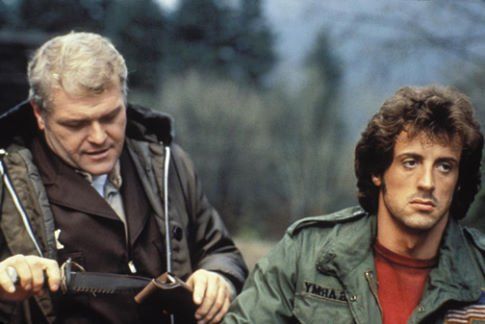
Let’s break down the plot, because it’s deceptively simple. Sylvester Stallone plays John Rambo, a former Green Beret and Vietnam War hero who wanders into the town of Hope, Washington, looking for a fellow soldier he served with. He finds out the guy died of cancer from Agent Orange exposure. That’s the first gut punch. Rambo, already drifting and clearly struggling with PTSD, just wants to grab some food and keep moving. But the local sheriff, Will Teasle (a perfectly cast Brian Dennehy), takes one look at Rambo’s long hair, army jacket, and tired face and decides he’s a vagrant who needs to be run out of town. From a structural standpoint, Teasle isn’t a cartoon villain—he’s a classic dramatic antagonist: a rigid, small-town authoritarian who sees drifters as a threat to his orderly world. That realism makes the whole thing sting because you can almost see both sides. Almost.
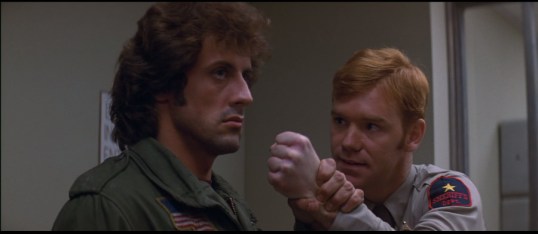
When Teasle tries to escort Rambo to the city limits, Rambo walks back into town. That’s his big crime. He gets arrested, and at the station, the deputies start pushing him around. One of them, a veteran deputy named Galt (played with sneering menace by Jack Starrett), is the real problem here. Galt isn’t some young hothead. He’s an older, seasoned deputy who’s clearly been in his role for years, and he’s become entitled on the power of his badge. You can see it in the way he leans into the booking process, the casual cruelty in his eyes, the way he treats Rambo like a stray dog he’s finally allowed to kick. During the shaving scene, as deputies try to clean Rambo up after the arrest, Galt is the one who holds Rambo down, restraining him while another deputy wields the straight razor. He’s not waving the razor himself, but that almost makes it worse—he’s the enforcer, the guy who pins you in place while someone else does the dirty work. It’s a veteran cop who knows exactly how to exert control without getting his own hands bloody. That makes Galt far more chilling than some screaming bully. He represents the rot of unchecked authority, the way small-town power can curdle into casual sadism over time. And that whole humiliating process—being held down, having a straight razor brought to his face—triggers a full-blown flashback for Rambo. Then something clicks. Rambo explodes, beats down half the station, and escapes into the nearby mountains.
Now the hunt begins. Teasle calls in the State Patrol, the National Guard, and eventually his old mentor, Colonel Trautman (Richard Crenna), who knows exactly what kind of animal they’re chasing. Trautman warns Teasle that Rambo isn’t just a drifter; he’s a trained killer with a “purple heart, a silver star, and a congressional Medal of Honor.” And here’s the core irony: Rambo doesn’t want to hurt anyone. He just wants to be left alone. But the chase escalates, people die, and by the end, you’re not cheering for the hero to win—you’re hoping he gets some peace.
From an analysis perspective, where First Blood really earns its stripes is its restraint. The action sequences are tense but never escalate into cartoon violence. Rambo uses the forest like a ghost, setting traps, crawling through mud, and surviving on raw squirrel meat. He doesn’t mow down dozens of cops with a machine gun. In fact, the only person he kills is Galt, who falls to his death while hanging off a helicopter because Rambo throws a rock at the chopper. And Rambo immediately looks horrified. That’s the key. Even Galt, as entitled and cruel as he is, isn’t a villain Rambo wants to execute. The kill is accidental, a desperate act of survival. The movie takes its time showing how the very skills that made Rambo a hero in Vietnam—his survival instincts, his aggression, his ability to turn anything into a weapon—now make him a monster in peacetime America. The local cops are out of their depth, but aside from Galt, they’re mostly just scared men doing a job. Nobody else is pure evil. Just broken systems and broken people.
But let’s talk about that novel, because the comparison is crucial for understanding the film’s choices. David Morrell’s First Blood is a much darker animal. In the book, Rambo is more feral, less a wounded hero and more a walking death sentence. He kills multiple cops, not by accident or in self-defense, but with cold, tactical efficiency. The novel has no Colonel Trautman to serve as a moral anchor—Trautman is there, but he’s just as ruthless. And the ending? Devastating. In Morrell’s version, Rambo and Teasle essentially murder each other in a final, bloody standoff. Trautman finishes Rambo off with a shotgun blast to the gut. There’s no catharsis, no plea for understanding. Just bodies and regret. The tone is nihilistic to the core: the system destroyed these men long before the first page, and there was never any hope. Kotcheff’s film pulls back from that abyss. It keeps the violence lean and mostly off-screen. It gives Rambo that famous final monologue where he sobs about his friend dying next to him, about protesters spitting on him, about not being able to turn off the war inside his head. That scene isn’t in the book—not like that. The movie says, “This man is suffering, and maybe he can still be saved.” The novel says, “This man is already dead, and he’s taking everyone with him.” Both are valid responses to Vietnam, but the film’s slightly toned-down approach is why Rambo became an icon instead of a footnote.
From a performance standpoint, Stallone gives the work of his career here. Forget the grunting one-liners of later sequels. In First Blood, he barely speaks, and when he does, his voice cracks. Watch his eyes during that final monologue. After Trautman finally talks him down, Rambo dissolves into a sob. “Nothing is over!” he screams at Trautman. “You don’t just turn it off!” It’s raw, uncomfortable, and genuinely moving. You realize that the whole movie has been one long panic attack for this character. The Rambo that pops up in Rambo: First Blood Part II is a cartoon superhero. The Rambo here is a guy who needed a therapist and a hug about thirty years ago. That vulnerability is the film’s great deviation from the source material. Morrell’s Rambo never asks for understanding. Kotcheff’s does. And that small shift in tone—from nihilism to wounded humanity—is what elevates the film from a grim exploitation picture to a legitimate character study.
On the technical side, Ted Kotcheff’s direction is patient and atmospheric. He shoots the Pacific Northwest like a character—vast, wet, dark, and full of hiding places. The chase scenes are grounded, with long takes and practical stunts. When Rambo jumps off a cliff into a tree and lands with a thud that sounds real, it hurts. There’s no CGI safety net. Jerry Goldsmith’s score is mournful, with lonely woodwinds and a simple, haunting main theme that never pumps you up for a fight. It just makes you sad. The movie even has the guts to end on a downer—but not as brutal as the book’s. Rambo surrenders, crying in Trautman’s arms, and the final shot is him walking away in handcuffs into the rain. No freeze-frame high five. No sequel tease. Just rain. And yet, compared to the novel’s blood-soaked finale, that rain feels almost like mercy. That’s tonal balancing at its finest: the film acknowledges the darkness without drowning in it.
Of course, the cultural memory of First Blood has been completely buried by its sequels. Most people under thirty know Rambo as the muscle-bound machine gun guy from memes and video games. But the original is closer to a western like The Deer Hunter meets a paranoid 70s thriller like The French Connection. It’s a movie about a country that used its soldiers and then discarded them. Teasle represents the willful ignorance of middle America—“I don’t care about your war” is basically his attitude. And Rambo represents the bill coming due. Galt, as that entitled veteran deputy, represents the everyday cruelty of those who’ve held power too long and forgotten what it’s for—the guy who doesn’t need to swing the blade because he’s the one holding you still. That theme hits even harder today, decades later, when veterans are still fighting for basic support and stories of badge-heavy misconduct still dominate headlines. The novel took that theme to its logical, horrific conclusion: no survivors, no lessons learned. The film pulls back just enough to let you breathe, and that one small change turned First Blood from a bleak cult artifact into a mainstream classic. You can argue which version is more honest. But you can’t argue that Stallone and Kotcheff made the right call for the screen.
First Blood rules. It’s a rainy, sad, surprisingly smart action movie that will stick with you longer than any explosion-fest. It’s also a masterclass in adaptation, showing how a slight shift in tone—from nihilistic to wounded—can transform a story without betraying its core. Brian Dennehy is perfect as the stubborn but not evil sheriff. Jack Starrett makes Galt a quietly terrifying portrait of bureaucratic sadism, a veteran deputy who’s learned to love the leash and the privilege of pinning a man down while someone else does the cutting. Richard Crenna brings real weight as Trautman, a father figure who knows he helped raise a weapon he can no longer control. And Stallone acts his soul out. When he whispers “I could have killed them all” in the final scene, he’s not bragging. He’s confessing. That’s why First Blood is a classic. It’s not a recruitment poster. It’s a eulogy—just a little less hopeless than the novel that birthed it. Four stars, easily. Just don’t go in expecting explosions every five minutes. Go in expecting to feel bad, and you’ll leave feeling like you watched something real.
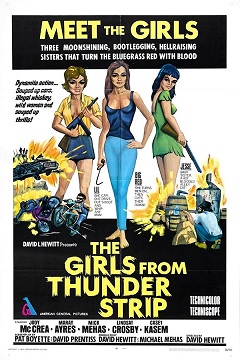
A group of dirty, good-for-nothing bikers roll into a Southern town. Led by Teach (Gary Kent), the bikers are obsessed with murder and rape, the latter of which opens the film and is treated in a fashion that is meant to be comedic. When some pointless bullying of a gas station attendant leads to the gang’s only female member getting stabbed to death, the bikers are arrested and thrown in the county jail.
Meanwhile, three sisters (Maray Ayres, Megan Timothy, and Melinda MacHarg) are making their own moonshine and selling it to the local hillbillies. A federal agent (played by Casey Kasem, the DJ who used to countdown the Top 40 songs in America and who voiced Scooby-Doo’s stoner friend, Shaggy) comes to town and insists that the local sheriff (Jack Starrett) arrest the three sisters. However, only one of the sisters is taken to jail while the other two escape. The federal agent manages to accidentally blow up the still but he only ends up with a face full of soot as a result. That Kasem can survive getting blown up without getting so much of a scratch on him would make sense if the rest of The Girls From Thunder Strip were presented as being a live-action cartoon but it’s not so the entire Kasem storyline feels like it was lifted from another, more light-hearted moonshiner movie.
With the help of the bikers, the incarcerated sister is able to break out of the county jail. But just because they helped each other, that doesn’t mean that the sisters trust the bikers, especially after the bikers murder a deputy who happened to be a cousin to the bootleggers. The bikers try to take over the moonshine business while the sisters (and one convenient mountain lion) take on the bikers.
The movie is all over the place. On the one hand, you’ve got the bikers raping and killing nearly everyone they meet. On the other hand, you’ve got Casey Kasem, playing a federal agent and pursuing the sisters with all the panache of a cartoon cat chasing a mouse. The action scenes are lousy. The characters have no motivation. With one exception, the actors are terrible and no, that exception is not Casey Kasem. Instead, the one exception is Jack Starrett, who plays the sheriff. Starrett, with his trademark gravelly voice, was a director who had sideline playing intimidating authority figures. In First Blood, he played Galt, the worst member of Brian Dennehy’s police force. (He was the one who laughed when he ordered the deputies to shave Rambo with a straight razor. Later he fell out of a helicopter and Rambo was blamed for his death.) Starrett gives the same performance in The Girls From Thunder Strip that he later gave in First Blood and since the sheriff is not actually given a name, I’ve decided that he and Galt are the same character and Girls From Thunder Strip takes place in the Rambo Cinematic Universe.
Other than providing a look at the early life of Art Galt, there’s not much else to recommend The Girls From Thunder Strip. Even aficionados of the biker and moonshine genres will want to look elsewhere.
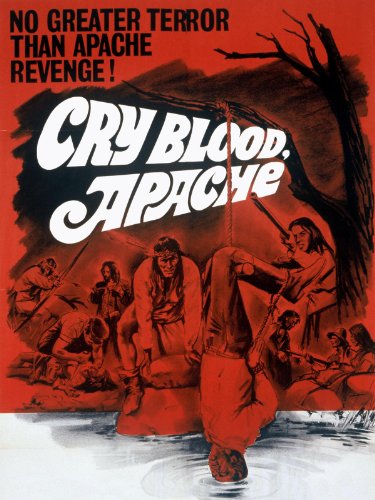
A group of old west outlaws stumble across an Apache camp. Though everyone’s friendly at first, the outlaws discover that the Apaches have gold so they kill all of the Apaches except for one, Jemme (Maria Gahua). They drag Jemme off with them, intent on having their way with her after forcing her to lead them to more gold. Only one member of the gang, Pitcallin (Jody McCrea), is willing to protect Jemme and treat her with kindness. (In fact, Pitcallin is such a nice and decent person that it doesn’t make any sense for him to be riding with the outlaws in the first place.) Meanwhile, Jemme’s brother (Marcus Rudnick) discovers the camp and, upon discovering his family dead, cries and screams for several minutes. Then he sets off for revenge against the gang.
The best thing about Cry Blood, Apache is that it opens with Joel McCrea, father of Jody, playing the elderly Pitcallin and riding his horse to the where the old Apache camp used to be. While the old Pitcallin is looking around, he hears the voices of the former members of the gang and then the rest of the film is told in flashback. This makes it seem like Cry Blood, Apache is going to be about an old outlaw coming to terms with the terrible things that happened in the past. Unfortunately, Joel McCrea’s only in the movie for about two minutes and since the movie sat on the shelf for three years before it was finally released, it’s probable that his scenes were shot long after the rest of the movie. Along with starring in the film, Jody McCrea also produced it and Joel probably only agreed to lend some star power to the movie as a favor to his son. But teasing western fans with Joel McCrea, just to then bring out Jody McCrea is just plain unfair.
Other than the opening scenes with Joel McCrea, the rest of this film is so poorly put together that it’s a struggle to sit through. Cry Blood, Apache is edited in such a haphazard manner that it’s nearly impossible to follow the plot. While the gang searches for more gold, Jemme’s brother searches for the gang but the film never makes it clear how close the brother is to finding the gang so there’s zero suspense generated. Jody McCrea was too naturally amiable to play a believable outlaw. There was nothing tough about him. Meanwhile, both Marcus Rudnick and Maria Gahua overact to such an extent that scenes that should be emotionally wrenching become unintentionally humorous instead.
Cry Blood, Apache was directed by Jack Starrett, who went on to direct far better movies than this one. He also appears in the film as a member of the gang, the bible-quoting Deacon. Even though he’s got long hair and is considerably younger in his film, most viewers will hear his voice and immediately recognize him as Galt, the sadistic cop from First Blood.
From everything that I had heard and seen over the past few years, I was under the impression that this 1982 film was the ultimate in mindless action. I figured that the film was basically just two hours of Sylvester Stallone hiding in the woods, firing a machine gun, riding a motorcycle, and eventually blowing up a small, bigoted town. It wasn’t a film that I was in any particular hurry to experience but I knew it was one that I would have to watch eventually, if just because of how many filmmakers have cited the film as an influence. On Sunday night, First Blood aired on the Sundance Channel and, for the first time, I watched it all the way through. What I discovered is that there’s a lot more to First Blood than I had been led to believe.
Now, don’t get me wrong. It’s definitely an action film. Stallone spends a lot of time hiding in the woods, firing a machine gun, riding a motorcycle, and blowing up a town. Somewhat improbably, only one character actually dies over the course of the film, though quite a few end up getting maimed and wounded. There’s even a close-up of Stallone stitching up a nasty gash on his arm, which totally made me cringe. But, even with all the gunfire and explosions, First Blood has more on its mind than just carnage. It’s a brooding film, one that angrily takes America to task for its treatment of its veterans and outsiders. In its way, it’s an action film with a heart.
Sylvester Stallone plays John Rambo, a troubled drifter who is still haunted by not only his experiences in Vietnam but also by the feeling that his own country doesn’t want him around. When Rambo, with his unkempt hair and wearing a jacket with an American flag patch prominently displayed, shows up in the town of Hope, Washington, it’s not to cause trouble. He just wants to see an old friend, a man with whom he served. Unfortunately, his friend has died. The man’s bitter mother says that he got cancer from “that orange stuff they were spraying around.” Even though the war is over, it’s still killing the only people who can possibly understand how Rambo feels about both his service and his uncertain place in American society.
As Rambo walks through the town, he’s spotted by Sheriff Will Teasle (Brian Dennehy). Rambo just wants to get a cup of coffee and relax. Teasle, however, views Rambo as being a stranger and, therefore, a possible threat to his town. Teasle wants Rambo to leave. Rambo wants to know why, after everything that he’s sacrificed for his country, he’s being told that he needs to get a haircut. From this simple conflict — a misunderstanding really, as Teasle doesn’t know that Rambo is mourning the death of his friend and instead interprets Rambo’s sullen silence as being a threat — an undeclared and unwinnable war soon breaks out.
Technically, Teasle is the film’s villain. He’s the one who arrests Rambo for vagrancy. It’s his abusive deputies who cause Rambo to have the flashbacks that lead to him breaking out of jail. It’s Teasle’s arrogance that leads to him ignore the warnings of Rambo’s former commanding office, Sam Trautman (Richard Crenna). And yet, Teasle himself is never portrayed as being an evil man. Instead, Dennehy plays Teasle as being well-meaning but stubborn. It’s been written that the most compelling villains are the ones who don’t realize that they’re the villain and that’s certainly true in Teasle’s case. Teasle’s job is to protect the town and its citizens and that’s what he’s determined to do. If his actions become extreme, it has less to do with any deliberate cruelty on his part and everything to do with the fact that, towards the end of the film, he finally figures out that he’s in way over his head.
Once Rambo has disappeared into the woods and maimed (but not killed) all of Teasle’s deputies, he only has one request and that’s to be left alone. He simply wants to stay in the woods, hunting for food and free from a society that has nothing to offer him during peacetime. What’s interesting is that, at the start of the film, everyone wants Rambo to just disappear. He’s a reminder of not just the turmoil of the Vietnam era but also the fact that Vietnam was the first war that America lost. Rambo’s presence is viewed as being like an ugly scar that you wish would just fade away. However, once Rambo does actually vanish, people won’t stop looking for him. As opposed to the later films in the franchise, the Rambo of First Blood doesn’t want to fight anyone. Rambo just wants to be left alone in solitude and considering the way that he’s treated by the town of Hope, it’s hard to blame him.
And so, you end up sympathizing with this John Rambo. Even thought he’s blowing up a town during the Christmas season and there’s a few scenes where he’s kind of scary, it’s impossible not to feel that he has a right to his anger. You find yourself wishing that the Sheriff had just left him alone or that maybe Rambo had just taken Teasle’s earlier advice and left town. Because, as you watch the film, you know that 1) there was no good reason why any of this had to happen and 2) things probably aren’t going to end well for either John Rambo or Will Teasle.
First Blood was based on a novel that was first published in 1972. The film spent nearly a decade in development, as various directors, screenwriters, and actors circled around the project. At one point, First Blood was envisioned as an anti-war film that would have been directed by Sidney Lumet and which would have featured a bearded Al Pacino lurking through the wilderness and killing not only Teasle but also several deputies and national guardsmen. When Stallone agreed to star in the film, he also rewrote the script, transforming Rambo into a sympathetic outsider who goes out of his way not to kill anyone. The end result was an underdog story that audiences could embrace.
Seen today, it’s interesting to see how many familiar faces pop up in First Blood. For instance, a young and really goofy-looking David Caruso pops up and totally overacts in the role of the only sympathetic deputy. A less sympathetic deputy is played by Chris Mulkey, who would go on to play other unsympathetic characters in a huge number of movies and TV shows. Interestingly enough, the most sadistic of the deputies was played by Jack Starrett, who directed a several classic B-moves in the 70s. (One of Starrett’s films was The Losers, in which a bunch of bikers were sent to Vietnam to rescue an American diplomat.)
As opposed to many of the films that it subsequently inspired, First Blood holds up surprisingly well. It may be violent but it’s violence with a heart.
4 Shots From 4 Films is just what it says it is, 4 shots from 4 of our favorite films. As opposed to the reviews and recaps that we usually post, 4 Shots From 4 Films is all about letting the visuals do the talking.
Today is the first day of summer so these 4 shots all celebrate films about summer vacation!
4 Shots From 4 Summer Films
Race With The Devil (1975, dir by Jack Starrett)
Hitch-Hike (1977, dir by Pasquale Festa Campanile)
The Mafia just pissed off the wrong ex-Green Beret.
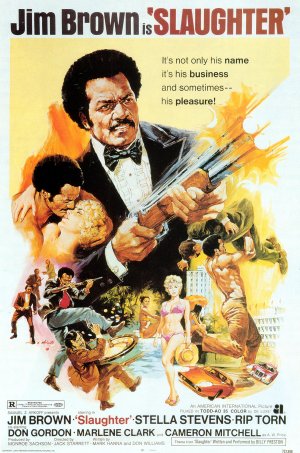
After his father is blown up by a car bomb, Captain Slaughter (Jim Brown) single handily wipes out the Cleveland mob. Only one gangster, Dominic Hoffo (Rip Torn), escapes to South America. The Treasury Department (represented by Cameron Mitchell) sends Slaughter and two other agents (Don Gordon and Marlene Clark) after Hoffo. Along with being a ruthless gangster, Hoffo is a viscous racist and is convinced that he will be able to easily take care of Slaughter. Hoffo does not understand how much trouble he’s in. No one stops Slaughter.
Produced by American International Pictures, Slaughter is one of the classic blaxploitation films. While it may not have the political subtext of some of the best blaxploitation films, Slaughter is a fast and mean action film, directed in a no nonsense manner by B-movie veteran Jack Starrett. There is not a wasted moment to be found in Slaughter. It starts and ends with cars exploding and, in between, it doesn’t even stop to catch its breath.
In the 1970s, Richard Roundtree was John Shaft, Ron O’Neal was Superfly, Jim Kelly was Black Belt Jones, Fred Williamson was Black Caesar, and Jim Brown was Slaughter. Whatever skills Jim Brown lacked as an actor, he made up for with sheer presence. He commanded the screen. Whether he was playing football on television or beating down the Mafia in the movies, no one could stop Jim Brown. Slaughter is Brown at his toughest. Rip Torn is the perfect villain, screaming out racial slurs even when Slaughter has him trapped in an overturned car. Jim Brown has said that, of all the films he has made, Slaughter is one of his three favorites. (The other two were The Dirty Dozen and Mars Attacks!)
Slaughter‘s cool factor is increased by the presence of Stella Stevens, playing the role of Ann, Hoffo’s mistress. It only takes one night with Slaughter for Ann to switch sides. Nothing stops Slaughter.




 The Mafia just pissed off the wrong ex-Green Beret.
