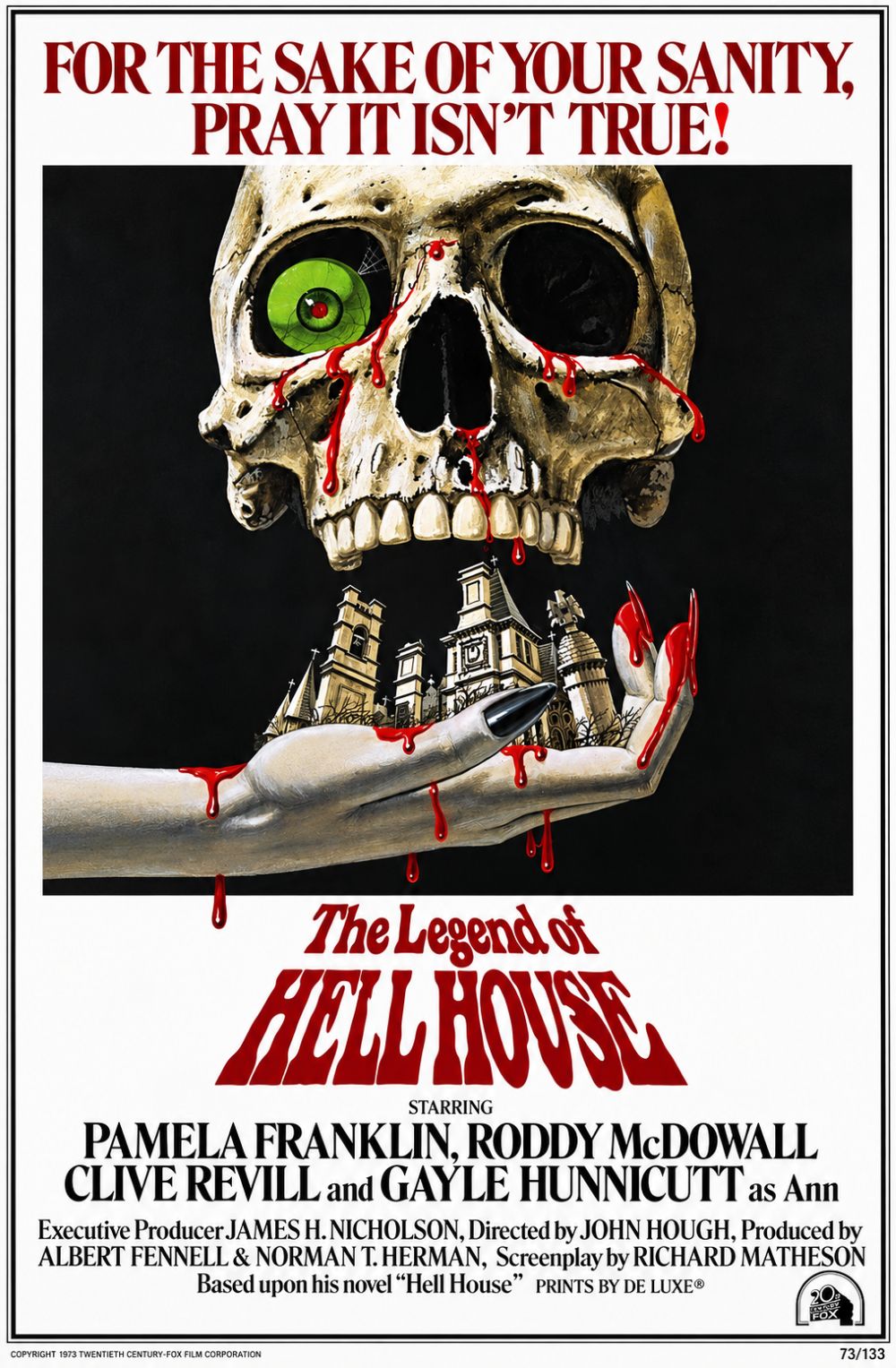
Horror Film Review: The Legend of Hell House (dir. by John Hough)


“Hell House doesn’t mind a guest or two. What it doesn’t like is people who come snooping around.” — Benjamin Franklin Fischer

There is something deeply unpleasant about The Legend of Hell House, and that is exactly what makes it so effective. Directed by John Hough and adapted by Richard Matheson from his own 1971 novel Hell House, the film takes a fairly simple haunted-mansion premise and turns it into something mean, claustrophobic, and surprisingly adult. It is not the most visually elaborate ghost story ever made, nor the most frightening in a conventional jump-scare sense, but it has a cold, nasty atmosphere that lingers. This is a haunted-house movie where the house does not just contain evil; it seems designed to degrade everyone who steps inside.

The setup is strong because it puts several opposing viewpoints under the same roof. A wealthy man hires physicist Dr. Lionel Barrett, played by Clive Revill, to investigate the notorious Belasco House and settle the question of whether life after death exists. Barrett brings along his wife Ann, played by Gayle Hunnicutt, and the couple joins two people with far more personal connections to the place: Florence Tanner, a deeply spiritual medium played by Pamela Franklin, and Benjamin Franklin Fischer, played by Roddy McDowall, the sole survivor of an earlier investigation. The job has a deadline, a large payday, and an obvious catch: every previous expedition into the house ended in death, insanity, or both.

It is the kind of premise that could have easily become an old-fashioned “wait for the next victim” thriller, but Matheson’s script gives it more bite than that. Every character arrives with a different theory of the supernatural, and those theories become personal weapons. Barrett is the hard-line rationalist, convinced that any haunting can be explained through physical energy. Florence believes in trapped souls and approaches the house with a nearly religious determination. Fischer knows better than anyone that Belasco House does not care what people believe, while Ann becomes the emotional pressure point between all those men and their supposedly superior ideas. The ghost story works because the haunting pushes directly on each character’s vulnerabilities instead of merely making lights flicker and doors slam.

Clive Revill makes Barrett an interesting kind of horror-movie skeptic. He is not simply smug or foolish, although he can be both. He has the conviction of a man who thinks he is on the verge of solving the biggest mystery in human history with engineering equipment and enough confidence. That makes him a perfect target. Revill plays the character with a blunt, almost comically forceful seriousness that fits the film’s style. Barrett is a man who keeps insisting that the house is a machine, even as it starts treating him like a piece of disposable machinery.

Roddy McDowall is arguably the film’s secret weapon. Fischer could have been a standard nervous survivor whose only job is to warn the newcomers not to go into the basement. Instead, McDowall gives him a sly, guarded, intermittently hostile energy. He knows the house, he has seen what it does, and he has built a personality around refusing to be emotionally open about any of it. His sunglasses, dry delivery, and generally strange behavior make Fischer seem a little ridiculous at first, but that awkwardness becomes part of the performance’s appeal. By the time the film gets into the mystery of Emeric Belasco, the wealthy sadist who once ruled the estate, Fischer’s trauma feels like the one thing in the movie that cannot be explained away by a machine.

Pamela Franklin is also excellent as Florence Tanner, particularly because the film lets her be forceful rather than purely fragile. Florence is sympathetic, but she is not passive. She believes in her gifts enough to challenge Barrett head-on, and her desire to help the lost spirits of Hell House gives the story some genuine emotional stakes. The movie can be pretty ruthless with her, especially in the way it explores sexual humiliation, possession, and psychic assault, but Franklin never plays Florence as merely victimized. Her scenes with McDowall have an uneasy charge because they represent two different forms of faith: Florence sees the dead as people worth saving, while Fischer treats the dead as weapons that must be avoided.

That unpleasant streak is really what separates The Legend of Hell House from a lot of cleaner, more comforting haunted-house films. The Belasco House is not merely spooky; it is aggressively cruel, with a history rooted in sexual degradation, murder, and the grotesque whims of its former owner. Matheson’s novel was more explicit than the movie, and the screenplay softens some of its more graphic sexual and violent material. Even so, the film remains unusually frank for a mainstream early-1970s supernatural thriller. Its horror is not just that ghosts exist. It is that a dead man’s perversions can keep poisoning the living decades later.

John Hough handles all this with a remarkably physical visual style. The camera prowls through corridors, peers around corners, tilts at unnerving angles, and uses wide lenses to make the mansion feel warped and hostile. The movie’s low, wide-angle shots give the characters an exposed, trapped quality, as if the building is staring down at them. The direction is not subtle in the same manner as Robert Wise’s The Haunting, but that is not a flaw. Hough makes Hell House feel less like an unknowable mystery and more like a spiritual pressure cooker.

The film does have limitations. Its effects are sometimes modest, and a few of its shock moments are more abrupt than scary. The climax gives the haunting a concrete answer, which makes the story’s blend of supernatural Gothic horror and strange pseudo-scientific logic feel even more pulpy and distinctive. It may not carry the elusive ambiguity of The Haunting, but The Legend of Hell House is not trying to be that kind of ghost story. It wants the audience to feel trapped in a hostile space with people whose certainty, fear, and private weaknesses are being exposed one ugly piece at a time. Even when its mechanics are a little dated, that sense of contamination remains powerful.

It also benefits from being lean. At around 90 minutes, The Legend of Hell House wastes little time building out the haunted-house situation, escalating the attacks, and forcing its investigators to choose between their competing explanations. That economy makes it feel more vicious than many later possession or paranormal movies that inflate a similar premise into two-hour lore marathons. There is no elaborate mythology to memorize. There is a bad house, a horrible dead man, four damaged people, and a deadline. That is enough.

As for influence, the film has clear roots in The Haunting and Henry James-style psychological ghost stories, but it also left traces of its own. Its combination of paranormal investigation, supposedly scientific equipment, skeptical experts, psychic mediums, and a house that manipulates people’s sexuality and emotional weaknesses can be felt in many later haunted-house stories. The direct influence is most explicitly documented in Edgar Wright’s fake trailer Don’t, made for Grindhouse: Wright and Simon Pegg riffed on Hell House’s fog-shrouded mansion imagery and echoed Roddy McDowall’s distinctive 1970s look. It also features one of the earlier cinematic depictions of sexual assault by an unseen supernatural force, a disturbing concept later revisited much more brutally in The Entity.

It would be a stretch to claim that every modern “ghost hunters enter a cursed house” movie comes directly from The Legend of Hell House, but its DNA is easy to spot. The procedural side of paranormal investigation, the conflict between technical explanation and spiritual belief, and the sense that a house preserves human evil like an infection all became familiar horror tools. Its visual atmosphere has also invited comparisons to The Shining, especially in its use of ominous spatial compositions and its fixation on the house’s ability to reshape the mental state of its occupants. The connection should not be overstated—Stanley Kubrick’s film is its own colossal thing—but they are clearly kindred haunted-house nightmares.

Ultimately, The Legend of Hell House is a rougher, nastier, more aggressively lurid cousin to The Haunting. It does not have that earlier film’s sublime ambiguity, but it has its own grimy personality: a mixture of British Gothic atmosphere, American genre bluntness, psychic melodrama, and just enough 1970s sleaze to make the mansion feel truly diseased. It is best approached not as a polished prestige classic, but as a smart, compact supernatural shocker with a nasty sense of humor and an unusually strong cast. Hell House may not be the most famous haunted mansion in horror, but once you have spent an hour and a half inside it, you can understand why nobody should want to go back.
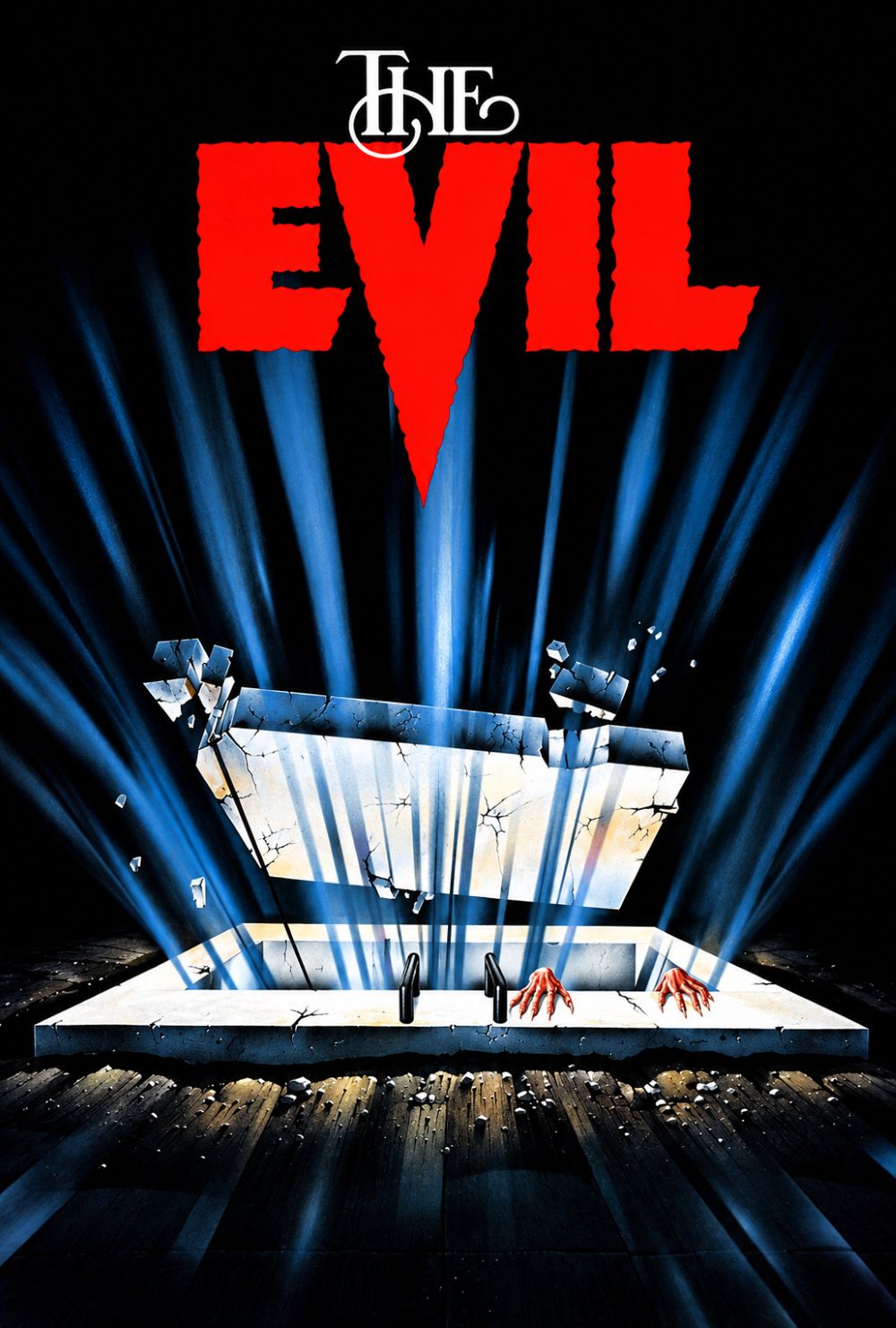
Horror Film Review: The Evil (dir. by Gus Trikonis)


“When am I gonna make you see? It’s something inside the dog!” — Dr. Caroline Arnold

On paper, The Evil has no business being as entertaining as it is. It has a familiar haunted-mansion setup, a group of characters making predictably bad decisions, a handful of effects that are more enthusiastic than convincing, and a story that often feels like it was assembled from supernatural-horror leftovers. Yet Gus Trikonis’s 1978 film somehow makes that combination work. It is a scrappy, surprisingly lively late-1970s chiller that keeps finding ways to turn its limitations into part of the fun. The movie may not have the elegance of The Haunting or the full-scale dread of The Omen, but it has momentum, personality, and just enough weirdness to make it stick in the mind.

Richard Crenna plays Dr. C.J. Arnold, a well-meaning physician who buys the old Vargas mansion with plans to turn it into a rehabilitation center. He brings his wife Caroline, played by Joanna Pettet, along with a small group of friends and workers, to spend time cleaning up the place and preparing it for renovation. It is the kind of horror-movie premise where viewers can tell within seconds that nobody should be spending the night there. The mansion is enormous, decaying, isolated, and full of the sort of dark hallways that seem specifically designed for people to wander into alone. Still, C.J. sees a building with potential rather than a nightmare waiting to happen, and the movie gets a lot of mileage out of that mistake.

Before long, the house starts acting up in all the expected ways. Doors move on their own, strange noises echo through the corridors, flames appear where they should not, and the guests begin to realize that the mansion’s history is more sinister than they were led to believe. None of this is particularly groundbreaking, even for 1978, but The Evil understands the usefulness of a clean, direct setup. It does not waste a huge amount of time pretending the house is safe. The film gets its characters into trouble, gives them an increasingly hostile environment, and lets the tension build through a series of practical, often mean-spirited scares.

The movie came out during a period when horror was especially interested in demonic forces, cursed places, possession, and spiritual danger. You can feel the shadow of films such as The Exorcist, The Omen, Burnt Offerings, The Sentinel, and The Legend of Hell House hovering over it. The Evil is clearly playing in that same sandbox, mixing the isolated-house horror formula with the era’s fascination with the Devil and the supernatural. What keeps it from disappearing completely into the crowd is not originality so much as commitment. The film believes in its own nonsense, and that sincerity goes a long way.

Gus Trikonis directs the material with a briskness that suits it. At around 85 minutes, The Evil moves quickly enough that it rarely gives viewers much time to dwell on its thinner character work or its occasionally awkward plotting. The mansion itself does a lot of the heavy lifting. It has the faded, neglected grandeur that every good haunted-house movie needs, with dark rooms, winding staircases, sealed-off spaces, and enough shadowy corners to make even a simple walk down a hallway feel questionable. The location gives the movie a genuine sense of place, which is important because much of the film depends on the audience accepting the house as an active threat rather than just a backdrop.

There is a very specific low-budget 1970s flavor to the production that adds to its charm. The movie is not sleek or refined, and that works in its favor. The roughness of the camerawork, the muted colors, the occasionally dated sound design, and the practical effects all give it a handmade quality. The Evil never looks expensive, but it often looks tangible. When the house lashes out, the effects may not always be flawless, but they have physical weight. A lot of modern horror relies on digital polish to sell its scares; this film has to make do with tricks happening in front of the camera, and that gives the best moments an immediate, almost old-fashioned punch.

The movie is at its strongest when it keeps things simple. A character hears something in another room. Someone gets separated from the group. A familiar household object or feature of the mansion suddenly becomes dangerous. These are basic horror devices, but Trikonis uses them efficiently. He knows that the fear of walking into an empty room is sometimes more useful than a long explanation of why the room is dangerous. The Evil is not a slow-burn ghost story in the style of The Innocents. It is more interested in delivering jolts and keeping the body count moving. That can make it feel mechanical at times, but it also makes the movie easy to enjoy as a late-night scare picture.

Richard Crenna gives the film more credibility than it probably deserves. He plays C.J. as a rational, decent man who believes he can bring order and purpose to a place everyone else would wisely avoid. His growing inability to explain what is happening gives the movie an anchor. Crenna does not act embarrassed by the material or play it with a knowing wink. He treats the situation seriously, which makes the supernatural chaos around him feel more convincing. He is the kind of sturdy, professional lead who can sell even the film’s more ridiculous turns simply by looking genuinely alarmed.

Joanna Pettet also helps keep the human side of the movie from getting completely lost. Caroline is more willing than C.J. to recognize that something is wrong with the mansion, and that divide gives their relationship a modest but effective tension. The rest of the cast, including Andrew Prine, Cassie Yates, Mary Louise Weller, and Lynne Moody, is more variable. They serve the story well enough, though most of them are defined more by the danger they face than by particularly deep characterization. The film does not spend much time building rich backstories, but the actors keep the group dynamic watchable.

The middle section is where The Evil shows its limitations most clearly. The structure can become repetitive: something strange happens, someone investigates alone, the house responds, and the survivors become more desperate. The mythology behind the mansion is also not always developed with much precision. But again, the movie gets away with more than it should because it keeps pushing forward. It has the energy of a film that knows it cannot afford to be boring. Even when the story is familiar, there is usually another strange image, creepy sound, or sudden danger waiting around the corner.

The final stretch is best left mostly unspoiled, because the movie takes a turn that is much stranger and more ambitious than its early scenes might lead you to expect. It broadens the scope of the story without abandoning the slightly tacky, practical-effects character that defines the rest of the film. Some viewers will probably find the shift abrupt, especially if they are expecting a straightforward haunted-house ending. Others will enjoy the fact that The Evil refuses to settle for the safest possible conclusion. It is a movie that starts with a familiar premise and gradually gets more unhinged, and that unpredictability is a real asset.

Ultimately, The Evil is not a lost classic, but it is a lot more fun than its reputation and basic setup might suggest. It has no right to work as well as it does. The premise is familiar, the characters are not deeply written, the effects are uneven, and the story occasionally runs on pure genre momentum. Yet that momentum is exactly what makes it enjoyable. Trikonis delivers a lean, energetic little horror movie with a great old mansion, a convincingly serious Richard Crenna, a few solid practical scares, and enough late-game insanity to make the experience memorable. If you enjoy the rougher, more obscure side of 1970s supernatural horror, The Evil is the kind of movie that can catch you off guard: imperfect, sometimes goofy, but much more entertaining than it has any right to be.

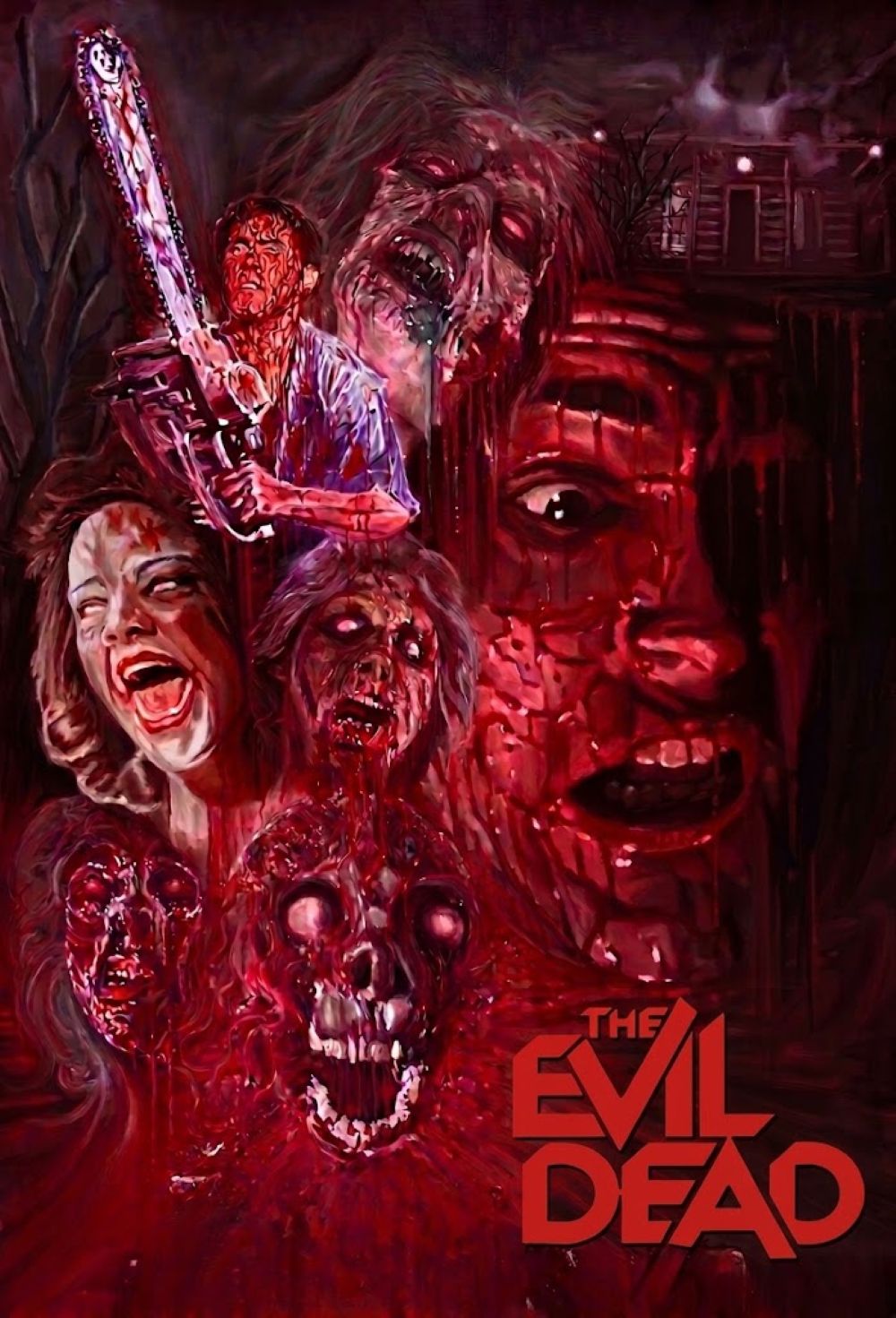
Horror Film Review: The Evil Dead (dir. by Sam Raimi)


“I fear that the only way to stop those possessed by the spirits of the book is through the act of… bodily dismemberment.” — Professor Knowby

The Evil Dead is the kind of movie that feels like it should not have become a classic, at least not by conventional standards. It was made cheaply, filmed under brutal conditions, packed with unknown actors, and built around an extremely simple premise: five college friends head to an isolated cabin in the woods, unwittingly awaken an ancient evil, and spend the rest of the night being torn apart by demonic forces. Yet more than four decades later, Sam Raimi’s 1981 horror debut remains one of the most energetic, inventive, and genuinely nasty independent films ever made. It is rough around the edges in ways that are impossible to ignore, but those rough edges are a major part of its appeal. The Evil Dead feels handmade, hungry, and a little bit unhinged.

The story starts with Ash Williams, his girlfriend Linda, Ash’s sister Cheryl, and their friends Scotty and Shelly arriving at a remote Tennessee cabin for what is supposed to be a relaxing getaway. It is one of the most familiar setups in horror history now, but Raimi and his collaborators made it feel threatening before the real violence even begins. The cabin is decrepit, damp, and isolated to an almost absurd degree. There is no real sense of civilization nearby. The forest itself seems hostile, with tangled trees, strange sounds, and an atmosphere that makes the woods feel less like a location and more like a living organism surrounding the characters.

The group soon discovers a cellar beneath the cabin, where they find an ancient book bound in flesh, a dagger, and a tape recording left by an archaeologist. The recording describes the Necronomicon, a book of demonic incantations, and naturally the characters make the worst possible decision by playing the tape aloud. That act releases the evil presence that has been lurking in the forest, and the movie moves quickly from creepy cabin story to all-out supernatural nightmare. The concept is simple, but it gives Raimi room to focus on mood, visual invention, and escalation rather than complicated mythology.

What makes The Evil Dead special is how aggressively Raimi directs it. Even in his first feature, he had a style that was impossible to mistake for anyone else’s. The camera is constantly moving, lunging through the woods, creeping around corners, tilting at unnatural angles, and racing toward people as if the audience has become the demon’s point of view. The famous “demon-cam” shots are still startling because of how physical they feel. The camera does not glide elegantly. It charges. It crashes through the environment. It feels like something has broken loose and is hunting the characters.

That restless filmmaking gives the movie a personality far larger than its budget. Raimi turns limitations into an advantage. The cabin becomes a maze of shadows, floorboards, trap doors, windows, and hidden spaces. A cheap-looking hallway can suddenly become terrifying because the editing, sound design, and camera movement make it feel unstable. Raimi understands that horror does not always come from seeing a monster clearly. Sometimes it comes from the sense that the camera itself has stopped behaving normally, that the space around the characters is warping, and that even the trees outside are watching them.

The special effects are another major reason the film still has such a devoted following. They are obviously practical, often messy, and occasionally so exaggerated that they cross into dark comedy, but they have a tactile quality that modern digital effects often lack. The possessed characters look genuinely diseased and wrong: pale skin, dead eyes, rotting makeup, distorted faces, and unnatural movements. When the deadites attack, they do not simply become generic zombies. They taunt their friends, laugh at them, imitate their voices, and enjoy causing emotional pain. That cruel playfulness makes them more disturbing than ordinary monsters.

The makeup work on the possessed Cheryl, Shelly, and Linda remains especially effective because it turns familiar faces into grotesque masks. Ellen Sandweiss, Betsy Baker, and Theresa Tilly bring an unsettling intensity to those transformations, switching from frightened victims to shrieking, mocking demons. The performances are broad and theatrical, but that is exactly what the material needs. Nothing in The Evil Dead is subtle for very long. The film keeps pushing the characters past the point of normal human behavior until they are laughing, screaming, convulsing, and bleeding all over the cabin.

Bruce Campbell’s Ash is interesting because he is not yet the wisecracking, chainsaw-handed cult hero he would become in the sequels. In The Evil Dead, Ash is mostly an ordinary young man who slowly realizes he is trapped in a situation beyond comprehension. Campbell is still charismatic, and there are flashes of the physical comedy and wild-eyed determination that would define the character later, but this version of Ash is more vulnerable. He panics, hesitates, and suffers. By the end, he looks exhausted in a way that feels earned, covered in sweat, dirt, blood, and trauma.

That difference gives the original movie its own identity within the larger Evil Dead series. Evil Dead II would remake and expand many of the first film’s ideas with more money, more comedy, and a much more overtly cartoonish sensibility. Army of Darkness would take Ash into full fantasy-adventure mode. Those later films are arguably more polished and more immediately entertaining, especially for viewers who love Campbell’s comedic performance. But The Evil Dead has a rawness that the sequels never tried to reproduce. It is a horror movie first, even when its excesses become funny.

The film’s tonal shifts are one of its most fascinating qualities. Raimi clearly understands that grotesque violence can become absurd if it is pushed far enough, and the movie occasionally seems aware of its own madness. A possessed hand reaches through a window. A character gets stabbed with a pencil in one of the film’s most infamous scenes. Bodies erupt in streams of colored goo rather than realistic blood. The final destruction of the deadites is so elaborate that it feels like Raimi and his effects team were determined to empty every container of slime they had available. It is disgusting, but it is also gleefully imaginative.

At the same time, The Evil Dead can be more unpleasant than people remember. Its treatment of Cheryl in the woods is difficult to watch and remains one of the film’s most controversial moments. The scene is meant to establish the cruelty and violation associated with the demonic force, but it is not necessary to enjoy the movie, and it has aged badly compared with the more comic-book brutality of later entries. Raimi himself would move away from that kind of material in the sequels. It is worth acknowledging because the scene changes the tone of the film and may be a deal-breaker for some viewers.

The sound design helps make the movie feel more oppressive than its modest production would suggest. The woods groan, doors bang, voices echo from impossible places, and the demonic chants on the tape recording create a sense that something ancient has been invited into the cabin. Joseph LoDuca’s score adds another layer of unease, using shrill strings and harsh musical stabs to make even quiet scenes feel unstable. The soundtrack is not trying to be elegant. It is trying to make the viewer tense up, and it succeeds.

There is also something inspiring about the movie’s independent spirit. Raimi, Campbell, producer Robert Tapert, and their crew famously made the film through determination, ingenuity, and a willingness to endure conditions that sound miserable in retrospect. You can feel that effort on screen. Every strange camera angle, handmade prop, and splattering effect carries the energy of filmmakers trying to prove they can do something bigger than their resources should allow. The Evil Dead does not hide its budget. It turns that budget into part of its legend.

For horror fans, the movie is essential not because it is flawless, but because it is so alive. It captures the feeling of discovering a forbidden VHS tape or stumbling into a midnight screening where the audience is laughing, cringing, and yelling at the screen. It is scary in places, silly in others, and relentlessly committed to its own bizarre nightmare logic. Raimi would go on to make superhero movies, westerns, thrillers, and studio blockbusters, but the wild visual imagination that defined his career is already fully visible here.

The Evil Dead is a scrappy, blood-soaked supernatural horror movie that earns its reputation through pure filmmaking nerve. Its story may be basic, its acting may be uneven, and some of its material has not aged gracefully, but the movie’s pace, practical effects, demonic imagery, and manic camerawork remain unforgettable. It feels less like a carefully manufactured horror product than a curse someone managed to put on film. That is why it still works: Raimi and his team did not just make a movie about evil invading a cabin. They made the entire movie feel possessed.

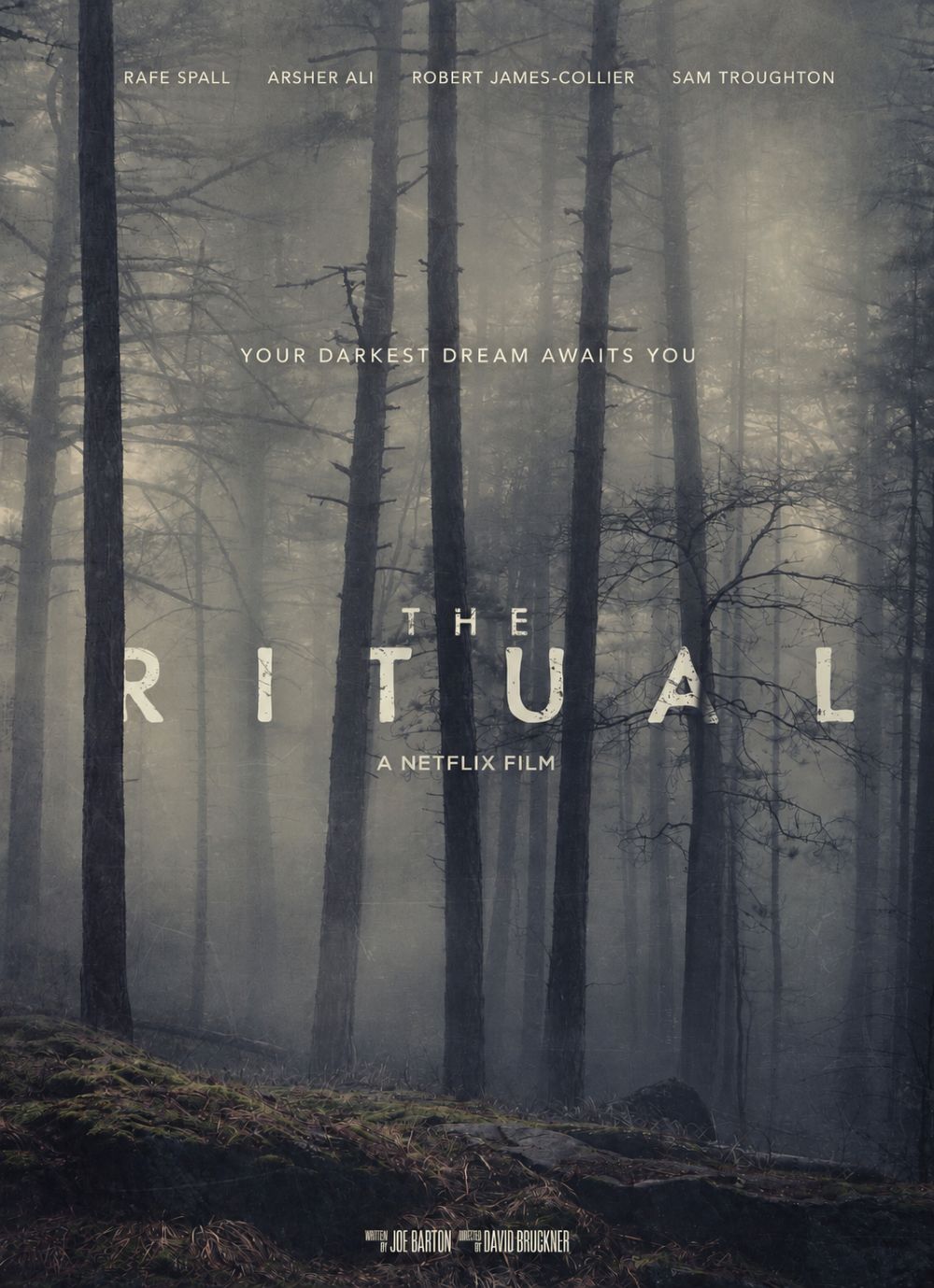
Horror Review: The Ritual (dir. by David Bruckner)


“Oh, this is awful in almost every conceivable way.” — Phil

David Bruckner’s The Ritual turns a seemingly straightforward hiking-trip nightmare into a bleak, character-driven story about grief, guilt, and the fear of being judged by the worst thing you have ever done. Released in 2017, the film takes the familiar setup of friends becoming lost during a hiking trip and turns it into something far more tense, emotionally bruised, and unsettling. It is part of the wave of folk horror that began emerging in the late 2000s, with filmmakers returning to remote landscapes, old belief systems, pagan imagery, and the frightening idea that modern people are badly unprepared for places ruled by ancient customs. The Ritual contains the expected genre material—an ominous Scandinavian forest, strange symbols, a decaying cabin, and an isolated community—but its real strength is how tightly those elements connect to its characters’ unresolved guilt and resentment.

The film follows Luke, played by Rafe Spall, who is still deeply traumatized by the death of his friend Rob. In the opening sequence, Luke and Rob enter a liquor store after a night out and become caught in the middle of a robbery. Luke hides while Rob is killed trying to resist the attackers. It is an immediately harsh and effective opening because the film does not treat Luke’s inaction as something simple or easy to judge. He is terrified, frozen, and unable to process the situation. Even so, he cannot forgive himself for surviving. That moment becomes the defining wound of his life, and everything that happens afterward pushes him back toward it.

Luke eventually joins Phil, Dom, and Hutch on a hiking trip through Sweden that is meant to honor Rob’s memory. It becomes clear early on that the group’s friendship is not as solid as it once was. They know each other well enough to trade jokes and insults, but there is a lot of buried frustration underneath the banter. When Dom injures his knee, he argues that they should take a shortcut through the forest rather than continue along the longer established trail. The decision makes sense on a practical level, but it puts them in a setting where the normal rules of direction, distance, and safety quickly stop applying. The trip that is supposed to help them mourn Rob instead becomes a pressure cooker for every unresolved issue they have with one another.

That tension is what makes the first half of The Ritual more interesting than a routine “people get lost in the woods” movie. The men are not written as interchangeable victims waiting for the plot to remove them one by one. They have the worn-down chemistry of friends who have known one another for years but may have outgrown the version of themselves that first brought them together. Luke is defensive and emotionally closed off. Dom can be abrasive, especially when pain and fear make him more volatile. Phil is cynical and exhausted. Hutch is the closest thing the group has to a stabilizing influence, but even he cannot keep the old resentments from surfacing.

Bruckner gives their arguments a messy, lived-in quality. They do not stop to explain their entire friendship history for the audience; instead, the viewer picks up on it through accusations, half-finished insults, and the way everyone reacts when Rob’s death comes up. Luke’s guilt is the most obvious source of conflict, but the others are carrying their own anger toward him as well. They cannot openly say what they think without admitting that they may blame him for what happened. As the hike becomes more dangerous, that tension becomes harder to contain. The film understands that fear makes people meaner, more selfish, and more honest than they want to be.

The Swedish wilderness is easily one of the movie’s greatest assets. Bruckner and cinematographer Andrew Shulkind make the forest feel huge and claustrophobic at the same time. The woods are not shot like a scenic tourist destination. They are wet, dark, muddy, and disorienting, filled with thin trees that block the characters’ view and make every direction seem identical. The lack of clear landmarks matters because it slowly strips the group of confidence. At first, they are annoyed hikers trying to save time. Before long, they are struggling to tell where they have been, where they are going, or whether the forest is allowing them to leave at all.

The film excels at building dread through details rather than relying on constant jolts. The friends discover unnerving signs scattered through the woods: an animal carcass hanging impossibly high in the trees, crude figures made from sticks, unfamiliar markings, and evidence that somebody—or something—has been watching them. One of the most memorable sequences takes place in an abandoned cabin that the group uses for shelter. Inside, they find a grotesque shrine and signs of an old ritualistic practice that seem completely out of place in the modern world. The scene is disturbing because of how wrong it feels. These men have not just stumbled into an empty house; they have crossed into a space defined by beliefs they do not understand.

That atmosphere is where The Ritual most clearly earns its place in modern folk horror. The movie is not simply interested in isolated woods as a convenient backdrop for scares. It treats the forest as a place with a history and a set of rules that exist independently of the characters. Luke, Dom, Phil, and Hutch arrive with backpacks, maps, phones, and ordinary personal problems, but those things become almost useless once the landscape begins to feel hostile. Their modern routines and assumptions do not protect them. The horror comes partly from the idea that they are outsiders who have entered a world where their explanations mean nothing.

The later sections introduce an isolated group whose beliefs are rooted in an older, more ritualized worldview. This element can feel more direct than the earlier ambiguity, but it still fits the movie’s larger themes. The people Luke encounters represent a twisted alternative to the kind of shame and grief that have been consuming him. Their world offers a warped version of survival: submit to fear, accept the rules, and give up the parts of yourself that make resistance possible. It is an ugly kind of community, one that turns spiritual tradition into coercion and treats personal suffering as something to be exploited.

Rafe Spall is the key to why the film works as more than an exercise in atmosphere. Luke is not an idealized horror protagonist. He is stubborn, defensive, and sometimes hard to like, particularly when he tries to avoid talking about Rob. But Spall makes his guilt feel immediate and human. Luke is not haunted just because he saw someone die; he is haunted because he believes that his failure in that moment reveals who he really is. The forest repeatedly forces him to confront that belief through hallucinatory transitions that blur the wilderness with the liquor-store robbery. Doors in the forest become entrances to the shop. The wooded darkness gives way to fluorescent aisles. Luke seems to be reliving the same failure from different angles, unable to escape the moment he most wishes he could change.

Those surreal flashbacks are some of Bruckner’s best directing choices. They are visually simple but highly effective, placing Luke’s internal guilt directly into the physical environment around him. The movie never turns into a vague psychological-horror story that dismisses everything as a dream, but it uses Luke’s trauma to make the supernatural setting feel more personal. The threat in the woods is frightening because it seems to recognize his weakness. It does not just want to harm him; it wants him to surrender to the version of himself that he already hates.

If The Ritual has a flaw, it is that the final act loses a little of the earlier section’s mystery once the film begins explaining more about what is happening in the forest. The strongest passages are often the quietest ones: the men arguing while lost, the unsettling evidence in the trees, the cabin sequence, and the growing suspicion that they are being pushed in a direction they cannot understand. Still, the conclusion works because it brings the movie back to Luke’s personal struggle. His escape is not simply about reaching safety. It is about refusing to let guilt define his identity forever.

By the end, The Ritual delivers a satisfying sense of catharsis without pretending that Luke has been completely healed. He survives an experience that forces him to face the fear he has been carrying since Rob’s death, but that does not erase the loss or make him a different person overnight. What changes is his willingness to stop living as though one terrible moment has permanently decided who he is. That emotional resolution gives the film more weight than many survival-horror stories.

Overall, The Ritual is a smart, atmospheric, and surprisingly character-driven horror film. Its strongest qualities are its oppressive forest setting, its believable group dynamics, its gradual escalation, and Rafe Spall’s deeply uncomfortable performance. Most importantly, it recognizes that folk horror becomes powerful when the ancient and supernatural elements expose something painfully human. Bruckner turns a memorial hike into a nightmare about guilt, masculinity, friendship, and the terror of being unable to outrun your own past.

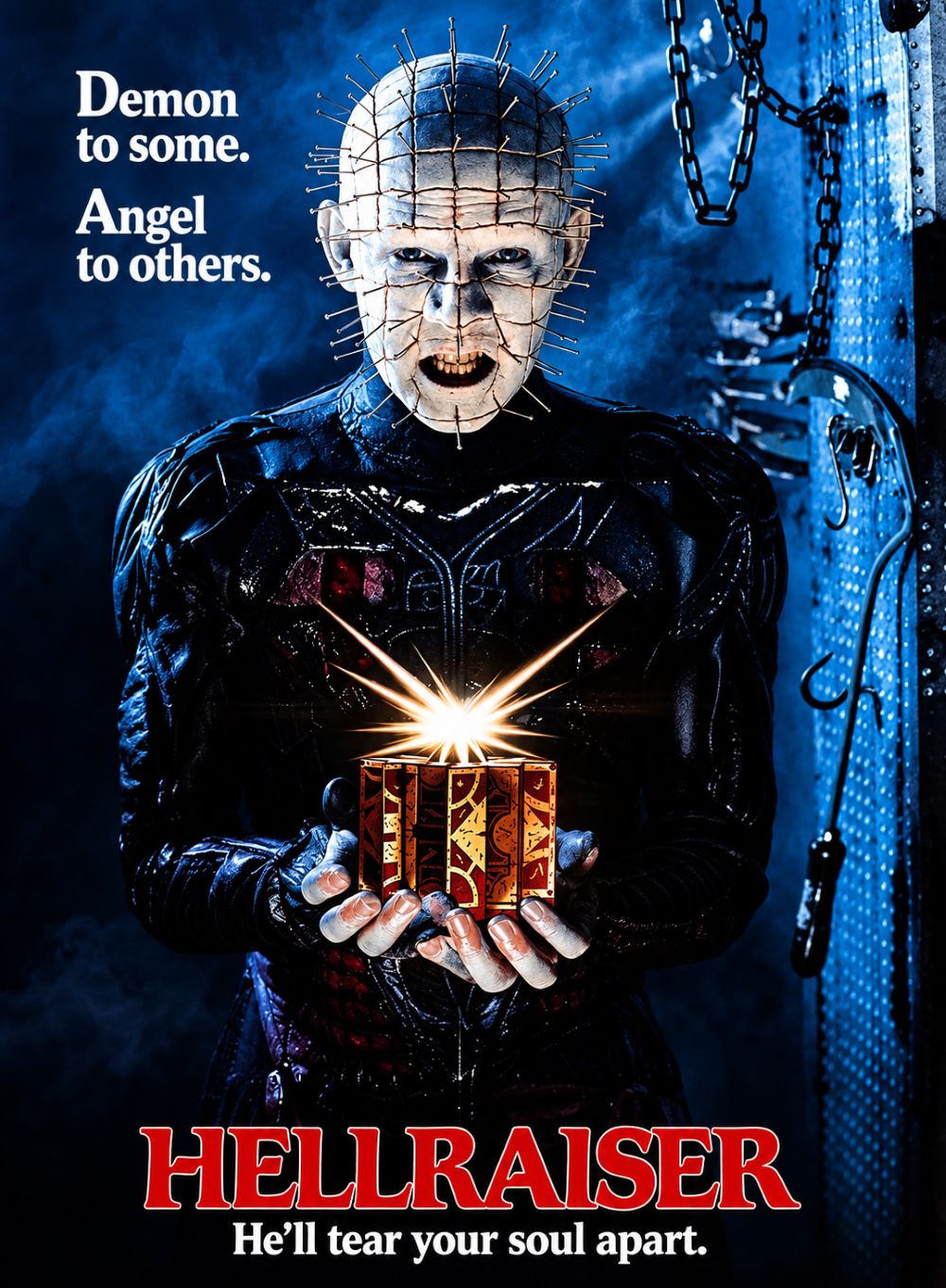
Horror Film Review: Hellraiser (dir. by Clive Barker)


“No tears, please. It’s a waste of good suffering.” — Pinhead

Hellraiser does not ease viewers into its nightmare; it drags them straight into a world where desire, suffering, and obsession have become impossible to separate. Written and directed by Clive Barker from his own novella The Hellbound Heart, the film is bloody, unsettling, weirdly intimate, and much more serious than its pop-culture reputation might suggest. Yes, it is the movie that introduced Pinhead and the Cenobites, but the first Hellraiser is not really a Pinhead showcase in the way later sequels became. It is a rotten little domestic nightmare about lust, betrayal, obsession, and the kind of desire that keeps going long after it should have destroyed a person.

Barker’s big strength is that he does not treat horror as something separate from human craving. In Hellraiser, pain and pleasure are tangled together from the opening scene. Frank Cotton is not some innocent fool who accidentally opens a cursed puzzle box. He actively seeks it out because normal pleasures no longer satisfy him. He wants sensation pushed past every limit, and the Lament Configuration gives him exactly that—just not in the way he expected. The Cenobites arrive with their chains, hooks, leather, scars, and ritualistic calm, offering a version of experience so extreme that it turns the body into something almost unrecognizable. That premise is memorable on its own, but Barker makes it work because Frank is already spiritually disgusting before hell ever gets involved.

The movie’s real surprise is Julia Cotton, played brilliantly by Clare Higgins. Julia could have been a standard unfaithful wife character, someone introduced merely to create tension inside the Cotton family. Instead, she becomes the dark heart of the film. Her attraction to Frank is not romantic in any healthy or even conventionally sensual sense. It is tied to resentment, boredom, humiliation, and a kind of violent need to feel alive. When Frank returns in his skinless, barely human state and needs blood to regenerate, Julia does not hesitate for long before becoming his accomplice. The scenes in which she lures men back to the abandoned house are among the movie’s most disturbing moments precisely because they are played with such cold purpose. She does not seem possessed. She is making a choice.

That decision gives Hellraiser a nasty emotional edge. Frank is obviously monstrous, but Julia is arguably scarier because she begins as an ordinary person trapped in a miserable life and willingly walks into atrocity. Higgins gives the role a detached, almost aristocratic chill. Her face barely needs to change for the audience to understand that something terrible is happening behind her eyes. The film’s central house becomes an extension of her inner life: dusty, decayed, closed off, and hiding a nightmare in the upstairs room. There is something grimly effective about the fact that the gateway to hell is not in an ancient castle or a faraway cemetery. It is in a family home where people are supposed to start over.

Andrew Robinson also deserves credit as Larry, Julia’s decent but oblivious husband. He is not the most dynamic protagonist in horror history, but that works for the story. Larry is a fundamentally ordinary man who cannot imagine the depths of corruption already moving around him. His blindness is frustrating, but it also reinforces the movie’s worldview. In Hellraiser, the people closest to us may carry desires we cannot see, and the house itself may preserve the damage left behind by old secrets. Ashley Laurence, as Larry’s daughter Kirsty, gradually becomes the film’s moral center. She is not an especially flashy final girl at first, yet Laurence gives Kirsty intelligence and genuine fear. Once she learns what the box can do, her panic feels grounded because she understands she has stumbled into something far beyond a killer with a knife.

Then there are the Cenobites, who remain some of the most striking horror creations of the decade. Doug Bradley’s Pinhead is the obvious standout, but the film wisely uses him sparingly. Pinhead is not a slasher villain who runs around collecting bodies. He is more like a supernatural official, a priest of pain carrying out a horrifying contract. Bradley’s measured voice and theatrical stillness make the character far more unsettling than a louder performance would have. The famous line, “We have such sights to show you,” works because it is delivered with calm conviction rather than rage. Pinhead is not trying to scare Kirsty for fun. He genuinely believes that torment and ecstasy are parts of the same revelation.

The other Cenobites matter too. Butterball, the Chatterer, and the Female Cenobite create the feeling that Pinhead belongs to a larger order rather than simply functioning as a lone monster. Their designs are grotesque but carefully composed, full of exposed flesh, surgical markings, and fetishistic costume details. They do not look like demons from a traditional Christian image of hell. They look like beings who have remade themselves according to an alien set of desires. That is where Barker’s imagination really separates Hellraiser from more conventional monster movies. The Cenobites are not just evil creatures. They are explorers of sensation who have gone so far beyond humanity that morality barely applies to them anymore.

The practical effects are still a major reason the film holds up. Frank’s gradual reconstruction from blood-soaked remains into a mutilated human body is disgusting in the best possible way. It has a tactile quality that CGI rarely captures. You can see the slime, the tissue, the half-formed muscles, and the painful labor involved in putting a body back together. Even when some of the effects show their age, they retain a handmade ugliness that fits the movie’s atmosphere. Nothing in Hellraiser is clean or sleek. The supernatural realm looks damp, industrial, and biological, as if hell were built out of meat, rust, chains, and bad memories.

Christopher Young’s score also does a lot of heavy lifting. It gives the movie a gothic grandeur that makes the story feel larger than its limited locations and modest budget. The film is mostly confined to a house, a hospital, a few streets, and the Cenobites’ shadowy realm, yet the music makes it feel like a grand tragedy unfolding behind the walls. That contrast is one of the movie’s best tricks. Hellraiser can be intimate and theatrical at the same time. It is essentially a chamber piece about a broken family, but it plays like a myth about forbidden knowledge.

If the film has a weakness, it is that its final stretch gets a little messy. The confrontation with Frank has some excellent makeup work and gruesome imagery, but the pacing becomes more conventional once Kirsty is forced into full survival mode. The ending also feels slightly rushed considering how carefully Barker establishes the family tension earlier on. Still, the movie earns enough goodwill through its atmosphere, performances, and imagination that these flaws do not do much damage. If anything, the roughness adds to its charm. Hellraiser feels like a filmmaker throwing every dark idea he has onto the screen and trusting the audience to follow him into the abyss.

What makes Hellraiser endure is not simply the gore, the puzzle box, or Pinhead’s instantly recognizable appearance. It lasts because it understands that horror is often rooted in the things people want but are ashamed to admit they want. Frank wants infinite sensation. Julia wants escape and emotional intensity. Kirsty wants to save her family but must confront how little of that family was worth saving. The Cenobites offer no easy moral lesson; they are simply waiting for someone foolish or desperate enough to open the door.

Casual viewers looking for a straightforward slasher might find Hellraiser slower and stranger than expected, especially if they only know the character of Pinhead through sequels, posters, and parody. But for anyone willing to meet it on its own grim terms, it remains one of the most original supernatural horror films of its era. It is gross, stylish, perverse, tragic, and surprisingly sad beneath all the blood. Barker did not just create monsters. He created a nightmare universe where desire becomes a trap—and where opening a small box can ruin everything.

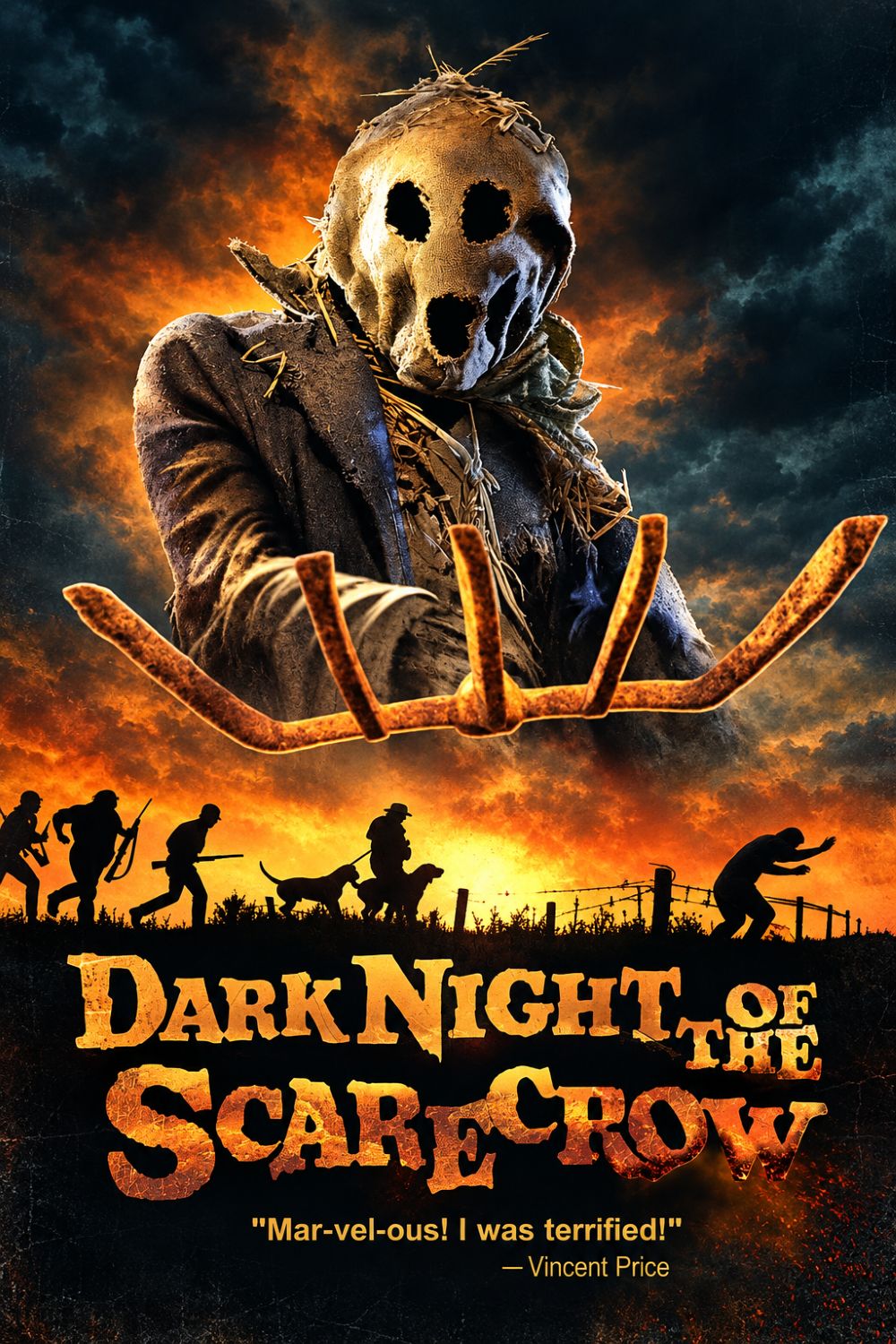
Horror Review: Dark Night of the Scarecrow (dir. by Frank De Felitta)


“You may think you’re getting off free, but there’s other justice in this world besides the law!” — Mrs. Ritter

Frank De Felitta’s Dark Night of the Scarecrow is one of those deceptively modest horror movies that earns its power through atmosphere, patience, and an unusually bitter sense of injustice. Originally made for television in 1981, it has none of the glossy excess or elaborate effects work associated with many theatrical horror releases of its era. What it does have is a sharply constructed premise, a remarkable villain performance from Charles Durning, and a quiet rural setting that becomes steadily more unnerving as the story moves from tragedy into supernatural revenge. It is the kind of film that understands a scarecrow is already an inherently creepy image; it does not need to overexplain or overuse that image to make it work.

The story takes place in a small Southern town where Bubba Ritter, played by Larry Drake, is a gentle, developmentally disabled man whose closest friend is a young girl named Marylee Williams. Their friendship is innocent and affectionate, but it is viewed with suspicion by Otis P. Hazelrigg, a cruel local mail carrier with a personal grudge against Bubba. When Marylee is attacked by a dog and briefly goes missing, Hazelrigg turns the situation into an accusation, convincing three other men that Bubba has harmed the girl. Before anyone bothers to learn the truth, the men hunt Bubba down, shoot him, and stage the scene to make it appear as though he was armed. It is a brutal opening act precisely because the movie refuses to treat its central tragedy as an excuse for cheap melodrama. Bubba is not a monster, and the men who kill him are not panicked heroes making an understandable mistake. They are cowardly, angry men who allow prejudice and resentment to become a death sentence.

That foundation is what separates Dark Night of the Scarecrow from a standard slasher or revenge movie. The supernatural material only becomes effective because the human evil comes first. Bubba’s death is not merely a plot device to unleash a vengeful ghost; it is the film’s moral wound. De Felitta, a veteran novelist as well as the director, approaches the story with an eye for the emotional damage left behind by that act. The film slows down after the killing, allowing the town to sit with the consequences while Hazelrigg becomes increasingly paranoid that Bubba has returned from the grave.

Charles Durning is the movie’s secret weapon. Hazelrigg is one of those villains who is frightening not because he is physically unstoppable, but because he is such a believable bully. Durning gives him a sweaty, blustering confidence that gradually rots into panic. He is the sort of man who believes his position in the community gives him the right to make judgments about everyone else, and he has no trouble manipulating weaker men into sharing responsibility for his own cruelty. Durning never plays Hazelrigg as a cartoonish sadist. Even when he is snarling threats or trying to cover up the murder, there is something painfully recognizable about him: a man who has built his identity around authority and cannot bear the possibility that he has been exposed as morally bankrupt.

Hazelrigg’s hatred of Bubba also has a nasty layer of projection to it. The movie never outright says he is a pedophile, but it heavily implies it through his creepy interest in Marylee, the way he watches her, and Mrs. Ritter’s pointed remarks. That makes his obsessive claim that Bubba is a threat even more grotesque: Hazelrigg seems to be accusing Bubba of the impulses he cannot admit in himself. The implication makes his hostility toward their friendship feel less like misplaced civic concern and more like jealousy, possessiveness, and a desperate effort to hide his own corruption behind moral outrage. It is one of the film’s darkest touches, especially because it remains mostly beneath the surface rather than being presented as a blunt plot revelation.

Larry Drake has a more difficult task because Bubba spends much of the movie absent, concealed, or transformed into a possible supernatural presence. Yet his early scenes are essential. Drake makes Bubba sweet and childlike without turning him into an object of pity or a collection of mannerisms. His relationship with Marylee, played warmly by Tonya Crowe, gives the film its emotional center. There is genuine tenderness in the way Bubba helps her, plays with her, and treats her with uncomplicated kindness. That sweetness makes the later violence feel all the more ugly. Marylee’s grief also carries real weight, because she is one of the only people who completely understands that Bubba was innocent.

The scarecrow itself is used with admirable restraint. There are no elaborate explanations about ancient curses, possession, or elaborate rules governing the entity. The film instead lets the audience wonder whether Bubba’s spirit has actually returned, whether the scarecrow is a physical vessel for vengeance, or whether Hazelrigg is simply losing his mind under the pressure of guilt. That ambiguity gives the movie much of its lasting chill. A scarecrow standing in a distant field, visible at the edge of a frame or appearing where it should not be, is often more frightening than a clearly defined monster charging at the camera. De Felitta recognizes that the image is powerful because it is still, silent, and vaguely human without actually being human.

The television origins are noticeable in some ways. The pacing is deliberate, the violence is largely implied rather than graphic, and the production is understandably small-scale. But those limitations wind up serving the movie. The lack of gore forces the film to emphasize suggestion, shadows, sound, and the ominous openness of its rural setting. Cornfields, dirt roads, farm equipment, abandoned buildings, and dark porches all become part of the film’s horror vocabulary. It feels less like a slick studio shocker and more like a regional ghost story someone might tell you after dark, the kind where the details are simple but the moral is savage.

De Felitta also has a good sense of escalation. The revenge scenes are not huge set pieces, but they are memorable because each one turns something ordinary into a source of menace. The scarecrow’s presence becomes a warning that the men involved in Bubba’s death cannot escape what they did. Instead of relying on body counts alone, the movie builds suspense around Hazelrigg’s growing desperation. Every time he sees the scarecrow—or thinks he sees it—his confidence cracks a little further. The real terror is not just that the dead may be coming for him. It is that there may be no way to outrun the truth.

The ending delivers the kind of grimly satisfying horror-movie justice that the story has earned. It is not triumphant in a cheerful sense, because nothing can undo the tragedy that put the plot in motion. Still, there is a bleak pleasure in watching Hazelrigg finally face the consequences of his actions. The film’s revenge is measured rather than sadistic, and that makes it more effective. It feels like a judgment rather than a spectacle.

Despite its TV roots, Dark Night of the Scarecrow has become a very underrated horror film, with many genre aficionados lauding it as one of the best horror films made, period. That reputation is understandable. It is not the loudest or bloodiest horror film of the early 1980s, and viewers expecting a fast-paced scarecrow slasher may initially be surprised by how much time it spends on character, grief, and small-town malice. But that is exactly why it endures. The film has a soul beneath its scares, and its simple supernatural premise gains force from the cruelty of the world around it.

Ultimately, Dark Night of the Scarecrow works because it never forgets that its monster is born from human wrongdoing. The scarecrow is frightening, but Hazelrigg and the mob that follows him are worse because they are entirely plausible. Frank De Felitta turns a compact television movie into a haunting morality tale about prejudice, guilt, repression, and the terrible cost of refusing to see another person’s humanity. Its effects may be modest, but its mood is potent, its villain is unforgettable, and its final image lingers like something standing motionless at the far end of a field.

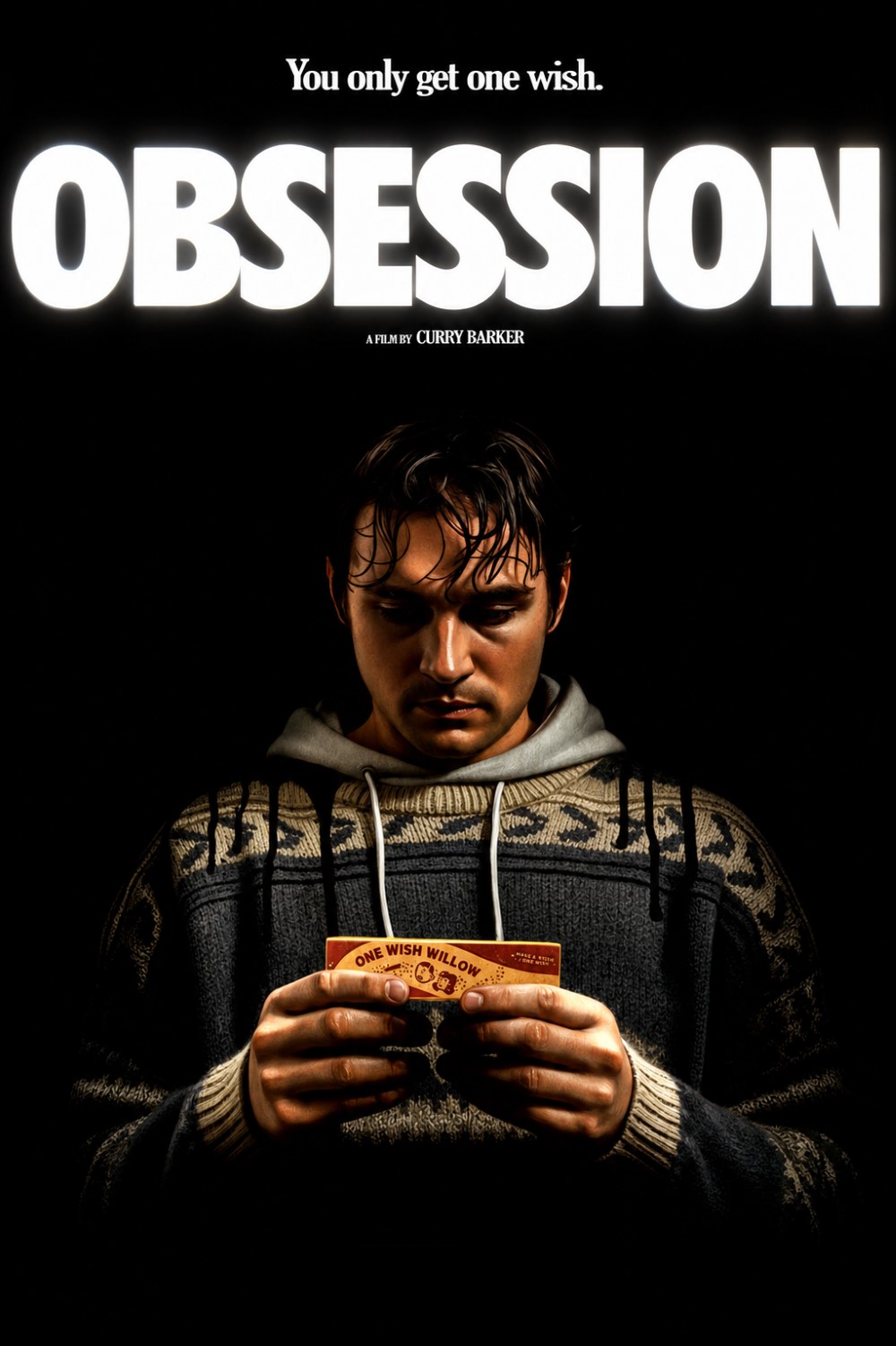
Review: Obsession (dir. by Curry Barker)


“Just because you chose this for her doesn’t make it less real.” — Phone Operator

There is something especially unsettling about horror films that begin with a simple emotional truth. Obsession, written and directed by Curry Barker, starts with a feeling most people understand: wanting someone to love you back. Barker takes that universal desire and twists it into something ugly, tragic, and terrifying. The result is a horror film that works both as a supernatural nightmare and as an uncomfortable examination of loneliness, entitlement, and emotional dependency.

The premise sounds deceptively simple. Bear, played by Michael Johnston, is a socially awkward young man hopelessly in love with his longtime friend Nikki, played by Inde Navarrette. Bear convinces himself that if circumstances were just slightly different, Nikki would finally realize he is the right person for her. When he discovers a supernatural object known as the “One Wish Willow,” he makes the disastrous decision to wish that Nikki would love him completely. Naturally, the wish mutates into something horrific, transforming Nikki’s affection into a violent and all-consuming obsession.

At its core, Obsession feels like an old-fashioned monkey’s paw story updated for the modern age. Barker takes the familiar “be careful what you wish for” premise and dials the nastiness up to 11. The film fully commits to the emotional ugliness of its concept, giving the well-worn trope a vicious bite that makes the movie far better than it has any reason to be. Instead of treating the supernatural element like a gimmick, Barker roots the horror in emotional selfishness and the terrifying consequences of trying to control another person’s feelings.

What makes the film work so well is that Barker avoids turning the story into a heavy-handed moral lecture. The script trusts the audience to understand the disturbing reality underneath Bear’s actions. Bear is not portrayed as a cartoon villain. He is insecure, lonely, emotionally immature, and quietly resentful. That complexity makes him far more unsettling because he feels recognizable. The film taps into a very modern type of “nice guy” entitlement, where affection is viewed less as mutual connection and more as something owed or deserved.

Michael Johnston gives an impressively layered performance as Bear. He never plays the character as openly monstrous right away. Instead, Johnston leans into Bear’s passivity and self-pity, making him seem like someone convinced life has unfairly denied him happiness. Even as events spiral out of control, Bear continues rationalizing his decisions instead of fully confronting the damage he has caused. Johnston manages to make the character pathetic, frustrating, and disturbing all at once.

Inde Navarrette delivers the film’s strongest performance as Nikki. Once the wish begins taking hold, Navarrette shifts between affection, emotional collapse, desperation, and outright menace with remarkable control. What makes her performance especially effective is that Nikki never stops feeling human beneath the horror. There is a lingering sadness to the character because the film makes it clear she is losing her autonomy piece by piece. That loss of agency becomes one of the movie’s most disturbing ideas.

More than anything, Obsession is about the horror of emotional suffocation. Barker exaggerates toxic relationship dynamics into supernatural horror, but the emotions underneath everything feel believable enough to sting. The film understands how frightening dependency can become when love starts turning into possession. In many ways, the supernatural curse almost feels secondary to the emotional damage unfolding between the characters.

One of the film’s biggest surprises is how confidently Barker handles tone. Considering his background in online comedy and internet content, it would have been easy for the movie to lean too heavily into irony or self-awareness. Instead, Obsession balances dark humor and psychological dread remarkably well. There are genuinely funny moments throughout the film, often rooted in painfully awkward social interactions, but the comedy never weakens the horror. If anything, it makes scenes more uncomfortable because the characters and situations feel recognizable.

Visually, the film punches far above its apparent budget. Barker and cinematographer Taylor Clemons create an atmosphere that feels claustrophobic and emotionally oppressive. The framing often leaves characters isolated within empty spaces, subtly reinforcing the loneliness and discomfort driving the story. The lighting also deserves praise, frequently bathing scenes in dim yellows, reds, and shadows that gradually make ordinary environments feel increasingly hostile.

The sound design is equally effective. Barker wisely avoids relying only on loud jump scares. Instead, the film builds tension through silence, distant noises, and subtle audio distortions that make scenes feel emotionally wrong before anything overtly frightening even happens. Combined with Rock Burwell’s unsettling score, the movie maintains a lingering sense of dread that hangs over nearly every scene.

When the horror finally erupts into violence, Barker shows admirable restraint. The graphic moments land hard because the emotional groundwork has already been carefully established. Some scenes are genuinely difficult to watch not simply because they are bloody, but because the violence feels directly tied to desperation, obsession, and loss of control. The film understands that emotional discomfort can often be more disturbing than gore itself.

If the movie has weaknesses, they mostly stem from Barker occasionally pushing the central metaphor a little too hard. Some later scenes become slightly obvious in their symbolism, and a few supporting characters feel underdeveloped compared to the leads. Still, those flaws never seriously damage the film because the central performances and atmosphere remain compelling throughout.

What ultimately makes Obsession stand out from many modern horror films is how emotionally specific it feels. Rather than chasing broad social commentary, Barker narrows his focus onto a very particular kind of emotional dysfunction. The film is less interested in making sweeping statements about relationships and more interested in examining the terrifying consequences of confusing love with ownership.

In that sense, the “One Wish Willow” works less as a magical object and more as a representation of selfish fantasy. Bear wants love without vulnerability, rejection, or reciprocity. He wants an easy shortcut to emotional fulfillment. The horror comes from realizing that genuine love cannot exist without freedom.

There are traces of earlier psychological horror films throughout Obsession. The movie occasionally recalls the obsessive fixation of Misery and the emotional body horror of Possession, though Barker filters those influences through a distinctly modern lens shaped by internet-age loneliness and social isolation. Yet despite those influences, the film never feels derivative. Barker’s voice as a filmmaker comes through clearly in both the emotional discomfort and escalating supernatural chaos.

Perhaps the most impressive thing about Obsession is how assured it feels for a filmmaker still early in his career. Barker directs with confidence, gradually tightening the emotional pressure until the movie becomes almost suffocating by its final act. By the end, the film reaches a level of tragic inevitability that feels earned rather than forced.

Obsession succeeds because it recognizes how frightening loneliness and emotional dependency can become when mixed with entitlement and fantasy. Beneath the supernatural premise is a painfully human story about people confusing obsession with love. Curry Barker turns that idea into a disturbing, darkly funny, emotionally bruising horror film that lingers long after the credits roll.

For a filmmaker making such an ambitious leap into feature-length horror, Barker delivers something remarkably confident and emotionally sharp. Obsession is creepy, uncomfortable, tragic, and surprisingly insightful. More importantly, it feels like the arrival of a filmmaker who understands how modern horror can reflect real emotional anxieties while still delivering an entertaining and deeply unsettling experience. In many ways, Barker joins the recent wave of younger horror filmmakers like Oz Perkins and Zach Cregger who have proven that horror, dread, and dark comedy do not have to work against each other. Like those directors, Barker understands how to blend discomfort, absurdity, and genuine emotional tension into a cohesive whole, creating a film that is as unsettling as it is unexpectedly funny.

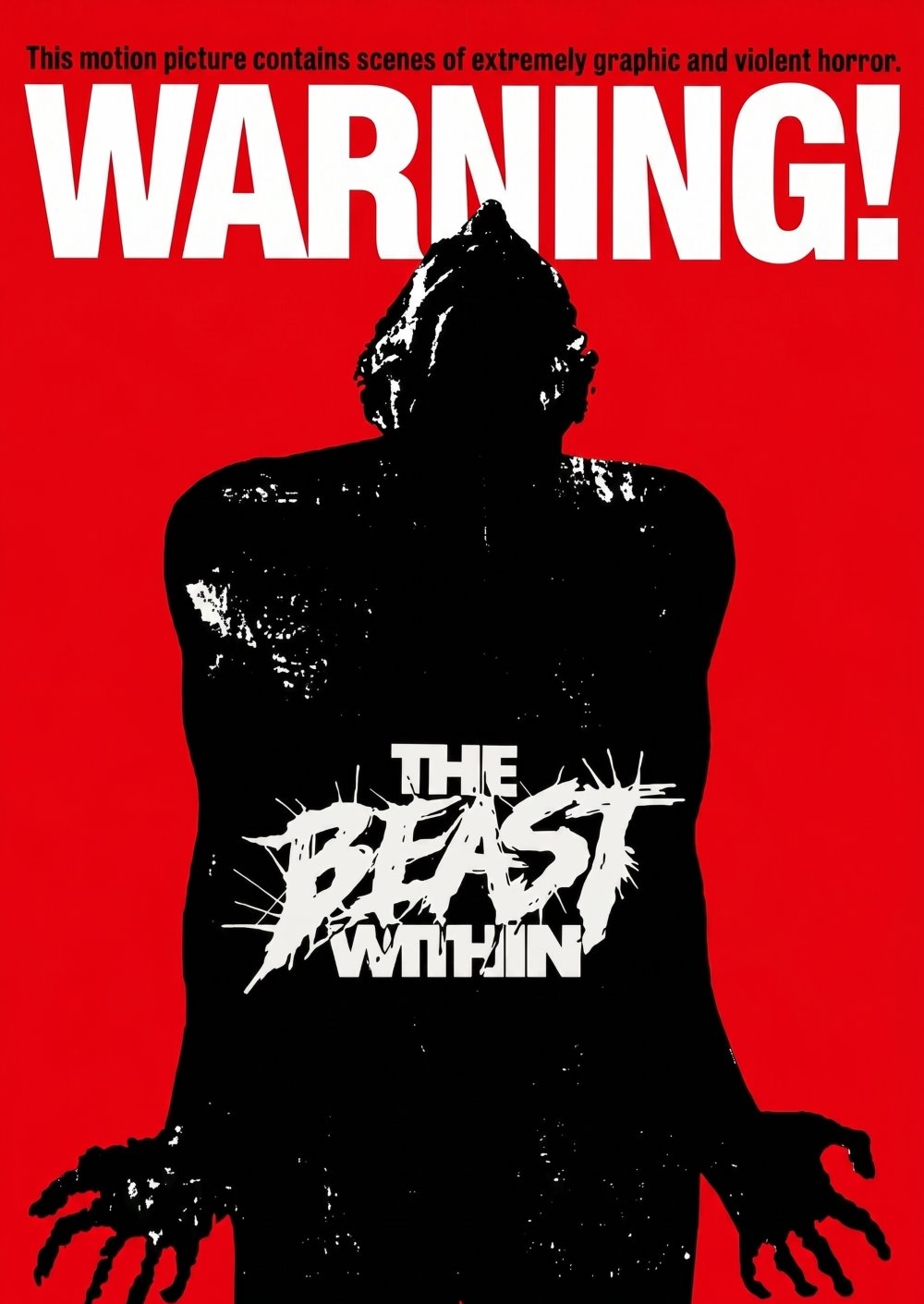
Guilty Pleasure No. 115: The Beast Within (dir. Philippe Mora)


The Beast Within (1982), directed by Philippe Mora, is one of those strange, sticky relics of early ’80s horror that feels like it crawled out of a drive-in double feature and just kept mutating long after the credits rolled. It’s not a good film—let’s just get that out of the way early—and it barely qualifies as a coherent one, but it lands squarely in that fascinating gray area where failure and ambition collide. This is the kind of messy, overstuffed genre hybrid that earns its reputation less through quality and more through sheer, stubborn weirdness. It’s got ambition in odd places, tonal swings that don’t quite land, and a sincerity that almost convinces you it knows what it’s doing. Almost.

What makes The Beast Within so compelling is how aggressively it borrows from exploitation cinema without ever fully committing to being exploitative in tone. All the raw ingredients are here: sexual violence, grotesque bodily transformation, cannibalistic undertones, grave robbing, demonic suggestion, and generational curses. It’s like Mora raided the entire playbook of grindhouse staples and tried to stitch them together into something resembling a prestige Southern Gothic drama. The result is a tonal contradiction that becomes the film’s defining trait. You’re watching material that, in another context, would lean hard into sleaze or pulp sensationalism, yet here it’s played with a stiff, almost theatrical seriousness.

The film opens with one of its most infamous sequences—a brutal assault in the woods by something that is distinctly not human. It’s uncomfortable, lurid, and feels like the start of a much nastier film than what ultimately unfolds. Seventeen years later, the child born from that attack begins to change, physically and psychologically unraveling as something monstrous pushes its way to the surface. From there, the narrative spirals into a hazy blend of small-town mystery, family melodrama, and creature feature chaos, with buried secrets clawing their way into the present.

There’s a clear attempt to elevate all of this with Southern Gothic sensibilities. The setting leans heavily into decay and repression—sweltering air, crumbling structures, and a community weighed down by unspoken sins. Characters behave as if they’ve wandered in from a Tennessee Williams play, all strained emotions and suppressed truths, but the film keeps undercutting that mood with bursts of grotesque horror. It’s an awkward balancing act that never quite works. If anything, the material might have been better served by leaning into something closer to a Joe R. Lansdale tone—meaner, pulpier, and more self-aware—rather than reaching for a kind of literary weight it can’t sustain.

Still, what keeps The Beast Within watchable—sometimes even oddly engaging—is how seriously everyone takes it. Ronny Cox and Bibi Besch play the parents with unwavering commitment, treating the story as a straight drama about a family unraveling under impossible circumstances. Their performances don’t wink at the audience or acknowledge the absurdity creeping in around the edges, and that refusal to break tone actually works in the film’s favor. It creates a strange tension where the more ridiculous the plot becomes, the more grounded the performances try to keep it.

Paul Clemens, as the afflicted son Michael, is tasked with carrying the film’s most extreme elements, and he does what he can within the limits of the material. His performance is less about subtlety and more about physical deterioration and panic as his body betrays him, but he sells the desperation well enough to keep things from completely falling apart. When the transformation finally takes center stage, the film dives headfirst into full-on creature horror, complete with practical effects that are equal parts impressive and absurd. They’re messy, tactile, and unmistakably of their era—exactly the kind of thing that feels right at home in a late-night grindhouse slot.

And then there’s L.Q. Jones as Sheriff Poole, who shows up like icing on top of this bizarre, overcooked cake. Jones brings that weathered, lived-in presence he honed across decades of Westerns and genre films, and he slips into this decaying Southern setting effortlessly. There’s a quiet authority to his performance that helps ground the film, even when everything else is threatening to spiral into nonsense. He doesn’t overplay the role or try to elevate it beyond what it is, but his presence adds a layer of credibility that the film desperately needs. It’s like he wandered in from a more confident, self-aware movie and decided to play it straight anyway, and somehow that makes the chaos around him feel just a little more intentional.

Visually, Mora leans into atmosphere when he can, giving the film a hazy, humid texture that reinforces its Southern Gothic aspirations. The town feels insular and vaguely cursed, like it’s been rotting from the inside out long before the events of the film begin. There are moments where the imagery and tone almost align into something genuinely evocative, but they’re fleeting, quickly swallowed up by the film’s inability to maintain a consistent identity.

That lack of cohesion is ultimately what keeps The Beast Within from being anything close to a good film, but it’s also what makes it linger in your mind. It’s constantly shifting—family drama one minute, body horror the next, then veering into supernatural mystery without warning. That unpredictability gives it a kind of scrappy energy, like it’s trying to reinvent itself scene by scene. Most of those attempts don’t quite land, but they’re rarely dull.

What’s surprising is the film’s underlying sincerity. For all its exploitation trappings, this isn’t a cynical or lazy effort. There’s a genuine attempt here to grapple with themes of inherited trauma, guilt, and the inescapability of the past, even if those ideas get buried under layers of monster makeup and narrative clutter. That earnestness creates an odd charm, making it easier to forgive the film’s many missteps.

In the end, The Beast Within sits comfortably in guilty pleasure territory. It’s not something you’d point to as an overlooked gem, and it certainly doesn’t rise to the level of a true grindhouse classic, but it has all the markings of one. It’s messy, uncomfortable, tonally confused, and packed with more ideas than it knows what to do with—but it’s also strangely compelling because of that. Not great, not even good, but just effective enough in flashes to make the whole experience worthwhile. It’s the kind of film that sticks with you less for what it achieves and more for how bizarrely it tries.

Previous Guilty Pleasures

  1. Half-Baked
  2. Save The Last Dance
  3. Every Rose Has Its Thorns
  4. The Jeremy Kyle Show
  5. Invasion USA
  6. The Golden Child
  7. Final Destination 2
  8. Paparazzi
  9. The Principal
  10. The Substitute
  11. Terror In The Family
  12. Pandorum
  13. Lambada
  14. Fear
  15. Cocktail
  16. Keep Off The Grass
  17. Girls, Girls, Girls
  18. Class
  19. Tart
  20. King Kong vs. Godzilla
  21. Hawk the Slayer
  22. Battle Beyond the Stars
  23. Meridian
  24. Walk of Shame
  25. From Justin To Kelly
  26. Project Greenlight
  27. Sex Decoy: Love Stings
  28. Swimfan
  29. On the Line
  30. Wolfen
  31. Hail Caesar!
  32. It’s So Cold In The D
  33. In the Mix
  34. Healed By Grace
  35. Valley of the Dolls
  36. The Legend of Billie Jean
  37. Death Wish
  38. Shipping Wars
  39. Ghost Whisperer
  40. Parking Wars
  41. The Dead Are After Me
  42. Harper’s Island
  43. The Resurrection of Gavin Stone
  44. Paranormal State
  45. Utopia
  46. Bar Rescue
  47. The Powers of Matthew Star
  48. Spiker
  49. Heavenly Bodies
  50. Maid in Manhattan
  51. Rage and Honor
  52. Saved By The Bell 3. 21 “No Hope With Dope”
  53. Happy Gilmore
  54. Solarbabies
  55. The Dawn of Correction
  56. Once You Understand
  57. The Voyeurs 
  58. Robot Jox
  59. Teen Wolf
  60. The Running Man
  61. Double Dragon
  62. Backtrack
  63. Julie and Jack
  64. Karate Warrior
  65. Invaders From Mars
  66. Cloverfield
  67. Aerobicide 
  68. Blood Harvest
  69. Shocking Dark
  70. Face The Truth
  71. Submerged
  72. The Canyons
  73. Days of Thunder
  74. Van Helsing
  75. The Night Comes for Us
  76. Code of Silence
  77. Captain Ron
  78. Armageddon
  79. Kate’s Secret
  80. Point Break
  81. The Replacements
  82. The Shadow
  83. Meteor
  84. Last Action Hero
  85. Attack of the Killer Tomatoes
  86. The Horror at 37,000 Feet
  87. The ‘Burbs
  88. Lifeforce
  89. Highschool of the Dead
  90. Ice Station Zebra
  91. No One Lives
  92. Brewster’s Millions
  93. Porky’s
  94. Revenge of the Nerds
  95. The Delta Force
  96. The Hidden
  97. Roller Boogie
  98. Raw Deal
  99. Death Merchant Series
  100. Ski Patrol
  101. The Executioner Series
  102. The Destroyer Series
  103. Private Teacher
  104. The Parker Series
  105. Ramba
  106. The Troubles of Janice
  107. Ironwood
  108. Interspecies Reviewers
  109. SST — Death Flight
  110. Undercover Brother
  111. Out for Justice
  112. Food Wars!
  113. Cherry
  114. Death Race

Review: Whistle (dir. by Corin Hardy)


“Blow the whistle, hear the sound, meet your death.” — Ivy Raymore

Whistle is a supernatural horror flick that dropped earlier this year, blending ancient curses with high school drama in a way that’s equal parts thrilling and eye-rolling. Directed by Corin Hardy, known for his gritty work on The Nun, and penned by Owen Egerton, it stars a young cast including Dafne Keen, Sophie Nélisse, and a scene-stealing Michelle Fairley as the quirky occult expert Ivy. The premise hooks you right away: detention-bound teens uncover an Aztec death whistle in a locker, and blowing it unleashes personalized visions of doom that stalk them.

The setup grabs you fast during a basketball game gone wrong, then shifts to transfer student Chrys (Dafne Keen) inheriting the cursed locker, sparking tension with jock Dean and his crew. A fight lands them in detention with Chrys’s cousin Rel, Dean’s girlfriend Grace, and shy Ellie. The teacher blows the skull-shaped whistle first, triggering chaos as each teen hears its shriek and glimpses their fate. From there, the group scrambles to understand the Olmec artifact’s power via eccentric Ivy (Michelle Fairley), who explains it summons “your death” literally through blood transfers and ritual rules.

Creature designs and practical effects shine brightest, with Hardy’s blend of gore and CGI crafting uniquely horrifying apparitions. The sound of the whistle—recreated from real Aztec artifacts—pierces like a skull-rattling wail, amping dread in dim lockers and foggy mirrors. Fairley steals scenes with comic relief, delivering lore on fake deaths and curse-breaking without killing the vibe; her folksy energy balances the teen angst perfectly.

The young cast delivers solidly. Keen grounds Chrys as the tough-yet-vulnerable leader, facing shadows tied to family trauma. Nélisse’s Ellie builds from quiet panic to fierce resolve, providing emotional punch. Sky Yang and Jhaleil Swaby nail the bully dynamics as Rel and Dean, while Percy White adds unhinged flair as a youth pastor caught in the curse. The script flirts with clichés like the heart-of-gold jock and final girl trope, but the over-the-top energy keeps it fun and unpretentious.

That said, Whistle stumbles into familiar horror traps. The high school backdrop feels like a slasher remix—detention squabbles, locker gimmick, mean-girl vibes—echoing Final Destination or The Craft without bold twists. Mid-film research drags pacing; Ivy’s info-dump, though entertaining, stalls momentum, and the “briefly die to escape” mechanic comes off contrived, like a gamey cheat code. Some kills hit hard, others rush by, diluting impact, and the finale piles on twists that strain credulity—survivors shrug it off months later like it was just a bad weekend.

Visually, Hardy crafts a moody aesthetic: shadows twist ordinary halls into labyrinths, with cinematography leaning on clever lighting and claustrophobic spaces. Lorne Balfe’s score mixes tribal drums and synth stabs to boost jump scares effectively. Sound design stands out, weaving shrieks with breaths and splatters for immersion. A few CGI bits look video-game flat up close, yanking you out occasionally.

Thematically, it teases fate vs. free will—deaths as inevitable yet choice-shaped—but skims the surface. Chrys’s guilt hints at deeper regrets, and the blood-transfer idea mirrors passing trauma in teen circles, but gore overshadows substance. Compared to Hardy’s The Hallow, which wove folklore into intimate family chills, Whistle chases spectacle over depth. It’s not sloppy, just popcorn-first.

At 98 minutes, it’s taut without bloating, fully earning its R with bloody language and viscera. As casual viewing, it’s prime B-tier horror—gory, goofy, guilty-pleasure material that delivers scares and chuckles without apology.

If you dig supernatural slashers like Freaky or Totally Killer, Whistle slots in neatly with its cursed-artifact hook and teen chaos. It skips reinvention for reliable thrills, held back by thin arcs and tropes, but elevated by committed kills and charm. Fire it up late-night for blood-soaked fun—no brains required, though a whistle might help muffle the screams. Just skip anything skull-shaped in your locker.

Trailer: Final Destination Bloodlines Teaser


Looks like Death is up to its shenanigans once again with Final Destination Bloodlines. Just when we thought it was safe to go about our lives without having to worry about Death’s penchant for complex Rube Goldbergesque plans to kill some people it looks like we spoke too soon.

On May 16, 2025, Death runs in the family and wearing a nose ring may not be the best thing when Death’s around. Here we have the first teaser trailer for Final Destination Bloodlines.