Horror Film Review: The Evil (dir. by Gus Trikonis)


“When am I gonna make you see? It’s something inside the dog!” — Dr. Caroline Arnold

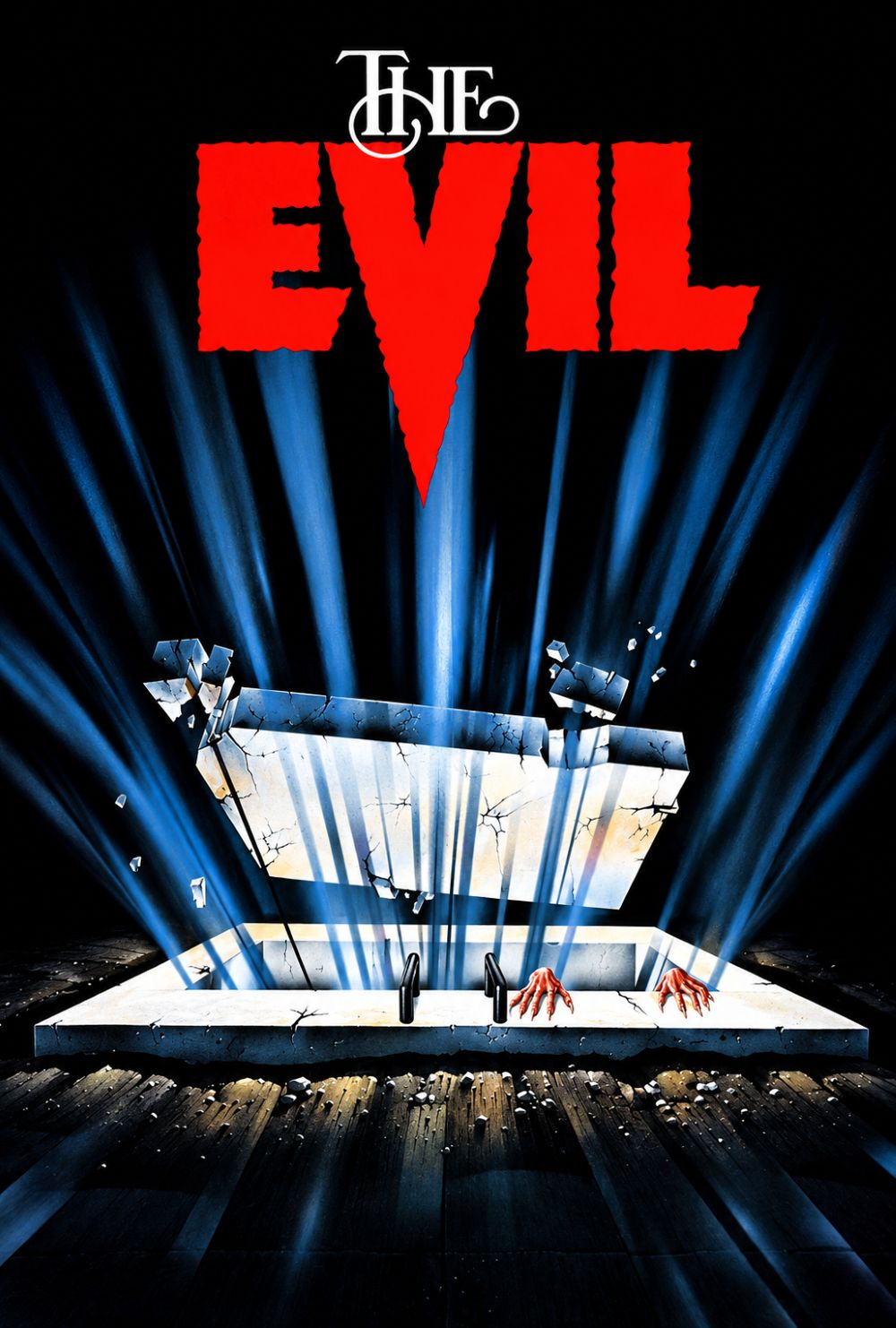
On paper, The Evil has no business being as entertaining as it is. It has a familiar haunted-mansion setup, a group of characters making predictably bad decisions, a handful of effects that are more enthusiastic than convincing, and a story that often feels like it was assembled from supernatural-horror leftovers. Yet Gus Trikonis’s 1978 film somehow makes that combination work. It is a scrappy, surprisingly lively late-1970s chiller that keeps finding ways to turn its limitations into part of the fun. The movie may not have the elegance of The Haunting or the full-scale dread of The Omen, but it has momentum, personality, and just enough weirdness to make it stick in the mind.

Richard Crenna plays Dr. C.J. Arnold, a well-meaning physician who buys the old Vargas mansion with plans to turn it into a rehabilitation center. He brings his wife Caroline, played by Joanna Pettet, along with a small group of friends and workers, to spend time cleaning up the place and preparing it for renovation. It is the kind of horror-movie premise where viewers can tell within seconds that nobody should be spending the night there. The mansion is enormous, decaying, isolated, and full of the sort of dark hallways that seem specifically designed for people to wander into alone. Still, C.J. sees a building with potential rather than a nightmare waiting to happen, and the movie gets a lot of mileage out of that mistake.

Before long, the house starts acting up in all the expected ways. Doors move on their own, strange noises echo through the corridors, flames appear where they should not, and the guests begin to realize that the mansion’s history is more sinister than they were led to believe. None of this is particularly groundbreaking, even for 1978, but The Evil understands the usefulness of a clean, direct setup. It does not waste a huge amount of time pretending the house is safe. The film gets its characters into trouble, gives them an increasingly hostile environment, and lets the tension build through a series of practical, often mean-spirited scares.

The movie came out during a period when horror was especially interested in demonic forces, cursed places, possession, and spiritual danger. You can feel the shadow of films such as The Exorcist, The Omen, Burnt Offerings, The Sentinel, and The Legend of Hell House hovering over it. The Evil is clearly playing in that same sandbox, mixing the isolated-house horror formula with the era’s fascination with the Devil and the supernatural. What keeps it from disappearing completely into the crowd is not originality so much as commitment. The film believes in its own nonsense, and that sincerity goes a long way.

Gus Trikonis directs the material with a briskness that suits it. At around 85 minutes, The Evil moves quickly enough that it rarely gives viewers much time to dwell on its thinner character work or its occasionally awkward plotting. The mansion itself does a lot of the heavy lifting. It has the faded, neglected grandeur that every good haunted-house movie needs, with dark rooms, winding staircases, sealed-off spaces, and enough shadowy corners to make even a simple walk down a hallway feel questionable. The location gives the movie a genuine sense of place, which is important because much of the film depends on the audience accepting the house as an active threat rather than just a backdrop.

There is a very specific low-budget 1970s flavor to the production that adds to its charm. The movie is not sleek or refined, and that works in its favor. The roughness of the camerawork, the muted colors, the occasionally dated sound design, and the practical effects all give it a handmade quality. The Evil never looks expensive, but it often looks tangible. When the house lashes out, the effects may not always be flawless, but they have physical weight. A lot of modern horror relies on digital polish to sell its scares; this film has to make do with tricks happening in front of the camera, and that gives the best moments an immediate, almost old-fashioned punch.

The movie is at its strongest when it keeps things simple. A character hears something in another room. Someone gets separated from the group. A familiar household object or feature of the mansion suddenly becomes dangerous. These are basic horror devices, but Trikonis uses them efficiently. He knows that the fear of walking into an empty room is sometimes more useful than a long explanation of why the room is dangerous. The Evil is not a slow-burn ghost story in the style of The Innocents. It is more interested in delivering jolts and keeping the body count moving. That can make it feel mechanical at times, but it also makes the movie easy to enjoy as a late-night scare picture.

Richard Crenna gives the film more credibility than it probably deserves. He plays C.J. as a rational, decent man who believes he can bring order and purpose to a place everyone else would wisely avoid. His growing inability to explain what is happening gives the movie an anchor. Crenna does not act embarrassed by the material or play it with a knowing wink. He treats the situation seriously, which makes the supernatural chaos around him feel more convincing. He is the kind of sturdy, professional lead who can sell even the film’s more ridiculous turns simply by looking genuinely alarmed.

Joanna Pettet also helps keep the human side of the movie from getting completely lost. Caroline is more willing than C.J. to recognize that something is wrong with the mansion, and that divide gives their relationship a modest but effective tension. The rest of the cast, including Andrew Prine, Cassie Yates, Mary Louise Weller, and Lynne Moody, is more variable. They serve the story well enough, though most of them are defined more by the danger they face than by particularly deep characterization. The film does not spend much time building rich backstories, but the actors keep the group dynamic watchable.

The middle section is where The Evil shows its limitations most clearly. The structure can become repetitive: something strange happens, someone investigates alone, the house responds, and the survivors become more desperate. The mythology behind the mansion is also not always developed with much precision. But again, the movie gets away with more than it should because it keeps pushing forward. It has the energy of a film that knows it cannot afford to be boring. Even when the story is familiar, there is usually another strange image, creepy sound, or sudden danger waiting around the corner.

The final stretch is best left mostly unspoiled, because the movie takes a turn that is much stranger and more ambitious than its early scenes might lead you to expect. It broadens the scope of the story without abandoning the slightly tacky, practical-effects character that defines the rest of the film. Some viewers will probably find the shift abrupt, especially if they are expecting a straightforward haunted-house ending. Others will enjoy the fact that The Evil refuses to settle for the safest possible conclusion. It is a movie that starts with a familiar premise and gradually gets more unhinged, and that unpredictability is a real asset.

Ultimately, The Evil is not a lost classic, but it is a lot more fun than its reputation and basic setup might suggest. It has no right to work as well as it does. The premise is familiar, the characters are not deeply written, the effects are uneven, and the story occasionally runs on pure genre momentum. Yet that momentum is exactly what makes it enjoyable. Trikonis delivers a lean, energetic little horror movie with a great old mansion, a convincingly serious Richard Crenna, a few solid practical scares, and enough late-game insanity to make the experience memorable. If you enjoy the rougher, more obscure side of 1970s supernatural horror, The Evil is the kind of movie that can catch you off guard: imperfect, sometimes goofy, but much more entertaining than it has any right to be.
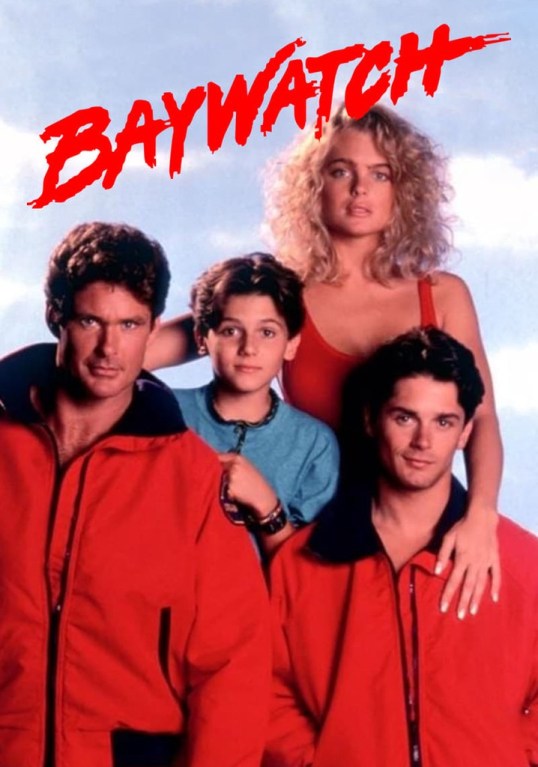
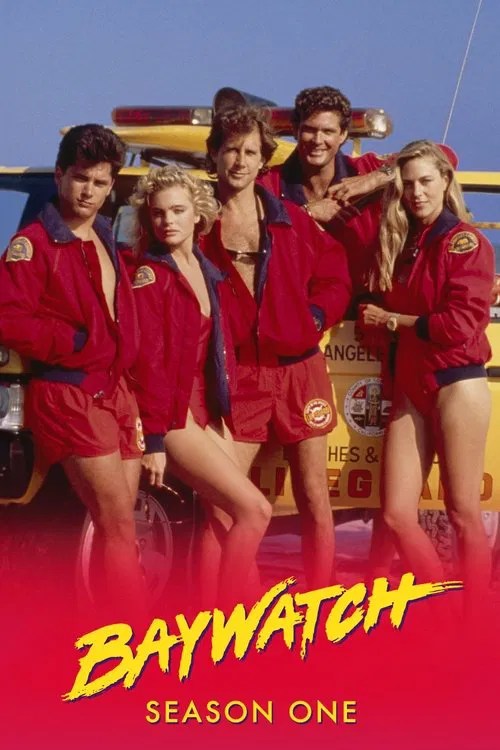
Retro Television Review: Baywatch 2.12 “Reunion”


Welcome to Retro Television Reviews, a feature where we review some of our favorite and least favorite shows of the past!  On Saturdays, I will be reviewing Baywatch, which ran on NBC and then in syndication from 1989 to 2001.  The entire show can be viewed on Tubi.

This week, Mitch goes to his high school reunion!

Episode 2.12 “Reunion”

(Dir by Gus Trikonis, originally aired on January 27th, 1992)

Mitch gets laid.

That’s pretty much the plot of this incredibly simple episode.

It’s time for Mitch’s 20-year high school reunion but he doesn’t want to go because he’s worried about seeing his ex-wife, Gayle (Wendie Malick).  However, at the last moment, Mitch suddenly does decide to go.  He meets up with Gayle, who is wearing a blue dress that is simply to die for.  With Gayle’s help, Mitch also rescues the class bully (Tim Rossovich) after two former high school outcasts (Tom Villard and Glenn Morshower) bury him in the sand just as the tide starts to come in.  And then Mitch and Gayle go back to the Buchanan house and do it like it’s prom night.

Fortunately, Hobie is gone for the weekend.  (It’s kind of funny how Hobie is always off with relatives or friends whenever Mitch needs the house to himself.)  I will say that, as a child of divorce, there’s nothing more painful than thinking your parents are going to get back together just because one of them was still in the house when you woke up in the morning.  Hobie is spared the trauma of Mitch and Gaye’s post-reunion hook-up.

Mitch, however, is disappointed to learn that Gayle has a boyfriend and that she’s going to be marrying him.  The only reason Gayle went to the reunion was to work out her feelings about Mitch.  Hasselhoff handles the revelation with his trademark emotional earnestness.  Left unmentioned is the fact that having sex with Mitch apparently convinced Gayle that she should marry the other guy.

Finally, someone left a baby in Eddie’s lifeguard station.  Eddie and Shauni looked after it for the weekend.  This led to a lot of, “Wow, sometimes babies smell bad,” humor.  In the end, the baby’s father shows up to get the baby but it turns out that he doesn’t actually have custody and that his ex-wife left the baby at the lifeguard station specifically to keep her safe from him.  Obviously, this couple has issues that will not be resolved by a high school reunion hook-up.

Even by the standards of Baywatch, this was a remarkably empty episode.  Between Mitch quickly getting over the fact that Gayle is getting remarried and Eddie and Shauni taking care of a random baby, it was hard to escape the feeling that nothing really matters on this show.  There are no real consequences to anyone’s actions.  No one has any sort of emotional conflict that can’t be solved with a musical montage.  Eddie and Shauni end the episode thinking about what it would like to be parents.  They’ll be over it in a week.

Baywatch was a show where nothing really mattered and that’s probably why it was so popular.


Retro Television Review: Baywatch 2.5 “The Fabulous Buchanan Boys”


Welcome to Retro Television Reviews, a feature where we review some of our favorite and least favorite shows of the past!  On Saturdays, I will be reviewing Baywatch, which ran on NBC and then in syndication from 1989 to 2001.  The entire show can be viewed on Tubi.

This week, we meet Mitch’s brother.

Episode 2.5 “The Fabulous Buchanan Boys”

(Dir by Gus Trikonis, originally aired on October 14th, 1991)

Mitch’s brother, Buzz (Tim Thomerson), shows up with his 12 year-old son, Kyle (Chance Michael Corbitt)!  Mitch is reunited with Buzz and they both realize that they’re two old beach bums who are not getting any younger.  That’s especially true in the case of Buzz.  The show makes it clear that Buzz is Mitch’s older brother but we’re still left wondering just how much older.  With his gray hair and his weathered features, Tim Thomerson looks like he’s nearly 70 while Hasselhoff appears to be in his late 30s.

And that’s pretty much it.

Okay, in all fairness to the show, there is a bit more of a plot than just Buzz showing up but none of it adds up to much.  Mitch’s girlfriend, reporter Kaye Morgan (Pamela Bach), is pressured by her father to kill a story about a dangerous pier.  Kyle has a bad attitude and has an accident while surfing at that pier.  Luckily, the lifeguards are able to save him.  Eduardo (Buzz Belmondo) sells bikinis on the beach but — ha ha — the bikinis dissolve when soaked in salt water.  Eddie and Shauni have to help a lot of suddenly naked people get out of the water.  “We’re in syndication!” the show loudly announces.  Meanwhile, I’m left to wonder why you would buy a bikini from a stranger with a pencil-thin mustache.

For the most part, though, this was a montage episode.  The plot was secondary to the music playing behind slickly edited montages of Buzz and Mitch bonding.  Buzz and Kyle leave town at the end of the episode but, given how close Buzz and Mitch are, I’m sure that Buzz will return frequently in the future.

(Buzz will never be seen again.)

Retro Television Review: Baywatch 2.3 “The One That Got Away”


Welcome to Retro Television Reviews, a feature where we review some of our favorite and least favorite shows of the past!  On Saturdays, I will be reviewing Baywatch, which ran on NBC and then in syndication from 1989 to 2001.  The entire show can be viewed on Tubi.

This week, you can do anything in a montage!

Episode 2.3 “The One That Got Away”

(Dir by Gus Trikonis, originally aired on September 30th, 1991)

After Megan (Vanessa Angel), a lifeguard who we’ve never seen before, is attacked by a maniac (Rick Dean), she has to conquer her fears of being attacked again so that she can lure him out of hiding so that he can be arrested.

Meanwhile, Shauni is burned out on being a lifeguard so she and Eddie spend a weekend just enjoying the beach and presumably ignoring anyone who might be drowning.

This is pretty much the epitome of a syndicated episode of Baywatch and it’s interesting to see that the formula was pretty much determined and locked in even this early into the show’s syndicated run.  There’s a serious storyline about a maniac attacking women on the beach but the cameraman spends as much time leering at Vanesa Angel as the man stalking her.  Shauni is tired of doing her job and instead of telling her to find a new job, it’s suggested that she just spend a weekend looking at the sunset with her boyfriend.

But the most important thing is that, regardless of the beach maniac and Shauni’s depression, there’s plenty of time for endless musical montages.  That’s what this episode is really all about.  Shauni gets a frustration montage.  She gets a happy montage.  Lifeguard Harvey gets an acting like a jackass montage.  Each montage takes up about five minutes of screentime so that probably definitely helped when it came to writing the script for this episode.

David Hasselhoff, oddly enough, is barely in this episode.  It’s only the second episode of the show’s syndicated run and the Hoff was already taking the week off?  I guess you can do that when you’re syndicated.

Retro Television Review: Baywatch 1.2 “Heat Wave”


Welcome to Retro Television Reviews, a feature where we review some of our favorite and least favorite shows of the past!  On Saturdays, I will be reviewing Baywatch, which ran on NBC and then in syndication from 1989 to 2001.  The entire show can be purchased on Tubi.

Save me!

Episode 1.2 “Heat Wave”

(Dir by Gus Trikonis, originally aired on September 29th, 1989)

Not much of an episode this week, I’m afraid.

California is dealing with a heat wave and no one has air conditioning (really?) so everyone in Los Angeles is heading down to the beach so that they can relax in the hot sand.  Eddie and Trevor keep giving each other the side eye because Eddie is a Baywatch lifeguard and Trevor is a country club life guard.  Eddie tries to hit on a woman who has spent the entire day relaxing near his tower but it turns out that she’s visiting from Australia and only has eyes for Trevor.  “Maybe next time,” she tells Eddie.

Craig is told by his boss that he has to choose between being a lawyer at a big firm or a lifeguard.  Craig’s wife, Gina, suggests that Craig quit the law firm and become a beachfront lawyer.  She says that he can still be a lifeguard and he can just use their kitchen table as his desk.  I don’t know if I would be as understanding as Gina.  Craig was making a lot of money as a big corporate lawyer, even if he apparently couldn’t afford to get an air conditioner.

(What the Heck, California?  How are you surviving with air conditioning!?)

Meanwhile, two stupid kids get trapped in a storm drain.  Mitch sends the junior lifeguards out to look for them.  Hobie asks, “What can a bunch of junior lifeguards do?”  Mitch replies that this is an opportunity for the junior lifeguards to go to all the places that they’re usually not allowed to go.  So, basically, Mitch’s plan to find the missing kids is to put a bunch of other kids at risk.  I guess that’s why he’s the lieutenant.

Luckily, the two dumb kids are rescued.  One of the kids is the son of Steve Humboldt (Jeffrey Byron), a former Baywatch lifeguard.  It turns out that Steve lost custody of his kid in a court case and he basically abducted him.  But, after the kid nearly dies, Steve is like, “We’re going to call your mom and go home!” and that apparently makes everything okay under the “He Changed His Mind Afterwards” clause.

This was all pretty dumb.  Stay out of the storm drain, kids!  It’s not that difficult.

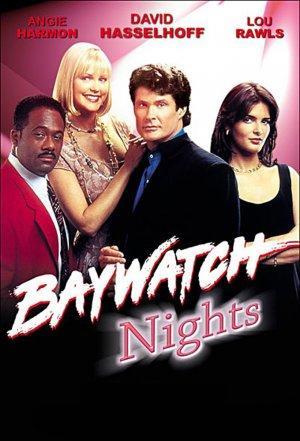
Late Night Retro Television Reviews: Baywatch Nights 1.8 “Balancing Act”


Welcome to Late Night Retro Television Reviews, a feature where we review some of our favorite and least favorite shows of the past!  On Tuesdays, I will be reviewing Baywatch Nights, an detective show that ran in Syndication from 1995 to 1997.  The entire show is currently streaming on Youtube!

This week, we discover how it all began!

Episode 1.8 “Balancing Act”

(Dir by Gus Trikonis, originally aired on November 18th, 1995)

The eighth episode of Baywatch Nights opens with Ryan and Garner on a stakeout.  It’s the middle of the day and they’re waiting for someone carrying an envelope full of evidence.  Mitch is nowhere to be seen, which actually makes sense.  I mean, Mitch is still working as a lifeguard.  Over the past seven episodes, I’ve often wondered how Mitch can work full-time as both a detective and a lifeguard captain.  This episode finally acknowledges that Mitch actually does have another job.

Garner and Ryan start talking about the first that they met and how they came to be partners in a detective firm.  It’s flashback time!  The flashbacks are to the show’s previously unaired pilot.  What’s funny is that, even though Garner is the one who is telling the story, the flashbacks are all narrated by Mitch.  I know that Garner and Mitch were extremely close friends during the early seasons of Baywatch but I didn’t realize they could actually hear each other’s thoughts.

Flashback Mitch explains that both he and Garner were wondering if there was anything more to life than their jobs.  Garner wanted to be more than just a beach cop.  Mitch was wondering if maybe there was something more out there than just being a lifeguard.  One day, when Mitch on vacation from his lifeguarding job, Mitch decided to accompany Garner to investigate a mysterious boat that had been showing up around the marina.  It was during the investigation that Mitch and Garner first met Ryan.  Ryan had paid $25,000 for a private detective agency in California, just to discover that the agency was not the high class operation that the previous owner, Nicky Pine (Philip Bruns), claimed it was.  However, before Ryan could confront him, Nicky was apparently killed by a group of criminals who wanted a valuable bracelet that Nicky owned.  Except the bracelet, which he gave to Ryan, was actually a fake and Nicky wasn’t actually dead and….

Ugh, this is complicated.  Seriously. I hate to admit that I couldn’t follow the plot of an episode of Baywatch Nights but this plot had so many nonsensical twists and turns that I pretty much gave up on trying to make sense of it all.  The important thing is that Garner got fed up with the police and quit, Mitch realized that he wanted to be a private eye, and Ryan got to be totally awesome as usual.  At one point, Ryan explained to Mitch that she was tough because she was from Dallas.  Woo hoo!  You tell him, Ryan!

Because this was a pilot, there were a few examples of early installment weirdness.  Troy Evans showed up as a police detective and one got the feeling that he was originally envisioned as being a recurring character.  Lisa Stahl’s Destiny was nowhere to be seen but there was a character named Andy (Linda Hoffman) was acted quite similarly to Destiny.  Even Nicky and his girlfriend, Rose (Jeanette O’Connor), seemed to be set up to become semi-regular characters.  Obviously, there was some retooling done after this pilot was produced.

Anyway, this episode’s plot is impossible to follow but the California scenery is lovely, which I think is the most that anyone could realistically demand from any show from the Baywatch universe.  Having now watched the pilot, I’m glad that the show went forward with just Mitch, Garner, and Ryan as regulars.  They’re a good team.

Late Night Retro Television Reviews: Baywatch Nights 1.7 “Pressure Cooker”


Welcome to Late Night Retro Television Reviews, a feature where we review some of our favorite and least favorite shows of the past!  On Tuesdays, I will be reviewing Baywatch Nights, an detective show that ran in Syndication from 1995 to 1997.  The entire show is currently streaming on Youtube!

This week, Mitch, Ryan, and Lou are held hostage!

Episode 1.7 “Pressure Cooker”

(Dir by Gus Trikonis, originally aired on November 11, 1995)

Episode seven of Baywatch Nights opens with Mitch and Garner, once again, whining about their job.  They have been hired to work undercover in a fried chicken restaurant that has been robbed five times.  Garner wears a chicken costume and greets the customers.  Mitch works in the kitchen.  This is not the type of work that Mitch and Garner had in mind when they decided to become part-time private investigators.

In his opening voice over, Mitch says that sometimes, you have to do what you have to do to pay your bills.  Here’s the thing, though.  Mitch is a lifeguard.  He’s not just a lifeguard but he’s one of the top lifeguards in California.  So, no, he doesn’t need to work as a private eye to pay his bills.  I don’t care how much Mitch complains about the job.  I think he just secretly enjoys working as a cook in a fast food restaurant.  And good for him, if that’s the case!  Myself, I like fried chicken and I respect anyone who cooks it for a living.

Eventually, the scummy Sosa brothers show up at the restaurant and try to rob the place.  Garner and Mitch are able to stop the robbery but they only manage to capture one brother, Manny Sosa (Cliff Dorfman).  Duke (Joseph Spencer) and Nick Sosa (Rich Werner) escape.

Later, Duke and Nick show up at Nights, which is the nightclub that doubles as the office of the detective agency.  Because it’s the afternoon, Nights is not open to general public but that doesn’t stop Duke and Nick from taking Mitch, Ryan, and Lou Raymond (Lou Rawls) hostage.  (Lou is the owner of Nights.  Despite the fact that Lou Rawls was prominently featured in the opening credits of each episode, this is only his second appearance on the show.)  Duke demands that Manny be released from prison or he’s going to start shooting hostages!

While they wait out the situation, Lou plays the piano and sings a song while Duke dances with Ryan.  Meanwhile, Garner waits outside the club with the police and the press.  Eventually, reporter Stormy Walters (Sandra Dee Robinson) is invited to enter the club with her crew so that she can interview Duke and get some footage of him dancing with Ryan.  Garner puts on a fake beard and pretends to be Stormy’s sound guy.

As soon as Mitch sees Garner, he nudges Ryan and says, “It’s Garner!”  Even though Mitch whispers, it still seems like a reckless thing to point out when there’s two gun-toting maniacs in the club.  Fortunately, the Sosa brothers are pretty stupid so Mitch, Garner, and Ryan are able to give them a beat down.  Unfortunately, before the situation is resolved, both Lou and Garner are shot but, apparently, not seriously.

This episode …. eh.  As I’ve said elsewhere on this site, I am just not a fan of shows about hostage situations.  As soon as the Sosa brothers show up at the club, the narrative momentum comes to a grinding halt and all that’s left is 30 minutes of sweaty losers pointing guns at people and shouting.  It gets a little boring.  As well, the Sosas were so stupid that, even when they were shooting people, it was difficult to take them seriously as dangerous criminals.  They were just idiots.

Next week, we get the origin story as we learn how Mitch and Garner came to work with Ryan in the first place!

Late Night Retro Television Reviews: Baywatch Nights 1.1 “Pursuit”


Welcome to Late Night Retro Television Reviews, a feature where we review some of our favorite and least favorite shows of the past!  On Tuesdays, I will be reviewing Baywatch Nights, an detective show that ran in Syndication from 1995 to 1997.  The entire show is currently streaming on Tubi!

The year was 1995 and Baywatch, a show about lifeguards, was the most popular in the world.  Even though the critics never cared for the show, it got monster ratings.  Having played head lifeguard Mitch Buchanan for 6 years, star David Hasselhoff was growing tired with Baywatch’s format.  He wanted to try something new and that new thing was Baywatch Nights.  During the two years that Baywatch Nights aired, Mitch would spend his days as a lifeguard and his nights as a private investigator!

Baywatch Nights ran for two seasons.  The second season is remembered for featuring Mitch battling aliens, ghosts, and vampires.  The first season featured Mitch dealing with more traditional villains.  For our latest Late Night Retro Television Review, we’ll be looking at both seasons of Baywatch Nights!

Episode 1.1 “Pursuit”

(Dir by Gus Trikonis, originally aired on September 30th, 1995)

The very first episode of Baywatch Nights opens with Mitch Buchanan (played, of course, by David Hasselhoff) speaking directly to the audience.  He’s standing at his lifeguard stand, wearing his signature red Baywatch swim trunks.

“Some people,” Mitch says straight to the camera, “think that the beach closes when the sun goes down.  Uh-uh.  That’s when it really starts to heat up.”  Mitch goes on to explain that he’s working a second job as a private investigator.  His old friend, Garner Ellerbee (Gregory Alan Williams), is a partner in a detective agency with Ryan McBride (Angie Harmon), who was born in Texas, became a detective in New York, and recently moved to California.  Mitch is working with them.  Suddenly, Mitch says that he hopes those watching will enjoy this “new show.”

This brings up an interesting question.  Are we listening to Mitch or are we listening to David Hasselhoff?  If it’s David Hasselhoff talking directly to the audience, his monologue would seem to suggest that he thinks that Baywatch is real life, even though it’s a TV show.  He talks about Garner and Ryan as if they’re real people.  If we’re listening to Mitch Buchanan, that means that he has somehow become aware that he’s a character on a television show.  Has Mitch become self-aware?  Or has he realized that he’s living in some sort of Truman Show-style situation?

These are all questions that will probably never be answered.

As for the episode, it jumps right into things.  Mitch, Garner, and Ryan have their private detective offices located right above a nightclub called — wait for it — “Nights.”  Occasionally, they are helped by Destiny Desimone (Lisa Stahl), a perky blonde who spends her days doing Tarot card readings on the beach and her nights hanging out around the office.  When Ryan can’t figure out how to use a computer, Destiny is there to help  When Mitch and Garner can’t figure out how to have multiple landlines in one office, Destiny figures it all out!  It’s all very 90s, with boxy computers and long telephone cords.

Mitch’s first case involves serving as a bodyguard for a model named Cassidy (Carol Alt).  Cassidy says that someone is stalking her and she’s especially worried because another model has recently been murdered.  (“Her name was Alexa,” Mitch muses as he looks at the murdered model’s body, “This was her last photo session.”)  Mitch protects Cassidy and, of course, he falls for her but, in the end, he realizes that Cassidy has actually been stalking herself and was responsible for the other model’s death.  Mitch is shaken by his discovery of Cassidy’s guilt, even though the exact same thing previously happened to him during the first season of Baywatch, when he fell in love with a woman who turned out to be a black widow murderer.  Mitch muses that he knows how to be a lifeguard but he’s still learning how to be a private eye.

(Mitch, seriously, just watch reruns of Baywatch!  I mean, you’re only one episode into Baywatch Nights and you’re already recycling old plots so I imagine you should just keep doing what you did the first time.)

This episode’s plot is pretty predictable but, for a pilot, it’s likable.  Angie Harmon, Gregory Alan Williams, and David Hasselhoff all have a likable chemistry and, as a Texas girl, I appreciated the fact that Angie Harmon’s accent was authentic.  Mitch narrates the episode in a hard-boiled, private eye manner and David Hasselhoff’s earnest delivery is so at odds with his words that it becomes rather charming.  As a friend of mine once said when we watched him in Starcrash, “Every country should have a Hoff!”

As far as first episodes go, Pursuit does everything it needs to do.  It introduces us to the characters and their personalities.  Ryan is supercool and has really pretty hair.  Destiny is quirky.  Garner is determined.  And Mitch …. well, Mitch is David Hasselhoff.  Wisely, the first episode didn’t spend too much time trying to rationalize the idea of Mitch working all day as a lifeguard and then all night as a private eye.  Realistically, it seems like he would end up too exhausted to be good at either job.  Instead, the first episode simply tells the audience that Mitch is now a detective and that the audience better be willing to accept it.

(Unfortunately, most of the audience didn’t accept it, which is why the second episode featured Mitch dealing with sea monsters and resurrected Vikings.  We’ll get to that in a while.)

Next week, Mitch battles a group of thieves on skates!  Seriously, you know that’s going to be fun!

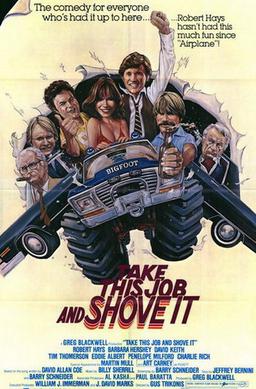
A Movie A Day #259: Take This Job And Shove It (1981, directed by Gus Trikonis)


Originally from a small town in Iowa, Frank Macklin (Robert Hays) is a hotshot young executive with The Ellison Group.  When Frank is assigned to manage and revitalize a failing brewery in his hometown, it is a chance for Frank to rediscover his roots.  His childhood friends (played by actors like David Keith, Tim Thomerson, and Art Carney) may no longer trust him now that Frank wears a tie but it only takes a few monster truck rallies and a football game in a bar for Frank to show that he is still one of them.  However, Frank discovers that the only reason that he was sent to make the brewery profitable was so that his bosses could sell it to a buffoonish millionaire who doesn’t know the first thing about how to run a business.  Will Frank stand by while his bosses screw over the hardworking men and women of the heartland?  Or will he say, “You can take this job and shove it?”

Named after a country music song and taking place almost entirely in places stocked with beer, Take This Job And Shove It is a celebration of all things redneck.  This movie is so redneck in nature that a major subplot involves monster trucks.  Bigfoot, one of the first monster trucks, gets plenty of screen time and, in some advertisements, was given higher billing than Art Carney.

A mix of low comedy and sentimental drama, Take This Job And Shove It is better than it sounds.  In some ways, it is a prescient movie: the working class frustrations and the anger at being forgotten in a “booming economy” is the same anger that, 35 years later, would be on display during the election of 2016.  Take This Job And Shove It also has an interesting and talented cast, most of whom rise above the thinly written dialogue.  Along with Hays, Keith, Thomerson, Bigfoot, and Carney, keep an eye out for: Eddie Albert, Royal Dano, James Karen, Penelope Milford, Virgil Frye, George “Goober” Lindsey, and Barbara Hershey (who, as usual, is a hundred times better than the material she has to work with).

One final note: Martin Mull plays Hays’s corporate rival.  His character is named Dick Ebersol.  Was that meant to be an inside joke at the expense of the real Dick Ebersol, who has the executive producer of Saturday Night Live when Take This Job and Shove It was filmed and who later became the president of NBC Sports?

Horror on the Lens: House of Evil (dir by Gus Trikonis)


Today’s horror on the lens in 1978’s House of Evil!

When Richard Crenna buys a new house, he recruits a few friends to help him fix it up.  Unfortunately, it turns out that the house is haunted by the devil himself.  House of Evil — which is also known as The Evil — is an entertaining little time waster.  If the idea of being in a house with the devil doesn’t scare you, just check out some of those the 1970s fashion choices!