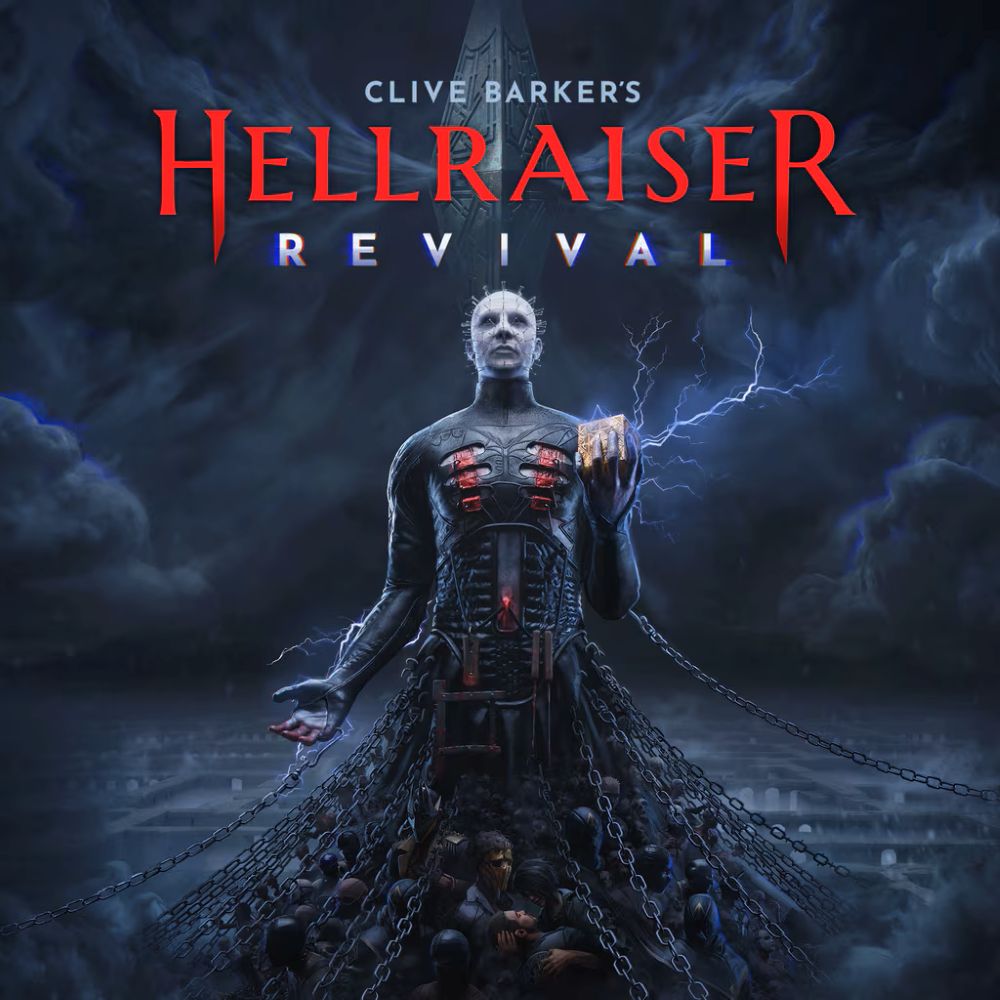
Horror Villain of the Day: Pinhead (Hellraiser)


“Explorers in the further regions of experience. Demons to some. Angels to others.” — Pinhead

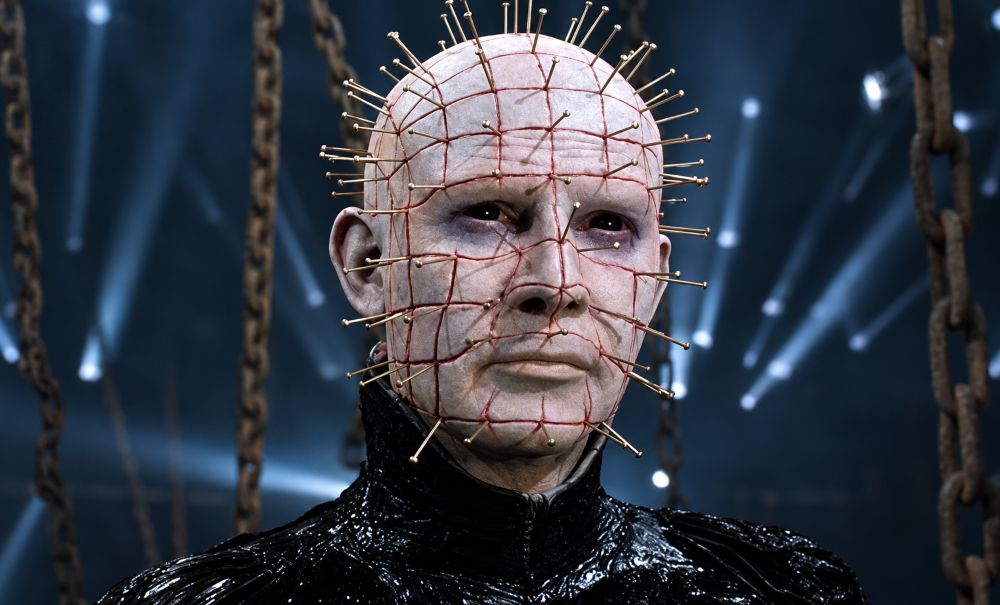
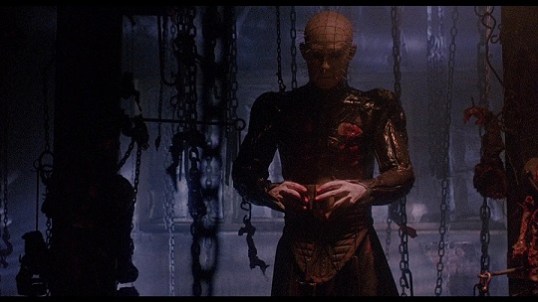
Doug Bradley’s Pinhead remains one of horror cinema’s most enduring villains because he does not behave like a conventional monster. He is not a snarling animal, a mute slasher, or a madman driven by simple revenge. Instead, Pinhead arrives with the bearing of an officiant: calm, articulate, composed, and utterly certain of his authority. His voice is measured, his movements deliberate, and even his cruelty is administered with the ceremonial gravity of a sacred rite. That contrast is the essence of the character. Pinhead is demonic, certainly, but he is also refined—a figure who makes damnation sound almost like an invitation to an exclusive, terrible experience.

Bradley’s performance gives Pinhead a distinctly British quality of restraint and formality. His diction is elegant, his tone often dry or even faintly courteous, and he approaches his victims with the manners of a gentleman receiving guests. Yet this refinement does not soften him; it makes him more disturbing. Pinhead’s civility is separated from human empathy. When he speaks of pain and pleasure, he does not sound lustful in an ordinary sense, nor does he appear personally enraged. He speaks as someone explaining the rules of a world beyond ordinary morality, where sensation has become the only remaining truth. The politeness becomes a mask not for kindness, but for a cold and absolute spiritual corruption.

In that sense, Pinhead almost feels like an amalgamation of British refinement transformed into an avatar of excess—of emotion, sensation, obsession, and infernal desire. His leather-and-flesh regalia evokes bondage, ritual, military uniform, and religious vestment all at once, while the geometric precision of the pins in his head makes him look less like a chaotic demon than a meticulously designed icon. He represents a kind of order within depravity. The Cenobites are not merely monsters who enjoy hurting people; they are explorers of sensation who have traveled so far beyond human limits that pleasure and agony have become inseparable. Pinhead embodies their philosophy with an eerie dignity: damnation is not random violence, but transcendence through unbearable experience.

That philosophical quality separates Pinhead from many horror antagonists. He is frightening not simply because he can kill, but because he challenges the victim’s understanding of desire and consequence. The puzzle box does not just summon a predator; it opens a door for those willing—or foolish enough—to seek forbidden experience. Pinhead’s most memorable lines carry this sense of judicial finality. He is not usually chasing people through hallways; he is passing sentence on those who have crossed a threshold they cannot fully comprehend. Even when later entries in the series pushed him closer to a more familiar slasher role, Bradley’s portrayal retained the character’s most compelling feature: the feeling that Pinhead is not merely evil, but the representative of an alien moral order.

This is why Pinhead became such an iconic horror villain. Doug Bradley turned a visually extreme creature into a character of intelligence, poise, and dreadful charisma. The design is unforgettable, but the performance is what gives it permanence: the soft, resonant voice; the ritualistic stillness; the sense that every word has been chosen with precision. Pinhead is terrifying because he makes hell seem cultured, disciplined, and seductive. He offers not mindless destruction, but an abyss dressed in ceremony—an infernal gentleman who promises wonders, suffering, and revelation in the same breath.

Villain of the Day

Horror Film Review: Hellraiser (dir. by Clive Barker)


“No tears, please. It’s a waste of good suffering.” — Pinhead

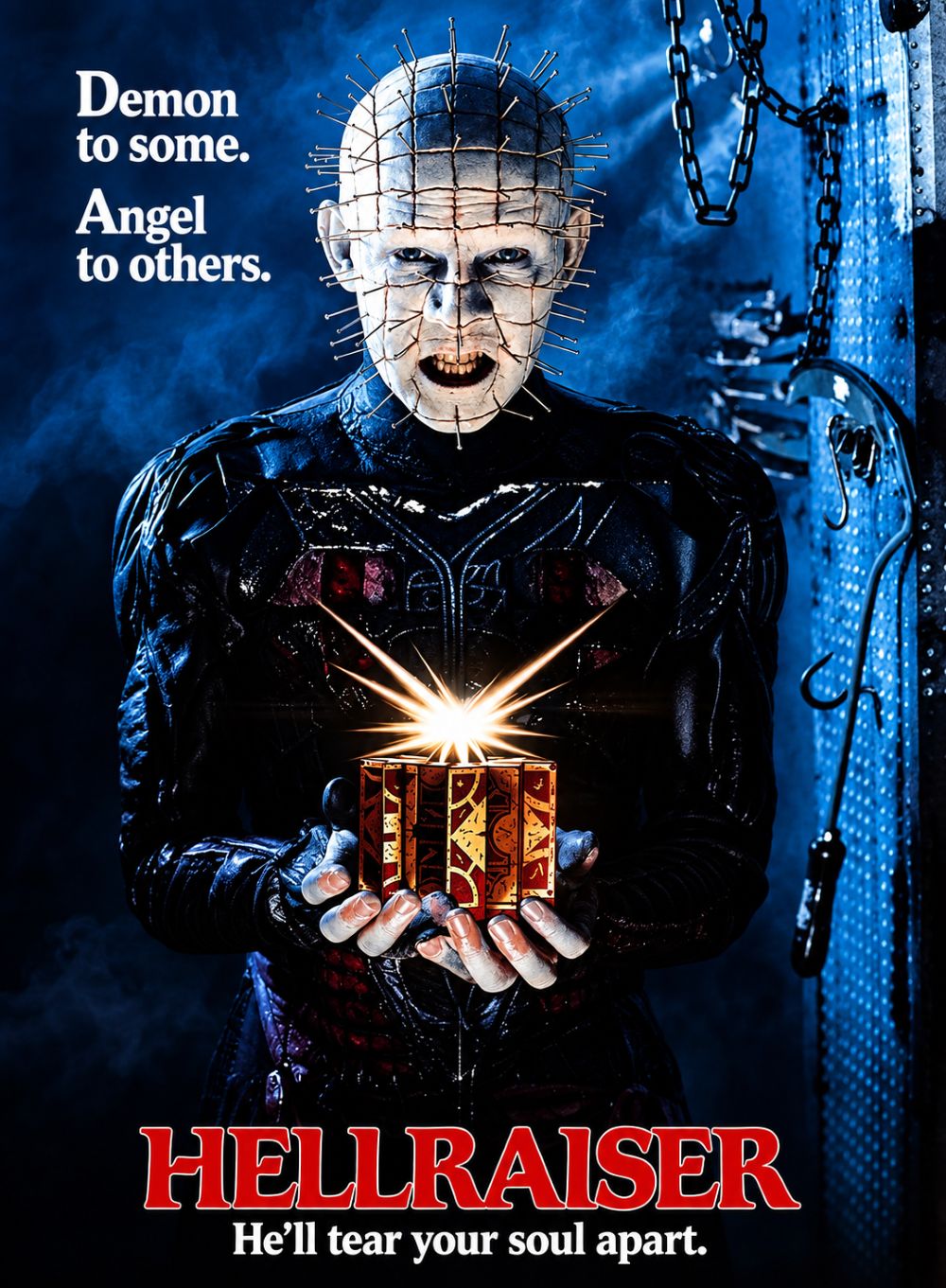
Hellraiser does not ease viewers into its nightmare; it drags them straight into a world where desire, suffering, and obsession have become impossible to separate. Written and directed by Clive Barker from his own novella The Hellbound Heart, the film is bloody, unsettling, weirdly intimate, and much more serious than its pop-culture reputation might suggest. Yes, it is the movie that introduced Pinhead and the Cenobites, but the first Hellraiser is not really a Pinhead showcase in the way later sequels became. It is a rotten little domestic nightmare about lust, betrayal, obsession, and the kind of desire that keeps going long after it should have destroyed a person.
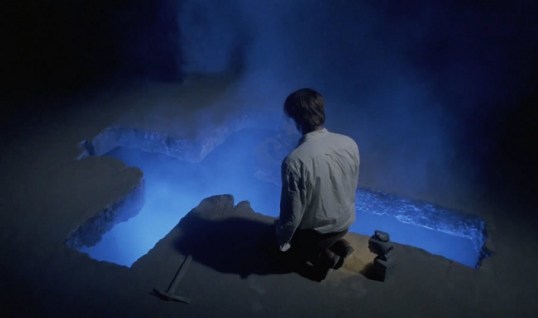
Barker’s big strength is that he does not treat horror as something separate from human craving. In Hellraiser, pain and pleasure are tangled together from the opening scene. Frank Cotton is not some innocent fool who accidentally opens a cursed puzzle box. He actively seeks it out because normal pleasures no longer satisfy him. He wants sensation pushed past every limit, and the Lament Configuration gives him exactly that—just not in the way he expected. The Cenobites arrive with their chains, hooks, leather, scars, and ritualistic calm, offering a version of experience so extreme that it turns the body into something almost unrecognizable. That premise is memorable on its own, but Barker makes it work because Frank is already spiritually disgusting before hell ever gets involved.

The movie’s real surprise is Julia Cotton, played brilliantly by Clare Higgins. Julia could have been a standard unfaithful wife character, someone introduced merely to create tension inside the Cotton family. Instead, she becomes the dark heart of the film. Her attraction to Frank is not romantic in any healthy or even conventionally sensual sense. It is tied to resentment, boredom, humiliation, and a kind of violent need to feel alive. When Frank returns in his skinless, barely human state and needs blood to regenerate, Julia does not hesitate for long before becoming his accomplice. The scenes in which she lures men back to the abandoned house are among the movie’s most disturbing moments precisely because they are played with such cold purpose. She does not seem possessed. She is making a choice.

That decision gives Hellraiser a nasty emotional edge. Frank is obviously monstrous, but Julia is arguably scarier because she begins as an ordinary person trapped in a miserable life and willingly walks into atrocity. Higgins gives the role a detached, almost aristocratic chill. Her face barely needs to change for the audience to understand that something terrible is happening behind her eyes. The film’s central house becomes an extension of her inner life: dusty, decayed, closed off, and hiding a nightmare in the upstairs room. There is something grimly effective about the fact that the gateway to hell is not in an ancient castle or a faraway cemetery. It is in a family home where people are supposed to start over.

Andrew Robinson also deserves credit as Larry, Julia’s decent but oblivious husband. He is not the most dynamic protagonist in horror history, but that works for the story. Larry is a fundamentally ordinary man who cannot imagine the depths of corruption already moving around him. His blindness is frustrating, but it also reinforces the movie’s worldview. In Hellraiser, the people closest to us may carry desires we cannot see, and the house itself may preserve the damage left behind by old secrets. Ashley Laurence, as Larry’s daughter Kirsty, gradually becomes the film’s moral center. She is not an especially flashy final girl at first, yet Laurence gives Kirsty intelligence and genuine fear. Once she learns what the box can do, her panic feels grounded because she understands she has stumbled into something far beyond a killer with a knife.

Then there are the Cenobites, who remain some of the most striking horror creations of the decade. Doug Bradley’s Pinhead is the obvious standout, but the film wisely uses him sparingly. Pinhead is not a slasher villain who runs around collecting bodies. He is more like a supernatural official, a priest of pain carrying out a horrifying contract. Bradley’s measured voice and theatrical stillness make the character far more unsettling than a louder performance would have. The famous line, “We have such sights to show you,” works because it is delivered with calm conviction rather than rage. Pinhead is not trying to scare Kirsty for fun. He genuinely believes that torment and ecstasy are parts of the same revelation.

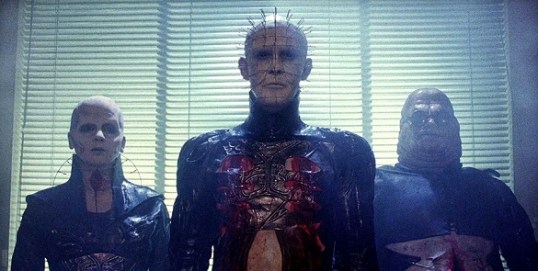
The other Cenobites matter too. Butterball, the Chatterer, and the Female Cenobite create the feeling that Pinhead belongs to a larger order rather than simply functioning as a lone monster. Their designs are grotesque but carefully composed, full of exposed flesh, surgical markings, and fetishistic costume details. They do not look like demons from a traditional Christian image of hell. They look like beings who have remade themselves according to an alien set of desires. That is where Barker’s imagination really separates Hellraiser from more conventional monster movies. The Cenobites are not just evil creatures. They are explorers of sensation who have gone so far beyond humanity that morality barely applies to them anymore.

The practical effects are still a major reason the film holds up. Frank’s gradual reconstruction from blood-soaked remains into a mutilated human body is disgusting in the best possible way. It has a tactile quality that CGI rarely captures. You can see the slime, the tissue, the half-formed muscles, and the painful labor involved in putting a body back together. Even when some of the effects show their age, they retain a handmade ugliness that fits the movie’s atmosphere. Nothing in Hellraiser is clean or sleek. The supernatural realm looks damp, industrial, and biological, as if hell were built out of meat, rust, chains, and bad memories.

Christopher Young’s score also does a lot of heavy lifting. It gives the movie a gothic grandeur that makes the story feel larger than its limited locations and modest budget. The film is mostly confined to a house, a hospital, a few streets, and the Cenobites’ shadowy realm, yet the music makes it feel like a grand tragedy unfolding behind the walls. That contrast is one of the movie’s best tricks. Hellraiser can be intimate and theatrical at the same time. It is essentially a chamber piece about a broken family, but it plays like a myth about forbidden knowledge.

If the film has a weakness, it is that its final stretch gets a little messy. The confrontation with Frank has some excellent makeup work and gruesome imagery, but the pacing becomes more conventional once Kirsty is forced into full survival mode. The ending also feels slightly rushed considering how carefully Barker establishes the family tension earlier on. Still, the movie earns enough goodwill through its atmosphere, performances, and imagination that these flaws do not do much damage. If anything, the roughness adds to its charm. Hellraiser feels like a filmmaker throwing every dark idea he has onto the screen and trusting the audience to follow him into the abyss.

What makes Hellraiser endure is not simply the gore, the puzzle box, or Pinhead’s instantly recognizable appearance. It lasts because it understands that horror is often rooted in the things people want but are ashamed to admit they want. Frank wants infinite sensation. Julia wants escape and emotional intensity. Kirsty wants to save her family but must confront how little of that family was worth saving. The Cenobites offer no easy moral lesson; they are simply waiting for someone foolish or desperate enough to open the door.

Casual viewers looking for a straightforward slasher might find Hellraiser slower and stranger than expected, especially if they only know the character of Pinhead through sequels, posters, and parody. But for anyone willing to meet it on its own grim terms, it remains one of the most original supernatural horror films of its era. It is gross, stylish, perverse, tragic, and surprisingly sad beneath all the blood. Barker did not just create monsters. He created a nightmare universe where desire becomes a trap—and where opening a small box can ruin everything.

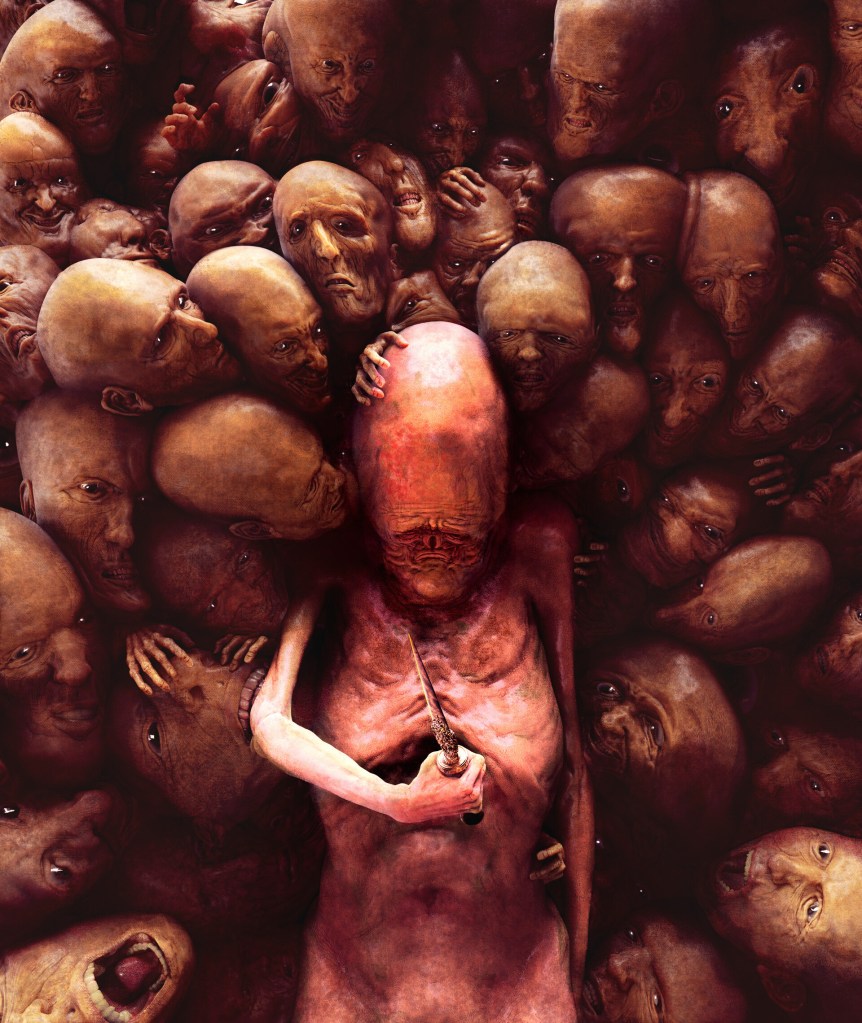
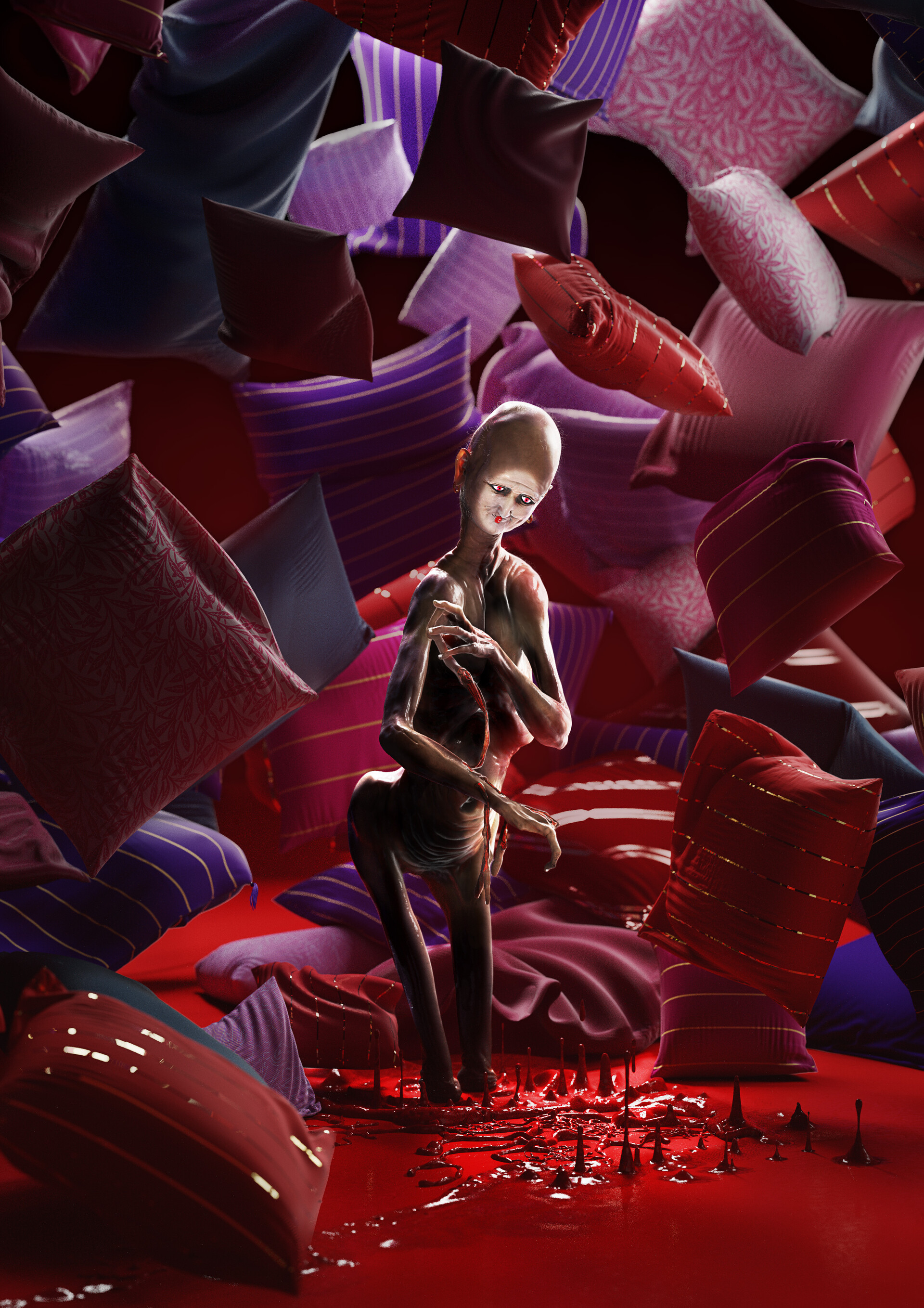
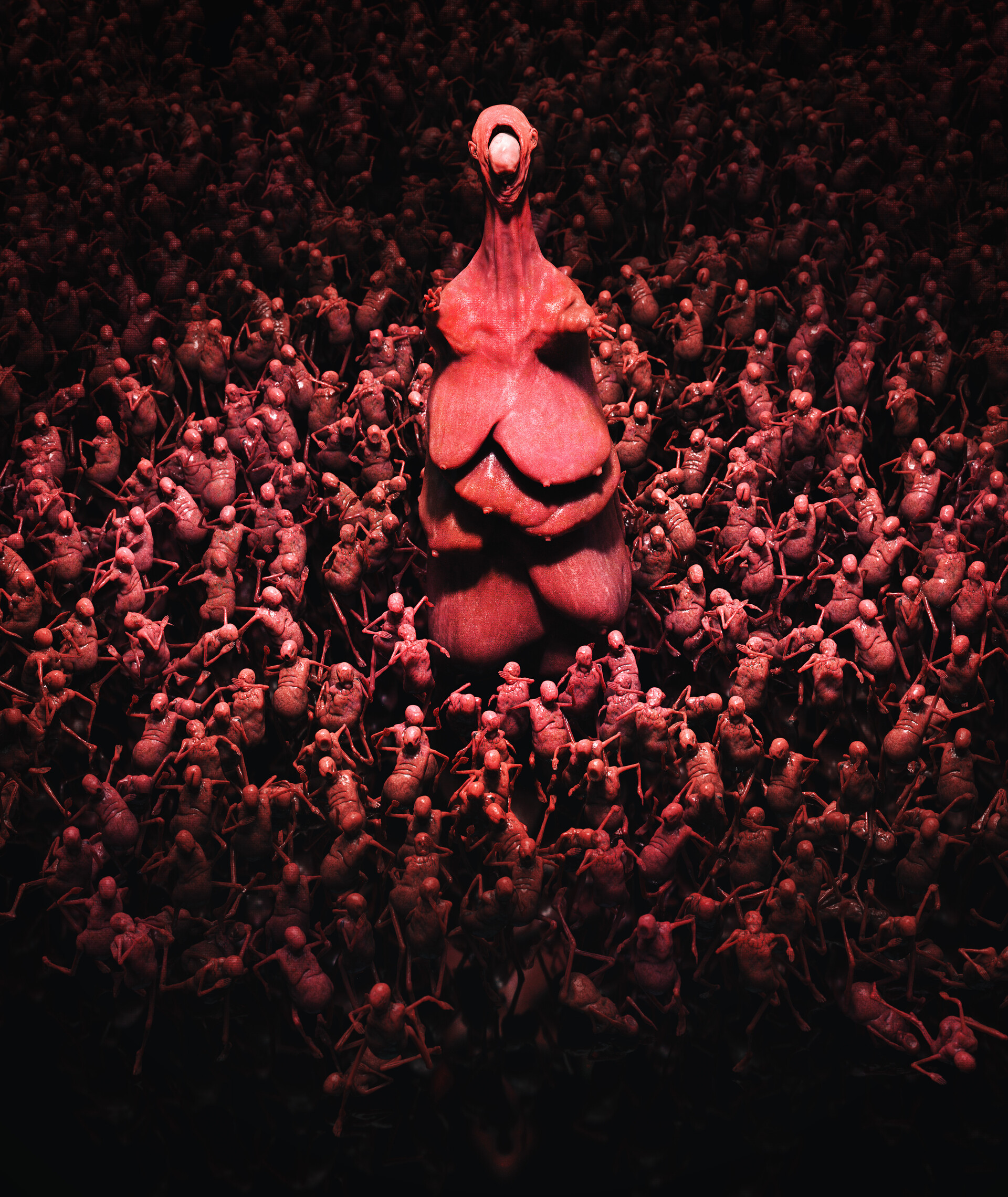
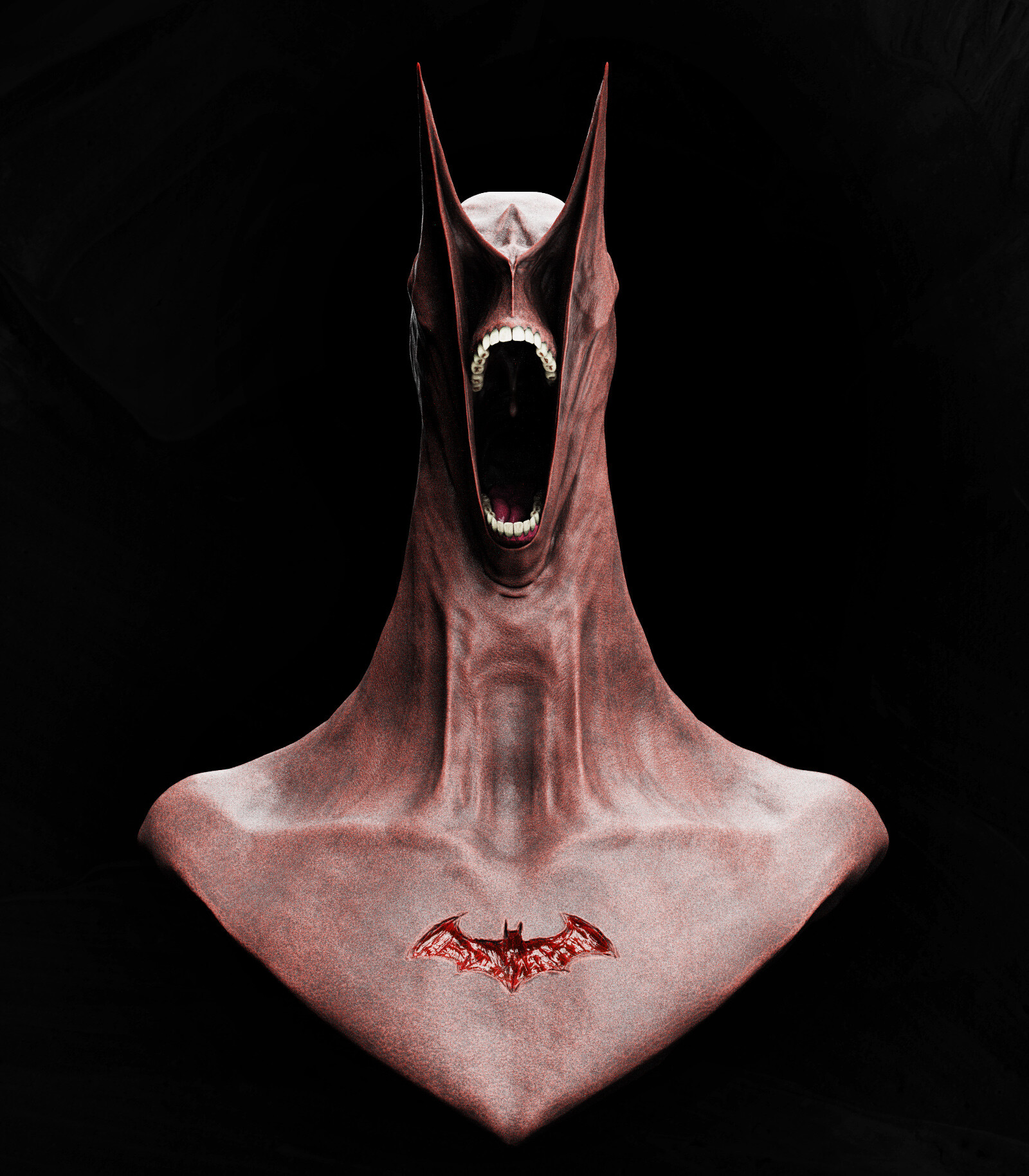
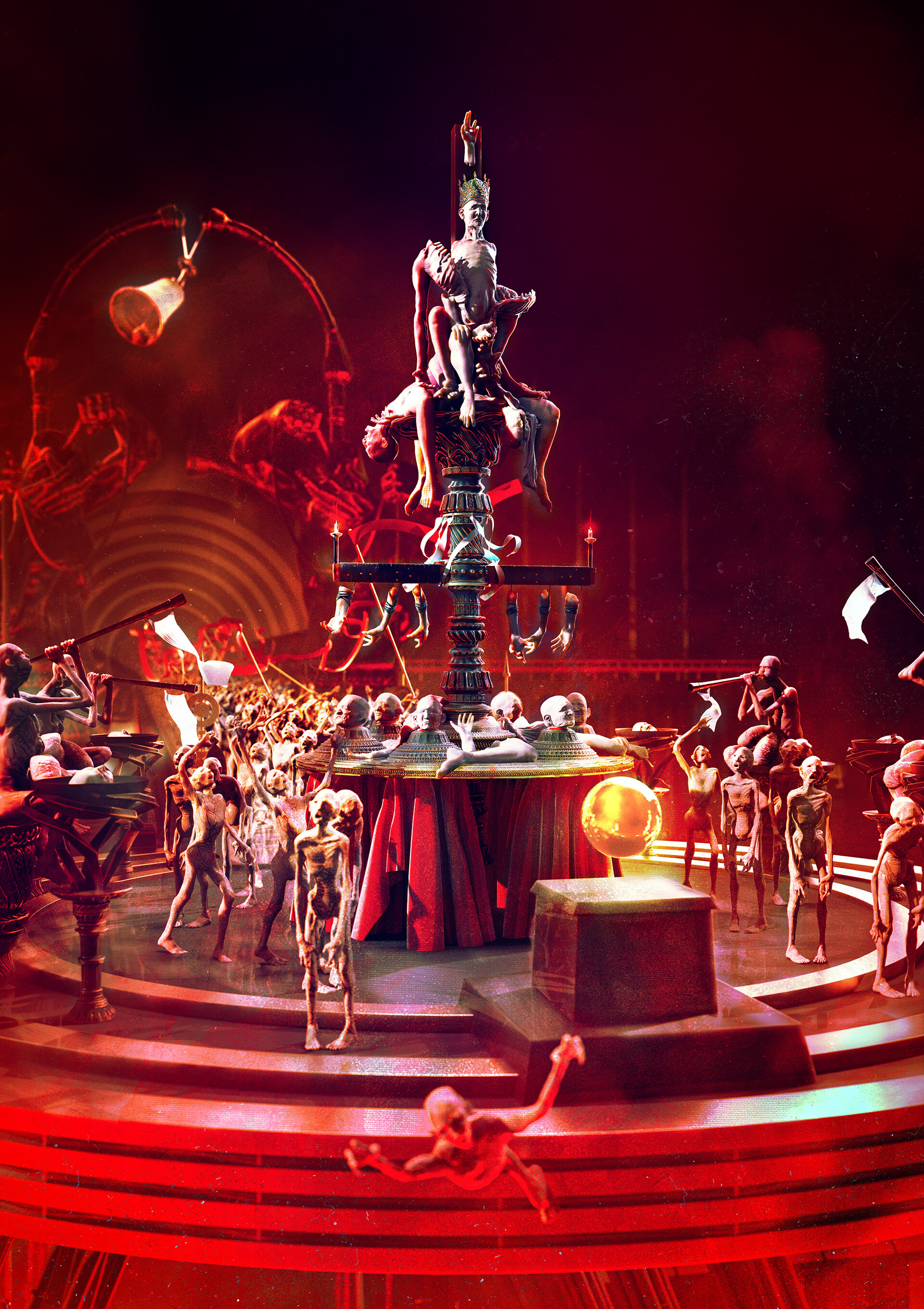
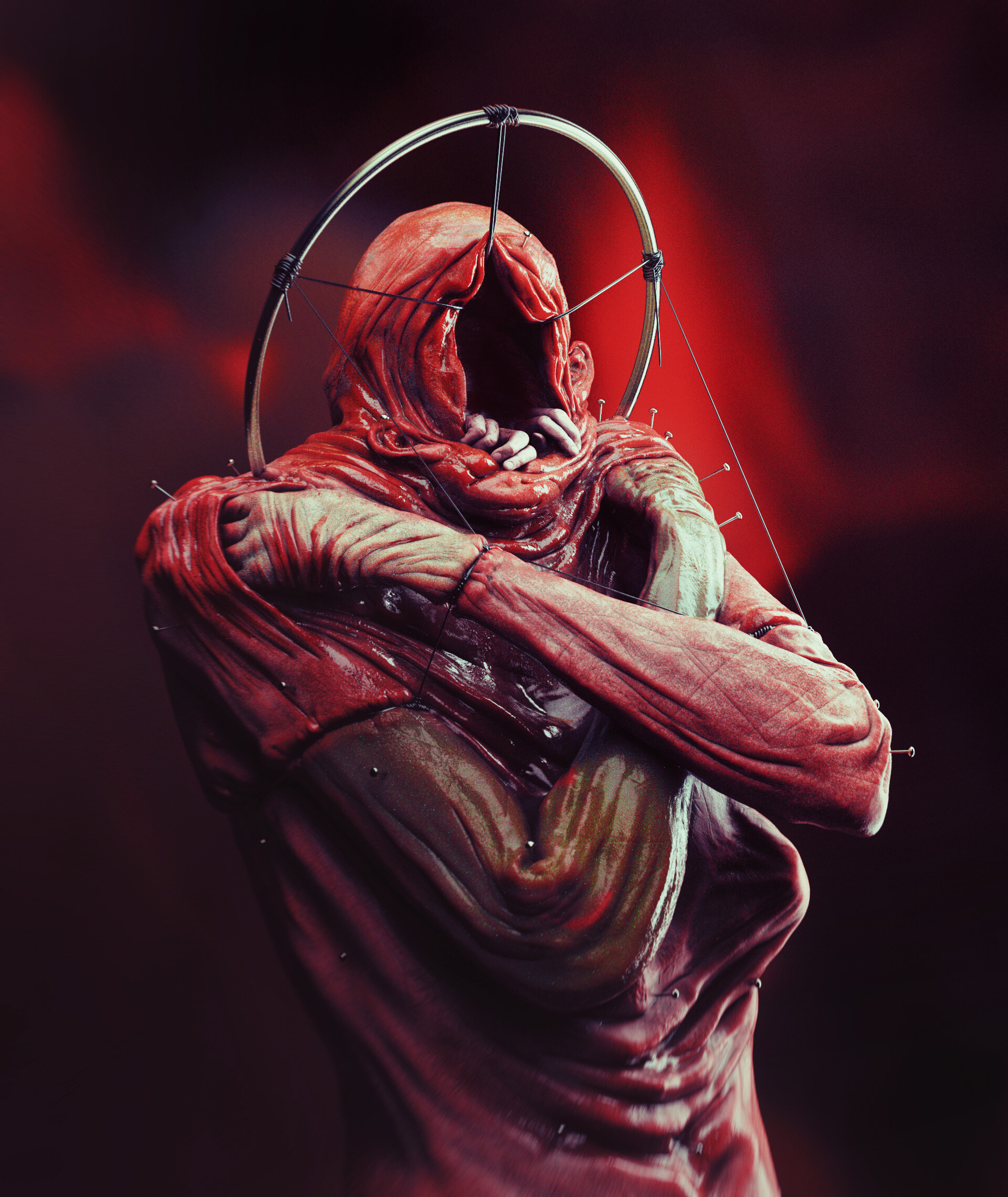
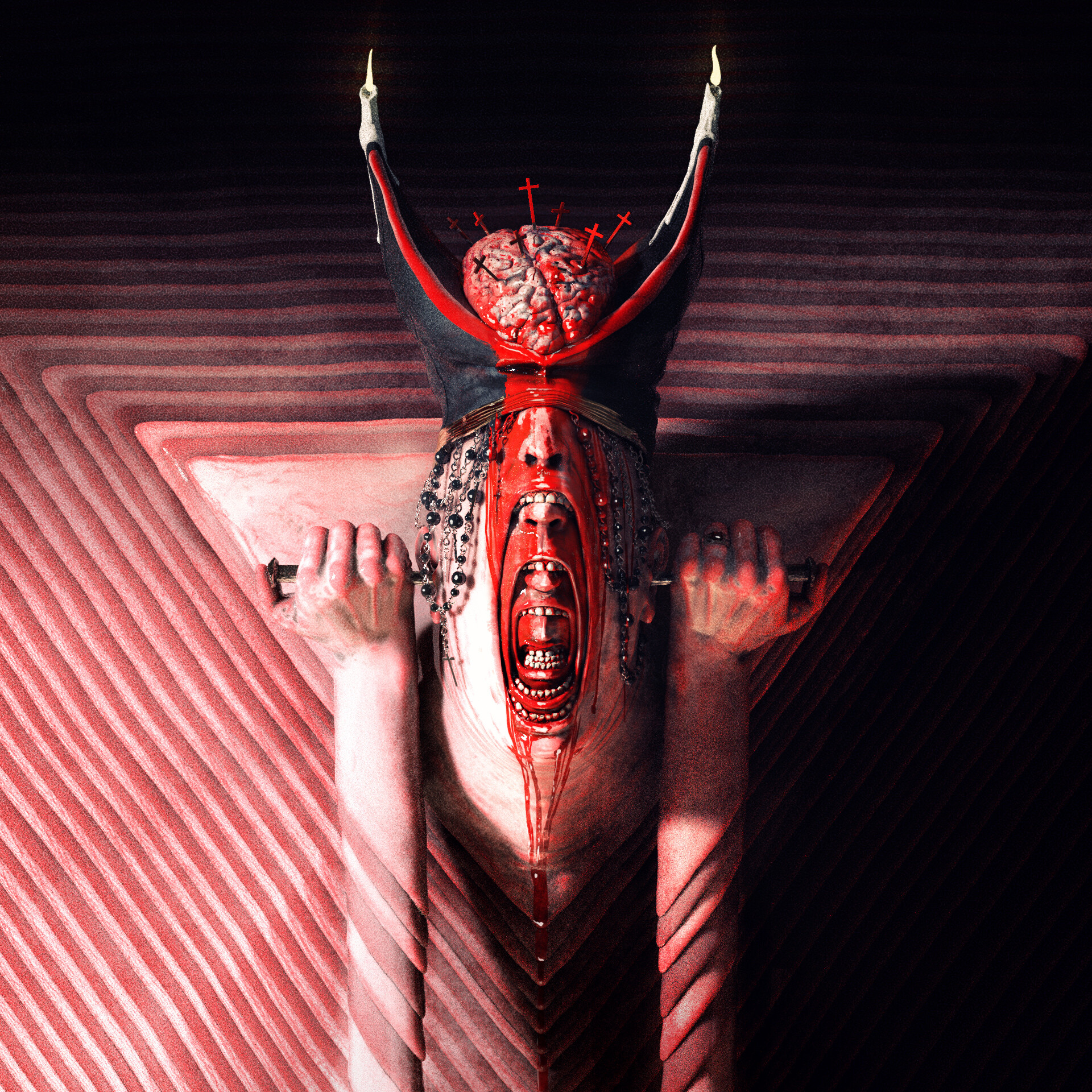
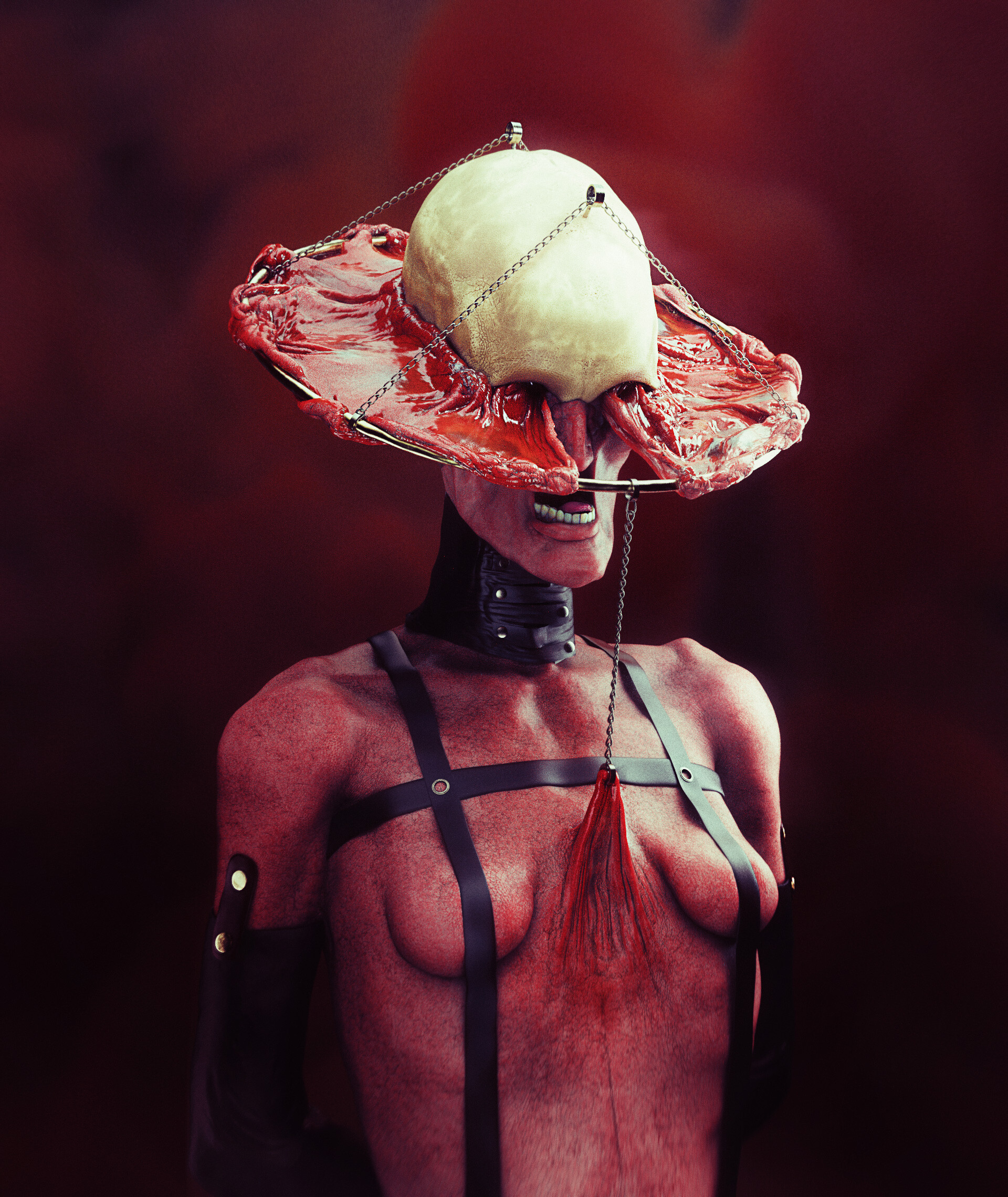
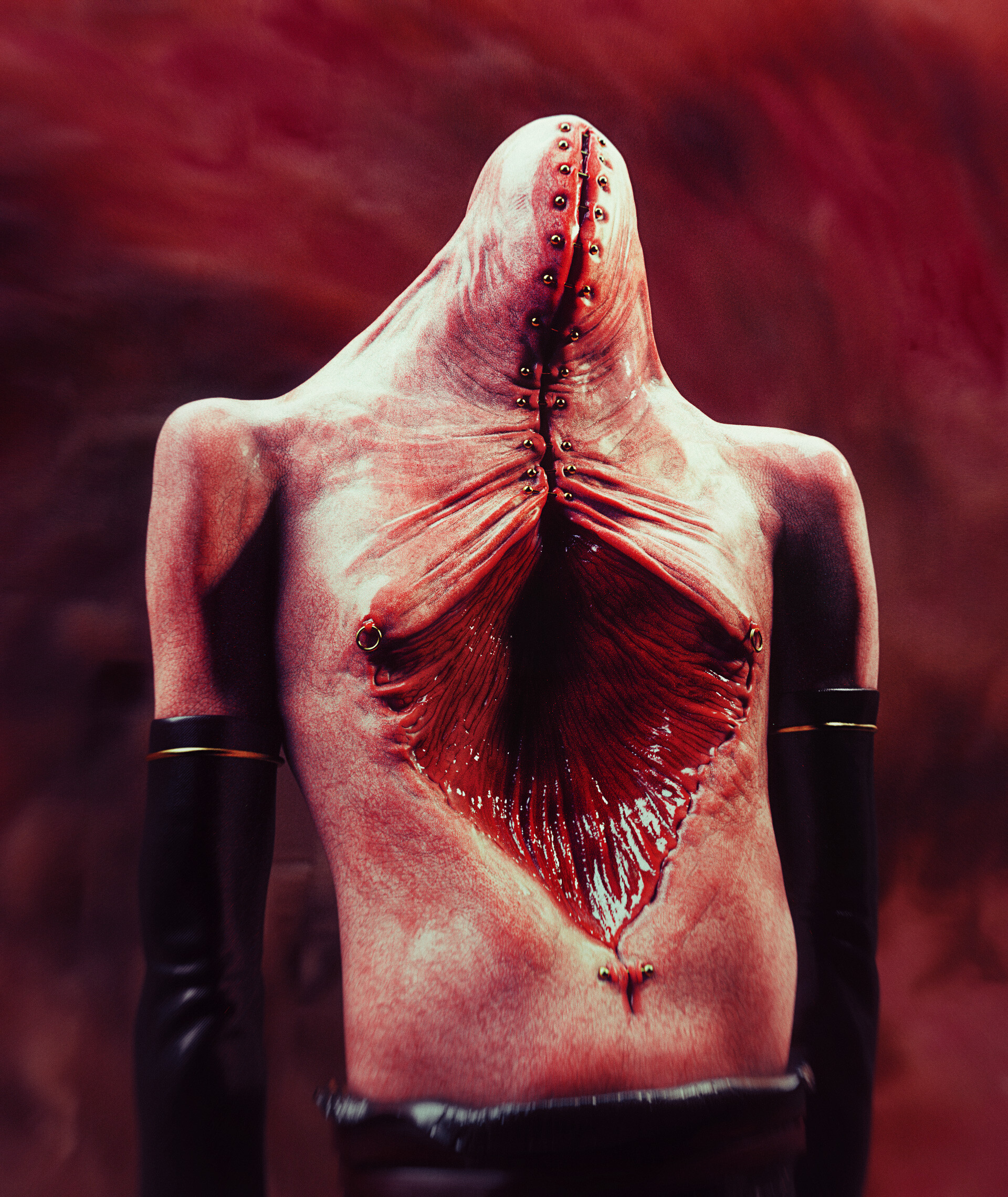
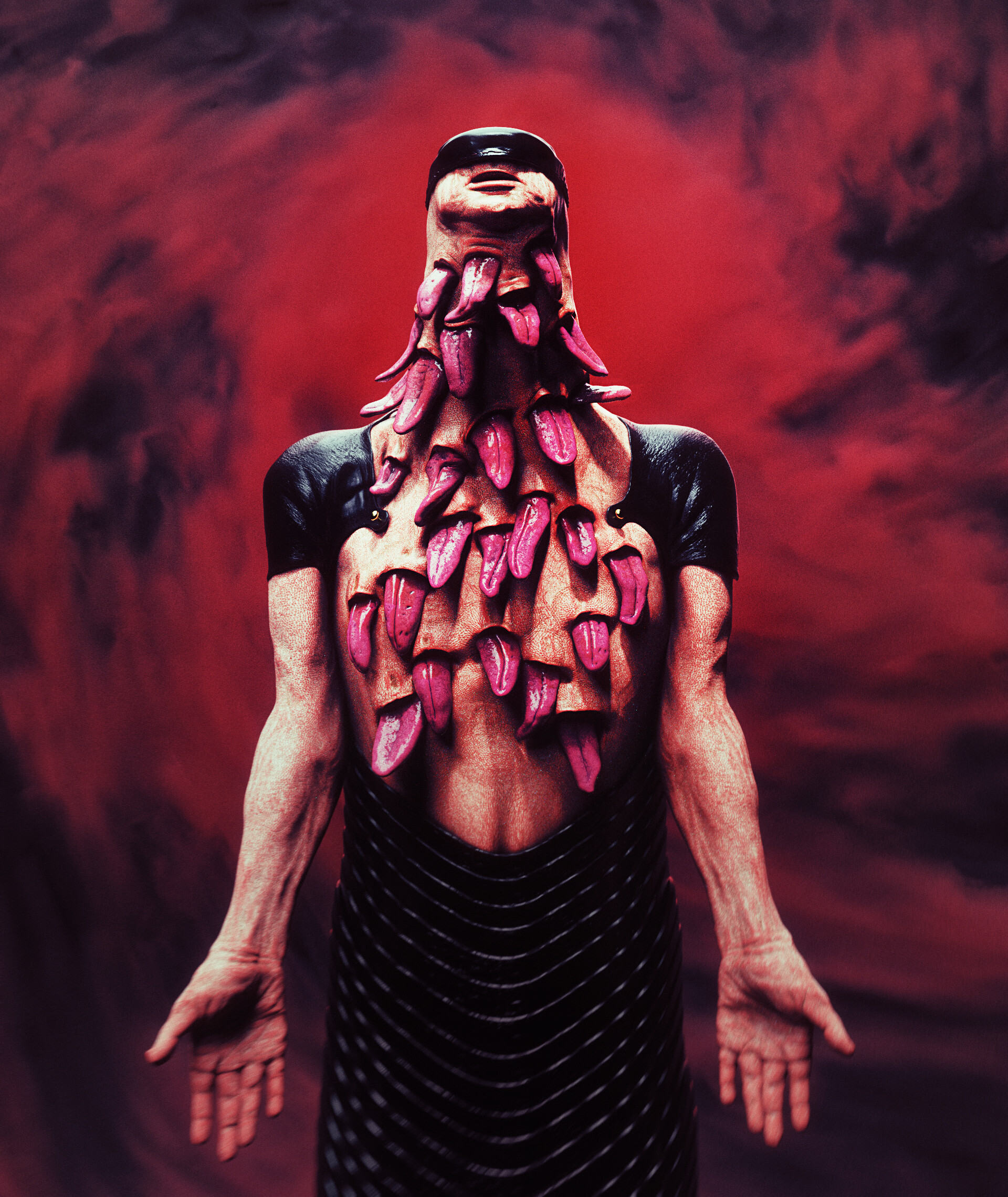
Horror Artist Profile: Franck Besançon


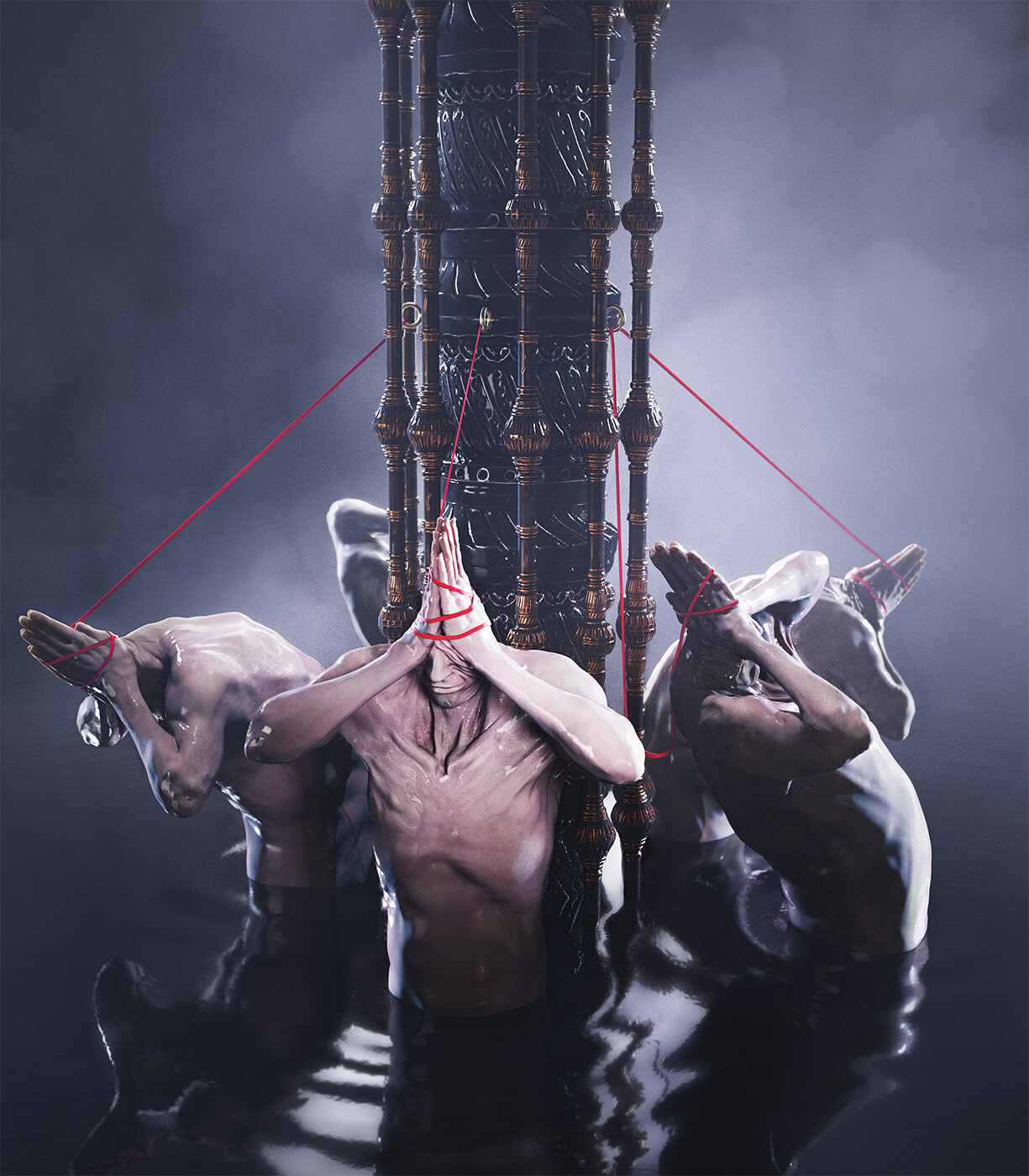
Franck Besançon creates a strain of surrealist horror in which the human body becomes a site of mutation, ritual, and nightmare. His figures feel less like ordinary monsters than damaged saints or fallen mythic beings—at once grotesque, strangely elegant, and charged with a sense of forbidden ceremony. The images draw their unease from that collision between beauty and corruption: intricate forms invite the viewer closer, while their distortions make looking feel almost intrusive.

What makes Besançon’s art memorable is its atmosphere of dark mythology. His work suggests entire unseen worlds governed by pagan rites, flesh-bound transformations, and ancient forces that have remade their subjects into living relics. Rather than relying on shock alone, he gives body horror a mournful grandeur; his creatures often seem tragic, ceremonial, and even regal in their deformity. That combination makes the art feel like a visual cousin to cosmic horror and dark fantasy as much as conventional monster design.

Besançon’s sensibility is a particularly fitting match for Clive Barker’s imagination. He is set to provide the cover artwork for Library of the Dead, Barker’s Kickstarter-funded horror and dark-fantasy trilogy comprising Fear Eternal, Pyres of Bedlam, and Dark Descents. His ability to make the grotesque feel mythic and visually luxurious should give the books a suitably unsettling physical identity.

Source: Franck Besançon

Splatterpunk Horror: Bleeding Boundaries, Breaking Taboos, and Unmasking Society’s Darkest Truths


“If it’s transgressive, addressing social or political ills, not pulling punches, and pushing the boundaries, then it’s Splatterpunk.” — Brian Keene

The Birth of Splatterpunk: A Rebellion Against Conventions

To understand splatterpunk, it’s important to grasp the context in which it arose. During the late 1970s and early 1980s, horror fiction was often pigeonholed within predictable tropes—haunted houses, vengeful spirits, and formulaic slasher stories. While these were popular, they had limited scope in pushing the boundaries of what horror might represent. Enter splatterpunk—a raw, unapologetic literary movement that sought to shatter expectations by depicting violence, depravity, and, crucially, sexual violence unmasked. Rather than hinting at horrors lurking in the shadows, splatterpunk authors chose to parade these monstrosities in graphic detail.

The term “splatterpunk” was adopted by writer David J. Schow during the 1986 Twelfth World Fantasy Convention, encapsulating the aesthetic of horror tales that embraced hyper-intense gore, moral extremity, and the inclusion of sexual violence as a core and unsettling element. But it is crucial to recognize that splatterpunk is much more than explicit depictions of blood and guts or sexual assault. At its core, it serves as a mirror reflecting society’s darkest anxieties—whether those arise from political corruption, existential dread, psychological disintegration, or the breakdown of human decency. The shock of violence and abuse serves a purpose beyond mere thrill—it demands readers confront the ugliness beneath civilization’s polished surface.

Philip Nutman’s Wet Work: Fusion of Espionage, Cosmic Horror, and Splatter

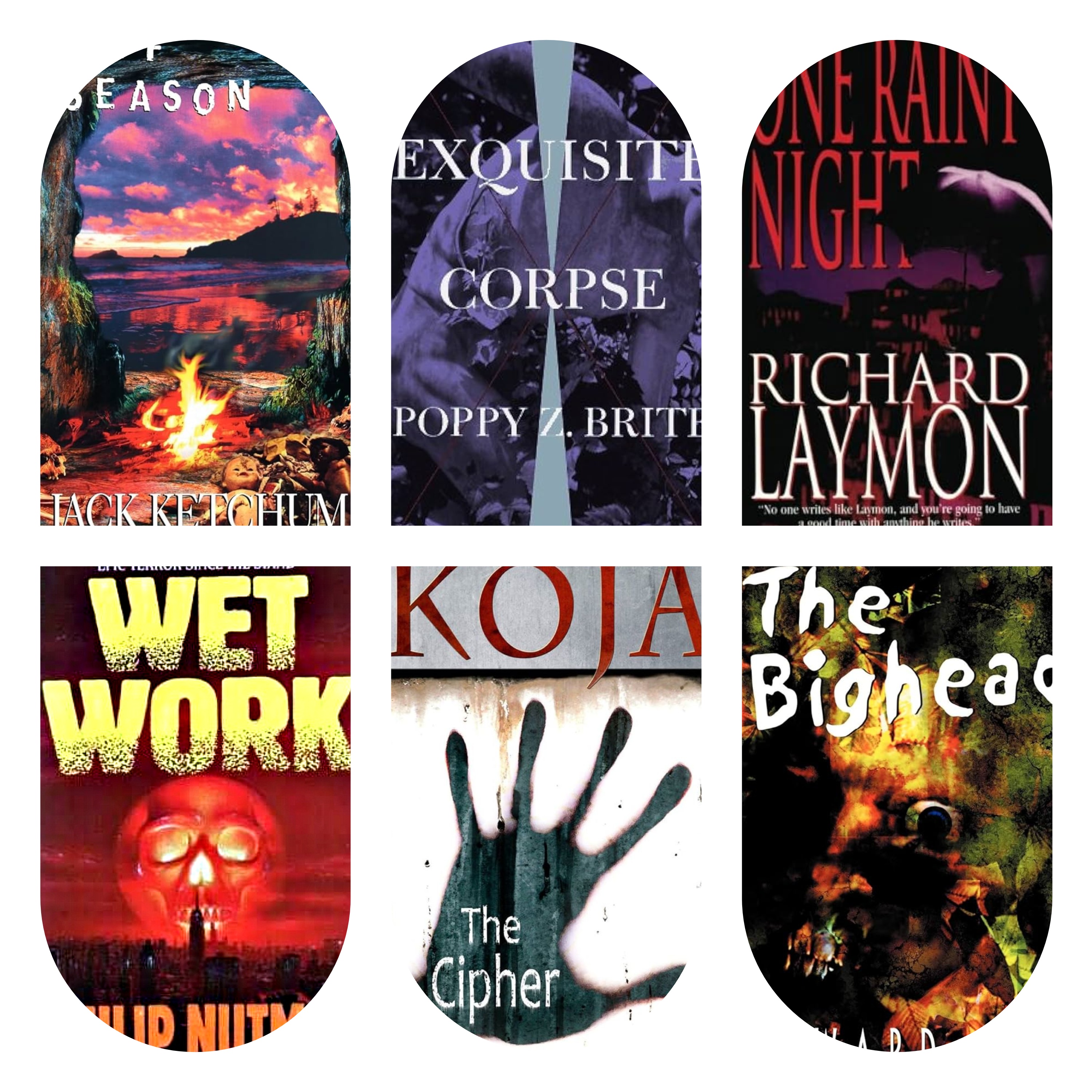
A prime example of splatterpunk’s genre-blurring capacity is Philip Nutman’s Wet Work (1993), a work that may be less known outside hardcore horror circles but exemplifies the subgenre’s versatility. What sets Wet Work apart is its remarkable weaving of government espionage thriller with apocalyptic zombie horror and an infusion of cosmic dread.

Originally appearing as a short story in the seminal 1989 collection Book of the Dead, Wet Work expanded into a novel that follows CIA operative Dominic Corvino and Washington D.C. cop Nick Packard as they navigate the chaos unleashed when a comet named Saracen passes close to Earth. The comet deposits a mysterious residue that triggers the rise of the dead, but Nutman’s zombies are not mere shambling corpses—they retain fragments of cognition, making them unpredictable threats.

What makes Wet Work an intriguing splatterpunk novel is how it weds the procedural authenticity of espionage with the surrealism of the undead outbreak. Nutman’s background as a journalist and film critic manifests in the meticulous detail of military operations, CIA bureaucracy, and police procedures, lending credibility even amid the nightmare. The narrative unfolds on two interwoven axes: Corvino’s obsessive quest to uncover betrayal within the CIA and Packard’s desperate, grounded attempts to save his wife amid an escalating societal breakdown.

Nutman’s writing style embodies splatterpunk’s hallmark—graphic, fast-moving, and unapologetically violent—while resisting descent into parody. The horror and violence, including underlying currents of sexual violence and abuse within the collapsing societal order, are not gratuitous but rather emphasize the erosion of social and moral codes. Unlike some zombie fiction limited to straightforward survival stories, Wet Work interrogates themes of loyalty, obsession, power, and the devastating consequences of moral decay when survival becomes personal.

Kathe Koja’s The Cipher: Psychological Abyss and Cosmic Terror

While Nutman’s warm-blooded action situates Wet Work within both thriller and horror traditions, Kathe Koja’s The Cipher (1991) takes splatterpunk into the realms of psychological fragmentation and cosmic existentialism. The Cipher is notable for its uncompromising dive into emotional and metaphysical abyss, presented through an experimental, impressionistic narrative voice that eschews linearity in favor of portraying the chaotic consciousness of protagonist Nicholas.

The story revolves around Nicholas and Nakota in a bleak urban environment, where they discover the Funhole—a nightmarish, reality-bending void with an unknowable malignance. Rather than external monsters, the book’s terror arises from the characters’ psychological unraveling, toxic relationships, and the Funhole’s corruptive influence. Koja’s prose often unfolds in long, surreal sentences that immerse readers in impressions, hallucinations, and emotional storms, demanding patience and openness to ambiguity.

This approach challenges traditional horror expectations by prioritizing atmosphere and mental disintegration over plot-driven scares. The horror here is symbolic and metaphysical—body horror and reality distortions become reflections of inner fragmentation and humanity’s insignificance before cosmic forces. While the novel largely focuses on psychological and existential themes, it does not shy away from portraying abusive and toxic dynamics, including sexual violence, as instruments of psychological torment and character breakdown. The Cipher’s bleak, ambiguous ending refuses comfort, emphasizing oppression, transformation, and loss, resonating profoundly with readers attuned to introspective and literary horror.

Jack Ketchum’s Off Season: Raw Human Horror and Primal Survival

In sharp contrast to Koja’s cerebral horror and Nutman’s hybrid apocalypse thriller is Jack Ketchum’s Off Season (1980), a foundational extreme horror novel that sinks its teeth into primal human savagery stripped of supernatural mediations. Loosely inspired by the legend of the Sawney Beane clan, Ketchum sets his story on the rugged Maine coast, depicting a group of urban friends facing a secluded clan of cannibals.

Off Season is known for its relentless pace and unapologetic portrayal of violence, sexuality, and survival instinct. Sexual violence and abuse permeate the narrative, presented in stark, unvarnished terms that are deeply disturbing yet integral to Ketchum’s exploration of human depravity. The horror stems from the inhumanity of other humans—feral descendants who embody basic drives like hunger, reproduction, and dominance without societal filters. Ketchum’s refusal to soften or sensationalize the unfolding carnage demands readers confront uncomfortable truths about violence, both physical and sexual, and regression. The victims are archetypal rather than deeply individualized, serving as symbolic representations of civilization confronting its darkest, hidden counterparts.

What sets Off Season apart is the absence of cathartic justice or narrative redemption. Survivors escape, but at immense psychological and physical cost, emphasizing that some horrors leave permanent scars rather than neatly tied endings. It is this brutal honesty—depicting horror not as spectacle but as unavoidable consequence—that cements Off Season’s legacy in splatterpunk and extreme horror.

The Broader Splatterpunk Landscape: Barker, Lee, Laymon, and Martin (aka Poppy Z. Brite)

A key progenitor of the splatterpunk aesthetic, Clive Barker’s Books of Blood (mid-1980s) was revolutionary in merging graphic, visceral horror with a literary sensibility that incorporated elements of dark fantasy and eroticism. Barker’s stories broke new ground by combining vivid, often grotesque imagery with profound explorations of human desire, morality, and the otherworldly. Sexual violence and transgressive sexuality appear throughout his work, often complicating the boundary between beauty and horror. In particular, Barker’s exploration of the sacred versus the profane is central, as the presence of sexual violence disrupts conventional moral frameworks and questions the nature of sin and desire. The collection’s influence was far-reaching, paving the way for horror fiction to be taken seriously as an art form capable of grappling with complex themes while delivering shocking, unforgettable scenes. Barker’s ability to balance poetic language with unsettling gore worked as a blueprint for many splatterpunk writers seeking depth beyond surface violence.

Edward Lee’s The Bighead epitomizes the extreme end of splatterpunk, reveling in unapologetically explicit violence, taboo subjects, and shock value. Lee’s storytelling mixes horror with dark humor and nihilism, pushing the boundaries of taste to explore the grotesque and the absurd. Sexual violence in Lee’s work is frequently explicit and controversial, serving to amplify the transgressive nature of his narratives. Furthermore, Lee uses sexual violence and deviancy as a way to examine the tension between the sacred and the profane—the clash between deeply ingrained cultural taboos and destructive carnal impulses. Though considered excessive by some, Lee’s books embody splatterpunk’s ethos of confronting the reader head-on with chaos and depravity. His work fuses visceral physical horror with nihilistic philosophical darkness, reflecting a world stripped of hope and full of monstrous extremes.

Richard Laymon’s One Rainy Night is notable for its blend of fast-paced plotting, graphic sexual and violent content, and elements of supernatural and psychological horror. Laymon’s work embodies a consistent use of sexual violence intertwined with sexual themes as part of the horror fabric, challenging readers with uncomfortable depictions of human depravity. His skillful pacing ensures that tension remains high, and his writing frequently navigates the intersection of splatterpunk gore with thrilling, page-turning storytelling. While his characters may sometimes function more as archetypes than fully nuanced figures, their plight against overwhelming horror rings true. Laymon’s stories helped solidify splatterpunk’s presence in mainstream horror by offering stories that are simultaneously intense, accessible, and relentlessly engaging.

William Joseph Martin (aka Poppy Z. Brite) stands apart for his elegant prose style and his exploration of identity, marginalization, and monstrosity through the lens of serial killers and dark romance. Martin (writing as Poppy Z. Brite) intertwines graphic violence with themes of homosexuality, queer identity, and sexual violence, challenging readers to consider the humanity amidst monstrosity. In doing so, Exquisite Corpse broadens splatterpunk’s thematic horizons, underscoring that horror’s most compelling stories often arise from complex characters whose transgressions are inseparable from their search for connection and self-understanding. Sexual violence in Martin’s work adds layers of suffering and violation that complicate the depiction of desire and identity, highlighting the fragile line between victim and monster. Martin’s fusion of stylistic beauty and bleak content enriches the genre’s emotional and intellectual depth.

Legacy and Impact of Splatterpunk Horror

A lasting impact of splatterpunk is evident in its refusal to compromise aesthetics for shock alone. Although its extreme visuals, sexual violence, and brutal thematic content led to limited mainstream acceptance, the genre’s influence persists. It demonstrated convincingly that graphic violence and sexual transgression could serve as a lens for social critique, psychological depth, and genre innovation. Works such as Wet Work exemplify its capacity for genre-blending; The Cipher exemplifies its introspective and cosmic depths; Off Season encapsulates its primal, uncompromising core. These stories continue to inspire writers who wish to push original boundaries, reshaping horror into a form that is as intellectually challenging as it is viscerally shocking.

Horror’s landscape has been irrevocably altered by splatterpunk. Its legacy persists not merely through the continued production of extreme horror but through its foundational principle—that horror is most potent when it does not flinch from the evils and truths of the human condition, including the often difficult subject of sexual violence. Its influence endures in the modern works that blend visceral impact with thematic richness, ensuring that horror remains a vital, evolving art form capable of confronting the darkest facets of existence while challenging cultural limits.

In embracing the fights, fears, and horrors that many shy away from, splatterpunk proves to be more than just a genre—it’s a bold call to confront the uncomfortable, an invitation to see horror not only as entertainment but as a mirror of our deepest truths. Its legacy remains a testament to the power of extremity paired with insight, forever pushing the boundaries of what horror can and should be.

6 Shots From 6 Films: Special Clive Barker Edition


4 (or more) Shots From 4 (or more) Films is just what it says it is, 4 (or more) shots from 4 (or more) of our favorite films. As opposed to the reviews and recaps that we usually post, 4 (or more) Shots From 4 (or more) Films lets the visuals do the talking.

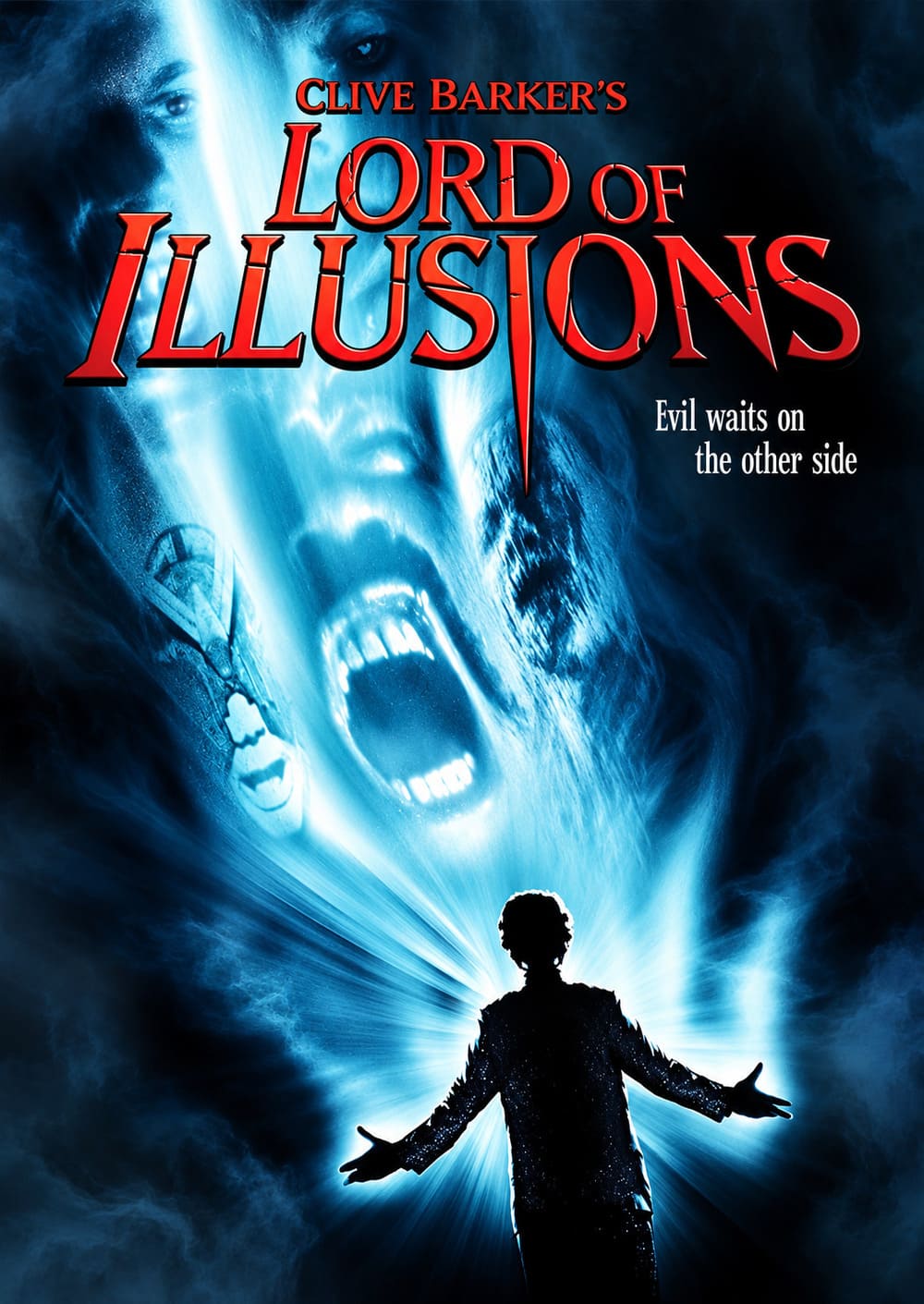
Today, we wish a happy 71st birthday to writer and occasional director Clive Barker!  Barker’s stories have provided the basis for several films and Barker himself attempted to build a career of his own as a filmmaker.  Though he pretty much retired from directing after the box office failure of Lord of Illusions, he still has a better directorial track record than Stephen King and his films (along with his stories and his novels) continue to influence new horror storytellers.

Today, we honor both the birthday and the cinematic career of Clive Barker with….

6 Shots From 6 Clive Barker Films

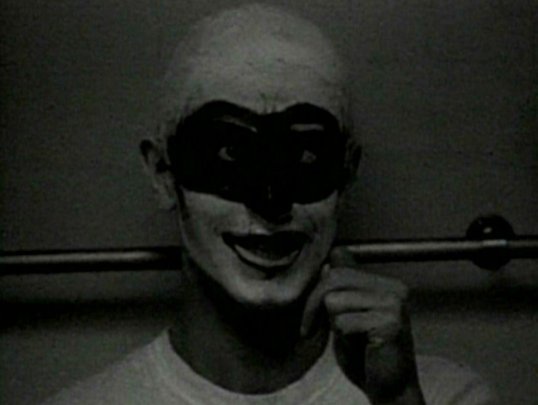
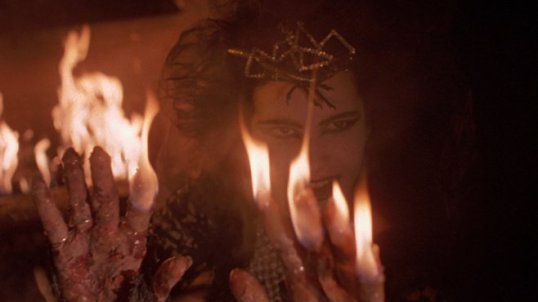
Salome (1973, dir by Clive Barker)

The Forbidden (1978, dir by Clive Barker)

Hellraiser (1987, dir by Clive Barker, DP: Robin Vidgeon)

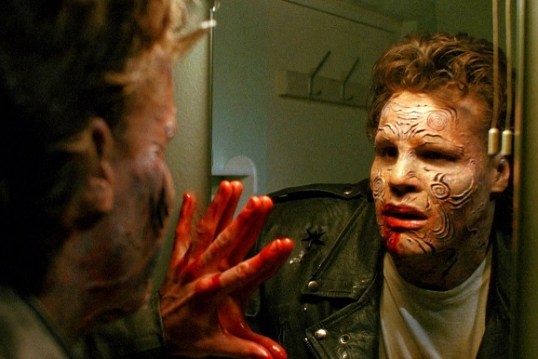
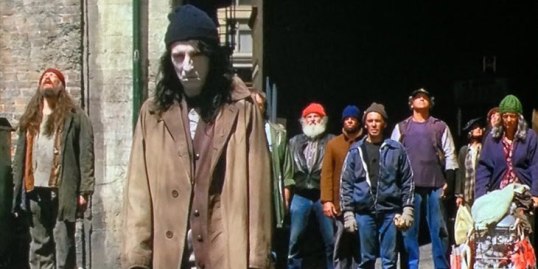
Nightbreed (1990, dir by Clive Barker, DP: Robin Vidgeon)

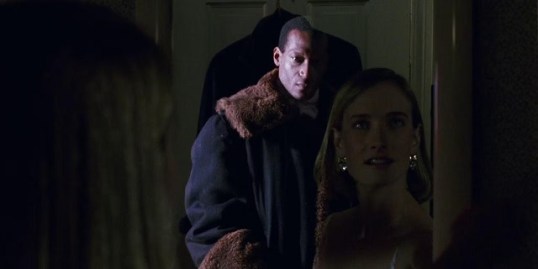
Candyman (1992, dir by Bernard Rose, DP: Anthony B. Richmond, based on a short story by Clive Barker)

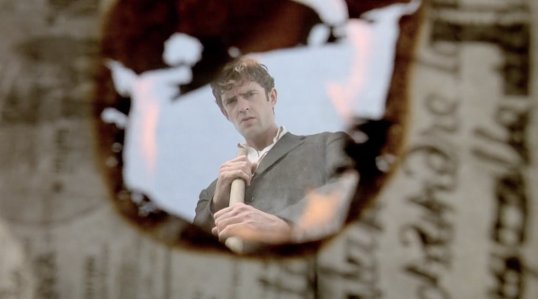
Lord of Illusions (1995, dir by Clive Barker, DP: Ronn Schmidt)

Horror Scenes That I Love: Doug Bradley Makes His Debut As Pinhead in Hellraiser


Born in Liverpool, actor Doug Bradley is a longtime personal friend to author Clive Barker and appeared in Barker’s short film Salome, playing the role of King Herod.  When Barker was making his feature directorial debut with 1987’s Hellraiser and he needed someone to play the head Cenobite, he turned once again to Bradley and the result was one of the most iconic horror characters of all time.

While the Cenobites may have all had disturbing physical features, what truly made them frightening was their arrogant disdain for anyone who was foolish enough to summon them.  Bradley perfectly portrayed Pinhead’s haughty arrogance, starting with his very first appearance in Hellraiser.

When Bradley as Pinhead says, “We’ll tear your soul apart,” the viewer has no doubt that he means every word of it.

6 Shots From 6 Horror Films: 1994 — 1996


4 Or More Shots From 4 Or More Films is just what it says it is, 4 shots from 4 of our favorite films. As opposed to the reviews and recaps that we usually post, 4 Shots From 4 Films lets the visuals do the talking!

This October, I’m going to be doing something a little bit different with my contribution to 4 (or more) Shots From 4 (or more) Films.  I’m going to be taking a little chronological tour of the history of horror cinema, moving from decade to decade.

Today, we take a look at 1994, 1995, and 1996!

6 Shots From 6 Horror Films: 1994 — 1996

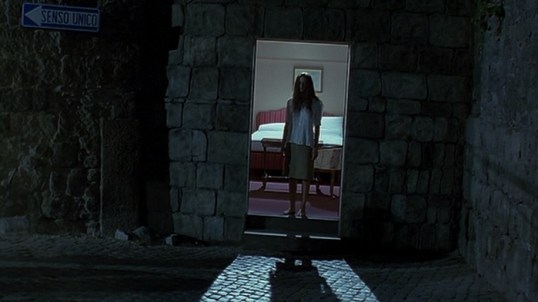
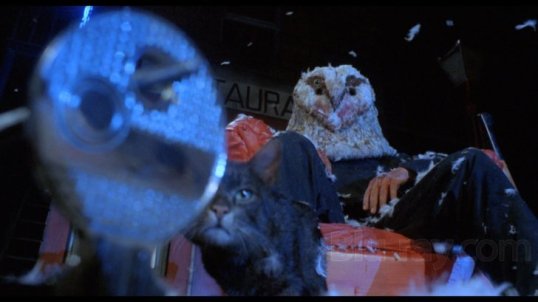
Dellamorte Dellamore (1994, dir by Michele Soavi, DP: Mauro Marchetti)

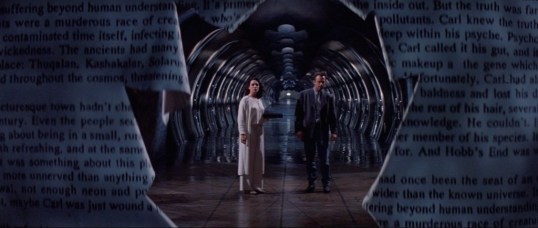
In The Mouth of Madness (1994, dir by John Carpenter, DP: Gary B. Kibbe)

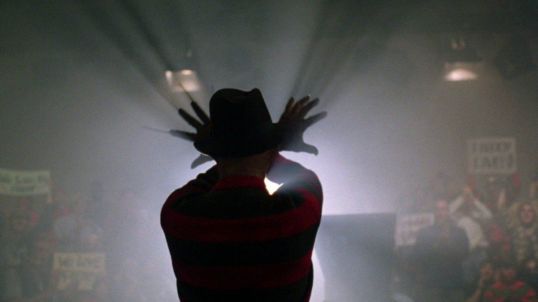
New Nightmare (1994, dir by Wes Craven, DP: Mark Irwin)

Lord of Illusions (1995, dir by Clive Barker, DP: Ronn Schmidt)

The Stendhal Syndrome (1996, dir by Dario Argento, DP: Giuseppe Rotunno)

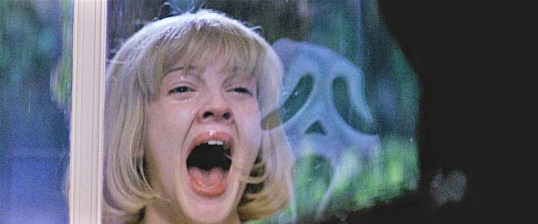
Scream (1996, dir by Wes Craven, DP: Mark Irwin)

10 Shots From 10 Horror Films: 1987 — 1989


4 Or More Shots From 4 Or More Films is just what it says it is, 4 shots from 4 of our favorite films. As opposed to the reviews and recaps that we usually post, 4 Shots From 4 Films lets the visuals do the talking!

This October, I’m going to be doing something a little bit different with my contribution to 4 (or more) Shots From 4 (or more) Films.  I’m going to be taking a little chronological tour of the history of horror cinema, moving from decade to decade.

Today, we take a look at 1987, 1988, and 1989!

10 Shots From Horror History: 1987–1989

Hellraiser (1987, dir by Clive Barker, DP: Robin Vidgeon)

Stage Fright (1987, dir by Michele Soavi, DP: Renato Tafuri)

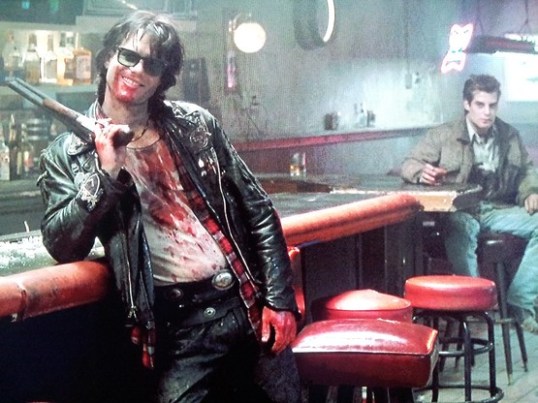
Near Dark (1987, dir by Kathryn Bigelow, DP: Adam Greenberg)

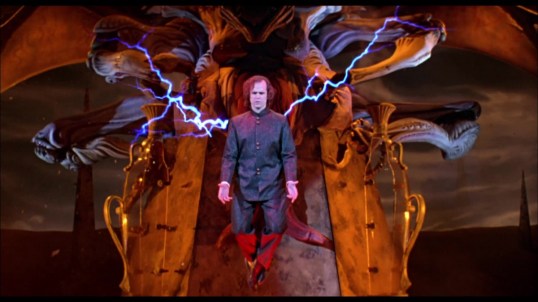
Prince of Darkness (1987, dir by John Carpenter, DP: Gary B. Kibbe)

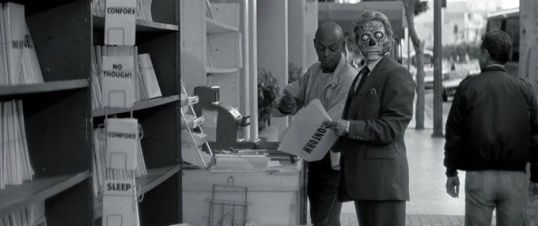
They Live (1988, dir by John Carpenter, DP: Gary B. Kibbe)

Night of the Demons (1988, dir by Kevin S. Tenney, DP: David Lewis)

The Lair of the White Worm (1988, dir by Ken Russell, DP: Dick Bush)

The Church (1989, dir by Michele Soavi, DP: Renato Tafuri)

Twin Peaks: The Pilot (1989, dir by David Lynch, DP: Ron Garcia)

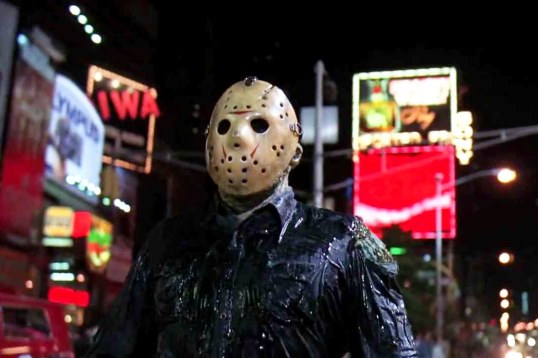
Friday the 13th Part VIII: Jason Takes Manhattan (1989, dir by Rob Hedden, DP: Bryan England)

Horror Film Review: Hellraiser (dir by Clive Barker)


On Monday night, Dancing With The Stars did a horror night, in which “the stars” did dances that were inspired by horror films. One of the first to perform was a professional wrestler who is apparently known as The Miz. When the Miz performed, he was dressed in black and he had several fake pins attached to his face.

After he danced, host Trya Banks asked The Miz what scared him. Obviously seeing a chance to suck up to the judges and the audience, the Miz grandly announced, “This! Doing this every week terrifies me! Dressing up like Hellraiser and dancing terrifies me….”

Uhmmm, excuse me, Mr. Miz — the character’s name is Pinhead. The movie is called Hellraiser. You were dressed up as Pinhead.

Seriously, I felt that the Miz should have been eliminated from the competition at that exact moment but no. His sucking up worked. Everyone laughed. Everyone applauded. No one called him out on his error. It upset me a bit. I was like, “Who are you to do horror night when you don’t even know the difference between the movie and the character!?”

Really, they should all be forced to watch or rewatch Hellraiser. First released in 1987, the directorial debut of Clive Barker holds up pretty well as a blood-filled horror movie. It tells the story of Larry (Andrew Robinson), his daughter Kristy (Ashley Laurence), and his second wife, Julia (Clare Higgins). Larry’s ne’er-do-well brother, Frank (Sean Chapman), has died under mysterious circumstances so Larry moves into Frank’s old house and tries to renovate it. He hopes that this will somehow help his strained marriage to Julia, who was having an affair with Frank. Why Larry thinks this is a good idea is never quite clear. Larry seems to be a nice guy but it doesn’t take long for the audience to get the feeling that he might not be that smart.

Kristy, on the other hand, is much smarter than her father and she knows better than to trust Julia. In fact, Kristy refuses to even live in the same house as Julia. Still, Kristy does check in on her father occasionally and she quickly realizes that Julia is doing something strange. It turns out that Frank may be dead but his tortured, skinless spirit lives on. Julia has been picking men up in bars and bringing them back to the house so that Frank can steal their skin. On the one hand, you do have to feel kind of sorry for all of the people who die. On the other hand, Frank does look better with skin.

Frank ended up in his skinless state because he foolishly opened up a puzzle box. That’s where Pinhead (played by Doug Bradley) comes into the equation. Pinhead and the other Cenobites live in another demension and they’ve spent so much time “exploring” that they can no longer tell the difference between pain and pleasure. Pinhead’s face is covered in pins. (In fact, Pinhead started out as something of a fan nickname as Bradley is just credited with playing “the Lead Cenobite” in the film’s end credits.) The Cenobites are actually only in Hellraiser for a few minutes. The majority of the film is made up of Julia bringing strange men home and Frank attacking them. But it’s the Cenobites — and Pinhead in particular — who make the biggest impression. Beyond his bizarre appearance, Doug Bradley plays the character with such haughty arrogance that it’s hard not to be intrigued. He knows things.

Hellraiser holds up well. Andrew Robinson does his best but Larry is a bit of a moron. However, Clare Higgins has fun with her femme fatale role while Ashley Laurence is likable and sympathetic as Kristy. For the most part, the special effects hold up well and even the film’s slightly more cartoonish moments add to the feeling that the film takes place in a universe that is becoming increasingly unstable. The puzzle box is wonderful creation. It’s easy to say that you would never mess with something like that but most people would. The temptation would just be too great.

Watch Hellraiser and never get Pinhead’s name wrong again!