Horror Review: Trick ‘r Treat (dir. by Michael Dougherty)


“All these traditions, jack-o’-lanterns, putting on costumes, handing out treats, they were started to protect us, but nowadays… no one really cares.” — Principal Steven Wilkins

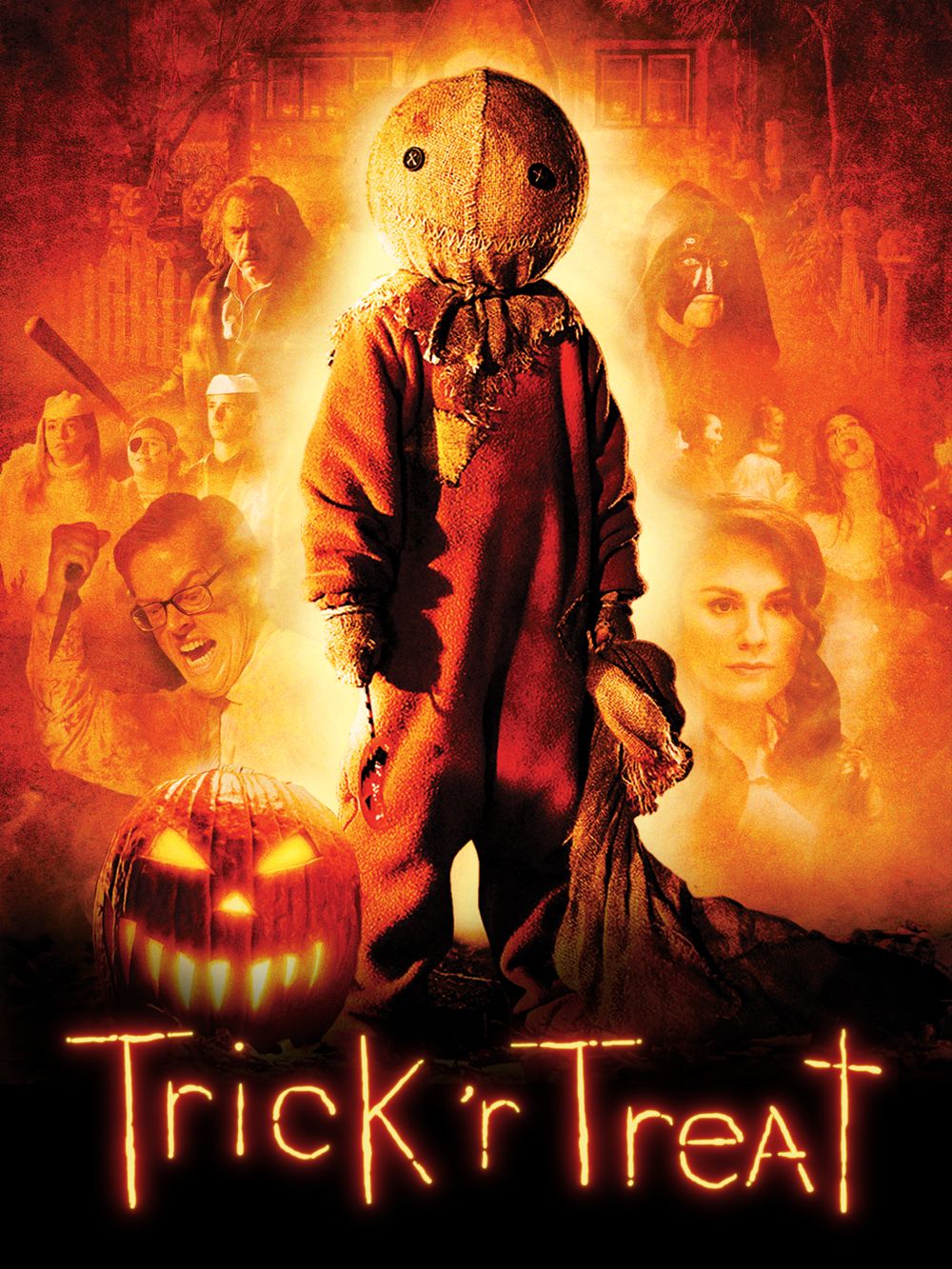
What better and more fun way is there to celebrate the full month of scares and horror that October has become than with Michael Dougherty’s 2007 film Trick ’r Treat? It is the kind of Halloween movie that feels less like it was merely set on the holiday and more like it was built out of everything people love about it. Trick ’r Treat has jack-o’-lanterns glowing on porches, costumes ranging from charming to grotesque, chilly nighttime streets, old local legends, candy bowls, haunted-school-bus stories, werewolves, serial killers, and that ever-present feeling that something is watching from behind a tree. It is funny, nasty, creepy, and strangely cozy at the same time. More than almost any modern horror film, it understands Halloween as a whole atmosphere rather than a collection of familiar props.

At first glance, the movie looks like an anthology film. It is divided into several distinct stories with their own central characters, premises, and horror styles. One segment involves a principal with a murderous secret, another follows a group of kids investigating a grim local legend, another centers on young women looking for dates at a costume party, and another focuses on a bitter old man dealing with a small but persistent visitor. Each story could almost function as its own short horror movie. Dougherty clearly enjoys shifting tones, moving from slasher material to ghost-story melancholy, then into monster-movie lunacy and dark comedy. But the key difference is that Trick ’r Treat is not simply an anthology stitched together by a host or a framing device. Every story told in the film ties into an overarching story unfolding across one night of Halloween.

That structure is one of the movie’s smartest features. Characters drift in and out of one another’s narratives, sometimes briefly and sometimes in ways that completely change the audience’s understanding of what they have already seen. A person who seems like a background extra in one sequence becomes the focus of another. A strange sound, a distant scream, a passing school bus, or a visual detail in one story can gain much more meaning when it reappears elsewhere. The movie plays with chronology too, allowing events to overlap and occasionally revealing that scenes which seemed straightforward were occurring at a different point in the night than viewers assumed. It rewards attention without becoming confusing for the sake of being clever.

Dougherty handles those connections smoothly because the film never stops feeling like one continuous Halloween night. The transitions are playful rather than showy. The camera may follow a character down a street, past a decorated yard, into another group’s story, and suddenly the audience has entered a different kind of nightmare. That makes the town itself feel like a character. It is not a generic horror-movie setting where bad things happen because the script requires them to. It feels like a community with traditions, buried crimes, local myths, annual rituals, and plenty of people who are either hiding something or about to discover something unpleasant.

The town’s Halloween obsession is also what gives the film its personality. Trick ’r Treat treats Halloween rules almost like ancient laws: wear a costume, hand out candy, never blow out a jack-o’-lantern before midnight, and always respect the dead. Breaking those rules does not guarantee immediate punishment in a simple moralistic way, but it certainly puts people at risk. The film’s central icon, Sam, embodies that idea. Wearing orange pajamas, a burlap sack mask, and carrying a lollipop that can become a weapon, Sam is one of the great modern horror mascots because he is both adorable and deeply unsettling. He is not presented as a typical slasher villain with a detailed backstory or a conventional motivation. He feels more like the living spirit of Halloween itself: mischievous, ceremonial, cruel when necessary, and completely devoted to the holiday’s traditions.

Sam’s presence gives the movie a connective thread beyond plot mechanics. He appears in the background, watches over events, and eventually takes center stage in a way that is both amusing and genuinely tense. There is something almost storybook-like about him. He resembles a child going door to door for candy, but his behavior suggests an old supernatural force enforcing rules everyone else has forgotten. The movie wisely never overexplains him. Horror icons often become less interesting once every mystery is reduced to lore, family trees, and exposition. Sam works because Dougherty lets him remain partly unknowable.

The cast is another reason the film holds together so well. Dylan Baker is excellent as Steven Wilkins, the seemingly mild suburban principal whose cheerful politeness becomes much more disturbing once the movie reveals what he is doing after dark. Baker has a talent for making every smile look just slightly too controlled. His storyline is especially effective because it mixes grotesque humor with an unsettling domestic quality. He is not stalking victims through a foggy forest or living in an abandoned asylum. He is cleaning up a mess in his backyard while trying to maintain a normal family routine. That contrast makes his scenes nastier and funnier.

Brian Cox brings real weight to Mr. Kreeg, the grumpy old man at the center of the film’s most memorable Sam-focused material. Cox could have played him as a broad caricature, but he gives the character enough fear, frustration, and hidden sadness to make the confrontation feel more substantial than a simple old-man-versus-monster sequence. The movie’s final act uses his house almost like a haunted maze, with the warm, cluttered interior gradually becoming a battlefield. The tone remains playful, yet there is a real sense of danger whenever Sam drops the cute disguise and shows what he can do.

Anna Paquin also stands out in the segment involving Laurie and her friends. At first, it seems like the film is setting up a familiar vulnerability narrative: young women in costumes, a dark forest, strange men, and the possibility of a predatory attacker. Then Trick ’r Treat gleefully twists expectations. The reveal is not subtle, but it is staged with enough energy and confidence that it lands as a crowd-pleasing monster-movie moment. Dougherty knows that horror does not always need to be grim to be effective. Sometimes the best reaction is an audience laughing in surprise right before a scene turns bloodier than expected.

The school-bus story is probably the film’s creepiest material. The idea of children killed by adults and returning as drowned, decayed figures could have been handled in a cheap or overly cruel way, but the movie gives it a sad, mythic edge. The ghosts are frightening, but the story is also about guilt, buried history, and a town that has allowed its ugliest secret to become a campfire legend. The children may be supernatural monsters by the time they reappear, but the adults who wronged them are even more horrifying. That is a recurring theme throughout Trick ’r Treat: Halloween monsters are dangerous, but human selfishness, cowardice, and cruelty tend to create the worst consequences.

Visually, the film has aged remarkably well because it does not chase a slick, overly polished look. It has a rich autumnal color palette full of oranges, blacks, deep reds, and warm porch-light yellows. The night scenes are dark enough to feel threatening but clear enough that viewers can appreciate the costumes, decorations, and production design. Every street seems covered in leaves, every house has candles or carved pumpkins, and every shadow seems capable of hiding a creature. It feels like a heightened version of childhood Halloween memories, except those memories have been invaded by murderers, werewolves, demons, and ghosts.

The practical effects and creature work add a lot to that charm. The movie uses CGI when needed, but it does not depend on weightless digital spectacle. Sam’s physicality, the werewolf transformations, the decayed school-bus children, and the various masks and props all have a tactile quality. They look like things that belong in a haunted attraction, a particularly elaborate costume shop, or an old EC Comics-style horror story. That handmade texture fits the film perfectly. Trick ’r Treat is polished, but it never feels sterile.

What makes the movie so rewatchable is how comfortably it moves between tones. It can be goofy without becoming stupid, gruesome without becoming exhausting, and sentimental about Halloween without turning saccharine. It embraces the holiday’s childish excitement while acknowledging the darker folklore underneath it. There is candy, costumes, and neighborhood fun, but there are also old grudges, punished sinners, restless dead, and things that hunt after midnight. Dougherty understands that those two sides belong together. Halloween is fun partly because it lets people play with fear in a safe, communal way, and Trick ’r Treat captures that balance better than most horror movies.

The film’s anthology-like design gives it variety, while its overlapping characters, recurring events, and shared setting make it feel like one cohesive story rather than a disconnected collection of shorts. Its lasting popularity has also made the lack of a sequel feel increasingly strange. Fans have been clamoring for another trip through Sam’s Halloween night for years, and Dougherty has repeatedly hinted that he has ideas for where a follow-up could go. He has discussed multiple script drafts, storyboards, concept art, and the possibility of giving Sam a new adversary, but the project still has not received an official greenlight.

That uncertainty is frustrating, especially because Trick ’r Treat feels like a world with plenty more stories left to tell. At the same time, it is probably better that Dougherty has not rushed out a sequel just to cash in on the film’s cult status. The original works because it feels carefully constructed, visually specific, and completely committed to its Halloween setting; any follow-up would need to preserve that same mix of horror, comedy, folklore, and interconnected storytelling. For now, Trick ’r Treat remains an annual October rewatch because it honors Halloween’s old traditions while creating its own: a funny, spooky, blood-soaked celebration of costumes, candy, campfire legends, and the things that come out once the porch lights go dark.
Trailer: Final Destination Bloodlines Teaser


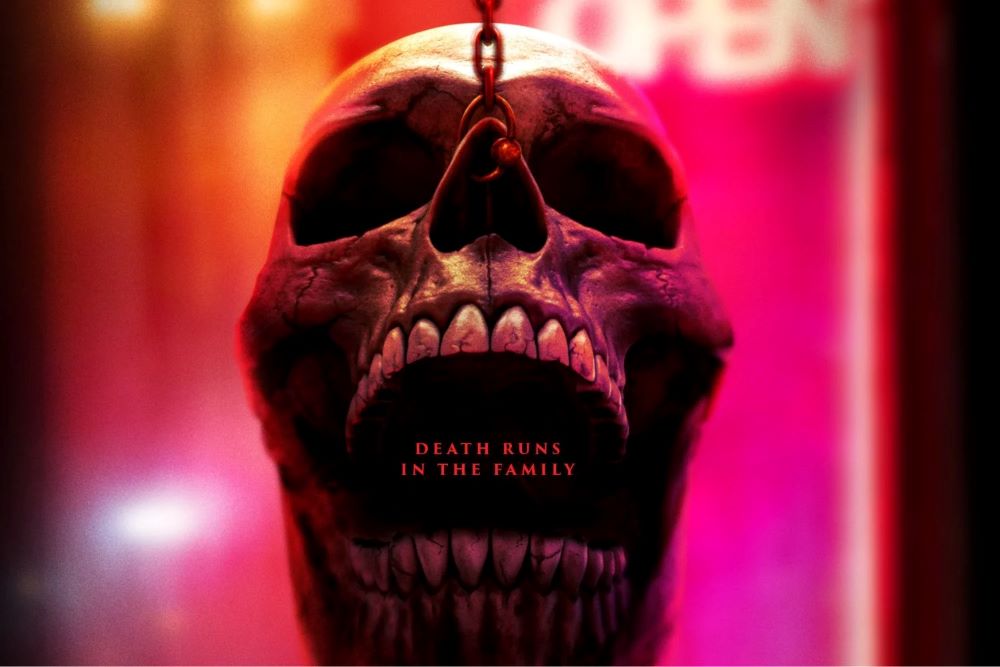
Looks like Death is up to its shenanigans once again with Final Destination Bloodlines. Just when we thought it was safe to go about our lives without having to worry about Death’s penchant for complex Rube Goldbergesque plans to kill some people it looks like we spoke too soon.

On May 16, 2025, Death runs in the family and wearing a nose ring may not be the best thing when Death’s around. Here we have the first teaser trailer for Final Destination Bloodlines.

2015 in Review: The Best of Lifetime


Today, I continue my look back at 2015 by posting my picks for the best of Lifetime!  My nominees for the best Lifetime films and performances are listed below, with the winners starred and listed in bold!  Congratulations to all the nominees and winners and thank you for making this one of the most entertaining years in my long history of watching Lifetime movies!

deadly-adoption

Best Picture
Babysitter’s Black Book, produced by Robert Ballo and Ken Sanders.
Cleveland Abduction, produced by David A. Rosemont and Stephen Tolkin
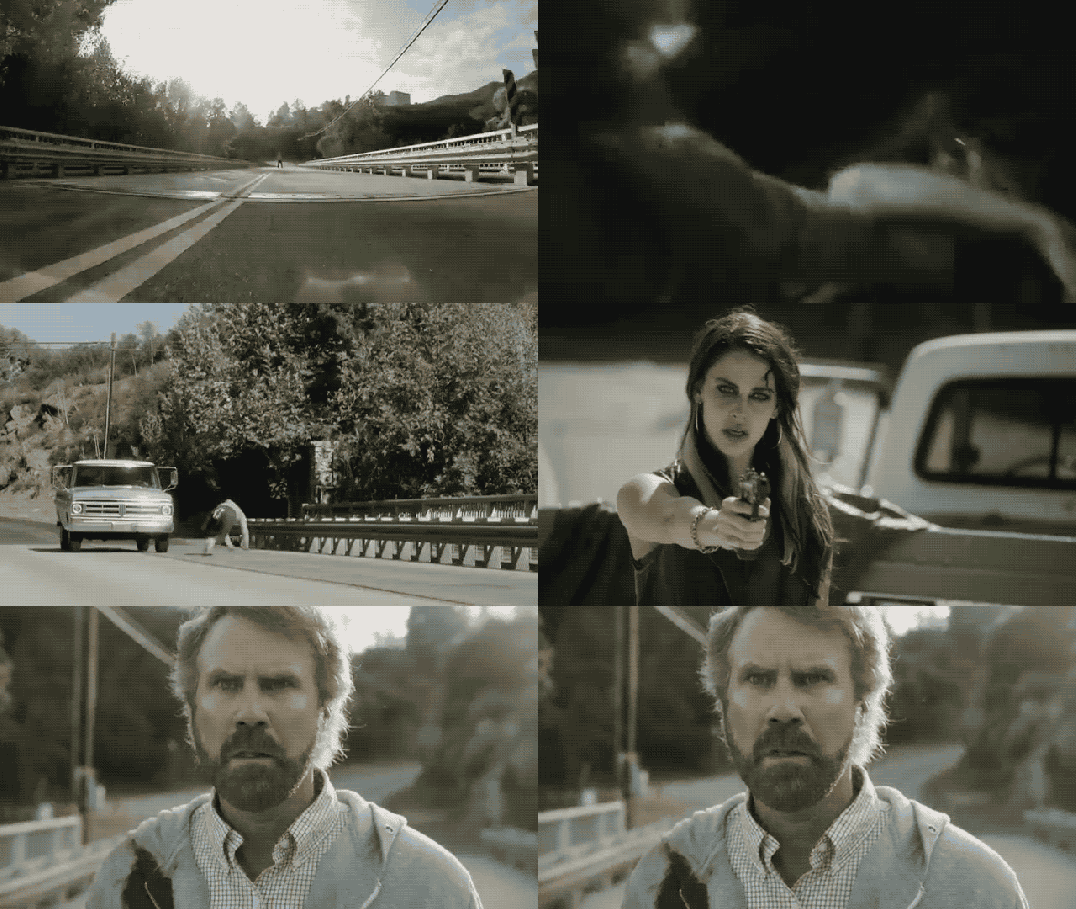
*A Deadly Adoption, produced by Fritz Manger, Max Osswald, Will Ferrell, and Adam McKay.*
If There Be Thorns, produced by Richard D. Arredondo and Harvey Kahn.
A Mother’s Instinct, produced by Oliver De Caigny and Timothy O. Johnson
Patient Killer, produced by Barbie Castro.
The Secret Life of Marilyn Monroe, produced by Joseph Boccia, Don Carmody, and David Cormican.
The Spirit of Christmas, produced by Andrea Ajemian
Stalked By My Neighbor, produced by Robert Ballo.
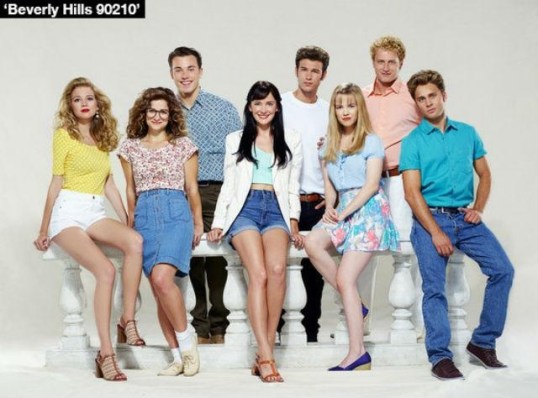
The Unauthorized Beverly Hills 90210 Story, produced by Ian Hay.

Best Director
Jason Bourque for A Mother’s Instinct
Doug Campbell for Stalked By My Neighbor.
*Rachel Goldenberg for A Deadly Adoption*
Alex Kalymnois for Cleveland Abduction
Vanessa Parise for The Unauthorized Beverly Hills 90210 Story
Casper Van Dien for Patient Killer

deadly-adoption-trailer

Best Actor
Shaun Benson in Kept Woman
Dan Castellaneta in The Unauthorized Beverly Hills 90210 Story
*Will Ferrell in A Deadly Adoption*
Travis Hammer in The Bride He Bought Online
Adam Kaufman in A Mother Betrayed
Eric Roberts in Stalked By My Doctor

Best Actress
Josie Bissett in A Mother’s Instinct
Anna Camp in Caught
Kimberly Elise in Back to School Mom
Kelli Garner in The Secret Life of Marilyn Monroe
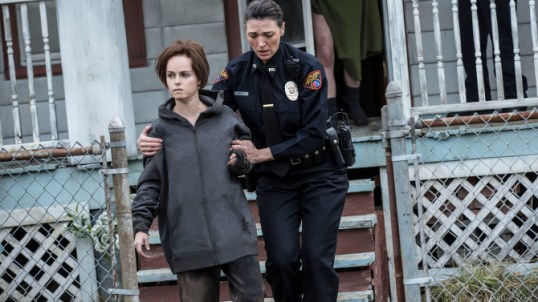
*Taryn Manning in Cleveland Abduction*
Kelcie Stranahan in Stalked By My Neighbor

Best Supporting Actor
Ken Camroux-Taylor in Sugarbabies
MacKenzie Gray in If There Be Thorns
Richard Harmon in A Mother’s Instinct
*Patrick Muldoon in Patient Killer.*
Eric Roberts in A Fatal Obsession
Peter Strauss in Sugar Daddies.

Unauthorized Beverly Hills

Best Supporting Actress
Angeline Appel in Babysitter’s Black Book.
Barbie Castro in Patient Killer
Olivia d’Abo in Stolen From The Suburbs
Sarah Grey in A Mother’s Instinct
Jessica Lowndes in A Deadly Adoption
*Samantha Munro in The Unauthorized Beverly Hills 90210 Story*

Best Adapted Screenplay
*Cleveland Abduction, written by Stephen Tolkin*
If There Be Thorns, written by Andy Cochran.
The Secret Life of Marilyn Monroe, written by Stephen Kronish and J. Randy Taraborrelli.
Seeds of Yesterday, written by Darren Stein.
Turkey Hollow, written by Tim Burns and Christopher Baldi.
Wuthering High School, written by Delondra Williams.

Best Original Screenplay
*Babysitter’s Black Book, written by Richard Kletter and Michele Samit*
A Deadly Adoption, written by Andrew Steele.
The Murder Pact, written by John Doolan
Patient Killer, written by Bryan Dick and Brian D. Young.
Stalked By My Neighbor, written by Doug Campbell.
Stolen From The Suburbs, written by Alex Wright

clevelandabduction

Best Cinematography
*Cleveland Abduction, Richard Wong.*
Fatal Obsession, Ronnee Swenton.
If There Be Thorns, James Liston.
The Murder Pact, Branden James Maxham.
Patient Killer, Bernard Salzmann
The Spirit of Christmas, Michael Negrin.

Best Costume Design
Grace of Monaco, Gigi Lepage
If There Be Thorns, Shanna Mair, Rebekka Sorensen.
Kept Woman
*The Secret Life of Marilyn Monroe, Gersha Phillips.*
Seeds of Yesterday, Claire Nadon.
The Spirit of Christmas, Jennifer Lynn Tremblay.

Best Editing
Babysitter’s Black Book, Ely Mennin
Cleveland Abduction, Henk Van Eeghen.
*A Deadly Adoption, Bill Parker.*
A Mother’s Instinct
Stalked By My Neighbor, Clayton Woodhull.
The Unauthorized Beverly Hills 90210 Story, Allan Lee.

Best Makeup and Hairstyling
*Cleveland Abduction, Dugg Kirkpatrick, Susan R. Prosser, Tina Roesler Kewin, Alan Tuskes, Alicia Zavarella*
Grace of Monaco
If There Be Thorns, Jenine Lehfeldt, Tana Lynn Moldovanos.
The Secret Life of Marilyn Monroe.  Jordan Samuel, Cliona Furey
The Spirit of Christmas
The Unauthorized Beverly Hills 90210 Story, Amber Crombach.

Best Original Score
Dangerous Company
Cleveland Abduction, Tony Morales.
Her Infidelity, Russ Howard III
Kidnapped: The Hannah Anderson Story, Matthew Janszen
*The Murder Pact, Matthew Llewellyn.*
Sugar Daddies.  Steve Gurevitch.

heather-graham-if-there-be-thorns

Best Production Design
Cleveland Abduction, Derek R. Hill.
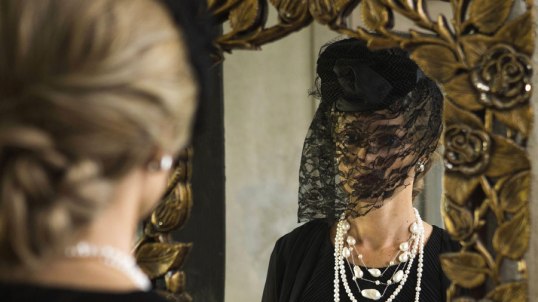
*If There Be Thorns, Linda Del Rosario, Richard Paris.*
A Mother’s Instinct, Jason Sober.
The Murder Pact, Caley Bisson.
The Secret Life of Marilyn Monroe.  Rocco Matteo.
The Unauthroized Beverly Hills 90210 Story

Best Sound
*The Bride He Bought Online*
Dangerous Company
If There Be Thorns
Stalked By My Neighbor
UnGodly Acts
Whitney.

Best Visual Effects
Becoming Santa
If There Be Thorns
Last Chance For Christmas
*Turkey Hollow*
When the Sky Falls
Wish Upon A Christmas

Tomorrow, I’ll post my picks for the worst 16 films of 2015!

A-Deady-adoption-dancing

Previous Entries In The Best of 2015:

  1. Valerie Troutman’s 25 Best, Worst, and Gems I Saw in 2015
  2. Necromoonyeti’s Top 15 Metal Albums of 2015
  3. 2015 In Review: The Best of SyFy

Adventures in Cleaning Out The DVR: A Mother’s Instinct (dir by Jason Bourque)


mi

After I finished watching and reviewing Night of the Wild, it was time to continue cleaning out my DVR by watching A Mother’s Instinct.  A Mother’s Instinct premiered on Lifetime on November 9th.  On that night, I was out celebrating my upcoming birthday with my family.  Fortunately, before I left, I remembered to set the DVR to record A Mother’s Instinct.

Like many Lifetime films, A Mother’s Instinct takes place in the suburbs.  It’s the type of place that is perfect on the surface but the digger you deep, the more ugliness you discover.  It’s the type of place where happy families are never quite as happy as they seem.  It’s the type of place where danger lurks in the shadows, waiting for the chance to make itself known.  It’s the type of place where the pervert across the street takes pictures of his neighbor undressing in front of her bedroom window.  It’s the type of place where pets are kidnapped and killed and left on a driveway as a threat.

It’s also the home of the Bettners, mother Nora (Josie Bissett), teenage daughter Scarlett (Sarah Grey, who had a similar role in director Jason Bourque’s earlier Lifetime film, The Wrong Girl), and youngest child, Gus (Spencer Drever).  When Gus disappears, Nora and Sarah immediately suspect that he’s been kidnapped by Seth Durand (Richard Harmon).  Seth and his mother have just moved in across the street.  Before Gus vanished, Seth was spying on and harassing Scarlett.  After Gus vanishes, Seth taunts the Bettners.  Or, at the very least, it seems that he does.  Is Seth guilty or is he just a jerk?  This is the question that rests at the heart of A Mother’s Instinct.

Nora’s instinct is that Seth is guilty but despite her belief, the police have no proof that Seth kidnapped Gus.  So, with Scarlett’s help, Nora abducts Seth and, after stripping him down to his underwear, locks him in a cage and proceeds to torture and interrogate him.  Soon, that cage becomes Nora’s private version of Gitmo, with Seth as her helpless prisoner.  The more that Seth claims to be innocent, the more extreme Nora’s methods become.  Eventually, even Scarlett starts to worry that they’re going too far…

But are they?  Up until the final 30 minutes of the film (at which point something happens that pretty much answers all of our questions), we’re never quite sure whether Seth is innocent or if he’s guilty.  Our natural instinct is to assume that he must be guilty because the kid is such a creep.  But, as Nora’s methods get more and more extreme, we’re left to wonder if she’s the one making the mistake.  Has she now crossed the lines and become the dangerous one?  Or is she just doing what needs to be done to save her family?  That sense of moral ambiguity is what sets A Mother’s Instinct apart from other abduction-theme Lifetime movie.

Though the plot is similar to 2013’s Prisoners, A Mother’s Instinct manages to establish an identity of its own.  It’s an intense film that will keep you guessing about whether Seth is guilty or innocent.  Richard Harmon gives an excellent performance as the creepy Seth, making the viewers feel both sympathy and revulsion towards the character.  Josie Bissett is perfectly intense as the determined mother while Sarah Grey does a good job of capturing both Scarlett’s anger and her doubts.  A Mother’s Instinct is a good and intense Lifetime movie, the type that will keep you guessing until the end.

The TSL’s Daily Horror Grindhouse: The Hollow (dir by Sheldon Wilson)


Syfy-movie-The-Hollow

So, earlier today, I finally got around to watching the latest SyFy original film, The Hollow.  (The Hollow originally aired last Saturday but I missed it because I was going from Halloween party to Halloween party, wandering around in chilly and wet weather without much on and eventually coming down with a cold as a result.)  Now, it may seem strange to review a made-for-TV movie as a part of a series of grindhouse film reviews but, much like They Found Hell, The Hollow probably would have played at the grindhouse if there was still a grindhouse around for it to play at.

As for the film itself, it was a story of death, curses, family dysfunction, and sisterhood.  The Hollow takes place on Shelter Island.  To be honest, just the name Shelter Island should let you know that something bad is going to happen.  I mean, Shelter Island sounds too similar to Shutter Island for it to be a totally safe place.  One hundred years ago, a legendary storm wiped out the island’s population.  Over the century, the island has recovered and new people have moved in.  But now, another storm is threatening to hit and that storm is bringing a curse with it!  Soon, the island will be attacked by monsters that appear to be made out of dirt and fire…

Of course, the monsters aren’t the only ones coming to Shelter Island.  There are three sisters as well — Sarah (Stephanie Hunt), Marley (Sarah Dugdale), and Emma (Alisha Newton).  Coming from a dysfunctional family, they’re planning on spending Halloween in a cabin on the island and working on their fractured relationship.  Unfortunately, those plans are interrupted by the arrival of the monsters.  As the sisters try to find some way to get off the island, Emma suddenly vanishes.  Sarah and Marley search for her, while dealing not only with the monster but also with other survivors, some of whom are more helpful than others.

I actually really enjoyed The Hollow.  Why?  Well, it all comes down to three things:

Number one, Shelter Island was extremely creepy!  This film is full of images of characters running through a seemingly endless forest, with all the trees enshrouded by a thick fog.  Director Sheldon Wilson took full advantage of the menacing possibilities of his location.  When it comes to a horror film — especially a low-budget one — never underestimate the importance of atmosphere.

Number two, the monsters were genuinely scary and well-done.  You never knew where they were going to suddenly show up and, as a result, you were kept off-balance throughout the entire film.

Finally, the main reason I enjoyed The Hollow was because Stephanie Hunt, Sarah Dugdale, and Alisha Newton were perfectly cast and believable as the three sisters.  I’m the youngest of four sisters and, needless to say, there were many scenes to which I could relate.  Since you believed their relationship and cared about them as characters, this brought a bit more depth to The Hollow than you might otherwise have expected.

The Hollow was a nice surprise.  Keep an eye out for it on the SyFy channel.