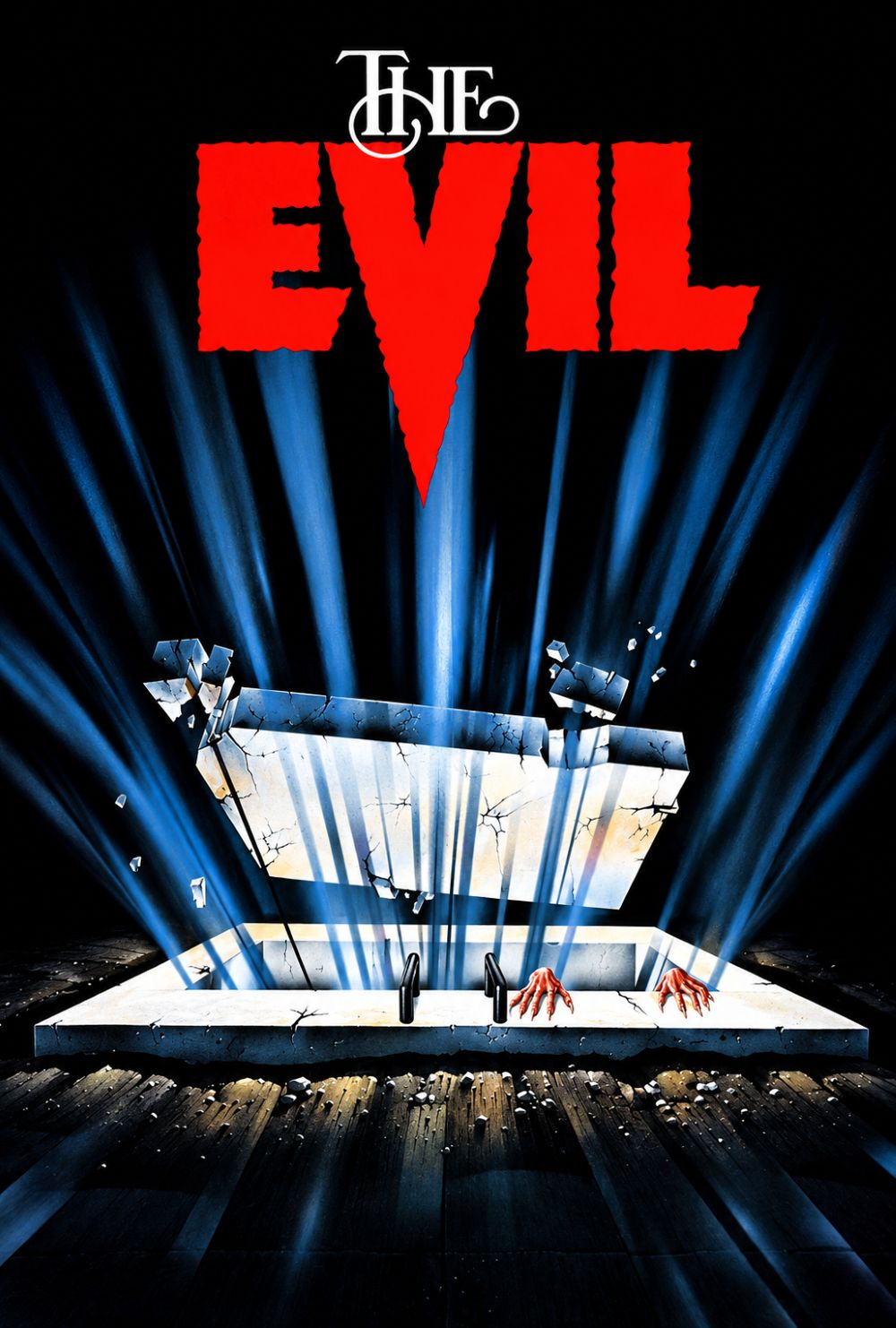
Horror Film Review: The Evil (dir. by Gus Trikonis)


“When am I gonna make you see? It’s something inside the dog!” — Dr. Caroline Arnold

On paper, The Evil has no business being as entertaining as it is. It has a familiar haunted-mansion setup, a group of characters making predictably bad decisions, a handful of effects that are more enthusiastic than convincing, and a story that often feels like it was assembled from supernatural-horror leftovers. Yet Gus Trikonis’s 1978 film somehow makes that combination work. It is a scrappy, surprisingly lively late-1970s chiller that keeps finding ways to turn its limitations into part of the fun. The movie may not have the elegance of The Haunting or the full-scale dread of The Omen, but it has momentum, personality, and just enough weirdness to make it stick in the mind.

Richard Crenna plays Dr. C.J. Arnold, a well-meaning physician who buys the old Vargas mansion with plans to turn it into a rehabilitation center. He brings his wife Caroline, played by Joanna Pettet, along with a small group of friends and workers, to spend time cleaning up the place and preparing it for renovation. It is the kind of horror-movie premise where viewers can tell within seconds that nobody should be spending the night there. The mansion is enormous, decaying, isolated, and full of the sort of dark hallways that seem specifically designed for people to wander into alone. Still, C.J. sees a building with potential rather than a nightmare waiting to happen, and the movie gets a lot of mileage out of that mistake.

Before long, the house starts acting up in all the expected ways. Doors move on their own, strange noises echo through the corridors, flames appear where they should not, and the guests begin to realize that the mansion’s history is more sinister than they were led to believe. None of this is particularly groundbreaking, even for 1978, but The Evil understands the usefulness of a clean, direct setup. It does not waste a huge amount of time pretending the house is safe. The film gets its characters into trouble, gives them an increasingly hostile environment, and lets the tension build through a series of practical, often mean-spirited scares.

The movie came out during a period when horror was especially interested in demonic forces, cursed places, possession, and spiritual danger. You can feel the shadow of films such as The Exorcist, The Omen, Burnt Offerings, The Sentinel, and The Legend of Hell House hovering over it. The Evil is clearly playing in that same sandbox, mixing the isolated-house horror formula with the era’s fascination with the Devil and the supernatural. What keeps it from disappearing completely into the crowd is not originality so much as commitment. The film believes in its own nonsense, and that sincerity goes a long way.

Gus Trikonis directs the material with a briskness that suits it. At around 85 minutes, The Evil moves quickly enough that it rarely gives viewers much time to dwell on its thinner character work or its occasionally awkward plotting. The mansion itself does a lot of the heavy lifting. It has the faded, neglected grandeur that every good haunted-house movie needs, with dark rooms, winding staircases, sealed-off spaces, and enough shadowy corners to make even a simple walk down a hallway feel questionable. The location gives the movie a genuine sense of place, which is important because much of the film depends on the audience accepting the house as an active threat rather than just a backdrop.

There is a very specific low-budget 1970s flavor to the production that adds to its charm. The movie is not sleek or refined, and that works in its favor. The roughness of the camerawork, the muted colors, the occasionally dated sound design, and the practical effects all give it a handmade quality. The Evil never looks expensive, but it often looks tangible. When the house lashes out, the effects may not always be flawless, but they have physical weight. A lot of modern horror relies on digital polish to sell its scares; this film has to make do with tricks happening in front of the camera, and that gives the best moments an immediate, almost old-fashioned punch.

The movie is at its strongest when it keeps things simple. A character hears something in another room. Someone gets separated from the group. A familiar household object or feature of the mansion suddenly becomes dangerous. These are basic horror devices, but Trikonis uses them efficiently. He knows that the fear of walking into an empty room is sometimes more useful than a long explanation of why the room is dangerous. The Evil is not a slow-burn ghost story in the style of The Innocents. It is more interested in delivering jolts and keeping the body count moving. That can make it feel mechanical at times, but it also makes the movie easy to enjoy as a late-night scare picture.

Richard Crenna gives the film more credibility than it probably deserves. He plays C.J. as a rational, decent man who believes he can bring order and purpose to a place everyone else would wisely avoid. His growing inability to explain what is happening gives the movie an anchor. Crenna does not act embarrassed by the material or play it with a knowing wink. He treats the situation seriously, which makes the supernatural chaos around him feel more convincing. He is the kind of sturdy, professional lead who can sell even the film’s more ridiculous turns simply by looking genuinely alarmed.

Joanna Pettet also helps keep the human side of the movie from getting completely lost. Caroline is more willing than C.J. to recognize that something is wrong with the mansion, and that divide gives their relationship a modest but effective tension. The rest of the cast, including Andrew Prine, Cassie Yates, Mary Louise Weller, and Lynne Moody, is more variable. They serve the story well enough, though most of them are defined more by the danger they face than by particularly deep characterization. The film does not spend much time building rich backstories, but the actors keep the group dynamic watchable.

The middle section is where The Evil shows its limitations most clearly. The structure can become repetitive: something strange happens, someone investigates alone, the house responds, and the survivors become more desperate. The mythology behind the mansion is also not always developed with much precision. But again, the movie gets away with more than it should because it keeps pushing forward. It has the energy of a film that knows it cannot afford to be boring. Even when the story is familiar, there is usually another strange image, creepy sound, or sudden danger waiting around the corner.

The final stretch is best left mostly unspoiled, because the movie takes a turn that is much stranger and more ambitious than its early scenes might lead you to expect. It broadens the scope of the story without abandoning the slightly tacky, practical-effects character that defines the rest of the film. Some viewers will probably find the shift abrupt, especially if they are expecting a straightforward haunted-house ending. Others will enjoy the fact that The Evil refuses to settle for the safest possible conclusion. It is a movie that starts with a familiar premise and gradually gets more unhinged, and that unpredictability is a real asset.

Ultimately, The Evil is not a lost classic, but it is a lot more fun than its reputation and basic setup might suggest. It has no right to work as well as it does. The premise is familiar, the characters are not deeply written, the effects are uneven, and the story occasionally runs on pure genre momentum. Yet that momentum is exactly what makes it enjoyable. Trikonis delivers a lean, energetic little horror movie with a great old mansion, a convincingly serious Richard Crenna, a few solid practical scares, and enough late-game insanity to make the experience memorable. If you enjoy the rougher, more obscure side of 1970s supernatural horror, The Evil is the kind of movie that can catch you off guard: imperfect, sometimes goofy, but much more entertaining than it has any right to be.
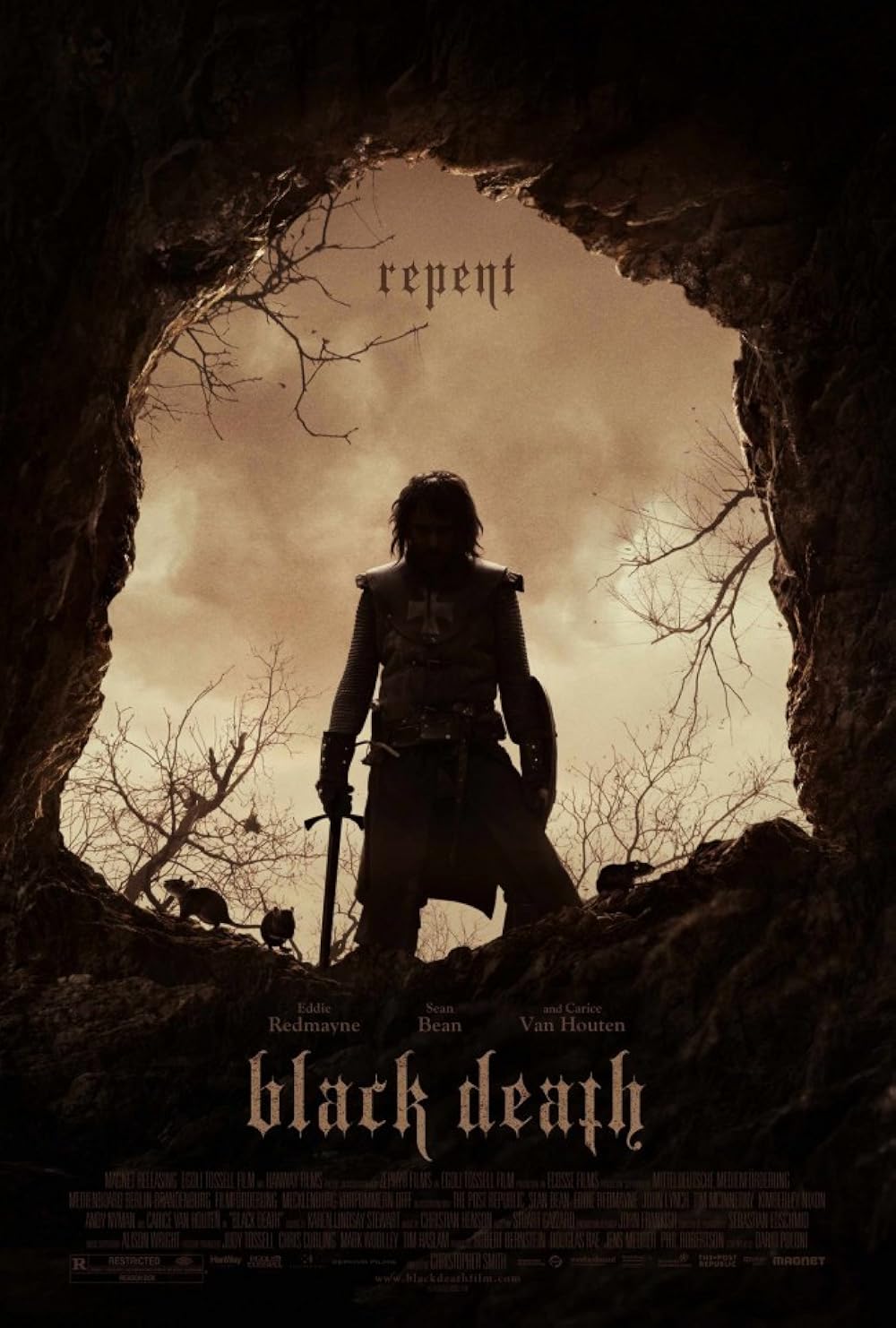
Review: Black Death (dir. by Christopher Smith)


“I believe hunting necromancers and demons serves men more than it serves God.” — Osmund

British filmmaker Christopher Smith has always been something of an under-the-radar presence, steadily putting out films that show flashes of talent without quite breaking into the mainstream. By the time Black Death arrived in 2011 (after its 2010 UK debut), Smith had already built a modest body of work that hinted at a filmmaker sharpening his voice. Looking back now, though, Black Death feels less like a stepping stone and more like a high-water mark—arguably the point where his growth as a director peaked before his later efforts settled into something more pedestrian or simply passable.

Set in 1348 England during the height of the plague, the film follows Osmund, a young monk caught between his religious vows and his love for a woman named Avrill. It’s a familiar internal conflict, but one that Black Death treats with a surprising amount of weight. Osmund’s indecision isn’t just romantic hesitation—it’s a crisis of identity, faith, and fear in a world that feels like it’s actively collapsing. When Avrill gives him a week to choose, that ticking clock hangs over everything that follows, even as the narrative shifts into something darker.

Enter Ulric (Sean Bean), a hardened knight tasked with investigating a remote village rumored to be untouched by the plague—and possibly harboring a necromancer. Osmund volunteers to guide Ulric and his men through the marshes, seeing the journey as both an escape and a test. What follows is less a traditional quest and more a gradual stripping away of certainty, as each step toward the village drags the characters deeper into moral ambiguity.

The journey itself is marked by violence, disease, and small but telling moments of cruelty. One of the film’s most effective scenes involves a woman accused of witchcraft. Ulric appears, at first, to intervene with compassion, only to execute her himself in the name of expediency. It’s a cold, efficient act that encapsulates the film’s worldview—belief, in any form, can justify brutality when it’s held too tightly.

Once the group reaches the village, Black Death shifts gears into something more unsettling. The horror here isn’t loud or overt; it’s quiet, controlled, and deeply psychological. The village’s apparent immunity to the plague raises more questions than it answers, and Smith resists the urge to provide easy explanations. Instead, the film leans into ambiguity, letting tension build through implication rather than spectacle.

At its core, the film is less about the plague itself and more about how people interpret it. Is it divine punishment? A test of faith? Or something else entirely? Smith, working from Dario Poloni’s script, explores how both religious and secular authorities manipulate these interpretations to maintain control. The result is a world where truth becomes secondary to belief—and where belief itself becomes a weapon.

Osmund stands at the center of this conflict, pulled between Ulric’s rigid, punitive worldview and the village’s more enigmatic philosophy. Eddie Redmayne plays him with a quiet restraint that borders on opacity in the first half, but that pays off once the story reaches its turning point. As Osmund begins to unravel, Redmayne lets more complexity seep in, turning what initially feels like a passive character into something far more unstable and unpredictable.

Sean Bean, as expected, delivers a commanding performance. His Ulric is not a cartoonish zealot, but a man whose certainty makes him dangerous. He believes completely in what he’s doing, and that conviction gives his actions a disturbing legitimacy. It’s one of those performances where the lack of doubt is what makes the character so unsettling.

Visually, Black Death commits fully to its bleakness. The mud-soaked landscapes, the gray skies, the ever-present sense of decay—it all reinforces the film’s oppressive tone. Smith’s direction here is notably controlled, favoring atmosphere and tension over flashy technique. The violence, rendered with practical effects, is harsh and immediate without feeling gratuitous, adding to the film’s grounded realism.

There’s an unmistakable echo of Witchfinder General in how the film approaches its themes, particularly in its refusal to draw clean moral lines. Like that earlier classic, Black Death presents a world where righteousness and cruelty often occupy the same space, and where faith can be both a source of strength and a tool of destruction.

What makes Black Death stand out within Smith’s filmography—especially in hindsight—is how confidently it balances all of these elements. The thematic ambition, the performances, the atmosphere, the restraint in its storytelling—it all comes together in a way that his later films haven’t quite matched. Where Black Death feels deliberate and probing, much of his subsequent work has leaned more toward the functional, lacking the same sense of purpose or depth.

That’s not to say Smith lost his technical ability, but the edge—the sense that he was really digging into something uncomfortable and meaningful—feels dulled in comparison. Black Death captures a moment where everything aligned: a strong script, a committed cast, and a director pushing himself beyond straightforward genre conventions.

The result is a film that works on multiple levels. It’s a grim historical horror piece, a character study, and a meditation on faith and control, all wrapped in a stark, unforgiving atmosphere. More importantly, it stands as a reminder of what Christopher Smith was capable of at his peak—even if that peak, in retrospect, came earlier than expected.

Trailer: Monsters: Dark Continent


monsters-dark

Monsters was this little, low-budget monster film from 2010 by filmmaker Gareth Edwards that got all the film community a-buzzing. Edwards’ work on that film landed him the job on 2014’s reboot of the Godzilla film franchise.

After Monsters was such a success there were plans to make a sequel of it, but Edwards being so busy doing Godzilla, he was unable to get back in the director’s chair and instead it went to Tom Green (not the comedian). We get a sequel that’s less about a romance in the midst of a creeping alien invasion, but one that looks to expand the world building Edwards created for the first film and make it global.

Monsters: Dark Continent is set in the Middle East where the alien infection has spread to and where a U.S. military mission goes in to stem the tide. Making things a tad difficult in a mission already tough to begin with is the rise of a new insurgency in the region.

I liked the first film, but I thought the low-budget really hampered how the monsters were portrayed. Edwards had to tease very brief glimpses of them until the end where he finally gives the audience the big reveal. This style was one of the reasons why I just liked the new Godzilla instead of loving it.

It looks like this sequel forgoes the teases and goes full out reveal of all the alien monsters. I am more than just slightly interested in checking this film out now.

Monsters: Dark Continent is set for a September 26, 2014 release date.

Black Death: Trailer


There’s a film called Black Death that came out sometime around 2010 that seems to have fallen below the radar of most everyone. It’s a British historical horror film from upcoming genre filmmaker Christopher Smith. The film stars Sean Bean in the role of a knight during the Black Death era of Europe.

From what I’ve seen of the trailer and read about the film it seems to be a horror film that looks at the Black Death era of history with a slightly supernatural bent to it. Even the trailer gives gives the film a certain Wicker Man vibe to it. Holy warriors of the Christian faith coming into a village untouched by the Black Death. A village whose inhabitants might be dabbling with powers from a much older and earthy religion to keep the village safe. It definitely sounds like this film might have been influenced by that classic horror film starring Edward Woodward.

I like the look of the film as seen through the trailer. It almost looks black and white with splashes of vibrant colors here and there. Black Death hasn’t been announced as having a North American theatrical release date so this film looks like it will be a blu-ray release for me to finally see it.