Horror Film Review: The Evil (dir. by Gus Trikonis)


“When am I gonna make you see? It’s something inside the dog!” — Dr. Caroline Arnold

On paper, The Evil has no business being as entertaining as it is. It has a familiar haunted-mansion setup, a group of characters making predictably bad decisions, a handful of effects that are more enthusiastic than convincing, and a story that often feels like it was assembled from supernatural-horror leftovers. Yet Gus Trikonis’s 1978 film somehow makes that combination work. It is a scrappy, surprisingly lively late-1970s chiller that keeps finding ways to turn its limitations into part of the fun. The movie may not have the elegance of The Haunting or the full-scale dread of The Omen, but it has momentum, personality, and just enough weirdness to make it stick in the mind.

Richard Crenna plays Dr. C.J. Arnold, a well-meaning physician who buys the old Vargas mansion with plans to turn it into a rehabilitation center. He brings his wife Caroline, played by Joanna Pettet, along with a small group of friends and workers, to spend time cleaning up the place and preparing it for renovation. It is the kind of horror-movie premise where viewers can tell within seconds that nobody should be spending the night there. The mansion is enormous, decaying, isolated, and full of the sort of dark hallways that seem specifically designed for people to wander into alone. Still, C.J. sees a building with potential rather than a nightmare waiting to happen, and the movie gets a lot of mileage out of that mistake.

Before long, the house starts acting up in all the expected ways. Doors move on their own, strange noises echo through the corridors, flames appear where they should not, and the guests begin to realize that the mansion’s history is more sinister than they were led to believe. None of this is particularly groundbreaking, even for 1978, but The Evil understands the usefulness of a clean, direct setup. It does not waste a huge amount of time pretending the house is safe. The film gets its characters into trouble, gives them an increasingly hostile environment, and lets the tension build through a series of practical, often mean-spirited scares.

The movie came out during a period when horror was especially interested in demonic forces, cursed places, possession, and spiritual danger. You can feel the shadow of films such as The Exorcist, The Omen, Burnt Offerings, The Sentinel, and The Legend of Hell House hovering over it. The Evil is clearly playing in that same sandbox, mixing the isolated-house horror formula with the era’s fascination with the Devil and the supernatural. What keeps it from disappearing completely into the crowd is not originality so much as commitment. The film believes in its own nonsense, and that sincerity goes a long way.

Gus Trikonis directs the material with a briskness that suits it. At around 85 minutes, The Evil moves quickly enough that it rarely gives viewers much time to dwell on its thinner character work or its occasionally awkward plotting. The mansion itself does a lot of the heavy lifting. It has the faded, neglected grandeur that every good haunted-house movie needs, with dark rooms, winding staircases, sealed-off spaces, and enough shadowy corners to make even a simple walk down a hallway feel questionable. The location gives the movie a genuine sense of place, which is important because much of the film depends on the audience accepting the house as an active threat rather than just a backdrop.

There is a very specific low-budget 1970s flavor to the production that adds to its charm. The movie is not sleek or refined, and that works in its favor. The roughness of the camerawork, the muted colors, the occasionally dated sound design, and the practical effects all give it a handmade quality. The Evil never looks expensive, but it often looks tangible. When the house lashes out, the effects may not always be flawless, but they have physical weight. A lot of modern horror relies on digital polish to sell its scares; this film has to make do with tricks happening in front of the camera, and that gives the best moments an immediate, almost old-fashioned punch.

The movie is at its strongest when it keeps things simple. A character hears something in another room. Someone gets separated from the group. A familiar household object or feature of the mansion suddenly becomes dangerous. These are basic horror devices, but Trikonis uses them efficiently. He knows that the fear of walking into an empty room is sometimes more useful than a long explanation of why the room is dangerous. The Evil is not a slow-burn ghost story in the style of The Innocents. It is more interested in delivering jolts and keeping the body count moving. That can make it feel mechanical at times, but it also makes the movie easy to enjoy as a late-night scare picture.

Richard Crenna gives the film more credibility than it probably deserves. He plays C.J. as a rational, decent man who believes he can bring order and purpose to a place everyone else would wisely avoid. His growing inability to explain what is happening gives the movie an anchor. Crenna does not act embarrassed by the material or play it with a knowing wink. He treats the situation seriously, which makes the supernatural chaos around him feel more convincing. He is the kind of sturdy, professional lead who can sell even the film’s more ridiculous turns simply by looking genuinely alarmed.

Joanna Pettet also helps keep the human side of the movie from getting completely lost. Caroline is more willing than C.J. to recognize that something is wrong with the mansion, and that divide gives their relationship a modest but effective tension. The rest of the cast, including Andrew Prine, Cassie Yates, Mary Louise Weller, and Lynne Moody, is more variable. They serve the story well enough, though most of them are defined more by the danger they face than by particularly deep characterization. The film does not spend much time building rich backstories, but the actors keep the group dynamic watchable.

The middle section is where The Evil shows its limitations most clearly. The structure can become repetitive: something strange happens, someone investigates alone, the house responds, and the survivors become more desperate. The mythology behind the mansion is also not always developed with much precision. But again, the movie gets away with more than it should because it keeps pushing forward. It has the energy of a film that knows it cannot afford to be boring. Even when the story is familiar, there is usually another strange image, creepy sound, or sudden danger waiting around the corner.

The final stretch is best left mostly unspoiled, because the movie takes a turn that is much stranger and more ambitious than its early scenes might lead you to expect. It broadens the scope of the story without abandoning the slightly tacky, practical-effects character that defines the rest of the film. Some viewers will probably find the shift abrupt, especially if they are expecting a straightforward haunted-house ending. Others will enjoy the fact that The Evil refuses to settle for the safest possible conclusion. It is a movie that starts with a familiar premise and gradually gets more unhinged, and that unpredictability is a real asset.

Ultimately, The Evil is not a lost classic, but it is a lot more fun than its reputation and basic setup might suggest. It has no right to work as well as it does. The premise is familiar, the characters are not deeply written, the effects are uneven, and the story occasionally runs on pure genre momentum. Yet that momentum is exactly what makes it enjoyable. Trikonis delivers a lean, energetic little horror movie with a great old mansion, a convincingly serious Richard Crenna, a few solid practical scares, and enough late-game insanity to make the experience memorable. If you enjoy the rougher, more obscure side of 1970s supernatural horror, The Evil is the kind of movie that can catch you off guard: imperfect, sometimes goofy, but much more entertaining than it has any right to be.
The Toughest Man In The World (1984, directed by Dick Lowry)


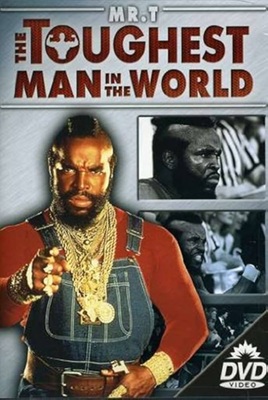
Bruise Brubaker (Mr. T) spends his nights as a bouncer at a club owned by his best friend (Dennis Dugan) and his days running a center for at-risk youth.  Bruise is a former Marine drill sergeant who is now determined to make Chicago a better place.  He’s so cool that his name is Bruise and he even has his own theme song, which plays whenever he patrols the streets and alleys of Chicago.  But when it looks like the youth center is going to get closed down unless it can quickly raise some money, Bruise faces the challenge of a lifetime when he enters a competition to prove that he’s the toughest man in the world!

Is Mr. T the toughest man in the world?  I pity the fool who even has to ask.

This made-for-TV movie is exactly what you think it is.  Mr. T barks out his dialogue with his signature growl but he still seems utterly sincere when he orders the kids to say in school and stop trying to mug old men in the alleys.  At first, it seems like Bruise should be able to easily win the Toughest Man competition but it turns out to be tougher than he thought.  There’s an extended sequences in which Bruise tries to learn how to box and it turns out that he’s no Clubber Lang.  There’s also an extended subplot about some broadly-played mobsters who are hoping that can drug Bruise so he’ll lose the contest.

Probably the funniest thing about the movie is the idea that everyone in Chicago would stop what they were doing so that they could gather around the television and watch the Toughest Man contest.  The second funniest thing is Dennis Farina showing up in a small role and reminding us that it takes all types of actors to make a movie.

Mr. T was never a good actor but he was a great personality and that personality is on full display here.  The Toughest Man In The World will make you nostalgic for a more innocent time.

Retro Television Review: The Love Boat 5.26 “Pal-I-Mony-O-Mine/Does Father Know Best?/An ‘A’ for Gopher”


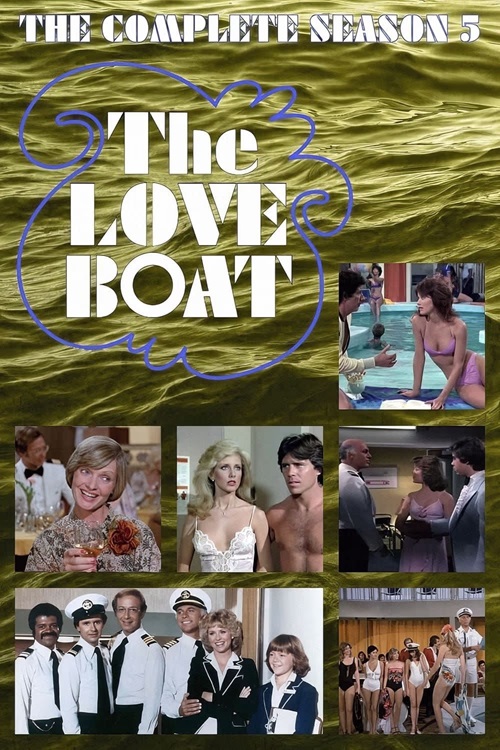
Welcome to Retro Television Reviews, a feature where we review some of our favorite and least favorite shows of the past!  On Wednesdays, I will be reviewing the original Love Boat, which aired on ABC from 1977 to 1986!  The series can be streamed on Paramount Plus!

This week, Ted Lange presents three stories of cruise ship love.

Episode 5.26 “Pal-I-Mony-O-Mine/Does Father Know Best?/An ‘A’ for Gopher”

(Dir by Ted Lange, originally aired on April 10th, 1982)

Dr. John Hanson (Ben Vereen) boards the ship with his new girlfriend, attorney Jenny Brooks (Denise Nicholas).  John is shocked to discover that his former girlfriend, Ellen (Lynne Moody), is also on the cruise.  Jenny befriends Ellen and, after listening to all the details of how Jenny supported John while he was going through medical school, she suggests that Ellen should sue John for palimony.  Jenny even offers to help Ellen and John figure out how much John owes her.  John agrees.  As he and Ellen itemize their former relationship, they come to realize that they’re still in love.  Sorry, Jenny!  Jenny leaves the boat alone.  John and Ellen leave the boat engaged.  (Jenny does give them a bill for her legal services.  John and Ellen have a good laugh.)

WOW!  That’s not the type of story that you regularly see on The Love Boat.  It’s rare for a passenger to leave as angry as Jenny did.  What’s surprising is that neither Ellen nor John seemed to feel that bad about Jenny getting her heart broken.  Then again, what was Jenny thinking when she invited Ellen back into their lives to begin with?  This is why you’re never friendly with your significant other’s exes.  I don’t care how nice they seem or act.  They’re all potential enemies!  I don’t care how polite they are when they approach you outside the Dallas Museum of Art and start speaking in their fakeass British accent, don’t trust them …. well, anyway, let’s move on.

Gopher is super-excited when his junior high English teacher, Susan Wilkham (Susan Strasberg), boards the ship.  Gopher explains that he’s always had a crush on her and, now that Gopher is an adult, Susan appears to also now have a crush on him.  (Don’t freak out, she doesn’t even realize he was a former student until he specifically mentions that he was in her class.)  Except …. oh no!  Captain Stubing has a crush on her as well!  Well, don’t worry.  Things work out for Gopher.  While Vicki does not get a stepmother, Gopher gets a girlfriend who we will probably never hear about again.  Fred Grandy and Susan Strasberg made for a surprisingly cute couple.  (It helped that they both appeared to be the same age, despite the show’s effort to cast her as being “the older woman.”)  Good for Gopher, it’s about time something good happened to him.

Finally, a father (Lloyd Bochner) encourages his nerdy son (Kevin Brophy) to hit on a beautiful but snobbish blonde (Kristina Wayborn).  The son prefers the blonde’s shy best friend (Patty Freedman).  On every episode of The Love Boat, there’s one story that doesn’t amount too much and that what this story was.

Hey, this episode was directed by Isaac Washington himself, Mr. Ted Lange!  Obviously, The Love Boat isn’t really a show that demands or even allows an auteurist approach but I will say that this was one of the better acted episodes that I’ve seen.  Vereen and Moody, Grandy and Strasberg, they all had plenty of chemistry.  This was a truly pleasant cruise, despite Jenny’s anger.


The Oklahoma City Dolls (1981, directed by E.W. Swackhamer)


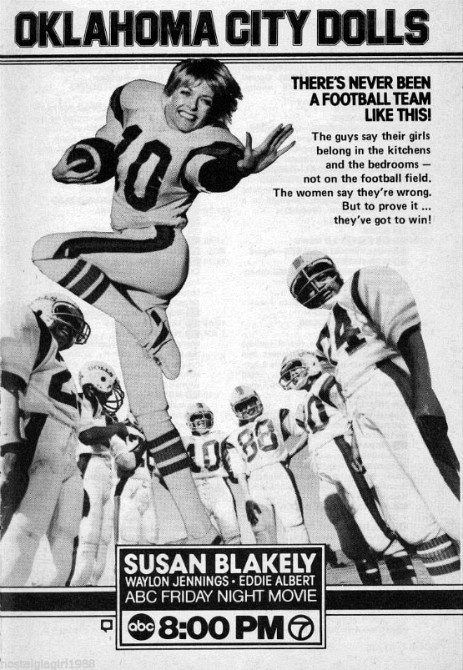
At an Oklahoma manufacturing plant, the women are always expected to put in extra hours while their male co-workers practice as a part of the company’s football team.  Shop steward Sally Jo (Susan Blakely) files a complaint with the EEOC.  John Miller (Robert Hooks) pays a visit to the plant and says that the women have to be given the same opportunities and benefits as the man, including recreation time.  The plant’s foreman, J.D. Hines (David Huddleston), agrees.  The woman can have recreation time as long as they’re doing what the men are doing and that’s playing football.  Determined to show up Hines and all of her sexist co-workers (and her boyfriend, played by Waylon Jennings), Sally Jo puts together a football team and even gets a broken-down former NFL coach (Eddie Albert) to serve as their trainer.

There actually was a woman’s football team called The Oklahoma City Dolls.  They played in the National Women’s Football League and they won the league’s championship three times.  However, they don’t appear to have anything to do with this movie, which is as much about Sally Jo trying to get a fair treatment for the workers as it is about hitting the field and running it in for a touchdown.  There are some parts of the movie that work.  I liked Eddie Albert’s performance as the alcoholic coach and the scene where he discovered that his community service would include coaching a group of women who had never played football before.  Folk singer Ronee Blakley was good as the team’s emotionally fragile wide receiver.  I even liked that the women didn’t all automatically become the world’s best football players.  The movie’s main weakness was that Susan Blakely just wasn’t believable as someone who lived in a trailer park, used “ain’t” in every sentence, and spent her time organizing a union.  She was too glamorous for the role and her scenes with Waylon Jennings all felt overwritten and overacted.  The story couldn’t decide if it wanted to be a drama about working in a factory or a football comedy and it was pretty uneven as a result.  The good thing is that the movie’s heart was in the right place, even if it didn’t always score a touchdown.

As for the real life Oklahoma City Dolls, they were active from 1976 to 1979.  An attempt to revive the team in 1982 failed when their financial backers pulled out at the last seconds.  The National Women’s Football League folded in 1988.

The TSL’s Horror Grindhouse: Scream Blacula Scream (dir by Bob Kelljan)


Am I correct in assuming that everyone knows who Blacula was?

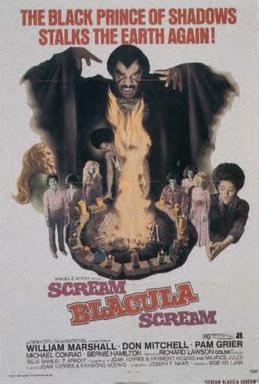
Blacula is often described as being the black Dracula but actually, it’s a little bit more complicated than that.  In life, he was an African prince named Mamuwalde who, in 1780, went to Dracula’s castle and asked for the count’s help in suppressing the slave trade.  Dracula turned him into a vampire instead and, after declaring that Mamuwalde would forever be known as Blacula, he proceeded to lock Mamuwalde in a coffin.  That’s where Mamuwalde remained for 290 years, until he managed to escape.  By that point, his coffin had been relocated from Transylvania to Los Angeles.

All of that was revealed in the 1972 film, Blacula.  Blacula, which starred a distinguished Shakespearean actor named William Marshall in the lead role, was a surprise hit so, of course, Mamuwalde (played again by Marshall) returned the following year in a sequel.  It didn’t matter that the first Blacula ended with Mamuwalde deliberately ending his existence by walking out into the sunlight.  Blacula would return!

It also didn’t matter if anyone in the audience for Scream, Blacula, Scream had somehow missed seeing the first movie.  Scream, Blacula, Scream features lengthy flashbacks to the first film.  It makes sense, really.  Why waste money on all new footage when you can just pad the sequel with scenes from its predecessor?

I’m disappointed to say that Scream, Blacula, Scream did not feature any disco action.  When I saw that this movie would be airing on TCM Underground, I decided to watch it specifically because I figured there would be at least one scene of Blacula dancing underneath a spinning disco ball.  I mean, it was a movie from the 70s, right?  Honestly, I think that if Scream, Blacula, Scream had been made later in the decade, it would have featured at least one disco dance scene.

What the film did have was a lot of voodoo.  Judging from this movie, Live and Let Die, and the House on Skull Mountain, it would appear that people in the early 70s were really obsessed with voodoo.  When the movie opens, a voodoo priestess named Mama Loa is dying and she’s just named her apprentice, Lisa (Pam Grier), as the new head of the cult.  Mama Loa’s son, Willis (Richard Lawson), isn’t happy about this decision so, for some reason, he decides that it would be a good idea to bring Blacula back to life.

Willis apparently thought that the revived Blacula would be his servant but it doesn’t work out like that.  First off, Blacula was perfectly happy being dead.  Secondly, he is no one’s servant.  Blacula promptly bites Willis on the neck and then proceeds to vampirize nearly everyone that he comes across.  Soon, Blacula has an army of vampires but all he wants is to be human again.

And who can help him reach that goal?

How about the city’s newest voodoo priestess, Lisa?

Now, I will say this about Scream, Blacula, Blacula.  The main character is named Lisa and that automatically makes it an above average movie.  The entire movie features people saying, “Lisa” over and over again and you know I loved listening to that.

Other than that, though, the movie was kind of a mess.  It was obviously written and filmed in a hurry and, as a result, a lot of the action felt like padding.  For a subplot that wasn’t that interesting to begin with, the voodoo cult power struggle got way too much screen time.  On the plus side, William Marshall and Pam Grier were both a hundred times better than the material that they had to work with.  Regardless of how ludicrous the dialogue was, Marshall delivered it with dignity and just the right hint of ennui.

Scream, Blacula, Scream is not a particularly good film but it’s worth seeing for Marshall and Grier.


Horror on the Lens: House of Evil (dir by Gus Trikonis)


Today’s horror on the lens in 1978’s House of Evil!

When Richard Crenna buys a new house, he recruits a few friends to help him fix it up.  Unfortunately, it turns out that the house is haunted by the devil himself.  House of Evil — which is also known as The Evil — is an entertaining little time waster.  If the idea of being in a house with the devil doesn’t scare you, just check out some of those the 1970s fashion choices!