Horror Review: Trick ‘r Treat (dir. by Michael Dougherty)


“All these traditions, jack-o’-lanterns, putting on costumes, handing out treats, they were started to protect us, but nowadays… no one really cares.” — Principal Steven Wilkins

What better and more fun way is there to celebrate the full month of scares and horror that October has become than with Michael Dougherty’s 2007 film Trick ’r Treat? It is the kind of Halloween movie that feels less like it was merely set on the holiday and more like it was built out of everything people love about it. Trick ’r Treat has jack-o’-lanterns glowing on porches, costumes ranging from charming to grotesque, chilly nighttime streets, old local legends, candy bowls, haunted-school-bus stories, werewolves, serial killers, and that ever-present feeling that something is watching from behind a tree. It is funny, nasty, creepy, and strangely cozy at the same time. More than almost any modern horror film, it understands Halloween as a whole atmosphere rather than a collection of familiar props.

At first glance, the movie looks like an anthology film. It is divided into several distinct stories with their own central characters, premises, and horror styles. One segment involves a principal with a murderous secret, another follows a group of kids investigating a grim local legend, another centers on young women looking for dates at a costume party, and another focuses on a bitter old man dealing with a small but persistent visitor. Each story could almost function as its own short horror movie. Dougherty clearly enjoys shifting tones, moving from slasher material to ghost-story melancholy, then into monster-movie lunacy and dark comedy. But the key difference is that Trick ’r Treat is not simply an anthology stitched together by a host or a framing device. Every story told in the film ties into an overarching story unfolding across one night of Halloween.

That structure is one of the movie’s smartest features. Characters drift in and out of one another’s narratives, sometimes briefly and sometimes in ways that completely change the audience’s understanding of what they have already seen. A person who seems like a background extra in one sequence becomes the focus of another. A strange sound, a distant scream, a passing school bus, or a visual detail in one story can gain much more meaning when it reappears elsewhere. The movie plays with chronology too, allowing events to overlap and occasionally revealing that scenes which seemed straightforward were occurring at a different point in the night than viewers assumed. It rewards attention without becoming confusing for the sake of being clever.

Dougherty handles those connections smoothly because the film never stops feeling like one continuous Halloween night. The transitions are playful rather than showy. The camera may follow a character down a street, past a decorated yard, into another group’s story, and suddenly the audience has entered a different kind of nightmare. That makes the town itself feel like a character. It is not a generic horror-movie setting where bad things happen because the script requires them to. It feels like a community with traditions, buried crimes, local myths, annual rituals, and plenty of people who are either hiding something or about to discover something unpleasant.

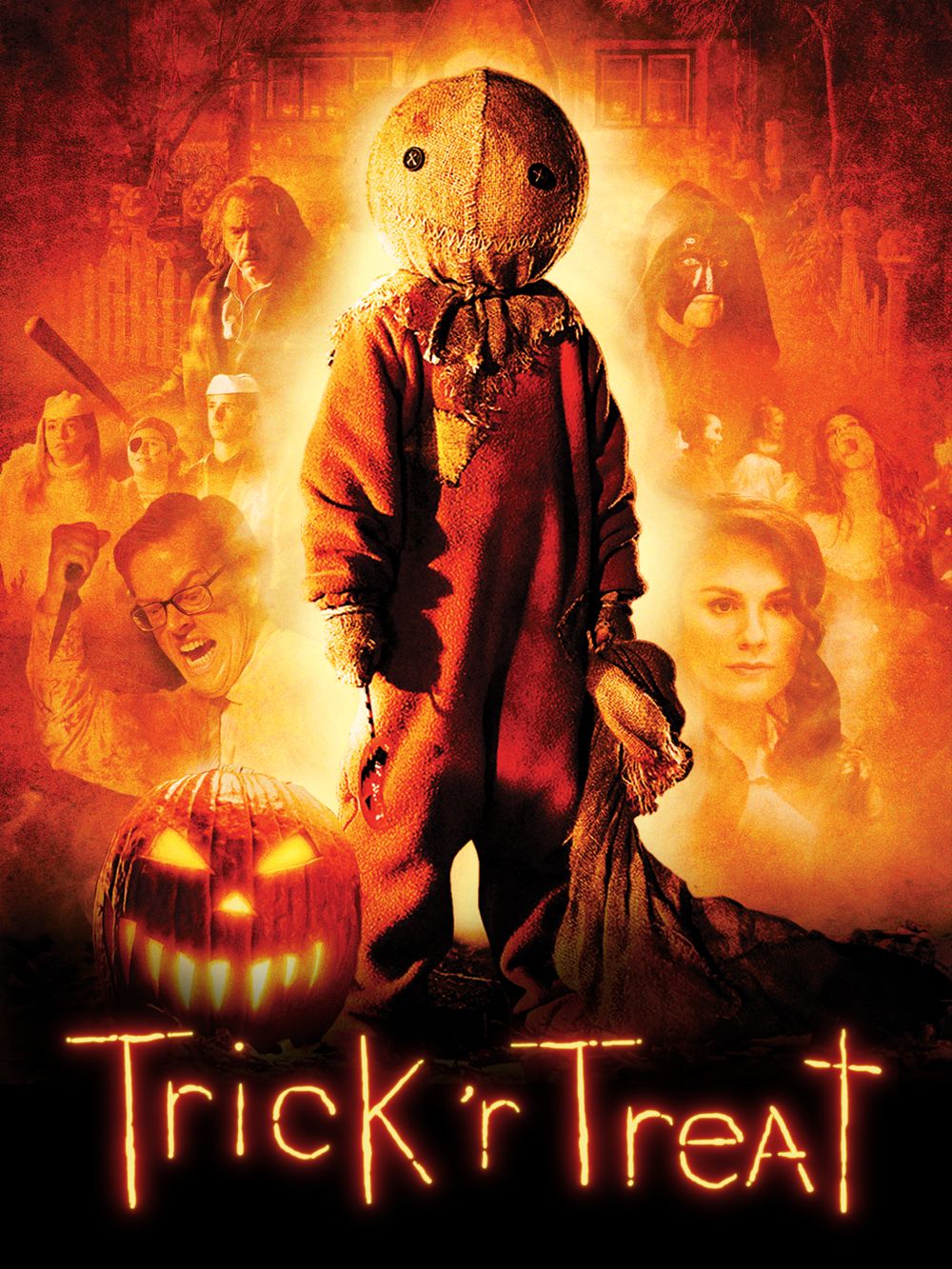
The town’s Halloween obsession is also what gives the film its personality. Trick ’r Treat treats Halloween rules almost like ancient laws: wear a costume, hand out candy, never blow out a jack-o’-lantern before midnight, and always respect the dead. Breaking those rules does not guarantee immediate punishment in a simple moralistic way, but it certainly puts people at risk. The film’s central icon, Sam, embodies that idea. Wearing orange pajamas, a burlap sack mask, and carrying a lollipop that can become a weapon, Sam is one of the great modern horror mascots because he is both adorable and deeply unsettling. He is not presented as a typical slasher villain with a detailed backstory or a conventional motivation. He feels more like the living spirit of Halloween itself: mischievous, ceremonial, cruel when necessary, and completely devoted to the holiday’s traditions.

Sam’s presence gives the movie a connective thread beyond plot mechanics. He appears in the background, watches over events, and eventually takes center stage in a way that is both amusing and genuinely tense. There is something almost storybook-like about him. He resembles a child going door to door for candy, but his behavior suggests an old supernatural force enforcing rules everyone else has forgotten. The movie wisely never overexplains him. Horror icons often become less interesting once every mystery is reduced to lore, family trees, and exposition. Sam works because Dougherty lets him remain partly unknowable.

The cast is another reason the film holds together so well. Dylan Baker is excellent as Steven Wilkins, the seemingly mild suburban principal whose cheerful politeness becomes much more disturbing once the movie reveals what he is doing after dark. Baker has a talent for making every smile look just slightly too controlled. His storyline is especially effective because it mixes grotesque humor with an unsettling domestic quality. He is not stalking victims through a foggy forest or living in an abandoned asylum. He is cleaning up a mess in his backyard while trying to maintain a normal family routine. That contrast makes his scenes nastier and funnier.

Brian Cox brings real weight to Mr. Kreeg, the grumpy old man at the center of the film’s most memorable Sam-focused material. Cox could have played him as a broad caricature, but he gives the character enough fear, frustration, and hidden sadness to make the confrontation feel more substantial than a simple old-man-versus-monster sequence. The movie’s final act uses his house almost like a haunted maze, with the warm, cluttered interior gradually becoming a battlefield. The tone remains playful, yet there is a real sense of danger whenever Sam drops the cute disguise and shows what he can do.

Anna Paquin also stands out in the segment involving Laurie and her friends. At first, it seems like the film is setting up a familiar vulnerability narrative: young women in costumes, a dark forest, strange men, and the possibility of a predatory attacker. Then Trick ’r Treat gleefully twists expectations. The reveal is not subtle, but it is staged with enough energy and confidence that it lands as a crowd-pleasing monster-movie moment. Dougherty knows that horror does not always need to be grim to be effective. Sometimes the best reaction is an audience laughing in surprise right before a scene turns bloodier than expected.

The school-bus story is probably the film’s creepiest material. The idea of children killed by adults and returning as drowned, decayed figures could have been handled in a cheap or overly cruel way, but the movie gives it a sad, mythic edge. The ghosts are frightening, but the story is also about guilt, buried history, and a town that has allowed its ugliest secret to become a campfire legend. The children may be supernatural monsters by the time they reappear, but the adults who wronged them are even more horrifying. That is a recurring theme throughout Trick ’r Treat: Halloween monsters are dangerous, but human selfishness, cowardice, and cruelty tend to create the worst consequences.

Visually, the film has aged remarkably well because it does not chase a slick, overly polished look. It has a rich autumnal color palette full of oranges, blacks, deep reds, and warm porch-light yellows. The night scenes are dark enough to feel threatening but clear enough that viewers can appreciate the costumes, decorations, and production design. Every street seems covered in leaves, every house has candles or carved pumpkins, and every shadow seems capable of hiding a creature. It feels like a heightened version of childhood Halloween memories, except those memories have been invaded by murderers, werewolves, demons, and ghosts.

The practical effects and creature work add a lot to that charm. The movie uses CGI when needed, but it does not depend on weightless digital spectacle. Sam’s physicality, the werewolf transformations, the decayed school-bus children, and the various masks and props all have a tactile quality. They look like things that belong in a haunted attraction, a particularly elaborate costume shop, or an old EC Comics-style horror story. That handmade texture fits the film perfectly. Trick ’r Treat is polished, but it never feels sterile.

What makes the movie so rewatchable is how comfortably it moves between tones. It can be goofy without becoming stupid, gruesome without becoming exhausting, and sentimental about Halloween without turning saccharine. It embraces the holiday’s childish excitement while acknowledging the darker folklore underneath it. There is candy, costumes, and neighborhood fun, but there are also old grudges, punished sinners, restless dead, and things that hunt after midnight. Dougherty understands that those two sides belong together. Halloween is fun partly because it lets people play with fear in a safe, communal way, and Trick ’r Treat captures that balance better than most horror movies.

The film’s anthology-like design gives it variety, while its overlapping characters, recurring events, and shared setting make it feel like one cohesive story rather than a disconnected collection of shorts. Its lasting popularity has also made the lack of a sequel feel increasingly strange. Fans have been clamoring for another trip through Sam’s Halloween night for years, and Dougherty has repeatedly hinted that he has ideas for where a follow-up could go. He has discussed multiple script drafts, storyboards, concept art, and the possibility of giving Sam a new adversary, but the project still has not received an official greenlight.

That uncertainty is frustrating, especially because Trick ’r Treat feels like a world with plenty more stories left to tell. At the same time, it is probably better that Dougherty has not rushed out a sequel just to cash in on the film’s cult status. The original works because it feels carefully constructed, visually specific, and completely committed to its Halloween setting; any follow-up would need to preserve that same mix of horror, comedy, folklore, and interconnected storytelling. For now, Trick ’r Treat remains an annual October rewatch because it honors Halloween’s old traditions while creating its own: a funny, spooky, blood-soaked celebration of costumes, candy, campfire legends, and the things that come out once the porch lights go dark.
Review: The Poughkeepsie Tapes (dir. by John Erick Dowdle)


“She kept covering her eyes, whispering ‘please take me home, please take me home, please take me home…’ a week later I got her outta there and I brought her home… but she just kept repeating it. At that point I realized… she didn’t mean OUR home.” — Victoria Dempsey

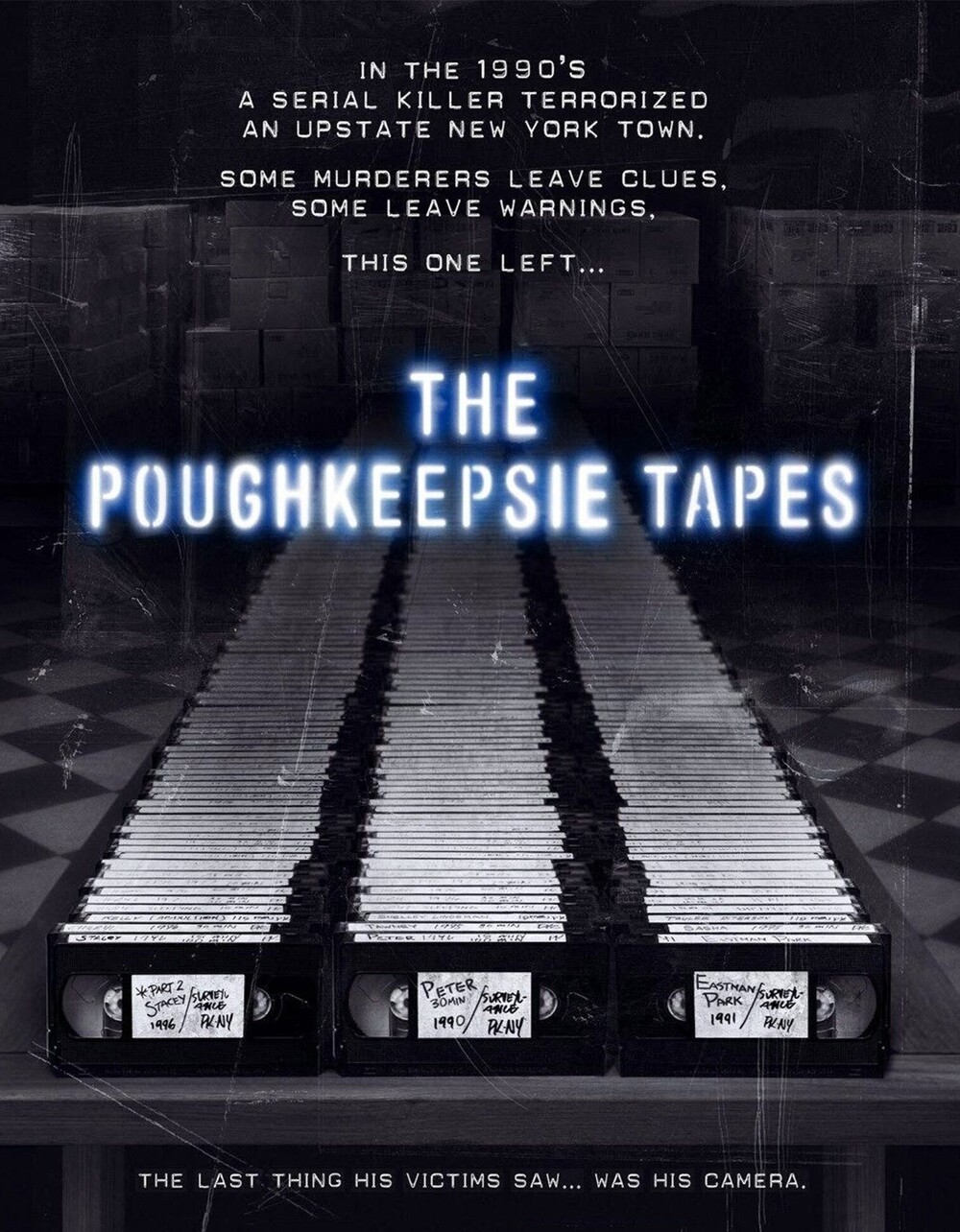
The Poughkeepsie Tapes emerges from the shadows of independent horror like a grainy artifact unearthed from some forgotten police evidence locker, its found-footage aesthetic not merely a gimmick but a deliberate plunge into the abyss of real-world atrocity documentaries. Directed by the Dowdle brothers—John Erick and Drew—this 2007 effort masquerades as a television special pieced together from hundreds of VHS recordings left behind by a serial killer known only as the Waterworks Killer, operating in upstate New York during the late 1990s and early 2000s.

What sets it apart in the crowded found-footage subgenre is its unyielding commitment to procedural authenticity: interviews with beleaguered detectives, forensic psychologists, and shell-shocked family members intercut with the killer’s own unfiltered home movies, creating a mosaic that feels less like scripted cinema and more like a leaked FBI file. The film clocks in at a taut 86 minutes, yet its impact lingers far longer, burrowing into the psyche with the relentless persistence of damp rot. For those weaned on the polished shocks of mainstream slashers, this is horror stripped bare, a methodical dissection of evil that prioritizes psychological dread over jump scares or excessive gore.

From the outset, the mockumentary framework establishes an ironclad verisimilitude, opening with a SWAT raid on a nondescript Poughkeepsie home where authorities uncover not just dozens of bodies meticulously cataloged in black trash bags, but over 800 videotapes chronicling the killer’s decade-long reign of terror. These tapes, purportedly shot on consumer-grade camcorders, capture everything from mundane abductions in broad daylight to the most intimate depravities imaginable, all rendered in that telltale analog fuzz that evokes early 2000s true-crime broadcasts.

Edward Carver—unforgettably embodied by Ben Messmer—remains an enigma, never fully named in the tapes themselves, his face often obscured, voice distorted into a childish lisp that veers from playful taunting to guttural rage, embodying pure, motiveless malignancy without the monologuing backstory that humanizes figures like Hannibal Lecter. Messmer invests the role with a chilling physicality, his lanky frame clad in a grotesque yellow rain slicker becoming an iconic silhouette of suburban nightmare. Yet the film’s true brilliance lies in its restraint; rather than revel in spectacle, it lets the banality of evil seep through, as when Carver methodically dresses a victim in ballerina attire for a mock performance, or forces another into a twisted tea party, the domesticity amplifying the horror. This isn’t about blood sprays or final girls—it’s a taxonomy of sadism, each tape labeled with clinical precision: “Victim 31 – Jennifer,” “Victim 42 – Dance Recital.”

The ensemble of talking heads grounds the proceedings in stark realism, with standouts like Stacy Chbosky as Cheryl Dempsey, the survivor whose tormented recollections form the emotional core of the investigation. Their discussions—ranging from behavioral profiling to Carver’s fetishistic rituals—mirror actual criminology seminars, lending intellectual weight without descending into exposition dumps. These interludes humanize the victims, transforming statistics into shattered lives: a missing jogger here, a single mother there, their absence rippling through communities with quiet devastation. The Dowdles excel at pacing these elements, crosscutting between tape horrors and investigative fallout to build a suffocating tension, where the real terror is Carver’s omnipresence—he films himself stalking malls, taunting police press conferences, even infiltrating a family Thanksgiving. In a genre often criticized for laziness, The Poughkeepsie Tapes weaponizes its format, making viewers complicit voyeurs, questioning why we’re watching at all.

Thematically, the film probes the pornography of violence, echoing the likes of Henry: Portrait of a Serial Killer or the Paradise Lost documentaries, but with a rawer edge that anticipates the analog horror wave of the 2020s. It grapples with voyeurism’s allure, as detectives pore over tapes like addicts, one admitting the footage “gets into your dreams.” Carver’s escalating fetishes—binding victims in spiderwebs of duct tape, staging puppet shows with their limbs—escalate from perverse play to outright desecration, culminating in a sequence involving a captured police officer that tests even hardened viewers. Yet amid the depravity, glimmers of perverse artistry emerge: the meticulous framing of shots, the almost balletic choreography of assaults, suggesting a mind as creative as it is corrupt. This duality fascinates—evil as both banal and sublime—without ever excusing it. The film’s independent ethos shines through its low-budget ingenuity; shot on digital video run through VHS filters, it achieves a patina of age that rivals big-studio recreations. Sound design deserves special mention—the muffled whimpers, the hiss of tape rewind, the sudden shrieks—crafting an auditory assault that lingers in the ears long after the screen fades.

Of course, no film this ambitious escapes imperfection. The grainy visuals, while immersive, occasionally border on opacity, turning key moments murky when clarity might heighten the impact; a few tapes feel repetitious, padding runtime before the finale’s revelations. Acting varies—some interviews veer toward community theater stiffness, and the killer’s voice modulation can grate like a parody of itself. Pacing sags in the midsection amid procedural minutiae, demanding patience from those expecting non-stop carnage. Distribution woes didn’t help; shelved for years post-Tribeca premiere, it finally surfaced on home video in 2017, its cult status now cemented online but still niche. These are quibbles, though, in a landscape of forgettable slashers; they don’t undermine the core achievement.

Ultimately, The Poughkeepsie Tapes endures as a gut-punch reminder of horror’s primal function: to confront the void within humanity. It doesn’t titillate or moralize—it documents, with unflinching gaze, the machinery of monstrosity. Fans of vérité terrors like Lake Mungo or The Bay will find kin here, a film that trades spectacle for seepage, leaving stains no bleach can remove. In an era of sanitized streaming chills, its refusal to look away remains a defiant virtue. Seek it out on a lonely night, but keep the lights on after.

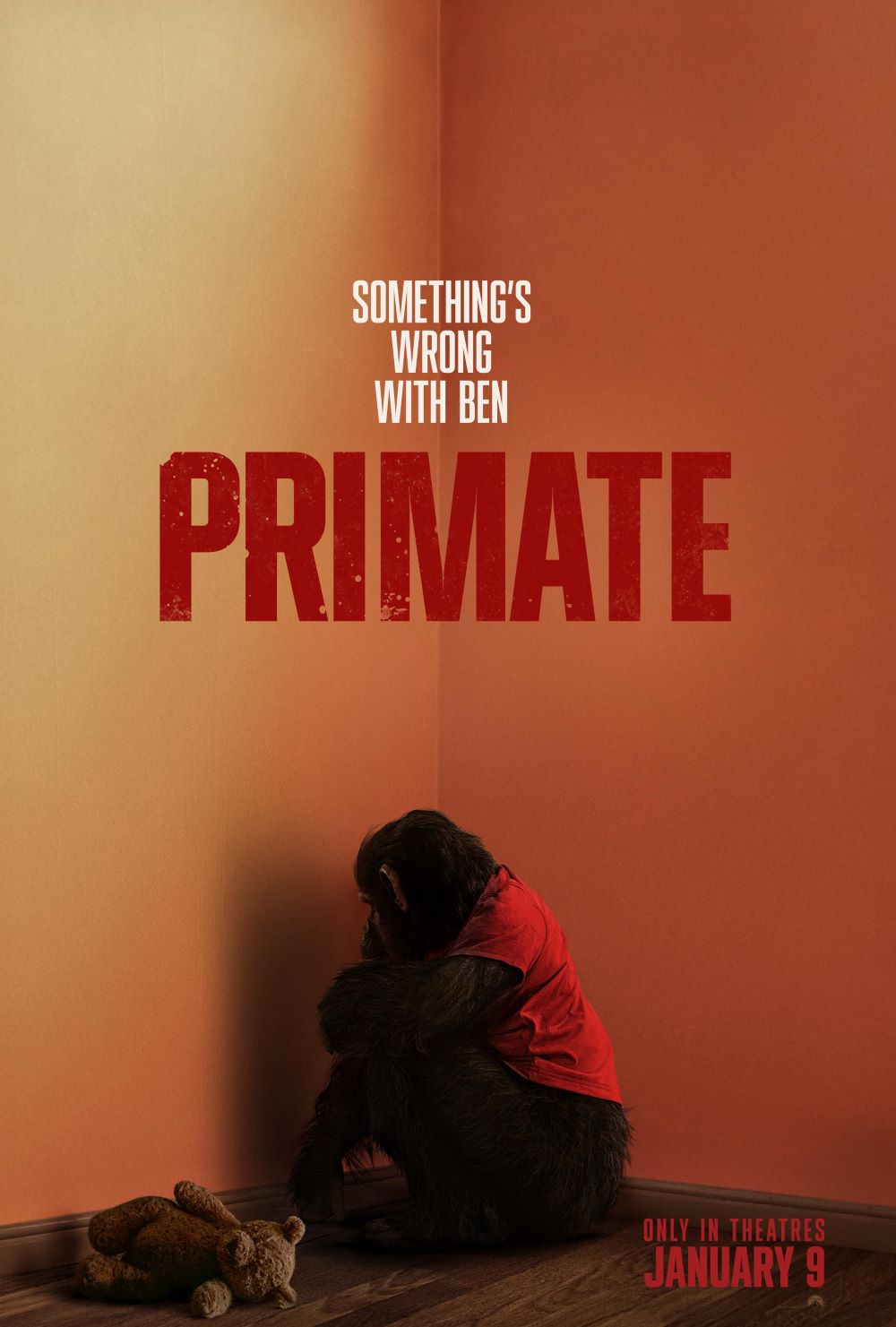
Review: Primate (dir. by Johannes Roberts)


“There’s something wrong with Ben.” — Lucy Pinborough

Primate is the kind of nasty little horror movie that knows exactly what it is: a killer-chimp siege flick with a mean streak, a surprising amount of craft, and just enough emotional texture to keep it from feeling like pure junk food. It is also, very unapologetically, a January-release bloodbath built around one simple promise: you came to watch a chimp rip people apart, and the film is absolutely going to deliver on that.

Set on a remote, luxury house carved into a Hawaiian cliffside, Primate follows Lucy, a college student returning home to her deaf father Adam, younger sister Erin, and Ben—their adopted chimpanzee, who has been taught to communicate using a custom soundboard. The setup leans a bit into family melodrama and awkward-friends-on-vacation vibes: Lucy brings her buddies Kate and Nick, Kate drags along wildcard Hannah, and a pair of party bros, Drew and Brad, orbit the group on the way to a weekend of drinking by the infinity pool. Things tilt into horror when Ben is bitten by a rabid mongoose, starts behaving erratically, and eventually tears the face off the local vet before busting out of his enclosure and turning the house into a kill zone. From there, the movie pretty much drops the pretense of being about anything except survival, creative carnage, and the miserable logistics of trying to outrun a furious primate on a cliff.

Director Johannes Roberts, who previously did 47 Meters Down and The Strangers: Prey at Night, brings that same B-movie efficiency here—minimal fat, fast escalation, and a willingness to lean into the ridiculous without winking too hard. Once Ben escapes, the film basically becomes a series of tightly staged, high-tension set pieces: kids trapped in a pool while a chimp stalks the edge, frantic dashes through glass corridors, and messy, up-close attacks where you really feel the weight and speed of the animal. The pool sequence in particular is a great example of Roberts finding one strong visual idea—humans stranded in water because the predator can’t swim—and milking it for all the dread he can. It’s simple, almost old-fashioned monster-movie blocking, but it works because the geography is clear and the danger feels immediate rather than abstract.

Visually, the film is punching above what you might expect from “rabid chimp horror.” The cliffside house setting gives Roberts and his team a lot to play with: long glass walls, sharp drops, tight stairwells, and that infinity pool hanging over nothing. The camera favors clean, legible compositions instead of frantic shaky-cam, which means when the violence happens, you actually see it—and the movie is proud of that. There’s a grimy 80s-video-store energy to the way kills are framed and lingered on just long enough to be uncomfortable, but not so long that they turn into camp. Adrian Johnston’s synth-heavy score leans into that retro horror vibe too; it buzzes and screeches like someone let a demon loose on a cheap keyboard, and it matches the film’s mix of nasty and playful pretty well.

The real secret weapon here is Ben himself. Rather than going full CGI or trying to work with a real chimp, the production uses a combination of suit performance, animatronics, and careful staging, with Miguel Torres Umba giving the creature its physical personality. The result is surprisingly convincing; there are stretches where it feels like you’re watching a real animal charge people on stairs or slam into doors, which makes the violence land harder. You can tell the effects team put in serious work on the costume and facial mechanics—Ben’s expressions shift from confused, childlike attachment to full-on feral rage, and that emotional readability helps sell him as a character instead of just a prop. Importantly, the film avoids the “PS3 cutscene” problem of bad CG animals, which would have killed the tension immediately.

Performance-wise, this is very much “do your job and don’t get in the way” acting, and that’s mostly a compliment. Johnny Sequoyah makes Lucy feel grounded enough that you buy her as both final girl and guilty older sister who’s been away too long. Troy Kotsur, as Adam, is probably the standout human presence; his scenes use sign language not as a gimmick, but as part of how the family actually lives, and his mixture of vulnerability and stubbornness gives the movie a little heart. The rest of the cast—Jessica Alexander, Victoria Wyant, Gia Hunter, Benjamin Cheng, and the cannon-fodder guys—do what’s asked: they feel like actual young adults rather than complete idiots, which helps when the film needs you to invest in whether they make it out. Nobody is delivering awards-caliber work, but nobody is embarrassing themselves either, and in a film where a chimp tears someone’s jaw off, that’s honestly the sweet spot.

Tonally, Primate walks a line between brutal and darkly funny, and your mileage will depend on how much you enjoy mean-spirited genre films. This is not a movie that’s precious about its characters; the script makes it clear that almost anyone can get obliterated at any moment, and the kill scenes are loud, wet, and often abrupt. There’s a streak of black comedy in how casually some of the deaths happen—a rock to the head here, a shovel to the face there—but Roberts never tips fully into self-parody. At the same time, the film does gesture at something sadder in the idea of a beloved family member suddenly turning dangerous because of a disease, and in the way Lucy has to reconcile her childhood bond with Ben with the reality of what he’s become. The movie doesn’t dig into that theme deeply, but it’s present enough to keep things from feeling completely hollow.

Where Primate stumbles is mostly in its limitations, and whether those feel like flaws or just genre boundaries will depend on what you’re looking for. The script is extremely straightforward: characters have clear, basic motivations, relationships are sketched in a few lines, and then everyone gets funneled into the survival engine. If you want layered character work, subtext about animal ethics, or a big commentary on captivity and communication, this is not that movie, even though the setup with a sign-literate chimp and a linguist mother hints at richer territory. The film also indulges in the usual horror conveniences—texts ignored, warnings missed, people splitting up when they probably shouldn’t—though to its credit, the characters generally behave less stupidly once they understand the situation. And as gnarly as the gore is, the movie’s reliance on shock and escalation can make the back half feel a bit repetitive: Ben appears, someone gets mauled, survivors scramble, repeat.

From an honesty standpoint, Primate is absolutely worth watching if you have a soft spot for creature-features, killer-animal movies, or throwback 80s-style horror that doesn’t pretend to be more than a vicious good time. It’s tightly paced, well shot, and anchored by a genuinely impressive creature performance that justifies the whole exercise. If you’re squeamish about animal violence, or you want your horror to come with metaphor, political commentary, or emotional catharsis, you’ll probably bounce off this pretty quickly. But if you can meet it on its own trashy, committed wavelength, there’s something satisfying about watching a studio-backed film go this hard, this graphically, on such a simple premise. It feels like the kind of bloody, fast-moving B-movie you’d have rented on VHS for a sleepover, only now it’s playing in theaters with a slicker finish and a killer chimp named Ben waiting to wreck your night.

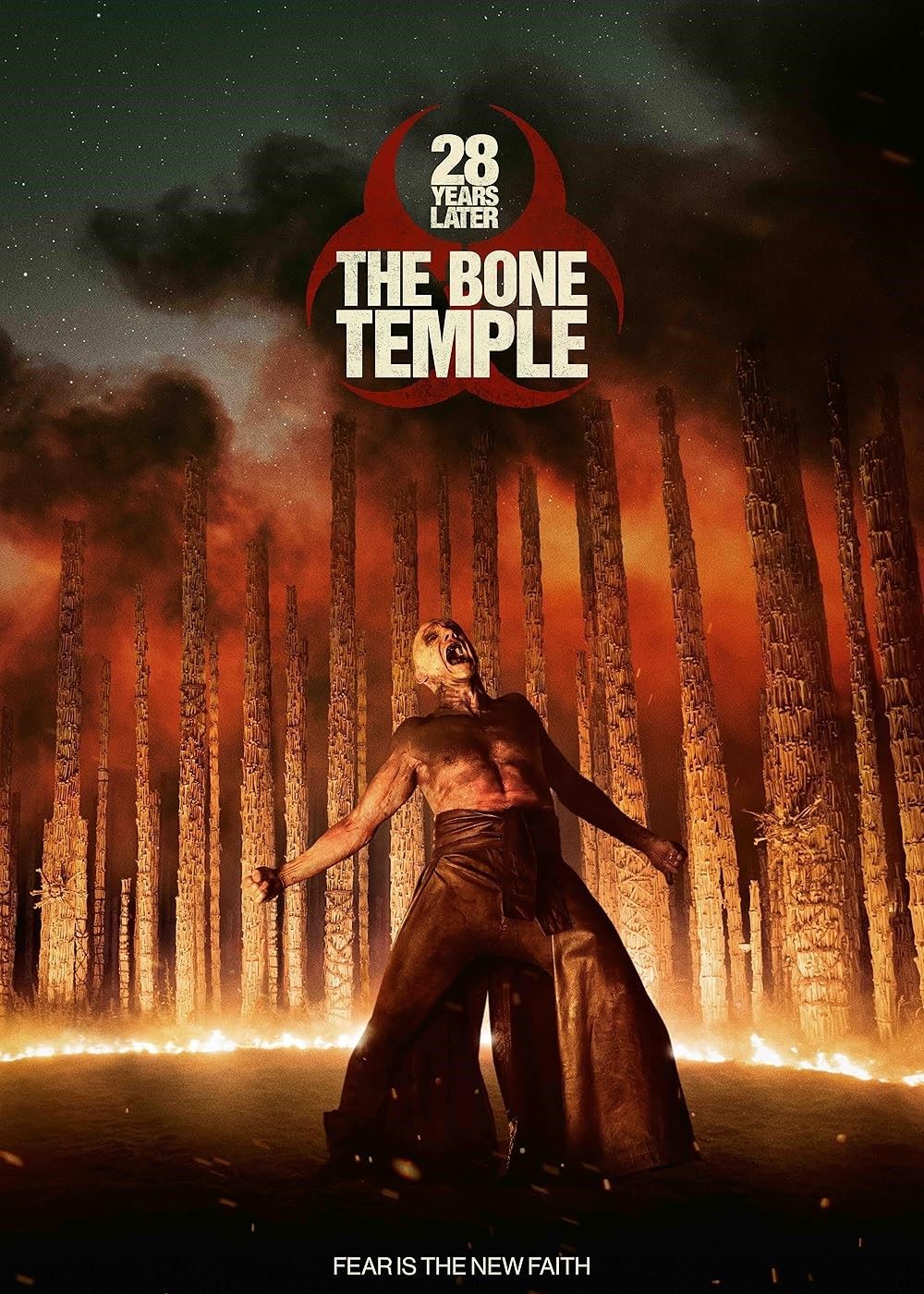
28 Years Later: The Bone Temple (dir. by Nia DaCosta) Review


“Every skull is a set of thoughts. These sockets saw and these jaws spoke and swallowed. This is a monument to them. A temple.” — Dr. Ian Kelson

28 Years Later: The Bone Temple crashes into 2026 with the force of a Rage-infected sprint, claiming its spot as one of the year’s top films right out of the gate, flaws and all. Directed by Nia DaCosta, the film continues to showcase her evolving command as a filmmaker, building directly on the promise of her 2025 character study Hedda, where she dissected emotional isolation with surgical precision and atmospheric tension. Where The Marvels in 2023 felt like a worthy attempt hampered by a screenplay that couldn’t decide on a tone—swinging between quippy banter and high-stakes drama while beholden to the cinematic universe’s endless interconnections—The Bone Temple unleashes DaCosta at full throttle, free from franchise baggage to craft a horror epic that’s visually poetic, thematically fearless, and rhythmically assured.​

Yeah, it revels in bleakness that can border on exhausting, and its structure wanders more than it charges forward, but those imperfections only underscore how fiercely original and alive it feels compared to the rote horror sequels we’re usually fed. Decades past the initial outbreak that defined 28 Days Later and 28 Weeks Later, the apocalypse here isn’t a fresh crisis anymore—it’s infrastructure, a grim new normal etched into the landscape. Survivors haven’t rebuilt so much as repurposed the ruins, carving out rituals and monuments that say as much about lingering trauma as they do about adaptation. The Rage virus still turns people into feral killers, ripping through flesh in those signature bursts of speed and savagery, but the infected have evolved in intriguing ways that deepen the world’s mythology without overshadowing the human core. The spotlight swings to human extremes: towering bone architectures raised as memorials, nomadic gangs treating murder like liturgy, and lone figures wrestling with whether dignity even matters when bodies pile up unmarked. This pivot lets the film breathe in ways the earlier entries couldn’t, expanding a zombie-adjacent thriller into something folk-horrific and introspective.​

Dr. Ian Kelson embodies that shift, and Ralph Fiennes delivers what might be his meatiest role in years—a reclusive physician-architect whose Bone Temple dominates the story like a character itself, adding a profound level of tragic humanity that stands in stark, poignant contrast to the nihilistic worldview of Sir Lord Jimmy Crystal and his blindly devoted followers. Picture spires of meticulously arranged skulls and femurs, bleached white against misty Scottish skies, lit at night like profane altars: it’s production design that hits you visually first, then sinks in thematically as Kelson’s obsession with cataloging the dead. Fiennes plays him not as a villain or eccentric, but as a man fraying at the edges—tender when easing a dying woman’s passage (Spike’s mother, in a flashback that sets the whole narrative in motion), ruthless in his logic about preserving memory over sentiment. “Every skull is a set of thoughts,” he murmurs in one standout line, sockets staring empty, jaws frozen mid-word—a perfect encapsulation of the film’s meditation on legacy amid oblivion. Those quiet scenes, where Kelson debates ethics with survivors or observes the infected Samson with clinical curiosity shading into something paternal, ground the movie’s wilder swings and prove Fiennes can carry horror on sheer presence alone.​

Spike, our entry point into this madness, carries scars from that childhood brush with the Temple and his mother’s end, propelling him toward Jimmy Crystal’s orbit like fate’s cruel magnet. He’s no square-jawed lead; he’s reactive, watchful, hardening through trials that test his humanity without fully erasing it. That arc collides with Jimmy’s cult—a roving pack of devotees renamed his “seven fingers,” all aping the leader’s bleach-blond hair, loud tracksuits, and flashy trinkets in a uniformity that’s both comic and chilling. Jack O’Connell chews the scenery as Jimmy, a pint-sized prophet whose charisma masks profound damage: twitchy grins, boyish rants blending kids’ TV catchphrases with fire-and-brimstone, devotion to his “Old Nick” devil figure turning every kill into theater. The Savile visual parallels—those garish outfits evoking the real-life abuser’s predatory fame—add a layer of cultural poison, implying charisma survives apocalypse by mutating into something even uglier, with institutions gone but the hunger for idols intact. O’Connell makes Jimmy magnetic and monstrous, a performance that elevates the cult from trope to tragedy.​

If the film’s greatness shines through performances and visuals, its violence tests that shine—deliberately, one suspects. Infected attacks deliver franchise-expected chaos: heads torn free, eyes clawed out, bodies pulped in handheld frenzy. But Jimmy’s rituals amp the sadism—knife duels extended into endurance ordeals, flayings half-glimpsed but fully heard, victims’ pleas dragging until empathy fatigues. It’s grueling, sometimes overlong, risking audience burnout, yet it serves the theme: in a Rage world, human-inflicted torment outlasts viral rage because it feeds on belief. DaCosta pulls punches visually (smart cuts, shadows over gore) but lingers on emotional fallout, making cruelty feel earned rather than exploited— a maturation from The Marvels‘ tonal whiplash into controlled, purposeful discomfort. Counterpoints pierce through: Jimmy Ink’s furtive kindnesses toward Spike, Ian and Samson’s drug-hazy field dances blurring monster and man, fragments of backstory humanizing even Jimmy’s frenzy. These glimmers don’t redeem the world—they make its harshness sting deeper, proving flickers of connection persist as defiant accidents.​

Technically, the film flexes non-stop, with DaCosta’s post-Hedda assurance evident in every frame. Anthony Dod Mantle’s cinematography weds gritty digital shakes to sweeping drone shots, turning Highlands into deceptive idylls ruptured by whip-pans and flame flares. Sound design hums with menace—whistling winds masking howls, train rumbles underscoring rituals, screams echoing into silence for maximum unease. Editing mirrors the narrative’s spiral: episodic loops around Spike’s hardening, Ian’s doubt, Jimmy’s collapse, eschewing linear escalation for dream-logic dread that suits a “settled” apocalypse. The Temple centerpiece ritual explodes into metal-thrash worship, cultists moshing amid pyres—a grotesque stadium parody where faith meets fandom in blood-soaked ecstasy. Even the score pulses with restraint, letting ambient horror fill gaps better than bombast ever could.​

Tonally, it juggles masterfully: tender Kelson vignettes abut cult carnage, philosophical riffs on atheism versus delusion frame gore-fests, folk-horror monuments clash with infection thriller roots. Themes of faith-as-coping, grief-as-art, ideology’s pitfalls land without preaching—Kelson’s secular duty versus Jimmy’s ecstatic nihilism debates through action, not monologue. The ending circles back to series emotional cores (survival’s cost, hope’s fragility) while forging ahead, teasing Spike’s grim purpose without cheap uplift.​

Flaws? The runtime sags in cult stretches, bleakness borders masochistic, sprawl might frustrate plot-chasers. But these are risks of ambition, not laziness—choices that make triumphs (Fiennes’ gravitas, O’Connell’s feral spark, visuals’ poetry) land harder, all under DaCosta’s steady hand that Hedda honed and The Marvels tested. In January 2026, amid safe genre retreads, The Bone Temple towers: a sequel philosophically dense, actor-propelled, unafraid to wound deeply then whisper mercy. It hurts because it sees us clearly—craving structure in chaos, building temples from bones, real or imagined. One of the year’s best, period, for daring to evolve rather than echo.

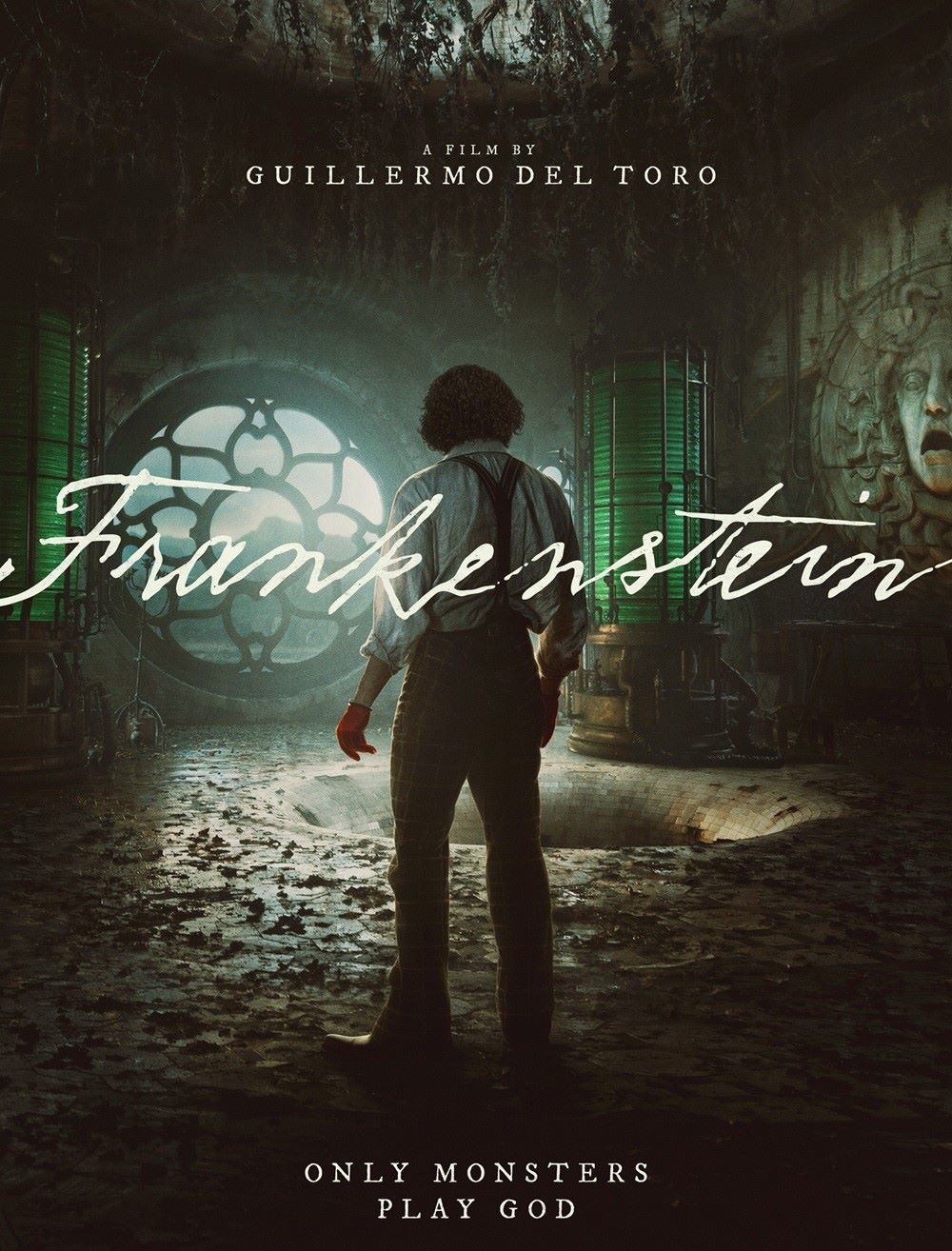
Review: Frankenstein (dir. by Guillermo Del Toro)


“An idea, a feeling became clear to me. The hunter did not hate the wolf. The wolf did not hate the sheep. But violence felt inevitable between them. Perhaps, I thought, this was the way of the world. It would hunt you and kill you just for being who you are.” — the Creature

Guillermo del Toro’s long-awaited take on Frankenstein finally lumbers to life after years of speculation and teases, and it’s every bit the dark, hypnotic fever dream you’d expect from his imagination. The film, a Netflix-backed production running close to two and a half hours, stars Oscar Isaac as the guilt-ridden Victor Frankenstein and Jacob Elordi as his tragic creation. The result lands somewhere between Gothic melodrama and spiritual lament—a lush, melancholy epic about fathers, sons, and the price of neglect. It’s both a triumph of aesthetic world-building and a case study in overindulgence, the kind of movie that leaves you haunted even when it occasionally tests your patience.

From the very first frame, del Toro plunges us into a Europe steeped in rot and beauty. His world feels more haunted than alive—every misty street lamp and echoing corridor loaded with centuries of decay. Victor, introduced as both a visionary and a failed son, is shaped by years of cruelty at the hands of his domineering father, played with aristocratic venom by Charles Dance. That upbringing lingers in every decision he makes, especially when he turns to science to defy death. Del Toro shoots his laboratory scenes as though they were sacred rituals: the flicker of candlelight reflecting off glass jars, the close-up of trembling hands threading sinew into flesh. When the Creature awakens, lightning cracks like some divine act of punishment. It’s a birth scene that feels more emotional than monstrous—Elordi’s raw, wordless confusion gives it a painful tenderness that lingers longer than the horror. Del Toro discards the usual clichés of flat heads and neck bolts, opting for something far more human: an imperfect body full of scars and stitched reminders of mortality.

One of the most striking choices del Toro makes is reframing Victor and the Creature as mirror images rather than opposites. Instead of playing Victor as a simple mad scientist, del Toro paints him as a broken man desperate to reclaim the control he never had as a child. That fear and obsession ripple through the Creature, who becomes his unacknowledged shadow—an extension of Victor’s failure to love or take responsibility. The movie often frames the two in parallel shots, their movements synchronized across different spaces, suggesting that creator and creation are locked in a tragic loop. The audience watches both sides of the story—Victor’s guilt and the Creature’s anguish—without clear moral lines. This emotional split gives the film its heartbeat: the Creature isn’t a villain so much as a rejected child, articulate and lonely, begging to know why he was made to suffer.

Jacob Elordi’s performance is revelatory. He channels something hauntingly human beneath the layers of prosthetics and makeup. There’s a fragility to the way he moves—those long, uncertain gestures feel less like a monster testing its strength and more like someone trying to exist in a world that never wanted him. His eyes carry the movie’s emotional weight; the moment he sees his reflection for the first time is quietly devastating. Oscar Isaac, meanwhile, leans hard into Victor’s manic idealism, all sweat-soaked ambition and buried grief. He makes the character compelling even at his most despicable, though at times del Toro’s dialogue spells out Victor’s torment too bluntly. Still, the scenes between them—particularly their tense reunion in the frozen north—achieve the Shakespearean tragedy that del Toro clearly aims for.

Visually, Frankenstein is pure del Toro—sumptuous, grotesque, and alive in every corner of its composition. Each frame looks painted rather than filmed: flickers of gaslight reflecting on wet marble, glass jars filled with organs that seem to breathe, snow settling gently on slate rooftops. The film feels drenched in the texture of another century, yet vibrates with modern energy. Costume designer Kate Hawley, longtime collaborator of del Toro, deserves special recognition here. Her work helps define the story’s emotional tone, dressing Victor in meticulously tailored waistcoats that hint at obsession through precision, and the Creature in tattered fabrics that seem scavenged from several lives. Elizabeth’s gowns chart her erosion from warmth to mourning, using color and texture as silent narration. Hawley’s palette moves from opulent golds and creams to bleak greys and winter blues—visually tracing how ambition and grief drain the light from these characters’ worlds. The costumes, much like del Toro’s sets, feel alive with history, heavy with stories stitched into every seam.

Mia Goth gives a strong, if underused, turn as Elizabeth, Victor’s doomed fiancée. Her early scenes bring a spark of warmth to the story’s coldness; her later ones turn tragic in ways that push Victor toward his final breakdown. Minor characters—the townspeople, the academics, the curious aristocrats who toy with Victor’s discovery—carry familiar del Toro trademarks: grotesque faces, eccentric manners, glimmers of compassion buried in callousness. The composer’s score matches this tone perfectly, alternating between aching melodies on piano and surging orchestral crescendos that make even the quiet scenes feel mythic. Combined, the sound and visuals give Frankenstein a grandeur that most modern horror films wouldn’t dare attempt.

Still, not every gamble lands cleanly. Del Toro’s interpretation leans so hard into empathy that it dulls the edges of the original story’s moral conflict. Shelley’s Creature grows into a murderous intellect, acting out of vengeance as much as sorrow; here, his violence is softened or implied, as though del Toro can’t quite bring himself to stain the monster’s purity. The effect is powerful emotionally but flattens some of the tension—Victor becomes the clear villain, and the Creature, the clear victim. It fits del Toro’s worldview but leaves the viewer missing some ambiguity. The pacing also falters in the middle third. There are long, ornate monologues about divinity, creation, and guilt that blur together into a swirl of purple prose. The visuals never lose their grip, but the script occasionally does, especially when it slows down to explain what the imagery already tells us.

Those fits of overexplanation aside, del Toro’s Frankenstein stays deeply personal. The story connects directly to the themes he’s mined for years: innocence cursed by cruelty, love framed in pain, beauty stitched from the broken. The Creature isn’t just man made from corpses; he’s a kind of prayer for grace—a plea for understanding in a world defined by rejection. Victor’s failure to nurture becomes an act of spiritual cowardice rather than scientific arrogance. The parallels between them give the film its emotional voltage. Every time one character suffers, the other feels it by proxy, as if their bond transcends life and death.

By the final act, all the grand tragedy is distilled into the silence between two beings who can’t forgive each other—but can’t let go, either. The closing image of the Creature, trudging across a barren arctic plain beneath a rising sun, borders on mythic. His tear-streaked face and quiet acceptance of solitude bring the story full circle: a being born of man’s arrogance chooses forgiveness when his maker couldn’t. It’s sad, tender, and surprisingly spiritual, hinting at del Toro’s constant fascination with mercy in a cruel universe.

As a whole, Frankenstein feels like the culmination of del Toro’s career obsessions condensed into one sprawling film. It’s not perfect—it wanders, it sermonizes, and it sometimes sacrifices fear for sentiment—but it’s haunted by sincerity. You can see del Toro’s fingerprints in every gothic curve and crimson hue, and even when he overreaches, you believe in his conviction. Isaac anchors the film with burning intensity, Elordi gives it wounded humanity, and Goth tempers the heaviness with grace.

In the end, this version of Frankenstein isn’t about horror in the traditional sense. It’s not there to make you jump—it’s there to make you ache. The film trades sharp scares for bruised hearts, replacing terror with empathy. Del Toro reanimates not just flesh but feeling, dragging one of literature’s oldest monsters into our modern reckoning with parenthood, grief, and the burden of creation. It’s daring, messy, and undeniably alive. For better or worse, it’s exactly the Frankenstein Guillermo del Toro was always meant to make.

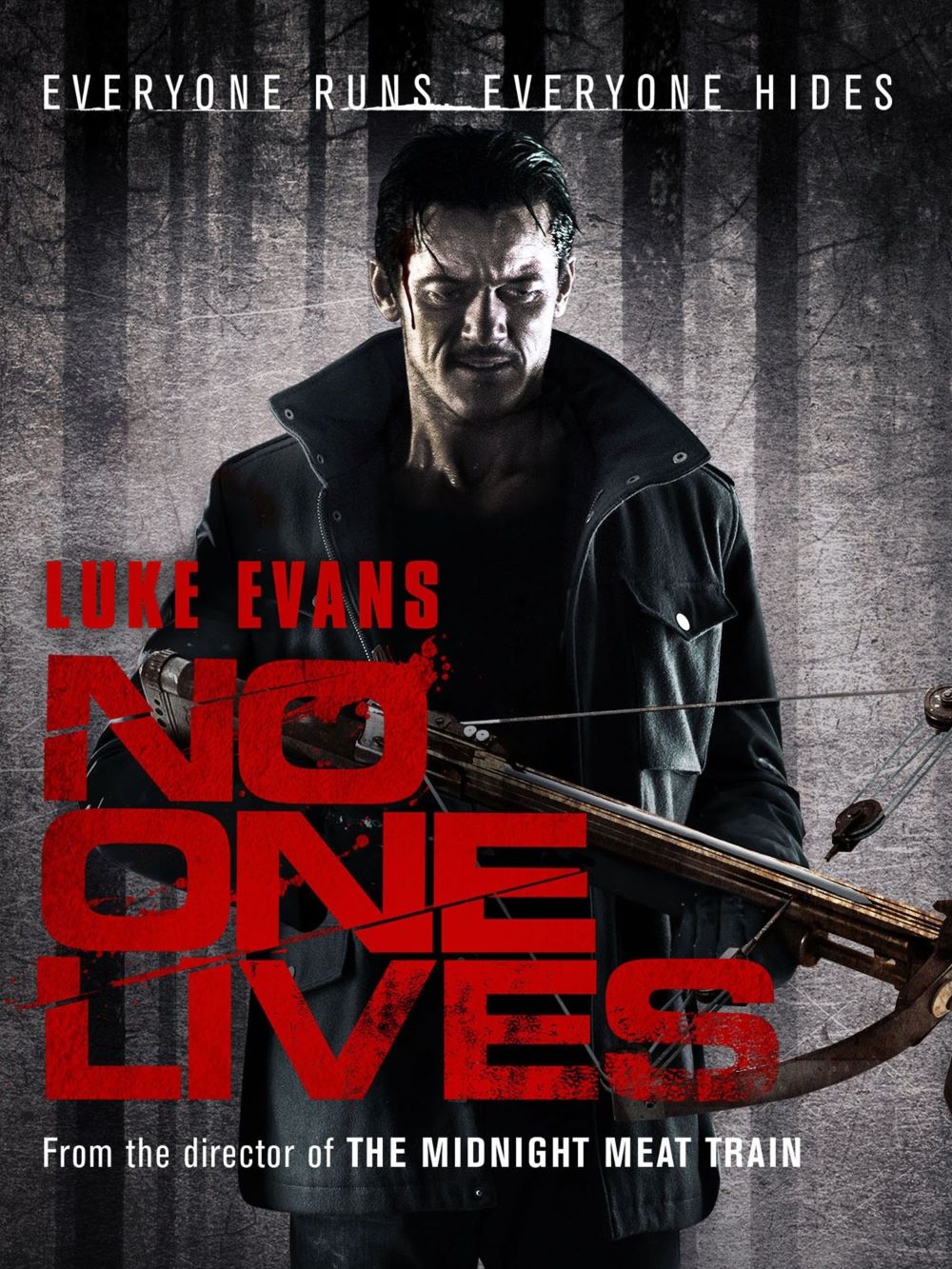
Guilty Pleasure No. 91: No One Lives (dir. by Ryuhei Kitamura)


Ryuhei Kitamura’s 2012 horror film No One Lives is a gritty, brutal revenge slasher that doesn’t aim for subtlety or depth but delivers a fast-paced, high-gore thrill ride. The story follows a couple traveling cross-country who are kidnapped by a ruthless gang, only for the man to reveal himself as a deadly predator on a violent rampage. Luke Evans, playing the mysterious and merciless Driver, leads the film with a performance that blends cold calculation and terrifying violence, keeping viewers glued to the screen.

What makes No One Lives stand out is how it leans heavily into its grindhouse and exploitation roots, which proves both advantageous and limiting. The film fully embraces the hallmarks of grindhouse cinema—fast pacing, gritty visuals, excessive gore, and an amoral story stripped down to revenge-fueled violence. This raw, unapologetic approach results in an intense, no-holds-barred experience that will satisfy fans of exploitation and grindhouse styles. The practical effects are impressively executed, with creative and shocking kills that maintain impact without descending into the ridiculous. This dedication to grindhouse aesthetics gives the film a charged energy and a cult appeal, making it a pulpy, heart-pounding experience for viewers who appreciate that sleazy, nihilistic flavor.

However, the grindhouse influence also shapes the film’s limitations. The focus on spectacle and shock means character development and thematic depth take a back seat, making the story feel thin and the characters largely unrelatable except as violent archetypes. Dialogue at times drifts toward camp, and some acting choices can feel a bit amateurish, which may pull some viewers out of the otherwise tense atmosphere. The film’s relentless brutality and amoral tone also create a polarizing effect; it’s unapologetically harsh and violent, which fits the exploitation tradition, but it’s not for everyone. Those expecting traditional horror with complex narratives might find the experience shallow and exhausting.

Luke Evans’s Driver is a compelling anti-hero/monster hybrid, a character who dominates the film with his cold efficiency and unpredictable savagery. The other characters—mostly the gang members—serve as fodder for the film’s violent set pieces, with minimal background or sympathy. This suits the film’s grindhouse style, where depth is often sacrificed for thrills and shock value. The script cleverly keeps some mystery around Driver, maintaining suspense about his origins and intentions, which helps to sustain interest amid the unrelenting carnage.

The film’s grindhouse and exploitation roots also explain its tone and style: it revels in zaniness and excess, the gore is gratuitous but skillfully done, and the revenges feel morally ambiguous and raw. The film doesn’t try to justify or soften its violence; it embraces the lawlessness and nihilism typical of exploitation cinema. While this results in a tight, entertaining 86-minute rush of thrills, it also means the film lacks subtlety or emotional resonance. The style is both a badge of authenticity for genre fans and a barrier to wider appeal.

No One Lives offers a high-energy, blood-soaked horror experience that fully embraces its grindhouse and exploitation influences. It is crafted with a strong focus on unapologetic violence, tight pacing, and a captivating anti-hero in Luke Evans’s Driver. This stylized approach gives the film its raw, relentless intensity that fans of exploitation cinema will appreciate. However, this allegiance to grindhouse aesthetics also means the film prioritizes style and spectacle over emotional depth and narrative complexity. While the movie is an engaging and brutal thrill ride for those who enjoy extreme horror, its minimal character development and abrasive tone might feel one-dimensional or grating for viewers seeking more meaningful storytelling. Overall, it succeeds as a wild, gritty exploitation flick but doesn’t aim to be more than that, making it ideal for audiences who like their horror unrefined and full throttle.

Previous Guilty Pleasures

  1. Half-Baked
  2. Save The Last Dance
  3. Every Rose Has Its Thorns
  4. The Jeremy Kyle Show
  5. Invasion USA
  6. The Golden Child
  7. Final Destination 2
  8. Paparazzi
  9. The Principal
  10. The Substitute
  11. Terror In The Family
  12. Pandorum
  13. Lambada
  14. Fear
  15. Cocktail
  16. Keep Off The Grass
  17. Girls, Girls, Girls
  18. Class
  19. Tart
  20. King Kong vs. Godzilla
  21. Hawk the Slayer
  22. Battle Beyond the Stars
  23. Meridian
  24. Walk of Shame
  25. From Justin To Kelly
  26. Project Greenlight
  27. Sex Decoy: Love Stings
  28. Swimfan
  29. On the Line
  30. Wolfen
  31. Hail Caesar!
  32. It’s So Cold In The D
  33. In the Mix
  34. Healed By Grace
  35. Valley of the Dolls
  36. The Legend of Billie Jean
  37. Death Wish
  38. Shipping Wars
  39. Ghost Whisperer
  40. Parking Wars
  41. The Dead Are After Me
  42. Harper’s Island
  43. The Resurrection of Gavin Stone
  44. Paranormal State
  45. Utopia
  46. Bar Rescue
  47. The Powers of Matthew Star
  48. Spiker
  49. Heavenly Bodies
  50. Maid in Manhattan
  51. Rage and Honor
  52. Saved By The Bell 3. 21 “No Hope With Dope”
  53. Happy Gilmore
  54. Solarbabies
  55. The Dawn of Correction
  56. Once You Understand
  57. The Voyeurs 
  58. Robot Jox
  59. Teen Wolf
  60. The Running Man
  61. Double Dragon
  62. Backtrack
  63. Julie and Jack
  64. Karate Warrior
  65. Invaders From Mars
  66. Cloverfield
  67. Aerobicide 
  68. Blood Harvest
  69. Shocking Dark
  70. Face The Truth
  71. Submerged
  72. The Canyons
  73. Days of Thunder
  74. Van Helsing
  75. The Night Comes for Us
  76. Code of Silence
  77. Captain Ron
  78. Armageddon
  79. Kate’s Secret
  80. Point Break
  81. The Replacements
  82. The Shadow
  83. Meteor
  84. Last Action Hero
  85. Attack of the Killer Tomatoes
  86. The Horror at 37,000 Feet
  87. The ‘Burbs
  88. Lifeforce
  89. Highschool of the Dead
  90. Ice Station Zebra

Review: Thanksgiving (dir. by Eli Roth)


“This year, there will be no leftovers.” — Sheriff Eric Newlon

Thanksgiving (2023) is Eli Roth’s ambitious take on the slasher genre, blending elements of gory horror, dark comedy, and social commentary rooted in the holiday’s American origins. The film follows a masked killer, inspired by the historical Plymouth Colony governor John Carver, who stalks the small town of Plymouth, Massachusetts, weaving a path of violence around the Thanksgiving festivities. The movie opens strongly with a tense, chaotic Black Friday mob scene that effectively captures the frenzy of consumerism and sets a sharp tone of societal critique through horror. However, as the film progresses, it drifts more into a conventional slasher revenge plot that lacks the depth expected from its promising premise.

Visually, Thanksgiving is sharp and well-crafted, abandoning the low-budget aesthetic of Roth’s original 2007 fake trailer and adopting a slick, modern horror style reminiscent of recent elevated slashers. The kills are signature Roth—extremely graphic and creatively brutal—offering plenty of gore that will satisfy fans of extreme slasher violence. The cast delivers solid performances, portraying a range of characters that touch on themes from corporate greed to family tension. While some characters feel underdeveloped, the film does maintain a whodunit element that keeps the mystery alive until the later stages, engaging the audience in the killer’s identity.

The film attempts a tricky balance between paying homage to nostalgic slasher films and delivering dark social satire. This tonal uncertainty emerges as its main weakness; the mix of campy horror and dramatic narrative sometimes feels disconnected and uneven. Although the premise hints at a sharp critique of consumerism and the problematic legacy of Thanksgiving, these themes remain superficially explored. The clashing tones—between over-the-top murder scenes and serious town investigations—can disengage viewers, leading to a jarring experience that affects overall cohesion.

The film leans heavily on extreme violence and a parade of signature kills, but it lacks the sharp wit or cohesive satire needed to maintain sustained interest. It tries to balance being both artful and absurd, yet ends up feeling off-balance and somewhat numbing, stretching a brief satirical concept into a 106-minute feature without clear follow-through or a unified purpose. While it delivers plenty of gore and horror moments, Thanksgiving ultimately falls short of being a polished homage or a compelling modern reinvention of the slasher genre. The result is entertaining mainly for fans who appreciate relentless slasher violence but may leave others feeling the film is uneven and overstuffed without fully satisfying either as a tribute or as a fresh take on the genre.

In terms of entertainment value, Thanksgiving offers a chaotic mix of gore, dark humor, and missed opportunities that make it an uneven but occasionally thrilling watch. It delivers a fresh avalanche of horror and inventive kill sequences packed with kitschy Thanksgiving references and humorous touches, especially in its opening Black Friday massacre. Fans of Eli Roth’s style will recognize his penchant for mixing intense violence with comedic timing, and the film does a respectable job reviving the feel of classic ’80s slashers with a modern twist. However, it’s a film best suited for devotees of graphic slashers rather than casual horror viewers seeking strong narrative or thematic depth.

Ultimately, Thanksgiving stands as a gutsy effort buoyed by bold kills and nostalgic flair, but one that struggles to find a fully satisfying balance between homage, horror, and social commentary. Its impact is intense but uneven, making it a film that may carve out a cult following among gore enthusiasts while leaving others wishing for a sharper, more cohesive final product.

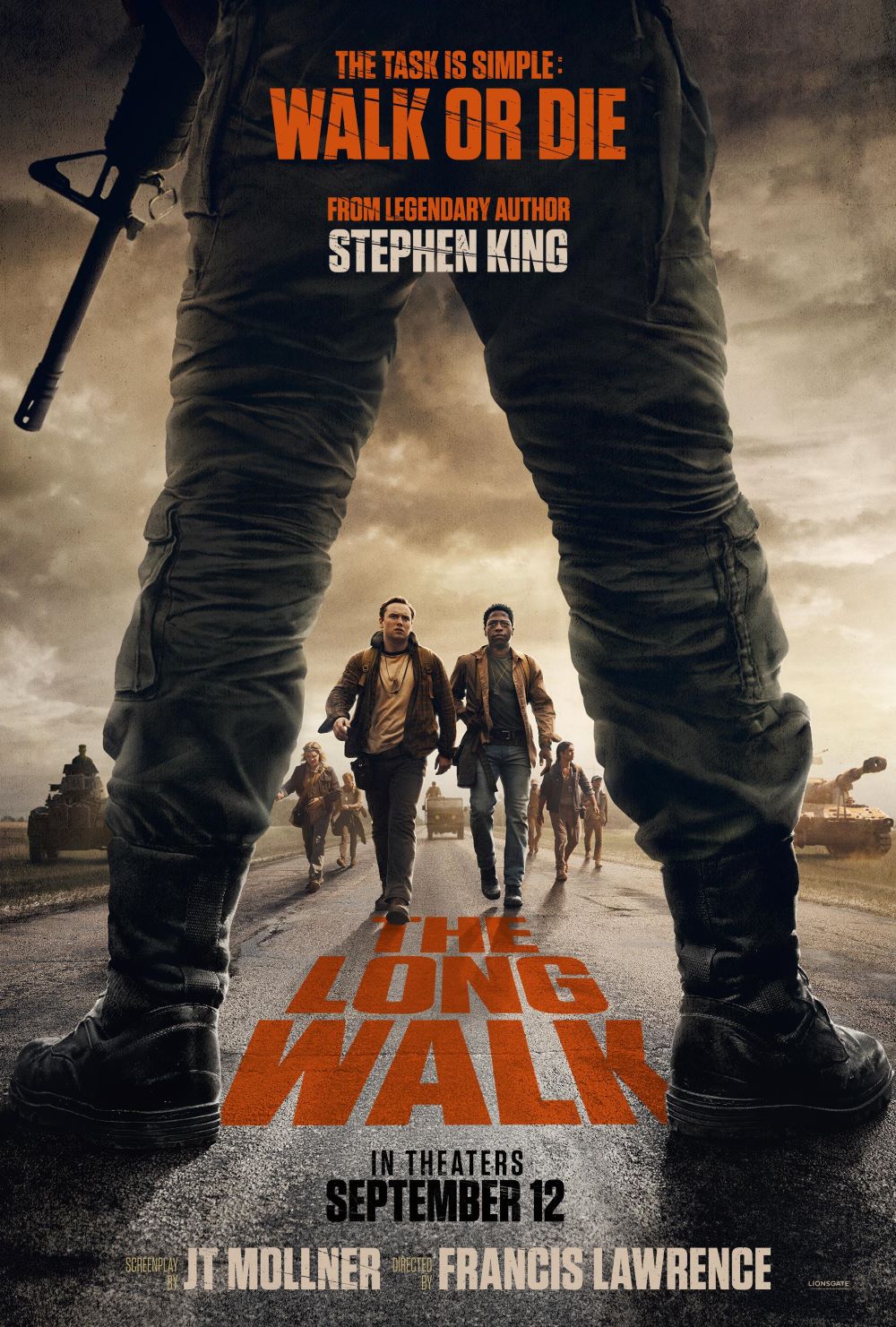
Horror Review: The Long Walk (dir. by Francis Lawrence)


“In this Walk, it’s not about winning. It’s about refusing to be forgotten while the world watches us fade away.” — Peter McVries

Francis Lawrence’s The Long Walk (2025) delivers a relentlessly brutal and unyielding vision of dystopian horror that explores survival, authoritarian control, and the devastating loss of innocence. The film immerses viewers in a grim spectacle: fifty teenage boys forced to participate in an annual, televised event known as the Long Walk. To survive, each participant must maintain a constant pace, never falling below a minimum speed, or else face immediate execution.

At the heart of this bleak narrative is Raymond Garraty, played with earnest vulnerability by Cooper Hoffman. Garraty’s backstory, marked by the tragic execution of his father for political dissent, sets a somber tone from the outset. As the Walk drags on, Garraty forges fragile bonds with fellow contestants, particularly Peter McVries (David Jonsson), whose camaraderie and quiet resilience inject moments of hope and humanity into the harrowing journey. These relationships become the emotional core, grounding the film’s relentless physical and psychological torment in deeply human experiences.

The setting enhances this oppressive atmosphere. The time and place remain deliberately ambiguous, with evident signs that the United States has recently suffered a second Civil War. The aftermath is a landscape ruled by a harsh, authoritarian military regime overseeing a nation economically and politically in decline. Though visual cues evoke a retro, 1970s aesthetic—reflected in military hardware and daily life—the film resists pinning itself to an exact year. This timelessness amplifies its allegorical power, emphasizing ongoing societal collapse and authoritarianism without tying the story to one era specifically. The dystopian backdrop is populated by broken communities and a pervasive sense of hopelessness that mirrors the characters’ internal struggles.

Visually, The Long Walk employs stark, gritty cinematography that traps viewers in the monotonous expanse of endless roads and bleak environments. Lawrence’s direction is unflinching and unrelenting, echoing the merciless march to death and the broader commentary on institutionalized brutality. The atmospheric score complements this oppressive tone, underscoring the emotional and physical exhaustion pacing the narrative.

Performances elevate the film’s emotional stakes significantly. Hoffman’s portrayal of Garraty captures the youth’s evolving vulnerability and determination, while Jonsson’s McVries adds a poignant emotional depth with his steady, hopeful presence. Supporting actors such as Garrett Wareing’s enigmatic Billy Stebbins and Charlie Plummer’s self-destructive Barkovitch bring vital complexity and urgency. Stebbins remains a figure whose allegiance is ambiguous, adding layered mystery to the group dynamics. Judy Greer’s limited screentime as Ginny Garraty, Ray’s mother, stands out powerfully despite its brevity. Each of her appearances is heartbreaking, bringing a wrenching emotional weight to the film. Her panicked, anguished attempts to hold onto her son before he embarks on the deadly Walk amplify the human cost of the dystopian spectacle, leaving a lasting impression of maternal agony amid the surrounding brutality.

Mark Hamill’s role as The Major is a significant supporting presence, embodying the authoritarian face of the regime. The Major oversees the brutal enforcement of the Walk’s rules, commanding lethal squads who execute those who falter. Hamill brings a grim and chilling force to the character, whose cold charisma and unwavering commitment to the ruthless system make him a menacing figure. Despite relatively limited screen time compared to the young participants, The Major’s presence looms large over the story, symbolizing the chilling machinery of power and control that governs the dystopian world.

Yet, the film is stark in its depiction of violence. The executions and suffering are raw and often grotesquely explicit, serving as a damning critique of authoritarian cruelty and the voyeuristic nature of state violence televised as entertainment. This unfiltered brutality can, however, become numbing and exhausting as it piles on relentlessly, occasionally undercutting emotional resonance. The narrative embraces nihilism fully, underscoring the dehumanization and futility within the dystopian world it portrays.

The film’s overall pacing and structure reflect this bleakness but at times suffer from monotony. The heavy focus on walking and survival mechanics leads to a lack of narrative variation, testing the audience’s endurance much like the characters’. There is likewise a noticeable stretch of physical realism—the contestants endure near-impossible physical feats without adequate signs of weariness or injury, which can strain believability.

Character development is another area where the film falters slightly. While Garraty and McVries are well-drawn and immunize emotional investment, other characters tend toward archetypical roles—bullies, outsiders, or generic competitors—diminishing the impact of many deaths or interactions. Similarly, the repetitiveness of the setting and cinematography, relying mostly on basic shots following the walkers, misses opportunities for more creative visual storytelling that might heighten tension or spotlight key emotional beats.

The film’s conclusion, stark and abrupt, offers no real catharsis or closure, reinforcing the overarching theme of unyielding despair. While this resonates with the film’s nihilistic motif, it may alienate those seeking narrative resolution or hope. The visceral shock and bleak tone permeate to the end, leaving the viewer with a lasting impression of relentless suffering and sacrifice.

This demanding yet visually striking and emotionally intense film challenges viewers with its unrelenting bleakness and brutal thematic content. It critiques societal violence, media spectacle, and authoritarianism through starkly powerful performances and an oppressive, immersive atmosphere. Though it excels in evoking emotional rawness in key moments and maintaining thematic consistency, it struggles with pacing, character depth beyond the leads, and occasional narrative monotony. Its ambiguous setting in a post-second Civil War America ruled by a declining authoritarian regime adds a timeless, allegorical layer to its exploration of human endurance and societal collapse.

Ultimately, this film is best suited for viewers prepared for an uncompromising, intense vision of dystopia. It stands as a compelling, if bleak, meditation on youth, survival, and the human spirit under extreme duress, showcasing Francis Lawrence’s aptitude for crafting thought-provoking, provocative horror.

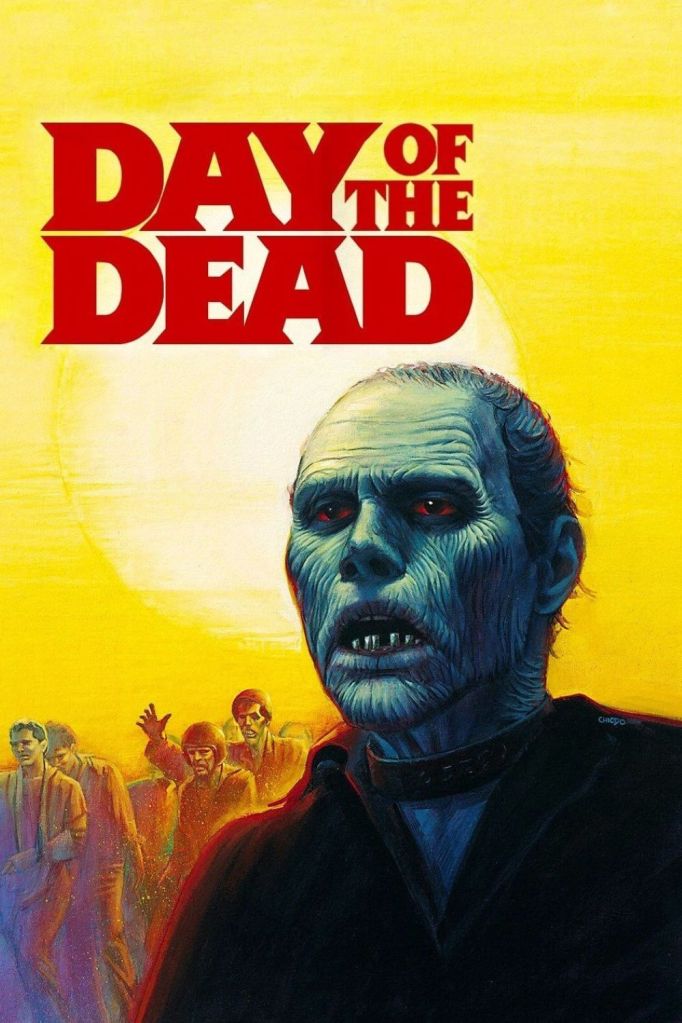
Horror Review: Day of the Dead (dir. by George A. Romero)


“You want to put some kind of explanation down here before you leave? Here’s one as good as any you’re likely to find. We’re bein’ punished by the Creator…” — John “Flyboy”

George A. Romero’s 1985 film Day of the Dead stands as an unflinching and deeply cynical meditation on the collapse of society amid a relentless zombie apocalypse, intensifying thematic and narrative complexities first introduced in Night of the Living Dead (1968) and Dawn of the Dead (1978).

Originally, Romero envisioned the film as an epic, describing it as “the Gone with the Wind of zombie films.” His screenplay featured above-ground scenes and a more expansive narrative, but budget cuts halved the original $7 million budget to $3.5 million, forcing a drastic paredown. While much grandiosity was lost, the trimming resulted in a tighter narrative and heightened the nihilistic tone, deepening the film’s focused exploration of humanity’s darkest aspects during apocalypse.

Set after civilization has collapsed, Day of the Dead places viewers in the suffocating confines of a missile silo bunker in Florida, where scientists and soldiers struggle for survival and solutions amid encroaching undead hordes. The claustrophobic atmosphere—born partly from the abandonment of Romero’s broader original sequences—intensifies the tension between the hopeful scientific pursuit of salvation and the harsh pragmatism of military authority. These competing ideologies escalate into authoritarian violence, embodying the fractured microcosm of a dying society.

Within this claustrophobic world, a third group—composed of characters Flyboy and McDermott—emerges as a stand-in for the rest of humanity. They observe the scientists and soldiers—institutions historically symbols of security and innovation—but witness how these deeply entrenched ways of thinking only exacerbate problems instead of solving them. This third faction characterizes humanity caught between rigid orders and doomed pursuits, reflecting Romero’s broader commentary on societal stagnation and fragmentation.

Central to this conflict are Dr. Logan, or “Frankenstein,” a scientist obsessed with controlling the undead through experimentation, and Captain Rhodes, the hardened soldier who believes survival demands ruthless control.

Logan’s controversial research seeks to domesticate and condition zombies, notably through his most celebrated subject, Bub—the undead zombie capable of rudimentary recognition and emotion—challenging assumptions about humanity and monstrosity.

Here the film benefits greatly from the extraordinary practical effects work of Tom Savini, whose contributions on Day of the Dead are widely considered his magnum opus. Savini’s makeup and gore effects remain unsurpassed in zombie cinema, continually influencing horror visuals to this day. Drawing from his experience as a combat photographer in Vietnam, Savini brought visceral realism to every decomposed corpse and violent injury. The close-quarters zombie encounters showcase meticulous practical work—detailed wounds, biting, and dismemberment—rendered with stunning anatomical authenticity that predates CGI dominance.

Bub, also a masterclass in makeup and animatronics, embodies this fusion of horror and humanity with lifelike textures and movements that blur the line between corpse and creature, rendering the undead terrifyingly believable.

The film captures the growing paranoia and cruelty as resources dwindle—food, ammunition, and medical supplies—and the fragile social order begins to shatter. The characters’ mounting desperation illustrates Romero’s thesis that humanity’s real enemy may be its own incapacity for cooperation.

The moral and social decay is vividly portrayed through characters like Miguel, whose mental breakdown sets destructive events in motion, and Rhodes, whose authoritarian survivalism fractures alliances and moral compass alike. Logan’s cold detachment and experiments push ethical boundaries in a world on the brink.

Romero’s direction combines claustrophobic dread with stark psychological terror, further amplified by Savini’s effects. The cinematography’s low lighting and tight framing create an oppressive environment, while graphic violence underscores a world irrevocably broken. The unsettling sound design—moans, silences, sudden outbreaks—immerses viewers in a relentless atmosphere of decay and fear.

Romero described Day of the Dead as a tragedy about how lack of human communication causes chaos and collapse even in this small slice of society. The dysfunction—soldiers and scientists talking past each other, eroding trust, spirals of paranoia—serves as a bleak allegory for 1980s America’s political and cultural fragmentation. Failed teamwork, mental health crises, and fatal miscommunication thrive as the bunker metaphorically becomes a prison of fractured humanity.

Though not as commercially successful as its predecessors, Day of the Dead remains the bleakest and most nihilistic entry in Romero’s Dead series. Its overall grim tone, combined with mostly unlikable characters, establishes it as the most desolate and truly apocalyptic film of the series. The characters often appear fractured, neurotic, and unable to escape their own destructive tendencies, making the story’s world feel even more hopeless and devastating.

Far beyond a simple gore fest, Day of the Dead serves as a profound social critique infused with psychological depth. It explores fear, isolation, authority abuse, and the ethical limits of science, reflecting enduring anxieties about society and survival. The film’s unsettling portrayal of humanity’s failings, embodied in broken relationships and moral decay, presents a harsh reckoning with what it means to be human when humanity itself is the ultimate threat to its own existence. This thematic complexity, combined with Romero’s unyielding vision and Savini’s unparalleled effects, crafts a chilling and unforgettable cinematic experience.

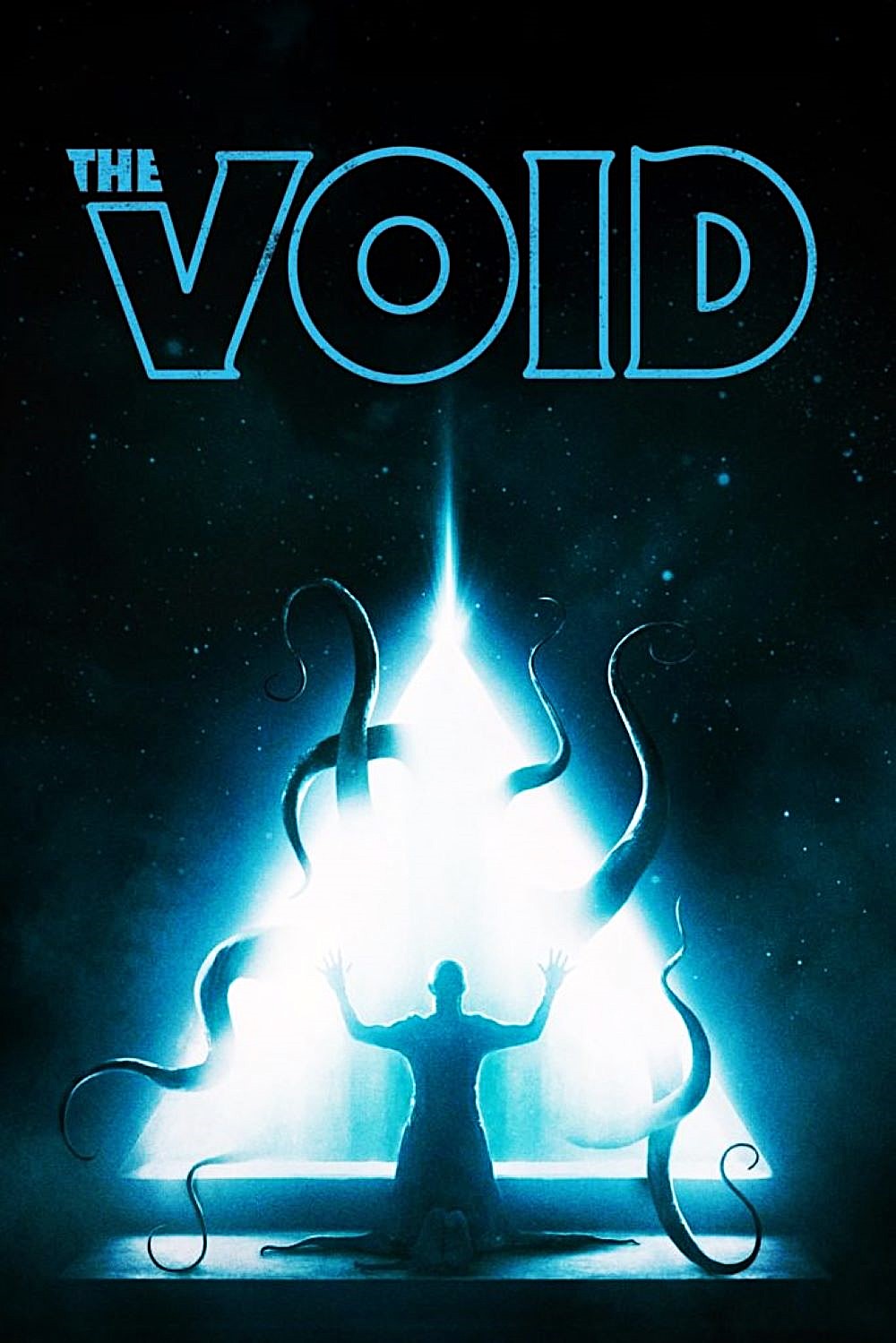
Horror Review: The Void (dir. by Steven Kostanski & Jeremy Gillespie)


“It’s not just the darkness out there… it’s the darkness in here.” — Sheriff Daniel Carter

Steven Kostanski and Jeremy Gillespie’s The Void is a grisly, atmospheric plunge into Lovecraftian cosmic horror and John Carpenter-inspired body horror, set within a nearly abandoned rural hospital shrouded in eerie blue light and creeping shadows. The film expertly conjures anxiety and dread, as fragile boundaries between dimensions begin to dissolve, threatening to swallow all inside.

At the heart of the story is Deputy Sheriff Daniel Carter (Aaron Poole), whose weighty grief and fractured relationships drive his reluctant heroism. He stumbles upon a bloodied man and brings him to the hospital staffed by his estranged wife, Allison Fraser (Kathleen Munroe), a focused nurse haunted by their broken family. Dr. Richard Powell (Kenneth Welsh) looms as the villainous architect of the unfolding nightmare, his obsession with conquering death fueled by personal tragedy, twisting him into a leader of occult horrors.

The supporting characters—Vincent and Simon, survivors hardened by trauma; Maggie, a pregnant woman caught in the web of cosmic corruption; and Kim, a vulnerable young intern—saturate the siege narrative with survival-driven urgency. Though less developed than the leads, they embody the raw desperation and existential threat pervading the hospital.

The Void wears its influences on its sleeve, drawing heavily from the siege tension of John Carpenter’s Assault on Precinct 13 alongside the paranoia and isolation of The Thing. These classic Carpenter motifs—claustrophobic settings, unrelenting external threat, and mistrust among survivors—penetrate the film’s fabric, amplified by a synthesizer-driven score nodding to Carpenter’s sonic signature. The nightmarish body horror, occult elements, and grotesque practical effects owe much to Stuart Gordon’s work adapting Lovecraft’s stories, blending visceral horror with cosmic dread.

Yet, while the homage is clear and affectionate, the film sometimes falters by blending these iconic elements into a decoction that resists full cohesion. Instead of synthesizing the inspirations into an innovative whole, it assembles a patchwork—rich in style and atmosphere but struggling to commit to a coherent, fresh narrative. The mixture of Carpenter’s claustrophobic siege, Gordon’s visceral mythos, and the cultist horror trope occasionally feels like pastiche rather than a confident new voice.

The technical craftsmanship shines throughout. Practical effects—from mutated creatures to grotesque body transformations—are lovingly crafted and tactile, restoring a physicality often lost in digital horror. The cinematography and lighting accentuate the oppressive mood, favoring muted colors punctuated by blood-red and luminous blues, thinking as much about shadows as solid objects.

However, the film’s narrative and character work often leave something to be desired. While Carter’s arc of guilt and reluctant heroism is thematically resonant, key emotional beats suffer from underdevelopment, with his relationships, particularly with Allison, only superficially explored. Dialogue oscillates between exposition-heavy and clipped, hindering audience connection with the cast amid the unrelenting terror. The supporting characters serve primarily functional roles, their deeper motivations and backstories sacrificed for the sake of grim spectacle and escalating horror.

The climax descends into surreal, fragmented sequences that evoke fever dreams more than narrative resolution. This abstract finale, while visually striking, challenges viewers seeking clarity and can be polarizing: some will appreciate the cosmic horror tradition of unsolvable mysteries, while others may experience frustration with the loose plotting and ambiguity. Pacing reflects these shifts—building steadily in the opening act before devolving into frenetic, disjointed bursts that occasionally undermine tension.

Despite these narrative and pacing flaws, The Void remains a memorable experience for lovers of practical effects and cosmic horror texture. It’s a film rich with unsettling imagery and mood, capturing a form of existential terror that goes beyond cheap scares. The filmmakers’ love for classic horror runs deep, even if the resulting fusion occasionally feels like homage without full reinvention.

Ultimately, The Void is a dark, unsettling trip into the unknowable—a sonic and visual descent into a hellish siege where logic unravels and time shatters. It’s a film that prizes atmosphere and physical monstrosity over smooth storytelling, inviting viewers to surrender to dread rather than demand explanation. For fans of Carpenter’s minimalist tension, Gordon’s visceral adaptations, and the tactile nightmares of 80s horror, The Void offers a rewarding, though imperfect, journey into the cosmic abyss—an evocative invocation of terror where humanity is both survivor and prey.