Review: The Crow (dir. by Alex Proyas)


“If the people we love are stolen from us, the way to have them live on is to never stop loving them. Buildings burn, people die, but real love is forever.” — Sarah Mohr

The Crow is one of those films whose reputation has become inseparable from the tragedy surrounding it, yet reducing it to that tragedy misses why it has endured so powerfully. Alex Proyas’s 1994 adaptation of James O’Barr’s graphic novel is a revenge story, a gothic romance, a comic-book nightmare, and an MTV-era industrial-rock mood piece fused into something singular. It is not flawless, and its storytelling is often more archetypal than psychologically deep, but that directness helps its emotional force. The movie does not ask viewers to untangle a complicated moral puzzle. It asks them to feel the enormity of a love violently interrupted, and then to watch that grief return from the grave with black feathers, white face paint, and a very personal sense of justice.

The premise is almost mythically simple. On the night before their wedding, musician Eric Draven and his fiancée Shelly Webster are murdered by a gang of thugs who break into their Detroit apartment. A year later, on Devil’s Night—the annual pre-Halloween ritual of fires and chaos that hangs over the film’s ruined cityscape—Eric rises from his grave, guided by a crow, to hunt down every person responsible. The classic revenge-movie structure is there: identify the killers, stalk them, punish them, move closer to the figure at the top. But The Crow distinguishes itself by making revenge feel less like triumphant macho fantasy and more like an extension of mourning. Eric does not become a cool killer because pain has made him stronger. He becomes an avenging specter because he cannot accept a world in which Shelly’s final moments are left unanswered.

Proyas directs the film like a fever dream built from wet asphalt, broken glass, empty tenements, and perpetual night. The Detroit of The Crow barely operates as a realistic city, but realism is not the point. It is an expressionist landscape, a metropolis that seems permanently trapped between a crime scene and a graveyard. The production design gives the movie its extraordinary visual identity: towering shadows, alleyways lit by flame, apartments that look like mausoleums, and a skyline that appears to have been abandoned by daylight itself. This is Gothic cinema filtered through comic-book panels, German Expressionism, punk fashion, and the darkly romantic visual language of early-1990s alternative music videos. It has been imitated constantly, sometimes lovingly and sometimes clumsily, but the original still feels unusually tactile. The grime, rain, fire, and shattered architecture have physical weight.

That sense of atmosphere is helped enormously by the soundtrack, which operates as more than a collection of era-specific needle drops. Songs by The Cure, Nine Inch Nails, Stone Temple Pilots, Pantera, and others create a sonic environment around Eric’s grief. The music gives the movie a pulse that is melancholy, furious, and seductive all at once. For many viewers, The Crow became a gateway text for a specific kind of 1990s gothic-alt identity: black clothing, industrial textures, romantic despair, and the conviction that heartbreak could be transformed into style without becoming trivial. Its aesthetic influence is obvious, but it worked because it was attached to an actual emotional core rather than simply a pile of cool images.

Brandon Lee is the center of that emotional core. His Eric Draven is handsome and charismatic, obviously, but the performance’s real strength lies in its shifts of tone. Lee can play Eric as tender and playful in the brief memories of his life with Shelly, then turn him into a creature of eerie stillness and explosive violence. He delivers some of the film’s most famous lines with a theatrical flair that could have become silly in another actor’s hands, but he never entirely loses the sense that Eric is broken underneath the black leather and corpse-like makeup. When he says, “It can’t rain all the time,” it does not land merely as a quotable gothic slogan. It is a declaration of faith from someone trying to recover one small piece of warmth from an overwhelmingly cruel world.

Lee’s death during production makes that performance almost unbearably charged. He was accidentally shot on set during the filming of a scene involving a prop firearm and died at age 28. The production had to regroup, rewrite and restructure parts of the film, and use a combination of body doubles, careful editing, visual effects, and previously filmed material to complete Eric’s story. That practical disruption is visible only in limited ways in the finished product; remarkably, The Crow generally feels cohesive rather than patched together. Still, the tragedy affected more than the logistics of production. It fundamentally changed the public’s relationship to the film. Eric’s resurrection, his grief over a stolen future, and the repeated imagery of a dead young man returning to finish unfinished business all acquired a terrible real-world resonance.

That connection could easily have overwhelmed the movie, turning it into a morbid curiosity. Instead, it made the film feel elegiac. Audiences did not merely see a fictional tragic hero; they saw Lee’s final completed role, an image of an actor whose life had ended before the public had a chance to see where his career might go. The contrast is particularly painful because Lee’s work here suggests enormous range and movie-star potential. He is not just doing martial-arts action or inheriting the legacy of his father, Bruce Lee. He is creating an icon of romantic anguish and dark humor. The public reception of The Crow therefore carried an unusual mixture of admiration, grief, and protectiveness. Its cult status was built partly on its style, soundtrack, and comic-book mythology, but also on the feeling that viewers were witnessing a final gift from an artist taken much too soon.

The supporting cast gives the film much of its flavor, especially because Proyas treats its villains as grotesque figures in a corrupted fairy tale. David Patrick Kelly’s T-Bird is nervy and cruel, Michael Massee’s Funboy has a sleazy unpredictability, and Angel David’s Skank brings a wild, cartoonish energy to the gang. Rochelle Davis, playing Sarah, provides something vital in the opposite direction. She is not merely a child sidekick; she represents the lingering human connection between Eric’s former life and his revenant existence. Her scenes with Eric remind us that he is not simply a supernatural executioner. He is still someone capable of care, humor, and memory.

But Michael Wincott’s Top Dollar is the film’s true villainous masterstroke. Wincott has one of cinema’s most instantly recognizable voices: smoky, velvety, sardonic, and faintly predatory. As Top Dollar, he makes every line sound like it has been exhaled through cigarette smoke in a cathedral. He is not a conventional crime boss in the realistic, procedural sense. He is a decadent king of the city’s underworld, a man who appears to have converted criminal power into a private religion of violence, ritual, and spectacle. His lair, his manner, and his relationship with his half-sister Myca all push him beyond ordinary gangster territory into something operatic and mythic.

What makes Wincott mesmerizing is that he does not overplay Top Dollar’s eccentricities. The character has plenty of theatrical material to work with—occult touches, ominous speeches, a penthouse filled with weaponry and strange décor—but Wincott approaches him with a serene confidence. He rarely seems rushed or rattled, even as Eric systematically destroys his organization. That calm makes him more intimidating. Top Dollar understands the city as a machine of corruption, and he sees himself as the person with his hands on the controls. Wincott’s performance gives the villain intelligence, sensuality, and a distinctly sinister elegance. He is evil, certainly, but he is never bland. In a movie full of striking images, his voice alone becomes part of the visual texture.

The action in The Crow is effective precisely because it avoids pretending that Eric’s vengeance is a balanced fight. For much of the movie, he is invulnerable, and the violence plays like supernatural punishment. The standout set pieces—Eric’s assault on the gang’s hideout, his confrontation with T-Bird, and the final tower sequence—have the heightened, almost ritualistic quality of comic-book action rather than the grounded impact of a crime thriller. That can make some of the antagonists feel less like people than targets, but again, the film is working in the language of myth. Eric is a ghost walking through the consequences of someone else’s cruelty.

If The Crow has a weakness, it is that the love story depends heavily on fragments. Shelly is more an emotional presence than a fully developed character, preserved in Eric’s memories as warmth, laughter, music, and suffering. Yet the film understands that grief often works that way. We do not always remember a person as a complete biography when they are gone; sometimes we cling to specific gestures, rooms, jokes, songs, and images. The flashes of Eric and Shelly together are deliberately idealized because they are being recalled by a man who has lost everything. The movie’s romanticism may be blunt, but it is sincere.

More than three decades later, The Crow still works because it is a film of conviction. It believes in the visual poetry of rain and ruins, in the melodrama of eternal love, in the power of a memorable face framed in black-and-white makeup, and in the possibility that a soundtrack can become part of a movie’s mythology. Brandon Lee’s death will always remain a heartbreaking part of its history, and it is impossible to watch the film without feeling that absence hovering around it. But The Crow is not remembered simply because of what happened behind the scenes. It is remembered because Proyas, Lee, Wincott, and the rest of the cast made a pulpy revenge tale feel like a dark romantic elegy—one that still takes flight every time the crow returns to the skyline.
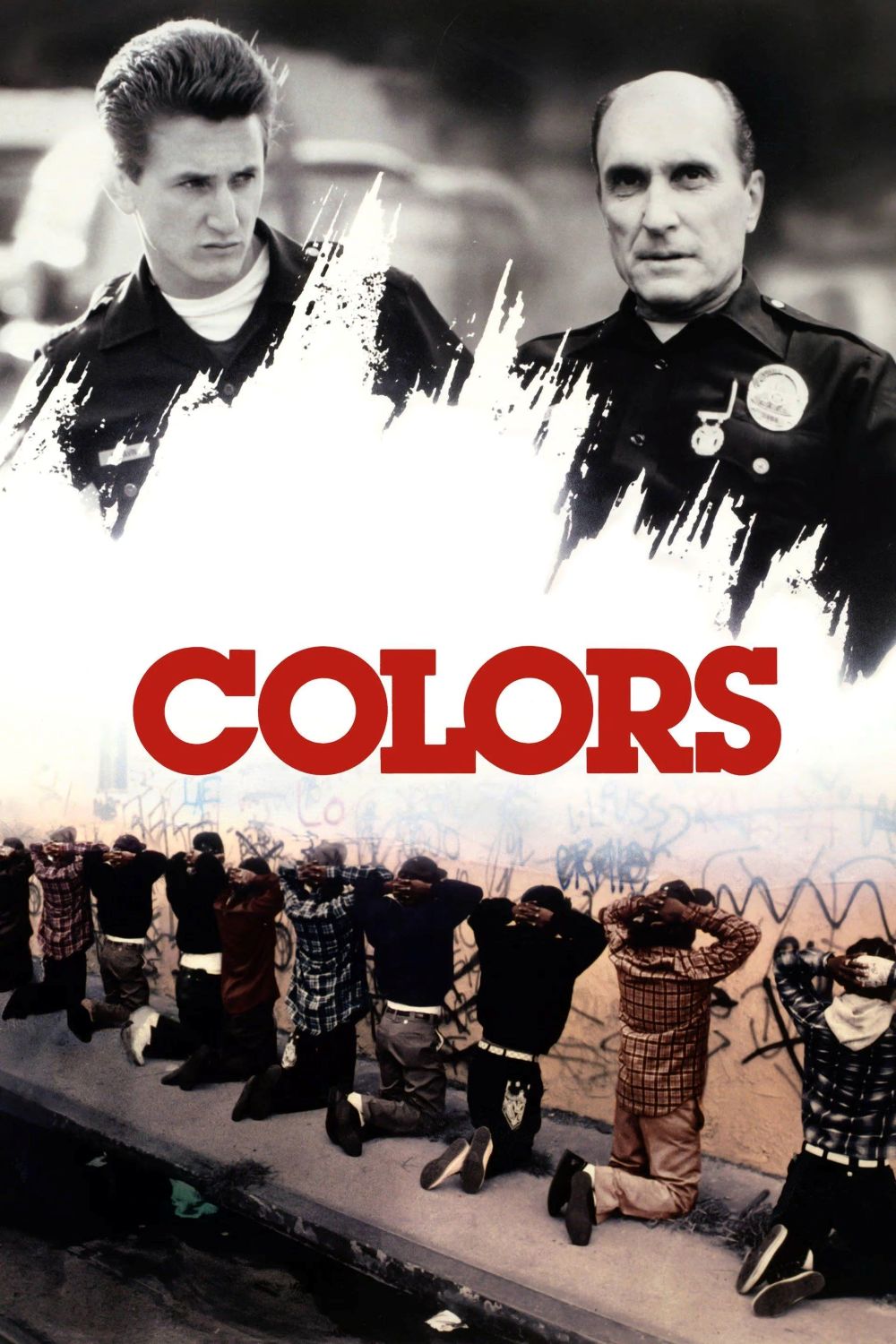
Review: Colors (dir. by Dennis Hopper)


“You got problems with the whole fuckin’ world.” — Officer Bob Hodges

Consider, for a moment, the cultural landscape of 1988. Inner-city gang violence was hardly a new phenomenon, but it remained largely relegated to local news broadcasts and distant urban nightmares for most of the country. Dennis Hopper’s Colors changed that dynamic almost overnight, serving as a brutal, unfiltered introduction to a world that mainstream America had collectively chosen to ignore. Hopper, whose own countercultural credentials were cemented decades earlier with Easy Rider, took a considerable risk here, and while the final product is undeniably uneven, its cultural footprint is impossible to overstate. The film functions simultaneously as a historical document, a cautionary tale, and a cinematic watermark that forever altered how audiences perceived the volatile landscape of Los Angeles.

The basic setup is old-school buddy-cop material. Robert Duvall plays Bob Hodges, a seasoned LAPD officer in the CRASH unit—Community Resources Against Street Hoodlums—who has spent enough years policing Los Angeles to understand that aggression does not automatically produce respect. Sean Penn plays Danny McGavin, his hotheaded new partner, a guy who approaches every situation like he has something to prove. They are assigned to patrol neighborhoods divided by Bloods, Crips, and Chicano gangs, attempting to keep retaliation killings from escalating into full-scale warfare. The main plot is not especially complicated, and that is probably intentional. Hopper is less interested in a twist-heavy police procedural than in dropping the viewer into a city where tension seems to hang over every street corner, traffic stop, and act of public bravado.

Duvall is the film’s anchor. Hodges is not written as a saint—he is still a cop working inside a hostile and often brutal institution—but Duvall gives him a weary, almost paternal quality that makes him more compelling than the standard “veteran teaching the rookie a lesson” archetype. He understands that policing gangs is not as simple as walking in, making arrests, and congratulating yourself afterward. He has a kind of street fluency, knowing when to talk, when to threaten, and when to step back before a small humiliation becomes a body count. Penn, meanwhile, is all sharp edges. McGavin is reckless, racist in ways he may not fully recognize, and always a half-second away from making a situation worse. Penn can be exhausting here, but that is the point. His character embodies the movie’s fear that a badge, a gun, and an appetite for confrontation can be as combustible as any gang rivalry.

Hopper directs Colors with a lot of energy and an almost documentary-like alertness to its setting. The film’s Los Angeles feels sun-blasted, crowded, and perpetually unstable, not the glossy dream factory of postcards and celebrity magazines. Haskell Wexler’s cinematography does huge work in making the city feel tactile and lived-in. Hopper also has a sharp ear for the way music, cars, clothing, graffiti, and neighborhood boundaries become a visual language of identity. The title is not subtle, but it works: colors signify affiliation, pride, danger, and the instantly visible lines people are willing to kill or die over. The film’s soundtrack, including Ice-T’s title song, further locks it into the cultural moment, giving the movie a rawness that separates it from more generic police thrillers.

What makes Colors uncomfortable is also what makes it valuable. Its attention to gangs was controversial from the beginning, with critics and community voices arguing that it risked sensationalizing violence and reducing Black and Latino communities to dangerous backdrops for a cop story. The criticism is fair. The film sees gang life largely from the windshield of the LAPD cruiser; its gang-affiliated characters are often treated as threats, symbols, or tragic consequences rather than people granted the same interiority as Hodges and McGavin. Even at its strongest, Colors can make complex social realities feel like an arena in which two white cops test their methods and masculinity.

Still, it would be wrong to dismiss it as empty exploitation. Colors does not really romanticize its violence. Hopper shoots drive-bys, funerals, and retaliations with a nasty abruptness; nobody comes out looking triumphant. The gang members are not cleanly divided into monsters and victims either. Some are cruel, some are frightened, some are locked into a status they may not know how to escape, and some clearly enjoy the power that comes with being feared. The movie may not fully examine poverty, segregation, institutional racism, the drug economy, or generational trauma, but the instability of its world comes through. The police are not presented as saviors, either. They are frequently antagonistic, operating through intimidation and humiliation, while McGavin’s actions repeatedly demonstrate how easily law enforcement can intensify exactly the conflict it claims to contain.

This is where Colors matters most historically. Before it, movies had certainly depicted urban crime, racial conflict, and youth violence, but Hopper’s film made contemporary L.A. gang culture recognizable as a major studio subject. It helped bring gang culture, strained police-community relations, and inner-city issues into a much wider popular conversation. The film did not invent the genre that followed, but it helped clear a path for the wave of gang-related and urban-crime movies that arrived in the late ’80s and especially the ’90s. Films such as Boyz n the Hood, American Me, South Central, New Jack City, and Menace II Society inherited some of its urgency, its focus on neighborhoods under siege, and its refusal to pretend gang violence was merely a distant news-story problem.

The major difference is that many of those later movies also corrected Colors’ biggest limitation: they shifted the point of view inward. Boyz n the Hood does not treat South Central as a backdrop for police work; it makes the residents’ friendships, families, dreams, grief, and daily routines the emotional center. American Me follows the historical and institutional roots of Chicano gang identity with a scope Colors never attempts. South Central turns toward redemption, fatherhood, and the possibility—however fragile—of interrupting the cycle. In that sense, Hopper’s film can feel like an important opening statement rather than the final word. It showed mainstream audiences the subject; the films that followed increasingly demanded that audiences understand the people living inside it.

Its influence can also be felt internationally, though it is best understood as part of a broader transnational exchange of urban-crime cinema, hip-hop culture, and anti-police sentiment rather than a simple one-to-one blueprint. Mathieu Kassovitz’s La Haine is far more formally daring and politically focused than Colors, but both films draw power from a city divided by territory, race, policing, and simmering retaliation. La Haine brought France’s banlieues to mainstream French audiences and put police violence and marginalized youth at the center of the frame. Where Colors views the street crisis through law enforcement’s eyes, La Haine makes its young Black, Jewish, and Arab protagonists the whole point. Yet the resemblance is there in the oppressive sense of escalation, the combustible police encounters, and the idea that one violent incident can send an already alienated community toward catastrophe. Colors helped establish a mainstream vocabulary for this kind of story, while La Haine transformed that vocabulary into something more intimate, stylized, and politically devastating.

In the end, Colors is messy, dated in places, and frustratingly narrow in its perspective, but those flaws are part of why it is worth revisiting. It captures a Hollywood industry beginning to confront an issue it did not fully understand, using the sturdy frame of a cop thriller to look at a social wound much larger than its plot. Dennis Hopper brings volatility, Duvall brings soul, Penn brings danger, and Los Angeles itself does the rest. It is not the definitive gang film—later movies would surpass it in depth, perspective, and emotional force—but it is a crucial precursor. Colors made the subject visible to the mainstream, and the films that came after kept pushing the camera closer to the people trapped inside the picture.

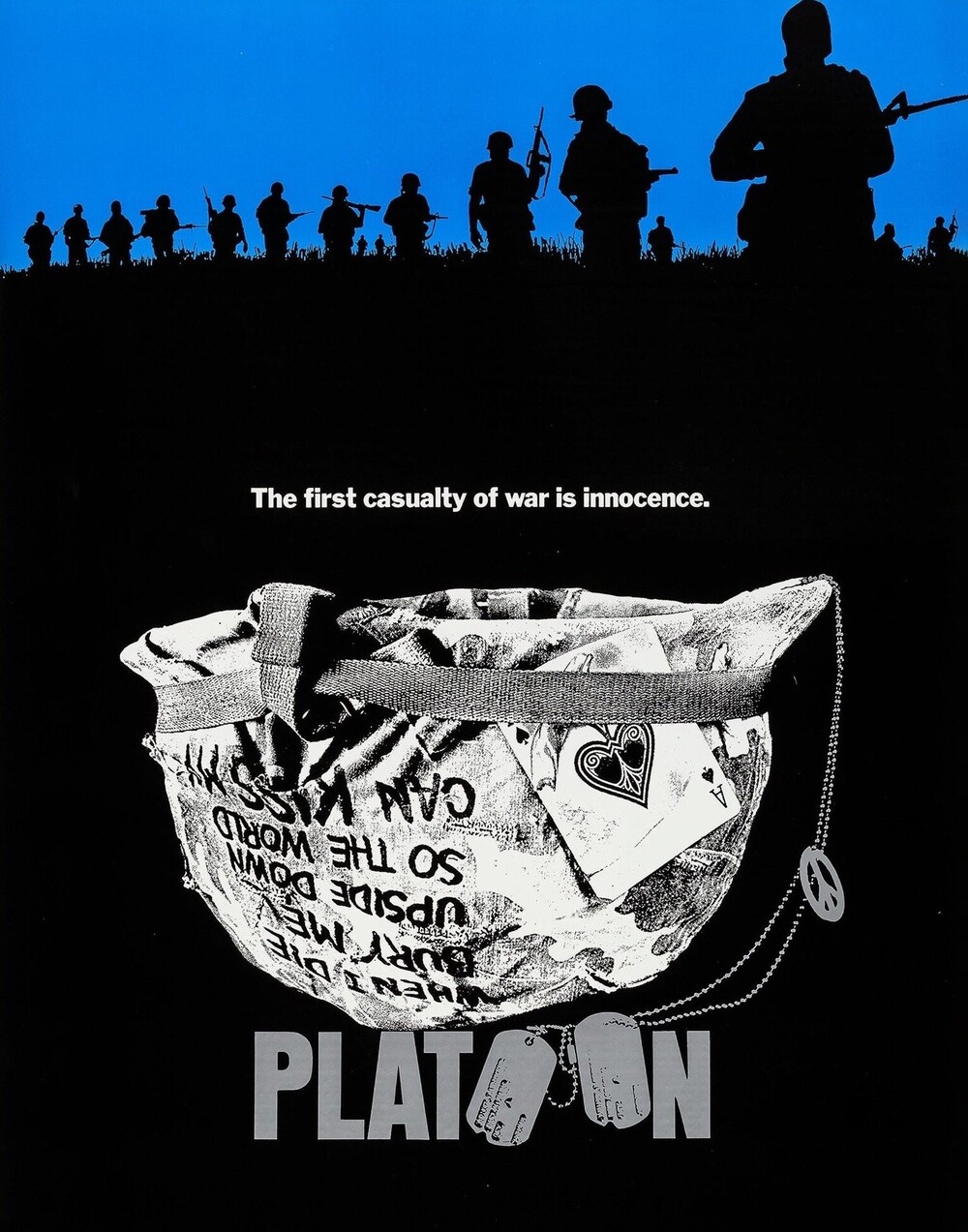
Review: Platoon (dir. by Oliver Stone)


“We been kicking other peoples asses for so long, I figured it’s time we got ours kicked.” — Sgt. Elias

Platoon is one of those war movies that still feels raw, mean, and strangely alive decades later. It is not just a Vietnam movie about combat; it is a movie about confusion, fear, moral collapse, and what happens when young people are dropped into a nightmare with no real sense of why they are there.

What makes Platoon hit so hard is that it never feels polished in a comforting way. Oliver Stone keeps the film close to the mud, sweat, and panic of the battlefield, but he also spends plenty of time on the uglier stuff that happens between firefights: the resentment, the paranoia, the bullying, and the way men start forming little kingdoms inside a war zone. That is where the movie gets its power. The bullets matter, but so do the silences and side glances, because those moments show how war breaks people down before it even kills them.

Charlie Sheen’s Chris Taylor is a smart choice for the center of the film because he starts out as a kind of blank witness. He is young, idealistic in a vague way, and clearly not prepared for what he has walked into. That makes him easy to identify with, but it also makes him useful as a lens for everything around him. We learn the rules of this miserable little ecosystem as he does. Through Chris, the audience is pulled into the same sense of helpless observation that seems to define the whole experience of the platoon.

Stone’s screenplay makes that connection even stronger because he wrote it himself, drawing on his own experience as a young man who volunteered to go to Vietnam instead of being drafted. That detail gives Chris Taylor’s story a personal charge, since Chris feels less like a fictional stand-in and more like Stone working through his own memory and guilt. It adds another layer to the film’s emotional weight, because the perspective feels lived-in rather than invented for dramatic effect.

The film’s real muscle comes from the conflict between Sergeant Elias and Sergeant Barnes, played with complete commitment by Willem Dafoe and Tom Berenger. Elias feels like the last thread of conscience in a collapsing world. Barnes, by contrast, is the kind of man war can easily turn into a weapon: hard, cold, frightening, and convinced that brutality is just realism with the sentiment stripped out. Their conflict gives the movie a mythic quality without draining away its grit. It is not subtle in the usual sense, but it does not need to be. Stone wants these figures to feel bigger than life because that is how they register to a terrified kid in the jungle.

One of the best things about Platoon is how it balances chaos with purpose. A lot of war films either try to turn combat into spectacle or turn it into a lecture. Platoon mostly avoids both traps. The action is ugly, disorienting, and often difficult to follow in exactly the right way. You do not watch these battles and admire the choreography as much as you feel the confusion of everyone inside them. The filmmaking keeps you from getting too comfortable, which is exactly the point. War here is not heroic; it is exhausting, degrading, and terrifying.

That sense of exhaustion matters because the movie understands that war is not made up of only the big moments people remember. It is made up of waiting, heat, boredom, fear, and the slow erosion of judgment. Platoon is at its best when it lingers on that middle ground. The soldiers are not always in immediate danger, but they are always under pressure. That constant tension is what makes the movie feel so oppressive. Even when nothing explodes, it still feels like something bad is about to happen.

Stone also deserves credit for making a Vietnam movie that feels personal without becoming self-congratulatory. You can feel that this comes from experience, but the film never becomes some smug “I was there” statement. Instead, it channels memory into mood, character, and atmosphere. That gives the movie a lived-in authenticity that a lot of war films chase but never quite reach. It feels like a film made by someone trying to tell the truth about a memory that never stopped hurting.

There is also something brutally effective about the way Platoon presents morality as unstable rather than cleanly divided. The movie does not really pretend that everyone is either noble or evil. Instead, it shows how stress, fear, resentment, and power can shove people toward terrible choices. That is a big reason the film still works. It understands that war does not just expose character; it distorts it. Men do things they would never do anywhere else, and the movie keeps asking what is left of a person after that kind of damage.

Still, Platoon is not perfect, and part of its reputation comes from how forcefully it makes its points. Some viewers may find it a little heavy-handed at times, especially in the way it frames innocence, corruption, and betrayal. It is not exactly a subtle film, and it does occasionally aim for emotional impact with both fists. But honestly, that intensity is part of its identity. The movie is not trying to be cool or detached. It wants to wound you a little, and for this material, that approach makes sense.

The performances help keep the film from tipping over into empty grandstanding. Dafoe brings a wounded humanity to Elias that makes him feel like more than just a symbol. Berenger gives Barnes a dangerous stillness that is often more frightening than outright aggression. Sheen, meanwhile, does the important work of holding the center without overpowering the film. He is not the flashiest presence, but he does not need to be. His job is to absorb the madness, and that gives the audience a place to stand inside it.

What lingers most after Platoon is not any single battle scene, but the feeling that the whole movie is about a collapse of trust. Trust in leaders, trust in comrades, trust in the idea that there is some larger meaning to all this suffering. The film strips those things away layer by layer until all that is left is survival and the hope that maybe, somehow, the nightmare will end. That is a bleak place to sit for two hours, but it is also why the film remains so effective. It does not romanticize the experience. It forces you to sit with its mess.

The movie also has a strong visual identity. The jungle is not just background; it feels like an active pressure on every scene. The humidity, the darkness, the mud, and the smoke all help create a world that seems hostile even when nobody is shooting. That physical texture is a huge part of the movie’s success. You can almost feel the environment draining the people inside it. It is less like watching a battle than like watching human beings slowly get swallowed by a swamp of fear and violence.

If there is a reason Platoon still gets talked about so often, it is because it captures a very specific kind of war movie truth: the enemy is not only out there. Sometimes the real damage comes from within the unit, within the chain of command, within the soldier’s own mind. That is a grim idea, but Platoon never feels empty or cynical for saying it. It feels honest. And honesty, in a movie like this, goes a long way.

In the end, Platoon is powerful because it refuses to let war look clean, noble, or emotionally tidy. It is messy, relentless, and often hard to watch, but that is exactly why it matters. It is one of the defining Vietnam films for a reason, and even with its blunt edges, it earns that status through sheer force of feeling, strong performances, and a bleak sense of truth that never really lets up.

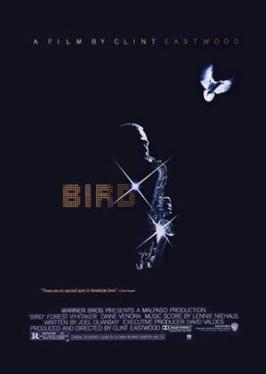
Bird (1988, directed by Clint Eastwood)


Forest Whitaker stars as the legendary saxophonist Charlie “Bird” Parker.  The film, which is structured around flashbacks and time jumps and features some of the most beautifully-done transitions that I’ve ever seen, follows Parker as he plays his saxophone, challenges the jazz purists who his own individual style, and looks for work in both America and France.  Along the way, we watch as he befriends and learns from Dizzy Gillespie (Samuel Wright), mentors a young trumpet player named Red Rodney (Michael Zelniker), and has a complex relationship with a white jazz lover named Chan Parker (Diane Venora).  Throughout his life, Charlie Parker struggles with his addiction to heroin and alcohol, occasionally getting clean to just then fall back into his habit.  To its credit, the film avoids most of the biopic cliches when it comes to portraying Parker’s addiction.  Parker accepts that he’s an addict, just as he accepts that he has a talent that is destined to revolutionize American music.

Director Clint Eastwood has always been a fan of jazz and he actually saw Charlie Parker perform when he was a young man.  His love of jazz had been present in almost every modern-era film that he has directed, staring with Play Misty For Me’s lengthy trip to the Monterey Jazz Festival.  Bird was a passion project for Eastwood, the first film that Eastwood directed without also appearing in.  (Eastwood doesn’t star in his second directorial effort, Breezy, but he does have a brief and silent cameo as a man standing on pier.)  Eastwood takes a nonlinear approach to telling the story, eschewing the traditional bopic format and instead putting the focus on Parker’s music.  Eastwood was able to get several never bef0re-released recordings of Parker performing and, when Whitaker is blowing into his saxophone in the film, we’re actually hearing Parker.  Eastwood’s direction captures the smoky atmosphere of the jazz clubs where Parker and Gillespie made their name while the nonlinear style reflects the feeling of just letting a song take you to wherever it’s going.  This is a movie about jazz that plays out like a jazz improvisation.

Forest Whitaker gives an amiable and charismatic performance as Charlie Parker, playing him as someone who has found both an escape and peace in his music, even as he physically struggles with the ravages of his drug addiction.  Whitaker won the Best Actor at Cannes for his performance in Bird.  Eastwood received the Golden Globe for Best Director.  Bird feels like it was labor of love for both of them.  Bird may not have set the box office on fire when it was originally released but it remains one of the best jazz films.

The Eric Roberts Collection: Night Night (dir by Niki Koss)


April Davis (Brenna D’Amico) has just inherited a small fortune and she’s got a wonderful boyfriend named Robert.  Plus, she lives in Texas!  Her life is going wonderfully!  But then, a terrible car accident leaves her in a five-month coma.  When she finally awakens, she discovers that the people in the other car — a mother and her children — were killed in the accident.  Because she had a few drinks before she got behind the wheel and she was texting with her boyfriend while driving, she is now being investigated for vehicular manslaughter.

April is taken home by Robert (Nick Marini) but it turns out that things have changed.  As Robert explains it, April was in a coma for five months so he had to handle things until she woke up.  As a result, he now has a key to the house.  He bought her a new phone to replace the one that was taken by the police.  He bought her a new monitor for her computer.  Robert’s been on top of everything!  What a great guy …. except, there seems to be something different about Robert as well.  He’s angrier than April remembered and he’s controlling.  He says it’s for April’s own good but who knows for sure?  April starts to have strange dreams and nightmares and soon, she’s wondering what’s real and what isn’t.

Released in 2021 and filmed in the lovely town of Corsicana, Texas, Night Night is an effectively dream-like thriller, one that features a good lead performance from Brenna D’Amico and a plot that’s full of twists and turns.  Despite the low budget, director Niki Koss does a good job of creating a properly ominous atmosphere.  This film really took me by surprise.  I was mostly watching because Eric Roberts was in it but the film’s story drew me in pretty quickly.

As for Eric Roberts, this is one of his one-scene wonders.  He plays Dr. Nelson and gives April an update on her condition after she awakens.  The late Tony Todd also makes an appearance in this film, playing April’s attorney.  Neither role is big but the film itself works so well that it doesn’t matter that neither Roberts nor Todd play particularly prominent roles.  This was a good, independent thriller.  Give it a chance.

Previous Eric Roberts Films That We Have Reviewed:

  1. Star 80 (1983)
  2. Runaway Train (1985)
  3. Blood Red (1989)
  4. The Ambulance (1990)
  5. The Lost Capone (1990)
  6. Love, Cheat, & Steal (1993)
  7. Voyage (1993)
  8. Love Is A Gun (1994)
  9. Sensation (1994)
  10. Dark Angel (1996)
  11. Doctor Who (1996)
  12. Most Wanted (1997)
  13. Mercy Streets (2000)
  14. Wolves of Wall Street (2002)
  15. Mr. Brightside (2004)
  16. Six: The Mark Unleased (2004)
  17. Hey You (2006)
  18. Amazing Racer (2009)
  19. In The Blink of an Eye (2009)
  20. Bed & Breakfast (2010)
  21. Enemies Among Us (2010)
  22. The Expendables (2010) 
  23. Sharktopus (2010)
  24. Beyond The Trophy (2012)
  25. The Dead Want Women (2012)
  26. Deadline (2012)
  27. The Mark (2012)
  28. Miss Atomic Bomb (2012)
  29. Bonnie And Clyde: Justified (2013)
  30. Lovelace (2013)
  31. The Mark: Redemption (2013)
  32. Self-Storage (2013)
  33. A Talking Cat!?! (2013)
  34. This Is Our Time (2013)
  35. Inherent Vice (2014)
  36. Road to the Open (2014)
  37. Rumors of War (2014)
  38. Amityville Death House (2015)
  39. A Fatal Obsession (2015)
  40. Stalked By My Doctor (2015)
  41. Enemy Within (2016)
  42. Joker’s Poltergeist (2016)
  43. Prayer Never Fails (2016)
  44. Stalked By My Doctor: The Return (2016)
  45. The Wrong Roommate (2016)
  46. Dark Image (2017)
  47. Black Wake (2018)
  48. Frank and Ava (2018)
  49. Stalked By My Doctor: Patient’s Revenge (2018)
  50. Clinton Island (2019)
  51. Monster Island (2019)
  52. The Reliant (2019)
  53. The Savant (2019)
  54. Seven Deadly Sins (2019)
  55. Stalked By My Doctor: A Sleepwalker’s Nightmare (2019)
  56. The Wrong Mommy (2019)
  57. Exodus of a Prodigal Son (2020)
  58. Free Lunch Express (2020)
  59. Her Deadly Groom (2020)
  60. Top Gunner (2020)
  61. Deadly Nightshade (2021)
  62. The Elevator (2021)
  63. Just What The Doctor Ordered (2021)
  64. Killer Advice (2021)
  65. The Poltergeist Diaries (2021)
  66. The Rebels of PT-218 (2021)
  67. A Town Called Parable (2021)
  68. Bleach (2022)
  69. My Dinner With Eric (2022)
  70. Aftermath (2024)
  71. Devil’s Knight (2024)
  72. The Wrong Life Coach (2024)
  73. When It Rains In L.A. (2025)

Retro Television Review: Homicide: Life On The Street 3.3 “Extreme Unction”


Welcome to Retro Television Reviews, a feature where we review some of our favorite and least favorite shows of the past!  On Sundays, I will be reviewing Homicide: Life On The Street, which aired from 1993 to 1999, on NBC!  It  can be viewed on Peacock.

This week, the White Glove Killer is discovered.

Episode 3.3 “Extreme Unction”

(Dir by Keith Gordon, originally aired on October 28th, 1994)

For all the hours that Pembleton and the other detectives put in and for all the motives that were considered and the suspects were interviewed, the murderer of Katherine Goodrich and two other women is captured not through deductive brilliance but because she herself enters the police station.

When Pamela Wilgis (Lucinda Jenney) first enters the station, she claims to have just witnessed two men dumping the third victim.  Pembleton is dismissive of her until she mentions the white gloves, a detail that has not been released to the public.  While Pembleton talks to her, the other detectives check out Pamela’s apartment and discover 12 sets of white cotton gloves hanging in her bathroom.  Pamela is the murderer.

When Pembleton asks Pamela about the gloves, Pamela suddenly starts speaking in an Irish accent.  Later, she starts speaking like an angry and rebellious child.  Later still, she reverts to being a wide-eyed innocent who says she had no idea how she ended up in the interrogation room.  Pembleton is convinced that she’s faking her alternate personalities but, despite his best efforts, he can never get her to actually confess that she committed the murders.

From the start, Homicide has emphasizes the role of luck in solving murders.  The majority of the show’s murders are solved precisely because someone thought they could outsmart the police or because they made a very obvious error.  For all of Pembleton’s strengths in the Box, his interrogation technique works best when he’s dealing with someone who doesn’t understand how the system works.  Pamela, on the other hand, obviously understands what he’s trying to do.  She knows the system and she knows how to game it.  Pamela does eventually confess but not Pembleton.  Instead, she does an interview with the obnoxious reported played by Tony Todd, blaming her crimes on the abuse she suffered as a child and her dissociative disorder.  Pembleton’s pride is hurt but he also finds himself struggling with his faith.  How can Pamela, after killing three saintly women, now avoid paying for her crimes?  Even with the thrilling interrogation scene between Pembleton and Pamela and the excellent performances of Andre Braugher and Lucinda Jenney, it’s all feels a bit anticlimactic.  But it also feels appropriate for the world in which Homicide takes place.

This episode also wrapped up a few other plotlines.  Munch, Bayliss, and Lewis finally own their bar.  Good for them.  I’m not really a bar person or a drinker but I probably would have enjoyed visiting the Waterfront whenever Munch was working the bar.  Even more importantly, Felton returned to his mentally unstable wife.  And again, that’s a good thing if just because I was getting sick of listening to Felton whine about his marriage.  So was Kay.

This episode was effective enough.  The scenes between Andre Braugher and Lucinda Jenney alone made the episode memorable.  At the same time, as I watched, it occurred to me that, if this episode had aired during the first season, the White Glove Murders probably never would have been solved.  If Adena Watson had died during the third season, one can be sure Bayliss would have gotten a confession out Risley Tucker.

Next week, we find out why Detective Crosetti has yet to return from Atlantic City.

Trailer: Final Destination Bloodlines Teaser


Looks like Death is up to its shenanigans once again with Final Destination Bloodlines. Just when we thought it was safe to go about our lives without having to worry about Death’s penchant for complex Rube Goldbergesque plans to kill some people it looks like we spoke too soon.

On May 16, 2025, Death runs in the family and wearing a nose ring may not be the best thing when Death’s around. Here we have the first teaser trailer for Final Destination Bloodlines.

Retro Television Review: Homicide: Life on the Street 3.2 “Fits Like A Glove”


Welcome to Retro Television Reviews, a feature where we review some of our favorite and least favorite shows of the past!  On Sundays, I will be reviewing Homicide: Life On The Street, which aired from 1993 to 1999, on NBC!  It  can be viewed on Peacock.

This week, the investigation into the Catherine Goodrich murder continues.

Episode 3.2 “Fits Like A Glove”

(Dir by Ted Demme, originally aired on October 21st, 1994)

Last week’s episode ended with Bayliss and Pembleton discovering that a supply shed had been broken into near the Goodrich scene.  This episode opens with Bayliss and Pembleton talking to the groundskeeper, who explains that he came across the shed earlier.  He reported that the shed had been broken into to the primary on the case, Detective Gaffney.  Gaffney never bothered to follow-up and the shed has since been cleaned up.

That’s it for Gaffney!  Lt. Russert calls him into the office and tells him he’s no longer heading up the investigation.  She tells him to take a few days off and then to transfer to another department.  She promises him a “fair recommendation.”  Gaffney replies that Russert only get her job because of her sex.  He goes as far as to compare her to a statue of a woman on a boat, except she’s not a mermaid.  “You’ve got legs,” he says.  It’s an odd bit of dialogue and I kind of wish that Gaffney had delivered it Al Pacino style.  “You’ve …. GOT …. LEGGGGGS!”

Pembleton is now the primary and not a moment too soon because another murdered woman has been found, again left in a dumpster outside a Catholic church and only wearing long white gloves.  Pembleton theorizes that the killer hates Catholics.  (So …. Matin Luther, maybe?)  Pembleton continues the investigation but clues are hard to come by and smarmy reporter Matt Rhoades (Tony Todd) keeps threatening to reveal that the killer puts gloves on the victims.  At one point, a murder memorabilia collector (Hugh Hodgin) shows up and claims that the murders are connected to a nationwide crime spree.  The collector turns out to be a flake, exactly the type of person who Russert believes would be driven to give false evidence if the news about the gloves got out.

Meanwhile, Kay finds herself being used as a messenger service by both Beau and his estranged wife.  Beau’s wife, Beth (Mary B. Ward), wants to surprise Beau with a romantic dinner so she asks Kay to tell Beau that Beth wants him to come by and see the kids.  Beau tells Kay to tell Beth that their son needs to tighten the laces on his baseball glove.  (Poor Kay!) Beau goes to the house to see the kids, just to discover that Beth lied and sent them away so she could make Beau dinner.  Beau gets mad and leaves.  Mary feeds Beau’s dinner to the dog.

Bayliss, Munch, and Lewis put in for a liquor license for the bar.  Lewis interrogates Munch as to whether or not he was ever arrested in the 60s but — surprise! — Bayliss is the one with the criminal record, an arrest and conviction for misdemeanor gambling while Bayliss was in college.  Bayliss, you never cease to surprise me!

This episode was a bit frustrating because Pembleton doesn’t seem to be any closer to solving the murders.  As well, Felton’s domestic drama would be a bit more compelling if Felton himself was a more likable character.  But, I still liked this episode.  The season 3 ensemble is amazing and just the pleasure of watching actors like Andre Braugher, Melissa Leo, Yaphet Kotto, Ned Beatty, Clark Johnson, Kyle Secor, and yes, even Daniel Baldwin all on the same show is more than enough of a reason to watch.  Everyone was at the top of their game in this episode.

Will Pembleton catch the killer next week?  I have faith and, judging by the way Pembleton crossed himself when looking at the second victim, so does he.

Retro Television Review: Homicide: Life On The Street 3.1 “Nearer My God To Thee”


Welcome to Retro Television Reviews, a feature where we review some of our favorite and least favorite shows of the past!  On Sundays, I will be reviewing Homicide: Life On The Street, which aired from 1993 to 1999, on NBC!  It  can be viewed on Peacock.

This week, we begin the third season!

Episode 3.1 “Nearer My God To Thee”

(Dir by Tim Hunter, originally aired on October 14th, 1994)

The third season of Homicide opens with a disgusted Stan Bolander watching a relatively tame soap opera in the breakroom.  He’s offended by the fact that two of the show’s characters are shown in bed.  To Bolander, that’s the equivalent of pornography on network television.  Lewis points out that television execs force showrunners to add sex in order to bring in ratings.  Munch mentions that it’s strange that television is allowed to show sex but not nudity.  Munch then goes on to predict that there will soon be hundreds of channels, a channel for every interest.  There will be channels about animals and religion and politics and soon, anything you want to see will be at your finger tips and it will lead to people becoming dull and lazy.  John Munch, super prophet!

Hmmm …. do you think maybe Tom Fontana, who wrote this script and was one of Homicide’s executive producers, was maybe venting some of his own frustration over the demands that NBC was making in return for giving a third season to the critically acclaimed but low-rated Homicide?  Because the third season premiere of Homicide is a bit different from the previous two seasons.  For one thing, Jon Polito is no longer in the cast.  (Lewis mentions that Crosetti is on vacation in Atlantic City.)  Isabelle Hofman, who is certainly more attractive than anyone who has previously appeared on the show, has joined the cast as Lt. Megan Russert, the second shift commander.  And this episode features its share of nudity and sex.

At the same time, it’s still an excellent episode of Homicide.  Isabelle Hofman gives a tough and no-nonsense performance as Russert and, by the end of the episode, she seems as if she belongs in the ensemble as much as her less glamorous castmates.  And this episode has its share of sex and nudity but it’s all essential to the plot.  This episode lets us know that, for now, Homicide is a show that can adjust without losing its integrity.

The episode’s case is a red ball (which is a term used to indicate it’s a case that’s going to get media attention).  Katharine Goodrich, the 30 year-old founder of a shelter for battered women, has been found dead in a dumpster, nude except for a pair of long white cotton gloves, the type of gloves that you might expect to see at a royal procession but not at a crime scene.  Russert’s shift has picked up the case and, to everyone’s horror, the incompetent and racist Roger Gaffney (Walt MacPherson) is the primary detective.  The brass ask Giardello to keep an eye on Russert because they feel she’s too inexperienced to handle the investigation.  Giardello (and let’s take a moment to acknowledge just how wonderful Yaphet Kotto was in this role) calls in his own detectives to help out the second shift.  As you might have guessed, the two shifts do not have much respect for each other.  It’s chaos, especially when Gaffney and Pembleton nearly come to blows over Gaffney’s racism,  Russert defuses the situation and the scene, to be honest, is a bit overwritten.  From the first minute she appeared in the episode, Hofman has been credible as a detective and a lieutenant so writing one heavy-handed scene just so she can further prove herself feels almost an insult to the strength of her performance.  Hofman (and Russert) has already proven herself without having to dare Pembleton to shoot Gaffney and throw his life away.

That said, this was a strong episode.  Goodrich was a devout Catholic and Pembleton and Bayliss discuss their own views on religion.  Bayliss has tried out all the Protestant denominations (even the — *snort* — Unitarians) and is a bit of a cynic.  Pembleton was educated by Jesuits and says at one point that, “There are two types of Catholics.  Devout and fallen.  I fell.”  It’s a scene that could have been awkward but Andre Braugher and Kyle Secor pull it off wonderfully.  Secor, especially, has really come into his own.  Bayliss is no longer the awkward and earnest rookie from the first season.  In fact, Bayliss has so come into his own that he agrees to invest in a bar with Lewis and Munch.  They’re burying the Waterfront!

(Before Bayliss offers to invest, there’s a humorous scene where Much and Lewis try to convince Bolander to not only invest but to also be the bar’s mascot.  “A big man deserves a big meal,” Munch says.  Bolander — who I’m happy to say is far less whiny in this episode than he was during the previous two seasons — is not interested.  It’s kind of funny how Munch basically hero worships a guy who really seems like he wants nothing to do with him outside of work.)

Kay spends the episode taking calls from Felton’s wife, Beth (Mary B. Ward).  Beth recently kicked Felton out of the house because she thought Felton was cheating on her.  Felton admits to Kay that he is cheating on her.  When Kay isn’t running interference for her partner, she’s defending Russert when the other detectives insinuate that Russert must be slept her way to the top.  Kay lists all of Russert’s qualifications and commendations.  Yay, Kay!  You tell them!  Later, Russert sees Kay looking exhausted and snaps at her to get to work.  “Bitch,” Kay mutters.  Ouch!  Still, I laughed.

Felton breaks into his house to retrieve a suit, just to be confronted by Beth.  An obviously unstable Beth proceeds to take a pair of scissors to Felton’s jacket before then stripping down to her underwear, getting in bed, and asking Felton to leave so she can get some sleep.  (I’m going to guess that rather disturbing and deliberately anti-erotic scene was Fontana’s subversive answer to the NBC execs who asked him to sex up the show a little.)  Later, Russert finally goes home to get some rest and check in on her daughter.  Felton shows up at her front door and, after he tells her the one of his leads on the Goodrich murder went dry, she responds by passionately kissing him.  Now, we know where Felton has been going whenever Beth kicks him out.

As for the Goodrich murder, it turns out that, despite what everyone assumed, she was not raped.  After a nun tells Pembleton and Bayliss that Katherine never wore gloves, Pembleton deduces the gloves were put on her body after she was killed.  Gaffney insists that Katherine’s murderer was probably the boyfriend of one of the women at the shelter but Pembleton disagrees.  (This leads to the fight that I mentioned earlier.)  While Russert wants to keep the gloves out of the news, a smarmy reporter (Tony Todd) threatens to reveal their existence unless she agrees to come to him first with any developments.  As the episode ends, Pembleton and Bayliss are canvassing the crime scene and it’s hard not to notice that they are now the ones wearing white gloves, rubber in this case.  Bayliss says its pointless to keep canvassing the crime scene.  But then he and Pembleton spot a storage shed with a busted lock.  As they open the door, the end credits begin.

To be continued!

What a great way start to season 3.  Yes, I realize that this case is pretty much the exact opposite of the gritty, pointless murders that the first two seasons focused on but still, I am now very much wondering who killed Katherine Goodrich and why they put the gloves on her hands.  I hope this won’t be another unsolvable Adena Watson case.  Fortunately, I have total faith in Frank Pembleton.

I can’t wait to see what happens next week!


Lisa Marie Reviews An Oscar Winner: Platoon (dir by Oliver Stone)


One of my favorite scenes from TV’s King of the Hill occurs in an episode in which Hank and Peggy are celebrating their wedding anniversary.  They’ve sent Bobby and Luanne away for the weekend.  They have the house to themselves but, after their anniversary party, Peggy is feeling depressed.  She tells Hank that, for the first time ever, she feels old and she regrets all the dreams that she had that have yet to come true, like inventing and selling her own barbecue sauce.

Trying to cheer her up, Hank says, “C’mon, Peg.  We got the house to ourselves for weekend …. and I rented an R-rated movie!”

Peggy looks up, briefly hopeful that Hank did something romantic.  “What movie?” she asks.

Hank hesitates, glances down at the floor, and says, “Uhmm …. Platoon.”

It’s funny because it’s true.  Just about every man that I know loves Platoon.  First released in 1986 and reportedly based on Oliver Stone’s own experiences as an infantryman in Vietnam, Platoon is often cited as being one of the greatest war films ever made.  Oddly enough, the film has an anti-war and anti-military message but, in my experience, those who love it talk more about the battle scenes than any message that Stone may have been trying to impart about the futility of war.  Pauline Kael once wrote that Oliver Stone had left-wing politics but a right-wing sensibility and I think you can definitely see that in Platoon.  Despite all of the characters talking about how pointless the war is and how much they resent being forced to risk their lives for no apparent purpose, the film’s energy comes from the scenes of Chris Taylor (Charlie Sheen) stalking through the jungle and, towards the end, losing his mind and giving himself completely over to the adrenaline that comes from being trapped in the middle of a battle.  Throughout the film, we hear Taylor’s rather pedantic thoughts on the military and his fellow soldiers but it’s hard not to notice that his actions and his dialogue are usually far less eloquent.  Taylor may be a rich intellectual (and wow, is Charlie Sheen ever unconvincing when it comes to portraying that part of Taylor’s personality) but when he’s in the jungle, he’s just fighting for survival.

The film’s plot centers around the conflict between two sergeants, the peace-loving Elias (Willem DaFoe) and the war-loving Barnes (Tom Berenger).  Taylor has to decide which one of the two to follow.  The pot-smoking Elias loves his men and goes out of his way to protect them.  The beer-drinking Barnes has a much harsher view of the world but, at the same time, he’s the type of scarred warrior who seems immortal.  One gets the feeling that he’ll never be defeated.  The rest of the platoon is full of familiar faces, with everyone from John C. McGinley to Francesco Quinn to Tony Todd to Forest Whitaker to Johnny Depp to a baby-faced Kevin Dillon showing up.  (Dillon is especially frightening as a psycho who has, for some reason, been nicknamed Bunny.)  The majority of the platoon is dead by the end of the film.  Even with the leadership of Elias and Barnes, the soldiers are stuck in a winless situation.  As Taylor points out, the Americans aren’t just fighting the enemy.  They’re also fighting each other.

Platoon is certainly not my favorite of the film nominated in 1986.  I would have gone with A Room With A View.  (Blue Velvet, which is as influential a film as Platoon, was not even nominated.)  That said, I can’t deny the power of Platoon‘s combat scenes.  Though Stone’s script is didactic and Taylor’s narration is awkwardly deployed throughout the film, Stone’s direction definitely captures the fear and dread of being in a strange place with no idea of whether or not you’re going to survive.  Stone is critical of the military (at one point, an officer calls an air strike on his own men) but seems to love the soldiers, even the ones who have pushed over to the dark side.

Platoon was not the first Best Picture nominee to be made about the Vietnam War.  The Deer Hunter, Coming Home, and Apocalypse Now were all released first.  But both The Deer Hunter and Apocalypse Now are surreal epics that seem to take place in a dream world.  Coming Home, which has a script that somehow manages to be even more didactic than Platoon‘s, focuses on the war back home.  Platoon is far more gritty and personal film.  Watching Platoon, you can smell the gunpowder and the napalm and feel the humidity of the jungle.  I can understand why it won, even if I prefer to watch Helena Bonham Carter and Julian Sands fall in love.