Guilty Pleasure No. 115: The Beast Within (dir. Philippe Mora)


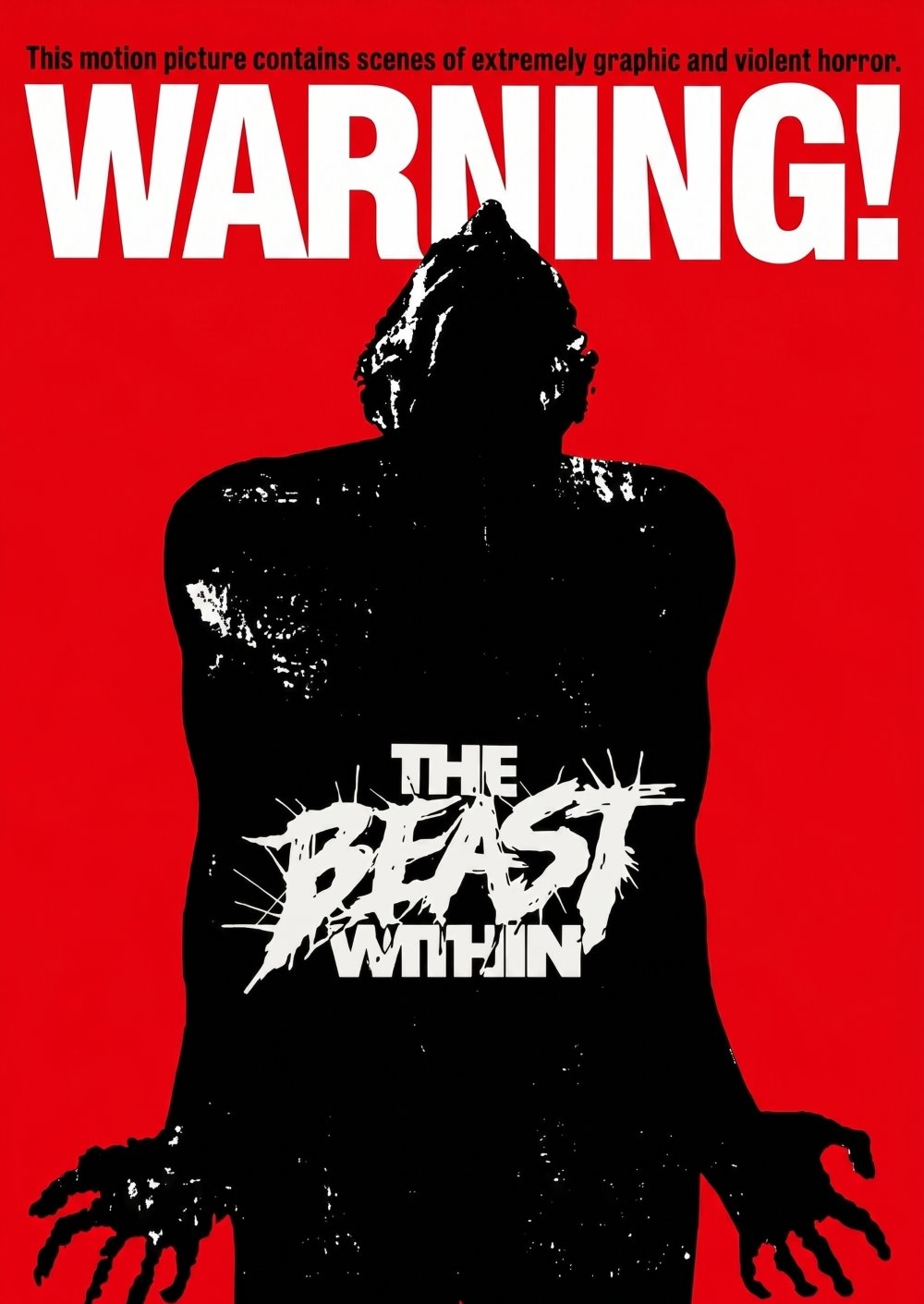
The Beast Within (1982), directed by Philippe Mora, is one of those strange, sticky relics of early ’80s horror that feels like it crawled out of a drive-in double feature and just kept mutating long after the credits rolled. It’s not a good film—let’s just get that out of the way early—and it barely qualifies as a coherent one, but it lands squarely in that fascinating gray area where failure and ambition collide. This is the kind of messy, overstuffed genre hybrid that earns its reputation less through quality and more through sheer, stubborn weirdness. It’s got ambition in odd places, tonal swings that don’t quite land, and a sincerity that almost convinces you it knows what it’s doing. Almost.

What makes The Beast Within so compelling is how aggressively it borrows from exploitation cinema without ever fully committing to being exploitative in tone. All the raw ingredients are here: sexual violence, grotesque bodily transformation, cannibalistic undertones, grave robbing, demonic suggestion, and generational curses. It’s like Mora raided the entire playbook of grindhouse staples and tried to stitch them together into something resembling a prestige Southern Gothic drama. The result is a tonal contradiction that becomes the film’s defining trait. You’re watching material that, in another context, would lean hard into sleaze or pulp sensationalism, yet here it’s played with a stiff, almost theatrical seriousness.

The film opens with one of its most infamous sequences—a brutal assault in the woods by something that is distinctly not human. It’s uncomfortable, lurid, and feels like the start of a much nastier film than what ultimately unfolds. Seventeen years later, the child born from that attack begins to change, physically and psychologically unraveling as something monstrous pushes its way to the surface. From there, the narrative spirals into a hazy blend of small-town mystery, family melodrama, and creature feature chaos, with buried secrets clawing their way into the present.

There’s a clear attempt to elevate all of this with Southern Gothic sensibilities. The setting leans heavily into decay and repression—sweltering air, crumbling structures, and a community weighed down by unspoken sins. Characters behave as if they’ve wandered in from a Tennessee Williams play, all strained emotions and suppressed truths, but the film keeps undercutting that mood with bursts of grotesque horror. It’s an awkward balancing act that never quite works. If anything, the material might have been better served by leaning into something closer to a Joe R. Lansdale tone—meaner, pulpier, and more self-aware—rather than reaching for a kind of literary weight it can’t sustain.

Still, what keeps The Beast Within watchable—sometimes even oddly engaging—is how seriously everyone takes it. Ronny Cox and Bibi Besch play the parents with unwavering commitment, treating the story as a straight drama about a family unraveling under impossible circumstances. Their performances don’t wink at the audience or acknowledge the absurdity creeping in around the edges, and that refusal to break tone actually works in the film’s favor. It creates a strange tension where the more ridiculous the plot becomes, the more grounded the performances try to keep it.

Paul Clemens, as the afflicted son Michael, is tasked with carrying the film’s most extreme elements, and he does what he can within the limits of the material. His performance is less about subtlety and more about physical deterioration and panic as his body betrays him, but he sells the desperation well enough to keep things from completely falling apart. When the transformation finally takes center stage, the film dives headfirst into full-on creature horror, complete with practical effects that are equal parts impressive and absurd. They’re messy, tactile, and unmistakably of their era—exactly the kind of thing that feels right at home in a late-night grindhouse slot.

And then there’s L.Q. Jones as Sheriff Poole, who shows up like icing on top of this bizarre, overcooked cake. Jones brings that weathered, lived-in presence he honed across decades of Westerns and genre films, and he slips into this decaying Southern setting effortlessly. There’s a quiet authority to his performance that helps ground the film, even when everything else is threatening to spiral into nonsense. He doesn’t overplay the role or try to elevate it beyond what it is, but his presence adds a layer of credibility that the film desperately needs. It’s like he wandered in from a more confident, self-aware movie and decided to play it straight anyway, and somehow that makes the chaos around him feel just a little more intentional.

Visually, Mora leans into atmosphere when he can, giving the film a hazy, humid texture that reinforces its Southern Gothic aspirations. The town feels insular and vaguely cursed, like it’s been rotting from the inside out long before the events of the film begin. There are moments where the imagery and tone almost align into something genuinely evocative, but they’re fleeting, quickly swallowed up by the film’s inability to maintain a consistent identity.

That lack of cohesion is ultimately what keeps The Beast Within from being anything close to a good film, but it’s also what makes it linger in your mind. It’s constantly shifting—family drama one minute, body horror the next, then veering into supernatural mystery without warning. That unpredictability gives it a kind of scrappy energy, like it’s trying to reinvent itself scene by scene. Most of those attempts don’t quite land, but they’re rarely dull.

What’s surprising is the film’s underlying sincerity. For all its exploitation trappings, this isn’t a cynical or lazy effort. There’s a genuine attempt here to grapple with themes of inherited trauma, guilt, and the inescapability of the past, even if those ideas get buried under layers of monster makeup and narrative clutter. That earnestness creates an odd charm, making it easier to forgive the film’s many missteps.

In the end, The Beast Within sits comfortably in guilty pleasure territory. It’s not something you’d point to as an overlooked gem, and it certainly doesn’t rise to the level of a true grindhouse classic, but it has all the markings of one. It’s messy, uncomfortable, tonally confused, and packed with more ideas than it knows what to do with—but it’s also strangely compelling because of that. Not great, not even good, but just effective enough in flashes to make the whole experience worthwhile. It’s the kind of film that sticks with you less for what it achieves and more for how bizarrely it tries.

Previous Guilty Pleasures

  1. Half-Baked
  2. Save The Last Dance
  3. Every Rose Has Its Thorns
  4. The Jeremy Kyle Show
  5. Invasion USA
  6. The Golden Child
  7. Final Destination 2
  8. Paparazzi
  9. The Principal
  10. The Substitute
  11. Terror In The Family
  12. Pandorum
  13. Lambada
  14. Fear
  15. Cocktail
  16. Keep Off The Grass
  17. Girls, Girls, Girls
  18. Class
  19. Tart
  20. King Kong vs. Godzilla
  21. Hawk the Slayer
  22. Battle Beyond the Stars
  23. Meridian
  24. Walk of Shame
  25. From Justin To Kelly
  26. Project Greenlight
  27. Sex Decoy: Love Stings
  28. Swimfan
  29. On the Line
  30. Wolfen
  31. Hail Caesar!
  32. It’s So Cold In The D
  33. In the Mix
  34. Healed By Grace
  35. Valley of the Dolls
  36. The Legend of Billie Jean
  37. Death Wish
  38. Shipping Wars
  39. Ghost Whisperer
  40. Parking Wars
  41. The Dead Are After Me
  42. Harper’s Island
  43. The Resurrection of Gavin Stone
  44. Paranormal State
  45. Utopia
  46. Bar Rescue
  47. The Powers of Matthew Star
  48. Spiker
  49. Heavenly Bodies
  50. Maid in Manhattan
  51. Rage and Honor
  52. Saved By The Bell 3. 21 “No Hope With Dope”
  53. Happy Gilmore
  54. Solarbabies
  55. The Dawn of Correction
  56. Once You Understand
  57. The Voyeurs 
  58. Robot Jox
  59. Teen Wolf
  60. The Running Man
  61. Double Dragon
  62. Backtrack
  63. Julie and Jack
  64. Karate Warrior
  65. Invaders From Mars
  66. Cloverfield
  67. Aerobicide 
  68. Blood Harvest
  69. Shocking Dark
  70. Face The Truth
  71. Submerged
  72. The Canyons
  73. Days of Thunder
  74. Van Helsing
  75. The Night Comes for Us
  76. Code of Silence
  77. Captain Ron
  78. Armageddon
  79. Kate’s Secret
  80. Point Break
  81. The Replacements
  82. The Shadow
  83. Meteor
  84. Last Action Hero
  85. Attack of the Killer Tomatoes
  86. The Horror at 37,000 Feet
  87. The ‘Burbs
  88. Lifeforce
  89. Highschool of the Dead
  90. Ice Station Zebra
  91. No One Lives
  92. Brewster’s Millions
  93. Porky’s
  94. Revenge of the Nerds
  95. The Delta Force
  96. The Hidden
  97. Roller Boogie
  98. Raw Deal
  99. Death Merchant Series
  100. Ski Patrol
  101. The Executioner Series
  102. The Destroyer Series
  103. Private Teacher
  104. The Parker Series
  105. Ramba
  106. The Troubles of Janice
  107. Ironwood
  108. Interspecies Reviewers
  109. SST — Death Flight
  110. Undercover Brother
  111. Out for Justice
  112. Food Wars!
  113. Cherry
  114. Death Race

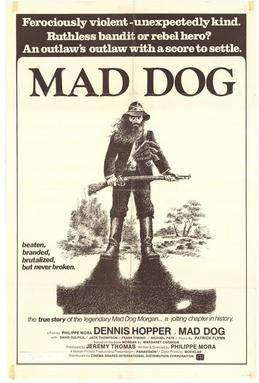
A Movie A Day #352: Mad Dog Morgan (1976, directed by Philippe Mora)


Though he may not be as internationally well-known as Ned Kelly, Dan “Mad Dog” Morgan was one of the most infamous bushrangers in 19th century Australia.  Much as with the outlaws of American west, it is sometimes difficult to separate the fact from the legend when it comes to Mad Dog Morgan but it is agreed with Morgan has one of the most violent and bloodiest careers of the bushrangers.  Whether Morgan was a folk hero or just a ruthless criminal depends on which source you choose to believe.
In Mad Dog Morgan, Dennis Hopper plays Morgan as being the ultimate outsider.  Though the real Morgan was believed to have been born to Irish immigrants in New South Wales, the film presents Morgan as being the immigrant, an Irishman who ends up in Australia searching for gold and who is disgusted when he sees the way that the colonial authorities run the country.  Addicted to opium and angered by the casual brutality and corruption that he sees all around him, Morgan fights back and soon ends up in prison where he spends years being abused and raped.  It is all intended to break his spirit but, instead, Morgan comes out of prison even more determined to seek revenge on any and all figures of authority.  Working with a fellow outsider, an Aborigine named Billy (David Gulpilil, from Nicolas Roeg’s Walkabout), Morgan blazes a bloody and self-destructive trail across Australia.

Mad Dog Morgan was made long before Hopper cleaned up his act and became on of America’s favorite character actors.  This is Hopper back when he was still one of the most unpredictable and dangerous actors around.  By many accounts, Hopper was in the throes of drug-induced psychosis during the filming of Mad Dog Morgan, which makes it all the more remarkable that Hopper still gave one of his best performances as the legendary bushranger.  (For proof of how authentic Hopper feels in the role, compare his performance to Mick Jagger’s in Ned Kelly.)  Hopper was an outlaw playing an outlaw and his full commitment to the role is obvious from the start.  Featuring brutal action and a cast of talented Australian character actors, (Jack Thompson, Bruce Spence, Bill Hunter, and Hugh Keays-Byrne all have roles) Mad Dog Morgan is an essential film for fans of both Australian cinema and Dennis Hopper.

A Movie A Day #200: A Breed Apart (1984, directed by Philippe Mora)


Sometimes, the story behind a movie is more interesting than the movie itself.
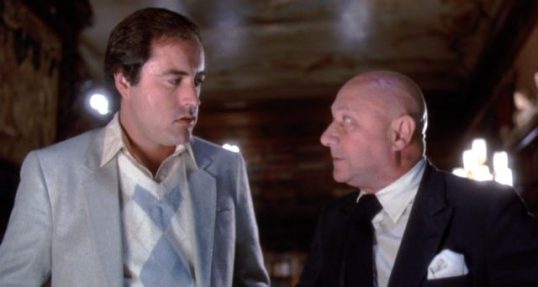
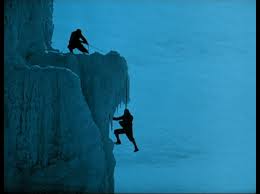
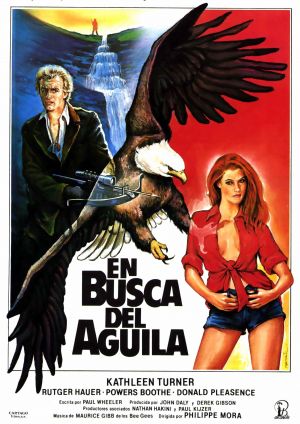
Rutger Hauer stars in A Breed Apart, playing an eccentric environmentalist named Jim Malden.  Malden loves nature but he hates people, with the exception of a local storekeeper named Stella (Kathleen Turner) and her young son.  The local fishermen (one of whom is played by Hauer’s Blade Runner co-star, Brion James) may hate him but they are no match for Malden’s guerilla tactics.  Recently, a new breed of bald eagle has been discovered and Malden is determined to protect it.  At the top of a cliff, there is a nest full of eagle eggs and Malden will not let anyone near them.

Rich collector J.J. Whittier (Donald Pleasence) is determined to get those eggs for himself.  In order to deal with Malden, Whittier hires famous rock climber, Mike Walker (Powers Boothe).  Disguising himself as a nature photographer, Walker attempts to befriend Malden so that he can get to the eggs.  Even as Malden shows Walker why it is important to protect the environment, Walker falls in love with Stella.

With a cast like this, A Breed Apart should have been far more interesting than it was.  It provides a rare chance to see both Rutger Hauer and Powers Boothe playing heroes but neither seemed to really be into their roles.  Kathleen Turner was sexy but saddled with a terrible accent while Donald Pleasence seemed to be in a different movie.  When I watched A Breed Apart last night, I thought it seemed like a very disjointed movie.  For instance, the movie abruptly jumped from Stella and Walker first meeting to the end of their first date.  There was a random scene of Malden putting on war paint, while remembering the sound of helicopters.  War paint combined with helicopters in an 80s movie usually means that someone is having a Vietnam War flashback but Malden’s military background is never mentioned again.  Even Walker’s conversion to Malden’s cause and rejection of Whittier’s money seemed to happen offscreen.

According to Wikipedia, It turns out that there was a reason for all that.  A Breed Apart was filmed in North Carolina.  After principal filming was completed, four reels of film were sent back to Los Angeles.  However, only three reels ever arrived in California.  One reel disappeared and has never been found.  The footage that actually did make it to Los Angeles was reorganized and edited to try to disguise the fact that a huge part of the movie was missing.

It didn’t work.

(ADDENDUM 9/4/2017: Originally, both myself and a lot of other reviewers, were under the impression that one reel of film went missing and, as a result, the film had to be reedited to make up for the missing footage.  This story is presented as fact on Wikipedia, which is where I and I assume a lot of other people originally got it.  The lesson here is not to use an online encyclopedia that anyone can edit for a primary or even a credible source.  In the comments below, Director Philippe Mora has let me know that there was no lost reel and that, instead, there are several different cuts of the film kicking around, some of which are incomplete and some of which are ok.  Since Mora actually worked on the film, he is a far more credible source than an anonymous Wikipedia article.  I apologize to Mr. Mora for the mistake.)

Film Review: Pterodactyl Woman from Beverly Hills (1997, dir. Philippe Mora)


vlcsnap-2015-09-16-12h14m11s694

I need to learn how to keep my mouth shut. Back when I reviewed Safari 3000 (1982), I mentioned this film exists. I got it from Netflix and finally buckled down to watch it. I think I may have found the Tromaville version of The Holy Mountain.

url

No, not the German mountain film with Leni Riefenstahl. I mean this The Holy Mountain.

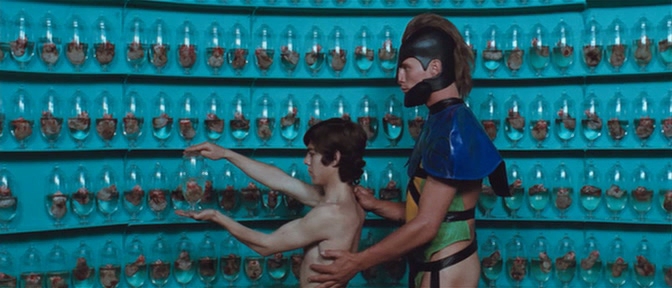
the-holy-mountain-testicles

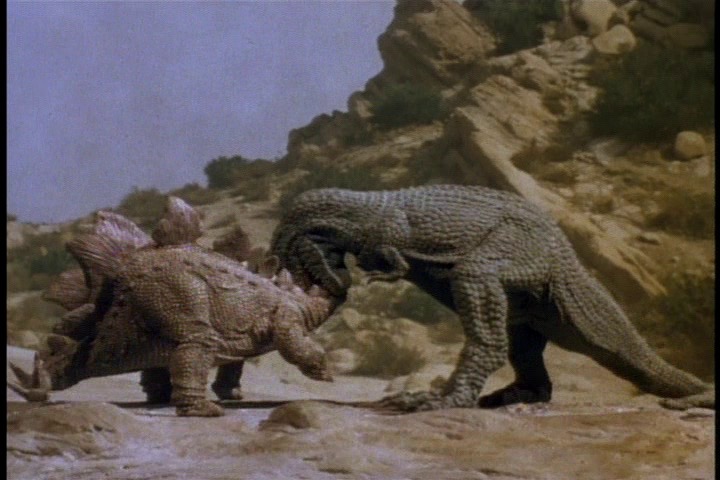
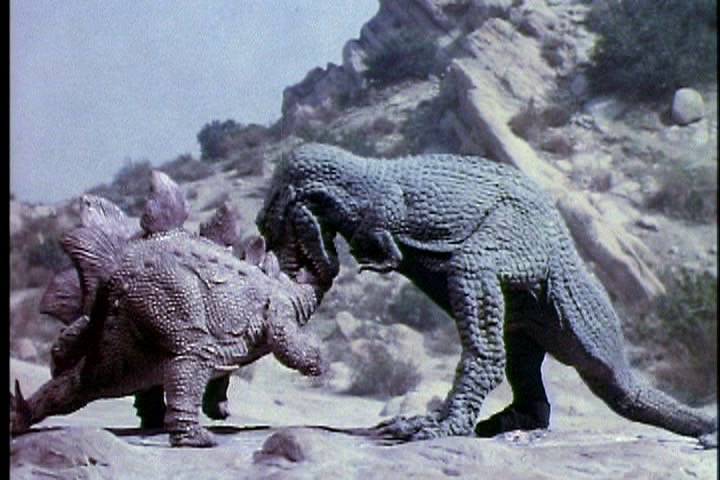
Yes, that is The Holy Mountain I’m referring to. And yes, that is The Hall Of 1,000 Testicles. But when you don’t have the budget to make something that bat shit insane and it’s the 1990’s, then maybe you end up with something like Pterodactyl Woman from Beverly Hills. The movie begins by showing us what Beverly Hills looked like two million years ago. And wouldn’t you know it? It looks just like the movie Planet of Dinosaurs (1977).

Pterodactyl Woman from Beverly Hills

Pterodactyl Woman from Beverly Hills

Planet of Dinosaurs

Planet of Dinosaurs

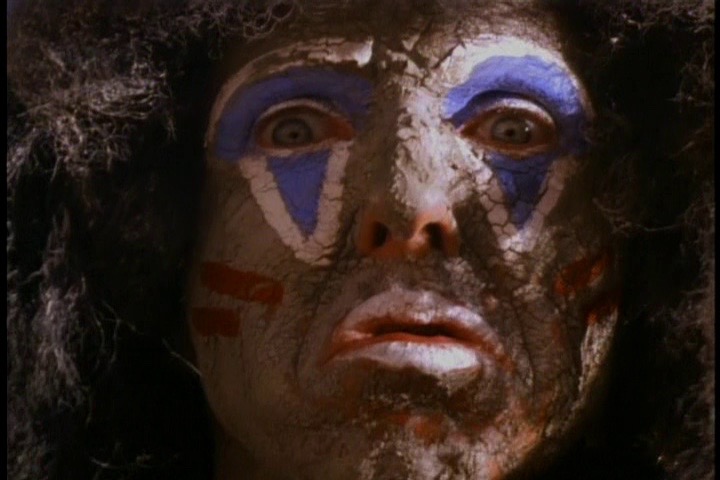
Then we cut to modern day. But don’t worry, because the stock footage from Planet of Dinosaurs is seen again several times. That’s one of the meta jokes in this movie that the stock footage keeps getting in the way or is used as someone’s dreams. Well, two guys are doing a dig in the area when Salvador Dali shows up. No joke, that’s his name.

vlcsnap-2015-09-16-12h15m47s879

Salvador Dali

He does the angry native bit, but has some magic to back it up. He turns one guy into a lizard and curses the other guy’s wife to become a Pterodactyl. That wife is played by none other than Beverly D’Angelo. And boy does she just go all out in this movie. I could stop writing right now and just show a serious of screenshots of her throughout the movie. But let’s talk a little bit about it.

vlcsnap-2015-09-16-12h26m41s832

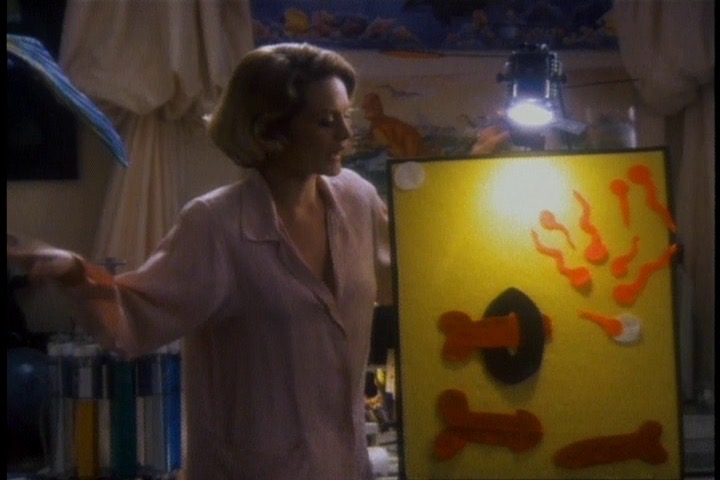
You young ones might not no, but back in the 1990’s, this is how we were taught about sex in the United States. That, or this is a Troma film so of course there is cock and dick humor. I’m not trying to be nasty, her husband is named Dick and they make penis jokes in this movie beyond that screenshot. In no time, D’Angelo starts acting weird.

vlcsnap-2015-09-16-12h47m59s955

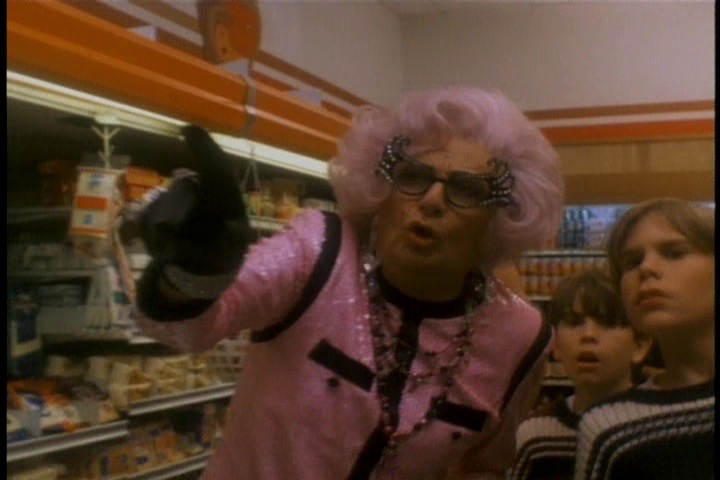
Yeah, just go ahead and swallow that whole thing there Beverly. People won’t remember the pictures of dicks you were pointing at only a few minutes before. They’ll just think you are swallowing a fish while Dame Edna points at you.

vlcsnap-2015-09-16-12h48m02s459

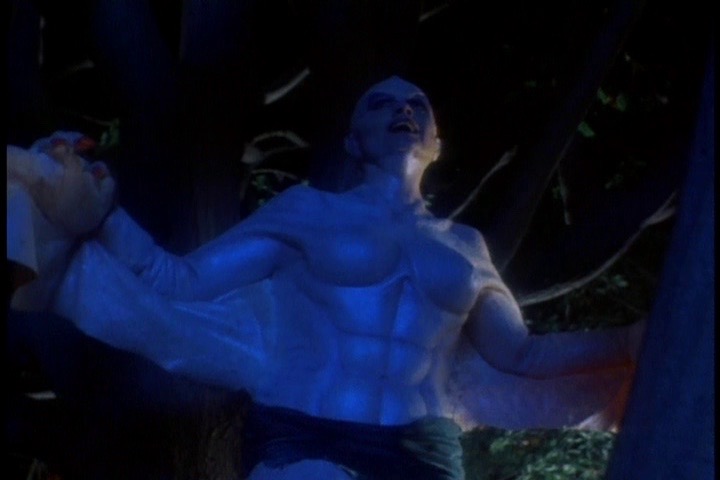
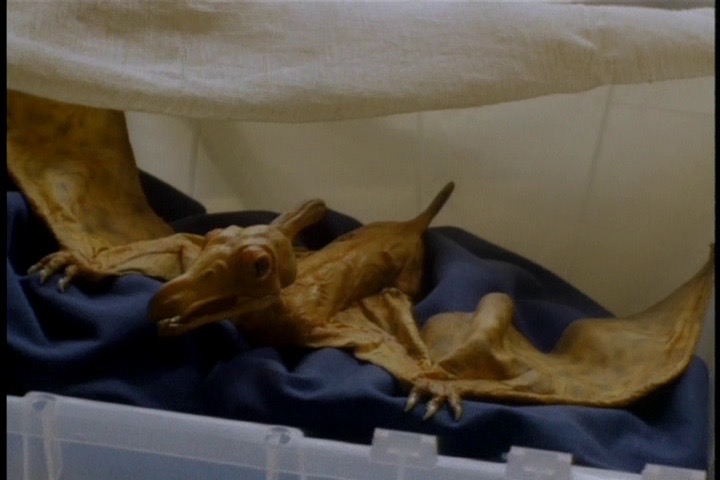
Now D’Angelo turns into a Pterodactyl at night and acts weird the rest of the time. After a particularly hilarious sex scene where her husband screws her as a Pterodactyl because it’s a Troma film, we then see her in all her glory.

vlcsnap-2015-09-16-16h31m04s831

Well, there goes the neighborhood. Now the family, friends, and neighbors have to come to grips with her being a Pterodactyl. Some of the neighbors get together for a meeting and this is actually a weird scene. Not because of anything they are saying, but because it keeps cutting to the back of them for some reason. Made me think of those long lingering shots of nature in A Talking Cat!?! (2013).

vlcsnap-2015-09-16-16h41m13s931

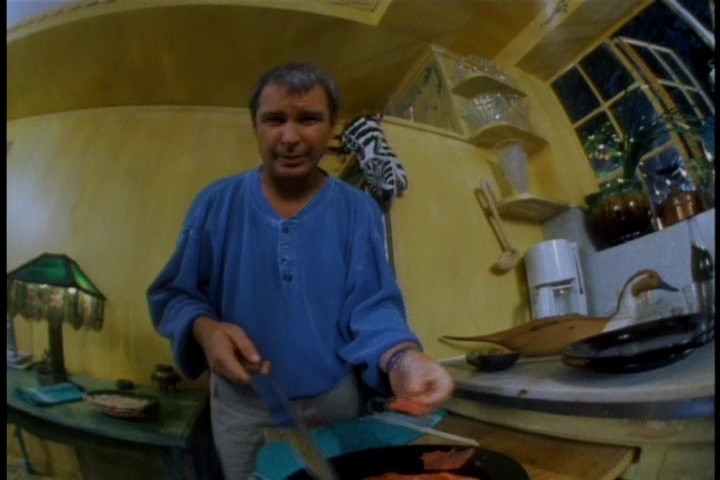
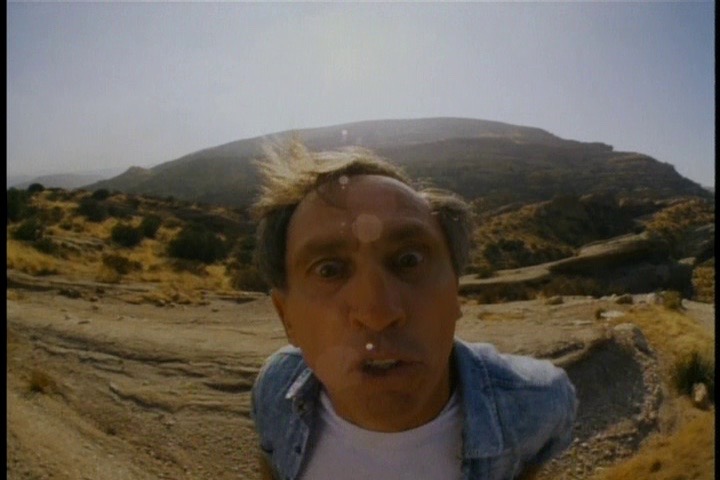
And that’s not the only bizarre thing happening with the cinematography. There are frequent uses of a fish eye lens on the camera.

vlcsnap-2015-09-16-16h43m00s056

I’m guessing just to remind us how weird everything is. I didn’t need that to remind me I was tripping balls because shots like this did it just fine.

vlcsnap-2015-09-16-17h02m56s886

This movie moves pretty quick so that sex scene earlier means she’s pregnant. But before she has the kid, I’m guessing they felt the need to poke fun at David Lynch? That’s my best explanation for this strange sequence in which D’Angelo is slipped a “blue mickey”, dances around, then CGI’s into a Pterodactyl.

vlcsnap-2015-09-16-16h50m30s669

Once that baby comes, then the film winds down pretty quick.

vlcsnap-2015-09-16-17h25m01s118

The husband remembers now how all this happened and takes the family to the desert to find Salvador Dali again. This scene is loaded with stock footage, self referential jokes, lot’s of fish eye lens, and plenty of D’Angelo acting nutty. Salvador Dali even talks to the stock footage at one point calling it stock footage and telling it to go away. The Dali cures her and that’s the end.

I did leave some stuff out, but it doesn’t matter. You don’t need the play by play. It’s a bunch of stuff that is wacko. It does seem to want to have a bit of a message of acceptance. But mostly, I think it’s Troma Productions Lloyd Kaufman 101. Think up the most ludicrous, freakish, and outlandish stuff you can, figure out a way to string it together, then film it. I mean even The Battle Of Love’s Return (1971) basically followed that formula, and I believe that was Kaufman’s first Troma film. This one was done by Philippe Mora. Whereas the collection of incredibly fantastic scenes in The Holy Mountain somehow gel. In this film’s case, I think it’s a mess. I really can’t recommend sitting through this.

But I guess it was worth it for me. Gives me a good excuse to revisit The Holy Mountain.

vlcsnap-2015-09-16-17h29m34s501