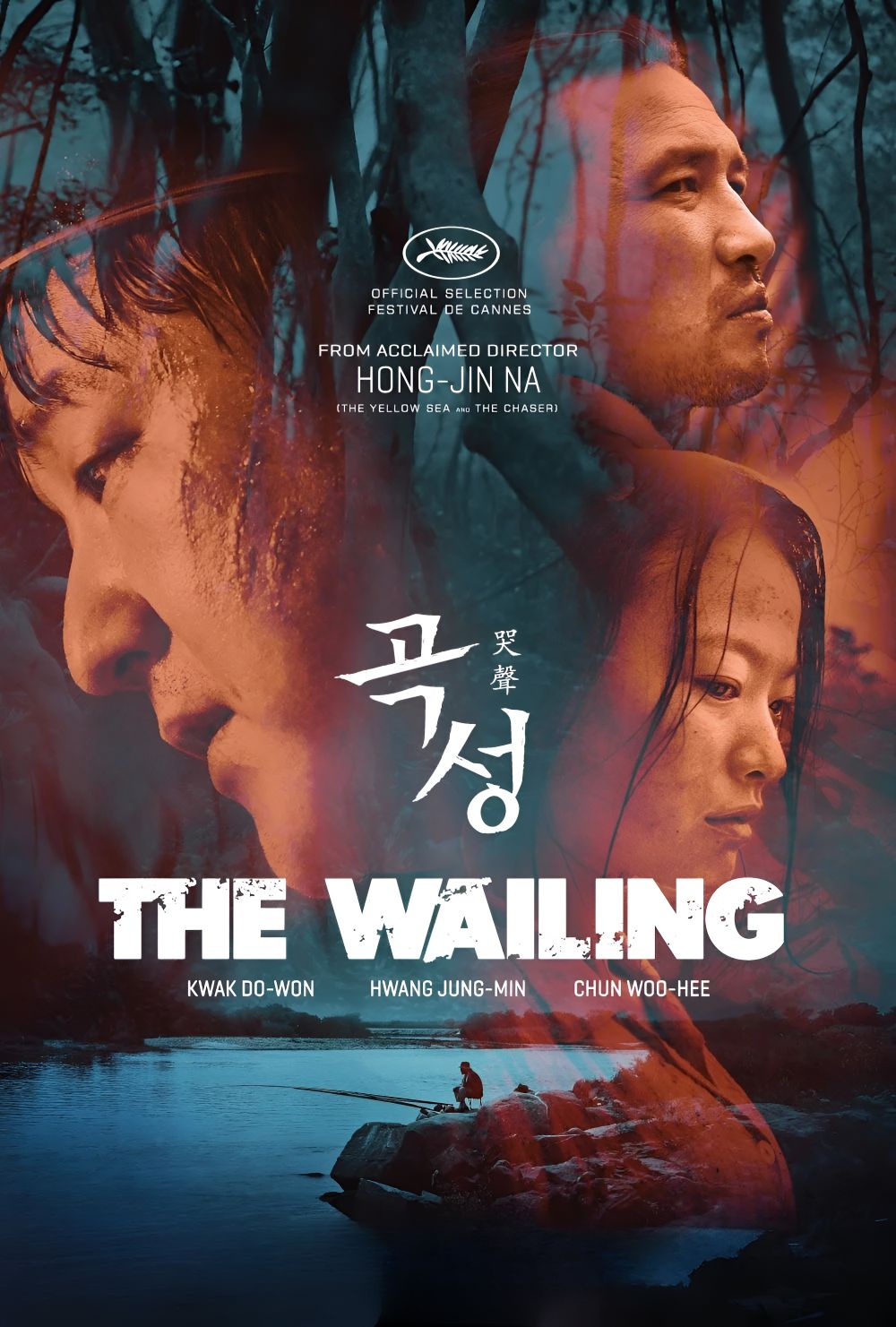
Horror Film Review: The Wailing (dir. by Na Hong-jin)


“Not everything that moves, breathes, and talks is alive.” — Il-gwang

For about an hour, The Wailing pretends to be a detective story. There’s a series of bizarre deaths in a remote village, a suspect who fits nobody’s profile but everyone’s prejudices, a witness with a wild story, and a cop digging for the truth. Everything about Na Hong-jin’s 2016 film is structured like an investigation — interviews, evidence gathering, surveillance photos, a timeline of incidents. The twist is that this is a detective story where the crime scene is the entire world, the culprit may not be a person at all, and every tool the genre normally hands you to solve the case is precisely the thing that gets people killed. Watching it, you keep waiting for the reveal that ties everything together, and slowly it dawns on you: the movie has been quietly teaching you that some cases can’t be closed, and that a detective who can’t accept that is the most dangerous man in the film.

The setup is beautifully simple. In a small village called Gokseong (which gives the film its Korean title), people start getting sick. Then they start getting violent — wild-eyed, homicidal, creepier than your standard zombie by a wide margin. At the center of it all is Jong-goo, a chubby, cowardly, deeply ordinary local policeman played by Kwak Do-won, whose daughter Hyo-jin falls mysteriously ill after the family has a run-in with a stranger. Rumors quickly gather around that stranger, a Japanese man who lives alone in the mountains (Jun Kunimura), who fishes, photographs things he shouldn’t be photographing, and was reportedly seen at the scene of one of the killings. The village has already convicted him; Jong-goo, half-convinced and half-scared, decides to build the case, and the more evidence he collects, the worse everything gets.

What makes The Wailing special isn’t the premise, though — it’s how Na stacks unreliable testimony on top of unreliable evidence until the whole movie feels like a case file with every page contradicting the last. You’ve got a shaman, Il-gwang (Hwang Jung-min, having an absolute blast), who performs one of the most electric exorcism sequences ever filmed, all drums and chanting and animal sacrifice, cross-cut with something else I won’t spoil — essentially an expert witness with his own competing theory. That sequence alone is worth the price of admission: a frantic, drum-driven standoff between two rituals playing out simultaneously, with Na cutting between them faster and faster until you realize he’s using suspense-film grammar to stage a theological argument. You’ve got a mysterious young woman in white (Chun Woo-hee), who shows up with her own version of events, a burned-down house, a zombie-looking guy in the rain, and a very unlucky police partner who keeps finding the worst possible things at the worst possible times.

The genius of the movie is that every one of these characters confidently testifies about what’s happening, and they can’t all be right. Is the Japanese man a demon? A ghost? Just a scapegoated outsider? Is the woman in white a guardian or the actual source of the evil? Is the shaman a fraud or the only person who knows what he’s doing? The film keeps handing you exhibits, then yanking them away — the procedural pleasure of gathering clues, weaponized against you. There’s a scene with photographs that made my stomach drop, a hair tie that functions as a gut-punch with zero gore, and an interview over a cigarette break that recontextualizes the entire first hour. Na shoots all of it in gorgeous, humid, rain-soaked widescreen — this is a beautiful film about terrible things, all green mountains, wet fields, and pale sunlight — and the unhurried pacing isn’t padding, it’s the point: it lets you settle into the village’s rhythm so that each new irregularity registers as a wrong note in a familiar song. The horror rarely announces itself; it’s just suddenly there, sitting in the frame, and half the time you notice it before the characters do.

The folklore texture deserves its own shout-out. Na reportedly built the film from real shamanic traditions, rural superstitions, and his own questions about why inexplicable suffering happens, and you feel that authenticity in every ritual scene. This isn’t Hollywood exorcism-by-numbers; the shamanism feels lived-in, transactional, dangerous, and the film even works in bits of everyday folk logic — the old rule that meeting someone’s gaze means you’ve seen a ghost, the black hair nailed to a door, the persistent Korean dread of the Japanese stranger as a carryover of historical wounds. The title itself points at the movie’s worldview — there’s an old belief that a spirit’s wail can possess the living — and the film is smart enough to treat belief, not just demons, as the thing doing damage. When an entire village decides someone is a monster, what happens next is horror regardless of the supernatural facts.

Performance-wise, this is Kwak Do-won’s movie. His Jong-goo is one of the great horror protagonists precisely because he’s not brave, not sharp, and not special — he’s a tired dad making guesses, and every wrong guess costs him. You watch a decent, dim man get dismantled piece by piece, and the film’s darkest trick is making you complicit in his worst decision. Jun Kunimura is remarkable in a role that requires him to be sinister, pitiable, and genuinely terrifying depending on which scene you’re watching — the man can shift the temperature of a room just by deciding whether to make eye contact. Hwang Jung-min goes full rock-star shaman and steals the middle of the movie, and Chun Woo-hee does extraordinary work with a character who has to work on two levels at once: every time she speaks, you’re simultaneously calmed by her and checking the frame for what she might really be.

Now, fair warnings. The pacing is slow, especially in the first hour, and the runtime is a hefty 156 minutes. If you need jump scares every ten minutes or a third act that explains itself, this will test you. There’s also animal harm on screen, which I know is a dealbreaker for some folks. And the ambiguity is total — people walk out having landed on completely opposite conclusions, and I genuinely think the film is more layered on a second viewing, since the dialogue is full of lines that read completely differently once you know how things shake out. But Na leaves one crucial scene open-ended on purpose, because the whole point is that certainty, in the face of real evil, is a luxury nobody gets.

And that’s what elevates The Wailing above most possession movies. It’s a horror film about epistemology, honestly — about how we decide what to believe, who benefits from our belief, and how being unable to choose can be the most dangerous state of all. The village looked at a stranger and closed its case; Jong-goo spends the whole film trying to close his, following every lead, consulting every expert, and the movie watches what each conclusion costs him. There’s a line near the end, about trusting versus doubting, that lands like a knife because the entire film has been secretly about that question. The scariest thing in The Wailing isn’t the demon; it’s the idea that you could do everything right and still lose everyone you love because you hesitated a moment too long.

So, where does it land? For my money, The Wailing is a masterpiece of modern horror and easily one of the best South Korean films of the 2010s — a decade that includes Train to Busan, The Handmaiden, and Parasite, which tells you how competitive that field is. It’s not a crowd-pleaser in the jump-scare sense; it’s a slow-burn, smoky, mystifying fever dream that rewards patience and punishes assumptions. Watch it late, watch it with subtitles, don’t look up anything beforehand, and let it mess with you. Most detective stories end with the case closed and the world set right; The Wailing ends with the file left open on the desk, because Na Hong-jin’s real subject was never whodunit — it was the hubris of assuming that every mystery owes you an answer. That open file is exactly what keeps the film wailing in your head long after it’s over.
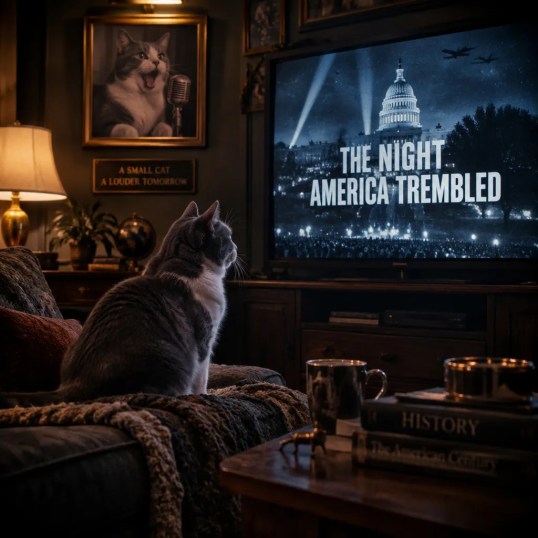
Horror on TV: The Night America Trembled (dir by Tom Donovan)


Filmed in 1957 for a television program called Westinghouse Studio One, The Night America Trembled is a dramatization of the night that Orson Welles terrified America with his radio adaptation of War of The Worlds.  

For legal reasons, Orson Welles is not portrayed nor is his name mentioned.  Instead, the focus is mostly on the people listening to the broadcast and getting the wrong idea.  That may sound like a comedy but The Night America Trembled takes itself fairly seriously.  Even pompous old Edward R. Murrow shows up to narrate the film, in between taking drags off a cigarette.

Clocking in at a brisk 60 minutes, The Night America Trembled is an interesting recreation of that October 30th.  Among the people panicking: a group of people in a bar who, before hearing the broadcast, were debating whether or not Hitler was as crazy as people said he was, a babysitter who goes absolutely crazy with fear, and a group of poker-playing college students.  If, like me, you’re a frequent viewer of TCM, you may recognize some of the faces in the large cast: Ed Asner, James Coburn, John Astin, Warren Oates, and Warren Beatty all make early appearances.

It’s an interesting little historical document and you can watch it below!

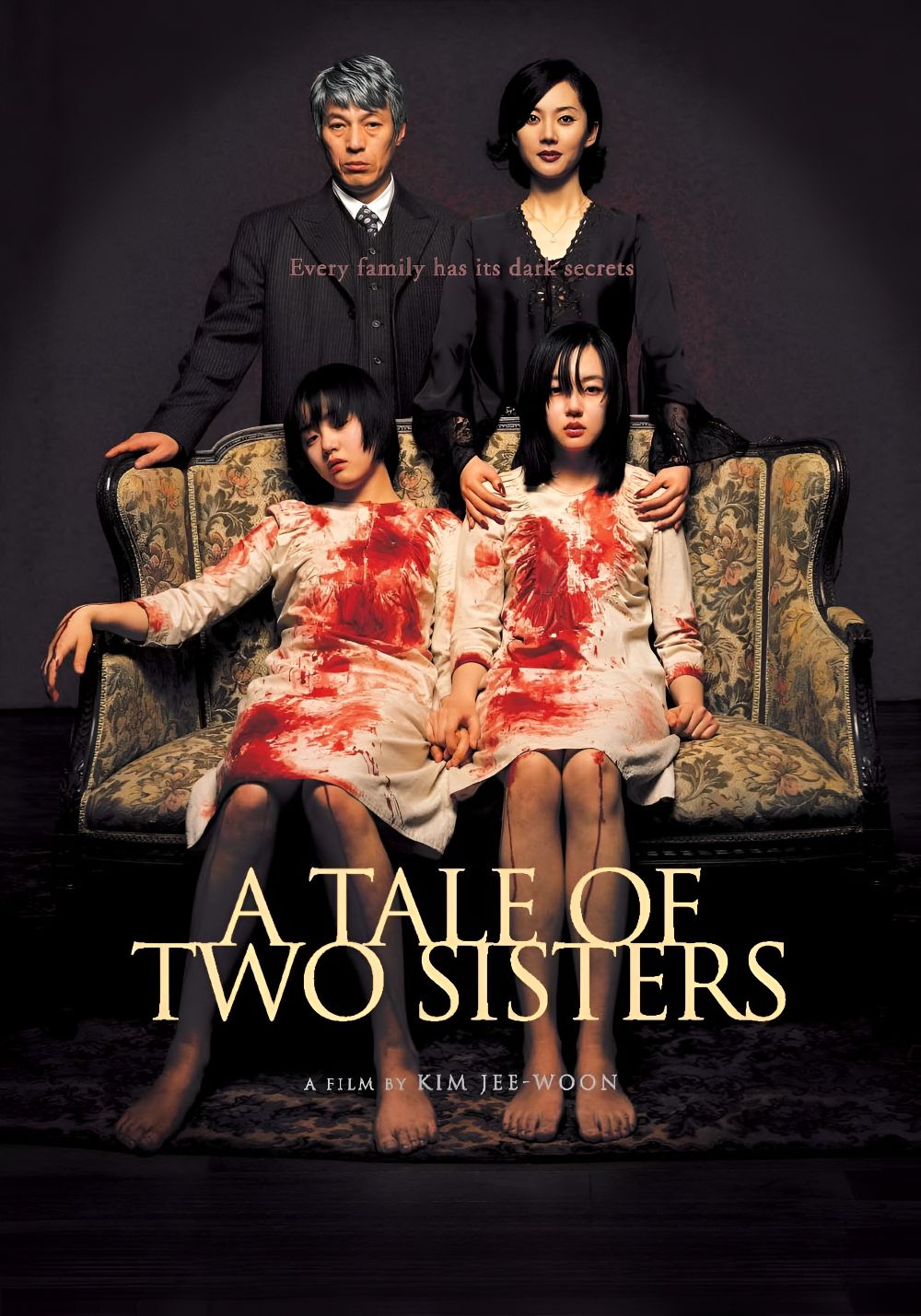
Horror Film Review: A Tale of Two Sisters (dir. by Kim Jee-won)


“There’s something strange in this house.” — Eun-joo

A pretty room can hide a lot, and A Tale of Two Sisters makes you suspicious of every one it shows you. The wallpaper is elegant, the furniture looks carefully chosen, and the countryside outside seems peaceful enough. Yet almost immediately, you want someone to open a window and let the dread out. Kim Jee-woon’s 2003 South Korean horror film builds its power around that mismatch between appearance and feeling. Everything looks arranged, but nothing feels settled. Underneath its polished surfaces is a family whose grief and resentment have made ordinary life almost impossible, whether or not a ghost happens to be watching.

The story follows Su-mi, played by Im Soo-jung, and her younger sister Su-yeon, played by Moon Geun-young, as they return to their secluded family home. Waiting there are their emotionally withdrawn father and their stepmother, Eun-joo, whose attempts at friendliness have a distinctly threatening edge. Su-mi is openly hostile toward her, while Su-yeon seems to shrink from confrontation. Nobody looks particularly pleased to be together. Kim gives us these tensions before supplying much explanation, so we spend the opening stretch reading faces and weighing uncomfortable silences. It’s an effective way to make the audience feel unwelcome in the house, too.

What’s impressive is how little the movie initially needs to do to create unease. The family members don’t interact like people working through their problems; they behave like people trying to prevent those problems from being named. Conversations become contests over who gets to define what’s normal. Eun-joo’s brittle politeness clashes with Su-mi’s refusal to play along, while the father’s passivity allows the hostility to keep spreading. Even without the supernatural material, this would be an unpleasant place to spend a weekend. The horror works because it amplifies an emotional situation that already feels dangerous rather than replacing it with something unrelated.

That brings us back to the house, which is much more than an attractive backdrop. Its patterned walls and rich colors make the rooms visually busy, giving your eyes plenty of places to wander and very few places to rest. Doorways suggest hidden spaces, and shadows seem to deepen when nobody is paying attention. Kim repeatedly makes you question where to look, which is a wonderfully simple way of making you doubt your own observation. A room can appear perfectly still while the composition insists otherwise. The beauty doesn’t soften the tension; it gives the tension somewhere elegant to hide.

The scares grow naturally from that visual uncertainty. Kim lets shots breathe long enough for anticipation to become its own kind of punishment. You begin studying empty space, listening for movement, and wondering whether the film has already shown you something you failed to notice. When a disturbing image finally arrives, it feels like the release of pressure that has been building for minutes. There are sudden shocks, but they aren’t the whole strategy. The more effective moments leave a residue, making the next quiet scene uncomfortable before anything happens. The film understands that a scare can end while the fear keeps going.

The performances make sure this atmosphere has something human at its center. Im Soo-jung gives Su-mi an intensity that can seem prickly or even exhausting, but there’s vulnerability beneath it. Her anger often feels like a method of staying upright rather than a simple personality trait. Moon Geun-young brings a gentler presence to Su-yeon, and their contrasting energies make the sisters’ attachment immediately important. Su-mi’s protectiveness gives the film a clear emotional thread even when its events become difficult to follow. We may not understand every strange occurrence, but we understand why she feels compelled to keep her sister close.

Yum Jung-ah makes Eun-joo a particularly unsettling presence because she rarely lets an interaction settle into one mood. An awkward smile can become a reprimand, and a gesture of concern can suddenly feel like a demand for obedience. The performance draws tension from the work involved in maintaining a pleasant appearance. Eun-joo seems to want control not only over the household but also over how everyone experiences it. That makes her more compelling than a straightforward wicked stepmother, even with the film’s connection to the Korean folktale Janghwa Hongryeon jeon. She embodies the gap between domestic respectability and the hostility simmering underneath.

The storytelling is where the film becomes more demanding, and occasionally less satisfying. Kim withholds information, unsettles our confidence in what we see, and eventually asks us to rethink earlier scenes. That can be absorbing, especially when a revelation changes the emotional meaning of an image. It can also leave a first-time viewer feeling a few steps behind. Not every transition is easy to place, and the later explanations don’t turn the whole experience into a tidy equation. Some viewers will enjoy that uncertainty more than others. There are moments when the effort of sorting out the story competes with the experience of feeling it.

Still, treating the film mainly as a mystery to solve undersells its strongest quality. Beneath its narrative complications is an exploration of guilt: how it distorts memory, reshapes attachment, and makes the past feel permanently present. Without spoiling the major revelations, the film gradually changes what we think its frightening moments are expressing. Images that initially register as threats begin to carry sorrow as well. That shift matters because it gives the horror an emotional afterlife. The point isn’t simply that appearances were misleading. It’s that those appearances offered a way of avoiding something much harder to face.

The music and cinematography help sustain that sadness without draining away the dread. There’s a tenderness to parts of the film that makes its cruelty more painful, particularly when the sisters’ relationship occupies the foreground. Occasionally, the emotional emphasis edges toward melodrama, and the deliberate pacing won’t suit anyone looking for a brisk sequence of scares. But the lingering feels earned more often than not. Kim allows scenes to remain troubling after their immediate purpose seems finished. He’s interested in what an experience leaves behind, and that patience makes the eventual emotional damage harder to brush aside.

What remains after A Tale of Two Sisters isn’t just a collection of frightening images or a clever arrangement of revelations. It’s a changed relationship with the beautiful rooms where the story unfolded. Their elegance starts to look less like comfort than a surface nobody has managed to see beneath. The film can be frustrating, but its best moments turn that uncertainty into something painfully intimate. Kim makes us look closely at a home, then question whether looking closely can ever reveal everything. By the end, the wallpaper hasn’t changed. What we imagine behind it has.

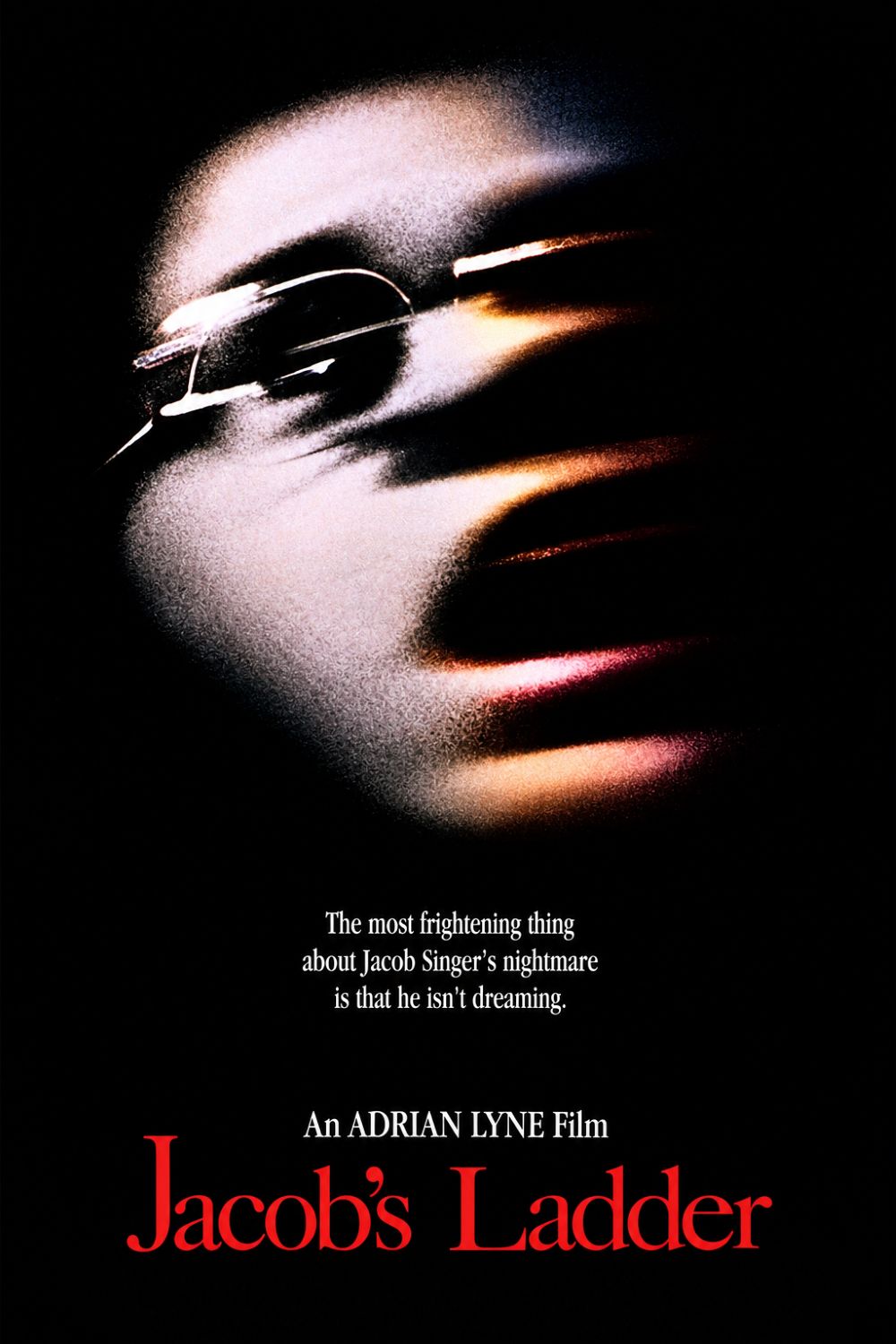
Horror Film Review: Jacob’s Ladder (dir. by Adrian Lyne)


“The only thing that burns in Hell is the part of you that won’t let go of life, your memories, your attachments.” — Louis

There’s a particular kind of nightmare where nothing looks entirely impossible, but everything feels wrong. The people around you seem familiar until they speak. A room you recognize leads somewhere it shouldn’t. You keep trying to explain the situation, only to realize that nobody else thinks an explanation is necessary. Adrian Lyne’s Jacob’s Ladder captures that feeling with remarkable precision. Released in 1990, it’s a psychological horror film that makes confusion feel physical, then gives that confusion emotional weight. Its shocks are effective, but the real hook is watching someone search for reassurance in a world that keeps withdrawing it.

That someone is Jacob Singer, played by Tim Robbins, a Vietnam veteran whose life in New York is interrupted by disturbing visions and memories. He works as a postal employee, lives with his girlfriend Jezzie, and carries grief over the death of his young son. Those details establish a life beyond the central mystery, which matters because the story soon makes almost every part of that life uncertain. Jacob sees things he cannot account for, and the explanations available never remain convincing for long. The screenplay keeps us close to his perspective without guaranteeing that his perspective is reliable.

Robbins gives the film its emotional center. He plays Jacob with an openness that makes the character easy to care about without becoming overly sentimental. There’s something affecting about watching this tall, seemingly capable man become so unsure of himself. He searches other people’s faces for confirmation, tries to ask reasonable questions, and sometimes looks embarrassed by his own fear. Those small reactions do more than constant shouting would. Jacob feels like someone attempting to preserve his dignity while losing the basic confidence that he understands what is happening around him.

Lyne surrounds that performance with environments that seem to magnify Jacob’s anxiety. The New York locations have a worn, claustrophobic quality, and even crowded spaces offer little protection. People are nearby, but help feels strangely unavailable. The subway scenes make especially good use of that disconnect. A familiar public setting becomes threatening through its emptiness, strange encounters, and lack of a straightforward exit. The film understands how quickly an ordinary inconvenience can become frightening when you’re already uncertain about your surroundings. It doesn’t need a spectacular transformation to make a place feel hostile.

The more openly nightmarish imagery grows out of that atmosphere rather than replacing it. Distorted faces and violently unnatural movements appear like interruptions in the visible world. They’re frightening partly because the film rarely allows a comfortable examination of them. You see enough to register something awful, but not enough to understand it. That restraint gives the images an unpleasant afterlife in your imagination. Instead of presenting monsters as clearly defined opponents, Lyne makes them feel like evidence that Jacob’s entire experience has become unsafe. There’s no obvious distance he can put between himself and the threat.

The hospital sequence brings that idea to its most punishing extreme. Jacob cannot control where he is taken, what happens to his body, or whether anyone will answer him honestly. The sequence turns the expectation of medical care inside out. Equipment, corridors, and staff become elements in a process he cannot understand or interrupt. It’s gruesome, certainly, but the gore isn’t doing all the work. The deeper horror lies in being handled as though your fear is irrelevant. Lyne makes the loss of agency unbearable before the most disturbing images even finish registering.

What keeps the movie from becoming exhausting is its attention to Jacob’s emotional life. His memories of his son aren’t simply clues for the audience to collect. They show what he misses and why an ordinary family moment might matter more than a logically satisfying explanation. These passages soften the film without making it less unsettling. Once we understand what comfort looks like to Jacob, we understand how cruel it is when that comfort becomes uncertain. Elizabeth Peña’s vivid, sometimes disquieting presence as Jezzie and Danny Aiello’s reassuring warmth as Louis further complicate his search for someone he can trust.

Not every narrative move is equally successful. The conspiracy thread gives Jacob something tangible to investigate, but its explanatory passages feel stiff compared with the uncertainty elsewhere. Some of the spiritual dialogue also states ideas that the imagery and performances have already communicated more subtly. The fragmented structure becomes repetitive in places: Jacob encounters something frightening, finds a possible explanation, and then loses confidence in it. That pattern occasionally makes the film feel more calculated than spontaneous. It’s noticeable because the strongest scenes create dread without seeming to work nearly so hard.

In its latter stretches, Jacob’s Ladder also reveals itself as another piece of creative work whose narrative DNA reaches back to Ambrose Bierce’s excellent short story “An Occurrence at Owl Creek Bridge.” The kinship lies in the unstable relationship between subjective experience, passing time, and a reality the central character cannot comfortably confront. Without spelling out either ending, both works draw their power from making an intensely personal experience feel expansive and immediate, then asking us to reconsider its boundaries. That connection doesn’t make Lyne’s film feel redundant. Its urban nightmares, war-haunted atmosphere, and intimate grief give the familiar storytelling lineage a distinctive emotional texture.

Ultimately, Jacob’s Ladder earns its impact through compassion, not just ingenuity. Its closing movement redirects attention from solving a mystery toward understanding the cost of Jacob’s struggle, and Robbins makes that change feel earned. The film isn’t flawless; some explanations are less compelling than the questions, and a few speeches push too insistently toward meaning. But its best images remain inseparable from the vulnerable person experiencing them. You remember the nightmare hospital and the faces that won’t stay still, certainly. What gives those memories their sting is the man beneath them, still hoping that the next familiar voice or open doorway might finally lead him home.

Hulk (2003, directed by Ang Lee)


After an early childhood of being abused and experimented upon by his mad scientist father, David (Nick Nolte), Bruce Banner (Eric Bana) has grown up to be a mild-mannered scientist who represses his anger. However, when he gets exposed to elevated gamma radiation, a change comes over Bruce and, whenever he gets angry, he turns into the Hulk, a green-skinned creature who cannot contain his rage. Banner finds himself on the run while his father, who has returned to Bruce’s life, tries to manipulate his son’s condition to get revenge on everyone whom he feels has betrayed him. Eventually, David takes a dose himself and transforms into the Absorbing Man, leaving comic book readers to wonder why, out of the Hulk’s wonderful rogue’s gallery of villains, a film would feature one of the least interesting.

It’s easy to forget just how surprised people were when it was announced that Ang Lee was going to be directing a film based on a comic book. “Really?” people said. “But Ang Lee’s an Oscar-winning filmmaker. Why would he make a movie about the Hulk?” A lot of people were even more surprised when the film came out and was more concerned with Bruce’s dysfunctional relationship with his father than with the usual comic book action (though it did have plenty of that). Lee’s use of a forgettable villain like Absorbing Man made more sense once it became clear that Bruce and David were meant to have absorbed their anger from their dysfunctional backgrounds. When Hulk came out in 2003, most critics dismissed it as being an interesting failure.

Today, even though I’m more aware than ever of the film’s flaws, I prefer Ang Lee’s Hulk to the subsequent Marvel versions. In Ang Lee’s Hulk, not every problem can be solved by a CGI battle and not every line is delivered with a wink and a nod. I even prefer Eric Bana to both Edward Norton and Mark Ruffalo because Bana doesn’t shy away from portraying Bruce as being someone who is actually pretty boring when he’s not the Hulk. For most of the movie, Bana’s version of Bruce Banner has no desire to become a superhero or to fight evildoers. He just wants to get through the day without turning into an uncontrollable monster and destroying things. Bana’s Hulk is out of control in a way that Marvel’s Hulk rarely is. Also, Sam Elliott and Jennifer Connelly are both better choices for Thaddeus Ross and his daughter Betty than either William Hurt or Liv Tyler. From the minute you see him, Sam Elliott just is Thunderbolt Ross.

Dismissed when it was first released, Hulk is a film that gets better with each viewing.


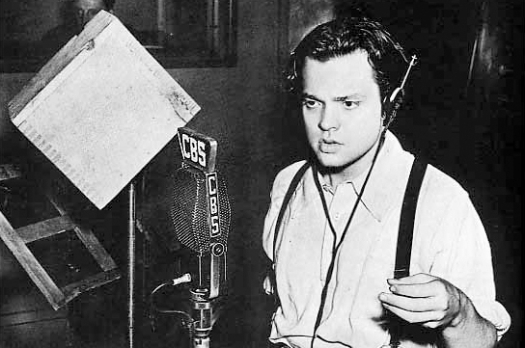
A Blast From The Past: Orson Welles’s 1938 Broadcast of The War of the Worlds


On October 30th, 1938, Orson Welles and the Mercury Theater On The Air broadcast an adaptation of H.G. Wells’s War of the Worlds and, legend has it, they scared the ever-loving heck out of America.

Actually, there’s some debate as to just how panicked America got when they heard the Mercury Theater On The Air’s adaptation of War of the Worlds.  There was definitely some panic but there are differing reports on just how wide spread it was.  For our purposes, let’s assume that the entire country was terrified at the same time and that everyone was loading up a shotgun and planning to go out and look for aliens. With his adaptation of War of the Worlds, Orson Welles managed to invent the whole found footage genre that would later come to dominate horror cinema in the late 90s and the aughts.  Every found footage horror film owes a debt to what Orson Welles accomplished with War of the Worlds.  Ultimately, it’s just another example of how far ahead of his time Orson Welles was.

H.G. Wells, the original author of War of the Worlds, and Orson Welles only met once, while they were both in San Antonio, Texas in 1940.  (Orson Welles and H.G. Wells hanging out in San Antonio?  To be honest, that sounds like it would make a good movie.)  They were interviewed for a local radio station.  H.G. Wells expressed some skepticism about the reports of Americans panicking while Welles compared the radio broadcast to someone dressing up like a ghost and shouting “Boo!” during Halloween.  Both Wells and Welles then encouraged Americans to worry less about Martians and more about the growing threat of Hitler and the war in Europe.

I’ve shared this before but this just seems like the time to share it again.  Here, for Halloween Eve, is the 1938 Mercury Theater On The Air production of The War of the Worlds!

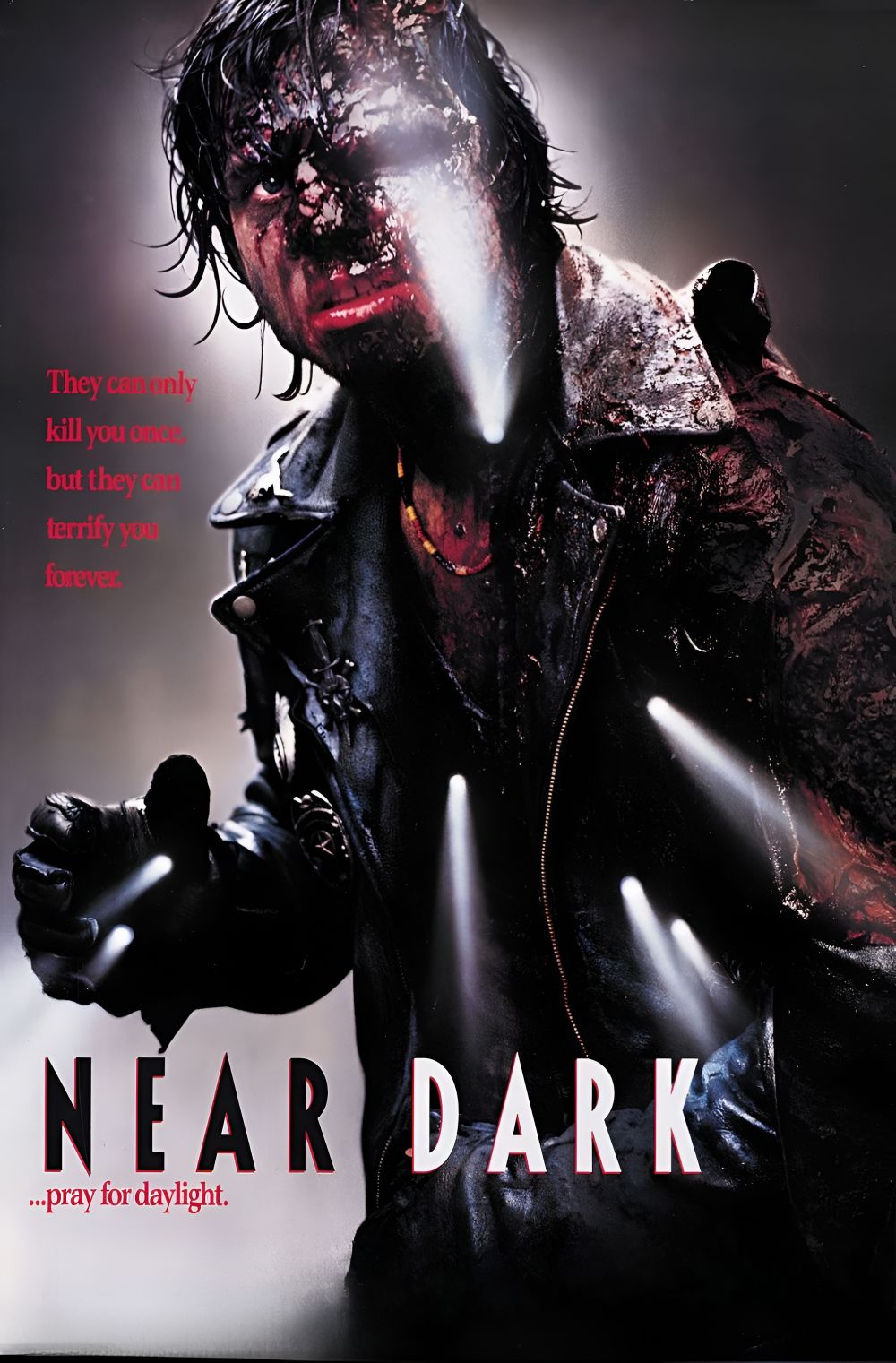
Horror Film Review: Near Dark (dir. by Kathryn Bigelow)


“Let’s put it this way: I fought for the South.” — Jesse

Most vampire movies make you wonder what it would feel like to live forever. Near Dark makes you wonder who you’d be stuck living forever with. In Kathryn Bigelow’s 1987 western-horror film, becoming a creature of the night means joining a small, volatile group whose affection comes with conditions and whose idea of a good evening could leave a roomful of people dead. There’s romance in this world, but very little comfort. Bigelow builds the movie around the uncomfortable possibility that finding people who understand you might be almost as dangerous as having nowhere to belong. It’s a scruffy, seductive horror film that knows how exciting bad company can seem before the bill arrives.

Caleb, played by Adrian Pasdar, doesn’t go looking for immortality. He’s a country boy looking for a little excitement when he meets Mae, played by Jenny Wright. Their early flirtation has the familiar awkwardness of two strangers trying to figure each other out, except one of them has a much better reason to worry about sunrise. A bite changes Caleb’s circumstances before he understands what he has gotten into. Soon he’s traveling with Mae’s vampire companions, who regard him less as a welcome addition than a problem she has brought home. He needs their help, but needing these particular people is its own kind of nightmare.

That dependence gives the story more tension than a simple battle between humans and monsters would offer. Caleb can’t just walk away and resume his old life, yet accepting the group means accepting what they do. The vampires aren’t interested in allowing him a long adjustment period. They expect him to feed, contribute, and stop making his confusion everyone else’s problem. There’s a darkly funny clash of perspectives here: Caleb is enduring an existential crisis, while his new companions are dealing with an irritating passenger. Bigelow makes their impatience recognizable without suggesting that their demands are reasonable.

The western elements give that conflict a natural shape. These vampires behave like an outlaw gang, traveling through an American landscape where staying mobile offers both freedom and protection. Their loyalty matters, but it exists within a closed circle. Anyone outside it is a potential resource, obstacle, or victim. That makes the genre combination feel purposeful rather than decorative. Westerns often find excitement in people who live beyond ordinary rules, and vampire stories have their own attraction to seductive outsiders. Near Dark brings those traditions together, then asks what their freedom looks like from the perspective of someone they decide to hurt.

Bigelow also understands how to make open space feel threatening. Roads and empty horizons usually suggest escape, but they provide little shelter when daylight arrives. The farther these characters get from civilization, the fewer places they have to hide. A miserable room can become more valuable than miles of beautiful countryside. That reversal gives the landscape an active role in the suspense. The vampires may dominate an encounter after dark, but their power comes with a deadline. No amount of swagger can change the time of sunrise, and the movie gets considerable mileage out of watching dangerous people suddenly become desperate.

The physical texture makes that desperation convincing. Clothes look worn, temporary accommodations feel uncomfortable, and traveling together seems like something everyone has done for too long. Immortality hasn’t brought these people luxury or even much convenience. They still have to find transport, secure shelter, and manage one another’s moods. Bigelow doesn’t stop the story to explain their routines, but the strain is visible. This is a particularly effective way of grounding the supernatural: the characters may have extraordinary abilities, yet their existence remains full of practical annoyances. Escaping ordinary human life has left them with a different set of exhausting obligations.

At the same time, the film never becomes so grimy that you lose sight of its appeal. Bigelow finds beauty in nighttime spaces, especially when Caleb and Mae are briefly alone. Darkness offers them privacy and the possibility of closeness, even as it connects them to everything threatening around them. Tangerine Dream’s electronic score helps sustain that contradiction. Its drifting, dreamlike sound creates an emotional distance from the rough surroundings without making them disappear. The music can make a moment feel tender and suspended, then leave the violence to shatter it. That push between attraction and alarm gives the film much of its distinctive atmosphere.

Bill Paxton embodies the alarming side as Severen, a vampire who seems thrilled that survival provides so many opportunities for bad behavior. He plays the role with outrageous confidence, making Severen funny without making him safe. The danger lies in how much pleasure he takes in every confrontation. He isn’t merely prepared to hurt someone if necessary; he appears disappointed when an evening doesn’t require it. Paxton makes that appetite entertaining enough to put the viewer in an awkward position. You look forward to seeing what Severen will do next while understanding that anyone actually standing beside him should be looking for an exit.

Lance Henriksen’s Jesse works through restraint rather than constant provocation. As the group’s leader, he has an authority that doesn’t need much advertising. Henriksen suggests long experience in the way Jesse watches people and decides how much patience they deserve. His steadiness makes the gang feel sustainable, at least on its own ugly terms. These aren’t simply predators who happen to be in the same vehicle. They have a structure, and Jesse helps hold it together. That structure gives Caleb’s possible acceptance real weight. He’s being offered a place in something established, not just permission to tag along until the next disaster.

The film’s strongest idea is that belonging can involve affection and coercion at the same time. The vampires’ attachments don’t have to be fake for their influence to be destructive. They can care about their own people while expecting those people to commit terrible acts. For Caleb, that makes the choice harder than rejecting an obviously empty promise. The group understands what he is becoming in a way his former world cannot. Their companionship answers a real need, but it also demands that he abandon the hesitation keeping him connected to his humanity. Acceptance is available, provided he becomes someone capable of earning it.

Mae gives that conflict its emotional center. Wright makes her vulnerable without turning her into a blameless observer of the gang’s behavior. She belongs to this life, and her attraction to Caleb doesn’t magically separate her from it. Their romance works best when it acknowledges that difficulty. She can offer tenderness without offering safety, and he can care about her without being able to live as she does. Pasdar is less immediately magnetic than the actors playing his traveling companions, but his relative ordinariness serves a purpose. Caleb still has recognizable limits, which gives the audience a way to measure how far the others expect him to go.

The roadhouse sequence makes those expectations impossible to avoid. As the gang terrorizes a bar, the movie strips away any comfortable distinction between their charisma and their cruelty. Bigelow allows the scene to be outrageous and darkly funny, particularly through Paxton, while keeping the vulnerability of the other people in view. It’s exciting filmmaking, but the excitement catches in your throat. For Caleb, the encounter is more than another demonstration of how dangerous his companions are. It’s a test of whether he can participate. He can’t remain indefinitely on the edge of their world, enjoying its romance while refusing its central activity.

That willingness to make the monsters compelling without excusing them is one of the film’s best qualities. Their humor, loyalty, and individuality matter, but none of those things makes their victims disposable. The movie holds both sides of that equation together better than it handles its eventual resolution. Without spelling out the mechanics, the route toward normality feels too convenient after Caleb’s predicament has become so physically and morally tangled. The emotional desire behind the ending is understandable; the storytelling shortcuts are less satisfying. A film so good at establishing the cost of this existence could have used a more difficult reckoning with escape.

Even so, Near Dark earns its place in the memory through the uneasy life it creates between attacks. The worn-out spaces, shifting loyalties, fleeting tenderness, and approaching daylight make the gang feel like more than a collection of horror characters. You can imagine them continuing down another road, having the same arguments and finding new strangers to consume. That’s what makes Caleb’s dilemma linger. The real threat isn’t simply that these people might kill him. It’s that he might become comfortable with them. Bigelow’s film is at its sharpest when the night looks beautiful, the company almost feels welcoming, and you remember exactly what staying would require.

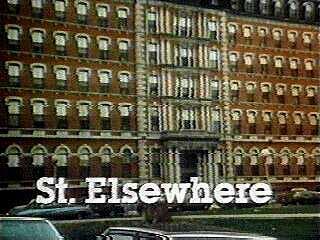
Retro Television Review: St. Elsewhere 4.17 and 4.18 “Time Heals”


Welcome to Retro Television Reviews, a feature where we review some of our favorite and least favorite shows of the past! On Fridays, I will be reviewing St. Elsewhere, a medical show which ran on NBC from 1982 to 1988.  The show can be found on Daily Motion.

In this special two-part episode, 50 years of St. Elsewhere are documented in just two hours.

Episodes 4.17 and 4.18 “Time Heals”

(Dir by Mark Tinker, originally aired on February 19th and February 20th, 1986)

Aired over two nights, “Time Heals” uses St. Eligius’s 50th anniversary to give us 50 years of history. While the staff prepares to observe half a century of serving Boston, the episode skips back and forth in time.

In 1935, a young and enthusiastic priest named Joseph McCabe (Edward Herrmann) prepares for the opening of a hospital that he hopes will serve the downtrodden and forgotten of Boston. Monsignor Senti (Norman Burton) views McCabe as a troublemaker. Meanwhile, a young Donald Westphall watches as his father helps bring a wounded man named Patrick O’Casey (William Russ) to the hospital. Later, Westphall’s sister and mother are killed in a house fire.

In 1945, a young liver specialist named Daniel Auschlander (James Stephens) is brought on staff and meets an angry teenage Donald Westphall (Michael Sharrett). Donald shines shoes in the hospital lobby. When Donald is caught stealing, Father McCabe takes him to the hospital’s gym and gives him a boxing lesson. As for Auschlander, he allows a returning serviceman named Patrick O’Casey to see his young daughter, who is suffering from polio and has been placed in an isolation ward.

In 1955, the Archdiocese sells the hospital to the city and Father McCabe is fired. McCabe gets drunk. Auschlander says that he intends to resign in protest. McCabe replies that that would be a mistake—Auschlander is the man McCabe has recommended as his replacement. Meanwhile, Patrick O’Casey’s daughter dies after spending ten years in an iron lung, and a cocky intern named Mark Craig (William Daniels, sans mustache) has a panic attack while performing his first operation. The demanding Dr. David Domedion (Jackie Cooper) orders Craig back into the operating room. Later, Craig tells another resident, Donald Westphall (Ed Flanders, his hair dyed black but still looking quite middle-aged), that he’s been offered a position at Boston General and will never return to St. Eligius.

In 1965, Dr. Craig returns to St. Eligius, bitter that he was passed over for chief of surgery at Boston General. While a young Luther Hawkins sits in the waiting room, a newly arrived nurse named Helen Eisenberg helps Dr. Westphall deal with Terence O’Casey (Brian Kerwin), a young man having a bad acid trip. “Get a haircut, hippie,” Dr. Craig says at one point.

In 1975, Terence O’Casey is back in the hospital, waiting as Dr. Craig performs open-heart surgery on his father, Patrick. Donald Westphall is appointed hospital administrator. The same night, his wife, Maureen (Anita Gillette), is in an auto accident that leaves her brain-dead. Westphall is the one who has to decide to remove her breathing tube and allow her to pass on.

In 1985, high school principal Terence O’Casey is brought to the hospital with sudden paralysis. His doctor, Jack Morrison, struggles to diagnose Terence’s condition until he goes down to the basement, looks through the earliest hospital records, and reads about Terence’s sister, who died in an iron lung. Jack diagnoses Terence with Guillain-Barré syndrome, a paralyzing condition that can resemble polio.

Meanwhile, Jack’s son, Pete, is apparently abducted by a man at the hospital. I say “apparently” because the plotline feels a bit underdeveloped. The episode ends with the police returning Pete to Jack during St. Eligius’s anniversary party. Pete seems to be physically unharmed, and we’re not really given any details as to who abducted him or how the police tracked him down.

The subplot featuring Morrison’s son being abducted is oddly undeveloped, but that’s really the only flaw to be found in “Time Heals.” This is not only a great episode of St. Elsewhere; it’s also one of the greatest episodes of television I’ve ever seen. That said, it isn’t just a great episode of television. It’s a great work of art, period, from the excellent performances to the way the episode seamlessly mixes the flashbacks so that they come together to tell one epic story of the 20th century. Featuring both the story of the hospital and the story of the O’Caseys, “Time Heals” is a portrait of how times change and how they remain the same.

A few random notes:

For those who think Dr. Craig is too hard on his residents, this episode shows that Craig’s mentor was equally hard on him, and that it helped turn Craig into the surgeon he is today. That said, it’s also amusing to see that young Mark Craig was just as obnoxious as Victor Ehrlich.

I’ve often complained about how depressed Westphall always seems to be. This episode shows that Westphall has a lot of reasons to be depressed. The man’s life has been one tragedy after another.

One cannot overlook the importance of the O’Caseys to this episode’s power. The O’Caseys represent the community St. Eligius is meant to serve. The hospital is part of the family’s life. History repeats itself throughout the O’Casey storyline. In 1935, Patrick O’Casey is injured and nearly killed in a fight. By 1945, he’s married and a member of the U.S. Army. In 1965, Patrick’s son, Terence, is a drug-abusing member of the counterculture. By 1985, he’s a conservative high school principal who has an estranged relationship with his gay son, Kevin (John Scott Clough). All of the male O’Caseys have more in common than they realize.

Each decade is shot in a different visual style, which helps us keep track of things. The 1935 scenes are shot in black and white. The 1945 scenes feature muted colors. As we move through time, the colors become clearer and more vibrant until we finally find ourselves in 1985.

“Time Heals” is touching, powerful, and even funny. It’s a true work of art.

Moments #40: Driving In The Rain


It’s the rain season in Texas and there’s a chance that it might rain on Halloween night. We usually don’t have many trick-or-treaters in this neighborhood. In fact, our neighbors have barely decorated for Halloween. Lisa says it’s because the socialists are trying to kill any holidays that aren’t about celebrating the government. I think it’s because we don’t have many kids around. Even thought we usually don’t have many people coming by to ask for candy, I still feel bad whenever it does rain on Halloween night, and I hope that, if it happens this year, the parents take the precaution of buying backup candy.

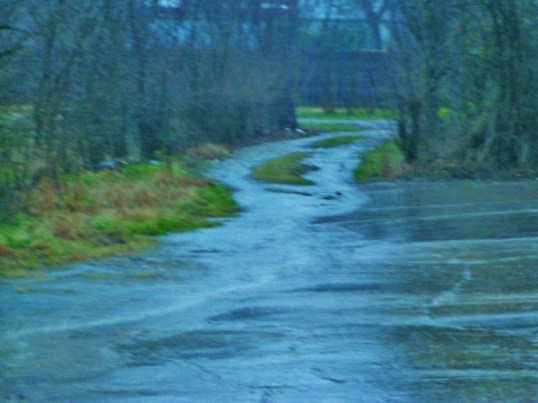
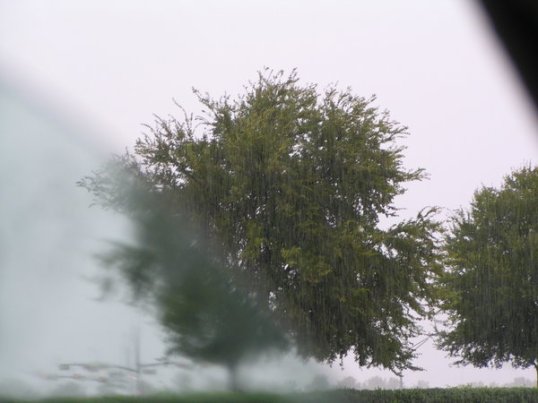
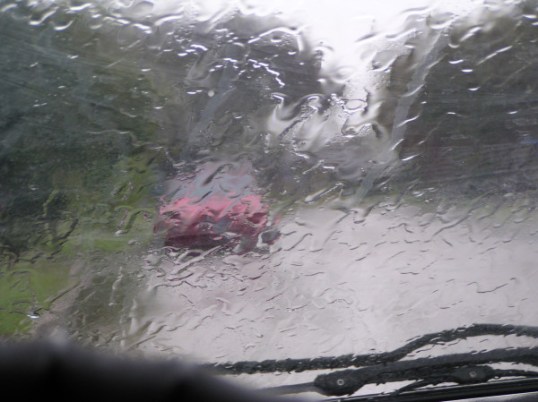
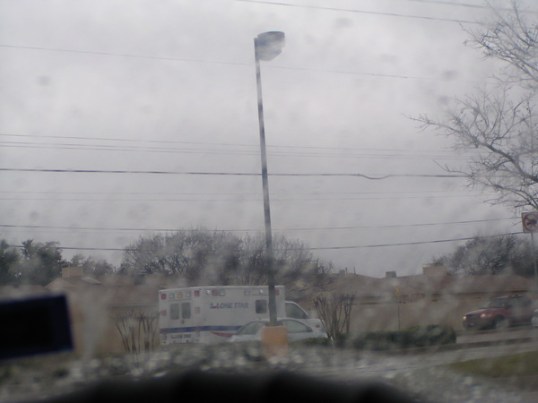
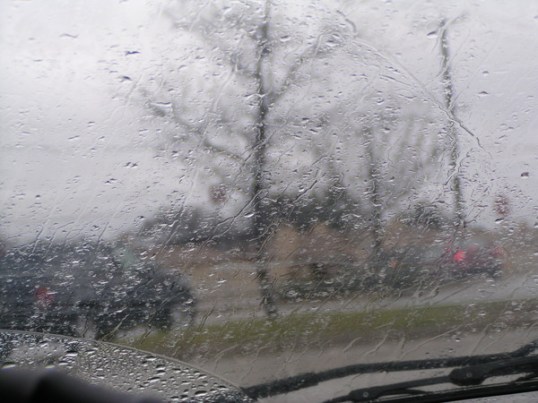
A few years ago, as fall approached (and I’d love to say it was on Halloween, but I can’t remember the exact date), it started to rain while I was driving, and I had to keep pulling over to the side of the road because, even with the windshield wipers going, I couldn’t see where I was going and I knew that was probably true for a lot of other people on the road. Fortunately, I was never without a camera.

I hope everyone has a safe and relatively dry Halloween!

Previous Moments:

  1. My Dolphin by Case Wright
  2. His Name Was Zac by Lisa Marie Bowman
  3. The Neighborhood, This Morning by Erin Nicole
  4. The Neighborhood, This Afternoon by Erin Nicole
  5. Walking In The Rain by Erin Nicole
  6. The Abandoned RV by Erin Nicole
  7. A Visit To The Cemetery by Erin Nicole
  8. The Woman In The Hallway by Lisa Marie Bowman
  9. Visiting Another Cemetery by Erin Nicole
  10. The Alley Series by Erin Nicole
  11. Exploring The Red House by Erin Nicole
  12. The Halloween That Nearly Wasn’t by Erin Nicole
  13. Watchers and Followers by Erin Nicole
  14. Visitors by Erin Nicole
  15. Fighting by Case Wright
  16. Walking In The Fog by Erin Nicole
  17. A Spider Does What It Can by Erin Nicole
  18. Downtown Richardson, In The Rain by Erin Nicole
  19. Me, our kids, and ONCE UPON A TIME IN HOLLYWOOD! by Bradley Crain
  20. The Statues of SMU by Erin Nicole
  21. Exploring the Back Yard Of An Abandoned House by Erin Nicole
  22. The Ugly Old Swing by Erin Nicole
  23. The Fourth of July In My Town by Erin Nicole
  24. A 4th of July Tradition: Blurry Firework Pictures! by Erin Nicole
  25. That Doll by Erin Nicole
  26. Invasion of the Dolls by Erin Nicole
  27. The Dollhouse by Erin Nicole
  28. Jake and Max by Erin Nicole
  29. The Morning of October 26th by Erin Nicole
  30. Casper The God by Erin Nicole
  31. Carrying The Flag by Erin Nicole
  32. The First Morning Of 2026 by Erin Nicole
  33. This Squirrel by Erin Nicole
  34. That Duck by Erin Nicole
  35. The Turkey Vulture by Erin Nicole
  36. October Rain by Lisa Marie Bowman
  37. Hello by Erin Nicole
  38. Three Dolls by Erin Nicole
  39. She’s Got Food by Erin Nicole