The dead are coming back to life! When her brother, Johnny (Bill Moseley), is killed by a zombie at the cemetery, Barbara (Patricia Tallman) flees and makes her way to an isolated farmhouse. It’s there that she’s joined by Ben (Tony Todd), a traveling salesman who is also fleeing from the zombies. Also hiding out at the farmhouse are young lovers Tom (William Butler) and Judy (Katie Finneran) and Harry (Tom Towles), his wife (McKee Anderson), and daughter (Heather Mazur). While the living dead lay siege to the house, Ben and Harry argue over whether it would be better to hide in the basement or to stay upstairs. Even in the face of an unimaginable crisis, the living just can’t stop bickering.
If the plot sounds familiar, it should. Unfortunately, this is not George Romero’s original Night of the Living Dead. This is a remake that came out in 1990. Apparently, when the original film was made, Romero forgot to include a copyright notice on the film and that, combined with a long court battle over the film’s profits, meant that he made next to no money off of its subsequent popularity. (In Romero’s defense, no one originally suspected that his low-budget zombie movie would go on to become a cultural phenomenon.) In the late 80s, when Romero heard that Menahem Golan was considering doing a remake, Romero contacted him and signed on to write the script and serve as an executive producer. Romero’s plan was to establish his copyright over the material while heading off a potentially terrible remake. And, of course, Romero hoped to finally make some money off of the whole thing. Tom Savini was originally brought in to do the special effects but Romero subsequently persuaded him to direct the film. Savini later said that directing the film was a nightmare. While Romero was supportive of Savini’s ideas for the film, the other producers were not and Savini estimated that only 40% of the film was his vision. Once filming was finished, Savini was contractually obligated to cut some of the film’s most gory moments to get an R rating.
Unfortunately, the remake doesn’t really work. Shooting the film in color robs the film of the harsh atmosphere and the almost documentary-style realism that made the first film such a nightmare-inducing success. What was once subtext is made explicit by the film’s script. As opposed to ending with a series of increasingly grainy still shots that bring to mind the records of real-life war atrocities, this film features Barbara watching a trigger-happy posse and literally saying that the living are just like the dead.
The biggest update is that Barbara no longer spends the entire movie in a state of shock. Instead, she grabs a rifle and turns out to be the best shot in the movie. Of course, after spending 90 minutes watching her shoot zombies in the head, it’s a bit hard to take seriously the idea that she would be offended by the sight of the posse. The remake tries to make Barbara a stronger character but then they cast someone who gave an absolutely terrible, one-note performance in the role, which kind of negates the whole thing. In the original film, Ben shoots Harry and it’s a sad moment because it shows that people cannot work together. In the remake, Barbara shoots Ben and we’re supposed to cheer because it’s a 90s film. Beyond that, though, one of the reasons why the first Night of the Living Dead was so effective is because Barbara had the reaction that we all secretly suspect we would have. I may not be happy to admit it but if the dead did come back to life, I’d probably be catatonic as well. Most people would. Not everyone is going to turn into an action hero whenever a crisis breaks out. I would be totally worthless in the face of a zombie apocalypse and so would you. The original Night of the Living Dead had the courage to admit that. The remake does not and that’s why the remake is ultimately just another zombie film.
(Of course, one could argue that by taking the original and spelling out its subtext and making Barbra into a stereotype, this film actually predicted everything from American Horror Story to Mike Flanagan’s Carrie.)
When it comes to the Dead, stick with the Romero originals.
A woman hears a noise so she checks out her attic. Then, she finds a mysterious box with a VHS tape inside. Okay lady, that’s enough. Go away from the cursed box and cursed VHS tape. Are you literally the only person who didn’t see “The Ring”. Enough! Stop! Put those evil things away and get a normal hobby. She lacks all survival skills.
She starts watching the film and it has creepy background music. She starts playing peek-a-boo with the girl in the film who did warn her not to cheat. Did she cheat? Yes. Did the girl become an evil ghost? Yes! I have no sympathy for her- at all.
It’s hard for me to watch movies where decent, hardworking people are mercilessly crushed by the system. But that’s exactly where we find ourselves in THE HOUSEMAID, a slow burning South Korean film from director Im Sang-soo that’s not really a thriller or a horror film, but it’s disturbing as hell for anyone looking for something a little different.
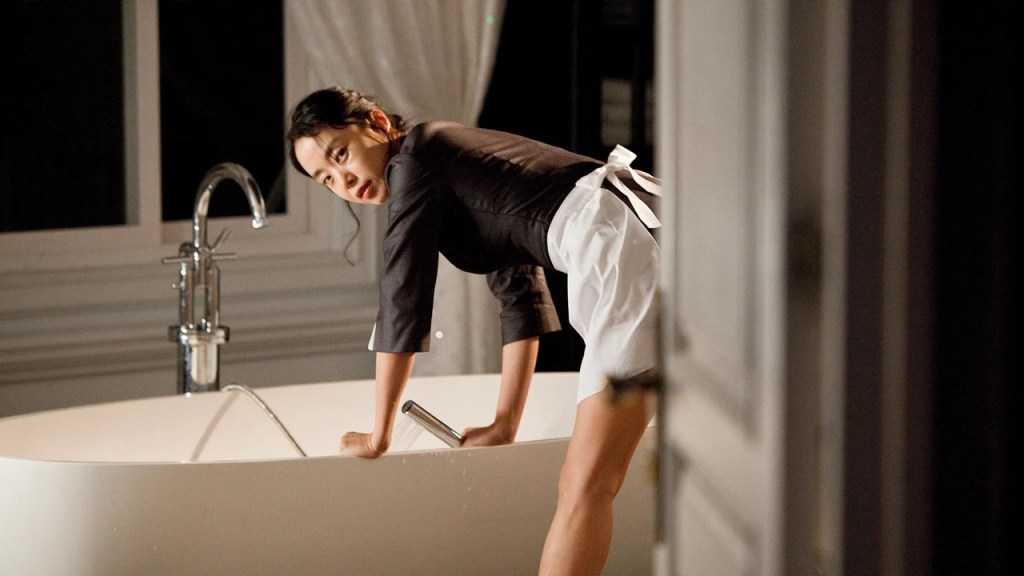
Eun-yi (Jeon Do-yeon) takes a job as a housemaid for a wealthy family. Her responsibilities include caring for the family’s young daughter, Nami (Ahn Seo-hyun), and helping look after her pregnant mother, Hae-ra (Seo Woo). The household is overseen by the experienced housekeeper Byeong-sik (Youn Yuh-jung), who knows all too well how things work in this home. The head of the family is Hoon (Lee Jung-jae), a wealthy businessman who seems to always get whatever he wants. In this case, he wants a sexual relationship with Eun-yi, setting in motion a chain of events that will show just how ugly preserving wealth and privilege can be.
One of the hardest things to watch in the film is how the family reacts when they find out that Eun-yi is pregnant with Hoon’s child. Nobody confronts Hoon or asks him to take responsibility for his actions. They actually do the opposite by concealing it from him. First, they try to kill her by setting up a household “accident.” When she survives that, they offer her money to get an abortion and just go away. When she won’t take the money, they poison her. They just want the problem to disappear, by any means necessary. Hae-ra’s mother, Mi-hee (Park Ji-young), is a particularly nasty villainess who’s determined to protect the family’s reputation and lifestyle, even if it means taking another woman’s life. Who needs a serial killer or Michael Myers when you can simply destroy someone, and without an ounce of remorse?!!
Jeon Do-yeon gives a good performance as Eun-yi, a woman whose initially cheerful and kind personality makes her increasingly difficult circumstances all the more heartbreaking to watch. Lee Jung-jae is smooth and self-assured as Hoon, a man who believes that his wealth and position mean that he doesn’t have to play by the normal rules of society. And Youn Yuh-jung is excellent as Byeong-sik, whose years of service have taught her to recognize the cruelty behind the family’s polished facade. She understands the system she works within, and she protects it “almost” to the bitter end. Interestingly, Youn would win an Oscar for her outstanding performance in the film MINARI back in 2020. She’s an incredible actress and I’m glad she got the international recognition she deserves.
For most of its runtime, THE HOUSEMAID is a psychological thriller with elements of erotic melodrama and social satire. The tension comes from watching the characters maneuver against one another and wondering just how much more abuse Eun-yi can endure before something finally gives. But as the film moves toward its final act, it becomes clear that being discarded as less than human has taken its toll, and she’s going to do something about that. The question is what can she do about it, and the answer is quite disturbing and will probably stick with me for a while.
THE HOUSEMAID is an unsettling film about privilege, exploitation, and the lengths people will go to protect their own interests. It’s not a horror film, but its story does prove that real people are likely to be far more frightening than a masked killer.
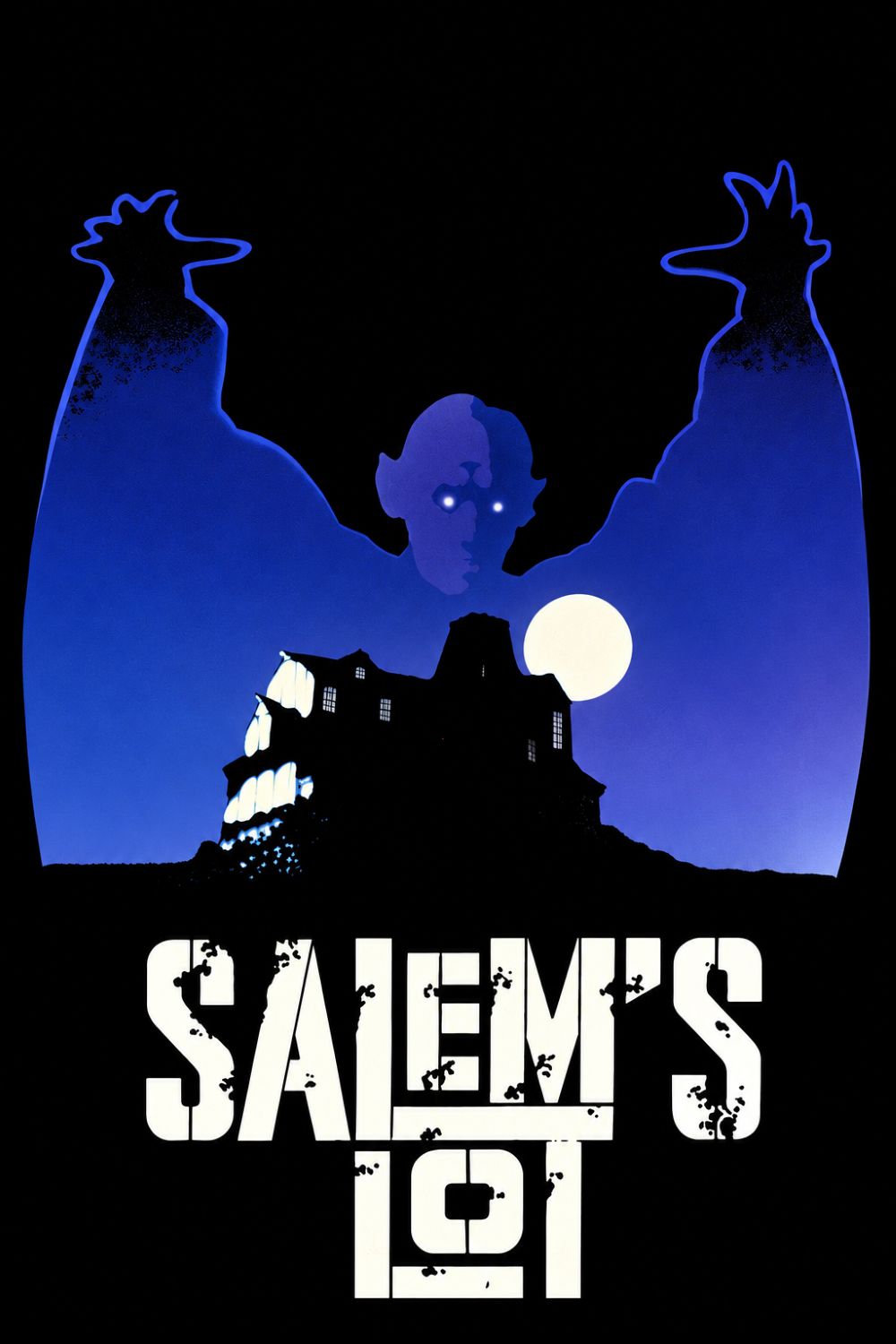
A town doesn’t have to look sinister to be hiding something rotten. That idea gives Tobe Hooper’s 1979 Salem’s Lot much of its staying power. Sure, there’s a creepy old house overlooking the neighborhood, but the real trouble settles into places that should feel reassuring: bedrooms, family homes, and familiar streets. Adapted from Stephen King’s novel, the miniseries turns an ordinary community into a feeding ground without losing sight of what made it ordinary in the first place. It’s uneven, occasionally stiff, and unmistakably a television production, yet its best moments deliver the sort of unease that expensive effects can’t guarantee.
The story begins with novelist Ben Mears, played by David Soul, returning to Jerusalem’s Lot, Maine. He’s drawn back partly by disturbing memories of the Marsten House, a property that seems to concentrate the town’s darkness. Unfortunately, antiques dealer Richard Straker and his mysterious partner, Kurt Barlow, have taken an interest in the place, too. Their arrival coincides with disappearances, illnesses, and deaths that suggest something worse than local bad luck. It’s familiar vampire territory, but familiarity works in its favor. We recognize the warning signs while the characters struggle to explain them away, creating tension between what the audience suspects and what the town will believe.
Hooper takes his time getting everyone into position, which is both a strength and a frustration. The early stretches contain plenty of conversation and everyday business before the supernatural threat becomes impossible to ignore. Some scenes could move faster, and a few supporting characters seem more interesting in principle than in practice. Still, the buildup matters. King’s novel isn’t simply about a vampire turning up; it’s about an entire town becoming vulnerable to him. The miniseries cannot reproduce the book’s full social landscape, but it establishes enough relationships and routines to make the destruction feel like more than a body count.
The town also isn’t an innocent paradise suddenly spoiled by an outside monster. Secrets, resentments, and unpleasant impulses already exist beneath its respectable surface. The vampires don’t invent those weaknesses so much as exploit them. This is an important part of King’s novel to preserve, and the adaptation gets the idea across even when individual subplots feel abbreviated. The Marsten House may be the obvious symbol of evil, but it doesn’t exist in isolation. Its presence above the town suggests a darkness everyone can see and would rather leave alone. That indifference makes the setting more interesting than a collection of unsuspecting victims.
Soul provides a steady center as Ben, even if his restrained performance sometimes borders on flatness. He’s convincing as a man returning to unfinished emotional business, and his seriousness keeps the increasingly bizarre events grounded. There’s little danger of him making the material feel campy. His reserve occasionally creates distance, though, especially when the story needs a stronger emotional response. Ben works best as an observer forced into action, someone whose interest in haunted history becomes considerably less comfortable once it stops behaving like material for a book. Soul conveys that shift more effectively than the warmer aspects of the character.
The romance with Susan Norton, played by Bonnie Bedelia, is less satisfying. Their relationship offers a glimpse of the life Ben might build in town, giving him something to move toward rather than simply something to investigate. That’s useful, but the scenes don’t always generate enough warmth to make the possibility compelling. Bedelia brings an appealing directness to Susan, yet the relationship can feel emotionally hurried even when the surrounding story moves slowly. You understand why it belongs without becoming invested in every exchange. A stronger connection would have given the supernatural threat a more painful personal dimension.
Lance Kerwin makes a livelier impression as Mark Petrie, a horror-loving kid whose interests become unexpectedly practical. Mark could have been a convenient walking instruction manual, but Kerwin gives him enough vulnerability to avoid that trap. He recognizes the danger without becoming immune to it. There’s also something satisfying about a character who takes the evidence seriously rather than endlessly refusing to accept it. His imagination helps him understand the situation, but it doesn’t make everything manageable. That distinction captures something essential about King’s treatment of childhood: knowing what the monster is can help you survive, but it won’t stop you from being terrified.
James Mason is the cast’s great weapon. As Straker, he brings such controlled unpleasantness that a polite conversation can feel like a threat. His calm suggests someone completely comfortable with things everyone else would find horrifying. Is he being dismissive, quietly amused, or openly contemptuous? Often, the answer seems to be all three. Mason gives the production authority whenever he appears, making civilized behavior look like something a predator has learned to imitate. He’s particularly effective because he doesn’t strain for menace. The performance lets us sense the cruelty beneath the manners without constantly dragging it into view.
That elegance becomes especially important because Barlow departs sharply from the novel. King’s vampire can speak, manipulate, and present a recognizable personality. Hooper and actor Reggie Nalder instead give us a largely silent creature, leaving Straker to handle the smooth conversation. Readers who miss the original Barlow have a fair argument: something is lost when an articulate villain becomes primarily a physical menace. Onscreen, though, the decision pays off. With his bald head, pointed ears, and jutting teeth, this Barlow recalls Nosferatu rather than a charming drawing-room vampire. He looks fundamentally unwelcome, and Hooper limits his appearances enough to keep that impression potent.
Even so, Barlow isn’t responsible for the miniseries’ most haunting imagery. That honor belongs to the children floating outside bedroom windows. These sequences create a nasty collision of recognition and wrongness: the face is familiar, but its position, movement, and expression are not. The glass offers protection, yet the request to be let inside makes that protection uncertain. Hooper turns the instinct to welcome someone you know into something dangerous. The possibility that affection might defeat caution makes these scenes more troubling than a straightforward attack. They threaten not only physical safety but the trust that makes a home feel secure.
The windows themselves are wonderfully simple horror devices. They let the characters see the danger while leaving them exposed to its attention. A wall would conceal it; an open doorway would admit it. The glass suspends the scene between those possibilities, stretching out the question of whether the barrier will hold. Mist and unnatural movement complete the effect without requiring elaborate explanations. Almost everyone understands the feeling of being awake in a dark room, looking toward a window and wishing something more substantial separated inside from outside. Hooper takes that common vulnerability and gives it a face.
Moments like these make the television restrictions feel less like a handicap than a challenge Hooper knows how to use. Without relying on graphic violence, he builds horror through faces, shadows, sound, and timing. The production doesn’t always escape its limitations: some exchanges feel conventional, transitions can be abrupt, and the pacing occasionally stalls. But the ordinary interiors also help establish the world being invaded. These look like rooms where people eat dinner, argue, and sleep. The adaptation sacrifices some of the novel’s complexity, thinning supporting characters and narrowing the town’s communal collapse, yet preserves the frightening contrast between everyday surroundings and impossible events.
What finally makes Salem’s Lot worth returning to isn’t perfect fidelity or flawless pacing. It’s the way Hooper understands what the vampires take away before they take anyone’s life: the ability to trust familiar surroundings and familiar faces. King explores that collapse more deeply, but the miniseries preserves its central nightmare with remarkable force. Its quieter stretches give the horror somewhere recognizable to live, and its strongest images make that recognition uncomfortable. By the end, the town’s comforting routines have become part of the trap. For a production working within network television’s boundaries, that’s an impressive achievement—and a more lasting scare than extra blood would have provided.
Ever since the early days of the pulp era, artists have been imagining what it will be like when aliens eventually invade and conquer our planet. Here’s a few illustration for the day the pulp conquered the world.
Two of my all-time favorite movies, SENSE AND SENSIBILITY and NOTTING HILL, star Hugh Grant. I just think he’s incredible, and in those films in particular. I know he can be a real cad, like in BRIDGET JONES’S DIARY, but I’ve never imagined what he’d be like in the role of a completely amoral, evil man. Tonight, I was able to experience that when I watched HERETIC.
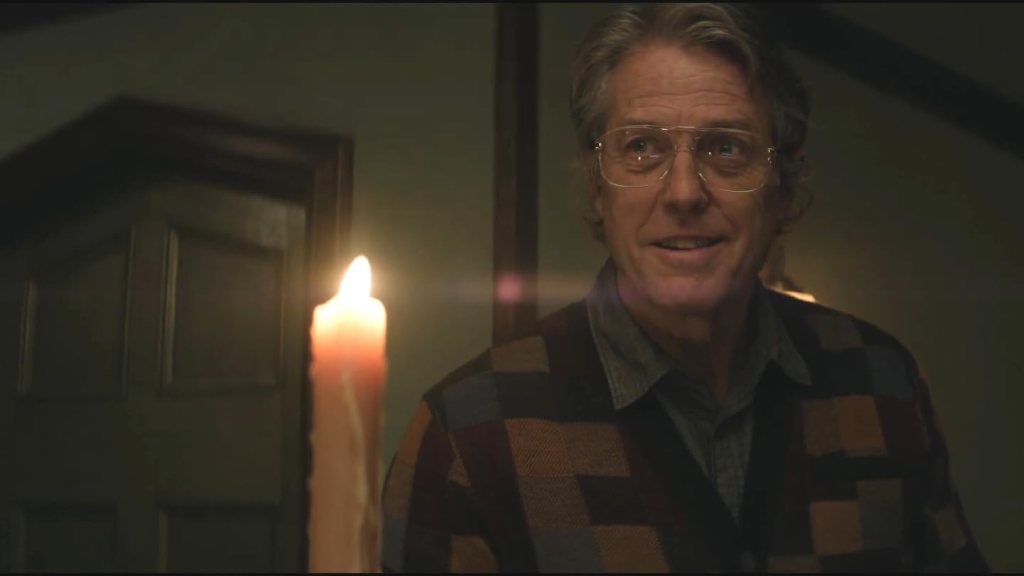
HERETIC follows two young Mormon missionaries, Sister Barnes (Sophie Thatcher) and Sister Paxton (Chloe East), who knock on the door of a seemingly harmless man named Mr. Reed (Grant). He’s friendly, intelligent and more than happy to discuss religion with them. Unfortunately, their decision to accept his invitation inside turns into a nightmare when they discover that there’s much more to this man than meets the eye. What follows is a game of psychological manipulation in which Mr. Reed challenges the women’s religious beliefs while also demonstrating that he’s in complete control of their situation. He seems articulate and reasonable, but the more we learn about him, the more uncomfortable things become.
The movie takes an interesting approach to horror by spending a lot of time exploring questions about faith, organized religion, and the ways in which people use belief systems to influence others. These conversations may seem a little deep for a horror film, but they’re among its most interesting elements. Reed isn’t simply interested in frightening these women. He wants to get inside their heads, challenge everything they believe, and eventually convince them that they know nothing.
And Hugh Grant… what the hell?!! I’ve seen this man aw-shucks his way through romantic misunderstandings, charm his way through countless relationships, and generally make a career out of being the likable Englishman. Seeing him in a role like this is quite an experience. The filmmakers use him perfectly, as the man we initially meet seems a lot like the Grant we’ve seen in the past, just maybe a little quieter. But there’s still that familiar charm and conversational delivery that will make Mr. Reed much more frightening when it’s turned off. It’s an excellent performance that I will NOT be forgetting about anytime soon.
Beyond Hugh Grant’s casting, though, the film continues to subvert our expectations with our Mormon missionaries. The film opens with the young ladies in mid-conversation on topics you wouldn’t necessarily expect to hear them discussing, in this case, condom size and pornography. We do move quickly into more traditional activities as they go about their day interacting with potential converts, but that discussion lingers as we move forward. The story gradually reveals real depth in each of their characters. Sophie Thatcher and Chloe East are very good, with their contrasting personalities and abilities adding another layer to the proceedings. They do a nice job conveying the fear and desperation of women who suddenly find themselves in a horrific situation they cannot control. Thatcher’s Sister Barnes hasn’t been as sheltered growing up, so she brings some street smarts and toughness to the proceedings. I found East to be particularly appealing as she’s able to show real intelligence and bravery behind Sister Paxton’s seemingly naïve façade.
HERETIC isn’t a movie that’s going to appeal to everyone. If you’re not willing to spend some time discussing religion and philosophy, this is probably not the movie for you. I appreciate that directors Scott Beck and Bryan Woods were willing to take a different approach to the horror genre. Their focus on exposing unchallenged, narcissistic beliefs and how they ultimately lead to horrific actions is much more effective than simply relying on jump scares and other familiar tricks. Just know that the movie’s going to operate on a sense of impending dread for quite a while before jumping into real horror.
I found HERETIC to be a genuinely creepy thriller that benefits enormously from Hugh Grant’s presence. While I’ll always love his performances from the past, it won’t be easy to shake the evil he presents here. Who knew that the guy from LOVE ACTUALLY could be this disturbing!
Years before man even landed on the Moon, the pulps told the world all that it needed to know about spaceships, aliens, and what lies beyond the Milky Way. Here are a few intergalactic covers from the pulps!
In general, I’m not really a huge fan of science fiction. A lot of that is because I tend to get bored with the huge mythologies that come along with most science fiction franchises. I don’t care who the best Star Trek captain is. Some of the Star Wars films were enjoyable, but I roll my eyes whenever I meet people who are pedantic about referring to the first movie as A New Hope. My dislike of Avatar is well-known, though it’s actually softened a bit now that everyone else seems to dislike it as well. (I find much of the current dislike to be performative, whereas mine was sincere. I disliked Avatar before it became cool to do so.) Most of the science fiction films that I have enjoyed have either poked fun at the genre (like the Guardians of the Galaxy films), were directed by Ridley Scott (Alien, Blade Runner), have featured giant monsters that were created by radiation, or are Italian (like Starcrash).
That said, I absolutely love Forbidden Planet.
First released in 1956, Forbidden Planet stars a young, handsome, and stalwart Leslie Nielsen as John J. Adams, the commander of the starship C-57D. Adams and his crew are on a mission to investigate what happened to an expedition to the planet Altair IV. As C-57D approaches the planet, they get a message warning them not to land on the planet for safety reasons. Adams ignores the message. When the ship—which rather charmingly is made up to look like a classic flying saucer—lands, Adams and his crew are met by a robot named Robby who takes them to meet his creator, Dr. Edward Morbius (Walter Pidgeon). Morbius explains that he and his daughter Altaira (Anne Francis) are the only survivors of the expedition and that there is an unseen force on the planet that attacks anyone who lands on the surface… anyone other than Morbius and his daughter. Morbius politely suggests that Adams should go back to Earth. Adams says that he can’t do anything until he gets orders…
Despite all of the grim talk about an unseen presence, Forbidden Planet actually starts off as being almost a comedy. With the exception of Commander Adams, Doc (Warren Stevens), and Lt. Jerry Farman (Jack Kelly), the C-57D seems to be exclusively manned by goofy guys who can’t get over the fact that there’s a woman on the planet. (Adams mentions that the crew has been in space for nearly two years.) The Cook (Earl Holliman) wants some alcohol and Robby the Robot knows just how to make it. Fortunately, Leslie Nielsen didn’t have his trademark white hair when he appeared in this film. Otherwise, I don’t know if I’d be able to handle his deadpan, dramatic delivery.
Things change when the unseen attack turns out to be real and starts attacking the ship. A lot of those likably goofy characters end up dying. And when Adams discovers what is truly the source of the monster… well, let’s just say that I imagine the subtext was missed by a lot of the kids who probably made up the film’s initial audience. There’s no silliness to be found in the film’s final moments, with the monster burning away a door that was supposed to be impenetrable and Morbius finally confronting the truth of what really happened to the expedition.
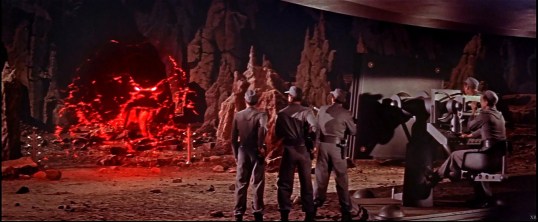
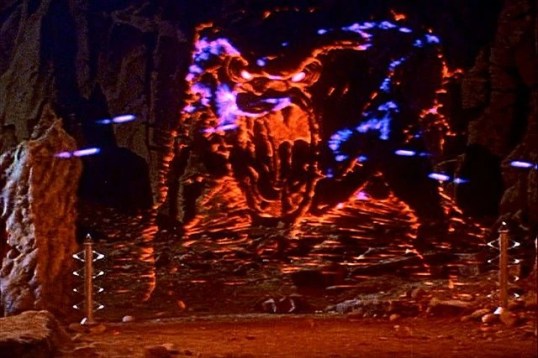
I can’t really remember how old I was when I first saw Forbidden Planet. It came on television one October night and I watched it with my Dad. I thought Robby the Robot was adorable, but what truly stuck with me was the scene where the monster walks into an electrified force field and is suddenly visible.
The way the monster roars and swats at the crew of the ship has always stuck with me. And once we discover the true origins of the monster, the scenes take on an entirely new meaning.
(The monster is so terrifying that even Robby the Robot shuts down rather than face it. It’s an underrated moment of fright. If even Robby can’t battle the monster, what hope is there for anyone else on the planet?)
Leslie Nielsen is likable but a little boring as the male lead. Anne Francis overacts a bit as Altaira. It doesn’t matter. Walter Pidgeon’s intense performance is the one that you remember. Forbidden Planet is an intelligent and thought-provoking film, one that holds up even today. I may not like science fiction, but I will watch it every October.
“Do you know what the most frightening thing in the world is? It’s fear.” — Mark Lewis
Every horror movie is, at some level, about watching — but Peeping Tom, Michael Powell’s 1960 psychological horror-thriller, is the one that admits it out loud. It’s a movie about a man who can’t stop watching, made by a man who spent his life on the other side of the lens, released into a world that wasn’t ready to be told what cinema actually asks of us. The result is a fascinating double ruin: a killer destroyed by the camera in childhood, and a director destroyed by a camera of his own.
The killer first. Karlheinz Böhm plays Mark Lewis, a soft-spoken young man who works at a London film studio as a focus puller — the crew member whose job is literally keeping other people’s images sharp — and who, on the side, shoots glamour photos for a seedy newsagent. Upstairs in his late father’s house sits a darkroom and a private screening room where Mark watches his own footage over and over. Because Mark, you see, is a killer: he murders women with a spiked blade hidden in his camera tripod while filming their faces as they realize what’s happening, so he can capture the exact moment of terror.
It’s genuinely unsettling stuff, and Powell has the nerve to make us complicit. The camera on Mark’s shoulder becomes our point of view, and the movie repeatedly forces us into the killer’s eyepiece. There’s no way to watch Peeping Tom passively — you’re implicated from the first frame, and the film knows it.
What elevates all this from grisly gimmick to genuine tragedy is the empathy the film generates for Mark. He’s no boogeyman; he’s shy, awkward, almost childlike, and the movie patiently unpacks where he came from. His father, a famous psychologist, used little Mark as a lab rat for his experiments on fear, terrifying the boy on camera around the clock, waking him in the night with a lizard thrown onto his bed. Mark was never allowed to just be a kid, and the film frames his murders as a ghastly continuation of the experiment — a search for the perfect recording of fear.
There’s a devastating subplot involving his blind neighbor Helen, played by Anna Massey, who befriends him and eventually screens his childhood footage in a sequence that’s heartbreaking precisely because Mark narrates it with such flat, damaged calm. He can’t even recognize that what happened to him was monstrous. That confusion is the horror — and notice that in a film about seeing, the only person who truly trusts Mark is a woman who can’t see at all.
And then there’s the director, because Peeping Tom is as much a confession as it is a thriller. Powell, the man behind The Red Shoes and Black Narcissus, filled this movie with himself: the studio where Mark works, the film-within-a-film shooting there, the director character who treats his actresses with casual cruelty, and above all the camera itself, presented as an instrument that’s inherently predatory. The famous moment when Mark photographs a woman’s face and we see it refracted through his lens, warped and distorted, is basically a thesis statement about the medium — a great artist asking whether the act of looking is itself an act of violence.
Audiences in 1960 were not ready for a beloved director suggesting that cinema might be a voyeur’s machine, and the damage was immediate and career-ending: the film was pulled from circulation within days, financiers closed their doors, and Powell — who co-wrote the screenplay with Leo Marks — found himself effectively unemployable in British cinema, scraping together scattered, underfunded work abroad for the next thirty years. He described the aftermath as being sent “into the wilderness.”
The irony is that Psycho came out the exact same year, and Hitchcock walked away with his legend enhanced while Powell walked away in ruins. Both are about isolated killers obsessed with spectatorship and the audience’s guilty hunger to see — but where Psycho cloaks its perversity in grease and melodrama, Peeping Tom is cool, clinical, and honest.
Honest, and gorgeous, too. Powell, the great colorist of British cinema, shoots it all in saturated Eastmancolor that turns the tawdry rooms into a garish fever dream. Carl Boehm is gentle and creepy at once, impossible to imagine anyone else in the role, and Anna Massey grounds the film as its emotional conscience. Moira Shearer, the ballerina from The Red Shoes, shows up in a wonderful extended cameo as a stand-in who walks into Mark’s apartment and walks out of it dead — a scene that’s somehow both ghastly and elegant.
The legacy story is where the rehabilitation gets really satisfying, because once the film resurfaced, its DNA turned out to be everywhere in modern horror. Start with the most obvious inheritance: the killer’s point of view. Every horror movie that puts the audience behind the murderer’s eyes — the opening POV stalk of Halloween, the drifting camera-eye of Black Christmas, the whole slasher tradition of the subjective tracking shot — is following a trail Powell blazed in 1960: the camera becomes the killer, and watching becomes a kind of participation.
Then there’s the found-footage vein. Mark Lewis is cinema’s original killer-cameraman, and you can draw a straight line from his home screening room to Henry: Portrait of a Serial Killer and all the way to The Blair Witch Project and Paranormal Activity, where the very act of recording is what summons and sustains the horror. The killer’s home movies prefigure the deadly broadcast of Videodrome, the cursed tape of Ringu and The Ring, the home-video nightmares of Sinister, and the killer-documenting-his-crimes conceit of Man Bites Dog.
Brian De Palma deserves his own sentence in this ledger: from Sisters to Dressed to Kill and Body Double — a film about watching a murder through a lens — he kept returning to Powell’s question of whether the director’s gaze is pleasure or predation, and got away with it simply by making his movies a decade or two later.
The film’s psychological approach proved just as contagious. Mark Lewis is a killer with an actual explanation, a case history we’re invited to understand, and every horror film that humanizes its monster rather than simply unleashing it — The Silence of the Lambs, Manhunter‘s tormented Francis Dolarhyde, the grief-stricken ghosts of The Babadook and Hereditary — owes something to Powell’s refusal to treat his killer as a cheap bogeyman. Even the art-house provocations that implicate the viewer, from Funny Games to Caché, are playing on the same board Powell set up: what the person behind the camera — and the person in the seat — really wants to see.
The most bittersweet chapter of the legacy, though, is the giallo. Almost as soon as Powell was chased out of British cinema for these techniques, Italian filmmakers picked them up and ran wild with them, to international acclaim. The giallo thrillers of the 1960s and 70s — Blood and Black Lace, The Bird with the Crystal Plumage, Deep Red, the gorgeous-murder tradition that Mario Bava and Dario Argento built into an entire genre — are practically assembled from Peeping Tom‘s toolkit: the masked killer whose crimes we witness through his own eyes, the traumatic origin story, the fetishistic attention to the mechanics of murder, the color splashed over terrible violence. Argento’s black-gloved murderer is Mark Lewis with an Italian accent and a better tailor — Powell had made one of the first great giallo films without knowing the genre existed, and the Italians got celebrated for it while he got blacklisted. Proof that Peeping Tom wasn’t too much for audiences, it was simply too early, and too British, for its own good.
Which brings us back to the confession. Mark Lewis ends his film the only way a man made of recordings ever could: watching his own death footage, whispering about the fear his father’s experiments could never quite capture. Powell, ruined by a movie about a ruined man, spent thirty years in the wilderness before the world caught up to what he’d been saying all along. Both stories end the same way — the film outlives the man, the images outlive the shame. Peeping Tom is tense, strange, unexpectedly sad, and still one of the most honest movies ever made about why we sit in the dark. Watch it, and then try to pretend you’re innocent.
The 1974 film Silent Night, Bloody Night is an oddity.
On the one hand, it’s pretty much a standard slasher film, complete with a menacing mansion, a horrible secret, a twist ending, and John Carradine playing a mute newspaper editor.
On the other hand, director Ted Gershuny directs like he’s making an underground art film and several of the supporting roles are played by actors who were best known for their association with Andy Warhol.
Personally, I like Silent Night, Bloody Night. It has a terrible reputation and the film’s star, Mary Woronov, has gone on record calling it a “terrible movie” but I like the surreal touches the Gershuny brought to the material and the sepia-toned flashbacks have a nightmarish intensity to them. The film makes no logical sense, which actually makes it all the more appealing to me. As the saying goes, your mileage may vary.