Retro Television Review: St. Elsewhere 4.17 and 4.18 “Time Heals”


Welcome to Retro Television Reviews, a feature where we review some of our favorite and least favorite shows of the past! On Fridays, I will be reviewing St. Elsewhere, a medical show which ran on NBC from 1982 to 1988.  The show can be found on Daily Motion.
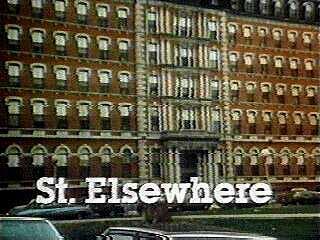
In this special two-part episode, 50 years of St. Elsewhere are documented in just two hours.

Episodes 4.17 and 4.18 “Time Heals”

(Dir by Mark Tinker, originally aired on February 19th and February 20th, 1986)

Aired over two nights, “Time Heals” uses St. Eligius’s 50th anniversary to give us 50 years of history. While the staff prepares to observe half a century of serving Boston, the episode skips back and forth in time.

In 1935, a young and enthusiastic priest named Joseph McCabe (Edward Herrmann) prepares for the opening of a hospital that he hopes will serve the downtrodden and forgotten of Boston. Monsignor Senti (Norman Burton) views McCabe as a troublemaker. Meanwhile, a young Donald Westphall watches as his father helps bring a wounded man named Patrick O’Casey (William Russ) to the hospital. Later, Westphall’s sister and mother are killed in a house fire.

In 1945, a young liver specialist named Daniel Auschlander (James Stephens) is brought on staff and meets an angry teenage Donald Westphall (Michael Sharrett). Donald shines shoes in the hospital lobby. When Donald is caught stealing, Father McCabe takes him to the hospital’s gym and gives him a boxing lesson. As for Auschlander, he allows a returning serviceman named Patrick O’Casey to see his young daughter, who is suffering from polio and has been placed in an isolation ward.

In 1955, the Archdiocese sells the hospital to the city and Father McCabe is fired. McCabe gets drunk. Auschlander says that he intends to resign in protest. McCabe replies that that would be a mistake—Auschlander is the man McCabe has recommended as his replacement. Meanwhile, Patrick O’Casey’s daughter dies after spending ten years in an iron lung, and a cocky intern named Mark Craig (William Daniels, sans mustache) has a panic attack while performing his first operation. The demanding Dr. David Domedion (Jackie Cooper) orders Craig back into the operating room. Later, Craig tells another resident, Donald Westphall (Ed Flanders, his hair dyed black but still looking quite middle-aged), that he’s been offered a position at Boston General and will never return to St. Eligius.

In 1965, Dr. Craig returns to St. Eligius, bitter that he was passed over for chief of surgery at Boston General. While a young Luther Hawkins sits in the waiting room, a newly arrived nurse named Helen Eisenberg helps Dr. Westphall deal with Terence O’Casey (Brian Kerwin), a young man having a bad acid trip. “Get a haircut, hippie,” Dr. Craig says at one point.

In 1975, Terence O’Casey is back in the hospital, waiting as Dr. Craig performs open-heart surgery on his father, Patrick. Donald Westphall is appointed hospital administrator. The same night, his wife, Maureen (Anita Gillette), is in an auto accident that leaves her brain-dead. Westphall is the one who has to decide to remove her breathing tube and allow her to pass on.

In 1985, high school principal Terence O’Casey is brought to the hospital with sudden paralysis. His doctor, Jack Morrison, struggles to diagnose Terence’s condition until he goes down to the basement, looks through the earliest hospital records, and reads about Terence’s sister, who died in an iron lung. Jack diagnoses Terence with Guillain-Barré syndrome, a paralyzing condition that can resemble polio.

Meanwhile, Jack’s son, Pete, is apparently abducted by a man at the hospital. I say “apparently” because the plotline feels a bit underdeveloped. The episode ends with the police returning Pete to Jack during St. Eligius’s anniversary party. Pete seems to be physically unharmed, and we’re not really given any details as to who abducted him or how the police tracked him down.

The subplot featuring Morrison’s son being abducted is oddly undeveloped, but that’s really the only flaw to be found in “Time Heals.” This is not only a great episode of St. Elsewhere; it’s also one of the greatest episodes of television I’ve ever seen. That said, it isn’t just a great episode of television. It’s a great work of art, period, from the excellent performances to the way the episode seamlessly mixes the flashbacks so that they come together to tell one epic story of the 20th century. Featuring both the story of the hospital and the story of the O’Caseys, “Time Heals” is a portrait of how times change and how they remain the same.

A few random notes:

For those who think Dr. Craig is too hard on his residents, this episode shows that Craig’s mentor was equally hard on him, and that it helped turn Craig into the surgeon he is today. That said, it’s also amusing to see that young Mark Craig was just as obnoxious as Victor Ehrlich.

I’ve often complained about how depressed Westphall always seems to be. This episode shows that Westphall has a lot of reasons to be depressed. The man’s life has been one tragedy after another.

One cannot overlook the importance of the O’Caseys to this episode’s power. The O’Caseys represent the community St. Eligius is meant to serve. The hospital is part of the family’s life. History repeats itself throughout the O’Casey storyline. In 1935, Patrick O’Casey is injured and nearly killed in a fight. By 1945, he’s married and a member of the U.S. Army. In 1965, Patrick’s son, Terence, is a drug-abusing member of the counterculture. By 1985, he’s a conservative high school principal who has an estranged relationship with his gay son, Kevin (John Scott Clough). All of the male O’Caseys have more in common than they realize.

Each decade is shot in a different visual style, which helps us keep track of things. The 1935 scenes are shot in black and white. The 1945 scenes feature muted colors. As we move through time, the colors become clearer and more vibrant until we finally find ourselves in 1985.

“Time Heals” is touching, powerful, and even funny. It’s a true work of art.
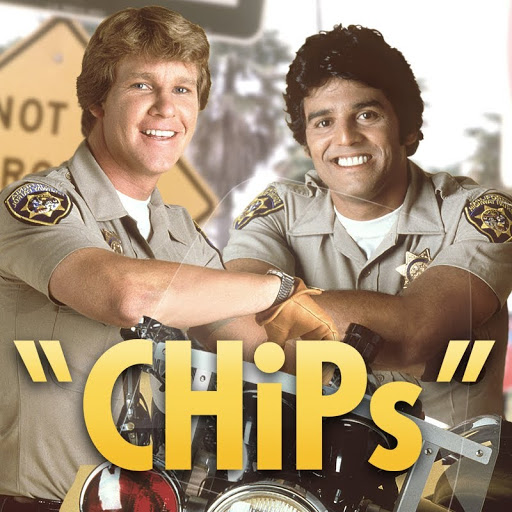
Late Night Retro Television Review: CHiPs 3.24 “Dynamite Alley”


Welcome to Late Night Retro Television Reviews, a feature where we review some of our favorite and least favorite shows of the past!  On Mondays, I will be reviewing CHiPs, which ran on NBC from 1977 to 1983.  The entire show is currently streaming on Prime!

This week, season 3 comes to an end.

Episode 3.24 “Dynamite Alley”

(Dir by Bruce Kessler, originally aired on March 30th, 1980)

After testifying in a trial in Bakersfield, Bonnie (Randi Oakes) is driving back to Los Angeles when, somehow, she ends up flipping her squad car.  In the hospital, Bonnie swears that she had to swerve suddenly to avoid a truck that came out of nowhere.  The only witness to Bonnie’s accident is a pre-adolescent named Corey (Bryan Scott), who was watching as Bonnie drove by his house.  Corey says that he saw the truck but Ponch and Jon come to suspect that he might be lying because he doesn’t want Bonnie to get in trouble.  Meanwhile, Grossman is writing an article on how tired drivers can hallucinate seeing other vehicles and he comes to suspect that this is what happened to Bonnie.

And he’s right!  It’s interesting that, just last season, CHiPs did an entire episode about proving that Sindy Cahill was not responsible for a crash she was involved with.  Meanwhile, this season ends with an episode that’s all about Bonnie being a menace on the streets.  Of course, event though Bonnie flipped her car after imagining seeing a truck in front of her, she gets to keep her job and everyone has a good laugh about it.

My main issue with this episode is that Corey was 1) portrayed as having a stutter and 2) nicknamed Blabbermouth by everyone he knew, even the characters who were supposed to be sympathetic to him.  When he showed up in the hospital to confess that he didn’t really see a truck push Bonnie off the road, Bonnie replies, “Oh, Blabbermouth.”  Even Jon and Ponch call him Blabbermouth.  As a former stutterer, this episode really annoyed me.

As for our B-plot, the “funny car show” is in town.  All sorts of weird vehicles show up on the streets.  One man tries to drive a tank to the show and people start throwing bottles at him.  When Baker and Ponch show up to investigate the tank, Baker nearly gets hit by a glass bottle that’s thrown at him by two kids.  Ponch grabs one of the kids but then just laughs and lets him leave.  Really, Ponch?  BAKER COULD HAVE LOST AN EYE!

And that’s how the third season ended, with Bonnie crashing her squad car because she had a hallucination and a poor kid with a stutter being called “Blabbermouth” by the police.  That’s not the best way to end a season.

Season 4 starts next week!

Late Night Retro Television Review: CHiPs 3.9 and 3.10 “Drive, Lady, Drive”


Welcome to Late Night Retro Television Reviews, a feature where we review some of our favorite and least favorite shows of the past!  On Mondays, I will be reviewing CHiPs, which ran on NBC from 1977 to 1983.  The entire show is currently streaming on Prime!

This week, it’s a special two-hour episode of CHiPs!

Episodes 3.9 and 3.10 “Drive, Lady, Drive”

(Dir by Don Weis, originally aired on November 10, 1979)

The police at nearby Palma Vista are on strike and the state of California has agreed to allow some members of the Highway Patrol to patrol the town until the strike is over.  Getraer assigns Baker, Ponch, Bear, and some new guy named Lenny (Leon Isaac Kennedy) to head over to the town,  Baker is named the OIC, which I eventually figured out stood for “Officer in Charge.”  Getraer knows better than to give the job to Ponch.

Ponch, by the way, is back!  After being absent for two episodes due to Erik Estrada actually injuring himself in a motorcycle crash, Ponch returns in this episode and he goes through the entire episode with this huge grin on his face as if he’s saying, “You know you missed me.”  Ponch’s return means that Baker is once again relegated to being the strong, silent partner who doesn’t really get to do anything.  In fact, Baker crashes his motorcycle early on in this episode, as if the show was trying to tell us, “See?  It could happen to anyone!”

The striking cops accuse Baker, Ponch, Bear, and Lenny of being scabs and strike breakers.  I’m not really a fan of public sector unions.  (When it comes to the police striking, my hero is Calvin Coolidge, who came to fame when he broke up a policeman’s strike in Massachusetts.)  Still, it felt strange to watch the show’s heroes cross that picket line.  That would definitely not happen on television today.

There’s a lot going on in Palma Vista.  There’s some rich kids who keep joyriding in a dune buggy and who think they can escape prosecution by crossing the city limits.  (Joke’s on them!  The Highway Patrol has jurisdiction everywhere!)  There’s some truck hijackers who are setting up a headquarters in town.  There’s an angry city councilman (Michael Conrad) who doesn’t feel his children should be held accountable for their actions.

That said, the majority of this two-hour episode centered on a stock car race and one of the racers, Candi Wright (Kelly Harmon).  Will Candi win the big race or will she lose to her friendly rival (and possible future romantic partner) Don Croyden (Jordan Clarke)?  Will Ponch be able to both date her and do his job?  And most importantly, will she be able to adopt a traumatized little girl (played by Tracey Gold) who Candi discovered outside of a burning house?  That’s a lot of storylines for someone who wasn’t even a regular cast member and a part of me wonders if maybe this episode was meant to be a secret pilot for a Candi Wright television series.  It would explain a lot.

This really was a basic episode of CHiPs, with the only real difference being that it was two-hours long for some reason.  A lot of what happened in the episode, especially the racing footage, felt like filler.  There was really no need for this to be a double-sized episode.  It also doesn’t help that, as opposed to the lovely Los Angeles scenery that we usually see, this episode took place in a rather ugly town.  There was some appropriately spectacular crashes but, in the end, this episode ran too long and felt a bit pointless.  Get the Highway Patrol back on the highways!

Late Night Retro Television Review: CHiPs 2.20 “Quarantine”


Welcome to Late Night Retro Television Reviews, a feature where we review some of our favorite and least favorite shows of the past!  On Mondays, I will be reviewing CHiPs, which ran on NBC from 1977 to 1983.  The entire show is currently streaming on Freevee!

This week, things get a little dull.

Episode 2.20 “Quarantine”

(Dir by Harvey S. Laidman, originally aired on February 24th, 1979)

When a Korean teenager tries to stow away in the backseat of a car being driven by two women who freak out when they discover that he’s back there, it’s Ponch and Baker to the rescue.  They take the teenager back to the station.  Unfortunately, the teen, who does not appear to speak English, turns out to be extremely ill.  He’s rushed to a hospital and the station is put under quarantine.

That means that Baker, Sindy, Grossman, and Getraer are all stuck with each other.  (Ponch was lucky enough to get out of the station before the quarantine was declared.)  There are also two prisoners at the station, a man (Tom Poston) with multiple personalities and a young but witty criminal (Jody St. Michael) who wears a leather jacket and who is always looking for an excuse to crawl around in the air ducts.  Eventually, Harlan enters the station and ends up getting quarantined as well.  Oddly enough, the doctor who tells them that they’re quarantined is allow to enter and leave the station, despite not wearing any sort of protective gear.  For that matter, the two women who were in the car with the teenager are also allowed to leave.  This really isn’t much of a quarantine!

It’s also not much of an episode of CHiPs.  I know that I’ve spent a lot of time complaining about how, during its second season, CHiPs essentially became the Ponch show but I may have to stop doing that.  Ponch is barely in this episode and the end result is definitely the most boring episode of this show so far.  This is an episode that could have actually used Erik Estrada’s tendency to overact every single minute that he’s onscreen.  Larry Wilcox was definitely a better actor than Estrada but he’s so low-key that Baker’s just not that interesting when he’s left to his own devices.  One gets the feeling that Estrada would have totally gone totally overboard in portraying Ponch’s desire to leave the station but that would still have been more interesting than what we ended up with.

CHiPs is ultimately a show that’s about the joy of the California scenery and the excitement of driving a motorcycle down the highway.  It’s a show that works best when everyone is outside and on or in some sort of of vehicle.  With the exception of the opening scenes, this episode takes place almost entirely inside the station.  (And the station, it must be said, it not a particularly intriguing location.)  This episode fails because it goes against everything that makes CHiPs an entertaining show.  Fortunately, in the end, it turns out that the kid only had the flu and quarantine comes to an end.  Baker and everyone else is set free so that they can ride again.