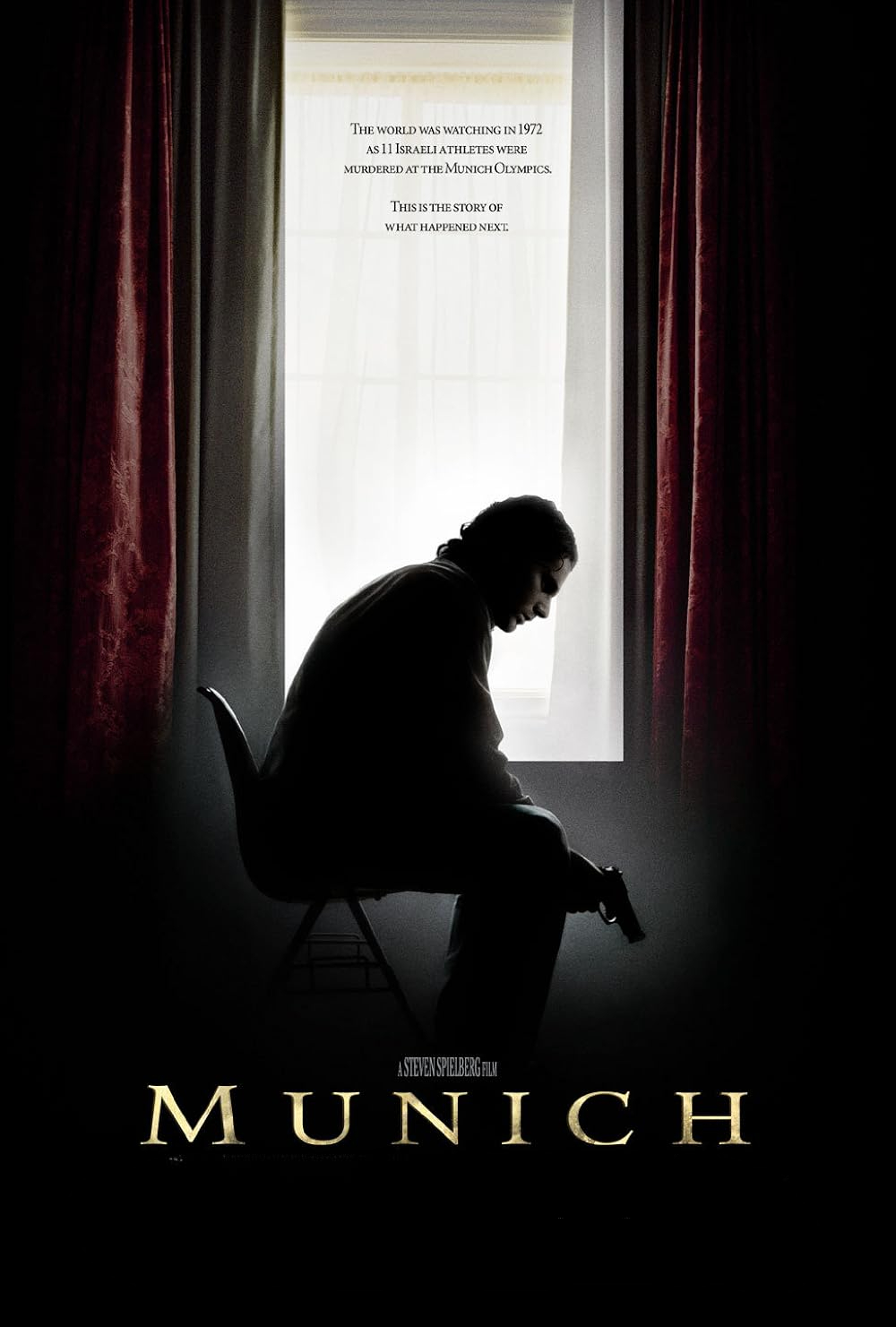
Review: Munich (dir. by Steven Spielberg)


If you’re looking for a comfortable, easily digestible thriller with clear-cut heroes and villains, Munich is going to be a tough sit. This 2005 film, now two decades old, finds Steven Spielberg operating at a peak level of craft, but it’s a cold and angry kind of mastery. It’s a dense, paranoid, and deeply unsettling historical drama that feels less like a movie and more like a wound that’s been picked at for years. Based on the book Vengeance, the film dramatizes the secret Israeli mission, “Operation Wrath of God,” to hunt down and assassinate the Palestinian militants responsible for the massacre of 11 Israeli athletes at the 1972 Munich Olympics. But here’s the kicker: this isn’t an action movie about a bunch of spies getting revenge and feeling good about it. Spielberg isn’t making a war film about who is right and who is wrong. Munich is a film about the ugly, corrosive nature of state-sponsored violence and the way it eats away at the soul of everyone involved. It’s a thriller, sure, but the tension isn’t built around whether the team will succeed, but around the psychological and moral cost of their success. There’s no triumph here, no victory lap—just the sinking realization that for every target they eliminate, the wound in the world only seems to get deeper.

The movie is anchored by a phenomenal performance from Eric Bana as Avner, the team’s leader. He’s a man of deep patriotism, handpicked for this mission by Prime Minister Golda Meir (Lynn Cohen) herself, but he’s completely unprepared for the psychological toll the job will take. He’s joined by a fantastic ensemble that includes Daniel Craig as a brutal and cold-blooded South African operative, and Mathieu Kassovitz as a toymaker turned reluctant bomb expert. They’re a tight, desperate group, and as they move from one European capital to the next, meticulously planning and executing assassinations, the initial sense of righteous duty slowly curdles into paranoia, guilt, and nihilism. The film doesn’t shy away from the violent acts, but it presents them not as a cause for celebration, but as messy, brutal affairs that often have unintended, horrific consequences—like a scene where a bombing intended for a target gets dangerously close to an innocent child. You can feel the weight of every decision pressing down on these men, and Spielberg makes sure you sit with that discomfort rather than brushing past it for the sake of pacing.

One of the most crucial—and still controversial—aspects of Munich is its willingness to humanize the Palestinian perspective. This isn’t a film that paints the Black September terrorists as caricatures of evil. In one of the film’s most powerful scenes, Avner and a PLO member named Ali (Omar Metwally) engage in a tense, philosophical debate about their respective claims to the land. Avner warns that the world will see the Palestinians as “animals” for their actions, to which Ali chillingly replies, “Yes, but then the world will see how they’ve made us into animals. They’ll start to ask questions about the conditions in our cages.” The film doesn’t excuse the terrorism, but it forces the audience to understand the desperation and statelessness that fuels it, presenting a horrifying symmetry where both sides see themselves as victims fighting for survival. It’s a gutsy move for a mainstream Hollywood director, especially in the mid-2000s, and it’s precisely that moral even-handedness that made the film so divisive upon release—and still makes it so damn compelling today.

And that’s where this film connects to a larger, darker moment in Spielberg’s career. Munich was released at the tail end of what some critics have rightly called his “Post-9/11 triptych,” alongside Minority Report (2002) and War of the Worlds (2005). These aren’t just three random films. They are all steeped in a profound sense of paranoia and fear of the outsider that was so prevalent in America after 9/11. Minority Report imagines a society where you’re arrested for a crime before you commit it; War of the Worlds literalizes the fear of a sudden, devastating attack on American soil; and Munich transposes those anxieties onto the Israeli-Palestinian conflict. Spielberg used this triptych to explore the American psyche’s newfound sense of vulnerability and its willingness to embrace extreme, morally ambiguous measures—like torture and preemptive strikes—in the name of security. It was a director grappling with a changed world, and Munich, with its focus on a secret, government-approved assassination squad, feels like his most potent and cynical entry in the series. You can almost hear the echo of post-9/11 rhetoric in every scene, as if Spielberg was holding up a dark mirror to his own country’s creeping acceptance of extrajudicial killing.

But the bleakest part of Munich is how it transcends even that specific historical and political moment. The film relentlessly returns to the theme of the “violence loop.” The team assassinates one target, and he is immediately replaced by someone even more radical. They get a hit, and there’s a retaliatory bombing. It’s a terrifyingly accurate depiction of what has continued to happen for decades after the film’s events. Avner realizes that their entire operation, the endless cycle of state-sponsored revenge, is ultimately pointless for achieving peace. It’s a desperate, bloody game of whack-a-mole that only ensures the conflict continues in perpetuity, a cycle of vengeance that simply feeds on itself. As the film shows, and as is still plain to see today, the violence doesn’t end when the “list” is completed; it just regenerates. The final scenes, where Avner finds himself unable to even sleep in his own bed, watching his young daughter with a haunted look, drive home that the real casualty of state-approved assassination isn’t just the targets—it’s the humanity of the people pulling the trigger. He’s won the tactical war, but he’s lost every single battle that actually mattered.

Ultimately, Munich is a masterclass in filmmaking that offers no easy answers, and watching it today, with the current geopolitical landscape looking more fractured than ever, its relevance hasn’t faded one bit—if anything, it’s sharper and more painful now than it was in 2005. The same arguments, the same grievances, the same bloody score-settling between Israel, the Palestinians, and their Arab allies are still playing out in real time, with no end in sight. And yet, for all its brutal honesty, the film also exposes a tragic truth: this movie, like so much of the discourse surrounding the conflict, will probably only deepen the divide between the two groups watching it, as each side can point to it and say, “See? That’s what they do to us. That’s our pain validated.” It becomes another piece of ammunition in an endless argument rather than a bridge toward understanding. The brilliant cinematography from Janusz Kaminski and the chilling, minimalist score from John Williams only add to that oppressive, paranoid atmosphere, making it not a film that will make you feel good about anything, but one that will make you think—and perhaps that’s exactly why it remains so damn relevant decades later.

So what’s the way out? The film doesn’t give you a manual, but it does whisper a desperate question between its frames: can either side actually step back from the brink long enough to see the loop they’re both trapped in? Because the violence loop isn’t a natural disaster—it’s a human creation, and what humans build, humans can theoretically unbuild. But that would require something infinitely harder than pulling a trigger or planting a bomb—it would require acknowledging that your own righteous suffering doesn’t cancel out the other side’s legitimate pain, it would require looking at the face of your enemy and seeing not a monster but a person who also loves their children and believes they’re fighting for survival. The film dares to suggest that the only real break in the cycle might come from exhaustion, from the sheer soul-crushing fatigue of burying one more generation, or from a moment of radical, almost insane empathy that makes someone say “enough” before the next retaliation.

Spielberg doesn’t offer that moment in the movie, because he knows it hasn’t happened yet in real life—Munich isn’t a prescription; it’s an autopsy. Every few years, when the news cycle inevitably rolls around to another flare-up in that tortured corner of the world, this movie comes back to mind not as a prophecy, but as a painfully accurate diagnosis. It’s a powerful, haunting reminder that the echo of old violence is never truly silent, and that in the long run, vengeance is often a debt that can never be repaid. If you go in expecting a straightforward revenge fantasy, you’ll walk out exhausted and conflicted. But if you go in ready to wrestle with some of the ugliest questions about justice, morality, and state power, then Munich will stick with you like a splinter you just can’t dig out—and maybe, just maybe, that splinter is the first tiny crack in the loop that someone, someday, will have the courage to break.
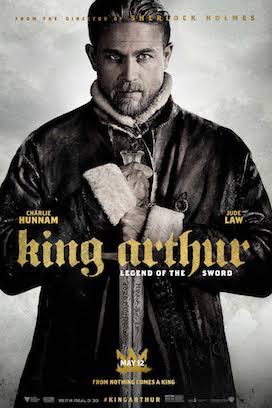
Quick Review: King Arthur – Legend of the Sword (dir. by Guy Ritchie)


KingArthur-LegendoftheSwordUsually, when I go to the movies, I either eat before I get there, or after the movie is done. This way, I don’t have to get up at all and miss anything. If it’s a film I’ve seen before, I’ll take the weakest part to use as a bathroom / food break, if I have to go. It’s one way I can tell if I like what I’m watching.

I got up twice for King Arthur: Legend of the Sword. Once to go downstairs and get a popcorn and drink, and a second time for a free refill. I even left my stuff behind in my chair for anyone to take on the second trip out. That’s how low my interest in this film fell after about 30 minutes in. I trusted the fates not to have someone steal my motorcycle jacket (keys, gear and all) to take a break from this film.

This may not be the best review to read about King Arthur: Legend of the Sword.

The Arthurian Legend has been captured in film a number of times. The Last Legion, First Knight, Monty Python and the Holy Grail, Excalibur (my personal favorite), and most recently, Antoine Fuqua’s King Arthur starring Clive Owen. There’s nothing wrong with a retelling of the story, but Guy Ritchie’s King Arthur: Legend of the Sword is all over the place and feels like it has nothing to do with the legends. This isn’t anything against Ritchie. I own Rock-N-Rolla and Sherlock Holmes: A Game of Shadows and I loved Snatch. King Arthur was just off to me. Even the Sherlock Holmes films seemed more grounded than this one does. None of the actors are truly able to save this film, and a few people actually left in the middle of my showing. It’s not the worst thing I’ve ever watched, but Ritchie’s made better films than this.

Granted, I didn’t really walk in with a lot of expectations. The film had it’s release date changed, being sandwiched right between Guardians of the Galaxy Vol. 2 the week before and Alien: Covenant the week after. It really didn’t have a chance, though I thought maybe it could at least hold the weekend. On the other hand, the movie did feel like a lot of the sword and sorcery films I grew up with in the ‘80s, such as Hawk The Slayer, Beastmaster, Ridley Scott’s Legend, The Sword & the Sorcerer, hell, even Barbarian Queen. In that sense, I might say that the film holds up. If you’re not trying to compare it with anything Arthur/Camelot related, you may actually enjoy it.

Legend of the Sword is the story of Arthur (Charlie Hunnam), who needs to save his land from the evil King Vortigern (Jude Law) after reclaiming the great sword Excalibur. I could say more, but I’d give too much away. He’s aided by his friends, Sir Bedivere (Djimon Hounsou) and Goosefat Bill (Aidan Gillen), along with a Mage (Àstrid Bergès-Frisbey) that takes the place of Merlin, who’s absent here. Everyone’s performances are okay, particularly Law and Gillen, who chew up any scene they’re in. Hunnam does just as good with what he’s given, but his Arthur is a bit of an ass at the start. Everyone seems to enjoy what they’re doing here. Even David Beckham gets a moment as a henchman. Of them, the only character I really cared about was Goosefat Bill. Aiden Gillen can play the hero, and play one well.

To his credit, Guy Ritchie’s direction is as quick and sharp as it ever was. When there’s action, it’s fast and fluid. You’ve got great running sequences, and giant CGI animals. Even the swordplay is fun, particularly when Excalibur is involved (those are really the best parts). It’s stylish, and looks awesome in some scenes. The dialogue is rapid, with quick cuts along whole segments. It’s what we’ve come to know and expect from Guy Ritchie. Though it worked well for his modern crime films, it come across as being a little disjointed here. I was hoping for King Arthur, not Underworld Boss Arthur who could be Robin Hood, along with his would be Merry Men of Sherwood Forest.

While I’m not saying that every element of the Arthur tale needed to be expanded upon, Legend of the Sword suffers from a few jump cuts that say “Don’t worry about all of this info, just know we reached point B from point A.” It’s efficient, but also turns the entire tale into a Cliffs Notes / Wikipedia summary. The film moves that quick. The film is peppered with these abbreviations that’s supposed to move the narrative along, but does this so fast that you almost have a tough time believing this movie was actually 2 hours long. I’m not asking for Hamlet, but at least allow your characters to flourish or grow or gain something about them that’s endearing. I’ll also admit to having a short attention span, it’s not that short that it requires quick-cut bursts to keep me enthralled.

Overall, King Arthur: Legend of the Sword was a miss for me. If you have to catch it, you may want to wait for the VOD edition.

Film Review: Deliver Us From Evil (dir by Scott Derrickson)


Deliver_Us_from_Evil_(2014_film)_posterI had high hopes for Deliver Us From Evil, largely because it was directed by Scott Derrickson who, in 2012, gave us the wonderfully atmospheric and disturbing Sinister.  Unfortunately, having now seen Deliver Us From Evil, I can only call it the anti-Sinister.  Whereas Sinister took the viewers by surprise, Deliver Us From Evil is predictable.  Whereas Sinister was full of genuinely disturbing moments, Deliver Us From Evil is full of jump scenes that are scary for a few seconds but then swiftly vanish from the memory.  Whereas Sinister was fascinating for featuring a morally ambiguous hero, Deliver Us From Evil features a hero who is so mundanely heroic that you find yourself hoping that he’ll fail just as punishment for his smug hubris.

Perhaps the only way that Deliver Us From Evil tops Sinisteris that it features none other than the King of Television Snark, Joel McHale.  As someone who loves both The Soup and Community, I’m always happy to see Joel but he’s oddly cast here, playing a muscle-bound, adrenaline junkie cop.  It’s not that Joel does a bad job.  In fact, he’s probably the most likable and compelling character in the entire film.  It’s just that you can’t look at him on screen without asking, “Joel, why are you here!?”

Anyway, Deliver Us From Evil is pretty much your standard demonic possession/cop thriller hybrid.  Mysterious murders are being committed.  The murderers speak in a weird language and, it soon turns out, all of them are linked both to the discovery of ancient tomb in Iraq and to a painting company that was started by a group of returning veterans.  It’s up to cops Ralph Sarchie (Eric Bana) and Parker (Joel McHale – why, Joel, why!?) to solve the crime.  Helping them along the way is a former drug addict priest named Mendoza (Edgar Ramirez).  If you’re guessing that the whole thing leads to a violent exorcism on a stormy night – well, you’re definitely on the right track.

Scott Derrickson does the best that he can with the material but he’s hampered by the fact that the film is based on a book that was written by the real-life Ralph Sarchie.  Perhaps as a result, the film’s Ralph is such an upright and moral hero (though he does yell at his daughter in one unpleasant moment but even that is excused as simply being evidence of how personally Ralph takes his job) that he’s also not that interesting of a character.  Eric Bana, who is actually a pretty good comedic actor, struggles to find some sort of depth to Ralph but ultimately, it’s just not there.  And since 90% of horror is psychological, Deliver Us From Evil cannot recover from revolving around such a flat protagonist.

As a result, Derrickson has little option but to fill the film with standard horror movie scenes.  The scenes, as themselves, work well enough but the story is so predictable that they don’t make much of an impact.  The end result is a film that you’ve seen a hundred times before.

The only difference, of course, is that this version features Joel McHale dancing around with a knife.

The Most Underappreciated Film Of The Year: Joe Wright’s Hanna


Sometimes, it seems like it’s easier for me to write about the films I dislike as opposed to the films that I truly love.  Case in point: I had little trouble writing up my thoughts on Anonymous and Straw Dogs but it’s taken me 8 months to write a formal review of my favorite film of 2011: Joe Wright’s pulp fairy tale, Hanna.

Taking place in a world much like our own but definitely not the same, Hanna opens in the frozen wilderness of Finland where 16 year-old Hanna (Saoirse Ronan) lives in an isolated cabin with her father, Erik (Eric Bana).  In the film’s electrifying opening montage, we see that Hanna’s life revolves around training for combat, memorizing the encyclopedia, and memorizing several “false” back stories that have been prepared for her by her father.  It also quickly becomes apparent that Erik has never allowed his daughter to be exposed to the real world.  Finally, Erik tells Hanna that she is “now ready” to choose whether or not to open up a box containing an old transmitter that well alert the rest of the world of their existence.  When Hanna finally opens the box, Erik promptly disappears and Hanna is left to fend for herself.

It quickly becomes apparent why Erik has spent years training his daughter because, by opening the box, Hanna has given away her presence to a coolly corrupt and ruthless CIA agent named Marissa (Played by Cate Blanchett and one of the most compelling villains in recent film history).  Marissa has her own reasons for wanting both Erik and Hanna and she quickly sends a team to Erik’s cabin.  Hanna is captured and transported to a memorably sterile CIA safehouse.  In a shocking sudden burst of violence, Hanna escapes from the safehouse and finds herself having to survive in the “real world” while being pursued by Marissa. 

Hanna, Marissa, and Erik eventually meet their fates in a desolate theme park that (in a neat bit of symbolism) is dedicated to the Brothers Grimm.  Along the way, Hanna meets and travels with a likable family of English tourists, allowing her to have her first chance to actually experience a “normal” life and Marissa recruits Issacs, one of the creepiest film henchmen ever.  Seriously. Isaacs is played by Tom Hollander and he was just so exquisitely sleazy that my skin crawled just watching him on-screen. 

In many ways, Hanna may sound like a simple action film but, in the best tradition of the French new wave and the better grindhouse filmmakers, Joe Wright both embraces the conventions of the action film while unexpectedly subverting them and using them to tell a more universal story about the struggle to both establish and maintain identity in an increasingly soulless world.  Much as Godard did before he gave up his artistic soul to political ideology, Joe Wright uses his cinematic talents to create a unique world that, while heavily stylized, also comments on our own existence.  The Chemical Brothers, meanwhile, provide the perfect soundtrack to Wright’s pulp vision.

Hanna may be my favorite film of 2011 but it’s also the most underappreciated of the year, at least as far as Oscar season is concerned.  There’s been so mention of the film’s score and a few critics’ groups have tossed a “young artist” mention or two at Saoirse Ronan but otherwise, the film has pretty much been ignored.  I think part of the problem is that Hanna was released in April and not December.  If the films had been released in December, I think Ronan would, at the very least, be a dark horse for best actress. 

The main complaint that most critics seem to come up with when discussing Hanna is that the film is too much of a genre piece.  Yes, it’s well-made and it’s well-acted and yes, it’s a compelling film with an intelligent script but, in the end, it’s just a genre piece.  A fairly typical response comes from the Guardian’s Peter Bradshaw who, after praising all of the film’s virtues, concluded with, “…(I)t ultimately squanders all of them, undone by a lack of subtlety and restraint.” 

To this, I can only respond, “Oh?  Really?”  Seriously.  Amazingly enough, some of the critics who criticized Hanna for a perceived lack of subtlety are the same critics who are now falling over themselves to praise the rehash of The Girl With The Dragon Tattoo.  I suppose the difference here is that The Girl With The Dragon Tattoo was directed by David Fincher and is the product of the American film establishment whereas Hanna was directed by Joe Wright and was produced by outsiders.

Those who claim that Hanna is too genre are missing the simple fact that Hanna is an insightful film that uses the conventions of the action genre as a metaphor for the sometime painful search for identity that every teenager (and especially every teenage girl) has ever had to go through.  Myself, I never had to flee from government agents or battle assassins when I was 16 but I did have to start discovering how to survive in the real world, away from the security and comfort of home.  As opposed to the pretend feminism of Fincher’s film, Hanna is a film that truly celebrates “girl power” and promotes independence and empowerment.  It’s also, as far as I’m concerned, the best film of 2011.

Song of the Day: Container Park from Hanna (The Chemical Brothers)


Tonight I saw what would probably end up as one of the top films of 2011. I am talking about Joe Wright’s modern fairy tale, Hanna, and starring one of the industry’s finest young actress in Saoirse Ronan in the title role. The latest “song of the day” comes directly from this film which was fully scored by British electronica duo, The Chemical Brothers.

“Container Park” arrives close to the end of the second act of the film and perfectly accompanies one of the film’s best action sequences. The Chemical Brother’s give this song a very heavy and deep bassline which set’s the rhythm for the whole sequence. They begin the song very subtly with just a hint of dissonance creeping into the dark fairy tale-like melody. I just loved how they were able to combine not just the fairy tale aspect of the film, but also add in that sense of danger with subtle use of distortion and dissonance to unbalance the original melody.

This song went perfectly well with the action sequence it complemented and it was halfway through the song that I realized (like all of the music in this film) that the bassline was setting up the rhythm of the action itself. I saw this clip at WonderCon 2011 and the song was the same and as I look back to that clip to seeing the clip as part of the whole film I was impressed how The Chemical Brothers’ score for this film was very instrumental in setting up each scene and not just becoming background music.

“Container Park” is just one of several great songs from the Hanna soundtrack by The Chemical Brothers. First there’s the wonderful, cover-filled soundtrack for Sucker Punch and now this full-on electronica score for Hanna. It’s been a very good year, so far, for soundtracks and I do believe we’ve got more excellent examples coming down the pipeline.

Above is the original song used in the film while below is a remix done by the duo and found on the film’s website. The latter has been extended, but I really don’t see too much of a difference between the two other than their running times.

Hanna (Trailer)


Every year there’s always a film which seems to get little to no buzz leading up to it’s release date. One such film which seems to be sneaking up on the filmgoing public is a little action thriller called Hanna from British filmmaker Joe Wright (Pride and Prejudice, Atonement) about a young girl (Saoirse Ronan) being trained by her father (Eric Bana) into some sort of assassin in the frozen wilderness of Finland. The film also stars Cate Blanchett in a role that some of her fans may not be used to. A morally ambiguous role which may or may not make her into the villain of the film.

Outside of the people who cover the film industry year in and year out this film has bypassed the radar of most film fans and are only starting to hear about it. From some of the advance reports being mentioned about Hanna, filmgoers may have something to look forward to when it finally comes out in a little over a week. Hanna has been getting some positive talk of being one of the best, if not the best, film of the year to date. Those are some pretty bold statements, but even if the film only manages to live up to half of the talk about it the last week or so then it’s going to be a film that will entertain and one that may just get strong word of mouth to get more people to watch it.

One thing which may interest some people about this film is who will be in charge of scoring it. The film’s score will be handled by the electronica duo The Chemical Brothers.

Hanna is set for an April 8, 2011 release date.