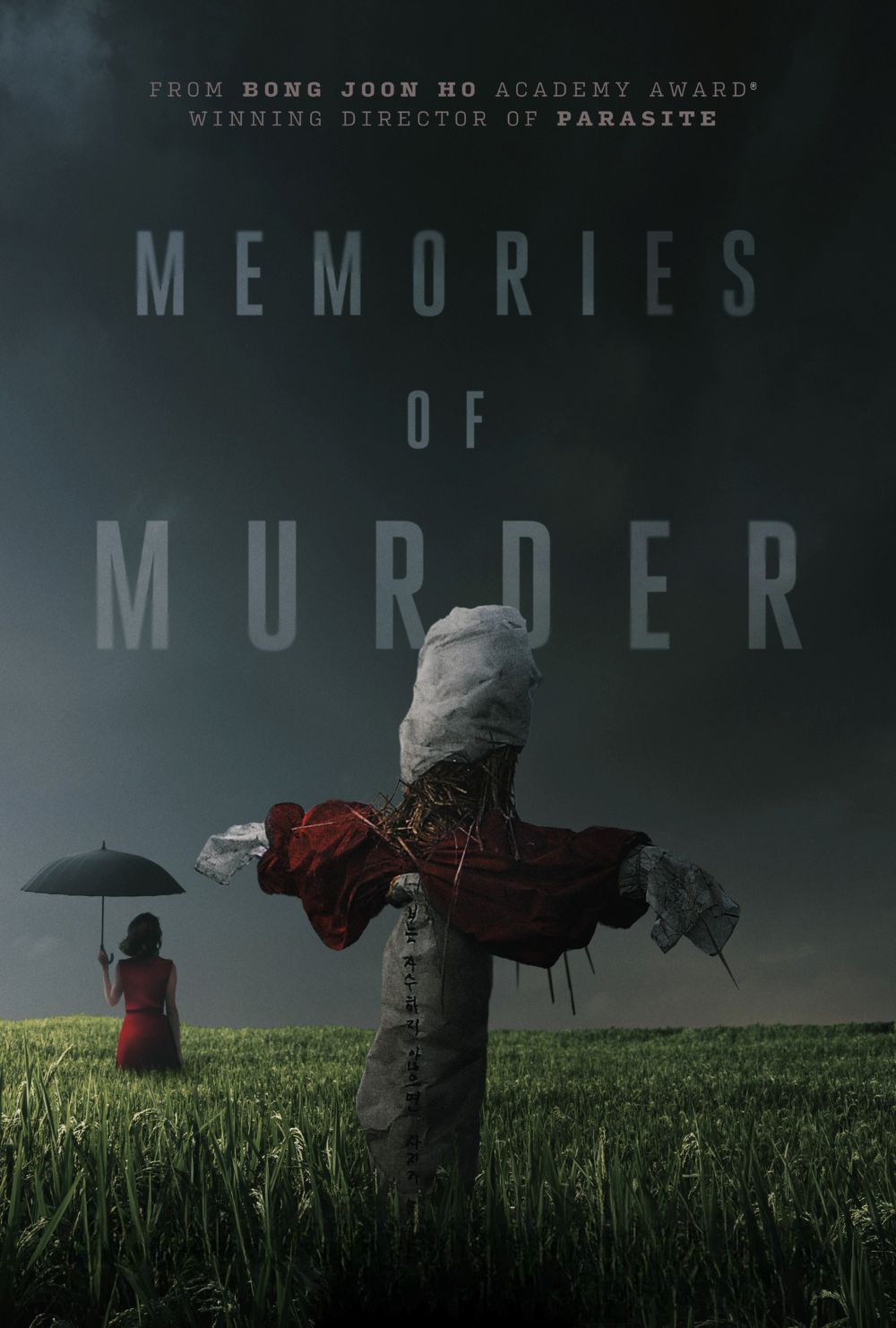
Film Review: Memories of Murder (dir. by Bong Joon ho)


“Chief, I may know nothing else, but my eyes can read people.” — Park Doo-man

Some crime thrillers make you feel clever for keeping up. Memories of Murder makes you wonder whether the whole business of feeling clever has distracted you from something terrible. Bong Joon Ho’s 2003 neo-noir follows detectives hunting a serial killer, but the real nightmare is watching their confidence outlast their competence. It is gripping, frequently hilarious, and ultimately devastating, with none of those qualities canceling out the others. Even when the investigation seems to move forward, something feels wrong. Bong turns that uneasiness into the film’s defining sensation: the growing suspicion that wanting an answer badly enough can make people incapable of recognizing the truth.

The setup sounds familiar enough. Women are being murdered in a rural community, and the local police are hopelessly unprepared. Detective Park Doo-man, played by Song Kang-ho, trusts his instincts to an almost ridiculous degree. He believes he can read people by looking at them, a convenient talent for someone not especially committed to gathering reliable evidence. Then Seo Tae-yoon, played by Kim Sang-kyung, arrives from Seoul with a more methodical approach. On paper, this is the classic clash between a rough local cop and a sophisticated outsider. In practice, Bong uses that pairing to dismantle the comforting idea that either personality type guarantees justice.

Song is the movie’s greatest asset, although calling this simply a great performance undersells how much he controls its emotional temperature. Park can be smug, lazy, funny, frightening, and oddly vulnerable, sometimes within the same scene. Song never asks us to forget the harm this man does. Instead, he makes his limitations painfully recognizable. Park wants to be good at his job, but he also wants the world to confirm that he already is. That distinction becomes increasingly important. His swagger initially supplies comic energy; later, the same mannerisms look like flimsy defenses against the possibility that he has understood almost nothing.

The humor is essential, not an awkward extra. Crime scenes become chaotic public spaces, officers stumble through their responsibilities, and investigative breakthroughs often resemble desperate improvisation. You laugh because the behavior is absurd, then feel uncomfortable because the consequences are not. Bong understands that incompetence rarely announces itself with sinister music. Sometimes it arrives as a confident man saying something stupid while everybody else goes along with it. The comedy exposes an institution accustomed to getting its way rather than getting things right. What first looks like an eccentric workplace gradually reveals itself as a place where vulnerable people can be bullied into becoming convenient answers.

That is where the film becomes much harsher than its buddy-cop outline suggests. Violence is not merely something the detectives investigate; it is also one of their preferred tools. Suspects are treated as bodies to intimidate rather than people whose accounts require attention. The movie makes it difficult to separate individual cruelty from an institutional habit of coercion. Yet Bong avoids handing Seo an easy moral victory just because he prefers evidence. As the case wears him down, his discipline becomes harder to maintain. The contrast between the detectives starts to collapse, making the investigation feel less like progress than a slow contamination.

Visually, Memories of Murder is gorgeous without ever making its setting feel like a postcard. Fields, drainage channels, narrow roads, and railway tracks form a landscape that looks open but offers very little reassurance. Darkness does not need to conceal a gothic mansion; an ordinary stretch of countryside is enough. Kim Hyung-koo’s cinematography gives the place a physical weight, especially when rain turns everything cold, muddy, and difficult to read. The contrast between the golden farmland and the grimmer investigative spaces is particularly effective. Beauty remains present, which somehow makes the violence feel more invasive rather than less disturbing.

Bong is equally good at making you search the frame. A background figure, an empty patch of ground, or a doorway can suddenly seem important. That visual restlessness puts us in an uncomfortable relationship with the detectives: we start looking for patterns, too. The procedural details become absorbing, but the film keeps questioning the leap from noticing something to proving anything. Its suspense depends less on a steady supply of ingenious clues than on the unstable meaning of the clues already available. You can understand why a suspect seems convincing while also seeing how badly the investigators need him to be guilty.

What makes that uncertainty so exhausting is the way Bong handles repetition. Another interview, another theory, another burst of confidence: each apparent opening carries the promise that this time things might finally click. Instead of making the investigation feel dramatically stalled, those cycles let frustration accumulate. The detectives become less patient, and we become more susceptible to accepting whatever explanation seems available. That is a nasty little trick, and an effective one. The film does not simply show people becoming desperate; it draws us close enough to their thinking that we can feel the temptation to mistake a possible answer for a proven one.

The horror in Memories of Murder has roots in an actual case. The film is a semi-biographical retelling of the Hwaseong serial murders, which took place in South Korea between 1986 and 1991. When it arrived in theaters in 2003, the case remained completely unsolved, so its uncertainty reflected reality rather than a screenwriter’s decision to keep viewers guessing. DNA evidence eventually identified the culprit, Lee Choon-jae, in 2019. Knowing that now changes the viewing experience, but it does not soften the film’s impact. An eventual answer cannot erase the suffering, missed opportunities, and years spent searching for someone who remained out of reach.

That unresolved history gives the ending its particular sting. Years later, Park returns to the place where a body was found, and an ordinary conversation revives the possibility that the killer has passed through the same space. Then comes that extraordinary look directly into the camera. Song’s face seems to search ours for something his younger self believed he could recognize instantly. It is not just a haunting flourish. It overturns his entire way of seeing. The man who trusted his eyes is left staring, and the audience receives neither the safety of distance nor the satisfaction of certainty.

Memories of Murder sticks with you because Bong knows exactly when to stop entertaining and leave you alone with what you have watched. The jokes, the arguments, and the frantic pursuit of leads gradually give way to something quieter: people struggling to live with what they could not put right. Song Kang-ho gives that shift a bruised humanity without turning Park into a hero or asking us to excuse him. It is a remarkably assured film, but never a comfortable one. By the end, solving the crime no longer seems like the only thing at stake. There is also the question of what remains after years of getting it wrong.
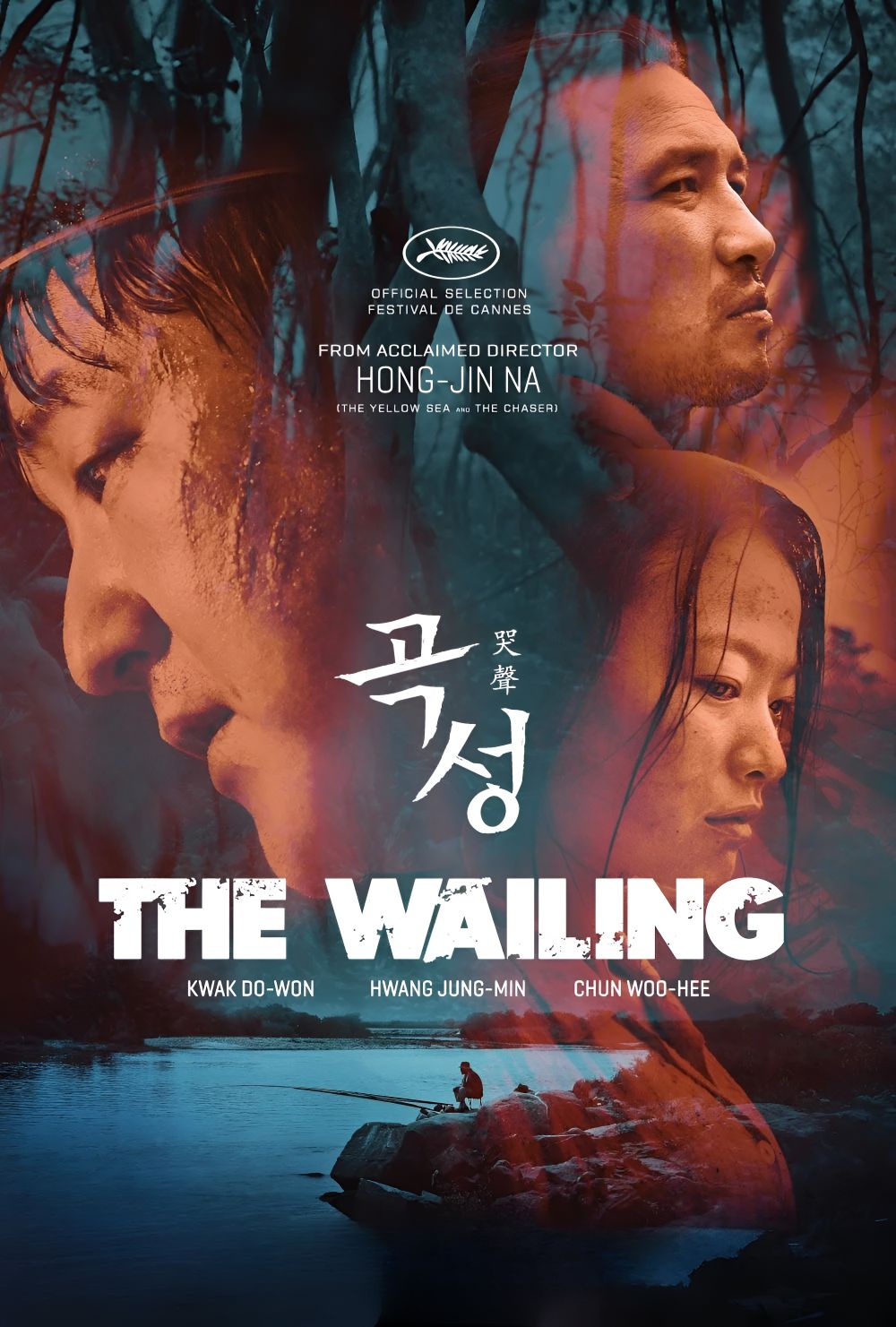
Horror Film Review: The Wailing (dir. by Na Hong-jin)


“Not everything that moves, breathes, and talks is alive.” — Il-gwang

For about an hour, The Wailing pretends to be a detective story. There’s a series of bizarre deaths in a remote village, a suspect who fits nobody’s profile but everyone’s prejudices, a witness with a wild story, and a cop digging for the truth. Everything about Na Hong-jin’s 2016 film is structured like an investigation — interviews, evidence gathering, surveillance photos, a timeline of incidents. The twist is that this is a detective story where the crime scene is the entire world, the culprit may not be a person at all, and every tool the genre normally hands you to solve the case is precisely the thing that gets people killed. Watching it, you keep waiting for the reveal that ties everything together, and slowly it dawns on you: the movie has been quietly teaching you that some cases can’t be closed, and that a detective who can’t accept that is the most dangerous man in the film.

The setup is beautifully simple. In a small village called Gokseong (which gives the film its Korean title), people start getting sick. Then they start getting violent — wild-eyed, homicidal, creepier than your standard zombie by a wide margin. At the center of it all is Jong-goo, a chubby, cowardly, deeply ordinary local policeman played by Kwak Do-won, whose daughter Hyo-jin falls mysteriously ill after the family has a run-in with a stranger. Rumors quickly gather around that stranger, a Japanese man who lives alone in the mountains (Jun Kunimura), who fishes, photographs things he shouldn’t be photographing, and was reportedly seen at the scene of one of the killings. The village has already convicted him; Jong-goo, half-convinced and half-scared, decides to build the case, and the more evidence he collects, the worse everything gets.

What makes The Wailing special isn’t the premise, though — it’s how Na stacks unreliable testimony on top of unreliable evidence until the whole movie feels like a case file with every page contradicting the last. You’ve got a shaman, Il-gwang (Hwang Jung-min, having an absolute blast), who performs one of the most electric exorcism sequences ever filmed, all drums and chanting and animal sacrifice, cross-cut with something else I won’t spoil — essentially an expert witness with his own competing theory. That sequence alone is worth the price of admission: a frantic, drum-driven standoff between two rituals playing out simultaneously, with Na cutting between them faster and faster until you realize he’s using suspense-film grammar to stage a theological argument. You’ve got a mysterious young woman in white (Chun Woo-hee), who shows up with her own version of events, a burned-down house, a zombie-looking guy in the rain, and a very unlucky police partner who keeps finding the worst possible things at the worst possible times.

The genius of the movie is that every one of these characters confidently testifies about what’s happening, and they can’t all be right. Is the Japanese man a demon? A ghost? Just a scapegoated outsider? Is the woman in white a guardian or the actual source of the evil? Is the shaman a fraud or the only person who knows what he’s doing? The film keeps handing you exhibits, then yanking them away — the procedural pleasure of gathering clues, weaponized against you. There’s a scene with photographs that made my stomach drop, a hair tie that functions as a gut-punch with zero gore, and an interview over a cigarette break that recontextualizes the entire first hour. Na shoots all of it in gorgeous, humid, rain-soaked widescreen — this is a beautiful film about terrible things, all green mountains, wet fields, and pale sunlight — and the unhurried pacing isn’t padding, it’s the point: it lets you settle into the village’s rhythm so that each new irregularity registers as a wrong note in a familiar song. The horror rarely announces itself; it’s just suddenly there, sitting in the frame, and half the time you notice it before the characters do.

The folklore texture deserves its own shout-out. Na reportedly built the film from real shamanic traditions, rural superstitions, and his own questions about why inexplicable suffering happens, and you feel that authenticity in every ritual scene. This isn’t Hollywood exorcism-by-numbers; the shamanism feels lived-in, transactional, dangerous, and the film even works in bits of everyday folk logic — the old rule that meeting someone’s gaze means you’ve seen a ghost, the black hair nailed to a door, the persistent Korean dread of the Japanese stranger as a carryover of historical wounds. The title itself points at the movie’s worldview — there’s an old belief that a spirit’s wail can possess the living — and the film is smart enough to treat belief, not just demons, as the thing doing damage. When an entire village decides someone is a monster, what happens next is horror regardless of the supernatural facts.

Performance-wise, this is Kwak Do-won’s movie. His Jong-goo is one of the great horror protagonists precisely because he’s not brave, not sharp, and not special — he’s a tired dad making guesses, and every wrong guess costs him. You watch a decent, dim man get dismantled piece by piece, and the film’s darkest trick is making you complicit in his worst decision. Jun Kunimura is remarkable in a role that requires him to be sinister, pitiable, and genuinely terrifying depending on which scene you’re watching — the man can shift the temperature of a room just by deciding whether to make eye contact. Hwang Jung-min goes full rock-star shaman and steals the middle of the movie, and Chun Woo-hee does extraordinary work with a character who has to work on two levels at once: every time she speaks, you’re simultaneously calmed by her and checking the frame for what she might really be.

Now, fair warnings. The pacing is slow, especially in the first hour, and the runtime is a hefty 156 minutes. If you need jump scares every ten minutes or a third act that explains itself, this will test you. There’s also animal harm on screen, which I know is a dealbreaker for some folks. And the ambiguity is total — people walk out having landed on completely opposite conclusions, and I genuinely think the film is more layered on a second viewing, since the dialogue is full of lines that read completely differently once you know how things shake out. But Na leaves one crucial scene open-ended on purpose, because the whole point is that certainty, in the face of real evil, is a luxury nobody gets.

And that’s what elevates The Wailing above most possession movies. It’s a horror film about epistemology, honestly — about how we decide what to believe, who benefits from our belief, and how being unable to choose can be the most dangerous state of all. The village looked at a stranger and closed its case; Jong-goo spends the whole film trying to close his, following every lead, consulting every expert, and the movie watches what each conclusion costs him. There’s a line near the end, about trusting versus doubting, that lands like a knife because the entire film has been secretly about that question. The scariest thing in The Wailing isn’t the demon; it’s the idea that you could do everything right and still lose everyone you love because you hesitated a moment too long.

So, where does it land? For my money, The Wailing is a masterpiece of modern horror and easily one of the best South Korean films of the 2010s — a decade that includes Train to Busan, The Handmaiden, and Parasite, which tells you how competitive that field is. It’s not a crowd-pleaser in the jump-scare sense; it’s a slow-burn, smoky, mystifying fever dream that rewards patience and punishes assumptions. Watch it late, watch it with subtitles, don’t look up anything beforehand, and let it mess with you. Most detective stories end with the case closed and the world set right; The Wailing ends with the file left open on the desk, because Na Hong-jin’s real subject was never whodunit — it was the hubris of assuming that every mystery owes you an answer. That open file is exactly what keeps the film wailing in your head long after it’s over.

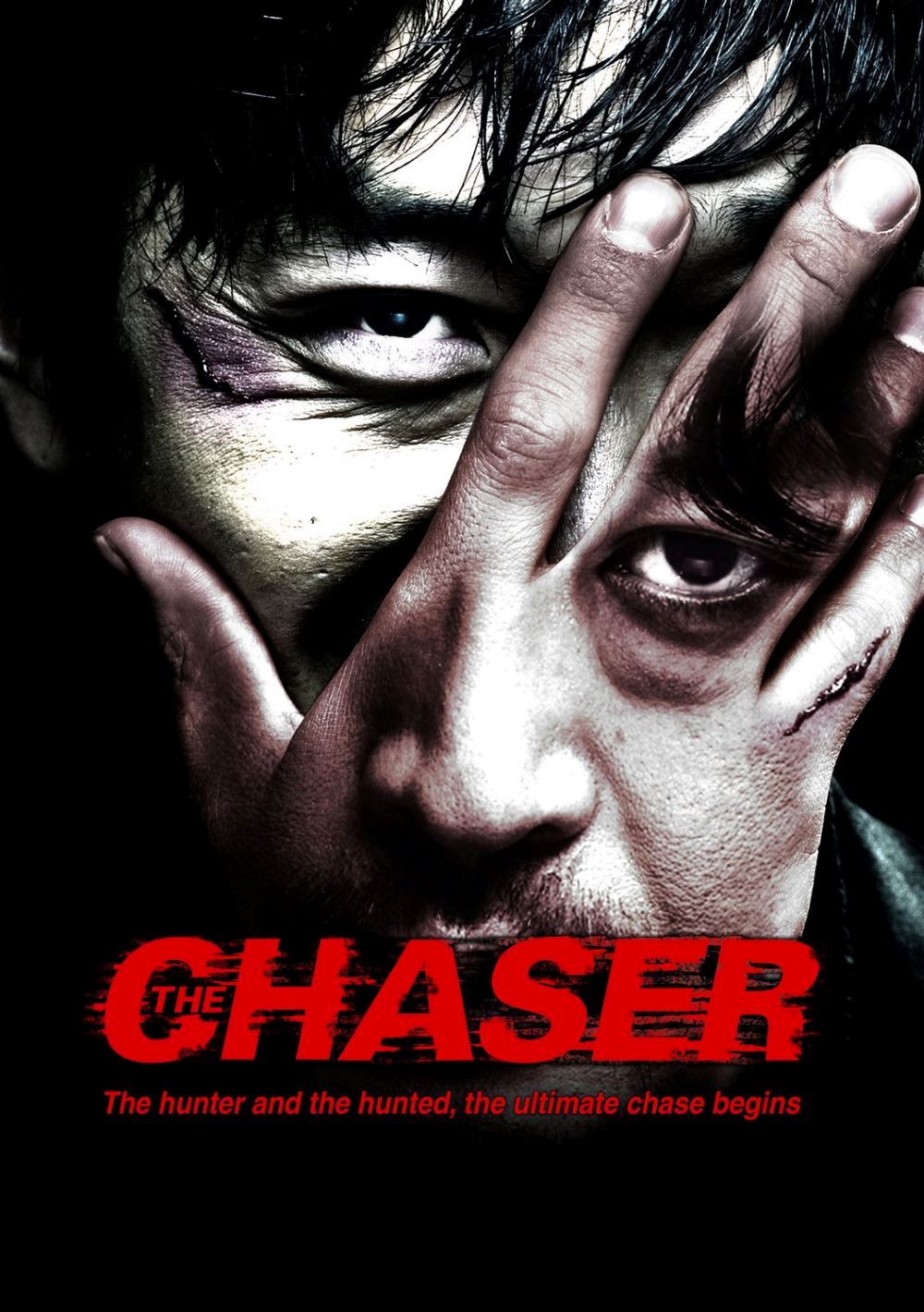
Review: The Chaser (dir. by Na Hong-jin)


“Find that bastard.” – Eom Joong-ho

You know that feeling when a thriller drags you so deep into its messiness that you forget to breathe? That’s The Chaser for most of its runtime, but it’s also a movie that stumbles as often as it sprints. Directed by Na Hong-jin in his feature debut back in 2008, this South Korean thriller doesn’t play by the usual rules. It’s not about a genius detective outsmarting a methodical killer. It’s about a washed-up, broke ex-cop turned pimp who stumbles into a serial murder case because one of his girls went missing and, frankly, he wants his money back. That blunt, ugly premise sets the tone for what follows: raw, desperate, and uncomfortably human. But being a first-time effort, The Chaser also shows its seams—clunky pacing in places, a few too many convenient coincidences, and an ending that tries for tragedy but sometimes feels more like the writer painted himself into a corner.

Let’s talk about our unlikely “hero,” Joong-ho, played with permanent five-o’clock shadow and simmering rage by Kim Yoon-seok. He’s not a good guy. He runs an escort service, slaps his girls around when they’re difficult, and only starts looking for one of them, Mi-jin, because her disappearance means lost profit. But here’s the tricky part Na Hong-jin pulls off: you still root for him. Joong-ho is tired, cynical, and beaten down by life, but underneath the scuzziness is a man who has seen too much corruption and feels a prick of responsibility when he realizes a customer might be a monster. The film doesn’t redeem him—he never turns into a noble saint—but it gives him a blunt, stubborn engine that feels real. That said, his character arc is more of a flat line. He doesn’t really change or learn anything by the end; he just gets more exhausted. For a debut, that’s a common shortcut—confusing intensity with development.

The killer, Young-min (Ha Jung-woo), is the opposite of what you’d expect. He’s not a lurking shadow or a theatrical psycho. He’s a soft-spoken guy with a pale, ordinary face who lives in a nondescript house. When Joong-ho first tracks him down through a phone number, Young-min calmly admits he took the girl, and then he calmly admits he probably killed her. The chilling part? He can’t remember the exact number of victims. He keeps a photo collection, but his memory is foggy from a brain injury. That detail is clever. It strips away the “mastermind” trope and leaves you with something more disturbing: a man who kills almost casually, like a bad habit he can’t quite recall. But the film never really explores why that brain injury matters beyond giving Young-min an occasional blank stare. As a debut flaw, it’s the kind of half-baked motivation that a more experienced director might have fleshed out or cut entirely.

What separates The Chaser from a typical cat-and-mouse thriller is how it weaponizes time and bad luck. The whole movie takes place over a day and a half, and every missed connection feels like a punch to the gut. At one point, Joong-ho drives right past the house where Mi-jin is still alive but bleeding out, because he’s following a different lead. Later, the police release Young-min on a technicality—lack of evidence—moments before Joong-ho finds crucial proof. You’ll scream at the screen. But here’s the thing: not all of these near-misses feel earned. Some of them rely on characters making decisions that are less “human error” and more “plot convenience.” For a debut director, balancing realism with momentum is tough, and Na Hong-jin sometimes tips too far into frustration for its own sake. The chase scenes aren’t slick; they’re clumsy and exhausting, which works in theory, but in practice, a couple of them drag on long enough that you start checking the runtime.

Then there’s Mi-jin (Seo Yeong-hie), the missing escort. For most thrillers, she’d be a corpse or a victim trophy. But The Chaser spends real time with her after she escapes Young-min’s basement—badly injured, confused, dragging herself through dark alleys. We see her call her young daughter. We see her haggle with a convenience store owner for a bandage. She’s not a plot device; she’s a tired single mom trying to survive. That’s genuinely good writing. However, the film also sidelines her for long stretches in the middle act, and when she reappears, the emotional payoff feels rushed. It’s a common debut problem: wanting to do justice to a supporting character but not yet knowing how to balance screen time across a whole cast.

Visually, the film is drenched in muted grays and wet streets. This isn’t the neon-lit Seoul of Oldboy or the slick gloss of I Saw the Devil. It’s rainy, cramped apartments, rundown police stations, and the kind of low-budget grit that makes everything feel lived-in and hopeless. That’s a strength. But the camerawork can get distractingly shaky, especially in dialogue scenes where no one is running. You can tell Na Hong-jin comes from a documentary background—sometimes it adds urgency, other times it feels like they forgot to set up a tripod. The sound design is nastier than the visuals: bones crack audibly, hammers thud on tile, and a child’s voice over a phone cuts through like glass. The score is barely there, which works until it doesn’t—some scenes feel a little too dry, a little too quiet, like the director was afraid of seeming manipulative.

What becomes increasingly difficult to ignore as The Chaser progresses is how the film’s portrayal of police incompetence drifts from pointed social critique into something closer to farce, yet without ever fully committing to satire. The detectives aren’t just flawed—they’re written as so hilariously useless that the movie flirts with dark comedy, but then pulls back. Are we supposed to laugh at the officer who falls asleep during a murder confession, or are we supposed to feel outraged? The tonal whiplash suggests Na Hong-jin wasn’t sure how far to push the absurdity, which is a common growing pain for a first-time director trying to balance genre beats with real-world cynicism. Also, the ending has become famous for its bleakness, but on a second watch, some of that bleakness feels forced. Without spoiling anything, the final fifteen minutes rely on a string of bad luck that would strain belief in a Final Destination movie. For a film that otherwise prides itself on gritty realism, that stretch feels like a debut director overcorrecting—trying too hard to avoid a happy ending and landing on something that’s more exhausting than meaningful.

If you compare The Chaser to Na Hong-jin’s later work, like The Yellow Sea or The Wailing, you can see the bones of a great filmmaker learning to control his impulses. Here, he throws everything at the wall: grueling chase scenes, social commentary about corrupt policing, a serial killer who isn’t a genius, a protagonist who isn’t a hero. Some of it sticks. Some of it slides off. The movie is too long by about fifteen minutes, and the middle section sags under the weight of repeated near-misses that start to feel less like tragedy and more like the director twisting the knife for the sake of it.

In the end, The Chaser is a good but uneven thriller. It’s not the masterpiece some fans claim, and it’s not a failure either. It’s a debut film with genuine energy, a couple of great performances, and a willingness to be ugly and uncomfortable. But it also has pacing issues, tonal confusion, and a third act that mistakes relentless misery for emotional depth. Watch it for Kim Yoon-seok’s grimy determination and Ha Jung-woo’s creepy blankness. Just don’t expect the polish of a veteran director. Na Hong-jin would get there later. Here, he’s still chasing his own potential.