Horror Film Review: Near Dark (dir. by Kathryn Bigelow)


“Let’s put it this way: I fought for the South.” — Jesse

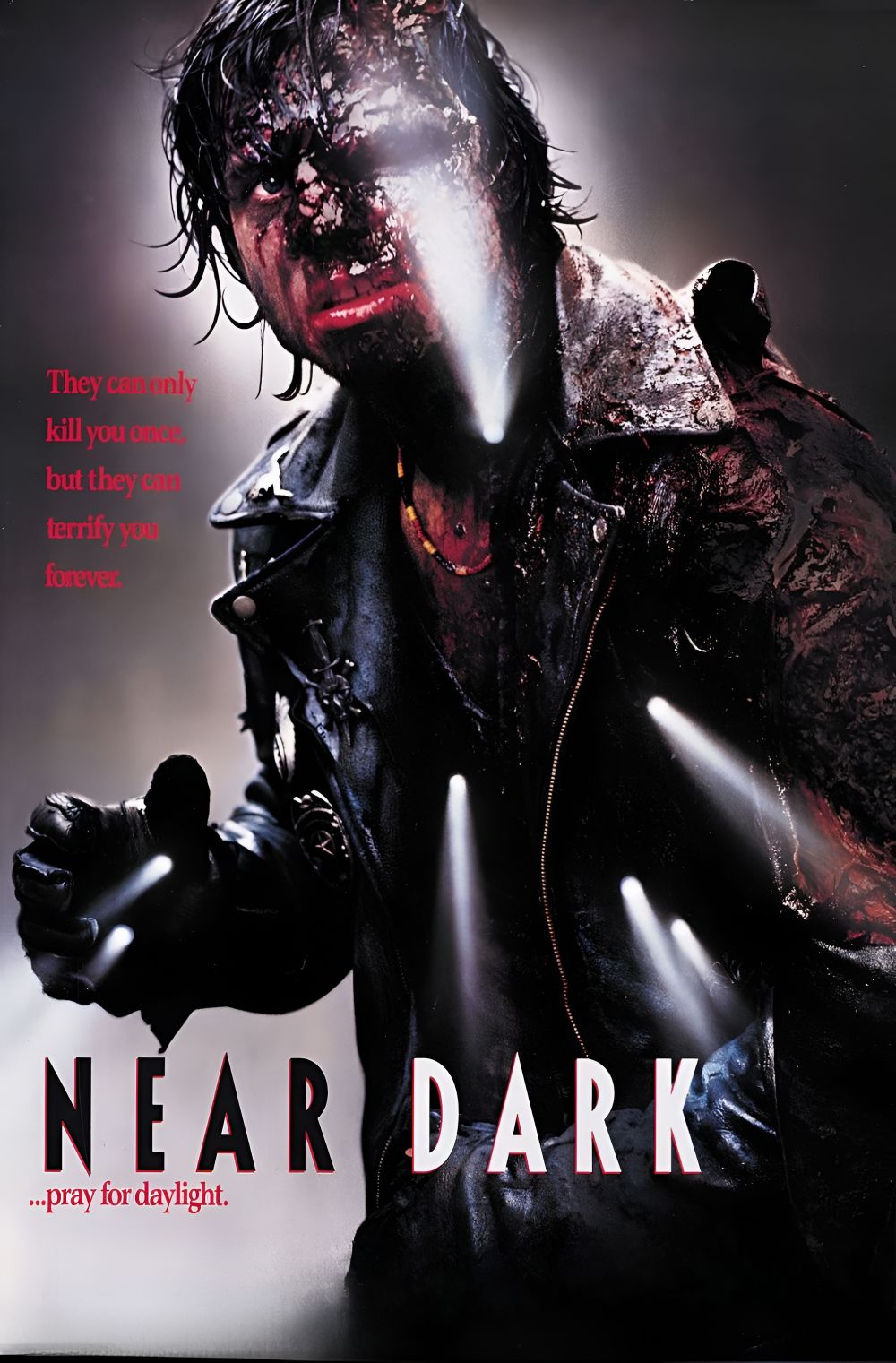
Most vampire movies make you wonder what it would feel like to live forever. Near Dark makes you wonder who you’d be stuck living forever with. In Kathryn Bigelow’s 1987 western-horror film, becoming a creature of the night means joining a small, volatile group whose affection comes with conditions and whose idea of a good evening could leave a roomful of people dead. There’s romance in this world, but very little comfort. Bigelow builds the movie around the uncomfortable possibility that finding people who understand you might be almost as dangerous as having nowhere to belong. It’s a scruffy, seductive horror film that knows how exciting bad company can seem before the bill arrives.

Caleb, played by Adrian Pasdar, doesn’t go looking for immortality. He’s a country boy looking for a little excitement when he meets Mae, played by Jenny Wright. Their early flirtation has the familiar awkwardness of two strangers trying to figure each other out, except one of them has a much better reason to worry about sunrise. A bite changes Caleb’s circumstances before he understands what he has gotten into. Soon he’s traveling with Mae’s vampire companions, who regard him less as a welcome addition than a problem she has brought home. He needs their help, but needing these particular people is its own kind of nightmare.

That dependence gives the story more tension than a simple battle between humans and monsters would offer. Caleb can’t just walk away and resume his old life, yet accepting the group means accepting what they do. The vampires aren’t interested in allowing him a long adjustment period. They expect him to feed, contribute, and stop making his confusion everyone else’s problem. There’s a darkly funny clash of perspectives here: Caleb is enduring an existential crisis, while his new companions are dealing with an irritating passenger. Bigelow makes their impatience recognizable without suggesting that their demands are reasonable.

The western elements give that conflict a natural shape. These vampires behave like an outlaw gang, traveling through an American landscape where staying mobile offers both freedom and protection. Their loyalty matters, but it exists within a closed circle. Anyone outside it is a potential resource, obstacle, or victim. That makes the genre combination feel purposeful rather than decorative. Westerns often find excitement in people who live beyond ordinary rules, and vampire stories have their own attraction to seductive outsiders. Near Dark brings those traditions together, then asks what their freedom looks like from the perspective of someone they decide to hurt.

Bigelow also understands how to make open space feel threatening. Roads and empty horizons usually suggest escape, but they provide little shelter when daylight arrives. The farther these characters get from civilization, the fewer places they have to hide. A miserable room can become more valuable than miles of beautiful countryside. That reversal gives the landscape an active role in the suspense. The vampires may dominate an encounter after dark, but their power comes with a deadline. No amount of swagger can change the time of sunrise, and the movie gets considerable mileage out of watching dangerous people suddenly become desperate.

The physical texture makes that desperation convincing. Clothes look worn, temporary accommodations feel uncomfortable, and traveling together seems like something everyone has done for too long. Immortality hasn’t brought these people luxury or even much convenience. They still have to find transport, secure shelter, and manage one another’s moods. Bigelow doesn’t stop the story to explain their routines, but the strain is visible. This is a particularly effective way of grounding the supernatural: the characters may have extraordinary abilities, yet their existence remains full of practical annoyances. Escaping ordinary human life has left them with a different set of exhausting obligations.

At the same time, the film never becomes so grimy that you lose sight of its appeal. Bigelow finds beauty in nighttime spaces, especially when Caleb and Mae are briefly alone. Darkness offers them privacy and the possibility of closeness, even as it connects them to everything threatening around them. Tangerine Dream’s electronic score helps sustain that contradiction. Its drifting, dreamlike sound creates an emotional distance from the rough surroundings without making them disappear. The music can make a moment feel tender and suspended, then leave the violence to shatter it. That push between attraction and alarm gives the film much of its distinctive atmosphere.

Bill Paxton embodies the alarming side as Severen, a vampire who seems thrilled that survival provides so many opportunities for bad behavior. He plays the role with outrageous confidence, making Severen funny without making him safe. The danger lies in how much pleasure he takes in every confrontation. He isn’t merely prepared to hurt someone if necessary; he appears disappointed when an evening doesn’t require it. Paxton makes that appetite entertaining enough to put the viewer in an awkward position. You look forward to seeing what Severen will do next while understanding that anyone actually standing beside him should be looking for an exit.

Lance Henriksen’s Jesse works through restraint rather than constant provocation. As the group’s leader, he has an authority that doesn’t need much advertising. Henriksen suggests long experience in the way Jesse watches people and decides how much patience they deserve. His steadiness makes the gang feel sustainable, at least on its own ugly terms. These aren’t simply predators who happen to be in the same vehicle. They have a structure, and Jesse helps hold it together. That structure gives Caleb’s possible acceptance real weight. He’s being offered a place in something established, not just permission to tag along until the next disaster.

The film’s strongest idea is that belonging can involve affection and coercion at the same time. The vampires’ attachments don’t have to be fake for their influence to be destructive. They can care about their own people while expecting those people to commit terrible acts. For Caleb, that makes the choice harder than rejecting an obviously empty promise. The group understands what he is becoming in a way his former world cannot. Their companionship answers a real need, but it also demands that he abandon the hesitation keeping him connected to his humanity. Acceptance is available, provided he becomes someone capable of earning it.

Mae gives that conflict its emotional center. Wright makes her vulnerable without turning her into a blameless observer of the gang’s behavior. She belongs to this life, and her attraction to Caleb doesn’t magically separate her from it. Their romance works best when it acknowledges that difficulty. She can offer tenderness without offering safety, and he can care about her without being able to live as she does. Pasdar is less immediately magnetic than the actors playing his traveling companions, but his relative ordinariness serves a purpose. Caleb still has recognizable limits, which gives the audience a way to measure how far the others expect him to go.

The roadhouse sequence makes those expectations impossible to avoid. As the gang terrorizes a bar, the movie strips away any comfortable distinction between their charisma and their cruelty. Bigelow allows the scene to be outrageous and darkly funny, particularly through Paxton, while keeping the vulnerability of the other people in view. It’s exciting filmmaking, but the excitement catches in your throat. For Caleb, the encounter is more than another demonstration of how dangerous his companions are. It’s a test of whether he can participate. He can’t remain indefinitely on the edge of their world, enjoying its romance while refusing its central activity.

That willingness to make the monsters compelling without excusing them is one of the film’s best qualities. Their humor, loyalty, and individuality matter, but none of those things makes their victims disposable. The movie holds both sides of that equation together better than it handles its eventual resolution. Without spelling out the mechanics, the route toward normality feels too convenient after Caleb’s predicament has become so physically and morally tangled. The emotional desire behind the ending is understandable; the storytelling shortcuts are less satisfying. A film so good at establishing the cost of this existence could have used a more difficult reckoning with escape.

Even so, Near Dark earns its place in the memory through the uneasy life it creates between attacks. The worn-out spaces, shifting loyalties, fleeting tenderness, and approaching daylight make the gang feel like more than a collection of horror characters. You can imagine them continuing down another road, having the same arguments and finding new strangers to consume. That’s what makes Caleb’s dilemma linger. The real threat isn’t simply that these people might kill him. It’s that he might become comfortable with them. Bigelow’s film is at its sharpest when the night looks beautiful, the company almost feels welcoming, and you remember exactly what staying would require.
Horror Film Review: The Blob (dir. by Chuck Russell)


“Listen to me, Briggs, think for a minute, do you suppose an army of guys in plastic suits show up every time a meteor falls?” — Brian Flagg

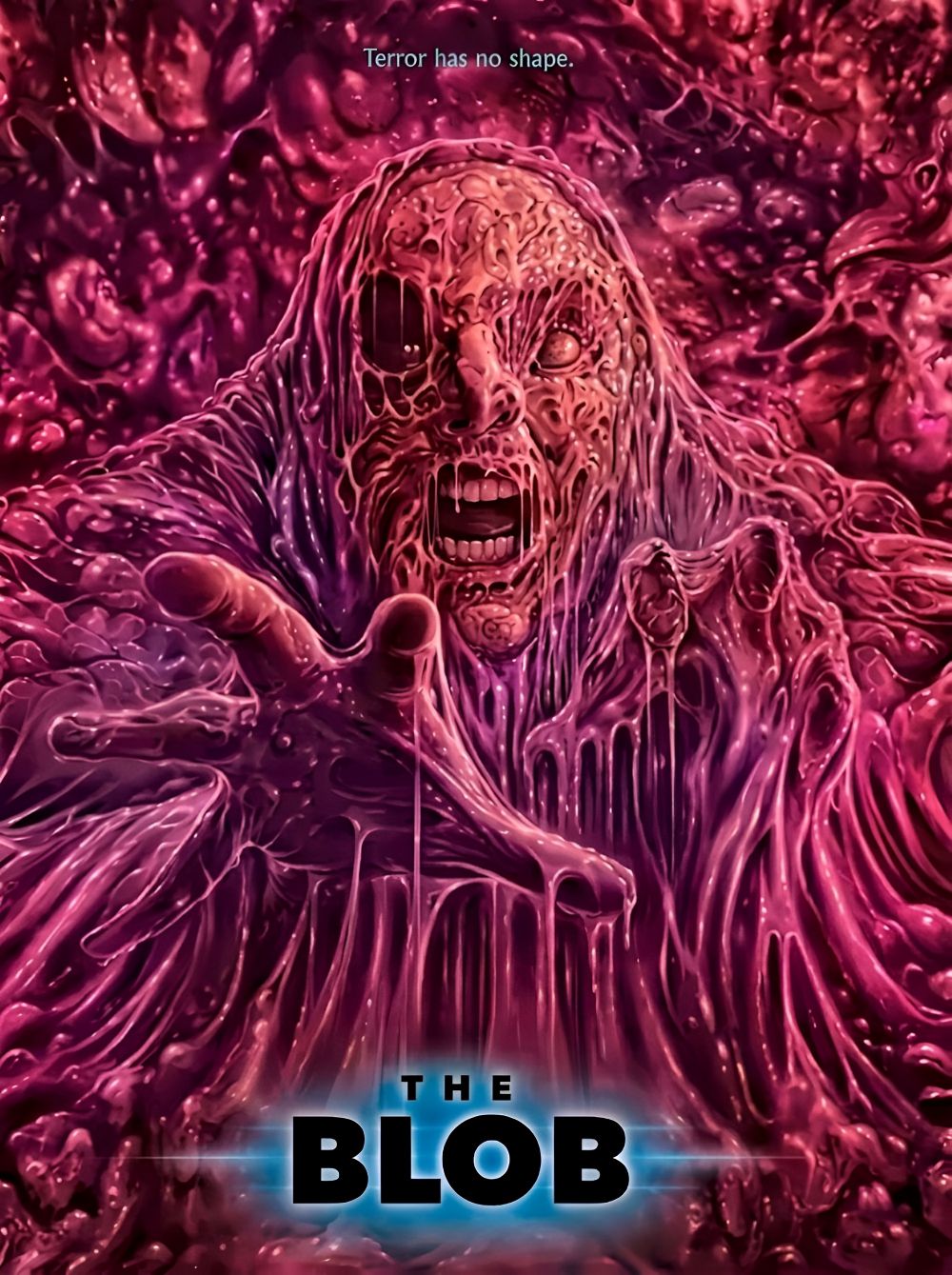
A monster doesn’t need claws, teeth, or even a face to ruin your evening. Sometimes a wobbling mass of pink slime will do just fine, especially when the filmmakers know how to make every inch of it look hungry. Chuck Russell’s The Blob (1988) takes a premise that could easily inspire nothing but giggles and turns it into a nasty, energetic horror show. A more cynical and violent remake of the original 1958 creature feature, it succeeds by taking its ridiculous threat seriously without forgetting how much fun a ridiculous threat can be. The movie has a wonderfully direct goal: make you squirm, then make you enjoy it.

The setup wastes little time getting things moving. Something falls from the sky near the small California town of Arborville, a curious man gets too close, and an unpleasant discovery becomes a rapidly growing emergency. Among those caught in the chaos are cheerleader Meg Penny, played by Shawnee Smith, and local rebel Brian Flagg, played by Kevin Dillon. Russell and co-writer Frank Darabont (yes, that Frank Darabont) introduce their community through familiar faces and recognizable social divisions. You don’t need an elaborate history of the town to understand it. A few interactions establish who belongs, who gets judged, and who assumes they have everything under control.

That economical approach is one of the movie’s strengths. Rather than spending ages explaining why you should care, it gives the characters enough personality to register and lets the situation do the rest. The familiarity also creates expectations that the film enjoys upsetting. Certain people seem important, certain places seem safe, and certain decisions seem sensible. None of those impressions is especially reliable. Without spoiling the surprises, the early stretch makes it clear that this isn’t a particularly generous movie toward its characters. That unpredictability gives the action an extra charge because you can’t always settle comfortably into the usual horror-movie rules.

The effects provide the biggest reason to watch, though, and they remain impressively unpleasant. The creature has a thick, sticky physicality that makes it feel like something occupying the same space as its victims. It stretches, swells, and presses into places where nothing that size should fit. The makeup work makes the consequences of contact horribly clear without reducing every attack to the same bloody image. Some shots look more convincing than others, but even the rough edges have charm. There’s visible imagination behind the grotesquerie, and the craftsmanship gives this shapeless thing a stronger screen presence than plenty of monsters with elaborate designs.

What makes those effects work dramatically is Russell’s attention to setting. He doesn’t simply keep dropping the creature in front of another person and repeating the process. A hospital sequence establishes the danger, a diner encounter turns an everyday location into a nightmare, and a phone booth provides a particularly tense confrontation. The movie theater sequence adds a bigger dose of public panic. Each has its own rhythm and identity, which keeps the attacks from blurring together. The details are best left unspoiled, but the overall effect is clear: ordinary spaces become much less comforting when the monster doesn’t need to use the door.

Smith gives the movie its most dependable human presence. Meg could have remained a stock cheerleader reacting to things happening around her, but the film allows her to become increasingly decisive. Smith sells that progression without making it feel like a sudden personality transplant. Meg is scared, sometimes overwhelmed, and still willing to act when someone needs help. That’s a simple foundation for a horror heroine, but it works. She gives the audience someone to follow emotionally while the effects department does its worst. The performance never demands that the movie slow down to admire her courage; it lets her choices establish it.

Dillon has a slightly harder time escaping the shorthand built into Brian. The motorcycle, leather jacket, and long hair make his outsider status obvious almost immediately. A few early moments push the misunderstood-bad-boy routine harder than necessary. Still, Dillon brings an appealing scruffiness to the role, and his attitude fits a story in which respectability doesn’t necessarily equal good judgment. His partnership with Meg works because their differences matter less as the emergency grows. They don’t need elaborate backstories or a heavily emphasized romance to hold the film together. Their shared determination supplies enough momentum between the bigger horror sequences.

The remake’s cynicism becomes especially noticeable when official intervention enters the picture. Without giving away the later developments, the film questions whether looking organized and speaking confidently should automatically earn anyone’s trust. That suspicion gives the story a sharper edge than its goofy monster might suggest. The danger exposes weaknesses in the community rather than simply giving everyone an obvious enemy to unite against. It isn’t deep political analysis, but it doesn’t need to be. The contrast between an openly destructive creature and people claiming to manage the crisis provides another source of tension, making the human side of the disaster feel troubling in its own way.

There are limitations. Several supporting characters are drawn broadly, and some dialogue does little more than announce the personality type delivering it. The explanatory passages aren’t as engaging as the visual storytelling, particularly once the audience already understands the immediate stakes. A few effects shots also strain against the production’s ambitions. Yet Russell rarely lets those problems stall the movie for long. He keeps the pace brisk while giving the suspense enough room to develop. Just as importantly, the occasional humor doesn’t turn the whole thing into a spoof. You can laugh at the situation and still care when it turns ugly.

What ultimately makes The Blob work is the confidence of its execution. It knows its monster is absurd, knows its characters are familiar, and knows the audience came expecting a mess. Then it delivers that mess with enough invention and nerve to make the familiar feel exciting again. The harsher attitude distinguishes it from the original, but the appeal remains refreshingly basic: a town, a growing threat, and people scrambling to stay ahead of it. Russell makes a faceless pile of goo feel like a genuine screen villain. That’s no small achievement for something that looks like it escaped from the dessert table.

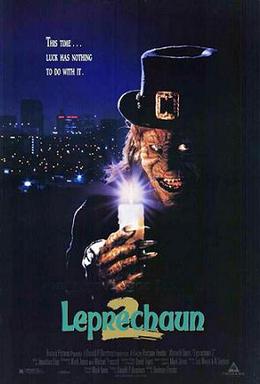
Leprechaun 2 (1994, directed by Roman Flender)


The Leprechaun (Warwick Davis) is back! He’s abandoned North Dakota for Los Angeles, and now he’s looking for Bridget Callum (Shevonne Durkin), the descendant of a woman to whom he was promised centuries ago. The Leprechaun knows how to hold a grudge. Bridget already has a boyfriend named Cody Ingalls (Charlie Heath), who gives tours of celebrity cemeteries for Morty Ingalls (Sandy Baron).

Leprechaun 2 is significantly better than the first Leprechaun, if only because dark and grim Los Angeles seems like a better location for the story than North Dakota. Leprechaun 2 doesn’t get as much attention as the first one because it doesn’t feature Jennifer Aniston, but it does feature Shevonne Durkin, and any ’90s kid can tell you that’s almost as good. The Leprechaun is even nastier in the second film than he was in the first, and Warwick Davis continues to show an admirable dedication to bringing the character to life.

This film is also gorier than the first Leprechaun. The first Leprechaun was made with a younger audience in mind, even if it was an R-rated movie. Leprechaun 2 was clearly made to appeal to the type of teenagers who have always wondered what would happen if someone mistook a lawn mower for a Shevonne Durkin. For me, the most memorable scene is Morty making the mistake of wishing for a pot of gold and then discovering that it’s in his stomach. The Leprechaun offers to dig it out. That scene really stuck with me when I was a kid.

The Leprechaun would have more adventures, but this one was the best.

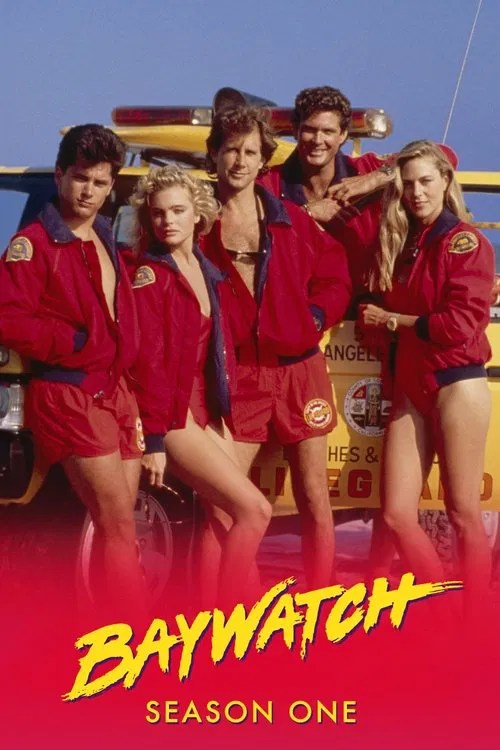
Retro Television Review: Baywatch 1.1 “In Deep”


Welcome to Retro Television Reviews, a feature where we review some of our favorite and least favorite shows of the past!  On Saturdays, I will be reviewing Baywatch, which ran on NBC and then in syndication from 1989 to 2001.  The entire show can be purchased on Tubi.

This week, Hobie’s a snitch!

Episode 1.1 “In Deep”

(Dir by Peter H. Hunt, originally aired on September 22nd, 1989)

Hobie, you idiot!

Mitch’s young son is spending the summer with his father and he’s supposed to be concentrating on summer school.  Instead, he hanging out with two older guys, Scott (Christopher Murphy) and Ron (Lance Gilbert), and basically letting himself be used as a slave in return for jet ski lessons.

Mitch is not a fan of jet skis.  They’re unregulated and they’re dangerous, he says.  As if to prove Mitch’s point, Scott collides with a windjammer!  The woman on the windjammer is killed.  (Craig and Eddie pull her body out of the ocean, which is the type of sad thing that Baywatch would eventually stop featuring.)  Hobie, realizing Scott is guilty, tries to find the evidence to prove it and nearly gets himself killed as a result.  Fortunately, Mitch is able to save him and Scott is arrested.  I have to say that, after this episode, I kind of found myself agreeing with Mitch’s ex-wife.  The beach is too dangerous!

Meanwhile, Craig caught Eddie sleeping in his lifeguard tower and realized that Eddie, who I assume is getting paid to be a lifeguard, doesn’t have a home.  Did he ever have a home?  Has he been sleeping on the beach all this time?  How did he apply for Lifeguard School without an address?  Anyway, Craig takes Eddie back to his Venice loft, where Craig’s wife (now played by Holly Gagnier, replacing the pilot’s Gina Hecht) decides that they should let Eddie rent their storage room.  It’s even got a view of the beach, if you ignore all the other buildings in the way and instead just find that one unobstructed alley to look down.  (Actually, Eddie finding and looking down that alley was cute and likable.  He was so excited!)  I have to say that, for a lawyer, Craig’s loft really sucked.  It was pretty impressive for a lifegaurd, though.

The other big development this week is that Garner Ellerbee (Gregory Alan Williams) made his first appearance as the beach cop who hates sand.  (Then why become a beach cop?)  He and Mitch appear to be old friends.  Little do they know that they will eventually open up a detective agency together.

This episode was predictable but the cast was super likable.  The earnestness of it all carried the day.

Late Night Retro Television Review: Highway to Heaven 3.19 “Normal People”


Welcome to Late Night Retro Television Reviews, a feature where we review some of our favorite and least favorite shows of the past!  On Thursdays, I will be reviewing Highway to Heaven, which aired on NBC from 1984 to 1989.  The entire show is currently streaming on Tubi and several other services!

This week, Jonathan and Mark help out at a halfway house.

Episode 3.19 “Normal People”

(Dir by Michael Landon, originally aired on February 11th,  1987)

This week, Jonathan and Mark find themselves assigned to work as handymen at a halfway house for patients who have recently been released from a mental hospital but who are still not quite ready to reenter the society.  As usual, Mark is skeptical about working with anyone outside of his comfort zone but Jonathan soon shows him the error of his ways.  It seems like almost every assignment was really about teaching Mark to be more tolerant of people who were different than him.

The neighbors aren’t happy about having a halfway house in their neighborhood.  They vandalize the yard.  They blame the patients for every little thing.  When some neighborhood kids accidentally start a fire, the blame is put on a teenager at the halfway house.  Jonathan encourages the patients to try to leave the house and socialize and show everyone that they are just like normal people.  Jonathan also punishes one snobbish neighbor by causing her to have mishap with a stack of melons at a grocery store.  I’ve noticed that, during the third season, Jonathan and the Boss seem to take an extra delight in humiliating people.

Eventually, the stupid kids start another fire, which gives one of the patients that chance to save their lives.  It also reveals that the patient was not responsible for the earlier fires.  Everyone comes to realize the error of the ways.  Hurray!

This was a good example of how Highway to Heaven‘s earnestness often made up for scripts that were a bit obvious and heavy-handed.  There’s nothing subtle about this episode but it’s still so achingly sincere in its message of tolerance that it’s hard not appreciate it.  The show’s good intentions stand the test of time.

Horror Film Review: Near Dark (dir by Kathryn Bigelow)


The 1987 film Near Dark is the story of two American families.

The Coltons are a family of ranchers living Oklahoma.  Loy Colton (Tim Thomerson) is the patriarch, keeping a watchful eye on his children, Caleb (Adrian Pasdar) and Sarah (Marcie Leeds).  Caleb is a cowboy and a nice guy, even if he does seem to be a little bit too naive for his own good.  After Caleb disappears one night, Loy and Sarah start their own search, traveling across the back roads of the Southwest.

The other family may not share any biological relation to one another but they definitely share blood.  They’re a group of outcasts who have found each other and now spend their nights searching for people who can satisfy their hunger.  They’re vampires, even though that’s not a word that they tend to use.  (In fact, for all the blood-sucking that goes on throughout the film, the term “vampire” is never actually heard.)  At night, they’re all-powerful but during the day, even the slightly exposure to the sun can set them on fire.

The patriarch of this family is Jesse Hooker (Lance Henriksen), a scarred war veteran.  Jesse will do anything to protect the members of his family but he expects each of them to pull their weight.  At one point, when Jesse is asked how old he is, he says that he fought for the South and that the South lost.

Jesse’s girlfriend is Diamondback (Jenette Goldstein), who is just as ruthless as Jesse.  Filling the role of oldest son is Severen (Bill Paxton), a cocky gunslinger with a quick smile and cruel sense of humor.  Homer (Joshua Miller) appears to be a 12 year-old boy but he’s actually one of the older and more violent members of the family.  And then there’s Mae (Jenny Wright), the rebellious daughter.

Mae is the one who first met and bit Caleb.  She’s the one who turned Caleb into one of them, though it takes Caleb a while to not only discover but also understand what he’s become.  When Caleb tries to escape from Mae and his new family, he becomes violently ill.  He can no longer eat human food but, at the same time, he can’t bring himself to hunt.  Instead, he’s forced to drink whatever blood Mae can provide for him.  Even when Jesse’s group attacks a redneck bar, one cowboy manages to escape, specifically because Caleb cannot bring himself to kill him.

What is Caleb to do?  He can’t return to his old family, as much as he may want to.  (It doesn’t help that Homer has developed an obsession with Caleb’s sister, Sarah.)  At the same time, his new family says that they’re going to kill him unless he starts hunting for blood.  They only thing keeping Caleb alive is the fact that Mae likes him and even she’s telling him that he’s going to have to hunt.

Meanwhile, Loy continues his own hunt, the hunt for his son….

Long before she became the first female director to win an Oscar for The Hurt Locker, Kathryn Bigelow directed this stylish vampire film.  Visually, Bigelow emphasizes the emptiness of the Southwestern plains.  Looking at the desolate landscape, it’s easy to believe that Jesse and his family could use them to successfully hide from the rest of the world.  It’s also just as easy to believe that a well-meaning but not particularly bright young man like Caleb could get lost and not be able to find his way home.  Bigelow turns the vampire family into a group of modern-day outlaws, crossing the land in their sun-proofed vehicles and trying to stay one step ahead of modern-day posses made up by concerned families and law enforcement officers who don’t know what they’re getting into.

Even if not for Bigelow’s stylish direction, the film would be a classic for just the cast alone.  Henriksen, Paxton, and Goldstein all previously appeared in James Cameron’s Aliens and they have a camaraderie that feels real.  In fact, the vampires work so well together that it’s impossible not to kind of admire them.  They’ve got it together and, even when faced with an army of police officers determined to make them step out into the sunlight, they don’t lose their sardonic sense of humor.  The much missed Bill Paxton’s performance is a hyperactive marvel, both menacing and sexy at the same time.  Meanwhile, Jenny Wright and Adrian Pasdar have a likable chemistry as Mae and Caleb while Tim Thomerson makes Loy’s love and concern for his son feel so real that adds an unexpected emotional depth to the overall movie.  The script, written by Eric Red and Bigelow, is full of quotable dialogue and the cast takes full advantage of it.

Near Dark is vampire classic and definitely one to watch this Halloween season.

Horror on TV: Thriller 1.23 “Well of Doom” (dir by John Brahm)


For tonight’s televised horror, here’s another episode the Boris Karoloff-hosted anthology series, Thriller!

This episode, Well of Doom, shows what happens when two demons kidnap two men on their way to a bachelor party and force them to slog across the moors, to a mysterious castle.  This episode is full of atmosphere and it also features great work from Henry Daniell and Richard Kiel as the two demons.

Enjoy!