“I’m not a good person. I’m not a bad person. I’m just not a person that things happen to.” — Ronnie Barnhardt
There’s a specific kind of whiplash that comes from watching Observe & Report, Jody Hill’s 2009 dark comedy about a bipolar mall cop named Ronnie Barnhardt. On its surface, the film invites comparisons to Paul Blart: Mall Cop, which came out the same year, but that’s like comparing a punch to the gut with a tickle fight. Where Paul Blart plays it safe with slapstick and heart, Observe & Report dives headfirst into uncomfortable, ugly, and strangely profound territory. This is not a movie for everyone, and that’s precisely why it has earned a cult following over the years. It’s a film that hides a serious character study inside a dirty joke, and depending on your mood, it’s either a misunderstood masterpiece or a mean-spirited mess. Honestly, it’s a bit of both.
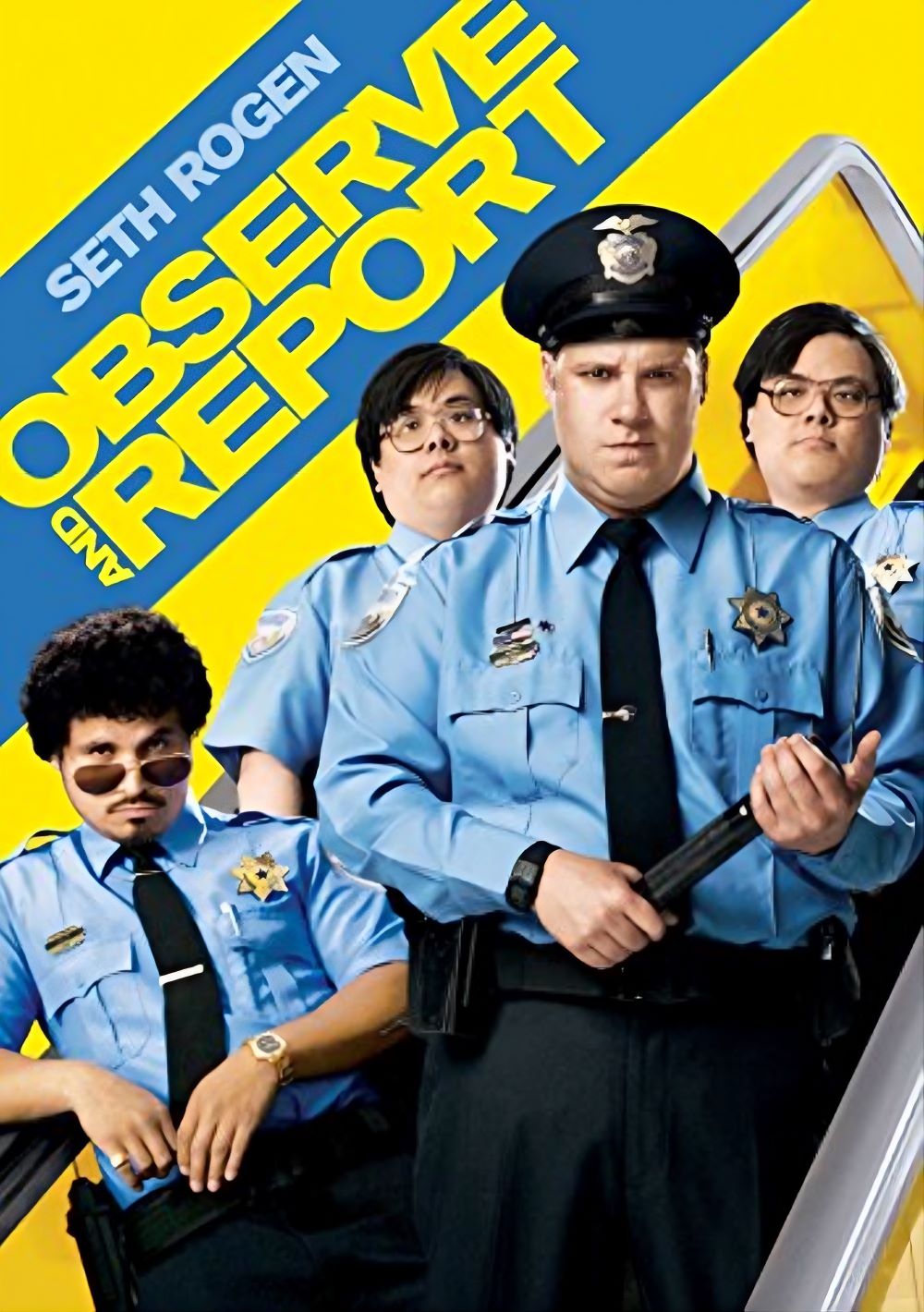
The plot, such as it is, follows Ronnie (played with terrifying commitment by Seth Rogen), the head security guard at the Forest Ridge Mall. Ronnie sees himself as a warrior-poet of law enforcement, constantly vying for the respect he feels he deserves from the local police, specifically the smug Detective Harrison (Ray Liotta). When a flasher starts terrorizing the mall, Ronnie sees his chance to prove his worth. But the film is less about catching the pervert and more about Ronnie’s slow, volatile unraveling. He pops antipsychotic meds, lives with his alcoholic mother (Celia Weston), and harbors a delusional crush on a makeup counter girl named Brandi (Anna Faris), who is openly using him. It’s a recipe for a tragedy, but Hill frames it as a comedy so deadpan and abrasive that you’re never quite sure when you’re allowed to laugh.
Let’s talk about performance, because Rogen does something here that he’s rarely done before or since. He sheds the lovable stoner schtick entirely. Ronnie is not charming. He’s awkward, prone to violent outbursts, and genuinely frightening in his conviction. When he goes off his medication, the film shifts from quirky indie comedy to something closer to Taxi Driver. Rogen plays Ronnie with a straight-backed, chest-out posture that suggests a man holding himself together with duct tape and delusion. There’s a scene where he interrogates a group of teenagers—pulling one kid’s pants down and pepper-spraying another—that is so uncomfortably realistic in its abuse of authority that you might wince instead of chuckle. That’s the point. Hill isn’t interested in making Ronnie a hero. He’s interested in the gap between how Ronnie sees himself (a lone crusader for justice) and how the world sees him (a dangerous liability).
The supporting cast deserves a shout-out here. Anna Faris is pitch-perfect as Brandi, a shallow, cocaine-snorting mess who treats Ronnie’s affection as a minor inconvenience. She never plays for sympathy, which makes her character brutally honest. And it’s in her most uncomfortable scene with Ronnie that the film’s entire thesis snaps into focus. Without spoiling exactly what happens, Brandi invites Ronnie to her apartment after a long night of drinking and using. For a brief, hopeful moment, the film seems to be offering him a genuine connection. But Brandi is too self-absorbed to notice Ronnie’s desperate, medication-starved sincerity, and Ronnie himself misreads every signal she doesn’t bother to send. What unfolds is a hollow, mechanical act that Ronnie mistakes for intimacy and Brandi barely registers as an inconvenience. The scene is shot flatly—no music, no punchline, just the awful silence of two broken people failing to see each other. Ronnie sees a fantasy of Brandi that doesn’t exist. Brandi sees a tool she can use and discard. It’s a car crash you know you shouldn’t slow down for, but you do anyway, and when you get close enough to see the human damage, the film refuses to let you look away. That moment is emblematic of Observe & Report as a whole: it dares you to laugh, then makes you feel gross for even considering it. Most dark comedies use shock for a quick gag. Hill uses it as a mirror.
Michael Peña shows up as Ronnie’s loyal but dim partner Dennis, providing the film’s few genuine moments of warmth. And then there’s Ray Liotta, practically playing a parody of his Goodfellas persona, but in a way that underscores the film’s central irony: the real cops are just as arrogant and flawed as Ronnie, but they have badges, so it’s allowed. Liotta’s Detective Harrison isn’t a hero; he’s just a bully with better legal standing.
From a craft perspective, Observe & Report is deceptively smart. Jody Hill, who came from the brilliant but uncomfortable HBO show Eastbound & Down, directs with a strange kind of sincerity. The mall is shot like a battlefield or a Western town, all wide angles and lonely corridors. There’s a scene where Ronnie imagines a slow-motion shootout set to a cover of “Rocket Man,” and it’s both hilarious and deeply sad. Hill uses music ironically but not cruelly. The film’s climax, which I won’t spoil, involves a literal parking lot confrontation that descends into shocking, bloody violence—and then immediately undercuts it with a joke so tasteless it almost works as social commentary. This is where the film splits audiences. Some see a juvenile attempt to shock. Others see a pointed satire of vigilantism and the American male ego.
The biggest critique of Observe & Report is its tonal chaos. The movie can’t decide if you’re supposed to laugh at Ronnie’s mental illness or cry for him. In one scene, he’s horrifically mean to a genuinely kind love interest (played by Collette Wolfe). In the next, he’s delivering a surprisingly vulnerable monologue about being a “security guard for his own heart.” The Brandi apartment scene sits right at the center of this chaos, a perfect little engine of discomfort that powers everything around it. If you walk in expecting a stoner comedy, that scene will leave you unsettled. If you walk in expecting a gritty character study, the dick jokes and mall-cop absurdity surrounding it will feel out of place. That’s the point. The film deliberately rubs its contradictions in your face, and the Brandi scene is where those contradictions burn hottest.
That said, the film’s final act is where it earns its cult status. Without giving too much away, Ronnie essentially achieves his goal—but the victory is hollow, pointless, and tinged with tragedy. The very last shot is a freeze frame that asks you to reconsider everything you’ve just watched, including that awful night in Brandi’s apartment. Is Ronnie a hero? A monster? A pathetic man who got lucky? Hill refuses to label him, which is rare in mainstream American cinema. Most movies would either punish or redeem a character like this. Observe & Report simply watches him continue, the same broken person he always was, now with a slight bump in self-esteem. That’s either a brilliant subversion of the “loser succeeds” trope or a cop-out. I lean toward brilliant, but I wouldn’t argue with someone who hated it.
So, final verdict? Observe & Report is not a film I can recommend easily. If you need your comedies to be warm, predictable, or morally clear, stay far away. But if you’re interested in a movie that uses the mall-cop setup to ask uncomfortable questions about masculinity, mental health, and the thin line between community guardian and domestic terrorist, this is a fascinating artifact. It’s messy, mean, and occasionally transcendent. Seth Rogen has never been braver, and Jody Hill has never been more himself. Just don’t watch it back-to-back with Paul Blart unless you want emotional whiplash. This is the dark, spiky, unapologetic alternative—the film that says the quiet part out loud, then laughs at you for being surprised. For better or worse, you won’t forget it.