Review: Justified (by Graham Yost)


“You do a good job of hiding it. And I suppose most folks don’t see it. But honestly? You’re the angriest man I have ever known.” — Winona Hawkins (describing Raylan Givens)

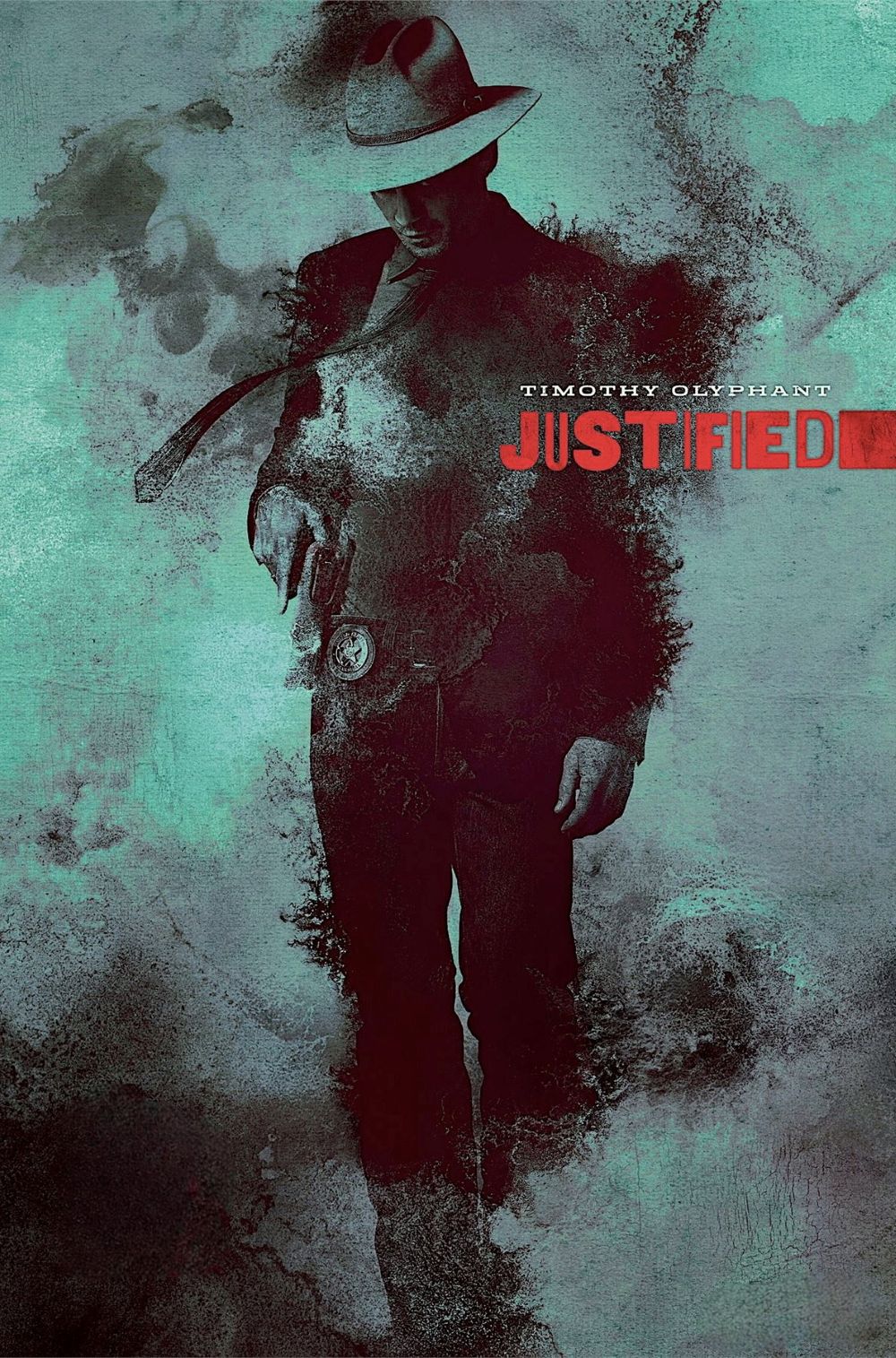
Justified is one of those rare TV shows that feels like a perfectly aged whiskey—smooth, rich, and with a kick that lingers long after you’ve finished a glass. Adapted from Elmore Leonard’s stories featuring the sharp-shooting, quick-witted U.S. Marshal Raylan Givens, the FX series is a masterclass in character-driven storytelling, sharp dialogue, and the kind of moral ambiguity that makes you question who you’re really rooting for. At the heart of it all is Timothy Olyphant as Raylan, a man who carries the weight of his past like a well-worn leather jacket, and Walton Goggins as Boyd Crowder, the charismatic, Bible-quoting criminal who might just be the most compelling villain—or antihero—you’ve ever seen on screen.

What makes Justified stand out in a sea of crime dramas is its refusal to take itself too seriously, even when the stakes are life-or-death. The show thrives on its dialogue, which crackles with the kind of wit and rhythm you’d expect from Leonard’s work. Raylan’s dry, understated humor is a constant delight, whether he’s trading barbs with a suspect, outsmarting a room full of criminals, or just trying to keep his cool in the face of his own family’s dysfunction. Olyphant delivers every line with a mix of charm and menace, making Raylan feel like a man who’s seen it all but hasn’t lost his sense of humor—or his moral compass, however bent it might be. There’s a scene early in the series where Raylan gives a criminal 24 hours to leave town, and the way Olyphant sells the quiet intensity of that moment is a testament to his ability to command the screen without raising his voice. He’s the kind of hero who doesn’t need to shout to be heard.

But as good as Olyphant is, Justified might just belong to Walton Goggins as Boyd Crowder. Boyd is the kind of character who could’ve been a cartoonish villain in lesser hands, but Goggins turns him into something far more fascinating. A former coal miner turned criminal mastermind, Boyd is equal parts philosopher, showman, and cold-blooded killer. He quotes the Bible one minute and pulls a trigger the next, all while delivering monologues that somehow make his twisted logic sound almost reasonable. Goggins’ performance is electric, and his chemistry with Olyphant is the kind of alchemy that elevates the entire series. Their dynamic is a dance—sometimes a waltz, sometimes a knife fight—where neither man is entirely sure who’s leading. Boyd isn’t just a thorn in Raylan’s side; he’s a dark reflection of him, a man who also grew up in the same rough-and-tumble world of Harlan County, Kentucky, but chose a different path. Their rivalry is the backbone of the show, and every scene they share is a masterclass in tension and subtext.

Then there’s Ava Crowder, Boyd’s sister-in-law and a force of nature in her own right, portrayed with fierce intelligence by Joelle Carter. Ava’s relationship with Boyd is a rollercoaster of love, hate, and everything in between. Their dynamic is just as compelling as the one between Raylan and Boyd, filled with a volatile mix of loyalty, betrayal, and an undeniable connection that neither can fully shake. Ava’s journey from a woman trying to escape her family’s criminal past to a power player in her own right is one of the show’s most compelling arcs. She’s tough, resourceful, and just as morally complex as the men around her, and her interactions with Boyd crackle with the same energy and tension as his showdowns with Raylan. Whether they’re working together, scheming against each other, or caught in some messy in-between, their relationship adds another layer of depth to the show’s already rich tapestry of characters.

The supporting cast is just as strong, filled with characters who feel like they’ve been lifted straight out of a Leonard novel. There’s Art Mullen, Raylan’s boss and the closest thing he has to a father figure, played with gruff warmth by Nick Searcy. And let’s not forget the various criminals, informants, and eccentric locals who populate Harlan County, each one memorable in their own right. Whether it’s the hilariously unhinged Dickie Bennett or the stoic, loyal Limehouse, the show’s roster of side characters ensures that every episode is packed with personality.

What’s so refreshing about Justified is that it never feels the need to over-explain itself. The dialogue is sharp and efficient, often delivering character development and plot twists in the same breath. The show trusts its audience to keep up, and it rewards that trust with some of the most satisfying writing on television. The banter isn’t just clever—it’s purposeful, revealing layers of the characters and their relationships without ever feeling like exposition. And the action? It’s as tight and precise as Raylan’s aim. The shootouts are sudden and brutal, but they’re never gratuitous. Every pull of the trigger feels earned, and the tension leading up to those moments is often as gripping as the violence itself.

The setting of Harlan County is almost a character in itself. The show paints a vivid picture of a place where the law is more of a suggestion than a rule, and where family loyalty often trumps justice. The rugged, coal-dusted landscape mirrors the moral grayness of the stories being told. This isn’t a world of clear-cut heroes and villains; it’s a world where everyone has their own code, and where the line between right and wrong is as blurry as the smoke from a freshly fired revolver. Raylan himself is a product of this environment, and his struggle to reconcile his past with his present is one of the show’s most compelling threads. He’s a man who left Harlan to become a marshal, but Harlan—and its ghosts—never really left him.

One of the show’s greatest strengths is its ability to balance humor and darkness. Even in its grimmest moments, Justified never loses its sense of fun. The writers have a knack for undercutting tension with a well-placed joke or a bit of absurdity, and the result is a show that’s as entertaining as it is thought-provoking. Whether it’s Raylan’s deadpan reactions to the chaos around him or Boyd’s theatrical antics, there’s always a moment to lighten the mood, even when the stakes are at their highest. This balance keeps the show from ever feeling too heavy, and it makes the darker moments hit even harder when they do arrive.

If there’s one thing Justified doesn’t get enough credit for, it’s its consistency. Over six seasons, the show rarely misfires. The writing remains sharp, the performances stay top-notch, and the stories continue to surprise. Even when it dips into more serialized storytelling in its later seasons, it never loses sight of what makes it special: the characters and their relationships. And when the series finally reaches its conclusion, it does so in a way that feels both satisfying and true to everything that came before. There are no easy answers in Justified, no neat bows tied around its themes. Instead, it leaves you with the sense that life—and justice—is messy, complicated, and often unfair.

At its core, Justified is a show about men and women shaped by their pasts, trying to carve out a future in a world that doesn’t always make it easy. Raylan Givens is a hero, but he’s not a saint. Boyd Crowder is a villain, but he’s not without his own twisted sense of honor. Ava Crowder is a survivor, navigating a world where loyalty is a currency and trust is a luxury. The beauty of the show is that it lets these characters exist in all their complexity, never forcing them into boxes they don’t fit into. And with dialogue that snaps like a twig underfoot and performances that bring every word to life, it’s a series that’s as rewarding to revisit as it is to experience for the first time. If you’re a fan of stories where the characters are as rich as the plot, and where every line of dialogue feels like it’s been polished to a shine, then Justified is the kind of show you’ll want to savor. It’s a modern classic, plain and simple.
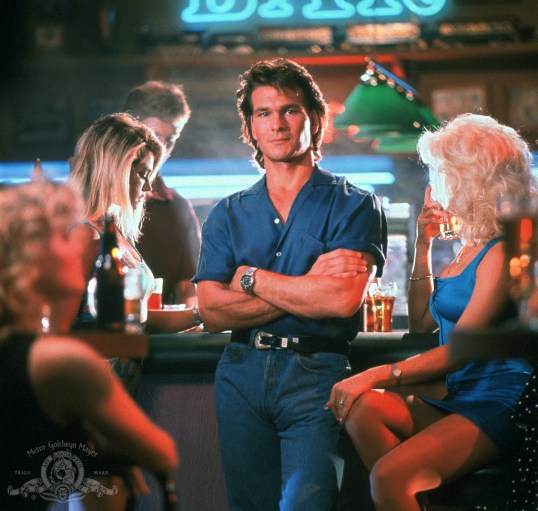
Scenes That I Love: Sam Elliott and Patrick Swayze in Road House


Today, the Shattered Lens wishes a happy birthday to Sam Elliott.  In this scene from the classic film Road House, Sam Elliott and Patrick Swayze have a heart-t0-heart.  Swayze’s Dalton has a past that can only be understood by Sam Elliott’s Wade Garrett.

Take it away, mijo.

Scenes That I Love: Sam Elliott and Patrick Swayze in Road House


Today, the Shattered Lens wishes a happy birthday to Sam Elliott.  In this scene from the classic film Road House, Sam Elliott and Patrick Swayze have a heart-t0-heart.  Swayze’s Dalton has a past that can only be understood by Sam Elliott’s Wade Garrett.

Take it away, mijo.

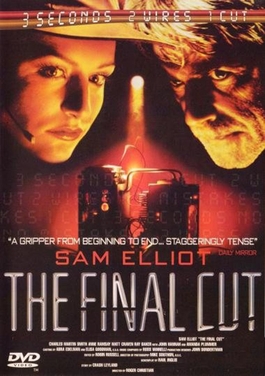
The Final Cut (1995, directed by Roger Christian)


A mad bomber is blowing up large chunks of Seattle and seems to have a vendetta against the city’s bomb squad.  John Pierce (Sam Elliott), a burn-out who used to be the best of the best when it came to defusing bombs, comes out of retirement to help with the investigation.  The only problem is that all of the evidence seems to be pointing at Pierce.  Pierce does his best to prove his innocence while more and more members of the bomb squad get blown up.

The Final Cut has its moments.  The lengthy opening scene features Amanda Plummer and John Hannah as two cocky members of the bomb squad who discover that defusing their latest explosive isn’t going to be as simple as they think it is.  The final 20 minutes takes the film into Saw territory, with an underground lair and a woman who has been turned into a human explosive.  In-between, though, the movie is often slow and Sam Elliott sleepwalks through a role that really demanded the low-budget equivalent of a Lethal Weapon-era Mel Gibson.  (Wings Hauser comes to mind.)  The actual identity of the bomber will be easy for anyone to guess though the bomber’s final fate is actually executed pretty well.

Director Roger Christian is a long-time associate of George Lucas’s and also worked on Alien as a production designer.  That’s probably why the sets, especially that underground lair, look surprisingly good for what was obviously a direct-to-video B-movie.  Five years after The Final Cut, Christian would attain an infamous immortality when he was the director unfortunate enough to be credited as directing Battlefield Earth.  Compared to Battlefield Earth, The Final Cut is damn good movie.

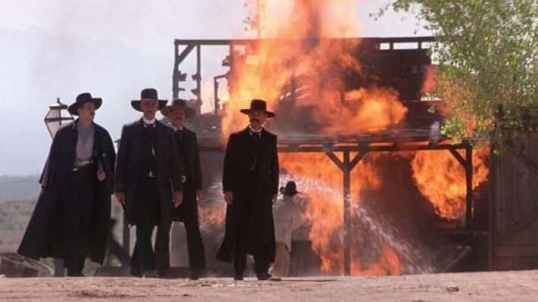
The Unnominated #12: Tombstone (dir by George Pan Cosmatos)


Though the Academy of Motion Picture Arts and Sciences claim that the Oscars honor the best of the year, we all know that there are always worthy films and performances that end up getting overlooked.  Sometimes, it’s because the competition too fierce.  Sometimes, it’s because the film itself was too controversial.  Often, it’s just a case of a film’s quality not being fully recognized until years after its initial released.  This series of reviews takes a look at the films and performances that should have been nominated but were, for whatever reason, overlooked.  These are the Unnominated.

I have come around on Tombstone.

The first time I watched this 1993 film, I was a bit confused as to why so many of my friends (especially my male friends) worshipped the film.  To me, it was a bit too messy for its own good, an overlong film that told a familiar story and which featured so many characters that it was difficult for me to keep track of them all.  Perhaps because everyone I knew loved the film so much, I felt the need to play contrarian and pick out every flaw I could find.

And I still think those flaws are there.  The film had a troubled production, with original director Kevin Jarre falling behind in shooting and getting replaced by George Pan Cosmatos, a director who didn’t have any real interest in the material and whose all-business approach rubbed many members of the cast the wrong way.  Kurt Russell took over production of the film, directing the actors and reportedly paring down the sprawling script to emphasize the relationship between Russell’s Wyatt Earp and Val Kilmer’s Doc Holliday.  On the one hand, this led to a lot of characters who really didn’t seem to have much to do in the finished film.  Jason Priestley’s bookish deputy comes to mind.  On the other hand, Russell was right.

The film’s heart really is found in the friendship between Wyatt and Doc.  It doesn’t matter that, in real life, Wyatt Earp was hardly as upstanding as portrayed by Kurt Russell.  It also doesn’t matter that the real-life Doc Holliday was perhaps not as poetic as portrayed by Val Kilmer.  Today, if you ask someone to picture Wyatt Earp, they’re probably going to picture Kurt Russell with a mustache, a cowboy hat, and a rifle.  And if you ask them to picture Doc Holliday, they’re going to picture Val Kilmer, sweating due to tuberculosis but still managing to enjoy life.  Did Doc Holliday every say, “I’ll be your huckleberry,” before gunning someone down?  He might as well have.  That’s how he’s remembered in the popular imagination.  And it’s due to the performances of Russell and Kilmer that I’ve come around to eventually liking this big and flawed western. With each subsequent viewing, I’ve come to appreciate how Russell and Kilmer managed to create fully realized characters while still remaining true to the Western genre.  If Wyatt Earp initially fought for the law, Doc Holliday fought for friendship.  Kilmer is not only believable as a confident gunslinger who has no fear of walking into a dangerous situation.  He’s also believable as someone who puts his personal loyalty above all else.  He’s the type of friend that everyone would want to have.

That said, I do have to mention that there are a lot of talented people in the cast, many of whom are no longer with us but who will live forever as a result their appearance here.  When Powers Boothe delivered the line, “Well …. bye,” he had no way of knowing that he would eventually become a meme.  Boothe is no longer with us, I’m sad to say.  But he’ll live forever as long as people need a pithy way to respond to someone announcing that they’re leaving social media forever.  Charlton Heston appears briefly as a rancher and he links this 90s western with the westerns of the past.  Robert Mitchum provides the narration and it just feels right.  The large ensemble cast can be difficult to keep track of and even a little distracting but there’s no way I can’t appreciate a film that manages to bring together not just Russell, Kilmer, Boothe, Heston, and Mitchum but also Sam Elliott, Bill Paxton, Michael Biehn, Michael Rooker, Billy Bob Thornton, Frank Stallone, Terry O’Quinn, and even Billy Zane!  The female roles are a bit underwritten.  Dana Delaney is miscast but Joanna Pacula feels exactly right as Doc Holliday’s lover.

But ultimately, this film really does belong to Val Kilmer.  When I heard the sad news that he had passed away last night, I thought of two films.  I thought of Top Gun and then I thought of Tombstone.  Iceman probably wouldn’t have had much use for Doc Holliday.  And Doc Holliday would have resented Iceman’s attitude.  But Val Kilmer — that brilliant actor who was so underappreciated until he fell ill — brought both of them to brilliant life.  In the documentary Val, Kilmer attends a showing of Tombstone and you can say he much he loves the sound of audience cheering whenever Doc Holliday showed up onscreen.

Tombstone was a flawed film and 1993 was a strong year.  But it’s a shame that Val Kilmer was never once nominated for an Oscar.  Tombstone may not have been a Best Picture contender but, in a year when Tommy Lee Jones won the Oscar for Best Supporting Actor for his role in the similarly flawed The Fugitive, it seems a shame that Kilmer’s Doc Holliday was overlooked.

Tombstone (1993, dir by George Pan Cosmatos (and Kurt Russell), DP: William Fraker)

Previous entries in The Unnominated:

  1. Auto Focus 
  2. Star 80
  3. Monty Python and The Holy Grail
  4. Johnny Got His Gun
  5. Saint Jack
  6. Office Space
  7. Play Misty For Me
  8. The Long Riders
  9. Mean Streets
  10. The Long Goodbye
  11. The General

Live Tweet Alert: Join #FridayNightFlix for Road House!


As some of our regular readers undoubtedly know, I am involved in a few weekly watch parties.  On Twitter, I host #FridayNightFlix every Friday and I co-host #ScarySocial on Saturday.  On Mastodon, I am one of the five hosts of #MondayActionMovie!  Every week, we get together.  We watch a movie.  We tweet our way through it.

Tonight, at 10 pm et, I will be hosting #FridayNightFlix!  The movie?  1989’s Road House!

The name is Dalton!  Everyone thought that Dalton would be bigger but he’s the second best bouncer in the world and if anything happens to Wade Garrett, he’ll be the absolute best.  He’s a legend but can he clean up the wildest bar in Missouri?  Will Ben Gazzara convince him to switch sides?  Will Doc convince him to give peace a chance?  And will Tinker ever get over his fear of polar bears?  Just remember, pain don’t hurt.  Be nice until it’s time not to be nice.  And always check the boots for blades.

If you want to join us this Friday, just hop onto twitter, start the movie at 10 pm et, and use the #FridayNightFlix hashtag!  I’ll be there tweeting and I imagine some other members of the TSL Crew will be there as well.  It’s a friendly group and welcoming of newcomers so don’t be shy.

Road House is available on Prime!

See you there!

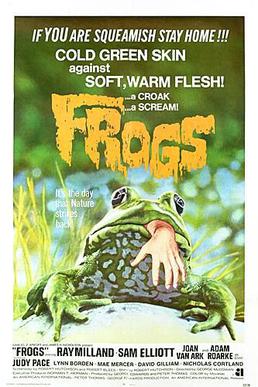
Horror Film Review: Frogs (dir by George McGowan)


1972’s Frogs opens with Pickett Smith (played by a youngish Sam Elliott) canoeing through the bayou, taking pictures of all of the local sights.  Pickett is a nature photographer and someone who is very concerned about what pollution is doing to the local wildlife.  Eventually, Pickett ends up meeting the Crocketts, the wealthy family that owns and lives on an isolated island.  Wheelchair-bound family patriarch Jason Crockett (Ray Milland) is looking forward to celebrating the 4th of July.  It’s a tradition and he goes all out, decorating the mansion with American flags and listening to patriotic music.  The Crockett family always celebrates with Jason, though it quickly becomes apparent that Jason would be just as comfortable celebrating without any of them.

The last thing that Jason Crockett wants is some preachy environmentalist showing up at his mansion and ruining the 4th of July with a bunch of complaints about the pesticides that he’s been using to keep away the island’s wildlife.  The only thing worse than having to deal with an environmentalist would be having to deal with an invasion of alligators, snakes, and frogs.  Unfortunately, Jason is going to have to spend his holiday dealing with all of those things.  Soon, the mansion is surrounded by frogs and servants and family members are showing up dead all over the place.

I’ve seen Frogs a handful of times.  It’s one of those films that many of my friends seem to like much more than I do.  I have to admit that, for whatever reason, I always find myself struggling to focus on the film.  Some of that is because there are more than a few slow spots.  But the main problem is that frogs really aren’t that menacing.  Frogs are cute and kind of goofy-looking, much like Sam Elliott without his mustache.  The alligators are certainly scary.  And there’s an attack by a cottonmouth that makes me go, “Agck!” every time that I see it.  But frogs just look cute when they start hopping around.  Our cat gets excited whenever he sees a frog because he knows that he can put his paw on their back and make them jump. Frogs aren’t threatening but I suspect that’s probably the point of the film.  Frogs is not a film that is meant to be taken too seriously and all of the close-ups of the frogs staring at Ray Milland, Sam Elliott, Joan Van Ark, and Adam Roarke are obviously meant to be more humorous than scary.  By the end of the film, the frogs are hopping over American flags, like a group of rebellious amphibians that have decided to stage their own 1968 Democratic Convention.

The majority of the cast is adequate if not exactly outstanding, with most of them doing what they can to try to look terrified of a bunch of frogs.  That said, the only one who really makes a strong impression is Ray Milland, who appears to relish the opportunity to play someone who dislikes literally everyone that he sees.  As played by Milland, Jason is so honest about being a miserable old man that it’s hard not to like him.  He doesn’t like humanity and he’s not going to pretend otherwise.  One gets the feeling that, when this film was released, he was meant to represent the same establishment that got America into Vietnam.  When viewed today, he comes across like the one person who would be smart enough to never get on social media.

Reportedly, this was one of Andy Warhol’s favorite films.  I’m glad he enjoyed it.

Live Tweet Alert: Watch Frogs with #ScarySocial


As some of our regular readers undoubtedly know, I am involved in a few weekly live tweets on twitter.  I host #FridayNightFlix every Friday, I co-host #ScarySocial on Saturday, and I am one of the five hosts of #MondayActionMovie!  Every week, we get together.  We watch a movie.  We tweet our way through it.

Tonight, for #ScarySocial, Deanna Dawn will be hosting 1972’s Frogs, starring Sam Elliott and Ray Milland!

If you want to join us on Saturday night, just hop onto twitter, start the film at 9 pm et, and use the #ScarySocial hashtag!  The film is available on Prime and YouTube.  I’ll probably be there and I imagine some other members of the TSL Crew will be there as well.  It’s a friendly group and welcoming of newcomers so don’t be shy.

Live Tweet Alert: Join #FridayNightFlix for Road House!


As some of our regular readers undoubtedly know, I am involved in a few weekly live tweets on twitter.  I host #FridayNightFlix every Friday, I co-host #ScarySocial on Saturday, and I am one of the five hosts of #MondayActionMovie!  Every week, we get together.  We watch a movie.  We tweet our way through it.

Tonight, at 10 pm et, I will be hosting #FridayNightFlix!  The movie?  1989’s Road House!

The name is Dalton!  Everyone thought that Dalton would be bigger but he’s the second best bouncer in the world and if anything happens to Wade Garrett, he’ll be the absolute best.  He’s a legend but can he clean up the wildest bar in Missouri?  Will Ben Gazzara convince him to switch sides?  Will Doc convince him to give peace a chance?  And will Tinker ever get over his fear of polar bears?  Just remember, pain don’t hurt.  Be nice until it’s time not to be nice.  And always check the boots for blades.

If you want to join us this Friday, just hop onto twitter, start the movie at 10 pm et, and use the #FridayNightFlix hashtag!  I’ll be there tweeting and I imagine some other members of the TSL Crew will be there as well.  It’s a friendly group and welcoming of newcomers so don’t be shy.

Road House is available on Prime and Netflix!

See you there!

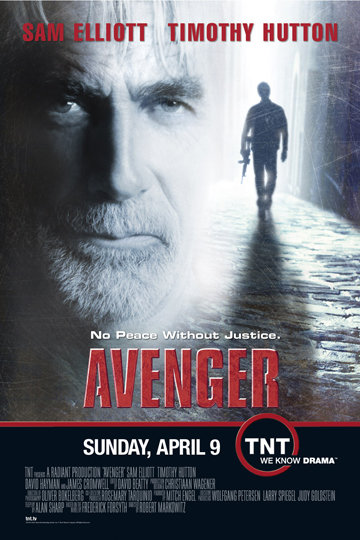
Avenger (2006, directed by Robert Markowitz)


Calvin Dexter (Sam Elliott) is a former CIA agent who now works as a professional avenger.  No, that doesn’t mean that he knows Iron Man or that he works with John Steed and Mrs. Peel.  Instead it means that, motivated by his own feelings of hopelessness after his daughter was killed in Panama, Calvin offers his services to anyone who needs more help than the law can or will provide.  Calvin Dexter is not your typical, cynical ex-spy.  He is trying to make the world a better place by taking out its worst inhabitants.  He is such an idealist that he even has a “No Peace Without Justice” bumper sticker on his pickup truck.

When Dexter is hired to track down Rickie, the son of an old friend, he discovers that Rickie was captured while working for a charity that was trying to help refugees in Bosnia.  Rickie was tortured and murdered by men working for the Serbian warlord, Zoran Zilic (David Hayman).  Dexter sets out to avenge Rickie’s death.  Unfortunately, CIA director Paul Devereux (James Cromwell) considers Zilic to be a security asset.  He doesn’t care how many people Zilic kills as long as he’s useful to U.S. Intelligence.  Devereux sends another CIA agent, Frank McBride (Timothy Hutton), to stop Dexter by any means necessary.

Based on a novel by Fredrick Forsyth and produced for the TNT network, Avenger is one of those movies that used to show up often on late night television.  I can remember it playing in the background during more than one late night study session in college.  It’s the ideal film for late night viewing because there are enough twists and turns to hold your attention but the story is still easy to follow.  While the movie does have an important point to make about the war crimes that took place in Bosnia and America’s role in protecting some of the worst perpetrators of those crimes, its main strength is the determined performance of Sam Elliott.  Elliott is one of the few actors who has mastered the art of being both laid back and laser focused at the same time.  He plays Dexter like a modern day frontier marshal, traveling to the most dangerous parts of world to dispense simple but effective justice.

Avenger is fast-paced and it will hold your attention.  Sometimes, it feels like it could have been a pilot for a potential show and it is easy to imagine Dexter traveling to a different country each week and taking out a new international villain.  Timothy Hutton has a few good scenes as the rival CIA agent, even if he can’t match Sam Elliott’s killer charisma.  As usual, James Cromwell is well-cast as a government official who thinks that the ends can justify any means.  Whenever I see a movie like this, featuring Cromwell as the epitome of what everyone hates about the establishment, I’m reminded that it’s been a long time since he played Archie Bunker’s reliably goofy best friend, Stretch Cunningham.