Retro Television Review: St. Elsewhere 4.17 and 4.18 “Time Heals”


Welcome to Retro Television Reviews, a feature where we review some of our favorite and least favorite shows of the past! On Fridays, I will be reviewing St. Elsewhere, a medical show which ran on NBC from 1982 to 1988.  The show can be found on Daily Motion.
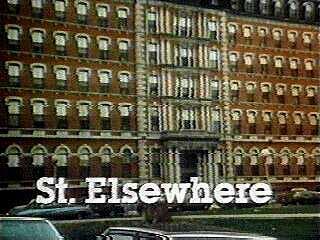
In this special two-part episode, 50 years of St. Elsewhere are documented in just two hours.

Episodes 4.17 and 4.18 “Time Heals”

(Dir by Mark Tinker, originally aired on February 19th and February 20th, 1986)

Aired over two nights, “Time Heals” uses St. Eligius’s 50th anniversary to give us 50 years of history. While the staff prepares to observe half a century of serving Boston, the episode skips back and forth in time.

In 1935, a young and enthusiastic priest named Joseph McCabe (Edward Herrmann) prepares for the opening of a hospital that he hopes will serve the downtrodden and forgotten of Boston. Monsignor Senti (Norman Burton) views McCabe as a troublemaker. Meanwhile, a young Donald Westphall watches as his father helps bring a wounded man named Patrick O’Casey (William Russ) to the hospital. Later, Westphall’s sister and mother are killed in a house fire.

In 1945, a young liver specialist named Daniel Auschlander (James Stephens) is brought on staff and meets an angry teenage Donald Westphall (Michael Sharrett). Donald shines shoes in the hospital lobby. When Donald is caught stealing, Father McCabe takes him to the hospital’s gym and gives him a boxing lesson. As for Auschlander, he allows a returning serviceman named Patrick O’Casey to see his young daughter, who is suffering from polio and has been placed in an isolation ward.

In 1955, the Archdiocese sells the hospital to the city and Father McCabe is fired. McCabe gets drunk. Auschlander says that he intends to resign in protest. McCabe replies that that would be a mistake—Auschlander is the man McCabe has recommended as his replacement. Meanwhile, Patrick O’Casey’s daughter dies after spending ten years in an iron lung, and a cocky intern named Mark Craig (William Daniels, sans mustache) has a panic attack while performing his first operation. The demanding Dr. David Domedion (Jackie Cooper) orders Craig back into the operating room. Later, Craig tells another resident, Donald Westphall (Ed Flanders, his hair dyed black but still looking quite middle-aged), that he’s been offered a position at Boston General and will never return to St. Eligius.

In 1965, Dr. Craig returns to St. Eligius, bitter that he was passed over for chief of surgery at Boston General. While a young Luther Hawkins sits in the waiting room, a newly arrived nurse named Helen Eisenberg helps Dr. Westphall deal with Terence O’Casey (Brian Kerwin), a young man having a bad acid trip. “Get a haircut, hippie,” Dr. Craig says at one point.

In 1975, Terence O’Casey is back in the hospital, waiting as Dr. Craig performs open-heart surgery on his father, Patrick. Donald Westphall is appointed hospital administrator. The same night, his wife, Maureen (Anita Gillette), is in an auto accident that leaves her brain-dead. Westphall is the one who has to decide to remove her breathing tube and allow her to pass on.

In 1985, high school principal Terence O’Casey is brought to the hospital with sudden paralysis. His doctor, Jack Morrison, struggles to diagnose Terence’s condition until he goes down to the basement, looks through the earliest hospital records, and reads about Terence’s sister, who died in an iron lung. Jack diagnoses Terence with Guillain-Barré syndrome, a paralyzing condition that can resemble polio.

Meanwhile, Jack’s son, Pete, is apparently abducted by a man at the hospital. I say “apparently” because the plotline feels a bit underdeveloped. The episode ends with the police returning Pete to Jack during St. Eligius’s anniversary party. Pete seems to be physically unharmed, and we’re not really given any details as to who abducted him or how the police tracked him down.

The subplot featuring Morrison’s son being abducted is oddly undeveloped, but that’s really the only flaw to be found in “Time Heals.” This is not only a great episode of St. Elsewhere; it’s also one of the greatest episodes of television I’ve ever seen. That said, it isn’t just a great episode of television. It’s a great work of art, period, from the excellent performances to the way the episode seamlessly mixes the flashbacks so that they come together to tell one epic story of the 20th century. Featuring both the story of the hospital and the story of the O’Caseys, “Time Heals” is a portrait of how times change and how they remain the same.

A few random notes:

For those who think Dr. Craig is too hard on his residents, this episode shows that Craig’s mentor was equally hard on him, and that it helped turn Craig into the surgeon he is today. That said, it’s also amusing to see that young Mark Craig was just as obnoxious as Victor Ehrlich.

I’ve often complained about how depressed Westphall always seems to be. This episode shows that Westphall has a lot of reasons to be depressed. The man’s life has been one tragedy after another.

One cannot overlook the importance of the O’Caseys to this episode’s power. The O’Caseys represent the community St. Eligius is meant to serve. The hospital is part of the family’s life. History repeats itself throughout the O’Casey storyline. In 1935, Patrick O’Casey is injured and nearly killed in a fight. By 1945, he’s married and a member of the U.S. Army. In 1965, Patrick’s son, Terence, is a drug-abusing member of the counterculture. By 1985, he’s a conservative high school principal who has an estranged relationship with his gay son, Kevin (John Scott Clough). All of the male O’Caseys have more in common than they realize.

Each decade is shot in a different visual style, which helps us keep track of things. The 1935 scenes are shot in black and white. The 1945 scenes feature muted colors. As we move through time, the colors become clearer and more vibrant until we finally find ourselves in 1985.

“Time Heals” is touching, powerful, and even funny. It’s a true work of art.
Late Night Retro Television Review: Monsters 2.19 “Far Below”


Welcome to Late Night Retro Television Reviews, a feature where we review some of our favorite and least favorite shows of the past! On Wednesdays, I will be reviewing Monsters, which aired in syndication from 1988 to 1991. The entire series is streaming on YouTube.

This week, there’s something in subways!

Episode 2.19 “Far Below”

(Dir by Debra Hill, originally aired on February 25th, 1990)

Alex Kritz (John Scott Clough) is a city bureaucrat who has been sent to do an audit and discover why one subway maintenance crew is getting paid so much despite the high rate of turnover on the crew.  The head of the crew, Dr. Vernon Rathmore (Barry Nelson), not only overpays his workers but he also offers them full insurance and a pension.  Kritz not only wants to understand why Dr. Rathmore is spending so much money but also how he has been able to get away with it for so long.

Dr. Rathmore invites Kritz to watch a monitor so he can observe two of his workers gunning down what appears to be a Yeti with glowing white fur.  Kritz is outraged, accusing Rathmore of killing a homeless man.  Rathmore explains that his section of the subway is full of prehistoric, ape-liked monsters who feast on human flesh.  Rathmore has taken it upon himself to keep the population under control.

When Kritz again accuses Rathmore of genocide, Rathmore reveals that he actually has two of the monsters locked away in the office.  And one of them is his wife!  It turns out that she has quite the appetite for nosey bureaucrats….

This was a simple but entertaining episode of Monsters, one that was well-acted by Nelson and Clough and which made great use of two sets, Rathmore’s office and the atmospheric and dark subway tunnels where Rathmore’s men work.  The escalating tension between Rathmore and Kritz was well-handled, with Rathmore growing more and more annoyed with Kritz’s questions.  Based on all of the urban legends that have sprung up over the years about monsters living in the subways and the sewers (check out Raw Meat for another example), this was an effective episode that managed to tell a complete and interesting story in only 20 minutes.  Monsters was a frequently uneven show, as is true of most anthology series.  Fortunately, for every couple of bad episodes that the viewer got, the viewer would also occasionally get a masterpiece like Far Below.

Far Below was directed by Debra Hill, who is probably best-known for co-producing several of John Carpenter’s early films, including the original Halloween. This episode was Hill’s directorial debut and it was one of only two things she directed.  (The other was an episode of a 90s sitcom called Dream On.)  She did an excellent job with this episode and it’s a shame that she didn’t direct more.

Finally, this was the final performance of actor Barry Nelson.  Nelson was the first actor to ever play James Bond, playing an Americanized version of the character in a 1950s television adaptation of Casino Royale.  (Nelson technically played “Jimmy Bond.”)  Modern horror fans know Nelson best for his wonderful performance as the blandly professional Mr. Ullman in The Shining.  The scene where Nelson (as Ullman) cheerfully talks about what happened to the last caretaker and his family is one of my favorite bits of acting of all time.  Nelson retired after this episode of Monsters and it’s nice to able to say that he went out on a high note.

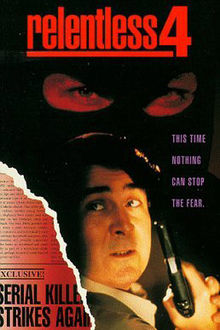
Cinemax Friday: Relentless IV: Ashes to Ashes (1994, dir by Oley Sassone)


Sam Deitz (Leo Rossi) is back to hunt one last serial killer in this, the last of the Relentless films.

This time the killer is a boring nonentity.  He’s not as interesting as the killers played by Miles O’Keeffee or William Forsythe.  Nor is he as unintentionally funny as the one played by Judd Nelson in the first Relentless film.  Instead, he’s just your run-of-the-mill religious fanatic, killing sinners and performing rituals.  His trademark is that he only kills the person that he wants to kill.  Anyone else who might be around is just taken out with a stun gun.  That’s a boring if considerate trademark.

Deitz is assigned to track down the killer, along with his new partner, Jessica Pareti (Colleen Coffey).  While Deitz is trying to solve the case, he’s also having to deal with his rebellious teenage son (Christopher Pettiet).  Between this film and the last, Deitz’s ex-wife died and now Deitz is a single father.  He and his son barely know each other.  Deitz tries to keep his son under control while all his son wants to do is spend time with his girlfriend, Sherrie (Lisa Robin Kelly).

Relentless IV is the least interesting of the Relentless film.  It’s so trapped by the now-stale Relentless formula that not even the casting of Famke Janssen as a possible femme fatale can save it.  Janssen is a psychiatrist who is connected not only to one of the victims but possibly to the killer as well.  She and Deitz are obviously attracted to each other and Deitz is torn between that attraction and treating her like a possible suspect.  The relationship between Deitz and the doctor has potential but it keeps getting sidetraced by scenes of Deitz trying to deal with his teenage son and it never really lives up to what it could have been.  Janssen is beautiful and Rossi gives a typically good performance but watching the film, it’s obvious that there wasn’t much left to do with the character of Detective Sam Deitz.

Direct-to-video mainstay Oley Sassone directs in a flat and unmemorable manner and the entire film just seems tired.  When the best your serial killer can do is kill someone with a Campbell’s soup can, you know you’re running on empty.  There would not be a Relentless V.  Hopefully, Sam Deitz finally found some peace and figured out how to balance being an intense New Yorker with living in laid back California.

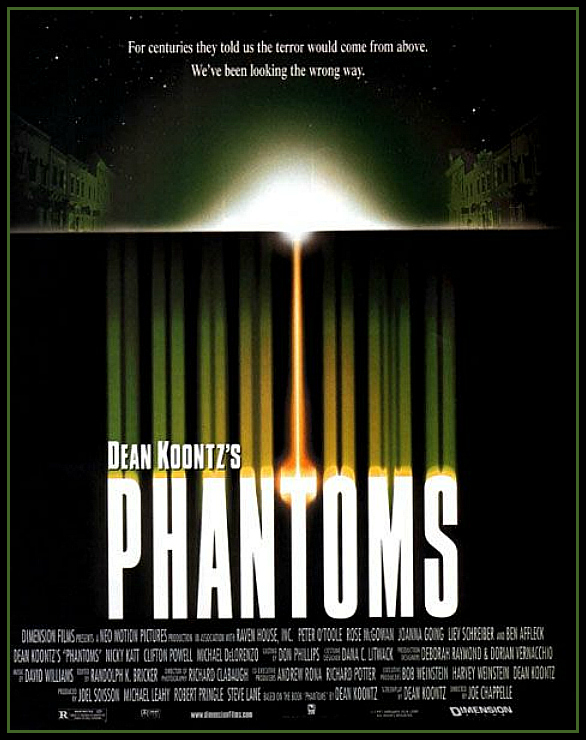
Quickie Review: Phantoms (dir. by Joe Chappelle)


If there was ever an actor in the last twenty years who has suffered ridicule regarding his body of work it would be Ben Affleck. Nevermind the fact that he has actually done very good work as an actor. People tend to view his acting work through some very bad film projects which the online film bloggers (and trolls) have lambasted year after year. One such film which has gained a cult following for all the reasons is the 1998 horror film Phantoms which was adapted from the Dean Koontz horror novel of the same name. This was a film which came out of nowhere and which no one really saw when it first hit the theaters. There’s a reason for this and the main reason for this being that the film was really awful though not without some entertaining bits.

Phantoms starred Ben Affleck in a role that really seemed more suited for an older actor. His Sheriff Hammond in the novel was much older and fit the backstory told in both novel and film that never truly fit Affleck’s youthful appearance and mannerism. He’s joined in this Joe Chappelle production by classically-trained veteran actor Peter O’Toole (who must’ve really needed the money to sign up for this film) in the role of Dr. Exposition dump aka Timothy Flyte who ends up explaining to the surviving cast of characters the very danger facing them in the abandoned town of Snowfield. Rounding out the cast is  Liev Schrieber as the creepy Deputy Stu Wargle who becomes a sort of plot device as the film moves forward. To add to this mix are Joanna Going and Rose McGowan as sisters who first discover that their town has just gone through a terrible event.

The novel this film was based on was pure scifi-horror pulp which stressed one’s suspension of disbelief, but was quite entertaining from beginning to end. Dean Koontz is like the generic fast-food version of Stephen King. This film adaptation borrows heavily from films such as Carpenter’s The Thing and the remake of The Blob. This wouldn’t have been a bad thing since the film’s story does bring into it an interesting concept of an ancient enemy which might or might not have been responsible for unexplained mass disappearances of people and animals throughout history going back to prehistoric times.

What Phantoms ends up doing which ruins the film as a whole was to rush through the narrative it was adapting it. The film pretty much goings through a checklist of all the major scenes in the novel, takes those scenes and truncates them to fit uncomfortably into a 90+ minute film. Some of these scenes could’ve been extended a few more minutes to add to a sense of grandiose to a film that needed it despite it’s B-movie foundation. One such scenes would be the arrival of a special Army unit designed to combat unexplained events, but the film treats this sequence from their arrival right up to their untimely demise in less than 15 minutes. I think in the hands of a much more capable filmmaker these scenes would’ve made the film much more entertaining.

Phantoms was a horror film that could’ve become a 90’s cult-classic if it had been given the proper time and effort from it’s producers, but seeing that it was the Weinsteins of Miramax and Dimension Films this final product was probably the best Joe Chappelle could’ve come up with. Weinsteins during the 1990’s were more concerned of pushing their Oscar-baiting film productions than actually giving time and effort to all their films. If there was any reason to see Phantoms it would be to see just why it kept being mentioned in Kevin Smith’s Jay and Silent Bob Strike Back. Other than that there’s really no reason to see it unless there’s nothing else on.