Retro Television Review: St. Elsewhere 4.17 and 4.18 “Time Heals”


Welcome to Retro Television Reviews, a feature where we review some of our favorite and least favorite shows of the past! On Fridays, I will be reviewing St. Elsewhere, a medical show which ran on NBC from 1982 to 1988.  The show can be found on Daily Motion.
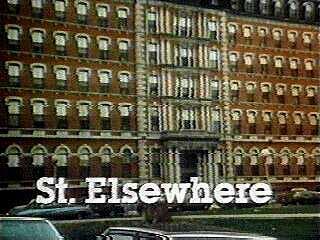
In this special two-part episode, 50 years of St. Elsewhere are documented in just two hours.

Episodes 4.17 and 4.18 “Time Heals”

(Dir by Mark Tinker, originally aired on February 19th and February 20th, 1986)

Aired over two nights, “Time Heals” uses St. Eligius’s 50th anniversary to give us 50 years of history. While the staff prepares to observe half a century of serving Boston, the episode skips back and forth in time.

In 1935, a young and enthusiastic priest named Joseph McCabe (Edward Herrmann) prepares for the opening of a hospital that he hopes will serve the downtrodden and forgotten of Boston. Monsignor Senti (Norman Burton) views McCabe as a troublemaker. Meanwhile, a young Donald Westphall watches as his father helps bring a wounded man named Patrick O’Casey (William Russ) to the hospital. Later, Westphall’s sister and mother are killed in a house fire.

In 1945, a young liver specialist named Daniel Auschlander (James Stephens) is brought on staff and meets an angry teenage Donald Westphall (Michael Sharrett). Donald shines shoes in the hospital lobby. When Donald is caught stealing, Father McCabe takes him to the hospital’s gym and gives him a boxing lesson. As for Auschlander, he allows a returning serviceman named Patrick O’Casey to see his young daughter, who is suffering from polio and has been placed in an isolation ward.

In 1955, the Archdiocese sells the hospital to the city and Father McCabe is fired. McCabe gets drunk. Auschlander says that he intends to resign in protest. McCabe replies that that would be a mistake—Auschlander is the man McCabe has recommended as his replacement. Meanwhile, Patrick O’Casey’s daughter dies after spending ten years in an iron lung, and a cocky intern named Mark Craig (William Daniels, sans mustache) has a panic attack while performing his first operation. The demanding Dr. David Domedion (Jackie Cooper) orders Craig back into the operating room. Later, Craig tells another resident, Donald Westphall (Ed Flanders, his hair dyed black but still looking quite middle-aged), that he’s been offered a position at Boston General and will never return to St. Eligius.

In 1965, Dr. Craig returns to St. Eligius, bitter that he was passed over for chief of surgery at Boston General. While a young Luther Hawkins sits in the waiting room, a newly arrived nurse named Helen Eisenberg helps Dr. Westphall deal with Terence O’Casey (Brian Kerwin), a young man having a bad acid trip. “Get a haircut, hippie,” Dr. Craig says at one point.

In 1975, Terence O’Casey is back in the hospital, waiting as Dr. Craig performs open-heart surgery on his father, Patrick. Donald Westphall is appointed hospital administrator. The same night, his wife, Maureen (Anita Gillette), is in an auto accident that leaves her brain-dead. Westphall is the one who has to decide to remove her breathing tube and allow her to pass on.

In 1985, high school principal Terence O’Casey is brought to the hospital with sudden paralysis. His doctor, Jack Morrison, struggles to diagnose Terence’s condition until he goes down to the basement, looks through the earliest hospital records, and reads about Terence’s sister, who died in an iron lung. Jack diagnoses Terence with Guillain-Barré syndrome, a paralyzing condition that can resemble polio.

Meanwhile, Jack’s son, Pete, is apparently abducted by a man at the hospital. I say “apparently” because the plotline feels a bit underdeveloped. The episode ends with the police returning Pete to Jack during St. Eligius’s anniversary party. Pete seems to be physically unharmed, and we’re not really given any details as to who abducted him or how the police tracked him down.

The subplot featuring Morrison’s son being abducted is oddly undeveloped, but that’s really the only flaw to be found in “Time Heals.” This is not only a great episode of St. Elsewhere; it’s also one of the greatest episodes of television I’ve ever seen. That said, it isn’t just a great episode of television. It’s a great work of art, period, from the excellent performances to the way the episode seamlessly mixes the flashbacks so that they come together to tell one epic story of the 20th century. Featuring both the story of the hospital and the story of the O’Caseys, “Time Heals” is a portrait of how times change and how they remain the same.

A few random notes:

For those who think Dr. Craig is too hard on his residents, this episode shows that Craig’s mentor was equally hard on him, and that it helped turn Craig into the surgeon he is today. That said, it’s also amusing to see that young Mark Craig was just as obnoxious as Victor Ehrlich.

I’ve often complained about how depressed Westphall always seems to be. This episode shows that Westphall has a lot of reasons to be depressed. The man’s life has been one tragedy after another.

One cannot overlook the importance of the O’Caseys to this episode’s power. The O’Caseys represent the community St. Eligius is meant to serve. The hospital is part of the family’s life. History repeats itself throughout the O’Casey storyline. In 1935, Patrick O’Casey is injured and nearly killed in a fight. By 1945, he’s married and a member of the U.S. Army. In 1965, Patrick’s son, Terence, is a drug-abusing member of the counterculture. By 1985, he’s a conservative high school principal who has an estranged relationship with his gay son, Kevin (John Scott Clough). All of the male O’Caseys have more in common than they realize.

Each decade is shot in a different visual style, which helps us keep track of things. The 1935 scenes are shot in black and white. The 1945 scenes feature muted colors. As we move through time, the colors become clearer and more vibrant until we finally find ourselves in 1985.

“Time Heals” is touching, powerful, and even funny. It’s a true work of art.
Late Night Retro Television Review: CHiPs 5.24 “Ice Cream Man”


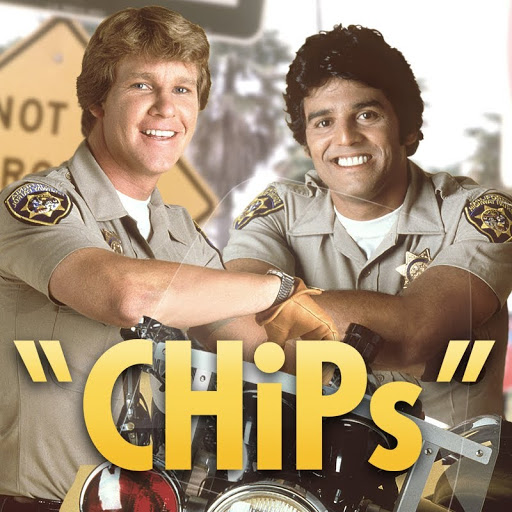
Welcome to Late Night Retro Television Reviews, a feature where we review some of our favorite and least favorite shows of the past!  On Mondays, I will be reviewing CHiPs, which ran on NBC from 1977 to 1983.  The entire show is currently streaming on Prime!

This week, a cop-turned-criminal tries to prove that he’s gone straight.  Will he able to convince Ponch?

Episode 5.24 “Ice Cream Man”

(Dir by Leslie H. Martinson, originally aired on April 18th, 1982)

Tom Corey (Robert Walker, Jr.) used to be a top member of the Highway Patrol until he was caught breaking the law himself.  Tom Corey was a car thief, not because he needed the money but just because he needed the thrill.  Tom was sent to prison.  His wife (Karen Jennings) divorced him.  His son (Noah Hathaway) was told that Tom had died shortly after he was born.  Now, nearly six years later, Tom is out of prison and he’s working as an ice cream man.  He insists that he’s gone straight and all he cares about now is keeping a distant eye on the son who doesn’t know who he is.

Baker is willing to give Tom the benefit of the doubt but not Ponch.  When a rash of vehicle thefts break out, Ponch suspects that Tom is involved.  To an extent, Ponch is right.  The ringleader of the thieves is a businessman named Reno Hale (James Wainwright).  Hale wants Tom to work for him.  Tom sees an opportunity to redeem himself by taking Reno down.

This was an interesting episode, in that the focus was not on Ponch or Baker but instead on Tom and his efforts to prove that he had gone straight.  In fact, this episode almost felt like a backdoor pilot for a series that would have focused on Tom’s life outside of prison.  It’s easy to imagine Tom spending each week foiling criminals while trying not to violate the terms of his parole.  Robert Walker, Jr. gave a strong performance as Tom and the scenes between him and the cops were filled with an energy that reminded me of the first two seasons of CHiPs, before the whole thing became the Ponch Show.

This was a good episode.  Tom was an interesting character and there was one spectacular accident that actually made me jump a little.  (It looked like Randi Oakes barely avoid getting seriously injured.)  This was a nice throwback to what the show used to be.

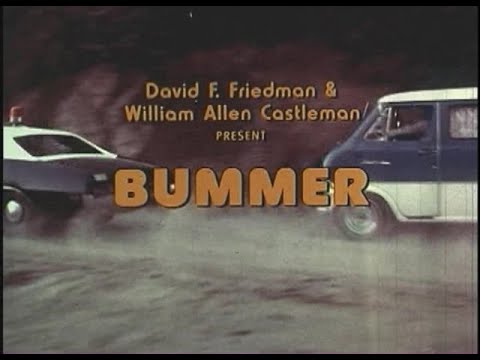
The TSL Grindhouse: Bummer (dir by William Alan Castleman)


The 1973 film Bummer tells the story of a California rock band known as The Group.

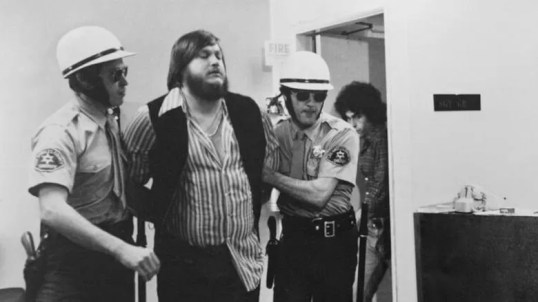
The Group plays groovy music with a mellow feel.  The music they play doesn’t sound so much like actual 70s California rock as much as it sounds like what someone from the big band era would have assumed mellow 70s California rock sounded like.  The Group is led by the charismatic Duke (Kipp Whitman).  The lead guitarist and the drummer look like groovy dudes as well.  But then there’s Butts (played by the great character actor, Dennis Burkley), the bass player.  Butts is a big fat slop with a beard, unwashed hair, and a genuine aura of grime.  Duke’s girlfriend tells Duke that he really should kick Butts out of the band.  The problem is that Duke owns the van that the Group travels around in.  It’s the type of 70s van that was probably nicknamed “The Second Base Mobile.”

Well, Duke really should have considered kicking Butts out of the band because it turns out that Butts is crazy.  He’s a sociopath with a mother fixation and, when he realizes that he’s the only member of the band who isn’t getting laid on a regular basis, he goes crazy and starts assaulting and murdering groupies.

It’s a bummer!

This film was produced by David Friedman, the genial sexploitation producer who is best-known for his collaborations with Herschell Gordon Lewis.  Lewis did not direct Bummer and I have to say that I was a little bit surprised to discover that because there’s a scene at a strip club that goes on for so long and which features so many pointless close-ups of pervy men staring up at the dancers that I immediately assumed that Lewis must have, at the very least, snuck onto the set and supervised it.  Instead, the film was directed by William Allen Castleman, who also did directed Johnny Firecloud and The Erotic Adventures of Zorro.  So be it.  I’m still convinced that Lewis has something to do with this movie.

Bummer is one of those films about how wasteful the younger generation is, with their mellow rock music and their bongs and their groupies.  The film’s main message seems to be that anyone under the age of 30 is intellectually vapid and spiritually empty but at least they look good without their clothes on.  It’s a mix of exploitation and nostalgia.  “You know who didn’t murder groupies?” the film seems to be saying, “Glenn Miller, that’s who.”

The film is pretty dull.  Scenes drag.  It takes forever for any sort of plot to develop.  Most of the cast is forgettable but Dennis Burkley makes an impression as the unhinged bass player and watching him in this, it’s easy to understand why be became such a busy character actor.  There’s an authentic edge to Burkley, one that comes through even in this film.  One of the groupies is played by Carol Speed, who would later appear in Disco Godfather and warn people about the dangers of “whack attack.”  Oddly enough, the film looks surprisingly good.  Cinematographer Gary Graver worked on films like this in between working on Orson Welles’s The Other Side Of The Wind.

In the end, Bummer lives up to its title.

The TSL’s Daily Horror Grindhouse: Color Me Blood Red (dir by Herschell Gordon Lewis)


color_me_blood_red_film_poster

That sure is an interesting poster, isn’t it?  The poster for Color Me Blood Red pretty much screams grindhouse and if you didn’t already know that this 1965 film was directed by Herschell Gordon Lewis and produced by David Friedman, you’d be able to guess just from looking at it.  My favorite part of the poster is the promise that Color Me Blood Red is “drenched in crimson color.”

There’s a lot of blood in Color Me Blood Red.  In fact, it’s a movie about blood.  Adam Sorg (played by Gordon Oas-Heim, who I’m going to guess was not a professional actor because, otherwise, why wouldn’t he have changed his name to Gordon O?) is a painter who hasn’t had much success.  Sure, he has a house on the beach and he has a girlfriend named Gigi (Elyn Warner) who is willing to model for him but one thing that Adam doesn’t have is respect.  No one wants to buy his paintings!  Could it be because Adam is living in a city full of Philistines?  That’s what Adam seems to believe but I think a far bigger problem is the fact that Adam is not a very good painter.  His paintings are cartoonish and his use of color is more than a little dull.  However, after Gigi cuts her finger and bleeds all over one of his canvases, Adam discovers that he has now found the perfect shade of red!

So, he decides to paint with blood.  Unfortunately, Gigi doesn’t want to give him any more of her blood.  So, Adam decides to open his own veins and use his own blood but he faints before he can finish his latest masterpiece.  What is Adam to do?  Well, he can always kill Gigi and use her blood.  And, of course, there’s always a fresh supply of teenagers showing up on the beach…

What’s sad about all this is that, even after Adam discovers that blood is the perfect shade of red, he’s still not a very good painter.  Believe me, I understand.  I majored in Art History.  The majority of my friends are artists.  Some paint, some write, some take pictures.  Believe me — I get it.  We all go through that phase where we fool ourselves into thinking that undeveloped talent, lazy thinking, and lack of ability is the same thing as having a unique vision that is destined to be unappreciated.  But most artists either eventually find their own voice or they give up by the time they turn 28.  Adam, on the other hand, is a middle-aged guy who is still acting like a student in an Intro to Graphic Design class.  What I’m saying is that blood is useless without a unique vision.  The perfect shade of red isn’t going to help if you still don’t have your own voice.

Then again, maybe I’m taking the film too seriously.

And really, that’s something you should never do when you’re reviewing a Herschell Gordon Lewis film.  Color Me Blood Red was the third part of Lewis’s blood trilogy but, unfortunately, it’s never quite as effective or memorable as either Blood Fest or Two Thousand Maniacs.  As silly as certain parts of the film may be, Blood Feast‘s gore still has the power to shock.  Two Thousand Maniacs is pure nightmare fuel.  Color Me Blood Red, meanwhile, is kind of bland.  It feels more like a successor to The Undertaker and His Pals than Blood Feast.

That said, the film is worth watching for some of the dialogue.  The entire film is full of campy lines, the majority of which are so strange that they give the proceedings an almost dream-like feel.

“Dig that crazy driftwood!” someone says upon spotting a corpse in the water.

“You mean the type who earn an honest living painting houses?” someone else says when asked for his opinion on artists.

And, of course, there’s my favorite line: “HOLY BANANAS!  It’s a girl’s leg!”

Color Me Blood Red is the least essential entry in the blood trilogy but, if you’re a Lewis/Friedman completist, you know you’re going to have to watch it.  So, you might as well sit back and enjoy it for the frequently silly little movie that it is.