“Not everything that moves, breathes, and talks is alive.” — Il-gwang
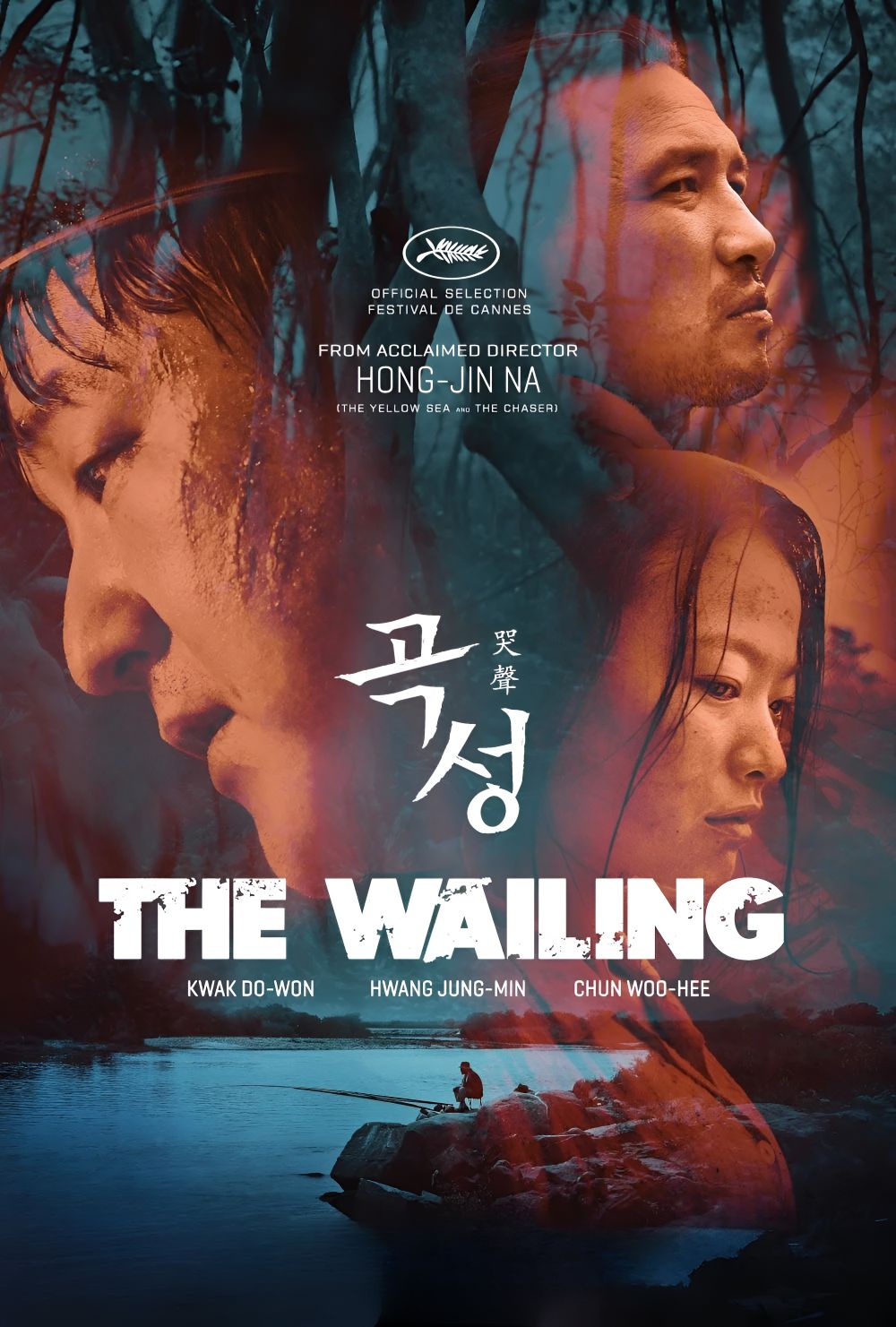
For about an hour, The Wailing pretends to be a detective story. There’s a series of bizarre deaths in a remote village, a suspect who fits nobody’s profile but everyone’s prejudices, a witness with a wild story, and a cop digging for the truth. Everything about Na Hong-jin’s 2016 film is structured like an investigation — interviews, evidence gathering, surveillance photos, a timeline of incidents. The twist is that this is a detective story where the crime scene is the entire world, the culprit may not be a person at all, and every tool the genre normally hands you to solve the case is precisely the thing that gets people killed. Watching it, you keep waiting for the reveal that ties everything together, and slowly it dawns on you: the movie has been quietly teaching you that some cases can’t be closed, and that a detective who can’t accept that is the most dangerous man in the film.
The setup is beautifully simple. In a small village called Gokseong (which gives the film its Korean title), people start getting sick. Then they start getting violent — wild-eyed, homicidal, creepier than your standard zombie by a wide margin. At the center of it all is Jong-goo, a chubby, cowardly, deeply ordinary local policeman played by Kwak Do-won, whose daughter Hyo-jin falls mysteriously ill after the family has a run-in with a stranger. Rumors quickly gather around that stranger, a Japanese man who lives alone in the mountains (Jun Kunimura), who fishes, photographs things he shouldn’t be photographing, and was reportedly seen at the scene of one of the killings. The village has already convicted him; Jong-goo, half-convinced and half-scared, decides to build the case, and the more evidence he collects, the worse everything gets.
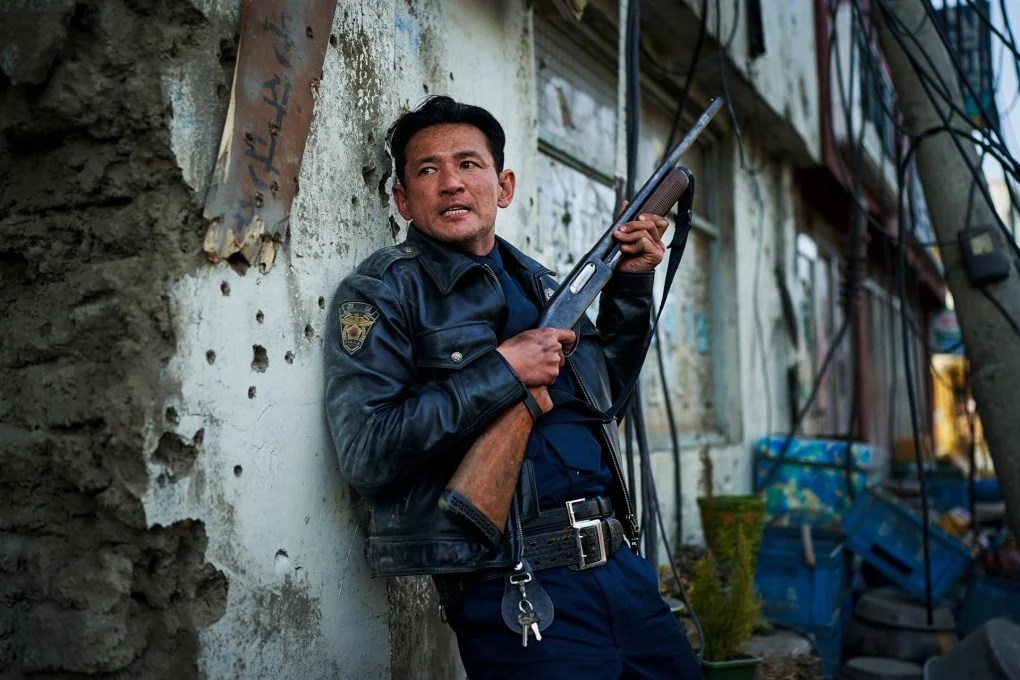
What makes The Wailing special isn’t the premise, though — it’s how Na stacks unreliable testimony on top of unreliable evidence until the whole movie feels like a case file with every page contradicting the last. You’ve got a shaman, Il-gwang (Hwang Jung-min, having an absolute blast), who performs one of the most electric exorcism sequences ever filmed, all drums and chanting and animal sacrifice, cross-cut with something else I won’t spoil — essentially an expert witness with his own competing theory. That sequence alone is worth the price of admission: a frantic, drum-driven standoff between two rituals playing out simultaneously, with Na cutting between them faster and faster until you realize he’s using suspense-film grammar to stage a theological argument. You’ve got a mysterious young woman in white (Chun Woo-hee), who shows up with her own version of events, a burned-down house, a zombie-looking guy in the rain, and a very unlucky police partner who keeps finding the worst possible things at the worst possible times.
The genius of the movie is that every one of these characters confidently testifies about what’s happening, and they can’t all be right. Is the Japanese man a demon? A ghost? Just a scapegoated outsider? Is the woman in white a guardian or the actual source of the evil? Is the shaman a fraud or the only person who knows what he’s doing? The film keeps handing you exhibits, then yanking them away — the procedural pleasure of gathering clues, weaponized against you. There’s a scene with photographs that made my stomach drop, a hair tie that functions as a gut-punch with zero gore, and an interview over a cigarette break that recontextualizes the entire first hour. Na shoots all of it in gorgeous, humid, rain-soaked widescreen — this is a beautiful film about terrible things, all green mountains, wet fields, and pale sunlight — and the unhurried pacing isn’t padding, it’s the point: it lets you settle into the village’s rhythm so that each new irregularity registers as a wrong note in a familiar song. The horror rarely announces itself; it’s just suddenly there, sitting in the frame, and half the time you notice it before the characters do.
The folklore texture deserves its own shout-out. Na reportedly built the film from real shamanic traditions, rural superstitions, and his own questions about why inexplicable suffering happens, and you feel that authenticity in every ritual scene. This isn’t Hollywood exorcism-by-numbers; the shamanism feels lived-in, transactional, dangerous, and the film even works in bits of everyday folk logic — the old rule that meeting someone’s gaze means you’ve seen a ghost, the black hair nailed to a door, the persistent Korean dread of the Japanese stranger as a carryover of historical wounds. The title itself points at the movie’s worldview — there’s an old belief that a spirit’s wail can possess the living — and the film is smart enough to treat belief, not just demons, as the thing doing damage. When an entire village decides someone is a monster, what happens next is horror regardless of the supernatural facts.
Performance-wise, this is Kwak Do-won’s movie. His Jong-goo is one of the great horror protagonists precisely because he’s not brave, not sharp, and not special — he’s a tired dad making guesses, and every wrong guess costs him. You watch a decent, dim man get dismantled piece by piece, and the film’s darkest trick is making you complicit in his worst decision. Jun Kunimura is remarkable in a role that requires him to be sinister, pitiable, and genuinely terrifying depending on which scene you’re watching — the man can shift the temperature of a room just by deciding whether to make eye contact. Hwang Jung-min goes full rock-star shaman and steals the middle of the movie, and Chun Woo-hee does extraordinary work with a character who has to work on two levels at once: every time she speaks, you’re simultaneously calmed by her and checking the frame for what she might really be.
Now, fair warnings. The pacing is slow, especially in the first hour, and the runtime is a hefty 156 minutes. If you need jump scares every ten minutes or a third act that explains itself, this will test you. There’s also animal harm on screen, which I know is a dealbreaker for some folks. And the ambiguity is total — people walk out having landed on completely opposite conclusions, and I genuinely think the film is more layered on a second viewing, since the dialogue is full of lines that read completely differently once you know how things shake out. But Na leaves one crucial scene open-ended on purpose, because the whole point is that certainty, in the face of real evil, is a luxury nobody gets.
And that’s what elevates The Wailing above most possession movies. It’s a horror film about epistemology, honestly — about how we decide what to believe, who benefits from our belief, and how being unable to choose can be the most dangerous state of all. The village looked at a stranger and closed its case; Jong-goo spends the whole film trying to close his, following every lead, consulting every expert, and the movie watches what each conclusion costs him. There’s a line near the end, about trusting versus doubting, that lands like a knife because the entire film has been secretly about that question. The scariest thing in The Wailing isn’t the demon; it’s the idea that you could do everything right and still lose everyone you love because you hesitated a moment too long.
So, where does it land? For my money, The Wailing is a masterpiece of modern horror and easily one of the best South Korean films of the 2010s — a decade that includes Train to Busan, The Handmaiden, and Parasite, which tells you how competitive that field is. It’s not a crowd-pleaser in the jump-scare sense; it’s a slow-burn, smoky, mystifying fever dream that rewards patience and punishes assumptions. Watch it late, watch it with subtitles, don’t look up anything beforehand, and let it mess with you. Most detective stories end with the case closed and the world set right; The Wailing ends with the file left open on the desk, because Na Hong-jin’s real subject was never whodunit — it was the hubris of assuming that every mystery owes you an answer. That open file is exactly what keeps the film wailing in your head long after it’s over.