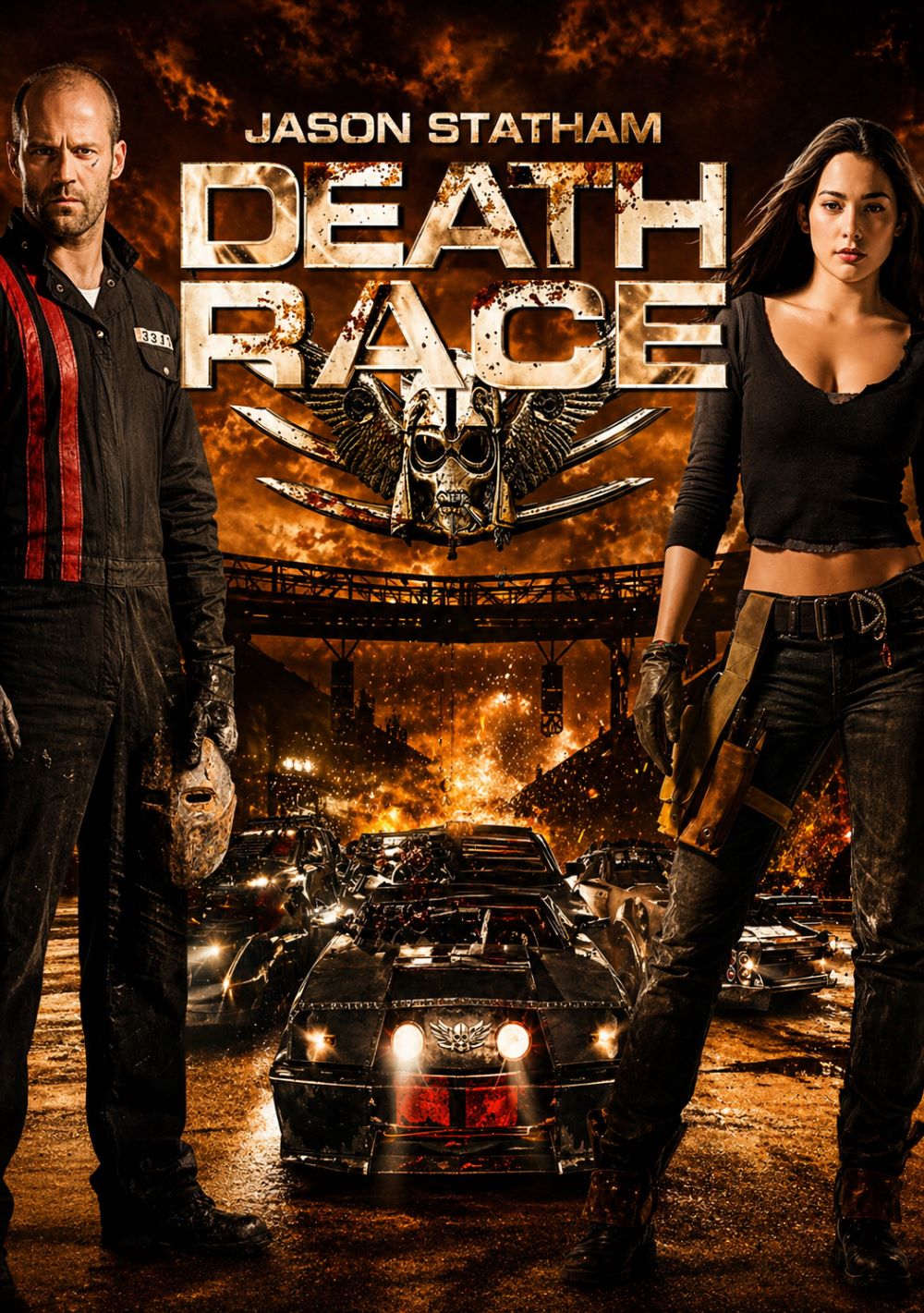
Guilty Pleasure No. 114: Death Race (dir. by Paul W.S. Anderson)


Death Race (2008) is the kind of movie that feels like it was engineered in a lab specifically to test how much nonsense an audience will tolerate as long as things explode every ten minutes. Directed by Paul W.S. Anderson, a filmmaker whose entire career seems built on the philosophy of “style over literally anything else,” the film doesn’t so much tell a story as it barrels through one at full speed, flipping off logic, subtlety, and occasionally even coherence along the way. And yet—this is the annoying part—it works. Not in a “this is a good film” sense, but in that grimy, late-night cable, “I probably shouldn’t be enjoying this as much as I am” way.

The premise is pure pulp: in a dystopian future where the economy has collapsed (because of course it has), prisons have turned into profit-generating entertainment hubs. The main attraction is the Death Race, a gladiatorial car battle where inmates drive weaponized vehicles and murder each other for the amusement of a bloodthirsty audience. Jason Statham plays Jensen Ames, a wrongfully convicted ex-racer forced to step into the role of a masked legend named Frankenstein. It’s as blunt and ridiculous as it sounds, and the movie never once tries to elevate it beyond that. There’s no pretense of social commentary that isn’t immediately undercut by another machine gun turret popping out of a car hood.

Anderson directs the whole thing like he’s permanently hopped up on energy drinks and early 2000s music video aesthetics. The camera is constantly moving, cutting, shaking, and occasionally losing track of what’s happening entirely. Action scenes are edited within an inch of their life, creating a sense of chaotic momentum that’s exciting in the moment but completely disposable five seconds later. It’s visual junk food—greasy, loud, and weirdly satisfying even when you know it’s terrible for you.

A huge part of why Death Race remains watchable—arguably the biggest reason—is the decision to cast Jason Statham in the lead. This is exactly the kind of role his entire screen persona was built for, and the film leans on that heavily. Statham doesn’t bring depth or complexity, but he brings something more valuable here: credibility. You believe he can survive this world. You believe he can drive, fight, and endure the endless barrage of chaos being thrown at him. In a movie this dumb, that kind of grounding goes a long way. Swap him out for a less naturally commanding actor, and the whole thing probably collapses under its own stupidity.

That’s not to say he’s delivering some kind of nuanced performance. He isn’t. He operates in that familiar Statham mode—minimal dialogue, maximum scowl, and a constant sense that he’s two seconds away from breaking someone’s arm. But that simplicity works in the film’s favor. He becomes the one stable element in an otherwise unhinged movie, a human anchor that keeps the madness from drifting into outright parody. The choice to center the film around him is one of the few decisions here that feels genuinely smart, even if everything surrounding it is chaos.

Then you’ve got Joan Allen, who plays the prison warden with a level of icy commitment that almost tricks you into thinking the movie has something deeper going on. She treats the Death Race like high art, which is both hilarious and oddly effective. There’s a strange tension between her seriousness and the film’s inherent stupidity that gives Death Race a bit more texture than it probably deserves. She’s acting in a better movie that doesn’t exist, and somehow that makes this one more watchable.

But let’s not kid ourselves—this is not a good film. The characters are paper-thin, the dialogue is aggressively functional, and the plot moves forward with the grace of a sledgehammer. Emotional beats land with a dull thud, and any attempt at stakes is drowned out by the next explosion or metal-on-metal collision. It’s the kind of movie where you can predict every major turn five minutes in advance and still not care because you’re too busy watching a car fire a missile at another car.

What makes Death Race oddly compelling, though, is how completely it commits to its own stupidity. There’s no wink to the audience, no self-aware humor trying to soften the edges. It plays everything straight, which paradoxically makes it feel more honest than a lot of “so bad it’s good” movies. It’s not trying to be clever or subversive—it just wants to show you armored cars smashing into each other while people scream and things explode. And on that level, it absolutely delivers.

There’s also something weirdly nostalgic about it. It feels like a relic of a very specific era of action filmmaking, where grit meant desaturated colors, shaky cameras, and protagonists who communicated exclusively through clenched jaws and short sentences. It’s pre-Mad Max: Fury Road, pre-the current wave of more thoughtfully constructed action cinema. Death Race exists in that awkward middle ground where filmmakers had access to bigger budgets and better effects but hadn’t quite figured out how to use them with any real finesse.

And yet, despite all its flaws—or maybe because of them—it’s entertaining. Not in a “this is a masterpiece” way, but in that guilty pleasure sense where you’re fully aware of how dumb it is and still having a good time. It’s a film that succeeds almost accidentally, powered by sheer momentum and a refusal to slow down long enough for you to think too hard about what you’re watching.

In the end, Death Race is a mess. A loud, clunky, overedited mess with delusions of intensity and a complete disregard for nuance. But it’s also a perfect example of a movie that’s entertaining despite itself. It shouldn’t work, and on paper, it really doesn’t. But between the explosions, the ridiculous premise, and—crucially—Statham’s perfectly calibrated presence, it finds a groove and sticks to it. You don’t respect it, you don’t admire it—but you kind of enjoy the hell out of it anyway.

Previous Guilty Pleasures

  1. Half-Baked
  2. Save The Last Dance
  3. Every Rose Has Its Thorns
  4. The Jeremy Kyle Show
  5. Invasion USA
  6. The Golden Child
  7. Final Destination 2
  8. Paparazzi
  9. The Principal
  10. The Substitute
  11. Terror In The Family
  12. Pandorum
  13. Lambada
  14. Fear
  15. Cocktail
  16. Keep Off The Grass
  17. Girls, Girls, Girls
  18. Class
  19. Tart
  20. King Kong vs. Godzilla
  21. Hawk the Slayer
  22. Battle Beyond the Stars
  23. Meridian
  24. Walk of Shame
  25. From Justin To Kelly
  26. Project Greenlight
  27. Sex Decoy: Love Stings
  28. Swimfan
  29. On the Line
  30. Wolfen
  31. Hail Caesar!
  32. It’s So Cold In The D
  33. In the Mix
  34. Healed By Grace
  35. Valley of the Dolls
  36. The Legend of Billie Jean
  37. Death Wish
  38. Shipping Wars
  39. Ghost Whisperer
  40. Parking Wars
  41. The Dead Are After Me
  42. Harper’s Island
  43. The Resurrection of Gavin Stone
  44. Paranormal State
  45. Utopia
  46. Bar Rescue
  47. The Powers of Matthew Star
  48. Spiker
  49. Heavenly Bodies
  50. Maid in Manhattan
  51. Rage and Honor
  52. Saved By The Bell 3. 21 “No Hope With Dope”
  53. Happy Gilmore
  54. Solarbabies
  55. The Dawn of Correction
  56. Once You Understand
  57. The Voyeurs 
  58. Robot Jox
  59. Teen Wolf
  60. The Running Man
  61. Double Dragon
  62. Backtrack
  63. Julie and Jack
  64. Karate Warrior
  65. Invaders From Mars
  66. Cloverfield
  67. Aerobicide 
  68. Blood Harvest
  69. Shocking Dark
  70. Face The Truth
  71. Submerged
  72. The Canyons
  73. Days of Thunder
  74. Van Helsing
  75. The Night Comes for Us
  76. Code of Silence
  77. Captain Ron
  78. Armageddon
  79. Kate’s Secret
  80. Point Break
  81. The Replacements
  82. The Shadow
  83. Meteor
  84. Last Action Hero
  85. Attack of the Killer Tomatoes
  86. The Horror at 37,000 Feet
  87. The ‘Burbs
  88. Lifeforce
  89. Highschool of the Dead
  90. Ice Station Zebra
  91. No One Lives
  92. Brewster’s Millions
  93. Porky’s
  94. Revenge of the Nerds
  95. The Delta Force
  96. The Hidden
  97. Roller Boogie
  98. Raw Deal
  99. Death Merchant Series
  100. Ski Patrol
  101. The Executioner Series
  102. The Destroyer Series
  103. Private Teacher
  104. The Parker Series
  105. Ramba
  106. The Troubles of Janice
  107. Ironwood
  108. Interspecies Reviewers
  109. SST — Death Flight
  110. Undercover Brother
  111. Out for Justice
  112. Food Wars!
  113. Cherry

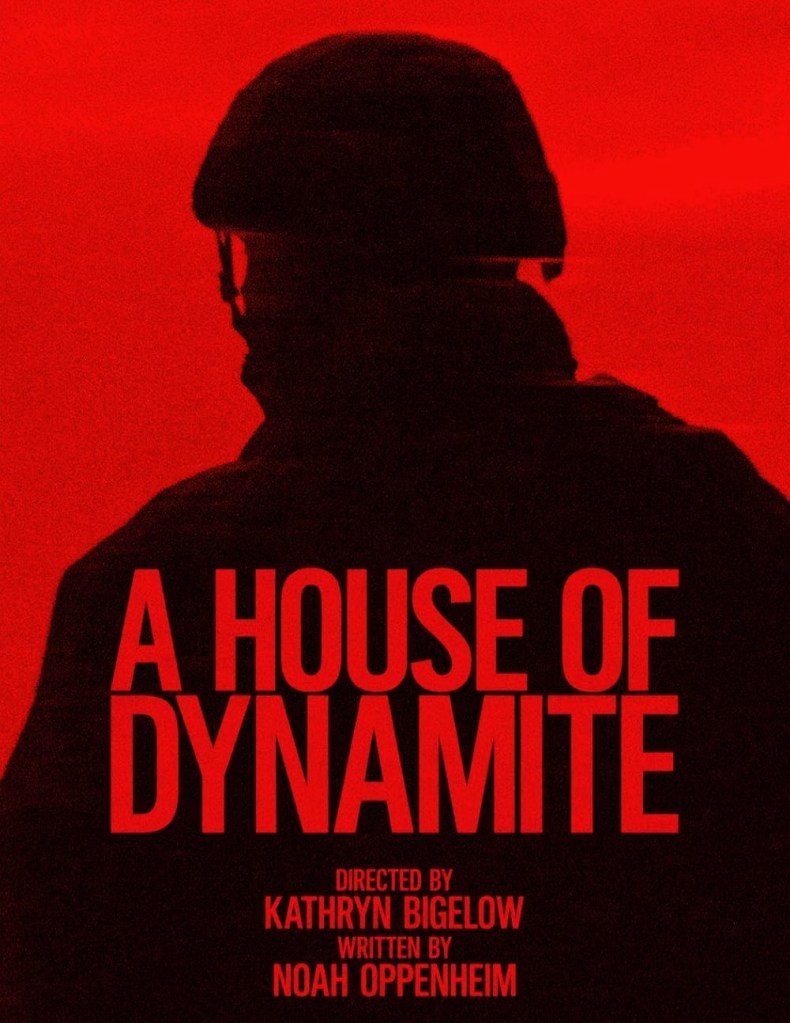
Horror Review: A House of Dynamite (dir. by Kathryn Bigelow)


“So it’s a fucking coin toss? That’s what 50 billion dollars buys us?” — Secretary of Defense Reid Baker

The end of the Cold War was supposed to close a chapter of fear. With the superpowers stepping back from the brink, the world briefly believed it had entered an era of stability. Yet that promise never held. The weapons remained, the rivalries adapted, and the global machinery of deterrence continued to hum beneath the surface. Kathryn Bigelow’s A House of Dynamite faces this reality head-on, transforming the mechanics of modern nuclear defense into something unnervingly human. On the surface, it plays as a high-tension political technothriller, but beneath that precision lies a deeply existential horror film—one built not on shadows or monsters, but on daylight, competence, and the narrow margins of human fallibility.

The premise is piercingly simple. An unidentified missile is detected over the Pacific. Analysts assume it’s a test or a glitch—another false alarm in a world overflowing with them. But within minutes, as conflicting data streams converge, what seemed routine begins to look real. The film unfolds in real time over twenty excruciating minutes, charting the reactions of those charged with interpreting and responding to the potential catastrophe. Bigelow divides the film into three interwoven perspectives: the White House Situation Room, the missile intercept base at Fort Greely, and the President’s mobile command aboard Marine One. The structure allows tension to grow from every direction at once, each perspective magnifying the other until the screen feels ready to collapse under its own pressure.

Capt. Olivia Walker (Rebecca Ferguson), commanding officer of the Situation Room, anchors the story with calm professionalism that gradually frays into disbelief. Ferguson’s performance is clear-eyed and tightly modulated—precise, disciplined, and quietly devastating. She stands as the rational center inside chaos, her composure the last gesture of control in a world that no longer follows reason.

Over her is Adm. Mark Miller (Jason Clarke), Director of the Situation Room, who represents the institutional embodiment of confidence. Clarke plays him with methodical restraint, a man who trusts procedure long after it stops earning trust. Miller’s authority is both comforting and horrifying: a portrait of leadership built on ritual rather than certainty.

At Fort Greely, Anthony Ramos brings an intimate immediacy as the officer charged with the missile intercept. His scenes hum with kinetic dread—the physical execution of decisions made thousands of miles away. Through him, the film captures the most primal kind of fear: acting when hesitation could mean extinction, knowing that success and failure are separated only by chance.

The President, portrayed by Idris Elba, spends much of the crisis in motion—first within the cocoon of the presidential limousine, and later, aboard Marine One as it carves through blinding daylight. Elba gives a performance of subtle, steady erosion. At first, he embodies unshakeable calm, a figure of poise and authority; but as the situation deepens, his steadiness wanes. Words become shorter, pauses longer. Every decision carries consequences too vast for resolution. It is a measured, understated portrait of power giving way to human uncertainty.

Bigelow’s direction is stripped of ornament and focused on precision. Barry Ackroyd’s cinematography heightens the claustrophobia of command centers—the sterile light, the reflective glass, the sense that every surface observes its occupants—while his exterior scenes pierce with harsh brightness, suggesting that no sanctuary exists under full exposure. Kirk Baxter’s editing maintains an unrelenting pulse, cutting with mathematical precision while preserving the eerie stillness of the moments where no one dares to speak.

​A House of Dynamite also shows how even with the most competent experts—military, intelligence, and political—working to manage an escalating crisis, there is no path to victory. The professionals at every level stop seeking to prevent the worst and instead focus on saving what they can when the worst becomes inevitable. The film’s scariest revelation is not the potential for destruction, but the paralysis that intelligence creates. If the brightest, most disciplined people in the world cannot find an answer, what happens when power falls into the hands of those less prepared or less rational? In its quiet way, the film poses that question that we see more and more each day on the news and on social media and we are left with silence and realization of the horror of it all.

Despite its precision, the film isn’t without flaws. Bigelow’s triptych structure—cutting between the three perspectives—works brilliantly to escalate tension, yet the repetition of similar beats slightly blunts the impact. Each segment revisits the same crisis rhythms—a data discrepancy, an argument over authority, another uncertain update—sometimes slowing the natural momentum. While the repetition underlines the futility of bureaucratic systems in chaos, the transitions don’t flow as fluidly as the rest of the film’s airtight craftsmanship. The result is a film that is gripping overall, occasionally uneven in rhythm, but never less than absorbing.

When the final minutes arrive, Bigelow declines to deliver resolution. No mushroom clouds, no catharsis. The President sits in Marine One, head down with the weight of the world on his shoulders as he contemplates his options in the Black Book (options in how to retaliate) and knowing that he has no good choices in front of him. The world remains suspended between survival and oblivion, and the silence that follows feels heavier than sound. The ending resists closure because endings, in the nuclear age, are an illusion—the fear continues no matter what happens next.

In a year crowded with strong horror releases—SinnersWeapons, The Long Walk and Frankenstein among them—A House of Dynamite stands apart. Dressed in the crisp realism of a technothriller, it’s a horror film defined by procedure, light, and silence. Bigelow builds terror from competence, from the steady voices and confident gestures of people trying to manage the unmanageable. This is not the chaos of fiction but the dread of reality, a reminder that the systems meant to preserve and protect might one day fail to deliver on its promise. For all its precision and restraint, A House of Dynamite shakes in the memory long after it ends—the year’s most quietly terrifying film.

Nuclear Close Calls: The situation and question brought up in the film has basis in history as there has been many instances of close calls and false alarms. The film itself doesn’t confirm that the missile detonated, but the implications in past confirmed events just shows how close the world has been to a completed catastrophe.

Film Review: Public Enemies (dir by Michael Mann)


2009’s Public Enemies is a portrait of the battle for the soul and imagination of America.

The films take place during the Great Depression.  With Americans struggling to pay their bills and many citizens out-of-work and feeling desperate, a new breed of folk hero has emerged.  Men like my distant relative Pretty Boy Floyd (Channing Tatum) and Alvin Karpis (Giovanni Ribisi) may be criminals who make their living by robbing banks but, to a nation of angry people who feel like they’ve been forgotten by the government and betrayed by the wealthy, they’re rebels who are challenging the system.  They are viewed as being modern-day Robin Hoods, even though very few of them actually bother to give the money that they steal back to the poor.

John Dillinger (Johnny Depp) is perhaps the most famous of the criminals who have been declared a “public enemy” by the FBI.  The handsome and charismatic Dillinger becomes almost a living legend, the man who cannot be captured by law enforcement.  He becomes a folk hero but with the twist that his own death seems inevitable.  Dillinger lives by his own set of rules and the press loves him even as they hungrily anticipate his violent end.

Pursuing Dillinger and the other so-called public enemies is a young FBI agent named Melvin Purvis (Christian Bale).  Purvis’s job is not only to capture or eliminate men like Dillinger.  It’s also to somehow figure out a way to replace them in the public’s imagination.  Through the use of what was then-considered to be revolutionary techniques (like fingerprinting and phone taps), Purvis tracks down one public enemy after another and soon, he’s becoming as much of a folk hero as the people that he’s pursuing.  If Dillinger and his cohorts represent the ultimate rebellion against an ineffectual system, Purvis and his success suggest that maybe the system actually can get something accomplished.  Unfortunately, for Purvis, he not only has to deal with the challenge of capturing Dillinger but also with the growing jealousy of his publicity-hungry boss, J. Edgar Hoover (Billy Crudup).  As is typical of the heroes of Michael Mann’s film, Dillinger and Purvis may be on different sides of the law but they have more in common than they realize.  Neither one can trust the people that they’re working with.

I remember that I was really excited about Public Enemies when it was first released in 2009.  I’m fascinated by the Depression-era outlaws and Dillinger’s story is certainly an interesting one.  (I’ve always enjoyed the theory that Dillinger faked his death, even though I don’t believe it for a second.)  Michael Mann seemed like the perfect director for the material and Johnny Depp seemed like ideal casting.  I have to admit that I was a little bit disappointed in the film itself, which was poorly paced and stuck so closely to the facts of the case that it led me to realize that Dillinger will always be more interesting as a legend than an actual person.  (I’ll concede that was probably the film’s point.)  There were moments of brilliance in the film.  The scene where Dillinger escaped from custody was wonderfully done.  Stephen Graham’s unhinged performance as Baby Face Nelson was excellent.  Johnny Depp had the right look for Dillinger but I have to admit that I found myself a little bit bored with Christian Bale’s Melvin Purvis.

Looking back today, though, the film feels almost prophetic.  That may seem like an odd thing to say about a film set in the past but Public Enemies portrait of an America caught between celebrating the rule of law and the excitement of rebellion feels very relevant to what’s happening today.  In retrospect, Public Enemies is a portrait of the contradiction at the heart of America, a country with a culture of both rebellion and loyal patriotism.  Public Enemies portrays a battle the continues to this day.

Public Enemies (2009, dir by Michael Mann, DP: Dante Spinotti)

14 Days of Paranoia #9: Chappaquiddick (dir by John Curran)


On July 18th, 1969, while American astronauts were preparing to land on and then take their first steps on the Moon, a 28 year-old woman named Mary Jo Kopechne attended a party on Chappaquiddick Island in Massachusetts.

A former aide to Robert Kennedy who was reportedly devastated by his assassination, Mary Jo was one of several former campaign workers who gathered at an isolated cabin that night.  According to the others at the party, Mary Jo (who was described as being a devout Catholic who rarely drank) was one of the first people to leave the party.  She left with another guest.  The next morning, that guest’s car was found overturned in Poucha Pond.  Dead in the backseat was Mary Jo Kopechne, who had suffocated as the car slowly filled up with water.  It was later determined that she had been alive and trapped in the car for hours before dying.  The owner of the car was back at his hotel.  He had returned there after crashing his car and, while he had taken a shower and combed his hair and called his father, he had not bothered to call the police.

Normally, a driver in this situation would be in serious legal jeopardy.  Along with having left the scene of the accident, he also left Mary Jo to die.  It was generally agreed that if he had called the police within an hour of the accident occurring, Mary Jo could have been saved.  However, because he was Ted Kennedy and the last remaining of the fabled Kennedy brothers and a man who many expected would someday be president, he was given a slap on the wrist and the death of Mary Jo would be forever described as being a “Kennedy tragedy” as opposed to a Kopechne tragedy.

Not surprisingly, there has been a lot of speculation about what had happened in the moments leading up to the crash.  Like his brothers, Ted Kennedy was a notorious and reckless womanizer.  Unlike his brothers, Ted also had a reputation for being a heavy drinker.  Some went as far as to accuse Ted of deliberately murdering Mary Jo, as if the actions that Ted later admitted to were not, in themselves, already bad enough.  While people may disagree on the circumstances that led to the accident, it is generally agreed that, if Ted had been anyone other than a Kennedy, he would have served time in prison.  The incident ended Ted’s presidential dreams but it didn’t keep him from being described as being the “lion of the Senate” when he died in 2010.  Indeed, when Ted died, many people on twitter expressed their shock as they read or heard about Mary Jo Kopechne for the first time in their lives.

(In 2010, Mary Jo would have been seventy years old.)

Obviously, no one was going to make a movie about Mary Jo Kopechne’s death while Ted was still living.  Indeed, even after Ted died, it still took seven more years for the story to be turned into a film and producer Byron Allen struggled to even book the film in theaters.  2017’s Chappaquiddick stars Jason Clarke as Ted and, briefly, Kate Mara as Mary Jo.  The film speculates as to what happened that night and it probably gets fairly close to the truth.  The accident is an accident, a result of Ted freaking out when a cop stops him for speeding and sees him with a woman who isn’t his wife.  Ted, who is portrayed as being an immature manchild, turns to his handlers and then his family for help.  His fails to call the authorities because, to Ted, there is no greater authority than his abusive father (Bruce Dern).

For the most part, Ted passively sits by as associates of his late brothers — including Ted Sorenson (Taylor Nichols, giving the film’s strongest performance), Joe Gargan (Ed Helms), and Paul Markham (Jim Gaffigan) — take over his defense and carefully craft his every response.  Ted’s attempts to provide input are shot down and it’s made clear that his job is to shut up and concentrate on returning the Kennedys to the White House.  The film’s best scenes feature Sorenson growing frustrated at all of Ted’s mistakes.  Very little concern is shown for the fact that Mary Jo Kopechne, a Kennedy true believer, is dead due to Ted’s recklessness.  When she was alive, Mary Jo was held up as a symbol of the Kennedy youth.  When she died, she was just viewed as being an obstacle to keeping the Kennedys from reaching the power to which they felt entitled.

As you can probably guess, Ted Kennedy does not come off particularly well in this film.  At his best, he’s a wimp who is struggling with a legacy of which he knows he’s not worthy.  At his worst, he is pathologically self-absorbed and incapable of feeling empathy for the woman he left to drown in the backseat of his car.  Both he and Mary Jo and ultimately the voters who are expected to reelect him even after he leaves Mary Jo to die are ultimately portrayed as just being pawns of the shadowy men who lurk behind the scenes of every political operation.

It’s not a happy film and it certainly has its flaws but it provides an important service, reminding viewers that death of Mary Jo Kopchene was more than just as a “Kennedy tragedy.”

14 Days of Paranoia:

  1. Fast Money (1996)
  2. Deep Throat II (1974)
  3. The Passover Plot (1976)
  4. The Believers (1987)
  5. Payback (1999)
  6. Lockdown 2025 (2021)
  7. No Way Out (1987)
  8. Reality (2023)

Film Review: The Caine Mutiny Court-Martial (dir by William Friedkin)


The Caine Mutiny Court-Martial is a film that I wanted to like more than I actually did.

The movie, which is based on a play by Herman Wouk (which was itself based on a novel by Wouk that was adapted into an Oscar-nominated film in 1954), takes place in a Naval courtroom.  Lt. Steven Maryk (Jake Lacey) is on trial, accused of mutiny against his commanding officer.  Maryk claims that, when the ship sailed into a storm, his commanding officer, Philip Francis Queeg (Kiefer Sutherland), was giving orderss that put the entire ship at risk.  With the support of the officers, Maryk relieved Queeg of command.  Maryk claims that he did so with the knowledge that it would lead to him being court-martialed.

Maryk is assigned Lt. Greenwald (Jason Clarke) as his defense counsel.  Greenwald is not happy with his assignment because he think that Maryk is guilty and he believes in the chain of command.  When Maryk and his fellow officers claim that Queeg was showing signs of mental instability, Greenwald wonders how they came to that conclusion.  Whereas Maryk and his fellow officers, including Keith (Tom Riley) and Keefer (Lewis Pullman), claim that Queeg was dangerously unstable, Greenwald sees an insecure commander who was abandoned by his men.  Greenwald comes to realize that keeping Maryk out of the brig will mean destroying Queeg on the stand.

As I said, I wanted to like this film more than I actually did.  The Caine Mutiny Court-Martial was the final film to be directed by William Friedkin.  Friedkin started his career by directing adaptations of plays like The Birthday Party and The Boys In The Band, so another theatrical adaptation does feel like an appropriate bookend for a legendary career.  Friedkin’s best films featured troubled and somewhat obsessive individuals, people who are almost addicted to taking risks.  That’s certainly an accurate description of several of the characters in The Caine Mutiny Court-Martial, from Queeg to Keefer to even Greenwald himself.  After Friedkin passed away in August, I found myself really hoping that The Caine Mutiny Court-Martial would be one final brilliant Friedkin film.

There’s a lot of good things to be said about The Caine Mutiny Court-Martial, including the fact that Jason Clarke is well-cast as Lt. Greenwald.  But, in the end, The Caine Mutiny Court-Martial is essentially a filmed play and, despite a camera that moves frequently, it all feels rather stagey and, at a time, a bit too theatrical.  As good as Clarke is, some other members of the cast can’t break free of the film’s staginess and their performances often feel disappointingly superficial.  This is especially true of Monica Raymund as the prosecutor and, surprisingly, Kiefer Sutherland as Queeg.  Sutherland, who, when he was younger, would have been the ideal pick for the role of Lt. Keefer, gives an overly mannered performance as Queeg, one that is all tics and nerves but with little of the vulnerability that Humphrey Bogart brought to the role in the 1954 film.

Friedkin’s The Caine Mutiny Court-Martial takes place in 2022, as opposed to the World War II setting of Wouk’s original novel.  This does lead to an interesting subtext, as Friedkin’s version of the story is set during a time when many people are no longer confident in America’s military leadership.  (Wouk’s novel and play came out while America was still feeling confident after the victory of the Allies in World War II.)  Friedkin takes a direct approach to the material, allowing the audience to decide for themselves whether Maryk did the right thing.

It’s a solid enough film but one that never quite escapes its stage origins.  Friedkin’s respect for the material comes through, even if the film isn’t totally successful.

October True Crime: Texas Killing Fields (dir by Ami Canaan Mann)


The so-called Texas Killing Fields are a stretch of land situated off of Interstate-45 and about 26 miles southeast of Houston.  Despite being surrounded by oil refineries and being near one of Texas’s busier interstates, it’s a location where one can easily disappear.  Since 1971, over 30 bodies have been found in the Texas Killing Fields, the majority of them being girls and young women.  Many of them came from the surrounding area but others were last seen far away from Houston.  Kelli Cox, for instance, disappeared from Denton.  Jessica Cain was last seen in a suburb of Fort Worth.  Michelle Garvey disappeared from Connecticut, just for her body to later be discovered in the Texas Killing Fields.

Because of the number of bodies and the length of time, it’s believed that multiple serial killers use the killing fields as a dumping ground for their victims.  Over the years, there’s been many suspects and a few convictions.  Most recently, a trucker named William Reece was convicted of three of the Killing Fields murders.  Another person convicted of committing two of the murders, Michael Self, is now believed to have been innocent and to have only confessed after being tortured by the police.  Unfortunately, Self died in prison while waiting for his appeal to be heard.

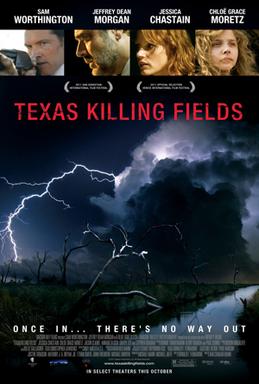
The 2011 film, Texas Killing Fields, is very loosely based on the murders and the area’s reputation for being a serial killer dumping ground.  Sam Worthington plays Detective Mike Souder and Jeffrey Dean Morgan plays his partner, Detective Brian Heigh.  (The characters are based on real-life detectives Brian Goetschius and Mike Land.)  Brian is originally from New York and is a devout Catholic who views his work as almost being a holy crusade.  Mike is from Texas and is a bit more cynical.  He’s not happy that Brian insists on helping out Mike’s ex-wife, Detective Pam Stall (Jessica Chastain), whenever a body is found in Pam’s jurisdiction.

The discovery of a dead sex worker leads to Mike and Brian pursuing two pimps (played by Jason Clarke and Jon Eyez).  However, it soon becomes apparent that the pimps aren’t the only murderers stalking the area and using the fields as a dumping ground.  A young mother is attacked in her house and, when interrogated by Mike and Brian, demands to know why they aren’t out on the streets, looking for the men who attacked her.  Later, a mysterious phone call leads Mike, Brian, and Pam out to the killing fields, where they discover another body.

While this is going on, Brian also tries to look after Anne Sliger (Chloe Grace Moretz), a 12 year-old girl who spends her time wandering around town because it’s preferable to spending any time at her home with her mother (Sheryl Lee) or her mother’s creepy boyfriend (Stephen Graham).  When Anne is kidnapped, Brian and Mike head into the Killing Fields to find her.

Directed by Ami Canaan Mann, The Texas Killing Fields is an atmospheric film in which every frame is full of a sense of dread.  Much as David Fincher did with Zodiac, Mann creates a feeling of a world that has been taken over by evil.  Unfortunately, the film itself gets bogged down with a few subplots that don’t really go anywhere.  (Jessica Chastain’s character and her relationship with Mike felt somewhat superfluous.)  As well, the film’s examination of both Mike’s atheism and Brian’s Catholicism felt a bit shallow at best, as if it was added at the last minute to try to give this thriller some theological heft.  The identity of all the killers is pretty obvious from the start.  That said, Ami Canaan Mann gets good performances out of her cast and the action scenes are well-executed.

As a final note, the film was not actually shot in the actual Texas Killing Fields.  Instead, much like the same year’s Killer Joe and 2013’s Dallas Buyers Club, it was filmed in Louisiana and, to be honest, it looks like it was filmed there as well.  There’s little about the film that feels authentically Texan, though it does do a good job of capturing the atmosphere of the bayous.

The Alliance of Women Film Journalists Honor Nomadland


The Alliance of Women Film Journalists have announced that their pick for the best of 2020 is Nomadland.  Just as the AWFJ did with their nominations, they announced the winners in an exclusive for Variety.  Fear not, though — my picks for the best of 2020 will be released exclusively to this site.  Two can play at this game.

(I joke, of course.  Ever since Clayton Davis took over, Variety’s Oscar coverage has been wonderful and the AWFJ deserves a lot of credit for having categories that are a bit more interesting than the usual stuff.)

Anyway, here’s the winners!

AWFJ BEST OF AWARDS

(These awards are presented to women and/or men without gender consideration)

Best Film

  • “Minari” (A24)
  • “Never Rarely Sometimes Always” (Focus Features)
  • “Nomadland” (Searchlight Pictures) – WINNER
  • “One Night in Miami” (Amazon Studios)
  • “Promising Young Woman” (Focus Features)
  • “The Trial of the Chicago 7” (Netflix)

Best Director 

  • Emerald Fennell, “Promising Young Woman” (Focus Features)
  • Regina King, “One Night in Miami” (Amazon Studios)
  • Kelly Reichardt, “First Cow” (A24)
  • Aaron Sorkin, “The Trial of the Chicago 7” (Netflix)
  • Chloé Zhao, “Nomadland” (Searchlight Pictures) – WINNER

Best Actor

  • Riz Ahmed, “Sound of Metal” (Amazon Studios)
  • Chadwick Boseman, “Ma Rainey’s Black Bottom” (Netflix) – WINNER
  • Delroy Lindo, “Da 5 Bloods” (Netflix)

Best Actress 

  • Viola Davis, “Ma Rainey’s Black Bottom” (Netflix)
  • Vanessa Kirby, “Pieces of a Woman” (Netflix)
  • Frances McDormand, “Nomadland” (Searchlight Pictures) – WINNER
  • Carey Mulligan, “Promising Young Woman” (Focus Features)

Best Actor in a Supporting Role 

  • Sacha Baron Cohen, “The Trial of the Chicago 7” (Netflix)
  • Bill Murray, “On the Rocks” (A24/Apple TV Plus)
  • Leslie Odom Jr, “One Night in Miami” (Amazon Studios) – WINNER

Best Actress in a Supporting Role

  • Maria Bakalova, “Borat Subsequent Moviefilm” (Amazon Studios)
  • Ellen Burstyn, “Pieces of a Woman” (Netflix)
  • Amanda Seyfried, “Mank” (Netflix)
  • Yuh-Jung Youn, “Minari” (A24) – WINNER

Best Screenplay, Original 

  • “Mank” (Netflix) – Jack Fincher
  • “Promising Young Woman” (Focus Features) – Emerald Fennell – WINNER
  • “The Trial of the Chicago 7” (Netflix) – Aaron Sorkin

Best Screenplay, Adapted

  • “First Cow” (A24) – Kelly Reichardt and Jonathan Raymond
  • “Nomadland” (Searchlight Pictures) – Chloé Zhao – WINNER
  • “One Night in Miami” (Amazon Studios) – Kemp Powers

Best Animated Film

  • “Over the Moon” (Netflix)
  • “Soul” (Pixar) – WINNER
  • “Wolfwalkers” (Apple TV Plus/GKIDS)

Best Cinematography 

  • “Mank” (Netflix) – Erik Messerschmidt
  • “Nomadland” (Searchlight Pictures) – Joshua James Richards – WINNER
  • “One Night in Miami” (Amazon Studios) – Tami Reiker

Best Editing 

  • “One Night in Miami” (Amazon Studios) – Tariq Anwar
  • “Nomadland” (Searchlight Pictures) – Chloé Zhao – WINNER
  • “The Trial of the Chicago 7” (Netflix) – Alan Baumgarten

Best Documentary 

  • “All In: The Fight for Democracy” (Amazon Studios) – WINNER (tie)
  • “Athlete A” (Netflix)
  • “Crip Camp” (Netflix)
  • “The Painter and the Thief” (Neon) – WINNER (tie)
  • “Time” (Amazon Studios)

Best Non-English-Language Film

  • “Another Round” – Denmark – WINNER
  • “Beanpole” – Russia
  • “The Mole Agent” – Chile
  • “The Painted Bird” – Czech Republic

Best Ensemble Cast – Casting Director

  • “Da 5 Bloods” (Netflix) – Kim Coleman
  • “One Night in Miami” (Amazon Studios) – Kimberly Hardin – WINNER (tie)
  • “The Trial of the Chicago 7” (Netflix) – Francine Maisler – WINNER (tie)

EDA FEMALE FOCUS AWARDS

(These awards honor WOMEN only, excluding women who’ve won the category in the Best Of Awards.

Best Woman Director 

  • Emerald Fennell, “Promising Young Woman” (Focus Features) – WINNER
  • Eliza Hittman, “Never Rarely Sometimes Always” (Focus Features)
  • Regina King, “One Night in Miami” (Amazon Studios)
  • Channing Godfrey Peoples, “Miss Juneteenth” (Vertical Entertainment)
  • Kelly Reichardt, “First Cow” (A24)
  • Chloé Zhao, “Nomadland” (Searchlight Pictures)

Best Woman Screenwriter 

  • Radha Blank, “The Forty-Year-Old Version” (Netflix) – WINNER
  • Emerald Fennell, “Promising Young Woman” (Focus Features)
  • Eliza Hittman, “Never Rarely Sometimes Always” (Focus Features)
  • Chloé Zhao, “Nomadland” (Searchlight Pictures)

Best Animated Female 

  • “22” in “Soul” (Pixar) – portrayed by Tina Fey – WINNER
  • “Mebh Óg MacTíre” in “Wolfwalkers” (Apple TV Plus/GKIDS) – portrayed by Eva Whittaker
  • “Robyn Goodfellowe” in “Wolfwalkers” (Apple TV Plus/GKIDS) – portrayed by Honor Kneafsey

Best Woman’s Breakthrough Performance 

  • Radha Blank, “The Forty-Year-Old Version” (Netflix)
  • Sidney Flanigan, “Never Rarely Sometimes Always” (Focus Features) – WINNER
  • Helena Zengel, “News of the World” (Universal Pictures)

Outstanding Achievement by a Woman in the Film Industry 

  • All female heads of film festivals who successfully transitioned from live to online events to sustain festival culture through the pandemic.
  • All indie female writers and directors who normalized abortion as a vital element in the cultural conversation in films such as “Saint Frances,” “Never Rarely Sometimes Always,” “Sister of the Groom,” “Once Upon a River,” The Glorias” and others. – WINNER
  • Emerald Fennell for creating a film that forces empathy to put an end to the toxic sexist rape culture pervasive through modern history.
  • Sophia Loren for a brilliant comeback at age 86 in “The Life Ahead,” the latest in her record-setting career. Loren won a Best Actress Oscar in 1962 for “Two Women” and was the first actor to win for a foreign language movie. She was also nominated in 1965 for “Marriage Italian Style.” If she’s nominated in 2021, it will be a 56-year span between her two most recent nominations – the current record is held by Henry Fonda, who had a 41-year gap between nominations.

EDA SPECIAL MENTION AWARDS

Grand Dame Award for defying ageism.

  • Ellen Burstyn, “Pieces of a Woman” (Netflix)
  • Tsai Chin, “Lucky Grandma” (Good Deed Entertainment)
  • Sophia Loren, “The Life Ahead” (Netflix) – WINNER
  • Frances McDormand, “Nomadland” (Searchlight Pictures)

Most Egregious Lovers’ Age Difference Award 

  • “The Burnt Orange Heresy” (Sony Pictures Classics) – Elizabeth Debicki and Claes Bang (23 years)
  • “Devil All the Time” (Netflix) – Riley Keough and Jason Clarke (20 years)
  • “Mank” – Amanda Seyfried and Charles Dance (39 years), Gary Oldman (27 years)
  • “Tenet” – Elizabeth Debicki and Kenneth Branagh (30 years) – WINNER

She Deserves A New Agent Award 

  • Rose Byrne, “Like a Boss” (Paramount Pictures)
  • Tiffany Haddish, “Like a Boss” (Paramount Pictures)
  • Katie Holmes, “Dare to Dream” (Gravitas Ventures)
  • Uma Thurman, “The War with Grandpa” (101 Studios) – WINNER

Most Daring Performance Award 

  • Maria Bakalova, “Borat Subsequent Moviefilm’ (Amazon Studios) – WINNER
  • Haley Bennett, “Swallow” (IFC Films)
  • Vanessa Kirby, “Pieces of a Woman” (Netflix)
  • Elisabeth Moss, “The Invisible Man” (Universal Pictures)
  • Carey Mulligan, “Promising Young Woman” (Focus Features)

Time Waster Remake or Sequel Award 

  • “The Croods: A New Age” (DreamWorks Animation)
  • “Doolittle” (Universal Pictures) – WINNER
  • “Rebecca” (Netflix)

Here Are The 2020 Nominations of the Alliance of Women Film Journalists!


Earlier on Wednesday, the Alliance of Women Film Journalists announced their nominations for the best and the worst of 2020.  The nominations were announced in the pages of Variety and you can read more about them by clicking here.

Nomadland led with the most nominations which seems to be the way that the awards season is going to go.  Personally, when it comes to the AWFJ, I’m always more interested in the snarky nominations than in the serious ones.  For instance, the nominees for the She Deserves A New Agent award always leave me thinking.

The nominations are below.  The winners will be announced on January 4th.

AWFJ BEST OF AWARDS
(These awards are presented to women and/or men without gender consideration)

Best Film
“Minari” (A24)
“Never Rarely Sometimes Always” (Focus Features)
“Nomadland” (Searchlight Pictures)
“One Night in Miami” (Amazon Studios)
“Promising Young Woman” (Focus Features)
“The Trial of the Chicago 7” (Netflix)

Best Director
Emerald Fennell, “Promising Young Woman” (Focus Features)
Regina King, “One Night in Miami” (Amazon Studios)
Kelly Reichardt, “First Cow” (A24)
Aaron Sorkin, “The Trial of the Chicago 7” (Netflix)
Chloé Zhao, “Nomadland” (Searchlight Pictures)

Best Actor
Riz Ahmed, “Sound of Metal” (Amazon Studios)
Chadwick Boseman, “Ma Rainey’s Black Bottom” (Netflix)
Delroy Lindo, “Da 5 Bloods” (Netflix)

Best Actress
Viola Davis, “Ma Rainey’s Black Bottom” (Netflix)
Vanessa Kirby, “Pieces of a Woman” (Netflix)
Frances McDormand, “Nomadland” (Searchlight Pictures)
Carey Mulligan, “Promising Young Woman” (Focus Features)

Best Actor in a Supporting Role
Sacha Baron Cohen, “The Trial of the Chicago 7” (Netflix)
Bill Murray, “On the Rocks” (A24/Apple TV Plus)
Leslie Odom Jr, “One Night in Miami” (Amazon Studios)

Best Actress in a Supporting Role
Maria Bakalova, “Borat Subsequent Moviefilm” (Amazon Studios)
Ellen Burstyn, “Pieces of a Woman” (Netflix)
Amanda Seyfried, “Mank” (Netflix)
Yuh-Jung Youn, “Minari” (A24)

Best Screenplay, Original
“Mank” (Netflix) – Jack Fincher
“Promising Young Woman” (Focus Features) – Emerald Fennell
“The Trial of the Chicago 7” (Netflix) – Aaron Sorkin

Best Screenplay, Adapted
“First Cow” (A24) – Kelly Reichardt and Jonathan Raymond
“Nomadland” (Searchlight Pictures) – Chloé Zhao
“One Night in Miami” (Amazon Studios) – Kemp Powers

Best Animated Film
“Over the Moon” (Netflix)
“Soul” (Pixar)
“Wolfwalkers” (Apple TV Plus/GKIDS)

Best Cinematography
“Mank” (Netflix) – Erik Messerschmidt
“Nomadland” (Searchlight Pictures) – Joshua James Richards
“One Night in Miami” (Amazon Studios) – Tami Reiker

Best Editing
“One Night in Miami” (Amazon Studios) – Tariq Anwar
“Nomadland” (Searchlight Pictures) – Chloé Zhao
“The Trial of the Chicago 7” (Netflix) – Alan Baumgarten

Best Documentary
“All In: The Fight for Democracy” (Amazon Studios)
“Athlete A” (Netflix)
“Crip Camp” (Netflix)
“The Painter and the Thief” (Neon)
“Time” (Amazon Studios)

Best Non-English-Language Film
“Another Round” – Denmark
“Beanpole” – Russia
“The Mole Agent” – Chile
“The Painted Bird” – Czech Republic

Best Ensemble Cast – Casting Director
“Da 5 Bloods” (Netflix) – Kim Coleman
“One Night in Miami” (Amazon Studios) – Kimberly Hardin
“The Trial of the Chicago 7” (Netflix) – Francine Maisler

EDA FEMALE FOCUS AWARDS
(These awards honor WOMEN only)

Best Woman Director
Emerald Fennell, “Promising Young Woman” (Focus Features)
Eliza Hittman, “Never Rarely Sometimes Always” (Focus Features)
Regina King, “One Night in Miami” (Amazon Studios)
Channing Godfrey Peoples, “Miss Juneteenth” (Vertical Entertainment)
Kelly Reichardt, “First Cow” (A24)
Chloé Zhao, “Nomadland” (Searchlight Pictures)

Best Woman Screenwriter
Radha Blank, “The Forty-Year-Old Version” (Netflix)
Emerald Fennell, “Promising Young Woman” (Focus Features)
Eliza Hittman, “Never Rarely Sometimes Always” (Focus Features)
Chloé Zhao, “Nomadland” (Searchlight Pictures)

Best Animated Female
“22” in “Soul” (Pixar) – portrayed by Tina Fey
“Mebh Óg MacTíre” in “Wolfwalkers” (Apple TV Plus/GKIDS) – portrayed by Eva Whittaker
“Robyn Goodfellowe” in “Wolfwalkers” (Apple TV Plus/GKIDS) – portrayed by Honor Kneafsey

Best Woman’s Breakthrough Performance
Radha Blank, “The Forty-Year-Old Version” (Netflix)
Sidney Flanigan, “Never Rarely Sometimes Always” (Focus Features)
Helena Zengel, “News of the World” (Universal Pictures)

Outstanding Achievement by a Woman in the Film Industry
All female heads of film festivals who successfully transitioned from live to online events to sustain festival culture through the pandemic.
All indie female writers and directors who normalized abortion as a vital element in the cultural conversation in films such as “Saint Frances,” “Never Rarely Sometimes Always,” “Sister of the Groom,” “Once Upon a River,” “The Glorias” and others.
Emerald Fennell for creating a film that forces empathy to put an end to the toxic sexist rape culture pervasive through modern history.
Sophia Loren for a brilliant comeback at age 86 in “The Life Ahead,” the latest in her record-setting career. Loren won a Best Actress Oscar in 1962 for “Two Women” and was the first actor to win for a foreign language movie. She was also nominated in 1965 for “Marriage Italian Style.” If she’s nominated in 2021, it will be a 56-year span between her two most recent nominations – the current record is held by Henry Fonda, who had a 41-year gap between nominations.

EDA SPECIAL MENTION AWARDS

Grand Dame Award for defying ageism.
Ellen Burstyn, “Pieces of a Woman” (Netflix)
Tsai Chin, “Lucky Grandma” (Good Deed Entertainment)
Sophia Loren, “The Life Ahead” (Netflix)
Frances McDormand, “Nomadland” (Searchlight Pictures)

Most Egregious Lovers’ Age Difference Award
“The Burnt Orange Heresy” (Sony Pictures Classics) – Elizabeth Debicki and Claes Bang (23 years)
“The Devil All the Time” (Netflix) – Riley Keough and Jason Clarke (20 years)
“Mank” – Amanda Seyfried and Charles Dance (39 years), Gary Oldman (27 years)
“Tenet” – Elizabeth Debicki and Kenneth Branagh (30 years)

She Deserves A New Agent Award
Rose Byrne, “Like a Boss” (Paramount Pictures)
Tiffany Haddish, “Like a Boss” (Paramount Pictures)
Katie Holmes, “Dare to Dream” (Gravitas Ventures)
Uma Thurman, “The War with Grandpa” (101 Studios)

Most Daring Performance Award
Maria Bakalova, “Borat Subsequent Moviefilm” (Amazon Studios)
Haley Bennett, “Swallow” (IFC Films)
Vanessa Kirby, “Pieces of a Woman” (Netflix)
Elisabeth Moss, “The Invisible Man” (Universal Pictures)
Carey Mulligan, “Promising Young Woman” (Focus Features)

Time Waster Remake or Sequel Award
“The Croods: A New Age” (DreamWorks Animation)
“Dolittle” (Universal Pictures)
“Rebecca” (Netflix)

AWFJ Hall of Shame Award
Shia LeBoeuf for his ongoing abusive behavior
Christopher Nolan for insisting that “Tenet” be screened exclusively in theaters during a pandemic.
Dallas Sonnier and Adam Donaghey at Cinestate for sexual harassment, abuse and cover-up.

What If Lisa Picked The Oscar Nominees: 2018 Edition


With the Oscar nominations due to be announced tomorrow, now is the time that the Shattered Lens indulges in a little something called, “What if Lisa had all the power.” Listed below are my personal Oscar nominations. Please note that these are not the films that I necessarily think will be nominated. The fact of the matter is that the many of them will not. Instead, these are the films that would be nominated if I was solely responsible for deciding the nominees this year. Winners are starred and listed in bold.

(You’ll also note that I’ve added four categories, all of which I believe the Academy should adopt — Best Voice-Over Performance, Best Casting, Best Stunt Work, and Best Overall Use Of Music In A Film.)

(Click on the links to see my nominations for 2017201620152014201320122011, and 2010!)

Best Picture

Avengers: Infinity War

The Ballad of Buster Scruggs

Blindspotting

*Eighth Grade

The Favourite

Leave No Trace

The Other Side of the Wind

Roma

A Simple Favor

Support the Girls


Best Director

*Bo Burnham for Eighth Grade

The Coen Brothers for The Ballad of Buster Scruggs

Alfonso Cuaron for Roma

Debra Granik for Leave No Trace

Yorgos Lanthimos for The Favourite

Orson Welles for The Other Side of the Wind


Best Actor

John Cho in Searching

Jason Clarke in Chappaquiddick

Bradley Cooper in A Star is Born

Daveed Diggs in Blindspotting

*Ethan Hawke in First Reformed

Joaquin Phoenix in You Were Never Really Here


Best Actress

Yalitza Aparicio in Roma

Elsie Fisher in Eighth Grade

Lady Gaga in A Star is Born

*Regina Hall in Support the Girls

Anna Kendrick in A Simple Favor

Thomason McKenzie in Leave No Trace


Best Supporting Actor

Peter Bogdonavich in The Other Side of the Wind

*Ben Foster in Leave No Trace

Michael B. Jordan in Black Panther

Josh Hamilton in Eighth Grade

Tim Blake Nelson in The Ballad of Buster Scruggs

Michael Palin in The Death of Stalin


Best Supporting Actress

Emily Blunt in A Quiet Place

*Olivia Colman in The Favourite

Zoe Kazan in The Ballad of Buster Scruggs

Blake Lively in A Simple Favor

Emma Stone in The Favourite

Rachel Weisz in The Favourite


Best Voice Over or Motion-Capture Performance

*Josh Brolin in Avengers: Infinity War

Jake Johnson in Spider-Man: Into the Spider-Verse

Holly Hunter in The Incredibles 2

Shamiek Moore in Spider-Man: Into the Spider-Verse

John C. Reilly in Ralph Breaks The Internet

Ben Whishaw in Paddington 2


Best Original Screenplay

Blindspotting

The Death of Stalin

*Eighth Grade

The Favourite

Game Night

Support the Girls


Best Adapted Screenplay

Avengers: Infinity War

The Ballad of Buster Scruggs

If Beale Street Could Talk

Leave No Trace

*A Simple Favor

A Star is Born


Best Animated Feature

Early Man

Have A Nice Day

The Incredibles 2

Isle of Dogs

Ralph Breaks the Internet

*Spider-Man: Into the Spider-Verse


Best Documentary Feature

Avicii: True Stories

Recovery Boys

Shirkers

They’ll Love Me When I’m Dead

*Three Identical Strangers

Won’t You Be My Neighbor?


Best Foreign Language Film

Battle

Gun City

Happy as Lazzaro

Have A Nice Day

The Most Assassinated Woman In The World

*Roma


Best Casting

Blindspotting

Eighth Grade

Mandy

Mid90s

Roma

*Support the Girls


Best Cinematography

Aquaman

Avengers: Infinity Wars

The Ballad of Buster Scruggs

Black Panther

*Mandy

Roma

Best Costume Design

The Ballad of Buster Scruggs

*Black Panther

The Favourite

Lizzie

Mary, Queen of Scots

A Simple Favor


Best Film Editing

Avengers: Infinity Wars

Eighth Grade

Mission Impossible: Fallout

*The Other Side of the Wind

Roma

Searching

Best Makeup and Hair Styling

*The Favourite

Lizzie

Mandy

Mary, Queen of Scots

A Simple Favor

Support the Girls

Best Original Score

Avengers: Infinity War

The Ballad of Buster Scruggs

The Death of Stalin

If Beale Street Could Talk

*Mandy

The Other Side of the Wind

Best Original Song

*“When a Cowboy Trades His Spurs For Wings” from The Ballad of Buster Scruggs

“All the Stars” from Black Panther

“Limitless” from Second Act

“I’ll Never Love Again” from A Star is Born

“Is that Alright” from A Star is Born

“Shallow” from A Star is Born


Best Overall Use of Music

Bohemian Rhapsody

Eighth Grade

Mamma Mia: Here We Go Again

Mid90s

*A Star is Born

Three Identical Strangers


Best Production Design

Avengers: Infinity War

Black Panther

The Commuter

*The Favourite

Mary, Queen of Scots

A Quiet Place

Best Sound Editing

Annihilation

*Avengers: Infinity War

Mission Impossible: Fallout

The Other Side of the Wind

Roma

12 Strong

Best Sound Mixing

Annihilation

Avengers: Infinity War

Mission Impossible: Fallout

The Other Side of the Wind

Roma

*A Star is Born

Best Stuntwork

Avengers: Infinity War

Beirut

Black Panther

*Mission Impossible: Fallout

12 Strong

Upgrade

Best Visual Effects

Annihilation

Ant-Man and the Wasp

Aquaman

*Avengers: Infinity War

Black Panther

First Man

Films Listed By Number of Nominations:

11 Nominations – Avengers: Infinity War

9 Nominations – The Ballad of Buster Scruggs, The Favourite, Roma

8 Nominations – Eighth Grade, A Star is Born

7 Nominations – Black Panther, The Other Side of the Wind

6 Nominations – A Simple Favor

5 Nominations – Leave No Trace, Support the Girls

4 Nominations – Blindspotting, Mandy, Mission Impossible: Fallout

3 Nominations – Annihilation, The Death of Stalin, Mary Queen of Scots, Spider-Man: Into the Spider-Verse

2 Nominations – Aquaman, Have A Nice Day, If Beale Street Could Talk, The Incredibles 2, Lizzie, Mid90s, A Quiet Place, Ralph Breaks the Internet, Searching, Three Identical Strangers, 12 Strong

1 Nomination – Ant-Man and the Wasp, Avicii: True Stories, Battle, Beirut, Bohemian Rhapsody, Chappaquiddick, The Commuter, Early Man, First Man, First Reformed, Game Night, Gun City, Happy as Lazzaro, Isle of Dogs, Mamma Mia 2: Here We Go Again, The Most Assassinated Woman In The World, Paddington 2, Recovery Boys, Second Act, Shirkers, They’ll Love Me When I’m Dead, Upgrade, Won’t You Be My Neighbor?, You Were Never Really Here

Films Listed By Number of Oscars Won:

3 Oscars – Eighth Grade, The Favourite

2 Oscars – Mandy, A Star is Born, Support the Girls

1 Oscar – The Ballad of Buster Scruggs, Black Panther, First Reformed, Leave No Trace, Mission Impossible: Fallout, The Other Side of the Wind, Roma, Spider-Man: Into the Spider-Verse, Three Identical Strangers

As for the real nominations, they’ll be announced on Tuesday morning!

First Man, Review By Case Wright


fm77.jpg

Happy Horrothon……wait a minute…this isn’t a horror movie!!! Nope, but it is going to win Best Picture, Best Actor, Best Actress, Best Original Screenplay, and Best Director.

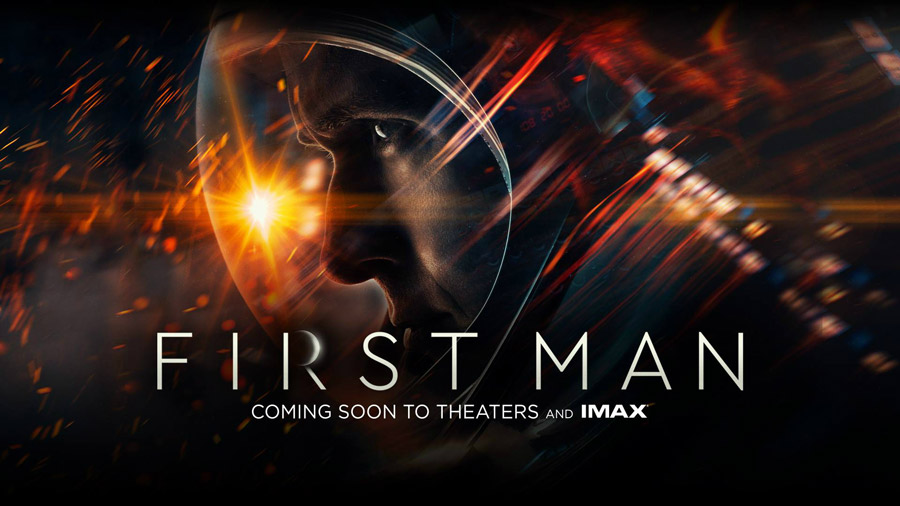
First Man is a biopic of Neil Armstrong from his test pilot days, Gemini missions, Apollo Mission and return home.  I was moved.  Ryan Gosling inhabited that man’s very soul.  I have not seen acting that good in years and years.  At every point in the film, you are more on the edge of your seat than you have been in decades.  I knew he would land the LEM on the moon, but it was so close to disaster that you felt for him.

The picture opens with Neil doing test piloting.  He’s already getting tapped to be in the Gemini missions, but he almost passes.  He has a daughter that stricken with cancer and we share in his grief throughout the film’s entirety.  I won’t spoil it, but there’s a moment when Neil is on the moon with his late daughter’s bracelet and …. oh man.  Once his daughter passes, his wife pushes him to take the Gemini mission and we rapidly see that she is his ROCK!  We see it when his daughter passes and when the stress of the burden of achievement weighs upon this Great Man.

The weight of greatness and death is looked dead in the eye in this picture.  Brave men are facing and dealing with mortality in nearly every scene.  We see that the cost of putting the first man on the moon is paid in blood.  So many great men die in this heroic quest that it begins to feel like a Homeric adventure or great tale of an ancient Samurai told through a modern lens.  All the while they are struggling to make this great achievement, we hear the familiar whining of lesser men moaning in the background like white noise.

Once it is clear that Neil will be Commander to go to the Man, his wife demands that he explain the risks to his two remaining children.  He tells them and we feel his paternal pain twisting in him like a blade because his destiny is set.  We get closer to the other two members of his team – one I can’t remember and the other is Buzz Aldrin who is portrayed as complete asshole.  I mean…wow…what a dick!

When Neil approaches the moon, the LEM is heading for disaster and fate tempts Neil to abort, but it’s obvious that Neil will succeed or he will die trying.  There was no going back empty handed for him.  There’s a lesson here: the greatest achievements require sacrifice up to and including your life.

The film allows us to see this amazing quest through the eyes of our greatest American Representative.  It is also clear that the Space Race, Humankind’s greatest achievement, was a road that led to victory and was paved with blood.