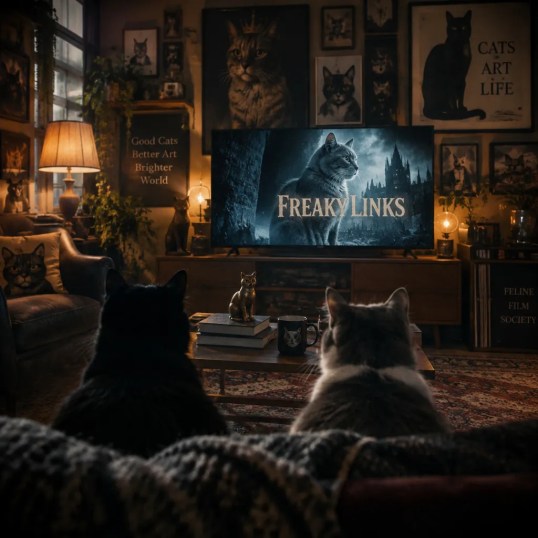
In this, the final episode of Freakylinks, Ethan Embry and the team try to prove that a murder was actually a supernatural occurrence. Their efforts are recorded for a true crime television show. The mockumentary approach is reminiscent of The Blair With Project, which was done by the same people who were behind FreakyLinks. So, there you go!
It’s too bad that there was never a Baywatch Nights/FreakyLinks cross-over.
Oh well. This episode aired on June 22nd, 2001 and it brought to an end the story of Derek Barnes.
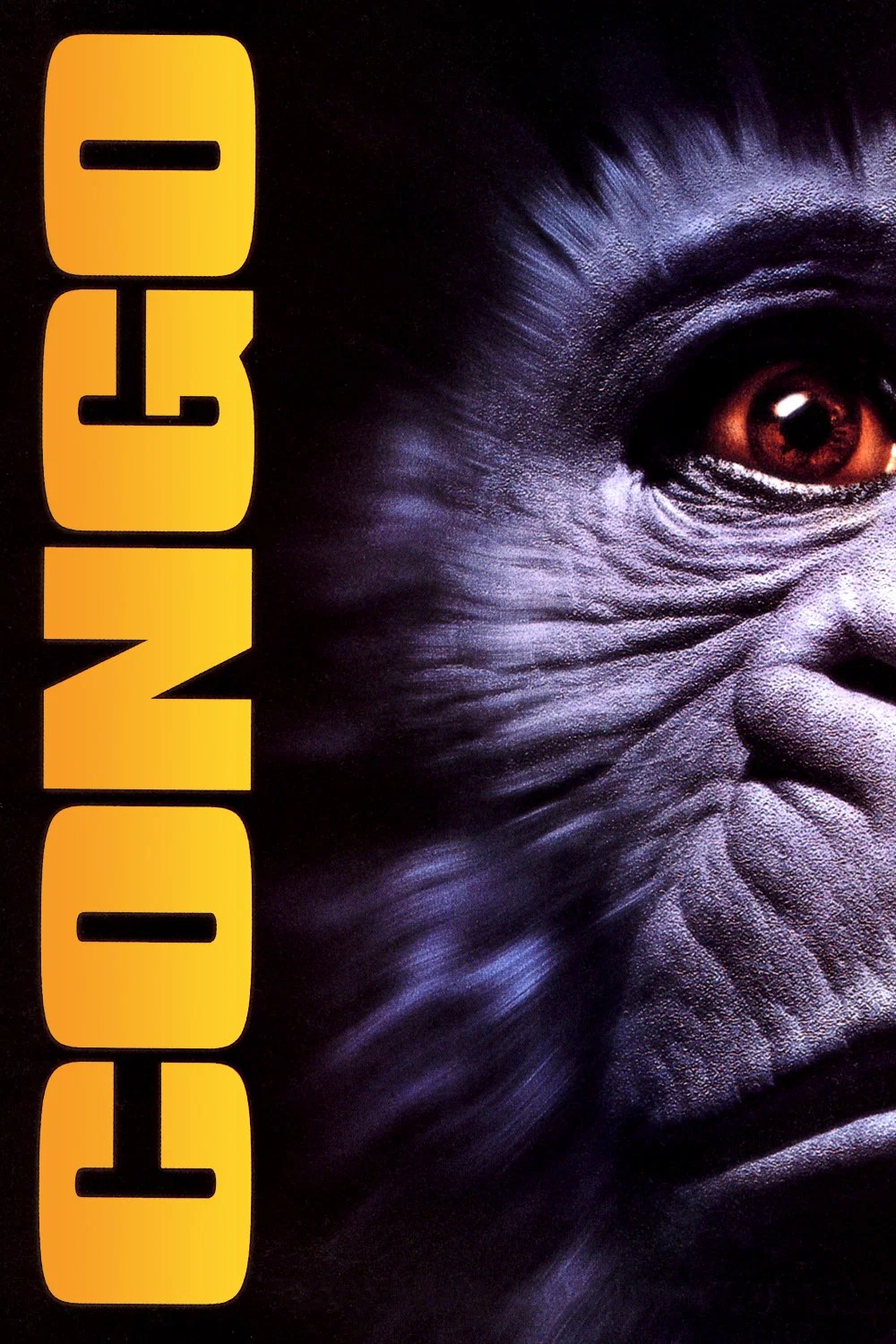
Congo is the kind of movie that makes perfect sense as a guilty pleasure because it is always hovering just above the level of complete nonsense, yet it has enough energy and conviction to remain enormously watchable. Directed by Frank Marshall, the 1995 film turns Michael Crichton’s jungle-thriller premise into a sprawling mixture of monster movie, treasure hunt, corporate conspiracy, technological anxiety, and old-fashioned adventure serial. It is loud, messy, often ridiculous, and loaded with moments that should not work at all. But that is the pleasure of Congo: it commits so completely to its bizarre material that the movie becomes difficult to dislike.
The setup is wonderfully overstuffed. A corporate expedition disappears while searching for a legendary diamond mine in the Congo, apparently after encountering some mysterious, deadly force. At the same time, primatologist Peter Elliot is preparing to return Amy, a gorilla he has raised and taught sign language, to the wild. Amy has recurring dreams—or perhaps memories—of a strange jungle city, and she communicates through a glove that translates her signs into a robotic voice. Before long, Peter, Amy, corporate representative Karen Ross, Romanian explorer Herkermer Homolka, and a mercenary guide named Captain Munro Kelly are all headed toward the same lost city, where diamonds, ancient ruins, and murderous white gorillas await.
That synopsis alone explains why Congo has developed such a devoted guilty-pleasure reputation. It is a movie where satellites, laser weapons, genetically engineered guard apes, corporate greed, sign-language research, volcanoes, and ancient African mythology all exist in the same story without anyone pausing to question the sheer overload of it. The movie treats every development with sincere urgency, even when the audience is watching Amy the gorilla say “Amy good gorilla” through a computerized voice device. It is impossible not to admire the confidence. Congo never winks at the audience, never admits that its premise is wild, and never cuts itself down to a more manageable size. It simply keeps adding more adventure-movie ingredients until the whole thing becomes strangely hypnotic.
Laura Linney’s Karen Ross and Dylan Walsh’s Peter Elliot are meant to anchor all of that craziness, but they are also among the film’s blandest elements. Linney is a talented actress, and she brings a professional focus to Karen’s corporate mission, but the character is written in such functional terms that she rarely feels like more than the person carrying the plot’s technological and business-related exposition. Karen is competent, determined, and occasionally vulnerable, but she never develops a particularly distinctive personality. Linney plays her with a seriousness that fits the film’s overall tone, yet that seriousness can make her feel oddly distant. She is there to make sure the satellite plot, the diamond plot, and the rescue plot keep moving, rather than to provide much spark on her own.
Walsh has an even tougher assignment as Peter. He is essentially the emotional center of Amy’s story, and the film needs the audience to believe in his paternal, almost codependent relationship with her. But Peter is such a mild, generic protagonist that he often gets swallowed by the movie’s more eccentric ideas. Walsh is not bad, exactly; he is simply too subdued for a film filled with volcanic eruptions, killer gorillas, and Tim Curry speaking every line as though he is announcing the end of civilization. His performance has a sincere gentleness that helps the scenes with Amy, but it also makes him feel like he wandered in from a quieter, more conventional family adventure. When the movie becomes bigger and stranger, Peter’s personality does not expand with it.
That blandness becomes especially noticeable because Ernie Hudson and Tim Curry are having such an obviously fantastic time in their roles. Hudson plays Captain Munro Kelly with the relaxed confidence of someone who knows he is the coolest person in the room. Munro is a professional guide, a fighter, a pilot, and a survivor, but Hudson does not turn him into a grim action-movie cliché. He gives the character humor, charisma, and a reassuring calm under pressure. Whenever the group faces another disaster—whether it is hostile terrain, dangerous animals, mercenaries, or the increasingly unhinged situation inside the lost city—Hudson makes Munro feel like the one person who might actually know what he is doing.
Hudson’s performance also gives Congo a sense of fun that the central characters sometimes lack. He has an easy screen presence, and he seems to understand that the film works best when it leans into the pleasures of a grand, pulpy adventure. Munro is not a particularly deep character, but Hudson makes him memorable through timing, attitude, and sheer likability. The movie becomes livelier whenever he takes charge, whether he is negotiating with people in the field or calmly reacting to another completely absurd revelation. If Karen and Peter are the story’s functional leads, Munro is the character who gives the audience someone to enjoy following.
Then there is Tim Curry as Herkermer Homolka, who delivers what can only be described as a masterclass in hammy, scenery-chewing entertainment. Curry does not merely play Homolka; he devours the role with a kind of operatic enthusiasm. Every line is delivered in his grand Romanian accent with the force of a proclamation, and every gesture suggests that Homolka believes he is the hero of the greatest expedition in history. Curry appears to be enjoying himself so much that it becomes infectious. He is not interested in realism, restraint, or subtle characterization. He is there to make every scene larger, louder, and more theatrical.
Homolka is already a ridiculous figure on the page: a pompous explorer with a famous family name, an exaggerated ego, and a dramatic flair that makes him seem less like a real adventurer than a flamboyant villain from a lost serial. Curry recognizes that the only correct way to play him is at maximum volume. His performance turns every bit of dialogue into an event. He gives the impression that he has spent years preparing speeches for this exact jungle expedition, waiting for the chance to announce his discoveries to the world. Even when Homolka is making selfish or foolish decisions, Curry makes him too entertaining to hate.
The contrast between Curry and the more restrained leads is one of the reasons Congo feels so odd. Linney and Walsh approach the material with a level of seriousness that suggests they are trying to preserve some emotional credibility. Hudson and Curry, by contrast, seem to recognize that credibility is not really the point. Hudson brings a cool, knowing charm, while Curry turns the movie into a one-man theatrical spectacle whenever he appears. Neither approach is necessarily wrong, but the difference creates a tonal imbalance. The film’s heroes feel flat because its supporting players are so much more alive.
The killer gorillas, of course, are another major source of the film’s guilty-pleasure appeal. These are not normal gorillas defending their territory. They are pale, vicious creatures bred to protect the diamond city of Zinj, and they attack with the exaggerated menace of monsters in a haunted-house ride. The effects have not aged gracefully. The suits and animatronics are visible, the movements can be stiff, and the creatures are often more amusing than frightening. Yet they remain memorable because the movie gives them a distinct, nightmarish look: white fur, glowing eyes, sharp teeth, and sudden appearances from dark corridors or jungle fog.
Frank Marshall directs the action with enough pace and polish to keep Congo from collapsing under the weight of its own silliness. The jungle setting, the ruined city, the expedition equipment, the satellite imagery, and the volcanic finale all give the movie a bigger sense of scale than its reputation might suggest. It feels like a genuine studio blockbuster from a time when Hollywood would spend serious money on an unapologetically strange idea. The film is not elegant, and it is certainly not believable, but it is never boring for long.
As a conventional adventure movie, Congo is uneven. Its African setting is often treated as a vague, dangerous backdrop, and its plot is overloaded with enough corporate jargon and techno-babble to distract from the more entertaining monster-movie material. But as a guilty pleasure, it is hard to beat. The movie is too bizarre to be generic and too sincere to feel cynical. Laura Linney and Dylan Walsh may be stuck playing bland characters at the center of the chaos, but Ernie Hudson and especially Tim Curry make the journey worth taking. Curry’s performance alone is a treasure: a joyous, magnificent display of overacting that turns Congo from a merely strange blockbuster into something genuinely unforgettable.
Released in 2000, Boiler Room tells the story of Seth Davis (Giovanni Ribisi).
Seth is only 19 years old. He’s the son of a federal judge and he’s also a college dropout. Seth is making a pretty good living for himself, running a casino out of a house near the campus. One night, a handsome 20something named Greg Weinstein (Nicky Katt) stops by and tells Seth that he could be making an even better living for himself as a broker at J.T. Marlin.
Located somewhere in Long Island, J.T. Marlin is a brokerage firm that is dominated by loud and young men. Overseen by the ruthless Jim Young (Ben Affleck, doing the glorified cameo thing), J.T. Marlin is a place where everyone owns an expensive car, an expensive watch, and where everyone brags about how much money they’ve made. The insults and slurs fly from desk to desk, as they tend to do whenever a bunch of wealthy, highly competitive guys get together. J.T. is seduced by the atmosphere, even as he watches some broker breaks down due to the pressure. He becomes friends with Chris Varick (Vin Diesel) and falls for receptionist Abbie Halpert (Nia Long), who just happens to be Greg’s ex-girlfriend. Eventually, Seth gets good at his job. Unfortunately, it turns out that his job is centered around tricking people into investing in a pyramid scheme and eventually, one of Seth’s clients, Harry (Taylor Nichols), ends up broke and without his family. The guilt-stricken Seth realizes that he has a conscience.
Like a lot of these type of movies, Boiler Room is at its best when it starts, when it’s all about tough talk, rude jokes, and obsessive competition amongst a bunch of well-dressed good-looking guys. Nicky Katt and Vin Diesel are so much fun to listen to that it’s hard not to regret that the entire film wasn’t just about them. Things become significantly less interesting once the FBI shows up and Seth decides to become a snitch. For the most part, no one like a snitch, even if they’re motivated by the purest of intentions. To make a snitch likable, he has to be a truly compelling character, like Henry Hill in Goodfellas. For the most part, audiences prefer anti-heroes who go down with the ship as opposed to the rats who jump into the first lifeboat they see. In The Wolf of Wall Street, Jordan Belfort agrees to wear a wire but then slips his business partner a note, warning him. That’s one of the reasons why The Wolf of Wall Street is still a classic while Boiler Room has been largely forgotten. As a character, Seth just isn’t compelling enough to pull off the snitch act. Nor does he really seem clever enough to pull off what he does at the end of the film.
That said, I do enjoy Boiler Room. It’s largely due to the cast. Nicky Katt, Vin Diesel, Scott Caan, Giovanni Ribisi, they were all young, energetic, and eager to show off what they could do. While their characters competed to see who could make the most money, the actors competed to see who could steal the most scenes. The film is ultimately only so-so but that cast is unforgettable.
On July 18th, 1969, while American astronauts were preparing to land on and then take their first steps on the Moon, a 28 year-old woman named Mary Jo Kopechne attended a party on Chappaquiddick Island in Massachusetts.
A former aide to Robert Kennedy who was reportedly devastated by his assassination, Mary Jo was one of several former campaign workers who gathered at an isolated cabin that night. According to the others at the party, Mary Jo (who was described as being a devout Catholic who rarely drank) was one of the first people to leave the party. She left with another guest. The next morning, that guest’s car was found overturned in Poucha Pond. Dead in the backseat was Mary Jo Kopechne, who had suffocated as the car slowly filled up with water. It was later determined that she had been alive and trapped in the car for hours before dying. The owner of the car was back at his hotel. He had returned there after crashing his car and, while he had taken a shower and combed his hair and called his father, he had not bothered to call the police.
Normally, a driver in this situation would be in serious legal jeopardy. Along with having left the scene of the accident, he also left Mary Jo to die. It was generally agreed that if he had called the police within an hour of the accident occurring, Mary Jo could have been saved. However, because he was Ted Kennedy and the last remaining of the fabled Kennedy brothers and a man who many expected would someday be president, he was given a slap on the wrist and the death of Mary Jo would be forever described as being a “Kennedy tragedy” as opposed to a Kopechne tragedy.
Not surprisingly, there has been a lot of speculation about what had happened in the moments leading up to the crash. Like his brothers, Ted Kennedy was a notorious and reckless womanizer. Unlike his brothers, Ted also had a reputation for being a heavy drinker. Some went as far as to accuse Ted of deliberately murdering Mary Jo, as if the actions that Ted later admitted to were not, in themselves, already bad enough. While people may disagree on the circumstances that led to the accident, it is generally agreed that, if Ted had been anyone other than a Kennedy, he would have served time in prison. The incident ended Ted’s presidential dreams but it didn’t keep him from being described as being the “lion of the Senate” when he died in 2010. Indeed, when Ted died, many people on twitter expressed their shock as they read or heard about Mary Jo Kopechne for the first time in their lives.
(In 2010, Mary Jo would have been seventy years old.)
Obviously, no one was going to make a movie about Mary Jo Kopechne’s death while Ted was still living. Indeed, even after Ted died, it still took seven more years for the story to be turned into a film and producer Byron Allen struggled to even book the film in theaters. 2017’s Chappaquiddick stars Jason Clarke as Ted and, briefly, Kate Mara as Mary Jo. The film speculates as to what happened that night and it probably gets fairly close to the truth. The accident is an accident, a result of Ted freaking out when a cop stops him for speeding and sees him with a woman who isn’t his wife. Ted, who is portrayed as being an immature manchild, turns to his handlers and then his family for help. His fails to call the authorities because, to Ted, there is no greater authority than his abusive father (Bruce Dern).
For the most part, Ted passively sits by as associates of his late brothers — including Ted Sorenson (Taylor Nichols, giving the film’s strongest performance), Joe Gargan (Ed Helms), and Paul Markham (Jim Gaffigan) — take over his defense and carefully craft his every response. Ted’s attempts to provide input are shot down and it’s made clear that his job is to shut up and concentrate on returning the Kennedys to the White House. The film’s best scenes feature Sorenson growing frustrated at all of Ted’s mistakes. Very little concern is shown for the fact that Mary Jo Kopechne, a Kennedy true believer, is dead due to Ted’s recklessness. When she was alive, Mary Jo was held up as a symbol of the Kennedy youth. When she died, she was just viewed as being an obstacle to keeping the Kennedys from reaching the power to which they felt entitled.
As you can probably guess, Ted Kennedy does not come off particularly well in this film. At his best, he’s a wimp who is struggling with a legacy of which he knows he’s not worthy. At his worst, he is pathologically self-absorbed and incapable of feeling empathy for the woman he left to drown in the backseat of his car. Both he and Mary Jo and ultimately the voters who are expected to reelect him even after he leaves Mary Jo to die are ultimately portrayed as just being pawns of the shadowy men who lurk behind the scenes of every political operation.
It’s not a happy film and it certainly has its flaws but it provides an important service, reminding viewers that death of Mary Jo Kopchene was more than just as a “Kennedy tragedy.”
The Shattered Lens wishes a happy birthday to director Whit Stillman!
Today’s scene that I love comes from Stillman’s first film, 1990’s Metropolitan. In this scene, Charlie (Taylor Nichols) explains why UHB is a much better term for their social class than preppy. As usual, Nick (Chris Eigeman) is there to provide support in his own unique way. Nichols and Eigeman were both perfectly cast in this film.
The Shattered Lens wishes a happy birthday to director Whit Stillman!
Today’s scene that I love comes from Stillman’s first film, 1990’s Metropolitan. In this scene of preppie-on-preppie violence, Nick (Chris Eigeman) confronts the loathsome aristocrat Rick Von Slonecker (Will Kempe). Upper class fisticuffs follow. Chris Eigeman is about as perfectly cast as any actor ever has been in the role of Nick.
Well, Halloween is nearly over and so is Horrorthon. Here’s is our final episode of televised horror for 2020. It’s also the final episode of FreakyLinks!
In this episode, Ethan Embry and the team try to prove that a murder was actually a supernatural occurrence. Their efforts are recorded for a true crime television show. The mockumentary approach is reminiscent of The Blair With Project, which was done by the same people who were behind FreakyLinks. So, there you go!
It’s too bad that there was never a Baywatch Nights/FreakyLinks cross-over.
Oh well. This episode aired on June 22nd, 2001 and it brought to an end the story of Derek Barnes. Enjoy the show, everyone! Happy Halloween!
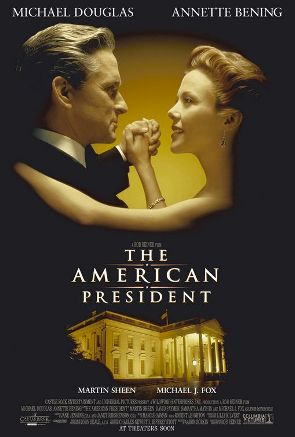
Way back in October, around the same time that I first decided that I would do a series of reviews of political films and that I would call it Lisa Gets Preachy (subsequently changed to Shattered Politics), I noticed that the 1995 film The American President was scheduled to be shown on TVLand.
“Hey,” I said, “I’ve definitely got to watch and review that!”
So, I set the DVR and I recorded The American President.
And then, I just left it there.
You have to understand that it’s rare that I ever leave anything unwatched on my DVR. Usually, within an hour of recording a program, I’ll be watching it. I have even been known to go so far as to make out very long lists of everything that I have on the DVR, just so I can make check them off after I’ve watched. As a general rule, I am way too obsessive compulsive to just leave anything sitting around.
But, for whatever reason, I could never work up any enthusiasm for the prospect of actually watching The American President. I knew that, eventually, I would have to watch it so that I could review it. Unlike those folks criticizing American Sniper on the basis of the film’s trailer, I never criticize or praise a film unless I’ve actually watched it. But I just couldn’t get excited about The American President.
Can you guess why? I’ll give you a hint. It’s two words. The first starts with A. The second starts with S.
If you guessed Aaron Sorkin, then you are correct! Yes, I do know that Sorkin has a lot of admirers. And, even more importantly, I know that it’s dangerous to cross some of those admirers. (I can still remember Ryan Adams and Sasha Stone insanely blocking anyone who dared to criticize the underwritten female characters in Sorkin’s script for The Social Network.)
But what can I say? As a writer, Aaron Sorkin bothers me. And since Sorkin is such an overpraised and powerful voice, he’s that rare scriptwriter who can actually claim auteur status. The Social Network, for instance, was not a David Fincher film. It was an Aaron Sorkin film, through and through.
And, after having to deal with three seasons of the Newroom and countless Aaron Sorkin-penned op-eds about why nobody should be allowed to criticize Aaron Sorkin, I’ve reached the point where dealing with all of Aaron Sorkin’s signature quirks is a bit like listening to the drill while strapped into a dentist’s chair. I am weary of pompous and egotistical male heroes who answer every question with a sermon. I am tired to endless scenes of male bonding. I have had enough with the quippy, quickly-delivered dialogue, all recited as characters walk down an endless hallways. I have no more sympathy for Sorkin’s nostalgic idealism or his condescending, rich, white dude version of liberalism.
Most of all, I’m sick of people making excuses for an acclaimed, award-winning, highly-paid screenwriter who is apparently incapable of writing strong female characters. I’m tired of pretending that it doesn’t matter that Aaron Sorkin is apparently incapable of viewing female characters as being anything other than potential love interests or silly distractions who need to be told to go stand in a corner while the menfolk solve all the problems of the world.
Fortunately, as a result of The Newsroom, quite a few critics are finally starting to admit what they always knew to be the truth. Aaron Sorkin is not the messiah. Instead, he’s a somewhat talented writer who doesn’t understand (or, in my opinion, particularly like) women. At his best, he’s occasionally entertaining. At his worst, he’s pompous, didactic, and preachy.
And, of course, Aaron Sorkin is the man who wrote The American President.
So, The American President just sat there until a few days ago when I sighed to myself and said, “Okay, let’s watch this thing.” As I watched it, I promised myself that I would try to see past the fact that it was an Aaron Sorkin-penned film and just try to judge the film on its merits.
But here’s the thing. It’s nearly impossible to separate one’s opinion of Sorkin from The American President. If you didn’t know that Sorkin had written The American President, you’d guess it after hearing the first few lines of dialogue. The film, itself, was directed by Rob Reiner but it’s not as if Reiner is the most interesting of directors. (What’s odd is that Reiner’s first films — This Is Spinal Tap, The Princess Bride, Stand By Me — are all so quirky and interesting and are still so watchable decades after first being released that you have to wonder how Reiner eventually became the man who directed The Bucket List.) In short, The American President is totally an Aaron Sorkin film.
President Andrew Shepherd (Michael Douglas) is a liberal Democrat who, as he prepares to run for a second term, has a 63% approval rating. However, when Shepherd decides to push through a gun control bill, he finds that approval rating threatened. And then, when he listens to environmental lobbyist Sydney Wade (Annette Bening) and tries to push through legislation to reduce carbon emissions, his approval rating is again threatened. And then, to top it all off, he starts dating Sydney. It turns out that Sydney has protested American policy in the past. And, since this is an Aaron Sorkin film, everyone outside of the Northeast is scandalized that President Shepherd is having premarital sex in the White House.
And, to top it all off, there’s an evil Republican named Bob Rumson (Richard Dreyfuss) who wants to be President and is willing to use the President’s relationship with Sydney to further his own evil Republican ambitions.
But, ultimately, it’s not just those evil Republicans who make it difficult for Sydney and the President to have a relationship. It’s also the fact that the President agrees to a watered down crime bill and that he does not hold up his end of the bargain when it comes to reducing carbon emissions.
“You’ve lost my vote!” Sydney tells him.
But — fear not! There’s still time for President Shepherd to give a speech that will be so good and so brilliant that it will, within a matter of minutes, totally change every aspect of American culture and save the day. How do we know it’s a great speech? Because it was written by Aaron Sorkin!
Actually, I’m being too hard on the film and I’ll be the first admit that it’s because I’m personally not a huge fan of Aaron Sorkin’s. But, to be honest, The American President is Aaron Sorkin-lite. This film was written before the West Wing, before the Social Network, before that Studio Whatever show, and before The Newsroom. In short, it was written before he became THE Aaron Sorkin and, as such, it’s actually a lot less preachy than some of his other work. It’s true that, much like The Newsroom, The American President is definitely Sorkin’s fantasy of how things should work but at least you don’t have to deal with Jeff Daniels throwing stuff or Emily Mortimer not knowing how to properly forward an email.
Instead, it’s a film that will probably be enjoyed by those who share its politics. (And, make no mistake, The American President is more interested in politics than it is in the love story between Andrew and Sydney.) Michael Douglas does well in the role of the President. Meanwhile, Annette Bening is so likable and natural as Sydney that it almost make up for the fact that she’s yet another Sorkin woman whose existence is largely defined by looking up to her man while inspiring him to do the right thing and forgiving him when he doesn’t. Personally, I would have been happy if the film had ended with Sydney telling the President, “Thanks for finally doing the right thing but I have a life of my own to lead.”