Welcome to Late Night Retro Television Reviews, a feature where we review some of our favorite and least favorite shows of the past! On Thursdays, I will be reviewing Hunter, which aired on NBC from 1984 to 1991. The entire show is currently streaming on Tubi and several other services!
This episode makes the mistake of pretending to leave California.
Episode 1.4 “A Long Way From L.A.”
(Dir by Arnold Laven, originally aired on October 26th, 1984)
Bleh. This episode annoyed me.
Wally Wallerstein (Paul Eiding), a pickpocket wanted in Los Angeles, is arrested in Texas. Because he needs a break from them, Captain Cain sends Hunter and McCall to retrieve him. Wally turns out to be a nice guy but, when Hunter’s car breaks down in Wilson County, Texas, Wally is accused of attacking a local waitress and is then killed by a sniper. The real culprit is pretty obviously Sheriff Jake Cutter (Bo Svenson), who is the stepson of Chuck Easterland (Morgan Woodward), the richest man in town.
Not a single small town stereotype went unused in this episode. As a Texan, I was annoyed by the fact that everyone had a Southern (as opposed to a Southwestern) accent. And while I understand that the show probably didn’t have the budget or the time to shoot on location, it was still hard not to smirk at the sight of a very California mountain range in the background. This is the flatlands, folks. We don’t have mountains like that in Texas.
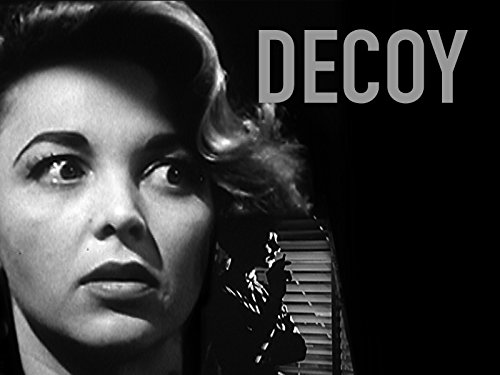
Welcome to Retro Television Reviews, a feature where we review some of our favorite and least favorite shows of the past! On Thursdays, I will be reviewing Decoy, which aired in Syndication in 1957 and 1958. The show can be viewed on Tubi!
In this episode, Casey goes after a gun dealer.
Episode 1.30 “The Gentle Gun-Man”
(Dir by Michael Gordon, originally aired on May 5th, 1958)
After a man is shot dead while committing a liquor store robbery, Casey goes undercover as his widow. The police don’t just want the man’s accomplice. They want to know where the man got his specially-modified gun. The accomplice turns out to be a rather gentle deli owner named “Knish” Levin (Ludwig Donath). And the gun dealer turns out to be Mr. Johnson (James O”Rear), the same gun dealer who sold Casey her first gun. (This episode implies that members of the police force have to buy their own guns, which sounds a bit odd.) Needless to say, when Casey convinces Knish to introduce her to his dealer, Johnson immediately recognizes her.
This episode had a lot of New York location footage. The scene where Knish leads Casey to Johnson took us from Wallstreet to the waterfront. Indeed, the locations shots were the best thing about this episode. The acting in this episode was, by Decoy standards, subpar, with even the usually reliable Beverly Garland struggling to sell her lines. Unfortunately, this episode’s plot required Casey to make a lot of foolish mistakes, like going to see the gun dealer without proper backup. I liked the fact that Knish wasn’t portrayed as being a typical thug but otherwise, this episode just didn’t work.
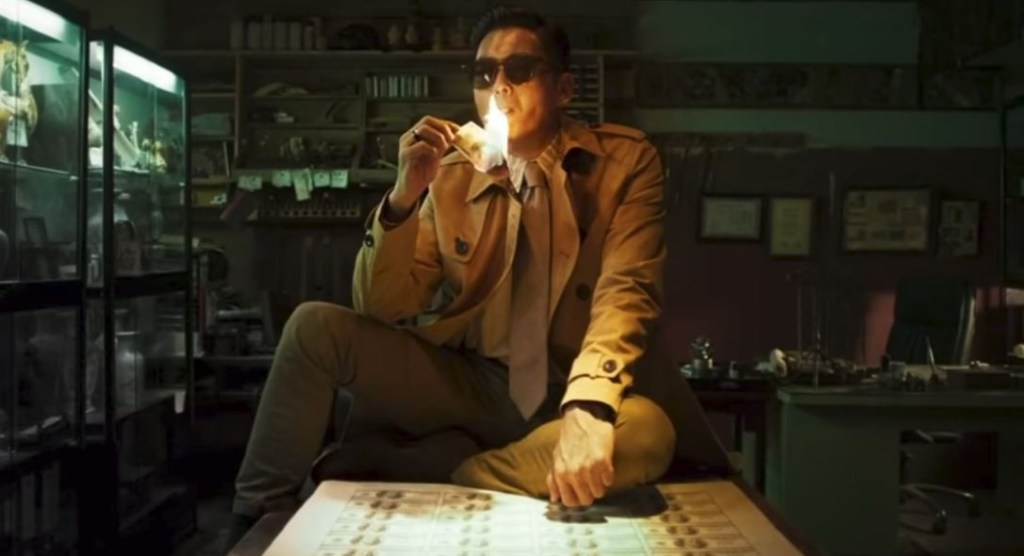
There was a time when Chow Yun-Fat was one of the hardest working actors in show business. He had 11 different films come out in 1987 alone, and his dedication to making movies would eventually lead him to superstardom all around the world by the turn of the century. Alas, even the greats must eventually slow down and by the end of the 2010’s, it felt like he had practically retired. He only starred in one film between 2017 and 2019. That film was 2018’s PROJECT GUTENBERG, and to say I was looking forward to the film would be quite the understatement. The filmmakers knew how to draw me in as the trailer recreated Chow’s famous scene from A BETTER TOMORROW where he lights his cigarette with a counterfeit $100 bill. The movie promised to play up his most iconic on-screen images, and I was down for it!
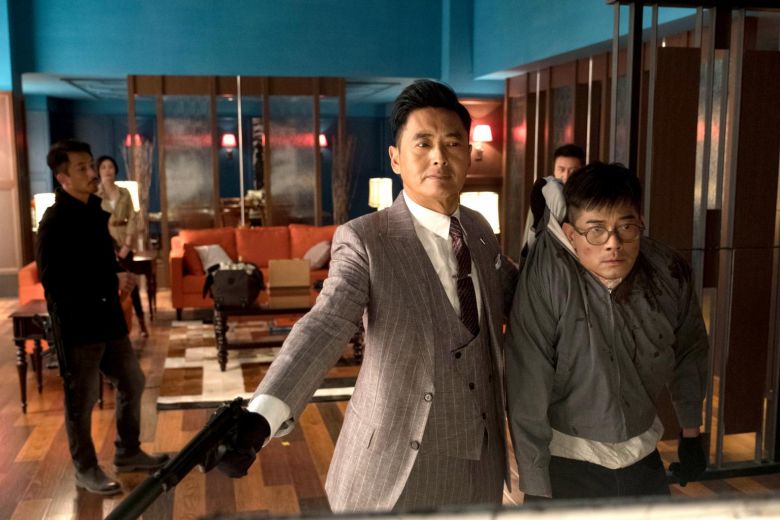
PROJECT GUTENBERG introduces us to an artist named Lee Man (Aaron Kwok), who’s been arrested in Thailand and taken to Hong Kong. The local police interrogate him for information about a ruthless counterfeiter known as “Painter.” Reluctant to talk at first due to fear, Lee is convinced that he must provide some information, or he could spend the rest of his life in jail. He eventually begins to tell the story of his time with the elusive criminal mastermind, played by Chow Yun-fat, through a series of flashbacks. Director Felix Chong (writer of the INFERNAL AFFAIRS and OVERHEARD trilogies) has crafted a story that seems like the confession of small fish being used to bait a big fish, before eventually turning into something much more sinister and fascinating. I won’t say anything else about the plot as there’s much fun to be had in watching it unravel!
I’m going to state right up front that Chow Yun-Fat is in prime form. Some actors age with grace, and then there’s the 63-year-old Chow of this film, who’s managed to age with almost a mythic gravitas. This film masterfully highlights his incredible charisma, recreates iconic images of his past gunplay, and then turns it all on its head by making Painter into one of the most evil bastards he’s ever played on screen! It’s an incredible use of his legendary career to provide levels of depth that no words on paper ever could.
Even with the iconic images of Chow Yun-Fat, PROJECT GUTENBERG would not work nearly as well if it wasn’t also a captivating crime thriller. Its counterfeit money operations, double-crosses, gun battles and international intrigue pulled me in, and I found myself on the edge of my seat at times as the story unfolded. The last 30 minutes of the film made me question everything I’d seen up to that point, but in a way that did not take away one moment of my enjoyment. It’s not a completely unique ending, as film lovers will certainly notice, but it works.
Aaron Kwok’s character of Lee Man is weak in comparison to Painter, but the actor navigates the tightrope of showing just enough emotional desperation that we understand why he’s doing what he does. When the plot starts taking some crazy twists and turns, I was still right there with him. I’ve always liked Aaron Kwok, and even with his bad haircut in the film, I still thought he did a fine job. I also want to shoutout actress Zhang Jingchu (RUSH HOUR 3, OVERHEARD), who plays the woman that Lee Man loves. Her character drives a lot of Lee’s actions in the film, and I found her very beautiful and compelling. Last, but not least, Liu Kai Chi (KILL ZONE, CALL OF HEROES) gets one of the best supporting roles in the film as a vital member of the counterfeiting team who befriends Lee before making an unforgivable mistake.
PROJECT GUTENBERG was a critical and box office smash when it was released in China in the fall of 2018. It won Best Picture, Director, Screenplay, Cinematography and Editing at the 2019 Hong Kong Film Awards. On a budget of around $40 million dollars, it would bring in over $150 million in China alone, on its way to around $200 million worldwide. It’s a slick crime thriller that serves as a reminder that in the right role, Chow Yun-fat is still one of the great movie stars on the planet. This film understands that, bet the house, and won big.
PROJECT GUTENBERG is currently streaming on the free “Fawesome” streaming service.
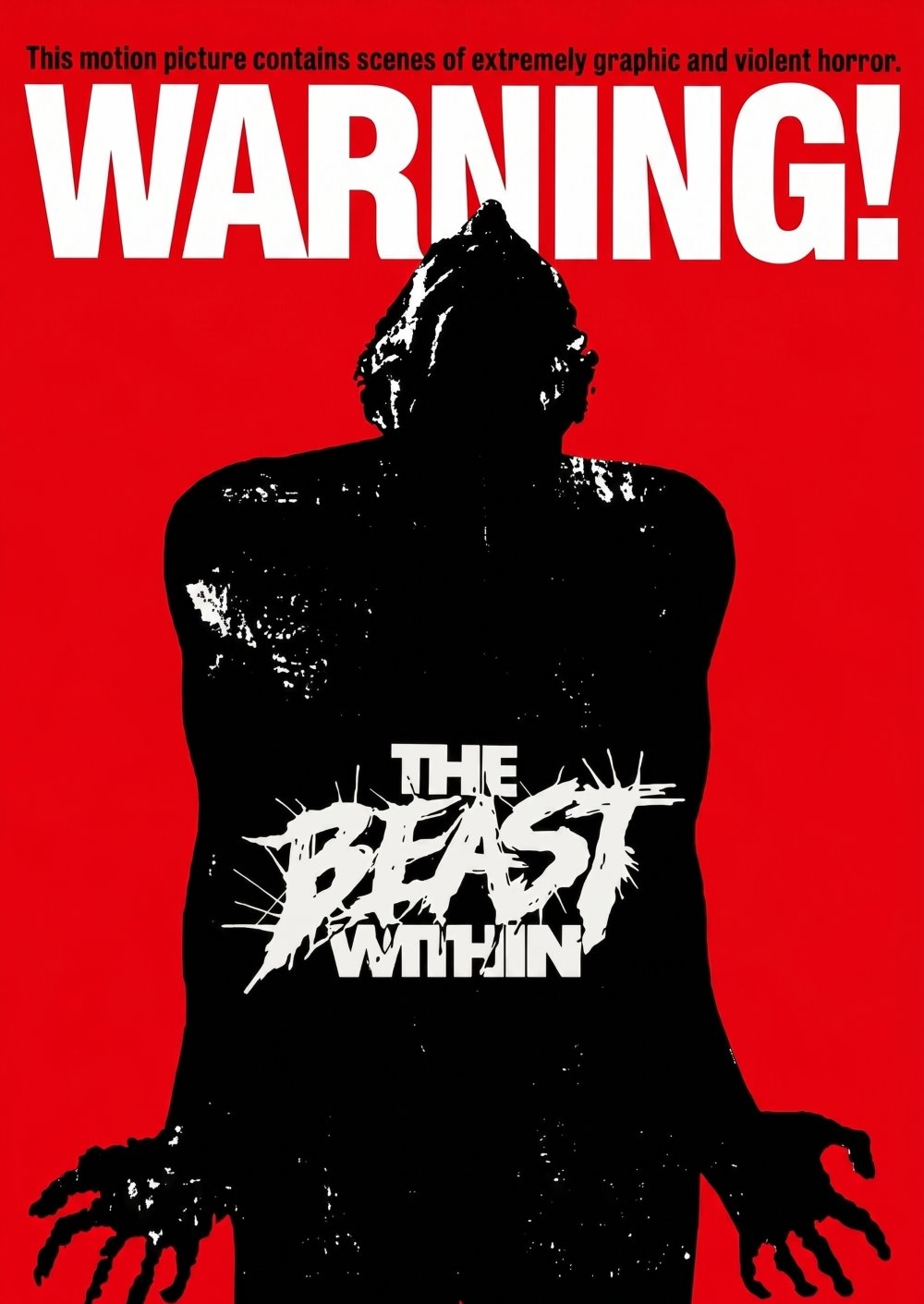
The Beast Within (1982), directed by Philippe Mora, is one of those strange, sticky relics of early ’80s horror that feels like it crawled out of a drive-in double feature and just kept mutating long after the credits rolled. It’s not a good film—let’s just get that out of the way early—and it barely qualifies as a coherent one, but it lands squarely in that fascinating gray area where failure and ambition collide. This is the kind of messy, overstuffed genre hybrid that earns its reputation less through quality and more through sheer, stubborn weirdness. It’s got ambition in odd places, tonal swings that don’t quite land, and a sincerity that almost convinces you it knows what it’s doing. Almost.
What makes The Beast Within so compelling is how aggressively it borrows from exploitation cinema without ever fully committing to being exploitative in tone. All the raw ingredients are here: sexual violence, grotesque bodily transformation, cannibalistic undertones, grave robbing, demonic suggestion, and generational curses. It’s like Mora raided the entire playbook of grindhouse staples and tried to stitch them together into something resembling a prestige Southern Gothic drama. The result is a tonal contradiction that becomes the film’s defining trait. You’re watching material that, in another context, would lean hard into sleaze or pulp sensationalism, yet here it’s played with a stiff, almost theatrical seriousness.
The film opens with one of its most infamous sequences—a brutal assault in the woods by something that is distinctly not human. It’s uncomfortable, lurid, and feels like the start of a much nastier film than what ultimately unfolds. Seventeen years later, the child born from that attack begins to change, physically and psychologically unraveling as something monstrous pushes its way to the surface. From there, the narrative spirals into a hazy blend of small-town mystery, family melodrama, and creature feature chaos, with buried secrets clawing their way into the present.
There’s a clear attempt to elevate all of this with Southern Gothic sensibilities. The setting leans heavily into decay and repression—sweltering air, crumbling structures, and a community weighed down by unspoken sins. Characters behave as if they’ve wandered in from a Tennessee Williams play, all strained emotions and suppressed truths, but the film keeps undercutting that mood with bursts of grotesque horror. It’s an awkward balancing act that never quite works. If anything, the material might have been better served by leaning into something closer to a Joe R. Lansdale tone—meaner, pulpier, and more self-aware—rather than reaching for a kind of literary weight it can’t sustain.
Still, what keeps The Beast Within watchable—sometimes even oddly engaging—is how seriously everyone takes it. Ronny Cox and Bibi Besch play the parents with unwavering commitment, treating the story as a straight drama about a family unraveling under impossible circumstances. Their performances don’t wink at the audience or acknowledge the absurdity creeping in around the edges, and that refusal to break tone actually works in the film’s favor. It creates a strange tension where the more ridiculous the plot becomes, the more grounded the performances try to keep it.
Paul Clemens, as the afflicted son Michael, is tasked with carrying the film’s most extreme elements, and he does what he can within the limits of the material. His performance is less about subtlety and more about physical deterioration and panic as his body betrays him, but he sells the desperation well enough to keep things from completely falling apart. When the transformation finally takes center stage, the film dives headfirst into full-on creature horror, complete with practical effects that are equal parts impressive and absurd. They’re messy, tactile, and unmistakably of their era—exactly the kind of thing that feels right at home in a late-night grindhouse slot.
And then there’s L.Q. Jones as Sheriff Poole, who shows up like icing on top of this bizarre, overcooked cake. Jones brings that weathered, lived-in presence he honed across decades of Westerns and genre films, and he slips into this decaying Southern setting effortlessly. There’s a quiet authority to his performance that helps ground the film, even when everything else is threatening to spiral into nonsense. He doesn’t overplay the role or try to elevate it beyond what it is, but his presence adds a layer of credibility that the film desperately needs. It’s like he wandered in from a more confident, self-aware movie and decided to play it straight anyway, and somehow that makes the chaos around him feel just a little more intentional.
Visually, Mora leans into atmosphere when he can, giving the film a hazy, humid texture that reinforces its Southern Gothic aspirations. The town feels insular and vaguely cursed, like it’s been rotting from the inside out long before the events of the film begin. There are moments where the imagery and tone almost align into something genuinely evocative, but they’re fleeting, quickly swallowed up by the film’s inability to maintain a consistent identity.
That lack of cohesion is ultimately what keeps The Beast Within from being anything close to a good film, but it’s also what makes it linger in your mind. It’s constantly shifting—family drama one minute, body horror the next, then veering into supernatural mystery without warning. That unpredictability gives it a kind of scrappy energy, like it’s trying to reinvent itself scene by scene. Most of those attempts don’t quite land, but they’re rarely dull.
What’s surprising is the film’s underlying sincerity. For all its exploitation trappings, this isn’t a cynical or lazy effort. There’s a genuine attempt here to grapple with themes of inherited trauma, guilt, and the inescapability of the past, even if those ideas get buried under layers of monster makeup and narrative clutter. That earnestness creates an odd charm, making it easier to forgive the film’s many missteps.
In the end, The Beast Within sits comfortably in guilty pleasure territory. It’s not something you’d point to as an overlooked gem, and it certainly doesn’t rise to the level of a true grindhouse classic, but it has all the markings of one. It’s messy, uncomfortable, tonally confused, and packed with more ideas than it knows what to do with—but it’s also strangely compelling because of that. Not great, not even good, but just effective enough in flashes to make the whole experience worthwhile. It’s the kind of film that sticks with you less for what it achieves and more for how bizarrely it tries.
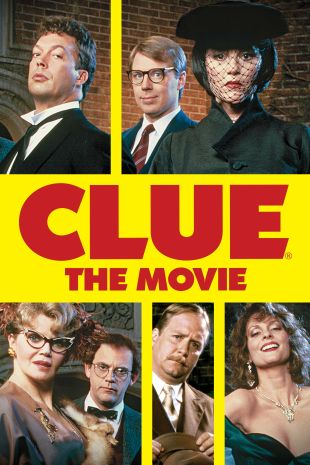
Hi, everyone! Tonight, on Mastodon, I will be hosting the #TubiThursday watch party! Join us for Clue (1985)!
You can find the movie on Tubi and you can join us on Mastodon at 9 pm central time! (That’s 10 pm for you folks on the East Coast.) We will be using #TubiThursday hashtag! See you then!
Today, we wish a happy birthday to director Amy Heckerling!
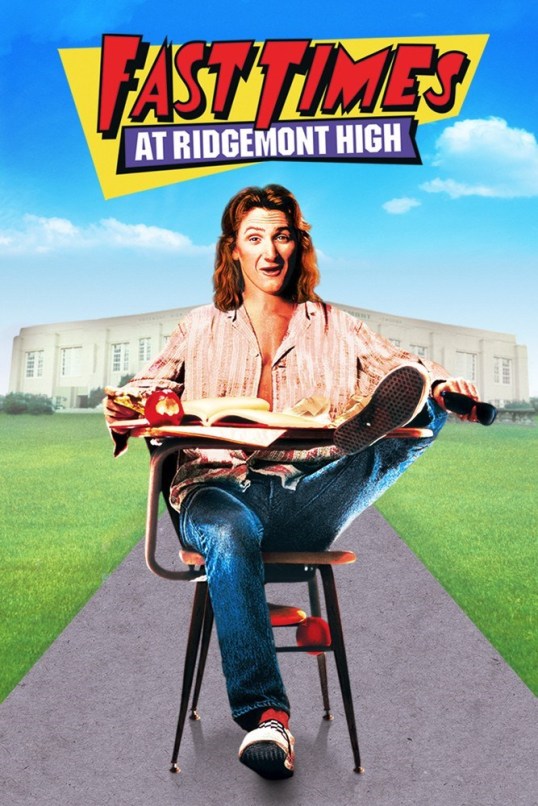
In this scene from the Heckerling-directed 1982 filmFast Times At Ridgemont High, Brad finally gets a moment of triumph. Played by Judge Reinhold, Brad spends most of this movie being humiliated. He kind of deserves it because he can definitely be a bit full of himself, especially when he was working at All-American Burger. But, at the same time, he’s there for his sister when she needs someone and, for a character in a 1982 teen comedy, he’s refreshingly nonjudgmental.
In this scene, poor Brad has been reduced to working at an all-night convenience store. Wherever Brad works, he appears to be destined to have to wait on Jeff Spicoli (Sean Penn.) When James Russo attempts to hold him up, Brad finally snaps and becomes the hero that he’s always wanted to be.
4 Shots From 4 Films is just what it says it is, 4 shots from 4 of our favorite films. As opposed to the reviews and recaps that we usually post, 4 Shots From 4 Films lets the visuals do the talking!
Today would have been the 87th birthday of the great Italian director, Ruggero Deodato! And that, of course, means that it’s time for….
4 Shots From 4 Films
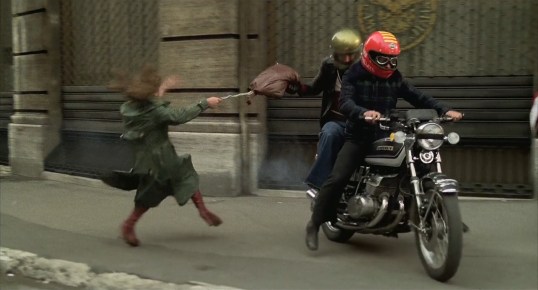
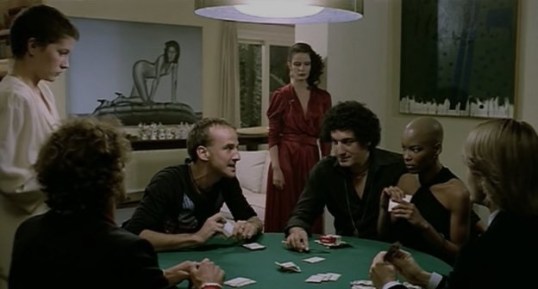
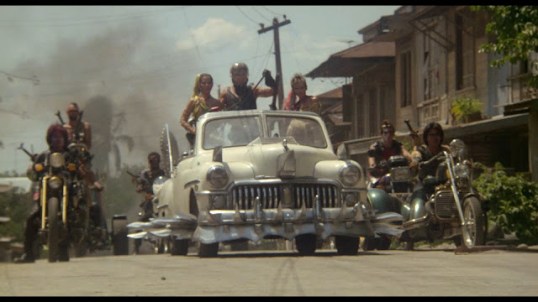
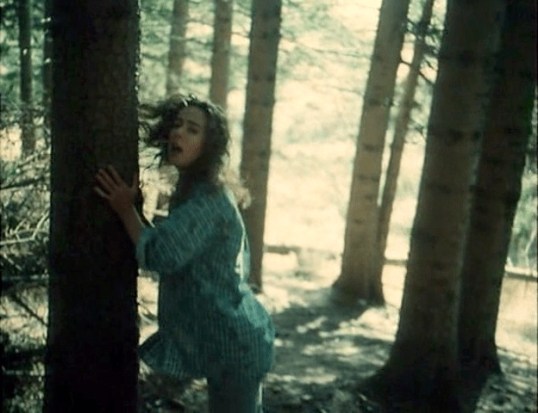
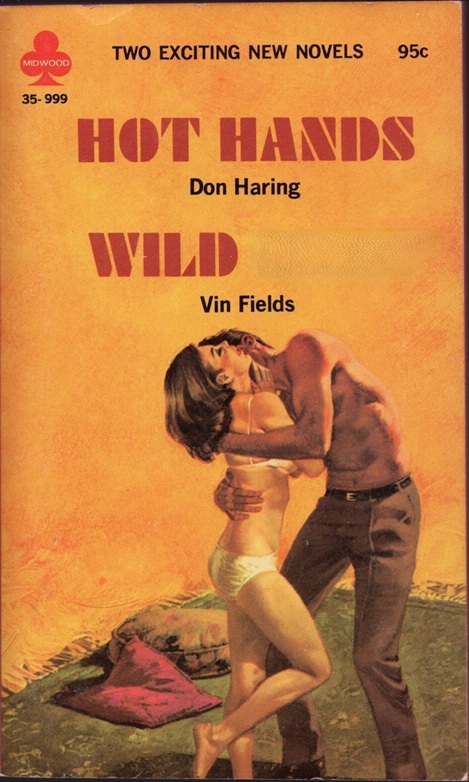
Live Like A Cop, Die Like A Man (1976, dir by Ruggero Deodato, DP: Guglielmo Mancori)
The House On The Edge of the Park (1980, dir by Ruggero Deodato, DP: Sergio D’Offizi)
Raiders of Atlantis (1983, dir by Ruggero Deodato, DP: Robert D’Ettore Piazzoli)
Body Count (1986, dir by Ruggero Deodato, DP: Emilio Loffredo)
This was one of the first songs to define the decade that the 90s would be. Of course, within a few years of the song being released, the idea of being “connected” would have a totally different meaning for a lot of listeners.
This is another video directed by Matthew Amos. He also did yesterday’s video, I’m Free.