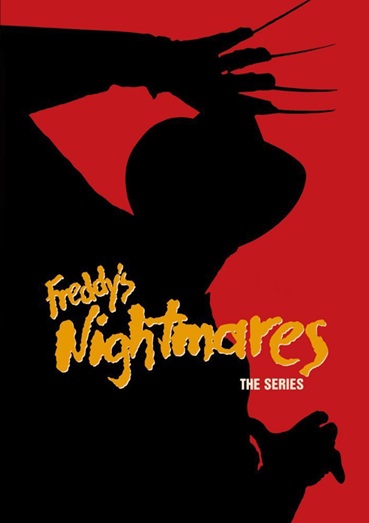
Welcome to Late Night Retro Television Reviews, a feature where we review some of our favorite and least favorite shows of the past! On Fridays, I will be reviewing Freddy’s Nightmares, a horror anthology show which ran in syndication from 1988 to 1990. The entire series can be found on Tubi!
Guess who is making trouble …. again.
Episode 2.12 “It’s My Party And You’ll Die If I Want You To”
(Dir by Tom DeSimone, originally aired on December 24th, 1989)
This aired when?
Wow! Happy Christmas Eve!
Freddy takes center stage in this week’s episode. First, he possesses a phony psychic (Gwen Banta) and uses her to kill a bunch of people because …. well, why not? He’s Freddy. It’s kind of what he does. The second story features Freddy seeking revenge on the woman who stood him up for prom and it features an occasionally clever subplot about a man attempting to write a film about Freddy’s life. Freddy complains that the script doesn’t have a heart. That’s because Freddy ripped it out of the screenwriter.
This was not a bad episode. Director Tom DeSimone does a good job of keeping the action moving and he allows Freddy to be genuinely menacing. This entire season has pretty much been a reminder of the fact that Freddy isn’t just an undead spirit who makes joke He’s also very scary. If the first season treated Freddy like a quip machine, the second season has gone out of its way to show that Freddy is pure evil and you’re better off not being in his presence.
This week’s stories were tied together by the presence of Oliver Michaels (Richard Speight), a spacey young man who previously appeared in Photo Finish. Oliver does his best to warn people in this episode but no one’s willing to listen until it’s too late.
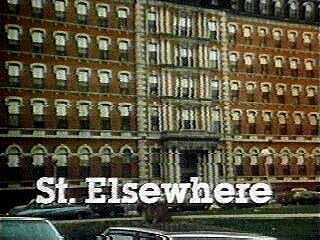
Welcome to Retro Television Reviews, a feature where we review some of our favorite and least favorite shows of the past! On Fridays, I will be reviewing St. Elsewhere, a medical show which ran on NBC from 1982 to 1988. The show can be found on Daily Motion.
St. Elsewhere gets political!
Episode 3.19 “Red White Black and Blue”
(Dir by Eric Laneuville, originally aired on February 13th, 1985)
This week, on St. Elsewhere!
The First Lady is coming to Boston! Though she’s going to be visiting Boston General, St. Eligius has been designated as a backup hospital. While she’s in the area, the Emergency Room will be closed to everyone but her. As well, some members of the hospital staff have been flagged as security risks — including Dr. Craig!
Dr. Craig is not happy about that but eventually, he’s cleared. It turns out that his wife was the security risk because she once defended the Black Panther Party.
Betty White plays Captain Gloria Neal, a doctor who is on the First Lady’s security team. She is an old friend of Dr. Westphall’s. At first, it seems like she and Westphall might pursue a romance but it doesn’t happen. I’m going to guess this is because Gloria realized that Dr. Westphall is the most depressing man on the planet.
When a severely injured man is rushed to St. Eligius, Neal refuses to open the Emergency Room. So, Dr. Craig takes it upon himself to overrule her. The man dies on the table.
Dr. Jacqueline Wade (Sagan Lewis) follows Captain Neal around, complaining about the president’s policies. In fact, the entire hospital seems to be full of Democrats! Wow, this President sure must have been unpopular. Let’s see who it is …. hey, Ronald Reagan! Three months before this episode aired, Reagan was reelected with 58% of the vote. He carried 49 states, including Massachusetts. Apparently, everyone who voted for Walter Mondale worked at the same hospital.
Mrs. Hufnagle is back at the hospital. She is having heart problems. Dr. Westphall glumly tells the doctors that they have been neglecting her because of her terrible personality. However, not even Westphall can handle talking to her. He passes the case over to Dr. Craig.
Fiscus has dinner with Shirley Daniels, who says that she hopes she goes to prison for shooting Dr. White. The next day, Shirley is admitted to the hospital with appendicitis.
Victor Ehrlich wrong believes that a child has been abused by his mother. He gets social services involved. Later, Westphall sighs with regret and tells Victor that he did the wrong thing. Westphall is being kind of a prick here. Legally, if Ehrlich thinks that there’s been abuse, he’s required to report it. Westphall seems to be upset that Ehrlich can’t read minds.
Finally, chronic homewrecker Nurse Rosenthal has to spend the day at the hospital so her lover, Richard, spends the day with her annoying children. Well, I guess he certainly wasn’t going to spend it with his wife. I will never understand why this show felt it was necessary to spend so much time with this particular family. They were all annoying, every single one of them.
This episode opened with a homeless man using an American flag as a blanket and then went on to feature a man selling American flags getting attacked. That’s about as subtle as things got. It’s interesting that the show previously established Dr. Craig as being a Republican but apparently, with this episode, viewers were expected to believe that he was not a fan of Ronald Reagan’s.
In other words, this was not a great episode. This felt like the medical equivalent of one of those Law & Order episodes where all of the salt of the Earth cops start talking about how they never miss Morning Joe.
Finally, I feel bad for Mrs. Hufnagle, Even annoying people deserve good medical treatment!
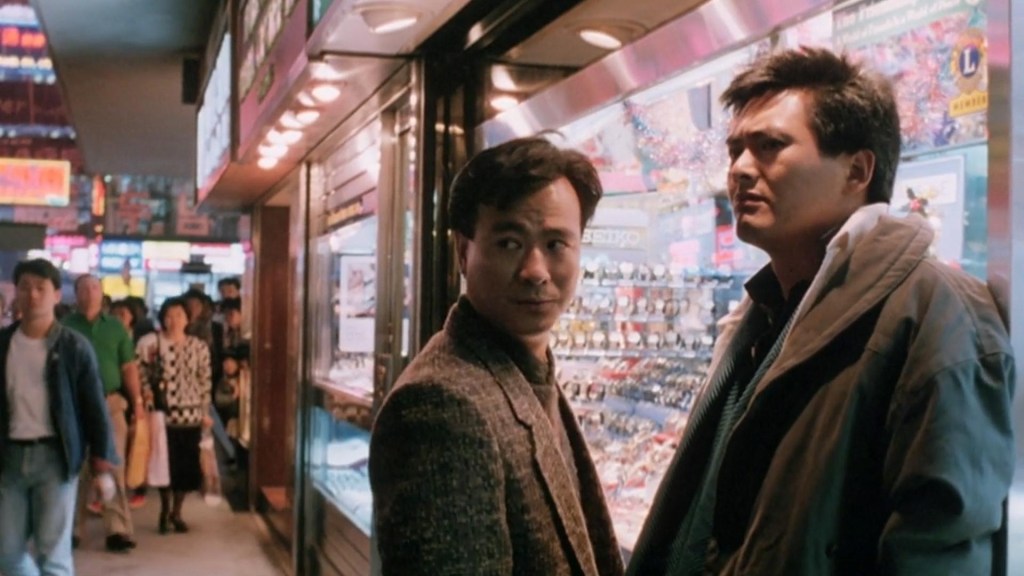
Ringo Lam’s CITY ON FIRE is one of the first movies starring Chow Yun-Fat that I really wanted to see after I had made my way through the John Woo films. Chow worked with Ringo on a total of 5 films from 1987 – 1992, and they’re a gold mine. I have previously reviewed PRISON ON FIRE and FULL CONTACT, so I decided now was a good time to take a fresh look at this one.
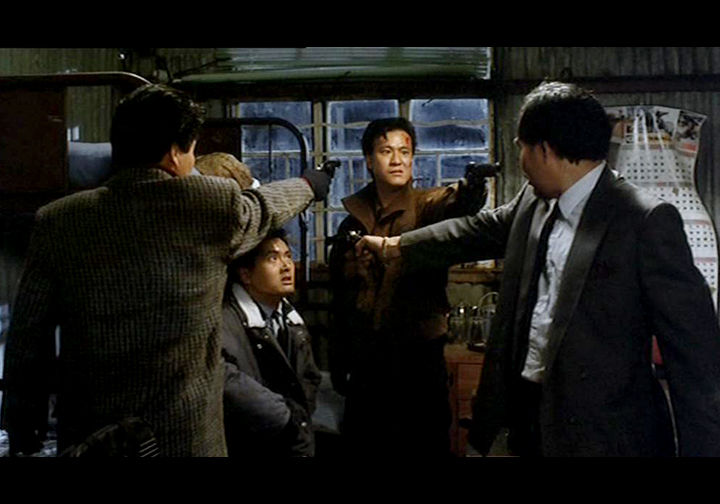
Opening with an awesomely 80’s, neon-drenched saxophone solo from Teddy Robin Kwan, CITY ON FIRE tells the story of undercover cop Ko Chow (Chow Yun-Fat). He’s practically forced by his handler on the force, Inspector Lau (Sun Yueh), to infiltrate a violent gang of jewel thieves. The problem is that he has a history of getting in way too deep, so deep that he forgets where the job ends and his real life begins. It happens again when he’s able to get close to the leader of the thieves, Fu, played by his KILLER co-star, Danny Lee. When the gang hits a jewelry store with Chow in tow, and with the cops on their trail, everything goes to hell. Some store employees are killed, some gang members are taken out, and Chow even takes one in the gut. As the survivors meet back up at the warehouse, it becomes clear that there’s a mole in their midst, even though not everyone wants to admit it.
Does that premise sound familiar to you? If you’re a big fan of Quentin Tarantino and RESERVOIR DOGS, you can’t help but recognize how strongly his film was influenced by CITY ON FIRE. The influence is clear, especially in the broad strokes of the plotline and at the famous finale, but these are two very different crime films in execution, and they’re both excellent in their own ways.
In the late 80’s, some of the best action and crime films in the world were being made in Hong Kong. So many of the films had a reckless energy, which seems to be especially evident in director Lam’s works. In contrast to John Woo’s stylish action scenes, Lam’s scenes aren’t polished. They’re more grounded, they’re chaotic, and they’re not “cool” at all. For example, the film opens with an undercover named Chan Kam-Wah (Elvis Tsui) being called out and murdered in the middle of a busy market. Stabbed multiple times with a big butcher knife while desperately fighting for his life, the scene plays out in a realistic, clumsy, and very bloody way. In other words, it’s painful to watch without a slow-mo tracking shot in sight. We know immediately that no one is safe, and there’s a palpable tension as the undercover cop / criminal drama plays out that really works for the film.
Chow Yun-fat is fantastic, with his performance winning him his 2nd consecutive Hong Kong Film Award for Best Actor. He’s not the impossibly cool heroic bloodshed hero of the prior year’s A BETTER TOMORROW. Rather, while he’s charming in certain early scenes with his girlfriend Hung (Carrie Ng), when he starts his new assignment, you can see that he’s completely exhausted with his life as an undercover cop, a life that seems to have broken him emotionally. You can almost feel an impending doom with his character that lingers over the film, turning it into something different than your average cops and robbers story. In the other major lead of the film, Danny Lee is so good as the leader of the gang of jewel thieves, Fu. He’s very professional, and once he’s accepted Chow into their ranks, he’s very friendly and personable to him. In these moments, you can see how the two men could bond. But Fu’s also shown that he will kill anyone who gets in his way, so you know it’s inevitable that the two will collide head-on at the end. When it comes, it hits hard.
I highly recommend CITY ON FIRE to any person who enjoys gritty crime films. The action is brutal, the lead performances are excellent, and the drama of the story will leave you emotionally drained as the end credits roll. I can see why it would have had a major impact on a lover of Hong Kong cinema like a young Tarantino!
CITY ON FIRE is currently streaming on Prime Video, PlutoTV, Tubi, and Plex.
“First there was darkness. Then came the strangers.” — Dr. Schreber
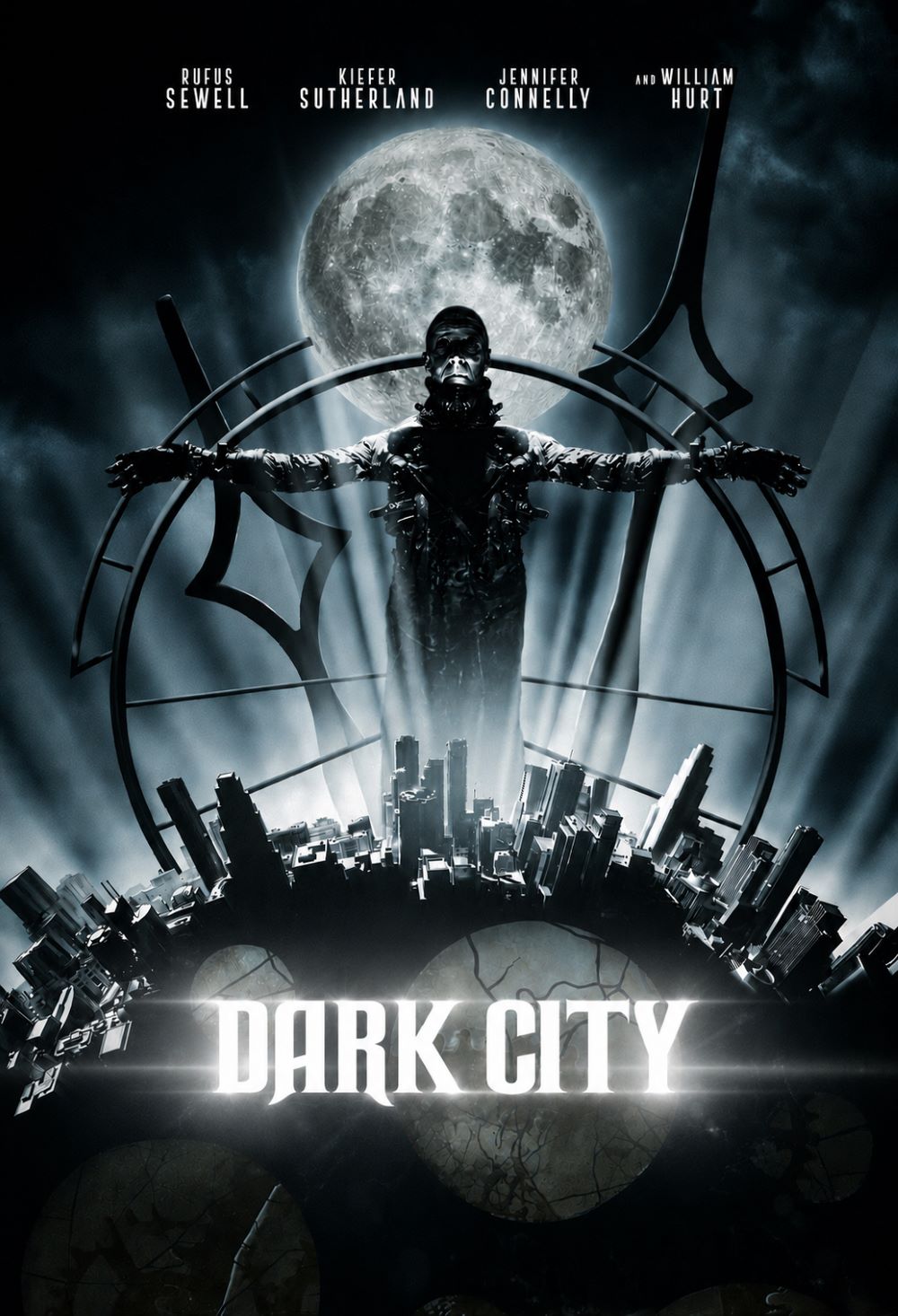
Dark City opens like a half-remembered nightmare, and that’s exactly the kind of vibe the movie sustains from start to finish. Alex Proyas builds a world that feels trapped between a detective story, a fever dream, and a sci-fi conspiracy, and the result is one of the most atmospheric films of the late ’90s.
What makes Dark City so distinctive is the way it treats its setting like an active force rather than a backdrop. The city itself feels oppressive and unstable, all sharp angles, heavy shadows, looming buildings, and damp streets that seem permanently stuck in the middle of the night. That visual approach owes a lot to German expressionism, with its warped architecture and unnatural spaces, and Proyas uses that legacy to make the city feel psychologically trapped and visually wrong in the best way. You can see the noir influence too, especially in the low-key lighting, the sense of fatalism, and the way the whole film feels like a detective story pushed through a nightmare filter.
The sci-fi side of the film is just as memorable because it doesn’t rely on shiny futurism. Instead, it leans into mystery, memory loss, and identity breakdown, which gives it a more unsettling and human quality. That’s part of why the film works so well: the weirdness is not just decorative, it’s built into the story’s central questions. The result is a movie that feels cerebral without becoming cold, and atmospheric without losing narrative momentum. Even when the film is being highly stylized, it still moves with purpose, and that keeps the viewer locked in.
The performances help sell all of that, especially Rufus Sewell as John Murdoch. He has to carry the audience through confusion, paranoia, and growing dread, and he does it with a mix of physical vulnerability and stubborn intensity. William Hurt gives the film a weary, grounded presence, while Kiefer Sutherland turns Dr. Schreber into one of those slippery, unforgettable supporting characters who always seems one step ahead of the audience. Jennifer Connelly brings warmth and melancholy to the film, which matters a lot because her character gives the story a human anchor amid all the conceptual chaos. The cast doesn’t play the material like it’s just an exercise in style; they commit to the oddness while keeping the emotional stakes legible.
What’s especially impressive is how the acting matches the movie’s visual language. A lesser cast could have made this feel overcooked or self-conscious, but here the heightened performances fit the artificial, dreamlike quality of the world. The characters are somewhat archetypal, yet that works because the film is so interested in identity as something constructed, remembered, and manipulated. In that sense, the performances aren’t just good in isolation; they’re part of the movie’s design, helping it feel like a living puzzle instead of a hollow aesthetic showcase.
The film’s influence on later sci-fi thrillers is hard to miss. A lot of movies after Dark City seem to borrow its basic flavor: the paranoid atmosphere, the reality-questioning premise, the noir-scifi crossover, and the feeling that the world itself is a conspiracy. Films like The Matrix, Memento, Minority Report, Equilibrium, and even Sin City all exist in a creative space that Dark City helped sharpen or popularize, whether directly or indirectly. It didn’t always get the mainstream recognition of some of those titles, but in terms of tone and visual influence, it was incredibly important.
Part of that legacy comes from the way Dark City captured a very specific late-’90s anxiety: the fear that memory, identity, and reality could all be manufactured. That idea became a major engine for sci-fi thrillers moving forward, especially films that wanted to combine philosophical unease with stylized action or mystery. Even the movie’s look, with its blend of noir shadows and surreal production design, became a kind of template for how to make sci-fi feel adult, moody, and psychologically unstable. It helped prove that science fiction didn’t need clean lines and sterile futures to feel intelligent; it could be dirty, haunted, and expressionist.
Dark City remains such a strong film because it understands that style and theme should feed each other. The shadows, the tilted buildings, the endless night, and the fractured sense of self all point in the same direction, creating a unified experience that feels deliberately unsteady. That’s why it lingers: not just because it looks incredible, but because it turns visual design into emotional pressure. It’s a smart, strange, and beautifully murky piece of sci-fi noir that helped clear the way for a whole wave of thrillers that wanted to feel just as paranoid and disorienting.
In the end, Dark City is the kind of movie that rewards both first-time viewers and people revisiting it years later. The plot twists are memorable, but the real achievement is the atmosphere, which is so complete it almost becomes the main character. Proyas made a film that feels like it came from the crossroads of German expressionism, classic noir, and modern sci-fi anxiety, and the result is a cult landmark that still casts a long shadow over the genre.
As some of our regular readers undoubtedly know, I am involved in a few weekly watch parties. On Twitter, I host #FridayNightFlix every Friday and I co-host #ScarySocial on Saturday. On Mastodon, I am one of the five hosts of #MondayActionMovie! Every week, we get together. We watch a movie. We tweet our way through it.
Tonight, at 10 pm et, I will be hosting #FridayNightFlix! The movie? 1992’s Under Siege!
If you want to join us this Friday, just hop onto twitter, find Under Siege on Prime, start the movie at 10 pm et, and use the #FridayNightFlix hashtag! I’ll be there happily tweeting. It’s a friendly group and welcoming of newcomers so don’t be shy.
Today’s song of the day comes to us from the soundtrack of the 1983 film, Revenge of the Ninja. Composed by Robert J. Walsh, this soundtrack will definitely leave you prepared to defeat all of your enemies, ninja-style!
(Actually, don’t try to do that without getting some training once. I speak with the experience who sprained her ankle multiple times as a result of trying to duplicated Kate Beckinsale’s Underworld moves.)
Since today is Roberto Rossellini’s birthday, today’s scene is one of the most powerful of all time.
From Rossellini’s 1945 anti-Nazi masterpiece, Rome, Open City, this scene features Anna Magnani as Pina. For the first part of the film, Pina has been a major character. We see much of occupied Rome through her eyes. We watch as she risks her life to help the Resistance and, because we’ve seen so many movies, we assume that the filmmakers will protect her because she’s the main character. In this devastating scene, Rossellini shows us that no one is safe in an occupied city, not even a pregnant woman.
It’s just another day in Rome.
John Milius later paid homage to this scene in Red Dawn.
4 Shots From 4 Films is just what it says it is, 4 shots from 4 of our favorite films. As opposed to the reviews and recaps that we usually post, 4 Shots From 4 Films lets the visuals do the talking!
120 years ago, on this date, the great Italian neorealist director (and husband of Ingrid Bergman and father of Isabella Rossellini), Roberto Rossellini was born in Rome. It’s time for….
4 Shots From 4 Roberto Rossellini Films
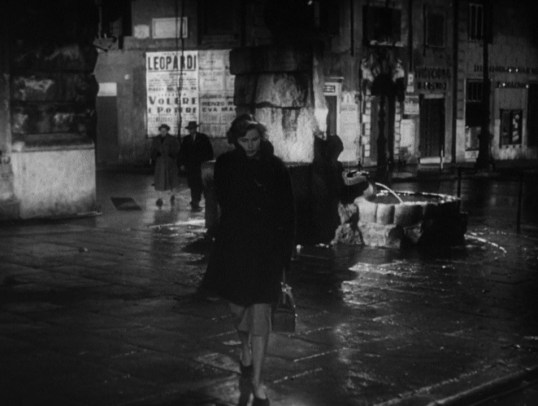
Rome, Open City (1945, dir by Roberto Rossellini, DP: Ubaldo Arata)
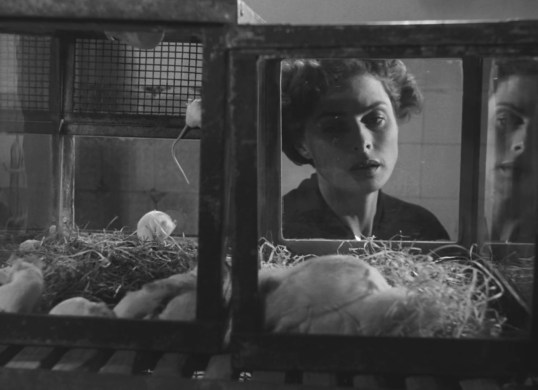
Europe ’51 (1952, dir by Roberto Rossellini, DP: Aldo Tonti)
Fear (1954, dir by Roberto Rossellini, DP: Carlo Carlini, DP: Heinz Schnackertz)
Journey to Italy, (1954, dir by Roberto Rossellini, DP: Enzo Serafin)
Inspired by the collapse of Soviet-style communism in the late 80s and the early 90s (in particular, the fall of the Berlin Wall and the overthrow of Nicolae Ceaușescu in Romania), Right Here, Right Now not only sold over 1 million copies but it was also the most played song on college radio in 1991.
The video, which mixes performance footage with news footage from Eastern Europe, was the first music video to be directed by Matthew Amos. Amos went on to direct videos for Stereo MCs, Manic Street Preachers, Slipknot, and the Charlatans.