Film Review: The Prestige (dir. by Christopher Nolan)


“You don’t really want to work it out. You want to be fooled.” — Cutter

The best magic tricks depend on a peculiar agreement between performer and audience: we know we are being deceived, yet we want the deception to succeed. Christopher Nolan’s The Prestige turns that agreement into the foundation of a film about two men who can no longer distinguish the pleasure of creating an illusion from the need to possess its secret. Their rivalry begins on the stage, but it soon consumes everything beyond it. What emerges is more than a mystery built around competing magicians. It is a dark, absorbing examination of obsession, sacrifice, and the terrible distance between earning applause and finding satisfaction.

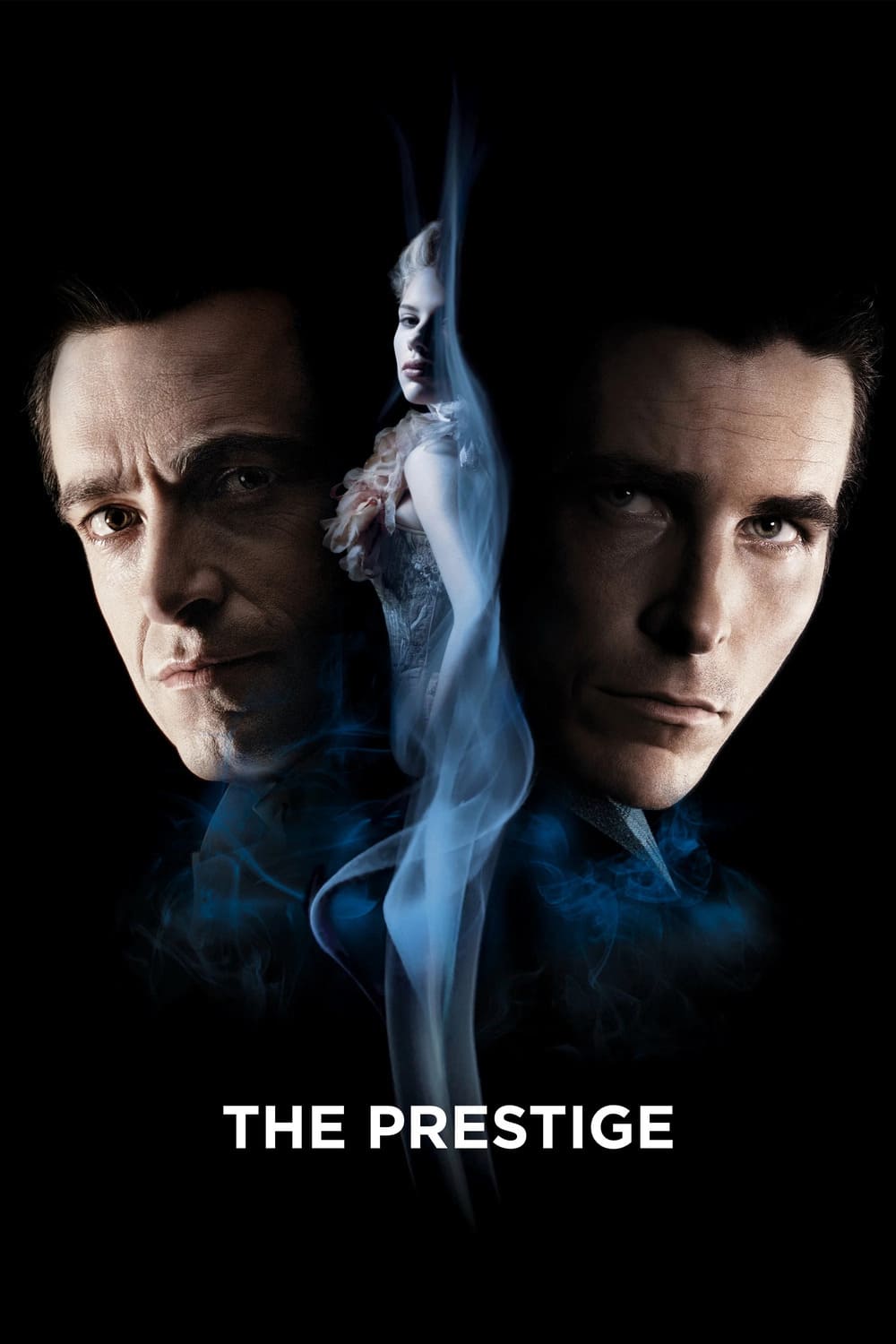
Adapted by Christopher and Jonathan Nolan from Christopher Priest’s novel, The Prestige follows Alfred Borden (Christian Bale) and Robert Angier (Hugh Jackman), magicians whose professional ambitions become inseparable from a deeply personal feud. Having read the novel, I approached the adaptation with some hesitation. Much of the book’s appeal comes from the way its journals and personal accounts allow characters to reveal information while concealing their intentions. Bringing that experience to the screen requires more than faithfully reproducing the plot. It requires finding a cinematic equivalent for the uncertainty of reading someone else’s carefully constructed version of events.

The Nolan brothers understand that distinction. Rather than presenting the rivalry as a straightforward progression from friendship to hostility, they move among its beginnings, consequences, and apparent resolutions. One scene supplies information that changes our understanding of another; a confession becomes a provocation; an explanation raises a new question. The fractured chronology recalls Christopher Nolan’s narrative experimentation in Memento, but here the structure has a different effect. We are not simply trying to determine what happened. We are trying to decide who controls the story—and what that person gains by telling it.

The film gives us its organizing principle through Cutter, the stage engineer played by Michael Caine. He explains that a magic trick has three parts. In “the pledge,” the magician presents something ordinary. In “the turn,” that ordinary thing undergoes an extraordinary transformation or disappearance. Finally, “the prestige” completes the illusion by bringing back what seemed to be lost. Nolan uses this explanation as both an invitation and a warning. He tells us to watch closely, then trusts that our eagerness to see something extraordinary will distract us from the significance of what we see.

That approach makes The Prestige especially satisfying as a mystery. Its clues are not merely withheld until the screenplay decides to reveal them. Many are placed directly before us, disguised by context or overshadowed by something more immediately dramatic. An attentive viewer may anticipate part of the solution relatively early, but recognizing a secret does not necessarily diminish the film. There is still the question of how it works, what it costs, and how far either magician is willing to go to protect it.

Those costs give the elaborate construction its emotional weight. Borden and Angier begin as colleagues working for Milton the Magician, played by Ricky Jay, with Cutter providing the technical expertise behind the act. Even then, their differences are apparent. Borden is instinctively inventive, impatient with limitations, and willing to take risks in pursuit of a better illusion. Angier understands presentation: the timing, confidence, and theatrical flair that persuade an audience to invest in a performance. Each has a talent the other lacks, and neither can comfortably accept that imbalance.

A tragedy turns those differences into grievances. From that point forward, professional competition becomes a means of assigning blame and exacting punishment. Their efforts to improve their acts increasingly serve another purpose: to deny the other man the satisfaction of success. They interrupt performances, steal information, manipulate loyalties, and endanger the people around them. Eventually, it becomes difficult to separate their desire to achieve greatness from their desire to make the other suffer.

One of the screenplay’s strongest decisions is its refusal to make either man an uncomplicated hero. Angier’s charm does not excuse his cruelty, and Borden’s ingenuity does not make his emotional evasiveness easier to bear. The film allows us to understand their grievances without asking us to endorse their actions. Our sympathies shift because both men remain recognizably human even as their behavior becomes increasingly monstrous.

Jackman is particularly effective at showing how an accomplished public performer can become privately consumed by resentment. Angier knows how to hold an audience, but he cannot enjoy that gift while Borden possesses a secret he cannot explain. Jackman lets the frustration accumulate beneath the polished exterior until the pursuit of an answer becomes more important than the applause that supposedly motivated him.

Bale gives Borden a more guarded, abrasive presence. His confidence in his craft contrasts with his difficulty explaining himself to the people closest to him. At times, he seems capable of extraordinary commitment; at others, he appears maddeningly indifferent to the consequences of that commitment. Bale makes those contradictions compelling without smoothing them away. Together, the two actors turn the rivalry into something more unsettling than a contest between evenly matched opponents. Each man becomes the justification for the other’s worst impulses.

Caine provides an essential counterweight. Cutter understands the labor behind an illusion, but he also recognizes that technical possibility is not the same as moral permission. His practical manner grounds the film whenever its central characters threaten to disappear into their own grand ambitions. He is persuasive as someone who loves the craft while retaining a sense of proportion about what it should demand.

The women caught in the rivalry make its consequences harder to dismiss. Scarlett Johansson’s Olivia is more than a glamorous addition to the stage act. Her shifting loyalties reveal how readily both magicians turn intimacy into strategy. She may be drawn to their talent, but neither man can reliably separate affection from advantage. The film is at its most painful when their need to preserve a secret prevents them from responding honestly to another person.

The production design reinforces the divide between public enchantment and private effort. Onstage, an illusion appears graceful and instantaneous. Backstage, it depends on cramped spaces, concealed mechanisms, repetition, and people whose work the audience never sees. Nathan Crowley’s Victorian settings give those hidden processes a persuasive physical presence. The theaters and workshops belong to the same world, but they offer very different views of what constitutes magic.

That world expands with the arrival of Nikola Tesla, played by David Bowie. Bowie’s restrained, enigmatic performance makes Tesla feel distinct from the showmen seeking his help. He has little need to command a room, yet his work promises something more astonishing than anything their theatrical ingenuity can produce. The machinery surrounding him introduces a steampunk atmosphere and pushes the story toward science fiction without abandoning its central concerns.

For me, this shift works because the film has already established the dangerous appeal of an impossible solution. Tesla’s experiments offer another way to pursue the same ambition that drives the rivalry: to accomplish something so extraordinary that no competitor can answer it. The question is no longer simply whether an illusion can be perfected. It is whether either magician would recognize a point at which perfection demands too much.

There is a risk that such an intricately constructed film will seem more interested in concealing its mechanism than in developing its characters. Some viewers will undoubtedly regard The Prestige as an elaborate gimmick, and its screenplay certainly invites admiration for its engineering. Yet the revelations matter because they change our understanding of the behavior that precedes them. What first appears to be stubbornness, inconsistency, or theatrical bravado acquires a darker significance. The solution does not erase the drama; it exposes the full extent of it.

What stayed with me after The Prestige was not simply the satisfaction of learning how its tricks were done. It was the realization that neither magician could accept a life in which the other remained beyond his understanding. Nolan delivers the pleasures of a cleverly concealed mechanism, but the final revelation leaves something less comfortable than admiration in its wake. We can finally see what these men have made of themselves, even if they never fully can. The secrets are impressive, but the human wreckage behind them is what gives the illusion its lasting power.
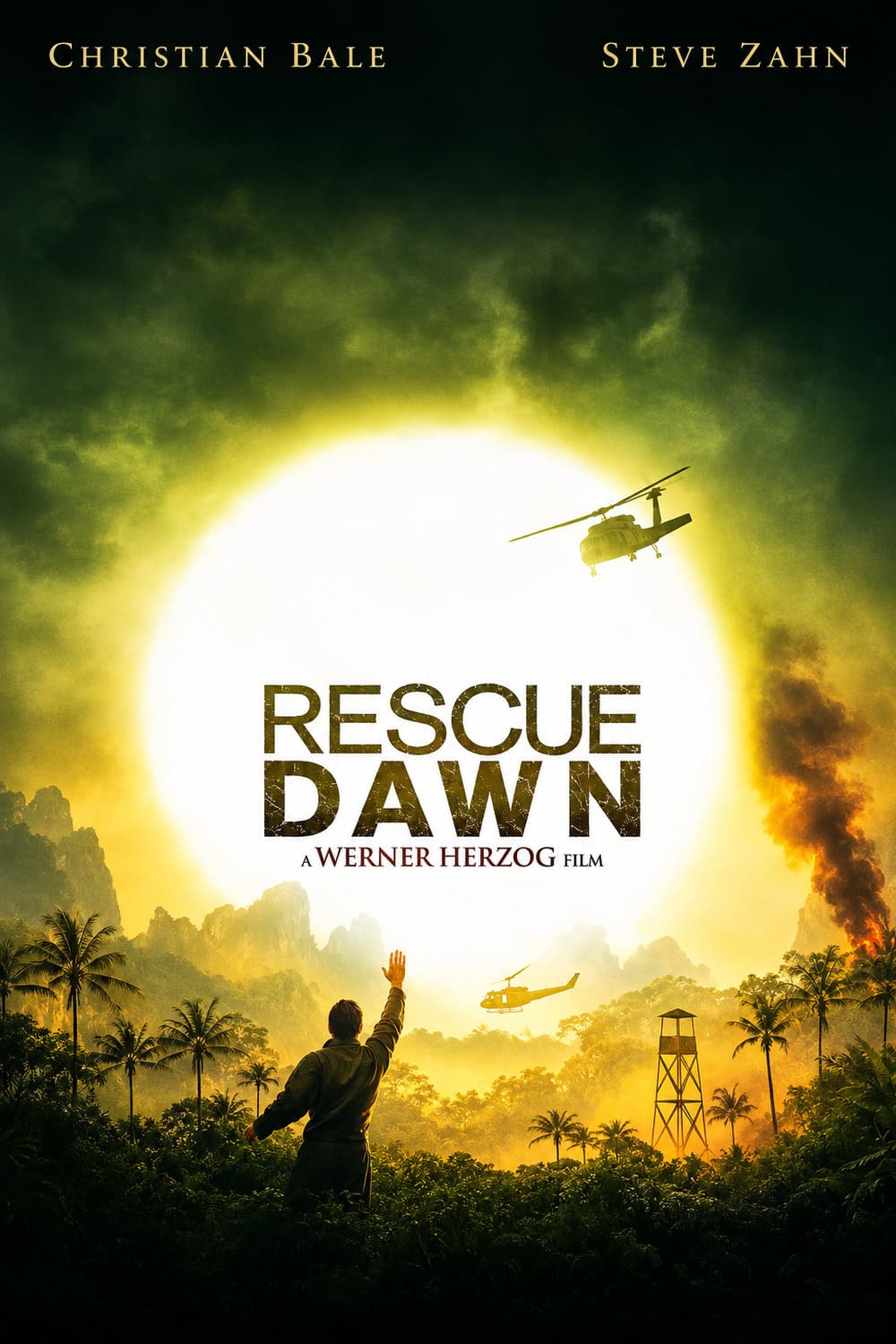
Film Review: Rescue Dawn (dir. by Werner Herzog)


“The jungle is the prison.” — Lt. Duane Martin

Werner Herzog’s Rescue Dawn (2006) is a war movie that gets more interesting once the machinery of war falls away. Forget sweeping battlefield victories or speeches about duty. This is a film about hunger, filthy clothes, damaged feet, and the stubborn belief that tomorrow might still be worth reaching. Based on the true story of Dieter Dengler, a German-born American Navy pilot shot down over Laos during the Vietnam War, it turns an extraordinary survival ordeal into something painfully physical. It’s tense, occasionally funny, and often exhausting in exactly the way it should be. Herzog makes survival feel less like destiny than hard, miserable work.

Christian Bale plays Dengler as a man whose enthusiasm hasn’t caught up with the danger around him. Flying is his dream, and military service provides the opportunity to do it. That distinction matters: he comes across less as a born warrior than as someone whose private obsession has delivered him into a geopolitical nightmare. When his aircraft goes down, the movie abruptly strips away the protection of technology, training, and military belonging. He’s a stranded body in unfamiliar territory. Herzog doesn’t need to oversell that reversal. The distance between controlling a plane and struggling through undergrowth is dramatic enough.

Herzog had already explored Dengler’s experiences as a prisoner of war in his earlier documentary, Little Dieter Needs to Fly (1997). That film featured the real Dengler recounting his life and returning with Herzog to revisit and reenact parts of his captivity and escape. Rescue Dawn, then, isn’t a filmmaker discovering a remarkable story so much as returning to one he clearly couldn’t shake. The documentary approaches the ordeal through memory and the personality of its survivor; the dramatic feature pushes us into the immediate business of enduring it. They complement each other without feeling interchangeable, even when they cover the same terrible ground.

Bale is excellent, particularly because he doesn’t make Dengler’s determination entirely comfortable to watch. His optimism can seem inspiring one minute and almost irritating the next. You understand why a refusal to surrender might keep someone alive, but you also understand why exhausted fellow prisoners wouldn’t always welcome another bright idea. Bale gives that confidence an awkward, boyish energy rather than the polished authority of a conventional action hero. His physical commitment is obvious, but the performance works because there’s a recognizable personality beneath the deterioration. We aren’t just watching an actor become thinner and dirtier. We’re watching someone fight to preserve his sense of possibility.

The prison-camp scenes are where the film really tightens its grip. Confinement isn’t presented as one continuous burst of dramatic suffering. It’s repetition, boredom, discomfort, and the effort of living alongside people whose nerves have already been rubbed raw. Conversations circle around escape, food, and whether any plan has a realistic chance of working. Small disagreements acquire enormous weight because nobody has the space or freedom to walk away. Herzog understands that suspense can come from waiting as much as action. A whispered discussion or a moment of hesitation can feel more dangerous than a loud confrontation, because everything depends on people who are already close to breaking.

Steve Zahn, playing fellow prisoner Duane, supplies much of the film’s emotional force. There’s something devastating about how little protection the performance gives him. He looks frightened, depleted, and increasingly dependent on the fragile connection he forms with Dieter. Their companionship never becomes a sentimental buddy-movie routine; it’s more basic and more moving than that. Having another person beside you means there’s still someone to speak to, help, and keep going for. Jeremy Davies brings a different kind of strain to Gene, whose resistance to Dieter’s plans makes the group dynamic prickly. Together, the performances prevent captivity from becoming merely a showcase for Bale.

Then there’s the jungle, which Herzog films without turning it into either a postcard or a supernatural villain. It’s beautiful, certainly, but that beauty offers absolutely no reassurance. Water, thick vegetation, steep ground, and the simple difficulty of finding a way forward make every movement costly. Escape doesn’t suddenly open the movie into freedom; it exchanges one form of imprisonment for another. That’s the nasty little truth at the center of Rescue Dawn: getting beyond the guards doesn’t mean getting beyond danger. The landscape has no interest in rewarding courage, and Herzog is very good at making that indifference feel enormous.

What I like most is how practical the film remains. Survival isn’t an abstract test of the human spirit conducted somewhere above ordinary bodily needs. It means finding something to eat, deciding when to move, and scraping together enough strength for another stretch of ground. Even the more startling moments work because they belong to that material world. Herzog doesn’t constantly stop to announce how profound it all is. He lets the accumulation of discomfort do the talking. The result is an adventure film in which adventure has been stripped of most of its glamour, leaving ingenuity, terror, and occasional absurdity behind.

That said, the film’s narrow focus has limitations. The surrounding war receives far less attention than Dieter’s ordeal, and the people holding him captive rarely gain the interior complexity granted to the Americans. That imbalance makes the survival narrative direct and accessible, but it also leaves parts of its human landscape frustratingly thin. There’s a difference between sticking closely to one man’s experience and allowing everyone outside it to remain a threatening outline. Rescue Dawn doesn’t always negotiate that difference gracefully. Its emotional clarity comes partly from simplification, and viewers wanting a broader reckoning with the conflict may find that approach restrictive.

The ending also nudges toward a more familiar kind of uplift than the preceding ordeal seems to promise. After so much uncertainty and physical misery, the movement toward celebration feels almost too tidy. Still, it would be unfair to mistake the film for an uncomplicated victory lap. What lingers is not military triumph but the unsettling distance between a person’s determination and the world’s complete lack of concern. Rescue Dawn is gripping because Herzog respects both sides of that equation. Dieter’s will matters enormously, but it doesn’t magically make him safe. As a survival drama, the film is tough, absorbing, and deeply humane; as a portrait of optimism under unbearable pressure, it’s even better.

Nicolas Cage is John Madden in MADDEN!


I’m watching Thursday Night Football tonight and they’re advertising the new movie where Nicolas Cage plays the legendary Raiders coach and television broadcaster, John Madden. It’s directed by David O. Russell, and Christian Bale portrays the iconic Oakland Raiders owner, Al Davis. Are y’all looking forward to this film? I personally am interested in just about anything starring Cage!

I share the trailer below. Check it out!

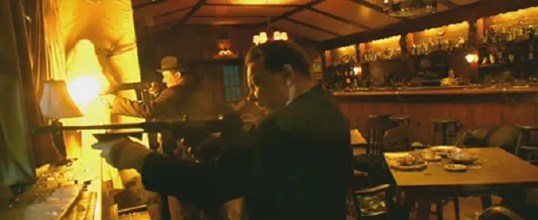
Film Review: Public Enemies (dir by Michael Mann)


2009’s Public Enemies is a portrait of the battle for the soul and imagination of America.

The films take place during the Great Depression.  With Americans struggling to pay their bills and many citizens out-of-work and feeling desperate, a new breed of folk hero has emerged.  Men like my distant relative Pretty Boy Floyd (Channing Tatum) and Alvin Karpis (Giovanni Ribisi) may be criminals who make their living by robbing banks but, to a nation of angry people who feel like they’ve been forgotten by the government and betrayed by the wealthy, they’re rebels who are challenging the system.  They are viewed as being modern-day Robin Hoods, even though very few of them actually bother to give the money that they steal back to the poor.

John Dillinger (Johnny Depp) is perhaps the most famous of the criminals who have been declared a “public enemy” by the FBI.  The handsome and charismatic Dillinger becomes almost a living legend, the man who cannot be captured by law enforcement.  He becomes a folk hero but with the twist that his own death seems inevitable.  Dillinger lives by his own set of rules and the press loves him even as they hungrily anticipate his violent end.

Pursuing Dillinger and the other so-called public enemies is a young FBI agent named Melvin Purvis (Christian Bale).  Purvis’s job is not only to capture or eliminate men like Dillinger.  It’s also to somehow figure out a way to replace them in the public’s imagination.  Through the use of what was then-considered to be revolutionary techniques (like fingerprinting and phone taps), Purvis tracks down one public enemy after another and soon, he’s becoming as much of a folk hero as the people that he’s pursuing.  If Dillinger and his cohorts represent the ultimate rebellion against an ineffectual system, Purvis and his success suggest that maybe the system actually can get something accomplished.  Unfortunately, for Purvis, he not only has to deal with the challenge of capturing Dillinger but also with the growing jealousy of his publicity-hungry boss, J. Edgar Hoover (Billy Crudup).  As is typical of the heroes of Michael Mann’s film, Dillinger and Purvis may be on different sides of the law but they have more in common than they realize.  Neither one can trust the people that they’re working with.

I remember that I was really excited about Public Enemies when it was first released in 2009.  I’m fascinated by the Depression-era outlaws and Dillinger’s story is certainly an interesting one.  (I’ve always enjoyed the theory that Dillinger faked his death, even though I don’t believe it for a second.)  Michael Mann seemed like the perfect director for the material and Johnny Depp seemed like ideal casting.  I have to admit that I was a little bit disappointed in the film itself, which was poorly paced and stuck so closely to the facts of the case that it led me to realize that Dillinger will always be more interesting as a legend than an actual person.  (I’ll concede that was probably the film’s point.)  There were moments of brilliance in the film.  The scene where Dillinger escaped from custody was wonderfully done.  Stephen Graham’s unhinged performance as Baby Face Nelson was excellent.  Johnny Depp had the right look for Dillinger but I have to admit that I found myself a little bit bored with Christian Bale’s Melvin Purvis.

Looking back today, though, the film feels almost prophetic.  That may seem like an odd thing to say about a film set in the past but Public Enemies portrait of an America caught between celebrating the rule of law and the excitement of rebellion feels very relevant to what’s happening today.  In retrospect, Public Enemies is a portrait of the contradiction at the heart of America, a country with a culture of both rebellion and loyal patriotism.  Public Enemies portrays a battle the continues to this day.

Public Enemies (2009, dir by Michael Mann, DP: Dante Spinotti)

Ford v Ferrari (dir. by James Mangold)


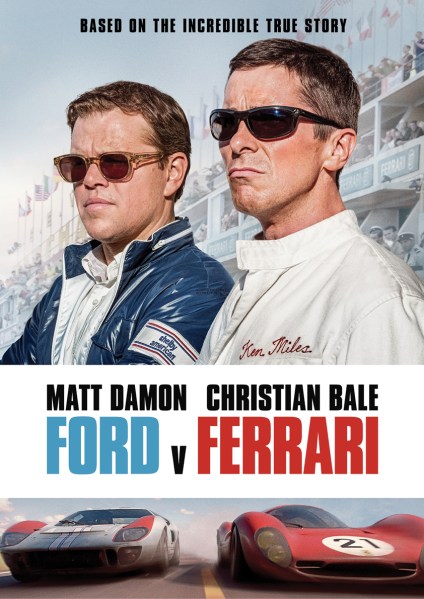
fordvferrari posterIt’s rare for me to say that I enjoyed a film so much that I didn’t want it to end, but James Mangold’s Ford v. Ferrari hits all the right notes. A fantastic cast, impressive visuals on the races, scenes that flow without any time wasted and sound that begs to be heard on a surround system. It’s no surprise that the film earned Four Oscar Nominations – Best Sound Editing, Best Sound Mixing, Best Film Editing and Best Picture, all of which are well deserved. If the lineup this year wasn’t so stacked, I’d say that Ford v Ferrari would score quite a bit. It can go any way, but It may end up like The Shawshank Redemption – A great film that could be eclipsed by giants.
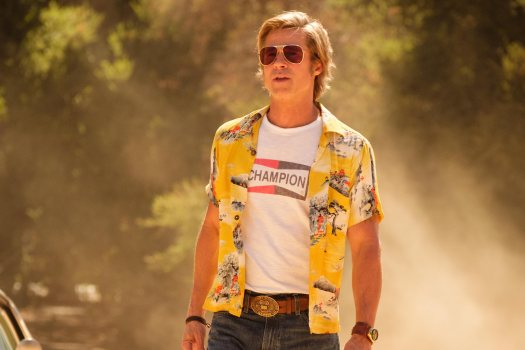
Based on a true story, Ford v. Ferrari focuses on the Ford Motor Company in the mid 60’s, down on its luck and looking for a way to stay ahead of the game. Henry Ford II, played by a scene stealing Tracy Letts (August: Osage County), asks his workers to come up with an idea. A young Lee Iacoccoa  (Jon Bernthal, The Punisher) feels the best way to do so is to attempt to win the famed 24 hour race at Le Mans in France. The LeMans is dominated by Ferrari, who hand manufactures their machines to be legends in the racing circuit. If Ford could win, it would put them in a better light to consumers, but winning requires more than just a fast car.

Ford enlists the help of Carroll Shelby (Matt Damon, The Martian), along with his brash and skillful driver, Ken Miles (Christian Bale, 3:10 to Yuma), Ken has a few issues getting along with others, but his knowledge of cars is brilliant. Shelby continuously goes to bat for Miles, who isn’t exactly poster boy material in the eyes of Ford.  Together, they work on building a competitive vehicle. The poster may suggest the story is about the cars, but at its heart, I felt that Ford v. Ferrari was more about the friendship between Shelby and Miles than anything else. Their mutual love of cars and racing is what ties it all together.

When it comes to the technical points of racing, Ford v Ferrari’s script doesn’t ask you to know much about cars going in. Just about everything you need to about the LeMans and the abilities of the cars is explained through the characters over time. Car gurus may find areas where liberties are taken, but casual watchers should find themselves entertained.

Kudos goes out to the casting for Ford v. Ferrari. Josh Lucas (Poseidon) plays the heavy in the film as a Ford businessman who would love to see Miles out of the spotlight. Caitriona Balfe (Starz’ Outlander) has some good moments with Bale as Miles’ wife, Mollie, though she happens to be the only woman in the film with many lines. Given that the story takes place in the 1960s and its guys building cars, it made sense. Playing Miles son, Peter, Noah Jupe (Honey Boy, A Quiet Place) is that character that helps the audience understand the nuances of racing. I kind of wish Bernthal had more to do here, but he’s cool when he’s on screen and carries his weight easily.

The film belongs to Damon and Bale, though. Damon’s Shelby is full of attitude. He knows what he wants to get done, what needs to happen and just does it. Damon carries this with ease, and it’s easy to forget that the actor is there at times (for me, anyway). Bale does the same, but is on a different level, with his Ken Miles being both focused and a little wild, perhaps even cynical. There’s a great mix of comedy and drama between the two actors.

The sound quality of Ford v. Ferrari is amazing. If you had the chance to see it in the cinema, consider yourself lucky. The rev of the engines are crisp, the shifting the of gears sublime. I’d be somewhat shocked if the film doesn’t walk away with the Sound Mixing / Sound Editing Oscars. From a visual standpoint, the races themselves offer some nice tracking shots, though there may be one or two scenes that particularly stand out.

Mangold and Phedon Papamichael (his Director of Photography for Walk the Line) perform some interesting tricks with the camera. With the races themselves, the cuts are smooth. You have dynamic tracking shots of cars  in some cases while others are lit enough to be comfortable. One of my favorite scenes involves a play on shadows that makes it appear like you’re watching a race, complete with the sound of the cars in the background. It’s subtle touches like that make me wonder why it wasn’t nominated for Best Cinematography. I should also note that for a 2:30 minute film, it flies by. I found very few (if any) moments where I felt a scene wasn’t particularly needed to push the narrative along. You can thank Jez and John-Henry Butterworth (Edge of Tomorrow) for that screenplay.

I can’t say I have any real problems with Ford v Ferrari. Overall, it’s an entertaining film right from the start that gets you into the story and behind the wheel.

Here Are The SAG Nominations!


The SAG nominations were announced this morning.

For those of you keeping track of precursors and using them to shape your own predictions, the SAG nominations are usually a pretty big deal.  It’s rare that every film that gets a best ensemble nomination also gets a best picture nominations.  (In the past, The Big Sick, Trumbo, and Beasts of No Nation all got ensemble noms without also getting a best picture nomination.)  But, at the same time, the SAG is full of Academy members (the Actor’s Division is the largest part of the Academy) so their nominations are definitely a good sign of the way the winds are blowing.

So, a look at the nominations below — very bad news for Adam Sandler.  I have a hard time seeing how he can get an Oscar nomination without also a Golden Globe or SAG nomination.  Good news for Christian Bale, who is rapidly becoming the male Meryl Streep as far as automatic nominations are concerned.  Good news for Bombshell.  Good news for me, because I predicted that the liberals in Hollywood would embrace Bombshell for the same reason that they embraced films like Vice and The Big Short (i,e., “honoring Jay Roach and Adam McKay movies to own the cons”).  Potentially bad news for Kathy Bates, who received a Golden Globe nomination for her performance in Richard Jewell but not one from SAG.  Bad news for 1917, which was totally rejected by the SAG.  Potentially good news for Joker, which may have missed out on Ensemble but still picked up nominations for Joaquin Phoenix and the stunts crew.

Anyway, here are the SAG film nominees:

Outstanding Performance by a Male Actor in a Leading Role:

Christian Bale (“Ford v Ferrari”)
Leonardo DiCaprio (“Once Upon a Time in Hollywood”)
Adam Driver (“Marriage Story”)
Taron Egerton (“Rocketman”)
Joaquin Phoenix (“Joker”)

Outstanding Performance by a Female Actor in a Leading Role:

Cynthia Erivo (“Harriet”)
Scarlett Johansson (“Marriage Story”)
Lupita Nyong’o (“Us”)
Charlize Theron (“Bombshell”)
Renée Zellweger (“Judy”)

Outstanding Performance by a Male Actor in a Supporting Role:

Jamie Foxx (“Just Mercy”)
Tom Hanks (“A Beautiful Day in the Neighborhood”)
Al Pacino (“The Irishman”)
Joe Pesci (“The Irishman”)
Brad Pitt (“Once Upon a Time in Hollywood”)

Outstanding Performance by a Female Actor in a Supporting Role:

Laura Dern (“Marriage Story”)
Scarlett Johansson (“Jojo Rabbit”)
Nicole Kidman (“Bombshell”)
Jennifer Lopez (“Hustlers”)
Margot Robbie (“Bombshell”)

Outstanding Performance by a Cast in a Motion Picture:

“Bombshell” (Lionsgate)
“The Irishman” (Netflix)
“Jojo Rabbit” (Fox)
“Once Upon a Time in Hollywood” (Sony)
“Parasite” (Neon)

Outstanding Action Performance by a Stunt Ensemble in a Motion Picture:

“Avengers: Endgame”
“Ford v Ferrari”
“The Irishman”
“Joker”
“Once Upon a Time in Hollywood”

Here Are The 2019 Nominations of the San Diego Film Critics Society!


On December 6th, the San Diego Film Critics Society announced their nominees for the best of 2019 and here they are!

Best Picture
1917
THE IRISHMAN
JOKER
MARRIAGE STORY
ONCE UPON A TIME… IN HOLLYWOOD

Best Director
Noah Baumbach, MARRIAGE STORY
Sam Mendes, 1917
Benny Safdie, Josh Safdie, UNCUT GEMS
Martin Scorsese, THE IRISHMAN
Quentin Tarantino, ONCE UPON A TIME… IN HOLLYWOOD

Best Actor
Christian Bale, FORD V FERRARI
Adam Driver, MARRIAGE STORY
Eddie Murphy, DOLEMITE IS MY NAME
Joaquin Phoenix, JOKER
Adam Sandler, UNCUT GEMS

Best Actress
Awkwafina, THE FAREWELL
Scarlett Johansson, MARRIAGE STORY
Lupita Nyong’o, US
Saoirse Ronan, LITTLE WOMEN
Renée Zellweger, JUDY

Best Supporting Actor
Willem Dafoe, THE LIGHTHOUSE
Al Pacino, THE IRISHMAN
Joe Pesci, THE IRISHMAN
Brad Pitt, ONCE UPON A TIME… IN HOLLYWOOD
Wesley Snipes, DOLEMITE IS MY NAME

Best Supporting Actress
Laura Dern, MARRIAGE STORY
Thomasin McKenzie, JOJO RABBIT
Florence Pugh, LITTLE WOMEN
Zhao Shuzhen, THE FAREWELL
Octavia Spencer, LUCE

Best Comedic Performance
Daniel Craig, KNIVES OUT
Eddie Murphy, DOLEMITE IS MY NAME
Sam Rockwell, JOJO RABBIT
Wesley Snipes, DOLEMITE IS MY NAME
Taika Waititi, JOJO RABBIT

Best Original Screenplay
Noah Baumbach, MARRIAGE STORY
Bong Joon Ho, Jin Won Han, PARASITE
Rian Johnson, KNIVES OUT
Benny Safdie, Josh Safdie, UNCUT GEMS
Quentin Tarantino, ONCE UPON A TIME… IN HOLLYWOOD

Best Adapted Screenplay
Greta Gerwig, LITTLE WOMEN
J.C. Lee, Julius Onah, LUCE
Todd Phillips, Scott Silver, JOKER
Taika Waititi, Christine Leunens, JOJO RABBIT
Steven Zaillian, THE IRISHMAN

Best Documentary
APOLLO 11
THE BIGGEST LITTLE FARM
LOVE, ANTOSHA
ONE CHILD NATION
THEY SHALL NOT GROW OLD

Best Animated Film
ABOMINABLE
HOW TO TRAIN YOUR DRAGON: THE HIDDEN WORLD
I LOST MY BODY
MISSING LINK
TOY STORY 4

Best Foreign-language Film
THE FAREWELL
PAIN & GLORY
PARASITE
PORTRAIT OF A LADY ON FIRE
TRANSIT

Best Costume Design
Ruth E. Carter, DOLEMITE IS MY NAME
Julian Day, ROCKETMAN
Jacqueline Durran, LITTLE WOMEN
Arianne Phillips, ONCE UPON A TIME… IN HOLLYWOOD
Anna Robbins, DOWNTON ABBEY

Best Editing
Andrew Buckland, Michael McCusker & Dirk Westervelt, FORD V FERRARI
Jennifer Lame, MARRIAGE STORY
Fred Raskin, ONCE UPON A TIME… IN HOLLYWOOD
Benny Safdie, Ronald Bronstein, UNCUT GEMS
Thelma Schoonmaker, THE IRISHMAN

Best Cinematography
Jarin Blaschke, THE LIGHTHOUSE
Roger Deakins, 1917
Hoyte Van Hoytema, AD ASTRA
Rodrigo Prieto, THE IRISHMAN
Phedon Papamichael, FORD V FERRARI

Best Production Design
Dennis Gassner, 1917
Jess Gonchor, LITTLE WOMEN
Clay A. Griffith, DOLEMITE IS MY NAME
Barbara Ling, ONCE UPON A TIME… IN HOLLYWOOD
Bob Shaw, THE IRISHMAN
Donal Woods, DOWNTON ABBEY

Best Visual Effects
1917
AD ASTRA
THE AERONAUTS
AVENGERS: ENDGAME
THE IRISHMAN

Best Use of Music
JOJO RABBIT
JOKER
ONCE UPON A TIME… IN HOLLYWOOD
ROCKETMAN
YESTERDAY

Best Ensemble
DOWNTON ABBEY
THE IRISHMAN
KNIVES OUT
MARRIAGE STORY
ONCE UPON A TIME… IN HOLLYWOOD

Breakthrough Artist
Jessie Buckley, JUDY, WILD ROSE
Julia Butters, ONCE UPON A TIME… IN HOLLYWOOD
Roman Griffin Davis, JOJO RABBIT
Kelvin Harrison Jr., LUCE, WAVES
Florence Pugh, LITTLE WOMEN, MIDSOMMAR

The Satellites Really Like Ford V Ferrari


The Satellite Nominations were announced earlier today and they appear to really, really like Ford v. Ferrari.

Now, you may be asking yourself, “Who gives out the Satellites?”  They are awarded by the International Press Academy.  They should not be mistaken for the Golden Globes, which are given out the Hollywood Foreign Press Association.  Instead, the Satellites should probably be considered the Golden Globes’s less popular cousins.  Unlike the Globes, they haven’t really proven themselves to be reliable as a precursor.

Anyway, here are the Satellite Film Nominations.  If you want to see their television nominations, click here!

ACTRESS IN A MOTION PICTURE DRAMA

  • Alfre Woodard, “Clemency”
  • Charlize Theron, “Bombshell”
  • Cynthia Erivo, “Harriet”
  • Helen Mirren, “The Good Liar”
  • Renee Zellweger, “Judy”
  • Scarlett Johansson, “Marriage Story”

ACTOR IN A MOTION PICTURE DRAMA

  • Adam Driver, “Marriage Story”
  • Antonio Banderas, “Pain and Glory”
  • Christian Bale, “Ford v Ferrari”
  • George MacKay, “1917″
  • Joaquin Phoenix, “Joker”
  • Mark Ruffalo, “Dark Waters” 

ACTRESS IN A MOTION PICTURE, COMEDY OR MUSICAL

  • Awkwafina, “The Farewell”
  • Ana De Armas, “Knives Out”
  • Constance Wu, “Hustlers”
  • Julianne Moore, “Gloria Bell”

ACTOR IN A MOTION PICTURE, COMEDY OR MUSICAL

  • Adam Sandler, “Uncut Gems”
  • Daniel Craig, “Knives Out”
  • Eddie Murphy, “Dolemite Is My Name”
  • Leonardo DiCaprio, “Once Upon a Time in Hollywood”
  • Taron Egerton, “Rocketman”
  • Taika Waititi, “Jojo Rabbit”

ACTRESS IN A SUPPORTING ROLE

  • Jennifer Lopez, “Hustlers”
  • Laura Dern, “Marriage Story”
  • Margot Robbie, “Bomshell”
  • Penelope Cruz, “Pain and Glory”
  • Nicole Kidman, “Bombshell”
  • Zhao Shuzhen, “The Farewell”

ACTOR IN A SUPPORTING ROLE

  • Anthony Hopkins, “The Two Popes”
  • Brad Pitt, “Once Upon a Time in Hollywood”
  • Joe Pesci, “The Irishman”
  • Tom Hanks, “A Beautiful Day in The Neighborhood”
  • Willem Dafoe, “The Lighthouse”
  • Wendell Pierce, “Burning Cane”

MOTION PICTURE, DRAMA

  • 1917 Universal Pictures
  • Bombshell Lionsgate
  • Burning Cane Array Releasing
  • Ford v Ferrari Twentieth Century Fox
  • Joker Warner Bros.
  • The Lighthouse A24
  • Marriage Story Netflix
  • Two Popes Netflix

MOTION PICTURE, COMEDY OR MUSICAL

  • Hustlers STX Entertainment
  • Knives Out Lionsgate
  • Once Upon a Time in Hollywood Columbia Pictures
  • Rocketman Paramount
  • The Farewell A24
  • Uncut Gems A24

MOTION PICTURE, INTERNATIONAL

  • Atlantics, Senegal
  • Beanpole, Russia
  • Les Miserables, France
  • Pain and Glory, Spain
  • Parasite, Korea
  • Truth and Justice, Estonia
  • Portrait of a Lady on Fire, France
  • The Painted Bird, Czech Republic

MOTION PICTURE, ANIMATED OR MIXED MEDIA

  • A Shaun the Sheep Movie: Farmageddon Netflix
  • Alita: Battle Angel Twentieth Century Fox
  • Buñuel in the Labyrinth of the Turtles GKIDS
  • How to Train Your Dragon 2: The Hidden World Universal Pictures
  • The Lion King Walt Disney Studios Motion Pictures
  • Toy Story 4 Walt Disney Studios Motion Pictures
  • Weathering With You GKIDS

MOTION PICTURE, DOCUMENTARY

  • 63 Up BritBox
  • Apollo 11 Neon
  • Citizen K Greenwich Entertainment
  • Honeyland KJ Films
  • One Child Nation Amazon Studios
  • The Apollo HBO Documentary
  • The Cave National Geographic Documentary Films
  • FOR SAMA PBS

DIRECTOR

  • Bong Joon Ho, “Parasite”
  • James Mangold, “Ford v Ferrari”
  • Noah Baumbach, “Marriage Story”
  • Pedro Almodóvar, “Pain and Glory”
  • Sam Mendes, “1917″
  • Quentin Tarantino, “Once Upon a Time… in Hollywood”

SCREENPLAY, ORIGINAL

  • Bong Joon Ho, “Parasite”
  • Jez Butterworth, John-Henry Butterworth, and Jason Keller, “Ford v Ferrari”
  • Lulu Wang, “The Farewell”
  • Noah Baumbach, “Marriage Story”
  • Pedro Almodóvar, “Pain and Glory”
  • Quentin Tarantino, “Once Upon a Time… in Hollywood”

SCREENPLAY, ADAPTED

  • Anthony McCarten, “The Two Popes”
  • Edward Norton, “Motherless Brooklyn”
  • Matthew Michael Carnahan, Mario Correa, Nathaniel Rich, “Dark Waters”
  • Steven Zaillian, “The Irishman”
  • Taika Waititi, “Jojo Rabbit”
  • Todd Phillips & Scott Silver, “Joker”

ORIGINAL SCORE

  • Thomas Newman, “1917″
  • Marco Beltrami & Buck Sanders, “Ford v Ferrari”
  • Randy Newman, “Marriage Story”
  • Robbie Robertson, “The Irishman”
  • Terence Blanchard, “Harriet”
  • Hildur Guonadottir, “Joker”

ORIGINAL SONG

  • Don’t Call Me (Angel), “Charlie’s Angels”
  • Into the Unknown, “Frozen II”
  • (I’m Gonna) Love Me Again, “Rocketman”
  • Spirit, “Lion King”
  • The Ballade of the Lonesome Cowboy, “Toy Story 4”
  • Swan Song, “Alita: Battle Angel”

CINEMATOGRAPHY

  • Dick Pope, “Motherless Brooklyn”
  • George Richmond, “Rocketman”
  • Lawrence Sher, “Joker”
  • Phedon Papamichael, ASC, GSC, “Ford v Ferrari”
  • Rodrigo Prieto, “The Irishman”
  • Roger Deakins, “1917”

FILM EDITING

  • 1917
    Lee Smith, ACE
  • Ford v Ferrari
    Michael McCusker, ACE
    Andrew Buckland
  • Joker
    Jeff Groth
  • Marriage Story
    Jennifer Lame, ACE
  • Rocketman
    Chris Dickens
  • The Irishman
    Thelma Schoonmaker

SOUND (EDITING AND MIXING)

  • 1917
    Oliver Tarney
    Stuart Wilson
    Scott Millan
    Mark Taylor
  • Avengers: Endgame
    Shannon Mills
    Daniel Laurie
    Tom Johnson
    Juan Peralta
    John Pritchett, CAS
  • Ford v Ferrari
    Donald Sylvester
    Paul Massey
    David Giammarco
    Steven A. Morrow, CAS
  • Joker
    Alan Robert Murray
    Tom Ozanich
    Dean Zupancic
  • Once Upon a Time in Hollywood
    Wylie Stateman
    Mark Ulano, CAS
    Michael Minkler, CAS
    Christian P. Minkler, CAS
  • Rocketman
    Matthew Collinge
    John Hayes

VISUAL EFFECTS

  • Alita: Battle Angel
    Joe Letteri
    Eric Saindon
  • Avengers: Endgame
    Dan DeLeeuw
    Matt Aitken
    Russell Earl
    Dan Sudick
  • The Lion King
    Robert Legato, ASC; Andrew R. Jones
    Adam Valdez; Elliot Newman
  • Ford v Ferrari
    Olivier Dumont
    Mark Byers
    Kathy Segal
  • Joker
    Edwin Rivera
    Mathew Giampa
    Bryan Godwin
  • The Irishman
    Pablo Helman

ART DIRECTION & PRODUCTION DESIGN

  • 1917
    Dennis Gassner
    Lee Sandales
  • Ford v Ferrari
    François Audouy
    Peter Lando
  • Joker
    Mark Friedberg
    Laura Ballinger
  • Motherless Brooklyn
    Beth Mickle
    Michael Ahern
  • Once Upon a Time in Hollywood
    Barbara Ling
    Nancy Haigh
  • The Two Popes
    Mark Tildesley
    Saverio Sammali

COSTUME DESIGN 

  • Dolemite Is My Name
    Ruth E. Carter
  • Joker
    Mark Bridges
  • Judy
    Jeny Temime
  • Rocketman
    Julian Day
  • The Two Popes
    Luka Canfora
  • Downton Abbey
    Caroline McCall
    Anna Robbins
    Susannah Buxton
    Rosalind Ebbutt

Lisa’s Way Too Early Oscar Predictions for February


Well, with the 2018 Oscars finally out of the way, we can now shift our focus to the 2019 race.

As of February, that race is totally cloudy.  The predictions below should be taken with a grain of salt because 1) they’re mostly wild guesses and 2) the Oscar race never starts to become clear until after the summer.  You could probably argue that doing predictions this early in the year is a pointless exercise but here we are!

Best Picture

A Beautiful Day In The Neighborhood

Call of the Wild

Captain Marvel

Harriet

The Irishman

The Last Thing He Wanted

Little Women

Once Upon A Time In Hollywood

The Report

Toy Story 4


Best Director

Greta Gerwig for Little Women

Kassi Lemmons for Harriet

Chris Sanders for Call of the Wild

Martin Scorsese for The Irishman

Quentin Tarantino for Once Upon A Time In Hollywood


Best Actor

Christian Bale in Ford v Ferrari

Robert De Niro in The Irishman

Taron Egerton in Rocketman

Tom Hanks in A Beautiful Day In The Neighborhood

Ian McKellen in The Good Liar


Best Actress

Amy Adams in The Woman In The Window

Cynthia Erivo in Harriet

Saoirse Ronan in Little Women

Emma Thompson in Late Night

Alfre Woodard in Clemency


Best Supporting Actor

Willem DaFoe in The Last Thing He Wanted

Matt Damon in Ford v Ferrari

Harrison Ford in Call of the Wild

Al Pacino in The Irishman

Brad Pitt in Once Upon A Time In Hollywood


Best Supporting Actress

Annette Bening in The Report

Nicole Kidman in The Goldfinch

Janelle Monae in Harriet

Margot Robbie in Once Upon A Time in Hollywood

Meryl Streep in Little Women


After checking out my pointless predictions for February, be sure to check out my even more pointless predictions for January!

Lisa’s Final 2018 Oscar Predictions


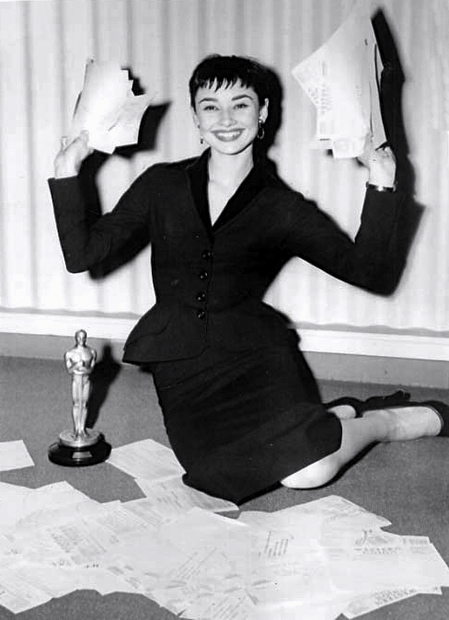
Oscar and Audrey Hepburn

Since the Oscars will be handed out tomorrow, now is the time for me to post my final Oscar predictions of 2018.  As we all know, this has been a strange Oscar season.  For the first time in decades, the ceremony will have no host and I’m all about that.  (Seriously, the host is always the worst part.)

Since I have a feeling that 2019 is going to be a weird year in general, I’m going to guess that we’re going to have a few upsets tomorrow night.  For instance, I think BlackKklansman is going to shock everyone by winning best picture.  Why?  The multiple nominations for Vice would seem to indicate that the Academy is in a political mood.  However, Vice is a terrible film and the Academy has rightfully been criticized for nominating it.  However, BlackKklansman is just as political as Vice but it’s actually a decent film.  So, if your goal is to award a movie that criticizes the state of American politics, BlackKklansman is the one to go for.

Here are my final predictions:

Best Picture — BlackKklansman

Best Director — Alfonso Cuaron, Roma

Best Actor — Christian Bale, Vice

Best Actress — Glenn Close, The Wife

Best Supporting Actor — Mahershali Ali, Green Book

Best Supporting Actress — Regina King, If Beale Street Could Talk

Best Original Screenplay — The Favourite

Best Adapted Screenplay — BlackKklansman

Best Animated Feature Film — Spider-Man: Into the Spider-Verse

Best Foreign Language Film — Roma

Best Documentary Feature — RBG

Best Documentary (Short Subject) — End Game

Best Live Action Short Film — Detainment

Best Animated Short Film — Animal Behavior

Best Original Score — Black Panther

Best Original Song — “Shallow” from A Star is Born

Best Sound Editing — Bohemian Rhapsody

Best Sound Mixing — Bohemian Rhapsody

Best Production Design — The Favourite

Best Cinematography — Roma

Best Makeup and Hairstyling — Vice

Best Costume Design — Black Panther

Best Editing — BlackKklansman

Best Visual Effects: Avengers: Infinity War