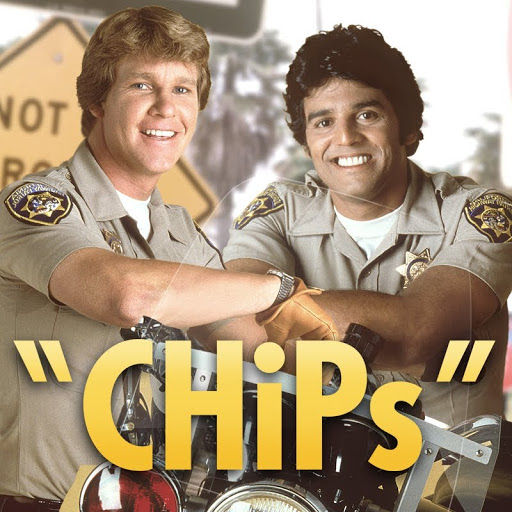
Welcome to Late Night Retro Television Reviews, a feature where we review some of our favorite and least favorite shows of the past! On Mondays, I will be reviewing CHiPs, which ran on NBC from 1977 to 1983. The entire show is currently streaming on Prime!
This week, the California Highway Patrol is thoroughly incompetent.
Episode 5.19 “Silent Partner”
(Dir by Gordon Hessler, originally aired on February 28th, 1982)
This is one of those episodes of CHiPs where two “comedic” car thieves are stealing cars and it takes three high-speed, accident-filled chases before the Highway Patrol finally manages to catch them. Episodes like this are always fairly odd to watch. I’m not really sure if the show’s producers really understood what they were implying with an episode in which a bunch of professional law enforcers can’t seem to catch two buffoons who have no idea what they’re doing.
The first chase leads to an accident that leaves Grossman injured. He doesn’t break his neck but he does have to wear a neck brace, which temporarily keeps him from talking and eating. Those are Grossman’s favorite activities! These car thieves must be stopped!
(Seriously, Grossman was usually the most entertaining thing about this show. Taking away his ability to speak was not a good idea. Needless to say, Ponch can still talk.)
Meanwhile, Baker arrests a man at the scene of Grossman’s accident. Baker thinks that the man (Saul Brandt) must be drunk, just because the man did not react to Grossman’s sirens and he also doesn’t follow any of Baker’s orders. Uh-oh, it turns out that man was deaf and now he wants to file a complaint against Baker! And really, the man is totally justified in doing so. Baker was pretty rough when he tossed him around and Baker really had no evidence that the man had been drinking. Despite being totally in the wrong, Baker is still upset about being written up. Luckily, Ponch starts dating a deaf social worker (Dawn Jeffory) and she helps the man to understand that Baker just made a mistake and he was only in a bad mood because he has to work with Ponch. The complaint is dropped.
This episode featured two good car crashes and a lot of bad acting. It was well-intentioned but I am starting to wonder if maybe the people of California deserved a better highway patrol.
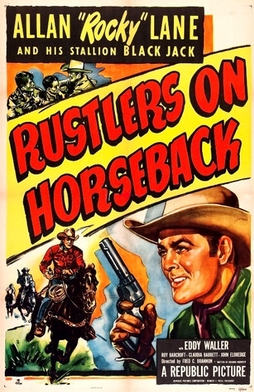
Before I say anything else, want to express how much I appreciate how straight-forward the title of Rustlers On Horseback is. There are horses and there are rustlers and often the rustlers do ride the horses. No lies detected.
Mistaken for being an outlaw, Marshal Rocky Lane (Allan Lane) becomes a member of a gang that’s led by Leo Straykin (Roy Barcroft). Leo has taken over the Reynolds Ranch and he’s planning on cheating a land agent out of $100,000 so that he can finance his future crimes. However, Leo isn’t working on his own and Lane and Nugget Clark (Eddy Waller) work to discover who the outlaw’s secret boss really is. (This is a low-budget, Poverty Row western so there aren’t that many possibilities.) However, Lane is not the only person working undercover. George Nader plays the son of the murdered ranch owner. Nader is looking for his own revenge.
This is a pretty standard Poverty Row western, with Lane looking convincing while riding a horse and shooting a gun. The “secret boss” makes the film a little bit more interesting than I was expecting but not that much more interesting. As is so often the case with these movies, how you react will depend on whether nor not you’re already a fan of the western genre when you watch it. If you like westerns that don’t have much filler between the chases and the gunfights, a western like this will be up your alley. If you’re not a fan of the genre, this film won’t change your mind.
This film was one of George Nader’s early roles. Nader made a handful of B-movies, including the infamous Robot Monster, before he branched into more mainstream films. Eventually, he found work in Europe and found fame as FBI Agent Jerry Cotton in a series of German films. After an accident left him sensitive to light and ended his acting career, Nader found success as a writer.
As for Allan Lane, he went on to become the voice of Mr. Ed.
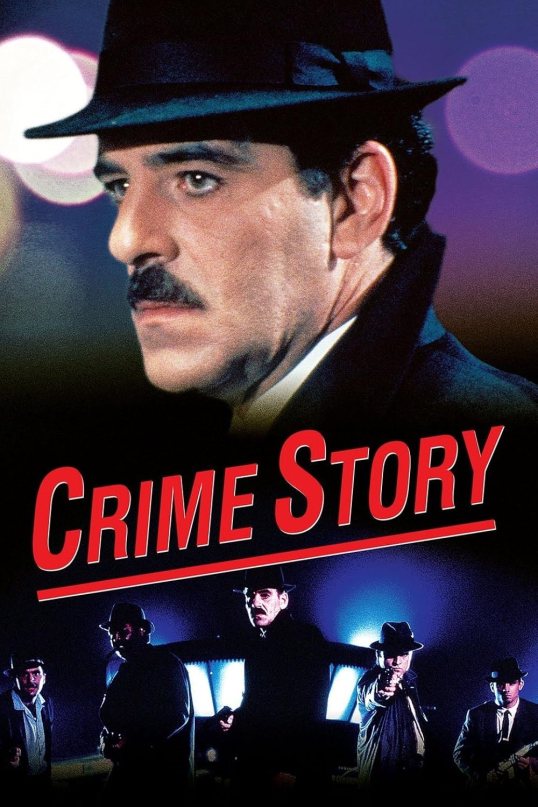
Welcome to Retro Television Reviews, a feature where we review some of our favorite and least favorite shows of the past! On Mondays, I will be reviewing Crime Story, which ran on NBC from 1986 to 1988. The entire show can be found on Tubi!
This week, Torello’s war on Luca continues!
Episode 1.3 “Shadow Dancer”
(Dir by Leon Ichaso, originally aired on September 26th, 1986)
With the frequency killer now dead, Torello and his men are once again free to focus on trying to bust Ray Luca. The sooner they do it, the better. For one thing, Torello is becoming so obsessed that, even though his wife is pregnant, Torello’s dreams are still dominated by Luca taunting him. Also, Luca’s latest robbery has resulted in a death. Vincent Noonan (Michael Kemmerling), a former cellmate of Frank Holman’s (Ted Levine,) lost it during their latest home invasion and beat to death Mrs. Novak (Nancy Sheeber).
(Noonan, it turns out, has a history of losing control. It probably wasn’t a good idea to hire him in the first place but, with Luca no refusing to personally take part in robberies, the crew had to find a third man and quickly. Holman recommended Noonan because of how loyal Noonan was to him in prison)
Eager to solve the case and take down Luca, the Major Case Unit starts to put pressure on Luca’s boss, Phil Bartoli (Jon Polito). After his weekly craps game is broken up by Danny Krychek, Bartoli tells Luca that he has to do something to get the police to back off. Bartoli orders him to turn Noonan over to the police. Luca, who no longer handles dirty work himself, tells Holman to take care of it. Holman sends Noonan on a job and then tips off Torello. Despite Danny telling him that Noonan would die before turning into a rat, Torello is convinced that, if he takes Noonan alive, he’ll be able to get Noonan to give up Luca. (What Torello doesn’t realize is that Noonan has never actually met Luca. To quote Willy Cicci, “The family had lots of buffers.”)
It’s all for naught, though. Torello and the cops chase Noonan all over the streets of Chicago and, in the end, Noonan dies while trying to escape. Much like Homicide’s Luther Mahoney, Luca appears to be untouchable …. for now.
This episode worked best as a character study. After last week’s somewhat over-the-top villain, this episode reminded us that Luca and Torello are two tightly-wound men who struggle with emotion. Beyond his own self-absorption, Luca lacks the emotions necessary to truly understand his fellow humans. Torello, meanwhile, gets too emotional. Whether he’s pursuing Ray Luca or snapping at a condescending salesman, Torello is a self-styled crusader who appears to be going slowly but surely insane. This wasn’t a particularly complex episode but it felt important. It was a reminder of what this show is all about.
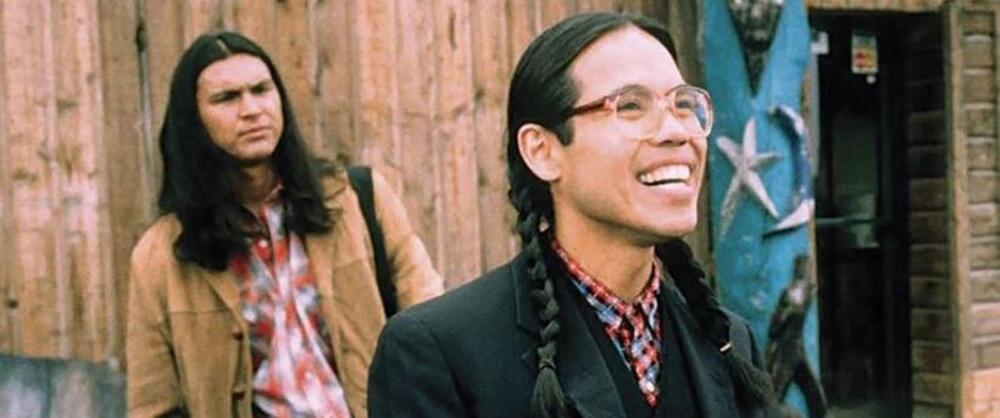
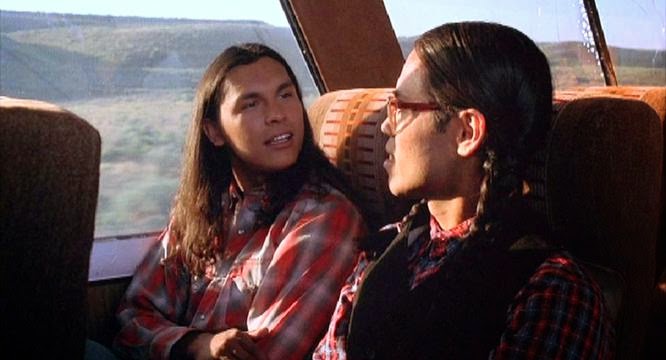
There’s a scene early in SMOKE SIGNALS where Victor Joseph, played by Adam Beach, tries to teach Thomas Builds-the-Fire (Evan Adams) how to be a real Indian. He ends the scene with “This ain’t Dances-with-Salmon you know?!” It’s a funny exchange, but it also clues the audience in on the fact that this isn’t going to be your typical Hollywood movie about Indians. Directed by Chris Eyre and written by Sherman Alexie, it’s the first feature-length film written, directed, and produced by Native Americans to reach a wide audience both in the United States and beyond. As such, we get a story that feels fresh while tackling a variety of difficult subjects with humor and optimism.
The story focuses on Victor as he travels from the Coeur d’Alene Indian Reservation in Idaho to Phoenix, Arizona to retrieve his father’s possessions after learning that he’s passed away. His father abandoned him and his mother when he was just a boy, and he’s clearly been scarred by the situation. Along for the ride, mainly because he can afford to pay their bus fare, is Thomas Builds-the-Fire, his nerdy and talkative friend. From this point, the film becomes a road trip, and we follow along as they make it to Arizona and back. While there is funny stuff along the way, the movie is mostly interested in observing Victor as he comes to terms with the trauma and pain left behind when his dad went away.
I’ve always liked Adam Beach, and he’s very good here as Victor. His character spends a lot of the movie angry at the world, but from time to time, he’ll flash this big, wonderful smile. It’s a nice inside-out performance as he seems to be simmering on the inside and just trying not to explode. And then there’s Evan Adams, whose Thomas is awkward and optimistic, and who loves to tell big stories about Victor’s dad. For example, they have this awesome exchange where Thomas tells Victor that his dad looks like Charles Bronson. As Bronson’s biggest fan, I can tell you that Victor’s dad, played by Gary Farmer, looks nothing like Charles Bronson. The scene has a nice punchline as Thomas tells him that he doesn’t mean the Charles Bronson from the first DEATH WISH, but more like the Charles Bronson of DEATH WISH 5! The movie has several unexpected scenes like this, and the genuine chemistry between these two guys is what makes the movie work for me. I believe it when their characters begin to understand and appreciate each other, and it’s their emotional connection that gives the film some staying power even after the credits roll.
There are some additional performances that I enjoyed. I mentioned Gary Farmer, who plays Victor’s dad. His Arnold Joseph is not the most sympathetic character in the world, as he chooses to run away from a guilt that he can never deal with. Somehow, by the end, we have some understanding of his actions. And then there’s Irene Bedard as Suzy Song, the young lady who befriends Victor’s dad and calls his mom when he passes away. Best known for being the voice of Pocahontas in the Disney animated classic, she conveys kindness and compassion in her relatively small role. Tantoo Cardinal is good as Victor’s mom, and Tom Skerritt even shows up in a cameo as a police chief in Arizona. Sherman Alexie’s screenplay, based on his book “The Lone Ranger and Tonto Fistfight in Heaven,” is simple, yet full of depth, and it’s brought to life by an excellent cast.
Even though SMOKE SIGNALS was made almost thirty years ago, it’s still a very relevant film to this day. It’s funny, it tackles difficult subjects that are universal to all of us, and it’s told from a Native American perspective that we seldom see. In other words, it feels like we’re dealing with real people, not the romantic caricatures or noble victims that Hollywood still tries to push on us in movies about Indians. It’s not a flashy film in any way, and that’s okay. It’s one of those movies that understands its characters and trusts the audience enough to just hang out and observe them. Anchored by an excellent performance from Adam Beach, it’s a perfect example of how movies can be a lot better when Hollywood gets out of the way and let’s genuine, talented people tell their stories.
I watched SMOKE SIGNALS on the Paramount Plus streaming service.
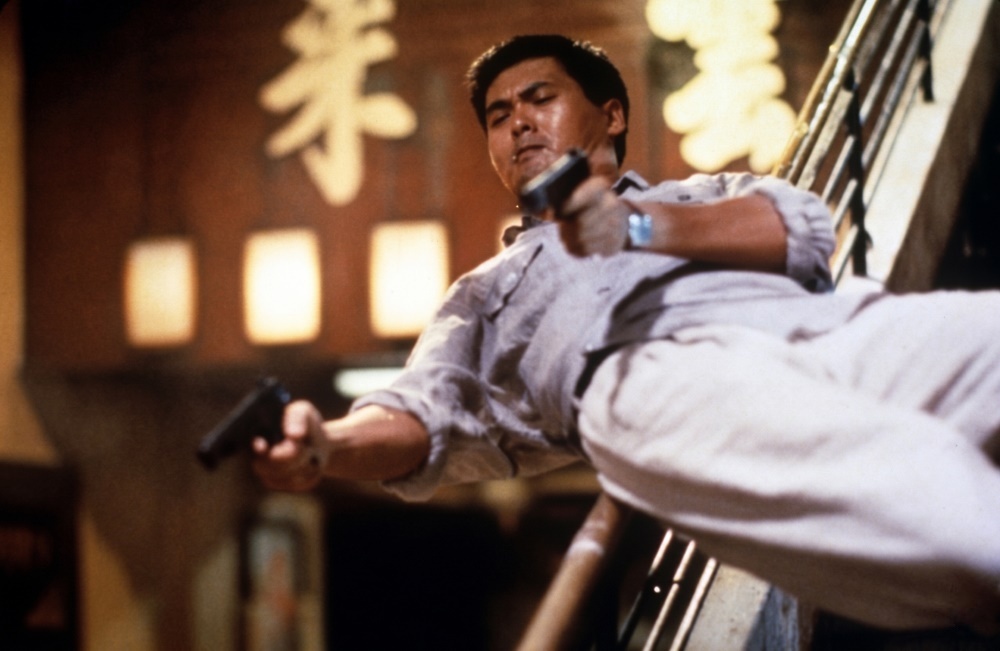
Inspector “Tequila” Yuen Ho‑yan is one of those action heroes who feels like a classic the second he steps on screen, but he also holds up under close character study. On the surface, he’s pure Hong Kong cool: trench coat, ever‑burning cigarette, toothpick, and twin Berettas, sliding through shootouts like they’re part of some stylish routine. But peel back the image and you see a cop haunted by his partner’s death, worn down by the violence he’s forced to perpetuate, and quietly desperate to protect the innocent. That mix of flashy exterior and inner weight is what makes him feel both mythic and grounded.
What gives Tequila his staying power is the way he maintains a clear moral center in a gray world. He’s not a squeaky‑clean officer; he disobeys orders, uses brutal methods, and sometimes plays fast and loose with the rules. But his core principles never waver: he won’t let the innocent get hurt, he won’t let murderers walk free, and he won’t let his own grief turn him into the kind of monster he’s chasing. He’s the kind of hero who makes you like him less for being perfect and more for being stubbornly decent in a system that doesn’t reward it.
His personality is also what makes him feel like more than a gun‑play machine. Tequila is playful, even charming, in the middle of chaos—tossing off lines, leaning casually on overturned tables, treating his shootouts like improvised performances. Yet there’s always a sadness in his eyes, a sense that he’s doing this because he has to, not because he enjoys it. That contrast—cocky and composed on the outside, burdened and sentimental on the inside—is exactly what keeps him from feeling like a generic action hero. He’s a guy you’d want to have a drink with, but also a guy you’d want backing you up in a firefight.
Visually and thematically, Tequila encapsulates Hong Kong action at its most operatic. His love of jazz, his quiet moments with his clarinet, and the way director John Woo frames his gunfights all suggest someone who sees his violence as a kind of performance art. He doesn’t just shoot to win; he shoots to make a point about honor, loyalty, and the cost of doing the right thing. That theatricality—turning street‑level crime into something almost mythic—is part of what makes him such an enduring icon rather than just another tough cop.
In the end, Tequila feels iconic because he’s so well‑balanced: cool but not smug, violent but not cynical, stylish but not shallow. He’s a character who appeals on a gut level—his looks, his moves, his one‑liners—while still giving you something to think about underneath. It helps that an equally charismatic actor like Chow Yun‑fat brings him to life, because his relaxed presence and natural magnetism make Tequila feel like the role he was born to play. It’s almost as if John Woo had written the part specifically for his go‑to actor, matching a perfectly crafted hero with the one performer who could sell every ounce of swagger, sorrow, and soul in the role.
“I mean, I wouldn’t take out a cartel leader. Turn one cartel into 50. Besides, killing kings doesn’t start wars, it ends them.” — Matt Graver
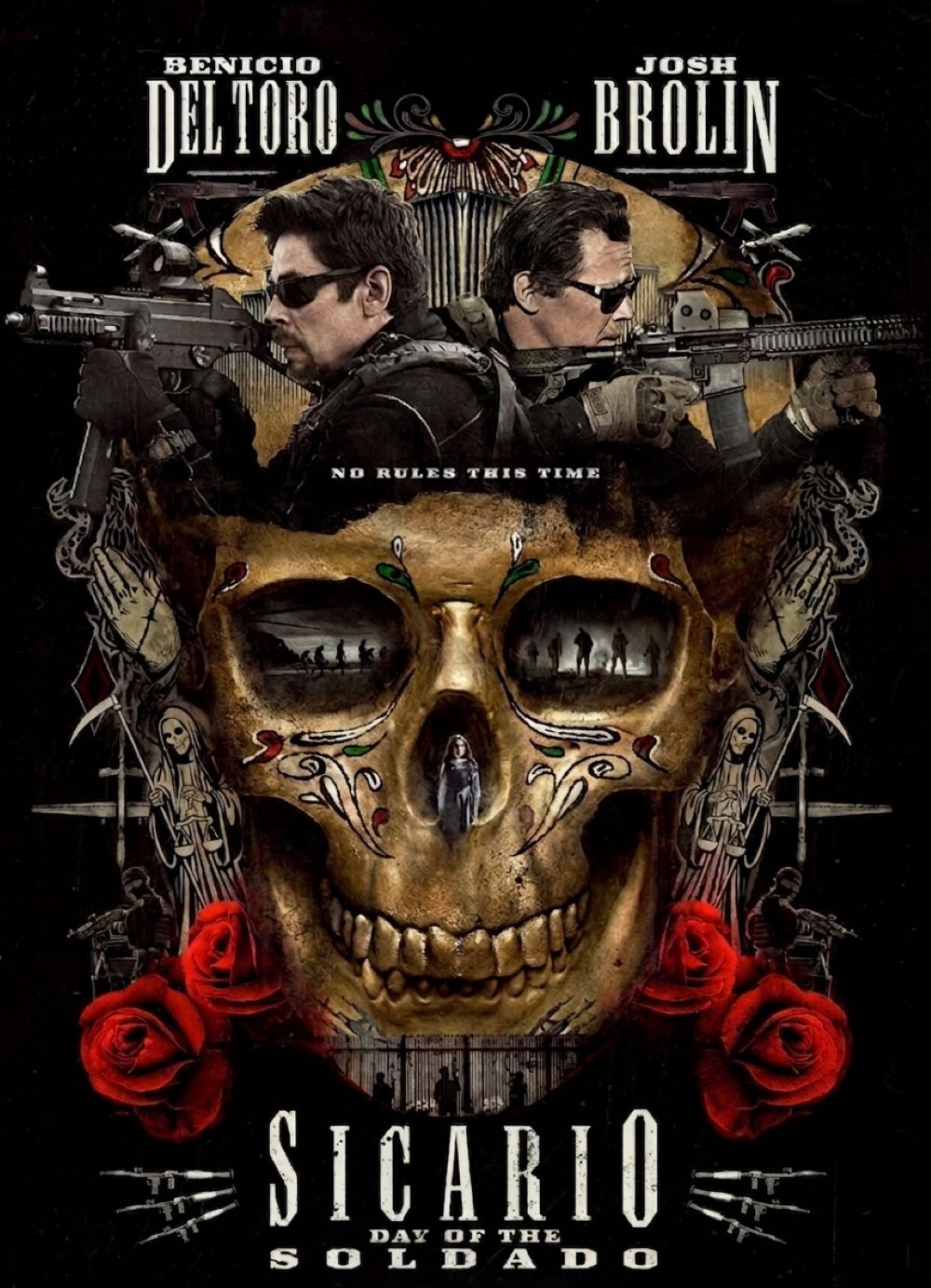
Sicario: Day of the Soldado is a tense, often entertaining follow-up that never quite reaches the same level of dread, complexity, or visual identity as the first Sicario. It’s a movie that knows how to hit hard in the moment, but it doesn’t linger in the mind the same way, and a big reason for that is how much it shifts from being a layered border thriller into something more like a blunt-force crime action movie.
What stands out right away is that the film still has strong ingredients. Taylor Sheridan’s script gives Josh Brolin and Benicio Del Toro plenty of room to do what they do best, and both actors make this thing watchable even when the movie itself starts feeling thinner than it should. Brolin brings that loose, swaggering menace to Matt Graver, making him feel like the kind of guy who smiles while ordering something morally awful. Del Toro, meanwhile, gives Alejandro a cold, haunted intensity that fits the character perfectly. He doesn’t need much dialogue to sell the idea that this man is basically a weapon walking around in human form.
But that’s also where the movie’s biggest issue starts to show. For all the credit Sheridan deserves for keeping the world of Sicario alive, the absence of Denis Villeneuve in the director’s chair is obvious. The first film had this slow-burning, oppressive grip on you; every scene felt like it was pulling you deeper into a nightmare that had structure, purpose, and a real sense of moral unease. Here, that layered feeling is much weaker. The sequel becomes more interested in forward motion, shootouts, and tension-by-incident than in developing the deeper political and thematic weight that made the original so memorable.
That doesn’t mean Sicario: Day of the Soldado is empty. It just feels like it has less on its mind than the first film. The original Sicario was about systems, corruption, compromise, and the way law enforcement and criminal violence blur together until nobody gets to stay clean. This sequel touches on similar territory, but it often feels like the movie is more focused on creating a harsh atmosphere around its two lead men than on really digging into what all of it means. In that sense, it starts to feel like a vehicle for Brolin and Del Toro first, and a larger statement second.
Stefano Sollima does a solid job with the action, and to his credit, he understands that this world should feel mean, chaotic, and stripped of comfort. There’s a gritty professionalism to the violence that works well enough, and the film certainly doesn’t shy away from brutality. Still, the action doesn’t always carry the same weight as it did in the first movie because the buildup isn’t as rich. The tension is there, but the emotional and thematic buildup behind it is thinner, so some of the set pieces land more as effective genre beats than as moments that actually deepen the story.
The film’s biggest strength, beyond the performances, is its atmosphere of moral corrosion. Nobody in Day of the Soldado feels especially noble, and that’s part of what keeps it interesting. Brolin’s Graver is still the kind of operator who treats human lives like pieces on a board, while Del Toro’s Alejandro remains a deeply damaged figure who seems to exist somewhere between avenger, assassin, and ghost. Their relationship gives the movie a sharp edge, because you’re never really sure whether these guys are working together, manipulating each other, or simply following the same dark logic from different angles.
Still, the movie’s structure is less satisfying than the first one’s. It leans harder into a straightforward escalation of events, and once that happens, some of the mystery and suspense gives way to a more familiar crime-thriller rhythm. That isn’t automatically a bad thing, but it does mean the film loses some of the special quality that made Sicario feel so bracing. The sequel is darker in tone, sure, but not necessarily deeper. It’s more aggressive than observant, more kinetic than reflective.
A lot of this is why the movie works best when it keeps its focus on the two men at the center. Brolin and Del Toro are compelling enough to hold attention even when the screenplay starts feeling a little schematic. Their characters are so insulated by violence and secrecy that they almost seem to belong to a different kind of movie than everyone else around them. The downside is that this also makes the surrounding story feel less important. The first film balanced character and theme in a way that felt inseparable; this one often feels like it is using theme as a backdrop for the characters rather than letting the ideas shape the entire film.
Even so, Sicario: Day of the Soldado isn’t a failure. It’s a good-looking, well-acted, often tense sequel that knows how to stay nasty and efficient. It just doesn’t have the same confidence in its own ideas. The result is a film that is entertaining in a hard-edged, grim way, but also one that makes you think about what it could have been with a stronger directorial voice pulling everything together. Taylor Sheridan’s fingerprints are still all over it, but Villeneuve’s absence leaves a noticeable gap in the film’s pulse and perspective.
In the end, the movie feels like a solid but diminished return to a brutal world. It gives you Brolin and Del Toro doing sharp, controlled work inside a story that never fully rises to match them. That’s enough to make it worthwhile, but not enough to make it essential. Compared to the first Sicario, this one is more of a hard-nosed spin-off in spirit than a true continuation of the original’s power, and that difference is felt in almost every scene.
Hi, everyone! Tonight, on twitter, I will be hosting one of my favorite films for #MondayMania! Join us for 2017’s The Wrong Man!
You can find the movie on Prime and then you can join us on twitter at 9 pm central time! (That’s 10 pm for you folks on the East Coast.) See you then!
Technically, the French composer Marius Constant did not set out to write the theme song for TheTwilight Zone. In the 50s, CBS commissioned Constant to compose a number of short pieces for CBS stock music library, basically as musical stingers that could be used for radio shows. In 1960, when TheTwilightZone needed a theme song, an enterprising CBS employee combined two of Constant’s composition to create the iconic TwilightZone theme.
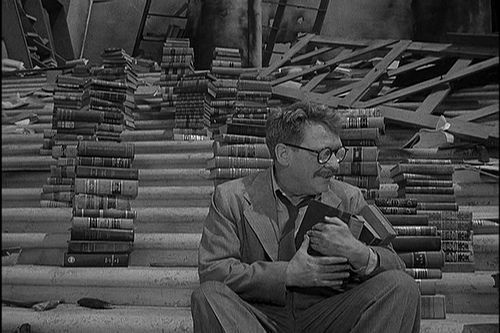
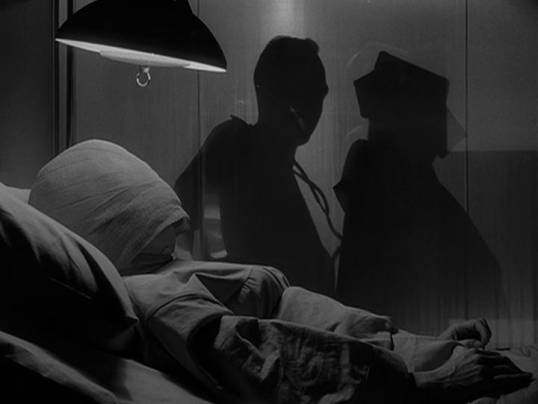
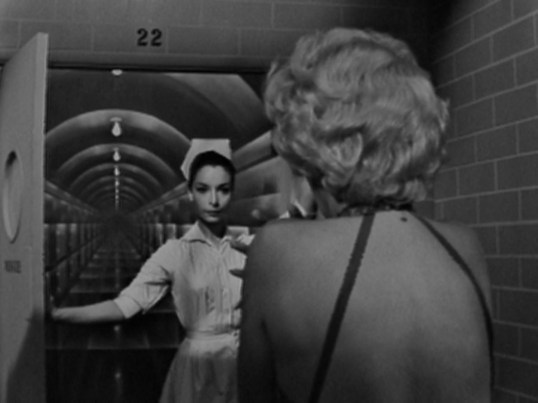
4 Shots From 4 Films is just what it says it is, 4 shots from 4 of our favorite films. As opposed to the reviews and recaps that we usually post, 4 Shots From 4 Films lets the visuals do the talking!
Today is Twilight Zone Day! In honor of this site’s favorite anthology show, it’s time for….
4 Shots From The Twilight Zone
Twilight Zone 1.8 “Time Enough At Last” (1959, dir by John Brahm)
Twilight Zone 1.22 “The Monsters Are Due On Maple Street” (1960, dir by Ronald Winston)
Twilight Zone 2.6 “Eye of the Beholder (1960, dir by Douglas Heyes)
Twilight Zone 2.17 “Twenty-Two (1961, dir by Jack Smight)