Welcome to Late Night Retro Television Reviews, a feature where we review some of our favorite and least favorite shows of the past! On Wednesdays, I will be reviewing 1st and Ten, which aired in syndication from 1984 to 1991. The entire series is streaming on Tubi.
This week, season 3 comes to an end.
Episode 3.13 “Championship Jinx”
(Dir by Bruce Seth Green, originally aired on December 16th, 1987)
Things have a way of working themselves out on 1st & Ten, especially when the season ends and a lot of plotlines need to be hastily wrapped up.
Last week, TD Parker (OJ Simpson) was arrested under suspicion of ticket scalping. This episode, it turned out that 1) ticket scalping isn’t illegal and 2) TD’s ex-mistress quickly figured out that her boyfriend was trying to frame him. Someone trying to frame OJ Simpson!? Like anyone would ever buy that. Anyway, the main theme here seemed to be that it was a good thing TD cheated on his wife because otherwise, no one would have been around to exonerate him.
Last week, Yinessa was letting fame go to his head. This week, his father died and the funeral was a media circus. Yinessa decided to focus on playing football. That’s a good thing, seeing as how the Bulls had yet another championship game coming up.
Zagreb was concerned that he was a jinx after he appeared on the cover of Sports Illustrated. (Yinessa told him that players who appeared on the cover often lost the spark afterwards.) Luckily, Cliff and Jethro brought in a voodoo priestess (Roxie Roker) to exorcise the jinx.
Before the game, Jill told the team that they weren’t only playing for themselves. They were playing for the memory of Tom Yinessa’s father. Unfortunately, the Bulls lost the game at the last minute when Billy Cooper’s game-winning catch was reviewed by the booth and declared to be out of bounds. So, I guess Yinessa’s father is in Hell now.
And so ends the rather odd third season. Coach Denardo left after the first episode. Delta Burke left about halfway through the season, just to be replaced by a new female owner who gave a pre-game speech that referred to all of the previous times she had gone to the Championship Game with the Bulls just to see them lose, despite the fact that she wasn’t even a part of the show’s cast during the previous two seasons. The season began with a player dying of steroid abuse and ended with OJ Simpson proving his innocence. Oh! And Zagreb discovered his father was a CIA agent and then he got married.
Was it a good season? Not really. This isn’t a good show. But season 3 was definitely a lot stranger than the previous two seasons and that’s definitely a point in 1st & Ten‘s favor.
Welcome to Retro Television Reviews, a feature where we review some of our favorite and least favorite shows of the past! On Wednesdays, I will be reviewing the original Love Boat, which aired on ABC from 1977 to 1986! The series can be streamed on Paramount Plus!
This week, the Love Boat gets a new photographer!
Episode 7.18 “Ace in the Hole/Uncle Joey’s Song/Father in the Cradle”
(Dir by Richard Kinon, originally aired on January 28th, 1984)
This episode featured the usual three story structure. One story I was indifferent too. One story kept me entertained. And one story made me cry.
The story made me cry featured Barnard Hughes as Joseph Stobble, a former kids’s show host who has retired because he feels too old for kids to relate to. Isaac grew up watching Uncle Joey and even gives Uncle Joey a replica of Flapjack, the sock puppet that served as Uncle Joey’s sidekick. Uncle Joey meets Scott Russell (David Faustino), a child who has recently lost his father. Uncle Joey helps Scott deal with his emotions by assuring him that it’s okay to cry.
I cried! Hell, I’m crying just typing this up. Now, I should clarify that I have a reason for crying. The end of May will also be the two-year anniversary of the auto accident that eventually led to my father’s passing on August 19th, 2024. To be honest, there hasn’t been a day over the past two weeks that I haven’t cried at some point. When my father died, I threw myself into taking care of my aunt. After my aunt died (and she died exactly one year after my father), I threw myself into trying to make the holidays perfect for my sisters. And, after that, I threw myself into cleaning the house. Looking back, I understand that I kept throwing myself into new activities because I was trying to outrun just how sad I was. It’s only now that it’s finally all hitting me.
Would I have cried over Uncle Joey’s story if I wasn’t currently feeling sad? I think I would have. It was a sweet story featuring good work from Hughes, Faustino, and the always reliable Ted Lange.
As for the indifferent story, it featured Larry (Michael Spound) getting upset when he meets his mother’s (Lee Meriwether) new husband (Dean-Paul Martin). It turns out the son and the stepdad are both the same age! It was kind of boring, to be honest.
Finally, the third story featured Ted McGinley — yay! — as Ashley “Ace” Covington Evans, the new ship’s photographer! Gopher hired him but he soon regrets it when all the women on board fall for Ave instead of Doc and Gopher. However, Ace has a problem. He’s a good photographer but he doesn’t know how to develop film! (My first thought was that surely someone on the ship had to have a laptop and a printer but then I realized that this was apparently before the age of even digital cameras.) The ship’s passengers and Stubing are curious as to why Ace hasn’t put up any of the pictures that he’s taken. Vicki and Julia help out by putting up a bunch of pictures from a past cruise….
(Uhmm, how would that help? I would assume that the passengers would expect to see pictures of themselves.)
Ace comes clean to the Captain and offers to spend three weeks learning how to develop film. “Then we shall see you in three weeks,” a very understanding Stubing replies. (Stubing perhaps knows that Vicki would never forgive him for firing Ace.)
Why did this story work so well? Ted McGinley, that’s why! And now, apparently, Ted’s a new cast member. YAY! The Love Boat is going to be better than ever!
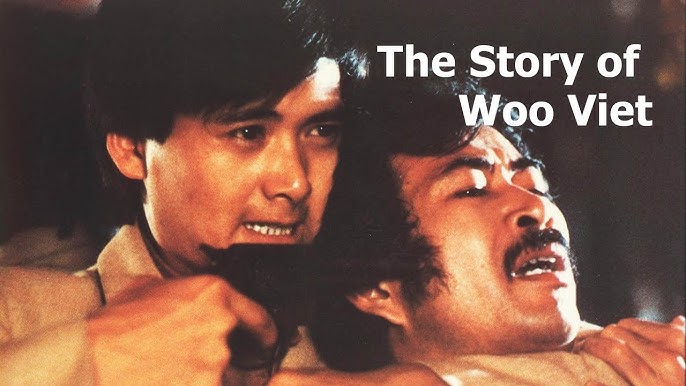
When I became obsessed with Chow Yun-Fat in the latter half of the 1990’s, I would constantly search for his movies at the Suncoast Video Store in the Park Plaza Mall whenever we’d go to Little Rock. Unfortunately, I’d run into cheap looking DVDs with titles like “God of Killers,” but I’d buy them anyway. That’s the title under which I first attempted to watch THE STORY OF WOO VIET, starring a young Chow-Yun-Fat and directed by Hong Kong legend Ann Hui. Whoever distributed the film was making a blatant cash grab on Chow Yun-Fat’s worldwide popularity at the time, and the DVD was terrible. I turned it off after a little while because the print was so dark you could barely see it, and the subtitles were illegible, constantly falling off the screen. I had not attempted to watch the film again until very recently. My friends on “Podcast on Fire” devoted an episode to THE STORY OF WOO VIET, which piqued my interest again. Lo and behold, I found a fine print with English subtitles streaming on Tubi!
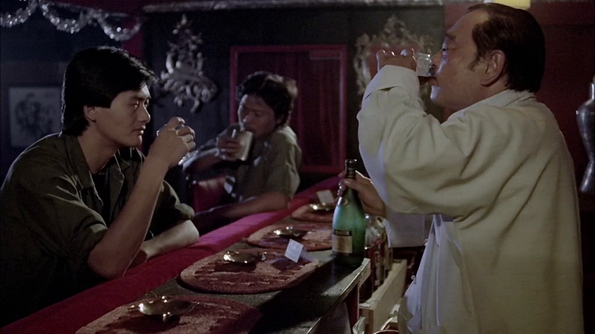
As the story starts, we meet Woo Viet (Chow Yun-Fat) on a boat full of starving refugees. We learn that he’s a former Vietnamese soldier escaping to Hong Kong in hopes of making his way to the United States. It’s a tough start as we see a baby die of malnourishment and an old man murdered by Vietnamese special agents, which leads to Woo Viet fighting off and killing those same agents, all within the first 15 minutes. On the run for murder, he’s lucky that his Hong Kong pen pal, social worker Lap-Quan (Cora Miao), can help him get fake papers for his escape to the United States. As he’s getting ready to leave, he meets the beautiful Shum Ching (Cherie Chung), who’s also using fake documents to get to the U.S. Unfortunately, the Hong Kong trafficker who’s supposed to be helping them, has sold Shum Ching to a powerful gangster in the Philippines with plans to turn her into a prostitute. When she’s taken away from the Manila airport, Woo Viet goes after her. Unable to kick enough ass to save her, he ends up working as a hired gun for her kidnapper in hopes of buying her freedom. Throw in Shaw Brothers legend Lo Lieh as Sarm, Woo Viet’s partner in crime in Manila, and the stage is set for an escape to a better tomorrow or loneliness and a quick death.
After viewing the film, it’s probably best that I couldn’t watch THE STORY OF WOO VIET back in the late 1990’s. At that time, I wanted Chow Yun-Fat as the honorable gangster of films like A BETTER TOMORROW and THE KILLER, or the badass cop of HARD-BOILED. I could not have appreciated director Ann Hui’s work here, the second film in her “Viet Nam trilogy.” Gritty and downbeat, it’s about as far away from John Woo’s stylish films as you can get. When the violence comes, it lands with a painful thud as nails enter heads, knives slash bodies, and even toothbrushes are shoved through cheeks. This is Ann Hui working within a genre film plotline while infusing it with something akin to bleak realism. She would go on to develop her legendary career with the next year’s BOAT PEOPLE, and she would use Chow a couple of more times in films like LOVE IN A FALLEN CITY and THE POSTMODERN LIFE OF MY AUNT. This is not peak Ann Hui, but she still brings something interesting to this early effort.
As far as the performances go, Chow may have been 5 years away from the superstardom of A BETTER TOMORROW, but he already had what it took to be a film lead. Even in a film like this, without his heroic bloodshed honor, he has a way of making it look easy. Cherie Chung is appealing as Shum Ching, and she was soon on her way to film stardom in Hong Kong hits like PEKING OPERA BLUES, AN AUTUMN’S TALE (with Chow), and John Woo’s ONCE A THIEF (also with Chow). Like many Hong Kong actresses before her, after a string of successful films she would get married and retire in 1991. I like Cora Miao early in the film as the kind social worker, but she fades as the film progresses. Miao would work with Chow and Ann Hui frequently throughout the 80’s. Like Chung, she retired in 1991 and married director Wayne Wang (THE JOY LUCK CLUB). Finally, I wanted to give a shoutout to Lo Lieh as Woo Viet’s one friend, Sarm. While he may be known best for his classic work with Shaw Brothers in films like the FIVE FINGERS OF DEATH and THE 36TH CHAMBER OF SHAOLIN, he gives a solid character performance here and would go on to work in Hong Kong for another two decades.
THE STORY OF WOO VIET is not at the top of the list of films that Hong Kong legends Chow Yun-Fat and Ann Hui would work on, but it’s still an important watch to see their obvious talent at this point in their careers. I’m glad I finally watched the film in 2026. After all the life I’ve lived since those days digging through the DVDs at the Park Plaza Mall, there’s no way it could have hit me the same way then that it does now.
“Hi, I’m Cindy. I’m the perfect female type: 18 to 25. I’m here to sell for you.” — Cindy Fairmont
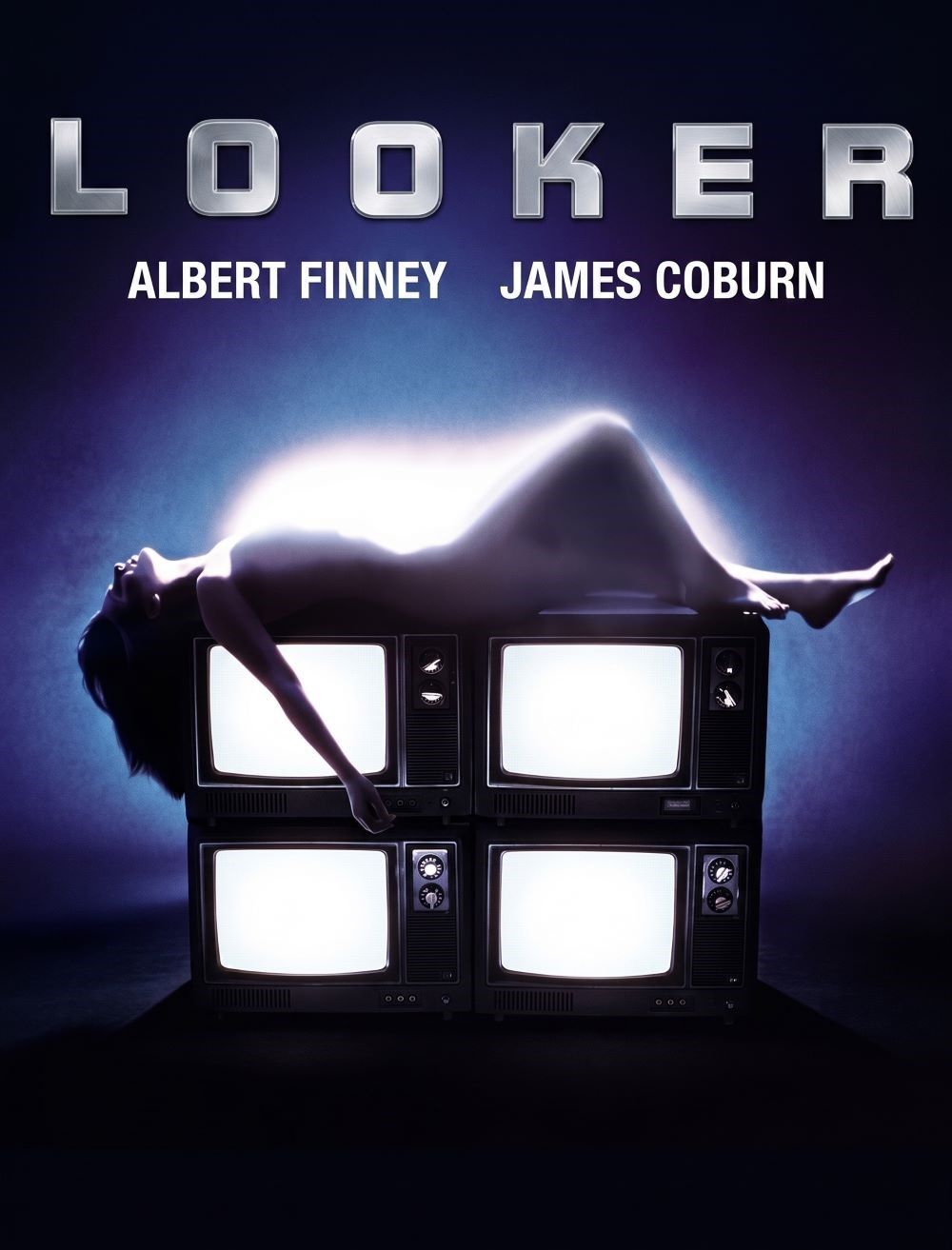
Looker is one of those 1981 films that, when it first came out, probably felt more like a goofy, slightly overwrought tech‑paranoia thriller than a serious prediction about the future. On paper, the premise—plastic‑surgery‑obsessed models being turned into digital clones for hyper‑tuned TV ads—sounds like a pulpy B‑movie gimmick. But viewed through the lens of right now, with Instagram influencers, AI‑generated content, and algorithm‑driven aesthetics shaping how we think about beauty and success, Looker starts to feel like a strangely accurate, almost eerie forecast. For a movie that was easy to write off as a minor, tonally wobbly Michael Crichton artifact, it does a surprisingly sharp job of outlining the emotional and cultural landscape we’re living in four decades later.
At the center of that landscape is Digital Matrix, the film’s antagonist in the form of a sleek, forward‑looking tech company that positions itself as a clean, rational, and indispensable partner to the advertising world. The company promises to revolutionize marketing by replacing messy, unreliable human models with perfectly calibrated digital avatars optimized to trigger maximum viewer response. That framing—as a neutral, even benevolent innovator—makes it all the more unsettling when its plans take on a distinctly murderous slant. To protect its “LOOKER” system and its vision of a world where perception can be mathematically controlled, Digital Matrix is willing to silence anyone who gets too close to the truth, from test‑subject models to inquisitive doctors. The bodies start piling up just off‑screen, treated as collateral damage in the pursuit of a more efficient, more profitable media ecosystem.
Seen from today’s vantage, Digital Matrix feels like a rough, bluntly drawn prototype of the big tech giants we now live with: polished, data‑driven, media‑centric, and profoundly invested in shaping what we see, buy, and believe. The difference, of course, is that modern tech behemoths are a lot better at hiding the bodies. In the real world, the “harm” is rarely as literal as Looker portrays it; instead, it shows up as algorithm‑driven addictions, mental health erosion, privacy carve‑ups, and the quiet erosion of trust in shared reality. People don’t get zapped by a sinister beam of light in a corporate lab; they get nudged into polarization, over‑consumption, or self‑images so warped that they resemble the film’s surgically obsessed models. The film exaggerates the physical violence, but its broader point—that when a tech company decides it can engineer human behavior at scale, ethical lines start to blur—still rings uncomfortably true.
Crichton’s version of this is less about organic social‑media culture and more about a centralized, corporate‑run system, but the emotional texture is similar. The models in Looker are under pressure to conform to a narrow, algorithmically derived standard of beauty, and the film doesn’t shy away from the toll that takes. They’re not just selling products; they’re being sold as products, their bodies and faces reduced to data points that can be adjusted, duplicated, and replaced. The idea that a person can be scanned, stored, and then endlessly repurposed as a digital avatar also anticipates contemporary debates about deepfakes, AI‑generated influencers, and the fear that real actors, musicians, and creators might be replaced by synthetic versions once their likeness and behavior are sufficiently “trained.” In that sense, Looker reads like an early, slightly clunky draft of the same anxieties we’re only now starting to grapple with at scale.
Where Looker falls short, at least in its day, is in fully articulating what all of this means for the idea of truth. The technology of 1981—not just the film’s budget and effects, but the broader cultural imagination—still assumed that truth was something largely fixed, something you could point to and defend if you had the right facts on your side. The movie flirts with the idea that perception can be manufactured, but it doesn’t really have the tools yet to show how completely that can destabilize the very concept of objective reality. The “LOOKER” system is treated as a kind of brainwashing gadget, a one‑off sci‑fi device rather than the logical endpoint of an entire infrastructure built to measure, model, and manipulate human behavior. The film wants to ask who controls the image, but in the early ’80s that question still felt contained, almost theatrical.
Now, in a world where truth is less about who has the facts in their corner and more about who controls the data, it’s clear how undercooked that idea really was in Looker. Today, truth is less a question of evidence and more a question of access: who has the biggest data centers, who owns the most comprehensive behavioral datasets, who runs the most sophisticated algorithmic matrices for shaping what people see, hear, and believe. Social‑media platforms, search engines, and ad networks don’t just reflect reality; they actively construct it by deciding which voices get amplified, which images get pushed, and which narratives get repeated until they feel like consensus. The company with the most money to build and refine those systems doesn’t just sell products; it sells versions of reality, packaged as personalized feeds, auto‑generated content, and AI‑driven narratives that feel increasingly indistinguishable from the “real” world.
Looker doesn’t fail because the ideas themselves are weak; in fact, the film actually does a fairly solid job of letting those ideas breathe and collide with each other. The problem is that those ideas sounded quite ludicrous within the context of 1981. A company digitally scanning and cloning models to engineer perfect ads, then using a device to subtly manipulate viewers’ minds, felt closer to paranoid pulp fantasy than plausible near‑future speculation. That gap between the film’s ambition and its audience’s willingness to buy into it gives the movie a slightly awkward tone, as if the world around it hasn’t yet caught up to the reality Crichton is trying to describe. The concepts are ahead of their time, which is exactly what makes them feel so prescient now, but back then, that same forward‑thinking quality made them easier to dismiss as silly or overreaching.
That disconnect is compounded by a cast that never quite seems to have fully bought into the film’s themes and narrative, even though several of them are game within the limits of the material. Albert Finney brings his usual grounded, slightly skeptical energy to Dr. Larry Roberts, lending the story a believable human center as the reluctant investigator pulled into Digital Matrix’s orbit. There’s a lived‑in quality to his performance that makes the ethical unease feel real, even when the plot veers into goofy sci‑fi mechanics. James Coburn, meanwhile, chews the scenery with a smarmy, charming conviction that suits Reston perfectly; he plays the corporate tech visionary as someone who genuinely believes in his own rhetoric, which makes his moral bankruptcy feel all the more unsettling. But around them, the rest of the ensemble often feels like it’s treating the premise more as a glossy thriller window dressing than a full‑blown social‑tech critique. The models and executives sometimes land their lines with a kind of detached professionalism that undercuts the deeper anxieties the film is trying to tap into.
As a piece of cultural legacy, Looker works less as a perfectly executed prediction and more as an early, slightly wobbly harbinger of the digital age we’re now fully immersed in. The film’s version of Digital Matrix may look clunky by our standards, but its logic—optimize attention, manufacture desire, and treat people as data to be extracted and reused—has become the default operating system of much of the digital world. The anxiety about who controls the image, who owns the algorithm, and who ultimately shapes what we see as “real” is no longer a speculative sci‑fi concern; it’s baked into the daily experience of social media, deepfake content, and AI‑driven feeds. Looker doesn’t need to be taken as a perfectly accurate prediction; it’s more powerful as a mood piece about the anxieties Crichton saw simmering beneath the surface of media, technology, and consumer culture. And in the way it casts a cutting‑edge tech company as the film’s real antagonist—a corporation whose “progressive” vision of the future quietly slides into murder and control—it feels uncomfortably close to the darker side of today’s Silicon Valley logic, minus the obvious body count but packed with a different kind of damage—one that’s less about visible corpses and more about the quiet erosion of what we can trust to be true.
Looker doesn’t so much fly too high to the sun and then crash‑burn under the weight of its ambition as it does peer through a cracked, slightly distorted future‑looking glass and just keeps staring in the wrong direction until the future finally catches up to it. It’s a film that doesn’t quite hold together as a flawless sci‑fi masterpiece, but it also never fully collapses under its own loftiness the way so many overly serious ’80s tech‑paranoia pictures do. Instead, it lurches forward with a rough, uneven energy that somehow makes its prescience feel more honest than polished. The movie doesn’t provide clean answers or tidy resolutions; it just lays out a set of ideas—about media, authenticity, beauty standards, and corporate control over perception—and then lets them sit in the air long after the credits roll.
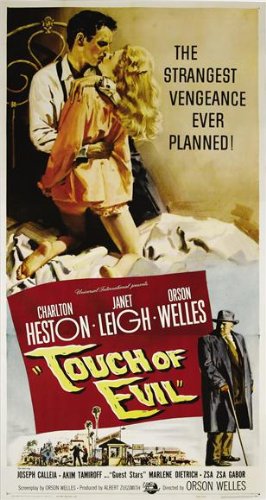
Since today is Orson Welles’s birthday, I wanted to share at least one scene that I love from his films. The famous tracking shot from 1958’s TouchofEvil, which begins in America and ends in Mexico, truly shows Orson Welles at his visionary best.
It’s also Welles at his most clever. Knowing that he wouldn’t be given control over the editing of the footage he shot, Welles included as many long shots as possible to make it more difficult for an editor to chop up or alter his vision.
4 Or More Shots From 4 Or More Films is just what it says it is, 4 shots from 4 of our favorite films. As opposed to the reviews and recaps that we usually post, 4 Shots From 4 Films lets the visuals do the talking!
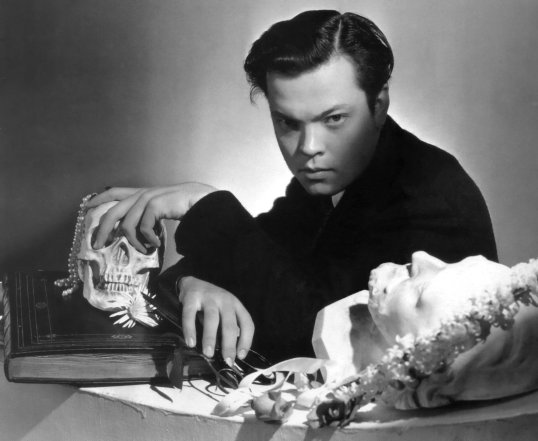
Today we celebrate what would have been the 111th birthday of the great Orson Welles! It’s time for….
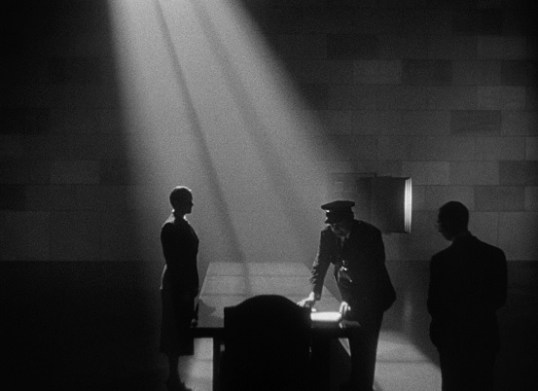
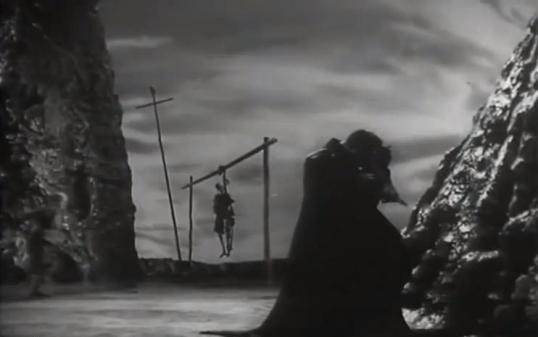
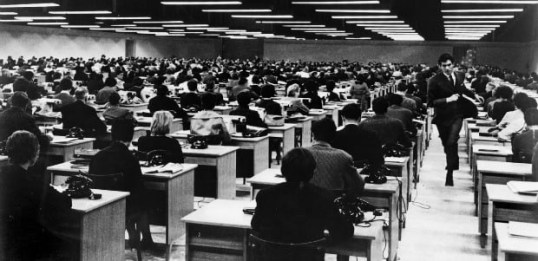
4 Shots from 4 Orson Welles Films
Citizen Kane (1941, dir by Orson Welles, DP: Gregg Toland)
MacBeth (1948, dir by Orson Welles, DP: John L. Russell)
The Trial (1962, dir by Orson Welles, DP: Edmond Richard)
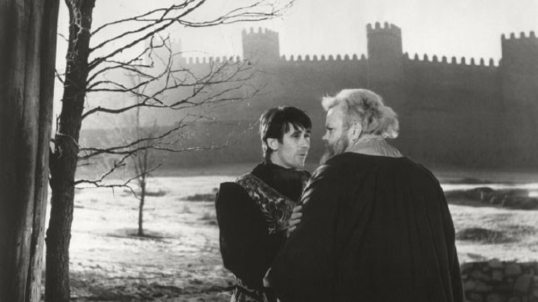
Chimes at Midnight (1965, dir by Orson Welles, DP: Edmond Richard)
I’m Free was originally recorded by The Rolling Stones in 1965 and was the last track on the Out Of Our Heads album. To quote Rolling Stone Magazine, the original song was a “folk rocker.” The version by the Soup Dragons was much more psychedelic and featured a verse from Jamaican reggae performer, Junior Reid. I’m Free became the band’s biggest hit, reaching the number 2 spot on Billboard’s Alternative Songs chart.
Director Matthew Amos has also directed videos for Stereo MCs, Jesus Jones, Slipknot, and Blur. He’s also film several awards shows and stage productions for the BBC.