Review: The Crow (dir. by Rupert Sanders)


“When someone you love dies, you will know emptiness… You will never forget, and you will never, ever forgive.” — Eric Draven

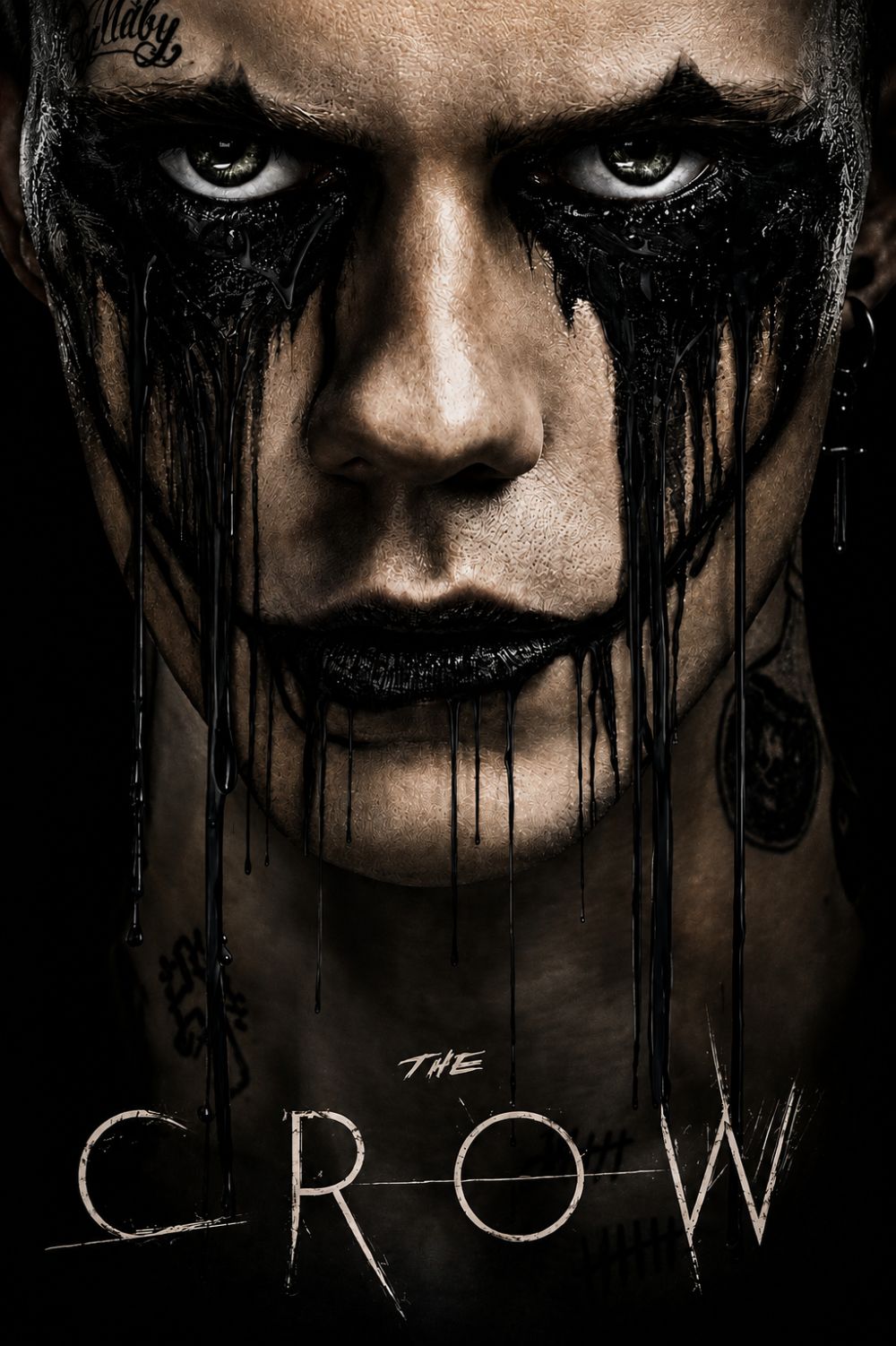
The Crow is a remake built around a reasonable idea—returning to James O’Barr’s graphic novel rather than photocopying Alex Proyas’s 1994 cult film—but Rupert Sanders’s 2024 version never discovers why this material matters beyond its tattoos, bruises, and black eyeliner. It arrived dead on arrival with critics and audiences alike, not simply because it was measured against a beloved predecessor, but because it offered so little of its own identity. The film is dour without being haunting, romantic without generating much chemistry, and violent without making its revenge feel especially cathartic.

Sanders’s film stars Bill Skarsgård as Eric and musician FKA twigs as Shelly, lovers brutally murdered after stumbling too close to the secrets of criminal impresario Vincent Roeg, played with sleek, vaguely supernatural menace by Danny Huston. Eric awakens in a liminal afterlife, is granted a path back to the living world, and returns armed with supernatural endurance and a need to avenge Shelly. The fundamentals are familiar: love is destroyed by violence, death cannot sever that love, and vengeance becomes a darkly mythic expression of grief. Yet The Crow continually confuses the bare outline of that story with the emotional force that made it endure.

The production’s troubled history almost feels encoded in the finished movie. A new Crow film spent more than a decade trapped in development hell, cycling through different studios, directors, screenplays, and potential stars. Relativity Pictures held the project for years; Sony eventually became involved; various versions had names such as Bradley Cooper, Luke Evans, Jack Huston, and Jason Momoa attached at different stages, alongside filmmakers including Stephen Norrington, F. Javier Gutiérrez, and Corin Hardy. The project repeatedly stalled under changing rights arrangements, creative disagreements, and the general instability that often turns a familiar title into an endlessly recycled pitch deck. A fresh production effort was announced in 2020, but the Sanders version did not actually begin shooting until 2022 in Prague.wikipedia+2

That prolonged development makes the final product feel less like a passionately argued reinterpretation than a compromise that survived by default. Every era of the project seems to have left a trace. There is a prestige-minded desire to make Eric and Shelly psychologically damaged and contemporary. There is a franchise-minded urge to expand the supernatural mythology. There is also a music-video impulse toward body art, club scenes, fashionable misery, and sharply composed violence. None of these ingredients are automatically bad. But Sanders never finds a way to make them cohere into a world as tactile, strange, or emotionally immediate as the one Alex Proyas created in 1994.

The suspicion around the remake was understandable from the beginning. Most people involved in the original film have either expressed mixed feelings or outright disapproval about revisiting the property. The 1994 The Crow is not merely another cult favorite awaiting intellectual-property renewal. It is permanently linked to Brandon Lee, who was killed in an on-set shooting accident during production. The completed film became a memorial as much as a comic-book adaptation, and its emotional impact cannot be separated from the knowledge of what happened to its star.

The strongest objections have come from James O’Barr and Alex Proyas. O’Barr, writer and artist of the original graphic novel, has questioned the need for a remake for years, once calling the idea of remaking a then-15-year-old film “kind of ridiculous.” Proyas, meanwhile, has been even more direct. He argued that The Crow was not simply a movie because Brandon Lee died making it, and that the 1994 film should remain part of Lee’s legacy. When the new film’s reception turned hostile, Proyas called it a “cynical cash-grab” and mocked the lack of financial reward supposedly waiting at the end of it. The tone of those comments may strike some people as harsh, but the remake never makes a convincing counterargument.

To be fair, Sanders does not ask Skarsgård to imitate Lee. That is one of the film’s better instincts. Skarsgård’s Eric is physically slight, heavily tattooed, insecure, and visibly wrecked by the life he has lived before death. He is not a supernatural rock-and-roll avenger in the same way Lee was. Instead, he resembles a wounded, emotionally arrested young man forced into a mythic role he does not fully understand. It is a potentially interesting angle, especially for a story about grief turning someone into a monster.

But the screenplay, credited to Zach Baylin and William Josef Schneider, does not give that approach enough shape. Eric is vulnerable, then dreamy, then brutally efficient, then mournful again, depending on what the scene needs. The film treats emotional instability as character depth, but those are not the same thing. A character can be fractured, contradictory, and self-destructive while still possessing a recognizable inner life. Skarsgård does what he can with the material, bringing real physical discomfort and sadness to Eric, yet the movie seems more interested in how his pain photographs than what it reveals.

The same issue affects Shelly. FKA twigs has an immediately magnetic screen presence, and the film wisely spends much more time on Eric and Shelly before their deaths than the 1994 film did. In theory, that should be a major advantage. If the viewer sees the relationship develop, then Eric’s return from death should carry more emotional force. Instead, the early sections feel like a montage stretched into an act: rehab, drugs, late-night intimacy, mutual confessions, music, dancing, sex, and shared trauma. The movie repeatedly tells us that these two are soulmates, but it rarely gives them the specific dialogue, humor, disagreements, or small gestures that make a romance believable.

Their relationship becomes a collection of poses. The camera understands that they are beautiful, sad, damaged people; the script never quite proves they are deeply connected individuals. That is fatal in The Crow, because Eric’s entire mission depends on the audience accepting that Shelly is not merely the woman he loved but the person who made life worth returning to. The movie substitutes trauma bonding for intimacy, assuming that shared wounds automatically equal love.

Huston’s Vincent Roeg is similarly underwritten. Roeg is introduced as an elegant criminal figure with occult powers, someone who preys on young women and sustains himself through a diabolical bargain. It is a significant departure from the relatively grounded gangland evil of the 1994 film, and it could have opened the door to something genuinely grotesque. Instead, the mythology grows more complicated while the villain becomes less interesting. Roeg speaks in the familiar language of immortal bad guys who are convinced that cruelty makes them profound. He lacks the memorable theatricality of the original film’s antagonists and the unnerving specificity that a character like this needs.

The remake’s expanded mythology is perhaps its biggest miscalculation. O’Barr’s original premise has always been powerful because it is so direct: a murdered man is allowed to return, guided by a crow, because love has been violently cut short. It is gothic, but it is simple. Sanders’s version adds a network of afterlife rules, soul exchanges, purgatorial spaces, and supernatural transactions. The more the film explains, the less mythical it feels. Grief does not become larger through lore. In this case, it becomes bogged down in mechanics.

Visually, Sanders has moments of genuine flair. The film’s strongest sequence comes late, when Eric tears through an opera house during a lavish performance. White costumes are stained red, the setting’s exaggerated grandeur clashes with Eric’s raw violence, and the action is staged with a sense of grotesque spectacle. It is the one scene where Sanders’s instincts as a visual stylist really connect with the source material’s heightened pulp melodrama. The sequence is bloody, theatrical, and almost absurd enough to become exhilarating.

Yet it arrives too late and feels disconnected from much of what precedes it. For large stretches, The Crow is subdued to the point of visual anonymity. Its darkness looks digitally smoothed rather than dreamlike. Its city does not have a personality. Its criminal underworld feels interchangeable with any number of slick streaming thrillers. The 1994 film’s Detroit-like nightmare city was impossible to separate from its mood: rain-slicked streets, scorched interiors, industrial rot, grotesque criminals, and an unforgettable goth-grunge soundtrack all fused into one singular aesthetic. Sanders’s movie has better technology but far less texture.

The soundtrack, in particular, exposes the remake’s uncertainty. The 1994 Crow became inseparable from its music, which drew together alternative rock, industrial, metal, and goth influences into an extension of Eric’s world. The 2024 version clearly wants to speak to a newer generation through contemporary pop, electronic, and melancholy club sensibilities. There is nothing wrong with modernizing the musical language, but the choices do not build a coherent subculture around the film. They play as individual selections rather than part of a living, breathing atmosphere.

This is why the remake’s negative response was so predictable. It was not doomed merely because it remade a movie people love, nor because any new Eric Draven would inevitably be compared to Brandon Lee. A remake could have justified itself by drawing more deeply from O’Barr’s graphic novel, creating a truly different visual language, or foregrounding the grief at the center of the story with more honesty. Sanders instead gives us a film that is constantly signaling pain while remaining emotionally remote.

There are fragments of a better Crow scattered throughout: Skarsgård’s willingness to play Eric as fragile and unglamorous, twigs’s spectral intensity, and the opera-house massacre’s gleefully excessive bloodshed. But those fragments never combine into a whole. The Crow has the eyeliner, the tattoos, the wounds, and the bird, but it never finds the heart beneath them. The original film endured because it turned loss into a piece of feverish gothic pulp. This remake turns loss into an aesthetic, and that is not nearly enough.

Review: Scarface (dir. by Brian De Palma)


“All I have in this world is my balls and my word.” — Tony Montana

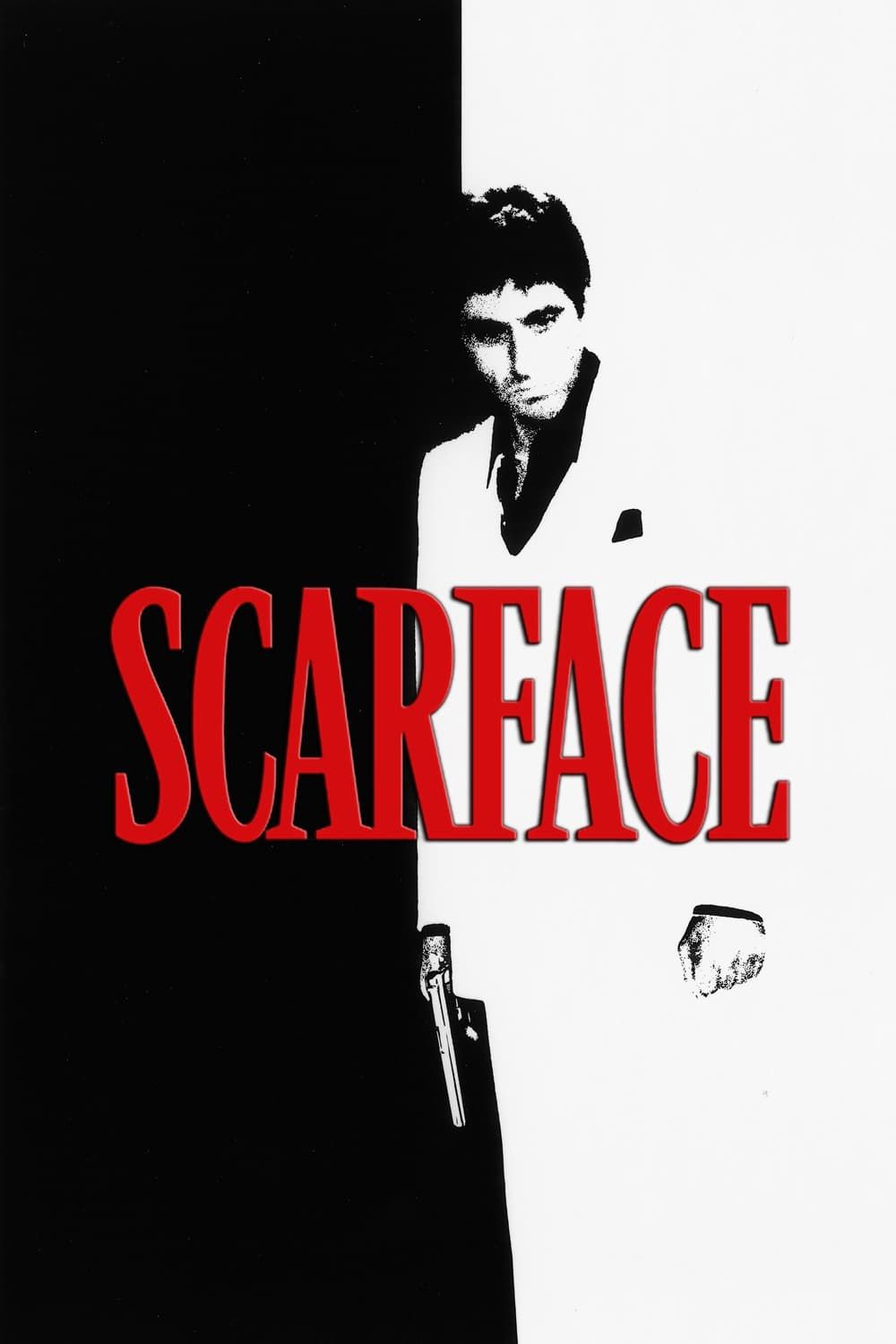
Brian De Palma’s Scarface is one of those movies that seems almost impossible to discuss at a normal volume. Everything about it is loud, excessive, sweaty, violent, vulgar, and deliberately too much. The movie does not simply tell the story of Tony Montana, a Cuban immigrant who rises through Miami’s cocaine trade before destroying himself. It turns that rise and fall into a neon-lit, operatic explosion of greed, paranoia, sex, money, and violence. At first, Scarface can feel like an overlong, incredibly entertaining gangster fantasy. But underneath all the cocaine mountains and machine guns, it is also a deeply cynical story about the American dream and what happens when ambition is allowed to become a substitute for an actual soul.

Tony arrives in Miami during the Mariel boatlift, immediately presenting himself as someone who refuses to be intimidated. He is not interested in being grateful, polite, or patient. Tony wants power, and he wants it quickly. That impatience is both his greatest strength and the obvious source of his downfall. He is willing to do things that other people are too afraid to do, which helps him climb the criminal ladder. At the same time, he cannot understand the idea of limits. Every success only makes him want something bigger: more money, more cocaine, more influence, a bigger house, a more beautiful wife, and absolute control over everyone around him.

The screenplay by Oliver Stone gives Tony a kind of blunt, almost cartoonishly direct philosophy. He believes that the world belongs to people who take it. In Tony’s mind, morality is mostly an excuse invented by people who lack the courage to seize what they want. That attitude makes him magnetic, but the film never truly presents his worldview as admirable. Tony may have the confidence of a king, but he behaves more like a man who is constantly terrified that someone will discover he is not really in control. His bravado is a shield against humiliation, poverty, and powerlessness. The more successful he becomes, the more obvious it is that he is still fighting the same emotional battle he was fighting when he first arrived.

Al Pacino’s performance is the central reason Scarface remains so watchable. He plays Tony as a human grenade, a character who seems to be vibrating with anger even when he is sitting still. The accent, the posture, the rapid shifts in mood, and the exaggerated physical gestures could easily have turned Tony into a parody. In fact, there are moments when Pacino absolutely does push the character into parody. Yet that is also part of the performance’s strange power. Tony is a man who has constructed himself as a larger-than-life personality, so Pacino makes him seem like someone performing Tony Montana even while he is alone.

Pacino understands that Tony’s violence is not simply about cruelty. It is about insecurity, pride, and the panic of losing status. Tony cannot tolerate being laughed at, challenged, ignored, or treated as inferior. A casual insult can become a life-or-death confrontation because he experiences disrespect as an existential threat. Pacino makes those reactions frightening, but he also gives them a pathetic quality. Tony is powerful enough to terrify an entire room, yet emotionally he often behaves like a wounded child demanding recognition.

That contradiction is what keeps the performance from becoming empty scenery chewing. Tony is ridiculous, but he is also tragic. He is disgusting, but he has flashes of genuine feeling, especially in his relationship with his sister Gina. Unfortunately, even his love for her becomes possessive and destructive. Tony wants to protect Gina, but he also wants to own her choices, her sexuality, and her future. He cannot separate love from control. The same problem affects his relationship with Elvira, played by Michelle Pfeiffer, and eventually his entire empire. Tony does not know how to care for people without turning them into extensions of himself.

De Palma’s direction matches Tony’s personality. The film is staged like a gangster epic filtered through a fever dream. Miami becomes a place of bright colors, glass surfaces, giant mansions, tropical heat, and constant artificial light. The city feels less like a real environment than a hallucination of wealth. Tony’s home is especially important because it looks like a monument to success but gradually becomes a prison. The famous final shootout transforms that mansion into a battlefield, with Tony defending his kingdom even after it has already collapsed around him.

The violence in Scarface is often shocking, but it is also theatrical. De Palma uses suspense, wide compositions, sudden bursts of brutality, and moments of grotesque visual humor to make the violence feel both horrifying and unreal. The movie’s excess can be exhausting, particularly in the middle section, where Tony’s rise begins to blur into an endless parade of deals, parties, arguments, and drug use. The length is part of the point: we are meant to feel Tony’s world becoming bloated and unstable. Still, some of the film’s scenes repeat ideas that it has already established. Tony is ambitious, Tony is paranoid, Tony is violent, and eventually Tony is high. The movie sometimes keeps shouting after the audience has already heard it.

That criticism matters because Scarface is not a flawless film. Its dialogue can be clumsy, its supporting characters are sometimes more functional than fully developed, and its treatment of women is frequently limited by Tony’s perspective. The film wants to condemn male domination and criminal capitalism, but it is also fascinated by the same things it condemns. It shows us the luxury, the clothes, the cars, the glamorous parties, and the apparent freedom of Tony’s lifestyle. Even while warning that this life ends in misery, it makes the fantasy visually seductive.

That tension helps explain the movie’s complicated legacy. When Scarface was first released in 1983, many critics found it excessive, ugly, and morally confused. Over time, however, its reach expanded dramatically through home video and popular culture. The movie became especially important to hip-hop, where artists recognized Tony’s language of survival, hustle, ambition, and self-invention. Al Pacino has credited hip-hop with helping the film find its audience, saying that rappers understood and embraced it. That relationship became one of the most important parts of Scarface’s afterlife.

Hip-hop did not simply treat Tony as a cool gangster. It also turned him into a symbol. The character could represent ruthless ambition, immigrant struggle, street credibility, material success, or the danger of becoming trapped by one’s own myth. Lines from the movie entered rap lyrics, album skits, music videos, and stage names. The film’s imagery became a shorthand for a certain kind of rise-from-nothing fantasy, even when the original movie was trying to show how poisonous that fantasy could be. In this sense, Scarface became bigger than its initial critical reputation. It stopped being only a crime film and became a cultural text that people could quote, remix, parody, and reinterpret.

Its influence on video games is just as obvious, especially in Grand Theft Auto: Vice City. That game’s 1980s Miami setting, neon colors, criminal empire structure, radio culture, and flamboyant protagonist clearly operate in the same general territory as Scarface. The film has also been connected directly to other games, including Scarface: The World Is Yours, which imagines an alternate continuation after the movie’s ending. The game allows players to rebuild Tony’s empire, purchase businesses, intimidate rivals, and expand across Miami. It turns the movie’s rise-and-fall structure into an interactive fantasy in which the player gets to ignore the ending and keep climbing.

That difference between film and game is revealing. Scarface ultimately insists that Tony’s dream cannot survive because Tony himself is incapable of moderation, trust, or self-knowledge. Video games can take the same world and make the player feel rewarded for doing exactly what Tony does: acquiring territory, collecting money, buying weapons, and becoming more powerful. In that format, the critique of excess can easily become a celebration of excess. Yet that is also why the film remains so influential to games. It provides an instantly understandable fantasy of criminal ascent, complete with a distinctive visual style and a protagonist whose personality is impossible to ignore.

In the end, Scarface is both a warning and a temptation. It tells us that Tony Montana is doomed, but it makes his climb so entertaining that we understand why generations of viewers, rappers, and game designers kept returning to him. Al Pacino’s performance is the movie’s beating heart: outrageous, funny, frightening, and occasionally heartbreaking. De Palma’s film may be messy and overstuffed, but its messiness is part of its identity. Scarface does not want to be tasteful or balanced. It wants to overwhelm you, seduce you, and then leave you staring at the wreckage of a man who mistook having everything for being somebody.

Guilty Pleasure No. 114: Death Race (dir. by Paul W.S. Anderson)


Death Race (2008) is the kind of movie that feels like it was engineered in a lab specifically to test how much nonsense an audience will tolerate as long as things explode every ten minutes. Directed by Paul W.S. Anderson, a filmmaker whose entire career seems built on the philosophy of “style over literally anything else,” the film doesn’t so much tell a story as it barrels through one at full speed, flipping off logic, subtlety, and occasionally even coherence along the way. And yet—this is the annoying part—it works. Not in a “this is a good film” sense, but in that grimy, late-night cable, “I probably shouldn’t be enjoying this as much as I am” way.

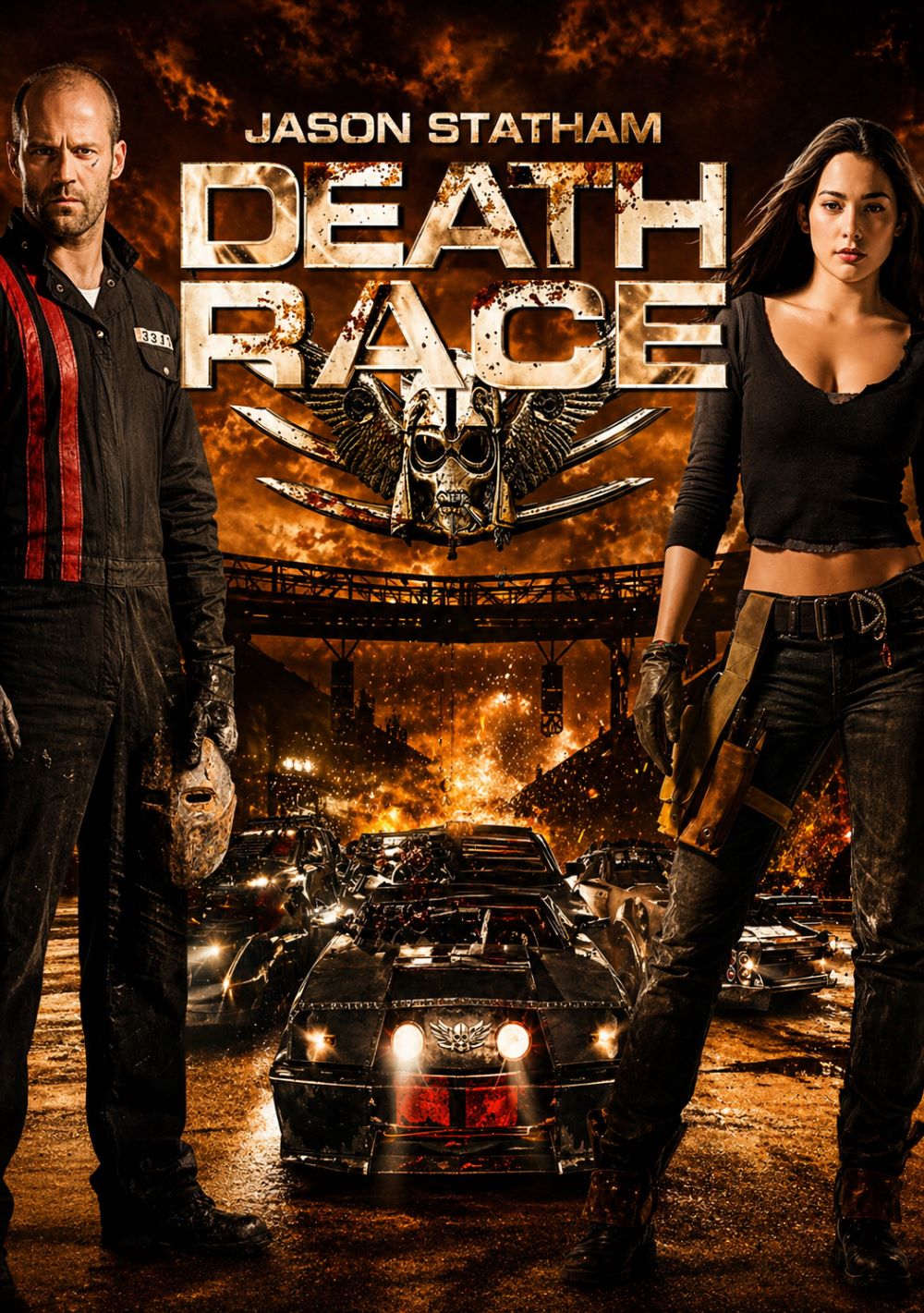
The premise is pure pulp: in a dystopian future where the economy has collapsed (because of course it has), prisons have turned into profit-generating entertainment hubs. The main attraction is the Death Race, a gladiatorial car battle where inmates drive weaponized vehicles and murder each other for the amusement of a bloodthirsty audience. Jason Statham plays Jensen Ames, a wrongfully convicted ex-racer forced to step into the role of a masked legend named Frankenstein. It’s as blunt and ridiculous as it sounds, and the movie never once tries to elevate it beyond that. There’s no pretense of social commentary that isn’t immediately undercut by another machine gun turret popping out of a car hood.

Anderson directs the whole thing like he’s permanently hopped up on energy drinks and early 2000s music video aesthetics. The camera is constantly moving, cutting, shaking, and occasionally losing track of what’s happening entirely. Action scenes are edited within an inch of their life, creating a sense of chaotic momentum that’s exciting in the moment but completely disposable five seconds later. It’s visual junk food—greasy, loud, and weirdly satisfying even when you know it’s terrible for you.

A huge part of why Death Race remains watchable—arguably the biggest reason—is the decision to cast Jason Statham in the lead. This is exactly the kind of role his entire screen persona was built for, and the film leans on that heavily. Statham doesn’t bring depth or complexity, but he brings something more valuable here: credibility. You believe he can survive this world. You believe he can drive, fight, and endure the endless barrage of chaos being thrown at him. In a movie this dumb, that kind of grounding goes a long way. Swap him out for a less naturally commanding actor, and the whole thing probably collapses under its own stupidity.

That’s not to say he’s delivering some kind of nuanced performance. He isn’t. He operates in that familiar Statham mode—minimal dialogue, maximum scowl, and a constant sense that he’s two seconds away from breaking someone’s arm. But that simplicity works in the film’s favor. He becomes the one stable element in an otherwise unhinged movie, a human anchor that keeps the madness from drifting into outright parody. The choice to center the film around him is one of the few decisions here that feels genuinely smart, even if everything surrounding it is chaos.

Then you’ve got Joan Allen, who plays the prison warden with a level of icy commitment that almost tricks you into thinking the movie has something deeper going on. She treats the Death Race like high art, which is both hilarious and oddly effective. There’s a strange tension between her seriousness and the film’s inherent stupidity that gives Death Race a bit more texture than it probably deserves. She’s acting in a better movie that doesn’t exist, and somehow that makes this one more watchable.

But let’s not kid ourselves—this is not a good film. The characters are paper-thin, the dialogue is aggressively functional, and the plot moves forward with the grace of a sledgehammer. Emotional beats land with a dull thud, and any attempt at stakes is drowned out by the next explosion or metal-on-metal collision. It’s the kind of movie where you can predict every major turn five minutes in advance and still not care because you’re too busy watching a car fire a missile at another car.

What makes Death Race oddly compelling, though, is how completely it commits to its own stupidity. There’s no wink to the audience, no self-aware humor trying to soften the edges. It plays everything straight, which paradoxically makes it feel more honest than a lot of “so bad it’s good” movies. It’s not trying to be clever or subversive—it just wants to show you armored cars smashing into each other while people scream and things explode. And on that level, it absolutely delivers.

There’s also something weirdly nostalgic about it. It feels like a relic of a very specific era of action filmmaking, where grit meant desaturated colors, shaky cameras, and protagonists who communicated exclusively through clenched jaws and short sentences. It’s pre-Mad Max: Fury Road, pre-the current wave of more thoughtfully constructed action cinema. Death Race exists in that awkward middle ground where filmmakers had access to bigger budgets and better effects but hadn’t quite figured out how to use them with any real finesse.

And yet, despite all its flaws—or maybe because of them—it’s entertaining. Not in a “this is a masterpiece” way, but in that guilty pleasure sense where you’re fully aware of how dumb it is and still having a good time. It’s a film that succeeds almost accidentally, powered by sheer momentum and a refusal to slow down long enough for you to think too hard about what you’re watching.

In the end, Death Race is a mess. A loud, clunky, overedited mess with delusions of intensity and a complete disregard for nuance. But it’s also a perfect example of a movie that’s entertaining despite itself. It shouldn’t work, and on paper, it really doesn’t. But between the explosions, the ridiculous premise, and—crucially—Statham’s perfectly calibrated presence, it finds a groove and sticks to it. You don’t respect it, you don’t admire it—but you kind of enjoy the hell out of it anyway.

Previous Guilty Pleasures

  1. Half-Baked
  2. Save The Last Dance
  3. Every Rose Has Its Thorns
  4. The Jeremy Kyle Show
  5. Invasion USA
  6. The Golden Child
  7. Final Destination 2
  8. Paparazzi
  9. The Principal
  10. The Substitute
  11. Terror In The Family
  12. Pandorum
  13. Lambada
  14. Fear
  15. Cocktail
  16. Keep Off The Grass
  17. Girls, Girls, Girls
  18. Class
  19. Tart
  20. King Kong vs. Godzilla
  21. Hawk the Slayer
  22. Battle Beyond the Stars
  23. Meridian
  24. Walk of Shame
  25. From Justin To Kelly
  26. Project Greenlight
  27. Sex Decoy: Love Stings
  28. Swimfan
  29. On the Line
  30. Wolfen
  31. Hail Caesar!
  32. It’s So Cold In The D
  33. In the Mix
  34. Healed By Grace
  35. Valley of the Dolls
  36. The Legend of Billie Jean
  37. Death Wish
  38. Shipping Wars
  39. Ghost Whisperer
  40. Parking Wars
  41. The Dead Are After Me
  42. Harper’s Island
  43. The Resurrection of Gavin Stone
  44. Paranormal State
  45. Utopia
  46. Bar Rescue
  47. The Powers of Matthew Star
  48. Spiker
  49. Heavenly Bodies
  50. Maid in Manhattan
  51. Rage and Honor
  52. Saved By The Bell 3. 21 “No Hope With Dope”
  53. Happy Gilmore
  54. Solarbabies
  55. The Dawn of Correction
  56. Once You Understand
  57. The Voyeurs 
  58. Robot Jox
  59. Teen Wolf
  60. The Running Man
  61. Double Dragon
  62. Backtrack
  63. Julie and Jack
  64. Karate Warrior
  65. Invaders From Mars
  66. Cloverfield
  67. Aerobicide 
  68. Blood Harvest
  69. Shocking Dark
  70. Face The Truth
  71. Submerged
  72. The Canyons
  73. Days of Thunder
  74. Van Helsing
  75. The Night Comes for Us
  76. Code of Silence
  77. Captain Ron
  78. Armageddon
  79. Kate’s Secret
  80. Point Break
  81. The Replacements
  82. The Shadow
  83. Meteor
  84. Last Action Hero
  85. Attack of the Killer Tomatoes
  86. The Horror at 37,000 Feet
  87. The ‘Burbs
  88. Lifeforce
  89. Highschool of the Dead
  90. Ice Station Zebra
  91. No One Lives
  92. Brewster’s Millions
  93. Porky’s
  94. Revenge of the Nerds
  95. The Delta Force
  96. The Hidden
  97. Roller Boogie
  98. Raw Deal
  99. Death Merchant Series
  100. Ski Patrol
  101. The Executioner Series
  102. The Destroyer Series
  103. Private Teacher
  104. The Parker Series
  105. Ramba
  106. The Troubles of Janice
  107. Ironwood
  108. Interspecies Reviewers
  109. SST — Death Flight
  110. Undercover Brother
  111. Out for Justice
  112. Food Wars!
  113. Cherry

Suspiria (2018) Official Trailer


suspiria-1

Where has the time gone.

In my absense, it looks like other people have flourished, but now I think it’s time to make a return and this time for good.

What better way to mark my return than to show and talk about the first official full-length trailer for what could be one of the more divisive horror remakes set to arrive in a couple months.

I am talking about Suspiria by Italian filmmaker Luca Guadagnino (Call Me by Your Name, A Bigger Splash and I Am Love). The original film by Italian giallo maestro Dario Argento many horror fans consider a great example of the Italian giallo of the late 70’s and early 80’s. Just like most fandoms, whenever there’s talk about one of the classics being remade there’s levels of trepidation, anger and guarded optimism.

While I’m never one to look at remakes as ruining the originals. IF that was the case then we wouldn’t have excellent horror remakes such as Carpenter’s The Thing and, to an extent, Zack Snyder’s Dawn of the Dead.

While I’m excited to see what Guadagnino brings to the table when it comes to his remake of Suspiria, I am also somewhat guarded in that the original film was such a surreal experience that remaking it note for note wouldn’t add anything new to the experience.

Here’s to hoping this is one horror remake that falls under the great side of the equation instead of the trash end.

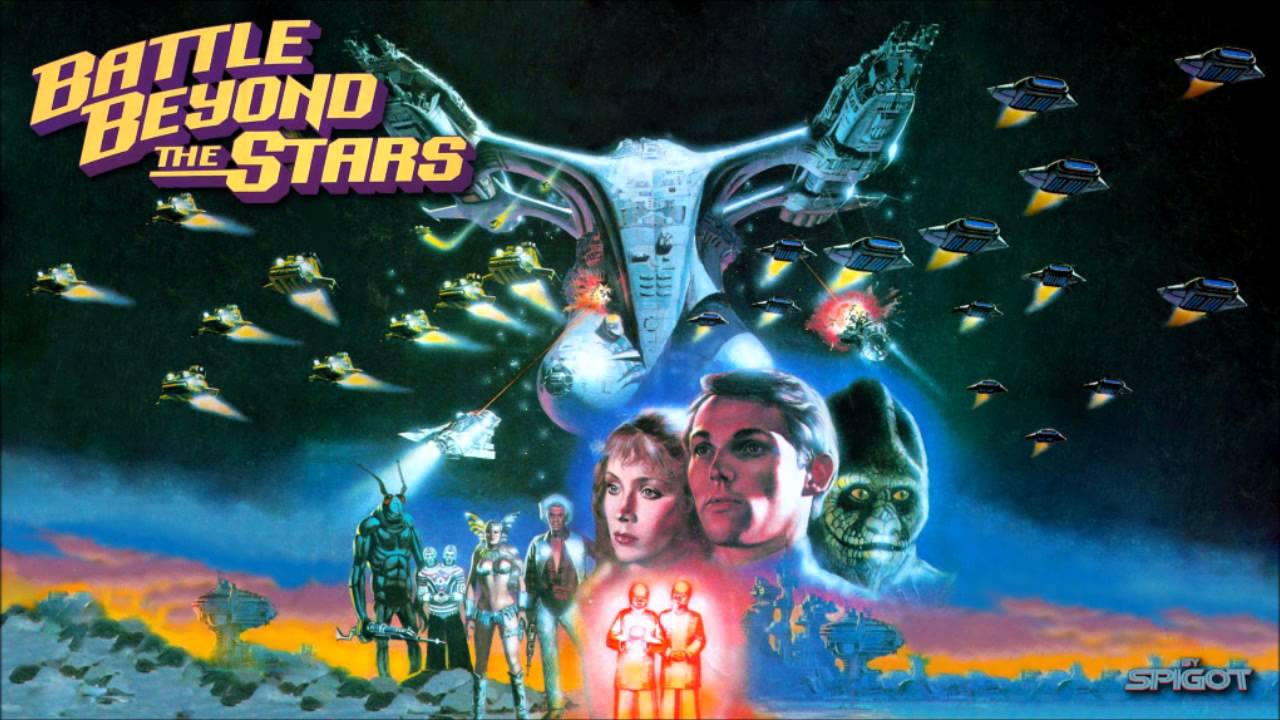
Guilty Pleasure No. 22: Battle Beyond the Stars (dir. by Jimmy T. Murakami)


maxresdefault

Two of my favorite films of all-time happen to be very similar. In fact, one could say that they’re pretty much the same films. I’m talking about Akira Kurosawa’s Seven Samurai and it’s Western-remake by John Sturges, The Magnificent Seven. Kurosawa’s film is one of the greatest films of all-time and it’s no wonder that many have taken the film’s story of the downtrodden hiring a band of misfits, rogues, but still honorable men to help them fight against huge odds.

One such film that tries to add onto Kurosawa film’s legacy was the Roger Corman-produced scifi-adventure film Battle Beyond the Stars. This 1980 film was one of Corman’s many attempts to cash-in on the Star Wars phenomena, but in his usual low-budget style.

For a low-budget scifi film, Battle Beyond the Stars happened to have quite a cast one doesn’t usually see in such productions. While it had such grindhouse and exploitation regulars as John Saxon and Sybil Danning, it also starred the wholesome Richard Thomas from The Waltons and George Peppard (who would later become famous with a new generation as Hannibal Smith of The A-Team). The film would be directed by Jimmy T. Murakami, but from watching the film one could see Corman’s fingerprints all over the production from the script which was pretty lean and cut to the basic outline of Kurosawa’s original film. There’s not much fluff to bog down the pacing of the film.

This film has always been a guilty pleasure of mine because it so resemble Seven Samurai and The Magificent Seven, but adds in it’s own unique style and look to a well-worn and well-trodden plot. It was much later that I found out that James Cameron had a major hand in the special effects work in the film. Think about that for a moment. The self-proclaimed “King of the World” who literally breaks film budget records every time he begins work on a film did FX work on battle Beyond the Stars whose effects budget probably wouldn’t buy a day’s worth of crafts table eating for his most modestly budgeted films.

Lisa Marie always loved to say that grindhouse and exploitation films are some of most honest films out there. There’s no bullshit to what we see on the screen. It’s filmmakers forced to be daring and inventive because the lack of resources forces them to think outside the box. Battle Beyond the Stars might be seen as a mediocre attempt to cash-in on a scifi cultural phenomena, but it does so with a go for broke mentality that makes it such a fun film to watch. It’s not the greatest thing Corman has ever produced and some would even call it a very bad film, but once one looked past it’s rough and flawed surface then one could see a gem in the rough hidden beneath.

Oh, this remake of the remake of the original also happened to star one Robert Vaughn who was one of original Magnificent Seven.

  1. Half-Baked
  2. Save The Last Dance
  3. Every Rose Has Its Thorns
  4. The Jeremy Kyle Show
  5. Invasion USA
  6. The Golden Child
  7. Final Destination 2
  8. Paparazzi
  9. The Principal
  10. The Substitute
  11. Terror In The Family
  12. Pandorum
  13. Lambada
  14. Fear
  15. Cocktail
  16. Keep Off The Grass
  17. Girls, Girls, Girls
  18. Class
  19. Tart
  20. King Kong vs. Godzilla
  21. Hawk the Slayer

Trailer: All Cheerleaders Die


AllCheerleadersDie

Lucky McKee is one of my favorite horror filmmakers since I first saw his 2002 film May. I’ve followed his career since and last year he premiered his latest horror film during the 2013 Toronto International Film Festival.

All Cheerleaders Die will have a limited release this summer and will most likely be available on Video On-Demand soon after. Whether I see it on the big-screen or in the comfort of my own home I know for a fact that my partner-in-crime, Lisa Marie, will be watching this as well. She won’t be able to resist after just seeing the title alone. It’s right up her wheelhouse, so to speak.

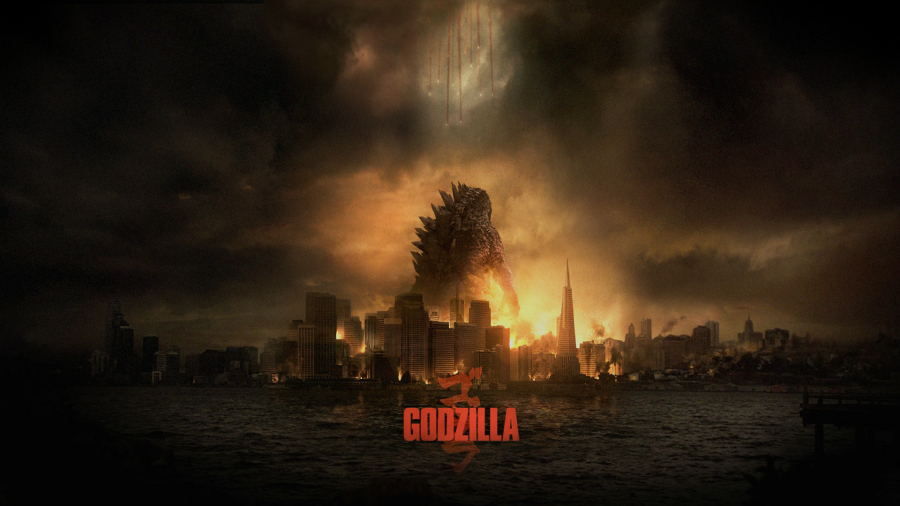
Trailer: Godzilla (Extended)


Godzilla2014

We are just a little over a month away from the release of the Gareth Edwards reboot of the classic kaiju film Godzilla.

As studios are now seeming to get into the habit to help build up the hype for their big tentpole summer releases we have a new extended trailer from Warner Bros. to remind everyone that the Big Guy is seriously in need of a Snickers bar.

While it’s still speculation and this extended trailer doesn’t really show any clues or evidence I still believe that this latest iteration of Godzilla will have him fighting another monster and/or monsters.

Godzilla is set for a May 16, 2014 release date.

Trailer: Oldboy (Red Band)


OldboyRemake

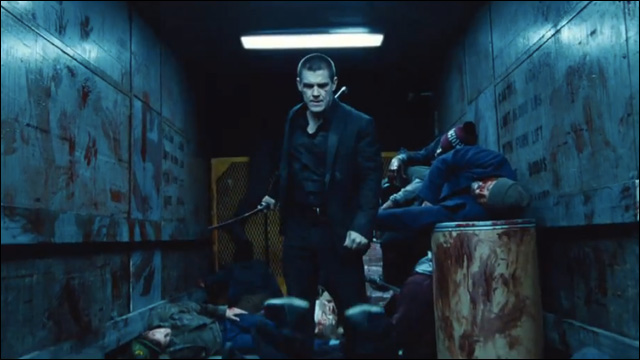
Today saw the release of the red band trailer for the remake of Park Chan-wook’s classic neo-noir Oldboy. This remake by Spike Lee already looks to pay homage (or imitate) the look and feel of Park’s adaptation of the Japanese manga of the same name by Garon Tsuchiya and Nobuaki Mineshigi. We see quick glimpses of the hallway fight scene and a montage of the main character’s 20 years spent locked up in an unknown hotel room.

There’s a great chance for Spike Lee to make this remake his very own by using the Park film as a template but not as gospel. The Park adaptation itself took some liberties with the story told in the manga. Lee and the screenplay by Protosevich could do same to allow this Oldboy a chance to stand on its own instead of becoming another Gus Van Sant Psycho.

Though I wouldn’t mind to see what Lee has in mind as Josh Brolin’s character’s first choice of a meal once getting out.

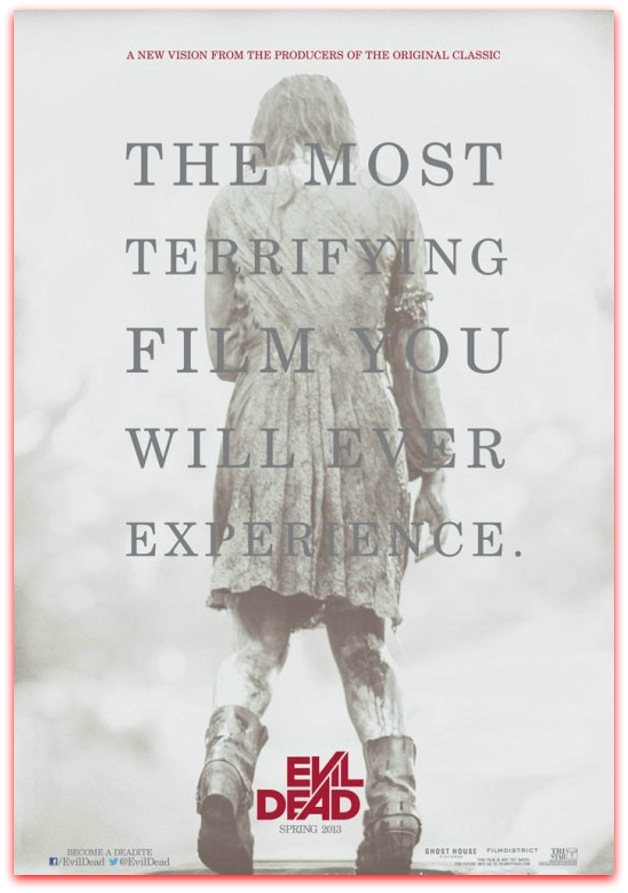
Trailer: Evil Dead (Full Red Band)


EvilDead

Remake. Remake. Remake.

I can hear the howls now. Not another horror remake and one of a classic in the genre that many fans consider one of the holy grails of horror cinema. Guess what I say to those people. SHUT THE FUCK UP!

With the complete blessing from both Sam Raimi and Bruce “Who is God when he wants to walk amongst his creations” Campbell and them back but in the role of producers and mentor to the remake’s director, Fede Alvarez, and the young ensemble cast I have much more faith with this particular horror remake than others of its kind.

The trailer itself looks to go on the far extreme on the horror side of the original. I didn’t get a sense of much of the black humor of the original film (and it’s subsequent semi-remake), but I think that’s a good thing. Why remake a classic beat for beat when one can go their own way and explore something even the original never did.

One thing I can say about this full red band trailer that has me jumping up and down like a horror fan on bath salts…

VIOLENTLY AMOROUS TREE: Check!

LOTS AND LOTS AND LOTS OF BLOOD: Check!

GRAPHIC DISMEMBERMENT: Check!

CHAINSAW: Check!

DEADITE POSSESSIONS: Check!

FACE-EATING (or Extreme GIRL-ON-GIRL MAKE-OUT SESSION: Check and Check!

Evil Dead lands it’s bloody, possessed corpse on everyone this April 12, 2013. Until then….

….Shop smart. Shop S-MART.

The First 6 Minutes of “Maniac” Remake


Maniac Remake

There was one film that had caught my interest once the project was announced in late 2011. The film was going to be the horror remake of the classic, grindhouse slasher flick from 1980 called Maniac. This film is considered by many fan of the grindhouse and exploitation scene as a classic in the slasher genre. It was also hailed by many moral groups as a prime example of how horror cinema was beginning to reach “pornographic levels of violence” especially towards female victims.

So, it was quite an interesting bit of news when the remake was announced and Frodo Baggins himself would take on the role of the film’s serial killer in Frank. It was an inspired bit of casting that gave the film’s early production a much needed boost in interest. It’s now been over a year and the film has made the genre film festival circuits and the buzz surrounding the Franck Khalfoun-directed film is that it more than lives up to the grindhouse and exploitation aesthetics of the original while bringing in a fresh new stylistic take on the slasher genre.

We have below is the first 6 minutes of the Maniac remake and one can see how creepy the POV-style the filmmakers are going to take for the film has turned out.

There’s still no release date announced for Maniac.