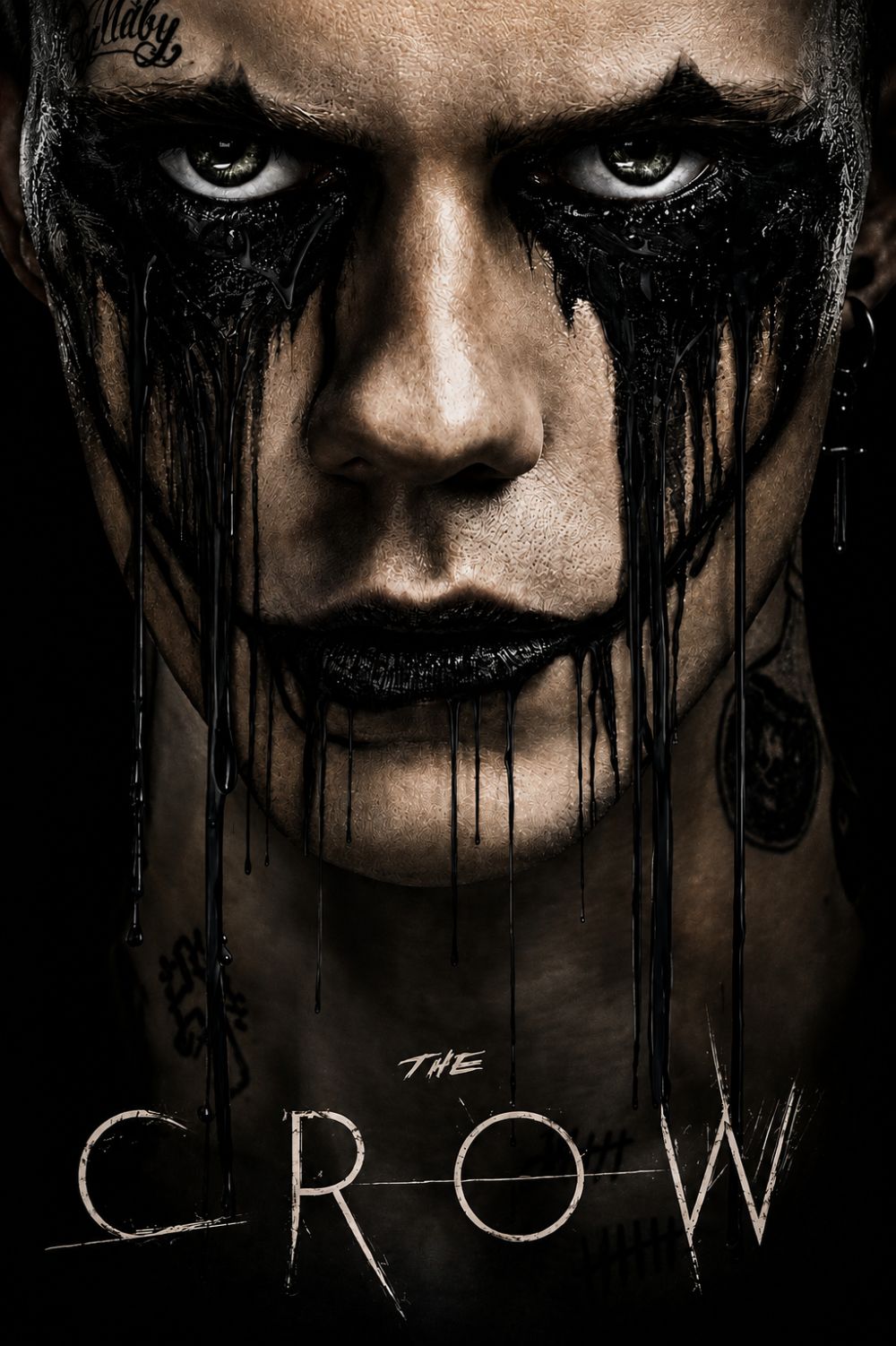
Review: The Crow (dir. by Rupert Sanders)


“When someone you love dies, you will know emptiness… You will never forget, and you will never, ever forgive.” — Eric Draven

The Crow is a remake built around a reasonable idea—returning to James O’Barr’s graphic novel rather than photocopying Alex Proyas’s 1994 cult film—but Rupert Sanders’s 2024 version never discovers why this material matters beyond its tattoos, bruises, and black eyeliner. It arrived dead on arrival with critics and audiences alike, not simply because it was measured against a beloved predecessor, but because it offered so little of its own identity. The film is dour without being haunting, romantic without generating much chemistry, and violent without making its revenge feel especially cathartic.

Sanders’s film stars Bill Skarsgård as Eric and musician FKA twigs as Shelly, lovers brutally murdered after stumbling too close to the secrets of criminal impresario Vincent Roeg, played with sleek, vaguely supernatural menace by Danny Huston. Eric awakens in a liminal afterlife, is granted a path back to the living world, and returns armed with supernatural endurance and a need to avenge Shelly. The fundamentals are familiar: love is destroyed by violence, death cannot sever that love, and vengeance becomes a darkly mythic expression of grief. Yet The Crow continually confuses the bare outline of that story with the emotional force that made it endure.

The production’s troubled history almost feels encoded in the finished movie. A new Crow film spent more than a decade trapped in development hell, cycling through different studios, directors, screenplays, and potential stars. Relativity Pictures held the project for years; Sony eventually became involved; various versions had names such as Bradley Cooper, Luke Evans, Jack Huston, and Jason Momoa attached at different stages, alongside filmmakers including Stephen Norrington, F. Javier Gutiérrez, and Corin Hardy. The project repeatedly stalled under changing rights arrangements, creative disagreements, and the general instability that often turns a familiar title into an endlessly recycled pitch deck. A fresh production effort was announced in 2020, but the Sanders version did not actually begin shooting until 2022 in Prague.wikipedia+2

That prolonged development makes the final product feel less like a passionately argued reinterpretation than a compromise that survived by default. Every era of the project seems to have left a trace. There is a prestige-minded desire to make Eric and Shelly psychologically damaged and contemporary. There is a franchise-minded urge to expand the supernatural mythology. There is also a music-video impulse toward body art, club scenes, fashionable misery, and sharply composed violence. None of these ingredients are automatically bad. But Sanders never finds a way to make them cohere into a world as tactile, strange, or emotionally immediate as the one Alex Proyas created in 1994.

The suspicion around the remake was understandable from the beginning. Most people involved in the original film have either expressed mixed feelings or outright disapproval about revisiting the property. The 1994 The Crow is not merely another cult favorite awaiting intellectual-property renewal. It is permanently linked to Brandon Lee, who was killed in an on-set shooting accident during production. The completed film became a memorial as much as a comic-book adaptation, and its emotional impact cannot be separated from the knowledge of what happened to its star.

The strongest objections have come from James O’Barr and Alex Proyas. O’Barr, writer and artist of the original graphic novel, has questioned the need for a remake for years, once calling the idea of remaking a then-15-year-old film “kind of ridiculous.” Proyas, meanwhile, has been even more direct. He argued that The Crow was not simply a movie because Brandon Lee died making it, and that the 1994 film should remain part of Lee’s legacy. When the new film’s reception turned hostile, Proyas called it a “cynical cash-grab” and mocked the lack of financial reward supposedly waiting at the end of it. The tone of those comments may strike some people as harsh, but the remake never makes a convincing counterargument.

To be fair, Sanders does not ask Skarsgård to imitate Lee. That is one of the film’s better instincts. Skarsgård’s Eric is physically slight, heavily tattooed, insecure, and visibly wrecked by the life he has lived before death. He is not a supernatural rock-and-roll avenger in the same way Lee was. Instead, he resembles a wounded, emotionally arrested young man forced into a mythic role he does not fully understand. It is a potentially interesting angle, especially for a story about grief turning someone into a monster.

But the screenplay, credited to Zach Baylin and William Josef Schneider, does not give that approach enough shape. Eric is vulnerable, then dreamy, then brutally efficient, then mournful again, depending on what the scene needs. The film treats emotional instability as character depth, but those are not the same thing. A character can be fractured, contradictory, and self-destructive while still possessing a recognizable inner life. Skarsgård does what he can with the material, bringing real physical discomfort and sadness to Eric, yet the movie seems more interested in how his pain photographs than what it reveals.

The same issue affects Shelly. FKA twigs has an immediately magnetic screen presence, and the film wisely spends much more time on Eric and Shelly before their deaths than the 1994 film did. In theory, that should be a major advantage. If the viewer sees the relationship develop, then Eric’s return from death should carry more emotional force. Instead, the early sections feel like a montage stretched into an act: rehab, drugs, late-night intimacy, mutual confessions, music, dancing, sex, and shared trauma. The movie repeatedly tells us that these two are soulmates, but it rarely gives them the specific dialogue, humor, disagreements, or small gestures that make a romance believable.

Their relationship becomes a collection of poses. The camera understands that they are beautiful, sad, damaged people; the script never quite proves they are deeply connected individuals. That is fatal in The Crow, because Eric’s entire mission depends on the audience accepting that Shelly is not merely the woman he loved but the person who made life worth returning to. The movie substitutes trauma bonding for intimacy, assuming that shared wounds automatically equal love.

Huston’s Vincent Roeg is similarly underwritten. Roeg is introduced as an elegant criminal figure with occult powers, someone who preys on young women and sustains himself through a diabolical bargain. It is a significant departure from the relatively grounded gangland evil of the 1994 film, and it could have opened the door to something genuinely grotesque. Instead, the mythology grows more complicated while the villain becomes less interesting. Roeg speaks in the familiar language of immortal bad guys who are convinced that cruelty makes them profound. He lacks the memorable theatricality of the original film’s antagonists and the unnerving specificity that a character like this needs.

The remake’s expanded mythology is perhaps its biggest miscalculation. O’Barr’s original premise has always been powerful because it is so direct: a murdered man is allowed to return, guided by a crow, because love has been violently cut short. It is gothic, but it is simple. Sanders’s version adds a network of afterlife rules, soul exchanges, purgatorial spaces, and supernatural transactions. The more the film explains, the less mythical it feels. Grief does not become larger through lore. In this case, it becomes bogged down in mechanics.

Visually, Sanders has moments of genuine flair. The film’s strongest sequence comes late, when Eric tears through an opera house during a lavish performance. White costumes are stained red, the setting’s exaggerated grandeur clashes with Eric’s raw violence, and the action is staged with a sense of grotesque spectacle. It is the one scene where Sanders’s instincts as a visual stylist really connect with the source material’s heightened pulp melodrama. The sequence is bloody, theatrical, and almost absurd enough to become exhilarating.

Yet it arrives too late and feels disconnected from much of what precedes it. For large stretches, The Crow is subdued to the point of visual anonymity. Its darkness looks digitally smoothed rather than dreamlike. Its city does not have a personality. Its criminal underworld feels interchangeable with any number of slick streaming thrillers. The 1994 film’s Detroit-like nightmare city was impossible to separate from its mood: rain-slicked streets, scorched interiors, industrial rot, grotesque criminals, and an unforgettable goth-grunge soundtrack all fused into one singular aesthetic. Sanders’s movie has better technology but far less texture.

The soundtrack, in particular, exposes the remake’s uncertainty. The 1994 Crow became inseparable from its music, which drew together alternative rock, industrial, metal, and goth influences into an extension of Eric’s world. The 2024 version clearly wants to speak to a newer generation through contemporary pop, electronic, and melancholy club sensibilities. There is nothing wrong with modernizing the musical language, but the choices do not build a coherent subculture around the film. They play as individual selections rather than part of a living, breathing atmosphere.

This is why the remake’s negative response was so predictable. It was not doomed merely because it remade a movie people love, nor because any new Eric Draven would inevitably be compared to Brandon Lee. A remake could have justified itself by drawing more deeply from O’Barr’s graphic novel, creating a truly different visual language, or foregrounding the grief at the center of the story with more honesty. Sanders instead gives us a film that is constantly signaling pain while remaining emotionally remote.

There are fragments of a better Crow scattered throughout: Skarsgård’s willingness to play Eric as fragile and unglamorous, twigs’s spectral intensity, and the opera-house massacre’s gleefully excessive bloodshed. But those fragments never combine into a whole. The Crow has the eyeliner, the tattoos, the wounds, and the bird, but it never finds the heart beneath them. The original film endured because it turned loss into a piece of feverish gothic pulp. This remake turns loss into an aesthetic, and that is not nearly enough.
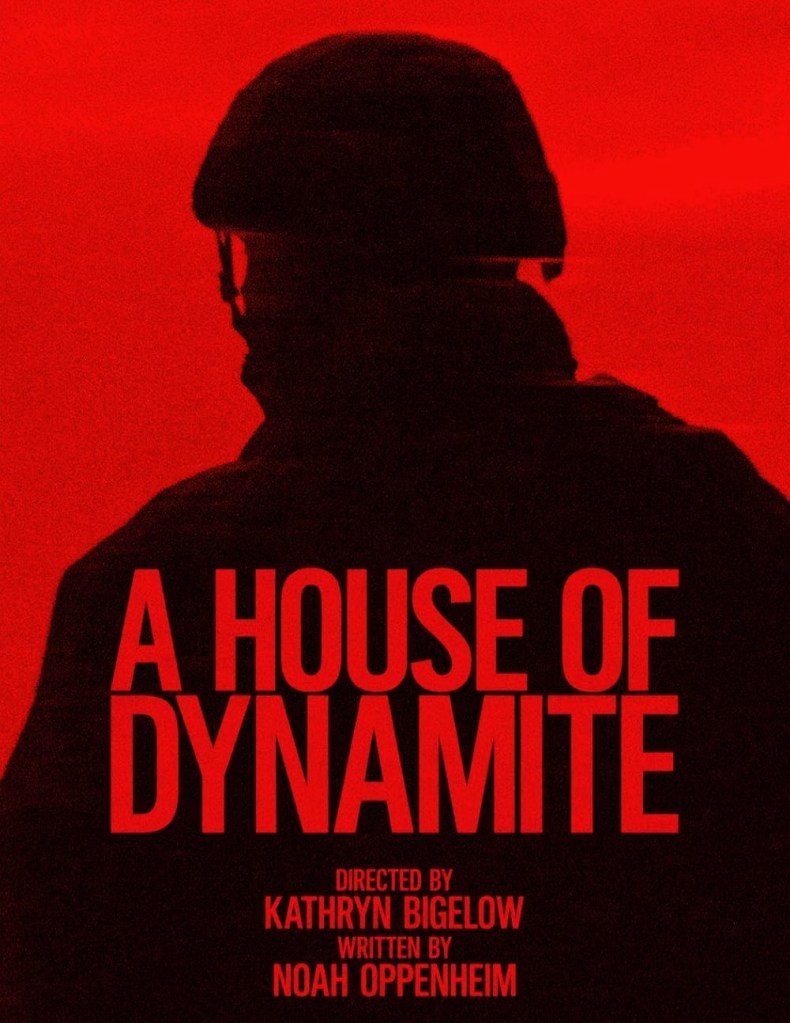

Horror Review: A House of Dynamite (dir. by Kathryn Bigelow)


“So it’s a fucking coin toss? That’s what 50 billion dollars buys us?” — Secretary of Defense Reid Baker

The end of the Cold War was supposed to close a chapter of fear. With the superpowers stepping back from the brink, the world briefly believed it had entered an era of stability. Yet that promise never held. The weapons remained, the rivalries adapted, and the global machinery of deterrence continued to hum beneath the surface. Kathryn Bigelow’s A House of Dynamite faces this reality head-on, transforming the mechanics of modern nuclear defense into something unnervingly human. On the surface, it plays as a high-tension political technothriller, but beneath that precision lies a deeply existential horror film—one built not on shadows or monsters, but on daylight, competence, and the narrow margins of human fallibility.

The premise is piercingly simple. An unidentified missile is detected over the Pacific. Analysts assume it’s a test or a glitch—another false alarm in a world overflowing with them. But within minutes, as conflicting data streams converge, what seemed routine begins to look real. The film unfolds in real time over twenty excruciating minutes, charting the reactions of those charged with interpreting and responding to the potential catastrophe. Bigelow divides the film into three interwoven perspectives: the White House Situation Room, the missile intercept base at Fort Greely, and the President’s mobile command aboard Marine One. The structure allows tension to grow from every direction at once, each perspective magnifying the other until the screen feels ready to collapse under its own pressure.

Capt. Olivia Walker (Rebecca Ferguson), commanding officer of the Situation Room, anchors the story with calm professionalism that gradually frays into disbelief. Ferguson’s performance is clear-eyed and tightly modulated—precise, disciplined, and quietly devastating. She stands as the rational center inside chaos, her composure the last gesture of control in a world that no longer follows reason.

Over her is Adm. Mark Miller (Jason Clarke), Director of the Situation Room, who represents the institutional embodiment of confidence. Clarke plays him with methodical restraint, a man who trusts procedure long after it stops earning trust. Miller’s authority is both comforting and horrifying: a portrait of leadership built on ritual rather than certainty.

At Fort Greely, Anthony Ramos brings an intimate immediacy as the officer charged with the missile intercept. His scenes hum with kinetic dread—the physical execution of decisions made thousands of miles away. Through him, the film captures the most primal kind of fear: acting when hesitation could mean extinction, knowing that success and failure are separated only by chance.

The President, portrayed by Idris Elba, spends much of the crisis in motion—first within the cocoon of the presidential limousine, and later, aboard Marine One as it carves through blinding daylight. Elba gives a performance of subtle, steady erosion. At first, he embodies unshakeable calm, a figure of poise and authority; but as the situation deepens, his steadiness wanes. Words become shorter, pauses longer. Every decision carries consequences too vast for resolution. It is a measured, understated portrait of power giving way to human uncertainty.

Bigelow’s direction is stripped of ornament and focused on precision. Barry Ackroyd’s cinematography heightens the claustrophobia of command centers—the sterile light, the reflective glass, the sense that every surface observes its occupants—while his exterior scenes pierce with harsh brightness, suggesting that no sanctuary exists under full exposure. Kirk Baxter’s editing maintains an unrelenting pulse, cutting with mathematical precision while preserving the eerie stillness of the moments where no one dares to speak.

​A House of Dynamite also shows how even with the most competent experts—military, intelligence, and political—working to manage an escalating crisis, there is no path to victory. The professionals at every level stop seeking to prevent the worst and instead focus on saving what they can when the worst becomes inevitable. The film’s scariest revelation is not the potential for destruction, but the paralysis that intelligence creates. If the brightest, most disciplined people in the world cannot find an answer, what happens when power falls into the hands of those less prepared or less rational? In its quiet way, the film poses that question that we see more and more each day on the news and on social media and we are left with silence and realization of the horror of it all.

Despite its precision, the film isn’t without flaws. Bigelow’s triptych structure—cutting between the three perspectives—works brilliantly to escalate tension, yet the repetition of similar beats slightly blunts the impact. Each segment revisits the same crisis rhythms—a data discrepancy, an argument over authority, another uncertain update—sometimes slowing the natural momentum. While the repetition underlines the futility of bureaucratic systems in chaos, the transitions don’t flow as fluidly as the rest of the film’s airtight craftsmanship. The result is a film that is gripping overall, occasionally uneven in rhythm, but never less than absorbing.

When the final minutes arrive, Bigelow declines to deliver resolution. No mushroom clouds, no catharsis. The President sits in Marine One, head down with the weight of the world on his shoulders as he contemplates his options in the Black Book (options in how to retaliate) and knowing that he has no good choices in front of him. The world remains suspended between survival and oblivion, and the silence that follows feels heavier than sound. The ending resists closure because endings, in the nuclear age, are an illusion—the fear continues no matter what happens next.

In a year crowded with strong horror releases—SinnersWeapons, The Long Walk and Frankenstein among them—A House of Dynamite stands apart. Dressed in the crisp realism of a technothriller, it’s a horror film defined by procedure, light, and silence. Bigelow builds terror from competence, from the steady voices and confident gestures of people trying to manage the unmanageable. This is not the chaos of fiction but the dread of reality, a reminder that the systems meant to preserve and protect might one day fail to deliver on its promise. For all its precision and restraint, A House of Dynamite shakes in the memory long after it ends—the year’s most quietly terrifying film.

Nuclear Close Calls: The situation and question brought up in the film has basis in history as there has been many instances of close calls and false alarms. The film itself doesn’t confirm that the missile detonated, but the implications in past confirmed events just shows how close the world has been to a completed catastrophe.

Here Are The Winners of 2020 Hollywood Music In Medi Awards


The winners are listed in bold!

ORIGINAL SCORE – FEATURE FILM
DA 5 BLOODS (Netflix) – Terence Blanchard
THE LIFE AHEAD (LA VITA DAVANTI A SE) (Netflix) – Gabriel Yared
MA RAINEY’S BLACK BOTTOM (Netflix) – Branford Marsalis
MANK (Netflix) – Trent Reznor, Atticus Ross
THE MIDNIGHT SKY (Netflix) – Alexandre Desplat
NEWS OF THE WORLD (Universal Pictures / Netflix) – James Newton Howard
PIECES OF A WOMAN (Netflix) – Howard Shore
THE TRIAL OF THE CHICAGO 7 (Netflix) – Daniel Pemberton

ORIGINAL SCORE – INDEPENDENT FILM
THE 24TH (Vertical Entertainment) – Alex Heffes
AMMONITE (Neon) – Dustin O’Halloran, Volker Bertelmann
THE GLORIAS (LD Entertainment / Roadside Attractions) – Elliot Goldenthal
MINARI (A24) – Emile Mosseri
SHIRLEY (Neon) – Tamar-kali
WILD MOUNTAIN THYME (Bleecker Street Media) – Amelia Warner

ORIGINAL SCORE – ANIMATED FILM
THE CROODS: A NEW AGE (Universal Pictures) – Mark Mothersbaugh
ONWARD (Walt Disney Studios) – Mychael Danna, Jeff Danna
SHAUN THE SHEEP: FARMAGEDDON (Netflix) – Tom Howe
SOUL (Walt Disney Studios) – Trent Reznor, Atticus Ross, Jon Batiste
WOLFWALKERS (Apple TV+) – Bruno Coulais

ORIGINAL SCORE – SCI-FI/FANTASY
THE NEW MUTANTS (Walt Disney Studios Motion Pictures / Disney+) – Mark Snow
THE OLD GUARD (Netflix) – Volker Bertelmann, Dustin O’Halloran
PALM SPRINGS (Neon) – Matthew Compton
TENET (Warner Bros. / HBO Max) – Ludwig Görannson
WONDER WOMAN 1984 (Warner Bros. / HBO Max) – Hans Zimmer

ORIGINAL SCORE – HORROR FILM
ANTEBELLUM (Lionsgate Films) – Nate Wonder, Roman GianArthur
THE DARK AND THE WICKED (RLJE Films / Shudder) – Tom Schraeder
THE EMPTY MAN (Walt Disney Studios) – Christopher Young, Lustmord
THE INVISIBLE MAN (Universal Pictures) – Benjamin Wallfisch
SWALLOW (IFC Films) – Nathan Halpern

ORIGINAL SCORE – DOCUMENTARY
ATHLETE A (Netflix) – Jeff Beal
CRIP CAMP (Netflix) – Bear McCreary
DAVID ATTENBOROUGH: A LIFE ON OUR PLANET (Netflix) – Steven Price
JOHN LEWIS: GOOD TROUBLE (Magnolia Pictures / Participant) – Tamar-kali
RISING PHOENIX (Netflix) – Daniel Pemberton

ORIGINAL SONG – FEATURE FILM
“Fight for You” from JUDAS AND THE BLACK MESSIAH – Written by H.E.R., Dernst Emile II, Tiara Thomas. Performed by H.E.R. (Warner Bros. / HBO Max)
“Hear My Voice” from THE TRIAL OF THE CHICAGO 7 – Written by Daniel Pemberton, Celeste. Performed by Celeste (Netflix)
“Húsavík (Hometown)” from EUROVISION SONG CONTEST: THE STORY OF FIRE SAGA – Written by Savan Kotecha, Rickard Göransson, Fat Max Gsus. Performed by Will Ferrell, Rachel McAdams, Molly Sandén (Netflix)
“The Plan” from TENET – Written by Jacques Webster II, Ebony Naomi Oshunrinde, Ludwig Göransson. Performed by Travis Scott (Warner Bros. Home Entertainment / HBO Max)
“Poverty Porn” from THE FORTY-YEAR-OLD VERSION – Written by Radha Blank, Khrysis. Performed by RadhaMUSPrime (Netflix)
“Seen (lo Sì)” from THE LIFE AHEAD (LA VITA DAVANTI A SE) – Written by Diane Warren, Laura Pausini, Niccolò Agliardi. Performed by Laura Pausini (Netflix)
“Speak Now” from ONE NIGHT IN MIAMI – Written by Leslie Odom Jr., Sam Ashworth. Performed by Leslie Odom Jr. (Amazon Studios)
“Tigress & Tweed” from THE UNITED STATES VS. BILLIE HOLIDAY – Written by Raphael Saadiq, Andra Day. Performed by Andra Day (Hulu)

ORIGINAL SONG – INDEPENDENT FILM
“Everybody Cries” from THE OUTPOST – Written by Rod Lurie, Larry Groupé, Rita Wilson. Performed by Rita Wilson (Screen Media Films)
“I’ll Be Singing” from WILD MOUNTAIN THYME – Written by Amelia Warner, John Patrick Shanley. Performed by Sinéad O’Connor (Bleecker Street Media)
“Rain Song” from MINARI – Written by Emile Mosseri, Stefanie Hong. Performed by Yeri Han (A24)
“Staring At A Mountain” from NEVER RARELY SOMETIMES ALWAYS – Written by Sharon Van Etten. Performed by Sharon Van Etten (Focus Features / HBO Max)

ORIGINAL SONG – ANIMATED FILM
“Carried Me With You” from ONWARD – Written by Brandi Carlile, Phil Hanseroth, Tim Hanseroth. Performed by Brandi Carlile (Walt Disney Studios Motion Pictures / Disney+)
“Feel the Thunder” from THE CROODS: A NEW AGE – Written by Alana Haim, Danielle Haim, Este Haim and Ariel Rechtshaid. Performed by HAIM (Universal Pictures)
“Free” from THE ONE AND ONLY IVAN – Written by Diane Warren. Performed by Charlie Puth (Walt Disney Studios Motion Pictures / Disney+)
“Just Sing” from TROLLS WORLD TOUR – Written by Max Martin, Justin Timberlake, Ludwig Göransson, Sarah Aarons (Universal Studios)
“Rocket to the Moon” from OVER THE MOON – Written by Christopher Curtis, Marjorie Duffield, Helen Park. Performed by Cathy Ang (Netflix)
“Stand for Hope – When I Stand with You” from TWO BY TWO: OVERBOARD! – Written by Eímear Noone. Performed by Sibéal (Entertainment One)

ORIGINAL SONG – DOCUMENTARY
“The Future” from THE WAY I SEE IT – Written by Aloe Blacc. Performed by Aloe Blacc (Focus Features)
“How Can I Tell You?” From NASRIN – Written by Lynn Ahrens, Stephen Flaherty. Performed by Angelique Kidjo (Virgil Films & Entertainment)
“Never Break” from GIVING VOICE – Written by John Legend, Nasri Atweh, Benjamin Hudson McIldowie, Greg Wells, John Stephens. Performed by John Legend (Netflix)
“Only The Young” from MISS AMERICANA – Written by Taylor Swift, Joel Little. Performed by Taylor Swift (Netflix)
“See What You’ve Done” from BELLY OF THE BEAST – Written by Mary J. Blige, Nova Wav, DJ Camper. Performed by Mary J. Blige (PBS)
“Turntables” from ALL IN: THE FIGHT FOR DEMOCRACY – Written by Janelle Monáe. Performed by Janelle Monáe (Amazon)

ORIGINAL SCORE – INDEPENDENT FILM (FOREIGN LANGUAGE)
ALL AGAINST ALL (Fivia) – Kristian Sensini
BLACK BEACH (eOne Films Spain) – Arturo Cardelus
BLIZZARD OF SOULS (DVĒSEĻU PUTENIS) (Access – A / Pandastorm) – Lolita Ritmanis
SUMMER KNIGHT (China Film Administration) – Min He
ZERØ (Nemesis Media) – Ricardo Curto

OUTSTANDING MUSIC SUPERVISION – FILM
Angela Leus – TROLLS WORLD TOUR (Universal Studios)
Bonnie Greenberg – THE LIFE AHEAD (LA VITA DAVANTI A SE) (Netflix)
Guy C. Routte – THE FORTY-YEAR-OLD VERSION (Netflix)
Linda Cohen – THE HIGH NOTE (Focus Features)
Lynn Fainchtein – THE UNITED STATES VS. BILLIE HOLIDAY (Hulu)
Sue Jacobs – PROMISING YOUNG WOMAN (Focus Features)
Tom MacDougall – SOUL (Walt Disney Studios)

SOUNDTRACK ALBUM
ASSASSIN’S CREED VALHALLA (Lakeshore Records)
BILL & TED: FACE THE MUSIC (Lakeshore Records)
JINGLE JANGLE: A CHRISTMAS JOURNEY (Atlantic Records)
ONWARD (Walt Disney Records)
PROMISING YOUNG WOMAN (Capitol Records)
SOUL (Walt Disney Records)
THE EDDY (Sony Classical)

Here Are The 2020 Nominations of Hollywood Music In Media Awards!


For those of you who are still struggling to make your predictions as to which which films will be in the hunt for the Best Score and Best Song Oscars, the Hollywood Music In Media Awards are here to help out!  They released their nominations yesterday.  Below, you’ll find the nominees for the best in film.  If you want to see their TV and video game nominations, click here!

The main thing I like about the nominations below is that there’s a lot of them.  I support anything that adds a little more chaos and variety to awards season.  Keep everyone guessing!

Here are the film nominations:

ORIGINAL SCORE – FEATURE FILM
DA 5 BLOODS (Netflix) – Terence Blanchard
THE LIFE AHEAD (LA VITA DAVANTI A SE) (Netflix) – Gabriel Yared
MA RAINEY’S BLACK BOTTOM (Netflix) – Branford Marsalis
MANK (Netflix) – Trent Reznor, Atticus Ross
THE MIDNIGHT SKY (Netflix) – Alexandre Desplat
NEWS OF THE WORLD (Universal Pictures / Netflix) – James Newton Howard
PIECES OF A WOMAN (Netflix) – Howard Shore
THE TRIAL OF THE CHICAGO 7 (Netflix) – Daniel Pemberton

ORIGINAL SCORE – INDEPENDENT FILM
THE 24TH (Vertical Entertainment) – Alex Heffes
AMMONITE (Neon) – Dustin O’Halloran, Volker Bertelmann
THE GLORIAS (LD Entertainment / Roadside Attractions) – Elliot Goldenthal
MINARI (A24) – Emile Mosseri
SHIRLEY (Neon) – Tamar-kali
WILD MOUNTAIN THYME (Bleecker Street Media) – Amelia Warner

ORIGINAL SCORE – ANIMATED FILM
THE CROODS: A NEW AGE (Universal Pictures) – Mark Mothersbaugh
ONWARD (Walt Disney Studios) – Mychael Danna, Jeff Danna
SHAUN THE SHEEP: FARMAGEDDON (Netflix) – Tom Howe
SOUL (Walt Disney Studios) – Trent Reznor, Atticus Ross, Jon Batiste
WOLFWALKERS (Apple TV+) – Bruno Coulais

ORIGINAL SCORE – SCI-FI/FANTASY
THE NEW MUTANTS (Walt Disney Studios Motion Pictures / Disney+) – Mark Snow
THE OLD GUARD (Netflix) – Volker Bertelmann, Dustin O’Halloran
PALM SPRINGS (Neon) – Matthew Compton
TENET (Warner Bros. / HBO Max) – Ludwig Görannson
WONDER WOMAN 1984 (Warner Bros. / HBO Max) – Hans Zimmer

ORIGINAL SCORE – HORROR FILM
ANTEBELLUM (Lionsgate Films) – Nate Wonder, Roman GianArthur
THE DARK AND THE WICKED (RLJE Films / Shudder) – Tom Schraeder
THE EMPTY MAN (Walt Disney Studios) – Christopher Young, Lustmord
THE INVISIBLE MAN (Universal Pictures) – Benjamin Wallfisch
SWALLOW (IFC Films) – Nathan Halpern

ORIGINAL SCORE – DOCUMENTARY
ATHLETE A (Netflix) – Jeff Beal
CRIP CAMP (Netflix) – Bear McCreary
DAVID ATTENBOROUGH: A LIFE ON OUR PLANET (Netflix) – Steven Price
JOHN LEWIS: GOOD TROUBLE (Magnolia Pictures / Participant) – Tamar-kali
RISING PHOENIX (Netflix) – Daniel Pemberton

ORIGINAL SONG – FEATURE FILM
“Fight for You” from JUDAS AND THE BLACK MESSIAH – Written by H.E.R., Dernst Emile II, Tiara Thomas. Performed by H.E.R. (Warner Bros. / HBO Max)
“Hear My Voice” from THE TRIAL OF THE CHICAGO 7 – Written by Daniel Pemberton, Celeste. Performed by Celeste (Netflix)
“Húsavík (Hometown)” from EUROVISION SONG CONTEST: THE STORY OF FIRE SAGA – Written by Savan Kotecha, Rickard Göransson, Fat Max Gsus. Performed by Will Ferrell, Rachel McAdams, Molly Sandén (Netflix)
“The Plan” from TENET – Written by Jacques Webster II, Ebony Naomi Oshunrinde, Ludwig Göransson. Performed by Travis Scott (Warner Bros. Home Entertainment / HBO Max)
“Poverty Porn” from THE FORTY-YEAR-OLD VERSION – Written by Radha Blank, Khrysis. Performed by RadhaMUSPrime (Netflix)
“Seen (lo Sì)” from THE LIFE AHEAD (LA VITA DAVANTI A SE) – Written by Diane Warren, Laura Pausini, Niccolò Agliardi. Performed by Laura Pausini (Netflix)
“Speak Now” from ONE NIGHT IN MIAMI – Written by Leslie Odom Jr., Sam Ashworth. Performed by Leslie Odom Jr. (Amazon Studios)
“Tigress & Tweed” from THE UNITED STATES VS. BILLIE HOLIDAY – Written by Raphael Saadiq, Andra Day. Performed by Andra Day (Hulu)

ORIGINAL SONG – INDEPENDENT FILM
“Everybody Cries” from THE OUTPOST – Written by Rod Lurie, Larry Groupé, Rita Wilson. Performed by Rita Wilson (Screen Media Films)
“I’ll Be Singing” from WILD MOUNTAIN THYME – Written by Amelia Warner, John Patrick Shanley. Performed by Sinéad O’Connor (Bleecker Street Media)
“Rain Song” from MINARI – Written by Emile Mosseri, Stefanie Hong. Performed by Yeri Han (A24)
“Staring At A Mountain” from NEVER RARELY SOMETIMES ALWAYS – Written by Sharon Van Etten. Performed by Sharon Van Etten (Focus Features / HBO Max)

ORIGINAL SONG – ANIMATED FILM
“Carried Me With You” from ONWARD – Written by Brandi Carlile, Phil Hanseroth, Tim Hanseroth. Performed by Brandi Carlile (Walt Disney Studios Motion Pictures / Disney+)
“Feel the Thunder” from THE CROODS: A NEW AGE – Written by Alana Haim, Danielle Haim, Este Haim and Ariel Rechtshaid. Performed by HAIM (Universal Pictures)
“Free” from THE ONE AND ONLY IVAN – Written by Diane Warren. Performed by Charlie Puth (Walt Disney Studios Motion Pictures / Disney+)
“Just Sing” from TROLLS WORLD TOUR – Written by Max Martin, Justin Timberlake, Ludwig Göransson, Sarah Aarons (Universal Studios)
“Rocket to the Moon” from OVER THE MOON – Written by Christopher Curtis, Marjorie Duffield, Helen Park. Performed by Cathy Ang (Netflix)
“Stand for Hope – When I Stand with You” from TWO BY TWO: OVERBOARD! – Written by Eímear Noone. Performed by Sibéal (Entertainment One)

ORIGINAL SONG – DOCUMENTARY
“The Future” from THE WAY I SEE IT – Written by Aloe Blacc. Performed by Aloe Blacc (Focus Features)
“How Can I Tell You?” From NASRIN – Written by Lynn Ahrens, Stephen Flaherty. Performed by Angelique Kidjo (Virgil Films & Entertainment)
“Never Break” from GIVING VOICE – Written by John Legend, Nasri Atweh, Benjamin Hudson McIldowie, Greg Wells, John Stephens. Performed by John Legend (Netflix)
“Only The Young” from MISS AMERICANA – Written by Taylor Swift, Joel Little. Performed by Taylor Swift (Netflix)
“See What You’ve Done” from BELLY OF THE BEAST – Written by Mary J. Blige, Nova Wav, DJ Camper. Performed by Mary J. Blige (PBS)
“Turntables” from ALL IN: THE FIGHT FOR DEMOCRACY – Written by Janelle Monáe. Performed by Janelle Monáe (Amazon)

ORIGINAL SCORE – INDEPENDENT FILM (FOREIGN LANGUAGE)
ALL AGAINST ALL (Fivia) – Kristian Sensini
BLACK BEACH (eOne Films Spain) – Arturo Cardelus
BLIZZARD OF SOULS (DVĒSEĻU PUTENIS) (Access – A / Pandastorm) – Lolita Ritmanis
SUMMER KNIGHT (China Film Administration) – Min He
ZERØ (Nemesis Media) – Ricardo Curto

OUTSTANDING MUSIC SUPERVISION – FILM
Angela Leus – TROLLS WORLD TOUR (Universal Studios)
Bonnie Greenberg – THE LIFE AHEAD (LA VITA DAVANTI A SE) (Netflix)
Guy C. Routte – THE FORTY-YEAR-OLD VERSION (Netflix)
Linda Cohen – THE HIGH NOTE (Focus Features)
Lynn Fainchtein – THE UNITED STATES VS. BILLIE HOLIDAY (Hulu)
Sue Jacobs – PROMISING YOUNG WOMAN (Focus Features)
Tom MacDougall – SOUL (Walt Disney Studios)

SOUNDTRACK ALBUM
ASSASSIN’S CREED VALHALLA (Lakeshore Records)
BILL & TED: FACE THE MUSIC (Lakeshore Records)
JINGLE JANGLE: A CHRISTMAS JOURNEY (Atlantic Records)
ONWARD (Walt Disney Records)
PROMISING YOUNG WOMAN (Capitol Records)
SOUL (Walt Disney Records)
THE EDDY (Sony Classical)