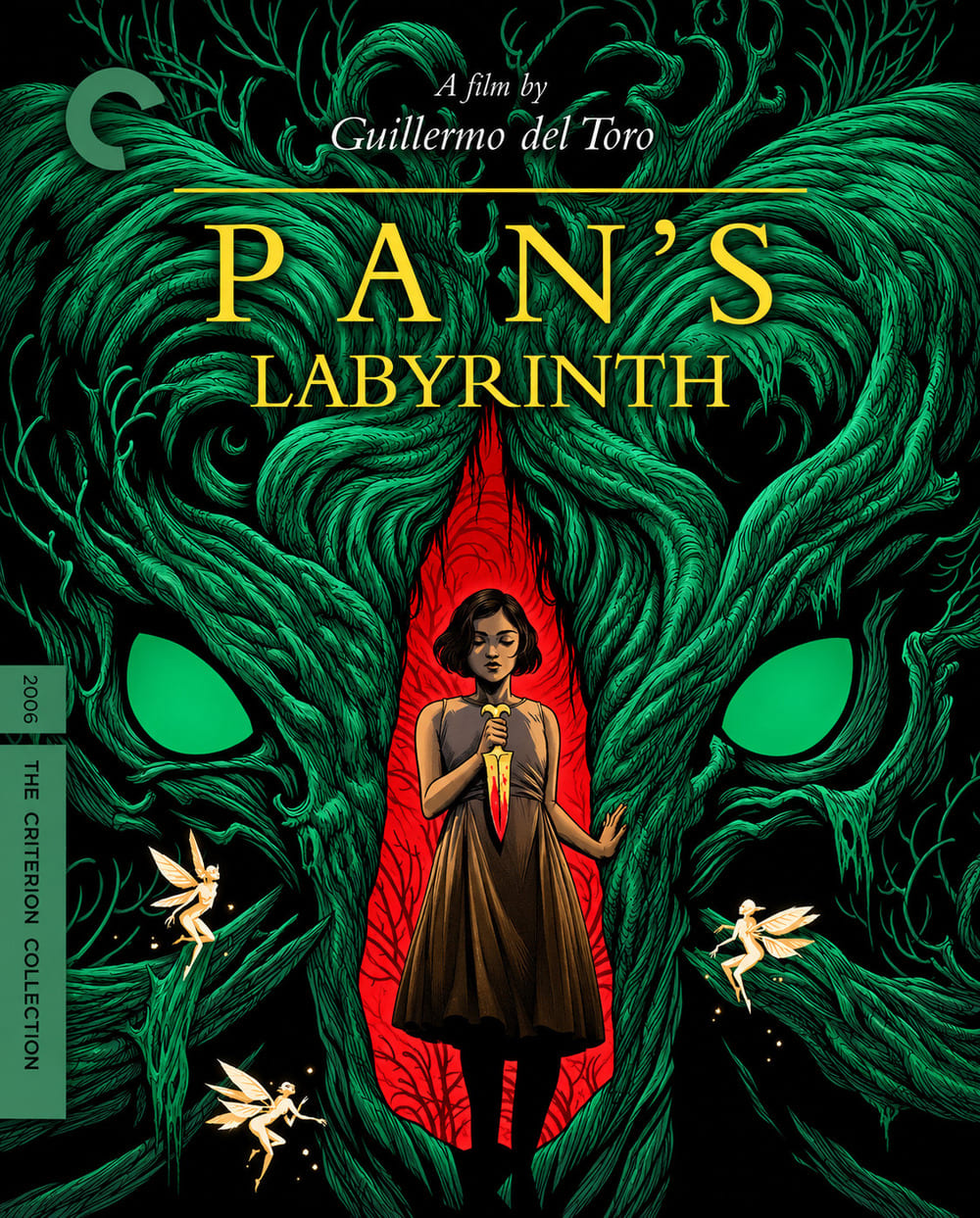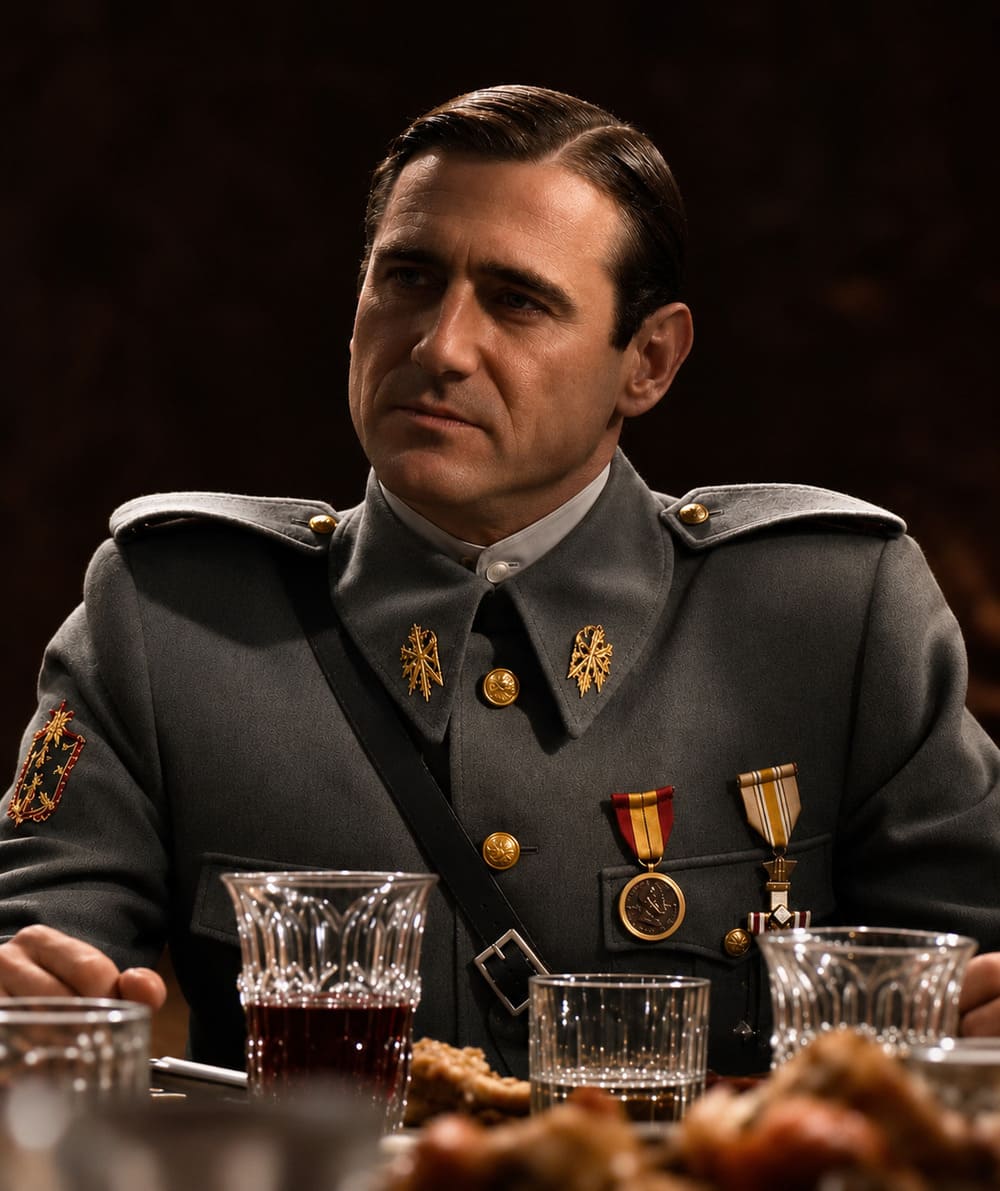
“I choose to be here because I want my son to be born in a new, clean Spain.” — Captain Vidal
Captain Vidal from Pan’s Labyrinth stands as one of cinema’s most chilling villains because Guillermo del Toro places him among fantastical monsters without making him any less human—or any less terrifying. He occupies the same film as a Pale Man with eyes in his palms and a mysterious faun, yet Vidal requires no supernatural powers to inspire dread. His evil is methodical, disciplined, and woven into everyday routine. His immaculate appearance and meticulous attention to his watch coexist with his willingness to torture and murder. What makes him frightening is not simply that he commits atrocities, but that he regards them as entirely compatible with an orderly, respectable life.
Vidal captures the banality of fascism: the normalization of cruelty until it becomes an ordinary instrument of authority. Although his overt sadism makes him a more complicated example than a straightforward illustration of Hannah Arendt’s “banality of evil,” he embodies the terrifying substitution of obedience and procedure for moral judgment. When he murders two men suspected of aiding the guerrillas, the discovery that they really were hunting rabbits prompts no remorse—only irritation that his subordinate failed to search them properly. The scene is distinct from his later torture of a captured rebel who stutters, but both reveal the same worldview: another person’s vulnerability offers an opportunity for domination rather than a reason for restraint. Atrocity is not a deviation from his working day; it belongs to it.
Vidal’s obsession with legacy reveals how authoritarian power sustains itself through inheritance and heroic mythology. At dinner, a guest recounts the story that Vidal’s father smashed his watch on the battlefield so his son would know the precise moment of his death—and therefore how a brave man dies. Vidal dismisses the story, yet his fixation on the watch and his final request to have his own time of death preserved suggest how deeply that paternal ideal governs him. The significance lies in the grip of the legend: Vidal imagines fatherhood less as a relationship of care than as the transmission of masculine authority. His son becomes the intended inheritor of a story Vidal is determined to control, extending his obsession with obedience beyond his own lifetime.
The captain also dramatizes how cruelty becomes normalized under authoritarian rule, accommodated as the supposed cost of order. Yet the people around him should not be mistaken for a uniformly complicit household: Mercedes and Dr. Ferreiro actively resist him, exposing the difference between outward obedience and genuine acceptance. When Ferreiro mercifully ends a tortured prisoner’s suffering, Vidal responds, “You could have obeyed me.” The doctor’s answer identifies the moral emptiness beneath that demand: obedience without thought is something people like Vidal practice. Their exchange crystallizes the captain’s understanding of power. He treats compassion as insubordination because he recognizes no moral obligation that might legitimately override his command.
Ofelia’s fantasy realm gains its power through its disturbing resemblance to Vidal’s reality. The Pale Man’s lavish table invites comparison with the captain’s banquet, making the fairy-tale monster an interpretation of the human world rather than merely an escape from it. Both figures turn spaces associated with nourishment and hospitality into sites of danger. But resistance to Vidal also takes practical, human forms: the doctor refuses to prolong torture, Mercedes works against the captain from within his household, and she uses a concealed knife to escape his control. Read alongside Ofelia’s refusal to surrender her conscience, these acts suggest that resistance begins when people reject authority’s claim to determine what is right.
Finally, Vidal achieves iconic status because he is denied the heroic legacy he craves. Facing death, he asks that his son be told the time his father died. Mercedes interrupts him with the devastating reply, “No. He won’t even know your name.” His defeat is therefore more than physical: he loses control of the future he believed belonged to him. Although Vidal represents the fascist regime of Franco’s Spain, his significance need not remain confined to that historical setting. He can also be read as a reflection of individuals who espouse fascist ideals in today’s world: those who equate strength with domination, demand unquestioning loyalty, and excuse cruelty when it targets people they consider inferior or threatening. This is what makes him so enduringly disturbing. He is not merely a monster safely contained in the past, but a warning about a mindset that can reappear wherever obedience is valued above conscience and order above human dignity.
Villain of the Day
- Anton Chigurh (No Country for Old Men)
- Willie Cicci (The Godfather & The Godfather Part 2)
- Griffith (Berserk)
- Klaus Wortmann (Antropophagus)
- Emilio Barzini (The Godfather)
- Gul Dukat (Star Trek: Deep Space Nine)
- Judge Holden (Blood Meridian)
- Vic Mackey (The Shield)
- Kefka Palazzo (Final Fantasy VI)
- Reinhard Heydrich (Conspiracy)
- Kai Proctor (Banshee)
- Matthew Hopkins (Witchfinder General)
- Boyd Crowder (Justified)
- Darkness (Legend)
- Pinhead (Hellraiser)
- Jody Joad (Earthquake)