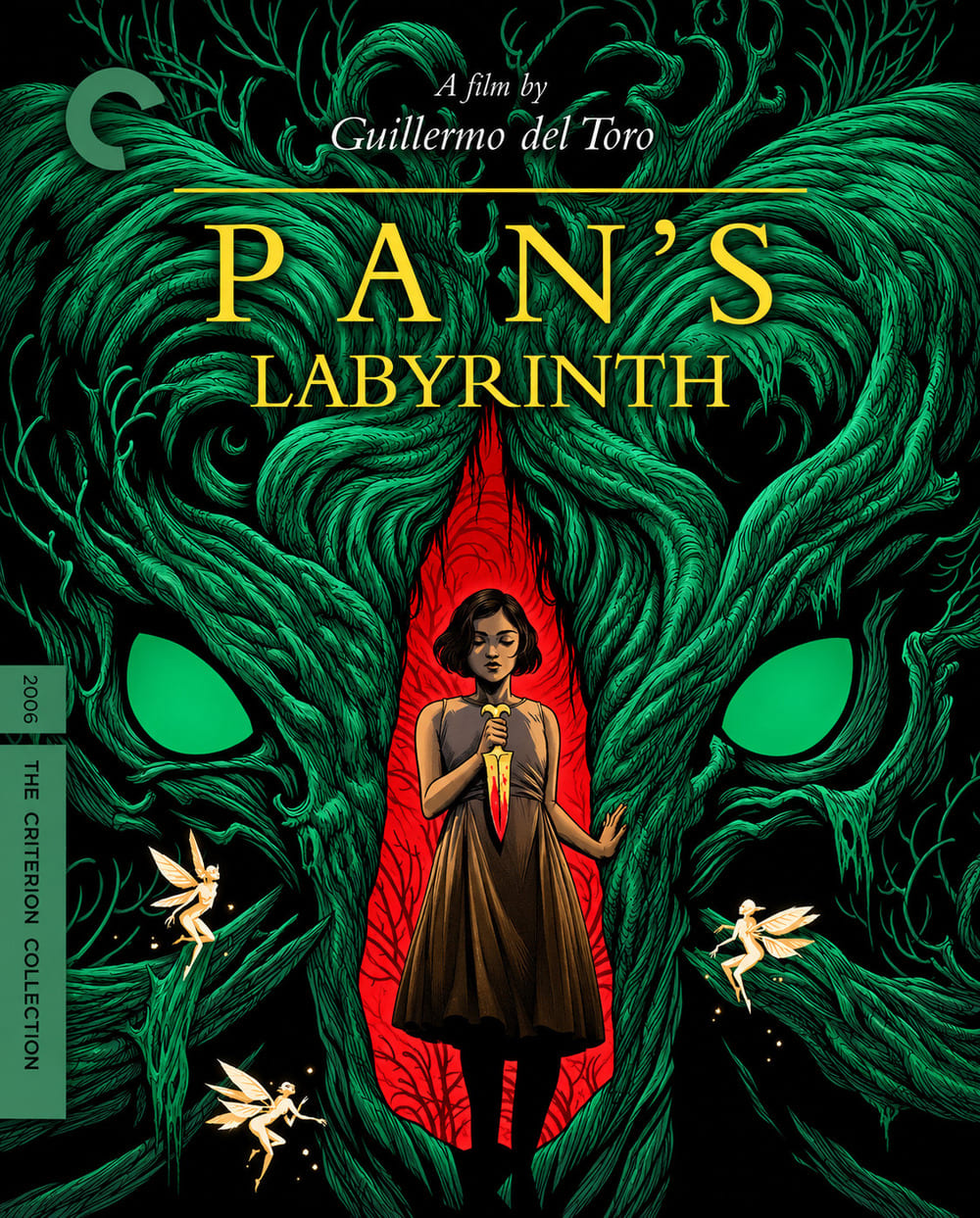
Horror Film Review: Pan’s Labyrinth (dir. by Guillermo del Toro)


“But Captain, to obey—just like that—for obedience’s sake… without questioning… That’s something only people like you do.” — Doctor Ferreiro

Guillermo del Toro’s Pan’s Labyrinth (2006) is the kind of fairy tale that reminds you these stories were never supposed to be completely comforting. Beneath the princesses, magical doorways, and mysterious creatures, there have always been warnings about cruelty, temptation, and adults who cannot be trusted. Del Toro brings those darker instincts to the surface, creating a film that is beautiful without being reassuring and frightening without feeling empty. Its greatest achievement is weaving together the horror of Francoist Spain, the dark fantasy of Ofelia’s childhood imagination, and the reality of everyone caught in between. These worlds do not compete for attention; they make each other more disturbing.

Set in Spain in 1944, the story follows Ofelia, played by Ivana Baquero, as she arrives at a remote military outpost with her pregnant mother, Carmen. Her new stepfather, Captain Vidal, is hunting Republican resistance fighters, and his household operates with the same cold discipline as his military command. Nearby, Ofelia discovers an ancient labyrinth and meets a faun who tells her she may be a lost princess. To reclaim her place in an underground kingdom, she must complete three tasks. That setup sounds like an adventure, but del Toro quickly establishes that neither world offers reliable safety.

What makes the historical setting so effective is that fascism is not just background scenery. It shapes the smallest interactions: who gets to speak, whose pain matters, and who must obey without asking questions. Vidal treats his authority as something natural and unquestionable, whether he is dealing with soldiers, servants, or his own family. The violence can be shocking, especially when it arrives abruptly during otherwise ordinary encounters. Still, the brutality has a purpose. Del Toro refuses to let the audience treat political oppression as an abstract idea when its consequences are written directly onto people’s bodies.

Sergi López makes Vidal terrifying because he rarely seems to think of himself as a monster. He behaves like a man convinced that order excuses anything. His immaculate appearance and controlled manner make his cruelty feel deliberate rather than impulsive. There is something especially ugly about watching someone approach violence with the patience another person might bring to a household chore. Compared with the creatures lurking in Ofelia’s magical world, Vidal is painfully recognizable. He needs no supernatural powers, just the expectation that everyone around him will submit.

Some viewers may find Vidal’s near-total viciousness limiting, but his lack of moral ambiguity feels like the point. He does not need a sympathetic backstory to become convincing. Read against the experience of Francoist repression, his entitlement, obsession with obedience, and casual dehumanization make him a chilling representation of someone who has completely bought into fascism. Rather than assuming that everyone who survived or studied the period would judge him identically, the stronger argument is that his apparent exaggeration serves a purpose. What looks like uncomplicated villainy can reveal the terrifying consistency of someone who treats brutality as a duty.

Against that certainty, Baquero gives Ofelia a wonderfully unforced mixture of curiosity, stubbornness, and fear. She is not a miniature action hero, and the film is stronger for it. Sometimes she makes mistakes; sometimes she follows a rule before understanding it. Her imagination gives her a language for experiences the adults dismiss or refuse to explain. Yet calling the fantasy mere escapism misses what makes it interesting. The tasks confront her with danger and moral choices rather than simply offering somewhere pleasant to hide. Her imagined identity becomes a way of discovering who she wants to be.

The creatures are a huge part of the appeal, but their beauty is always slightly wrong. The faun looks ancient, earthy, and difficult to read, more like something uncovered beneath a forest than a friendly guide. His presence makes every promise feel conditional. Then there is the Pale Man, whose banquet scene turns a familiar fairy-tale warning into an almost unbearable exercise in suspense. Del Toro understands that a monster becomes more frightening when its surroundings tell a story before it moves. The feast, the stillness, and the suggestion of previous victims make the room feel contaminated by appetite.

Crucially, those fantasy sequences do not interrupt the political story. They echo it. Both worlds contain powerful figures who issue commands, establish punishments, and expect a child to accept their rules. That connection gives the film its bite: learning to behave well is not necessarily the same as learning to obey. Ofelia must develop judgment, not just discipline. Meanwhile, Mercedes, the housekeeper, and the doctor face versions of that same dilemma. Their resistance depends on concealment, nerve, and helping others when discovery could mean death. Through them, the film makes ordinary care feel dangerous and morally urgent.

The film also makes a wonderful bookend to del Toro’s earlier The Devil’s Backbone (2001). Set during the final year of the Spanish Civil War, that film approaches violence and abandonment through children living in a haunted orphanage; Pan’s Labyrinth moves into the dictatorship’s aftermath. Del Toro himself described the later film as a companion, or sister, to the earlier one. Together, they trace childhood vulnerability across the war and its consequences, using supernatural encounters to expose wounds that adults cannot—or will not—address. One gives us a ghost story, the other a dark fairy tale, but both make human cruelty more frightening than the creatures.

Visually, Pan’s Labyrinth balances richness and decay. The forest and underground spaces feel textured, damp, and old, while Vidal’s surroundings suggest rigid arrangements and suffocating control. Even when the fantasy offers warmer colors or inviting shapes, something unsettling remains underneath. That consistency matters: the magical world never looks as though it belongs to a different movie. Wonder and dread occupy the same space, allowing a doorway, a root, or a shadow to seem beautiful and threatening at once. The shifts between graphic injury and childhood wonder can be punishing, but softening that contrast would weaken the reason Ofelia needs another world.

By the end, Pan’s Labyrinth has made its magic inseparable from grief. Its closing images allow consolation and devastation to coexist without letting either cancel the other out. How literally to understand Ofelia’s experiences remains compelling, but the emotional stakes are clear: imagination can preserve possibility when the surrounding world demands surrender. This is dark fantasy with something urgent beneath its exquisite surfaces. It understands that monsters can inhabit fairy tales, military uniforms, and systems of obedience—and that choosing compassion may be the most meaningful refusal available.
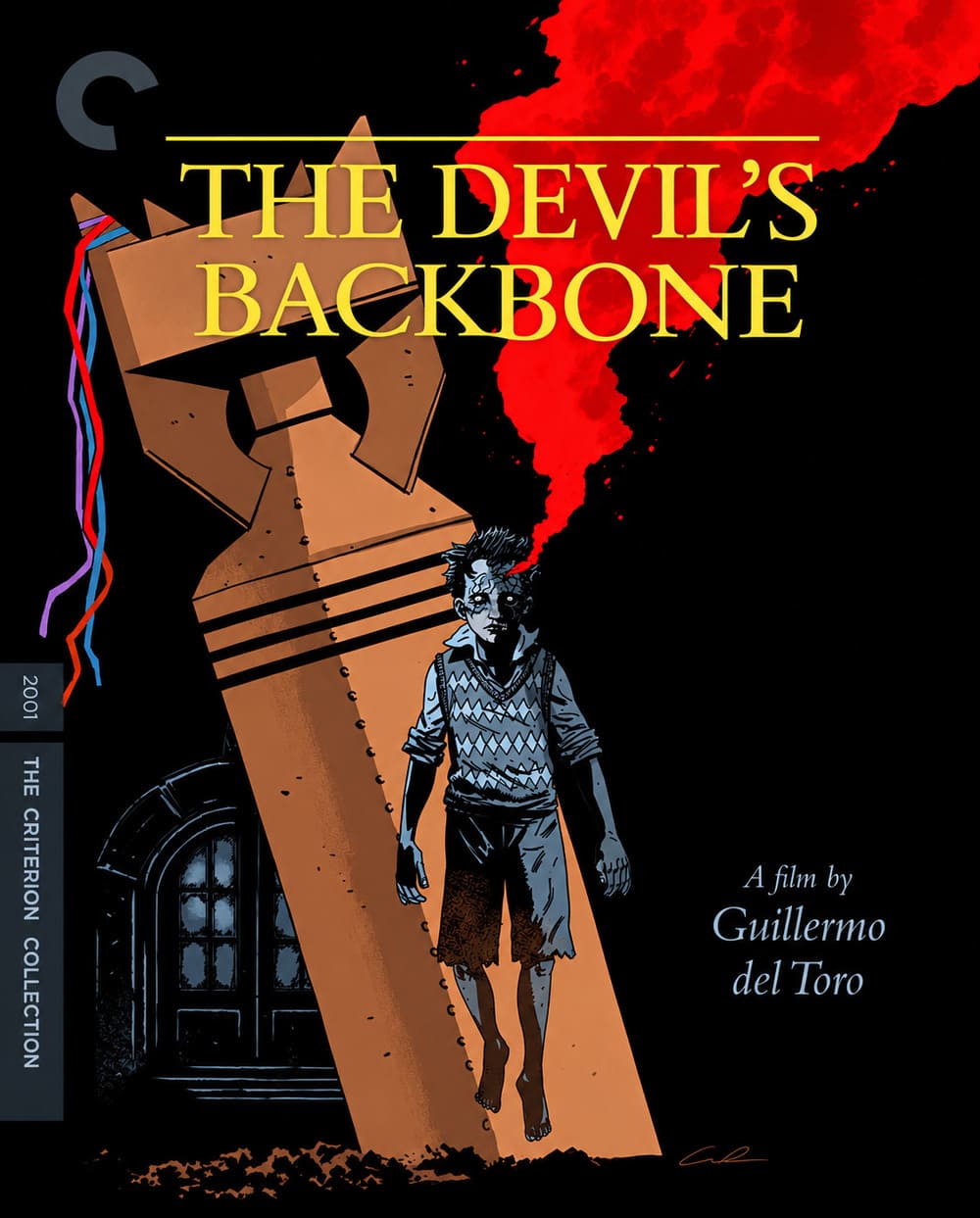
Horror Film Review: The Devil’s Backbone (dir. by Guillermo del Toro)


“A tragedy condemned to repeat itself time and again?” — Casares

The first time you see the ghost in The Devil’s Backbone, you’re likely to wonder what he’s going to do to the children. By the end, the more troubling question is what people have already done to him. That change in perspective is the heart of Guillermo del Toro’s 2001 supernatural horror film, a movie that slowly rearranges your sense of where the danger lies. It delivers eerie encounters, hidden secrets, and an isolated setting, but its real achievement is making those familiar ingredients feel emotionally necessary. The haunting isn’t there to interrupt the human story. It’s there to reveal the human story everyone else has found a way to avoid.

Set in 1939, near the end of the Spanish Civil War, the film follows Carlos, played by Fernando Tielve, as he arrives at a remote orphanage. He enters a community that has already established its routines, rivalries, and silences. The other boys know things he doesn’t, while the adults seem reluctant to explain much of anything. Carlos has enough to worry about before he encounters Santi, the ghost of a dead child whose presence suggests that the building holds more than ordinary unhappiness. Del Toro links these sources of anxiety from the beginning. Being haunted is frightening, but so is depending on strangers who control your life without telling you the truth about it.

Carlos makes an effective guide because he’s neither unusually helpless nor conveniently fearless. Tielve lets curiosity, stubbornness, and insecurity coexist without making them seem like separate performance choices. Carlos wants answers, but he also wants to fit in, and those desires don’t always lead him in the same direction. Investigating something strange can bring him attention he doesn’t necessarily want. Standing up for himself can make an already uncertain situation worse. The film respects the practical difficulty of being a child in an unfamiliar place: even when you recognize that something is wrong, you may have very little power to change it.

The orphanage makes that lack of power feel tangible. It’s a refuge, but it’s also a place Carlos hasn’t chosen and can’t simply leave. Del Toro makes its rooms and corridors feel connected to daily life rather than arranged exclusively for scares. Children sleep, argue, and establish little territories within a building that also contains private grief and concealed violence. That mixture matters. The frightening spaces aren’t somewhere separate from ordinary experience; they’re part of the same home. As Carlos learns more, familiar locations take on different meanings. The building doesn’t change, but his understanding of what has happened inside it does.

Visually, the film finds unease without depending entirely on darkness. Dusty daylight and exposed spaces can feel just as uncomfortable as a shadowy passageway. The unexploded bomb in the courtyard captures this approach perfectly. There’s nothing hidden about it. Everyone can see the danger, yet its continued presence has become part of the routine. It’s a striking image because it turns familiarity into something unsettling. Getting used to a threat doesn’t make it safe; sometimes it simply means you’ve stopped expecting anyone to remove it. That idea extends beyond the courtyard and into the orphanage’s relationships, where people tolerate arrangements that remain fragile or harmful.

Santi initially appears to belong to a different category of danger. Unlike the bomb, he’s mysterious, difficult to understand, and impossible to explain through the ordinary rules of the place. His appearance is disturbing, but del Toro gives that disturbance an emotional dimension. The ghost looks wounded rather than merely monstrous. As Carlos pays closer attention, the signs of suffering become harder to separate from the features that make Santi frightening. It’s an impressive balancing act. The film doesn’t need to make him visually comforting to encourage sympathy. Instead, it asks whether an unsettling appearance has prevented everyone from seeing a vulnerable child.

That question gives the haunting its purpose. Santi isn’t simply a supernatural problem that must be removed so the orphanage can return to normal. His presence challenges the idea that its normal life was acceptable to begin with. Something has happened that demands acknowledgment, and continuing without that acknowledgment becomes part of the wrong. This is where the mystery develops a moral dimension without turning into a lecture. Carlos’s discoveries don’t just provide information; they alter his obligations. Once he understands more, looking away is no longer an innocent choice. The ghost becomes frightening partly because he makes avoidance impossible.

The other boys complicate Carlos’s education in whom to fear and whom to trust. Their bullying and competitiveness can be cruel, but del Toro doesn’t flatten them into miniature villains. They’re children negotiating their own uncertain circumstances, sometimes by making someone else feel smaller. Their relationships develop through friction, guarded exchanges, and changing impressions rather than instant friendship. That makes their growing connections more convincing. The film understands that solidarity isn’t automatic just because people share a difficult situation. It has to be built, and building it requires recognizing something beyond your own immediate need to feel secure.

The adults offer even less reliable guidance. Carmen, played by Marisa Paredes, has the authority necessary to keep the orphanage functioning, but that authority doesn’t mean she can control everything happening within it. Professor Casares, played by Federico Luppi, brings gentleness and thoughtfulness, though neither quality guarantees action when action is needed. Both characters have emotional lives that extend beyond their responsibilities to the children. Their disappointments and attachments make them sympathetic, but they also create blind spots. Del Toro is especially good at showing the gap between wanting to protect someone and actually providing protection. Affection matters, but it isn’t a substitute for judgment or courage.

There’s a quiet sadness in those adult relationships that deepens the horror rather than distracting from it. These are people who can recognize beauty, offer tenderness, and understand suffering, yet still hesitate at crucial moments. The film doesn’t treat their limitations with contempt. It allows us to see how exhaustion and longing can narrow a person’s attention. At the same time, the children still have to live with the consequences. That tension keeps the story from becoming too reassuring. Good intentions don’t make an institution safe, and a sympathetic guardian can still fail someone who depends on them.

Jacinto, played by Eduardo Noriega, makes that distinction more brutal. His resentment and self-interest bring an increasingly direct threat into the orphanage. Beside Santi, he creates the film’s clearest reversal: the figure who looks unnatural may deserve compassion, while an ordinary human being can choose extraordinary cruelty. Jacinto is effective, though he’s also where the storytelling becomes less nuanced. As his role sharpens, some of the earlier uncertainty gives way to a more straightforward confrontation. The emotional complications surrounding Carmen and Casares are often more absorbing than his menace. Still, his presence makes the children’s vulnerability impossible to dismiss as merely a product of their imaginations.

The war gives that vulnerability a wider context without overwhelming the intimate story. It shapes the orphanage’s resources, its loyalties, and the uncertain future awaiting everyone inside. Physical distance from the fighting offers no real independence from its consequences. This isn’t a peaceful household suddenly disturbed by a ghost; it’s a precarious refuge whose existing problems become harder to conceal. The historical setting also reinforces the difference between having power and deserving it. The children inherit dangers they didn’t create, while the adults’ decisions determine how much of that danger reaches them. Even private acts of selfishness carry greater weight in a community with so little protection to spare.

What holds these ideas together is del Toro’s empathy, which is more demanding than simple sympathy for the unfortunate. The film asks us to revise our judgments, but it doesn’t suggest that every harmful action can be forgiven once we understand its cause. Santi’s suffering deserves recognition; another person’s resentment doesn’t justify turning others into victims. That distinction keeps the movie emotionally generous without making it morally vague. It encourages careful attention to people who frighten us while remaining clear-eyed about those who exploit the vulnerability of others. The mystery changes how we see the characters, not whether their choices matter.

The film does lose a little of its delicacy as it approaches the ending. Its early strength lies in allowing dread to gather through spaces, relationships, and unanswered questions. Later, the conflicts become more explicit, and the plotting pushes the separate elements into alignment. Some of that uneasy openness gives way to more familiar suspense. For me, the quieter stretches are the most distinctive, especially when a look or an uncomfortable pause communicates more than a dramatic confrontation could. Even so, the emotional investment survives the shift. By then, the children feel too specific and their situation too precarious for the resolution to become merely a matter of mechanics.

What stays with you after The Devil’s Backbone isn’t simply the appearance of its ghost, but the effort required to see him clearly. Del Toro takes a figure we’re prepared to recoil from and makes our changing response the measure of the story’s emotional progress. The film remains chilling because understanding doesn’t erase violence or restore what has been lost. It offers something smaller: the possibility that a person’s suffering will finally be recognized rather than absorbed into another household secret. That’s why its sadness feels earned. The ghost stops being just a frightening interruption and becomes someone whose absence should have mattered all along.

Trailer: Wrath of the Titans


2010’s Clash of the Titans remake wasn’t what fantasy fans were expecting. Yes, it had spectacle and taking advantage of 3D (rage of the time due to the success of Avatar), but how the film ended up quality-wise left much to be desired. For an epic summer blockbuster film (as hyped by it’s ads and marketing push) the film felt very underwhelming. It showed in the box-office as it failed to generate Olympian-level cash though it still generated a little under $500million worldwide. I’m guessing it’s this number which greenlit a sequel to a remake of a film that never had one.

Wrath of the Titans forgoes having just two titans battle it out with Perseus (Sam Worthington) stuck in the middle. This time around the sequel will deal with the weakening of the Olympian Gods as human worship wanes while at the same time the powers of the imprisoned Titans rise. So, from the trailer alone this looks to have action that’s even more amped up than it’s predecessor. Previous director Louis Leterrier has stepped aside as director and in his place for the sequel is Jonathan Liebesman (Battle: Los Angeles…which I thought was actually quite good despite what my partner-in-writing Lisa Marie says about the film).

Sam Worthington, Liam Neeson and Ralph Fiennes return to their roles from the previous film. Replacing Alexa Davalos in the role of Princess Andromeda from the first film is Rosamund Pike who now takes the role as Queen Andromeda. Bill Nighy and Danny Huston join the cast as Hephaestus and Poseidon respectively.

Wrath of the Titans is set for a March 30, 2012 release which just reinforces my point that the summer blockbuster season seem to be encroaching into Spring with each passing year.

Song of the Day: A Princess (by Javier Navarrete)


The latest Song of the Day is from one of the best films of the past decade and, in my opinion, the best film of 2006. I speak of Pan’s Labyrinth by acclaimed Mexican-filmmaker Guillermo Del Toro.

“A Princess” was composed by Spanish composer Javier Navarrete and this particular piece of music from the film continues to use the main lullaby waltz-theme introduced in the beginning of the film. Where the music’s first time being heard by the audience is full of innocence and child-like magic in its tonal structure and melody in “A Princess” Navarrete dials back the innocent quality by adding in some of the hard-won wisdom the main character of Ofelia gains through her trials and tribulations throughout the film’s running time. While the song starts off with a sad and melancholy theme to its melody the song gradually moves back to it’s innocent and magical tone at it’s midway point to signify the main character’s final and complete transition from Ofelia to Princess Moanna.

It’s truly one of the best use of the leitmotif in a film score in quite a while. The fact that Navarrete was able to mine so man different emotional beats from a simple lullaby theme into one final distinct piece of music to end the film shows he was in tune with what director Guillermo Del Toro had in mind. He could easily have gone the usual fantasy music cliche of a huge number of brass and percussion to score the film, but instead went on a more subtle yet complex manner to accentuate a fairly simple fairy tale retelling which also happened to have many complexities in it’s narrative if one was willing to peel back the pages.