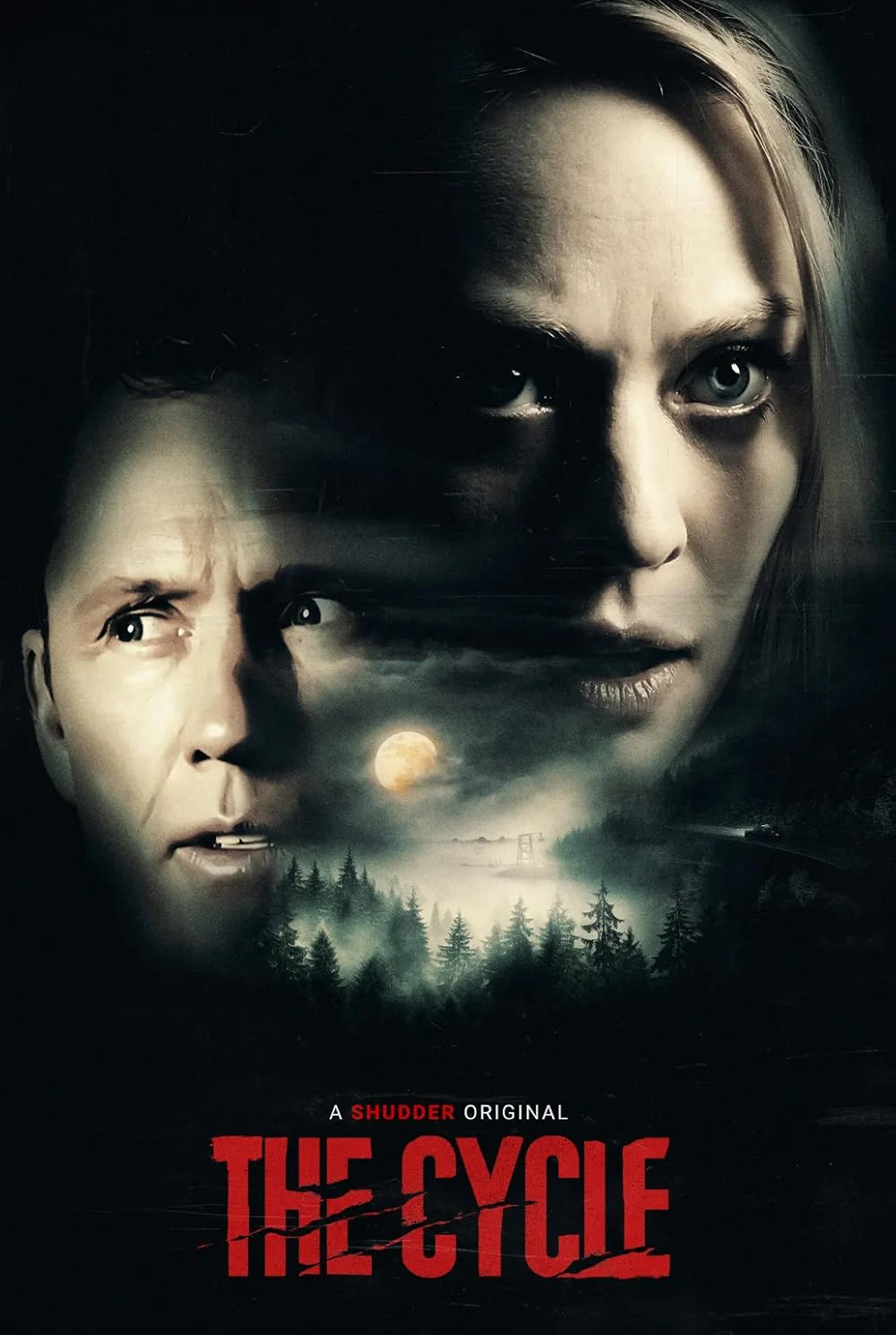
Horror Film Review: The Cycle (dir. by Jordan Downey)


“Your father abandoned us.” — Joni

A good monster can make a horror movie entertaining. A monster tangled up in somebody’s family history can make it personal. Jordan Downey’s The Cycle works best when it understands that difference, using a disturbing investigation to pick apart the story its main character has told herself about her father. There is grisly forensic work, a creeping sense of wrongness, and eventually the sort of creature-feature nastiness that rewards patient horror fans. But underneath all that is a more uncomfortable question: what happens when someone you thought had abandoned you turns out to have left behind a much stranger explanation?

Deborah Ann Woll plays Dr. Meg Garland, a forensic anthropologist whose latest assignment quickly becomes more than another difficult day at work. The brutal murders of a mother and daughter lead investigators to another body, one with abnormalities that resist a straightforward explanation. Then Meg discovers that the dead man is her father, who disappeared when she was a child. It is an effective complication because it immediately changes her relationship with the evidence. She can approach the remains as a scientist, but she cannot pretend they belong to someone whose life means nothing to her.

That collision between professional distance and personal involvement gives The Cycle its strongest material. Meg has built a career around examining what people leave behind, yet she has never had a satisfying explanation for her father’s absence. Now the answers are physically in front of her, and they are considerably harder to process than she might have imagined. The film gets something right about unresolved family history: sometimes the explanation you resent becomes part of how you understand yourself. Finding out that it might be incomplete does not automatically make anything easier.

Woll keeps that emotional conflict from becoming too heavy-handed. Her performance gives Meg enough composure to feel credible in her work without making her seem untouched by what she discovers. The character’s discomfort matters more because it has to fight its way through habits of observation and control. She is someone who wants to understand a problem before reacting to it, which makes her a useful anchor as the investigation becomes increasingly bizarre. Without that steadiness, the film’s movement from crime story to monster movie could feel like two separate ideas awkwardly sharing the same running time.

Downey and cinematographer Kevin Stewart build the first part around a chilly, oppressive atmosphere. The drained colors and forensic imagery place the film firmly in familiar crime-thriller territory, where every room seems to carry the residue of something unpleasant. That familiarity is both useful and limiting. It establishes the seriousness of the investigation, but it also means the early scenes do not always feel especially distinctive. What makes the approach worthwhile is its connection to Meg’s perspective. This is a world she should know how to navigate, which gives the inexplicable details more power to unsettle her.

The trouble is that the film sometimes mistakes staying in that atmosphere for developing it. A slow investigation can be gripping when each discovery sharpens the mystery or changes the stakes. Here, some passages feel as though they are maintaining the same level of unease rather than pushing it further. The personal connection helps, but it cannot generate momentum on its own. There are moments when the story seems ready to move forward and then settles back into another stretch of explanation. Viewers who enjoy deliberate horror may be comfortable with that rhythm; others will probably feel the drag.

Once The Cycle leans into its physical horror, the appeal becomes much more immediate. Its commitment to practicality gives the effects a welcome sense of substance. Special effects supervisor Patrick Magee’s creature and makeup work suits a story built around bodies that refuse to provide reassuring answers. The grotesque material does not feel entirely separate from the investigation; it is an extension of it. What begins as something to study becomes something to fear. That progression gives the nastiness a purpose beyond simply proving that the movie can deliver an unpleasant image when it wants to.

The frustrating part is that the action does not always show off those effects as effectively as it could. Tight framing and shaky camerawork can turn moments of danger into a struggle to follow what is happening. Keeping a creature partly hidden is a perfectly reasonable choice, but there still needs to be a clear sense of space and threat. Otherwise, suspense gets replaced by confusion. With such tangible effects available, the film could afford to trust them a little more. Sometimes letting the audience properly see something horrible is more effective than cutting around it.

The supporting cast helps give the procedural material some texture. Jeffrey Donovan and Will Hochman play a father-and-son police pairing, adding another family relationship to a story already preoccupied with the things parents pass down or leave unresolved. Jeb Berrier’s coroner contributes to the investigative side, while Nick Soole’s score maintains an undercurrent of unease. These elements help the movie feel populated rather than built solely around Meg’s discoveries. They also make its unevenness more noticeable: there are enough solid ingredients here that the stretches of repetition feel like missed opportunities rather than unavoidable limitations.

For all its rough edges, The Cycle has the right instinct about where its horror belongs. The gruesome effects supply the immediate discomfort, but Meg’s relationship with her father gives that discomfort somewhere to settle. Its best idea is that uncovering the truth can disturb an old wound instead of closing it. The pacing could be tighter, and the creature scenes could use a clearer eye, yet the film offers more than a mystery with a monster attached. It makes the investigation personal enough that solving the case and making peace with the past become two very different things.
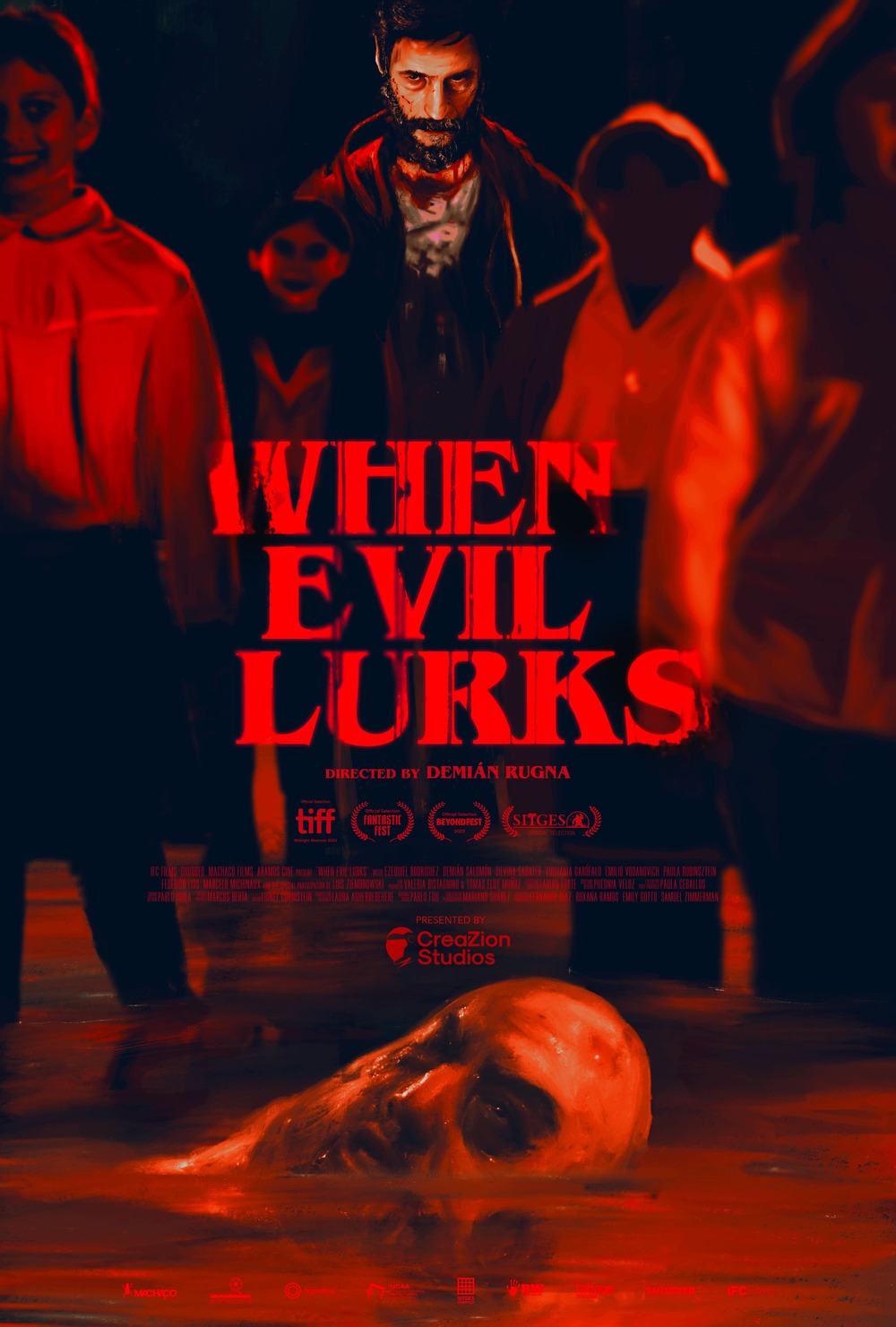
Horror Film Review: When Evil Lurks (dir. by Demián Rugna)


“Evil likes children, and children like evil.” — Mirtha

Most possession movies give you something to hold on to: a priest with a plan, a family worth saving, or the reassuring possibility that evil can be sent back where it came from. Demián Rugna’s When Evil Lurks takes those comforts away and leaves a bunch of frightened people making a terrible situation worse. This 2023 Argentine horror film is less interested in a battle between good and evil than in what happens when ordinary human weakness gives evil room to spread. It’s a vicious, messy, deeply uncomfortable movie, and its most disturbing quality isn’t the gore. It’s how quickly a supposedly sensible decision becomes an irreversible mistake.

The trouble begins in rural Argentina, where brothers Pedro and Jimmy discover a severely deteriorated man whose body is harboring a demonic presence. He’s known as a “rotten,” and dealing with him requires more care than the people nearby are willing to exercise. Alongside a local landowner, the brothers attempt to move him away from their property, treating a supernatural emergency like an unpleasant chore. Naturally, this doesn’t solve anything. Their attempt to put distance between themselves and the danger helps spread it instead. That opening establishes the movie’s central pattern: somebody recognizes a problem, chooses the quickest solution, and creates something much worse. The horror grows out of people trying to regain control without fully understanding what they’re handling.

What makes this setup interesting is that possession isn’t an unbelievable discovery in the world of the film. People already have a vocabulary for it. There are rules, warnings, and specialists called cleaners who are supposed to handle these situations. The trouble is that knowing a danger exists doesn’t mean anyone responds responsibly. Rugna builds his supernatural world through anxious conversations and half-understood instructions rather than a long explanation. We pick things up while the characters are already struggling to keep pace. It makes the setting feel lived-in, as though this nightmare has happened elsewhere and the lessons simply haven’t stuck. There’s something particularly unnerving about watching people face a known threat with so little practical preparedness.

The countryside adds another layer of discomfort. There’s plenty of open space, but very little actual freedom. Roads connect one vulnerable household to another, and leaving a dangerous place doesn’t necessarily mean escaping the danger. Rugna and cinematographer Mariano Suárez make farms, modest homes, and stretches of daylight feel exposed rather than peaceful. You don’t spend the whole movie peering into dark corners, waiting for something to emerge. Sometimes the threat is clearly visible, and the suspense comes from watching someone approach it anyway. That directness gives the horror an unpleasant physical presence. It isn’t safely tucked away in shadows or confined to some obviously sinister building. The ordinary surroundings also make the violence feel intrusive, as though something has broken into a world that wasn’t visually prepared for it.

The physical effects make that presence hard to ignore. The rotten man’s swollen, decaying body is an early announcement that Rugna isn’t interested in keeping this material tasteful. Flesh looks vulnerable, contaminated, and capable of becoming something horribly unfamiliar. Yet the gore isn’t effective simply because it’s graphic. It destroys the comfortable distance between recognizing a horror setup and feeling genuinely worried about what comes next. Children and animals aren’t protected by the usual genre boundaries, which makes otherwise ordinary scenes nerve-racking. Viewers sensitive to violence involving either should approach cautiously. The movie doesn’t merely suggest that terrible things could happen; it follows through. More importantly, those moments alter the atmosphere afterward. Once a familiar source of comfort becomes dangerous, it’s difficult to trust another one.

Rugna is especially good at deciding when to make us wait and when to pull the floor out. Some sequences stretch a warning sign until you want to shout at the screen. Others turn violent before you’ve fully registered the possibility. That combination keeps the film from settling into an easily predictable rhythm. A quiet conversation can feel more dangerous than a frantic escape, because you’re never sure which moment Rugna is preparing to rupture. The effect is exhausting, sometimes deliberately so. Like the characters, you’re left trying to assess the next immediate threat without having recovered from the last one. The film’s strongest stretches create a nasty tension between wanting the characters to hurry and knowing that rushing is exactly what keeps getting them into trouble.

Ezequiel Rodríguez gives Pedro enough emotional weight to keep this from becoming an empty collection of atrocities. Pedro wants to protect his family, but that desire doesn’t automatically make him thoughtful, reliable, or brave in useful ways. His fear often comes out as impatience, and his need to act can override his ability to listen. Rodríguez makes that combination painfully believable. You can understand the emotion driving a decision while still wanting to stop him from making it. His performance is especially effective when confidence starts looking like a desperate pose rather than a genuine belief that things will work out. Pedro needs to see himself as someone who can help, even when his actions suggest otherwise.

Demián Salomon provides an effective contrast as Jimmy, and their exchanges carry the strained familiarity of brothers who don’t need a crisis to have disagreements. Their relationship gives the movie a human texture that its grotesque imagery alone couldn’t provide. They don’t suddenly become a perfectly coordinated team because the stakes are high. They argue, react differently, and struggle to turn shared concern into a useful plan. That messiness matters because the movie keeps questioning whether emotional attachment actually makes people better at protecting one another. Love creates urgency, but urgency can become recklessness. The brothers’ attempts to help are frightening partly because they aren’t detached from the people who might suffer.

Still, the movie’s reliance on bad decisions is also its biggest weakness. There are moments when a character’s mistake feels tragically human, and others when it feels like the screenplay needs someone to ignore an obvious warning. Pedro in particular can test your patience. The supernatural rules create a related problem: they’re specific enough to invite scrutiny but incomplete enough to leave certain developments feeling arbitrary. Not understanding everything can deepen the horror, but it can also weaken the sense that choices have clear consequences. When almost any action might trigger disaster, suspense occasionally slips into the expectation that everyone is doomed regardless. The later stretches also feel less tightly focused than the opening, as the story divides its attention and keeps introducing fresh complications.

What keeps those frustrations from taking over is the film’s consistent interest in responsibility. People try to move the danger, deny its implications, or overpower something they don’t understand. The impulse is rarely outright villainous. More often, it’s recognizable self-protection mixed with pride and impatience. That makes the spreading evil feel like more than a supernatural gimmick. It becomes a way of exposing how easily private shortcuts turn into collective disasters. Rugna doesn’t stop the action to underline that idea, and he doesn’t need to. We keep watching people confuse doing something quickly with doing something useful, then leave others to absorb the consequences. The film is bleak because good intentions offer so little protection against that pattern.

By the end, what lingers isn’t a neat explanation of the demon or a satisfying display of courage. It’s the awful distance between wanting to protect someone and being capable of it. When Evil Lurks isn’t perfectly controlled: its rules can frustrate, its characters can exasperate, and its cruelty will be too much for some viewers. But Rugna gives those rough edges a powerful emotional center. He makes horror out of failed judgment as much as bodily destruction, leaving no comfortable separation between the monster and the mistakes that help it along. The film gets under your skin because the evil is extraordinary, but the behavior allowing it to flourish feels painfully ordinary.

Review: Night Patrol (dir. by Ryan Prows)


“They vampires. They drink blood!” Bornelius

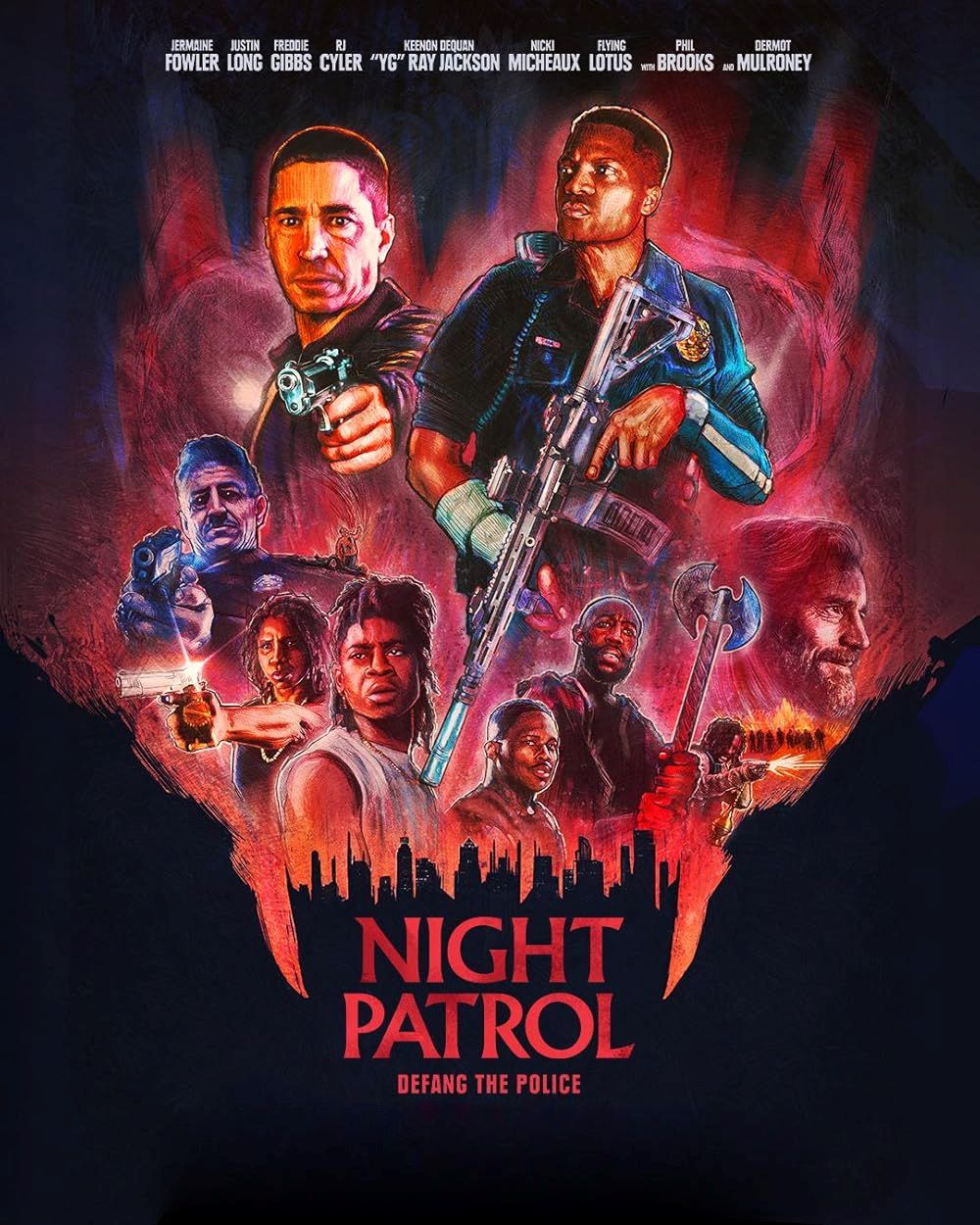
You know the feeling of digging through a forgotten VHS bin and finding a movie that looks like it was beamed in from a parallel universe where grindhouse cinema never died? That’s Night Patrol in a nutshell. Directed by Ryan Prows, this scrappy, bloody genre mashup has a raw, politically charged energy that mixes social outrage with lurid horror tropes. And honestly, streaming services like Shudder have become the bargain bin of the 21st century—the place where genre films of dubious budget and quality get a new life, or in some cases, their only life. Night Patrol is a perfect example of that ecosystem: too weird for a wide theatrical release, too ambitious to be dismissed outright, and exactly the kind of movie you stumble upon at 1 AM, three scrolls deep into a streaming queue. The core idea is audacious: what if the most elite, secret unit of the LAPD wasn’t just crooked, but was actually a coven of vampires using gang violence as a cover for their midnight snacks? It’s the kind of premise that feels like it was dreamed up at 2 AM after a Super Fly and The Warriors double feature—and I mean that as a high compliment.

If you lean in, you’re in for a bumpy but often thrilling ride. The film centers on two LAPD partners: Ethan (Justin Long) and Xavier (Jermaine Fowler). Ethan is the legacy kid, the son of a legendary cop (Dermot Mulroney), who finally gets the nod to join the secretive “Night Patrol.” Xavier, who grew up in the very housing projects the unit is supposedly “cleaning up,” is left on the outside looking in, suspicious of everything. Naturally, Ethan quickly discovers that his new colleagues aren’t just trigger-happy; they’re literally heartless monsters with metal-plated fangs and a thirst for the residents of the neighborhood Xavier calls home.

Meanwhile, on the streets, Xavier’s brother Wazi (RJ Cyler) and his mother Ayanda (Nicki Micheaux) are realizing that the gang war heating up isn’t just about turf—it’s about survival against the undead. The film’s greatest strength is how it throws these characters into a blender. You have the buddy-cop tension between Long and Fowler, the street-level horror from Cyler’s perspective, and this ancient mystical element brought by Micheaux, who plays a matriarch dabbling in Zulu magic to fight the monsters. It’s a lot, but for the first hour, Prows manages to balance these plates relatively well. There’s a hint of that old-school exploitation energy here: Micheaux’s Ayanda refuses to rely on a broken system and instead arms herself with ancestral power, which gives the film a satisfying underdog-revenge backbone.

Let’s talk about the cast, because this is where Night Patrol either fires on all cylinders or sputters, depending on the scene. Justin Long, our reigning scream king, is perfectly cast as the moral compass who suddenly realizes he’s sold his soul to the corporate office. He plays the “good apple” realizing the whole barrel is rotten with a kind of weary, panicked authenticity. Jermaine Fowler is the secret weapon here; he’s grounded, funny, and provides the emotional anchor the film desperately needs when the visuals go off the rails. Think of him as a reluctant warrior caught between two worlds—the badge he wanted to trust and the community he can’t abandon.

Then, there’s C. M. Punk. The WWE champion plays a vicious white supremacist vampire sergeant, and I have to hand it to him—he’s terrifying. He doesn’t chew scenery so much as he drains it dry of all warmth. He has a physical presence and a cold, dead stare that works perfectly for a monster hiding in a uniform. On the flip side, while rapper Freddie Gibbs and Flying Lotus bring a fun, playful swagger to their gang-heavy roles, some of the other supporting performances—specifically among the vampire coven—feel stiff and amateurish. It creates an uneven texture where one scene feels like a gritty HBO drama and the next feels like a student film. That inconsistency is part of the movie’s scrappy charm, but it also keeps it from feeling fully polished—exactly the kind of rough edge you expect from a bargain bin discovery.

Visually, director Ryan Prows (who previously directed the segment The Subject in V/H/S/94) knows exactly how to make Los Angeles look like a sun-bleached hellscape during the day and a neon-drenched deathtrap at night. The cinematography is gritty and grainy, giving it that ’90s VHS vibe that makes every alleyway feel dangerous. It echoes the cheap, hungry look of independent cinema from decades past, which fits the movie’s B-movie ambitions perfectly. However, style only gets you so far, and Night Patrol hits a serious wall in its final act.

The pacing, which was already a slow burn, starts to drag heavily. There is a lot of talking. A lot of sitting in rooms explaining the “ancient lore” of the vampires, and honestly, the rules get so convoluted that you stop caring who the original evil vampire was and just want to see somebody get staked. The movie tries to have its cake and eat it too—it wants to be a serious critique of the “Thin Blue Line” ideology, an action-horror romp, and a mystical family drama. Usually, it ends up being a muddled version of all three. A tighter script would have known exactly how long to linger on a metaphor before cutting to the chase, but Night Patrol often forgets that lesson. This is where the bargain bin analogy really stings: you can feel the ambition straining against the budget and the runtime, and not every swing connects.

When the action finally does hit in the last twenty minutes, it’s brutally fun. There are guts ripped out, decapitations, and a final boss form for the villains that looks like something out of a heavy metal album cover. It’s just a shame it takes so long to get there. The social commentary is loud and clear—cops as gangs, systemic racism, the failure of the “few bad apples” defense. It’s not subtle, but for a movie where a guy gets thrown through a window in slow motion, subtlety isn’t really the goal. Night Patrol has teeth, and when it remembers to bite, it draws blood. It just spends too much time trying to decide what flavor of juice it wants to suck. And yet, without a service like Shudder, a movie like this probably never sees the light of day. It’s too rough for festivals, too niche for Netflix’s algorithm, and too weird for traditional distributors. Streaming has become the digital equivalent of the $5 DVD barrel outside a video store—full of misfires, hidden gems, and everything in between.

It’s a C+ effort that gets a B+ for sheer ambition, and honestly, in the wasteland of January genre releases, that’s more than enough to warrant a watch—if only to see Justin Long react to C. M. Punk turning into a bat-demon while Jermaine Fowler tries to talk sense into everyone. You can’t get that anywhere else, and that’s exactly why the bargain bin still matters.

V/H/S/85 (dir. by Various Artists)


The full list of directors for Shudder’s V/H/S/85 includes David Bruckner (The Night House), Gigi Saul Guerrero (Bingo Hell), Scott Derrickson (The Black Phone), Natasha Kermani (The Imitation Girl), and Mike P. Nelson (2021’s Wrong Turn).

I’m not completely familiar with the V/H/S series. I stopped after the very first one, with the “I Like You” segment rattling me enough to never want to delve into that found footage mayhem again. It only caught my interest because Scott Derrickson (and by extension C. Robert Cargill and Gigi Saul Guerrero were involved. Cargill and Derrickson have worked together since Sinister (as far as I know). Guerrero’s Bingo Hell was a fun watch, as horror films go. While the found footage format still bothers me when used in large doses, the effect here really makes sense. You’re working in the 80s, pre-cell phones and most major technology. Home movies were common back then as well.

The format for the film is similar to most horror anthologies (like Tales From the Darkside), where there are 4 or 5 mini tales and another that you see in between those. David Bruckner covers the main story with “Total Copy”, where a strange specimen in a lab is kept under close study. Of all the stories in the group, this one really didn’t hold me very well, though it does work well as filler between the other, stronger tales.

Mike Nelson’s “No Wake” starts us off with a camping trip to a nearby lake. Despite discovering No Trespassing signs, the crew of young adults set out for a nice time in the water. This ends up becoming rather treacherous and the result leaves them wanting to take revenge on their perpetrators. It was a strange and refreshing take on a familiar tale that I liked, though it was somewhat short.

We move on to Gigi Saul Guerrero’s “God of Death”, which I enjoyed. This tale follows a cameraman during an earthquake in Mexico, as a rescue crew tries to evacuate a collapsing building. Guerrero is in this piece as the reporter, Gabriella, and if you watch close enough, you’ll see a picture of her father on one the walls, looking like the Mayor of the town. I thought that was sweet. There’s quite a bit of blood and gore, as much as Shudder likes to give.

Natasha Kermani’s “TKNOGOD” was the only one in the series that I didn’t care for. Not that I was bothered about the argument of God vs. Technology, but it felt more like those slam poetry sessions you find in Manhattan. I understand what it was trying to convey, and it does get somewhat chilling. Still, I kind of glossed over it and waited for the next entry. It was filmed well, at least. That I will give it.

“Ambrosia” brings us to a family reunion and celebration, though the family itself might not have the best intentions at heart. This one surprised me a bit and I liked the connection to earlier events.

And finally, we have a Sinister reunion of sorts with Director Scott Derrickson, writer C. Robert Cargill, and actor James Ransome (Deputy So & So himself) in “Dreamkill”. Working in a similar vein to Sinister, Dreamkill focuses on some deadly murders occurring in a town that also happen to be recorded on home video before the events take place. A detective (Freddy Rodriguez, Grindhouse’s Planet Terror) tries to piece together the clues before more victims are lost. This was the best of the bunch, by far, I felt.

Overall, if you can handle the shaky cam of the V/H/S films, 85 is a treat. While I personally wished some these weren’t using the cam, the film finds a way to keep the floating camera in the picture. It’s an interesting set of scares if you have the time to watch.

Rebecca Hall defends her family in the Resurrection Trailer!


“Impede my mission once more and I will beat you until you are dead.” I swear, I’ll never forget that line, especially coming from Rebecca Hall.

Showcased in this year’s Sundance Film Festival, Andrew Semans’ Ressurection is set to release in theatres by IFC Films and will also appear on Shudder. Rebecca Hall (Passing, Iron Man 3)gave a wild performance as Margaret, a woman revisited by someone (Tim Roth, The Hateful Eight) with a secret that can tear her family apart. The lengths to which Margaret goes to protect her daughter takes her to some extremes. This was one of four films I saw during Sundance’s VOD showings, and I’m looking forward to seeing it again.

Resurrection will be released in theatres on August 5th and then on Shudder soon after.

Nicolas Cage Does His Thing In The Trailer For Prisoners Of The Ghostland!


Even though October is nearly over, we still have a lot to look forward to this year.

For instance, just watch this trailer for Prisoners of the Ghostland, starring Nicolas Cage! This film will be available on Shudder in November.

Horror Film Review: Host (dir by Rob Savage)


Host tells the story of the Zoom meeting from Hell.

Actually, that description is a case of me being a bit too glib.  Though this hour-long film, which can currently be viewed on Shudder, has received a lot of attention for its Zoom call format, there’s a good deal more going on in Host.  It’s the first film of the COVID-19 era and, when this era finally ends, it’s a film that will remind viewers of what it was like to be locked down and afraid that, even behind closed door and with a mask ready to go, there was truly no escape from the virus.

Host is a British film about six friends, one psychic medium, and one very destructive spirit.  Locked down due to COVID, the friends have weekly Zoom meetings.  Some of them drink wine during the meetings.  One of them smokes a good deal of weed.  The important thing that they’re staying in contact and not allowing the separation to drive them apart.  As so many others have done over the course of 2020, they’ve tried to find some sort of normalcy in a situation that is anything but.  Even though the viewer only spends an hour with these characters, it’s impossible not to relate to what they’re going through.

For this week’s meeting, a medium named Seylan (Seylan Baxter) had been hired to lead the friends in an online séance.  Everyone has a different reaction to Seylan, which I liked.  Jemma (Jemma Moore) seems to be struggling not to laugh as Seylan tells everyone to light their candles.  (I related to Jemma, as I probably would have had the same reaction.)  Emma (Emma Louise Webb) and Caroline (Caroline Ward) are both obviously taking the séance a bit more seriously and are concerned about what will happen when they contact the other side.  Haley (Haley Bishop) tries to keep the group focused while Radina (Radina Drandova) and Teddy (Edward Linard) deal with interruptions from their significant others.

Well, needless to say, the séance doesn’t exactly lead to the best of results.  That doesn’t count as a spoiler because first off, this film is on Shudder and secondly, since when has it ever been a good idea to try to contact the dead?  If there’s anything that I’ve learned from the movies, it’s that the dead are extremely touchy and prone to violence.

Host makes great use of its format.  Every time someone drops out of the meeting, we’re left to wonder if they’ve just temporarily lost their connection or if they’ve been attacked by something from beyond.  When we watch the interaction between the six friends — who feel like a group of real friends, though I don’t know how well everyone knew each other before production began — we find ourselves constantly looking over everyone’s shoulder, searching for any sign of an unexpected presence.  Sometimes, we think we see something just to then discover that it was just our overactive imagination.  Sometimes, we think we something and …. well, we actually do.

Host works because it’s a horror film to which everyone can relate.  It gets to a truth that gets beyond the usual horror movie mechanics.  There’s an interesting scene where one of the zoom participants is forced to flee from her flat.  Even with an evil presence chasing her, she still makes sure to mask up before leaving.  If it’s not the demons waiting to get you while you’re in quarantine, it’s the COVID waiting to get you as soon as you exit.  The greatest fear that many people have had over the past few months is that, even if you isolate and wear your mask and stay inside, the disease is still going to somehow get you.  Much like a demon from the other side, the coronavirus can’t be seen but it could be anywhere.  The evil spirit in Host is not named COVID but it might as well be.

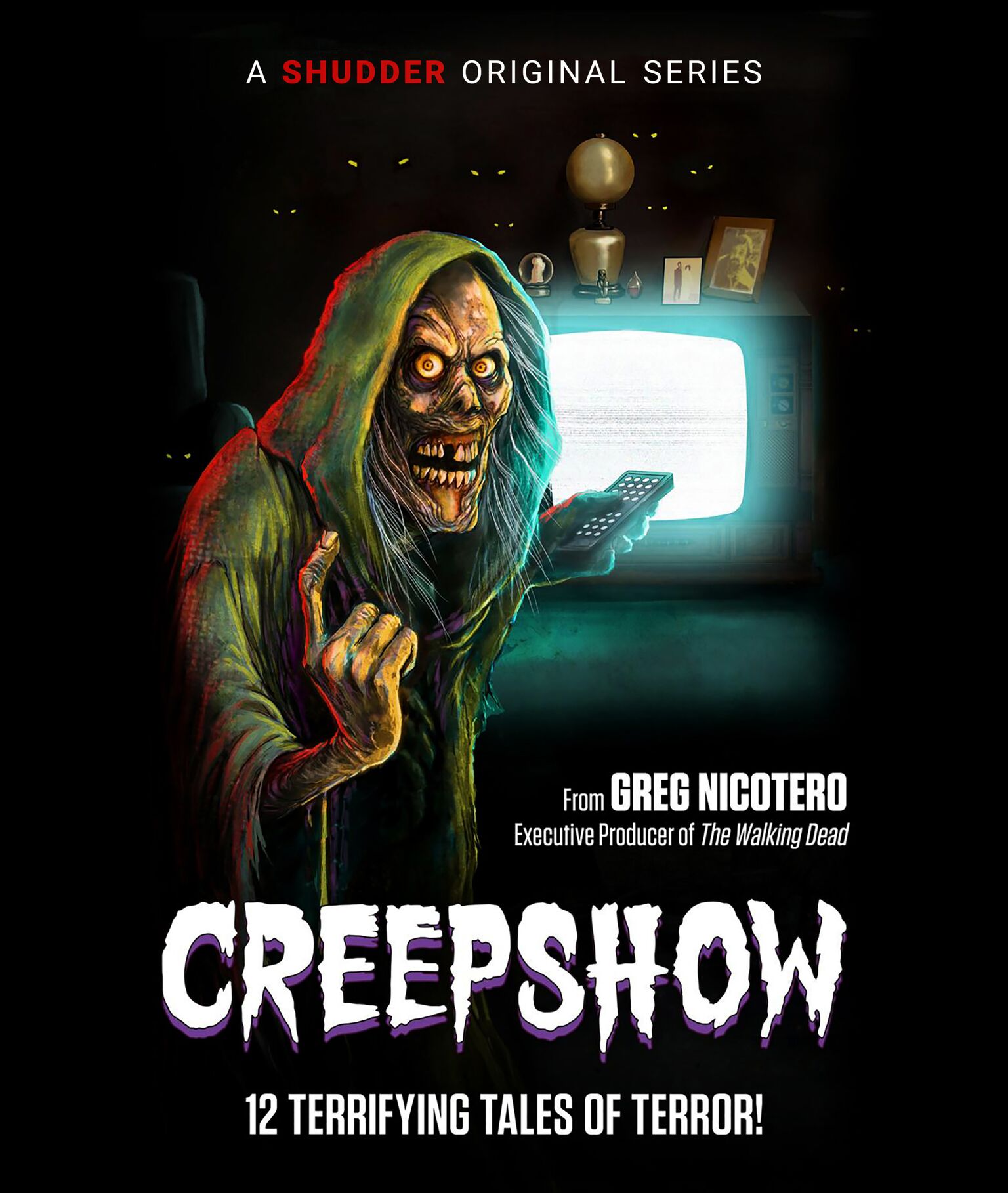
Creepshow, S1, Ep3, All Hallow’s Eve, The Man in the Suitcase, Review By Case Wright


Creepshow.jpg

Happy Horrorthon! I’m am once again reviewing Creepshow.  It is officially a true Guilty Pleasure, but come on, aren’t those all of our go to pleasures anyway? To the uninitiated, Creepshow is a GOOD horror anthology series, but really it’s a showcase for short-films.  How? It’s broken down into two stories and neither of them are over 23 minutes.  Aside from giving writers like Christopher Buehlman his big break (before this he’d only written skits for Renaissance Faires….really), they are the short short brought to life.

Many of Stephen King’s short stories are made into movies, but they are always lengthened into something (usually better) than their original quick-paced short story.  Creepshow keeps that fast pace…mostly.  Well, they keep it for the second story.  The second story is always the better story and moves at the quick pace that you’d expect in a short story.  Even at 22 minutes, the first story tends to drag.

All Hallow’s Eve follows 5 youths trick or treating in a terrified neighborhood.  It was obvious to anyone with a pulse that these kids were dead and out to cause trouble.  Turns out that during a vigorous D&D session in their treehouse, some bullies from the neighborhood thought it would be funny to set it on fire, with the D&D nerds in it.  As you do.  Well, their door gets stuck and they all die.  So, they haunt the neighborhood setting fire to one bully each Halloween until they are all briquettes.

The acting in story A is ….ok.  Story A is a bit slow-paced, which is really hard to do in 20 minutes, but here we are.  I still watched it and so should you.  It’s not like 2 Sentence Horror we are talking about, which is garbage wrapped in rotten bacon.

Story 2 was The Man in the Suitcase, which could’ve worked as a twilight zone episode.  Justin is a loser stoner who is dumped by his girlfriend and used by his roommate.  He is arriving home after visiting his family and he gets a carry-on from the airport and it’s not his stuff that’s inside; it’s a Middle-Eastern man bent so he can fit into the carry-on.  It turns out the Man wants to leave the suitcase, but every time Justin tries to move him, it causes the Man pain, which in turn causes the Man to spit out a gold coin.

Well, Justin isn’t sure what to do, but Justin’s roommate and his ex-girlfriend do and they all decide to torture the man in the suitcase so that he’ll spit out loads of gold.  The torture gets pretty gross, but Justin eventually has a change of heart and tries to free the Man, but his girlfriend and roommate want to keep the gold so she tries to kill Justin with a wrench, which is just lying about.  I won’t spoil what happens next because this was a lot of fun and really makes Shutter worth my subscription fee.

This story really had some good pacing.  Yes, it was predictable and very over the top, but that is just the Creepshow way.

Again, relax and enjoy!