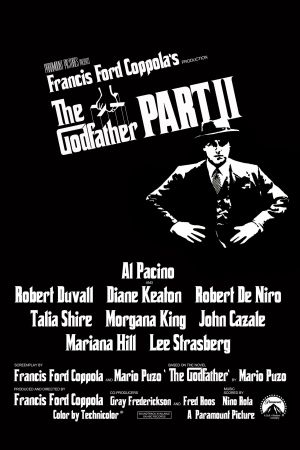
What Could Have Been: The Godfather, Part II


Years ago, I wrote a post called What Could Have Been: The Godfather, in which I discussed all of the actors and the directors who were considered for The Godfather. 

It remains one of the most widely viewed posts that we’ve ever had on this site.  I guess that shouldn’t be a surprise.  People love The Godfather and they love playing What If?  Would The Godfather still have been a classic if it had been directed by Otto Preminger with George C. Scott, Michael Parks, Burt Reynolds, and Robert Vaughn in the lead roles?  Hmmm …. probably not.  But, in theory, it could have happened.  All of them were considered at one point or another.

However, in the end, it was Francis Ford Coppola who directed The Godfather and it was Marlon Brando, Al Pacino, James Cann, and Robert Duvall who brought the Corleone family to life.  The Godfather, as everyone knows, was a huge hit and it went on to win the Oscar for Best Picture of the year.  As the film ended with the future of the Corleone family still up in the air, there was obviously room for a sequel.

When Paramount Pictures first approached Coppola about writing and directing a sequel, he turned them down.  He said he was done with The Godfather and didn’t see any way that he could improve on the story.  It’s debatable whether or not Coppola truly felt like this or if he was just holding out for more money.  It is known that Coppola did suggest to Paramount a possible director for Part II and that director’s name was Martin Scorsese.

What would Martin Scorsese’s The Godfather Part II have looked like?  It’s an intriguing thought.  At the time, Scorsese was best-known for Mean Streets and it’s probable that Scorsese’s film would have been a bit messier and grittier than Coppola’s version.  If Coppola made films about the upper echelons of the Mafia, Scorsese’s interest would probably have been with the soldiers carrying out Michael’s orders.  While Scorsese has certainly proven that he can handle a huge productions today, he was considerably younger and much more inexperienced in the early 70s.  To be honest, it’s easy to imagine Scorsese’s Godfather Part II being critically and commercially rejected because it would have been so different from Coppola’s.  A failure of that magnitude would have set back Scorsese’s career and perhaps even led to him returning to Roger Corman’s production company.  As such, it’s for probably for the best that Coppola did eventually agree to shoot the sequel, on the condition that Coppola be given creative control and Paramount exec Robert Evans not be allowed on the set.  While Coppola was busy with Godfather Part II, Scorsese was proving his versatility with Alice Doesn’t Live Her Anymore.

After Coppola was signed to direct, the next best question was whether or not Marlon Brando would return to play the role of Vito Corleone.  The film’s flashback structure would ensure that Vito would remain an important character, despite his death in the first film.  Coppola reportedly considered offering Brando the chance to play the younger version of Vito but he changed his mind after he saw Robert De Niro in Scorsese’s Mean Streets.  Still, it was felt that Brando might be willing to show up in a cameo during the film’s final flashback, in which Michael tells his family that he’s enlisted in the army.  Frustrated by Brando’s refusal to commit to doing the cameo, Coppola told him to show up on the day of shooting if he wanted to do the film.  When Brando didn’t show, the Don’s lines were instead rewritten and given to Tom Hagen.  It’s hard not to feel that this worked to the film’s advantage.  A last-minute appearance by Brando would have thrown off the film’s delicate balance and probably would have devalued De Niro’s own performance as the younger version of the character.

Brando wasn’t the only member of the original cast who was hesitant about returning.  Al Pacino held out for more money, which makes sense since he was literally the only cast member who could not, in some way, be replaced.  Richard Castellano, who played Clemenza in the first film, however learned that he that hard way that he was not quite as indispensable as Al Pacino.  In Part II, Clemenza was originally meant to have a large role in both the flashbacks and the present-day scenes.  However, when Castellano demanded more money and the right to rewrite his own lines, the older Clemenza was written out the film and replaced by the character of Frankie Petangeli (played by Michael V. Gazzo).

It’s impossible to find fault with Gazzo’s performance but it’s still hard not to regret that Castellano didn’t return.  Imagine how even more poignant the film’s final moments would have been if it had been the previously loyal Clemenza who nearly betrayed Michael as opposed to Frankie?  Indeed, even after the part was rewritten, many of Frankie’s lines deliberately harken back to things that Clemenza said and did during the first film.  Because Clemenza is a very prominent character during the film’s flashbacks, his absence in the “modern” scenes is all the more obvious.

When the role of Young Clemenza was cast, it was still believed that Richard Castellano would be appearing in that film.  One of the main reasons that Bruno Kirby was selected for the role of Young Clemenza was because Kirby had previously played Castellano’s son in a television show.  Also considered for the role was Joe Pesci, who was working as a singer and a comedian at the time.  (His partner in his comedy act was Frank Vincnet.)  If Pesci had been cast, he would not only have made his film debut in The Godfather Part II but the film also would have been his first pairing with Robert De Niro.  (Interestingly enough, Frank Sivero — who played Pesci and De Niro’s henchman, Frankie Carbone, in Goodfellas, also had a small role in Godfather Part II, playing Vito’s friend, Genco.)

As for the film’s other new major character, there were several interesting names mentioned for the role of gangster Hyman Roth.  Director Sam Fuller read for the role and Coppola also considered Elia Kazan.  Perhaps the most intriguing name mentioned as a possible Roth was that of James Cagney.  (Cagney, however, made it clear that he was content to remain retired.)  In the end, the role was offered to Al Pacino’s former acting teacher, Lee Strasberg.  Like Gazzo, Strasberg made his film debut in The Godfather Part II and, like Gazzo, he received his only Oscar nomination as a result.

The legendary character actor Timothy Carey (who was courted to play Luca Brasi in the first film) met with Coppola to discuss playing Don Fanucci, the gangster who is assassinated by Vito.  A favorite of Stanley Kubrick’s, Carey reportedly lost the role when he pulled out a gun in the middle of the meeting.

Originally, the film was supposed to end in the mid-60s, with a now teenage Anthony Corleone telling Michael that he wanted nothing to do with him because he knew that Michael had Fredo murdered.  (That famous scene of Michael bowing his head was originally supposed to be in response to Anthony walking out on him as opposed to the sound of Fredo being shot.)  Cast in the role of teenage Anthony was actor Robby Benson so perhaps it’s for the best that the scene was ultimately not included in the film.

Some of the smaller roles in Part II were played by actors who were considered for larger roles in the first film.  The young Tessio was played by John Aprea, who was also considered for the role of Michael.  Peter Donat, who played the lead Senate counsel in Part II, was considered for the role of Tom Hagen.  The rather tall Carmine Caridi, who played Camine Rosato in Part II, was originally cast as Sonny until it was discovered that he towered over everyone else in the cast.  And, of course, Robert De Niro famously read for the role of Sonny and was cast in the small role of Paule Gatto before he left The Godfather to replace Al Pacino in The Gang Who Couldn’t Shoot Straight.  (Of course, the whole reason that Pacino left The Gang Who Couldn’t Shoot Straight was so he could play the role of Michael in The Godfather.  In the end, it all worked out for the best.)

Finally, former teen idol Troy Donahue played Connie Corleone’s second husband, Merle Johnson.  Merle Johnson was Troy Donahue’s real name.

Personally, I think The Godfather Part II is one of the few films that can be described as perfect. Still, it’s always fun to play what if.

Scene That I Love: A New Year In Cuba From The Godfather, Part II


Happy New Year!

Well, the clock has now struck midnight on the West Coast and that officially means that it is 2022 in the United States!  It’s a new year, which means that we have another chance to get things right or, at the very least, not repeat the mistakes of the previous year.

I’m looking forward to 2022 for a number of reasons.  We’ve got a lot planned here at Through the Shattered Lens.  So, what better way to start things off than by sharing a scene that I love from one of the greatest and most important films of all time, 1974’s The Godfather Part II?

The scene below takes place on New Year’s Eve.  The scene starts in 1958 and it ends in 1959.  Michael Corleone (Al Pacino) and his brother Fredo (John Cazale) are in Havana at the invitation of Hyman Roth (Lee Strasberg).  Roth know that Cuba could be a gold mine for the American mob but Michael, from the start, realizes that the country’s corrupt government is on the verge of collapse.  Tragically, it’s also in Havana that Michael realizes that Fredo betrayed him to his enemies.

On December 31st, 1958, as the corrupt and wealthy celebrate a new year in Havana, the communist rebels ride into the city.  While the President of Cuba prepares to announce that he will be fleeing the country, Michael confronts his brother and tells him that he knows the truth.  Later, as they both attempt to flee the country, Michael and Fredo see each other on the streets.  Fredo runs from Michael, refusing his offer to help.  Though Fredo would eventually return to the family, the film’s ending revealed Fredo’s first instinct was the correct one.

Much of the scene below is based on fact.  The Cuban government did fall on New Year’s Eve and Fidel Castro and his rebels did triumphantly ride into Havana on January 1st.  Before Castro came to power, the Mafia did have a major stake in Cuba and reportedly quite a few mobsters were in Havana when Castro took over.  Meyer Lansky (on whom the film’s Hyman Roth was based) was one of the many mob officials who were rumored to have caught the last flight off of the island.  Seeking to be the only mob boss in his country, Castro did force the Mafia out of Cuba, which led to an alliance between organized crime and the CIA to try to overthrow Castro.  At the time that The Godfather Part II was released, the details of the CIA and the Mafia’s attempts to assassinate Castro were just starting to be revealed to the public.  As powerful as the scene below is today, it probably resonated even more with audiences in 1974.  In 1974, this was all still recent history and it undoubtedly brought to mind the still-fresh national trauma of the assassination of the Kennedy brothers.

Beyond the historical significance of the scene below, it also features brilliant work from two actors who will forever be linked together, Al Pacino and the late John Cazale.  Cazale and Pacino first met while they were both working off-Broadway, years before Mario Puzo even started writing the novel that would become The Godfather.  They were close friends and, along with co-starring in The Godfather films, they also played bank-robbing partners in Dog Day Afternoon.  Tragically, John Cazale died of cancer at the age of 42.  He only appeared in five films, every one of which was nominated for Best Picture and one could argue that the Academy’s failure to nominate Cazale for either Dog Day Afternoon or Godfather Part II is one of the most unforgivable oversights in Oscar history.

That said, it’s a new year.  Save the arguing for later.  Here’s a scene that I love:

Lisa Reviews a Palme d’Or Winner: Scarecrow (dir by Jerry Schatzberg)


With the 2021 Cannes Film Festival underway in France, I thought this would be a good opportunity to spend the next few days looking at some of the films that have won the Palme d’Or in the past.  As of this writing, 100 films have won either the Palme d’Or or an earlier version of the award like the Grand Prix du Festival International du Film.  Some of those films — like Parasite, The Tree of Life, The Piano, Pulp Fiction — went on to huge box office success and Oscar renown.  Others, like 1973’s Scarecrow, did not.

Scarecrow is an example of a type of film that was very popular in the 70s.  It’s a road film, one in which two or more people take a journey across the country and discover something about themselves and, depending upon how ambitious the film was, perhaps something about America as well.  Scarecrow centers on two drifters, who just happen to meet on a dusty road while they’re trying to hitch a ride.  Max (Gene Hackman, fresh off of winning an Oscar for The French Connection) is an ex-convict with a bad temper and a huge chip on his shoulder.  Lion (a young Al Pacino, fresh off of The Godfather) is an ex-sailor who views the world with optimism and who appears to be sweet-natured but simple-minded.  To be honest, it’s a little bit hard to believe that the perpetually resentful Max and the always hopeful Lion would ever become friends but they do.  They travel around the country, talking about their dreams of opening a car wash together.  They meet up with ex-girlfriends and ex-wives.  Eventually, they even end up in a prison farm together, where Lion, temporarily estranged from Max, is taken advantage of by a sadistic prisoner named Riley (Richard Lynch).

Scarecrow is an episodic film, one that moves at its own deliberate pace.  (If that sounds like a polite way of saying that the film is slow-moving …. well, it is.)  Director Jerry Schatzberg was a photographer-turned-director and, as a result, there’s several striking shots of Max and Lion standing against the countryside, waiting for someone to pick them up and give them a ride.  Whenever Max and Lion end up in a bar, the scene is always lit perfectly.  At the same time, Schatzberg also attempts to give the film a spontaneous, naturalistic feel by letting scenes run longer than one would normally expect.  There’s several scenes of Hackman and Pacino just talking while walking down a country road or a city street.  On the one hand, you have to appreciate Schatzberg’s attempt to convince us that Max and Lion are just two guys with big dreams, as opposed to two Oscar-nominated actors pretending to be societal drop-outs.  On the other hand, Schatzberg’s approach also leads to an interminably long scene of Gene Hackman eating a piece of chicken and if you think that Gene Hackman was the type of actor who wasn’t going to act the Hell out of gnawing on and gesturing with a chicken bone, you obviously haven’t seen many Gene Hackman films.

The main appeal of the film, for most people, will probably be to see Gene Hackman and Al Pacino, two of the top actors of the 70s, acting opposite of each other.  Reportedly, both Hackman and Pacino went full method for the film and spent their prep time on the streets of San Francisco, begging for spare change.  The end result is a mixed bag.  There are a few scenes — like when they first meet or when they’re in prison — in which Hackman and Pacino are believable in their roles and you buy them as two lost souls who were lucky enough to find each other.  There are other scenes where they both seem to be competing to see who can chew up the most scenery.   Sometimes, Pacino and Hackman are compelling acting opposite each other.  Other times, it feels like we’re just watching an Actors’ Studio improv class that someone happened to film.  Too often, Hackman and Pacino seem to be so occupied with showing off their technique that the film’s reality seems to get lost under all of the method showiness.  In the end, neither one of the film’s stars makes as much of an impression as Richard Lynch, who is genuinely frightening in his small but key role.

Scarecrow is an uneven film, one that is occasionally effective but also a bit too studied for its own good.  It wears it influences — Of Mice and Men, Midnight Cowboy, Five Easy Pieces — on its sleeve but it also fails to exceed or match any of those previous works.  That said, the film does have its fans.  (Schatzberg has been working on a sequel for a while.)  Certainly, the 1973 Cannes Jury (headed by none other than Ingrid Bergman) liked it enough to give it the Palme.

Scarecrow 2

Lisa Marie’s Early Oscar Predictions For May


It’s that time of the month again! It’s time for me to go out on a limb and attempt to predict what will be nominated for the Oscars. Of course, trying to do this early in the year is a fool’s errand. We all know that. That’s actually part of the fun.

As of right now, the list below is full of familiar names, a few films that were acclaimed at Sundance, and a few random guesses. A lot of the predicted nominees are films that were expected to be Oscar contenders last year but which were delayed due to the pandemic. (Looking at you, West Side Story.) Some of them are contenders that I personally would just like to see nominated, even though it probably won’t happen. (I’m not going to jinx anything by pointing out which nomination about which I’m specifically thinking. You’ll probably be able to guess for yourself.) Over the next few months, the Oscar picture will become a bit clearer. Many of the contenders listed below will be forgotten about. Meanwhile, new contenders will emerge. My point is, take it all with a grain of salt and don’t put down any money just yet.

Two big developments to keep in mind:

First off, the Academy is officially going back to having a set a number of nominees. Next year, ten films will be nominated for best picture. Not seven. Not nine. Ten. Personally, I’m thrilled by this development. Nothing irritated me more than when they used to announce those weird, seven-picture lineups. (As I’ve mentioned before, I don’t like odd numbers.)

Secondly, the Academy is going back to the old eligibility dates. Yay! What that means is that only films that are released between March and the end of this year will be eligible to compete for the Oscars. More importantly, it means that the best film of 2021 will not be released in 2022.

Anyway, here are my predictions for this month! Don’t take them too seriously. If you want to see how my thinking has evolved, check out my predictions for March and April.

Best Picture

CODA

The Duke

The French Dispatch

House of Gucci

A Journal for Jordan

Nightmare Alley

Passing

Soggy Bottom

The Tragedy of Macbeth

West Side Story

Best Director

Paul Thomas Anderson for Soggy Bottom

Guillermo Del Toro for Nightmare Alley

Ridley Scott for House of Gucci

Steven Spielberg for West Side Story

Denzel Washington for A Journal For Jordan

Best Actor

Jim Broadbent in The Duke

Clifton Collins, Jr. in Jockey

Peter Dinklage in Cyrano

Michael B. Jordan in A Journal For Jordan

Will Smith in King Richard

Best Actress

Jessica Chastain in The Eyes of Tammy Faye

Ana de Armas in Blonde

Jennifer Hudson in Respect

Nicole Kidman in Being the Ricardos

Tessa Thompson in Passing

Best Supporting Actor

David Alvarez in West Side Story

Bradley Cooper in Soggy Bottom

Adam Driver in The Last Duel

Al Pacino in House of Gucci

Forest Whitaker in Respect

Best Supporting Actress

Ariana DeBose in West Side Story

Vera Farmiga in The Many Saints of Newark

Marlee Matlin in CODA

Frances McDormand in The Tragedy of MacBeth

Ruth Negga in Passing

6 Shots From 6 Films: Special Al Pacino Edition


4 (or more) Shots From 4 (or more) Films is just what it says it is, 4 (or more) shots from 4 (or more) of our favorite films. As opposed to the reviews and recaps that we usually post, 4 (or more) Shots From 4 (or more) Films lets the visuals do the talking.

With all the excitement (or not) surrounding the Oscars, it might be easy to overlook the fact that today is also the birthdays of one of the greatest and most iconic American actors of all time!  We cannot let this day end without wishing a happy birthday to the one and only Al Pacino!

In others words, it’s time for….

6 Shots From 6 Al Pacino Films

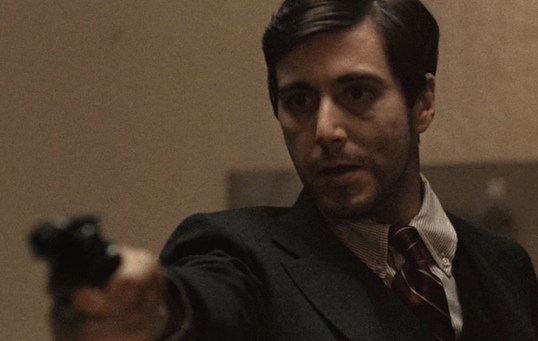
The Godfather (1972, dir by Francis Ford Coppola, DP: Gordon Willis)

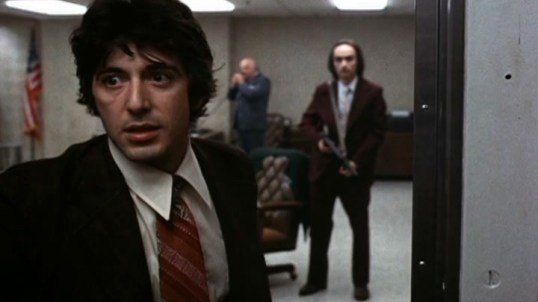
Dog Day Afternoon (1975, dir by Sidney Lumet, DP: Victor J. Kemper)

Scarface (1983, dir by Brian DePalma, DP: John A. Alonzo)

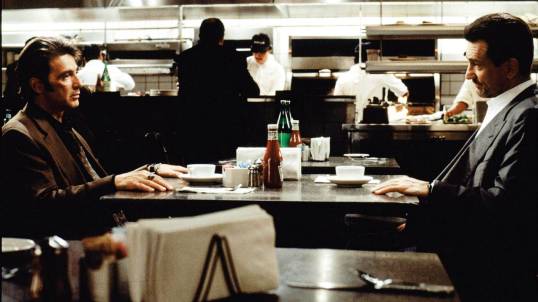
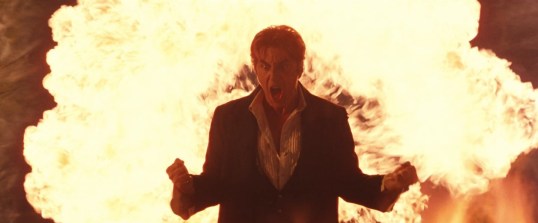
Heat (1995, dir by Michael Mann, DP: Dante Spinotti)

The Devil’s Advocate (1997, dir by Taylor Hackford, DP: Andrzej Bartkowiak)

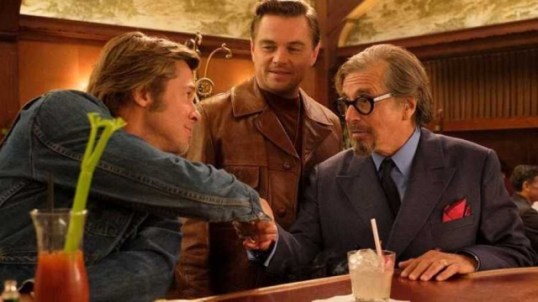
Once Upon A Time In Hollywood (2019, dir by Quentin Tarantino, DP: Robert Richardson)


Lisa’s Way Too Early 2022 Oscar Predictions for March!


Yes, it’s time to start this again.

The Oscar nominations for 2020-2021 were finally revealed earlier this month. They weren’t particularly surprising. To be honest, they were kind of boring. But, with those nominations now revealed and the Oscars sets to be awarded at the end of April, that means it’s time to start looking forward to next year!

Of course, it’s hard to say what’s going to happen next year. Most of the films that are scheduled to come out later in 2021 were originally scheduled to come out in 2020. (And they were made in 2018 and 2019, which means the first big releases of 2021 are already dated.) Right now, most of the probable nominees are films that I originally expected to be contenders last year, like Spielberg’s West Side Story and Dune. Needless to say, new contenders will emerge over the next few months. Quite frankly, I’m skeptical of West Side Story because it sounds like the type of project that will bring out all of Spielberg’s worst instincts as a filmmaker. But, until it’s released, it’ll be a contender because he’s Spielberg.

As of right now, we don’t even know what the eligibility window is going to be for the next set of Oscar contenders. Is the Academy going to go back to a December cut-off or are they going to continue to extend the eligibility window. Are we predicting the 2021 Oscars or are we predicting the 2021-2022 Oscars? Again, as of now, we just don’t know. Personally, I’m hoping they return to a December cut-off but I have a feeling that the Academy will disagree.

About the only thing we do know for sure, right now, is that the Academy is going to go back to a set number of nominees. 10 films will be nominated. No more of this maybe 7 or maybe 8 nominees. It’s about time.

Anyway, the list below is based on the assumption that the Academy’s going to go back to the old eligibility window, which means that only films released between the start of March and the end of December will be eligible for Oscar consideration.

It’s also based on the presumption that the Oscars can be predicted this far out. They can’t. But I enjoy making lists and I love the Oscars. Doing these predictions has become a part of my monthly ritual. You know how much I love a good ritual.

So, here are my potentially worthless predictions for what will be nominated next year!

Best Picture

CODA

Dune

The French Dispatch

House of Gucci

In the Heights

The Last Duel

Nightmare Alley

Passing

Respect

West Side Story

Best Director

Guillermo Del Toro for Nightmare Alley

Rebecca Hall for Passing

Ridley Scott for House of Gucci

Steven Spielberg for West Side Story

Denis Villeneuve for Dune

Best Actor

Clifton Collins, Jr. in Jockey

Bradley Cooper in Nightmare Alley

Matt Damon in The Last Duel

Adam Driver in The Last Duel

Will Smith in King Richard

Best Actress

Jessica Chastain in The Eyes of Tammy Faye

Lady Gaga in House of Gucci

Jennifer Hudson in Respect

Tessa Thompson in Passing

Rachel Zegler in West Side Story

Best Supporting Actor

David Alvarez in West Side Story

Daniel Durant in CODA

Jeremy Irons in House of Gucci

Al Pacino in House of Gucci

Forest Whitaker in Respect

Best Supporting Actress

Cate Blanchett in Nightmare Alley

Ariana DeBose in West Side Story

Vera Farmiga in The Many Saints of Newark

Marlee Matlin in CODA

Ruth Negga in Passing

Here Are The 78th Annual Golden Globe Nominations!


I’m totally turned off by the self-importance of the Golden Globes and I resent every time that I have to write about them.

That said, despite the fact that no one is quite sure who actually votes for the damn things and stories of corruption in the Hollywood Foreign Press Association have been rampant for years, the Golden Globes have still emerged as one of the main Oscar precursors.  So, you kind of have to pay attention to them.  Bleh.

There really aren’t any huge shocks in the list of nominees below, with the exception of maybe Jared Leto for Best Supporting Actor and James Corden’s Prom nomination.  I mean, if you’re that determined to nominate someone for The Prom, why would you go for James Corden as opposed to Meryl Streep?  That’s just odd.

Anyway, here are the nominations:

Best Motion Picture, Drama
“The Father”
“Mank”
“Nomadland”
“Promising Young Woman”
“The Trial of the Chicago 7”

Best Motion Picture, Musical or Comedy
“Borat Subsequent Moviefilm”
“Hamilton”
“Music”
“Palm Springs”
“The Prom”

Best Director, Motion Picture
Emerald Fennell, “Promising Young Woman”
David Fincher, “Mank”
Regina King, “One Night In Miami”
Aaron Sorkin, “The Trial of the Chicago 7”
Chloé Zhao, “Nomadland”

Best Performance by an Actress in a Motion Picture, Drama
Viola Davis, “Ma Rainey’s Black Bottom”
Andra Day, “The United States vs. Billie Holiday”
Vanessa Kirby, “Pieces of a Woman”
Frances McDormand, “Nomadland”
Carey Mulligan, “Promising Young Woman”

Best Performance by an Actress in a Motion Picture, Musical or Comedy
Maria Bakalova, “Borat Subsequent Moviefilm”
Kate Hudson, “Music”
Michelle Pfeiffer, “French Exit”
Rosamund Pike, “I Care a Lot”
Anya Taylor-Joy, “Emma”

Best Performance by an Actress in a Supporting Role in any Motion Picture
Glenn Close, “Hillbilly Elegy”
Olivia Colman, “The Father”
Jodie Foster, “The Mauritanian”
Amanda Seyfried, “Mank”
Helena Zengel, “News of the World”

Best Performance by an Actor in a Motion Picture, Drama
Riz Ahmed, “Sound of Metal”
Chadwick Boseman, “Ma Rainey’s Black Bottom”
Anthony Hopkins, “The Father”
Gary Oldman, “Mank”
Tahar Rahim, “The Mauritanian”

Best Performance by an Actor in a Motion Picture, Musical or Comedy
Sacha Baron Cohen, “Borat Subsequent Moviefilm”
James Corden, “The Prom”
Lin-Manuel Miranda, “Hamilton”
Dev Patel, “The Personal History of David Copperfield”
Andy Samberg, “Palm Springs”

Best Performance by an Actor in a Supporting Role in any Motion Picture
Sacha Baron Cohen, “The Trial of the Chicago 7”
Daniel Kaluuya, “Judas and the Black Messiah”
Jared Leto, “The Little Things”
Billy Murray, “On the Rocks”
Leslie Odom Jr., “One Night In Miami”

Best Screenplay, Motion Picture
Emerald Fennell, “Promising Young Woman”
Jack Fincher, “Mank”
Aaron Sorkin, “The Trial of the Chicago 7”
Florian Zeller and Christopher Hampton, “The Father”
Chloé Zhao, “Nomadland”

Best Original Score, Motion Picture
Alexandre Desplat, “The Midnight Sky”
Ludwig Göransson, “Tenet”
James Newton Howard, “News of the World”
Trent Reznor and Atticus Ross, “Mank”
Trent Reznor, Atticus Ross and Jon Batiste, “Soul”

Best Original Song, Motion Picture
“Fight For You,” Judas and the Black Messiah”
“Hear My Voice,” The Trial of the Chicago 7”
“Io Sì (Seen),” The Life Ahead”
“Speak Now,” One Night In Miami”
“Tigress & Tweed,” The United States Vs. Billie Holiday”

Best Motion Picture, Animated
“The Croods: A New Age”
“Onward”
“Over the Moon”
“Soul”
“Wolfwalkers”

Best Motion Picture, Foreign Language
“Another Round”
“La Llorona”
“The Life Ahead”
“Minari”
“Two Of Us”

Best Television Series, Drama
“The Crown”
“Lovecraft Country”
“The Mandalorian”
“Ozark”
“Ratched”

Best Television Series, Musical or Comedy
“Emily in Paris”
“The Flight Attendant”
“The Great”
“Schitt’s Creek”
“Ted Lasso”

Best Limited Series, Anthology Series or a Motion Picture made for Television
“Normal People”
“The Queen’s Gambit”
“Small Axe”
“The Undoing”
“Unorthodox”

Best Performance by an Actress in a Television Series, Drama
Olivia Colman, “The Crown”
Jodie Comer, “Killing Eve”
Emma Corrin, “The Crown”
Laura Linney, “Ozark”
Sarah Paulson, “Ratched”

Best Performance by an Actress in a Television Series, Musical or Comedy
Lily Collins, “Emily In Paris”
Kaley Cuoco, “The Flight Attendant”
Elle Fanning, “The Great”
Jane Levy, “Zoey’s Extraordinary Playlist”
Catherine O’Hara, “Schitt’s Creek”

Best Performance by an Actress in a Limited Series, Anthology Series or a Motion Picture Made for Television
Cate Blanchett, “Mrs. America”
Daisy Edgar Jones, “Normal People”
Shira Haas, “Unorthodox”
Nicole Kidman, “The Undoing”
Anya Taylor-Joy, “The Queen’s Gambit”

Best Performance by an Actress in a Television Supporting Role
Gillian Anderson, “The Crown”
Helena Bonham Carter, “The Crown”
Julia Garner, “Ozark”
Annie Murphy, “Schitt’s Creek”
Cynthia Nixon, “Ratched”

Best Performance by an Actor in a Television Series, Drama
Jason Bateman, “Ozark”
Josh O’Connor, “The Crown”
Bob Odenkirk, “Better Call Saul”
Al Pacino, “Hunters”
Matthew Rhys, “Perry Mason”

Best Performance by an Actor in a Television Series, Musical or Comedy
Don Cheadle, “Black Monday”
Nicholas Hoult, “The Great”
Eugene Levy, “Schitt’s Creek”
Jason Sudeikis, “Ted Lasso”
Ramy Youssef, “Ramy”

Best Performance by an Actor in a Limited Series or a Motion Picture Made for Television
Bryan Cranston, “Your Honor”
Jeff Daniels, “The Comey Rule”
Hugh Grant, “The Undoing”
Ethan Hawke, “The Good Lord Bird”
Mark Ruffalo, “I Know This Much is True”

Best Performance by an Actor in a Television Supporting Role
John Boyega, “Small Axe”
Brendan Gleeson, “The Comey Rule”
Daniel Levy, “Schitt’s Creek”
Jim Parsons, “Hollywood”
Donald Sutherland, “The Undoing”

An Offer You Can Do Whatever You Want With #21: Carlito’s Way (dir by Brian De Palma)


It’s been a week so I guess it’s time for me to get back to reviewing mob movies, right?  Usually, I do my best not to take such a long break in-between reviewing films — especially when it’s a themed-series of reviews — but I just got busy this week.  It happens.  Luckily, even when we get busy, the movie’s remain ready to be watched and reviewed.

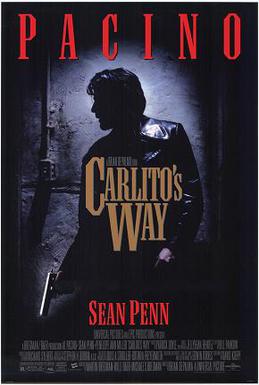
Last week, I reviewed Scarface and The Untouchables, two gangster films from Brian De Palma.  It only seems right to return to my look at the gangster genre by considering another Brian De Palma film.  Released in 1993, Carlito’s Way reunites De Palma with Scarface’s Al Pacino.  In Scarface, Pacino played a Cuban named Tony who was determined to get into the drug trade.  In Carlito’s Way, Pacino plays a Puerto Rican named Carlito who is desperate to escape the drug trade.

Carlito’s Way opens with Carlito getting released from prison in 1975.  He’s spent the past five years serving time on a drug conviction.  Originally, Carlito was sentenced to 30 years but his friend and attorney, David Kleinfeld (Sean Penn), managed to get the conviction thrown out on a technicality.  Now a free man, Carlito finds himself torn between two options.  He can either get involved, once again, in the drug trade or he can go straight.  Returning to his life of crime will mean once again doing something that he’s good at but it will also require him to deal with people who he can’t stand, like the sleazy Benny Blanco (John Leguizamo).  Going straight will mean escaping from New York with his girlfriend, a dancer named Gail (Penelope Ann Miller).  The problem is that it takes money to start a new life and there are people in New York who have no intention of allowing Carlito to leave.

Of the three De Palma-directed gangster films that I’ve recently watched, Carlito’s Way is probably the weakest.  De Palma has always been a frustratingly uneven director and Carlito’s Way contains some of his worst work and some of his best.  For instance, there’s a brilliant sequence where Carlito goes to a hospital to get revenge on someone who betrayed him and it is perhaps one of DePalma’s best set pieces.  But then there’s other scenes where DePalma’s trademark style feels rather empty and counterproductive.  Just when you’re starting to sympathize with Carlito’s predicament, DePalma will suddenly toss in a fancy camera trick and remind you that you’re just watching a film and that Carlito Brigante is just a character in that film.  That technique worked well in the satiric Scarface and the mythological Untouchables but it often feels unnecessary in Carlito’s Way.  

Al Pacino plays Carlito and, like DePalma’s direction, the end result is a bit uneven.  On the one hand, Pacino and Penelope Ann Miller have a likable chemistry, even if Carlito and Gail don’t really make sense as a couple.  On the other hand, this is one of those films where Pacino does a lot of yelling.  Sometimes it works and sometimes, it’s just too theatrical to be effective.  It’s hard not to compare Pacino’s performance here with his slyly humorous work in Scarface.  Tony Montana yelled because he genuinely enjoyed getting on people’s nerves.  The way that Tony expressed himself told us everything that we needed to know about the character.  Carlito yells because that was Al Pacino’s trademark at the time the film was made.

The best thing about the film is Sean Penn’s performance as David Kleinfeld.  Kleinfeld is one of the sleaziest character to ever appear in a movie and Penn seems to be having a good time playing him.  (Watching the film, I found myself wishing that Penn was willing to have that much fun with all of his roles.)  Penn doesn’t make Kleinfeld into a straight-out villain.  Instead, he portrays Kleinfeld as being a somewhat nerdy guy who thought it would be fun to pretend to be a gangster and who has snorted too much cocaine to understand the amount of trouble that he’s brought upon himself.  Just check out Penn in the scene where he’s dancing at a disco.  There’s a joy to Penn’s performance in Carlito’s Way that you typically don’t see from him as an actor.  He’s actually fun to watch in Carlito’s Way.

It’s a flawed film but fortunately, the movie’s good moments are strong enough to help carry the audience over the weaker moments.  The movie often threatens to collapse under the weight of its own style but it seems like whenever you’re on the verge of giving up on the film, De Palma’s kinetic camerawork will calm down enough to allow you to get at least mildly invested in Carlito’s predicament or Sean Penn’s amoral dorkiness will create an amusing moment and you’ll think to yourself, “Okay, let’s keep giving this a chance.”  Carlito’s Way may not be an offer that you can’t refuse but it’s still fairly diverting.

Previous Offers You Can’t (or Can) Refuse:

  1. The Public Enemy
  2. Scarface (1932)
  3. The Purple Gang
  4. The Gang That Could’t Shoot Straight
  5. The Happening
  6. King of the Roaring Twenties: The Story of Arnold Rothstein 
  7. The Roaring Twenties
  8. Force of Evil
  9. Rob the Mob
  10. Gambling House
  11. Race Street
  12. Racket Girls
  13. Hoffa
  14. Contraband
  15. Bugsy Malone
  16. Love Me or Leave Me
  17. Murder, Inc.
  18. The St. Valentine’s Day Massacre
  19. Scarface (1983)
  20. The Untouchables

An Offer You Can’t Refuse #19: Scarface (dir by Brian DePalma)


“Hello to my little friend!”

Hi, little friend….

BOOM!

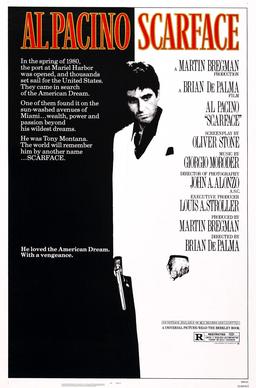
The 1983 film, Scarface, is a misunderstood film.  As we all know, it’s the story of Tony Montana (Al Pacino), who comes to Miami from Cuba along with his friend, Manny (Steven Bauer).  In return for murdering a former member of Castro’s government, Tony is given a job working for Frank Lopez (Robert Loggia).  When it becomes obvious that Tony is becoming too ambitious and might become a threat to him, Frank attempts to have Tony killed.  However, the assassination attempt fails, Tony murders Frank, and then Tony becomes Miami’s richest and most powerful crime lord.  Soon, Tony is burying his face in a mountain of cocaine while making deals with a sleazy Bolivian drug lord named Alejandro Sosa (Paul Shenar).  Tony also marries Frank’s mistress, Elvira Hancock (Michelle Pfieffer), though it’s obvious from the start the the only person that Tony truly loves is his sister, Gina (Mary Elizabeth Mastrantonio).  Anyway, it all eventually leads to a lot of violence and a lot of death.  Even F. Murray Abraham ends up getting tossed out of a helicopter, which is unfortunate since his character was a lot of fun.

Scarface is a famous film, largely because of Oliver Stone’s quotable dialogue and the no holds barred direction of Brian DePalma.  However, I think that people get so caught up on the fact that this is a classic gangster film that they miss the fact that Scarface is also an extremely dark comedy.  It satirizes the excess of the 80s.  Once Tony reaches the top of the underworld, he becomes a parody of the nouveau riche.  He moves into a gigantic house and proceeds to decorate it in the most tasteless way possible and there’s something oddly charming about this crude, not particularly bright man getting excited over the fact that he can finally afford to buy a tiger.  Towards the end of the film, there’s a scene where Tony rants while lounging in an indoor hot tub while Elvira languidly snorts cocaine and complains about the crudeness of his language and, at that moment, Scarface becomes a bit of a domestic comedy.  Tony’s reached the top of his profession, just to discover that it takes more than a live-in tiger and a wardrobe of wide lapeled suits to achieve true happiness.  So, he ends up sitting glumly in his office with a mountain of cocaine rising up in front of him.  “The world is yours” may be Tony’s motto but it turns out that the world is extremely tacky.  For all of his attempts to recreate himself as a wealthy and sophisticated man, Tony is still just a barely literate criminal with a nasty scar and a sour disposition.  The only thing he’s gotten for all of his ruthless ambition is an order of ennui with a cocaine appetizer.

I’ve always found Brian DePalma to be an uneven director.  He has a very distinct style and sometimes that style is perfectly suited to the story that he’s telling (i.e., Carrie) and sometimes, all of that style just seems to get in the way (i.e. The Fury).  Scarface, however, is the ideal story for DePalma’s over-the-top aesthetic.  DePalma’s style may be excessive but Scarface is a film about excess so it’s a perfect fit.  For that matter, you could say the same thing about Oliver Stone’s screenplay.  Stone has since stated that he was using almost as much cocaine as Tony Montana while he wrote the script.  The end result of the combination of Stone’s script, DePalma’s hyperactive direction, Pacino’s overpowering lead performance, and Giorgio Moroder’s propulsive score is a film that feels as if every minute is fueled by cocaine.  It’s not just a film that’s about drugs.  It’s also a film that feels like a drug.

Scarface is a big movie.  It runs nearly three hours, following Tony from his arrival in the United States to his final moments in his mansion, taking hundreds of bullets while grandly announcing that he’s still standing.  (Even after all of the bad things that Tony has done — poor Manny! — it’s impossible not to admire his refusal to go down.)  It’s also a difficult movie to review, largely because almost everyone’s seen it and already has an opinion.  Personally, I think the film gets off to a strong start.  I think the scenes of Tony ruthlessly taking control of Frank’s empire are perfectly handled and I love the scenes where Pacino and Steven Bauer just bounce dialogue off of each other.  They’re like a comedy team who commits murder on the side.  I also loved the “Take it to the limit” montage, which belongs in the 80s Cinema Hall of Fame.  At the same time, I think the final third of the movie drags a bit and that Tony’s sudden crisis of conscience when he sees that a man that he’s supposed to murder has a family feels a bit forced.  It also bothers me that Elvira just vanishes from the film.  At the very least, the audience deserved more of an explanation as to where she disappeared to.

But no matter!  Flaws and all, Scarface is a violent satire that holds up surprisingly well.  Al Pacino’s unhinged performance as Tony Montana is rightly considered to be iconic.  Pacino’s gives such a powerhouse performance that it’s easy to forget that the rest of the cast is pretty impressive as well.  I particularly liked the wonderfully sleazy work of F. Murray Abraham and Paul Shenar.  That said, my favorite character in the film remains Elvira, if just because her clothes were to die for and she just seemed so incredibly bored with all of the violent men in her life.  She goes from being bored with Frank to being bored with Tony and how can you not admire someone who, even when surrounded by all Scarface’s excess, just refuse to care?

Scarface is an offer that you can’t refuse.

Previous Offers You Can’t (or Can) Refuse:

  1. The Public Enemy
  2. Scarface (1932)
  3. The Purple Gang
  4. The Gang That Could’t Shoot Straight
  5. The Happening
  6. King of the Roaring Twenties: The Story of Arnold Rothstein 
  7. The Roaring Twenties
  8. Force of Evil
  9. Rob the Mob
  10. Gambling House
  11. Race Street
  12. Racket Girls
  13. Hoffa
  14. Contraband
  15. Bugsy Malone
  16. Love Me or Leave Me
  17. Murder, Inc.
  18. The St. Valentine’s Day Massacre

Film Review: The Panic In The Needle Park (dir by Jerry Schatzberg)


The 1971 The Panic in Needle Park tells the story of two young lover in New York City.

Helen (Kitty Winn) is an innocent runaway from Indiana who, when we first meet her, has just had a back alley abortion.  Her boyfriend, Marco (Raul Julia), doesn’t seem to be too concerned about her or anyone else for that matter.  Instead, it’s Marco’s dealer, Bobby (Al Pacino), who checks in on Helen and who visits her when she eventually ends up in the hospital.  It’s also Bobby who gives her a place to stay after she gets out of the hospital.

Bobby is a small-time dealer.  He’s not book smart but he knows how to survive on the streets and it’s hard not to be charmed by him.  He literally never stop talking.  As he explains it to Helen, he’s been in jail 8 times but he’s not a bad guy.  His brother, Hank (Richard Bright, who also co-starred with Pacino in The Godfather films), is a burglar and he legitimately is a bad guy but he and Bobby seem to have a close relationship.  Bobby also swears that he’s not a drug addict.  He just occasionally indulges.  It doesn’t take long to discover that Bobby isn’t being completely honest with either Helen or himself.

Together, Bobby and Helen ….

Well, they don’t solve crimes.  In fact, they really don’t do much of anything.  That’s kind of the problem with movies about drug addicts.  For the most part, drug addicts are boring people and there’s only so many times that you can watch someone shoot up before you lose interest.  Heroin may make the addicts feel alive but, with a few notable exception (Trainspotting comes to mind), it’s always been a bit of a cinematic dead end.  The film takes a documentary approach to Bobby and Helen’s descent into addiction and it’s not exactly the most thrilling thing to watch.

Bobby and Helen live in an area of New York that’s known as needle park, largely due to the fact that it’s full of addicts.  It’s a place where people sit on street corners and nod off and where everyone’s life is apparently fueled by petty crime.  An unlikable narcotics detective (Alan Vint) occasionally walks through the area and tries to talk everyone into betraying everyone else.  It turns out that being a drug addict is not like being in the mafia.  Everyone expects you to betray everyone else.

As I said, it’s a bit of a drag to watch but you do end up caring about Bobby and Helen.  They come across as being two essentially decent people who have gotten caught up in a terrible situation.  Even when they piss you off, you still feel badly for them because you know that they’ve surrendered control of their lives to their addictions.  It helps that they’re played by two very appealing actors.  This was only Al Pacino’s second film and his first starring role but he commands the screen like a junkie James Cagney.  Meanwhile, making her film debut, Kitty Winn gives a sympathetic and likable performance as Helen.  You watch Winn’s vulnerably sincere performance and you understand why Helen would have looked for safety with undeserving losers like Marco and Bobby and, as a result, you don’t hold it against her that she seems to be addicted not just to heroin but also to falling for the wrong men.  Helen does a lot of stupid things but you keep hoping that she’ll somehow manage to survive living in needle park.

Pacino, of course, followed-up The Panic In Needle Park with The Godfather.  As for Kitty Win, she won best actress at Cannes but the role didn’t lead to the stardom that it probably should have.  Her best-known role remains playing the nanny in The Exorcist.