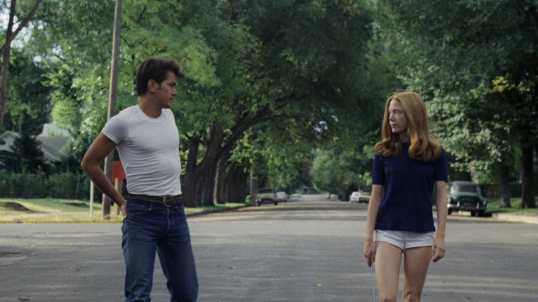
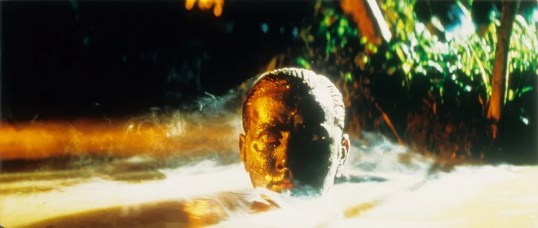
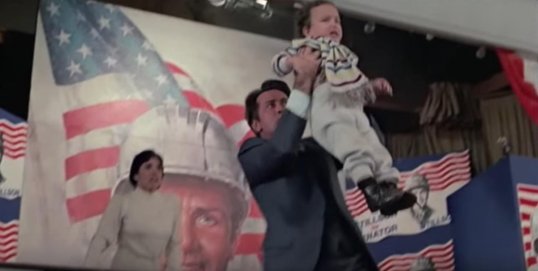
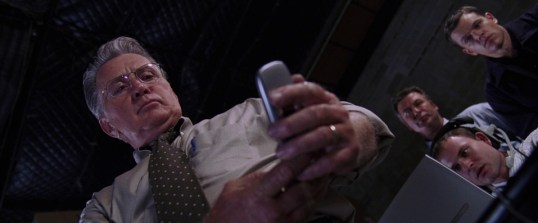
Since today is Martin Sheen’s birthday, it seems appropriate that our scene that I love should come from one of Sheen’s most popular films.
1979’s Apocalypse Now is a film that is full of outstanding set pieces. The scene where Captain Willard (Martin Sheen) reaches the Do Lung Bridge is one of the best moments in the film, a surreal portrayal of the futility of war. The bridge is built every day and blown up every night. In this scene, we see how good Sheen as it simply reacting to action around him. It’s been said that a good actor has to be just as good at reacting as acting and, in this scene, Sheen shows himself to be one of the best.
4 Or More Shots From 4 Or More Films is just what it says it is, 4 shots from 4 of our favorite films. As opposed to the reviews and recaps that we usually post, 4 Shots From 4 Films lets the visuals do the talking!
Today, the Shattered Lens wishes a happy birthday to actor Martin Sheen. It’s time for….
4 Shots From 4 Martin Sheen Films
Badlands (1973, dir by Terrence Malick)
Apocalypse Now (1979, dir by Francis Ford Coppola)
4 Or More Shots From 4 Or More Films is just what it says it is, 4 shots from 4 of our favorite films. As opposed to the reviews and recaps that we usually post, 4 Shots From 4 Films lets the visuals do the talking!
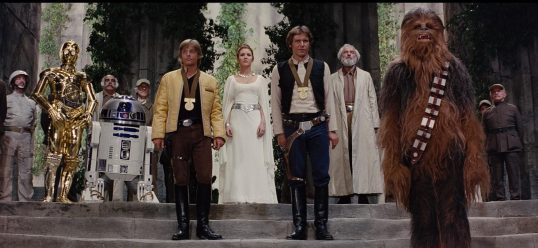
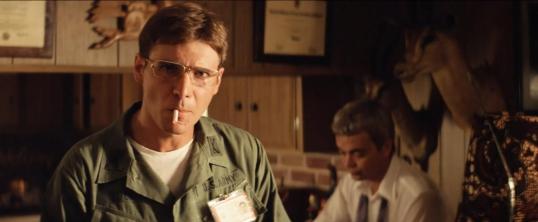
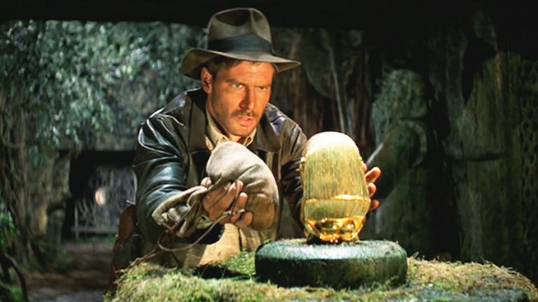
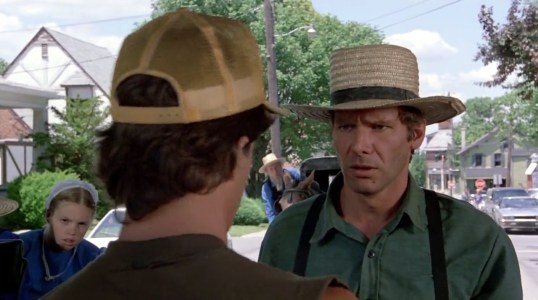
Today, the TSL wishes a happy birthday to Harrison Ford. It’s time for….
4 Shots From 4 Harrison Ford Films
Star Wars: A New Hope (1977, dir by George Lucas)
Apocalypse Now (1979, dir by Francis Ford Coppola)
Raiders of the Lost Ark (1981, dir by Steven Spielberg)
4 Or More Shots From 4 Or More Films is just what it says it is, 4 shots from 4 of our favorite films. As opposed to the reviews and recaps that we usually post, 4 Shots From 4 Films lets the visuals do the talking!
96 years ago today, Robert Evans was born in New York City. He started out working in his brother’s clothing business but a chance meeting with actress Norma Shearer led to him becoming an actor. And while Evans, by his own account, was not a particularly good actor, he did prove himself to be very skilled at playing the games of Hollywood. Evans eventually moved from acting to production, first as an executive at Paramount and then as an independent producer.
He lived a life as glamorous and tumultuous as the stars of his pictures and his memoir, The Kid Stays In The Picture, is considered to be one of the classic show biz autobiographies. He hung out with cinematic rebels like Jack Nicholson and Robert Towne and counted Secretary of State Henry Kissinger as a friend. He suggested that Francis Ford Coppola should direct The Godfather and, when Paramount put pressure on Coppola to cut the film down to two hours, it was Evans who famously announced that a two-hour Godfather was nothing more than a trailer. He lost Ali MacGraw to Steve McQueen and, again by own account, he lost a lot of potentially productive years to cocaine. (The Cotton Club scandal is one of the wildest in the history of Hollywood, though it should be noted that Evans himself was never charged with any wrongdoing.) But, for all that he lost, Evans continues to gain admirers as being the epitome of the producer who was willing to take chances. For all of his flamboyance, Evans had an eye for good material and the willingness to protect his directors. In many ways, he was as important to the cinematic revolution of the 70s as the directors that he hired. When Evans passed away in 2019, it was truly the end of an era.
Here, in honor of the birth and legacy of Robert Evans, are 8 Shots from 8 Films that Evans produced, either as studio chief at Paramount or as an independent producer.
8 Shots From 8 Robert Evans Films
Rosemary’s Baby (1968, dir by Romnn Polanski, DP: William A. Fraker)
Love Story (1970, dir by Arthur Hiller, DP: Richard Kratina)
The Godfather (1972, dir by Francis Ford Coppola, Cinematography by Gordon Willis)
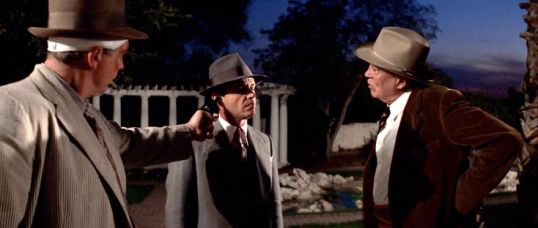
Chinatown (1974, dir by Roman Polanski, DP: John A. Alonzo)
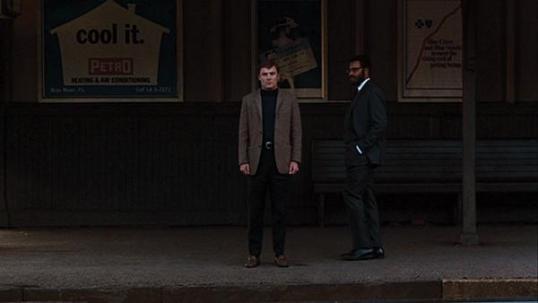
Marathon Man (1976, dir by John Schlesinger, DP: Conrad Hall)
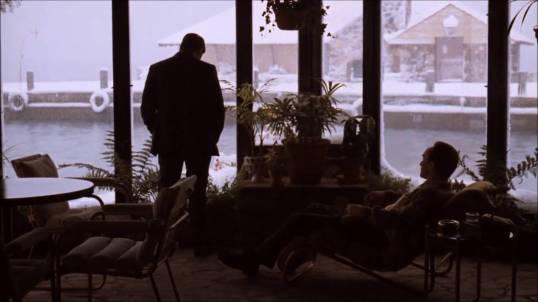
The Cotton Club (1984, dir by Francis Ford Coppola, DP: Stephen Goldblatt)
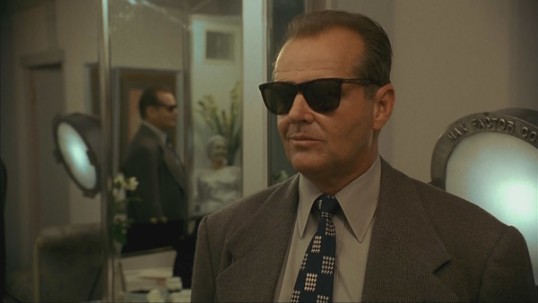
The Two Jakes (1990, dir by Jack Nicholson, DP: Vilmos Zsigmond)
Sliver (1993, dir by Phillip Noyce, DP: Vilmos Zsigmond)
4 Or More Shots From 4 Or More Films is just what it says it is, 4 shots from 4 of our favorite films. As opposed to the reviews and recaps that we usually post, 4 Shots From 4 Films lets the visuals do the talking!
Today the Shattered Lens celebrates what would have been the 95th birthday of the great cinematographer, Gordon Willis. Willis was the master of using shadow and underexposed film to create some of the most haunting movie images of the 70s and 80s. He was also one of the first cinematographers to take advantage of the so-called “magic hour,” that moment when the sun is setting and everything is bathed in a golden glow. Today, everyone does that but Willis was the first.
Willis has often been cited as one of the most influential cinematographers of all time but, amazingly, Willis would receive only two Academy Award nominations (for Zelig and The Godfather Part III) and he would never win a competitive Oscar.
In memory of Gordon Willis, here are….
6 Shots From 6 Gordon Willis Films
End of the Road (1970, dir by Aram Avakian, Cinematography by Gordon Willis)
The Godfather (1972, dir by Francis Ford Coppola, Cinematography by Gordon Willis)
The Parallax View (1974, dir by Alan J. Pakula, Cinematography by Gordon Willis)
The Godfather Part II (dir by Francis Ford Coppola, Cinematography by Gordon Willis)
All The President’s Men (1976, dir by Alan J. Pakula, Cinematography by Gordon Willis)
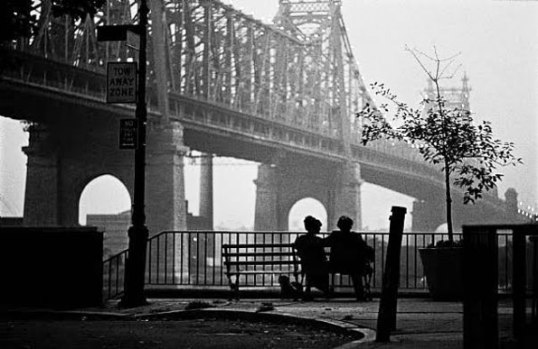
Manhattan (1979, dir by Woody Allen, Cinematography by Gordon Willis)
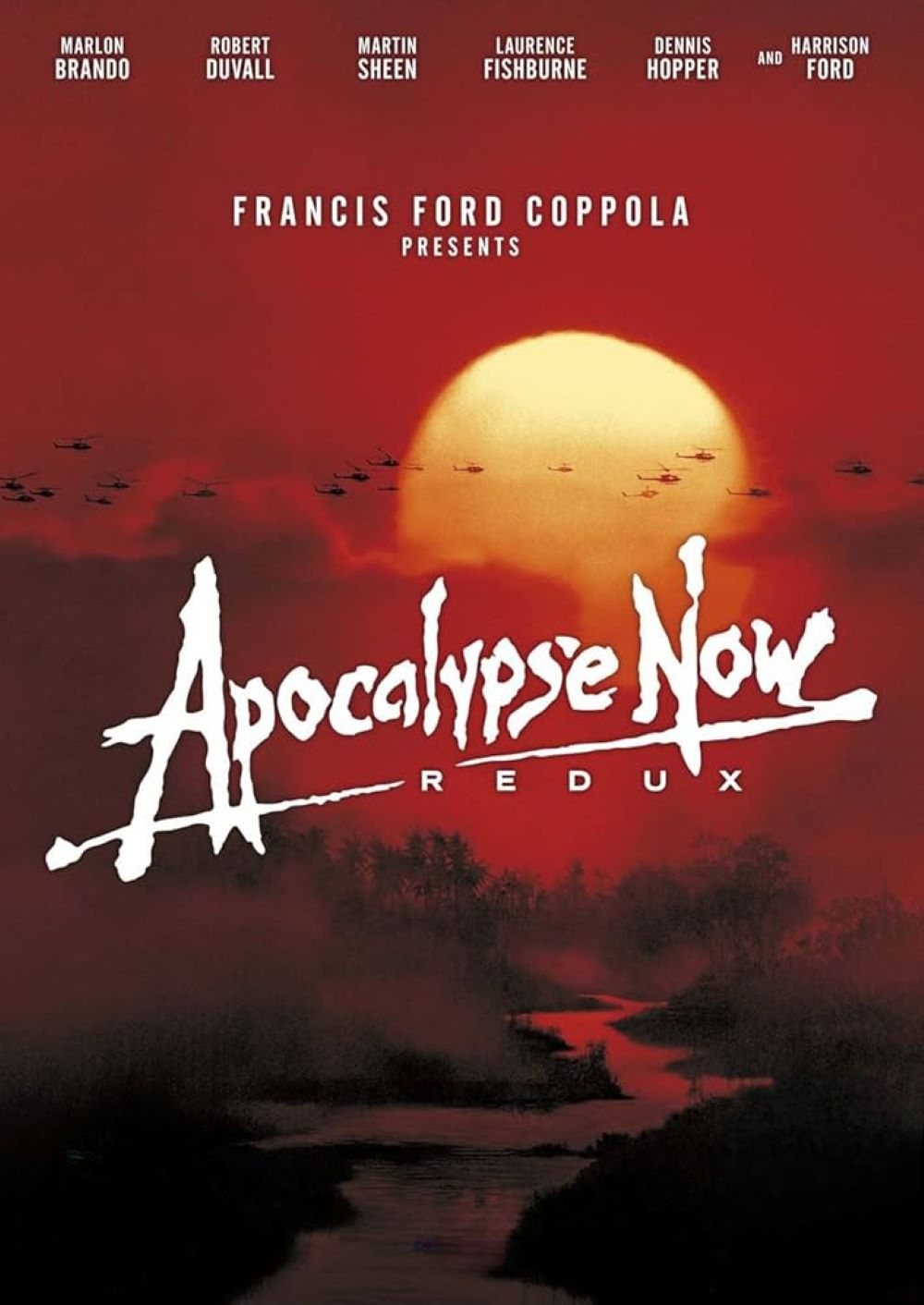
There is a specific kind of cinematic fever dream that only war, isolation, and a touch of madness can produce, and Francis Ford Coppola’s Apocalypse Now remains its gold standard. Co-written by Coppola and John Milius (the latter a colorful, larger-than-life figure in 1970s Hollywood), the film’s screenplay originally leaned harder into Milius’s romantic vision of martial will before Coppola reshaped it into something more hallucinatory and morally ambiguous. When we talk about the Redux version, released in 2001, twenty-two years after the original, we are not just revisiting that fever dream; we are plunging back into an even more hallucinatory, bloated, and revealing cut of the material.
At over three hours and twenty minutes, Apocalypse Now Redux is both a gift and a test of endurance. For those who only know the theatrical cut, this version feels less like a director’s tweak and more like unearthing a lost, more indulgent diary entry from Coppola’s own heart of darkness. The core remains the same: Captain Benjamin Willard (Martin Sheen), a morally hollowed-out assassin, is sent upriver during the Vietnam War to terminate Colonel Walter Kurtz (Marlon Brando), a once-brilliant Green Beret who has gone rogue and set himself up as a demi-god in the Cambodian jungle. The structure is a loose but unmistakable adaptation of Joseph Conrad’s classic 1899 novella Heart of Darkness, transposing Conrad’s grim critique of Belgian colonialism onto America’s own imperial overreach in Southeast Asia. Conrad’s journey up the Congo River becomes the Navy patrol boat’s crawl up the Nùng River, with each stop revealing a new layer of absurdity, violence, and spiritual decay.
The most immediate thing to address is what Redux adds, because those additions fundamentally alter the rhythm of the film. The theatrical cut is a lean, relentless descent. Redux is a meandering, hypnotic, and sometimes frustratingly pensive journey. Several major extended sequences distinguish this cut from the original. The first involves the Playboy Playmates. In the theatrical cut, we see them briefly at a chaotic USO show. In Redux, we get an extended sequence where Willard’s crew trades a canister of fuel for two hours with the stranded bunnies after their helicopter runs low on fuel. Later comes the brutal, psychedelic chaos of the Do Lung Bridge, which is extended in Redux to emphasize the utter breakdown of command and reality. And finally, deep in the journey, after surviving a tiger attack, Willard and the crew stumble upon the French rubber plantation, where a family of colonial planters refuses to leave their dying world. Each of these sequences grinds the forward momentum in different ways—the bunnies through desperate transaction, the bridge through absurd chaos, the plantation through nostalgic rot.
But to truly appreciate what Coppola is doing in Redux, you have to stop thinking of the Nùng River as a simple journey and start seeing it as a vertical descent—a layered, infernal funnel where each stop corresponds to a different circle of moral decay, much like the structure of Dante Alighieri’s Inferno, the first part of his epic narrative poem The Divine Comedy. The patrol boat is not just transport; it is a cramped, filthy ferry crossing the River Styx, and the further Willard and his crew go, the thinner the veil between civilization and savagery becomes. The Redux version, with its extended sequences, actually sharpens this Dantesque geometry rather than diluting it, because each added stop becomes another hellish layer, another specific flavor of corruption rotting under the jungle canopy. And importantly, the order of these stops tells a specific story of descent. Willard first encounters raw, commodified desire at the USO show, then plunges into the absurd mechanical chaos of the Do Lung Bridge, and finally drifts into the refined, decaying nostalgia of the French plantation—each circle deeper, stranger, and more spiritually corrosive than the last.
Consider the first major stop after leaving the relative order of the Delta: the extended Playboy Playmate sequence. In Dante’s Inferno, the early circles punish the lustful and the gluttonous—sins of appetite and passion that still acknowledge desire, however distorted. This stop is the hell of commodified desire, and it functions as the upper circle of Redux’s inferno. The bunnies are not seductresses; they are air-dropped promises of home, stranded and forced to barter their presence for fuel. The crew’s transaction—a canister of gas for two hours of the bunnies’ company—is transactional depravity laid bare. There is nothing refined here. The soldiers who swarm the boat are not conquering heroes; they are starving ghosts pawing at a mirage of femininity. The corruption is the commodification of intimacy, the way the war machine grinds up even fantasy into a trade good. In Dante’s Inferno, the lustful are eternally swept by winds, never at rest. Here, the winds are helicopter rotors, and no one finds peace. This stop still has energy, still has motion—it is desperate, ugly, and pathetic, but not yet defeated. It is the first circle: sin as transaction.
Further upriver, deeper into the jungle, you hit the second major stop in Redux’s order: the Do Lung Bridge. In Dante’s structure, the middle and lower circles punish the violent, the fraudulent, and the sowers of discord—those whose sins actively tear apart the fabric of order. The bridge is a sustained vision of the eighth circle—the Malebolge, the evil ditches of the fraudulent. This is the hell of absurd, endless combat, and it sits far below the bunnies’ desperate lust because it has abandoned desire altogether. The bridge is supposed to be a strategic point, but no one in command knows who is fighting whom or even which side holds which trench. Soldiers fire blindly into the dark; engineers build and rebuild sections of bridge that are destroyed every night by an invisible enemy. The wounded groan, a psychedelic light show of flares and tracers turns the sky into a flickering carnival of death, and a dazed soldier informs Willard that this place has been “crazy” for days. There is no front line, no objective, only endless, repetitive, pointless construction and destruction. The corruption here is systemic: the war has become an autopilot nightmare where violence generates nothing but more violence. Unlike the bunnies, who still want something, the soldiers at the bridge don’t even know what they are doing anymore. They simply perform the same broken task for eternity. Willard’s only reaction is a numb observation that he should inform his superiors, but he never will. The bridge is the point where any remaining belief in order or purpose dissolves into white noise. It is the second circle: sin as automation.
Then, after the bridge’s chaos, the crew drifts into the third major stop: the French rubber plantation. In Dante’s Inferno, the deepest circles before the frozen center punish heresy and treachery—sins of the intellect and will, where belief becomes a cage. The plantation functions exactly like this. It is the hell of nostalgia and colonial rot, a step deeper than the bridge’s chaos because it has calcified into ideology. After the raw transaction of the bunnies and the absurd violence of the bridge, the crew stumbles upon a walled pocket of denial. Here, the French family sips wine, argues geopolitics, and pretends the war is a tragic inconvenience rather than a total collapse. This is the hell of the static dead—people who refuse to acknowledge that their world has already ended. The rubber trees themselves, planted in neat, tyrannical rows, symbolize extractive cruelty made mundane. Willard sleeps with a widowed French woman, a moment of hollow lust that feels more like a funeral rite than passion. The corruption here is polite, intellectual, and almost seductive—but it is still decay wearing a starched shirt. Unlike the bunnies’ squalid desperation, the plantation has manners. Unlike the bridge’s chaotic noise, the plantation has quiet arguments. That makes it more insidious, and therefore deeper in the infernal funnel. This is the third circle: sin as denial.
By the time Willard finally reaches Kurtz’s compound, he has descended past all these preparatory circles into the ninth and final circle of Dante’s Inferno—Cocytus, the frozen lake of treachery, where Satan himself is trapped in ice. Kurtz is no longer a man but a fixed point of absolute darkness. His compound is a Cambodian nightmare of severed heads, pagan rituals, and whispered monologues. Unlike the bunnies’ desperate transaction, the bridge’s absurd chaos, or the plantation’s nostalgic denial, Kurtz’s hell is complete stillness. He has murdered and been worshipped for it. He has rejected every prior layer—commerce, command, colonialism—and arrived at a nihilistic truth: that horror is the only moral absolute. Willard’s task is not to understand Kurtz but to kill him, and in doing so, to become him. That is the final descent: not into fire, but into the ice of total moral withdrawal. The Redux version emphasizes this by making Kurtz more verbose but also more inert. He is trapped not by chains, but by his own unbearable clarity. The three stops before him—the bunnies, the bridge, the plantation—are all failed attempts to build meaning in the jungle. Kurtz is the place where meaning dies entirely.
What remains unchanged, across both cuts, is the technical majesty. Vittorio Storaro’s cinematography still haunts the soul. The opening shot—a napalm-blasted jungle dissolving into the slow rotation of a ceiling fan in a Saigon hotel room, with The Doors’ “The End” whispering over the soundtrack—is one of the great tone-setters in cinema history. The Redux cut luxuriates in these images even longer, letting the heat and humidity seep through the screen. The attack on a Vietnamese sampan, where an innocent family is slaughtered in a burst of trigger-happy panic, remains devastating. Laurence Fishburne’s young, wide-eyed Clean, Dennis Hopper’s jittery, sycophantic photojournalist (a role that feels like pure id), and Robert Duvall’s iconic Lieutenant Colonel Kilgore, who loves the smell of napalm in the morning, all deliver performances that feel less like acting and more like channeling. Duvall’s surf-obsessed madman is even more absurdly perfect in Redux because the added length makes his brief screentime feel like a welcome blast of cold air before the suffocating final act.
Which brings us back to Marlon Brando as Kurtz. Here is where Redux both helps and hurts. The theatrical cut gives Kurtz a mythic, almost abstract presence—shadowy, whispering, half-sculpted. Brando showed up overweight and unprepared, so Coppola shot him mostly in shadow. In Redux, those shadows remain, but the added material includes a longer, more discursive monologue where Kurtz reads from a Time magazine article about the war and rambles about the horror of administering lethal injections to polio-stricken villagers. It is more Brando, which is never nothing, but it also demystifies the monster. The terror of Kurtz in the original cut is that he is an idea, a reflection of Willard’s own potential. In Redux, he becomes a sweaty, slightly boring philosopher. The famous “the horror, the horror” death scene still lands, but getting there feels like you have already been swimming in his rhetoric for too long. The added footage makes Kurtz more human but less terrifying, which may or may not be an improvement depending on your tolerance for Brando’s mumbling.
The casual viewer might find Redux interminable. Let’s be honest: three and a half hours of madness, helicopters, and nihilism is a lot. There are stretches in the plantation sequence where you might check your phone. The pacing is deliberately, almost arrogantly slow. Coppola is not trying to entertain you; he is trying to drown you. And in those moments of slog—when the French family drones on about geopolitics, when the bunnies’ desperation overstays its welcome, when the bridge’s chaos becomes repetitive rather than shocking—you might be tempted to declare the whole Redux experiment a failure. But here is the uncomfortable truth that separates Apocalypse Now Redux from mere indulgent director’s cuts: the film’s occasional sluggishness, its bloated digressions, its refusal to maintain a clean narrative spine, are not flaws so much as they are the correct representation of the very thing the film’s themes and narrative ideas were trying to explore. This is a movie about a journey into moral rot, about the collapse of linear purpose into circular nightmare, about men who have stared too long into the abyss and lost the ability to tell a clean story. Why should the film itself be clean? The theatrical cut is a masterpiece of compression, yes—but compression is an act of control, and Apocalypse Now is ultimately about the loss of control. The Redux version, for all its unevenness, is the more honest artifact because it refuses to polish the madness into neat dramatic beats. The original film is a nightmare you cannot wake from; Redux is the insomnia that precedes it, the sweaty, bored, terrifying awareness that there is no ending, only more jungle.
This is why, despite its longer running time and the areas where the pacing sometimes slogs through, the film overall succeeds as not just a fever dream of the filmmaker, writers, and actors who survived its legendary production—the typhoons, the heart attacks, Brando’s chaos, Sheen’s breakdown—but as the correct representation of the very thing the film’s themes and narrative ideas were trying to explore. Apocalypse Now is about the impossibility of remaining sane in an insane environment. The Redux cut, by refusing to be efficiently sane, becomes a more immersive simulation of that condition. The theatrical cut tells you about the horror; the Redux cut makes you live inside its tedious, exhausting, occasionally boring reality. And boredom is part of horror, too—the long stretches between atrocities, the waiting, the pointless arguments, the nights that won’t end. Coppola, Milius, Sheen, Brando, and everyone else who survived the Philippines shoot did not emerge with a clean story. They emerged with scars, footage, and a kind of shell-shocked awe. The Redux version honors that survival by refusing to pretend the experience was anything other than a mess. It is the director’s cut as wound, not as polish.
For the obsessive, for those who want to see the entire messy, unfinished vision behind one of the great artistic catastrophes (the documentary Hearts of Darkness is essential companion viewing), Redux is invaluable. It reveals that the original 1979 cut was a miracle of editing—a salvage job that turned a troubled production into a masterpiece. Redux is the rough draft of that miracle. It has a bloated, novelistic quality, more concerned with atmosphere than narrative efficiency. As a loose adaptation of Heart of Darkness, it is oddly more faithful than the original cut—because Conrad’s novella is also meandering, digressive, and filled with colonial asides that do not advance the plot. But faithfulness is not the same as greatness.
The Redux version is a flawed, overstuffed, hypnotic masterpiece that sometimes trips over its own ambition. It earns its runtime not through tight storytelling, but through sheer, oppressive mood. And in the end, that is the point. You are not supposed to leave Apocalypse Now feeling satisfied. You are supposed to leave feeling like you have stared into something ancient and ugly. The Redux version just makes you stare longer, dragging you down through each Dantesque circle—from the desperate, transactional depravity of the Playboy bunnies, through the absurd, autopilot chaos of the Do Lung Bridge, past the polite, rotting nostalgia of the French plantation, and finally into the frozen stillness of Kurtz’s compound—until there is nothing left but the ice and the horror. And in those moments when the film slows to a crawl, when you check your watch and wonder why we are still at the plantation, that is not a failure of art. That is the art itself, reminding you that hell is not a nonstop carnival of screams. Hell is also a long, boring dinner with people who refuse to die. Whether that is luxury or punishment is for you to decide. But Apocalypse Now Redux succeeds precisely because it trusts you to sit with that discomfort and recognize it for what it is: the truth.
“The mind of man is capable of anything.” — Charles Marlow
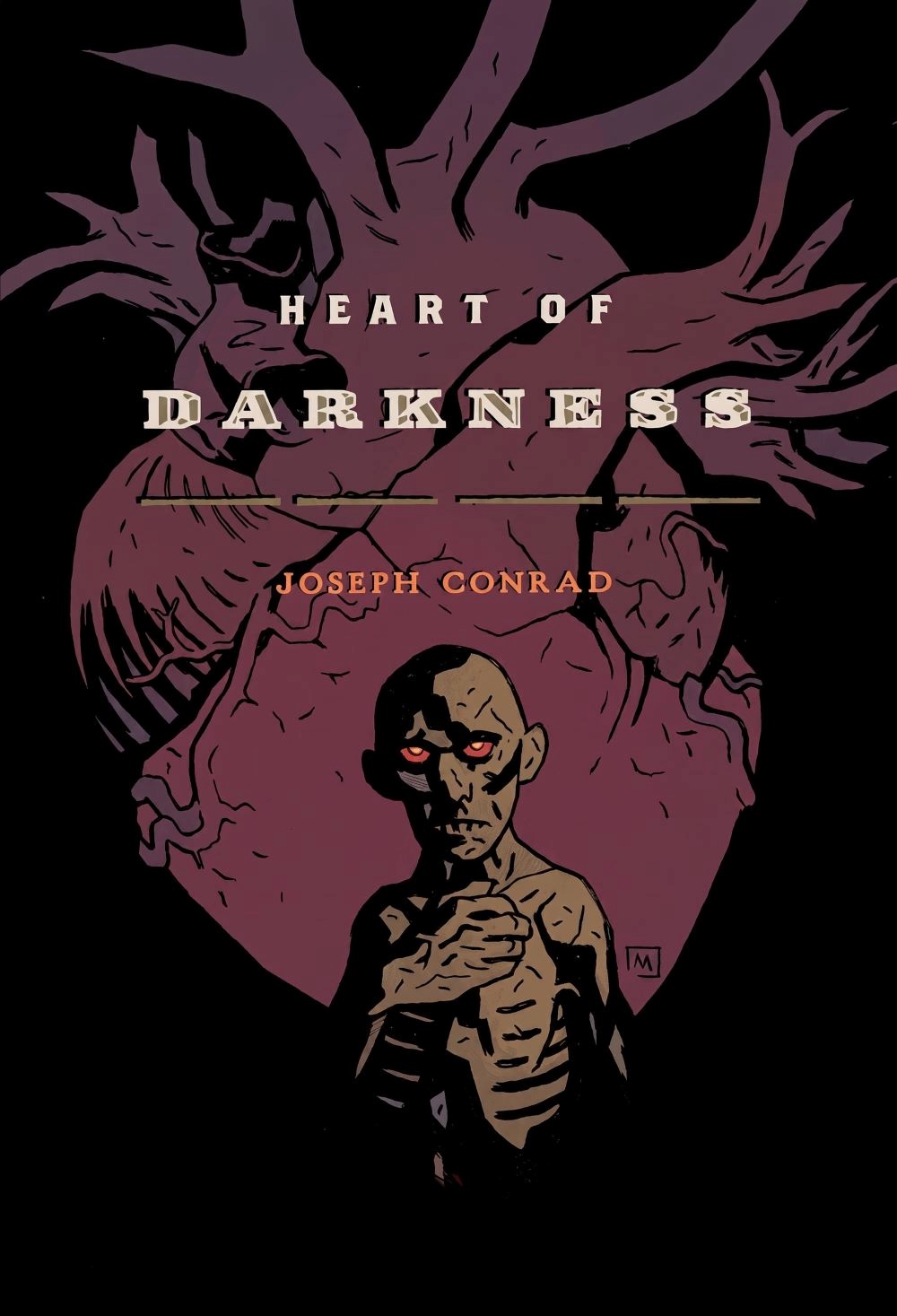
There’s a strange, magnetic pull to Joseph Conrad’s Heart of Darkness that keeps readers coming back, even when the book itself seems determined to repel you. Published in 1899, this novella is often taught as a classic of colonial critique, but spending time with it feels less like a lecture and more like a slow, feverish drift up a murky river. The plot is deceptively simple: a British sailor named Marlow takes a job piloting a steamboat for an ivory trading company in the Belgian Congo. His real mission, however, is to find Kurtz, a charismatic, brilliant agent who has supposedly gone mad and set himself up as a god among the natives. What Marlow finds instead is a hollow man whose final whisper—“The horror! The horror!”—becomes one of literature’s most chilling epitaphs.
Conrad’s prose is dense and atmospheric, almost claustrophobic. He writes in long, looping sentences that circle back on themselves, mimicking the tangled jungle and Marlow’s own spiraling psyche. You don’t read this novella so much as wade through it, feeling the heat, the flies, and the creeping sense of moral decay. The frame narrative—Marlow telling his story to a group of sailors on the Thames—adds a layer of ironic distance. London, the heart of empire, is presented as another kind of darkness, a civilized wilderness that has simply learned to hide its savagery behind suits and ledgers. This structural choice is brilliant because it forces you to ask: is the “darkness” really in Africa, or is it something Europe shipped downriver?
That said, any honest review has to address the elephant in the room: the book’s treatment of race. For decades, the Nigerian writer and critic Chinua Achebe has mounted the most devastating case against Heart of Darkness. In his landmark 1975 lecture “An Image of Africa: Racism in Conrad’s Heart of Darkness,” Achebe argues that Conrad, despite ostensibly critiquing Belgian colonialism, produced a work that is fundamentally racist—a piece of literature born directly from the imperial colonial era and its dehumanizing ideologies. Achebe’s point is sharp and uncomfortable: the novella seeks to expose the dangers and horrors of imperialism, yet it simultaneously perpetuates the very racist ideas it should be dismantling. Conrad denies nearly every African character a name, a voice, or an interior life. They appear as limbs, grunts, or “savages” performing ominous rituals on the shore. Africa itself is reduced to “a place of darkness,” “the prehistoric earth,” and a blank space on the map waiting for European meaning. The sole exception is a well-dressed native man who works as a cook—and even he is reduced to a clumsy, almost comic figure. Marlow is more disturbed by the sight of “improper” cannibals restraining themselves than he is by the company’s brutal exploitation.
Achebe’s critique cuts to the bone: Conrad may have hated the cruelty of colonialism, but he couldn’t imagine Africans as fully human. He traded one set of stereotypes for another, offering a critique of empire that remains trapped inside empire’s own racial logic. You can argue that Conrad is exposing racism by showing Marlow’s limited perspective, but the text gives us no alternative viewpoint. The Congolese remain scenery for a white man’s existential crisis. That’s not just dated; it’s a structural flaw that makes the book feel less like a universal tragedy and more like a monologue delivered in a vacuum—and, as Achebe famously wrote, “a book which parades in the most vulgar fashion prejudices and insults from which a section of mankind has suffered untold agonies and atrocities should not be called a great work of art.” So while the novella wants to critique colonial violence, it cannot see the violence of its own representational strategies. The very language Conrad uses to evoke horror—the “savage” drums, the “prehistoric” shores—ends up reinforcing the racist hierarchies he pretends to question. Overt insults mix with subtle, almost unconscious dehumanization, creating a text that is as morally compromised as the ivory traders it condemns.
Where Heart of Darkness still stings is in its psychological precision, even as Achebe’s critique complicates any easy admiration. Kurtz is a masterpiece of ambiguity: a poet, a painter, a journalist who wrote a report on “civilizing” the natives, only to scribble at the bottom, “Exterminate all the brutes!” He represents the lie at the core of imperialism—the idea that Europe brings light to darkness, when in fact it brings greed, violence, and an insatiable hunger for ivory. The novella’s real horror isn’t the jungle or the cannibals; it’s how easily a man with noble ideals can become a skull-decorating tyrant. Conrad, who himself worked in the Congo, understood that the heart of darkness is not a place but a capacity we all carry. Yet Achebe would counter that this “we” is tellingly selective—the capacity for darkness is explored in Kurtz and Marlow, while actual African people are merely the backdrop against which that darkness is measured.
Despite its flaws—or perhaps because of their uncomfortable rawness—Heart of Darkness has proven enormously influential since its publication. Its DNA can be found in everything from T.S. Eliot’s The Waste Land (which originally quoted Kurtz’s “horror” as an epigraph) to Werner Herzog’s Aguirre, the Wrath of God. But the best and most famous example is Francis Ford Coppola’s 1979 film Apocalypse Now, which transplants the story from colonial Congo to the Vietnam War. Captain Willard stands in for Marlow, and the rogue Colonel Kurtz (famously played by Marlon Brando) becomes the ivory trader’s spiritual twin—a decorated American operative who has set up his own brutal kingdom in the Cambodian jungle. Coppola keeps Conrad’s core structure: a river journey into madness, a whispered report on “unsound methods,” and a final, intimate confrontation with a man who has seen too much. What makes Apocalypse Now such a brilliant adaptation is that it doesn’t just copy the plot; it captures the feverish, hallucinatory tone. The film’s famous line—“I love the smell of napalm in the morning”—echoes Kurtz’s seductive, terrifying embrace of violence. By updating the setting, Coppola proved that Heart of Darkness was never really about the Congo. It was about the darkness any empire carries inside itself. Yet even here, Achebe’s shadow lingers: the film, like the novella, largely sidelines the Vietnamese and Cambodian people, turning them into anonymous threats or scenery for an American psychodrama.
So, is this a book you should read? Yes, but with caution and critical awareness. It’s short—under 40,000 words—but it’s not an easy afternoon’s entertainment. Read it alongside Achebe’s essay “An Image of Africa” or a historical account of Leopold II’s atrocities. Treat Marlow as an unreliable narrator, not a prophet, and recognize that Conrad’s attempt to critique empire is fatally compromised by the very racial imagination he never managed to escape. The prose can be maddeningly vague, and the pacing sometimes stalls under the weight of its own symbolism. Yet for all its flaws, Heart of Darkness refuses to fade away, in part because artists from Conrad to Coppola keep finding new horrors to pour into its shape, and in part because critics like Achebe force us to read it honestly—as both a searing study of evil and an uncomfortable document of that same evil’s persistence. It’s a mirror held up to the worst of us, and whether you see a portrait of colonialism, a study of madness, a racist artifact, or all three at once, you won’t forget what stares back.
4 (or more) Shots From 4 (or more) Films is just what it says it is, 4 (or more) shots from 4 (or more) of our favorite films. As opposed to the reviews and recaps that we usually post, 4 (or more) Shots From 4 (or more) Films lets the visuals do the talking.
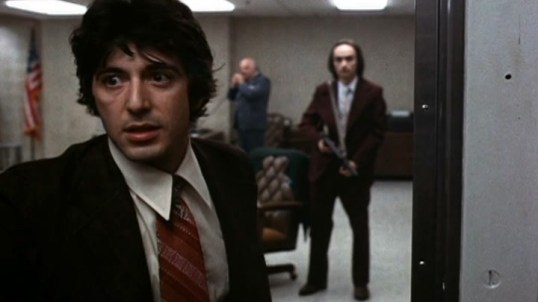
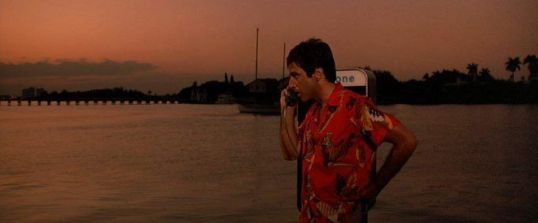
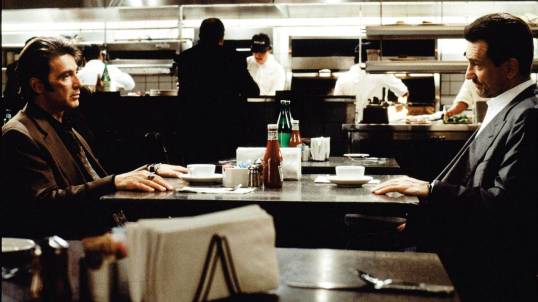
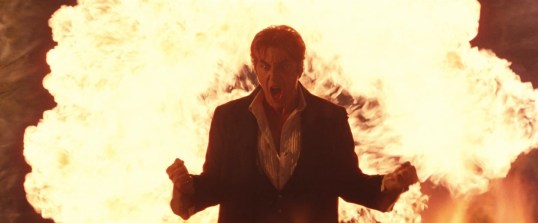
It’s Al Pacino’s birthday!
In others words, it’s time for….
6 Shots From 6 Al Pacino Films
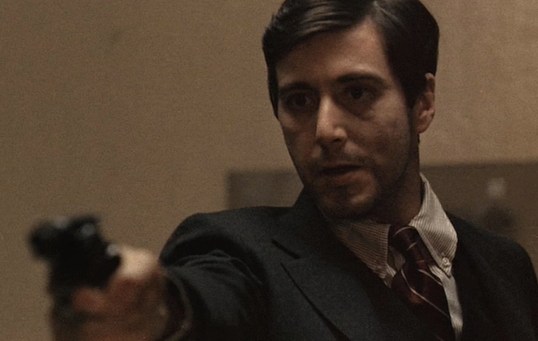
The Godfather (1972, dir by Francis Ford Coppola, DP: Gordon Willis)
Dog Day Afternoon (1975, dir by Sidney Lumet, DP: Victor J. Kemper)
Scarface (1983, dir by Brian DePalma, DP: John A. Alonzo)
Heat (1995, dir by Michael Mann, DP: Dante Spinotti)
The Devil’s Advocate (1997, dir by Taylor Hackford, DP: Andrzej Bartkowiak)
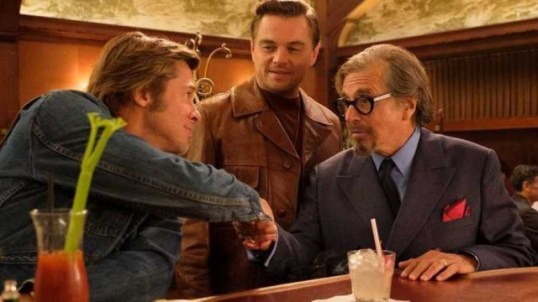
Once Upon A Time In Hollywood (2019, dir by Quentin Tarantino, DP: Robert Richardson)
Today, the Shattered Lens celebrates the 82nd birthday of the iconic screenwriter and director, John Milius!
While director Francis Ford Coppola definitely put his own stamp on 1979’s Apocalypse Now, the film started life as a script written by John Milius and the film itself is full of dialogue that could only have been written by Milius. The most famous example is Robert Duvall’s monologue about the smell of napalm in the morning. Actually, the entire helicopter attack feels like pure Milius. Reportedly, Duvall’s character was originally named Colonel Kharnage but, by the time the movie was made, his name had become Kilgore. It’s still not exactly a subtle name but it’s not quite as obvious as Kharnage.
(When James Caan read the script, he loved the role so much that he was offended to not be offered it and, as a result, he turned down offers to play not only Willard but also Kurtz.)
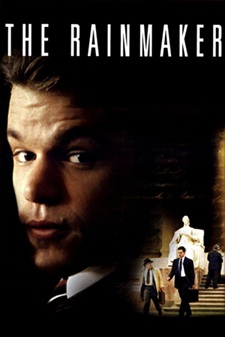
Rudy Baylor (Matt Damon) is an idealistic young law school graduate who discovers that having a degree and passing the bar doesn’t automatically make you a success. He gets a job working a bar that just happens to be owned by an ambulance chasing attorney named Bruiser Stone (Mickey Rourke). Bruiser takes Rudy on as an associate and assigns his associate, Deck Shifflet (Danny DeVito), to teach Rudy how to find cases. When Bruiser flees the country to escape an FBI investigation, Rudy and Deck start their own law firm. Rudy soon finds himself with the case of his young career, representing a family in a law suit against Great Benefit Insurance. Rudy also falls for Kelly (Claire Danes), a young woman who is being abused by her husband (Andrew Shue).
It can be hard to believe today but, in the 90s, every John Grisham novel was adapted for the screen. Most of the adaptations weren’t very good but audiences ate them up. In many ways, The Rainmaker is the ultimate John Grisham adaptation because it contains every single trope that John Grisham made popular with his legal thrillers. This time, Matt Damon is the charismatic attorney. Roy Scheider is the soulless corporate CEO who needs to be brought down. Jon Voight is the intimidating opposing counsel. Danny DeVito is the eccentric comic relief and Mickey Rourke is the dues ex machina who returns to the movie to give Rudy a piece of information at the exact right moment. The appeal of Grisham is that he made readers (and eventually moviegoers) feel like insiders while presenting them with stories that were essentially very simple good vs evil morality tales. The insurance company is so cartoonishly evil that there’s no doubt Rudy is going to defeat them. There’s also no doubt that Rudy is going to find a better calling than ambulance chasing because the only thing that people hate more than insurance companies is lawyers.
The Rainmaker is never as complex as it pretends to be but it’s an entertaining legal movie. It was also director Francis Ford Coppola’s last big hit. It’s really more of a Grisham film than a Coppola film but Coppola’s influence is still felt in the almost uniformly excellent cast. (Ignore Andrew Shue if you can. Melrose Place was very popular in the 90s.) Damon, Danes, Rourke, Voight, Dean Stockwell, Danny Glover, Teresa Wright, Virginia Madsen, and Mary Kay Place all give memorable performances. Roy Scheider is loathsome as the sweater-wearing CEO. Best of all is Danny DeVito, who gets all of the best lines.
The Rainmaker was the best of the 1990s Grisham adaptations. While it’s not quite a masterpiece, it’s still emotionally very satisfying.