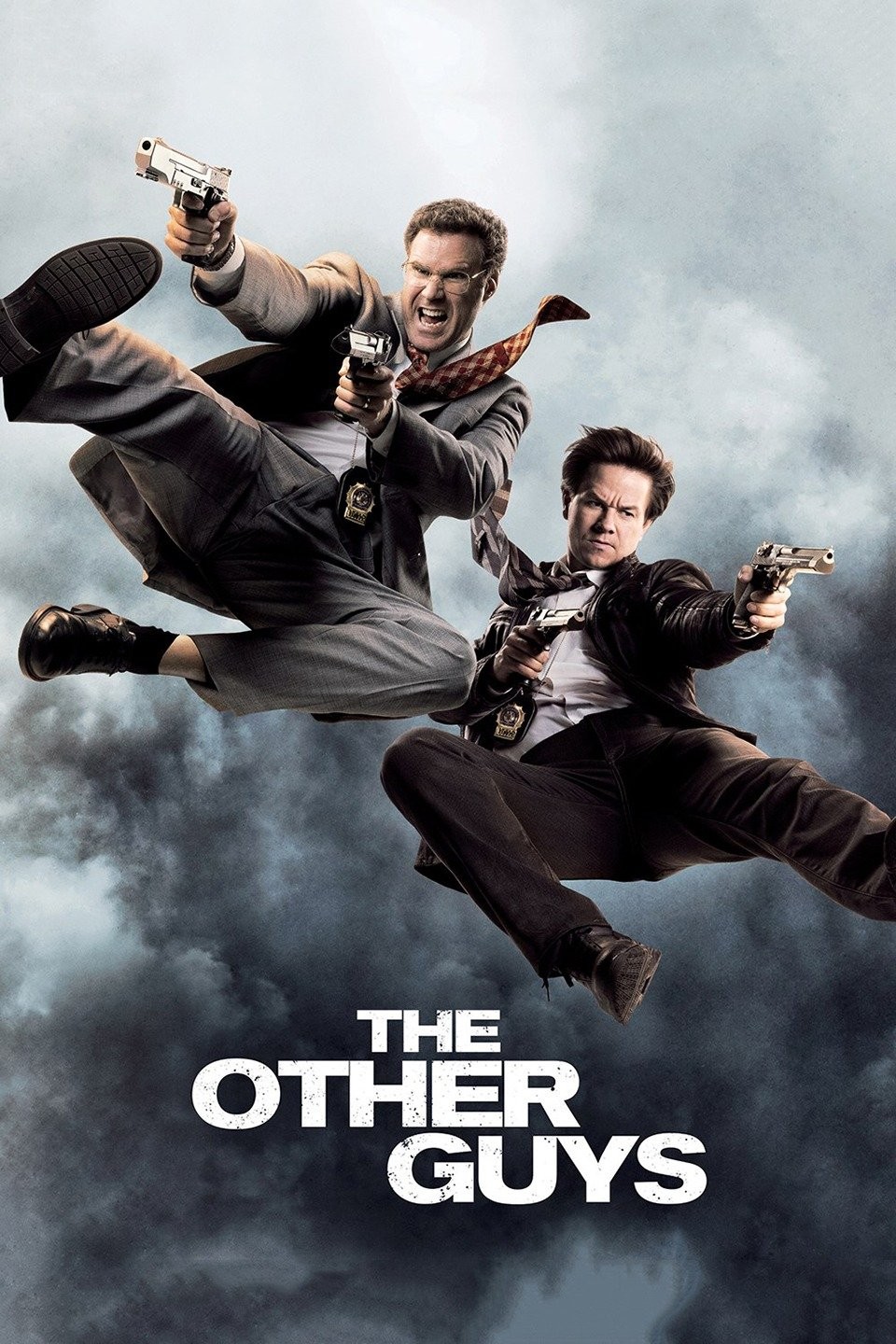
Review: The Other Guys (dir. by Adam McKay)


“We are gonna have sex in your car. It will happen again!” — Dirty Mike

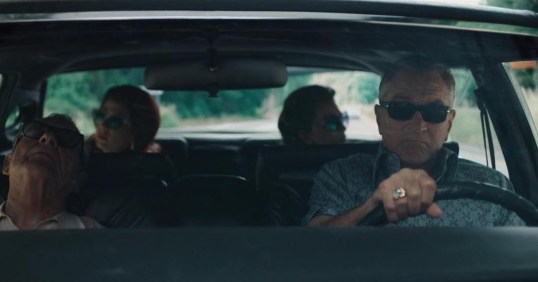
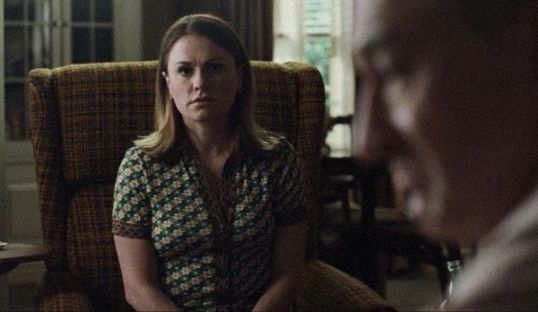
Adam McKay’s The Other Guys feels like the moment a class clown who is secretly a genius finally snaps and decides to teach the entire school a lesson while making them laugh so hard they forget they’re being educated. Released in 2010, the film lands right in that sweet spot of McKay’s career where he was pivoting away from the pure, unhinged mania of Anchorman and Step Brothers and starting to smuggle razor-sharp satire into the multiplex under a mountain of stupidity. It is, without a doubt, one of the funniest movies of its decade, but calling it just a comedy feels like a disservice. It’s a buddy cop movie that hates the irresponsibility of buddy cop movies, a financial crisis explainer disguised as a screamo TLC tribute, and a showcase for two lead performances that should have spawned at least three sequels. If you’ve somehow managed to sleep on this one, it’s time to fix that.

The opening sequence is a masterclass in bait-and-switch. We are introduced to Danson and Highsmith, the city’s top cops, played with magnificent, self-serious swagger by Dwayne Johnson and Samuel L. Jackson. They’re chasing down a minor misdemeanor in a way that destroys half of downtown Manhattan, culminating in them heroically jumping off a twenty-story building to land safely in some bushes. Except they don’t. They splatter. It’s a shocking, hilarious, and instantly iconic death scene that serves as McKay’s thesis statement: the action movie logic you’ve been fed for decades is a lethal fantasy. With the heroes dead, the spotlight shifts painfully to the guys who have to do the paperwork on their mangled corpses, forensic accountant Allen Gamble and hot-headed loose cannon Terry Hoitz. These two are, emphatically, the other guys, and when circumstances force them onto a case involving corporate financial fraud, they stumble their way toward something resembling heroism, occasionally despite themselves.

What separates The Other Guys from the pile of mediocre comedy-action hybrids that came before and after it is the chemistry between Ferrell and Wahlberg, which is genuinely one of the more unexpected comedic pairings of that era. Ferrell plays Gamble as a deeply strange man who has weaponized milquetoast passivity into a superpower. His complete, serene contentment with a life of spreadsheets, Grand Theft Auto grand larceny sprees where he obeys all traffic laws, and a suspiciously beautiful wife played by Eva Mendes is a hypnotic thing to watch. Ferrell dials down the bombast and delivers something wonderfully weird and controlled, a man who is simultaneously a complete dork and, as we later discover, a shockingly capable pimp named Gator. Wahlberg, meanwhile, is doing something genuinely interesting here. Terry Hoitz is a walking wound, a great cop reduced to a desk jockey and public mockery for the unforgivable sin of accidentally shooting Derek Jeter during the World Series. He’s angry, humorless, and convinced of his own greatness despite ample evidence to the contrary. Wahlberg plays him completely straight, which is the exact right call, because his deadpan bewilderment at Ferrell’s behavior, the way his voice cracks with desperate, shrill anger when trying to explain a normal scenario, ends up being funnier than almost anything else in the film. Their chemistry is a perfect storm of a guy who wants to live inside a peaceful spreadsheet and a guy who wants to set that spreadsheet on fire while learning to dance the sardine.

This is the kind of comedy where the supporting cast keeps piling on gloriously unhinged performances, which makes Ray Stevenson’s work as the heavy all the more valuable. As Roger Wesley, the corporate enforcer who does the violent bidding of Steve Coogan’s billionaire fraudster, Stevenson operates in a completely different register from everyone else. While Ferrell is weaponizing passive-aggressive politeness, Wahlberg is screaming about peacocks, and Michael Keaton is unconsciously quoting Waterfalls while running a police precinct, Stevenson remains a granite slab of menace. He doesn’t crack jokes, he doesn’t do double-takes, and he certainly doesn’t care about the absurdity swirling around him. There’s something almost old-fashioned about his screen presence here, a grim, heavy-lidded seriousness that makes him feel like he wandered in from a real crime thriller and simply refused to leave. It’s the kind of straight-man performance that doesn’t just anchor the chaos; it makes the chaos funnier by contrast. When he’s methodically hunting down loose ends while Ferrell and Wahlberg are bickering about whether a lion could beat a tuna in open ocean, the collision of tones is pure McKay alchemy.

The plot, such as it is, involves the duo stumbling onto a massive white-collar crime conspiracy led by a billionaire played with smarmy, cowardly glee by Steve Coogan. It’s here that McKay’s deeper ambitions start to peek through the absurdity. While Terry is desperate for a classic action-movie shootout and car chase, the investigation leads them to the Lendl Global offices, where the real villainy isn’t drug lords or terrorists but leveraged buyouts and pension fund looting. There’s a perfect running gag where they keep trying to get into the action, preparing for a massive gunfight against a team of mercenaries, only to find that the corrupt corporate security detail is made up of ex-cops just looking to quietly retire with their benefits. It is the funniest anti-climax, a deliberate denial of violence that reinforces the film’s core idea that the most dangerous criminals wear suits, not ski masks. The financial villain is a thinly veiled stand-in for the kind of Wall Street grift that was very much in the cultural conversation in 2010, just a couple of years after the financial crisis. McKay would later go much deeper on that territory with The Big Short, but the seeds of that interest are planted all over this film.

The comedy in The Other Guys operates on two distinct but equally brilliant levels. There is the surface-level absurdity, the kind that produces quotes like “I’m a peacock, you gotta let me fly!” and the quiet, steady domination of Gamble’s totemic Prius, which somehow survives a fireball helicopter crash without a scratch. The “aim for the bushes” jump, the lion versus tuna debate that Hoitz treats with theological gravity, and the wooden gun gifted to Gamble are all top-tier ridiculousness. Then there is the deeper, more surreal well of humor that feels distinctly McKay. The entire subplot of Gamble’s past as a college pimp named Gator is a work of deranged genius, a slow-motion, honey-dripped flashback that reveals a world of casual, elegant pimping that Ferrell plays with a straight face so absolute it circles back around to being terrifyingly cool. The relentless jokes about Gamble unknowingly marrying way out of his league, his genuine confusion over why people think Eva Mendes is attractive, is a running gag that beautifully plays on Ferrell’s ability to be completely oblivious to the reality surrounding him. Eva Mendes is admittedly underused, though the film at least has fun with the joke by leaning into Wahlberg’s incredulous reaction every time she appears, which never gets old.

Visually, the film has a blandly competent sheen that actually works in its favor. Unlike the frattish haze of Anchorman, here McKay is directing a movie that looks like a real cop film, which makes the eruptions of insanity even more jarring. The action sequences are staged with real competence. The car chases aren’t played as joke sequences; they’re genuinely well-staged, particularly the Prius chase midway through where Gamble’s calm, methodical driving commentary clashes with a panicking Hoitz. It’s legitimately exciting before it goes completely off the rails in the best way. McKay never lets the plot drag even when the jokes need room to breathe. By this point in his career he’d clearly figured out the right pace for this kind of thing, and it shows. The movie moves. The film also showcases Michael Keaton in a delightful supporting role as Captain Gene Mauch, a cop who unconsciously works a second job at Bed Bath & Beyond while peppering his police work with retail slogans. Keaton’s deadpan delivery of lines about TLC references and towel specials, only to shout the chorus of Waterfalls at a moment of high tension, is a thing of beauty. Every single one of his scenes is a gift. It’s a running joke that never explains itself, and it’s all the better for it.

Then there is the ending. For a film that spends nearly two hours being aggressively stupid-smart, the final moments make a radical pivot. As the bad guy is caught, the movie doesn’t just roll credits. It stops dead and turns into a miniature economics lecture. With animated infographics and hard statistics, McKay lays out exactly how Ponzi schemes, bailouts, and income inequality have shattered the American middle class, all while the Rage Against the Machine cover of Maggie’s Farm thrashes on the soundtrack. It’s a jarring, preachy, and completely unexpected move. On first viewing, it feels like the director violently smashing the emergency brake on the comedy train. But in hindsight, it’s the only honest way this movie could end. McKay isn’t just telling us that bank robbers are less dangerous than bankers; he’s stopping us from leaving the theater without understanding the scale of the theft. It doesn’t undermine the fun at all. If anything it adds a layer of purpose that makes the whole thing feel a little more substantial than your average cop spoof. It’s the moment the class clown pulls out a graph showing your student debt will cripple you for life, and somehow, it works because he’s been earning your trust with jokes for the previous hour and a half.

There’s something almost nostalgic about watching a comedy this confident in its own weirdness. The Other Guys arrived at an interesting moment for this kind of movie, when the mid-budget, R-rated studio comedy was still a viable commercial proposition. It made decent money even if it wasn’t a runaway smash, but more importantly, it trusts that you’re going to be on board for a scene where Ferrell and Wahlberg argue about whether they’d rather be a lion or a tuna, and it’s right to trust that. The criticisms are relatively minor. The movie is maybe fifteen minutes too long, and a subplot involving Wahlberg’s ballet background gets introduced and then somewhat dropped. The villain’s scheme, by design, isn’t particularly cinematic, and the film occasionally strains to make the stakes feel real. But these are the kinds of complaints you make about a movie you liked, not a movie you didn’t, and none of them meaningfully dent the overall experience.

More than a decade later, The Other Guys has aged into something of a classic, a revered staple of late-night cable and quotable group chats. It sits at a fascinating crossroads, holding onto the absurdist, quote-heavy DNA of McKay’s earlier work while laying the formal and thematic groundwork for what he would do next with The Big Short and Vice. It proves that the jump from Ron Burgundy to a film about the 2008 housing crisis wasn’t actually that far at all. He just needed Wahlberg to yell a little bit, Ferrell to explain why a lion would still beat a tuna, even in open ocean, and Stevenson to stand in the middle of it all looking like he genuinely wants to murder everyone in the room. Whether you come for the laughs, the surprisingly competent action, or Michael Keaton mumbling TLC lyrics under his breath, you’re going to find something to love. Absolutely worth your time.
Two From Richard Linklater: Blue Moon and Nouvelle Vague


As a Texan who loves movie, I have to say that 2025 will always be a special year for me.  2025 was the year that Richard Linklater, the godfather of modern Texas filmmaking, was responsible for directing two of the best films of the year.

Blue Moon opens with famed American lyricist Lorenz Hart (Ethan Hawke) collapsing in an alley and cursing under his breath as he dies.  The film then flashes back a few weeks to Hart arriving at Sardi’s and waiting for the crowd to arrive from the Broadway premiere of Oklahoma!  Hart is dismissive of Oklahoma!, largely because it’s the product of a collaboration between his former partner, Richard Rodgers (Andrew Scott) and Oscar Hammerstein II (Simon Delaney).  Hart dismisses it as being simplistic, a crowd pleaser with no depth.  But as Hart speaks, it’s easy to see that his disdain has more to do with his own hurt feelings than the actual show.

(That said, he’s still right about Oklahoma!)

Hart talks.  He talks a lot.  Perhaps the simplest way to describe Blue Moon would be to say that it’s a film about one man who won’t stop talking to the people around him.  Bobby Cannavale plays the friendly bartender who has obviously heard all of Hart’s stories before.  Patrick Kennedy (not the former Congressman) plays author E.B. White, who politely listens as Hart pours his heart out and takes note when Hart talks about a mouse named Stuart.  Margaret Qualley plays Elizabeth Weiland, a twenty year-old acting student who Hart feels might be the love of his life despite the fact it soon becomes obvious that Elizabeth is smitten with a student her own age and that she views Hart as being just a potential mentor.  Hart is the type who will talk nonstop, even if no one is actually listening.  The only time that Hart stop speaking is when he’s alone with Elizabeth.

Blue Moon largely plays out in real time.  It’s essentially a theatrical piece, with Ethan Hawke delivering what amounts to a monologue in which he portrays Lorenz Hart as being witty, self-destructive, and ultimately painfully lonely.  Everyone he talks to appreciates his talent but it’s obvious that they’ve had their fill of his addictions and his fragile ego.  Even when Hart is at his most vulnerable, it’s obvious that he’s burned too many bridges to ever make it back to where he once was.

Hawke gives a wonderful performance as Hart, playing him as being a natural performer.  Like all great actors, Hawke is willing to be annoying.  Hart can be witty but he can also be corrosive.  There’s a mean-streak behind some of his comments  But your heart still breaks for him when he begs Rodgers to collaborate on a new show or when he talks about the people from his past who loved him but “not in that way.”  The film definitely has a stagey feel to it but, as a director, Linklater has the confidence to allow his actors to truly dig into their characters.  The end result is a rather touching movie about a talented man who could not get out of his own way.

In 2025, Linklater also gave us Nouvelle Vague, a French-language film about the early days of the French New Wave.  Featuring gorgeous black-and-white cinematography, Nouvelle Vague follows Jean-Luc Godard (Guillaume Marbeck) as he directs Breathless and changes cinema forever.  Aubry Dullin plays Jean-Paul Belmondo while Zoey Deutch plays Jean Seberg.  Nouvelle Vague is a both a tribute to and an homage to the French New Wave.  It’s also a film about the joy of creation and the excitement of working on a film.  Nouvelle Vague may be about the shooting of Breathless but it’s also Linklater’s Day For Night.

It’s a fun movie to watch, especially if you know about the history of the French New Wave.  (This film helpfully includes title cards to let us know who is who.  Everyone from Roberto Rossellini to Francois Truffaut to Agnes Varda to Claude Chabrol and Jean Cocteau makes an appearance.)  If Blue Moon was about the tendency towards self-destruction that haunts so many artists, Nouvelle Vague is a celebration of creativity, cinematic revolution, and being young and idealistic enough to break all of the established rules without a second thought.  Linklater keeps the story moving and he directs with a clear eye for detail.  Zoey Deutch is perfect as Seberg, playing her as a Hollywood survivor who is alternately thrilled and annoyed with Godard’s unorthodox style of directing.

I have to admit that I did get a little bit sad as I watched the movie.  In real life, Seberg committed suicide in 1979 and Godard followed over forty years later.  While Godard and Seberg both made good films after Breathless, none of them were quite as transformative as their one collaboration.  No other director seemed to understand Seberg’s unique persona quite as well as Godard did.  Godard, meanwhile, fell into the trap of placing ideology before creativity.  At least Jean-Paul Belmondo seemed to go on to have a happy life.

Blue Moon received Oscar nominations for Ethan Hawke and its screenplay.  Nouvelle Vague was ignored by the Academy but Richard Linklater did become the first Texan to win the Cesar Award for Best Director and for that, I certainly applaud him.  Getting the French to honor someone from Texas?  That takes talent!

Blue Moon and Nouvelle Vague, two of the best films of 2025, can currently be found on Netflix.


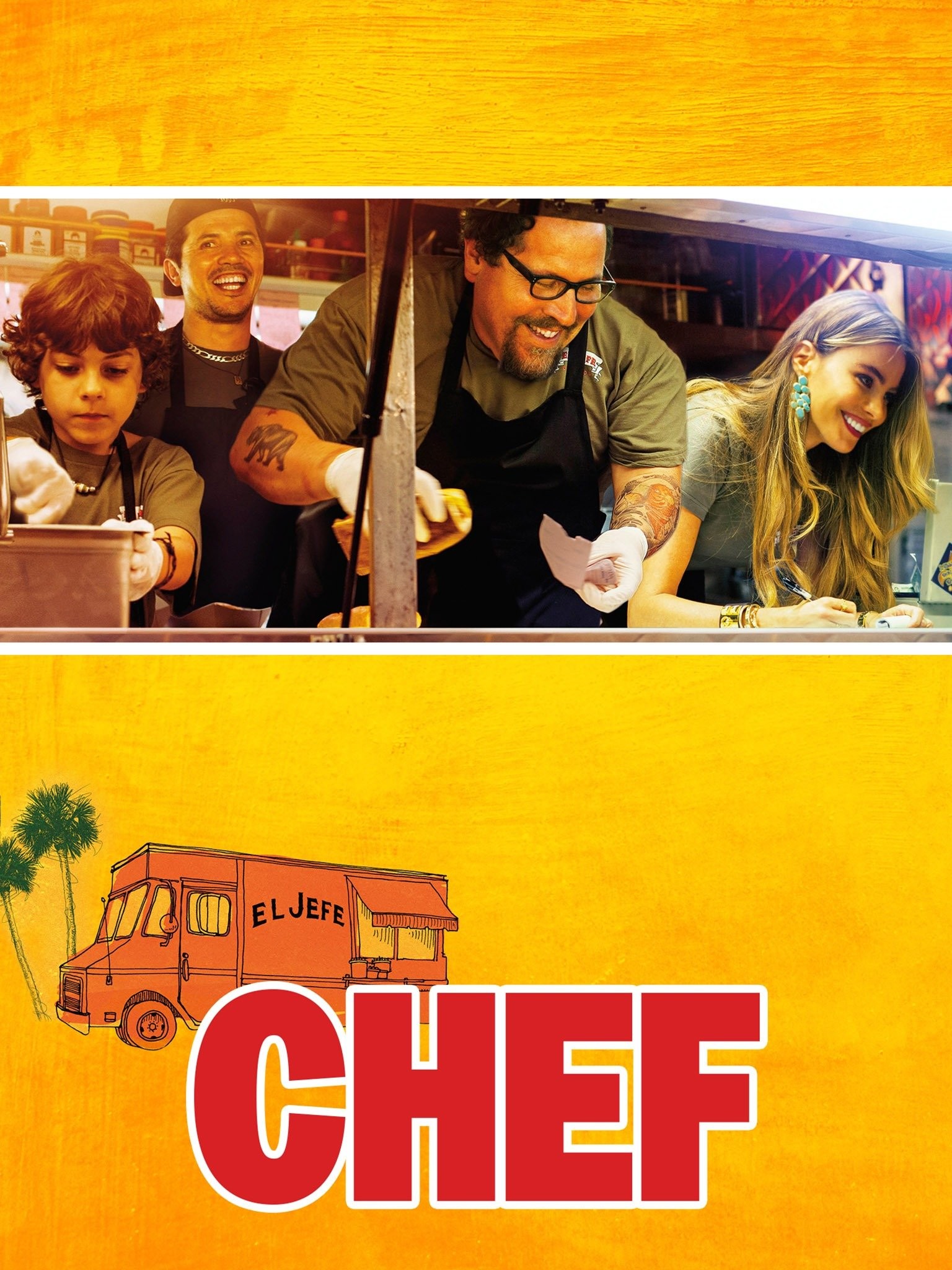
Review: Chef (dir. by Jon Favreau)


“I may not do everything great in my life, but I’m good at this. I manage to touch people’s lives with what I do and I want to share this with you.” — Carl Casper

Jon Favreau’s Chef is one of those modest, crowd‑pleasing films that wins you over by staying sincere. It is not trying to be more elaborate than it needs to be, and that restraint is part of its charm. The movie understands that a good meal, like a good story, does not need to be overloaded to leave an impression.

At its center is Carl Casper, a Los Angeles chef who has spent too long under the thumb of a controlling owner and a punishing routine. Favreau builds the character as a man with genuine talent who has gradually been boxed into serving the same familiar dishes until the spark goes out of his work. That setup gives the film emotional weight without making it needlessly grim, and the early conflict feels grounded in the kind of professional frustration that many viewers can recognize.

What makes Chef work so well is that it treats food as more than decoration. The kitchen scenes have the energy of a workplace movie, but they also carry the warmth of a film about craft, pride, and rediscovery. Favreau clearly cares about the details, and the movie’s culinary authenticity helps make the food feel alive rather than merely photogenic.

The film’s strongest material often comes from its sense of rhythm. Favreau lets scenes breathe, whether Carl is cooking, arguing, bonding with his son, or slowly finding his footing again through the food truck. The road‑trip structure gives the movie a loose, easygoing momentum that matches its themes of starting over and rebuilding a life from something more personal. It is a familiar shape, but Favreau handles it with enough warmth and confidence that it never feels mechanical.

The cast also helps carry the movie’s laid‑back appeal. John Leguizamo brings dependable energy as Carl’s friend and partner, while Emjay Anthony gives the father‑son relationship a needed emotional anchor. Sofía Vergara and Scarlett Johansson add texture to the supporting ensemble, and the cameos help the film feel like it belongs to a broader world without turning into a stunt parade. Robert Downey Jr.’s appearance is especially in the spirit of the movie’s playful, slightly scrappy personality.

If there is a weakness in Chef, it is that the stakes are sometimes as light as the movie’s tone. The conflict is easy to understand, but the film is not interested in digging especially deep into the pressures of restaurant life beyond what it needs for Carl’s personal reset. Some viewers may also feel that the story moves so smoothly that it can occasionally glide past tension rather than fully wrestle with it. Still, those softer edges are part of the movie’s comfort‑food approach, and they fit the film more often than they hurt it.

There is also something undeniably self‑referential about Favreau making a film like this at this point in his career. After years of working in large‑scale studio filmmaking, Chef feels like a deliberate return to basics, a movie about rediscovering joy in the craft rather than chasing spectacle. That choice gives the film a little extra meaning, because it plays not just as a story about a chef but as a story about an artist reconnecting with the thing that made him care in the first place.

That connection carried forward in a very natural way with Netflix’s The Chef Show, which Favreau made with Roy Choi after the film. The show turned the movie’s culinary curiosity into a full‑fledged project, with Favreau cooking alongside celebrity friends and guests across its two‑season run. In that sense, Chef was not just a one‑off passion project; it became the foundation for a longer creative obsession that blended cooking, conversation, and filmmaking into the same kind of easygoing pleasure the movie already had.

What lingers most about Chef is its tone. It is upbeat without being fake, personal without becoming self‑pitying, and relaxed without losing its sense of purpose. Favreau understands that small victories can matter just as much as dramatic ones, and he shapes the film around that idea with real affection. The result is a feel‑good film with enough flavor to satisfy, and enough honesty to keep it from feeling empty.

And for anyone who had never been especially drawn to a Cubano sandwich, Chef also worked like a terrific advertisement for giving one a try. The film made the sandwich look less like a simple handheld meal and more like a kind of culinary payoff, something warm, rich, and memorable enough to make viewers hungry before the scene was even over. While most audiences understandably gravitated toward those rapturous Cubano moments, for me the real standout was the scene featuring the mojo‑marinated pork. There was something about the way the meat was staged—the slow rendering of fat, the caramelized crust, the faint sheen of orange‑garlic sauce—that made it feel less like a quick bit of menu decoration and more like the heart of the film’s culinary language. That sequence, in its quiet way, captured the same blend of craft and desire that the whole movie is built on.

Overall, Chef is a warm, appealing, and thoughtfully made film that succeeds because it knows exactly what it wants to be. It is funny, heartfelt, and easy to enjoy, even when it does not push its dramatic material as far as it could. Favreau serves up a movie that celebrates food, family, and creative freedom in a way that feels genuine, and that sincerity is what gives the film its staying power.

Mia Goth and Ti West take us to 1985 in the MaXXXine Trailer!


The X trilogy kind of snuck up on everyone. The end of March 2022’s “X” gave us a sneak peek at Pearl, which ended up releasing later in theatres that same year. Now, director Ti West and actress Mia Goth are closing the loop with MaXXXine, which arrives in theatres this summer.

MaXXXine is a direct sequel to X, with our heroine still wanting to be a major star after the events of the first film. Though she may not realize it, Maxine has a lot in common with Pearl, and those elements may put her into some dark circles.

MaXXXine also stars Kevin Bacon, Halsey, Bobby Cannavale, Elizabeth Debicki, Lily Collins, Giancarlo Esposito, and Michelle Monaghan.

Retro Television Review: So Here’s What Happened 1.1 “Pilot”


Welcome to Retro Television Reviews, a feature where we review some of our favorite and least favorite shows of the past!  On Thursdays, I will be reviewing So Here’s What Happened, which aired on CBS in 2006.  The entire show is currently streaming on YouTube!

The first and only episode of this show has one message for all the mooks out there.  And that message is …. NEW YORK, BABY!

Episode 1.1 “Pilot”

(Dir by Michael Lembeck, aired on May 1st, 2006)

What to say about Vince Brophy (Bobby Cannavale)?  Hey, he’s a New Yorker, you know what I mean?  Hey, he starts every sentence by saying, “Hey,” y’know?  He knows the name of every single athlete who ever played for a New York sports team, y’know?  He meets a woman named Rochelle Jeter (Rashida Jones) and immediately asks her if she’s related to Derek Jeter, you know what I’m saying?  She says, “Yeah,” and she’s being sarcastic but Vince thinks that she’s being serious because who in their right mind would come into the old neighborhood and make a sarcastic joke, y’know?

Vince is such a New Yorker that he narrates the entire episode while sitting in his favorite barber chair.  His barber (Hector Elizondo) hangs on his every word, which is good since he presumably can’t see the flashbacks that the audience is forced to sit through.  Vince works at his family’s car lot and he wears solid suits and pinky rings and the pilot finds several excuses for him to say the word “Escalade.”  He’s not smart but he’s a stand-up guy, that Vince.  His co-worker asks him to be the godfather to his newborn and Vince agrees but then he nearly drowns the kid at the christening because he gets distracted when someone tells him that Derek Jeter don’t have no sister named Rochelle.  What a New Yorker!, y’know what I’m saying?

There’s a lot of talented people in this show.  Rashida Jones was months away from appearing on The Office.  Hector Elizondo is a comedy veteran.  Steve Park, a favorite of the Coen Brothers, appeared as Vince’s boss.  Mercedes Ruehl plays Vince’s mother.  And then you’ve got Bobby Cannavale in the lead role.  Cannavale is one of my favorite actors, a guy who is as good at playing sensitive as he is at playing tough.  Cannavale can play drama and he can play comedy and he’s easy on the eyes.  Unfortunately, all of these talented people were let down by a script that was written by none other than Paul Reiser.

The main problem with the show is that none of the characters have much of a personality beyond being from New York.  Obviously, New Yorkers are a unique group of people but every New Yorker I’ve met has also had their own individual personality to go along with their identity of being a citizen of America’s largest city.  The characters in this episode, on the other hand, have no identity beyond being a New Yorker in the most cliched ways possible.  Even worse, none of the jokes are particularly funny.  Vince crosses the line from being amiably dumb to being a buffoon far too quickly.

Perhaps not surprisingly, this was the only episode of this show.  The pilot did not lead to a series.  Fortunately, everyone involved went on to better things, y’know?

I Watched The Promotion (2008, dir. by Steven Conrad)


Yesterday, after I got home from voting in my town’s city council elections, I wanted to unwind with a tennis movie.  When I did a search for “tennis,” Tubi recommended that I watch The Promotion.

I don’t know why because there is no tennis in The Promotion.  No one plays a game or even talks about tennis in The Promotion.  Instead, the movie is about two men who work for a grocery store and who are both hoping to get promoted.  The narrator is Doug (Seann William Scott), who is married to Jen (Jenna Fischer), a nurse.  Doug wants to get promoted so that he and Jen can move into a new house and so that he can be the sole breadwinner.  Doug also has to get the promotion because he has already lied to Jen and told her that he got it.  Doug was feeling insecure because Jen’s boss, Dr. Timm (Bobby Cannavale) saves lives for a living while Doug just spends all day dealing with angry customers and the gang members who hang out in the store’s parking lot.  Doug’s rival for the promotion is Richard (John C. Reilly), a recovering drug addict who listens to self-help tapes.  Each of them tries to sabotage the other.  Doug tries to make Richard look stupid at a company retreat and Richard files a false injury report after Doug hits him with a bag of frozen tater tots.

I think the movie was trying to make a point about how desperate people are for status and money that they’ll do anything to get it but I didn’t care because I didn’t find Doug or Richard to be in any way likable and I didn’t want either one of them to get the promotion.  I would not shop at any store where they worked because grocery shopping is bad enough without having to deal with all of that extra drama.  Both Richard and Doug were terrible as assistant managers so as far I was concerned, neither one of them deserved to be promoted.  Jen should have left Doug for Dr. Timm.

Plus, there wasn’t any tennis.

Lisa Marie’s Way Too Early Oscar Predictions For February


Is it too early to start talking about next year’s Oscar race?

Of course, it is!  But I’m going to do it anyway.

Below, you’ll find the installment of my monthly list of Oscar predictions, not for what will win at the end of March but instead for what we’ll see nominated next year.  Obviously, there’s a lot that we don’t know about what’s going to happen later this year.  Only a few of the movies listed below have firmly set release dates.  Needless to say, I haven’t seen any of the films below and, as a result, I’m largely going on instinct.  Who knows if the films will be as good as their plot descriptions?  As much as I hate the overused quote from William Goldman, right now, no one knows anything.  Indeed, it’s not really until Festival Season hits that we really start to get even a vaguely clear picture of the Oscar race and we’ve got a long way to go until Cannes.

(And really, it’s debatable how much of a factor Cannes really is.  If the Oscar nominations were determined by Cannes, Red Rocket and The French Dispatch would be battling it out for best picture right now.)

The predictions below are, for the most part, just random guesses.  Most of them involve people who have won Oscars in the past.  The Fabelmans is there because it’s a Spielberg film, just as Killers of the Flower Moon makes the list because it’s directed by Martin Scorsese and it stars Leonard DiCaprio and Robert De Niro.  And, of course, a lot of the predictions are just the result of wishful thinking on my part.  I think it would be kind of fun if David Lynch got an acting nomination for his role in The Fabelmans, whatever that role may be.  I also think it would be nice if Brendan Fraser got a nomination to go along with his recent comeback.  I don’t know much about The Whale, beyond the fact that Fraser plays a 600-pound man trying to reconnect with his daughter.  For now, that’s enough.

So, without further ado, here are my way too early Oscar predictions!  As always, take them with a grain of salt.

Best Picture

Babylon

The Fabelmans

The Holdovers

Killers of the Flower Moon

Kitbag

Maestro

She Said

TAR

White Noise

The Woman King

Best Director

Damien Chazelle for Babylon

Gina Prince-Bythewood for The Woman King

Martin Scorsese for Killers of the Flower Moon

Ridley Scott for Kitbag

Steven Spielberg for The Fabelmans

Best Actor

Bradley Cooper in Maestro

Brendan Fraser in The Whale

Paul Giamatti in The Holdovers

Ryan Gosling in The Actor

Brad Pitt in Babylon

Best Actress

Naomi Ackie in I Wanna Dance With Somebody

Ana de Armas in Blonde

Viola Davis in The Woman King

Cate Blanchett in TAR

Carey Mulligan in Maestro

Best Supporting Actor

Bobby Cannavale in Blonde

Robert De Niro in Killer of the Flower Moon

John Boyega in The Woman King

Tom Hanks in Elvis

David Lynch in The Fabelmans

Best Supporting Actress

Tantoo Cardinal in Killers of the Flower Moon

Laura Dern in The Son

Li Jun Li in Babylon

Da’Vine Joy Randolph in The Holdovers

Michelle Williams in The Fabelmans

Lisa Reviews An Oscar Nominee: The Irishman (dir by Martin Scorsese)


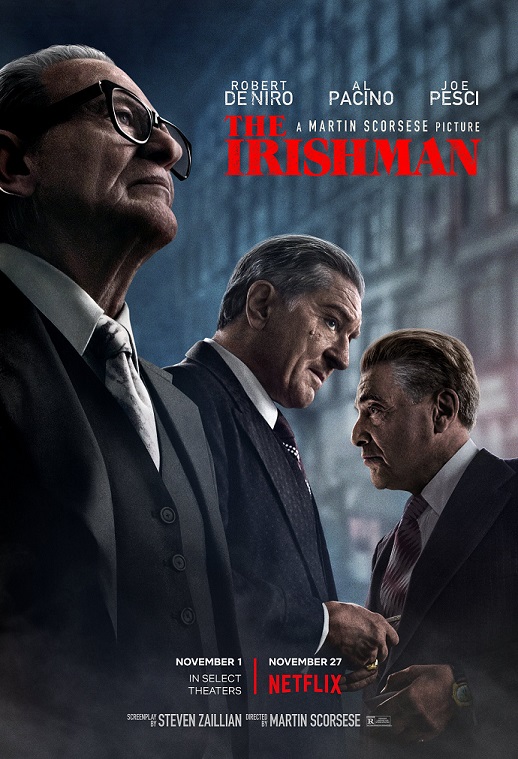
Released by Netflix in 2019 and clocking in at close to 4 hours, the Martin Scorsese-directed Best Picture nominee, The Irishman, is a film about many different things.

At its simplest, it’s a film about a very old man named Frank Shearan (played by Robert De Niro).  Frank is an Irish-American from Philadelphia.  Frank is a veteran of World War II and a former truck driver who was briefly a fairly important figure in the Teamsters union.  He did a few years in prison.  At the start of the film, though, he’s just another elderly man living in a retirement community.  All of his friends are dead.  His wife passed away years ago.  His children never comes to visit.  In fact, the only people interested in talking to Frank are the FBI but Frank doesn’t have much to say to them.  That’s not to say that Frank isn’t talkative.  For the first time in his life, he wants to talk to people but there’s no one left to talk to.  The only people who listen are those who are required to do so.  A nurse politely nods along as as he tells her about his old friend Jimmy Hoffa.  (She’s never heard of him.)  A priest listens to the story of Frank’s life and offers him absolution.  At times, Frank looks straight at Scorsese’s camera and appears to be talking straight to the audience.  Frank has a lot of interesting stories but who knows how truthful he’s being or if his memory can be trusted.

The Irishman, though, is not just the story of Frank.  It is also a secret history of America during the latter half of the 20th Century.  Frank may look old and harmless in that nursing home but, to hear him tell it, he was once acquainted with some of the most powerful men in America.  He went from executing Italian POWs during World War II to executing hits for the Mafia in post-war America.  Along the way, he became close to crime bosses like Skinny Razor (Bobby Cannavale), Angelo Bruno (Harvey Keitel) and Russell Bufalino (Joe Pesci), men who may not have been household names but who still wielded a lot of power.  These are men who, Frank flatly states, fixed the presidential election of 1960 and who later quite possibly killed the man they had elected president.  Frank also became a close associate of Jimmy Hoffa (Al Pacino), the labor leader who was reputed to have mob connections and who disappeared in 1975.

The Irishman is also a tribute to the modern gangster film, featuring role for nearly every living actor associated with the genre.  De Niro, Pacino, Pesci, Keitel, Bobby Cannavale, Domenick Lombardozzi, Gary Basaraba, they’ve all played their share of gangsters in films and television show that were both good and bad.  Having them all appear in one film together serves to remind the viewer of just how much of America’s popular entertainment has revolved around stories of organized crime.  Even as the old school Mafia has declined as a real-world power, it’s become a permanent part of pop culture.  Everyone loves a gangster, except for the people who actually have to deal with them on a daily basis.

Not surprisingly, considering the stars and the director, it’s a film full of smart, detailed performances.  When the film was originally released, Pacino and Pesci got the lion’s share of the praise and they certainly deserved it.  Pacino gets the best lines and brings some unexpected wit to his performance as Jimmy Hoffa.  Pesci, meanwhile, finally gets to play a gangster who is not psychotic and shows that he can be just as compelling when he’s not raising his voice as when he is.  Still, some of my favorite performances came from actors who one wouldn’t necessarily associate with a Scorsese gangster film.  I liked the nervous humor that Ray Romano brought to the role of a corrupt union lawyer.  I liked the seething resentment that Stephen Graham brought to the role of Jimmy Hoffa’s main rival in the union.  (The scene where Graham and Pacino argue over who is more owed an apology for all of their past disagreements is both funny and, due to the people involved, somewhat frightening.)  Jesse Plemons is poignantly dumb in his brief role as Hoffa’s stepson.  Louis Cancelmi doesn’t get a lot of screen time but he steals every scene in which he appears as a paranoid hitman.  (Cancelmi plays a character named Sally Bugs, proving that not everyone in the Mafia gets a cool nickname.)

And then there’s Anna Paquin, who provides the film with its moral center.  When the film was first released, many Twitter critics complained that Paquin, who played Frank’s daughter Peggy, only a had a handful of lines.  It was one of the stupidest controversies of 2019, which is saying something when you consider how much time Film Twitter devotes to generating stupid controversies.  Peggy doesn’t say much because she’s decided that she doesn’t want to be a part of her father’s life.  From the moment that she first sees Frank beating up a store owner, Peggy knows that her father and his associates are violent men.  She not only fears them but she resents the damage that Frank does to not only her family but to the families as other as well.  The only one of her father’s associates who she likes is Jimmy Hoffa, because Hoffa cares about helping others.  When Hoffa disappears, Peggy makes a decision to disappear from Frank’s life and Paquin’s withering stare says more than any lengthy monologue could.  Peggy doesn’t say much because she knows that her words would be wasted on a man who she knows is a liar.  The scene where she silently walks away from her now elderly father tells us everything we need to know about the emotional consequences of the life that Frank has chosen to live.  Regardless of how many lines she did or didn’t have, Paquin gave one of the best performances of 2019.

Famously (or, depending on which critics you read, infamously), de-aging technology was used so that De Niro, Pacino, Pesci, and Keitel could play both the younger and the older version of their characters.  At first, it can be a bit jarring.  The de-aging works fine with Pesci and Keitel, both of whom are already supposed to be middle-aged when they first meet Frank.  (Admittedly, Keitel only has a few minutes of screen time.)  With De Niro and Pacino, it’s a bit less successful.  Even when they’re playing younger versions of themselves, De Niro and Pacino still move and stand like old men.  Fortunately, in the case of Pacino, his natural movie star charisma wins out over his obvious age.  In the end, we believe that he’s Hoffa because we want to believe that all of our important historical figures were as interesting and entertaining as Al Pacino is in The Irishman.

And yet, ultimately, even the awkward de-aging works to the film’s advantage because it reminds us that we’re not necessarily seeing what happened.  Instead, we’re seeing what Frank says happened.  We’re seeing his memories, or at least what he claims to remember.  It makes sense that, when Frank thinks about himself as a young truck driver in 1956, he would picture himself not as he was but instead as just a slightly less weathered version of who he would eventually become.  Throughout the film, there are hints that Frank’s memory should not be trusted.  Some of his stories are incredibly detailed while others — like when he transports weapons for the failed invasion of the Bay of Pigs — are a bit more vaguely presented.  Is Frank lying or is he misremembering or are we just expecting too much detail from a man who is now essentially waiting to die?  The film leaves that up for us to determine.

The Irishman is Scorsese at his most reflective.  Compared to Goodfellas and Casino, The Irishman is certainly one of Scorsese’s less “flashy” films.  But, on repeat viewings, it becomes cleat that The Irishman is the perfect conclusion to the gangster trilogy that began with Goodfellas and continued with Casino.  All three of these films deal with someone who rises up the ranks in the mob while remaining, as a result of their ethnicity, an outsider.  (Henry Hill and Frank Shearan are both Irish.  Ace Rothstein was Jewish.)  All three of them are briefly on top of the world and all three of them are left wondering how they’re going to continue their lives after their days at the top are over.  In Goodfellas, Henry Hill makes no secret of his disgust at having to live in the bland anonymity of the suburbs.  In Casino, Ace Rothstein ends the film with a mournful acceptance the fact that he will never return to his beloved Vegas.  (“And that’s that.”)  In The Irishman, Frank finally realizes that he has comes to the end of it all, alone and with nothing but death in his future.  All three of them made their decisions and, in the end, all three of them are left to deal with the consequences.  The trilogy goes from Henry’s anger to Ace’s depression to Frank’s acceptance.

It may seem strange to describe a film like The Irishman as being underrated, seeing as how it was nominated for 10 Oscars and got a Criterion release in record time.  And yet, when the film first came out, there was a vague sense of disappointment to found in even some of the positive reviews.  It was a Scorsese film that was so eagerly awaited and arrived with so much hype that there was no way it could live up to some of the expectations that had been set for it.  (And, of course, there’s also a whole set of people who were predestined to dislike the film precisely because it was a Scorsese film and it was so anticipated.)  It’s a long film and, while Netflix should be praised for allowing Scorsese the freedom to make his epic, it’s also not a film that should be viewed in bits and pieces on a tiny screen.  The Irishman is a film that should be watched in one sitting and it’s definitely a film that most viewers should watch more than once.  It takes more than one viewing to truly grasp the the world that Scorsese has recreated.

The Irishman was nominated for Best Picture.  It lost to a worthy competitor, Parasite.  Still, regardless of who took him the Oscars, The Irishman is a film that will live forever.

Playing Catch-Up With 6 Mini-Reviews: Amy, Gloria, Pitch Perfect 2, Sisters, Spy, Trainwreck


Amy_Movie_Poster

Amy (dir by Asif Kapadia)

Amy opens with brilliant and, in its way, heartbreaking footage of a 14 year-old Amy Winehouse and a friend singing Happy Birthday at a party.  Even though she’s singing deliberately off-key and going over-the-top (as we all tend to do when we sing Happy Birthday), you can tell that Amy was a star from the beginning.  She’s obviously enjoying performing and being the center of attention and, try as you might, it’s impossible not to contrast the joy of her Happy Birthday with the sadness of her later life.

A star whose music touched millions (including me), Amy Winehouse was ultimately betrayed by a world that both wanted to take advantage of her talent and to revel in her subsequent notoriety.  It’s often said the Amy was self-destructive but, if anything, the world conspired to destroy her.  By focusing on footage of Amy both in public and private and eschewing the usual “talking head” format of most documentaries, Amy pays tribute to both Amy Winehouse and reminds us of what a great talent we all lost in 2011.

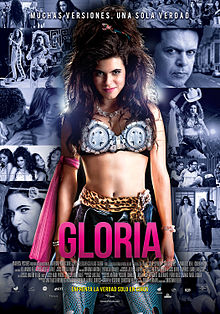
Gloria_(2014_Film_Poster)

Gloria (dir by Christian Keller)

The Mexican film Gloria is a musical biopic of Gloria Trevi (played by Sofia Espinosa), a singer whose subversive songs and sexual image made her a superstar in Latin America and challenged the conventional morality of Catholic-dominated establishment.  Her manager and lover was the controversial Sergio Andrade (Marco Perez).  The movie follows Gloria from her first audition for the manipulative Sergio to her arrest (along with Sergio) on charges of corrupting minors.  It’s an interesting and still controversial story and Gloria tells it well, with Espinosa and Perez both giving excellent performances.

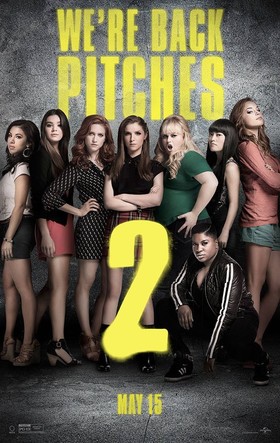
Pitch_Perfect_2_poster

Pitch Perfect 2 (dir by Elizabeth Banks)

The Bellas are back!  As I think I’ve mentioned a few times on this site, I really loved the first Pitch Perfect.  In fact, I loved it so much that I was a bit concerned about the sequel.  After all, sequels are never as good as the original and I was dreading the idea of the legacy of the first film being tarnished.

But the sequel actually works pretty well.  It’s a bit more cartoonish than the first film.  After three years at reigning ICCA champions, the Bellas are expelled from competition after Fat Amy (Rebel Wilson) accidentally flashes the President.  The only way for the Bellas to get the suspension lifted is to win the World Championship of A Capella.  The plot, to be honest, really isn’t that important.  You’re watching the film for the music and the interplay of the Bellas and, on those two counts, the film totally delivers.

It should be noted that Elizabeth Banks had a great 2015.  Not only did she give a great performance in Love & Mercy but she also made a respectable feature directing debut with Pitch Perfect 2.

Sisters_movie_poster

Sisters (dir by Jason Moore)

It’s interesting how opinions can change.  For the longest time, I really liked Tina Fey and I thought that Amy Poehler was kind of overrated.  But, over the past two years, I’ve changed my opinion.  Now, I like Amy Poehler and Tina Fey kind of gets on my nerves.  The best way that I can explain it is to say that Tina Fey just seems like the type who would judge me for wearing a short skirt and that would get old quickly, seeing as how I happen to like showing off my legs.

Anyway, in Sisters, Tina and Amy play sisters!  (Shocking, I know.)  Amy is the responsible one who has just gotten a divorce and who wants to make everyone’s life better.  Tina is the irresponsible one who refuses to accept that she’s no longer a teenager.  When their parents announce that they’re selling the house where they grew up, Amy and Tina decide to throw one last party.  Complications ensue.

I actually had two very different reactions to Sisters.  On the one hand, as a self-declared film critic, it was easy for me to spot the obvious flaw with Sisters.  Tina and Amy should have switched roles because Tina Fey is simply not believable as someone who lives to have fun.  Sometimes, it’s smart to cast against type but it really doesn’t work here.

However, as the youngest of four sisters, there was a lot of Sisters that I related to.  I saw Sisters with my sister, the Dazzling Erin, and even if the film did not work overall, there were still a lot of little scenes that made us smile and go, “That’s just like us.”  In fact, I think they should remake Sisters and they should let me and Erin star in it.

Spy2015_TeaserPoster

Spy (dir by Paul Feig)

There were a lot of very good spy films released in 2015 and SPECTRE was not one of them.  In fact, the more I think about it, the more disappointed I am with the latest Bond film.  It’s not so much that SPECTRE was terrible as there just wasn’t anything particular memorable about it.  When we watch a film about secret agents saving the world, we expect at least a few memorable lines and performances.

Now, if you want to see a memorable spy movie, I suggest seeing Spy.  Not only is Spy one of the funniest movies of the year, it’s also a pretty good espionage film.  Director Paul Feig manages to strike the perfect balance between humor and action.  One of the joys of seeing CIA employee Susan Cooper (Melissa McCarthy) finally get to enter the field and do spy stuff is the fact that there are real stakes involved.  Susan is not only saving the world but, in the film’s best scenes, she’s having a lot of fun doing it and, for that matter, McCarthy is obviously having a lot of fun playing Susan and those of us in the audience are having a lot of fun watching as well.

Spy also features Jason Statham as a more traditional action hero.  Statham is hilarious as he sends up his own macho image.  Seriously, who would have guessed that he could such a funny actor?  Here’s hoping that he, McCarthy, and Feig will all return for the inevitable sequel.

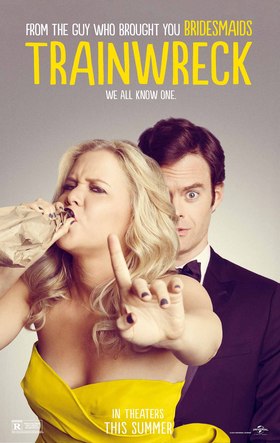
Trainwreck_poster

Trainwreck (dir by Judd Apatow)

There’s a lot of great things that can be said about Trainwreck.  Not only was it the funniest film of 2015 but it also announced to the world that Amy Schumer’s a star.  It was a romantic comedy for the 21st Century, one that defied all of the conventional BS about what has to happen in a romcom.  This a film for all of us because, let’s just be honest here, we’ve all been a trainwreck at some point in our life.

But for me, the heart of the film was truly to be found in the relationship between Amy and her younger sister, Kim (Brie Larson).  Whether fighting over what to do with their irresponsible father (Colin Quinn) or insulting each other’s life choices, their relationship is the strongest part of the film.  If Brie Larson wasn’t already guaranteed an Oscar nomination for Room, I’d demand that she get one for Trainwreck.  For that matter, Amy Schumer deserves one as well.

Seriously, it’s about time the trainwrecks of the world had a film that we could truly call our own.

Quick Review: Marvel’s Ant-Man (dir. by Peyton Reed)


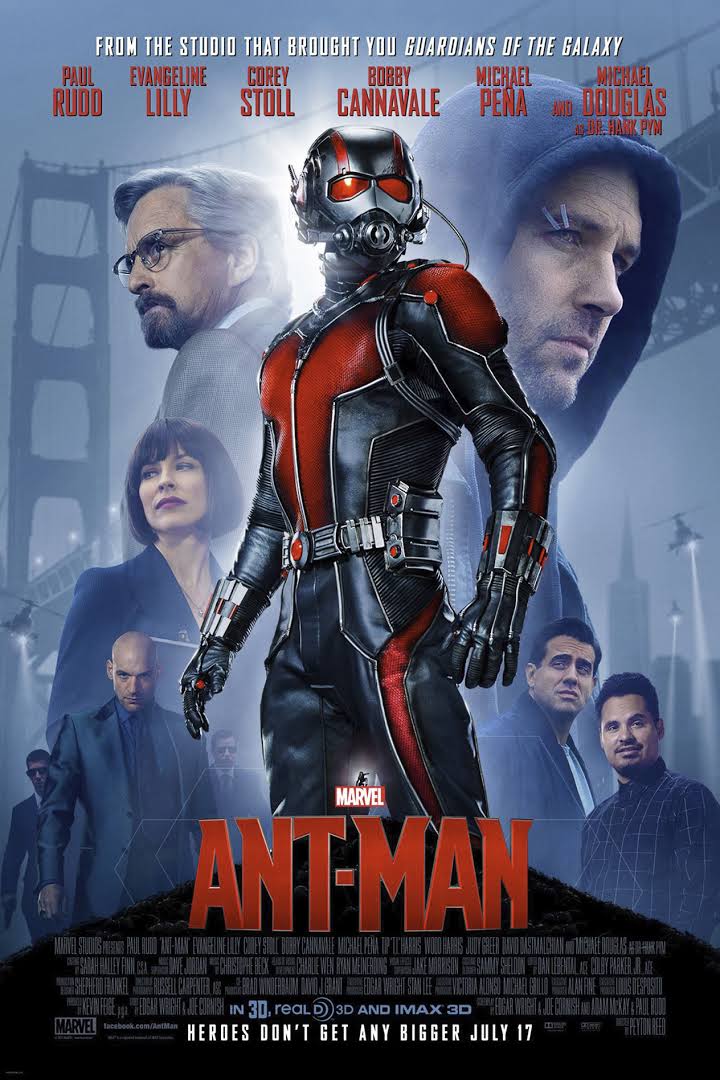
Marvel's Ant-Man

*** Wait a minute! Before checking this out, be sure to read TrashFilmGuru’s thoughts on Ant-Man and then if you like, double back here. Two opinions are better than one! ***

I walked into Ant Man with a bias.

As a fan of Edgar Wright, his departure on the film due to creative differences left me wondering if it was worth seeing. Mix that with the idea that Marvel diverged from the character’s comic book origins for a better fit into the Marvel Cinematic Universe, and it all seemed like a recipe for failure. This was going to be the Cars 2 of the MCU, I was sure of it.

Ant-Man isn’t as large a tale as Captain America: The First Avenger or as star spanning as Guardians of the Galaxy. At times, it feels like it the story would be better suited for an extended Agents of S.H.I.E.L.D. Crossover or a Netflix one shot instead of a big screen event. It actually reminded me of Jon Favreau’s Iron Man in many ways, back when all of this was so small that audiences weren’t searching for tie-ins to next film in the line up or homages to The Story So Far. Ant-Man comes with the MCU connections (and comic book ones too), but if you walk in expecting revelations as big as Captain America: The Winter Soldier, the film may be a disappointment. It’s just a hero, and idea that even small actions can have big effects. It’s easily the film’s greatest strength, that it’s so personal. The film’s best components are it’s casting (particularly in House of Cards & The Strain’s Corey Stoll and Fury’s Michael Pena), and the effects themselves. It’s a movie that’s well worth the 3D treatment, if you can catch it that way.

Ant-Man focuses on Scott Lang (Paul Rudd), a former thief who is just trying to spend more time with his daughter, or at least be a hero in her eyes. Scott ends up meeting with Dr. Hank Pym (Michael Douglas) and his daughter Hope (Evangeline Lilly) who brings him on board for a job that just happens to cover his particular skill set. The job comes with a special suit that allows Lang to shrink down to about the size of an Ant, while at the same time allowing him to be much stronger. When Pym’s protege and rival Cross (Stoll) discovers another way to possibly make the shrink ability work, it’s up to Lang to try to stop the progress.

The film had 4 writers during it’s creation. It had Edgar Wright, who many moviegoers know from the Cornetto Trilogy (Shaun of the Dead, Hot Fuzz, The World’s End) and Scott Pilgrim vs. The World. Adam McKay worked with Rudd in the past on the Anchorman films, and was responsible for Talladega Nights & Step Brothers. Both McKay and Rudd had a hand in writing Ant-Man. Finally, Attack the Block’s Joe Cornish was on board. The end result of all this is a film with a great deal of comedy influences in it, though not all of them hit the mark. I felt there were at least 2 moments in the film where Rudd’s character had a one liner that just didn’t hit the mark, or elicit a response from the audience. This isn’t a terrible thing, at most it’s just nitpicking. Overall, you could consider Ant-Man a comic caper with superhero moments.

Additionally, the writers had to also figure out how to make the character of Dr. Hank Pym useful in a storyline where one of his biggest arcs in the comics – creating Ultron – was already handled in a previous story. I like to think this was handled pretty well, as comic readers will already recognize Scott Lang as being the 2nd Ant-Man – or least this is what I learned from the Marvel Encyclopedia. They’ve managed to keep familiar storylines in place while still anchoring it to the larger tale at hand.

The performances in Ant-Man are good, though it’s the co-stars that potentially steal the film from the leads. Lang’s heist buddies, played by David Dastmalchian (The Dark Knight), Cliff “T.I.” Harris (Takers), and Michael Pena (Fury) were indeed funny in this. Pena in particular stood out as someone who gets ahold of information through some pretty wild sources. Michael Douglas was a strange pick for me when I first heard about it, but he’s actually a fantastic fit for the whole story. Evangeline Lilly looked like she had a lot of fun with this, though her character served as a second mentor for Lang. I wanted to see her do a bit more in the film, actually. Bobby Canavale (Chef, Third Watch) and Judy Greer (Jurassic World) both have nice supporting roles in this.

Corey Stoll has played an ass so much on-screen that I’m not entirely sure he isn’t that way off camera. Between Non-Stop, House of Cards, Midnight in Paris and now Ant-Man, he’s plays the kind of characters that were historically set aside for character actors like Jeff Kober or Michael Ironside. Honestly, they couldn’t have made a better choice here. Cross comes off like a variant of Iron Man’s Odebiah Stane, resentful, evil, and maybe a little crazed. Rudd, on the other hand, handles the Hero’s Journey with ease, bringing his own sense of comedy that works almost as well as it did for Chris Pratt in Guardians of the Galaxy. It’s not perfect, but the character’s lighthearted nature is a good contrast from the serious gloom and doom that most of the Avengers are going through these days, and I feel Rudd did well here.

That’s another aspect of Ant-Man that needs to be recognized. The story in this may have a larger impact in things to come, but it felt really compact. Since the focus on the story involves Lang getting back to his daughter and stopping this one small thing, it takes a step back from the escalation we’ve been getting in previous MCU films. To me, since Phase Two started, every film’s been a stepping stone with at least one huge revelation somewhere that shows this is all much bigger than any one hero can take on. Discovery of the Infinity Stones, the big reveal of S.H.I.E.L.D. In the Winter Soldier and the events in Age of Ultron cover a large area. Maybe it’s better to say that they have an impact that’s covers a wide distance. With Ant-Man being the first film of Phase Three, it feels almost as if a step back it taken to something more personal. It’s not bad, but it’s different. It has the potential to leave viewers with a bad taste in their mouths if they were expecting something grand.

The effects in Ant-Man are good, really, really sweet. Quite honestly, it may be one of the first times where I haven’t found myself annoyed by what I call “The Zoic Effect” – that technique used in almost every film these days where you’re watching something and the director decides “Hey, let’s do a maximum level quick zoom on that target right there!”, because there’s a chance the audience might not see the subject. I believe Zoic Studios were the first to do that with Firefly and Battlestar Galactica, though I could be wrong. In Ant-Man, that rapid intense zoom is almost a welcome requirement when watching a little figure run and leap up and over objects. Add a 3D effect to all that, and I found myself enjoying that on the big screen. From a directing standpoint, it’s all very straightforward and you get an idea of the influences from all of the writers involved. Still, Peyton Reed (Down With Love) keeps from the film from straying too far away from it’s intended focus. Additionally, though the help of CGI, Disney/Marvel was able to digitize a younger Michael Douglas, and the look of this was even better than what they accomplished with Jeff Bridges in Tron: Legacy.

Overall, Ant-Man is a great addition to the MCU and on it’s own, it’s strong. I suppose Thor will still have to stay as the Cars 2 of that movie library. Note to viewers: If you’re planning to see this, be sure to stay until after the end credits. There’s a mid scene during the credits and one at the very end.