1985’s Revolution opens on July 4th, 1776. The Declaration of Independence has just been published. The streets are full of people celebrating. A statue of King George is pulled down. In her carriage, the wealthy Mrs. McConnahay (Joan Plowright) turns up her nose to the enthusiastic rebels, including the fanatical Liberty Woman (Annie Lennox). Mrs. McConnahay’s daughter, Daisy (Nastassja Kinski) is intrigued by this idea of freedom and equality.
Fur trader Tom Dobbs sails his boat into Hudson Harbor. Tom is Scottish, illiterate, and very much a man of the 18th Century. However, he’s played by Al Pacino, who was none of those things. After Revolution was released to desultory reviews, Pacino took four years off from the movies and watching this film, one can see why. Pacino is miscast as Dobbs and, as a result, he gives the type of truly bad performance that can only be given by a great actor. Unable to disguise the fact that he had the accent of a modern-day New Yorker, Pacino resorts to mumbling the majority of his lines. Tasked with playing a character who has no idea how to deal with the history-making events in which he finds himself, Pacino alternates between a blank look and with bulging his eyes like a madman, proving that it’s far more difficult to play an uneducated character than an educated one. Why cast Pacino, who can be one of our most exciting actors, as a character who can barely speak and who has neither the intensity of Michael Corleone or the subversive wit of Tony Montana? Due to Pacino and Kinski having zero chemistry, the scenes where Tom falls in love with Daisy are almost painful to watch.
The film follows Tom as he and his son, Ned (Simon Owen when the film begins, Dexter Fletcher by the time the action moves to Valley Forge), as they find themselves conscripted into the Revolutionary Army. Eventually, Ned is abducted into the British army and serves as a drummer boy under the sadistic watch of Sgt. Major Peasy (Donald Sutherland). The idea behind the film isn’t a bad one. It attempts to portray the American Revolution through the eyes of the average citizen. Instead of focusing on the Founding Fathers, Revolution tries to tell the story of the everyday people who found themselves in the middle of the war. Tom loses his boat and (temporarily) he loses his son. Fortunately, this is one of those films where people are constantly running into each other by chance, regardless of whether it makes any sense or not. Daisy goes from seeing Tom in New York to randomly coming across him in a field to eventually finding him in Valley Forge. It’s not because she’s specifically looking for him. Instead, he just happens to be there.
Why does Revolution fail? A lot of it comes down to Pacino’s performance, though Pacino certainly isn’t the only talented actor to give a not-quite good performance in Revolution. (Donald Sutherland has never been more wasted in a film.) The script is full of dialogue like, “My mouth belongs where I place it.” (Pacino gets stuck with that one.) Hugh Hudson directs in a leaden manner. Towards the end of the film, there is one brilliant sequence where Tom wanders through the streets of New York and, for a few minutes, the film comes to like with a spontaneity that was previously lacking. Unfortunately, it’s just one sequence in a very long movie,
To be honest, we could use some good films about the American Revolution and I’m not talking about elitist nonsense like Hamilton. No taxation without representation. It’s still a good message for us all.
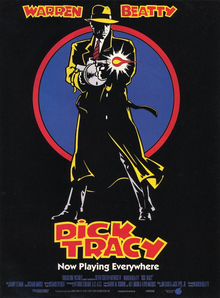
The year is 1937 and “Big Boy” Caprice (Al Pacino) and his gang of flamboyant and often disfigured criminals are trying to take over the rackets. Standing in their way is ace detective Dick Tracy (Warren Beatty), the yellow trench-wearing defender of the law. Tracy is not only looking to take down Caprice but he and Tess Trueheart (Glenne Headly) are currently the guardians of The Kid (Charlie Korsmo), a young street kid who witnessed one of Caprice’s worst crimes. Tracy’s investigation leads him through a rogue’s gallery of criminals and also involves Breathless Mahoney (Madonna), who has witnessed many of Caprice’s crimes but who also wants to steal Tracy’s heart from Tess.
Based on the long-running comic strip, Dick Tracy was a labor of love on the part of Warren Beatty. Not only starring but also directing, Tracy made a film that stayed true to the look and the feel of the original comic strip (the film’s visual palette was limited to just seven colors) while also including an all-star cast the featured Madonna is an attempt to appeal to a younger audience who had probably never even heard of Dick Tracy. When Dick Tracy was released, the majority of the publicity centered around Madonna’s participation in the film and the fact that she was dating Beatty at the time. Madonna is actually probably the weakest element of the film. More of a personality than an actress, Madonna is always Madonna no matter who she is playing and, in a film full of famous actors managing to be convincing as the members of Dick Tracy’s rogue gallery, Madonna feels out of place. Michelle Pfeiffer would have been the ideal Breathless Mahoney.
It doesn’t matter, though, because the rest of the film is great. It’s one of the few comic book films of the 90s to really hold up, mostly due to Beatty’s obvious enthusiasm for the material and the performances of everyone in the supporting cast who was not named Madonna. Al Pacino received an Oscar nomination for playing Big Boy Caprice but equally good are Dustin Hoffman as Mumbles, William Forsythe as Flaptop, R.G. Armstong as Pruneface, and Henry Silva as Influence. These actors all create memorable characters, even while acting under a ton of very convincing makeup. I also liked Dick Van Dyke as the corrupt District Attorney. Beatty knew audience would be shocked to see Van Dyke not playing a hero and both he and Van Dyke play it up for all its worth. Beatty embraces the comic strip’s campiness while still remaining respectful to its style and the combination of Danny Elfman’s music and Stephen Sondheim’s songs provide just the right score for Dick Tracy’s adventures. The film can be surprisingly violent at times but the same was often said about the Dick Tracy comic strip. It wasn’t two-way wrist radios and trips to the Moon. Dick Tracy also dealt with the most ruthless and bloodthirsty gangsters his city had to offer.
Dick Tracy was considered to be a box office disappointment when it was originally released. (Again, you have to wonder if Beatty overestimated how many fans Dick Tracy had in 1990.) But it holds up well and is still more entertaining than several of the more recent comic book movies that have been released.
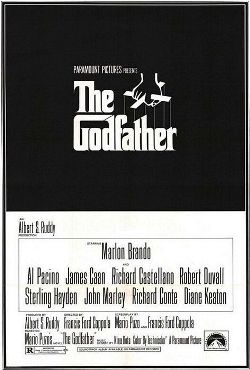
Today would have been James Caan’s 85 birthday so today’s scene that I love comes from one of Caan’s best-known films, The Godfather.
This scene features Caan’s Sonny Corleone in all of his glory, congratulating Michael on his broken jaw and getting on Tom Hagen’s nerves. Robert Duvall and James Caan were close friends in real life and that friendship definitely comes through in their performances as Tom and Sonny.
First released in 2021, American Traitor: The Trial of Axis Sally tells the story of Mildred Gillars, an American women who worked as propagandists for The Third Reich. Gillars would broadcast on German-radio, her show mixing music with propaganda messages that were meant to be heard by American and British soldiers in Europe. Gillars would talk about how wonderfully the war was going for Germany. She would tell the Americans that their mothers, sisters, and sweethearts were waiting for them back in the United States. She was one of the many female Nazi propagandists to be nicknamed “Axis Sally.”
(Interestingly enough, her broadcasts did gather a bit of cult following amongst U.S. personnel in Europe. Even though she was a propagandist, she played music and she also occasionally let slip the location of the German army. As the war progressed, her programs took on a “so bad it’s good” quality as she continued to insist that the Germans were still winning when they clearly weren’t.)
Mildred was arrested after the war ended and charged with treason against the United States. The prosecution claimed that Mildred was a committed Nazi who turned against her home country. Mildred and her defense attorneys claimed that Mildred only stayed in Germany because her boyfriend was there and that Mildred was largely apolitical. They also argued that Mildred would have been sent to a concentration camp if she had refused to do the broadcasts. Mildred Gillars became the first American woman to be convicted of treason. She lost her American citizenship, received a hefty fine, and spent 13 years in prison. Reportedly, she never showed much in the way of regret over being a Nazi propagandist.
It’s an interesting story but you wouldn’t know that from American Traitor, which is largely a vanity project. Meadow Williams not only plays Mildred Gillars but she also served as a producer on the film. Williams is the widow of vitamin tycoon Gerald Kessler. When Kessler died, he left his $800 million dollar fortune to Williams and, reportedly, a bit of that inheritance was used to fund this film. That perhaps explains why a name actor like Al Pacino shows up in the role of Gillars’s defense attorney. Pacino barks his lines with authority and manages to give a credible performance, even though he’s stuck wearing a ridiculous wig. There is absolutely nothing about Williams’s performance that suggests the type of charisma that Mildred Gillars would have needed to become an effective propagandist. She gives a blank-faced and blank-voiced performance, one that might be meant to seem enigmatic but which is instead just boring.
And really, that’s the best way to describe the film. It’s dull. The dialogue is dull. The performances, other than Al Pacino, are dull. Even the film’s visuals are dull. The film has little to say about propaganda, war, guilt, or innocence. It’s a vanity project turned Icarus file.
In the 1999 Best Picture Nominee, The Insider, the American media takes a beating.
Al Pacino plays Lowell Bergman. Bergman is a veteran newsman who, for several years, has been employed as a producer at 60 Minutes. He is a strong believer in the importance of the free press and he’s proud to be associated with both 60 Minutes and CBS News. He’s one of the few people who can manage the famously prickly correspondent, Mike Wallace (Christopher Plummer). When we first see Bergman, he and Wallace are in the Middle East and arranging a tense interview with the head of Hezbollah. It’s easy to see that Bergman is someone who will go anywhere and take any risk to get a story. It’s also apparent that Bergman thinks that the people that he works with feel the same way.
That all changes when Bergman meets Jeffery Wigand (Russell Crowe), a recently fired tobacco company executive who initially agrees to serve as a consultant for one of Bergman’s story but who leaves Bergman intrigued when he reveals that, due to a strict confidentiality agreement, he’s not allowed to discuss anything about his time as an executive. As the tobacco companies are currently being sued by ambitious state attorney generals like Mississippi’s Mike Moore (who plays himself in the film), Bergman suspects that Wigand knows something that the companies don’t want revealed.
And, of course, Bergman is right. Wigand was fired for specifically objecting to his company’s effort to make cigarettes more addictive, something that the tobacco industry had long claimed it wasn’t doing. Wigand’s pride was hurt when he was fired but he knows that breaking the confidentiality agreement will mean losing his severance package and also possibly losing his marriage to Liane (Diane Venora) as well. However, Wigand is angered by the heavy-handed techniques that his former employer uses to try to intimidate him. He suspects that he’s being followed and he can’t even work out his frustrations by hitting a few golf balls without someone watching him. When Wigand starts to get threats and even receives a bullet in the mail, he decides to both testify in court and give an interview to Wallace and 60 Minutes.
The only problem is that CBS, after being pressured by their lawyers and facing the risk of taking a financial loss in an upcoming sell, decides not to run the interview. Bergman is outraged and assumes that both Mike Wallace and veteran 60 Minutes producer Don Hewitt (Philip Baker Hall) will support him. Instead, both Wallace and Hewitt side with CBS. Left out in the cold is Jeffrey Wigand, who has sacrificed almost everything and now finds himself being attacked as merely a disgruntled employee.
Directed by Michael Mann and based on a true story, The Insider is what is usually described as being “a movie for adults.” Instead of dealing with car chases and super villains and huge action set pieces, The Insider is a film about ethics and what happens when a major media outlet like CBS News fails to live up to those ethics. (No one is surprised when the tobacco company tries to intimidate and silence Wigand but the film makes clear that people — or at least people in the 90s — expected and hoped for more from the American press.) Wigand puts his trust in Bergman and 60 Minutes largely because he believed Bergman’s promise that he would be allowed to tell his story. It’s a promise that Bergman made in good faith but, in the end, everyone from the CBS executives to the tobacco companies is more interested in protecting their own financial future than actually telling the truth. Wigand loses his family and his comfortable lifestyle and Bergman loses his faith in the network of Edward R. Murrow. It’s not a particularly happy film but it is a well-made and thought-provoking one.
Pacino and Crowe both give excellent performances in the two lead roles. Pacino, because he spends most of the film outraged, has the flashier role while Crowe plays Wigand as a rather mild-mannered man who suddenly finds himself in the middle of a national news story. (Crowe’s performance here is one of his best, precisely because it really is the opposite of what most people expect from him.) Crowe does not play Wigand as being a crusader but instead, as an ordinary guy who at times resents being put in the position of a whistleblower. (Director Mann does not shy away from showing how Bergman manipulates, the reluctant Wigand into finally testifying, even if Bergman’s motives were ultimately not malicious.) That said, the strongest performance comes from Christopher Plummer, who at first seems to be playing Mike Wallace as being the epitome of the pompous television newsman but who eventually reveals the truth underneath Wallace’s sometimes fearsome exterior.
The Insider was nominated for Best Picture. Somehow, it lost to American Beauty.
Yesterday, it was announced that the legendary screenwriter Robert Towne had passed away. One of the premier talents of Hollywood’s second Golden Age, Towne was rightly remembered as the man who wrote the intelligent and challenging scripts for films like Chinatown, The Last Detail, and Shampoo.
Towne was also a well-known script doctor, one whose work was not always credited but which always contributed to the overall quality of the films to which he contributed. In 1971, when Francis Ford Coppola realized that he needed a scene for The Godfather that would allow Vito to open up to his son and successor, Michael, Robert Towne was the man who wrote the scene. The result was one of the best moments in a film that is full of great dialogue.
The great character actor Lance Henriksen is 84 years old today!
Ever since he made his film debut in 1970, the legendary Henriksen has played a collection of villains, bikers, police officers, soldiers, and even the occasional android. One of his earliest appearance was in 1975’s Dog Day Afternoon. His role is small but he definitely makes an impression. His faux friendly suggestions that Sal point his gun upwards is the line that sets off the film’s haunting ending. For viewers today, of course, we know that Sal and Sonny are screwed as soon as Lance Henriksen shows up outside of the bank.
In today’s scene that I love, Lance Henriksen does what only a great character actor can do. In less than a minute, he created a truly unforgettable character.
Today, the Shattered Lens wishes a happy birthday to the great Al Pacino.
Today’s scene that I love comes from 1972’s The Godfather, in which Al Pacino plays Michael Corleone. In this scene, Michael, having just taken over the Corleone family, pays a visit to Vegas. He meets his brother Fredo (John Cazale), who has certainly changed from being the meek person that he was in New York. He meets the singer Johnny Fontana (Al Martino), who owes a favor to the Corleones. And he meets Moe Greene (Alex Rocco), who soon discovers that the Corleones cannot be intimidated. Most importantly, Michael proves that he is now in charge of the family. At the end of the scene, Michael gives Fredo an important warning and sets up the tragic ending of the The Godfather Part II.
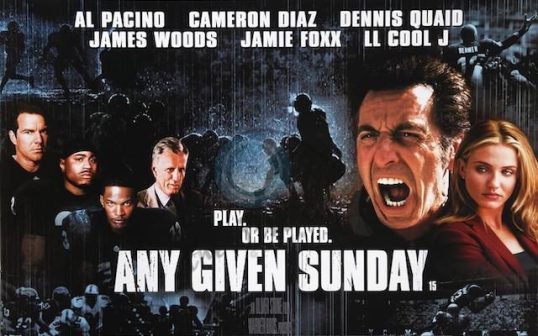
I once read an article where Al Pacino’s lock room speech in Oliver’s Stone 1999 football film, Any Given Sunday, was described as being the most inspirational locker room speech ever.
I don’t really know if I agree with that.
I mean, to be honest, Al Pacino’s Tony D’Amato kind of looks really beaten down in this scene. It looks like, instead of spending the previous night studying game film and coming up with plays, the coach spent the previous night out drinking. If I was one of his players, I would be wondering if the coach was hungover and I might reset that. I might be like, “Hey, I’ve been staying off cocaine all week for this game and then coach shows up looking like he’s just killed Frank Lopez. Someone get Aaron Eckhart in here — he’s the coach we need!” Also, for the most part, his speech seems to be more about him than the team. It’s like, “I’ve got failed marriages, I’ve got this, I’ve got that …. life is a game of inches!” Well, that’s great, Tony, but how are we going to win the game? “I got problems!” Well, we’ve all got problems, coach! I mean, he’s talking to a room full of people who probably can’t stand up without hearing a hundred different things going snap in their knees.
Do locker room speeches really make that much of a difference? I’ve seen enough sports films that I often wondered this. Is it a requirement that a coach give a speech? If the coach refused to give a speech, the team would still be obligated to go out there and play hard, right? As I’ve said many a time, I really don’t get the point of long speeches but some of that is because of the ADD. There’s no way that I could listen to anyone talk about life being a game of inches for four minutes. I would just zone out.
What if a coach filibustered and just kept going and going in his speech? Would the team have to forfeit?
Would it have been more effective to show the team the Willie Beamon music video as opposed to forcing them to listen to a speech from hung over Tony D? Well, probably not. If I remember correctly, the team did win the big game and they did it even after Dennis Quaid got injured for like the 100th time. So, I guess the speech did work. That shows you everything I know about football.
Anyway, I know a lot of people love this speech. I mean, there’s a reason why it showed up in that car commercial. And, to be honest, it worked pretty well in that commercial. Certainly, it made more sense to use Tony’s “life is a game of inches” speech as opposed to Robin Williams’s poetry speech from Dead Poets Society. (Car commercials are weird.) So, in honor of those people and Super Bowl Sunday, here is the Tony D’Amato Any Given Sunday locker room speech:
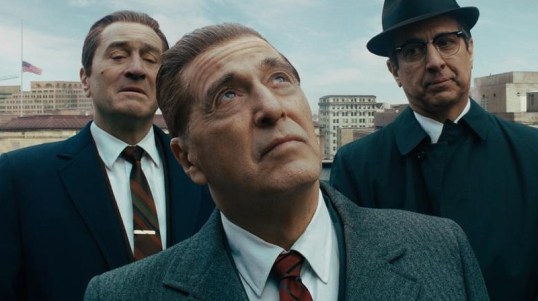
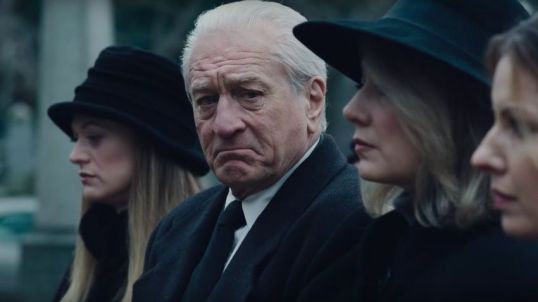
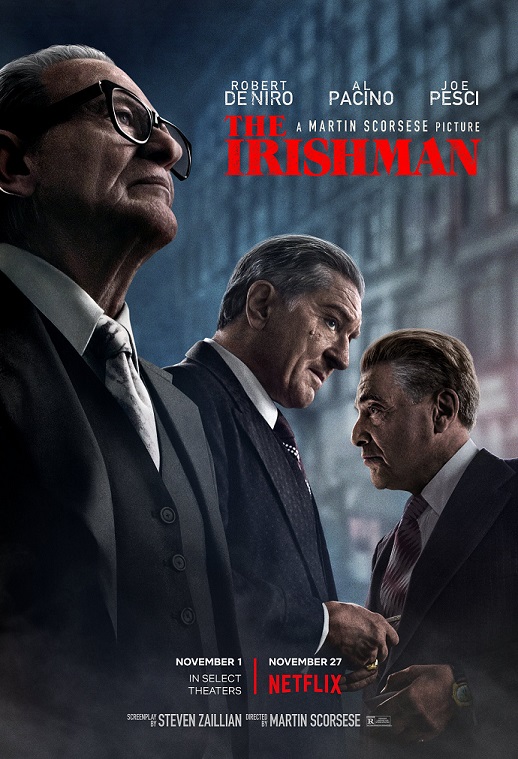
Released by Netflix in 2019 and clocking in at close to 4 hours, the Martin Scorsese-directed Best Picture nominee, The Irishman, is a film about many different things.
At its simplest, it’s a film about a very old man named Frank Shearan (played by Robert De Niro). Frank is an Irish-American from Philadelphia. Frank is a veteran of World War II and a former truck driver who was briefly a fairly important figure in the Teamsters union. He did a few years in prison. At the start of the film, though, he’s just another elderly man living in a retirement community. All of his friends are dead. His wife passed away years ago. His children never comes to visit. In fact, the only people interested in talking to Frank are the FBI but Frank doesn’t have much to say to them. That’s not to say that Frank isn’t talkative. For the first time in his life, he wants to talk to people but there’s no one left to talk to. The only people who listen are those who are required to do so. A nurse politely nods along as as he tells her about his old friend Jimmy Hoffa. (She’s never heard of him.) A priest listens to the story of Frank’s life and offers him absolution. At times, Frank looks straight at Scorsese’s camera and appears to be talking straight to the audience. Frank has a lot of interesting stories but who knows how truthful he’s being or if his memory can be trusted.
The Irishman, though, is not just the story of Frank. It is also a secret history of America during the latter half of the 20th Century. Frank may look old and harmless in that nursing home but, to hear him tell it, he was once acquainted with some of the most powerful men in America. He went from executing Italian POWs during World War II to executing hits for the Mafia in post-war America. Along the way, he became close to crime bosses like Skinny Razor (Bobby Cannavale), Angelo Bruno (Harvey Keitel) and Russell Bufalino (Joe Pesci), men who may not have been household names but who still wielded a lot of power. These are men who, Frank flatly states, fixed the presidential election of 1960 and who later quite possibly killed the man they had elected president. Frank also became a close associate of Jimmy Hoffa (Al Pacino), the labor leader who was reputed to have mob connections and who disappeared in 1975.
The Irishman is also a tribute to the modern gangster film, featuring role for nearly every living actor associated with the genre. De Niro, Pacino, Pesci, Keitel, Bobby Cannavale, Domenick Lombardozzi, Gary Basaraba, they’ve all played their share of gangsters in films and television show that were both good and bad. Having them all appear in one film together serves to remind the viewer of just how much of America’s popular entertainment has revolved around stories of organized crime. Even as the old school Mafia has declined as a real-world power, it’s become a permanent part of pop culture. Everyone loves a gangster, except for the people who actually have to deal with them on a daily basis.
Not surprisingly, considering the stars and the director, it’s a film full of smart, detailed performances. When the film was originally released, Pacino and Pesci got the lion’s share of the praise and they certainly deserved it. Pacino gets the best lines and brings some unexpected wit to his performance as Jimmy Hoffa. Pesci, meanwhile, finally gets to play a gangster who is not psychotic and shows that he can be just as compelling when he’s not raising his voice as when he is. Still, some of my favorite performances came from actors who one wouldn’t necessarily associate with a Scorsese gangster film. I liked the nervous humor that Ray Romano brought to the role of a corrupt union lawyer. I liked the seething resentment that Stephen Graham brought to the role of Jimmy Hoffa’s main rival in the union. (The scene where Graham and Pacino argue over who is more owed an apology for all of their past disagreements is both funny and, due to the people involved, somewhat frightening.) Jesse Plemons is poignantly dumb in his brief role as Hoffa’s stepson. Louis Cancelmi doesn’t get a lot of screen time but he steals every scene in which he appears as a paranoid hitman. (Cancelmi plays a character named Sally Bugs, proving that not everyone in the Mafia gets a cool nickname.)
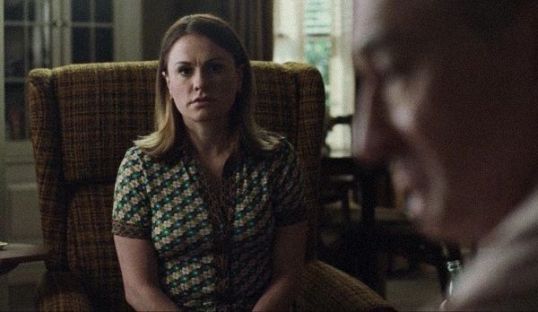
And then there’s Anna Paquin, who provides the film with its moral center. When the film was first released, many Twitter critics complained that Paquin, who played Frank’s daughter Peggy, only a had a handful of lines. It was one of the stupidest controversies of 2019, which is saying something when you consider how much time Film Twitter devotes to generating stupid controversies. Peggy doesn’t say much because she’s decided that she doesn’t want to be a part of her father’s life. From the moment that she first sees Frank beating up a store owner, Peggy knows that her father and his associates are violent men. She not only fears them but she resents the damage that Frank does to not only her family but to the families as other as well. The only one of her father’s associates who she likes is Jimmy Hoffa, because Hoffa cares about helping others. When Hoffa disappears, Peggy makes a decision to disappear from Frank’s life and Paquin’s withering stare says more than any lengthy monologue could. Peggy doesn’t say much because she knows that her words would be wasted on a man who she knows is a liar. The scene where she silently walks away from her now elderly father tells us everything we need to know about the emotional consequences of the life that Frank has chosen to live. Regardless of how many lines she did or didn’t have, Paquin gave one of the best performances of 2019.
Famously (or, depending on which critics you read, infamously), de-aging technology was used so that De Niro, Pacino, Pesci, and Keitel could play both the younger and the older version of their characters. At first, it can be a bit jarring. The de-aging works fine with Pesci and Keitel, both of whom are already supposed to be middle-aged when they first meet Frank. (Admittedly, Keitel only has a few minutes of screen time.) With De Niro and Pacino, it’s a bit less successful. Even when they’re playing younger versions of themselves, De Niro and Pacino still move and stand like old men. Fortunately, in the case of Pacino, his natural movie star charisma wins out over his obvious age. In the end, we believe that he’s Hoffa because we want to believe that all of our important historical figures were as interesting and entertaining as Al Pacino is in The Irishman.
And yet, ultimately, even the awkward de-aging works to the film’s advantage because it reminds us that we’re not necessarily seeing what happened. Instead, we’re seeing what Frank says happened. We’re seeing his memories, or at least what he claims to remember. It makes sense that, when Frank thinks about himself as a young truck driver in 1956, he would picture himself not as he was but instead as just a slightly less weathered version of who he would eventually become. Throughout the film, there are hints that Frank’s memory should not be trusted. Some of his stories are incredibly detailed while others — like when he transports weapons for the failed invasion of the Bay of Pigs — are a bit more vaguely presented. Is Frank lying or is he misremembering or are we just expecting too much detail from a man who is now essentially waiting to die? The film leaves that up for us to determine.
The Irishman is Scorsese at his most reflective. Compared to Goodfellas and Casino, The Irishman is certainly one of Scorsese’s less “flashy” films. But, on repeat viewings, it becomes cleat that The Irishman is the perfect conclusion to the gangster trilogy that began with Goodfellas and continued with Casino. All three of these films deal with someone who rises up the ranks in the mob while remaining, as a result of their ethnicity, an outsider. (Henry Hill and Frank Shearan are both Irish. Ace Rothstein was Jewish.) All three of them are briefly on top of the world and all three of them are left wondering how they’re going to continue their lives after their days at the top are over. In Goodfellas, Henry Hill makes no secret of his disgust at having to live in the bland anonymity of the suburbs. In Casino, Ace Rothstein ends the film with a mournful acceptance the fact that he will never return to his beloved Vegas. (“And that’s that.”) In The Irishman, Frank finally realizes that he has comes to the end of it all, alone and with nothing but death in his future. All three of them made their decisions and, in the end, all three of them are left to deal with the consequences. The trilogy goes from Henry’s anger to Ace’s depression to Frank’s acceptance.
It may seem strange to describe a film like The Irishman as being underrated, seeing as how it was nominated for 10 Oscars and got a Criterion release in record time. And yet, when the film first came out, there was a vague sense of disappointment to found in even some of the positive reviews. It was a Scorsese film that was so eagerly awaited and arrived with so much hype that there was no way it could live up to some of the expectations that had been set for it. (And, of course, there’s also a whole set of people who were predestined to dislike the film precisely because it was a Scorsese film and it was so anticipated.) It’s a long film and, while Netflix should be praised for allowing Scorsese the freedom to make his epic, it’s also not a film that should be viewed in bits and pieces on a tiny screen. The Irishman is a film that should be watched in one sitting and it’s definitely a film that most viewers should watch more than once. It takes more than one viewing to truly grasp the the world that Scorsese has recreated.
The Irishman was nominated for Best Picture. It lost to a worthy competitor, Parasite. Still, regardless of who took him the Oscars, The Irishman is a film that will live forever.