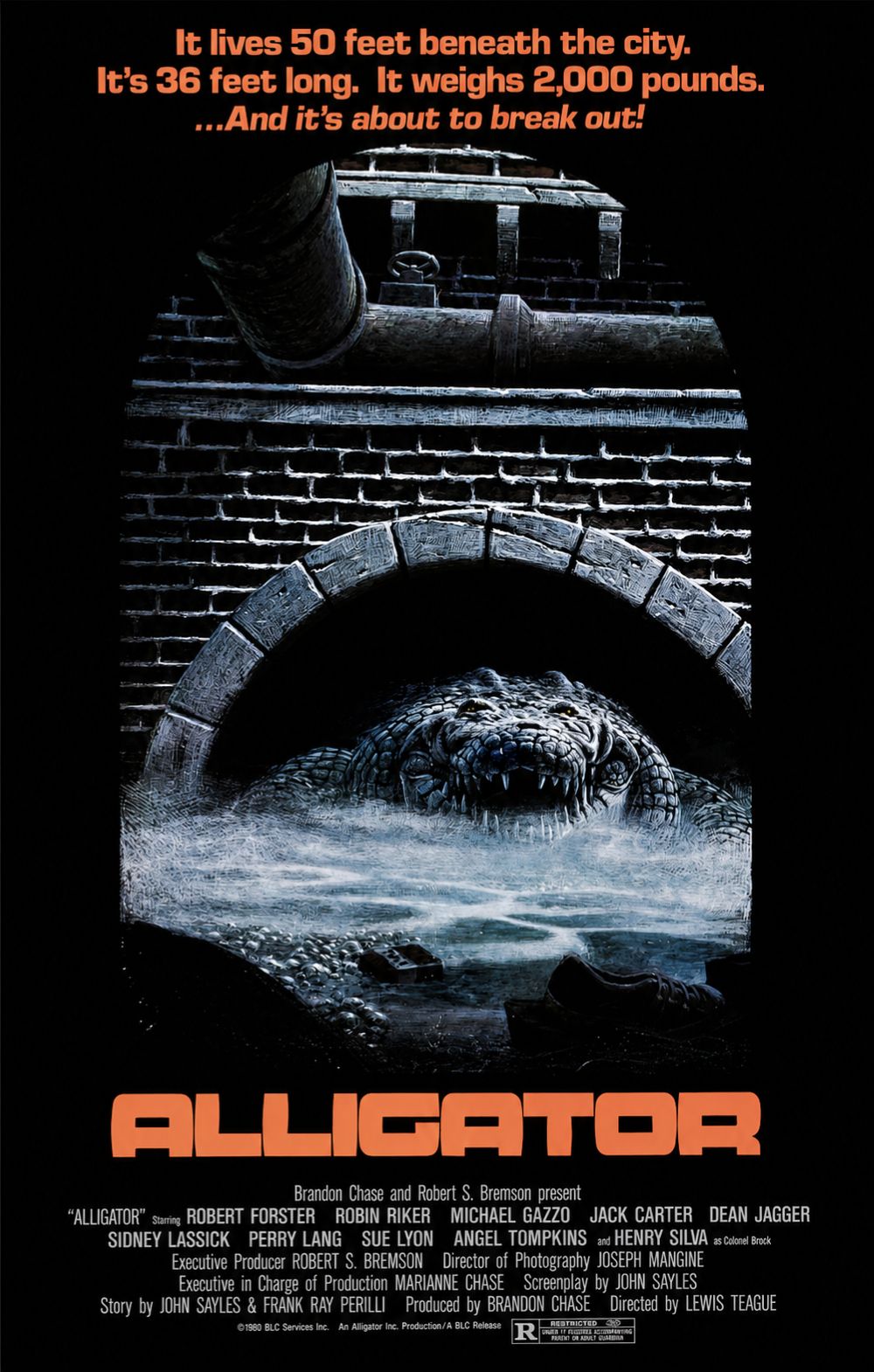
Guilty Pleasure No. 126: Alligator (dir. by Lewis Teague)


Lewis Teague’s Alligator is exactly the sort of movie that sounds like a bad joke until you sit down with it and realize it is having a much better time than most “serious” creature features. The premise is pure drive-in delirium: a baby alligator is flushed down a toilet, survives in the sewer system beneath St. Louis, Missouri, feeds on discarded laboratory animals pumped full of experimental growth hormones, and eventually becomes a gigantic, people-eating urban nightmare. It is absurd from the start, but that absurdity is the movie’s best asset. Alligator is not a good film in the polished, tightly controlled sense. It is too clunky, too broad, and too openly ridiculous for that. But it is never boring, and it understands that a movie about a giant alligator stalking the sewer tunnels under St. Louis should be grimy, nasty, funny, and just a little bit stupid.

The film arrives in that sweet spot between the straightforward animal-attack movies of the 1970s and the increasingly self-aware horror comedies of the 1980s. It has some of the structure of a Jaws knockoff, of course: authorities dismiss warnings, a difficult investigator takes the danger seriously, and a creature grows into an outsized public threat before the final confrontation. But Alligator does not have the resources, atmosphere, or aquatic terror of Spielberg’s film, and to its credit, it does not really pretend to. Instead, it leans into the cheapness of its materials. The alligator is mostly an oversized practical effect, sometimes convincing enough to be threatening and sometimes looking like the kind of thing that should be knocking over miniature buildings in a 1950s monster movie. The difference is that Teague knows how to frame the thing. He keeps the creature partly hidden when that helps, lets the sewer setting do much of the atmospheric heavy lifting, and saves the full ridiculousness of the monster for when ridiculousness is exactly what the audience wants.

There is an immediately appealing trashy logic to the story. The alligator is not simply an animal that wandered into the wrong place; it is a product of environmental carelessness, corporate experimentation, and the city’s tendency to throw its problems underground. The movie opens with a young girl’s pet alligator being flushed away after it bites someone, a cruelly comic act that functions as the film’s entire moral universe in miniature. Humans dispose of an inconvenient creature, neglect the consequences, and then act shocked when the creature becomes a gigantic murderous problem. The idea is broadly ecological and vaguely anti-corporate, but Alligator never becomes preachy. It keeps those elements in the background as an excuse for gore, sewer crawling, and a steadily escalating body count.

Robert Forster plays David Madison, a St. Louis cop with the permanently tired demeanor of someone who has been forced to listen to too many witnesses describe impossible things. Forster is a major reason the movie works as well as it does. He does not play the material like a joke, but he also does not strain to elevate it into prestige horror. His performance is dry, irritated, and completely appropriate for a man investigating missing-person cases that increasingly point toward a subterranean reptile large enough to eat a car. Madison is not a particularly complicated protagonist, but Forster gives him enough weary professionalism that the audience can follow him through the nonsense. His deadpan approach also makes the film funnier without turning it into outright parody.

The supporting cast is a strange, entertaining mixture of familiar character-actor energy and exploitation-movie weirdness. Robin Riker plays Marisa, a reptile expert and Madison’s eventual love interest, and she is better than the role strictly requires. She has a brisk, practical presence, which is useful in a movie where most characters either refuse to believe the obvious or exist to become alligator food. The romance between her and Madison is thin, but it is handled with enough low-key charm that it does not stop the movie cold. It feels like a necessary B-movie ingredient rather than a desperate attempt to convince viewers that they are watching something emotionally profound.

Then there is Henry Silva. Honestly, the presence of Henry Silva alone tells you what kind of movie Alligator is trying to be. Silva plays Colonel Brockman, a professional hunter hired by the evil pharmaceutical company to find and kill Ramon, the giant gator created by its illegal growth-hormone dumping. He is not the mastermind behind the scientific mess; he is the company’s hired cleanup crew, brought in once the whole operation has become too big and too toothy to bury. Silva approaches the role with exactly the degree of swaggering, oily menace it needs. He is here to be Henry Silva in a monster movie, which means glaring, sneering, and acting as though the chance to hunt a massive sewer reptile is simply another profitable afternoon at work. Every time he shows up, the movie gets a little more fun.

The screenplay comes from John Sayles, which is almost comically overqualified on paper, though it makes more sense once the dialogue starts landing. Sayles gives the movie flashes of wit and an edge of social satire that keep it from being totally disposable. There are jokes about cops, politicians, wealthy elites, and corporate corruption, and while none of them are especially subtle, they have the right bite for a film this grubby. The story’s best satirical impulse is its refusal to make the rich and powerful merely unlucky victims of the monster. The alligator’s rampage eventually collides with a wealthy social gathering, and the movie takes obvious pleasure in turning a fancy event into a feeding ground. It is not exactly The Texas Chain Saw Massacre in its class consciousness, but it does understand that watching an enormous reptile crash through the polished facade of upper-class respectability is satisfying.

Teague directs with the workmanlike confidence of someone who knows that the material only needs to get from one entertaining set piece to another. The sewer scenes are the film’s strongest visual material. They are damp, shadowy, cluttered, and full of the sort of industrial grime that exploitation cinema loves. The setting is inherently creepy because it is both unreal and plausible: everyone knows a city like St. Louis has tunnels, pipes, forgotten chambers, and places where things can disappear, even if nobody really believes a giant alligator lives down there. The movie uses that unease effectively. When characters descend into the darkness, the tension is simple but real. You know something huge is moving nearby, and you know the special effects are not going to hold up to close inspection, but the atmosphere carries you through.

The attacks are uneven, but that is part of the charm. Some are genuinely nasty, particularly when the movie lets the creature strike suddenly from the shadows. Others are so exaggerated that they become funny in ways the filmmakers likely anticipated. There is a particularly memorable moment involving a child and a swimming pool that has the gleefully tasteless punch of old-school grindhouse horror. Alligator is never as graphic as the nastier exploitation films of its era, but it has enough blood, torn bodies, and monstrous chomping to satisfy an audience looking for low-rent carnage. It knows the basic rule of this kind of movie: if you are going to ask viewers to accept a mutant sewer alligator, you had better let it eat some people.

What makes Alligator last beyond its premise is that it does not seem embarrassed by what it is. There are many creature features that feel apologetic, as if the filmmakers know they are making junk and are waiting for the audience to laugh at them. Teague’s film is junk, absolutely, but it is crafted junk. It has actual pacing, committed actors, useful atmosphere, and a screenplay that occasionally has more on its mind than the average monster-on-the-loose picture. It is bad enough that its flaws become part of the entertainment, especially whenever the huge reptile lumbers into view or the plot makes a leap that only makes sense if nobody involved pauses to think for ten seconds. Yet it is not so bad that it becomes a chore. That is the crucial distinction.

By the time Alligator reaches its climax, it has delivered nearly everything its title promises: sewers, corrupt businessmen, cops with guns, practical monster effects, socialites getting their comeuppance, and Henry Silva looking like he would gladly accept a corporate paycheck to hunt an enormous mutant reptile. It is the kind of film best watched with an appreciation for grime, excess, and the noble tradition of exploitation cinema turning a ridiculous idea into a perfectly decent Saturday-night monster movie. Alligator will not make anyone forget the great creature features, but it earns its place as a scrappy, trashy, oddly lovable B-movie. It is not awful. It is not even truly bad. It is just delightfully cheap, mean, and goofy enough to remind you why bad movies can sometimes be more fun than good ones.

Previous Guilty Pleasures

  1. Half-Baked
  2. Save The Last Dance
  3. Every Rose Has Its Thorns
  4. The Jeremy Kyle Show
  5. Invasion USA
  6. The Golden Child
  7. Final Destination 2
  8. Paparazzi
  9. The Principal
  10. The Substitute
  11. Terror In The Family
  12. Pandorum
  13. Lambada
  14. Fear
  15. Cocktail
  16. Keep Off The Grass
  17. Girls, Girls, Girls
  18. Class
  19. Tart
  20. King Kong vs. Godzilla
  21. Hawk the Slayer
  22. Battle Beyond the Stars
  23. Meridian
  24. Walk of Shame
  25. From Justin To Kelly
  26. Project Greenlight
  27. Sex Decoy: Love Stings
  28. Swimfan
  29. On the Line
  30. Wolfen
  31. Hail Caesar!
  32. It’s So Cold In The D
  33. In the Mix
  34. Healed By Grace
  35. Valley of the Dolls
  36. The Legend of Billie Jean
  37. Death Wish
  38. Shipping Wars
  39. Ghost Whisperer
  40. Parking Wars
  41. The Dead Are After Me
  42. Harper’s Island
  43. The Resurrection of Gavin Stone
  44. Paranormal State
  45. Utopia
  46. Bar Rescue
  47. The Powers of Matthew Star
  48. Spiker
  49. Heavenly Bodies
  50. Maid in Manhattan
  51. Rage and Honor
  52. Saved By The Bell 3. 21 “No Hope With Dope”
  53. Happy Gilmore
  54. Solarbabies
  55. The Dawn of Correction
  56. Once You Understand
  57. The Voyeurs 
  58. Robot Jox
  59. Teen Wolf
  60. The Running Man
  61. Double Dragon
  62. Backtrack
  63. Julie and Jack
  64. Karate Warrior
  65. Invaders From Mars
  66. Cloverfield
  67. Aerobicide 
  68. Blood Harvest
  69. Shocking Dark
  70. Face The Truth
  71. Submerged
  72. The Canyons
  73. Days of Thunder
  74. Van Helsing
  75. The Night Comes for Us
  76. Code of Silence
  77. Captain Ron
  78. Armageddon
  79. Kate’s Secret
  80. Point Break
  81. The Replacements
  82. The Shadow
  83. Meteor
  84. Last Action Hero
  85. Attack of the Killer Tomatoes
  86. The Horror at 37,000 Feet
  87. The ‘Burbs
  88. Lifeforce
  89. Highschool of the Dead
  90. Ice Station Zebra
  91. No One Lives
  92. Brewster’s Millions
  93. Porky’s
  94. Revenge of the Nerds
  95. The Delta Force
  96. The Hidden
  97. Roller Boogie
  98. Raw Deal
  99. Death Merchant Series
  100. Ski Patrol
  101. The Executioner Series
  102. The Destroyer Series
  103. Private Teacher
  104. The Parker Series
  105. Ramba
  106. The Troubles of Janice
  107. Ironwood
  108. Interspecies Reviewers
  109. SST — Death Flight
  110. Undercover Brother
  111. Out for Justice
  112. Food Wars!
  113. Cherry
  114. Death Race
  115. The Beast Within
  116. Girl Series
  117. Gone in 60 Seconds
  118. Swordfish
  119. Marked For Death
  120. The Internship
  121. The Angry Red Planet
  122. 2012
  123. Old School
  124. No Escape
  125. In Death Series

Horror Film Review: Alligator (dir by Lewis Teague)


1980’s Alligator begins in 1968.  While on vacation in Florida, a teenage girl named Marisa Kendall purchases a baby alligator named Ramon.  When she returns home to Chicago, her jerk of a father flushes Ramon down the toilet.

12 years pass.  Marisa (Robin Riker) becomes a herpetologist.  As for Ramon, he actually survives being flushed down the toilet and thrives in the sewer.  He eats the carcasses of animals that had been a part of an experiment involving a growth serum.  The serum had the desired effect of making the animals bigger but it also increased their metabolism to the extent that they became aggressive and had to eat constantly.  Evil industrialist Slade (Dean Jagger) is convinced that, by tossing the carcasses in the sewer, he’s ensured that no one will ever find out about the experiments.  Instead, he’s turned Ramon into a giant alligator who is always hungry.  Soon, the super-intelligent alligator is ambushing and eating sewer workers.

Burned-out Detective Dave Madison (Robert Forster) teams up with Marisa to solve the mystery of why so many body parts are turning up in the sewers.  It’s not easy.  No one wants to admit that there might be a giant alligator living under the city.  Everyone wants to believe that’s just an urban legend.  But, after a tabloid reporter (Bart Braverman) manages to snap a few photographs of Ramon before being devoured, the police are forced to deal with the fact that they’ve got an alligator on their hands.  As Slade continues to try to cover up his involvement, big game hunter Colonel Brock (Henry Silva) comes to town and announces that he will be capturing the alligator.

Directed by Lewis Teague and written by John Sayles, Alligator is a dark comedy disguised as a horror film.  While numerous people get eaten and the film ends on a properly ominous note, Alligator is obviously not meant to be taken seriously.  The cast is full of good actors who send up their own images.  That’s especially true in the case of Henry Silva, who appears to be having a blast as the hyper macho Colonel Brock.  Robert Forster, meanwhile, delivers his lines with a self-aware weariness that seems a bit more appropriate for a noir hero than a film about a detective investigating a giant alligator.  One reason why the film works is because Forster, Silva, and the rest of the cast understood exactly what type of film they were appearing in and they delivered their overheated lines with just enough wit to let the viewer know that the film was in on the joke.  The big and somewhat stiff-looking alligator may not look entirely real and it may move somewhat awkwardly but ultimately, it’s the most likable character in the movie.  It just wants to relax in the sewers but, every few minutes, someone else is bugging him.

When first released, Alligator struggled at the box office but it has since gone on to become a cult favorite.  Quentin Tarantino is a self-described fan and he had said he was inspired to cast Robert Forster as Max Cherry in Jackie Brown after seeing him as Dave Madison in this film.  That’s not bad for a movie about a giant alligator!

The TSL Horror Grindhouse: Fear City (dir by Abel Ferrara)


Welcome to Manhattan in the mid-80s!

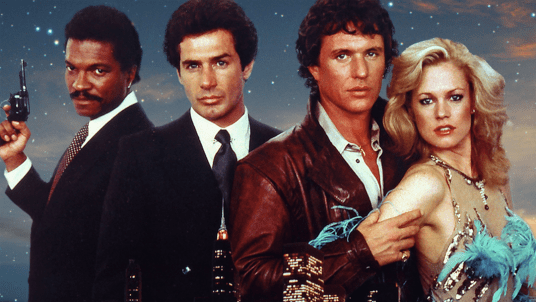
While self-righteous vice cop Al Wheeler (Billy Dee Williams) patrols the streets with the fury of an Old Testament prophet, men flock to seedy bars to watch women like Loretta (Melanie Griffith) dance and strip.  Mobsters like Carmine (Rossano Brazzi) control the streets while club owners like Mike (Michael V. Gazzo) and Frank (Joe Santos) try to do business and make enough money to keep things open.  Bookers like Nicky Parzeno (Jack Scalia) and Lou Goldstein (Jan Murray) compete to see who can place their girls in the most clubs.  Nicky’s best friend and business partner, Matt Rossi (Tom Berenger), is haunted by his violent past as a boxer and his failed relationship with the drug-addicted Loretta.

Meanwhile, a nameless man (John Foster) practices nude tai chai in his warehouse apartment and writes feverishly in his journals.  At night, he stalks the streets with a blade in his hand.  He targets strippers, attacking them as they try to get home from the club.  Honey (Ola Ray) is attacked on a subway platform.  Loretta’s girlfriend, Leila (Rae Dawn Chong), is attacked on the streets.  Obsessed with Loretta’s safety, Matt struggles with his own inner demons as he prepares for a final confrontation with the killer….

1985’s Fear City is another one of director Abel Ferrara’s heavily stylized fever dreams.  In typical Ferrara fashion, the plot is so sordid that one might be tempted to think that the film is meant to be a self-parody and the dialogue mixes profane insults with bizarrely philosophical asides.  As played by Billy Dee Williams, Al Wheeler is not just a cop who wants to clean up New York and Times Square.  Instead, he’s a seething soldier to traditional morality and one who is so intense that it’s something of a shock that he doesn’t just walk around New York shooting people for jaywalking.  Meanwhile, Tom Berenger’s Matt is a hulking brute who is haunted by the time he killed a man in the ring.  He knows what he’s capable of and it scares him but, in order to save Loretta and his business, he’s going to have to become that deadly boxer once again.  “I hate Matt Rossi because he’s arrogant,” Al Wheeler says through gritted teeth.  Meanwhile, Matt deals with his own issues by trashing his office and then leaving the mess for someone else to clean up.  I’m not sure what that was supposed to accomplish but it’s apparently something that Matt just has to do.

Abel Ferrara directed this film five years before King of New York and, in some ways, Fear City feels like a dry run for King of New York.  Both films are highly stylized and both present New York as being a neon-lit Hell where the rich and the poor come together in mutual self-loathing and where the criminals often have more of a code of honor than the cops who are trying to stop them.  Of course, King of New York had Christopher Walken’s magnetic performance as Frank White holding the film and its many storylines together.  Fear City doesn’t really have that.  Billy Dee Williams, Tom Berenger, Jack Scalia, and Melanie Griffith all give strong performance but none of their characters are really quite compelling or grounded enough to keep the film from spinning off into delirious excess.

In other words, Fear City is a mess but it’s one of those over-the-top, shamelessly sordid messes that you really can’t look away from.  There’s enough philosophical dialogue to confirm that, as with King of New York, Ferrara was shooting at something more than just a typical exploitation film.  Unlike King of New York, Ferrara doesn’t quite succeed in saying anything particularly deep about the human condition in Fear City.  But that’s okay.  It’s an entertainingly sordid film.

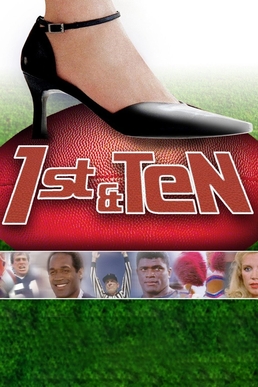
Late Night Retro Television Review: 1st & Ten 1.12 “Not Quite Mr. Right”


Welcome to Late Night Retro Television Reviews, a feature where we review some of our favorite and least favorite shows of the past! On Wednesdays, I will be reviewing 1st and Ten, which aired in syndication from 1984 to 1991. The entire series is streaming on Tubi.

Is this season over yet?

Episode 1.12 “Not Quite Mr. Right”

(Dir by Bruce Seth Green, originally aired on February 10th, 1985)

The Bulls are going to the “Championship Game!”

They should be getting ready for the game but instead, everyone’s distracted.

Wide receiver Mace Petty (Marshall R. Teague) has been cast in a movie where he will be co-starring with his favorite actor, Larry the Wonder Dog.

Diana is distracted when a former lover (Dennis Holohan) shows up and starts acting like he wants to get back together.

Denardo is distracted by the networks wanting to mic him up during the big game.  Everyone agrees that Denardo curses too much to wear a microphone.  Since this episode was edited for syndication, we don’t actually heard Denardo curse but we are assured that he does it.

This episode sucked.  Right when the football part of the show finally starts to get interesting, 1st & Ten does an episode that takes everyone off the field.  Now, I will add one caveat.  On Tubi, it appears that they are largely using episodes that were edited for syndication.  As a result, there was so pretty obvious dubbing (especially where Denardo was concerned) and some pretty abrupt jump cuts.  So, it’s totally possible that the HBO version of this episode might have been a masterpiece.  I doubt it, though.

Next week …. it’s not the Super Bowl.  It’s the Championship Game!

Late Night Retro Television Review: 1st & Ten 1.11 “Rona’s Fling”


Welcome to Late Night Retro Television Reviews, a feature where we review some of our favorite and least favorite shows of the past! On Wednesdays, I will be reviewing 1st and Ten, which aired in syndication from 1984 to 1991. The entire series is streaming on Tubi.

This week, the Bulls try to keep their season alive.

Episode 1.11 “Rona’s Fling”

(Dir by Bruce Seth Green, originally aired on February 3rd, 1985)

Rona (Ruta Lee) has been Diane’s best friend and biggest supporter since she first appeared during 1st & Ten’s pilot.  And yet I don’t think I’ve ever mentioned her in any of my review because her character just wasn’t that interesting.  She was a sarcastic society maven who was always drinking.  She was a bit of a sitcom cliche and I didn’t really see any need to waste a lot time on her character.

This episode, however, opens with Rona getting out of rehab.  She’s stopped drinking!  And she’s also met a guy, a fellow alcoholic.  Tim (Will Bledsoe) is a young and handsome and he and Rona have great sex.  Tim is also the Bulls’s new punter!  With Tim on the team, the Bulls are guaranteed to make it to the playoffs!  (I never knew punters were so important.)

Meanwhile, the Arcola Brothers are also determined to make sure the Bulls make it to the playoffs.  They bribe a referee.

The referee, however, is knocked out early in the game when two plays collide with him.  However, the Bulls win the game on their own, no doubt thanks to Tim and his amazing punting abilities!  Rona would be happy except she’s recently learned that Tim is married.  Tim was separated when he went into rehab but, once he got out, his wife fell in love with him all over again.

And that’s pretty much the episode.  It wasn’t a bad episode, even if the whole thing with the referee felt a bit anti-climatic.  Ruta Lee gave a good performance as Rona and I appreciated the fact that she was still sober at the end of the episode.  And, hey ….. The Bulls are going to the playoffs!

Thank God for the kicking team, I guess.

Late Night Retro Television Review: 1st & Ten 1.10 “Wine Time”


Welcome to Late Night Retro Television Reviews, a feature where we review some of our favorite and least favorite shows of the past! On Wednesdays, I will be reviewing 1st and Ten, which aired in syndication from 1984 to 1991. The entire series is streaming on Tubi.

This week, it’s hard to win a game when you’re star players are in jail.

Episode 1.10 “Wine Time”

(Dir by Bruce Seth Green, originally aired on January 27th, 1985)

When the Bulls are cheated by a fake vineyard owner named Jacques St. George (Peter Elbling), Bubba and Jethro (Cliff Frazier) end up in prison for attacking him.  Jethro is surprised to discover that their cellmate is an old friend of his named Mike (Eddie Bell).  Mike wears a long blonde wig and a dress.  Jethro doesn’t know what to make of it.  Mike explains that he likes “dressing like this” and says it’s no different from how much Jethro enjoys playing football.

Meanwhile, Diane is desperate to get Bubba and Jethro out of jail in time for their next game.  She even goes to Arcola Brothers for help but, in the end, she decides that she can’t compromise her morals by accepting favors from gangsters.  The team plays with Jethro and Bubba.  The team loses.

Meanwhile, Dr. Death (Donald Gibb) and Otis (Tiny Lister), two defensive backs, go to the hospital and threaten to toss Jacques out of a window until he agrees to drop the charges.

This episode actually had a few amusing moments, mostly due to the performances of Gibb and Lister.  I appreciated the fact that the team lost the game as opposed to pulling off some sort of last minute miracle.  Diane refused to compromise her principles and that’s a good thing.  But her solution was still basically to allow Dr. Death and Otis to threaten to kill a guy.  This episode sent some very mixed messages.

I will say this.  Michael V. Gazzo’s performance as Sal Arcola is one of the few things that I consistently enjoy about this show.  A playwright, Gazzo had a pretty good side career going as a movie and television mobster.  He’ll always be best remembered for playing Frankie in The Godfather, Part II1st & Ten is no Godfather but Gazzo is always entertaining.

Late Night Retro Television Review: 1st & 10 1.9 “I Only Read Defenses”


Welcome to Late Night Retro Television Reviews, a feature where we review some of our favorite and least favorite shows of the past! On Wednesdays, I will be reviewing 1st and Ten, which aired in syndication from 1984 to 1991. The entire series is streaming on Tubi.

Larry can’t read!

Episode 1.9 “I Only Read Defenses”

(Dir by Bruce Seth Green, originally aired on January 20th, 1985)

Larry, a veteran wide receiver on the Bulls, is informed that this will be his final season.  He’s played ten years and he’s given his heart to the game.  With his reputation for pulling pranks, he’s a popular guy in the locker room.  But, the time has come for Larry to move on.  Diane arranges for Larry to have a job interview with a PR firm.  Larry doesn’t show up for the interview.

“I can’t read!” Larry says when Diane confronts him.

“You’re a college graduate!” Diane exclaimed.

“I majored in football!” Larry replies.

What a sad story!  That said, it’s one that seems to happen a lot in real life.  As long as the plays are being made on the field, many colleges don’t worry about whether or not their players are graduating with the skills to earn a living once they stop playing.  Of course, as far as this show is concerned, the story would have been even sadder if we had ever seen or heard about Larry before this episode.  Seriously, Larry pops up out of nowhere and the viewer is just expected to act as if he’s been there the entire time.

At the end of the episode, Larry catches a game-winning pass and ensures the Bulls will be going to the playoffs.  Yay!  Larry also reveals to Diane that he’s enrolled in a course to learn how to read.  Yay again!  “Some of the guys in there are even older than me,” Larry says.

Meanwhile, the Arcola brothers are threatening to kill Roger again.  Roger has been pimping out two of the cheerleaders to members of the Arcola Crime Family.  Ruta fires one of the cheerleader and the other decides that she no longer wants to be treated like a prostitute.  Good for her!  Again, this is a storyline that would have been very effective if not for the fact that we’ve never seen these cheerleaders before.  One gets the feeling that the main cast wanted a week off so production came up with a collection of new characters to center the show around.

Next week — who knows?  I assume some football will be played.


Late Night Retro Television Review: 1st & Ten 1.5 “Play Me Or Trade Me”


Welcome to Late Night Retro Television Reviews, a feature where we review some of our favorite and least favorite shows of the past! On Wednesdays, I will be reviewing 1st and Ten, which aired in syndication from 1984 to 1991. The entire series is streaming on Tubi.

This week, an injury leads to the promise of sex …. or does it?

Episode 1.5 “Play Me Or Trade Me”

(Dir by Bruce Seth Green, originally aired on December 23rd, 1984)

Carl Whitherspoon, the star running back who is always demanding more money, is injured while filming a commercial for a rental car company.  (“Call OJ,” the commercial’s director says when it becomes obvious that Carl won’t be able to jump over any more luggage.)  The Bulls are struggling and Coach Denardo wants a championship but his star player is out for four weeks!

It’s time to trade!  Unfortunately, the only way that the Bulls are going to be able to get the running back they want is by trading their aging quarterback, Bob Dorsey.  Dana is upset about losing Bob but then she realizes she can finally have sex with him if he’s no longer a Bull and she decides that she’s okay with the trade.

But then the running back that the Bulls were hoping to trade for is injured so the trade is called off.  So, Dana can’t have sex with Bob.  But Bob still leads the team to victory.  Actually, the team wins because Bubba (Prince Hughes) blocks a field goal with his oversized ass.   (That’s not me being rude.  Bubba’s weight and the size of his ass is a running theme on this show.)  The Bulls are now 5-3 and I guess they don’t need a running back after all.

The main theme of this episode seemed to be that Dana needs to get laid.  I liked the chemistry between Delta Burke and Geoffrey Scott.  And the scene where Carl injured himself made me laugh just because of Sam Scarber’s over-the-top facial expressions as he crashed into a table.  Otherwise, this episode was pretty forgettable.

Late Night Retro Television Review: 1st & Ten 1.4 “The Slump”


Welcome to Late Night Retro Television Reviews, a feature where we review some of our favorite and least favorite shows of the past! On Wednesdays, I will be reviewing 1st and Ten, which aired in syndication from 1984 to 1991. The entire series is streaming on Tubi.

This week, cocaine comes to the locker room.  Actually, cocaine was probably already there.  Now, there’s more cocaine.  Football, right?

Anyway….

Episode 1.4 “The Slump”

(Dir by Bruce Seth Green, originally aired on December 16th, 1984)

This week’s episode starts off with some full front nudity as wide receiver Mace Petty (Marshall R. Teague) takes a shower with a blonde woman.  Suddenly, a bearded man steps into the shower, accuses Mace of seducing his wife, and points a gun at him.  OH MY GOD, IS MACE GOING TO DIE!?  (And who is Mace, anyway?)

Oh wait, it’s a prop gun.  Ha ha, it’s practical joke.  Those crazy Bulls.

With the required HBO nudity out of the way, the plot kicks off.  The Bulls are in a slump.  They’ve lost their past two games!  In order to turn things around, Diane makes a trade for a talented wide receiver.  (Ha!  TAKE THAT, MACE!)  Butch Cassidy (Michael Toland) may be a good athlete but guess who has a cocaine addiction!?  Butch is soon snorting in the men’s room.  When he has to take a drug test, he uses a groupie’s urine instead.  When the results come back, it’s announced that Butch is pregnant.  Butch is kicked off the team.  Maybe the Sundance Kid can take his place….

The good news is that The Bulls still win their next game, breaking the slump.  And Bob Dorsey earns Diana’s trust by telling her that Butch has a drug problem.  And the Arcola Brothers attempt to keep the Bulls from serving beer at the stadium is thwarted when Diana has a bunch of helicopter fly in the beer.  (That way, no one has to cross the picket line that the Arcolas have set up outside the stadium.)  Finally, Carl Witherspoon gets a new contract and the rest of the team gets jealous because Carl is now a “millionaire” but then Carl points out that he’s a terrible negotiator and he actually got screwed over on the contract.  He then agrees to take the team to Hawaii.  No wonder they won that game!

This episode was actually better than the previous three.  That doesn’t mean it was particularly good but still it wasn’t terrible.  (And that’s what we mean by “damning by faint praise.”)  If nothing else, Michael Toland gave a good performance as the cocky but self-destructive Butch Cassidy.  I also kind of like the chemistry between Geoffrey Scott and Delta Burke.  They’re good together.  As far as episodes of bad shows go, this was a good one.

Late Night Retro Television Review: 1st & Ten 1.3 “All Roads Lead To Dayton”


Welcome to Late Night Retro Television Reviews, a feature where we review some of our favorite and least favorite shows of the past! On Wednesdays, I will be reviewing 1st and Ten, which aired in syndication from 1984 to 1991. The entire series is streaming on Tubi.

This week, the Bulls are on the road!

Episode 1.3 “All Roads Lead to Dayton”

(Dir by Bruce Seth Green, originally aired on December 9th, 1984)

The Bulls are playing their second game in Dayton!  It’s a road game and Coach Denardo tells all of the players that they are expected to conduct themselves like gentlemen on the road.

“Booooo!” the team replies.

Denardo replies, “I know but the owner’s a broad now….”

Speaking of Dana Barrow, she has a lot to deal with.  The Arcola Brothers are still trying to muscle their way into the team’s business.  Meanwhile, her ex-husband, Paul (now played by Ben Cooper), is determined to get his team back.  At the hotel in Dayton, he and his sleazy lawyer arrange for Dana’s drink to be drugged so that the hotel’s assistant manager can rape Dana while being filmed by a camera hidden behind a two-way mirror.  They plan to leak the tape to the press and claim that Dana is a nymphomaniac who shouldn’t be allowed to own an NFL team.  Fortunately, quarterback Bob Dorsey stops by Dana’s hotel room to discuss an offer he’s gotten to become a sports commentator and he proceeds to beat the hell out of the assistant manager, shatter the mirror, and give the camera the finger.  And he wins the game!

Take that, Dayton!

He even scores an extra touchdown, just so the Mafia won’t make any money on their bets.

Take that, Arcola Brothers!

The episodes of 1st & Ten that are on Tubi are apparently a combination of episodes that were edited for syndication and the original HBO episodes.  The version that I saw of All Roads to Dayton was clearly the HBO original, as there was significant amount of cursing and quite a bit of nudity.  I get the feeling that those were the two main reasons that 1st and Ten found success when it first aired.  It certainly wasn’t for the acting or the storylines, neither of which were especially noteworthy.  That said, I’m from Dallas and I’ve heard all the stories about the Cowboys and Jerry Jones so I imagine that this episode’s depiction of a football team on a road trip was probably fairly tame when compared to the real thing.

As for this episode, Dana was a bit too naive to be believed.  Delta Burke actually gives a good performance as Dana but the scripts continually let her down.  We’re only three episodes in and Roger, the team’s general manager, has planted drugs in her house, caused Bob to get seriously injured during practice, and drugged her so that she could be raped in her hotel room.  I would seriously be looking for a new general manager at this point.  On the plus side, I do like Geoffrey Scott’s performance as Bob Dorsey.  He’s charming without being smarmy about it.

Next week …. more football stuff, I guess.