Brad reviews PHENOMENON (1996), starring John Travolta!


Born in 1973, I missed the first John Travolta phenomenon. I wasn’t even five years old when movies like SATURDAY NIGHT FEVER and GREASE were released. Now don’t get me wrong, I loved John Travolta as a kid. I remember watching GREASE at my cousins’ house when I was around ten, and we all loved it. Probably the movie I loved the most is Brian De Palma’s BLOW OUT from 1981. Fox 16 out of Little Rock loved to play that movie, and I thought it was so great. It was the mid-80’s when I was watching it, so his best work had been several years before. 

From the mid-80’s to the early 90’s, I was obsessed with renting videos at our local rental shops. Do y’all remember the crap that Travolta was putting out then… TWO OF A KIND (1983), PERFECT (1985), THE EXPERTS (1989), CHAINS OF GOLD (1990), etc? I remember wanting to watch RAMBO: FIRST BLOOD PART II at the movies when I was kid, and the theater in Conway, Arkansas was playing 2 movies: RAMBO and PERFECT. My mom insisted on PERFECT. So there we were, Dad, Mom, my older brother, me, and my younger sister in the theater watching PERFECT. It was an R-rated film, and Mom walked us out less than half an hour into the movie due to some guy putting his head under a woman’s skirt. I still remember the other patrons laughing at us as we walked out. This moment is burned into my psyche. Travolta did work on the hit LOOK WHO’S TALKING movies, but at the time, he got no credit because these were talking baby movies. It almost seemed like Travolta’s career had become something of a joke from the time I was a grade schooler all the way into my college years. I still loved him, but any time his name came up, the conversation was always about his good movies that were made years earlier contrasted against the crap he was in now. 

And then Tarantino’s PULP FICTION was released in 1994, he was absolutely incredible, and I was all about phase 2 of the John Travolta phenomenon. I watched just about everything he did over the next five years at the movie theater. During this remarkable stretch, I saw him in GET SHORTY, BROKEN ARROW, PHENOMENON, FACE/OFF, and many others. I revisited PHENOMENON again this week, and it took me back to that time when a 22 year old college student was rediscovering what a talented actor Travolta could be with the right material. 

George Malley (Travolta) is a likable “Everyman” who works as a mechanic in a small town in Northern California. On his 37th birthday, a mysterious flash of light knocks him over and changes everything. Suddenly he’s the smartest guy in town, and he can even move things with his mind. At first, his abilities amaze his friends and neighbors, but they soon begin to be afraid of him because they don’t understand him. George doesn’t understand why he’s so smart all of a sudden, but he’s falling in love with Lace (Kyra Sedgwick) anyway. The ultimate “answer” is somewhat realistic, and ultimately quite moving. 

Director Jon Turteltaub (WHILE YOU WERE SLEEPING, NATIONAL TREASURE) does a good job by focusing on George and his friends rather than the supernatural “mystery elements” of the plot. We may not understand exactly why George has these extraordinary abilities, but they mostly remain a backdrop in a story about love, friendship, and mortality. The film asks a simple question: How would we react if someone we’ve known all our lives is suddenly one of the most amazing people on earth? If you follow much social media these days, we know the answer. How often do we see people get torn down as soon as they show any exceptional ability? We even see this in our own families, and we see it in this movie as well. Watching the film 30 years later, that fact really sticks out to me. 

I’ve been a fan of PHENOMENON for three decades specifically because I love John Travolta’s performance in the movie. He’s just so likable, so when things start to go bad for him, we’re disappointed as well. He plays George as a man whose growing genius makes him want to help people even more. He’s so sincere that we never stop pulling for him, which is a true testament to Travolta’s incredible work. Kyra Sedgwick is amazing as well. As a mother and having been hurt before, her character takes her time letting George into her life, but once she does she goes all in. I love it. Forest Whitaker, Robert Duvall, and Jeffrey DeMunn all have outstanding moments that make the small-town community feel real. Their friendships specifically help provide an emotional strength that most films don’t have. 

PHENOMENON isn’t a perfect film, as it’s probably a little too long, and it may linger a little too much on vague “science.” However, it is a film that’s most interested in showing us a character who uses the gifts he’s been given to make life better for those around him while he can. It’s a timeless idea that gives PHENOMENON a power that has only grown stronger with time. It’s also a reminder that John Travolta has a magnetic screen presence. Beneath all of his charisma is an actor capable of tremendous warmth and vulnerability. At the end of the day, those are the kinds of characters we end up really caring about.

Review: The Shield (by Shawn Ryan)


“So, we cause a triple murder before breakfast, start a race war before dinner – that’s uh, that’s a pretty good day.” — Shane Vendrell

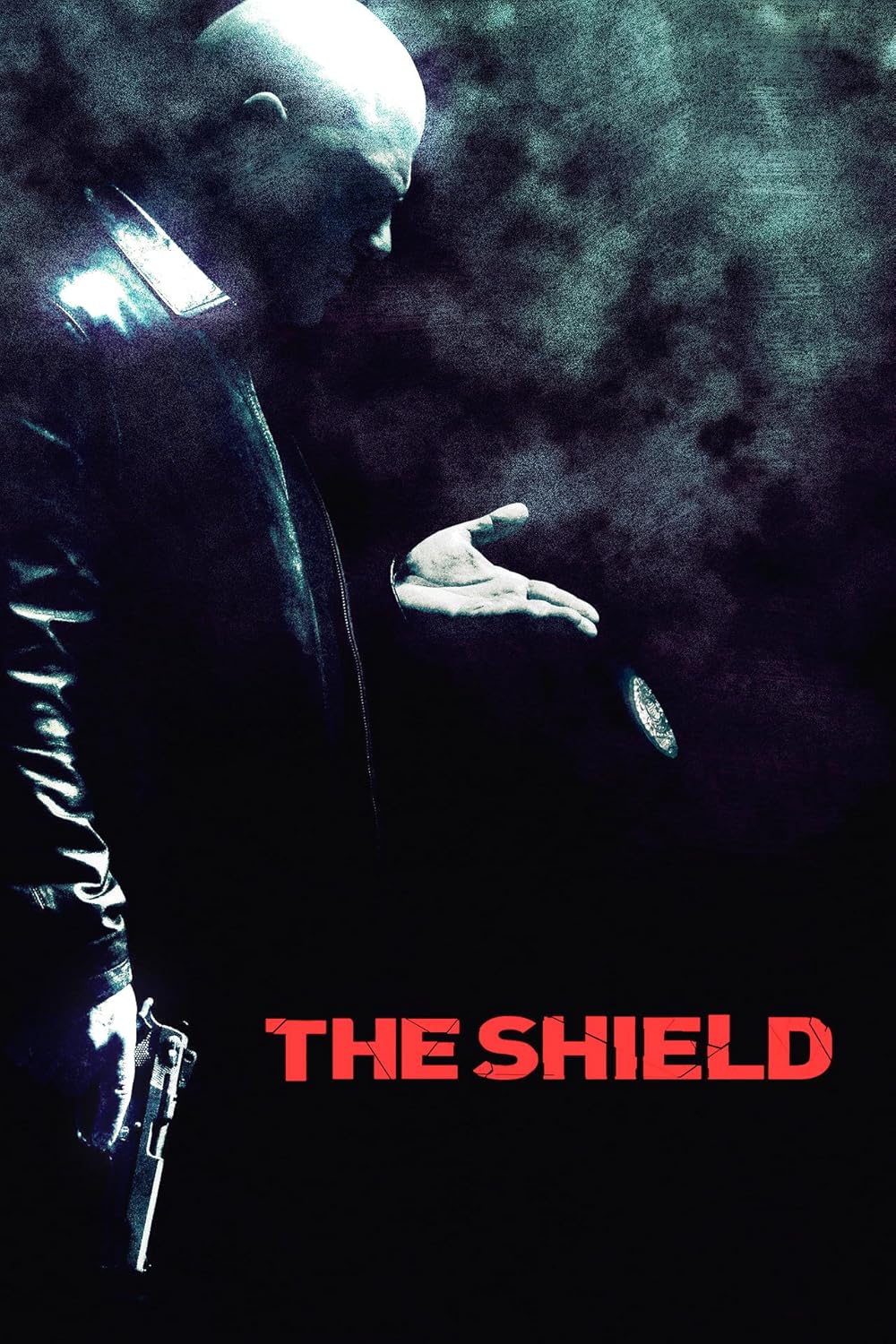
If you want to talk about the history of television, you basically have to divide the timeline into two distinct eras: before The Shield and after The Shield. When creator Shawn Ryan launched this gritty FX crime drama in 2002, the television landscape was a very different place. Sure, The Sopranos had already kicked down the door for premium cable, proving that audiences were hungry for complex, morally ambiguous anti-heroes. But basic cable was still largely seen as a graveyard for sanitized, formulaic network rejects. Then came The Shield, swaggering onto the screen with a chaotic energy that immediately changed the rules of the game. Running for seven intense seasons until 2008, the show didn’t just push the envelope; it set the envelope on fire and danced around the ashes. Looking back at it now, it remains a staggering achievement in storytelling that completely redefined what a cop show could be, sending shockwaves through basic cable, premium cable, and even Hollywood films.

The premise of the show sounds almost simple on paper, but its execution was anything but. The series follows the Strike Team, an elite anti-gang unit operating out of a rundown, overcrowded police station in the fictional Farmington district of Los Angeles. Leading this crew is Detective Vic Mackey, played with terrifying charisma by Michael Chiklis. Vic is not your typical television cop. He is not a flawed but ultimately noble hero who bends the rules to get the bad guys. Vic Mackey is, flat out, a criminal who happens to wear a badge. The show announces this immediately in the legendary opening scene of the pilot, where Vic murders a fellow police officer who is about to expose his corruption. It was a gut punch that served as a warning to the audience: you are not in Kansas anymore. From that moment on, you are complicit in Vic’s crimes because you are rooting for him to get away with them.

What made The Shield so brilliant was how it surrounded this monstrous central character with an incredibly rich ensemble cast that represented every facet of law enforcement. You had Shane Vendrell, Vic’s deeply insecure and ultimately tragic right-hand man, brought to life with jaw-dropping nuance by Walton Goggins. You had Claudette Wyms, the fiercely intelligent detective played by CCH Pounder, who spent the entire series fighting against the systemic rot embodied by Vic. And then there was Dutch Wagenbach, the deeply awkward, brilliantly analytical detective who provided a stark contrast to the Strike Team’s brute force approach. The show used these characters to explore the sheer exhaustion of police work. The Barn, as their station house was known, felt like a pressure cooker. It was a place where idealism went to die, crushed under the weight of endless caseloads, bureaucratic nonsense, and the depressing reality that the justice system is often deeply broken.

Visually and tonally, The Shield felt like a punch to the face. Ryan and his team utilized handheld cameras, harsh lighting, and a documentary-style grit that made the show feel dangerously real. There was no glossy cinematography or sweeping orchestral scores. The soundtrack was often just the ambient noise of the city, punctuated by sudden, shocking bursts of violence. This aesthetic choice was crucial because it stripped away the Hollywood glamour usually associated with police work. When Vic and the Strike Team kicked down a door, it didn’t look like an action movie; it looked like a chaotic, terrifying intrusion that left you feeling uneasy. This raw approach forced the audience to confront the physical and emotional toll of the job without any safety net.

When we talk about how The Shield redefined basic cable, it is hard to overstate its importance. Before this show, basic cable networks like FX were terrified of alienating advertisers. The Shield blew that hesitation out of the water by introducing unprecedented levels of profanity, nudity, and violence to non-premium television. But it wasn’t just about shock value; it was about authenticity. The criminals in Farmington talked like actual criminals, and the cops talked like actual cops who were fed up with the system. By proving that audiences would tune in in massive numbers to watch a show that didn’t hold their hand, FX essentially built its entire brand identity around The Shield. It paved the way for everything from Sons of Anarchy to American Horror Story, proving that basic cable could rival the creative freedom of HBO.

Interestingly, the success of The Shield also had a massive trickle-up effect on premium cable. HBO had been sitting comfortably as the king of prestige television, but suddenly a basic cable show was matching them punch for punch in terms of narrative complexity and character depth. Shows like The Wire and Breaking Bad (which debuted later on basic cable) owe a massive debt to the path Shawn Ryan blazed. The Shield proved that you didn’t need a massive HBO budget to create high art; you just needed a sharp script, fearless actors, and a network willing to take a risk. It forced premium cable to stop resting on its laurels and realize that the competition was no longer just the broadcast networks, but the upstarts on basic cable who were hungry for prestige.

The show’s influence even bled into the film industry, fundamentally altering the cop genre on the big screen. Before The Shield, the standard cop movie usually followed a fairly strict moral compass, or if it did feature a corrupt cop, like in Training Day, it was contained within a neat two-hour narrative arc. The Shield introduced the concept of the serialized corrupt cop. It showed audiences that the psychological unraveling of a dirty officer is much better suited to a long-form television format, where you can spend years peeling back the layers of their justification and paranoia. After The Shield, Hollywood started realizing that the simple “good guy versus bad guy” cop movie felt outdated. Films had to get darker, more ambiguous, and more willing to dwell in the gray areas of morality just to keep up with what was happening on television.

At the core of the series is a really fascinating, easy-to-understand analysis of utilitarianism versus deontology. In simple terms, Vic Mackey operates on the belief that the ends justify the means. He robs drug dealers, beats confessions out of suspects, and ruins innocent lives, but he argues that he is keeping the streets of Farmington safe. The show constantly challenges the audience to wrestle with this uncomfortable philosophy. Is a neighborhood actually safer if the people protecting it are worse than the criminals they are locking up? The Shield refuses to give you a tidy answer, which is what makes it so rewatchable. It presents a system where doing things the “right” way often lets the bad guys walk, while doing things the “wrong” way gets results but destroys the souls of everyone involved.

As the series moved into its later seasons, the narrative tension became almost unbearable. You cannot build a house on a foundation of lies and expect it to stand forever, and Vic’s world inevitably begins to collapse. The introduction of internal affairs, the escalating violence with the Mexican cartels, and the fracturing of the brotherhood between Vic and Shane created a tragic downward spiral that was riveting to watch. Walton Goggins’s portrayal of Shane’s descent into desperate paranoia is some of the best acting in television history. The show stopped being just about police corruption and turned into a Shakespearean tragedy about loyalty, betrayal, and the inescapable consequences of one’s actions.

The series finale of The Shield remains one of the greatest and most satisfying endings in television history. Without spoiling every detail, it manages to perfectly punish Vic for his lifetime of sins in a way that is far more cruel and poetic than simply sending him to prison or killing him. It is a masterclass in writing, wrapping up seven seasons of tangled plotlines and emotional baggage into a devastating final image. Vic Mackey gets exactly what he wanted, but he loses absolutely everything that made his life worth living in the process. It is bleak, brilliant, and completely uncompromising.

Ultimately, The Shield is a show that changed the DNA of television. It took the cop drama, stripped away all the nostalgia and hero-worship, and replaced it with a brutal, unflinching look at the cost of authority. Shawn Ryan and his incredible cast created a universe where the line between good and evil wasn’t just blurred; it was completely erased. It proved that audiences were smart enough to handle deeply flawed protagonists and narrative structures that refused to offer easy absolution. Whether you are looking at the rise of prestige basic cable, the evolution of the anti-hero on premium networks, or the dark turn that cop films took in the 2000s, you can trace the lineage right back to a rundown police station in Los Angeles. The Shield didn’t just redefine a genre; it helped build the modern era of television as we know it today, and for that alone, it demands to be remembered as an all-time great.

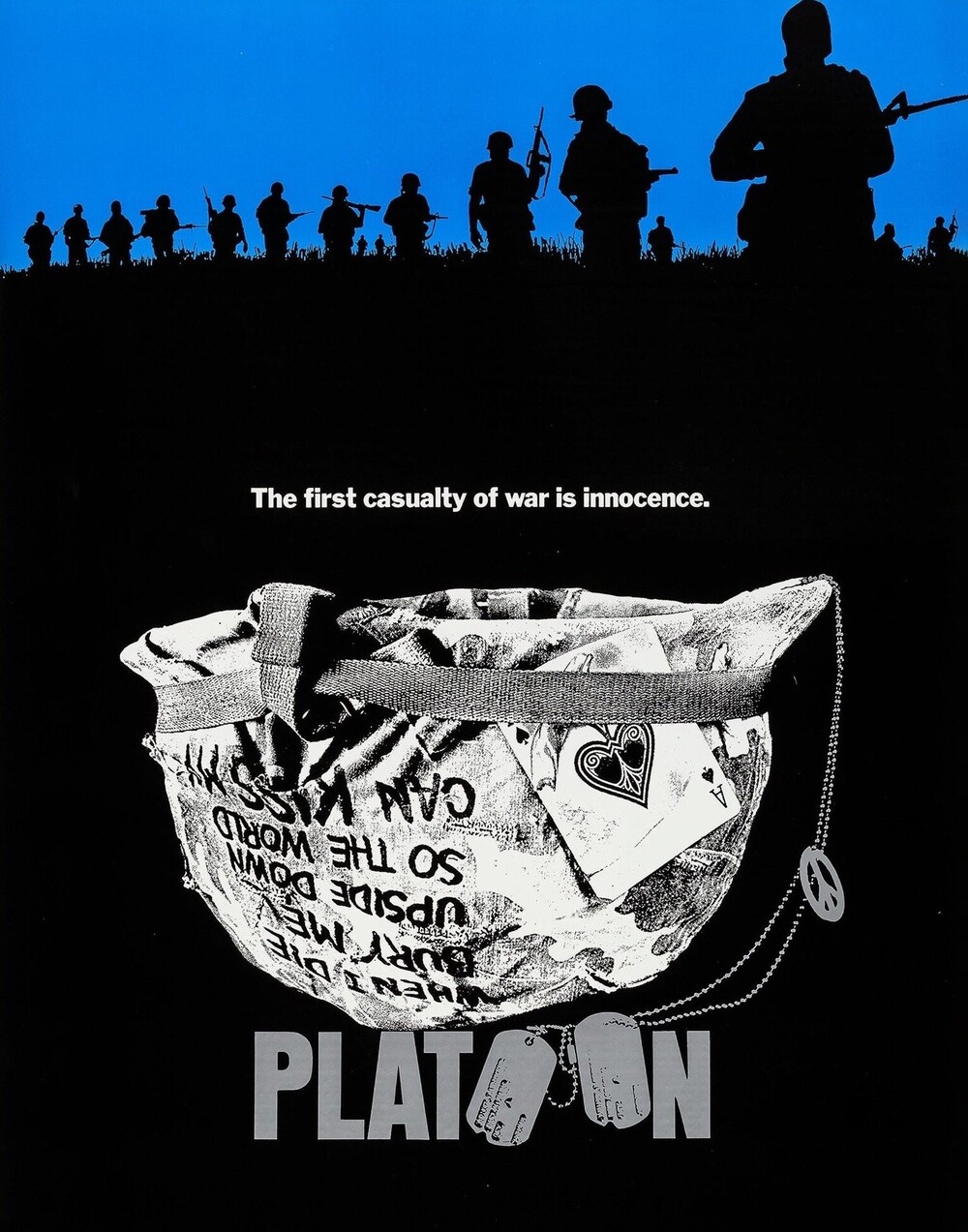
Review: Platoon (dir. by Oliver Stone)


“We been kicking other peoples asses for so long, I figured it’s time we got ours kicked.” — Sgt. Elias

Platoon is one of those war movies that still feels raw, mean, and strangely alive decades later. It is not just a Vietnam movie about combat; it is a movie about confusion, fear, moral collapse, and what happens when young people are dropped into a nightmare with no real sense of why they are there.

What makes Platoon hit so hard is that it never feels polished in a comforting way. Oliver Stone keeps the film close to the mud, sweat, and panic of the battlefield, but he also spends plenty of time on the uglier stuff that happens between firefights: the resentment, the paranoia, the bullying, and the way men start forming little kingdoms inside a war zone. That is where the movie gets its power. The bullets matter, but so do the silences and side glances, because those moments show how war breaks people down before it even kills them.

Charlie Sheen’s Chris Taylor is a smart choice for the center of the film because he starts out as a kind of blank witness. He is young, idealistic in a vague way, and clearly not prepared for what he has walked into. That makes him easy to identify with, but it also makes him useful as a lens for everything around him. We learn the rules of this miserable little ecosystem as he does. Through Chris, the audience is pulled into the same sense of helpless observation that seems to define the whole experience of the platoon.

Stone’s screenplay makes that connection even stronger because he wrote it himself, drawing on his own experience as a young man who volunteered to go to Vietnam instead of being drafted. That detail gives Chris Taylor’s story a personal charge, since Chris feels less like a fictional stand-in and more like Stone working through his own memory and guilt. It adds another layer to the film’s emotional weight, because the perspective feels lived-in rather than invented for dramatic effect.

The film’s real muscle comes from the conflict between Sergeant Elias and Sergeant Barnes, played with complete commitment by Willem Dafoe and Tom Berenger. Elias feels like the last thread of conscience in a collapsing world. Barnes, by contrast, is the kind of man war can easily turn into a weapon: hard, cold, frightening, and convinced that brutality is just realism with the sentiment stripped out. Their conflict gives the movie a mythic quality without draining away its grit. It is not subtle in the usual sense, but it does not need to be. Stone wants these figures to feel bigger than life because that is how they register to a terrified kid in the jungle.

One of the best things about Platoon is how it balances chaos with purpose. A lot of war films either try to turn combat into spectacle or turn it into a lecture. Platoon mostly avoids both traps. The action is ugly, disorienting, and often difficult to follow in exactly the right way. You do not watch these battles and admire the choreography as much as you feel the confusion of everyone inside them. The filmmaking keeps you from getting too comfortable, which is exactly the point. War here is not heroic; it is exhausting, degrading, and terrifying.

That sense of exhaustion matters because the movie understands that war is not made up of only the big moments people remember. It is made up of waiting, heat, boredom, fear, and the slow erosion of judgment. Platoon is at its best when it lingers on that middle ground. The soldiers are not always in immediate danger, but they are always under pressure. That constant tension is what makes the movie feel so oppressive. Even when nothing explodes, it still feels like something bad is about to happen.

Stone also deserves credit for making a Vietnam movie that feels personal without becoming self-congratulatory. You can feel that this comes from experience, but the film never becomes some smug “I was there” statement. Instead, it channels memory into mood, character, and atmosphere. That gives the movie a lived-in authenticity that a lot of war films chase but never quite reach. It feels like a film made by someone trying to tell the truth about a memory that never stopped hurting.

There is also something brutally effective about the way Platoon presents morality as unstable rather than cleanly divided. The movie does not really pretend that everyone is either noble or evil. Instead, it shows how stress, fear, resentment, and power can shove people toward terrible choices. That is a big reason the film still works. It understands that war does not just expose character; it distorts it. Men do things they would never do anywhere else, and the movie keeps asking what is left of a person after that kind of damage.

Still, Platoon is not perfect, and part of its reputation comes from how forcefully it makes its points. Some viewers may find it a little heavy-handed at times, especially in the way it frames innocence, corruption, and betrayal. It is not exactly a subtle film, and it does occasionally aim for emotional impact with both fists. But honestly, that intensity is part of its identity. The movie is not trying to be cool or detached. It wants to wound you a little, and for this material, that approach makes sense.

The performances help keep the film from tipping over into empty grandstanding. Dafoe brings a wounded humanity to Elias that makes him feel like more than just a symbol. Berenger gives Barnes a dangerous stillness that is often more frightening than outright aggression. Sheen, meanwhile, does the important work of holding the center without overpowering the film. He is not the flashiest presence, but he does not need to be. His job is to absorb the madness, and that gives the audience a place to stand inside it.

What lingers most after Platoon is not any single battle scene, but the feeling that the whole movie is about a collapse of trust. Trust in leaders, trust in comrades, trust in the idea that there is some larger meaning to all this suffering. The film strips those things away layer by layer until all that is left is survival and the hope that maybe, somehow, the nightmare will end. That is a bleak place to sit for two hours, but it is also why the film remains so effective. It does not romanticize the experience. It forces you to sit with its mess.

The movie also has a strong visual identity. The jungle is not just background; it feels like an active pressure on every scene. The humidity, the darkness, the mud, and the smoke all help create a world that seems hostile even when nobody is shooting. That physical texture is a huge part of the movie’s success. You can almost feel the environment draining the people inside it. It is less like watching a battle than like watching human beings slowly get swallowed by a swamp of fear and violence.

If there is a reason Platoon still gets talked about so often, it is because it captures a very specific kind of war movie truth: the enemy is not only out there. Sometimes the real damage comes from within the unit, within the chain of command, within the soldier’s own mind. That is a grim idea, but Platoon never feels empty or cynical for saying it. It feels honest. And honesty, in a movie like this, goes a long way.

In the end, Platoon is powerful because it refuses to let war look clean, noble, or emotionally tidy. It is messy, relentless, and often hard to watch, but that is exactly why it matters. It is one of the defining Vietnam films for a reason, and even with its blunt edges, it earns that status through sheer force of feeling, strong performances, and a bleak sense of truth that never really lets up.

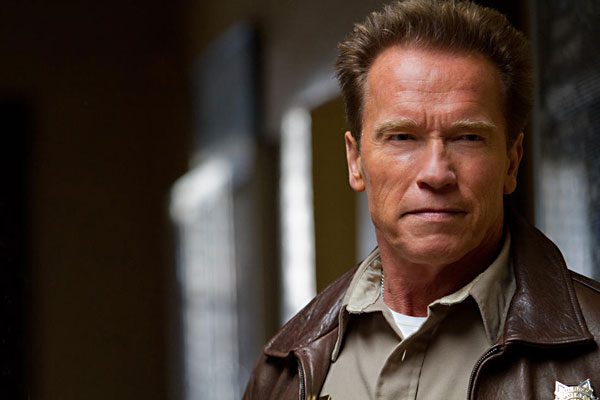
Brad reviews THE LAST STAND (2013), starring Arnold Schwarzenegger!


After eight years of serving as Governor of California, Arnold Schwarzenegger made his big comeback as an action movie star in director Kim Jee-woon’s THE LAST STAND (2013). Sure, he put in a little work on the first two EXPENDABLES movies, but those were really just glorified cameos. Here, Arnold was front and center for the film’s 107 minute running time. This was an exciting time for me, because like most action movie fans, I loved him and had truly missed seeing him consistently kicking butt and taking names on the big screen. I gladly made my way to the movie theater in January of 2013  for a large tub of ‘corn, a big Mr. Pibb, and the true return of an action megastar!!

In THE LAST STAND, Schwarzenegger plays Ray Owens, a former LAPD narcotics officer who chose to leave the big city and take a job as the sheriff of the quiet, southern border town of Sommerton, Arizona. It won’t be quiet for long after notorious drug kingpin Gabriel Cortez (Eduardo Noriega) makes a daring escape from FBI custody. Cortez immediately heads towards the border in a souped up Corvette where an advanced group of highly trained gunmen, led by Burrell (Peter Stormare), are waiting to help him cross. Cortez and his small army of mercenaries appear to be on a collision course with Sheriff Owens and his ragtag group of deputies, including Mike (Luis Guzman), Jerry (Zach Gilford), and Sarah (Jaimie Alexander). Knowing they’re outgunned and outmanned, Sheriff Owens asks for additional help from ex-military man and current drunk Frank Martinez (Rodrigo Santoro), as well as the crazy local gun nut Lewis Dinkum (Johnny Knoxville). Add to this mixture, FBI agent John Bannister (Forest Whitaker) and his team’s attempts to try to stop Cortez before he gets to Sommerton, and the stage is set for lots of action! 

I really liked THE LAST STAND when I saw it at the movie theater in 2013, and I really liked it again when I revisited the film this week. I made it a habit many years ago to not read reviews of a film before I go see it at the theater. I had found that reading potential negative comments could affect my viewing of a film, so I cut that out. As such, after totally enjoying myself with THE LAST STAND, I was surprised that the film wasn’t received very strongly by the audience or critical community, and I was even more surprised that it completely flopped at the box office, only bringing in a total of $12 million in the United States during its run. For me, the film delivered what I was looking for… Arnold Schwarzenegger kicking ass, spouting off some good one-liners, and outsmarting and outmuscling his much younger adversaries! No critic or keyboard warrior can take that away from me, as THE LAST STAND is an entertaining movie with a good cast. Heck, even the great Harry Dean Stanton pops in for a surprise cameo at the beginning of the action. 

I also appreciate the fact that THE LAST STAND is the American directorial debut of the great South Korean director Kim Jee-woon, who has directed some of my favorite South Korean films, including A BITTERSWEET LIFE (2005) and I SAW THE DEVIL (2010). His direction brings some Asian flair that results in stronger, more graphic violence, as well a penchant for jarring changes in tone between humorous character interplay and sometimes violent tragedy. In a movie designed primarily as a piece of entertainment, I appreciate those more over-the-top touches that lift it above the norm. 

Overall, I easily recommend THE LAST STAND to fans of Arnold Schwarzenegger and old-school action movies. It’s not a Schwarzenegger classic in the same way as movies like PREDATOR (1987), TERMINATOR 2 (1991), and TRUE LIES (1994), but it’s still a fun ride! 

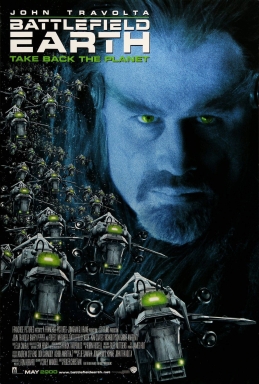
Film Review: Battlefield Earth (dir by Roger Christian)


After avoiding it for 25 years, I finally watched the infamous 2000 fiasco, Battlefield Earth, last night.

Battlefield Earth, based on a superlong novel by creepy cult guru L. Ron Hubbard, was a longtime passion project of John Travolta’s.  Travolta, a Scientologist, had long wanted to make a movie out of Hubbard’s science fiction epic and, on a hot streak following films like Pulp Fiction and Get Shorty, he finally did so in 2000.  He played Terl, a member of a giant alien race called the Psychlos.  The Psychlos have conquered Earth and humanity has regressed back to an almost prehistoric standard of living.  When a brave human, Johnnie Goodboy Tyler (Barry Pepper), defies his elders and proceeds to venture out into the ruins of Denver, he’s captured by Terl.  Eventually, Johnnie is shown a copy of the Declaration of Independence and it inspires him to lead a revolution against the Psychlos.

Battlefield Earth turned out to be just as bad as I had heard, a charmless wannabe epic that used far too many Dutch angles and relied on slow motion to try to create a heroic (or, in some cases, tragic) feel to the action.  The plot of the film felt like something recycled from an old 1930s serial, which makes sense when you consider that L. Ron Hubbard was a pulp writer before he decided to become a guru.  What I was not prepared for was just how mind-numbingly dull Battlefield Earth is.  Most bad movies can at least make the claim of being entertaining in their badness.  If nothing else, you can often admire them for their ambition.  Take a film like Plan 9 From Outer Space.  Plan 9 From Outer Space is often derided as being the worst film of all time but it’s still terrifically entertaining and there’s a likable earnestness at the heart of it.  Director Ed Wood may not have had a budget and his main star may have been present only through stock footage but, dammit, Wood was determined to make a science fiction epic that would double as a plea for world peace and he did just that.  There’s a heart at the center of Plan 9 From Outer Space and that makes it a film that you can mock but you never quite dislike.  For all the talk of Battlefield Earth being a passion project for Travolta, the end result is an empty and rather soulless film.

(I nearly listed Battlefield Earth as being one of our Icarus Files but then I remembered that Icarus at least managed to get close to the sun.  Battlefield Earth can’t even get out of Denver.)

Travolta’s career has never really recovered from Battlefield Earth.  He is an actor who can claim to have appeared in two of the biggest, most influential films of all time — Pulp Fiction and Saturday Night Fever — but his legacy appears to be walking around on stilts in Battlefield Earth.  As for Barry Pepper, he does probably about as well as anyone could with the role of Johnnie Goodboy Tyler but still, it’s sad to see a good actor wasted in such a bad movie.  (In fact, there’s quite a few good actors — Forest Whitaker, Kim Coates, Richard Tyson — wasted in this movie.)  From what I understand, the movie only covered the first 400 pages of Hubbard’s 1100-page novel.  Travolta had hopes to do a sequel but that’s not going to happen.

It’s for the best.  If people need to see a movie about L. Ron Hubbard’s belief system, they can always rewatch The Master.


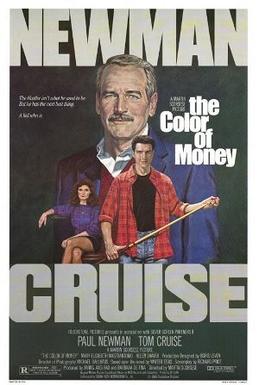
The Color of Money (1986, directed by Martin Scorsese)


ÀW

If you grew up in the 80s or 90s, you probably had at least one friend whose father kept a pool table in the garage.  This movie was probably the reason why.

Fast Eddie Felson (Paul Newman) was once The Hustler, the legendary pool player who recovered from having his fingers broken with a bowling ball and went on to defeat the legendary Minnesota Fats.  That was a long time ago.  Now, Fast Eddie is a slick liquor salesman in Chicago.  Eddie stills hangs out at the pool halls, despite his bad memories of the game.  When he sees a cocky young player named Vincent (Tom Cruise) and his girlfriend Carmen (Mary Elizabeth Mastrantonio), he takes them under his wing and teaches them how to hustle.  It’s not always easy because Vincent doesn’t like to lose, even if it means a chance to score an even bigger victory later on.  Eddie finds himself being drawn back into the game, even as he starts to wonder who is hustling who.

I always forget that The Color of Money is a Martin Scorsese films.  It’s a film that Scorsese made at a time when he had a reputation for only being able to make art films that critics loved but audiences stayed away from.  After the box office failure of The King of Comedy and his abortive first attempt to make The Last Temptation of Christ, Scorsese took The Color of Money to prove that he could work with a studio.  This is a Disney Scorsese film, with his signature camera moves but not much of his religious torment.  Even if it’s not one of his personal films, Scorsese makes pool look exciting, a battle that is as much about psychology as physicality.  Watching The Color of Money, you can smell the chalk on the tip of the pool cue.

Scorsese brings the seedy pool halls to life but it’s Paul Newman’s performance that dominates.  The Color of Money won Newman his first and only Oscar and he deserved it.  Newman had first played Fast Eddie Felson in 1961, in The Hustler.  Returning to the role twenty-five years later allowed Newman to show what would eventually happen to the angry young men that he played in the 60s.  Eddie has grown up and he’s got a comfortable life but he’s not content.  He finally has stability but he misses the game.  He needs the thrill of the hustle.  Newman is at his best in The Color of Money, building on The Hustler but also revealing new sides of Eddie Felson.

Newman is so good that Tom Cruise often gets overlooked but both Cruise and Mastrantonio hold their own against Paul Newman.  Cruise especially does a good job as Vincent, playing him as someone who is too cocky for his own good but also not as dumb as he looks.  Just when you think you’ve got Vincent figured out, Cruise surprises you.  The Color of Money came out the same year as Top Gun and Cruise’s Vincent feels like a commentary on the talented, troubled, but cocky characters that Cruise was playing at that time.  Cruise, Scorsese, and Newman make a good team in this more-than-worthy sequel.

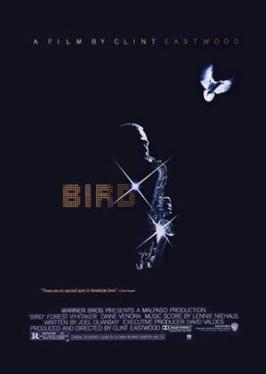
Bird (1988, directed by Clint Eastwood)


Forest Whitaker stars as the legendary saxophonist Charlie “Bird” Parker.  The film, which is structured around flashbacks and time jumps and features some of the most beautifully-done transitions that I’ve ever seen, follows Parker as he plays his saxophone, challenges the jazz purists who his own individual style, and looks for work in both America and France.  Along the way, we watch as he befriends and learns from Dizzy Gillespie (Samuel Wright), mentors a young trumpet player named Red Rodney (Michael Zelniker), and has a complex relationship with a white jazz lover named Chan Parker (Diane Venora).  Throughout his life, Charlie Parker struggles with his addiction to heroin and alcohol, occasionally getting clean to just then fall back into his habit.  To its credit, the film avoids most of the biopic cliches when it comes to portraying Parker’s addiction.  Parker accepts that he’s an addict, just as he accepts that he has a talent that is destined to revolutionize American music.

Director Clint Eastwood has always been a fan of jazz and he actually saw Charlie Parker perform when he was a young man.  His love of jazz had been present in almost every modern-era film that he has directed, staring with Play Misty For Me’s lengthy trip to the Monterey Jazz Festival.  Bird was a passion project for Eastwood, the first film that Eastwood directed without also appearing in.  (Eastwood doesn’t star in his second directorial effort, Breezy, but he does have a brief and silent cameo as a man standing on pier.)  Eastwood takes a nonlinear approach to telling the story, eschewing the traditional bopic format and instead putting the focus on Parker’s music.  Eastwood was able to get several never bef0re-released recordings of Parker performing and, when Whitaker is blowing into his saxophone in the film, we’re actually hearing Parker.  Eastwood’s direction captures the smoky atmosphere of the jazz clubs where Parker and Gillespie made their name while the nonlinear style reflects the feeling of just letting a song take you to wherever it’s going.  This is a movie about jazz that plays out like a jazz improvisation.

Forest Whitaker gives an amiable and charismatic performance as Charlie Parker, playing him as someone who has found both an escape and peace in his music, even as he physically struggles with the ravages of his drug addiction.  Whitaker won the Best Actor at Cannes for his performance in Bird.  Eastwood received the Golden Globe for Best Director.  Bird feels like it was labor of love for both of them.  Bird may not have set the box office on fire when it was originally released but it remains one of the best jazz films.

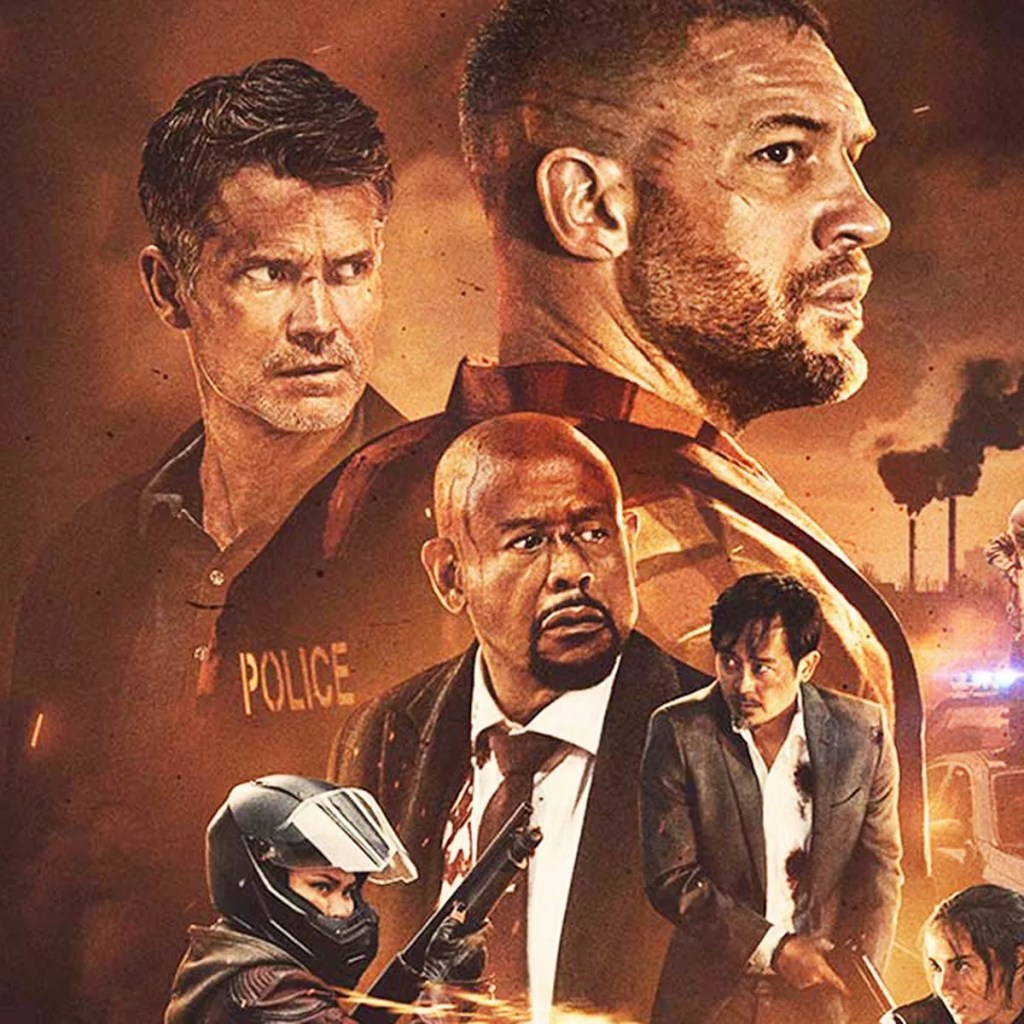
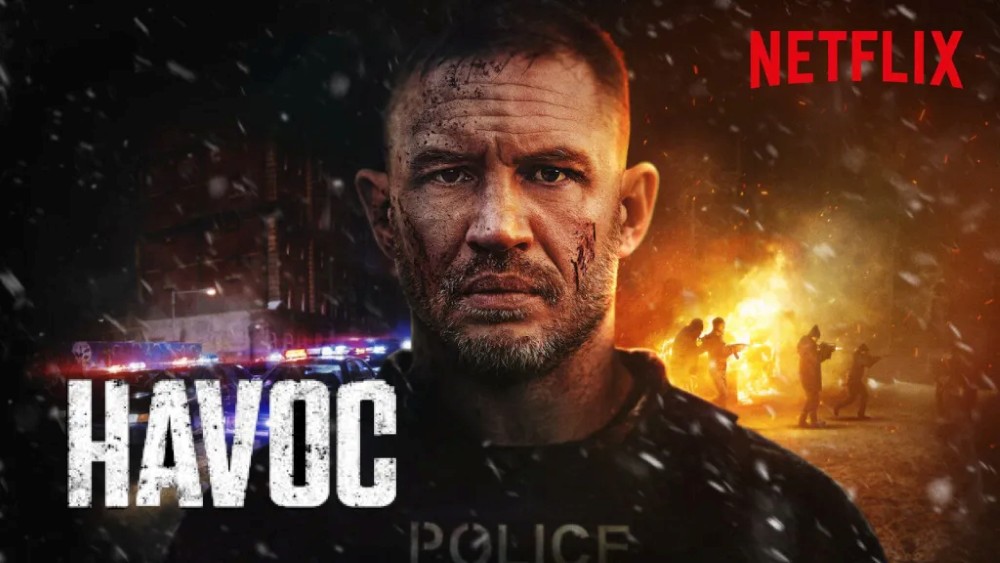
HAVOC (2025) review – Director Gareth Evans returns to action cinema! 


If you enjoy bone-crunching action filmmaking, Gareth Evans’ films THE RAID (2011) and THE RAID 2 (2014) are as good as it gets in the 21st century. When I saw that Evans had a new film coming to Netflix that stars a badass looking Tom Hardy, I have to admit I got excited. The trailer only increased my anticipation with its promise of stylized, intense action, as well as a cast that includes personal favorites like Timothy Olyphant (JUSTIFIED T.V. Series) and Forest Whitaker (GHOST DOG). I settled in front of my TV and hit play, with high hopes for HAVOC!

The film opens with conflicted police detective Walker (Tom Hardy) sharing words of regret via voiceover, and then immediately shifts to a high speed chase between an 18 wheeler and a bunch of cops. It is an intense scene that ends with washing machines filled with cocaine being thrown onto a trailing cop car! We soon learn that the big truck was being operated by Mia (Quelin Sepulvida) and Charlie (Justin Cornwell), the son of ethically challenged businessman Lawrence Beaumont (Forest Whitaker). It seems Charlie and Mia stole the drugs to pay off her debts to Chinese triads. When they go to a club to deliver the drugs, a group of masked men proceed to interrupt the drop and kill everybody, including the beloved son of the triad’s leader Tsui (Yann Yann Yeo). When Walker sees Charlie on security footage from the club, he goes to Beaumont, a man who knows his dirty secrets, and makes a deal. He’ll get his son back, and they’ll be square for life. Soon the triads are in town ready to hunt down and kill Charlie and Mia, who they believe are responsible for the massacre. Add to that a group of corrupt cops, led by Vincent (Timothy Olyphant), who also want Charlie and Mia dead, and detective Walker and his new partner Ellie (Jessie Mei Li) have their hands full on Christmas Eve! 

Here are some observations after my first viewing of HAVOC. First, Tom Hardy is a badass in the central role as Walker. I’ve been a fan of Hardy ever since he started breaking out in America after his performance in BRONSON (2008). I really loved him as Mad Max in FURY ROAD (2015). I’d never really envisioned him as this kind of action lead, but he definitely brings a certain gravitas to the role. Second, this movie feels like a bone crunching super hero movie at times, as it’s chock full of special effects. I found the action sequences featuring gunplay and hand to hand combat to be brutally awesome, but the car chase scenes aren’t quite up to the same standard. I mentioned the 18 wheeler chase in the plot description. As the scene plays out it’s a lot like watching an unrealistic chase scene from a later sequel to THE FAST AND THE FURIOUS franchise. It’s an exciting scene in a lot of ways, but it doesn’t seem set in the real world, which is a slight subtraction for me. Third, the movie is set on Christmas Eve, and I enjoy films that take place on holidays. We have a scene early in the film where “Father of the Year” Walker is buying his daughter’s Christmas gifts at a local convenience store. A little later, there’s a cool abduction scene that plays out to the sound of Bing Crosby singing “O Holy Night.” That’s good stuff. Fourth, director Evans seems to be trying to channel the spirit of 80’s and 90’s John Woo, as his film features an endless arsenal of weaponry, coupled with high emotions, and even a little classic music from an iconic scene in Woo’s own A BETTER TOMORROW (1986). No matter how many rounds are fired, there’s always more bullets or guns to be found as the last half of the film is almost nonstop action spread out over two amazing sets, first in a club and then at a cabin. And both of our featured parents, murderous triad leader Tsui and corrupt businessman Beaumont, get a chance to show their human sides by illustrating their sacrificial love for their children. Although HAVOC most certainly does not compare favorably to Woo’s HARD-BOILED, I can also see that Hong Kong classic being referenced here. Fifth, I’m a big fan of Timothy Olyphant, especially of his character Raylan Givens in the TV series JUSTIFIED. I had to forget Raylan on this night because his character here is an irredeemable piece of crap. Of course, Olyphant is excellent and delivers his evil with a smile on his face. 

Overall, I enjoyed HAVOC, but I don’t think it’s quite as good as either of the director’s RAID films, and that’s okay. I’d probably go with a solid 7 stars out of 10 for a rating. I love Hardy and Olyphant, who both bring their tremendous charisma to the table. I also enjoyed the many cool moments throughout the film leading to the action extravaganza that plays out at the end. It will be interesting to see how often I want to go back to this film in future years. I do know that if you enjoy action movies, you should definitely watch this film. Just don’t expect another RAID 2.

Trailer: Havoc


Chad Stahelski has gotten a large share of kudos for reinvigorating the action genre the last ten years (deservedly so). Yet, one director seems to have been forgotten despite having directed two of the most action-packed and brutal action film of the last 15 years.

I am talking about Welsh-filmmaker Gareth Evans of The Raid and The Raid 2 fame. His work on these Indonesian martial arts action films have been celebrated for years, yet Evans hasn’t really been given a chance by the major studios with any major projects.

Since leaving Indonesia and going back the UK, Evans has made one film (The Apostle) and an action series (Gangs of London). The former was distributed by Netflix and its through them that Evans returns to the scene with another film that looks to be as brutal and action-packed as any he has made in the past.

Havoc stars Tom Hardy who may be competing with Gerard Butler for anti-hero of the 2020’s as he sports such a grizzled and beaten down look as a detective who must navigate his through the corrupt underworld and politics of the city in order to save a politician’s son.

The official and final trailer for Havoc is now out just weeks before it premieres on Netflix on April 25, 2025.

Lisa Marie Reviews An Oscar Winner: The Crying Game (dir by Neil Jordan)


Directed by Neil Jordan and first released in 1992, The Crying Game opens at a fair in Northern Ireland.  A black British soldier named Jody (Forest Whitaker) meets a flirtatious woman named Jude (Miranda Richardson).  Jude leads Jody away from the fairground.  Jody thinks that they’re going to have sex but instead, he ends up getting kidnapped by Fergus (Stephen Rea) and Peter Maguire (Adrian Dunbar).  As Peter explains it after Jody is taken to an abandoned cottage, the soldier is now a prisoner of the Irish Republican Army.

Jody is left in a dark room, tied to a chair and with a canvas bad over his head.  Fergus is often left to guard him.  Despite Peter’s explicit orders, Fergus talks to Jody and the two men strike up an uneasy friendship.  Fergus removes the bag from Jody’s head.  He even reveals his name.  Jody and Fergus talk about their lives.  Jody says he joined the Army and was immediately sent to the most racist part of the UK.  Fergus replies that his only issue with Jody is that “you shouldn’t be over here.”  Jody talks about his love of cricket.  Fergus talks about his love of hurling.  Fergus sees a picture of Jody with his lover, Dil (Jaye Davidson).  Fergus comments that Dil is attractive.  “She’s not your type,” Jody replies.

Peter warns Fergus not to become friends with Jody because there’s a good chance that they’re going to have to execute him.  And when the British refuse to exchange prisoners, the order does come down to carry out the execution.  Fergus demands that he be allowed to carry out the shooting.  However, as he leads Jody out of the cottage, Jody breaks free.  Fergus chases him but, as they reach a nearby road, Fergus realizes that he can’t bring himself to kill Jody.  Unfortunately, Jody is still killed when he’s run over by a British army truck.

Fergus flees to London and, after getting a job as a construction worker, he tries to lay low and track down Dil.  Dil, however, turns out to be not quite was Fergus was expecting.  It turns out that Jody didn’t reveal every aspect of his life while he was trapped in that cottage.  Meanwhile, Jude and Peter both show up in London and demand that Fergus help them execute “some judge.”

The Crying Game is a twisty and engaging thriller, one that is best known for the twist involving Dil’s identity but which is also a thought-provoking look at the assumptions we make about each other and the roles that people feel forced to play.  Fergus doesn’t really have it in him to be a terrorist or an assassin but it’s the role that he feels he’s been forced into by his desire to see the British leave Northern Ireland.  Jody turns out to have a few secrets of his own and, once their revealed, his eagerness to go off with Jude is seen in an entirely new light.  Jude and Peter present themselves as being honorable freedom fighters but their actions often seem to suggest the opposite.  In the end, the only character who is truly comfortable with their nature is Dil.  Both Stephen Rea and Jaye Davidson more than deserved their Oscar nominations.  Their chemistry goes a long way towards making this a thriller that sticks with you.

The Crying Game was nominated for several Oscars but lost the majority of them to Unforgiven.  (Both Stephen Rea and Clint Eastwood lost Best Actor to Al Pacino for Scent of a Woman.)  However, Neil Jordan did win an Oscar for his clever screenplay.  Rea has continued to act.  Davidson, who reportedly hated the fame that came with appearing in The Crying Game, appeared in one more film before retiring.