Several states voted on Tuesday. Everyone was able to quickly count their votes …. except for California. Poor Spencer Pratt. I would have voted for him but it doesn’t look like he’s going to be the next mayor of Los Angeles. With each new update, he’s falling behind and it looks like the whiny commie no one took seriously will be in the run-off instead. It’s funny how this always happens in the state that takes over a month to count the votes. That said, it could also be argued that the results coming out of Los Angeles are a reminder that getting attention online doesn’t necessarily translate into votes on the ground. There’s a lesson there for us all.
The Facts of Life (Tubi)
I was having a panic attack on Wednesday night so I calmed myself down by watching random episodes of this slightly cringey 80s comedy. I ended up getting the theme song stuck in my head. If you hear them from your brother, better clear them with your mother….
The Hillside Strangler (HBOMax)
Yet another serial killer documentary. Cousins Kenneth Bianchi and Angelo Buono killed a still undetermined number of women in Los Angeles in the 1970s. Bianchi claimed that he had a second personality that was responsible for the murders. Fortunately, the jury did not believe him and he is currently serving a life sentence. Buono died in prison. Good riddance.
Impact x Nightline (Hulu)
This week, I watched an episode about the heart-breaking Kristen Smart case. Though Paul Flores has (after 20+ years) finally been convinced of murdering Smart, her body has yet to be recovered. I cannot imagine the pain that Smart’s family has been put through. This is actually a case that I’ve been following for a while, even before it became the subject of podcasts. It’s not just that Paul Flores murdered Kristen. It’s that he was so damn cocky about it. He really thought he would get away with it.
Susan Smith: Sex Behind Bars (Reelz)
This short documentary about Susan Smith, a young mother who drowned her children and then tried to blame it on an imaginary black carjacker, and the sexual affairs that she had with two correctional officers in prison was exploitive and icky. And yet, I watched it. So, shame on me.
“The thing that’s always worried me about being one of the few is the way we keep on getting fewer.” — Flight Officer David Campbell
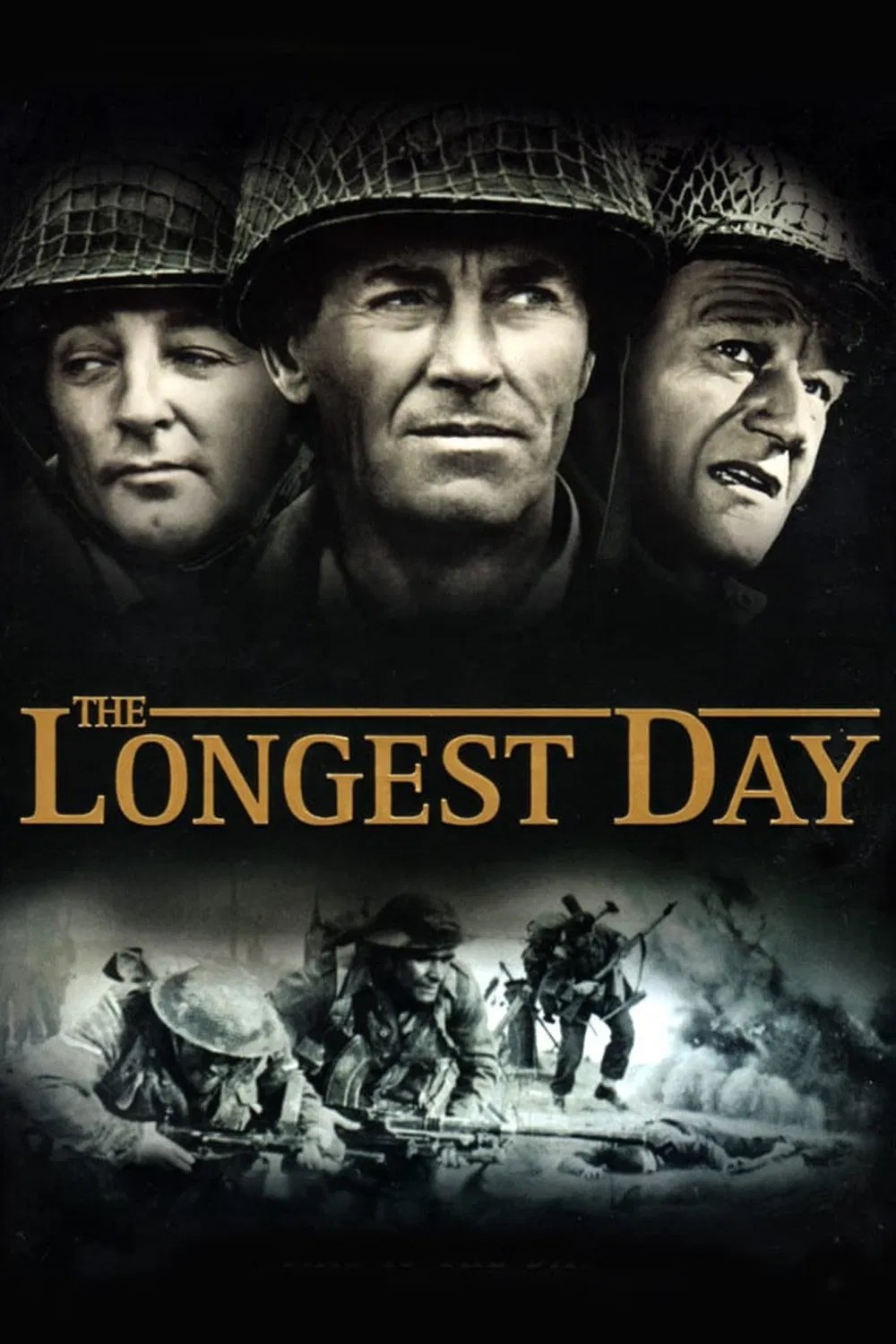
You could be forgiven for thinking that a three-hour black-and-white war epic from 1962 about the D-Day landings might feel like homework. The Longest Day sounds exactly like the kind of movie your history buff uncle would insist you watch, and you’d brace yourself for stiff acting, dated effects, and a flag-waving tone that hasn’t aged well. But here’s the surprise: this thing still cooks. It’s massive, messy in the best way, and surprisingly modern in its storytelling. Directed by a quartet of filmmakers—Ken Annakin for the British sequences, Andrew Marton for the Americans, Bernhard Wicki for the Germans, and with uncredited help from John Wayne’s own ego (more on that later)—The Longest Day isn’t one movie. It’s five or six movies crammed into a single sprawling canvas, and somehow that chaotic energy works perfectly for a story about the chaos of June 6, 1944.
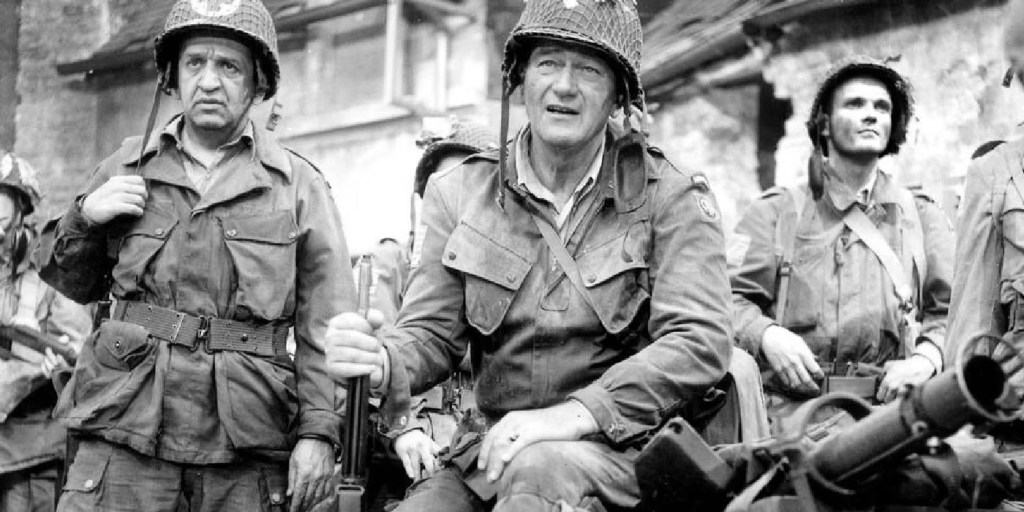
First, let’s talk about the elephant in the room: the cast. It’s absurd. John Wayne, Robert Mitchum, Henry Fonda, Sean Connery, Richard Burton, Rod Steiger, Robert Wagner, Curt Jürgens, and a young Gert Fröbe (the future Goldfinger) are just the headliners. There are about forty other recognizable faces popping up for two minutes of screen time. You half expect a narrator to say “and that guy from that thing.” But here’s the trick: The Longest Day uses star power not as distraction but as shorthand. When you see John Wayne playing Lt. Col. Benjamin Vandervoort, you don’t need a backstory. You just know he’s the tough, unkillable leader. When you see Henry Fonda as Brig. Gen. Theodore Roosevelt Jr., you read quiet dignity and grit. The movie trusts that you’ll fill in the blanks, which allows it to jump between American, British, French, and German perspectives without pausing for emotional handholding. That’s a bold gamble, and it mostly pays off, though Wayne’s scenes are a prime example of the film’s one real weakness: occasionally, it lets the star overpower the story. His Vandervoort breaks his ankle jumping into Normandy and still leads his men—cool story, historically accurate—but Wayne plays it with that trademark swagger that feels more Rio Bravo than WWII. It doesn’t ruin the film, but it does remind you you’re watching a movie star, not a soldier.
Where The Longest Day truly earns its reputation is in its structure. The film opens with a ground-level view of the German defenders—foggy, tired, complacent. Rommel (Curt Jürgens) is home for his wife’s birthday. Junior officers are skeptical of the “invasion threat.” Then we cut to the Allied side, from Eisenhower’s agonized “go” decision to the paratroopers floating down into French nightmares. The film refuses to pick a hero. It bounces between a German machine-gunner mowing down Americans on Omaha Beach and a French Resistance fighter getting captured and executed. There’s no swelling music to tell you who to root for—the score by Maurice Jarre is often tense, percussive, or eerily quiet. That evenhandedness is shocking for an early-60s war film. The Germans aren’t cackling villains. They’re professionals, some cynical, some naive, all trapped in a bad situation. One scene shows a German officer calmly reporting the invasion to higher command while another weeps because his men have no air support. You don’t sympathize with them exactly, but you understand them. That’s rare for any war movie, let alone one starring John Wayne.
The set pieces remain jaw-dropping. Because this was made before CGI, every paratrooper you see actually jumped (with stuntmen and low altitudes). Every landing craft ramp dropping on Omaha Beach is filled with real extras who had to swim ashore in cold water. The famous shot of a lone French commando running across a bridge under fire? That’s a real explosion, real bullets (blanks, but still). The production employed thousands of military advisors and actual veterans as extras. You can feel that authenticity in the grain of the film. When American soldiers fumble with wet ammunition or a British glider crash-lands through a fence, it’s not slick Hollywood heroism. It’s clumsy, loud, and terrifying. The movie’s most quoted line—“The greatest thing about the greatest generation is they didn’t know they were the greatest”—isn’t in the film, but the spirit is everywhere. These guys aren’t quoting Shakespeare. They’re vomiting from seasickness, losing their gear, and crying for their mothers. Then they get up and climb a cliff. That contrast is what makes The Longest Day so effective: it’s a blockbuster that respects the small, undignified human moments.
If the film has a flaw beyond occasional star vanity, it’s pacing. The first hour is deliberately slow—building tension through radar stations, weather reports, and a French priest’s bicycle ride. That might bore viewers raised on Saving Private Ryan’s opening twenty minutes. But hang with it, because when the invasion starts, the deliberate pace pays off. You’ve been inside the German bunkers, heard their debates, seen their confidence. So when paratroopers land behind their lines with toy clickers (the actual “cricket” device from history), every crack of a twig feels tense. The other flaw is the film’s treatment of the French Resistance and civilians. They get a few noble moments—a girl running through gunfire to deliver a message—but overall, the French are sidelined. The movie is fundamentally Anglo-American, with German scenes as the “other” perspective. That’s honest to the command structure of D-Day, but it does mean the country being liberated mostly watches from the margins.
Still, The Longest Day achieves something that most war epics don’t: it’s a genuine ensemble piece without a single protagonist, and it never loses its moral clarity. There’s a scene where a German colonel (the wonderful Werner Hinz) looks at an American prisoner and says, “We fight for a monster. You fight for your homes.” That’s the whole movie in one line. It doesn’t demonize the Germans as evil—it shows them as humans who made terrible choices and are now paying for them. And it doesn’t sanctify the Allies—it shows them as scared kids with a just cause. The final image of the film is a lingering shot of the beach, littered with bodies and wreckage, as a narrator tells you the exact number of casualties on both sides. No music. No kiss. No flag. Just the silent aftermath. For 1962, that’s audacious. For today, it’s heartbreaking.
So should you watch The Longest Day? Yes, but not as a history lesson. Watch it as a time capsule of how we used to make movies: with real explosions, real extras, and a willingness to let a story breathe across three hours without a superhero or a snappy one-liner. It’s old-fashioned, sure. Some of the acting is stagey, and the black-and-white photography might feel like a relic. But once the landing craft doors drop and the bullets start kicking up water, you’ll forget the runtime. It’s not Saving Private Ryan’s visceral nightmare, and it’s not Band of Brothers’ intimate character study. It’s a reporter’s notebook of a film—raw, sprawling, and full of names you’ll never remember but faces you won’t forget. For a movie that’s over sixty years old, The Longest Day still has legs. And for a story about the longest day, it earns every single minute.
On Jun 6th, 1944, Allied forces invaded Normandy, France, in the largest amphibious invasion in military history. This action laid the foundation for the liberation of Western Europe from Nazi control.
There have been some incredible cinematic portrayals based on and around that historic day. Here are some of my favorites.
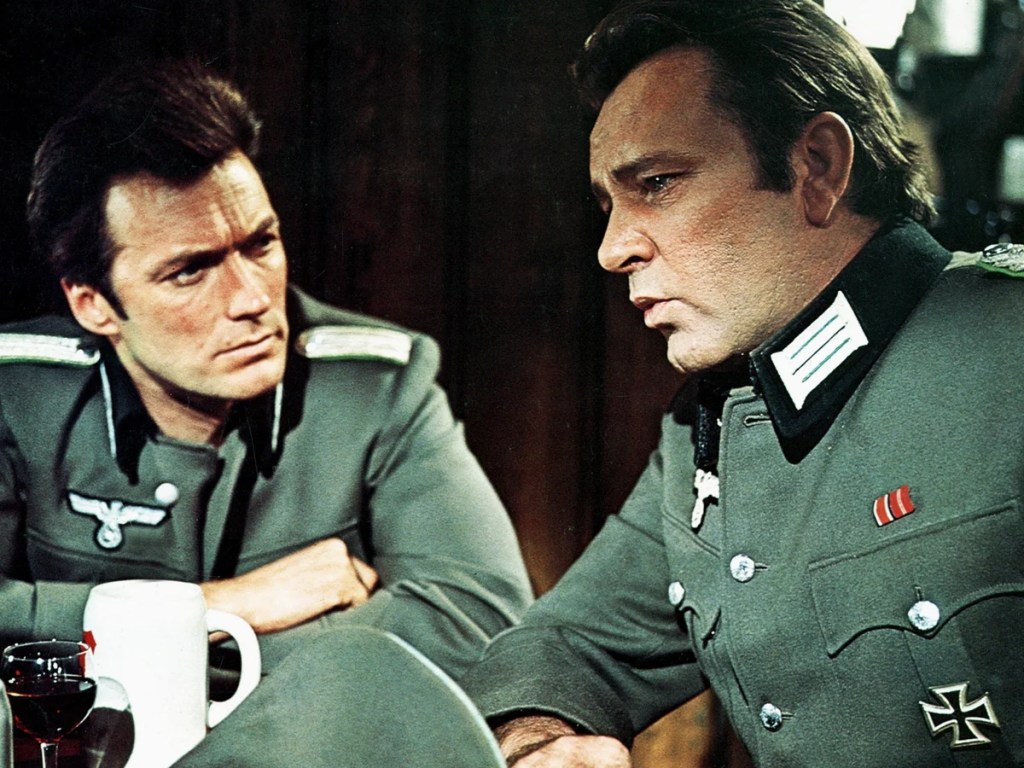
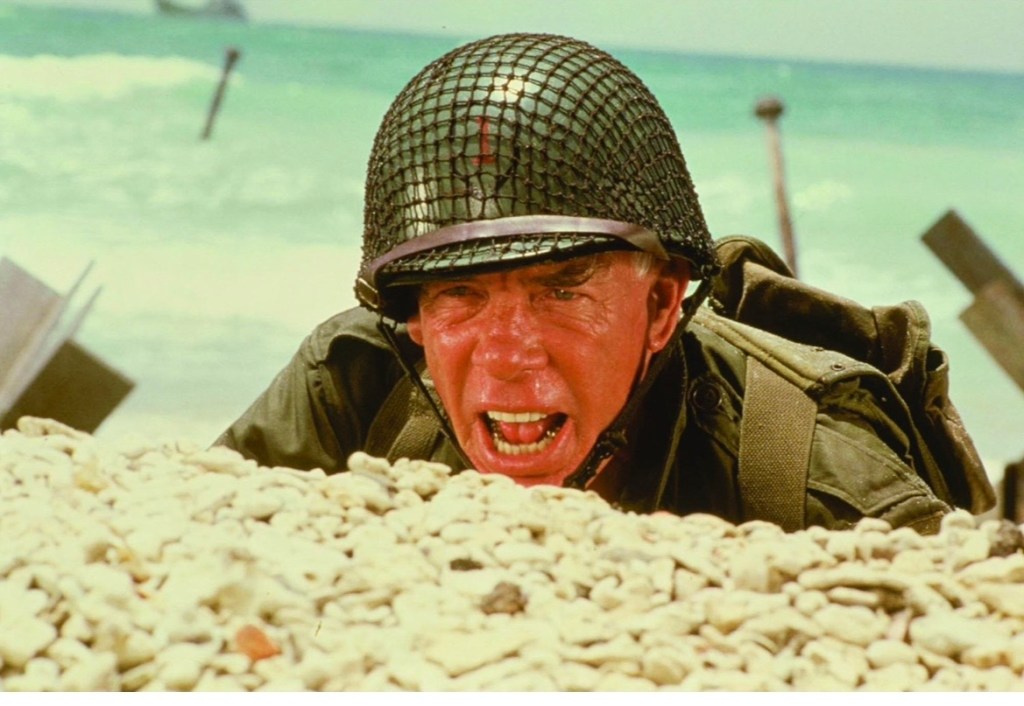
The Longest Day (1962)Where Eagles Dare (1969)The Big Red One (1980)Saving Private Ryan (1998)
On this day, in 1944, the Allied forces landed at the beaches of Normandy and, against overwhelming odds, began the liberation of Nazi-occupied France and later all of Western Europe. At least 4,400 Allied soldiers lost their lives on that day so that others could live free and, on this anniversary, we honor their sacrifice.
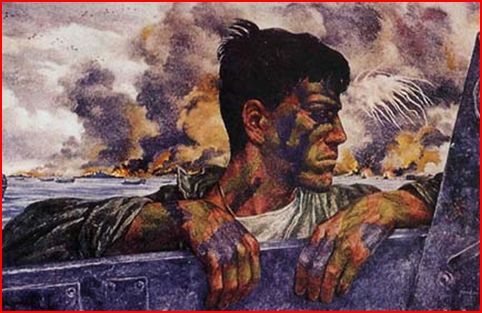
Not surprisingly, D-Day has inspired many artists, writers, and filmmakers over the years. Below, for the 75th anniversary of the Normandy Landings, we have 12 paintings and illustrations inspired by D-Day. These works were all done by men who were actually there on that historic day. The majority of them can be found at the International War Museum in the United Kingdom.
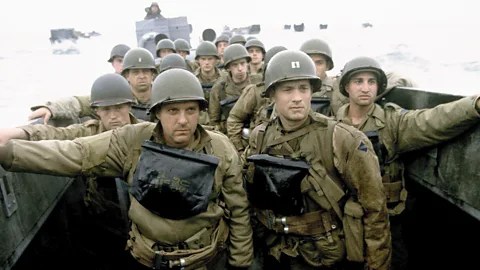
Today’s scene that I love comes from The Longest Day. In this scenes, the Allies land at Omaha Beach and run straight at the Germans trying to hold their position. This scene was later recreated in Saving Private Ryan. I think both scenes serve as a fitting tribute to the soldiers who fought and sacrificed to liberate the world from the Axis Powers.
As some of our regular readers undoubtedly know, I am involved in a few weekly live tweets on twitter. I host #FridayNightFlix every Friday, I co-host #ScarySocial on Saturday, and I am one of the five hosts of #MondayActionMovie! Every week, we get together. We watch a movie. We tweet our way through it.
Tonight, for #ScarySocial, I will be hosting 2001’s Donnie Darko!
If you want to join us on Saturday night, just hop onto twitter, start the film at 9 pm et, and use the #ScarySocial hashtag! The film is available on Prime and Tubi! I’ll be there co-hosting and I imagine some other members of the TSL Crew will be there as well. It’s a friendly group and welcoming of newcomers so don’t be shy!
Juice WRLD is not really my guy, but my daughter likes him and he did pass way to soon. I think people can see that others value them, but it’s hard to live for other people, when you don’t want to keep going for yourself.
Tears For Fears frontman Roland Orzabal and keyboardist Ian Stanley were both practitioners of primal scream therapy, in which people confronted their fears and insecurities by shouting. This song was inspired by both the treatment and political protest.
The video, which was put in heavy rotation on MTV and become one of the defining videos and songs of the 1980s, features Orazbal and Curt Smith letting it all out on the cliffside at Durdle Door in Dorset. The video was one of the 300-something videos to have been directed by Nigel Dick, who has done videos for almost everyone.
Shout spend three weeks as the number one single in the US and has since become Tears for Fears signature song, along with Everybody Wants To Rule The World.