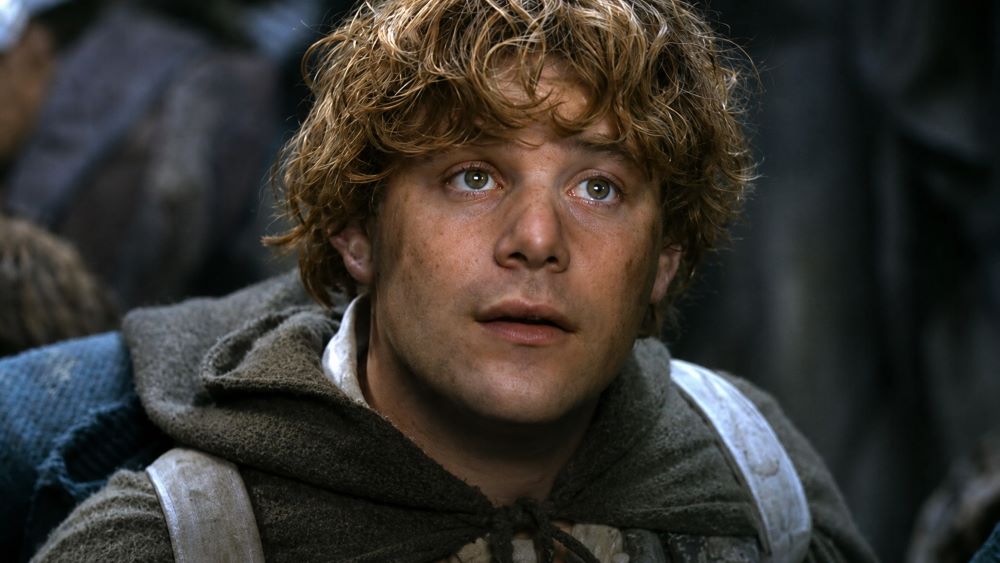
Hero of the Day: Samwise Gamgee (The Lord of the Rings)


“Don’t you leave him, Samwise Gamgee. And I don’t mean to.” — Samwise Gamgee

Samwise Gamgee stands as one of the most compelling and deeply human characters in J.R.R. Tolkien’s The Lord of the Rings, a figure whose quiet strength and unwavering loyalty redefine the very notion of heroism. Unlike the noble Aragorn or the wise Gandalf, Sam is an ordinary hobbit—grounded, humble, and devoid of grand ambitions. His heroism does not stem from swordplay or sorcery, but from his steadfast devotion to Frodo Baggins and the simple, unshakable belief that even the smallest person can change the course of the future. Tolkien uses Sam to illustrate that true courage is not the absence of fear, but the resolve to act despite it, a theme that resonates throughout the epic narrative of The Lord of the Rings.

Traditional fantasy heroes are often defined by their extraordinary abilities or grand destinies, but Sam’s greatness is rooted entirely in his profound normalcy. He is not driven by a prophetic calling or a desire for glory; rather, his initial motivation is simply the fear of losing his master and friend, Frodo Baggins. Tolkien uses Sam to demonstrate that heroism is not the absence of fear, but the choice to push forward in spite of it. When Sam is forced to temporarily take up the burden of the One Ring in The Return of the King, his inherent simplicity becomes his greatest weapon. Unlike the great lords of Men, Sam lacks the ambition and desire for power that the Ring exploits, allowing him to willingly surrender it back to Frodo—a testament to the incorruptible nature of the common folk.

At the heart of Samwise’s character is an unparalleled loyalty that elevates him from a mere sidekick to the true savior of the quest. As Frodo is progressively broken down by the physical and psychological toll of the journey to Mordor, it is Sam who serves as the emotional anchor preventing his total collapse. Sam’s devotion reaches its zenith on the slopes of Mount Doom, where his refusal to let Frodo fail results in one of literature’s most iconic declarations: “I can’t carry it for you, but I can carry you.” In this moment, Sam embodies the purest form of love and sacrifice. He does not save Middle-earth by striking down a dark lord, but by literally carrying the weight of his friend’s despair when Frodo can no longer stand.

Furthermore, Sam provides a vital, grounded perspective that prevents the narrative from becoming lost in its own high-fantasy majesty. His deep connection to the Shire, to the soil, and to the simple joys of life—like a good meal or a smoke—acts as a tether to goodness in a world being consumed by shadow. This “salt of the earth” wisdom allows Sam to perceive the true horror of Mordor and the Ring not in abstract, philosophical terms, but as a direct threat to the innocent, everyday life he holds dear. By viewing the apocalyptic conflict through the eyes of a gardener, Tolkien makes the stakes feel remarkably intimate, reminding the reader that the ultimate goal of the quest is not to establish a new empire, but to preserve the quiet beauty of the natural world.

Ultimately, Samwise Gamgee endures as one of literature’s greatest heroes because he represents the best of what ordinary people can achieve under extraordinary circumstances. He begins the story as a timid, provincial hobbit terrified of leaving his hometown, yet he ends it as a resilient warrior, a loving husband, and a civic leader. Tolkien, a veteran of the brutal trenches of World War I, understood that the world is often saved not by brilliant generals or chosen ones, but by the quiet courage of everyday people doing their duty. Through Sam, The Lord of the Rings delivers a timeless and deeply moving message: that in the face of insurmountable darkness, the most powerful force in the world is a stubborn, unassuming love.

Hero of the Day

Scenes I Love: Lighting the Beacons in Return of the King


We just received word that the Texas Branch is still currently down. It’s been six full days without power. I can’t even begin to imagine the impact, but we’re hoping that they back up and running soon. Case and I are keeping the fires lit here, but it also reminds us of Lisa Marie’s John Wick levels of legendary speed, sheer will, creative output and literary fortitude. We miss the Bowmans, and are rooting for their quick return.

In the meantime, we’re sharing some of our favorite scenes and films. It seems fitting that the Lighting of the Beacons sequence of The Return of the King is our focus here. With the city of Gondor under attack, the steward Denathor (John Noble) doesn’t wish to call for any help. With Pippin’s (Billy Boyd) help, Gandalf (Ian McKellan) gets word out to Rohan in a most spectactular fashion. Howard Shore’s score amplifies the sequence to epic levels.

Enjoy!

Song of the Day: Into the West (by Howard Shore feat. Annie Lennox)


This latest “Song of the Day” marks the final and third entry in the weekend-long theme of picking song and music from The Lord of the Rings Trilogy. What better choice to cap of this themed weekend than picking the final song to close out Peter Jackson’s fantasy epic: “Into the West”.

It’s this song as composed and arranged by the trilogy’s master composer, Howard Shore, featuring the vocal talents of singer Annie Lennox. Her work on this song was at times quite gentle and subdued with some strong vocals once the chorus arrives and repeats a second time. Some have complained that someone with more classical training would’ve been better suited to tackle this song, but I rather enjoyed Lennox’s powerful rendition of the chorus in the song.

“Into the West” is a song that’s both one of hope and a bittersweet lament as it speaks of the leaving of the Elf race on their Grey Ships to sail into the west towards Valinor. Some of the lyrics in the song even comes from sections of the final chapter of The Return of the King novel.

When this song played at the end of The Return of the King it surely brought more than just a few people to tears as it helped marked the end of three years of fantasy filmmaking which became a cultural phenomenon from 2001 through 2003 as the world became enraptured by Peter Jackson’s fantasy trilogy. What better song to end this weekend theme than the very song which ended the trilogy of which this weekend was all about.

Into the West

Lay down
Your sweet and weary head
Night is falling
You have come to journey’s end
Sleep now
And dream of the ones who came before
They are calling
From across a distant shore
Why do you weep?
What are these tears upon your face?
Soon you will see
All of your fears will pass away

Safe in my arms
You’re only sleeping

What can you see
On the horizon?
Why do the white gulls call?
Across the sea
A pale moon rises
The ships have come to carry you home
And all will turn
To silver-glass
A light on the water
All souls pass

Hope fades
Until the world of night
Through shadows’ falling
Out of memory and time
Don’t say
We have come now to the end
White shores are calling
You and I will meet again

And you’ll be here in my arms
Just sleeping

What can you see
On the horizon?
Why do the white gulls call?
Across the sea
A pale moon rises
The ships have come to carry you home
And all will turn
To silver-glass
A light on the water
Grey ships pass
Into the West

Scenes I Love: The Lord of the Rings: The Return of the King


“Arise, arise Riders of Théoden (Riders of Rohan)! Fell deeds awake: fire and slaughter! Spear shall be shaken, shield be splintered, a sword-day, a red day, ere the sun rises! Ride now, ride now! Ride for ruin… and the world’s ending! Death! Death! Forth Eorlingas!” – Theoden, King of Rohan

This marks the final “Scenes I Love” series from Peter Jackson’s fantasy epic, The Lord of the Rings. The last couple days have seen a favorite scene picked from the first two film. Today’s pick was a tie between two scenes. One a third of the way into The Return of the King with the second being two-thirds in and a logical consequence of the first scene picked. I could’ve easily picked one over the other, but I’ve always seen the two as connected in some way. I also didn’t want to pick one over the other so we have two scenes instead of one. I say that’s a bonus for everyone.

The first scene was (continues to be one of my most favorite scenes ever put on film) the lighting of the beacons which signals Gondor’s call for aid to it’s far neighboring kingdom of Rohan. This scene just builds and builds until the rousing “Gondor theme” reaches it’s peak and shows each beacon lighting up one right after the other until it reaches the mountain peaks outside Rohan. No matter how often I see this scene (especially now on blu-ray) I can’t help but still feel a sense of awe at what Peter Jackson and his crew pulled off. One buys into the scene and just marvels at the sequence. A film which, up until the lighting of the beacons, had such a hopeless tone to it suddenly had hope appear.

The second scene finally sees the culmination of the lighting of the beacons. Rohan has responded in force as every able-bodied man and his horse have gathered on a rise above Pelennor Fields. With Theoden knowing the forces of Sauron arrayed and besieging Mina Tirith dwarfs even his own cavalry force he nonetheless orders his men to charge the Mordor lines to help break the siege. His speech in this scene trumps even Aragorn’s own rousing speech later on in the film which is saying much. The charge of the Rohirrim down into the Mordor lines gets a nice assist from Howard Shore’s score which begins with the “Rohan theme” signalling the arrival of the Rohirrim to the battle then transitioning to the “Nature theme” which is heard for the first time in full orchestral mode before returning to the “Rohan theme” as the Rohirrim charge finally crashes into the Mordor lines.

The charge itself looked great when I saw it on the big-screen and still the best way to see it. Barring not seeing it on the big-screen the best option would be to see it on blu-ray and on a large HDTV screen. The wide, overhead shot of the massed cavalry gradually gaining speed with Theoden at the elongating tip in the middle makes for great, epic filmmaking. The scene sells itself as Jackson used hundreds of extras in real armor and on charging horses (with CGI copies expanding their numbers into the thousands) to show true weight to the scene. I recommend to those who want to revisit this scene to watch it again but using their surround sound system on high and feel the thundering hooves of the charging Rohirrim until they crash into the Mordor lines. It’s the only way to see and experience the scene.