Film Review: Dead Man’s Wire (dir by Gus Van Sant)


Before I say anything else about Gus Van Sant’s new film, I feel that I should make something clear.

I am a huge Al Pacino fan.  My love for the Godfather films (even the third one!) should be obvious to anyone who regularly reads this site.  I love the majority of Pacino’s work, even the roles that occurred after he started bellowing all of his lines.  I think his cop in Heat is one of the most entertaining characters to ever appear in a crime film.  I loved his performance as Jimmy Hoffa in The Irishman.  I enjoyed the humor that he brought to his role in Once Upon A Time In Hollywood.  I will always be happy to defend Al Pacino.

So, it gives me no pleasure to say that Al Pacino gives one of his worst performances in this film.  He plays M.L. Hall, the owner of Meridian Mortgage Company in Indianapolis, Indiana.  Pacino only appears in three brief scenes.  Wearing a ridiculous wig, he delivers his lines in one of the worst Southern accents that I’ve ever heard.  Playing a businessman who is so heartless that he won’t even negotiate with the man who is holding his son hostage, Pacino gives a performance that isn’t even entertaining enough to be considered cartoonish.  It’s the type of performance that one might expect from the villain-of-the-week on a particularly heavy-handed episode of Law & Order.  It’s not the type of performance that you would expect from Al Pacino.

Fortunately, despite all of that, Dead Man’s Wire is still a fairly compelling film.

Based on a true story, Dead Man’s Wire stars Bill Skarsgard as Tony Kiritsis, a real estate developer in 1970s Indianapolis who feels that Meridian Mortgage Company has cheated him out of the money that he hoped to earn through some land he developed.  Because M.L. Hall is on vacation in Florida, Tony takes M.L. son, Richard (Dacre Montgomery), hostage.  Tony wires a shotgun to Richard’s neck so that any sudden movement by either one of them will lead to Richard getting his head blown off.  Tony announced that he’ll only release Richard in return for immunity and an apology from M.L. Hall.

For three days, the city of Indianapolis watches as the situation plays out.  Detective Michael Gable (Cary Elwes) tries to negotiate with Tony but Tony is only willing to talk to the DJ (Colman Domingo) at his favorite radio station.  Meanwhile, Tony picks up some support from other people who feel that they’ve been screwed over by the M.L. Halls of the world.

Indeed, while watching this movie, it was hard not to think about the creepy cult that has sprung up around Luigi Mangione.  Of course, being a blue collar guy who appears to have simply been pushed past his breaking point, Tony is a much more compelling figure than a phony intellectual like Luigi.  That said, director Gus Van Sant is more interested in Tony as an outsider on the fringes of polite society than as a political symbol.  Skarsgard plays Tony as a man who can go from being friendly to enraged in a matter of seconds and he’s actually quite frightening in the role.  Meanwhile, Dacre Montgomery makes Richard into a rather sympathetic character.  Even if you don’t agree with the actions of his father, it’s hard not to respect the way that Richard handles the situation.  Watching this film, one gets the feeling that the unstable Tony thinks that he and Richard are developing a common ground but in reality, there’s no way that anyone could expect Richard to sympathize with a man who held him hostage for three days.  The film respects the characters and the actors too much for that type of false sentimentality.

Towards the end of the film, there’s a rather odd moment where breaking news about the hostage situation interrupts John Wayne presenting the award for Best Picture at the Oscars.  In reality, the 1977 Academy Awards were held a month after the hostage situation had been resolved and the ceremony seen in Dead Man’s Wire was held in 1979.  (Wayne presented the Oscar just a few months before his own death from cancer.)  It’s  classic Van Sant move in that it seems like it should mean something but, in the grand scheme of things, it really doesn’t.  Van Sant is one of those directors who has been around long enough and who has made enough interesting films that he can get away with something like that.

Dead Man’s Wire is Van Sant’s first film in seven years and his best film since Elephant.  It’s flawed but always watchable and it has a sense of humor and enough odd but memorable details to balance out the film’s angrier moments.  There are a few moments where the film falls into the trendy and intellectually shallow anti-capitalism that is all the rage nowadays but, for the most part, this is a compelling recreation of a true story and a character study of two men who will be forever linked.

Musical Documentary Review: Trainwreck: Woodstock ’99 (dir by Jamie Crawford)


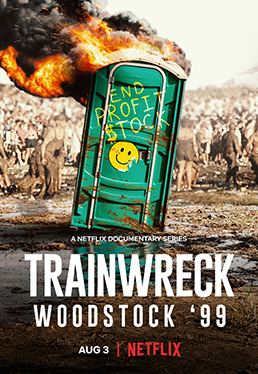
In August of 2022, Netflix premiered a three-part documentary about Woodstock  ’99.

Trainwreck: Woodstock ’99 took a look at how the third Woodstock musical festival went from being the most highly anticipated event of the summer of 1999 to being a total disaster.  I started watching the documentary the week that it premiered.  I was halfway through the first episode when I realized that I needed to make sure that my car insurance had been renewed.  I stopped the program, hopped online, made sure that my payment had been received and then….

Well, I don’t exactly remember what I did but I do know that I did not return to Woodstock ’99.  Indeed, I kind of forgot about Woodstock ’99.  It wasn’t until last night, when Jeff and I were looking for something to watch on Netflix, that I saw Trainwreck: Woodstock ’99 listed under “continue watching.”  I did the math.  I decided that, given that it had been nearly four years since I watched the opening 30 minutes of the first episode, it was perhaps to finally see what Woodstock ’99 was all about.

The three-part documentary features archival footage from the concert and also interviews with the people behind Woodstock ’99, a few people who attended, and some of the artists who performed.  To be honest, I wish that more of the performers had been interviewed.  Considering that one of the festival’s organizers literally blamed Fred Durst for the rioting, it’s a shame that Durst didn’t share his side of the story.  I’m not a huge fan of Fred Durst but the decision to blame him for the crowd getting out of control has always seem to be a bit too convenient to me.  As the documentary shows (sometimes unintentionally), people had reason to be angry long before Fred Durst stepped out on stage and told them to “break shit.”  As a once popular performer who has since come to be seen as a bit of a self-parody, Durst makes for an easy scapegoat.

For all the talk about what Woodstock has represented throughout the years, all three of the festivals were ultimately about making money for the organizers.  Michael Lang may have been a hippie who said the first Woodstock was about ending the war in Vietnam and that the third Woodstock was about promoting gun control but he was also a businessman.  The first Woodstock only made money because of the success of the famous documentary.  Woodstock ’94 lost money because the fence surrounding the festival was torn down and people were able to get in without buying tickets.  Woodstock ’99 was designed to be secure and impenetrable.  Instead of being held in a field, it was held on a deserted air force base where the asphalt made the summer heat unbearable and where the empty hangars helped to create a dystopian atmosphere.  Woodstock ’99 was designed to be village.  Unfortunately, it turned out to be a village where bottled water eventually ended up costing $14.00 and the toilets ended up overflowing.  (One interviewee discusses waking up on the third day and discovering that she was suffering from something called “trench mouth.”  Even the name sounds terrifying.)

The documentary features a few people who rightly point out that the festival’s organizers created a situation where the third night’s riot was almost inevitable.  Michael Lang apparently had not listened to any new music since the 70s and, hence, didn’t understand that there was a world of difference between the mellow hippies of 1969 and the fans of Korn, Limp Bizkit, and Kid Rock.  Amazingly, Lang thought it would be a good idea to hand out candles so that the festival could end with a candlelight vigil against gun violence.  The candles were instead used to start fires.  As the festival grounds burned, the fence was finally torn down, a sound tower was pulled to the ground, and eventually the national guard showed up.  The organizers of the Festival, including Lang, put the blame on almost everyone but themselves.

I’ve often said that movie and documentaries made between 2019 and 2024 often feel as if they are artifacts from a different age.  That’s how quickly the culture shifted after the election of 2024.  That’s the case with Trainwreck: Woodstock ’99.  The final thirty minutes of the documentary are spent classifying Woodstock ’99 as being an example of white privilege  and it seems a little performative today but that was pretty much the prism through which everything was viewed and discussed in 2022.  The truth of the matter is that there were a lot of reasons why Woodstock ’99 was a disaster and almost all of them come down to the greed at the heart of the enterprise.  It was greed that led to festival being held in the worst possible location.  It was greed that led to cutting corners when it came to security and the hiring of the half-assed “Peace Patrol,” a group of amateur security guards who failed to protect the most vulnerable people at the festival.  (At least five rapes and numerous other sexual assaults occurred a the concert.)  And it was ultimately Michael Lang’s desire to pretend that the concert was about something other than greed that led to a bunch of angry, tired, and intoxicated people being handed candles.

This documentary shows why Woodstock ’99 was the final Woodstock.  (There was an attempt to put together a 50th anniversary festival in 2019 but, perhaps thankfully, it fell apart.)  It’s a shame that Woodstock ended the way it did.  It could have been a great American tradition.  Instead, the festival of peace and love ended with fire and destruction.

Lifetime Film Review: Accused: The Karen Read Story (dir by Linda-Lisa Hayter)


In 2022, a Boston police officer named John O’Keefe was discovered unconscious on the snow-covered front lawn of a fellow police officer.  O’Keefe was taken to the hospital, where he subsequently passed away.  It was determined that he died not from spending the night lying in the snow but instead from blunt force trauma.  O’Keefe’s girlfriend, Karen Read, was arrested and charged with the crime.  Depending on who you asked, Karen Read was either a cold-hearted murderer or the victim of a frame-up.  Because O’Keefe was himself a member of the force, it was easy make the argument that the Boston PD was so eager to arrest someone for his murder and “protect one of their own,” that they neglected to follow the evidence while making their case against Karen Read.  Of course, one could also wonder if Karen Read would have received as much support from the public if she had been someone other than an attractive professional white woman.

It took two trials but eventually, Karen Read was acquitted.  At the time, her trials dominated social media.  It was not uncommon to see the second trial referred to as being “the trial of the century.”  I think most of us understood that was hyperbole.  The Karen Read trial was not “the trial of the century” as much as it was just “the trial of the moment.”  After she was acquitted, people spent another week talking about her, the trial, and the Boston PD and then everyone moved on.  There’s always a new murder to “solve” or a new trial to debate.  In another year or so, no one will remember which side of the Karen Read debate they were on.  That will probably include me as well.

(Online sleuthing is always entertaining but ultimately rather shallow.  Those of us who have grown up consuming true crime books and movies often expect things to be more dramatic than they actually are and we tend to gloss over the fact that, while an online sleuth can bring attention to a case, it’s rare that they ever actually solve anything.  As an example, for all the attention that was given to Michelle McNamara’s quest to identify the Golden State Killer, we tend to ignore the fact that most of her theories about his identity turned out to be incorrect.)

Still, the Karen Read case was prominent enough that everyone know that Lifetime would eventually make a movie about it.  Accused: The Karen Read Story asks the question, “Did Karen Read kill John O’Keefe?” and then it answers it by saying, “Of course she didn’t!  What are you, an idiot?”  That’s not necessarily a complaint.  As annoying as I sometimes found Karen Read’s most vehement online defenders to be, I actually agreed with them about her innocence.   It’s just that, if you’re looking for a film that offers up any hint of ambiguity about the case, this is not the film for you.  The film is firmly on the side of Karen Read, to the extent that the O’Keefe family is often presented as being villains.

It’s a well-made film, though.  In the roles of Karen Read and John O’Keefe, both Katie Cassidy and Luke Humphrey give good performances.  Humphrey is especially good in the role of O’Keefe and the film doesn’t shy away from portraying the tumultuous details of his relationship with Karen Read.  (The film also deserves some credit for not turning O’Keefe into a cardboard bad boyfriend during his arguments with Read.)  Linda-Lisa Hayter’s direction captures both the cold chill  of the snowy night and the insular atmosphere of big city law enforcement.  It’s a skillful film that will be best appreciated by people who are already convinced of Karen Read’s innocence.

Brad’s “4 Shots From 4 Films” celebrates Tony Curtis!


Today would have been actor Tony Curtis’ 101st birthday!

With a career that spanned almost 60 years, Tony Curtis starred in a whole bunch of classics, especially in the 50’s and 60’s. I’ve always enjoyed watching Curtis, as he could be suave and debonair, hilarious, or even a murderous sociopath, depending on what the role required. Thanks for the memories, Tony!

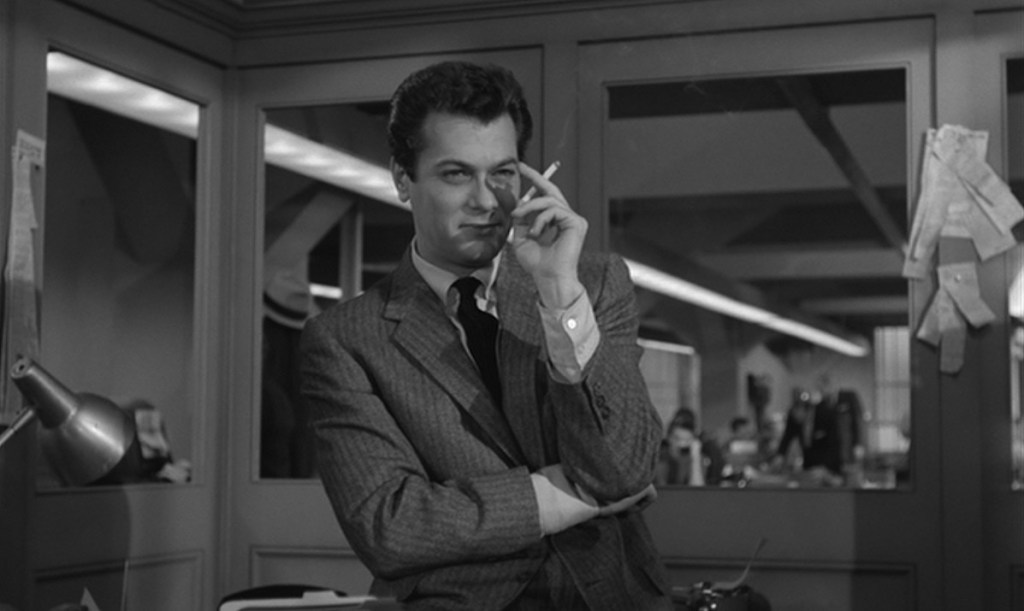
Sweet Smell of Success (1957)
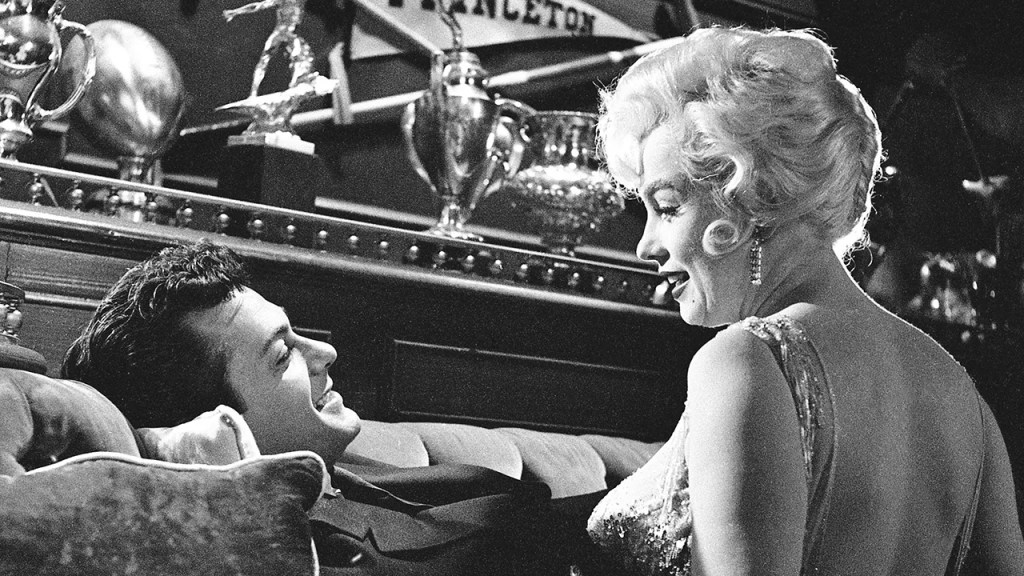
With Marilyn Monroe in Some Like it Hot (1959)
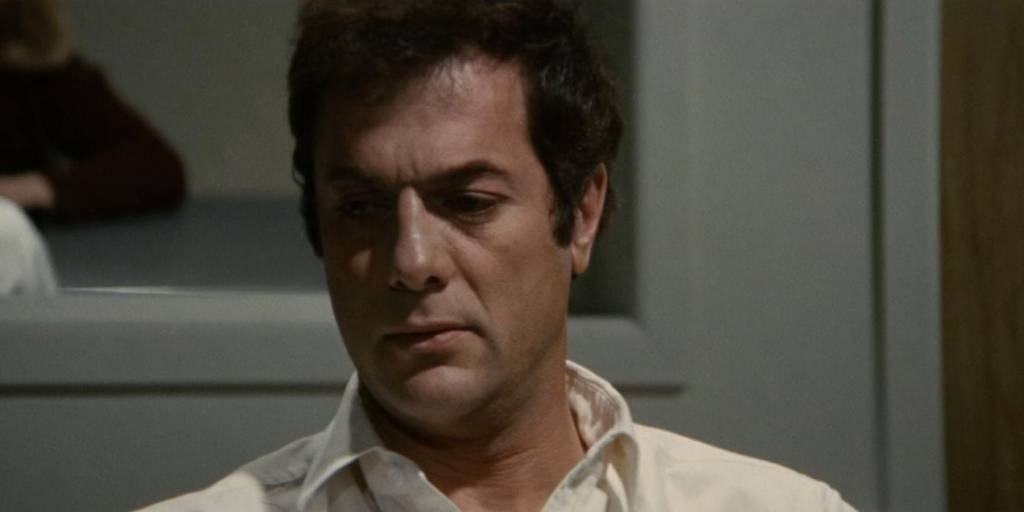
As Albert DeSalvo in The Boston Strangler (1968)
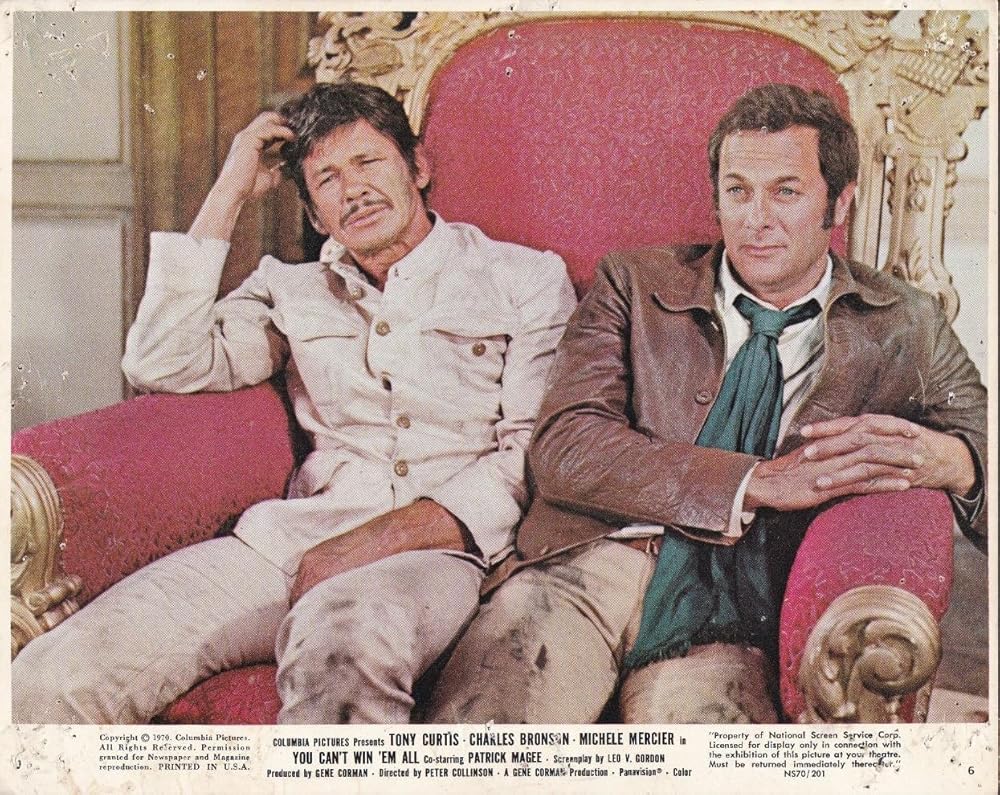
With Charles Bronson in You Can’t Win ‘Em All (1970)

And one bonus shot…

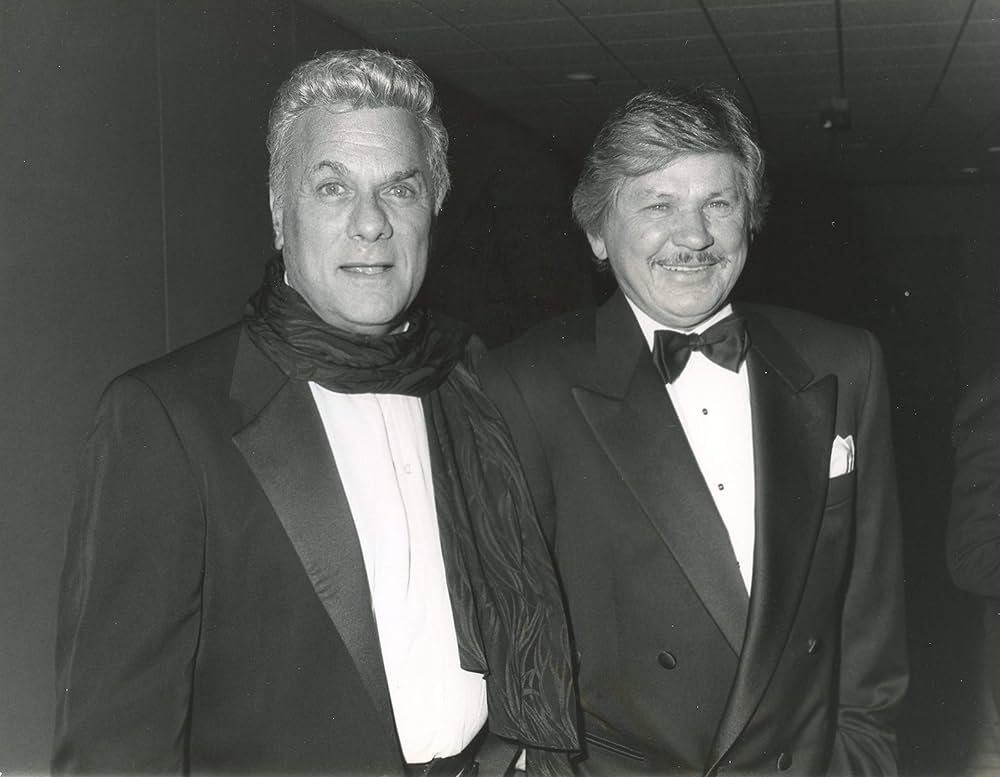
Just hanging out at a black-tie event with Charles Bronson (sometime in the late 80’s)!

A Scene That I Love: The Machete Fight from Walk Hard: The Dewey Cox Story


For me, there was no more touching film scene in 2007 than this one from Walk Hard: The Dewey Cox Story.  After years of blaming Dewey for accidentally chopping his brother Nate in half, Dewey’s father finally realizes that it could have happened to anyone.

Film Review: Christy (dir by David Michod)


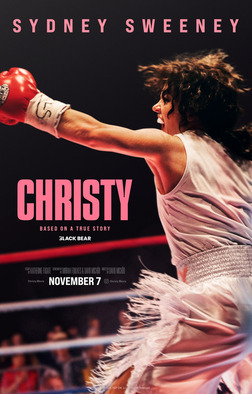
When Christy was released last year, it received a lot of attention for featuring Sydney Sweeney as a very unglamorous character.

In the role of real-life boxer Christy Martin, Sweeney spends the first hour of the film as a brunette who doesn’t wear makeup, wears baggy clothing, and has an unflattering haircut.  Coming straight from the mining communities of West Virginia, Christy is someone who can flatten a guy with one punch.  Of course, for all the attention that Sweeney got for downplaying her looks, she’s a blonde again for the film’s second hour and she never looks quite as bad as the filmmakers would have us believe.

If anyone does truly look bad in this film, it’s Ben Foster.  Foster plays James V. Martin, the boxing coach who took Christy under his wing, arranged for her to get signed by Don King (played by Chad Coleman), and basically managed her when she was at the peak of her career.  James Martin was also Christy’s horrifically abusive husband, a relentless, cocaine-snorting manipulator who built her up just to tear her down and who is currently in prison for attempting to murder Christy in 2010.  When Foster first appeared in the film, I had no idea it was him.  I didn’t discover that Foster was playing James until I glanced at the film’s Wikipedia page.  Balding, overweight, and speaking in a slurred voice that makes most of his sentences sound like thoughts that died while trying to escape from his brain, Foster is unrecognizable as James.  Ben Foster has played a lot of sleazy characters.  (I still think his best performance was as the charismatic but sociopathic Charlie in 3:10 to Yuma.)  James Martin is definitely one of the worst and the normally handsome Foster is made up to look about as bad as I’ve ever seen him look.

The film follows Christy from her time as a college basketball player through her boxing career.  We watch as she becomes the female boxing champion and as she loses it all due to a fight for which she wasn’t properly prepared.  We watch as she and James dabble in cocaine.  Even more importantly, we watch as Christy struggles to come to terms with her own sexuality.  In the film, Christy’s marriage to James is more about convincing herself — and her homophobic mother (Merritt Weaver) — that she’s straight than any actual love that may be shared between the two of them.  At one point, Christy taunts an out opponent while giving interviews about how, when she’s not in the ring, she’s a traditional wife who loves to cook and clean.  Christy is not only fighting the other boxer.  She’s also fighting her own sexual identity.

The film is well-acted by Foster, Weaver, and Sweeney.  Sweeney especially does a good job of portraying the anger that lies behind every punch that Christy throws.  When Christy hits someone, she’s not just hitting her opponent.  She’s also hitting the entire world.  Unfortunately, the film itself often falls victim to the biopic cliches that one always seems to find in films about boxers, even ones that are based on true stories.  This is especially true during the film’s first half.  The second half, which focuses on Christy breaking free from James, is considerably more compelling.  Much like last year’s The Smashing Machine, Christy is an uneven film that still leaves you respecting its real-life inspiration.

Music Video Of The Day: I Hate Kissing You Goodbye by Tuff (1991, directed by ????)


You have to feel bad for Tuff, an American glam metal band that was formed in 1985, featured in the seminal documentary The Decline of Western Civilization Part II, and who were signed by Atlantic Records in 1990.  They released their first studio album, What Comes Around Go Around, in 1991.  The video for I Hate Kissing You Goodbye received heavy rotation on MTV.  And then, just a few months later, a band named Nirvana came along and changed the entire musical landscape.

Despite the Grunge Revolution, Tuff is still together.  Lead singer Steve Rachelle has also had a solo career and has fronted a few other bands as well.  Tuff survived.

Enjoy!