Welcome to Retro Television Reviews, a feature where we review some of our favorite and least favorite shows of the past! On Sundays, I will be reviewing Homicide: Life On The Street, which aired from 1993 to 1999, on NBC! It can be viewed on Peacock.
This week, a special guest star ends up in the Box.
Episode 5.8 “The True Test”
(Dir by Alan Taylor, originally aired on November 22nd, 1996)
At the end of this week’s episode, Pembleton finds out that he has finally passed his firearms exam and he’s been cleared to return to active duty. Excusing the suspension of disbelief necessary to buy that Pembleton has recovered that quickly from his stroke, it’s a good thing that Pembleton and Bayliss will be working together again. Because, seriously, Bayliss spent this episode acting like an unprofessional ass.
There’s been a murder at the exclusive Larchmont Academy. Fifteen year-old Marshall Buchanan, the only black student at the entire school, has been found on the athletic field, stabbed to death. It’s Lewis’s case but his temporary partner, Bayliss, takes charge. Bayliss is convinced that Marshall was killed by a student and that the killing was racially motivated. Bayliss is rude to the headmaster. He’s rude to Marshall’s 12 year-old roommates. He gets angry in the cafeteria and starts banging his hand on a table while everyone is trying to eat. Lewis finally asks Bayliss what his problem is. Bayliss explains that he grew up near Larchmont. His cousin desperately wanted to go to Larchmont but was rejected because he wasn’t from an old money family. Bayliss has never forgotten the way his cousin cried after getting his rejection letter.
Hey, Bayliss, you know what?
Big freaking deal. None of that matters!
Your cousin wasn’t accepted?
Oh, boo hoo. That has nothing to do with the case!
Usually, I like Bayliss and, even more importantly, I like Kyle Secor’s performance as Bayliss. But, in this episode, Bayliss was just kind of whiny. Pembleton would have told him to knock it off. Lewis just ignores him.
Bayliss is right about one thing. The murderer is a student, a 17 year-old sociopath named McPhee Broadman. (Seriously, Homicide, you couldn’t have come up with a less on-the-nose name?) McPhee is a sociopath who is looked up to by a bunch of the younger students. His mother (Sagan Lewis) is a judge and therefore, he thinks he’s untouchable. McPhee is played by a young Elijah Wood and Wood, it must be said, gives a chilling performance as the young murderer. Towards the end of the episode, a smirking McPhee confesses to the crime. Even after hearing him confess and say that he wants to kill her, McPhee’s mother still immediately starts making plans to defend him and to suppress his confession.
And she’ll probably succeed. Bayliss has an obvious personal issue with McPhee. And, as far as I could tell, neither Bayliss nor Lewis bothered to Mirandize him before interrogating him. Way to let a murderer back out on the streets, guys!
Seriously, thank God Pembleton is back.
As for Kellerman, he is still on restricted duty but he did buy Dr. Cox a drink at the Waterfront and it’s kind of easy to see where things are heading with those two. But if Pembleton can recover from a stroke in eight episodes, Kellerman can beat those bribery charges. I have faith.
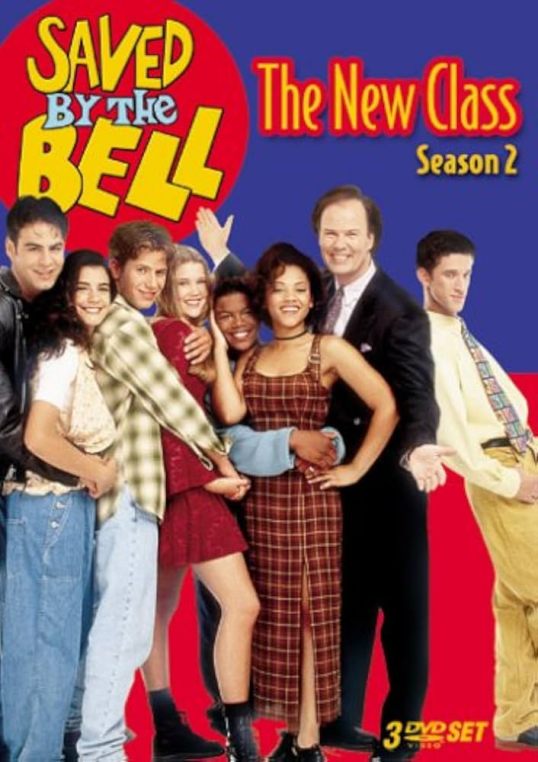
Welcome to Late Night Retro Television Reviews, a feature where we review some of our favorite and least favorite shows of the past! On Saturdays, I will be reviewing Saved By The Bell, which ran on NBC from 1989 to 1993. The entire show is currently streaming on Tubi!
This week, we begin season 2!
Episode 2.1 “The Prom”
(Dir by Don Barnhart, originally aired on September 8th, 1990)
It’s time for the prom!
Wow, the second season really jumps into things, doesn’t it? Most high school shows tend to take the “each season is one school year approach” but the second season of Saved By The Bell opens with prom.
It’s time for Kelly to finally decide who is going to be prom date (and boyfriend), Slater or Zack. If the first season occasionally featured Kelly acting a bit flighty and, at times, self-centered, the second season introduces us to the new Kelly, who is in love with Zack but who also doesn’t want to hurt Slater’s feelings. This is also the Kelly who suddenly comes from a huge blue collar family. Kelly agrees to go to prom with Zack (and Slater, being awesome, accepts her decision with grace). But when her father is laid off from his job at the defense plant (“World peace has broken out,” he explains — and you can thank Ronald Reagan and the first George Bush for that! USA! USA! USA!), Kelly gives up going to prom because her family needs the money that she would have spent on the evening.
(Kelly, Zack’s superrich! Just have him pay for everything….)
Zack is upset, until Slater tells him that Kelly’s father lost his job.
“Poor Kelly,” Zack says.
“That’s right,” Slater replies. “Poor Kelly. Not poor Zacky.”
HELL YEAH! I LOVE SLATER!
Slater does go to prom, with Jessie. (This is an important episode for Slater and Jessie too.) Meanwhile, Screech asks Lisa to be his date. When Lisa turns him down, Screech begs her to just see a movie with him. It’s a zombie movie and Lisa loves it! But apparently, Screech has an issue with people who love movies because he gets mad at Lisa for talking too much and decides to go to prom alone. For some reason, Screech becomes the prom’s DJ. Meanwhile, Lisa bores her date by talking nonstop about the zombie movie ….. wow, this all feels very familiar to me.
As for Zack and Kelly, they do go to prom! They dance outside of the gym and it’s one of the few genuinely romantic moments to be found in Saved By The Bell. It’s also one of the few moments that captures the unique mix of melancholy and optimism that goes along with being a teenager.
I was bored. I watched a few episodes this week. Dr. Phil put bad parents and bratty children in their place. One episode featured a guy who refused to take a drug test. Finally, he did take the test and he tested negative. I respected him for trying to stay true to his beliefs even when it would have been easier just to give in.
He’s a British policeman and he’s not that gentle! I watched an episode on Tuesday.
Git It On (PBS)
This was a 70s dance show. I watched an episode on Friday night.
Hollywood Demons (HBOMax)
I watched the latest episode of this sensationalized but undeniably addictive show on Wednesday. It was all about child actor and how their adult lives often seem to go off the rails. Sometimes, I feel bad for all the child actors who went on to live non-tragic, non-scandalous lives. Nobody ever takes the time to congratulate them on not self-destructing.
Intervention (Tubi)
I specifically tracked down the Ken Seeley episodes because Ken’s interventions always seemed to descend into chaos.
Kyōryū Sentai Zyuranger (Shout TV)
On Friday, I watched three episodes of this Japanese show about teenagers who carried the fighting spirits of various dinosaurs. The saber-tooth tiger is so cool!
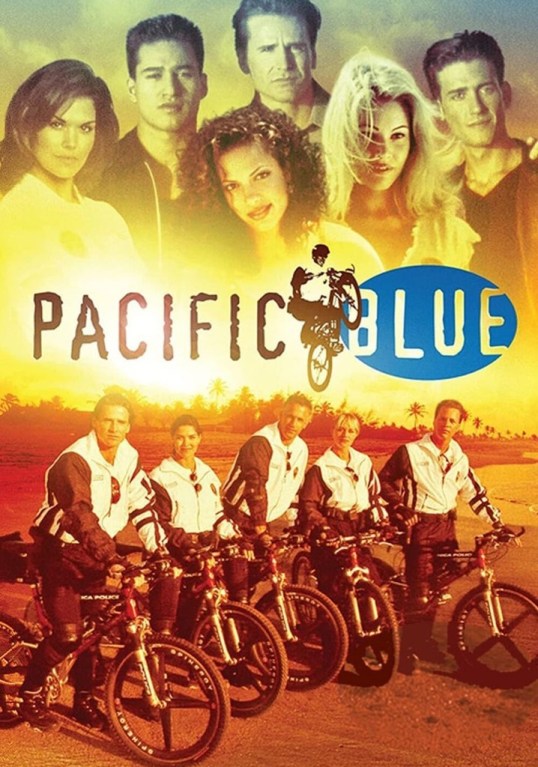
Welcome to Retro Television Reviews, a feature where we review some of our favorite and least favorite shows of the past! On Saturdays, I will be reviewing Baywatch, which ran on NBC and then in syndication from 1989 to 2001. The entire show can be viewed on Tubi.
This week, we start season 2 of Baywatch. Canceled by NBC, Baywatch found a new home in syndication. The show was re-launched with a special two-hour premiere. (For subsequent re-airings, the premiere was split into two episodes.)
Episode 2.1 and 2.2 “Nightmare Cove”
(Dir by Gregory J. Bonnan, originally aired on September 23rd, 1991)
On the one hand, the basic idea is the same. David Hasselhoff plays Mitch Buchanan, a divorced father who loves nothing more than being a lifeguard. Eddie (Billy Warlock) and Shauni (Erika Eleniak) are two young lifeguards who are in love (though their engagement from the previous season is not mentioned). Don Thorpe (Monte Markham) is Mitch’s no-nonsense boss. The sunsets are still beautiful. The beaches are still inviting.
And yet, there are a few differences:
Craig, Cort, Gina, Garner, and Trevor are nowhere to be seen. (Craig, Cort, and Garner will all eventually return. Gina and Trevor will never be mentioned again.)
Hobie, Mitch’s son, is now played by Jeremy Jackson.
Richard Jaeckel, who played doomed life guard Al Edwards in the pilot film, is now playing Ben Edwards, who apparently is meant to be the same character as Al. (Mitch specifically mentions that Ben broke his leg when the pier collapsed, retconning Al’s heroic death into a mere injury.)
Cort may be gone but there’s a new money-hungry lifeguard named Harvey (Tim McTigue).
The second season premiere features even more musical montages than appeared in the first season.
The second season premiere features a lot of random shots of women in skimpy bikinis.
The red Baywatch one-piece swimsuits are back but now, they’re considerably tighter and more high-cut.
The new Baywatch was airing in syndication.
I get the feeling that the Baywatch cameraman probably got together and all chanted, “Syndication, baby!” before running out onto the beach. Even though the second season premiere is still far from what Baywatch would eventually become, one can already see the development of the aesthetic that led to it becoming the number one show for 90s frat boys and dads suffering from a midlife crisis.
As for this episode, there are rumors of an underwater monster and everyone wants in on the action. Mitch saves an underwater photographer and falls in love for an episode. Hasslehoff’s then-wife, Pamela Bach, plays a reporter whose editor wants sensationalized stories about the “beast of the bay.” Of course, the beast of the bay is actually just the creation of an offshore oil company who wants to drill and ruin the environment because why not? Luckily, one of the lifeguard, Devon (Andrea Thompson), is also an environmental activist. Of course, Andrea Thompson is not listed in the opening credits so I imagine we’ll never see Devon again.
While Mitch is investigating the monster, Shauni rescues a little girl from drowning and then gets involved in the family’s life. The family is black and the little girl’s brother is being recruited by a street gang so the very white Shauni arranges from him to join the junior lifeguards instead. Shauni’s critical father (Albert Stratton) is impressed but I have to admit that I found the storyline to be a bit condescending. Like a lot of 90s shows, Baywatch was at its weakest when it tried to deal with real-life issues. It’s hard not to notice that whenever a guest actor who wasn’t white showed up on episode of Baywatch, they were always either being tempted or pressured to join a gang or they were trying to get out of the gang lifestyle.
In this episode, there’s an odd moment when Hobie decides to go into a storm drain and pretend to be the monster, which leads to a panic on the beach and monster hunters showing up with guns. Mitch shows up and ends the situation before it gets too out-of-hand but you really do have to wonder if maybe Hobie would be better off with his mother. I mean, seriously, Mitch — what are you doing here? Your son is apparently an idiot who never learned anything from the dozen or so times his life was put in danger during the first season.
Finally, Thorpe gets promoted and he wants Mitch to take his place as chief. Mitch argues that the new chief should be Ben Edwards. Since apparently Ben has the power to come back from the dead, I can see Mitch’s logic. In the end, Thorpe agrees.
And that’s it for this episode. It’s definitely Baywatch but it’s still not quite as fun as the show would eventually become once it fully embraced just how ludicrous things could get in syndication. This episode — and I imagine the rest of this season — feels like a show that is still making the transition from network television to anything-goes syndication. Eventually, the show will get David Charvet, Pamela Anderson, and David “The Bulge” Chokachi. During season 2, it was still just Billy Warlock and Erika Eleniak.
Welcome to Late Night Retro Television Reviews, a feature where we review some of our favorite and least favorite shows of the past! On Fridays, I will be reviewing Freddy’s Nightmares, a horror anthology show which ran in syndication from 1988 to 1990. The entire series can be found on Tubi!
This week, Springwood Confidential struggles to keep a host.
Episode 2.11 “Dreams That Kill”
(Dir by Tom DeSimone, originally aired on December 17th, 1989)
In this follow-up to Dream Come True, Dick Gautier plays Charlies Nickels, the new host of Springwood Confidential. When he announced that his next show will be a discussion about whether or not a nightmare can kill you, he soon finds that his dreams are being haunted by Freddy Krueger (Robert Englund, hamming it up and apparently enjoying the opportunity to do more than just host for once). Freddy is worried that the show will cause people to stop sleeping. I’m not really sure that I follow Freddy’s logic — sleep is unavoidable, no matter how much you want to stay up for days at a time — but whatever. Eventually, Freddy torments Charlie to the point that Charlie ends up in a coma, where Freddy can torture him 24/7.
At the hospital, a doctor (Nicholas Cascone) removes some of Charlie’s brain fluid and injects it into a comatose teenager named Mark Lindstrom (Christian Borcher). Mark comes out of his coma but now he has Charlie’s personality and he desperately wants to be the next host of Springwood Confidential. Mark gets the job but soon, he’s having nightmares involving Freddy.
“This is supposed to be Charlie Nickels’s dream!” Freddy says, spying Mark. “Two for the price of one!”
As you probably already guessed, this episode ends with a vengeful Mark injecting his brain fluid into the doctor. So now, it’s three for the price of one….
I kind of liked the idea of Freddy being passed from one victim to another. And Robert Englund was entertaining as Freddy. That said, this episode basically felt like the same story told twice. Freddy haunted Charlie. Freddy haunts Mark in the exact same way. It was better than anything the first season had to offer but this episode still ultimately felt a bit redundant.
Welcome to Retro Television Reviews, a feature where we review some of our favorite and least favorite shows of the past! On Fridays, I will be reviewing St. Elsewhere, a medical show which ran on NBC from 1982 to 1988. The show can be found on Daily Motion.
This week, it’s a stormy episode!
Episode 3.18 “Any Portrait In A Storm”
(Dir by Leo Penn, originally aired on January 30th, 1985)
As a rain storm rages outside, the drama inside St. Eligius continues.
Dr. Auschlander cancels the grand unveiling of his portrait, saying that he doesn’t feel worthy of the attention and also admitting to Westphall that the whole thing not only makes him feel old but also reminds him that he’s dying. Westphall’s response is to nod glumly because Westphall is the most depressed man on the planet. Auschlander is dying of liver cancer and he still manages to usually be more cheerful than Westphall. Even this episode ends with Auschlander in a good mood. He finally looks at his portrait and discovers that he likes it. Plus, Luther tells Auschlander how important he is to him and the other workers at the hospital.
While Auschlander feels his age and Westphall sadly stares at the ceiling, Dr. Ehrlich makes an effort to be more polite and fails completely. Ms. Hufnagle argues about her hospital bill. In an amusing moment, Warren spots Dean (Tim Van Patten) getting on an elevator and shouts, “Salami!” Before St. Elsewhere, Byron Stewart (who played Warren) and Van Patten starred together on a show called The White Shadow. Stewart played Warren, the same character that he plays on St. Elsewhere. Van Patten played someone named Salami. What makes the scene especially humorous is that Dean hesitates before saying, “You got the wrong guy,” as if he somehow remembers being a different character on another show.
Dean is at the hospital to tell his pregnant girlfriend that, despite the fact that she’s currently in labor, he’s leaving Boston for Florida so he can set up a drug deal. Both Dean’s girlfriend, Maddy (Lycia Naff), and Peter White’s widow, Myra (Karen Landry), give birth in this episode. Tragically, Maddy’s daughter dies. Myra has a son, who survives and who she names Peter. Afterwards, she receives an anonymous present — a little ski mask, identical in every way but size to the one that her late husband used to wear while he was terrorizing the hospital.
This was not a bad episode. The rain served as a good (if perhaps too obvious) metaphor for the drama happening inside the hospital. A good deal of this episode centered around Dr. Woodley trying to get Maddy to accept some help and get Dean out of her life. The problem is that this is only Dr. Woodley’s third or fourth episode and, as a result, I still don’t feel like I know much about the character. Having her suddenly take center stage for this episode felt a bit premature. Still, Norman Lloyd’s performance as Dr. Auschlander and the scene were Dr. Craig realizes that he left his lights on when he got out of his car kept things watchable, occasionally humorous, and, in the end, rather poignant. Sometimes, Dr. Asuchlander could be almost too good to be true but Norman Lloyd’s performance always sold every moment. That was certainly the case here.
Welcome to Late Night Retro Television Reviews, a feature where we review some of our favorite and least favorite shows of the past! On Thursdays, I will be reviewing Hunter, which aired on NBC from 1984 to 1991. The entire show is currently streaming on Tubi and several other services!
This week, the police commissioner is suspected of murder!
Episode 1.3 “The Hot Grounder”
(Dir by Bill Duke, originally aired on October 5th, 1984)
After the police commissioner’s wife is blown up by a car bomb, all the homicide detectives hide out in the bathroom because they don’t want to get assigned the case. Captain Cain still manages to track them down and gives the case to Hunter and McCall. When McCall asks Hunter why he didn’t do a better job hiding, Hunter replies, “I’m too tall!”
Hunter and McCall soon come to suspect that Commissioner Crenshaw (William Windom) had his wife killed. Because Crenshaw was being blackmailed with photographs of him with another man, his wife was threatening to divorce him. Despite all of the evidence against Crenshaw, the police chief (Jason Bernard) tries to protect him. Hunter and McCall find themselves suspended from the force. They still manage to prove Crenshaw’s guilt. Crenshaw goes to prison and Hunter and McCall get their badges back.
This episode felt like a rough draft. I enjoyed the humor at the start of it. All of the detectives trying to hide felt very realistic. Dryer was always obviously still getting comfortable with the role when this episode was shot but his jokes were well-delivered. That said, the mystery itself felt half-baked and William Windom was not particularly believable in his role. By the end of the episode, Hunter had been reduced to repeating, “Works for me,” over and over again.
This episode didn’t really work for me. It was obvious that the show was still trying to figure out who Hunter and McCall were and how they would react to each other. As such, their chemistry felt off in this episode and the end result was forgettable.
Welcome to Retro Television Reviews, a feature where we review some of our favorite and least favorite shows of the past! On Thursdays, I will be reviewing Decoy, which aired in Syndication in 1957 and 1958. The show can be viewed on Tubi!
This week, Casey gets involved in a domestic drama.
Episode 1.29 “Cry Revenge”
(Dir by David Alexander, originally aired on April 28th, 1958)
Mrs. Hart (Fran Carlon) has been getting threatening phone calls from criminal James Anderson (Lee Bergere), who is trying to keep Mrs. Hart from testifying against him in court. Casey is sent over to the Hart home to provide 24-hour protection. It’s there that she meets Norma (Zohra Lampert), Mrs. Hart’s club-footed daughter. Norma blames her mother for both her father’s death and her disability.
Norma stuns everyone when she announces that she has married Howard Farley (Lonny Chapman), one of Anderson’s criminal associates. Norma is getting back at her mother but what she doesn’t realize is that Howard only married her so that he and James could rob the family business!
Casey didn’t really get to do much in this episode, as she herself admitted at the end of the episode. (In her closing monologue, she tells us that she’ll always think of the Harts whenever she wonders what happens behind the curtains of a seemingly perfect home.) This episode is a bit of a soap opera, with Norma eventually discovering the truth about her alcoholic father and how he was responsible for her twisted foot.
Zohra Lampert, who previously appeared on this show as the victim of a heroin dealer, gives a good performance as Norma, playing her as being both vulnerable and vindictive. This episode eventually got a bit too overwrought for its own good but Lampert made the episode worth watching.
“And behold a Pale Rider, and his name that sat upon him was Death, and Hell followed with him. Revelations 6:8. This is God’s country—you better acquire a taste for it.” — Kai Proctor
There’s a show that’s been criminally underappreciated, standing shoulder-to-shoulder with some of the prestige heavyweights of the last 10-15 years despite its cult-status rabid fans. It’s a gem that blends pulpy noir tropes like antiheroes, femme fatales, and morally gray characters flipping from foes to allies, all fused with brutal action choreography second to none that could hold its own against any big-screen blockbuster. That show is Banshee, delivering action that’s as raw and relentless as it gets, with choreography so tight and brutal it turns every fight into a visceral event you can’t look away from.
The series thrives on that intricate staging, where punches land with bone-crunching impact and chases spill across entire towns. But it’s the core performances anchoring it all that make the violence feel human and the drama stick through four wild seasons. Antony Starr as Lucas Hood, Ulrich Thomsen as Kai Proctor, and Hoon Lee as Job don’t just carry the show—they ground its over-the-top brutality in characters you buy into, making the punches hit harder emotionally as well as physically.
Starr’s Lucas Hood is the beating heart of Banshee, a tattooed ex-con who slips into the skin of a dead sheriff and never quite shakes the impostor vibe, even as he owns the role. This was the role that made him known to TV watchers well before his star turn as the diabolical Homelander in The Boys, showcasing his coiled menace and raw charisma in a way that demanded attention. He’s got this coiled intensity that explodes in the action scenes, where his fights feel like extensions of his fractured psyche—desperate, improvisational brawls that leave him bloodied but standing. You see it in those long-take beatdowns, like the prison riot or the bar fights that turn rooms into war zones, where Starr sells every grunt, stagger, and counterpunch with a physicality that’s equal parts athletic and unhinged.
Over four seasons, he evolves from a smirking thief to a man wrestling his own darkness, but his charisma keeps you rooting for him even when he’s pummeling half the town. It’s a star-making turn that holds the show’s reckless energy together, making Hood’s brutal choreography feel personal and earned. From there, the dynamic shifts seamlessly to his key adversaries and allies.
Then there’s Ulrich Thomsen as Kai Proctor, the ice-cold crime boss whose calm menace makes him the perfect foil to Hood’s chaos. Proctor doesn’t throw punches like a street fighter; he’s calculated, almost surgical, which amps up the brutality when he unleashes. Thomsen plays him with this quiet menace simmering under a polished exterior—think Amish roots clashing with modern savagery—and it pays off in scenes where Proctor’s fights turn primal, like the knife work or those family feuds that escalate into full-on carnage.
His performance anchors the series’ criminal underbelly, giving the action a strategic edge; every beatdown he orders or delivers feels like a chess move in a blood-soaked game. Through the seasons, as Proctor’s empire crumbles and rebuilds, Thomsen’s steely gaze and understated violence keep the stakes feeling lethal, turning what could be a generic villain into a chilling force. Completing this powerhouse trio is the one who brings a wildly different energy.
Hoon Lee’s Job rounds out the core, a brilliant hacker whose razor-sharp intellect makes him indispensable to Hood’s crew, cracking systems and outsmarting foes from the shadows while his loyalty to Lucas remains unshakable. This holds firm even amid the absurdity of his fabulous, urban edge clashing with Banshee’s sleepy countryside vibe. Lee nails Job’s dual nature: the tech wizard who can dismantle security grids or reroute funds with a few keystrokes, turning digital battles into the show’s cerebral counterpoint to the physical brutality.
Yet always backing Hood with a fierce devotion that shines through in clutch moments. But it’s Job’s comedic flair—those sassy one-liners, the glittering outfits and heels that scream big-city glamour in this podunk town of pickup trucks and dive bars—that tempers his seriousness, making him the series’ sparkling wildcard who lightens the grim action without ever undercutting it. Lee plays it with magnetic charm, his fish-out-of-water antics (strutting through cornfields or snarking at rednecks) adding hilarious contrast to the bone-crunching fights.
Those rare physical outbursts—like improvised knife work or quick takedowns—feel earned because they stem from intellect-fueled precision rather than brute force. Across four seasons, as Job’s past traumas surface and alliances strain, Lee keeps the character’s loyalty as the emotional core, blending brainy hacks, loyal grit, and out-of-place humor into a performance that elevates the show’s savage rhythm. Together, these leads create a perfect storm for the action.
These three performances don’t just elevate the fights; they make the choreography sing by tying the physicality to emotional undercurrents. Starr’s raw desperation clashes beautifully with Thomsen’s cold precision and Lee’s brainy, flamboyant flair, powering the series’ best action set pieces—like the multi-man melees where their styles bounce off each other and the stunt team’s work shines. The show’s willingness to let them go full throttle, season after season, without pulling punches (literally) keeps the brutality fresh; you feel the toll on their bodies and souls, which makes the intricate staging hit deeper.
Sure, Banshee can get cartoonishly violent, with limbs snapping and blood spraying in glorious excess, but these actors anchor it, proving that great action needs great performers to make the mayhem matter. That synergy carries the series forward without missing a beat.
It’s that interplay that powers Banshee through its four seasons of escalating insanity. Hood’s barroom demolitions, Proctor’s calculated hits, and Job’s digital disruptions feeding into physical chaos aren’t isolated spectacles—they build in storylines that lead to climactic brawls, like season finales where the whole town becomes a battlefield. The choreography is brutally efficient, using practical effects and minimal cuts to let you track every impact, and these leads sell it with commitment that borders on masochistic.
Starr takes hit after hit, emerging grimier each time; Thomsen’s subtle menace makes his rare outbursts explosive; Lee turns smarts and sass into action catalysts, his hacks setting up the brutal payoffs. They weather the show’s weaker plot detours—those soapier subplots or Native American gang arcs—by keeping the energy dialed up, ensuring the action remains the glue. Even under scrutiny, their work holds strong.
Critically, there’s a slight edge to how they handle the excess: Starr occasionally overplays Hood’s brooding, Thomsen can feel too restrained amid the pulp, and Lee’s comedic beats sometimes flirt with caricature in the rural backdrop, but it rarely derails the momentum. Instead, it adds texture to the brutality, making fights feel like character clashes rather than random violence. Take the recurring motif of improvised weapons—shards of glass, chair legs, car hoods—where their physicality shines, turning everyday objects into extensions of their rage or cunning.
The stunt coordinators deserve props for matching their intensities, crafting sequences that are as punishing as they are precise, with geography and exhaustion playing key roles in every throwdown. This builds to a fitting crescendo by the end.
By season four, as the body count climbs and alliances fracture, these performances reach a peak, culminating in action that’s not just brutal but poignant. Hood’s final stands feel tragic because Starr has made us invest; Proctor’s downfall stings with Thomsen’s quiet devastation; Job’s loyalty and hacks culminate in high-stakes saves, his out-of-place flair making the countryside carnage even more surreal. The choreography evolves too, incorporating more group dynamics and environmental havoc, but it’s always anchored by their work.
Banshee could have been just another forgettable action romp, but these three make its intricate, bone-snapping violence unforgettable, proving that in a show this unapologetically savage, the right actors can turn pulp into something profound.
Welcome to Late Night Retro Television Reviews, a feature where we review some of our favorite and least favorite shows of the past! On Wednesdays, I will be reviewing 1st and Ten, which aired in syndication from 1984 to 1991. The entire series is streaming on Tubi.
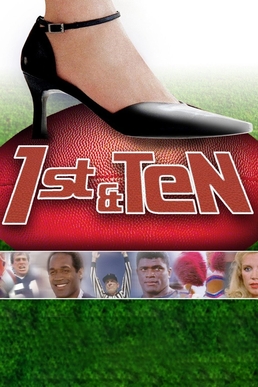
This week, OJ’s in trouble!
Episode 3.12 “Of Scalpers and Superstars”
(Dir by Bruce Seth Green, originally aired on December 9th, 1987)
O.J. Simpson gets arrested!
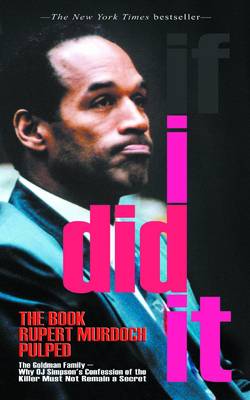
Okay, technically, OJ Simpson is not the one being arrested. He’s just playing TD Parker, the Bulls’s general manager. TD is the one who is arrested at the end of this episode after being framed for stealing 5,000 ticket to the Championship Game and selling to a ticket scalper. Still, as is so often the case with this show, the casting of OJ Simpson does bring a while new layer to the action of meaning to the action onscreen.
Who framed TD? The answer is Dolph Crane (Forry Smith), a former player who was cut from the team. Dolph has never appeared on the show before but, judging from what TD says when he sees Dolph hanging around the stadium, it seems that Dolph was cut last season. One of the things that I’ve noticed about 1st & Ten is that new characters will often pop up out of nowhere and people will act as if they’ve been there the whole time. Dolph appears to be one of those pop-up character. Dolph mentions that he’s now dating TD’s former mistress. Dolph and the owner of Arizona’s team are the ones who conspire to take out TD. Hopefully, they didn’t plant a bloody glove anywhere in the office.
The Bulls are going to the Championship Game …. again! Maybe they’ll actually win this time. This is their third trip to the game, after all. It’ll be kind of sad if they win without Coach Denardo, though. Coach Grier just isn’t as much fun as foul-mouthed Ernie Denardo.
The entire team gets mad at Yinessa. After getting injured during a game, he decides that he needs to make as much money as possible so he allows his agent (Bobby Hosea) to promote him as being the “star” of the team. The rest of the team feels that isn’t fair. The thing is, though …. Yinessa is kind of the star. He’s the quarterback. If he has a bad day, the team doesn’t win. The Bulls are a bunch of crybabies. When they find out that a team music video is being reimagined as a Yinessa music video, they literally look like they’re about to break down in tears. No wonder they always lose the Championship Game.
This episode ended wth the Bulls heads to the Championship and OJ heading to jail. That seems about right. Good luck to the team!