“At some point, in the very near future, you’ll be made to understand how badly you misjudged me today. And when that time comes and you’re begging me for mercy, I want you to remember this moment because this is the moment you’ve sealed your fate.” — Kai Proctor
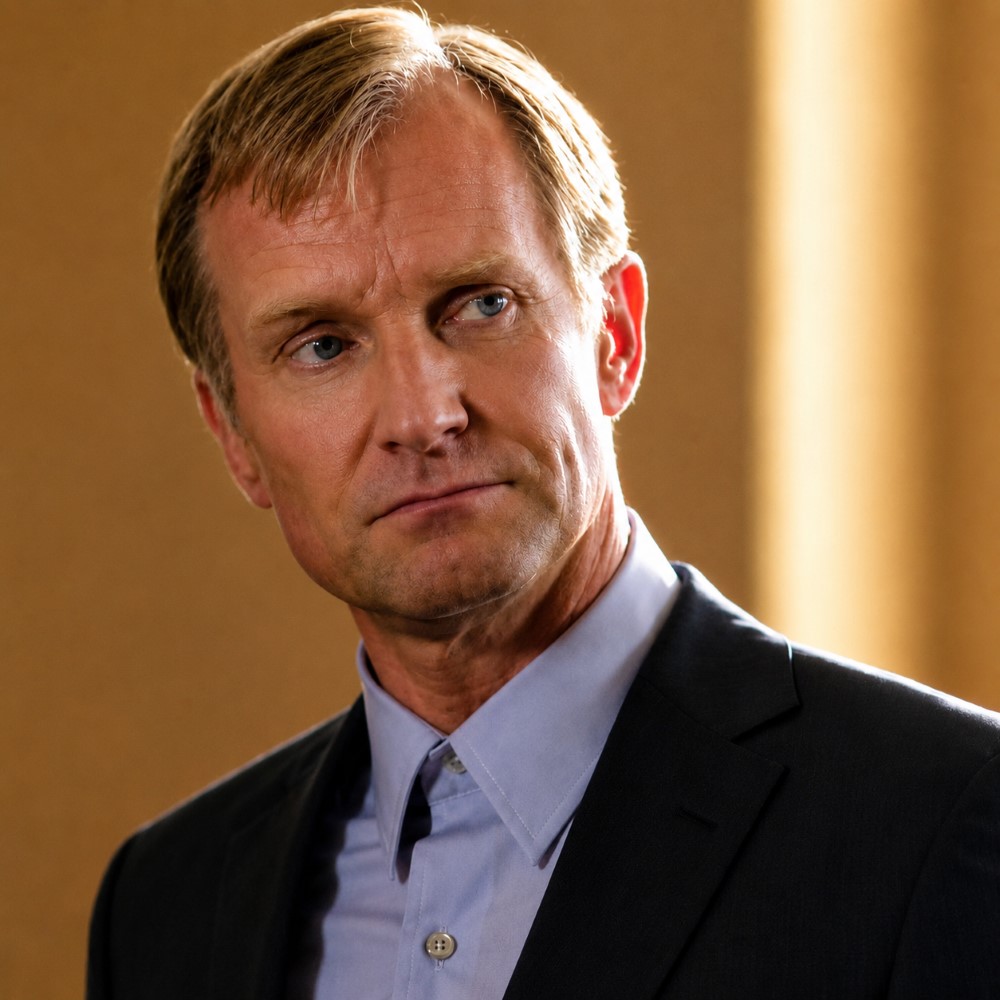
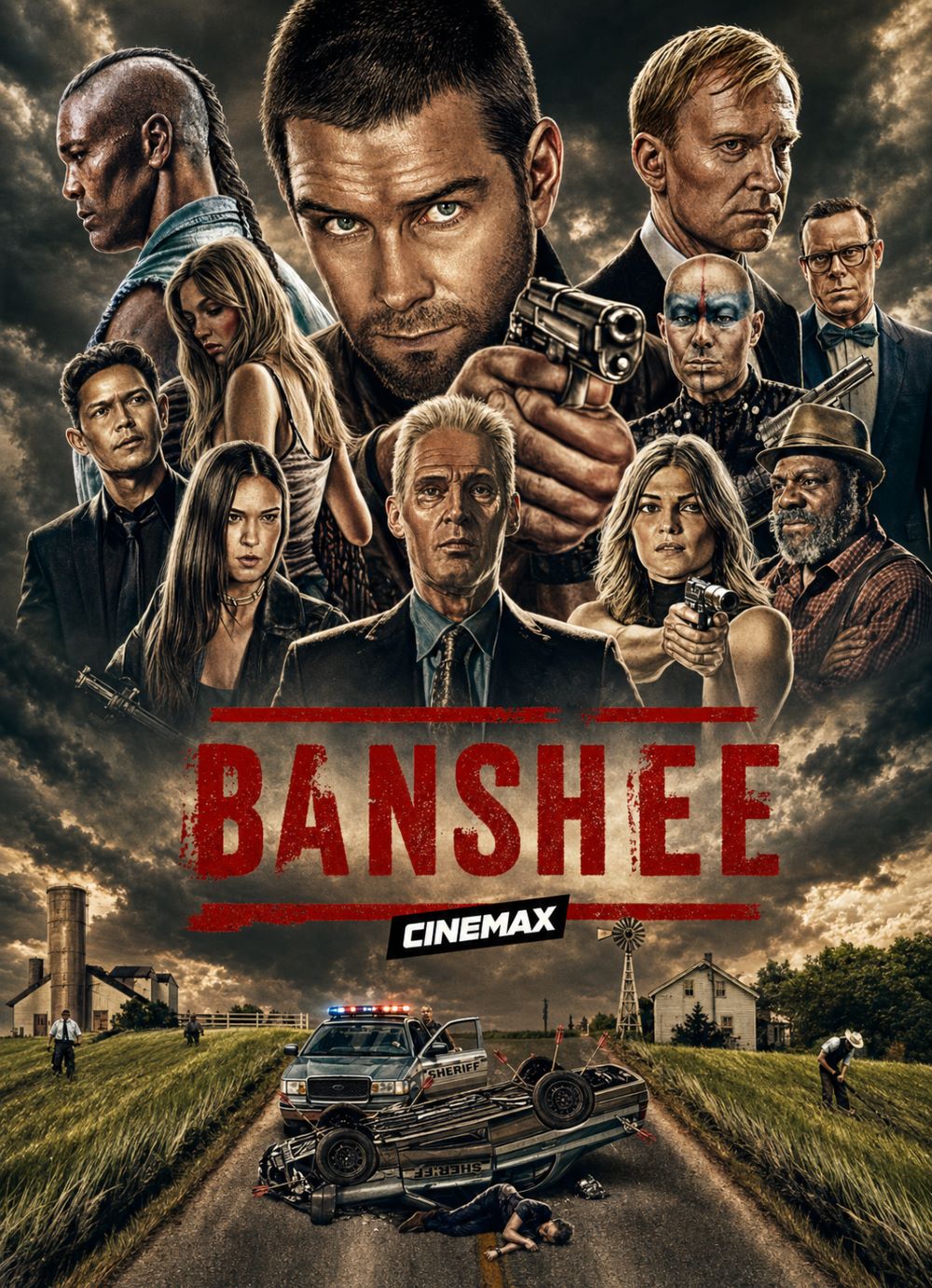
Banshee’s Kai Proctor, played with quiet menace by Ulrich Thomsen, distinguishes himself from the familiar lineup of television crime bosses precisely because his authority is defined by contradiction. On the surface, he fits the archetype: a man who controls Banshee’s underworld through legitimate fronts, compromised law enforcement, and an unflinching readiness for brutality. Yet what makes Proctor compelling isn’t the structure of his empire—it’s the tension beneath it, the sense that every assertion of control doubles as a form of self-justification for a man who has never truly stopped answering to the community he claims to have left behind.
That tension is rooted in his Amish upbringing. Proctor’s departure from that world was not a clean break but something closer to an amputation. He retains its language, discipline, and moral rigidity even as he has constructed a life in direct opposition to its teachings. He speaks Pennsylvania Dutch, invokes scripture, and adheres to a personal code of order and restraint that feels almost monastic against the backdrop of his violence.
At the same time, that code should not be mistaken for conventional morality. Proctor is, first and foremost, a brutal crime lord. He traffics in narcotics, prostitution, and murder—violence he is fully willing to carry out with his own hands—and sustains his power through a network of entrenched criminal enterprises. His discipline does not temper his cruelty; it organizes it.
This contradiction becomes even more pronounced in the alliances he chooses to make. The same man who carries remnants of Amish restraint will readily conduct business with Colombian drug cartels or neo-Nazi gangs if it strengthens his control over Banshee and the surrounding counties. His worldview is not governed by external ethics but by an internal logic that allows him to reconcile seemingly irreconcilable acts in service of power and order.
What further complicates Proctor is the way that same internal logic extends beyond self-interest. Time and again, he protects the Amish community that excommunicated him, intervening against outside threats on behalf of people who refuse even to acknowledge him. He does this without expectation of gratitude or reconciliation, suggesting that what drives these actions is not redemption but something more instinctive—an inherited sense of duty he cannot discard. In effect, he continues to guard a flock that has already cast him out.
By the series’ end, Proctor remains a man without a true home—too violent for the Amish world, yet too disciplined and burdened by it to fully belong to the criminal one. His arc does not resolve these contradictions so much as deepen them, and that unresolved tension is precisely what makes him endure. He is not simply a crime boss or a villain, but a figure defined by the uneasy coexistence of brutality and belief, control and longing—someone whose humanity, however obscured, keeps him from ever becoming reducible to a monster.
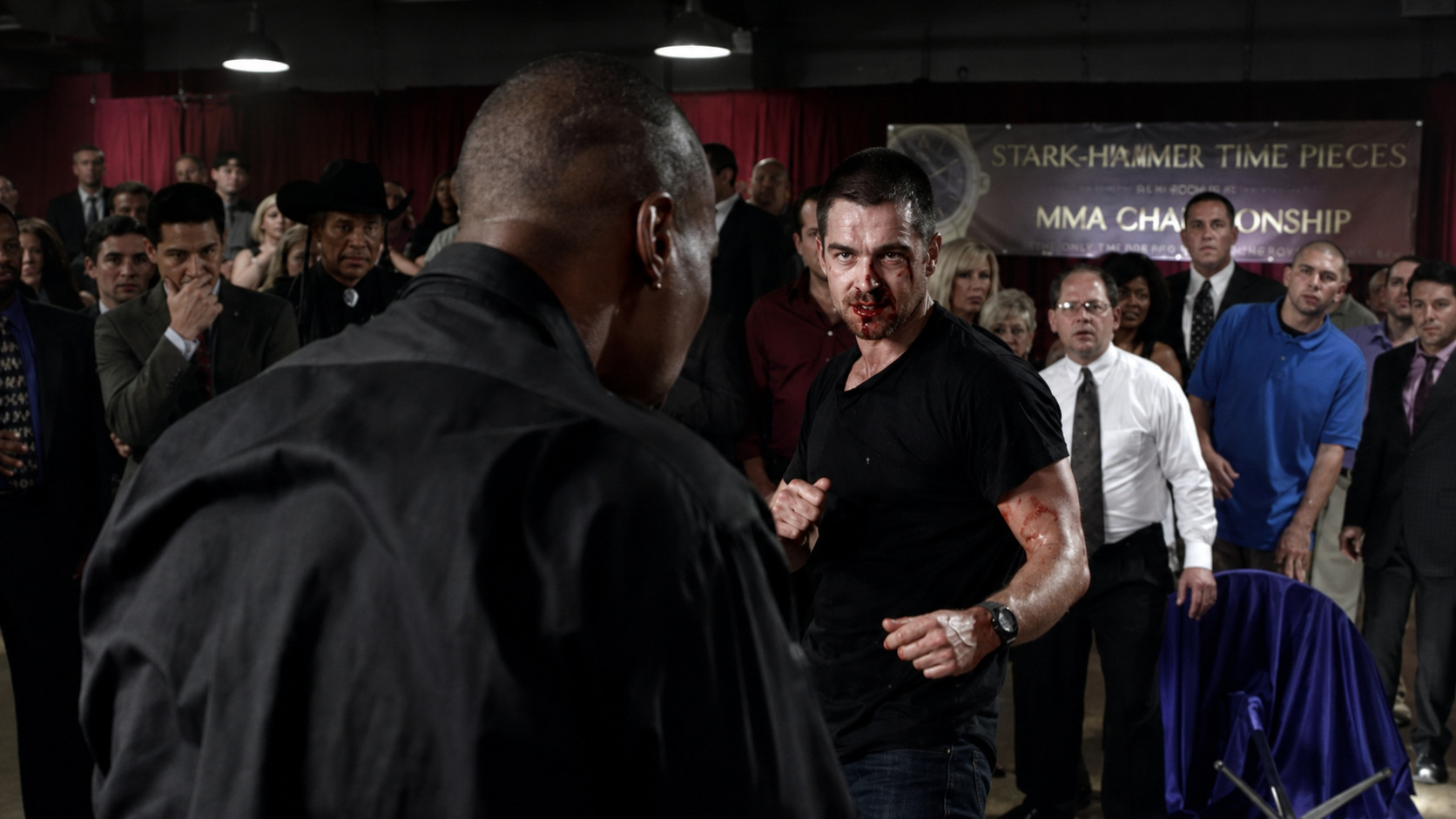
The Hood vs. Damien Sanchez fight in Season 1, Episode 3 is the moment Banshee stops teasing its brutality and just commits to it—and that’s why it sells you on the series. It isn’t stylized, choreographed “hero wins clean” violence; it’s ugly, exhausting, and morally messy, exactly the kind of sequence that tells you this show won’t flinch. Once Hood (played by Antony Starr who will later portray Homelander in the show The Boys) walks into that casino floor and picks a fight with a professional MMA fighter, the series effectively says: “This is what we are. If you’re still here after this, you’re one of us.”
What makes the scene so gripping is how it reframes both characters through pure physical storytelling. Sanchez starts off dismissive, treating Hood like a joke, and for a good chunk of the fight he is outclassed—technically superior, faster, and more precise. But Hood’s violence isn’t about skill; it’s about will, rage, and a complete disregard for his own body. The moment he shifts from “trying to win a fight” to “I will break you even if I break myself” is the thesis of the whole show: in Banshee, power doesn’t come from being the better fighter, it comes from being the one most willing to go too far. That raw, pragmatic brutality—elbows, smashes, no rules—feels shockingly real compared to typical TV brawls, and it cements Hood as a man whose moral code is written in concussions and blood.
This is also the scene that locks in the show’s tone for the long haul. It’s not just “violent”; it’s specifically consequential violence. Hood walks away badly hurt, Sanchez’s career is effectively over, and the repercussions ripple into Hood’s relationship with Kai Proctor and the wider power structure of the town. For you as a viewer, that’s the hook: the series proves it will follow its own logic to brutal ends, and that the stakes aren’t just emotional but physical and permanent. Once you’ve seen Hood willingly turn himself into a weapon against a trained professional fighter and pay the price, you know Banshee won’t pull punches later—so if you loved this scene, you were already braced for everything the rest of the series throws at you.
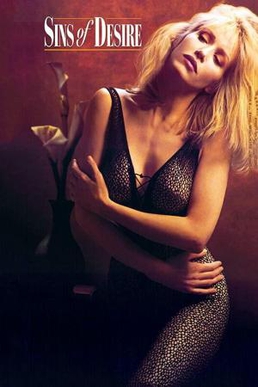
Kay Egan (Tanya Roberts) goes undercover as a nurse at a sex clinic because she thinks that Dr. Scott Callister (John Henry Robertson) and his wife, Jessica (Delia Sheppard), are responsible for the suicide of her sister. Working undercover leads to Jessica meeting private detective Barry Mitchum (Nick Cassavetes), whose partner Monica (Gail Harris) died under mysterious circumstances while she was working undercover at the clinic. Is there anyone working at the clinic who isn’t undercover?
This is a Jim Wynorski film, which means the plot is mostly just an excuse for the female members of the cast to disrobe. Like many of Jim Wynorski’s films, it’s trashy but entertaining. It’s a sex clinic where therapy comes in the way of hallucinations, strobe lights, and choreographed stripping. Kay falls in love with Barry but, when she realizes that Jessica is into her, she used that to her advantage and buys Barry some extra time for his investigation. Jan-Michael Vincent plays Warren Robillard, a twitchy associate of the Callisters. It’s a Wynorski film all the way.
Jim Wynorski later said that he had a difficult time working with Tanya Roberts, who brings little of her old Charlie’s Angel spice to her role. But John Henry Robertson and Delia Sheppard are a blast as the evil sex clinic owners. Adult film actress Gail Harris is so sexy and likable as Monica that it’s a shame that she’s only has a few minutes of screentime.
Sins of Desire is a perfect example of why you couldn’t have late night Cinemax without Jim Wynorski.
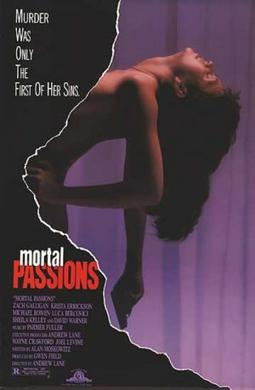
Todd (Zach Galligan) is married to Emily (Krista Errickson), who was previously involved with Todd’s brother, Berke (Michael Bowen). When Berke comes by for a visit, he discovers that Emily is cheating on Todd with Darcy (Luca Bercovici). A confrontation between Emily, Berke, and Darcy ends with Darcy dead. While covering up the murder, Emily is also plotting to take all of Todd’s money for herself. David Warner appears as the therapist who struggles to keep straight who is double-crossing who.
In the 90s, where could you see the lead of Gremlins being betrayed by both his sexy wife and his no-good brother? Where, in the 90s, could you see the star of Hello Larry try to reboot her career as a Kathleen Turner film fatale? Where, in the 90s, could you see the man who would one day play Buck in Kill Bill playing Zach Galligan’s long-haired brother? Only on Cinemax!
Mortal Passions was an attempt to do a modern noir and it has all of the expected tropes, from the clueless husband to the morally gray relative to the wife who is planning on betraying everyone. Krista Errickson is sexy and dangerous as Emily, ruthlessly plotting Todd’s downfall while walking around in lingerie. Errickson’s femme fatale is never as clever as she thinks she is but fortunately, for her, all the men around her are idiots. Galligan and Bowen are both believable as two of the most easily manipulated people that you’ll ever meet. And then there’s David Warner, phoning it in and getting away with it because he’s David Warner.
Mortal Passions is Late Night Cinemax at its trashiest best!
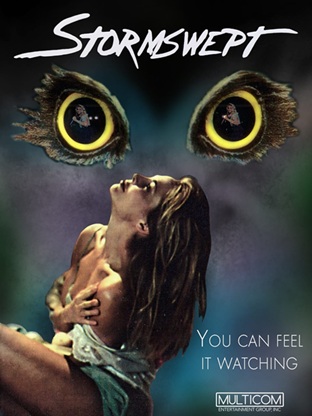
Brad recently told me that he missed out on Late Night Cinemax in the 90s so, for this week, I’m going to review a few films from the era. I’m going to start with Stormswept, which is currently available on Prime.
Dottie (Melissa Moore) is a Louisiana realtor who has been assigned to show a plantation to Marla (Kim Kopf), an actress. When Dottie enters the main house, she has flashbacks to a traumatic experience that happened years ago. Dottie tries to talk Marla into looking at a different house but both Marla and the crew who are shooting her latest movie are drawn to the plantation. On a stormy night, a game of truth or dare leads to hypnosis, nudity, attempted murder, more nudity, the supernatural, and even more nudity.
Stormswept is the epitome of a 90s Cinemax film. Before Cinemax became a semi-respectable network and all of the old direct-to-video softcore films moved to streaming platforms, late night Cinemax was the main place to see films like Stormswept. Movies like this are why Cinemax was, for the longest time, nicknamed Skinemax. (Even Jerry Seinfeld made a joke about it on an episode of Seinfeld when he said, “People don’t just bump into each other. This isn’t Cinemax.”) Most of the movies that showed up on late night Cinemax in the 90s weren’t very good but, for viewers of a certain age, they were very popular.
So, what about Stormswept? Is it any good? The plot is impossible to follow and the dialogue is so risible that it could have been written by AI but it’s a still a film that, for better or worse, epitomizes an era. Whatever else, Stormswept does generate some atmosphere and, even more importantly, it features some of the most popular B-movie actresses of the 90s. Melissa Moore, Kim Kopf, Lorisa McComas, and Kathleen Kinmont are all featured in the movie and they all give better performances than the material probably deserved. Melissa Moore, who I will admit is one of my favorite Cinemax actresses, is especially good as Dottie. Even though the camera ogles her and, as soon as Moore opens her bedroom door in a towel, it’s obvious that the towel will be on the floor within minutes, Melissa Moore still gives a committed and sincere performance as the only person in the house who truly seems to understand that something bad is going to happen. She is still sympathetic and believable as Dottie and you actually do want to find out the secrets of her past experiences with the mansion.
I should give proper warning here. Stormswept is definitely a softcore film, make no mistake about that. Even by the standards of 90s Cinemax, a few of the scenes are unusually explicit. But, with its game cast and occasionally interesting story, it’s also a pretty good example of what made late night Cinemax memorable beyond the nudity.
“And behold a Pale Rider, and his name that sat upon him was Death, and Hell followed with him. Revelations 6:8. This is God’s country—you better acquire a taste for it.” — Kai Proctor
There’s a show that’s been criminally underappreciated, standing shoulder-to-shoulder with some of the prestige heavyweights of the last 10-15 years despite its cult-status rabid fans. It’s a gem that blends pulpy noir tropes like antiheroes, femme fatales, and morally gray characters flipping from foes to allies, all fused with brutal action choreography second to none that could hold its own against any big-screen blockbuster. That show is Banshee, delivering action that’s as raw and relentless as it gets, with choreography so tight and brutal it turns every fight into a visceral event you can’t look away from.
The series thrives on that intricate staging, where punches land with bone-crunching impact and chases spill across entire towns. But it’s the core performances anchoring it all that make the violence feel human and the drama stick through four wild seasons. Antony Starr as Lucas Hood, Ulrich Thomsen as Kai Proctor, and Hoon Lee as Job don’t just carry the show—they ground its over-the-top brutality in characters you buy into, making the punches hit harder emotionally as well as physically.
Starr’s Lucas Hood is the beating heart of Banshee, a tattooed ex-con who slips into the skin of a dead sheriff and never quite shakes the impostor vibe, even as he owns the role. This was the role that made him known to TV watchers well before his star turn as the diabolical Homelander in The Boys, showcasing his coiled menace and raw charisma in a way that demanded attention. He’s got this coiled intensity that explodes in the action scenes, where his fights feel like extensions of his fractured psyche—desperate, improvisational brawls that leave him bloodied but standing. You see it in those long-take beatdowns, like the prison riot or the bar fights that turn rooms into war zones, where Starr sells every grunt, stagger, and counterpunch with a physicality that’s equal parts athletic and unhinged.
Over four seasons, he evolves from a smirking thief to a man wrestling his own darkness, but his charisma keeps you rooting for him even when he’s pummeling half the town. It’s a star-making turn that holds the show’s reckless energy together, making Hood’s brutal choreography feel personal and earned. From there, the dynamic shifts seamlessly to his key adversaries and allies.
Then there’s Ulrich Thomsen as Kai Proctor, the ice-cold crime boss whose calm menace makes him the perfect foil to Hood’s chaos. Proctor doesn’t throw punches like a street fighter; he’s calculated, almost surgical, which amps up the brutality when he unleashes. Thomsen plays him with this quiet menace simmering under a polished exterior—think Amish roots clashing with modern savagery—and it pays off in scenes where Proctor’s fights turn primal, like the knife work or those family feuds that escalate into full-on carnage.
His performance anchors the series’ criminal underbelly, giving the action a strategic edge; every beatdown he orders or delivers feels like a chess move in a blood-soaked game. Through the seasons, as Proctor’s empire crumbles and rebuilds, Thomsen’s steely gaze and understated violence keep the stakes feeling lethal, turning what could be a generic villain into a chilling force. Completing this powerhouse trio is the one who brings a wildly different energy.
Hoon Lee’s Job rounds out the core, a brilliant hacker whose razor-sharp intellect makes him indispensable to Hood’s crew, cracking systems and outsmarting foes from the shadows while his loyalty to Lucas remains unshakable. This holds firm even amid the absurdity of his fabulous, urban edge clashing with Banshee’s sleepy countryside vibe. Lee nails Job’s dual nature: the tech wizard who can dismantle security grids or reroute funds with a few keystrokes, turning digital battles into the show’s cerebral counterpoint to the physical brutality.
Yet always backing Hood with a fierce devotion that shines through in clutch moments. But it’s Job’s comedic flair—those sassy one-liners, the glittering outfits and heels that scream big-city glamour in this podunk town of pickup trucks and dive bars—that tempers his seriousness, making him the series’ sparkling wildcard who lightens the grim action without ever undercutting it. Lee plays it with magnetic charm, his fish-out-of-water antics (strutting through cornfields or snarking at rednecks) adding hilarious contrast to the bone-crunching fights.
Those rare physical outbursts—like improvised knife work or quick takedowns—feel earned because they stem from intellect-fueled precision rather than brute force. Across four seasons, as Job’s past traumas surface and alliances strain, Lee keeps the character’s loyalty as the emotional core, blending brainy hacks, loyal grit, and out-of-place humor into a performance that elevates the show’s savage rhythm. Together, these leads create a perfect storm for the action.
These three performances don’t just elevate the fights; they make the choreography sing by tying the physicality to emotional undercurrents. Starr’s raw desperation clashes beautifully with Thomsen’s cold precision and Lee’s brainy, flamboyant flair, powering the series’ best action set pieces—like the multi-man melees where their styles bounce off each other and the stunt team’s work shines. The show’s willingness to let them go full throttle, season after season, without pulling punches (literally) keeps the brutality fresh; you feel the toll on their bodies and souls, which makes the intricate staging hit deeper.
Sure, Banshee can get cartoonishly violent, with limbs snapping and blood spraying in glorious excess, but these actors anchor it, proving that great action needs great performers to make the mayhem matter. That synergy carries the series forward without missing a beat.
It’s that interplay that powers Banshee through its four seasons of escalating insanity. Hood’s barroom demolitions, Proctor’s calculated hits, and Job’s digital disruptions feeding into physical chaos aren’t isolated spectacles—they build in storylines that lead to climactic brawls, like season finales where the whole town becomes a battlefield. The choreography is brutally efficient, using practical effects and minimal cuts to let you track every impact, and these leads sell it with commitment that borders on masochistic.
Starr takes hit after hit, emerging grimier each time; Thomsen’s subtle menace makes his rare outbursts explosive; Lee turns smarts and sass into action catalysts, his hacks setting up the brutal payoffs. They weather the show’s weaker plot detours—those soapier subplots or Native American gang arcs—by keeping the energy dialed up, ensuring the action remains the glue. Even under scrutiny, their work holds strong.
Critically, there’s a slight edge to how they handle the excess: Starr occasionally overplays Hood’s brooding, Thomsen can feel too restrained amid the pulp, and Lee’s comedic beats sometimes flirt with caricature in the rural backdrop, but it rarely derails the momentum. Instead, it adds texture to the brutality, making fights feel like character clashes rather than random violence. Take the recurring motif of improvised weapons—shards of glass, chair legs, car hoods—where their physicality shines, turning everyday objects into extensions of their rage or cunning.
The stunt coordinators deserve props for matching their intensities, crafting sequences that are as punishing as they are precise, with geography and exhaustion playing key roles in every throwdown. This builds to a fitting crescendo by the end.
By season four, as the body count climbs and alliances fracture, these performances reach a peak, culminating in action that’s not just brutal but poignant. Hood’s final stands feel tragic because Starr has made us invest; Proctor’s downfall stings with Thomsen’s quiet devastation; Job’s loyalty and hacks culminate in high-stakes saves, his out-of-place flair making the countryside carnage even more surreal. The choreography evolves too, incorporating more group dynamics and environmental havoc, but it’s always anchored by their work.
Banshee could have been just another forgettable action romp, but these three make its intricate, bone-snapping violence unforgettable, proving that in a show this unapologetically savage, the right actors can turn pulp into something profound.